Skip to content · ⁨コンテンツへスキップ⁩

The Living World: Biodiversity · ⁨生物世界:生物多様性⁩

AP Environmental Science · Topic 2 · ⁨トピック 2⁩

View Slides · ⁨查看幻灯片⁩ Train · ⁨練習する⁩
Video lesson for this topic · ⁨このトピックのビデオレッスン⁩ Open the video page · ⁨動画ページを開く⁩
7:58

生物世界:生物多様性

火山が新しい島を海の上へと押し上げます。最初は島の上に何もありません——裸の岩、土壌もなければ、生命も一切ありません。五十年後、そこは緑色になっています。では、どう…

English narration · English + 中文 subtitles burned in · ⁨英語ナレーション・英語+中文字幕 burning-in⁩

2.1

Introduction to Biodiversity · ⁨生物多様性への導入⁩

Syllabus · ⁨シラバス⁩
English

Enduring Understanding (ERT-2): Ecosystems have structure and diversity that change over time.

Learning Objective ERT-2.A: Explain levels of biodiversity and their importance to ecosystems.

  • ERT-2.A.1 Biodiversity in an ecosystem includes genetic, species, and habitat diversity.
  • ERT-2.A.2 The more genetically diverse a population is, the better it can respond to environmental stressors. Additionally, a population bottleneck can lead to a loss of genetic diversity.
  • ERT-2.A.3 Ecosystems that have a larger number of species are more likely to recover from disruptions.
  • ERT-2.A.4 Loss of habitat leads to a loss of specialist species, followed by a loss of generalist species. It also leads to reduced numbers of species that have large territorial requirements.
  • ERT-2.A.5 Species richness refers to the number of different species found in an ecosystem.
日本語

持続的理解 (ERT-2): 生態系は時間とともに変化する構造と多様性を持つ。

学習目標 ERT-2.A: 生物多様性のレベルと、それらが生態系に果たす重要性を説明する。

  • ERT-2.A.1 生態系における生物多様性には、遺伝的多様性、種多様性、生息地の多様性が含まれる。
  • ERT-2.A.2 集団の遺伝的多様性が高いほど、環境ストレス因子に対する反応能力が高まる。また、集団ボトルネックが発生すると遺伝的多様性の喪失につながる。
  • ERT-2.A.3 種の数が多様な生態系は、攪乱からの回復が可能である可能性が高い。
  • ERT-2.A.4 生息地の喪失は、まず特化種の喪失を引き起こし、次に一般種の喪失が続く。また、広範な領土を必要とする種の数の減少も招く。
  • ERT-2.A.5 種豊度とは、ある生態系で見られる異なる種の数を指す。

Source: College Board AP Course and Exam Description · ⁨出典: College Board AP コースおよび試験説明書⁩

English

Biodiversity 生物多样性 is the variety of life, measured at three levels:

  • Genetic diversity – variety of genes within a species. More genetic variety means a population can better respond to environmental stressors 环境压力; a population bottleneck 种群瓶颈 (a sharp drop in numbers) throws that variety away and leaves the survivors vulnerable.
  • Species diversity – the number of species (species richness 物种丰富度) and how evenly individuals are spread among them.
  • Habitat diversity – the variety of habitats in a region.

More species-rich ecosystems are more resilient 有韧性的: they recover from disruption more readily, because varied species can fill roles when conditions change. Habitat loss removes species in a predictable order – specialist 特化 species (narrow needs) go first, then the hardier generalist 广适性 species, and species that need large territories decline as their range shrinks.

日本語

生物多様性とは、生命の多様性を指し、3つのレベルで測定されます:

  • 遺伝的多様性 – 一種内の遺伝子の多様性。遺伝的多様性が高いほど、個体群は環境ストレス要因に適切に対応できます。ポピュレーション・バンクネック(個体数の急激な減少)は、この多様性を失わせ、生存者を脆弱な状態に置きます。
  • 種多様性 – 種の数(種豊富度)と、個体が各種にどれだけ均等に分布しているか。
  • 生息域多様性 – 地域における生息域の多様性。

種豊富度の高い生態系は、より強い回復力を持ちます。環境が変化した場合、多様な種が役割を補うことで、撹乱からの回復が容易になります。生息地の喪失は、予測可能な順序で種を失わせます – 特化種(必要とする条件が限定的)が最初に消え、次に頑健な汎用種が続くためです。また、広大な領地を必要とする種は、生息範囲が縮小するにつれて減少します。

生物多様性には3つのレベルがある:遺伝的、種、生息域
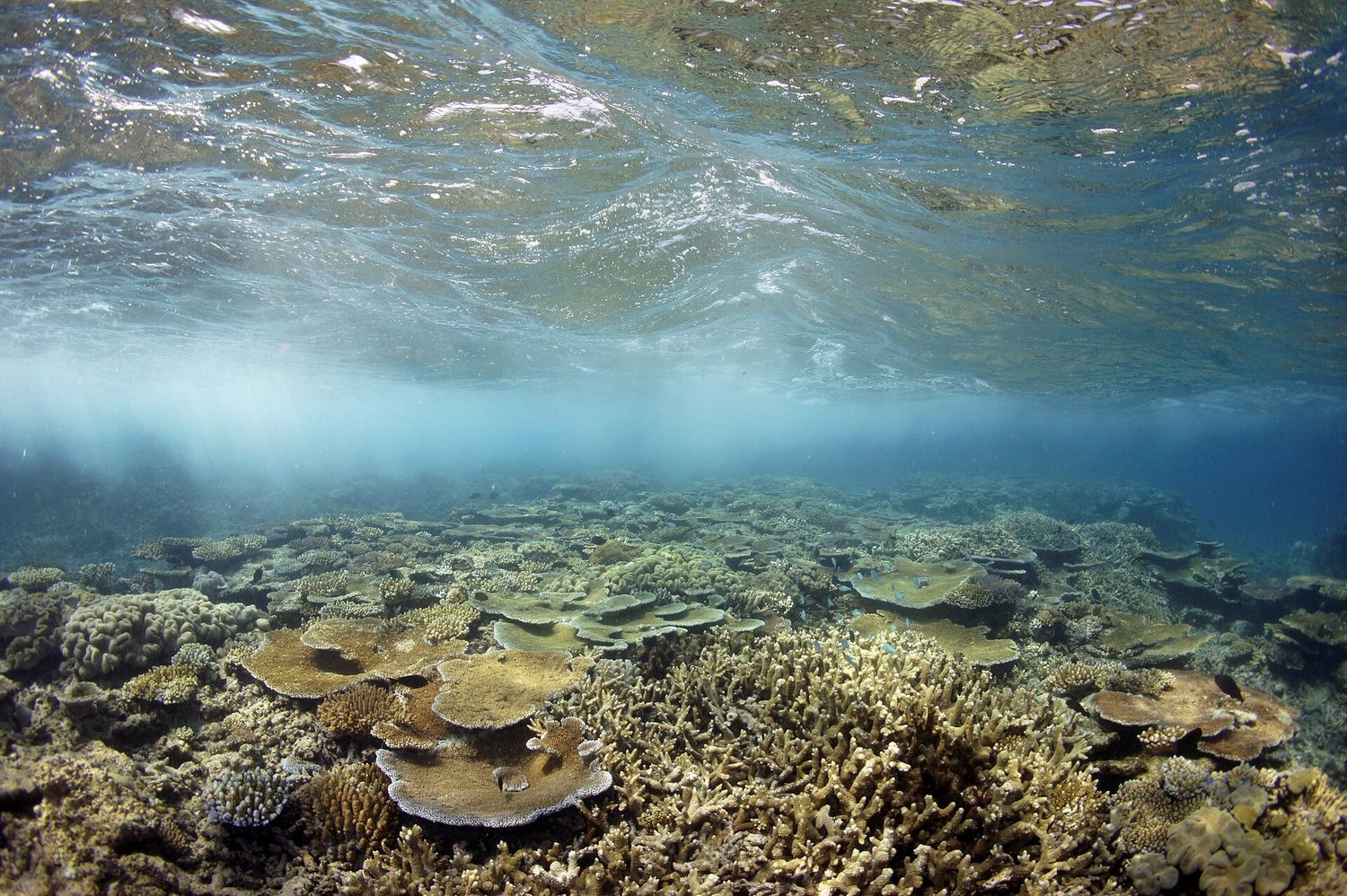
サンゴ礁:高い生物多様性が、小さな範囲に種と生態系サービスを集約している
Vocabulary · ⁨語彙⁩ Train · ⁨練習する⁩
English 日本語
Biodiversity/ˌbaɪəʊdaɪˈvɜːsɪti/ 生物多様性
environmental stressors/enˌvaɪrənˈmentl ˈstresəz/ 環境ストレス要因
population bottleneck/ˌpɒpjʊˈleɪʃn ˈbɒtəlnek/ 人口ボトルネック
species richness/ˈspiːsiːz ˈrɪtʃnəs/ 種多様性
resilient/rɪˈsɪlɪənt/ 回復力
specialist/ˈspeʃəlɪst/ 特化
generalist/ˈdʒenərəlɪst/ 汎用種
Ecosystem services/ˈiːkəʊsɪstəm ˈsɜːvɪsɪz/ 生態系サービス
Anthropogenic/ˌænθrəpəˈdʒenɪk/ 人為的
2.2

Ecosystem Services · ⁨生態系サービス⁩

Syllabus · ⁨シラバス⁩
English

Enduring Understanding (ERT-2): Ecosystems have structure and diversity that change over time.

Learning Objective ERT-2.B: Describe ecosystem services.

  • ERT-2.B.1 There are four categories of ecosystem services: provisioning, regulating, cultural, and supporting.

Learning Objective ERT-2.C: Describe the results of human disruptions to ecosystem services.

  • ERT-2.C.1 Anthropogenic activities can disrupt ecosystem services, potentially resulting in economic and ecological consequences.
日本語

持続的理解 (ERT-2): 生態系は時間とともに変化する構造と多様性を持つ。

学習目標 ERT-2.B: 生態系サービスを説明する。

  • ERT-2.B.1 生態系サービスには、供給、調整、文化的、支援の4つのカテゴリーがある。

学習目標 ERT-2.C: 人間による生態系サービスの攪乱の結果を説明する。

  • ERT-2.C.1 人為的活動は生態系サービスを攪乱し、経済的・生態学的な結果をもたらす可能性がある。

Source: College Board AP Course and Exam Description · ⁨出典: College Board AP コースおよび試験説明書⁩

English

Ecosystem services 生态系统服务 are the free benefits nature gives people, in four categories:

  • Provisioning – products: food, fresh water, timber, fibre.
  • Regulating – processes that keep conditions stable: climate regulation, water filtration, pollination, flood control.
  • Cultural – non-material value: recreation, beauty, spiritual and educational value.
  • Supporting – the services that make the others possible: nutrient cycling, soil formation, photosynthesis.

Anthropogenic 人为的 (human-caused) activities can disrupt these services, with real economic and ecological costs – for example, losing pollinators forces farmers to pay for pollination that bees once did for free.

日本語

生態系サービスとは、自然が人間に提供する無償の便益であり、4つのカテゴリーに分けられます:

  • 供給 – 製品:食料、淡水、木材、繊維。
  • 調整 – 環境を安定させるプロセス:気候調節、水浄化、受粉、洪水制御。
  • 文化的 – 非物质的価値:レクリエーション、美、精神的および教育的価値。
  • 支援 – 他すべてのサービスを可能にする基盤となるサービス:栄養素循環、土壌形成、光合成。

人為的(人間による)活動はこれらのサービスを撹乱し、経済的かつ生態学的なコストをもたらします。例えば、受粉虫を失うと、農家はかつて蜂が無料で行っていた受粉に代わり、費用を支払わなければならなくなります。

2.3

Island Biogeography · ⁨島嶼生物地理学⁩

Syllabus · ⁨シラバス⁩
English

Enduring Understanding (ERT-2): Ecosystems have structure and diversity that change over time.

Learning Objective ERT-2.D: Describe island biogeography.

  • ERT-2.D.1 Island biogeography is the study of the ecological relationships and distribution of organisms on islands, and of these organisms' community structures.
  • ERT-2.D.2 Islands have been colonized in the past by new species arriving from elsewhere.

Learning Objective ERT-2.E: Describe the role of island biogeography in evolution.

  • ERT-2.E.1 Many island species have evolved to be specialists versus generalists because of the limited resources, such as food and territory, on most islands. The long-term survival of specialists may be jeopardized if and when invasive species, typically generalists, are introduced and outcompete the specialists.
日本語

持続的理解 (ERT-2): 生態系は時間とともに変化する構造と多様性を持つ。

学習目標 ERT-2.D: 島嶼生物地理学を説明する。

  • ERT-2.D.1 島嶼生物地理学は、島における生物の生態学的関係や分布、およびそれらの生物の群落構造を研究する分野である。
  • ERT-2.D.2 島嶼は過去に他地域から新しい種が侵入して入植された。

学習目標 ERT-2.E: 進化における島嶼生物地理学の役割を説明する。

  • ERT-2.E.1 多くの島では食物や領土などの資源が限られているため、多くの島種は一般種ではなく特化種へと進化した。特化種の長期的な生存は、一般的に一般種である外来種が侵入して特化種と競合した場合に脅かされる可能性がある。

Source: College Board AP Course and Exam Description · ⁨出典: College Board AP コースおよび試験説明書⁩

English
Island biogeography

Island biogeography 岛屿生物地理学 studies how many species an island (or any isolated habitat patch) holds. The number settles at a balance between two rates:

  • Immigration of new species – higher for islands closer to the mainland.
  • Extinction of resident species – lower on larger islands.

So big, near islands hold the most species; small, remote ones the fewest. Isolation also drives evolution: island species often become specialists because resources are limited, and many are endemic 特有 – found nowhere else. That makes them fragile. When an invasive species 入侵物种 (usually a tough generalist) arrives, it can outcompete the specialists, which have nowhere else to go.

日本語
島嶼生物地理学

島嶼生物地理学は、ある島(または隔離された生息地パッチ)がいくつの種を保持するかを研究する分野です。その数は、2つの率のバランスによって決まります:

  • 入植 – 新種の侵入。陸地から近い島ほど高くなります。
  • 絶滅 – 在来種の消失。大きい島では低くなります。

したがって、大きく陸地に近い島は最も多くの種を保有し、小さく遠い島は最も少ない種しか持ちません。孤立は進化も促進します。資源が限られているため、島嶼種はしばしば特化種となり、他の場所では見られない固有種になることも多くあります。これらは脆弱です。侵入種(通常は強靭な汎用種)が到達すると、他の場所へ逃げる道のない特化種と競争して勝つことがあります。

大きく陸地に近い島は多くの種を保有し、入植と絶滅のバランスが取れている
Vocabulary · ⁨語彙⁩ Train · ⁨練習する⁩
English 日本語
Island biogeography/ˈaɪlənd ˌbaɪəʊdʒɪˈɒɡrəfi/ 島生物地理学
endemic/enˈdemɪk/ 固有種
invasive species/ɪnˈveɪsɪv ˈspiːsiːz/ 侵入種
range of tolerance/reɪndʒ ɒv ˈtɒlərəns/ 許容範囲
optimal range/ˈɒptɪml reɪndʒ/ 最適範囲
zones of stress/zəʊnz ɒv stres/ ストレス領域
Ecological tolerance/ˌekəˈlɒdʒɪkl ˈtɒlərəns/ 生態的許容度
Periodic/ˌpɪərɪˈɒdɪk/ 周期的
Episodic/ˌepɪˈsɒdɪk/ 間歇的
Random/ˈrændəm/ ランダム
migration/maɪˈɡreɪʃn/ 移住
adaptation/ˌædæpˈteɪʃn/ 適応
natural selection/ˈnætʃərəl sɪˈlekʃn/ 自然選択
2.4

Ecological Tolerance · ⁨生態的許容範囲⁩

Syllabus · ⁨シラバス⁩
English

Enduring Understanding (ERT-2): Ecosystems have structure and diversity that change over time.

Learning Objective ERT-2.F: Describe ecological tolerance.

  • ERT-2.F.1 Ecological tolerance refers to the range of conditions, such as temperature, salinity, flow rate, and sunlight that an organism can endure before injury or death results.
  • ERT-2.F.2 Ecological tolerance can apply to individuals and to species.
日本語

持続的理解 (ERT-2): 生態系は時間とともに変化する構造と多様性を持つ。

学習目標 ERT-2.F: 生態的許容範囲を説明する。

  • ERT-2.F.1 生態的許容範囲とは、温度、塩分濃度、流速、日射など、生物が損傷や死亡に至るまで耐えられる条件の範囲を指す。
  • ERT-2.F.2 生態的許容範囲は個体レベルにも種レベルにも適用される。

Source: College Board AP Course and Exam Description · ⁨出典: College Board AP コースおよび試験説明書⁩

English

Every species has a range of tolerance 耐受范围 – the span of conditions (temperature, salinity, pH, sunlight) it can survive. Near the middle is an optimal range 最适范围 where individuals thrive; toward the edges are zones of stress 胁迫区 where they survive but struggle to grow or reproduce; beyond the limits they die. Ecological tolerance 生态耐受性 applies both to a single individual and to a whole species, and it decides where an organism can live and how it copes with change.

日本語

すべての種には許容範囲があります。これは、その種が生存できる環境条件(温度、塩分濃度、pH、日光)の範囲です。真ん中付近には個体が繁栄する最適範囲があり、端に向かうほどストレス領域へと移り、生存はできるものの成長や繁殖が困難になります。限界を超えると死に至ります。生態的許容範囲は単一の個体だけでなく種全体にも適用され、生物が生息できる場所や変化への適応方法を決定します。

最適範囲内では種は繁栄しますが、限界に向かうとストレスを受け、最終的に生存できなくなります
2.5

Natural Disruptions to Ecosystems · ⁨生態系への自然撹乱⁩

Syllabus · ⁨シラバス⁩
English

Enduring Understanding (ERT-2): Ecosystems have structure and diversity that change over time.

Learning Objective ERT-2.G: Explain how natural disruptions, both short- and long-term, impact an ecosystem.

  • ERT-2.G.1 Natural disruptions to ecosystems have environmental consequences that may, for a given occurrence, be as great as, or greater than, many human-made disruptions.
  • ERT-2.G.2 Earth system processes operate on a range of scales in terms of time. Processes can be periodic, episodic, or random.
  • ERT-2.G.3 Earth's climate has changed over geological time for many reasons.
  • ERT-2.G.4 Sea level has varied significantly as a result of changes in the amount of glacial ice on Earth over geological time.
  • ERT-2.G.5 Major environmental change or upheaval commonly results in large swathes of habitat changes.
  • ERT-2.G.6 Wildlife engages in both short- and long-term migration for a variety of reasons, including natural disruptions.
日本語

持続的理解 (ERT-2): 生態系は時間とともに変化する構造と多様性を持つ。

学習目標 ERT-2.G: 短期間および長時間にわたる自然攪乱が生態系に与える影響を説明する。

  • ERT-2.G.1 生態系への自然攪乱は環境的影響を及ぼし、特定の事象においては、多くの人為的攪乱と同程度、あるいはそれ以上に大きなものとなる場合がある。
  • ERT-2.G.2 地球システムプロセスは時間スケールにおいて幅広い範囲で機能する。プロセスは周期的、 episodic(断続的)、またはランダムであることがある。
  • ERT-2.G.3 地球の気候は、多くの要因により地質学的時間を通じて変化してきた。
  • ERT-2.G.4 海水面位は、地質学的時間を通じて地球の氷床量の変化に伴い大きく変動してきた。
  • ERT-2.G.5 大規模な環境変化や upheaval(擾乱)は、通常、広大な生息地の変化を引き起こす。
  • ERT-2.G.6 野生動物は、自然攪乱を含むさまざまな理由で、短期間および長時間にわたる移動を行う。

Source: College Board AP Course and Exam Description · ⁨出典: College Board AP コースおよび試験説明書⁩

English

Natural events disrupt ecosystems across every timescale, and a single natural event can rival or exceed a human-made one. Earth's processes come in three timing patterns:

  • Periodic 周期性 – regular cycles (seasons, tides).
  • Episodic 偶发性 – occasional, irregular events (fires, floods, volcanic eruptions).
  • Random 随机 – no pattern (a meteor strike).

Over geological time, Earth's climate has shifted for many reasons, and sea level has risen and fallen with the amount of glacial ice – each change reshaping large swaths of habitat. Wildlife responds by migration 迁徙, moving short or long distances to follow conditions.

日本語

自然事象はあらゆる時間スケールで生態系を撹乱し、一つの自然事象が人為的な事象に匹敵あるいは凌駕することもあります。地球のプロセスは3つのタイミングパターンで現れます:

  • 周期的 – 定期的なサイクル(季節、潮位)。
  • 間欠的 – occasional、不規則な事象(火災、洪水、火山噴火)。
  • ランダム – 規則性がない(隕石衝突)。

地質学的時間において、地球の気候は多くの理由によって変動し、氷河の量に応じて海水面は上昇・下降しました。これらの変化は広範な生息域を再形成しました。野生動物は遷移によって対応し、条件に合わせて短距離または長距離を移動します。

針葉樹林の上空を疾走する炎と煙の壁
森林を横切る樹冠火。火は自然の間欠的撹乱であり、多くの種はこの火に適応しています
2.6

Adaptations · ⁨適応⁩

Syllabus · ⁨シラバス⁩
English

Enduring Understanding (ERT-2): Ecosystems have structure and diversity that change over time.

Learning Objective ERT-2.H: Describe how organisms adapt to their environment.

  • ERT-2.H.1 Organisms adapt to their environment over time, both in short- and long-term scales, via incremental changes at the genetic level.
  • ERT-2.H.2 Environmental changes, either sudden or gradual, may threaten a species' survival, requiring individuals to alter behaviors, move, or perish.
日本語

持続的理解 (ERT-2): 生態系は時間とともに変化する構造と多様性を持つ。

学習目標 ERT-2.H: 生物が環境に適応する方法を説明する。

  • ERT-2.H.1 生物は、遺伝レベルでの微細な変化を通じて、短期間および長時間のスケールで、時間をかけて環境に適応していく。
  • ERT-2.H.2 環境の変化は、急激なものであっても gradual なものであっても、ある種の生存を脅かすことがあります。その結果、個体は行動を変えたり、移動したり、あるいは死にいたりする必要があります。

Source: College Board AP Course and Exam Description · ⁨出典: College Board AP コースおよび試験説明書⁩

English

An adaptation 适应 is an inherited trait that improves survival and reproduction in an environment. Adaptations arise through natural selection 自然选择 – incremental genetic change accumulating over generations, not within a single lifetime. When the environment changes, individuals must alter their behaviour, move, or die; if change comes faster than a population can adapt, it declines. A periodic disturbance such as fire is often part of a healthy cycle, and many species are adapted to it (some pine cones open only in a fire's heat).

日本語

適応とは、環境での生存と繁殖を向上させる遺伝的に受け継がれた性質です。適応は自然選択を通じて生じます – 単一の生涯内でではなく、世代を重ねるごとに蓄積される段階的な遺伝的変化です。環境が変わると、個体は行動を変えたり、移動したり、死んだりしなければなりません。もし変化が個体群の適応速度を上回れば、個体数は減少します。火のような周期的撹乱は健全なサイクルの一部であることが多く、多くの種はこの火に適応しています(一部のマツの球果は火の熱でしか開かないなど)。

2.7

Ecological Succession · ⁨生態的遷移⁩

Syllabus · ⁨シラバス⁩
English

Enduring Understanding (ERT-2): Ecosystems have structure and diversity that change over time.

Learning Objective ERT-2.I: Describe ecological succession.

  • ERT-2.I.1 There are two main types of ecological succession: primary and secondary succession.
  • ERT-2.I.2 A keystone species in an ecosystem is a species whose activities have a particularly significant role in determining community structure.
  • ERT-2.I.3 An indicator species is a plant or animal that, by its presence, abundance, scarcity, or chemical composition, demonstrates that some distinctive aspect of the character or quality of an ecosystem is present.

Learning Objective ERT-2.J: Describe the effect of ecological succession on ecosystems.

  • ERT-2.J.1 Pioneer members of an early successional species commonly move into unoccupied habitat and over time adapt to its particular conditions, which may result in the origin of new species.
  • ERT-2.J.2 Succession in a disturbed ecosystem will affect the total biomass, species richness, and net productivity over time.
日本語

持続的理解 (ERT-2): 生態系は時間とともに変化する構造と多様性を持つ。

学習目標 ERT-2.I: 生態的遷移について説明する。

  • ERT-2.I.1 生態的遷移には主に2つのタイプがある:一次遷移と二次遷移。
  • ERT-2.I.2 エコシステムのキーストーン種とは、その活動が群落の構造を決定する上で特に重要な役割を果たす種のことである。
  • ERT-2.I.3 指標種とは、その存在や多さ、希少性、あるいは化学組成によって、ある生態系の特性や品質の特定の側面が存在することを示す動植物のことである。

学習目標 ERT-2.J: 生態的遷移がエコシステムに与える影響について説明する。

  • ERT-2.J.1 初期遷移段階の種(ピオニア種)は一般的に未占有の生息地へ侵入し、長期間かけてその特定の条件に適応します。これにより新種の起源が生じることがあります。
  • ERT-2.J.2 攪乱を受けたエコシステムにおける遷移は、時間経過とともに総生物量、種多様性、および純生産性に影響を与える。

Source: College Board AP Course and Exam Description · ⁨出典: College Board AP コースおよび試験説明書⁩

English
Ecological succession

Ecological succession 生态演替 is the gradual, orderly change in a community over time:

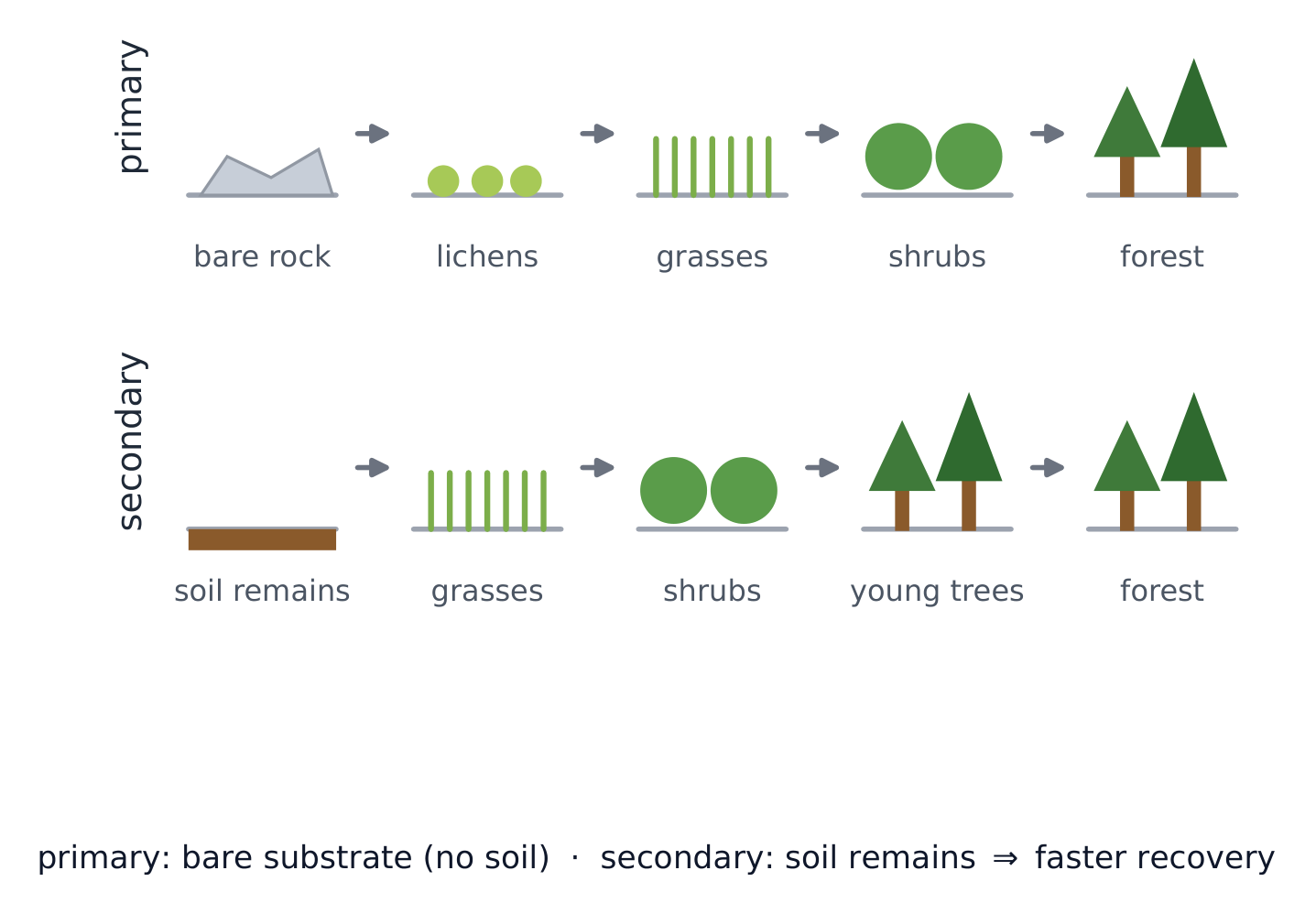
  • Primary succession 初级演替 starts on bare rock with no soil – after a glacier retreats or lava cools. Pioneer species 先锋物种 such as lichens 地衣 arrive first and slowly build soil. It is slow.
  • Secondary succession 次级演替 follows a disturbance that leaves the soil intact – after a fire or abandoned farming – so it is much faster.

Succession tends toward a relatively stable climax community 顶极群落. Two special roles shape a community out of proportion to their numbers: a keystone species 关键种, whose activities hold the community structure together (remove it and the community collapses – sea otters keeping urchins in check), and an indicator species 指示物种, whose presence or health signals the condition of the whole ecosystem (lichens vanish where the air is polluted).

Worked example. A pond holds 3 fish species with 5, 3, and 2 individuals ($N=10$). Simpson's Diversity Index $=1-\sum\left(\tfrac{n}{N}\right)^2 = 1-\left[(0.5)^2+(0.3)^2+(0.2)^2\right] = 1-0.38 = 0.62$. A value near 1 means high diversity; near 0 means one species dominates. Adding a fourth, evenly-sized species would push the index higher.

日本語
生態学的成育

生態的遷移とは、群落が時間とともに gradual に秩序だった変化を起こすことです:

  • 一次遷移は、氷河の退却や溶岩の冷却後に始まる、土壌のない裸の岩盤で行われます。先駆種としてコケ類などが最初に到達し、ゆっくりと土壌を形成していきます。非常に遅いです。
黄色、オレンジ、淡い緑色のこけたようなコケ類の斑块で覆われた岩の表面
裸岩に生える地衣。先駆種として、岩石をゆっくりと風化させ、最初の薄い土壌を形成します
  • 二次演替は、火災や放棄された農地によって土壤が保持された状態での撹乱後に起こるため、非常に速いです。

演替は比較的安定した頂点群落へと向かいます。個体数に対して過剰な影響を持つ二つの特別な役割があります。キー種(その活動が群落の構造を維持し、除去すると群落が崩壊するもの – 海獺がウニの数を抑制する例)と、指標種(その存在や健康状態が生態系全体の状況を示すもの – 大気汚染のある場所では地衣が消滅する例)です。

一次演替は裸岩から始まり、二次演替は残存する土壌から再生される
一次演替は裸岩から始まり、二次演替は残存する土壌から再生されます

解題例。 池には3種の魚が生息しており、それぞれ5、3、2匹(合計$N=10$匹)います。 Simpson多様性指数 $=1-\sum\left(\tfrac{n}{N}\right)^2 = 1-\left[(0.5)^2+(0.3)^2+(0.2)^2\right] = 1-0.38 = 0.62$ は1に近い値を示します。これは多様性が高いことを意味し、0に近い場合、ある一種が優占していることを示します。均等な規模を持つ第四種を追加すると、指数はさらに上昇します。

Vocabulary · ⁨語彙⁩ Train · ⁨練習する⁩
English 日本語
Ecological succession/ˌekəˈlɒdʒɪkl səkˈseʃn/ 生態演替
Primary succession/ˈpraɪməri səkˈseʃn/ 一次遷移
Pioneer species/paɪəˈnɪə ˈspiːsiːz/ 先駆種
lichens/ˈlaɪkənz/ 地衣類
Secondary succession/ˈsekəndəri səkˈseʃn/ 二次遷移
climax community/ˈklaɪmæks kəˈmjuːnɪti/ 頂点群落
keystone species/ˈkiːstəʊn ˈspiːsiːz/ キーストーン種
indicator species/ˈɪndɪkeɪtə ˈspiːsiːz/ 指標種
2.7

Exam tips · ⁨試験対策⁩

English
  • Describe biodiversity at three levels: genetic, species, and habitat, and link higher diversity to greater resilience.
  • Specialist species (narrow needs) are more vulnerable than generalists when a habitat changes.
  • Distinguish primary succession (bare rock, no soil, slow) from secondary (soil intact, faster).
  • Explain a keystone species (outsized effect) and an indicator species (signals ecosystem health).
  • Name the four ecosystem services (provisioning, regulating, cultural, supporting) with examples.
日本語
  • 遺伝的、種、生息地の3つのレベルで生物多様性を説明し、高い多様性がより大きな回復力につながること联系起来。
  • 生息地が変化した際、特化種(狭いRequirements)は汎用種よりも脆弱です。
  • 一次演替(裸岩、土壤なし、遅い)と二次演替(土壤保持、速い)を区別してください。
  • キー種(過度な影響)と指標種(生態系の健康を示すシグナル)を説明してください。
  • 4つの生態系サービス(供給、調整、文化的、支援)の名前を挙げ、具体例を示してください。

Interactive lessons on this topic · ⁨このトピックのインタラクティブ授業⁩

Work through it step by step, with instant-check exercises. · ⁨一歩ずつ進め、即時チェック付きの問題で学習します。⁩

Past Papers · ⁨過去問⁩

More topics in AP Environmental Science · ⁨AP Environmental Science の他のトピック⁩

Log in or create account · ⁨ログインまたはアカウント作成⁩

IGCSE, A-Level & AP