English
Learning Objective 7.1.A: Explain the relationship between the occurrence of a reversible chemical or physical process, and the establishment of equilibrium, to experimental observations.
- 7.1.A.1 Many observable processes are reversible. Examples include evaporation and condensation of water, absorption and desorption of a gas, or dissolution and precipitation of a salt. Some important reversible chemical processes include the transfer of protons in acid-base reactions and the transfer of electrons in redox reactions.
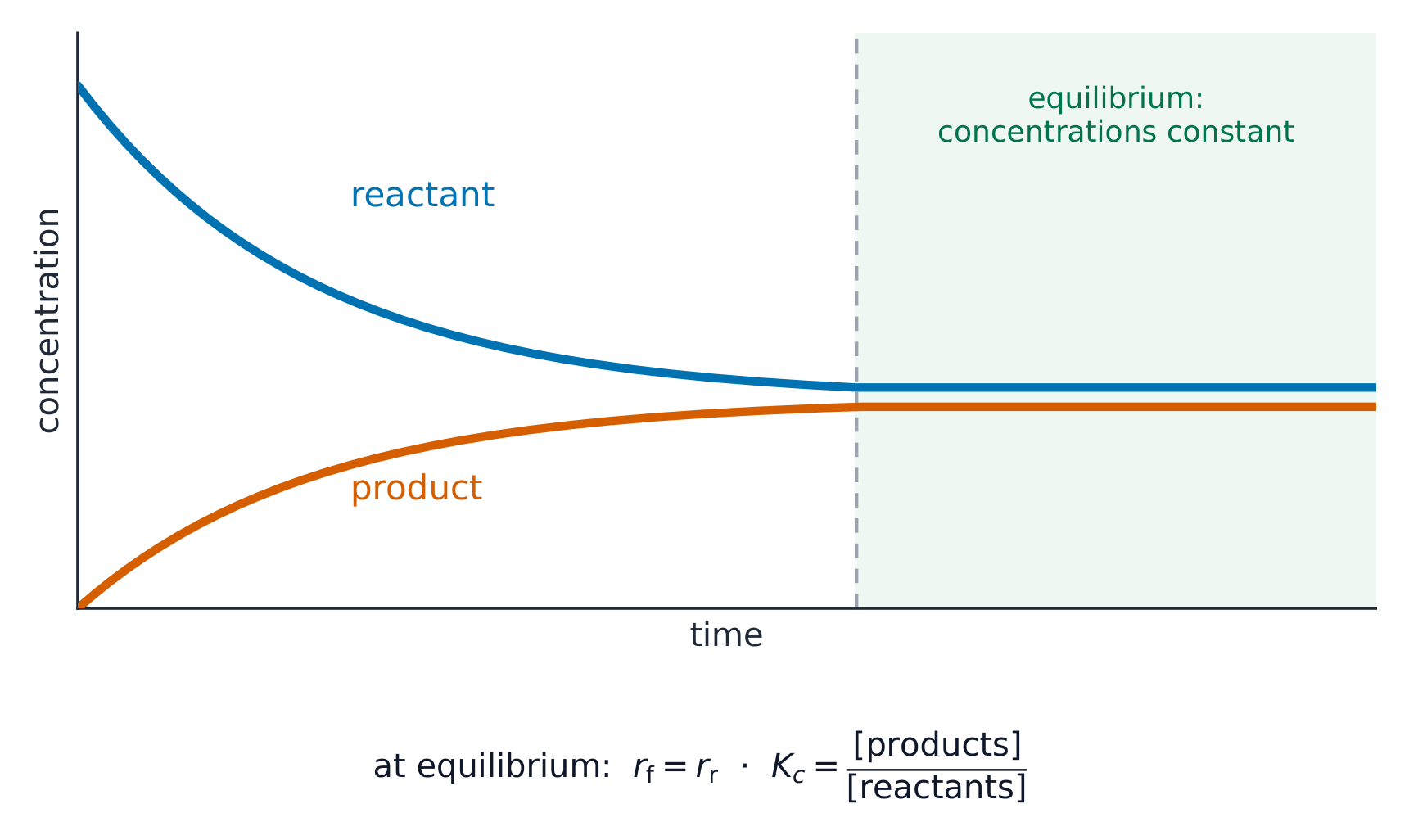
- 7.1.A.2 When equilibrium is reached, no observable changes occur in the system. Reactants and products are simultaneously present, and the concentrations or partial pressures of all species remain constant.
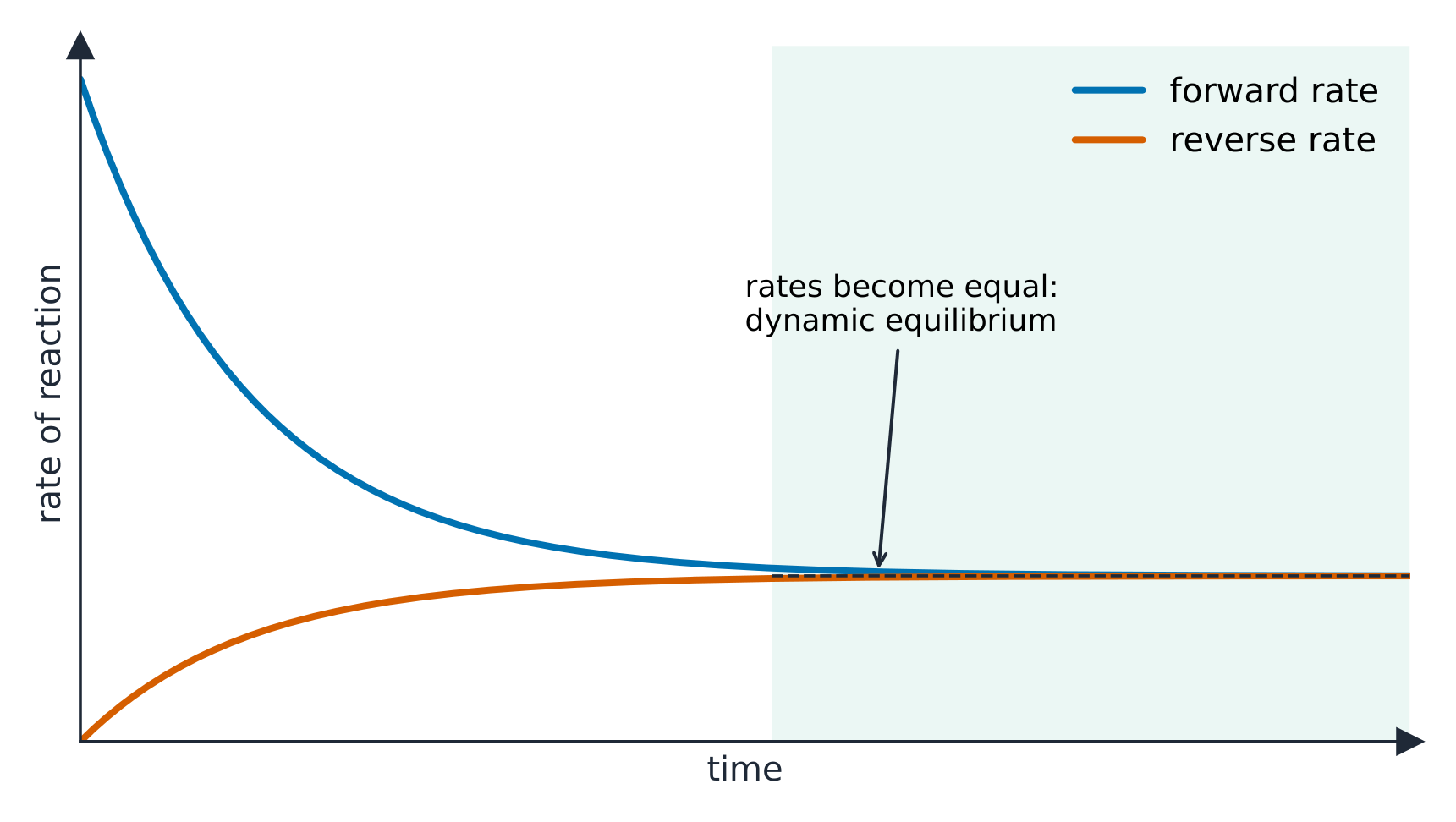
- 7.1.A.3 The equilibrium state is dynamic. The forward and reverse processes continue to occur at equal rates, resulting in no net observable change.
- 7.1.A.4 Graphs of concentration, partial pressure, or rate of reaction versus time for simple chemical reactions can be used to understand the establishment of chemical equilibrium.
Bahasa Indonesia
Tujuan Pembelajaran 7.1.A: Jelaskan hubungan antara terjadinya proses kimia atau fisik yang reversibel, dan pen establishment kesetimbangan, terhadap pengamatan eksperimen.
- 7.1.A.1 Banyak proses yang dapat diamati bersifat reversibel. Contohnya meliputi penguapan dan kondensasi air, penyerapan dan desorpsi gas, atau pelarutan dan presipitasi garam. Beberapa proses kimia reversibel yang penting meliputi transfer proton dalam reaksi asam-basa dan transfer elektron dalam reaksi redoks.
- 7.1.A.2 Ketika kesetimbangan tercapai, tidak ada perubahan yang dapat diamati terjadi pada sistem. Reaktan dan produk hadir secara bersamaan, dan konsentrasi atau tekanan parsial dari semua spesies tetap konstan.
- 7.1.A.3 Keadaan kesetimbangan bersifat dinamis. Proses maju dan mundur terus terjadi pada laju yang sama, menghasilkan tidak adanya perubahan yang dapat diamati secara netto.
- 7.1.A.4 Grafik konsentrasi, tekanan parsial, atau laju reaksi terhadap waktu untuk reaksi kimia sederhana dapat digunakan untuk memahami pembentukan kesetimbangan kimia.