Skip to content · ⁨דלג לתוכן⁩

The Living World: Biodiversity · ⁨העולם החי: מגוון ביולוגי⁩

AP Environmental Science · ⁨סביבה וקיימות - AP⁩ · Topic 2 · ⁨נושא 2⁩

Video lesson for this topic · ⁨שיעור וידאו לנושא זה⁩ Open the video page · ⁨פתח את עמוד הוידאו⁩
7:58

העולם החי: מגוון ביולוגי

הר געש דוחף אי חדש החוצה מהים. בהתחלה אין עליו כלום – רק סלע חשוף, ללא אדמה וללא חיים כלל. חמישים שנה לאחר מכן, הוא ירוק. אז איך…

English narration · English + 中文 subtitles burned in · ⁨קריאת קול באנגלית · תרגום אנגלי + סינית שרוף בתוך הסרטון⁩

2.1

Introduction to Biodiversity · ⁨מבוא לביוגוון⁩

Syllabus · ⁨סיילבוס⁩
English

Enduring Understanding (ERT-2): Ecosystems have structure and diversity that change over time.

Learning Objective ERT-2.A: Explain levels of biodiversity and their importance to ecosystems.

  • ERT-2.A.1 Biodiversity in an ecosystem includes genetic, species, and habitat diversity.
  • ERT-2.A.2 The more genetically diverse a population is, the better it can respond to environmental stressors. Additionally, a population bottleneck can lead to a loss of genetic diversity.
  • ERT-2.A.3 Ecosystems that have a larger number of species are more likely to recover from disruptions.
  • ERT-2.A.4 Loss of habitat leads to a loss of specialist species, followed by a loss of generalist species. It also leads to reduced numbers of species that have large territorial requirements.
  • ERT-2.A.5 Species richness refers to the number of different species found in an ecosystem.
עברית

הבנה נמשכת (ERT-2): לאקולוגיות יש מבנה ומגוון השונים לאורך הזמן.

מטרת למידה ERT-2.A: הסבר על רמות המגוון הביולוגי וחשיבותן לאקולוגיות.

  • ERT-2.A.1 מגוון ביולוגי באקולוגיה כולל מגוון גנטי, מינים, וסביבתי.
  • ERT-2.A.2 ככל שהאוכלוסייה מגוונת גנטית יותר, כך היא מסוגלת להגיב טוב יותר לגורמי מתח סביבתיים. בנוסף, צוואר בקבוק אוכלוסייתי עשוי להוביל לאובדן מגוון גנטי.
  • ERT-2.A.3 אקולוגיות שמספר המינים בהן גדול יותר נוטות להתאושש מאירועי הפרעה.
  • ERT-2.A.4 אובדן בית הגידול מוביל לאובדן מינים ספציאליסטים, שלאחריו אובדן מינים גנרליסטים. כמו כן, הוא מוביל לצמצום במספר המינים הדורשים שטחי טריטוריה גדולים.
  • ERT-2.A.5 עושר מינים מתייחס למספר המינים השונים שנמצאים באקולוגיה.
Source: College Board AP Course and Exam Description · ⁨מקור: תיאור הקורס והמבחן של College Board AP⁩

English

Biodiversity 生物多样性 is the variety of life, measured at three levels:

  • Genetic diversity – variety of genes within a species. More genetic variety means a population can better respond to environmental stressors 环境压力; a population bottleneck 种群瓶颈 (a sharp drop in numbers) throws that variety away and leaves the survivors vulnerable.
  • Species diversity – the number of species (species richness 物种丰富度) and how evenly individuals are spread among them.
  • Habitat diversity – the variety of habitats in a region.

More species-rich ecosystems are more resilient 有韧性的: they recover from disruption more readily, because varied species can fill roles when conditions change. Habitat loss removes species in a predictable order – specialist 特化 species (narrow needs) go first, then the hardier generalist 广适性 species, and species that need large territories decline as their range shrinks.

עברית

ביוגוון הוא המגוון בחיים, שנמדד בשלושה רמות:

  • מגוון גנטי – מגוון הגנים בתוך מין. מגוון גנטי גדול יותר מאפשר לאוכלוסייה להגיב טוב יותר לגורמי מתח סביבתיים; צוואר בקבוק באוכלוסייה (ירידה חדה במספר הפרטים) משליך את המגוון הזה ומשאיר את הנותרים בפני הסיכון.
  • מגוון מינים – מספר המינים (עושר מינים) וכמה פרטים מפוזרים באופן שווה ביניהם.
  • מגוון בתי גידול – מגוון בתי הגידול באזור מסוים.

מערכות אקולוגיות עם עושר מינים גבוה יותר הן יותר עמידות: הן נטשות בהפרעות בצורה מהירה יותר, משום שמינים מגוונים יכולים למלא תפקידים כאשר התנאים משתנים. אובדן בתי גידול מוביל לאובדן מינים בסדר ניבוי תחזיתי – מינים ספציאליסטים (בעלי צרכים צרים) נעלמים תחילה, ולאחר מכן המינים גנרליסטים העמידים יותר, ומינים הזקוקים לשטחי מחיה גדולים פוחתים כשהטווח שלהם מצטמצם.

לביוגוון יש שלושה רמות: גנטית, מינית, ובית גידול
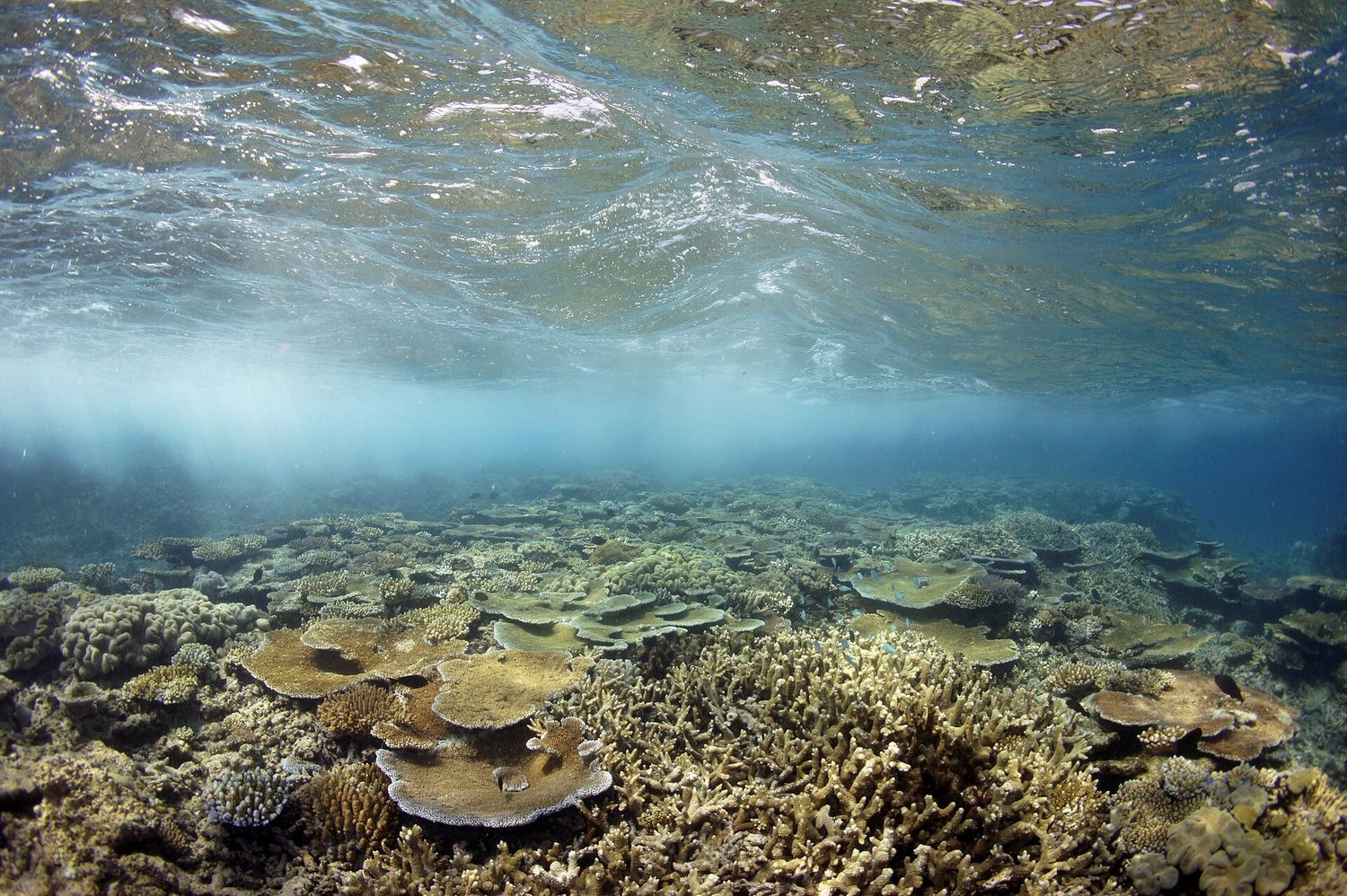
שונית אלמוגים: ביוגוון גבוה ממקדם מינים ושירותי אקوسیסטמה בשטח קטן
שונית אלמוגים: מגוון ביולוגי גבוה מרוכז ומספק שירותי אקלים וצמחים בשטח קטן
Vocabulary · ⁨מילון מונחים⁩ Train · ⁨אימון⁩
English עברית
Biodiversity/ˌbaɪəʊdaɪˈvɜːsɪti/ מגוון ביולוגי
environmental stressors/enˌvaɪrənˈmentl ˈstresəz/ גורמי מתח סביבתיים
population bottleneck/ˌpɒpjʊˈleɪʃn ˈbɒtəlnek/ צווארת בקבוק של אוכלוסייה
species richness/ˈspiːsiːz ˈrɪtʃnəs/ עושר מינים
resilient/rɪˈsɪlɪənt/ עמיד
specialist/ˈspeʃəlɪst/ מין מיוחד
generalist/ˈdʒenərəlɪst/ מין כללי
Ecosystem services/ˈiːkəʊsɪstəm ˈsɜːvɪsɪz/ שירותי אקו-מערכת
Anthropogenic/ˌænθrəpəˈdʒenɪk/ אנתרופוגני
2.2

Ecosystem Services · ⁨שירותי אקוסטמה⁩

Syllabus · ⁨סיילבוס⁩
English

Enduring Understanding (ERT-2): Ecosystems have structure and diversity that change over time.

Learning Objective ERT-2.B: Describe ecosystem services.

  • ERT-2.B.1 There are four categories of ecosystem services: provisioning, regulating, cultural, and supporting.

Learning Objective ERT-2.C: Describe the results of human disruptions to ecosystem services.

  • ERT-2.C.1 Anthropogenic activities can disrupt ecosystem services, potentially resulting in economic and ecological consequences.
עברית

הבנה נמשכת (ERT-2): לאקולוגיות יש מבנה ומגוון השונים לאורך הזמן.

מטרת למידה ERT-2.B: תיאור שירותי אקולוגיה.

  • ERT-2.B.1 קיימות ארבע קטגוריות של שירותי אקולוגיה: אספקה, ויסות, תרבותיות ותמיכה.

מטרת למידה ERT-2.C: תיאור התוצאות של הפרעות אנושיות לשירותי אקולוגיה.

  • ERT-2.C.1 פעילויות אנתרופוגניות יכולות להפריע לשירותי אקולוגיה, ולמעשה עלולות להוביל לתוצאות כלכליות ואקולוגיות.

Source: College Board AP Course and Exam Description · ⁨מקור: תיאור הקורס והמבחן של College Board AP⁩

English

Ecosystem services 生态系统服务 are the free benefits nature gives people, in four categories:

  • Provisioning – products: food, fresh water, timber, fibre.
  • Regulating – processes that keep conditions stable: climate regulation, water filtration, pollination, flood control.
  • Cultural – non-material value: recreation, beauty, spiritual and educational value.
  • Supporting – the services that make the others possible: nutrient cycling, soil formation, photosynthesis.

Anthropogenic 人为的 (human-caused) activities can disrupt these services, with real economic and ecological costs – for example, losing pollinators forces farmers to pay for pollination that bees once did for free.

עברית

שירותי אקוסטמה הם התועלות הטבעיות שמספקת הטבע לאנשים, בארבע קטגוריות:

  • אספקה – מוצרים: מזון, מים מתוקים, עץ, סיבים.
  • ויסות – תהליכים המשמרים יציבות בתנאים: ויסות אקלים, סינון מים, האבקה, שליטה בשיפונים.
  • תרבותי – ערך בלתי-חומרי: בילוי, יופי, ערך רוחני וחינוכי.
  • תמיכה – השירותים המאפשרים את שאר השירותים: מחזור חומרי הזנה, ליצירת קרקע, פוטוסינתזה.

פעילות אנתרופוגנית (בגלל פעילות אדם) עלולה להפר את שירותים אלו, עם עלויות כלכליות וגם אקולוגיות אמיתיות – לדוגמה, איבוד מאבקים מחייב את החקלאים לשלם על האבקה שהיו מעוניים לעשות בחינם בעבר.

2.3

Island Biogeography · ⁨ביאוגרפיה של איים⁩

Syllabus · ⁨סיילבוס⁩
English

Enduring Understanding (ERT-2): Ecosystems have structure and diversity that change over time.

Learning Objective ERT-2.D: Describe island biogeography.

  • ERT-2.D.1 Island biogeography is the study of the ecological relationships and distribution of organisms on islands, and of these organisms' community structures.
  • ERT-2.D.2 Islands have been colonized in the past by new species arriving from elsewhere.

Learning Objective ERT-2.E: Describe the role of island biogeography in evolution.

  • ERT-2.E.1 Many island species have evolved to be specialists versus generalists because of the limited resources, such as food and territory, on most islands. The long-term survival of specialists may be jeopardized if and when invasive species, typically generalists, are introduced and outcompete the specialists.
עברית

הבנה נמשכת (ERT-2): לאקולוגיות יש מבנה ומגוון השונים לאורך הזמן.

מטרת למידה ERT-2.D: תיאור ביוגיאוגרפיה איטלית.

  • ERT-2.D.1 ביוגרפיה איזלית היא העוסקת בקשרים אקולוגיים ובפיזור אורגניזמים באיים ובמבני הקהילה שלהם.
  • ERT-2.D.2 איים נכבשו בעבר על ידי מינים חדשים שהגיעו ממקומות אחרים.

מטרות למידה ERT-2.E: לתאר את תפקיד הביוגרפיה האיזלית באבולוציה.

  • ERT-2.E.1 הרבה מיני איים התפתחו להיות ספציאליסטים לעומת ג'נרליסטים בשל המשאבים המוגבלים, כגון מזון ושטח, ברוב האיים. הישרדות לטווח ארוך של ספציאליסטים עשויה להיות בסכנה אם ומינים פולשים, בדרך כלל ג'נרליסטים, יוקנו ויתחרו בהם.

Source: College Board AP Course and Exam Description · ⁨מקור: תיאור הקורס והמבחן של College Board AP⁩

English
Island biogeography

Island biogeography 岛屿生物地理学 studies how many species an island (or any isolated habitat patch) holds. The number settles at a balance between two rates:

  • Immigration of new species – higher for islands closer to the mainland.
  • Extinction of resident species – lower on larger islands.

So big, near islands hold the most species; small, remote ones the fewest. Isolation also drives evolution: island species often become specialists because resources are limited, and many are endemic 特有 – found nowhere else. That makes them fragile. When an invasive species 入侵物种 (usually a tough generalist) arrives, it can outcompete the specialists, which have nowhere else to go.

עברית
ביאוגרפיה של איים

ביאוגרפיה של איים עוסקת במחקר מספר המינים שיכול לאיים (או כל כתמתם בידוד) להכיל. המספר משתווה לאיזון בין שני קצבים:

  • הגירה של מינים חדשים – גבוהה יותר באיים קרובים יותר ליבשה.
  • כחדה של מינים מקומיים – נמוכה יותר באיים גדולים.

לכן, איים גדולים וקרובים מכילים את המינים הרבים ביותר; איים קטנים ומבודדים את המינים הפחותים. בידוד מניע גם התפתחות: מיני איים הופכים לעיתים קרובות ל-מיוחדים בגלל מוגבלות המשאבים, והם אנדמיים – נמצאים רק במקום זה. הדבר הופך אותם לשברירים. כאשר מין פולש (בדרך כלל גנרליסט חזק) מגיע, הוא יכול להתחרות במיוחדים, שאין להם לאן ללכת.

איסים גדולים וקרובים יותר מכילים מינים רבים יותר, מאזנים הגירה מול הכחדה
איים גדולים וקרובים מכילים יותר מינים, מאזנים הגירה כנגד כחדה
Vocabulary · ⁨מילון מונחים⁩ Train · ⁨אימון⁩
English עברית
Island biogeography/ˈaɪlənd ˌbaɪəʊdʒɪˈɒɡrəfi/ ביאו-גיאוגרפיה אישית
endemic/enˈdemɪk/ אנדמי
invasive species/ɪnˈveɪsɪv ˈspiːsiːz/ מינים פולשים
range of tolerance/reɪndʒ ɒv ˈtɒlərəns/ טווח סבילות
optimal range/ˈɒptɪml reɪndʒ/ טווח אופטימלי
zones of stress/zəʊnz ɒv stres/ אזורים של מתח
Ecological tolerance/ˌekəˈlɒdʒɪkl ˈtɒlərəns/ סבילות אקולוגית
Periodic/ˌpɪərɪˈɒdɪk/ תקופתי
Episodic/ˌepɪˈsɒdɪk/ אפיסודי
Random/ˈrændəm/ אקראי
migration/maɪˈɡreɪʃn/ הגירה
adaptation/ˌædæpˈteɪʃn/ הסתגלות
natural selection/ˈnætʃərəl sɪˈlekʃn/ בחירה טבעית
2.4

Ecological Tolerance · ⁨סחיפות אקולוגית⁩

Syllabus · ⁨סיילבוס⁩
English

Enduring Understanding (ERT-2): Ecosystems have structure and diversity that change over time.

Learning Objective ERT-2.F: Describe ecological tolerance.

  • ERT-2.F.1 Ecological tolerance refers to the range of conditions, such as temperature, salinity, flow rate, and sunlight that an organism can endure before injury or death results.
  • ERT-2.F.2 Ecological tolerance can apply to individuals and to species.
עברית

הבנה נמשכת (ERT-2): לאקולוגיות יש מבנה ומגוון השונים לאורך הזמן.

מטרות למידה ERT-2.F: לתאר סבילות אקולוגית.

  • ERT-2.F.1 סבילות אקולוגית מתייחסת לטווח של תנאים, כגון טמפרטורה, מליחות, קצב זרימה ואור שמש, שאורגניזם יכול לסבול לפני שהופיע פגיעה או מוות.
  • ERT-2.F.2 סבילות אקולוגית יכולה לחול על פרטים ועל מינים.

Source: College Board AP Course and Exam Description · ⁨מקור: תיאור הקורס והמבחן של College Board AP⁩

English

Every species has a range of tolerance 耐受范围 – the span of conditions (temperature, salinity, pH, sunlight) it can survive. Near the middle is an optimal range 最适范围 where individuals thrive; toward the edges are zones of stress 胁迫区 where they survive but struggle to grow or reproduce; beyond the limits they die. Ecological tolerance 生态耐受性 applies both to a single individual and to a whole species, and it decides where an organism can live and how it copes with change.

עברית

לכל מין יש טווח סחיפות – טווח התנאים (טמפרטורה, מליחות, pH, אור שמש) שהוא יכול לשרוד. בסמוך למרכז נמצא טווח אופטימלי שבו פרטים פורחים; לכיוון הקצוות נמצאים אזורי לחץ שבהם הם נשארים על חייהם אך מתקשים לגדול או להתרבות; מעבר לגבולות הם נמכחים. סחיפות אקולוגית חלה גם על פרט יחיד וגם על כל המין, והיא קובעת היכן אורגניזם יכול לחיות וכיצד הוא מתמודד עם שינויים.

בתוך הטווח האופטימלי שלה מין פורח; ככל שהוא מתקרב לגבולותיו הוא נתון ללחץ, ולאחר מכן אינו יכול לשרוד
בתחום האופטימלי שלו מין פורח; ככל שהוא מתקרב לגבולותיו הוא נמצא בלחץ, ולאחר מכן אינו יכול לשרוד
2.5

Natural Disruptions to Ecosystems · ⁨הפרעות טבעיות באקוסיסטמות⁩

Syllabus · ⁨סיילבוס⁩
English

Enduring Understanding (ERT-2): Ecosystems have structure and diversity that change over time.

Learning Objective ERT-2.G: Explain how natural disruptions, both short- and long-term, impact an ecosystem.

  • ERT-2.G.1 Natural disruptions to ecosystems have environmental consequences that may, for a given occurrence, be as great as, or greater than, many human-made disruptions.
  • ERT-2.G.2 Earth system processes operate on a range of scales in terms of time. Processes can be periodic, episodic, or random.
  • ERT-2.G.3 Earth's climate has changed over geological time for many reasons.
  • ERT-2.G.4 Sea level has varied significantly as a result of changes in the amount of glacial ice on Earth over geological time.
  • ERT-2.G.5 Major environmental change or upheaval commonly results in large swathes of habitat changes.
  • ERT-2.G.6 Wildlife engages in both short- and long-term migration for a variety of reasons, including natural disruptions.
עברית

הבנה נמשכת (ERT-2): לאקולוגיות יש מבנה ומגוון השונים לאורך הזמן.

מטרות למידה ERT-2.G: להסביר כיצד הפרעות טבעיות, קצרות וטווח ארוכות, משפיעות על מערכת אקולוגית.

  • ERT-2.G.1 להפרעות טבעיות במערכות אקולוגיות יש השפעות סביבתיות שעשויות, במקרה נתון, להיות גדולות כמו או גדולות מהרבות ההפרעות הנגרמות על ידי האדם.
  • ERT-2.G.2 תהליכי מערכת כדור הארץ פועלים בטווח רחב של סקالات בזמן. תהליכים יכולים להיות מחזוריים, תקופתיים או מקריים.
  • ERT-2.G.3 אקלים כדור הארץ השתנה לאורך זמן גיאולוגי ממגוון סיבות.
  • ERT-2.G.4 מפלס הים השתנה משמעותית כתוצאה משינויים בכמות הקרח הקרחוני בכדור הארץ לאורך זמן גיאולוגי.
  • ERT-2.G.5 שינוי או מהפכה סביבתית גדולים מובילים לרוב לשינויים נרחבים בשטחי גרסה.
  • ERT-2.G.6 חיות בר מבצעות הגירה קצרת וטווח ארוך ממגוון סיבות, כולל הפרעות טבעיות.

Source: College Board AP Course and Exam Description · ⁨מקור: תיאור הקורס והמבחן של College Board AP⁩

English

Natural events disrupt ecosystems across every timescale, and a single natural event can rival or exceed a human-made one. Earth's processes come in three timing patterns:

  • Periodic 周期性 – regular cycles (seasons, tides).
  • Episodic 偶发性 – occasional, irregular events (fires, floods, volcanic eruptions).
  • Random 随机 – no pattern (a meteor strike).

Over geological time, Earth's climate has shifted for many reasons, and sea level has risen and fallen with the amount of glacial ice – each change reshaping large swaths of habitat. Wildlife responds by migration 迁徙, moving short or long distances to follow conditions.

עברית

אירועים טבעיים מפריעים לאקוסיסטמות בכל קנה מידה זמני, ואירוע טבעי אחד יכול להתחרות או לעלות על אירוע הנוצר בידי האדם. תהליכי כדור הארץ מגיעים בשלושה דפוסי תזמון:

  • תקופתי – מחזוריות קבועה (עונות השנה, גאות ושפל).
  • אפיסודי – אירועים נדירים ובלתי-סדירים (שטפים, הצפות, התפרצויות געשיות).
  • אקראי – ללא דפוס (פגיעת מטאוריט).

במהלך הזמן הגיאולוגי, האקלים של כדור הארץ השתנה מסיבות רבות, והרמת פני הים עלתה וירדה בהתאם לכמות הקרח הקוטבי – כל שינוי עיצב מחדש חלקים נרחבים מבית הגידול. בעלי החיים מגיבים באמצעות הגירה, על ידי מעבר למרחקים קצרים או ארוכים כדי לעקוב אחרי התנאים.

חומת להבה ועשן רצים בין העלים העליונים של יער מחטניים
אש תכת המסתובבת ביער. אש היא הפרעה אפיסודית טבעית, והמינים הרבים משתלמים מוליה
2.6

Adaptations · ⁨הסתגלויות⁩

Syllabus · ⁨סיילבוס⁩
English

Enduring Understanding (ERT-2): Ecosystems have structure and diversity that change over time.

Learning Objective ERT-2.H: Describe how organisms adapt to their environment.

  • ERT-2.H.1 Organisms adapt to their environment over time, both in short- and long-term scales, via incremental changes at the genetic level.
  • ERT-2.H.2 Environmental changes, either sudden or gradual, may threaten a species' survival, requiring individuals to alter behaviors, move, or perish.
עברית

הבנה נמשכת (ERT-2): לאקולוגיות יש מבנה ומגוון השונים לאורך הזמן.

מטרות למידה ERT-2.H: לתאר כיצד אורגניזמים מסתגלים לסביבתם.

  • ERT-2.H.1 אורגניזמים מסתגלים לסביבתם לאורך זמן, גם בטווחים קצרים וגם ארוכים, דרך שינויים הדרגתיים ברמת הגנטיקה.
  • ERT-2.H.2 שינויים בסביבה, בין אם פתאומיים ובין אם הדרגתיים, עלולים להשמיט את הישרדותו של מין, ולדרוש מהפרטים לשנות התנהגות, לעבור או למות.

Source: College Board AP Course and Exam Description · ⁨מקור: תיאור הקורס והמבחן של College Board AP⁩

English

An adaptation 适应 is an inherited trait that improves survival and reproduction in an environment. Adaptations arise through natural selection 自然选择 – incremental genetic change accumulating over generations, not within a single lifetime. When the environment changes, individuals must alter their behaviour, move, or die; if change comes faster than a population can adapt, it declines. A periodic disturbance such as fire is often part of a healthy cycle, and many species are adapted to it (some pine cones open only in a fire's heat).

עברית

הסתגלות היא תכונה מורשת המשפרת את השרדות וההתרבות בסביבה נתונה. הסתגלויות נוצרות דרך בחירה טבעית – שינוי גנטי מדורג שנצבר לאורך דורות, ולא בתוך חיי פרט בודד. כאשר הסביבה משתנה, הפרטים צריכים לשנות את התנהגותם, לעבור או למות; אם השינוי מגיע מהר יותר מהאוכלוסייה מסוגלת להסתגל אליה, היא יורדת. הפרעה תקופתית כמו אש היא לעיתים קרובות חלק ממחזור בריא, והמינים הרבים משתלמים מולה (חלק מקונות האורן נפתחים רק בחום האש).

2.7

Ecological Succession · ⁨התפתחות אקולוגית⁩

Syllabus · ⁨סיילבוס⁩
English

Enduring Understanding (ERT-2): Ecosystems have structure and diversity that change over time.

Learning Objective ERT-2.I: Describe ecological succession.

  • ERT-2.I.1 There are two main types of ecological succession: primary and secondary succession.
  • ERT-2.I.2 A keystone species in an ecosystem is a species whose activities have a particularly significant role in determining community structure.
  • ERT-2.I.3 An indicator species is a plant or animal that, by its presence, abundance, scarcity, or chemical composition, demonstrates that some distinctive aspect of the character or quality of an ecosystem is present.

Learning Objective ERT-2.J: Describe the effect of ecological succession on ecosystems.

  • ERT-2.J.1 Pioneer members of an early successional species commonly move into unoccupied habitat and over time adapt to its particular conditions, which may result in the origin of new species.
  • ERT-2.J.2 Succession in a disturbed ecosystem will affect the total biomass, species richness, and net productivity over time.
עברית

הבנה נמשכת (ERT-2): לאקולוגיות יש מבנה ומגוון השונים לאורך הזמן.

מטרות למידה ERT-2.I: לתאר התפתחות אקולוגית.

  • ERT-2.I.1 ישנם שני סוגים עיקריים של התפתחות אקולוגית: התפתחות ראשונית והתפתחות משנייה.
  • ERT-2.I.2 מין מפתח באקוסיסטם הוא מין שהפעילות שלו משחקת תפקיד קריטי במיוחד בקביעת מבנה הקהילה.
  • ERT-2.I.3 מין אינדיקטורי הוא צמח או בעל חיים שמנוכחותו, צפיפותו, נדירותו או הרכב הכימי שלו מעידים על קיום מאפיין ייחודי של האקוסיסטם.

מטרות למידה ERT-2.J: לתאר את השפעת ההתפתחות האקולוגית על אקוסיסטמות.

  • ERT-2.J.1 חברי פיונר של מינים בהתפתחות מוקדמת נוטים להתיישב בביולומינצנטיות שאינו מיושב ועם הזמן מתאימים לתנאים הייחודיים שלה, מה שעשוי לובל ליצירת מינים חדשים.
  • ERT-2.J.2 התפתחות באקוסיסטם שנפגע תשפיע על הביומסה הכוללת, העושר המיני ואת התפוקה הנטו לאורך זמן.

Source: College Board AP Course and Exam Description · ⁨מקור: תיאור הקורס והמבחן של College Board AP⁩

English
Ecological succession

Ecological succession 生态演替 is the gradual, orderly change in a community over time:

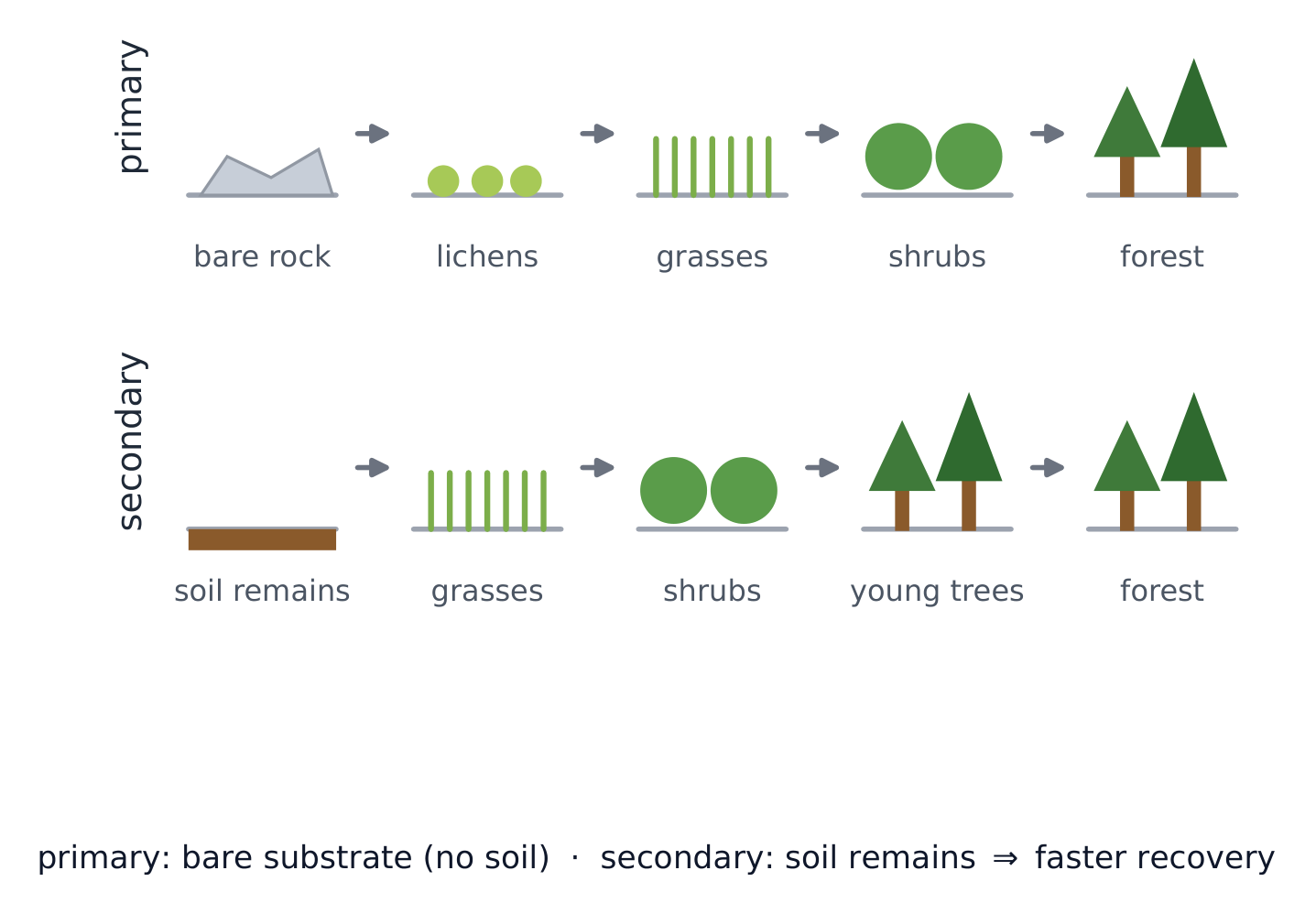
  • Primary succession 初级演替 starts on bare rock with no soil – after a glacier retreats or lava cools. Pioneer species 先锋物种 such as lichens 地衣 arrive first and slowly build soil. It is slow.
  • Secondary succession 次级演替 follows a disturbance that leaves the soil intact – after a fire or abandoned farming – so it is much faster.

Succession tends toward a relatively stable climax community 顶极群落. Two special roles shape a community out of proportion to their numbers: a keystone species 关键种, whose activities hold the community structure together (remove it and the community collapses – sea otters keeping urchins in check), and an indicator species 指示物种, whose presence or health signals the condition of the whole ecosystem (lichens vanish where the air is polluted).

Worked example. A pond holds 3 fish species with 5, 3, and 2 individuals ($N=10$). Simpson's Diversity Index $=1-\sum\left(\tfrac{n}{N}\right)^2 = 1-\left[(0.5)^2+(0.3)^2+(0.2)^2\right] = 1-0.38 = 0.62$. A value near 1 means high diversity; near 0 means one species dominates. Adding a fourth, evenly-sized species would push the index higher.

עברית
הצטברות אקולוגית

התפתחות אקולוגית היא שינוי הדרגתי ומסודר בקהילה לאורך זמן:

  • התפתחות ראשונית מתחילה על סלע חשוף ללא קרקע – לאחר שהקוקה נסוג או הלבה התקררה. מינים פיונרים כמו טחבי-אבן מגיעים הראשונים ובונים לאט את הקרקע. התהליך איטי.
משטח סלע מכוסה בפסים צהובים, כתומים וירוקים-בהירים של טחבי-אבן
טחבי-אבן גדלים ישירות על סלע חשוף. כמינים פיונרים הם שוברים לאט את הסלע ובונים את שכבת הקרקע הדקה הראשונה
  • התפתחות משנייה עוקבת אחר הפרעה שהשאירה את הקרקע שלמה – לאחר אש או הישאר חוות חקלאיות – ולכן היא מהירה הרבה יותר.

ההתפתחות נוטה להגיע לקהילת שיא יציבה יחסית. שני תפקידים מיוחדים מעצבים קהילה בלתי-פרופורציונלי לגודלה: מין מפתח, שמפעילותו מחזיקה את מבנה הקהילה (הסרתו גורמת לקריסת הקהילה – לטאות ימיות המונעות פורקינים), ומין אינדיקטור, בנוכחותו או במצבו הבריאותי משתקף מצב כלל האקוסיסטמה (טחבי-אבן נעלמים במקומות בהם האוויר מזוהם).

התפתחות ראשונית בונה מסלע חשוף; התפתחות משנייה מתחדשת מקרקע שנותרה

דוגמה מוצגת. בברכה קיימות 3 מיני דגים עם 5, 3 ו-2 פרטים ($N=10$). מדד מגוון סימפסון $=1-\sum\left(\tfrac{n}{N}\right)^2 = 1-\left[(0.5)^2+(0.3)^2+(0.2)^2\right] = 1-0.38 = 0.62$. ערך הקרוב ל-1 מעיד על מגוון גבוה; ערך הקרוב ל-0 מעיד על שליטה של מין אחד. הוספת מין רביעי בגודל שווה תעלה את המדד.

Vocabulary · ⁨מילון מונחים⁩ Train · ⁨אימון⁩
English עברית
Ecological succession/ˌekəˈlɒdʒɪkl səkˈseʃn/ התפתחות אקולוגית
Primary succession/ˈpraɪməri səkˈseʃn/ התפתחות ראשונית
Pioneer species/paɪəˈnɪə ˈspiːsiːz/ מין מקדים
lichens/ˈlaɪkənz/ שעמוגים
Secondary succession/ˈsekəndəri səkˈseʃn/ התפתחות משנייה
climax community/ˈklaɪmæks kəˈmjuːnɪti/ קהילה קלימקסית
keystone species/ˈkiːstəʊn ˈspiːsiːz/ מין מפתח
indicator species/ˈɪndɪkeɪtə ˈspiːsiːz/ מין אינדיקטור
2.7

Exam tips · ⁨טיפים לבחינות⁩

English
  • Describe biodiversity at three levels: genetic, species, and habitat, and link higher diversity to greater resilience.
  • Specialist species (narrow needs) are more vulnerable than generalists when a habitat changes.
  • Distinguish primary succession (bare rock, no soil, slow) from secondary (soil intact, faster).
  • Explain a keystone species (outsized effect) and an indicator species (signals ecosystem health).
  • Name the four ecosystem services (provisioning, regulating, cultural, supporting) with examples.
עברית
  • תאר את הביוגוון בשלושה רמות: גנטית, מינית ושל ביטול, וקשר בין מגוון גבוה לבין גמישות גדולה יותר.
  • מינים ספציאליסטים (צרכים צרים) פגיעים יותר מאשר גנראליסטים כאשר הביטול משתנה.
  • הבדל בין סוקצסיה ראשונית (סלע חשוף, ללא קרקע, איטית) לבין משנית (קרקע שלמה, מהירה יותר).
  • הסבר על מין מפתח (השפעה יתר-גודל) ועל מין אינדיקטור (מסמן מצב בריאותי של אקוסיסטם).
  • ציין את ארבעת שירותי האקוסיסטם (אספקה, ויסות, תרבותי, תומך) עם דוגמאות.

Interactive lessons on this topic · ⁨שיעורים אינטראקטיביים בנושא זה⁩

Work through it step by step, with instant-check exercises. · ⁨לעבור על הדברים צעד אחר צעד, עם תרגילים לבדיקה מיידית.⁩

Past Papers · ⁨מבחני עבר⁩

More topics in AP Environmental Science · ⁨סביבה וקיימות - AP⁩ · ⁨נושאים נוספים בAP Environmental Science · ⁨סביבה וקיימות - AP⁩⁩

Log in or create account · ⁨היכנס או צור חשבון⁩

IGCSE, A-Level & AP