Skip to content · ⁨דלג לתוכן⁩
Subjects · ⁨נושאים⁩

AP Environmental Science · ⁨סביבה וקיימות - AP⁩

Tips · ⁨טיפים⁩

AP Environmental Science joins ecology, earth systems, populations, land and water use, energy, pollution and global change. It is genuinely interdisciplinary — biology, chemistry, geology and economics in one course — and the exam rewards connecting them, not listing them.

Numbers matter here. You will calculate by hand: percentage change, energy from a resource, doubling time, half-life, dose per person. No calculator was traditionally allowed, so practise the arithmetic itself, not only the setup.

Name a real case and quantify it. "Deforestation is bad" earns nothing; a named place, a mechanism and a number earns the marks.

The notes cover all nine units and work the calculations APES actually sets — energy, population, pollution — through in full. Released FRQs are in the library. This exam rewards naming a specific example, so the notes flag the case studies worth committing to memory.

  • 1

    The Living World: Ecosystems · ⁨העולם החי: מערכות אקולוגיות⁩

    Watch lesson · ⁨צפה בשיעור⁩
    1.1

    Introduction to Ecosystems · ⁨מבוא למערכות אקולוגיות⁩

    Syllabus · ⁨סיילבוס⁩
    English

    Enduring Understanding (ERT-1): Ecosystems are the result of biotic and abiotic interactions.

    Learning Objective ERT-1.A: Explain how the availability of resources influences species interactions.

    • ERT-1.A.1 In a predator-prey relationship, the predator is an organism that eats another organism (the prey).
    • ERT-1.A.2 Symbiosis is a close and long-term interaction between two species in an ecosystem. Types of symbiosis include mutualism, commensalism, and parasitism.
    • ERT-1.A.3 Competition can occur within or between species in an ecosystem where there are limited resources. Resource partitioning—using the resources in different ways, places, or at different times—can reduce the negative impact of competition on survival.
    עברית

    הבנה מתמשכת (ERT-1): מערכות אקולוגיות הן תוצאה של אינטראקציות בין גורמים ביולוגיים ולא-ביולוגיים.

    מטרות הלמידה ERT-1.A: הסבר על כך כיצד זמינות המשאבים משפיעה על אינטראקציות בין מינים.

    • ERT-1.A.1 בקשר טורף-נודף, הטורף הוא אורגניזם הנאכל מאורגניזם אחר (הנודף).
    • ERT-1.A.2 סימביוזה היא אינטראקציה קרובה וארוכת טווח בין שני מינים במערכת אקולוגית. סוגי הסימביוזה כוללים מיוטואליזם, קומנסליזם ופריזיטיזם.
    • ERT-1.A.3 תחרות יכולה להתרחש בתוך או בין מינים במערכת אקולוגית בה ישנם משאבים מוגבלים. חלוקת משאבים – שימוש במשאבים באופן, מקום או זמן שונים – יכולה להפחית את ההשפעה השלילית של התחרות על הישרדות.

    Source: College Board AP Course and Exam Description · ⁨מקור: תיאור הקורס והמבחן של College Board AP⁩

    English

    An ecosystem 生态系统 is all the living things (biotic) and non-living things (abiotic) in an area, interacting together. Organisms depend on each other and on their physical environment, and interactions like predation 捕食, competition 竞争, and symbiosis 共生 (mutualism, commensalism, parasitism) shape the community.

    עברית

    מערכת אקולוגית היא כל היצורים החיים (בייטי) והדברים הבלתי-חיים (אבייטי) באזור, המותאמים יחד. אורגניזמים תלויים זה בזה ובסביבה הפיזית שלהם, ואינטראקציות כמו טריפה, תחרות וסימביוזה (מוטואליזם, קומנסליזם, פparasitism) מעצבות את הקהילה.

    Explore · ⁨חקור⁩

    Explore how a population grows · ⁨חקור איך אוכלוסייה צומחת⁩

    Change the growth rate $r$ and the carrying capacity $K$. Growth is fast when a population is small, then levels off as resources run short and the ecosystem fills up. · ⁨שנה את קצב הצמיחה $r$ ואת הקיבולת החיובית $K$. הצמיחה מהירה כאשר האוכלוסייה קטנה, ולאחר מכן משתטחת כשהמשאבים נגמרים והמערכת האקולוגית מתמלאה.⁩

    1.2

    Terrestrial Biomes · ⁨ביומים יבשתיים⁩

    Syllabus · ⁨סיילבוס⁩
    English

    Enduring Understanding (ERT-1): Ecosystems are the result of biotic and abiotic interactions.

    Learning Objective ERT-1.B: Describe the global distribution and principal environmental aspects of terrestrial biomes.

    • ERT-1.B.1 A biome contains characteristic communities of plants and animals that result from, and are adapted to, its climate.
    • ERT-1.B.2 Major terrestrial biomes include taiga, temperate rainforests, temperate seasonal forests, tropical rainforests, shrubland, temperate grassland, savanna, desert, and tundra.
    • ERT-1.B.3 The global distribution of nonmineral terrestrial natural resources, such as water and trees for lumber, varies because of some combination of climate, geography, latitude and altitude, nutrient availability, and soil.
    • ERT-1.B.4 The worldwide distribution of biomes is dynamic; the distribution has changed in the past and may again shift as a result of global climate changes.
    עברית

    הבנה מתמשכת (ERT-1): מערכות אקולוגיות הן תוצאה של אינטראקציות בין גורמים ביולוגיים ולא-ביולוגיים.

    מטרת למידה ERT-1.B: לתאר את ההתפלגות הגלובלית וההיבטים הסביבתיים המרכזיים של ביאומים יבשתיים.

    • ERT-1.B.1 הביאום מכיל קהילות אופייניות של צמחים ובעלי חיים הנובעות ממנו ומסתגלות לאקלים שלו.
    • ERT-1.B.2 הביאומים היבשתיים העיקריים כוללים טאיגה, יערות גשם ממוזגים, יערות עונתיים ממוזגים, יערות גשם טרופיים, שיחיות, דשאיות ממוזגות, סוואנה, מדבריות וטונדרה.
    • ERT-1.B.3 ההתפלגות הגלובלית של משאבים טבעיים יבשתיים שאינם מינרליים, כמו מים ועצים לחומר גלם, משתנה בשל שילוב כלשהו של אקלים, גיאוגרפיה, רוחב גיאוגרפי וגובה, זמינות חומרי הזנה ותוסיס.
    • ERT-1.B.4 ההתפלגות הגלובלית של ביאומים היא דינמית; ההתפלגות השתנתה בעבר ועשויה להשתנות שוב כתוצאה משינויי האקלים הגלובליים.

    Source: College Board AP Course and Exam Description · ⁨מקור: תיאור הקורס והמבחן של College Board AP⁩

    English

    A biome 生物群系 is a large region defined by its climate and characteristic life. Terrestrial biomes (deserts, grasslands, tropical rainforest, temperate forest, taiga, tundra) are determined mainly by temperature and precipitation 降水. Each has plants and animals adapted to those conditions.

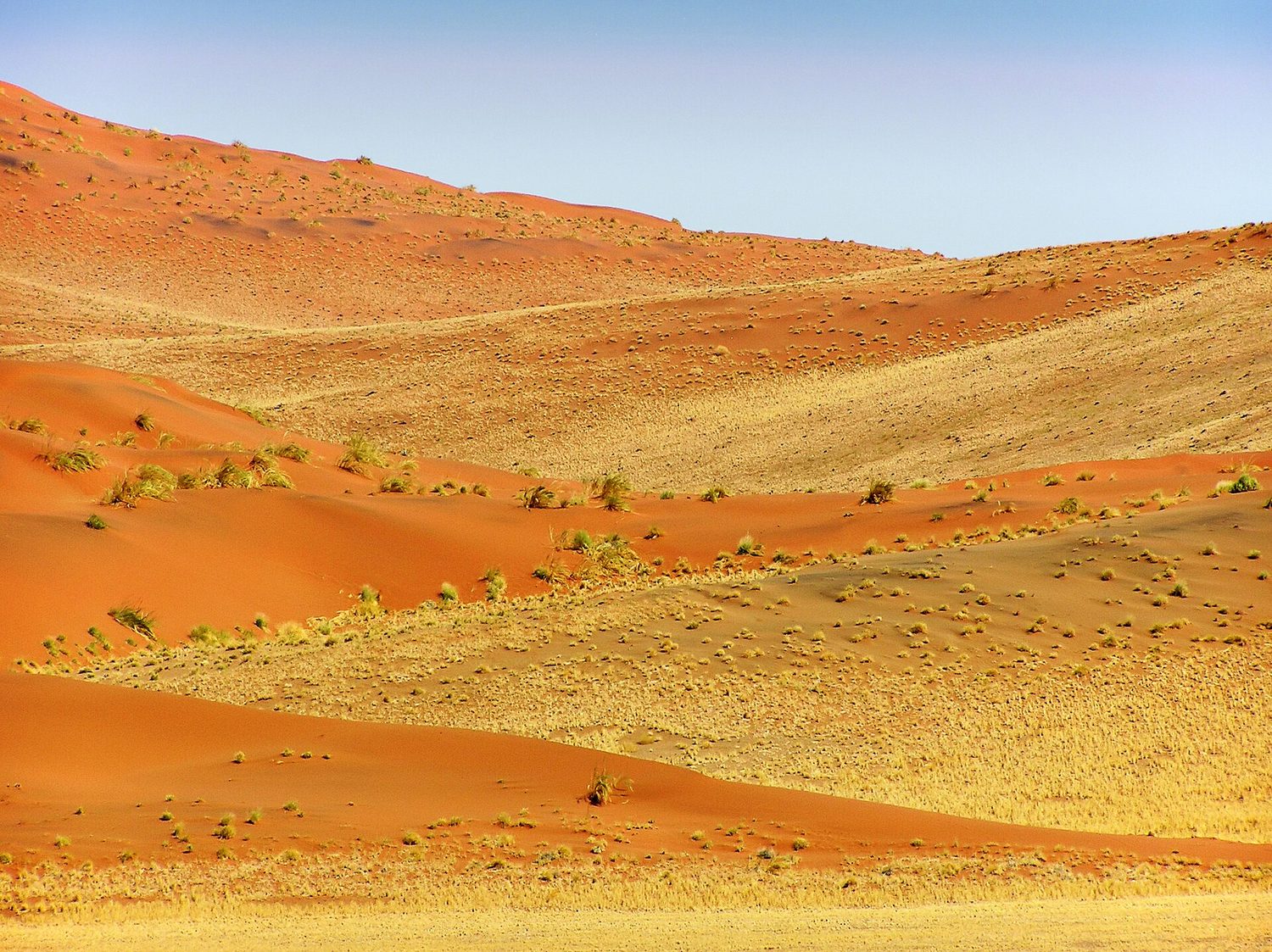
    The two images below sit at opposite ends of the precipitation scale, which is why their life looks so different:

    עברית

    בימה היא אזור רחב המוגדר על ידי האקלים והחיים האופייניים לו. בימות יבשתיות (מדבריות, פראיות, גשמיים טרופיים, יער ממוזג, טייגה, טונדרה) נקבעות בעיקר על ידי הטמפרטורה ומשקי הגשם. לכל בימה יש צמחים וחיות המותאמים לתנאים אלו.

    שתי התמונות למטה ניצבות בקצוות הנגדיים של סקאלת משקי הגשם, ולכן החיים בהן נראים שונים מאוד:

    יער גשמי טרופי ערפלית עם כיסוי ירוק צפוף ומשולב בגבעות תלולות
    יער גשמי טרופי: חם ולח כל השנה, מה שמניב צמחייה צפופה ומשולבת את ה Biodiversity העשירה ביותר מבין כל הבימות היבשתיות

    מדבר יבש של כוכי חול חשופים עם כמעט אין צמחים *מדבר: משקי גשם נמוכים מאוד, ולכן רק חיים נדירים המותאמים ליובש שורדים בו

    Vocabulary · ⁨מילון מונחים⁩ Train · ⁨אימון⁩
    English עברית
    ecosystem/ˈiːkəʊsɪstəm/ מערכת אקולוגית
    predation/prɪˈdeɪʃn/ טריפה
    competition/ˌkɒmpəˈtɪʃn/ תחרות
    symbiosis/ˌsɪmbaɪˈəʊsɪs/ סימביוזה
    biome/ˈbaɪəʊm/ ביयोם
    temperature and precipitation/ˈtemprɪtʃə ænd prɪˌsɪpɪˈteɪʃn/ טמפרטורה ומשקעים
    tropical rainforest/ˈtrɒpɪkl ˈreɪnfɒrɪst/ גשם טרופי
    desert/ˈdezət/ מדבר
    salinity/seɪˈlɪnɪti/ מליחות
    Estuaries/ˈestjuːəriz/ פינות ים
    1.3

    Aquatic Biomes · ⁨בימות מימיות⁩

    Syllabus · ⁨סיילבוס⁩
    English

    Enduring Understanding (ERT-1): Ecosystems are the result of biotic and abiotic interactions.

    Learning Objective ERT-1.C: Describe the global distribution and principal environmental aspects of aquatic biomes.

    • ERT-1.C.1 Freshwater biomes include streams, rivers, ponds, and lakes. These freshwater biomes are a vital resource for drinking water.
    • ERT-1.C.2 Marine biomes include oceans, coral reefs, marshland, and estuaries. Algae in marine biomes supply a large portion of the Earth's oxygen, and also take in carbon dioxide from the atmosphere.
    • ERT-1.C.3 The global distribution of nonmineral marine natural resources, such as different types of fish, varies because of some combination of salinity, depth, turbidity, nutrient availability, and temperature.
    עברית

    הבנה מתמשכת (ERT-1): מערכות אקולוגיות הן תוצאה של אינטראקציות בין גורמים ביולוגיים ולא-ביולוגיים.

    מטרת למידה ERT-1.C: לתאר את ההתפלגות הגלובלית וההיבטים הסביבתיים המרכזיים של ביאומים ימיים.

    • ERT-1.C.1 ביאומים מתוקים כוללים נחלים, נהרות, בריכות ואגמים. ביאומים אלו הם משאב קריטי למים לשתייה.
    • ERT-1.C.2 ביאומים ימיים כוללים אוקיינוסים, אלמוגים, ביצות ומפרצות. אצות בביאומים ימיים מספקות חלק ניכר מחמצן כדור הארץ, וכן סופקות פחמן דו-חמצני מאטמוספירה.
    • ERT-1.C.3 ההתפלגות הגלובלית של משאבים טבעיים ימיים שאינם מינרליים, כמו סוגים שונים של דגים, משתנה בשל שילוב כלשהו של מליחות, עומק, עכירות, זמינות חומרי הזנה וטמפרטורה.

    Source: College Board AP Course and Exam Description · ⁨מקור: תיאור הקורס והמבחן של College Board AP⁩

    English

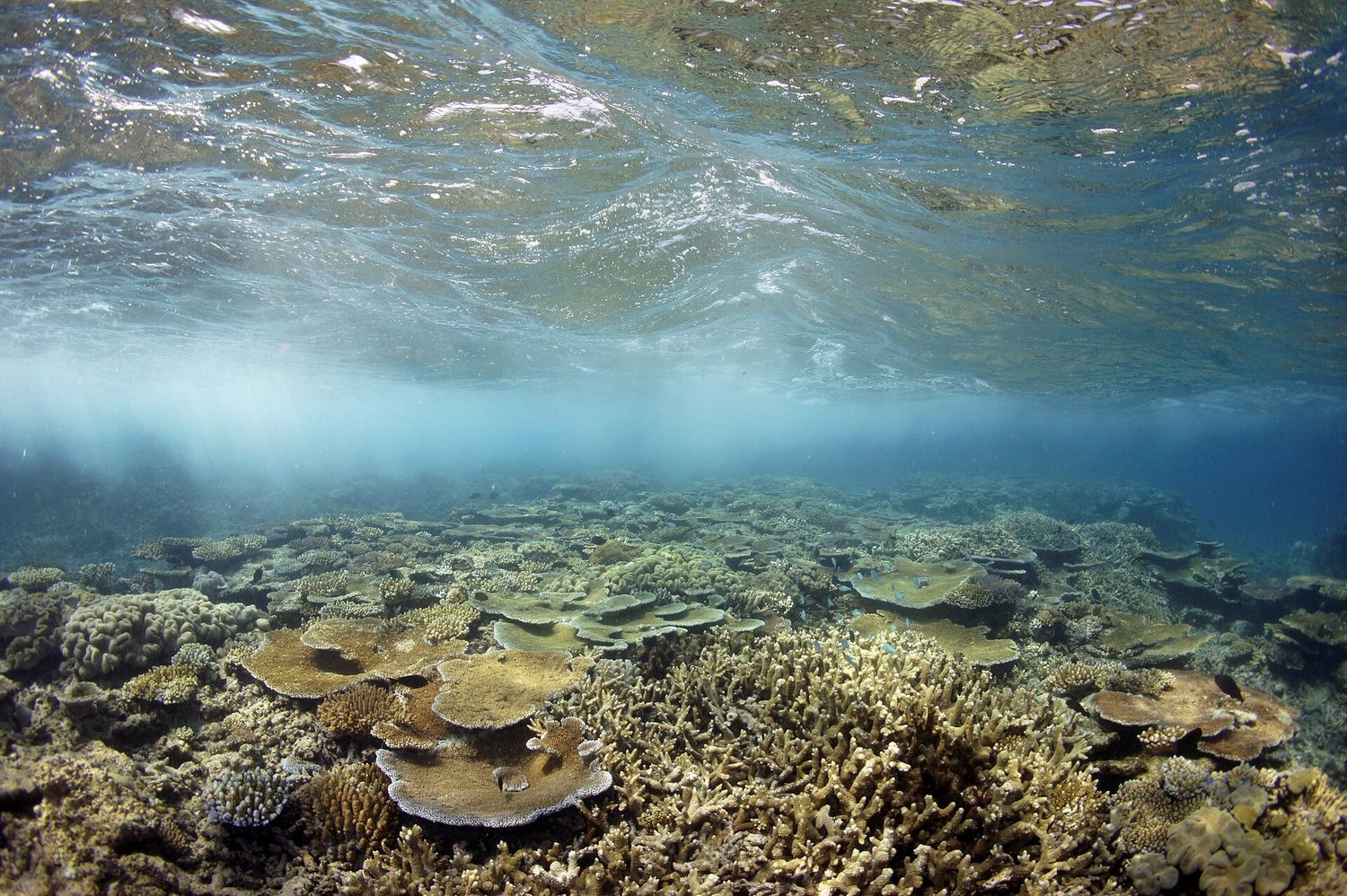
    Aquatic biomes cover more of Earth than land. Freshwater (streams, lakes, wetlands) and marine (open ocean, coral reefs, estuaries) systems differ in salinity 盐度, sunlight, and nutrients. Estuaries 河口 (where rivers meet the sea) and coral reefs are especially productive and biodiverse.

    עברית

    בימות מימיות מכסות יותר משטח כדור הארץ מאשר היבשה. מערכות מתוקות (נחלים, אגמים, ביוצות) ומימיות (אוקיינוסים פתוחים, אלמוגים, מפרצות) שונות במליחות, באור שמש וב营养物质. מפרצות (כאן נהרות פוגשות את הים) ואלמוגים הם במיוחד פרודוקטיביים ועשירים ב-Biodiversity.

    מבט תת-מיני של אלמוגים ממש מתחת לפני הים, מצופה באלמוגים *אלמוגים: מים חמים, מוארים בשמש, ומשטחיים הופכים אותם לאחת מבימות הפרודוקטיביות והעשירות ביותר בכל

    Vocabulary · ⁨מילון מונחים⁩ Train · ⁨אימון⁩
    English עברית
    coral reef/ˈkɒrəl riːf/ שונית אלמוגים
    1.4

    The Carbon Cycle · ⁨מחזור הפחמן⁩

    Syllabus · ⁨סיילבוס⁩
    English

    Enduring Understanding (ERT-1): Ecosystems are the result of biotic and abiotic interactions.

    Learning Objective ERT-1.D: Explain the steps and reservoir interactions in the carbon cycle.

    • ERT-1.D.1 The carbon cycle is the movement of atoms and molecules containing the element carbon between sources and sinks.
    • ERT-1.D.2 Some of the reservoirs in which carbon compounds occur in the carbon cycle hold those compounds for long periods of time, while some hold them for relatively short periods of time.
    • ERT-1.D.3 Carbon cycles between photosynthesis and cellular respiration in living things.
    • ERT-1.D.4 Plant and animal decomposition have led to the storage of carbon over millions of years. The burning of fossil fuels quickly moves that stored carbon into atmospheric carbon, in the form of carbon dioxide.
    עברית

    הבנה מתמשכת (ERT-1): מערכות אקולוגיות הן תוצאה של אינטראקציות בין גורמים ביולוגיים ולא-ביולוגיים.

    מטרת למידה ERT-1.D: להסביר את השלבים והאינטראקציות בין מאגרים במחזור הפחמן.

    • ERT-1.D.1 מחזור הפחמן הוא התנועה של אטומים ומולקולות המכילות את היסוד פחמן בין מקורות ומספנים.
    • ERT-1.D.2 חלק ממאגרים בהם תרכובות פחמן קיימות במחזור הפחמן מוחזקים בהם לתקופות ארוכות, בעוד שחלק אחר מוחזק בהם לתקופות קצרות יחסית.
    • ERT-1.D.3 פחמן מחזור בין פוטוסינתזה לנשימה תאית באורגניזמים חיים.
    • ERT-1.D.4 פירוק צמחי וחייתי הביאו לאגירת פחמן במשך מיליוני שנים. בעירת דלקים חפוציים מעבירה במהירות את הפחמן המאוגר לפחמן באטמוספירה, בצורת פחמן דו-חמצני.

    Source: College Board AP Course and Exam Description · ⁨מקור: תיאור הקורס והמבחן של College Board AP⁩

    English
    The carbon cycle

    The carbon cycle 碳循环 moves carbon between the atmosphere, organisms, oceans, and rocks. Photosynthesis removes $\text{CO}_2$; respiration, decomposition, and burning fossil fuels 化石燃料 return it. Burning fossil fuels adds carbon far faster than natural processes remove it.

    עברית

    *מחזור הפחמן

    מחזור הפחמן ממשיך פחמן בין האטמוספירה, אורגניזמים, אוקיינוסים וסלעים. פוטוסינתזה מסירה $\text{CO}_2$; נשימה, פירוק ושריפת דלקים מאובשים מחזירות אותו בחזרה. שריפת דלקים מאובשים מוסיפה פחמן הרבה יותר מהר מאשר תהליכים טבעיים מסירים אותו.

    מחזור הפחמן ממשיך פחמן בין האטמוספירה, אורגניזמים ודלקים מאובשים *מחזור הפחמן ממשיך פחמן בין האטמוספירה, אורגניזמים ודלקים מאובשים

    Vocabulary · ⁨מילון מונחים⁩ Train · ⁨אימון⁩
    English עברית
    carbon cycle/ˈkɑːbən ˈsaɪkl/ מחזור הפחמן
    fossil fuels/ˈfɒsl ˈfjuːəlz/ דלקים מאובנים
    1.5

    The Nitrogen Cycle · ⁨מחזור החנקן⁩

    Syllabus · ⁨סיילבוס⁩
    English

    Enduring Understanding (ERT-1): Ecosystems are the result of biotic and abiotic interactions.

    Learning Objective ERT-1.E: Explain the steps and reservoir interactions in the nitrogen cycle.

    • ERT-1.E.1 The nitrogen cycle is the movement of atoms and molecules containing the element nitrogen between sources and sinks.
    • ERT-1.E.2 Most of the reservoirs in which nitrogen compounds occur in the nitrogen cycle hold those compounds for relatively short periods of time.
    • ERT-1.E.3 Nitrogen fixation is the process in which atmospheric nitrogen is converted into a form of nitrogen (primarily ammonia) that is available for uptake by plants and that can be synthesized into plant tissue.
    • ERT-1.E.4 The atmosphere is the major reservoir of nitrogen.
    עברית

    הבנה מתמשכת (ERT-1): מערכות אקולוגיות הן תוצאה של אינטראקציות בין גורמים ביולוגיים ולא-ביולוגיים.

    מטרת למידה ERT-1.E: להסביר את השלבים והאינטראקציות בין מאגרים במחזור החנקן.

    • ERT-1.E.1 מחזור החנקן הוא תנועת אטומים ומולקולות המכילות את היסוד חנקן בין מקורות ומאגרים.
    • ERT-1.E.2 ברוב המאגרים בהם נמצאים תרכובות החנקן במחזור החנקן, מוחזקות תרכובות אלו למשך תקופות זמן קצרות יחסית.
    • ERT-1.E.3 קיבוע חנקן הוא התהליך שבו חנקן אטמוספרי הופך לצורת חנקן (בראשונה אמוניה) הזמינה לספיסה על ידי צמחים ושיכולה לשמש לבניית רקמת הצמח.
    • ERT-1.E.4 האטמוספירה היא המאגר העיקרי של חנקן.

    Source: College Board AP Course and Exam Description · ⁨מקור: תיאור הקורס והמבחן של College Board AP⁩

    English
    The nitrogen cycle

    The nitrogen cycle 氮循环 makes nitrogen usable for life. Nitrogen fixation 固氮 (by bacteria) converts atmospheric $\text{N}_2$ to ammonia; nitrification and assimilation pass it through organisms; denitrification returns $\text{N}_2$ to the air. Fertilizer adds reactive nitrogen, which can pollute water.

    עברית

    *מחזור החנקן

    מחזור החנקן הופך חנקן לזמין לחיים. קיבוע חנקן (על ידי חיידקים) ממיר $\text{N}_2$ אטמוספי לאמוניה; ניטרופיקציה ואסימילציה מעבירות אותו דרך אורגניזמים; דניטרופיקציה מחזירה $\text{N}_2$ לאוויר. דשנים מוסיפים חנקן ריאקטיבי, שיכול לזהום מים.

    מחזור החנקן: N קבוע לתמיסות חנקת באדמה, עובר דרך המזון וחוזר לאוויר על ידי דניטרופיקציה
    מחזור החנקן: N$_2$ קבוע לתמיסות חנקת באדמה, עובר דרך המזון וחוזר לאוויר על ידי דניטרופיקציה
    Vocabulary · ⁨מילון מונחים⁩ Train · ⁨אימון⁩
    English עברית
    nitrogen cycle/ˈnaɪtrədʒn ˈsaɪkl/ מחזור החנקן
    Nitrogen fixation/ˈnaɪtrədʒn fɪkˈseɪʃn/ קיבוע חנקן
    1.6

    The Phosphorus Cycle · ⁨מחזור הפוספור⁩

    Syllabus · ⁨סיילבוס⁩
    English

    Enduring Understanding (ERT-1): Ecosystems are the result of biotic and abiotic interactions.

    Learning Objective ERT-1.F: Explain the steps and reservoir interactions in the phosphorus cycle.

    • ERT-1.F.1 The phosphorus cycle is the movement of atoms and molecules containing the element phosphorus between sources and sinks.
    • ERT-1.F.2 The major reservoirs of phosphorus in the phosphorus cycle are rock and sediments that contain phosphorus-bearing minerals.
    • ERT-1.F.3 There is no atmospheric component in the phosphorus cycle, and the limitations this imposes on the return of phosphorus from the ocean to land make phosphorus naturally scarce in aquatic and many terrestrial ecosystems. In undisturbed ecosystems, phosphorus is the limiting factor in biological systems.
    עברית

    הבנה מתמשכת (ERT-1): מערכות אקולוגיות הן תוצאה של אינטראקציות בין גורמים ביולוגיים ולא-ביולוגיים.

    מטרת הלמידה ERT-1.F: הסבר השלבים והאינטראקציות בין מאגרים במחזור הפוספור.

    • ERT-1.F.1 מחזור הפוספור הוא תנועת אטומים ומולקולות המכילות את היסוד פוספור בין מקורות ומאגרים.
    • ERT-1.F.2 המאגרים העיקריים של פוספור במחזור הפוספור הם סלעים ושקעים המכילים מינרלים המכילים פוספור.
    • ERT-1.F.3 אין רכיב אטמוספרי במחזור הפוספור, והמגבלות שהתהליך מכתיב להחזרת פוספור מהאוקיינוס ליבשה גורמות לכך שהפוספור נדיר באופן טבעי בביוצות אקווליות ובמספר ביוצות יבשתיות. בביוצות לא מופרעות, הפוספור הוא הגורם המגביל במערכות הביולוגיות.

    Source: College Board AP Course and Exam Description · ⁨מקור: תיאור הקורס והמבחן של College Board AP⁩

    English

    The phosphorus cycle 磷循环 has no atmospheric (gas) stage – phosphorus moves through rock, soil, water, and organisms. It is slow and often the limiting nutrient 限制性营养 for growth, so added phosphorus (fertilizer, detergents) can trigger algal blooms.

    עברית

    למחזור הפוספור אין שלב אטמוספרי (גזי) – פוספור נע דרך סלעים, אדמה, מים ובעלי חיים. התהליך איטי והוא לעיתים קרובות המתנודת המגבילה לצמיחה, ולכן הוספת פוספור (דשנים, חומרי ניקוי) יכולה לגרום לפריחת אצות.

    מחזור הפוספור: סלע מתפרק לפוספט באדמה ומשקע בעדינות בחזרה, ללא שלב גזי
    מחזור הפוספור: סלע מתפרק לפוספט באדמה ומשקע בעדינות בחזרה, ללא שלב גזי
    Vocabulary · ⁨מילון מונחים⁩ Train · ⁨אימון⁩
    English עברית
    phosphorus cycle/ˈfɒsfɔːrəs ˈsaɪkl/ מחזור הפוספורוס
    limiting nutrient/ˈlɪmɪtɪŋ ˈnjuːtrɪənt/ תזונה מגבילה
    1.7

    The Hydrologic (Water) Cycle · ⁨המחזור ההידרולוגי (של המים)⁩

    Syllabus · ⁨סיילבוס⁩
    English

    Enduring Understanding (ERT-1): Ecosystems are the result of biotic and abiotic interactions.

    Learning Objective ERT-1.G: Explain the steps and reservoir interactions in the hydrologic cycle.

    • ERT-1.G.1 The hydrologic cycle, which is powered by the sun, is the movement of water in its various solid, liquid, and gaseous phases between sources and sinks.
    • ERT-1.G.2 The oceans are the primary reservoir of water at the Earth's surface, with ice caps and groundwater acting as much smaller reservoirs.
    עברית

    הבנה מתמשכת (ERT-1): מערכות אקולוגיות הן תוצאה של אינטראקציות בין גורמים ביולוגיים ולא-ביולוגיים.

    מטרת הלמידה ERT-1.G: הסבר השלבים והאינטראקציות בין מאגרים במחזור המים.

    • ERT-1.G.1 המחזור ההידרולוגי, המופעל על ידי השמש, הוא תנועת מים במצביהם השונים – מוצק, נוזלי וגזי – בין מקורות ומאגרים.
    • ERT-1.G.2 האוקיינוסים הם המאגר הראשוני של מים בשטח כדור הארץ, בעוד שקפואות ומי תת-קרקע משמשים כמאגרים קטנים הרבה יותר.

    Source: College Board AP Course and Exam Description · ⁨מקור: תיאור הקורס והמבחן של College Board AP⁩

    English
    The hydrologic (water) cycle

    The water cycle 水循环 moves water by evaporation 蒸发, transpiration 蒸腾 (from plants), condensation, precipitation, and runoff. It distributes fresh water and shapes climate; human use and land changes can alter its flow.

    עברית
    המחזור ההידרולוגי (של המים)

    המחזור של המים מעביר מים באמצעותהתאדות, התנעה (מצמחים), התכנסות, משקעים וריצה פני שטח. הוא מפזר מים מתוקים ועיצב את האקלים; שימוש אנושי ושנויי קרקע יכולים לשנות את זרימתו.

    מחזור המים: התאדות והתנעה מרים את המים לאוויר; משקעים וריצה פני שטח מחזירים אותו
    מחזור המים: התאדות והתנעה מרים את המים לאוויר; משקעים וריצה פני שטח מחזירים אותו
    Vocabulary · ⁨מילון מונחים⁩ Train · ⁨אימון⁩
    English עברית
    water cycle/ˈwɔːtə ˈsaɪkl/ מחזור המים
    evaporation/ɪˌvæpəˈreɪʃn/ התאדות
    transpiration/trænspəˈreɪʃn/ איידור
    Primary productivity/ˈpraɪməri ˌprɒdəkˈtɪvɪti/ מוצריות ראשונית
    trophic levels/ˈtrəʊfɪk ˈlevlz/ רמות תזונתיות
    producers/prəˈdjuːsəz/ מייצרים
    primary, secondary, and tertiary consumers/ˈpraɪməri ˈsekəndəri ænd ˈtɜːʃjəri kənˈsuːməz/ צרכנים ראשוניים, משניים וטרטיאריים
    decomposers/ˌdiːkəmˈpəʊzəz/ מפרקים
    food chain/fuːd tʃeɪn/ שרשרת מזון
    1.8

    Primary Productivity · ⁨פרודוקטיביות ראשונית⁩

    Syllabus · ⁨סיילבוס⁩
    English

    Enduring Understanding (ENG-1): Energy can be converted from one form to another.

    Learning Objective ENG-1.A: Explain how solar energy is acquired and transferred by living organisms.

    • ENG-1.A.1 Primary productivity is the rate at which solar energy (sunlight) is converted into organic compounds via photosynthesis over a unit of time.
    • ENG-1.A.2 Gross primary productivity is the total rate of photosynthesis in a given area.
    • ENG-1.A.3 Net primary productivity is the rate of energy storage by photosynthesizers in a given area, after subtracting the energy lost to respiration.
    • ENG-1.A.4 Productivity is measured in units of energy per unit area per unit time (e.g., $\text{kcal/m}^2\text{/yr}$).
    • ENG-1.A.5 Most red light is absorbed in the upper 1m of water, and blue light only penetrates deeper than 100m in the clearest water. This affects photosynthesis in aquatic ecosystems, whose photosynthesizers have adapted mechanisms to address the lack of visible light.
    עברית

    הבנה מתמשכת (ENG-1): אנרגיה יכולה להיות מוסבת מצורה אחת לאחרת.

    מטרת הלמידה ENG-1.A: הסבר כיצד אנרגיה סולארית נרכשת ועוברת על ידי אורגניזמים חיים.

    • ENG-1.A.1 תפוקה ראשונית היא הקצב שבו אנרגיה סולארית (אור שמש) מומשת לתרכובות אורגניות דרך פוטוסינתזה במהלך יחידת זמן נתונה.
    • ENG-1.A.2 תפוקה ראשונית גרוס היא סך הקצב של פוטוסינתזה באזור מסוים.
    • ENG-1.A.3 תפוקה ראשונית נטו היא קצב אחסון האנרגיה על ידי מפיקי פוטוסינתזה באזור מסוים, לאחר חיסור האנרגיה שאבדה בתהליך הנשימה.
    • ENG-1.A.4 התפוקה נמדדת ביחידות של אנרגיה ליחידת שטח ליחידת זמן (למשל, $\text{kcal/m}^2\text{/yr}$).
    • ENG-1.A.5 רוב האור האדום נספג בתוך 1 מטר העליונים של המים, ואור כחול חודר לעומק מעל 100 מטר רק במים הצלולים ביותר. הדבר משפיע על הפוטוסינתזה בביוצות אקווליות, שבהן למפיקי הפוטוסינתזה ישנם מנגנונים מותאמים להתמודדות עם מחסור באור נראה.

    Source: College Board AP Course and Exam Description · ⁨מקור: תיאור הקורס והמבחן של College Board AP⁩

    English

    Primary productivity 初级生产力 is the rate at which producers capture energy (usually by photosynthesis). Gross primary productivity (GPP) is the total captured; net primary productivity (NPP) is what remains after the producers' own respiration – the energy available to the rest of the ecosystem. Warm, wet, sunlit systems (rainforests, reefs) are most productive.

    Worked example. If producers in a grassland capture $20{,}000\ \text{kcal/m}^2/\text{yr}$ of energy (GPP) and burn $8{,}000\ \text{kcal/m}^2/\text{yr}$ in their own respiration, then $\text{NPP}=\text{GPP}-R=20{,}000-8{,}000=12{,}000\ \text{kcal/m}^2/\text{yr}$. Only that NPP – not the full GPP – is available to the consumers above.

    עברית

    פרודוקטיביות ראשונית היא הקצב בו יצרנים תופסים אנרגיה (בדרך כלל באמצעות פוטוסינתזה). פרודוקטיביות ראשונית כולה (GPP) היא הסך הכל שנכנס; פרודוקטיביות ראשונית נטו (NPP) היא מה שנשאר לאחר הנשימה עצמית של היצרנים – האנרגיה הזמינה למערכת האקולוגית כולה. מערכות חמות, לחות ומאירות בשמש (יערות גשם, אלמוגים) הן המיוצרות ביותר.
    דוגמה פתורה. אם יצרנים במרעה תופסים $20{,}000\ \text{kcal/m}^2/\text{yr}$ מאנרגיה (GPP) ושרפים $8{,}000\ \text{kcal/m}^2/\text{yr}$ בנשימה עצמית שלהם, אזי נותר $\text{NPP}=\text{GPP}-R=20{,}000-8{,}000=12{,}000\ \text{kcal/m}^2/\text{yr}$. רק NPP זה – ולא GPP המלא – זמין לצרכנים העליונים.

    Explore · ⁨חקור⁩

    Explore GPP, respiration and NPP · ⁨חקור תוצרת ביולוגית כוללת (GPP), נשימה ותוצרת ביולוגית נטו (NPP)⁩

    The energy producers capture (GPP) splits into what they burn for their own respiration $R$ and what is left over as new biomass — $\text{NPP} = \text{GPP} - R$, and useful + wasted always equals the input. · ⁨האנרגיה שמפיקים המייצרים (GPP) מתפצלת למה שהם שורפים לנשימה עצמית $R$ ולמה שנותר כביומסה חדשה — $\text{NPP} = \text{GPP} - R$, וסך השימושי והמוזר שווה תמיד לקלט.⁩

    1.9

    Trophic Levels · ⁨רמות טרופיות⁩

    Syllabus · ⁨סיילבוס⁩
    English

    Enduring Understanding (ENG-1): Energy can be converted from one form to another.

    Learning Objective ENG-1.B: Explain how energy flows and matter cycles through trophic levels.

    • ENG-1.B.1 All ecosystems depend on a continuous inflow of high-quality energy in order to maintain their structure and function of transferring matter between the environment and organisms via biogeochemical cycles.
    • ENG-1.B.2 Biogeochemical cycles are essential for life and each cycle demonstrates the conservation of matter.
    • ENG-1.B.3 In terrestrial and near-surface marine communities, energy flows from the sun to producers in the lowest trophic levels and then upward to higher trophic levels.
    עברית

    הבנה מתמשכת (ENG-1): אנרגיה יכולה להיות מוסבת מצורה אחת לאחרת.

    מטרת למידה ENG-1.B: הסבר כיצד אנרגיה זורמת וחומרים מחזוריים דרך רמות טרופיות.

    • ENG-1.B.1 כל אקולוגיה תלויה בזרימה מתמשכת של אנרגיה איכותית כדי לשמור על מבנה ופעילות שלה, הכולל העברת חומרים בין הסביבה לאורגניזמים באמצעות מחזורי ביוגיאוכמיים.
    • ENG-1.B.2 מחזורי ביוגיאוכמיים הם קריטיים לחיים, וכל מחזור מדגים את שימור החומר.
    • ENG-1.B.3 בקהילות יבשתיות ובקהילות ימיות בקרבת פני המים, האנרגיה זורמת מהשמש למוצרים ברמות הטרופיות הנמוכות ביותר, ולאחר מכן כלפי מעלה לרמות טרופיות גבוהות יותר.

    Source: College Board AP Course and Exam Description · ⁨מקור: תיאור הקורס והמבחן של College Board AP⁩

    English
    Energy flow & the 10% rule

    Organisms occupy trophic levels 营养级: producers 生产者 (make their own food), then primary, secondary, and tertiary consumers 消费者, with decomposers 分解者 recycling nutrients at every level. Each level depends on the energy captured below it.

    עברית
    זרימת אנרגיה ו-10% חוק

    אורגניזמים תופסים רמות טרופיות: יצרנים (עושים מזון לעצמם), ואז צרכנים ראשוניים, שניוניים וטריטריים, עם מפרקים שמחזרים חומרי תזונה בכל רמה. כל רמה תלויה באנרגיה שנכנסה מתחת לה.

    1.10

    Energy Flow and the 10% Rule · ⁨זרימת אנרגיה וחוק ה-10%⁩

    Syllabus · ⁨סיילבוס⁩
    English

    Enduring Understanding (ENG-1): Energy can be converted from one form to another.

    Learning Objective ENG-1.C: Determine how the energy decreases as it flows through ecosystems.

    • ENG-1.C.1 The 10% rule approximates that in the transfer of energy from one trophic level to the next, only about 10% of the energy is passed on.
    • ENG-1.C.2 The loss of energy that occurs when energy moves from lower to higher trophic levels can be explained through the laws of thermodynamics.
    עברית

    הבנה מתמשכת (ENG-1): אנרגיה יכולה להיות מוסבת מצורה אחת לאחרת.

    מטרות הלמידה ENG-1.C: קביעת האופן שבו האנרגיה יורדת כשהיא זורמת דרך מערכות אקולוגיות.
    • ENG-1.C.1 חוק ה-10% מעריך כי בהעברת אנרגיה מפלסת תזונה אחת לשנייה, רק כ-10% מהאנרגיה עוברת הלאה.
    • ENG-1.C.2 אובדן האנרגיה המתרחש כאשר אנרגיה עוברת מפלסות תזונה נמוכות לגבוהות יותר ניתן להסביר באמצעות חוקי התרמודינמיקה.

    Source: College Board AP Course and Exam Description · ⁨מקור: תיאור הקורס והמבחן של College Board AP⁩

    English

    Energy flows one way through an ecosystem and is lost as heat at each transfer. The 10% rule: only about 10% of the energy at one trophic level passes to the next; the other 90% powers life processes and escapes as heat. This is why food chains are short and top predators are few.

    Worked example. Continuing from $12{,}000\ \text{kcal/m}^2/\text{yr}$ of NPP at the producer level, the primary consumers receive about $10\%=1{,}200\ \text{kcal}$, secondary consumers $\approx120\ \text{kcal}$, and tertiary consumers only $\approx12\ \text{kcal}$. After three transfers the energy has shrunk a thousand-fold – the arithmetic reason a fourth or fifth trophic level rarely has enough to support it.

    עברית

    אנרגיה זורמת בכיוון אחד דרך מערכת אקולוגית ונאבדת כחום בכל העברה. חוק ה-10%: רק כ-10% מהאנרגיה ברמה טרופית אחת עוברת לרמה הבאה; ה-90% האחרים מופעלים לתהליכי חיים ובורחים כחום. מכאן ששרשראות המזון קצרות וטורפים עליונים הם מעטים.

    דוגמה מפורטת. המשך מ$12{,}000\ \text{kcal/m}^2/\text{yr}$ של NPP ברמת היצרן, הצרכנים הראשוניים מקבלים כ־$10\%=1{,}200\ \text{kcal}$, צרכנים שניוניים $\approx120\ \text{kcal}$, וצרכנים טרטיאריים רק $\approx12\ \text{kcal}$. לאחר שלושה העברות האנרגיה הצטמצמה אלף-פעמיים – הסיבה האריתמטית לכך שרמת טרופית רביעית או חמישית נדרת לא מספיקה לתמוך בה.
    פירמידת אנרגיה: רק כ-10% מהאנרגיה עוברת לרמת הצריכה הבאה
    פירמידת אנרגיה: רק כ-10% מהאנרגיה עוברת לרמת הצריכה הבאה
    Explore · ⁨חקור⁩

    Explore the 10% rule · ⁨חקור את כלל ה-10%⁩

    Set the energy producers capture and the ecological efficiency, then watch only about a tenth pass to each level up — this is why the apex predator is left with so little and food chains stay short. · ⁨גדור את ייצור האנרגיה ואת היעילות האקולוגית, ואז צפה איך רק כעשרה אחוזים מעברים לכל רמה עליונה — מכאן שהטורף בראש השרשרת מקבל מעט מאוד ומסביבות המזון נשארות קצרות.⁩

    1.11

    Food Chains and Food Webs · ⁨שרשראות מזון ורשתות מזון⁩

    Syllabus · ⁨סיילבוס⁩
    English

    Enduring Understanding (ENG-1): Energy can be converted from one form to another.

    Learning Objective ENG-1.D: Describe food chains and food webs, and their constituent members by trophic level.

    • ENG-1.D.1 A food web is a model of an interlocking pattern of food chains that depicts the flow of energy and nutrients in two or more food chains.
    • ENG-1.D.2 Positive and negative feedback loops can each play a role in food webs. When one species is removed from or added to a specific food web, the rest of the food web can be affected.
    עברית

    הבנה מתמשכת (ENG-1): אנרגיה יכולה להיות מוסבת מצורה אחת לאחרת.

    מטרות הלמידה ENG-1.D: תיאור שרשראות מזון ורשתות מזון, וחבריהן לפי פלסת תזונה.

    • ENG-1.D.1 רשת מזון היא מודל של דפוס מקושר של שרשראות מזון המציג את זרימת האנרגיה והחומרים בשתי שרשראות מזון או יותר.
    • ENG-1.D.2 לולאות משוב חיוביות ושליליות עשויות לשחק כל אחת מהן תפקיד ברשתות מזון. כאשר מין נשלף או נוסף לרשת מזון ספציפית, שאר הרשת עשויה להיפגע.

    Source: College Board AP Course and Exam Description · ⁨מקור: תיאור הקורס והמבחן של College Board AP⁩

    English

    A food chain 食物链 is a single line of who-eats-whom; a food web 食物网 links many chains into a realistic picture of feeding relationships. Because species are interconnected, removing one (especially a keystone species 关键种) can disrupt the whole web.

    עברית

    שרשרת מזון היא קו יחיד של מי אכל את מי; רשתת מזון מקשרת בין שרשראות רבות ליצירת תמונה מציאותית של היחסים התזונתיים. מכיוון שמינים מחוברים זה לזה, הסרת אחד מהם (ובמיוחד מין מפתח) עלולה להפר את כל הרשת.

    רשתת מזון מקשרת בין שרשראות מזון רבות; החצים מציינים את כיוון זרימת האנרגיה
    רשתת מזון מקשרת בין שרשראות מזון רבות; החצים מציינים את כיוון זרימת האנרגיה
    Vocabulary · ⁨מילון מונחים⁩ Train · ⁨אימון⁩
    English עברית
    food web/fuːd web/ רשת מזון
    keystone species/ˈkiːstəʊn ˈspiːsiːz/ מין מפתח
    1.11

    Exam tips · ⁨טיפים לבחינות⁩

    English
    • Remember energy flows and is lost (the 10% rule) while matter cycles (carbon, nitrogen, phosphorus, water).
    • Apply the 10% rule down a food chain and know NPP = GPP − respiration (only NPP is available to consumers).
    • Learn each biogeochemical cycle's stores and how humans disturb it (burning fossil fuels adds CO₂; fertiliser adds nitrogen/phosphorus).
    • Producers are most abundant because so little energy reaches the top.
    • Use correct units and show your arithmetic on the free-response math questions (no calculator — keep numbers round).
    עברית
    • זכור כי האנרגיה זורמת ואבדה (חוק ה-10%) בעוד ש-החומר מחזור (קרבון, חנקן, פוספורס, מים).
    • יישם את חוק ה-10% לאורך שרשרת מזון והבן כי NPP = GPP − נשימה (רק NPP זמין לצרכנים).
    • למד את המאגרים בכל מחזור ביוגיאוכמי וכיצד האדם מפרע אותו (בעירת דלקים מאובנים נוספים CO₂; הדשנים מוסיפים חנקן/פוספורס).
    • היצרנים הם הנפוצים ביותר משום שאך כמות מעטה מאוד של אנרגיה מגיעה לראש השלוח.
    • השתמש ביחידות נכונות והראה את החישובים שלך בשאלות המתמטיקיות בתשובה פתוחה (ללא מחשבון – שמור על מספרים עגולים).
  • 2

    The Living World: Biodiversity · ⁨העולם החי: מגוון ביולוגי⁩

    Watch lesson · ⁨צפה בשיעור⁩
    2.1

    Introduction to Biodiversity · ⁨מבוא לביוגוון⁩

    Syllabus · ⁨סיילבוס⁩
    English

    Enduring Understanding (ERT-2): Ecosystems have structure and diversity that change over time.

    Learning Objective ERT-2.A: Explain levels of biodiversity and their importance to ecosystems.

    • ERT-2.A.1 Biodiversity in an ecosystem includes genetic, species, and habitat diversity.
    • ERT-2.A.2 The more genetically diverse a population is, the better it can respond to environmental stressors. Additionally, a population bottleneck can lead to a loss of genetic diversity.
    • ERT-2.A.3 Ecosystems that have a larger number of species are more likely to recover from disruptions.
    • ERT-2.A.4 Loss of habitat leads to a loss of specialist species, followed by a loss of generalist species. It also leads to reduced numbers of species that have large territorial requirements.
    • ERT-2.A.5 Species richness refers to the number of different species found in an ecosystem.
    עברית

    הבנה נמשכת (ERT-2): לאקולוגיות יש מבנה ומגוון השונים לאורך הזמן.

    מטרת למידה ERT-2.A: הסבר על רמות המגוון הביולוגי וחשיבותן לאקולוגיות.

    • ERT-2.A.1 מגוון ביולוגי באקולוגיה כולל מגוון גנטי, מינים, וסביבתי.
    • ERT-2.A.2 ככל שהאוכלוסייה מגוונת גנטית יותר, כך היא מסוגלת להגיב טוב יותר לגורמי מתח סביבתיים. בנוסף, צוואר בקבוק אוכלוסייתי עשוי להוביל לאובדן מגוון גנטי.
    • ERT-2.A.3 אקולוגיות שמספר המינים בהן גדול יותר נוטות להתאושש מאירועי הפרעה.
    • ERT-2.A.4 אובדן בית הגידול מוביל לאובדן מינים ספציאליסטים, שלאחריו אובדן מינים גנרליסטים. כמו כן, הוא מוביל לצמצום במספר המינים הדורשים שטחי טריטוריה גדולים.
    • ERT-2.A.5 עושר מינים מתייחס למספר המינים השונים שנמצאים באקולוגיה.

    Source: College Board AP Course and Exam Description · ⁨מקור: תיאור הקורס והמבחן של College Board AP⁩

    English

    Biodiversity 生物多样性 is the variety of life, measured at three levels:

    • Genetic diversity – variety of genes within a species. More genetic variety means a population can better respond to environmental stressors 环境压力; a population bottleneck 种群瓶颈 (a sharp drop in numbers) throws that variety away and leaves the survivors vulnerable.
    • Species diversity – the number of species (species richness 物种丰富度) and how evenly individuals are spread among them.
    • Habitat diversity – the variety of habitats in a region.

    More species-rich ecosystems are more resilient 有韧性的: they recover from disruption more readily, because varied species can fill roles when conditions change. Habitat loss removes species in a predictable order – specialist 特化 species (narrow needs) go first, then the hardier generalist 广适性 species, and species that need large territories decline as their range shrinks.

    עברית

    ביוגוון הוא המגוון בחיים, שנמדד בשלושה רמות:

    • מגוון גנטי – מגוון הגנים בתוך מין. מגוון גנטי גדול יותר מאפשר לאוכלוסייה להגיב טוב יותר לגורמי מתח סביבתיים; צוואר בקבוק באוכלוסייה (ירידה חדה במספר הפרטים) משליך את המגוון הזה ומשאיר את הנותרים בפני הסיכון.
    • מגוון מינים – מספר המינים (עושר מינים) וכמה פרטים מפוזרים באופן שווה ביניהם.
    • מגוון בתי גידול – מגוון בתי הגידול באזור מסוים.

    מערכות אקולוגיות עם עושר מינים גבוה יותר הן יותר עמידות: הן נטשות בהפרעות בצורה מהירה יותר, משום שמינים מגוונים יכולים למלא תפקידים כאשר התנאים משתנים. אובדן בתי גידול מוביל לאובדן מינים בסדר ניבוי תחזיתי – מינים ספציאליסטים (בעלי צרכים צרים) נעלמים תחילה, ולאחר מכן המינים גנרליסטים העמידים יותר, ומינים הזקוקים לשטחי מחיה גדולים פוחתים כשהטווח שלהם מצטמצם.

    לביוגוון יש שלושה רמות: גנטית, מינית, ובית גידול
    לביוגוון יש שלושה רמות: גנטית, מינית, ובית גידול
    שונית אלמוגים: ביוגוון גבוה ממקדם מינים ושירותי אקوسیסטמה בשטח קטן
    שונית אלמוגים: מגוון ביולוגי גבוה מרוכז ומספק שירותי אקלים וצמחים בשטח קטן
    Vocabulary · ⁨מילון מונחים⁩ Train · ⁨אימון⁩
    English עברית
    Biodiversity/ˌbaɪəʊdaɪˈvɜːsɪti/ מגוון ביולוגי
    environmental stressors/enˌvaɪrənˈmentl ˈstresəz/ גורמי מתח סביבתיים
    population bottleneck/ˌpɒpjʊˈleɪʃn ˈbɒtəlnek/ צווארת בקבוק של אוכלוסייה
    species richness/ˈspiːsiːz ˈrɪtʃnəs/ עושר מינים
    resilient/rɪˈsɪlɪənt/ עמיד
    specialist/ˈspeʃəlɪst/ מין מיוחד
    generalist/ˈdʒenərəlɪst/ מין כללי
    Ecosystem services/ˈiːkəʊsɪstəm ˈsɜːvɪsɪz/ שירותי אקו-מערכת
    Anthropogenic/ˌænθrəpəˈdʒenɪk/ אנתרופוגני
    2.2

    Ecosystem Services · ⁨שירותי אקוסטמה⁩

    Syllabus · ⁨סיילבוס⁩
    English

    Enduring Understanding (ERT-2): Ecosystems have structure and diversity that change over time.

    Learning Objective ERT-2.B: Describe ecosystem services.

    • ERT-2.B.1 There are four categories of ecosystem services: provisioning, regulating, cultural, and supporting.

    Learning Objective ERT-2.C: Describe the results of human disruptions to ecosystem services.

    • ERT-2.C.1 Anthropogenic activities can disrupt ecosystem services, potentially resulting in economic and ecological consequences.
    עברית

    הבנה נמשכת (ERT-2): לאקולוגיות יש מבנה ומגוון השונים לאורך הזמן.

    מטרת למידה ERT-2.B: תיאור שירותי אקולוגיה.

    • ERT-2.B.1 קיימות ארבע קטגוריות של שירותי אקולוגיה: אספקה, ויסות, תרבותיות ותמיכה.

    מטרת למידה ERT-2.C: תיאור התוצאות של הפרעות אנושיות לשירותי אקולוגיה.

    • ERT-2.C.1 פעילויות אנתרופוגניות יכולות להפריע לשירותי אקולוגיה, ולמעשה עלולות להוביל לתוצאות כלכליות ואקולוגיות.

    Source: College Board AP Course and Exam Description · ⁨מקור: תיאור הקורס והמבחן של College Board AP⁩

    English

    Ecosystem services 生态系统服务 are the free benefits nature gives people, in four categories:

    • Provisioning – products: food, fresh water, timber, fibre.
    • Regulating – processes that keep conditions stable: climate regulation, water filtration, pollination, flood control.
    • Cultural – non-material value: recreation, beauty, spiritual and educational value.
    • Supporting – the services that make the others possible: nutrient cycling, soil formation, photosynthesis.

    Anthropogenic 人为的 (human-caused) activities can disrupt these services, with real economic and ecological costs – for example, losing pollinators forces farmers to pay for pollination that bees once did for free.

    עברית

    שירותי אקוסטמה הם התועלות הטבעיות שמספקת הטבע לאנשים, בארבע קטגוריות:

    • אספקה – מוצרים: מזון, מים מתוקים, עץ, סיבים.
    • ויסות – תהליכים המשמרים יציבות בתנאים: ויסות אקלים, סינון מים, האבקה, שליטה בשיפונים.
    • תרבותי – ערך בלתי-חומרי: בילוי, יופי, ערך רוחני וחינוכי.
    • תמיכה – השירותים המאפשרים את שאר השירותים: מחזור חומרי הזנה, ליצירת קרקע, פוטוסינתזה.

    פעילות אנתרופוגנית (בגלל פעילות אדם) עלולה להפר את שירותים אלו, עם עלויות כלכליות וגם אקולוגיות אמיתיות – לדוגמה, איבוד מאבקים מחייב את החקלאים לשלם על האבקה שהיו מעוניים לעשות בחינם בעבר.

    2.3

    Island Biogeography · ⁨ביאוגרפיה של איים⁩

    Syllabus · ⁨סיילבוס⁩
    English

    Enduring Understanding (ERT-2): Ecosystems have structure and diversity that change over time.

    Learning Objective ERT-2.D: Describe island biogeography.

    • ERT-2.D.1 Island biogeography is the study of the ecological relationships and distribution of organisms on islands, and of these organisms' community structures.
    • ERT-2.D.2 Islands have been colonized in the past by new species arriving from elsewhere.

    Learning Objective ERT-2.E: Describe the role of island biogeography in evolution.

    • ERT-2.E.1 Many island species have evolved to be specialists versus generalists because of the limited resources, such as food and territory, on most islands. The long-term survival of specialists may be jeopardized if and when invasive species, typically generalists, are introduced and outcompete the specialists.
    עברית

    הבנה נמשכת (ERT-2): לאקולוגיות יש מבנה ומגוון השונים לאורך הזמן.

    מטרת למידה ERT-2.D: תיאור ביוגיאוגרפיה איטלית.

    • ERT-2.D.1 ביוגרפיה איזלית היא העוסקת בקשרים אקולוגיים ובפיזור אורגניזמים באיים ובמבני הקהילה שלהם.
    • ERT-2.D.2 איים נכבשו בעבר על ידי מינים חדשים שהגיעו ממקומות אחרים.

    מטרות למידה ERT-2.E: לתאר את תפקיד הביוגרפיה האיזלית באבולוציה.

    • ERT-2.E.1 הרבה מיני איים התפתחו להיות ספציאליסטים לעומת ג'נרליסטים בשל המשאבים המוגבלים, כגון מזון ושטח, ברוב האיים. הישרדות לטווח ארוך של ספציאליסטים עשויה להיות בסכנה אם ומינים פולשים, בדרך כלל ג'נרליסטים, יוקנו ויתחרו בהם.

    Source: College Board AP Course and Exam Description · ⁨מקור: תיאור הקורס והמבחן של College Board AP⁩

    English
    Island biogeography

    Island biogeography 岛屿生物地理学 studies how many species an island (or any isolated habitat patch) holds. The number settles at a balance between two rates:

    • Immigration of new species – higher for islands closer to the mainland.
    • Extinction of resident species – lower on larger islands.

    So big, near islands hold the most species; small, remote ones the fewest. Isolation also drives evolution: island species often become specialists because resources are limited, and many are endemic 特有 – found nowhere else. That makes them fragile. When an invasive species 入侵物种 (usually a tough generalist) arrives, it can outcompete the specialists, which have nowhere else to go.

    עברית
    ביאוגרפיה של איים

    ביאוגרפיה של איים עוסקת במחקר מספר המינים שיכול לאיים (או כל כתמתם בידוד) להכיל. המספר משתווה לאיזון בין שני קצבים:

    • הגירה של מינים חדשים – גבוהה יותר באיים קרובים יותר ליבשה.
    • כחדה של מינים מקומיים – נמוכה יותר באיים גדולים.

    לכן, איים גדולים וקרובים מכילים את המינים הרבים ביותר; איים קטנים ומבודדים את המינים הפחותים. בידוד מניע גם התפתחות: מיני איים הופכים לעיתים קרובות ל-מיוחדים בגלל מוגבלות המשאבים, והם אנדמיים – נמצאים רק במקום זה. הדבר הופך אותם לשברירים. כאשר מין פולש (בדרך כלל גנרליסט חזק) מגיע, הוא יכול להתחרות במיוחדים, שאין להם לאן ללכת.

    איסים גדולים וקרובים יותר מכילים מינים רבים יותר, מאזנים הגירה מול הכחדה
    איים גדולים וקרובים מכילים יותר מינים, מאזנים הגירה כנגד כחדה
    Vocabulary · ⁨מילון מונחים⁩ Train · ⁨אימון⁩
    English עברית
    Island biogeography/ˈaɪlənd ˌbaɪəʊdʒɪˈɒɡrəfi/ ביאו-גיאוגרפיה אישית
    endemic/enˈdemɪk/ אנדמי
    invasive species/ɪnˈveɪsɪv ˈspiːsiːz/ מינים פולשים
    range of tolerance/reɪndʒ ɒv ˈtɒlərəns/ טווח סבילות
    optimal range/ˈɒptɪml reɪndʒ/ טווח אופטימלי
    zones of stress/zəʊnz ɒv stres/ אזורים של מתח
    Ecological tolerance/ˌekəˈlɒdʒɪkl ˈtɒlərəns/ סבילות אקולוגית
    Periodic/ˌpɪərɪˈɒdɪk/ תקופתי
    Episodic/ˌepɪˈsɒdɪk/ אפיסודי
    Random/ˈrændəm/ אקראי
    migration/maɪˈɡreɪʃn/ הגירה
    adaptation/ˌædæpˈteɪʃn/ הסתגלות
    natural selection/ˈnætʃərəl sɪˈlekʃn/ בחירה טבעית
    2.4

    Ecological Tolerance · ⁨סחיפות אקולוגית⁩

    Syllabus · ⁨סיילבוס⁩
    English

    Enduring Understanding (ERT-2): Ecosystems have structure and diversity that change over time.

    Learning Objective ERT-2.F: Describe ecological tolerance.

    • ERT-2.F.1 Ecological tolerance refers to the range of conditions, such as temperature, salinity, flow rate, and sunlight that an organism can endure before injury or death results.
    • ERT-2.F.2 Ecological tolerance can apply to individuals and to species.
    עברית

    הבנה נמשכת (ERT-2): לאקולוגיות יש מבנה ומגוון השונים לאורך הזמן.

    מטרות למידה ERT-2.F: לתאר סבילות אקולוגית.

    • ERT-2.F.1 סבילות אקולוגית מתייחסת לטווח של תנאים, כגון טמפרטורה, מליחות, קצב זרימה ואור שמש, שאורגניזם יכול לסבול לפני שהופיע פגיעה או מוות.
    • ERT-2.F.2 סבילות אקולוגית יכולה לחול על פרטים ועל מינים.

    Source: College Board AP Course and Exam Description · ⁨מקור: תיאור הקורס והמבחן של College Board AP⁩

    English

    Every species has a range of tolerance 耐受范围 – the span of conditions (temperature, salinity, pH, sunlight) it can survive. Near the middle is an optimal range 最适范围 where individuals thrive; toward the edges are zones of stress 胁迫区 where they survive but struggle to grow or reproduce; beyond the limits they die. Ecological tolerance 生态耐受性 applies both to a single individual and to a whole species, and it decides where an organism can live and how it copes with change.

    עברית

    לכל מין יש טווח סחיפות – טווח התנאים (טמפרטורה, מליחות, pH, אור שמש) שהוא יכול לשרוד. בסמוך למרכז נמצא טווח אופטימלי שבו פרטים פורחים; לכיוון הקצוות נמצאים אזורי לחץ שבהם הם נשארים על חייהם אך מתקשים לגדול או להתרבות; מעבר לגבולות הם נמכחים. סחיפות אקולוגית חלה גם על פרט יחיד וגם על כל המין, והיא קובעת היכן אורגניזם יכול לחיות וכיצד הוא מתמודד עם שינויים.

    בתוך הטווח האופטימלי שלה מין פורח; ככל שהוא מתקרב לגבולותיו הוא נתון ללחץ, ולאחר מכן אינו יכול לשרוד
    בתחום האופטימלי שלו מין פורח; ככל שהוא מתקרב לגבולותיו הוא נמצא בלחץ, ולאחר מכן אינו יכול לשרוד
    2.5

    Natural Disruptions to Ecosystems · ⁨הפרעות טבעיות באקוסיסטמות⁩

    Syllabus · ⁨סיילבוס⁩
    English

    Enduring Understanding (ERT-2): Ecosystems have structure and diversity that change over time.

    Learning Objective ERT-2.G: Explain how natural disruptions, both short- and long-term, impact an ecosystem.

    • ERT-2.G.1 Natural disruptions to ecosystems have environmental consequences that may, for a given occurrence, be as great as, or greater than, many human-made disruptions.
    • ERT-2.G.2 Earth system processes operate on a range of scales in terms of time. Processes can be periodic, episodic, or random.
    • ERT-2.G.3 Earth's climate has changed over geological time for many reasons.
    • ERT-2.G.4 Sea level has varied significantly as a result of changes in the amount of glacial ice on Earth over geological time.
    • ERT-2.G.5 Major environmental change or upheaval commonly results in large swathes of habitat changes.
    • ERT-2.G.6 Wildlife engages in both short- and long-term migration for a variety of reasons, including natural disruptions.
    עברית

    הבנה נמשכת (ERT-2): לאקולוגיות יש מבנה ומגוון השונים לאורך הזמן.

    מטרות למידה ERT-2.G: להסביר כיצד הפרעות טבעיות, קצרות וטווח ארוכות, משפיעות על מערכת אקולוגית.

    • ERT-2.G.1 להפרעות טבעיות במערכות אקולוגיות יש השפעות סביבתיות שעשויות, במקרה נתון, להיות גדולות כמו או גדולות מהרבות ההפרעות הנגרמות על ידי האדם.
    • ERT-2.G.2 תהליכי מערכת כדור הארץ פועלים בטווח רחב של סקالات בזמן. תהליכים יכולים להיות מחזוריים, תקופתיים או מקריים.
    • ERT-2.G.3 אקלים כדור הארץ השתנה לאורך זמן גיאולוגי ממגוון סיבות.
    • ERT-2.G.4 מפלס הים השתנה משמעותית כתוצאה משינויים בכמות הקרח הקרחוני בכדור הארץ לאורך זמן גיאולוגי.
    • ERT-2.G.5 שינוי או מהפכה סביבתית גדולים מובילים לרוב לשינויים נרחבים בשטחי גרסה.
    • ERT-2.G.6 חיות בר מבצעות הגירה קצרת וטווח ארוך ממגוון סיבות, כולל הפרעות טבעיות.

    Source: College Board AP Course and Exam Description · ⁨מקור: תיאור הקורס והמבחן של College Board AP⁩

    English

    Natural events disrupt ecosystems across every timescale, and a single natural event can rival or exceed a human-made one. Earth's processes come in three timing patterns:

    • Periodic 周期性 – regular cycles (seasons, tides).
    • Episodic 偶发性 – occasional, irregular events (fires, floods, volcanic eruptions).
    • Random 随机 – no pattern (a meteor strike).

    Over geological time, Earth's climate has shifted for many reasons, and sea level has risen and fallen with the amount of glacial ice – each change reshaping large swaths of habitat. Wildlife responds by migration 迁徙, moving short or long distances to follow conditions.

    עברית

    אירועים טבעיים מפריעים לאקוסיסטמות בכל קנה מידה זמני, ואירוע טבעי אחד יכול להתחרות או לעלות על אירוע הנוצר בידי האדם. תהליכי כדור הארץ מגיעים בשלושה דפוסי תזמון:

    • תקופתי – מחזוריות קבועה (עונות השנה, גאות ושפל).
    • אפיסודי – אירועים נדירים ובלתי-סדירים (שטפים, הצפות, התפרצויות געשיות).
    • אקראי – ללא דפוס (פגיעת מטאוריט).

    במהלך הזמן הגיאולוגי, האקלים של כדור הארץ השתנה מסיבות רבות, והרמת פני הים עלתה וירדה בהתאם לכמות הקרח הקוטבי – כל שינוי עיצב מחדש חלקים נרחבים מבית הגידול. בעלי החיים מגיבים באמצעות הגירה, על ידי מעבר למרחקים קצרים או ארוכים כדי לעקוב אחרי התנאים.

    חומת להבה ועשן רצים בין העלים העליונים של יער מחטניים
    אש תכת המסתובבת ביער. אש היא הפרעה אפיסודית טבעית, והמינים הרבים משתלמים מוליה
    2.6

    Adaptations · ⁨הסתגלויות⁩

    Syllabus · ⁨סיילבוס⁩
    English

    Enduring Understanding (ERT-2): Ecosystems have structure and diversity that change over time.

    Learning Objective ERT-2.H: Describe how organisms adapt to their environment.

    • ERT-2.H.1 Organisms adapt to their environment over time, both in short- and long-term scales, via incremental changes at the genetic level.
    • ERT-2.H.2 Environmental changes, either sudden or gradual, may threaten a species' survival, requiring individuals to alter behaviors, move, or perish.
    עברית

    הבנה נמשכת (ERT-2): לאקולוגיות יש מבנה ומגוון השונים לאורך הזמן.

    מטרות למידה ERT-2.H: לתאר כיצד אורגניזמים מסתגלים לסביבתם.

    • ERT-2.H.1 אורגניזמים מסתגלים לסביבתם לאורך זמן, גם בטווחים קצרים וגם ארוכים, דרך שינויים הדרגתיים ברמת הגנטיקה.
    • ERT-2.H.2 שינויים בסביבה, בין אם פתאומיים ובין אם הדרגתיים, עלולים להשמיט את הישרדותו של מין, ולדרוש מהפרטים לשנות התנהגות, לעבור או למות.

    Source: College Board AP Course and Exam Description · ⁨מקור: תיאור הקורס והמבחן של College Board AP⁩

    English

    An adaptation 适应 is an inherited trait that improves survival and reproduction in an environment. Adaptations arise through natural selection 自然选择 – incremental genetic change accumulating over generations, not within a single lifetime. When the environment changes, individuals must alter their behaviour, move, or die; if change comes faster than a population can adapt, it declines. A periodic disturbance such as fire is often part of a healthy cycle, and many species are adapted to it (some pine cones open only in a fire's heat).

    עברית

    הסתגלות היא תכונה מורשת המשפרת את השרדות וההתרבות בסביבה נתונה. הסתגלויות נוצרות דרך בחירה טבעית – שינוי גנטי מדורג שנצבר לאורך דורות, ולא בתוך חיי פרט בודד. כאשר הסביבה משתנה, הפרטים צריכים לשנות את התנהגותם, לעבור או למות; אם השינוי מגיע מהר יותר מהאוכלוסייה מסוגלת להסתגל אליה, היא יורדת. הפרעה תקופתית כמו אש היא לעיתים קרובות חלק ממחזור בריא, והמינים הרבים משתלמים מולה (חלק מקונות האורן נפתחים רק בחום האש).

    2.7

    Ecological Succession · ⁨התפתחות אקולוגית⁩

    Syllabus · ⁨סיילבוס⁩
    English

    Enduring Understanding (ERT-2): Ecosystems have structure and diversity that change over time.

    Learning Objective ERT-2.I: Describe ecological succession.

    • ERT-2.I.1 There are two main types of ecological succession: primary and secondary succession.
    • ERT-2.I.2 A keystone species in an ecosystem is a species whose activities have a particularly significant role in determining community structure.
    • ERT-2.I.3 An indicator species is a plant or animal that, by its presence, abundance, scarcity, or chemical composition, demonstrates that some distinctive aspect of the character or quality of an ecosystem is present.

    Learning Objective ERT-2.J: Describe the effect of ecological succession on ecosystems.

    • ERT-2.J.1 Pioneer members of an early successional species commonly move into unoccupied habitat and over time adapt to its particular conditions, which may result in the origin of new species.
    • ERT-2.J.2 Succession in a disturbed ecosystem will affect the total biomass, species richness, and net productivity over time.
    עברית

    הבנה נמשכת (ERT-2): לאקולוגיות יש מבנה ומגוון השונים לאורך הזמן.

    מטרות למידה ERT-2.I: לתאר התפתחות אקולוגית.

    • ERT-2.I.1 ישנם שני סוגים עיקריים של התפתחות אקולוגית: התפתחות ראשונית והתפתחות משנייה.
    • ERT-2.I.2 מין מפתח באקוסיסטם הוא מין שהפעילות שלו משחקת תפקיד קריטי במיוחד בקביעת מבנה הקהילה.
    • ERT-2.I.3 מין אינדיקטורי הוא צמח או בעל חיים שמנוכחותו, צפיפותו, נדירותו או הרכב הכימי שלו מעידים על קיום מאפיין ייחודי של האקוסיסטם.

    מטרות למידה ERT-2.J: לתאר את השפעת ההתפתחות האקולוגית על אקוסיסטמות.

    • ERT-2.J.1 חברי פיונר של מינים בהתפתחות מוקדמת נוטים להתיישב בביולומינצנטיות שאינו מיושב ועם הזמן מתאימים לתנאים הייחודיים שלה, מה שעשוי לובל ליצירת מינים חדשים.
    • ERT-2.J.2 התפתחות באקוסיסטם שנפגע תשפיע על הביומסה הכוללת, העושר המיני ואת התפוקה הנטו לאורך זמן.

    Source: College Board AP Course and Exam Description · ⁨מקור: תיאור הקורס והמבחן של College Board AP⁩

    English
    Ecological succession

    Ecological succession 生态演替 is the gradual, orderly change in a community over time:

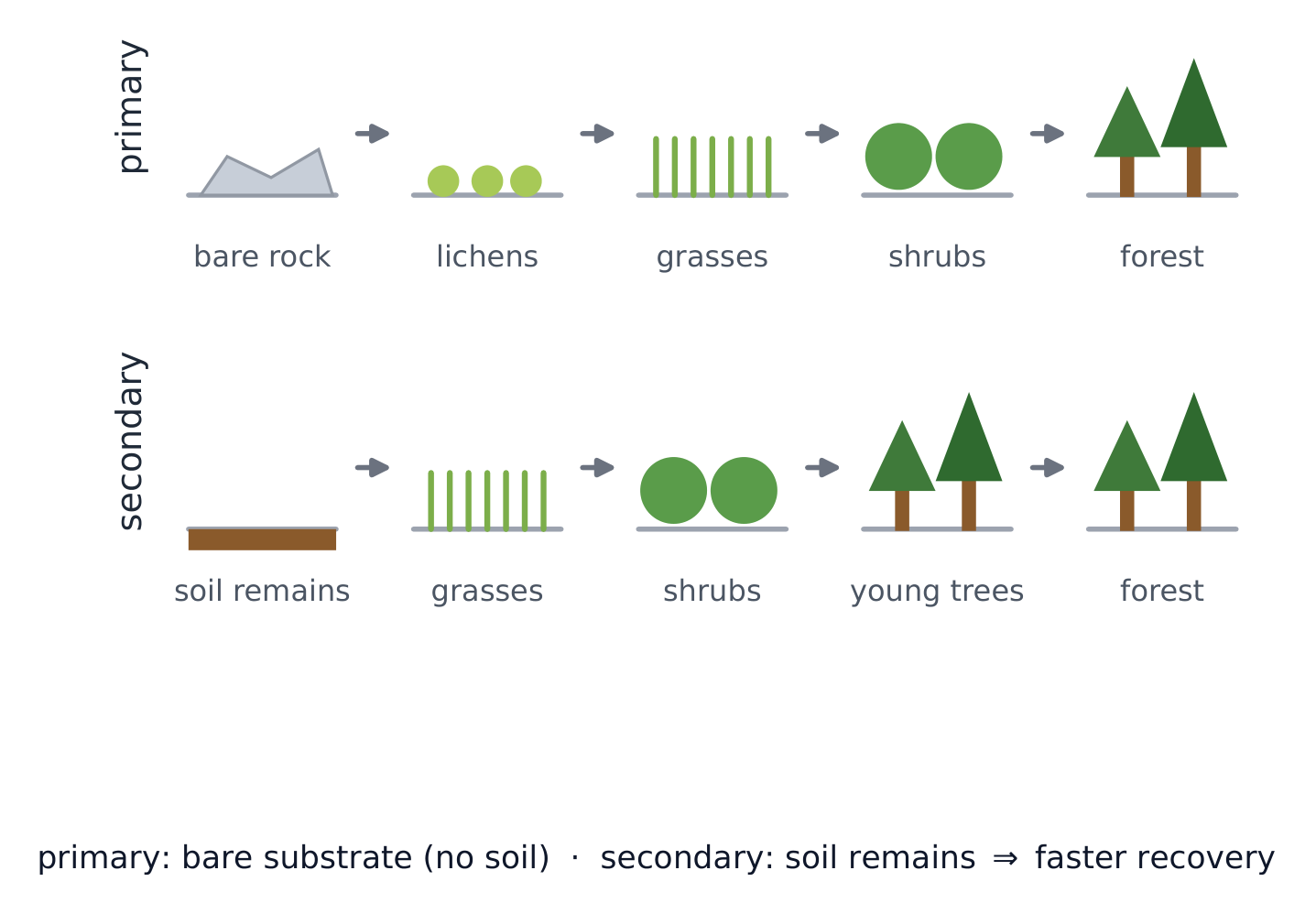
    • Primary succession 初级演替 starts on bare rock with no soil – after a glacier retreats or lava cools. Pioneer species 先锋物种 such as lichens 地衣 arrive first and slowly build soil. It is slow.
    • Secondary succession 次级演替 follows a disturbance that leaves the soil intact – after a fire or abandoned farming – so it is much faster.

    Succession tends toward a relatively stable climax community 顶极群落. Two special roles shape a community out of proportion to their numbers: a keystone species 关键种, whose activities hold the community structure together (remove it and the community collapses – sea otters keeping urchins in check), and an indicator species 指示物种, whose presence or health signals the condition of the whole ecosystem (lichens vanish where the air is polluted).

    Worked example. A pond holds 3 fish species with 5, 3, and 2 individuals ($N=10$). Simpson's Diversity Index $=1-\sum\left(\tfrac{n}{N}\right)^2 = 1-\left[(0.5)^2+(0.3)^2+(0.2)^2\right] = 1-0.38 = 0.62$. A value near 1 means high diversity; near 0 means one species dominates. Adding a fourth, evenly-sized species would push the index higher.

    עברית
    הצטברות אקולוגית

    התפתחות אקולוגית היא שינוי הדרגתי ומסודר בקהילה לאורך זמן:

    • התפתחות ראשונית מתחילה על סלע חשוף ללא קרקע – לאחר שהקוקה נסוג או הלבה התקררה. מינים פיונרים כמו טחבי-אבן מגיעים הראשונים ובונים לאט את הקרקע. התהליך איטי.
    משטח סלע מכוסה בפסים צהובים, כתומים וירוקים-בהירים של טחבי-אבן
    טחבי-אבן גדלים ישירות על סלע חשוף. כמינים פיונרים הם שוברים לאט את הסלע ובונים את שכבת הקרקע הדקה הראשונה
    • התפתחות משנייה עוקבת אחר הפרעה שהשאירה את הקרקע שלמה – לאחר אש או הישאר חוות חקלאיות – ולכן היא מהירה הרבה יותר.

    ההתפתחות נוטה להגיע לקהילת שיא יציבה יחסית. שני תפקידים מיוחדים מעצבים קהילה בלתי-פרופורציונלי לגודלה: מין מפתח, שמפעילותו מחזיקה את מבנה הקהילה (הסרתו גורמת לקריסת הקהילה – לטאות ימיות המונעות פורקינים), ומין אינדיקטור, בנוכחותו או במצבו הבריאותי משתקף מצב כלל האקוסיסטמה (טחבי-אבן נעלמים במקומות בהם האוויר מזוהם).

    התפתחות ראשונית בונה מסלע חשוף; התפתחות משנייה מתחדשת מקרקע שנותרה
    התפתחות ראשונית בונה מסלע חשוף; התפתחות משנייה מתחדשת מקרקע שנותרה

    דוגמה מוצגת. בברכה קיימות 3 מיני דגים עם 5, 3 ו-2 פרטים ($N=10$). מדד מגוון סימפסון $=1-\sum\left(\tfrac{n}{N}\right)^2 = 1-\left[(0.5)^2+(0.3)^2+(0.2)^2\right] = 1-0.38 = 0.62$. ערך הקרוב ל-1 מעיד על מגוון גבוה; ערך הקרוב ל-0 מעיד על שליטה של מין אחד. הוספת מין רביעי בגודל שווה תעלה את המדד.

    Vocabulary · ⁨מילון מונחים⁩ Train · ⁨אימון⁩
    English עברית
    Ecological succession/ˌekəˈlɒdʒɪkl səkˈseʃn/ התפתחות אקולוגית
    Primary succession/ˈpraɪməri səkˈseʃn/ התפתחות ראשונית
    Pioneer species/paɪəˈnɪə ˈspiːsiːz/ מין מקדים
    lichens/ˈlaɪkənz/ שעמוגים
    Secondary succession/ˈsekəndəri səkˈseʃn/ התפתחות משנייה
    climax community/ˈklaɪmæks kəˈmjuːnɪti/ קהילה קלימקסית
    keystone species/ˈkiːstəʊn ˈspiːsiːz/ מין מפתח
    indicator species/ˈɪndɪkeɪtə ˈspiːsiːz/ מין אינדיקטור
    2.7

    Exam tips · ⁨טיפים לבחינות⁩

    English
    • Describe biodiversity at three levels: genetic, species, and habitat, and link higher diversity to greater resilience.
    • Specialist species (narrow needs) are more vulnerable than generalists when a habitat changes.
    • Distinguish primary succession (bare rock, no soil, slow) from secondary (soil intact, faster).
    • Explain a keystone species (outsized effect) and an indicator species (signals ecosystem health).
    • Name the four ecosystem services (provisioning, regulating, cultural, supporting) with examples.
    עברית
    • תאר את הביוגוון בשלושה רמות: גנטית, מינית ושל ביטול, וקשר בין מגוון גבוה לבין גמישות גדולה יותר.
    • מינים ספציאליסטים (צרכים צרים) פגיעים יותר מאשר גנראליסטים כאשר הביטול משתנה.
    • הבדל בין סוקצסיה ראשונית (סלע חשוף, ללא קרקע, איטית) לבין משנית (קרקע שלמה, מהירה יותר).
    • הסבר על מין מפתח (השפעה יתר-גודל) ועל מין אינדיקטור (מסמן מצב בריאותי של אקוסיסטם).
    • ציין את ארבעת שירותי האקוסיסטם (אספקה, ויסות, תרבותי, תומך) עם דוגמאות.
  • 3

    Populations · ⁨אוכלוסיות⁩

    Watch lesson · ⁨צפה בשיעור⁩
    3.1

    Generalist and Specialist Species · ⁨מינים גנראליסטיים וספציאליסטיים⁩

    Syllabus · ⁨סיילבוס⁩
    English

    Enduring Understanding (ERT-3): Populations change over time in reaction to a variety of factors.

    Learning Objective ERT-3.A: Identify differences between generalist and specialist species.

    • ERT-3.A.1 Specialist species tend to be advantaged in habitats that remain constant, while generalist species tend to be advantaged in habitats that are changing.
    עברית

    הבנה מתמשכת (ERT-3): אוכלוסיות משתנות לאורך זמן כתגובה למגוון גורמים.

    מטרות למידה ERT-3.A: לזהות הבדלים בין מינים כלליים למינים ספציפיים.

    • ERT-3.A.1 מינים ספציפיים נוטים להתעלות בתנאים הסביבתיים הקבועים, בעוד שמינים כלליים נוטים להתעלות בתנאים הסביבתיים המתפרצים.

    Source: College Board AP Course and Exam Description · ⁨מקור: תיאור הקורס והמבחן של College Board AP⁩

    English

    A generalist 广适性物种 can live in many habitats and eat many foods (raccoon, cockroach) – flexible, so it copes well with change. A specialist 狭适性物种 needs specific conditions or foods (panda, koala) – efficient in a stable habitat but very vulnerable if that habitat changes.

    עברית

    גנראליסט יכול לחיות במגוון ביטולים ואוכל מזונות רבים (ראקון, נקבת זבוב) – גמיש, ולכן מתמודד היטב עם שינויים. ספציאליסט זקוק לתנאים או מזונות ספציפיים (פנדה, קואלה) – יעיל בביטול יציב אך פגיע מאוד אם זה משתנה.

    3.2

    K-Selected and r-Selected Species · ⁨מינים בעלי אסטרטגיית K ו-r⁩

    Syllabus · ⁨סיילבוס⁩
    English

    Enduring Understanding (ERT-3): Populations change over time in reaction to a variety of factors.

    Learning Objective ERT-3.B: Identify differences between K- and r-selected species.

    • ERT-3.B.1 K-selected species tend to be large, have few offspring per reproduction event, live in stable environments, expend significant energy for each offspring, mature after many years of extended youth and parental care, have long life spans/life expectancy, and reproduce more than once in their lifetime. Competition for resources in K-selected species' habitats is usually relatively high.
    • ERT-3.B.2 r-selected species tend to be small, have many offspring, expend or invest minimal energy for each offspring, mature early, have short life spans, and may reproduce only once in their lifetime. Competition for resources in r-selected species' habitats is typically relatively low.
    • ERT-3.B.3 Biotic potential refers to the maximum reproductive rate of a population in ideal conditions.
    • ERT-3.B.4 Many species have reproductive strategies that are not uniquely r-selected or K-selected, or they change in different conditions at different times.
    • ERT-3.B.5 K-selected species are typically more adversely affected by invasive species than r-selected species, which are minimally affected by invasive species. Most invasive species are r-selected species.
    עברית

    הבנה מתמשכת (ERT-3): אוכלוסיות משתנות לאורך זמן כתגובה למגוון גורמים.

    מטרות למידה ERT-3.B: לזהות הבדלים בין מינים N-נבחרים ל-r-נבחרים.

    • ERT-3.B.1 מינים N-נבחרים נוטים להיות גדולים, ללדת מעט צאצאים בכל אירוע רבייה, לחיות בסביבות יציבות, להשקיע אנרגיה משמעותית עבור כל צאצא, לבגור לאחר תקופת נעורים ארוכה וטיפול הורים, ליהנות ממחזור חיים ארוך/תוחלת חיים גבוהה, ולרבות לרבות יותר מפעם אחת בחייהם. התחרות על משאבים באקוסיסטמות של מינים N-נבחרים היא לרוב גבוהה יחסית.
    • ERT-3.B.2 מינים r-נבחרים נוטים להיות קטנים, ללדת צאצאים רבים, להשקיע או להקדיש אנרגיה מינימלית עבור כל צאצא, לבגור מוקדם, ליהנות ממחזור חיים קצר, ולרבות לרבות רק פעם אחת בחייהם. התחרות על משאבים באקוסיסטמות של מינים r-נבחרים היא לרוב נמוכה יחסית.
    • ERT-3.B.3 פוטנציאל ביולוגי מתייחס לקצב הרבייה המקסימלי של אוכלוסייה בתנאים אידיאליים.
    • ERT-3.B.4 למינים רבים ישן אסטרטגיות רבייה שלא הן ייחודית ל-r-נבחרים או N-נבחרים, או שהן משתנות בתנאים שונים ובזמנים שונים.
    • ERT-3.B.5 מינים N-נבחרים מושפעים לרע יותר על ידי מינים פולשים מאשר מינים r-נבחרים, המושפעים מינים פולשים באופן מינימלי. רוב המינים הפולשים הם מינים r-נבחרים.

    Source: College Board AP Course and Exam Description · ⁨מקור: תיאור הקורס והמבחן של College Board AP⁩

    English

    Two reproductive strategies:

    • $r$-selected species produce many offspring with little care, mature fast, and have short lives (insects, weeds). They colonize quickly and boom-and-bust.
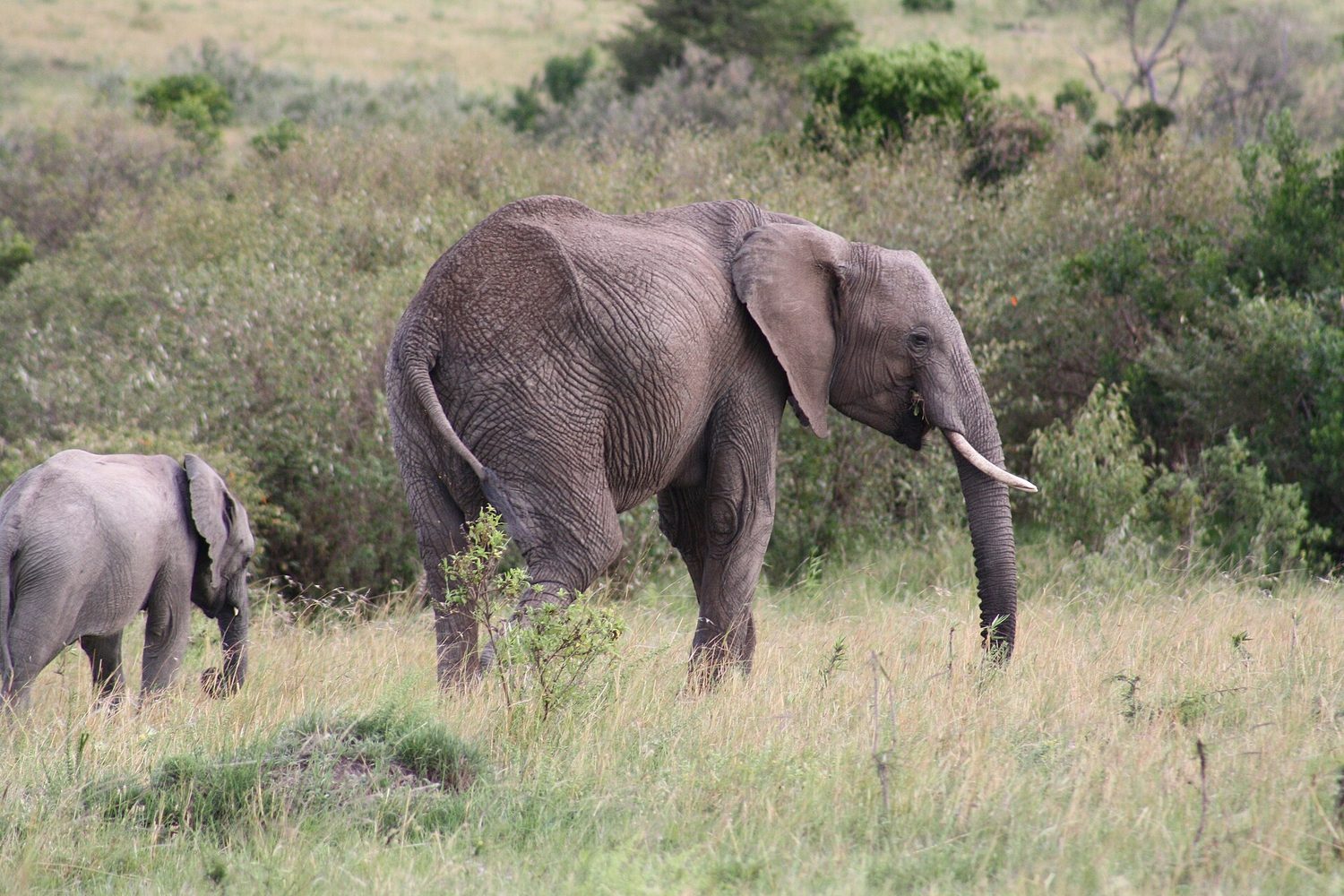
    • $K$-selected species produce few offspring with much care, mature slowly, and live long (elephants, humans). They do well near carrying capacity in stable environments but recover slowly from losses.
    עברית

    שתי אסטרטגיות רבייה:

    • מינים $r$-נבחרים מייצרים רבים צאצאים עם מעט טיפול, מגיעים לבגרות מהר, וחיים חיים קצרים (חרקים, עשבים). הם מתפשטים מהר ועוברים בתקופות פריחה ובלימה.
    • מינים $K$-נבחרים מייצרים מעטים צאצאים עם הרבה טיפול, מגיעים לבגרות לאט, וחיים חיים ארוכים (פילים, אנשים). הם מצליחים טוב בסמוך לקיבולת נשיאה בסביבות יציבות אך מתאוששים לאט מאובדנים.
    פילה מבוגר הולך עם גוזלו הקטן היחיד בשטח עשב
    פילה עם הגוזל היחיד שלו: למין בעל אסטרטגיית K יש מעט צאצאים אך הוא משקיע רבות בכל אחד מהם, ולכן מתאושש לאט אם מספריו יורדים
    ארנב צעיר: מינים מותאמים ל-r מייצרים גלגולים רבים במהירות עם השקעה הורית נמוכה
    ארנב צעיר: מינים בעלי אסטרטגיית r מייצרים צאצאים רבים במהירות עם השקעה הורית נמוכה
    3.3

    Survivorship Curves · ⁨עקומי הישרדות⁩

    Syllabus · ⁨סיילבוס⁩
    English

    Enduring Understanding (ERT-3): Populations change over time in reaction to a variety of factors.

    Learning Objective ERT-3.C: Explain survivorship curves.

    • ERT-3.C.1 A survivorship curve is a line that displays the relative survival rates of a cohort—a group of individuals of the same age—in a population, from birth to the maximum age reached by any one cohort member. There are Type I, Type II, and Type III curves.
    • ERT-3.C.2 Survivorship curves differ for K-selected and r-selected species, with K-selected species typically following a Type I or Type II curve and r-selected species following a Type III curve.
    עברית

    הבנה מתמשכת (ERT-3): אוכלוסיות משתנות לאורך זמן כתגובה למגוון גורמים.

    מטרות לימוד ERT-3.C: הסבר על עקומי הישרדות.

    • ERT-3.C.1 עקום הישרדות הוא קו המציג את שיעורי ההישרדות היחסיים של קורטוס – קבוצת פרטים באותו גיל – באוכלוסייה, מהלידה ועד לגיל המקסימלי שהגיע אליו כל אחד מחברי הקורטוס. קיימים עקומים מסוג I, מסוג II ומסוג III.
    • ERT-3.C.2 עקומי ההישרדות שונים בין מינים K-selected ל-r-selected, כאשר מינים K-selected נוטים לעקוב אחר עקום מסוג I או II, ומינים r-selected נוטים לעקוב אחר עקום מסוג III.

    Source: College Board AP Course and Exam Description · ⁨מקור: תיאור הקורס והמבחן של College Board AP⁩

    English

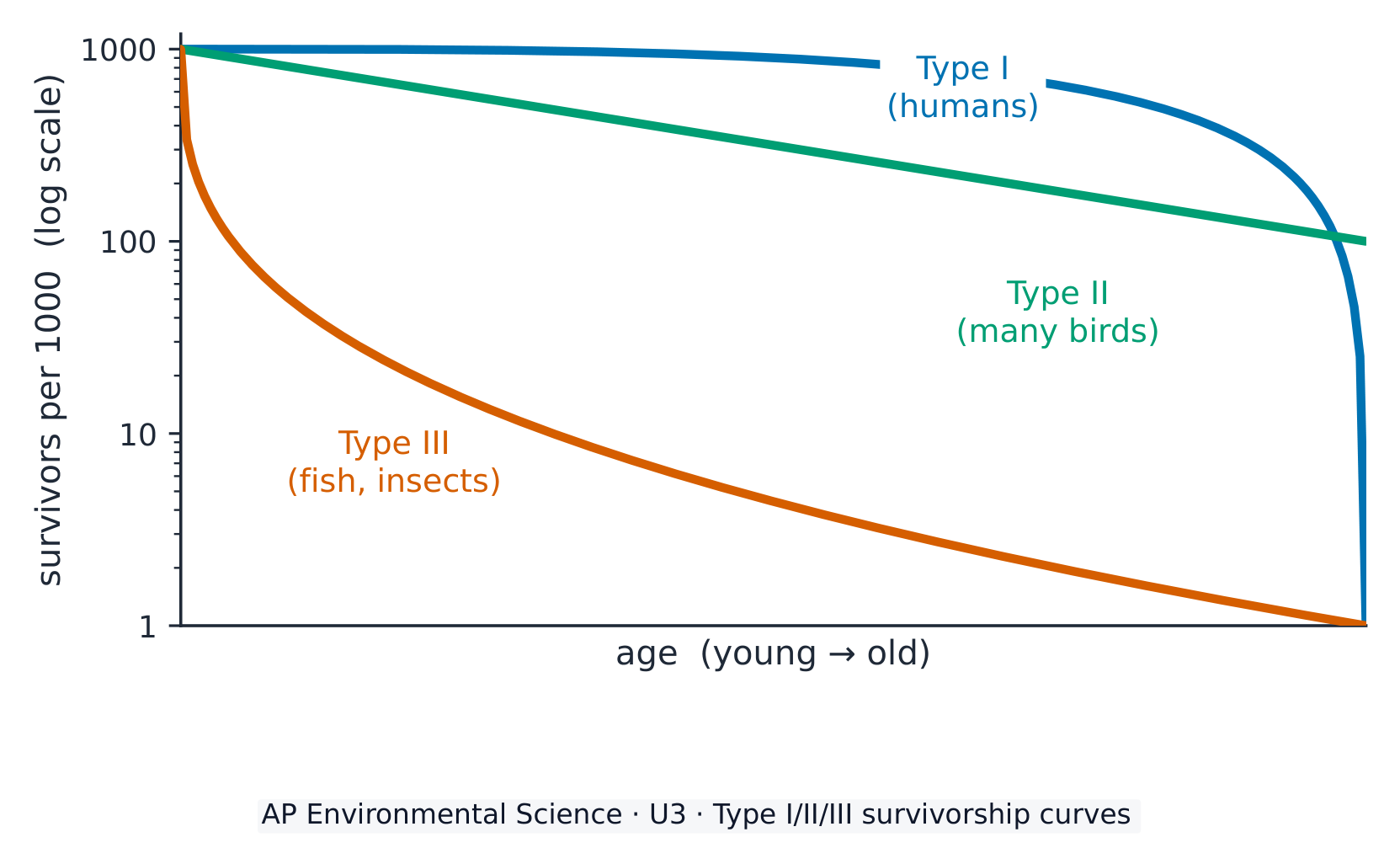
    A survivorship curve 存活曲线 plots how many individuals survive at each age (on a log scale). Type I (humans): most survive to old age, then die – a convex curve. Type II (many birds): a constant death rate at all ages – a straight line. Type III ($r$-selected: fish, insects): most die young, a few survive – a concave curve.

    עברית

    עקומת הישרדות מציגה כמה פרטים שורדים בכל גיל (בע scale לוגריתמית). סוג I (אנושים): הרוב שורד לגיל הזקנה, ואז נפטר – עקומה קמורה. סוג II (רבים מהציפורים): קצב תמותה קבוע בכל הגילים – קו ישר. סוג III (מינים מותאמים ל-$r$: דגים, חרקים): הרוב נפטר בגיל צעיר, מעטים שורדים – עקומה קעורה.

    עקומות הישרדות מסוג I, II ו-III בע scale לוגריתמית
    עקומי הישרדות סוג I, II ו-III בסקאלה לוגריתמית
    Vocabulary · ⁨מילון מונחים⁩ Train · ⁨אימון⁩
    English עברית
    generalist/ˈdʒenərəlɪst/ מין כללי
    specialist/ˈspeʃəlɪst/ מין מיוחד
    survivorship curve/səˈvaɪvəʃɪp kɜːv/ עקומת הישרדות
    3.4

    Carrying Capacity · ⁨קיבולת נשיאה⁩

    Syllabus · ⁨סיילבוס⁩
    English

    Enduring Understanding (ERT-3): Populations change over time in reaction to a variety of factors.

    Learning Objective ERT-3.D: Describe carrying capacity.

    • ERT-3.D.1 When a population exceeds its carrying capacity (carrying capacity can be denoted as K), overshoot occurs. There are environmental impacts of population overshoot, including resource depletion.

    Learning Objective ERT-3.E: Describe the impact of carrying capacity on ecosystems.

    • ERT-3.E.1 A major ecological effect of population overshoot is dieback of the population (often severe to catastrophic) because the lack of available resources leads to famine, disease, and/or conflict.
    עברית

    הבנה מתמשכת (ERT-3): אוכלוסיות משתנות לאורך זמן כתגובה למגוון גורמים.

    מטרות לימוד ERT-3.D: תיאור נשיאת הסביבה.

    • ERT-3.D.1 כאשר אוכלוסייה חורגת מנשיאת הסביבה שלה (שניתן לסמן כ-K), מתרחשת פריצת התפשטות (overshoot). לקפיצה זו יש השפעות סביבתיות, כולל דלדול משאבים.

    מטרות לימוד ERT-3.E: תיאור ההשפעה של נשיאת הסביבה על מערכות אקולוגיות.

    • ERT-3.E.1 אחת ההשפעות האקולוגיות המרכזיות של פריצת התפשטות היא ירידה באוכלוסייה (הרבה פעמים חמורה עד לקטסטרופה) בשל חוסר המשאבים הזמינים, המוביל לרעב, מחלות ו/או סכסוך.

    Source: College Board AP Course and Exam Description · ⁨מקור: תיאור הקורס והמבחן של College Board AP⁩

    English
    Predator & prey populations cycle
    Exponential vs logistic growth

    The carrying capacity 环境容纳量 ($K$) is the maximum population an environment can support long-term. A population may overshoot $K$ when resources are temporarily plentiful, then crash (dieback) as resources run out. Populations tend to fluctuate around $K$.

    עברית
    מחזור אוכלוסיות טורפים וטרוף
    גידול אקספוננציאלי מול לוגיסטי

    הקיבולת הנשיאה ($K$) היא האוכלוסייה המקסימלית שאספקת הסביבה יכולה לתמוך בה לטווח ארוך. אוכלוסייה עשויה להתעלם ($K$) כאשר המשאבים זמינים לעיתים, ולאחר מכן לקרוס (ירידה דרסטית) כשהמשאבים נגמרים. אוכלוסיות נוטות להשתנות סביב $K$.

    צמיחת אוכלוסייה משתטחת בקיבולת הנשיאה של הסביבה
    צמיחת אוכלוסייה משתטחת בקיבולת הנשיאה של הסביבה
    להקת איילים: כאשר אוכלוסייה מתקרבת לקיבולת הנשיאה, משאבים מגבילים צמיחה נוספת
    להקת איילים: כאשר אוכלוסייה מתקרבת לקיבולת הנשיאה, משאבים מגבילים צמיחה נוספת
    Explore · ⁨חקור⁩

    Growth up to carrying capacity · ⁨צמיחה עד הקיבולת החיובית⁩

    A population grows toward the carrying capacity $K$ its resources can support, then levels off. Push the growth rate up and watch it overshoot and settle. · ⁨אוכלוסייה צומחת לעבר הקיבולת החיובית $K$ שאפשרות המשאבים לתמוך בה, ולאחר מכן משתטחת. הרם את קצב הצמיחה וצפה היא תעבור את הגבול ותתייצב.⁩

    Vocabulary · ⁨מילון מונחים⁩ Train · ⁨אימון⁩
    English עברית
    carrying capacity/ˈkæriɪŋ kəˈpæsɪti/ קיבולת נשיאה
    exponentially/ˌekspəˈnenʃəli/ אקספוננציאלית
    logistic/ləˈdʒɪstɪk/ לוגיסטי
    Limiting factors/ˈlɪmɪtɪŋ ˈfæktəz/ גורמים מגבילים
    age-structure diagram/eɪdʒ ˈstrʌktʃə ˈdaɪəɡræm/ תרשים מבנה גיל
    total fertility rate/ˈtəʊtl fɜːˈtɪlɪti reɪt/ שיעור הולידה כולל
    ecological footprint/ˌekəˈlɒdʒɪkl ˈfʊtprɪnt/ טביעת הרגל האקולוגית
    3.5

    Population Growth and Resource Availability · ⁨צמיחת אוכלוסייה וזמינות משאבים⁩

    Syllabus · ⁨סיילבוס⁩
    English

    Enduring Understanding (ERT-3): Populations change over time in reaction to a variety of factors.

    Learning Objective ERT-3.F: Explain how resource availability affects population growth.

    • ERT-3.F.1 Population growth is limited by environmental factors, especially by the available resources and space.
    • ERT-3.F.2 Resource availability and the total resource base are limited and finite over all scales of time.
    • ERT-3.F.3 When the resources needed by a population for growth are abundant, population growth usually accelerates.
    • ERT-3.F.4 When the resource base of a population shrinks, the increased potential for unequal distribution of resources will ultimately result in increased mortality, decreased fecundity, or both, resulting in population growth declining to, or below, carrying capacity.
    עברית

    הבנה מתמשכת (ERT-3): אוכלוסיות משתנות לאורך זמן כתגובה למגוון גורמים.

    מטרות לימוד ERT-3.F: הסבר כיצד זמינות משאבים משפיעה על צמיחת אוכלוסייה.

    • ERT-3.F.1 צמיחת אוכלוסייה מוגבלת על ידי גורמים סביבתיים, במיוחד על ידי המשאבים והמרחב הזמינים.
    • ERT-3.F.2 זמינות משאבים ובסיס המשאבים הכולל מוגבלים וסופיים בכל רמות הזמן.
    • ERT-3.F.3 כאשר המשאבים הנדרשים לאוכלוסייה לצמיחה זמינים בשפע, צמיחת האוכלוסייה בדרך כלל מאיצה.
    • ERT-3.F.4 כאשר בסיס המשאבים של אוכלוסייה מתכווץ, הפוטנציאל הגובר לחלוקה לא שוויונית של משאבים יוביל לבסוף להגברת התמותה, להפחתת הפוריות או לשניהם, מה שיוביל לצמצום צמיחת האוכלוסייה עד לרמת נשיאת הסביבה או מתחתיה.

    Source: College Board AP Course and Exam Description · ⁨מקור: תיאור הקורס והמבחן של College Board AP⁩

    English

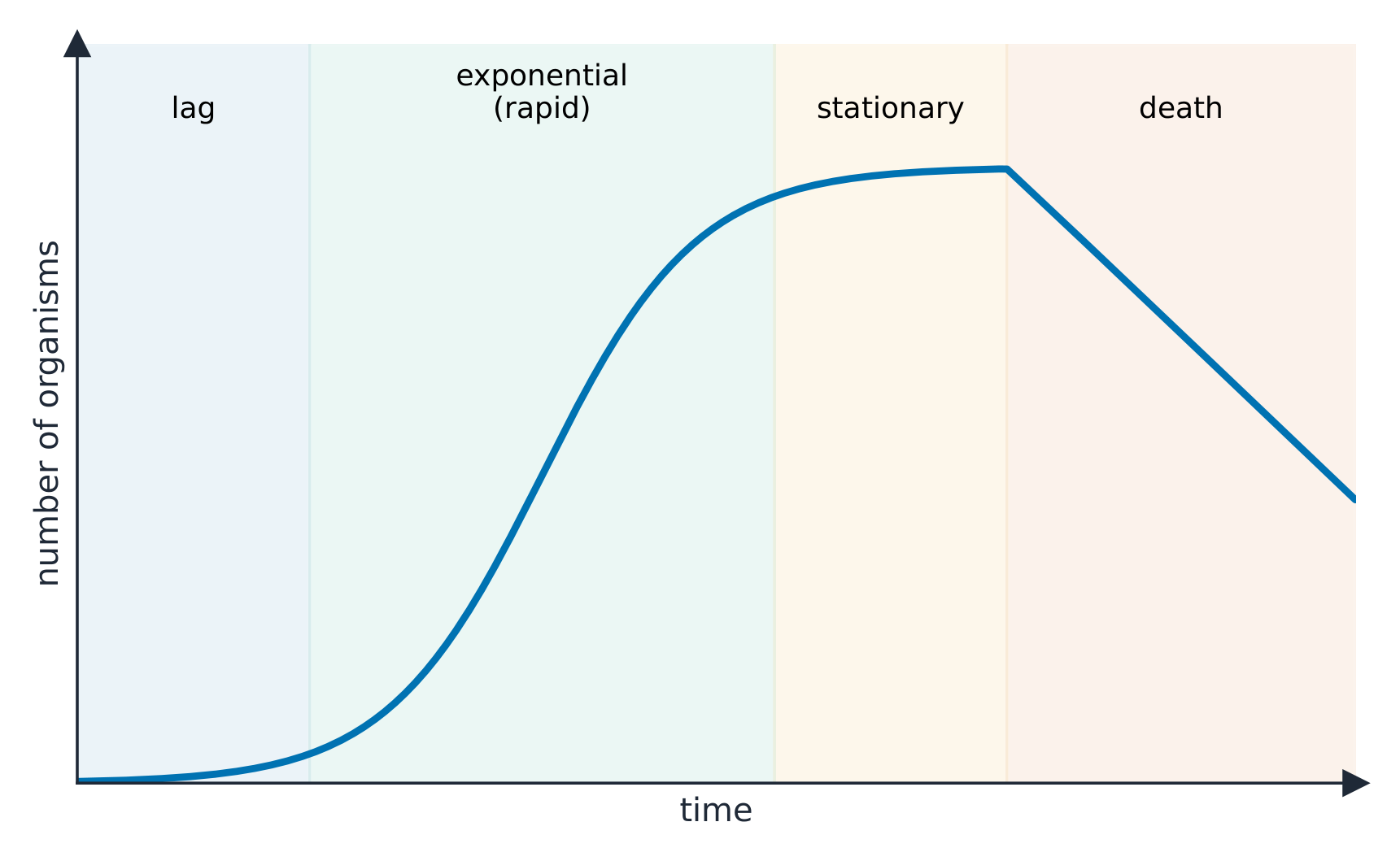
    With abundant resources a population grows exponentially 指数增长 ($J$-curve). As resources become limited, growth slows to logistic 逻辑斯蒂增长 ($S$-curve), leveling at $K$. Limiting factors 限制因素 (food, water, space, disease) set the ceiling.

    עברית

    עם משאבים מועטים, אוכלוסייה צומחת מעריכית (עקומת J-$J$). כשמשאבים הופכים למוגבלים, הצמיחה מאטה ללוגיסטית (עקומת S-$S$), ומתיישבת ב$K$. גורמים מגבילים (מזון, מים, שטח, מחלות) קובעים את הגבול העליון.

    3.6

    Age Structure Diagrams · ⁨תרשימי מבנה גיל⁩

    Syllabus · ⁨סיילבוס⁩
    English

    Enduring Understanding (EIN-1): Human populations change in reaction to a variety of factors, including social and cultural factors.

    Learning Objective EIN-1.A: Explain age structure diagrams.

    • EIN-1.A.1 Population growth rates can be interpreted from age structure diagrams by the shape of the structure.
    • EIN-1.A.2 A rapidly growing population will, as a rule, have a higher proportion of younger people compared to stable or declining populations.
    עברית

    הבנה מתמשכת (EIN-1): אוכלוסיות אנושיות משתנות בתגובה למגוון גורמים, כולל גורמים חברתיים ותרבותיים.

    מטרות לימוד EIN-1.A: הסבר על דיאגרמות מבנה גיל.

    • EIN-1.A.1 קצבי צמיחת אוכלוסייה ניתן לפרש מהדיאגרמות על בסיס צורת המבנה.
    • EIN-1.A.2 אוכלוסייה בצמיחה מהירה תהיה, כללית, בעלת אחוז גבוה יותר של אנשים צעירים בהשוואה לאוכלוסיות יציבות או יורדות.

    Source: College Board AP Course and Exam Description · ⁨מקור: תיאור הקורס והמבחן של College Board AP⁩

    English

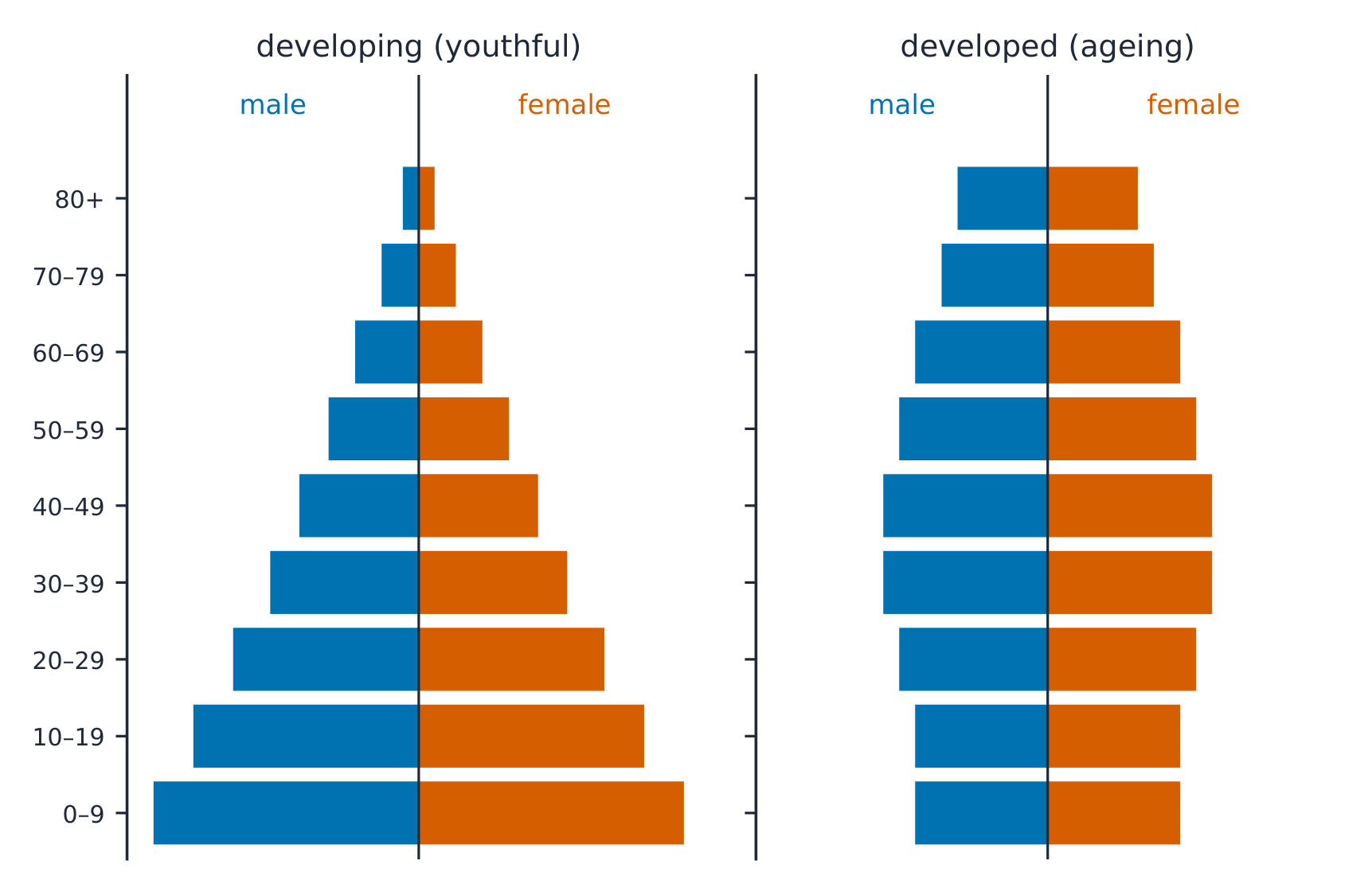
    An age-structure diagram 年龄结构图 shows the proportion of a population in each age group. A wide base (many young) predicts rapid growth; even bars predict a stable population; a narrow base predicts decline. They forecast a country's future population.

    עברית

    תרשים מבנה גיל מציג את החלק באוכלוסייה בכל קבוצת גיל. בסיס רחב (רבים צעירים) חוזה צמיחה מהירה; עמודות שוות חוזה אוכלוסייה יציבה; בסיס צר חוזה ירידה. הם חוזה את העתיד האוכלוסייתי של מדינה.

    פירמידות אוכלוסין של מדינה מתפתחת ומדינה מפותחת
    פירמידות אוכלוסין של מדינה מתפתחת ומדינה מפותחת
    3.7

    Total Fertility Rate · ⁨קצב פריון כולל⁩

    Syllabus · ⁨סיילבוס⁩
    English

    Enduring Understanding (EIN-1): Human populations change in reaction to a variety of factors, including social and cultural factors.

    Learning Objective EIN-1.B: Explain factors that affect total fertility rate in human populations.

    • EIN-1.B.1 Total fertility rate (TFR) is affected by the age at which females have their first child, educational opportunities for females, access to family planning, and government acts and policies.
    • EIN-1.B.2 If fertility rate is at replacement levels, a population is considered relatively stable.
    • EIN-1.B.3 Factors associated with infant mortality rates include whether mothers have access to good healthcare and nutrition. Changes in these factors can lead to changes in infant mortality rates over time.
    עברית

    הבנה מתמשכת (EIN-1): אוכלוסיות אנושיות משתנות בתגובה למגוון גורמים, כולל גורמים חברתיים ותרבותיים.

    מטרת למידה EIN-1.B: הסבר גורמים המשפיעים על קצב הילודה הכללי באוכלוסיות אנושיות.

    • EIN-1.B.1 קצב הילודה הכללי (TFR) מושפע מגיל שבו נשים מולדות את ילדן הראשון, הזדמנויות לימוד עבור נשים, גישה לתכנון משפחה, ופעולות ומדיניות ממשלתית.
    • EIN-1.B.2 אם קצב הילודה נמצא ברמת החלפה, האוכלוסייה נחשבת ליציבה יחסית.
    • EIN-1.B.3 גורמים הקשורים לקצב התמותה בתינוקות כוללים האם לאמהות יש גישה לטיפול רפואי טוב ותזונה. שינויים בגורמים אלו יכולים להוביל לשינויים בקצב התמותה בתינוקות לאורך זמן.

    Source: College Board AP Course and Exam Description · ⁨מקור: תיאור הקורס והמבחן של College Board AP⁩

    English

    The total fertility rate 总生育率 (TFR) is the average number of children per woman. A replacement level of about 2.1 keeps a population steady; above it grows, below it shrinks. TFR falls with education, access to family planning, and lower infant mortality.

    עברית

    הקצב הפריון הכולל (TFR) הוא הממוצע של מספר הילדים לאישה. רמת החלפה של כ-2.1 שומרת על יציבות אוכלוסייה; מעליה היא צומחת, מתחתיה היא מצטמצמת. KFR יורד עם חינוך, גישה לתכנון משפחה וירידה בתמותה תינוקית.

    3.8

    Human Population Dynamics · ⁨דינמיקת אוכלוסייה אנושית⁩

    Syllabus · ⁨סיילבוס⁩
    English

    Enduring Understanding (EIN-1): Human populations change in reaction to a variety of factors, including social and cultural factors.

    Learning Objective EIN-1.C.1: Explain how human populations experience growth and decline.

    • EIN-1.C.1 Birth rates, infant mortality rates, and overall death rates, access to family planning, access to good nutrition, access to education, and postponement of marriage all affect whether a human population is growing or declining.
    • EIN-1.C.2 Factors limiting global human population include the Earth's carrying capacity and the basic factors that limit human population growth as set forth by Malthusian theory.
    • EIN-1.C.3 Population growth can be affected by both density-independent factors, such as major storms, fires, heat waves, or droughts, and density-dependent factors, such as access to clean water and air, food availability, disease transmission, or territory size.
    • EIN-1.C.4 The rule of 70 states that dividing the number 70 by the percentage population growth rate approximates the population's doubling time.
    עברית

    הבנה מתמשכת (EIN-1): אוכלוסיות אנושיות משתנות בתגובה למגוון גורמים, כולל גורמים חברתיים ותרבותיים.

    מטרת למידה EIN-1.C.1: הסבר כיצד אוכלוסיות אנושיות חוות צמיחה וירידה.

    • EIN-1.C.1 קצבי לידה, קצבי תמותת תינוקות, קצבי המרત הכלליים, גישה לתכנון משפחה, גישה לתזונה טובה, גישה לחינוך והעברת נישואין כולם משפיעים על כך האם אוכלוסייה אנושית גדלה או דוחקת.
    • EIN-1.C.2 גורמים המגבילים את האוכלוסייה האנושית העולמית כוללים את קיבולת הנשיאה של כדור הארץ ואת הגורמים הבסיסיים המגבילים את צמיחת האוכלוסייה האנושית כפי שהוצגו על ידי תיאוריית מאלוס.
    • EIN-1.C.3 צמיחת אוכלוסייה עשויה להיות מושפעת גם מגורמים שאינם תלויים בצפיפות, כמו סופות עוצמתיות, אשפות, גלי חום או יובשות, וגם מגורמים תלויים בצפיפות, כמו גישה למים טהורים ולאוויר, זמינות מזון, מעבר מחלות או גודל טריטוריה.
    • EIN-1.C.4 כלל ה-70 קובע כי חלוקת המספר 70 בקצב הצמיחה של האוכלוסייה באחוזים מקרבת את זמן ההכפלה שלה.

    Source: College Board AP Course and Exam Description · ⁨מקור: תיאור הקורס והמבחן של College Board AP⁩

    English

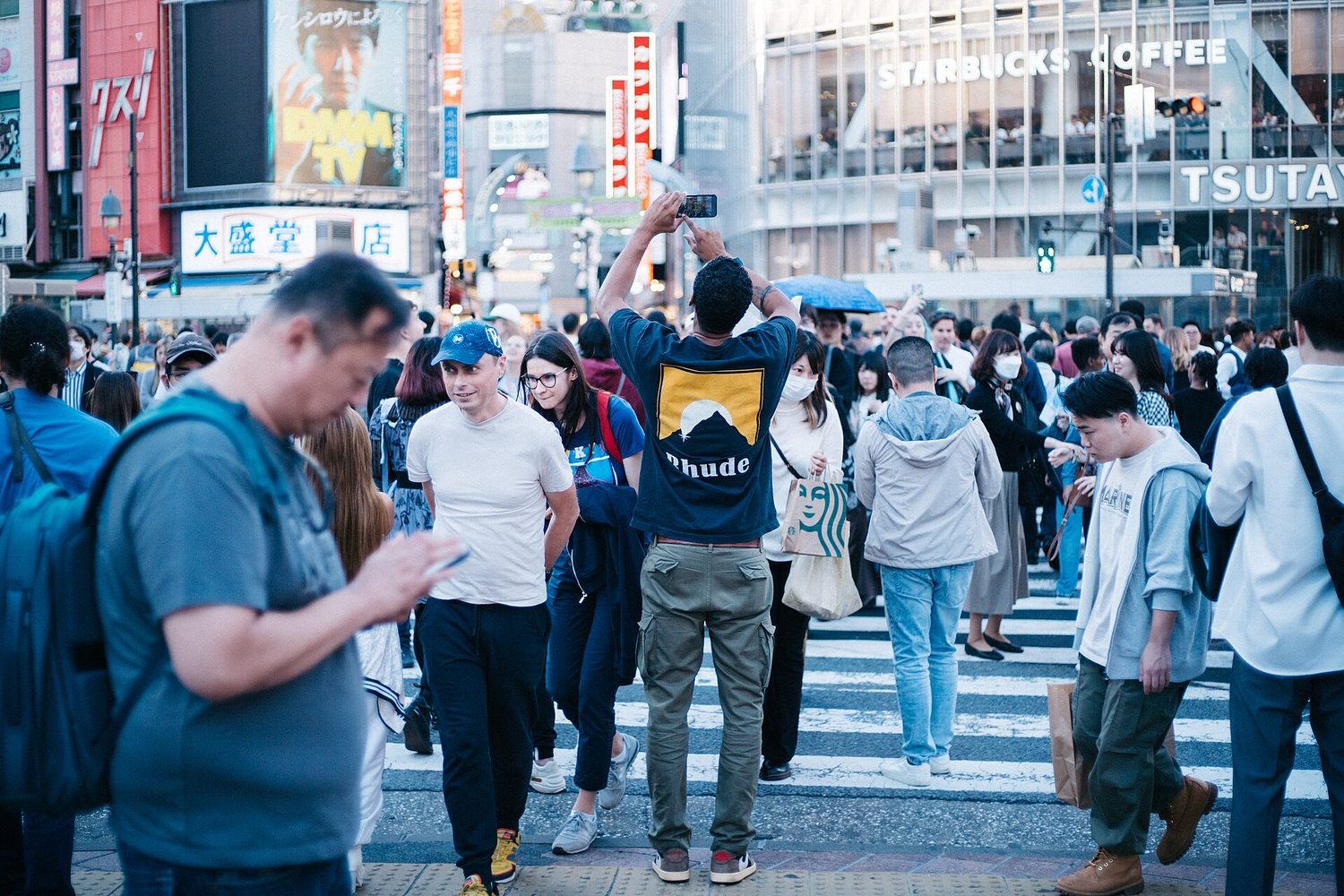
    Human population growth depends on birth rate, death rate, and migration. Rapid growth strains resources and increases the ecological footprint 生态足迹. Factors lowering birth rates include education (especially of women), urbanization, and economic development.

    Worked example. A country has a birth rate of $30$ per $1000$ and a death rate of $10$ per $1000$. The natural growth rate is $\dfrac{30-10}{10}=2.0\%$ per year (dividing the per-thousand difference by $10$ converts it to a percent). By the rule of 70, the population doubles in about $\dfrac{70}{2.0}=35$ years. If development cut the growth rate to $1.0\%$, the doubling time would stretch to $\dfrac{70}{1.0}=70$ years.

    עברית

    צמיחת אוכלוסייה אנושית תלויה בקצב לידות, קצב מותים ובהגירה. צמיחה מהירה לוחצת על משאבים ומגבירה אתהטביעה האקולוגית. גורמים המורידים את קצב הלידה כוללים חינוך (במיוחד של נשים), עירוניות ופיתוח כלכלי.

    דוגמה מוצגת. למדינה יש קצב לידה של $30$ לכל $1000$ וקצב תמותה של $10$ לכל $1000$. קצב הגידול הטבעי הוא $\dfrac{30-10}{10}=2.0\%$ בשנה (חלוקת ההפרש לפי אלף ב-$10$ ממרת אותו לאחוז). לפי חוק ה-70, האוכלוסייה תכפיל את עצמה בתוך כ-$\dfrac{70}{2.0}=35$ שנים. אם פיתוח יוריד את קצב הגידול ל-$1.0\%$, זמן הכפולה יתיאך ל-$\dfrac{70}{1.0}=70$ שנים.

    מחלף עירוני עמוס: דינמיקת אוכלוסייה אנושית תלויה בקצבי לידות, מותים והגירה
    מחלף עירוני עמוס: דינמיקת אוכלוסייה אנושית תלויה בקצבי לידות, מותים והגירה
    3.9

    Demographic Transition · ⁨מעבר דמוגרפי⁩

    Syllabus · ⁨סיילבוס⁩
    English

    Enduring Understanding (EIN-1): Human populations change in reaction to a variety of factors, including social and cultural factors.

    Learning Objective EIN-1.D: Define the demographic transition.

    • EIN-1.D.1 The demographic transition refers to the transition from high to lower birth and death rates in a country or region as development occurs and that country moves from a pre-industrial to an industrialized economic system. This transition is typically demonstrated through a four-stage demographic transition model (DTM).
    • EIN-1.D.2 Characteristics of developing countries include higher infant mortality rates and more children in the workforce than developed countries.
    עברית

    הבנה מתמשכת (EIN-1): אוכלוסיות אנושיות משתנות בתגובה למגוון גורמים, כולל גורמים חברתיים ותרבותיים.

    מטרת למידה EIN-1.D: הגדרת המעבר הדמוגרפי.

    • EIN-1.D.1 המעבר הדמוגרפי מתייחס למעבר ממקצבי לידה ותמותה גבוהים למקצבים נמוכים יותר במדינה או באזור בעקבות פיתוח, כאשר המדינה עוברת ממערכת כלכלית לפני-תעשייתית למערכת תעשייתית. מעבר זה מוצג לרוב באמצעות דגם מעבר דמוגרפי ארבע-שלבי (DTM).
    • EIN-1.D.2 מאפיינים של מדינות מתפתחות כוללים קצבי תמותת תינוקים גבוהים יותר ויותר ילדים בכוח העבודה בהשוואה למדינות מפותחות.

    Source: College Board AP Course and Exam Description · ⁨מקור: תיאור הקורס והמבחן של College Board AP⁩

    English

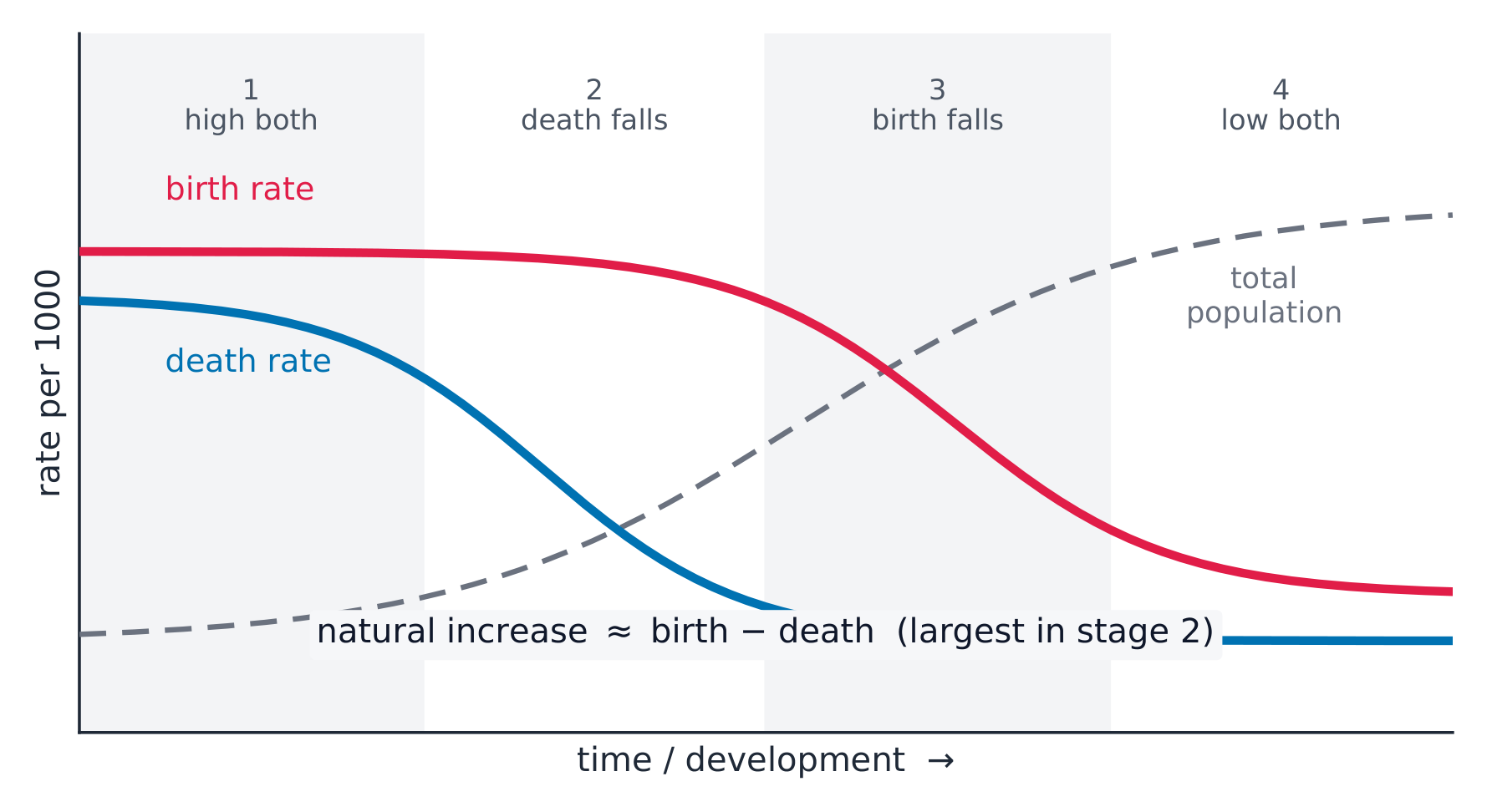
    The demographic transition 人口转型 describes how a country's growth changes as it develops, in stages: (1) high birth and death rates (slow growth); (2) death rate falls (rapid growth); (3) birth rate falls (slowing growth); (4) both low (stable). Developed nations are in later stages; many developing nations are in the rapid-growth stages.

    The population grows fastest in stages 2 and 3 – the gap between a still-high birth rate and an already-fallen death rate. That lag is why a country's population keeps climbing long after its death rate drops.

    עברית

    המעבר הדמוגרפי מתאר כיצד צמיחתו של מדינה משתנה במהלך פיתוחה, בשלבים: (1) קצבי לידות ומוות גבוהים (צמיחה איטית); (2) ירידת קצב המוות (צמיחה מהירה); (3) ירידת קצב הלידות (צמיחה מאטה); (4) שניהם נמוכים (יציבות). ארצות מפותחות נמצאות בשלבים מאוחרים; מדינות רבות בפיתוח נמצאות בשלבי הצמיחה המהירה.

    ארבעת שלבי המעבר הדמוגרפי
    ארבעת שלבי המעבר הדמוגרפי

    האוכלוסייה גדלה במהירות הרבה ביותר בשלבים 2 ו-3 – הפער בין קצב לידות עדיין גבוה לקצב מוות שנפל כבר. עיכוב זה הוא הסיבה לכך שאוכלוסיית המדינה ממשיכה לעלות זמן רב לאחר ירידת קצב המוות.

    Vocabulary · ⁨מילון מונחים⁩ Train · ⁨אימון⁩
    English עברית
    demographic transition/ˌdeməˈɡræfɪk trænˈsɪʃn/ מעבר דמוגרפי
    3.9

    Exam tips · ⁨טיפים לבחינות⁩

    English
    • Use the rule of 70: doubling time ≈ 70 ÷ growth-rate(%); a growth rate is (births − deaths) per 1000 ÷ 10.
    • Read age-structure diagrams: a wide base predicts rapid growth, even bars a stable population.
    • Contrast r-selected (many offspring, little care) and K-selected (few, much care) strategies.
    • Know the demographic transition stages and what lowers birth rates (education, family planning, development).
    • A falling growth rate still means growth — the population only shrinks when deaths exceed births.
    עברית
    • השתמש בחוק ה-70: זמן הכפלה ≈ 70 ÷ קצב צמיחה(%); קצב צמיחה הוא (לידות − מוות) לכל 1000 ÷ 10.
    • קרא אתתרשימי מבנה הגיל: בסיס רחב חוזה צמיחה מהירה, ועמודים באורך שווה מעידים על אוכלוסייה יציבה.
    • השוו ביןאסטרטגיות r-selected (מספר רב של צאצאים, טיפול מעט) לביןאסטרטגיות K-selected (מעט, טיפול רב).
    • הכן אתשלבי המעבר הדמוגרפי ואת מה שמוריד קצבי לידות (חינוך, תכנון משפחה, פיתוח).
    • ירידה בקצב הצמיחה עדיין מציינת צמיחה – האוכלוסייה צומחת רק כאשר המוות עולה על הלידות.
  • 4

    Earth Systems and Resources · ⁨מערכות כדור הארץ ומשאבים⁩

    Watch lesson · ⁨צפה בשיעור⁩
    4.1

    Plate Tectonics · ⁨טקטוניקת הלוחות⁩

    Syllabus · ⁨סיילבוס⁩
    English

    Enduring Understanding (ERT-4): Earth's systems interact, resulting in a state of balance over time.

    Learning Objective ERT-4.A: Describe the geological changes and events that occur at convergent, divergent, and transform plate boundaries.

    • ERT-4.A.1 Convergent boundaries can result in the creation of mountains, island arcs, earthquakes, and volcanoes.
    • ERT-4.A.2 Divergent boundaries can result in seafloor spreading, rift valleys, volcanoes, and earthquakes.
    • ERT-4.A.3 Transform boundaries can result in earthquakes.
    • ERT-4.A.4 Maps that show the global distribution of plate boundaries can be used to determine the location of volcanoes, island arcs, earthquakes, hot spots, and faults.
    • ERT-4.A.5 An earthquake occurs when stress overcomes a locked fault, releasing stored energy.
    עברית

    הבנה מתמשכת (ERT-4): מערכות כדור הארץ מתאימות זו לזו, ובכך נוצר מצב איזון לאורך זמן.

    מטרת למידה ERT-4.A: תיאור השינויים הגיאולוגיים והאירועים המתרחשים בגבולות לוחות מתכנסים, מתרחשים וממירים.

    • ERT-4.A.1 גבולות מתכנסים יכולים להוביל ליצירת הרים, קשתות איים, רעידות אדמה ווולקאנים.
    • ERT-4.A.2 גבולות מתרחשים יכולים להוביל להתרחשות קרקעית, עמקי סדק, וולקאנים ורעידות אדמה.
    • ERT-4.A.3 גבולות ממירים יכולים להוביל לרעידות אדמה.
    • ERT-4.A.4 מפות המציגות את ההתפלגות הגלובלית של גבולות לוחות יכולות לשמש לקביעת מיקום מתכוושים, קשת איים, רעידות אדמה, נקודות חמות וסדקים.
    • ERT-4.A.5 רעידת אדמה מתרחשת כאשר מאמץ עולה על סדק נעול, ומשחרר אנרגיה מאוגרת.

    Source: College Board AP Course and Exam Description · ⁨מקור: תיאור הקורס והמבחן של College Board AP⁩

    English
    The three plate boundaries

    Earth's crust is broken into plates 板块 that slowly move on the mantle – plate tectonics 板块构造. At divergent boundaries plates spread apart (new crust); at convergent they collide (mountains, volcanoes, earthquakes); at transform they slide past (earthquakes). Boundaries create hazards but also volcanic soils and mineral resources.

    עברית
    שלושת סוגי הגבולות הלוחיים

    קרום כדור הארץ מחולק ללוחות הנעים לאט על המנטיה – טקטוניקת הלוחות. בגבולותמתרחקים לוחות מתרחקים זה מזה (קרום חדש); בגבולותמתכנסים הם מתנגשים (הרים, געשיות, רעידות אדמה); בגבולותממירים הם מחליקים זה לצד זה (רעידות אדמה). גבולות אלו יוצרים סיכונים אך גם קרקעות וולקניות ומשאבי מינרלים.

    לבה לבה אדומה-כתומה מתפוצצת מתוך סדן וולקני כהה באיסלנד
    געש פוץ בגבול לוח באיסלנד. סלע נוזלי העולה בין לוחות מתרחקים בונה קרום חדש
    Vocabulary · ⁨מילון מונחים⁩ Train · ⁨אימון⁩
    English עברית
    plates/pleɪts/ צלעות
    plate tectonics/pleɪt tekˈtɒnɪks/ טקטוניקת פלטות
    4.2

    Soil Formation and Erosion · ⁨היווצרות קרקע ואוזון⁩

    Syllabus · ⁨סיילבוס⁩
    English

    Enduring Understanding (ERT-4): Earth's systems interact, resulting in a state of balance over time.

    Learning Objective ERT-4.B: Describe the characteristics and formation of soil.

    • ERT-4.B.1 Soils are formed when parent material is weathered, transported, and deposited.
    • ERT-4.B.2 Soils are generally categorized by horizons based on their composition and organic material.
    • ERT-4.B.3 Soils can be eroded by winds or water. Protecting soils can protect water quality as soils effectively filter and clean water that moves through them.
    עברית

    הבנה מתמשכת (ERT-4): מערכות כדור הארץ מתאימות זו לזו, ובכך נוצר מצב איזון לאורך זמן.

    מטרה לימודית ERT-4.B: לתאר את מאפייני הקרקע ותהליך יצירתה.

    • ERT-4.B.1 קרקע נוצרת כאשר חומר האם עובר תהליכי מזג, הובלה והצבה.
    • ERT-4.B.2 קרקע מסווגת באופן כללי לפי הוריאונים (שכבות) בהתבסס על הרכבה וחומרים אורגניים.
    • ERT-4.B.3 קרקע יכולה להילש על ידי רוח או מים. שמירה על קרקע יכולה לשמור על איכות המים, שכן הקרקע משמשת כמסנן יעיל ומטהר מים העוברים דרכה.

    Source: College Board AP Course and Exam Description · ⁨מקור: תיאור הקורס והמבחן של College Board AP⁩

    English

    Soil 土壤 forms slowly as rock weathers 风化 and organic matter builds up. Erosion 侵蚀 is the removal of soil by wind and water, sped up by removing vegetation (farming, deforestation, overgrazing). Because soil forms so slowly, erosion faster than formation depletes a vital resource.

    עברית

    קרקע נוצרת לאט כאשר סלעמתפורר וחומר אורגני מצטבר. אוזון הוא הסרת הקרקע על ידי רוח ומים, המואץ על ידי הסרת צמחייה (חקלאות, היעדרות יערות, רעייה יתר). מכיוון שקרקע נוצרת לאט מאוד, אוזון מהיר יותר מהיווצרות דלדל משאב חיוני זה.

    שכבות קרקע נוצרות לאורך זמן כאשר סלע אם עובר מזגה; שחיקה יכולה להסיר אדמת פנים ולהפוך התקדמות זו
    שכבות קרקע נוצרות לאורך זמן כאשר סלע ההורה מתפורר; אוזון יכול להסיר קרקע פורייה ולהפוך תהליך זה
    Vocabulary · ⁨מילון מונחים⁩ Train · ⁨אימון⁩
    English עברית
    Soil/sɔɪl/ קרקע
    weathers/ˈweðəz/ מתפרקת
    Erosion/ɪˈrəʊʒn/ שחיקה
    texture/ˈtekstʃə/ מרקם
    4.3

    Soil Composition and Properties · ⁨רכיבים ותכונות הקרקע⁩

    Syllabus · ⁨סיילבוס⁩
    English

    Enduring Understanding (ERT-4): Earth's systems interact, resulting in a state of balance over time.

    Learning Objective ERT-4.C: Describe similarities and differences between properties of different soil types.

    • ERT-4.C.1 Water holding capacity—the total amount of water soil can hold—varies with different soil types. Water retention contributes to land productivity and fertility of soils.
    • ERT-4.C.2 The particle size and composition of each soil horizon can affect the porosity, permeability, and fertility of the soil.
    • ERT-4.C.3 There are a variety of methods to test the chemical, physical, and biological properties of soil that can aid in a variety of decisions, such as irrigation and fertilizer requirements.
    • ERT-4.C.4 A soil texture triangle is a diagram that allows for the identification and comparison of soil types based on their percentage of clay, silt, and sand.
    עברית

    הבנה מתמשכת (ERT-4): מערכות כדור הארץ מתאימות זו לזו, ובכך נוצר מצב איזון לאורך זמן.

    מטרה לימודית ERT-4.C: לתאר דמיונות והבדלים בין מאפיינים של סוגי קרקע שונים.

    • ERT-4.C.1 יכולת אחזנת מים – הכמות הכוללת של מים שקרקע יכולה לאחוס – משתנה בהתאם לסוגי קרקע שונים. אחזנת מים תורמת לפרודוקטיביות ולפירותיות הקרקע.
    • ERT-4.C.2 גודל החלקיקים וההרכב של כל הוריאון בקרקע יכולים להשפיע על הנמיכות, הנפח הספוגי והפירותיות שלה.
    • ERT-4.C.3 קיימים מגוון שיטות לבדיקת המאפיינים הכימיים, הפיזיים והביולוגיים של קרקע, המסייעות במגוון החלטות, כגון צרכי השקיה ודשנים.
    • ERT-4.C.4 משולש טקסטורת קרקע הוא דיאגרמה המאפשרת זיהוי והשוואה בין סוגי קרקע על בסיס אחוזי הלוח, האבקה והחול.

    Source: College Board AP Course and Exam Description · ⁨מקור: תיאור הקורס והמבחן של College Board AP⁩

    English

    Soil is a mix of sand, silt, and clay (its texture 质地), plus organic matter, water, and air, layered in horizons 土层. Texture controls porosity 孔隙度 and permeability 渗透性 – how well soil holds water and nutrients. Loam (a balanced mix) is best for plants.

    עברית

    הקרקע היא תערובת של חול, סילט וחימר (המרקם) שלה, בנוסף לחומר אורגני, מים ואוויר, הממוקמים בשכבות אופקים. המרקם קובע את הנקבוביות והנמסות – כמה היטב הקרקע שומרת על מים וחומרי מזון. למה (תערובת מאוזנת) היא הטובה ביותר לצמחים.

    חפירה אנכית החוצה דרך הקרקע, המראה רצועת אדמה כהה מעל שכבות מינרליות אדומות-חומות, עם סרט מדידה לקנה מידה
    חפירה שנחפרה דרך הקרקע מראה את האופקים שלה: אדמת פנים אורגנית כהה למעלה, ולאחר מכן שכבות מינרליות בהירות יותר, מעל סלעים שבורים (סרט למדידה)
    Vocabulary · ⁨מילון מונחים⁩ Train · ⁨אימון⁩
    English עברית
    horizons/həˈraɪznz/ אופקים
    porosity/pɔːˈrɒsɪti/ ניקבוביות
    permeability/ˌpɜːməˈbɪlɪti/ פרמאיבליות
    atmosphere/ˈætməsfɪə/ אטמוספירה
    troposphere/ˈtrɒpəsfɪə/ טרופוספירה
    stratosphere/ˈstrætəsfɪə/ סטרוטוספירה
    global wind patterns/ˈɡləʊbl wɪnd ˈpætnz/ תבניות רוח גלובליות
    convection cells/kənˈvekʃn selz/ תאי קונווקציה
    Coriolis effect/ˌkɒrɪˈəʊliz ɪˈfekt/ אפקט קוריוליס
    4.4

    Earth's Atmosphere · ⁨אטמוספירת כדור הארץ⁩

    Syllabus · ⁨סיילבוס⁩
    English

    Enduring Understanding (ERT-4): Earth's systems interact, resulting in a state of balance over time.

    Learning Objective ERT-4.D: Describe the structure and composition of the Earth's atmosphere.

    • ERT-4.D.1 The atmosphere is made up of major gases, each with its own relative abundance.
    • ERT-4.D.2 The layers of the atmosphere are based on temperature gradients and include the troposphere, stratosphere, mesosphere, thermosphere, and exosphere.
    עברית

    הבנה מתמשכת (ERT-4): מערכות כדור הארץ מתאימות זו לזו, ובכך נוצר מצב איזון לאורך זמן.

    מטרה לימודית ERT-4.D: לתאר את המבנה וההרכב של אטמוספירת כדור הארץ.

    • ERT-4.D.1 האטמוספירה מורכבת מגזים עיקריים, שכל אחד מהם בעל תפוצה יחסית משלו.
    • ERT-4.D.2 שכבות האטמוספירה מבוססות על גרדינטים טמפרטורה וכוללות את הטרופוספירה, הסטרטוספירה, המזוספירה, התרמוספירה והאקסוספירה.

    Source: College Board AP Course and Exam Description · ⁨מקור: תיאור הקורס והמבחן של College Board AP⁩

    English

    The atmosphere 大气层 is layered: the troposphere 对流层 (weather, where we live), the stratosphere 平流层 (holding the ozone layer), and higher layers. It is mostly nitrogen and oxygen, with trace gases (including greenhouse gases) that regulate temperature.

    עברית

    לאטמוספירה יש שכבות: הטרופוספירה (מזג האוויר, שבו אנו חיים), הסטרוטוספירה (המכילה את שכבת האוזון), ושכבות גבוהות יותר. היא מורכבת בעיקר מחנקן וחמצן, עם גזי עקבה (כולל גזי חממה) המכוונים את הטמפרטורה.

    אוויר נקי ויבש מכיל כ-78% חנקן, 21% חמצן ו-1% גזים אחרים
    אוויר נקי ויבש מכיל כ-78% חנקן, 21% חמצן ו-1% גזים אחרים
    4.5

    Global Wind Patterns · ⁨דפוסי רוח גלובליים⁩

    Syllabus · ⁨סיילבוס⁩
    English

    Enduring Understanding (ERT-4): Earth's systems interact, resulting in a state of balance over time.

    Learning Objective ERT-4.E: Explain how environmental factors can result in atmospheric circulation.

    • ERT-4.E.1 Global wind patterns primarily result from the most intense solar radiation arriving at the equator, resulting in density differences and the Coriolis effect.
    עברית

    הבנה מתמשכת (ERT-4): מערכות כדור הארץ מתאימות זו לזו, ובכך נוצר מצב איזון לאורך זמן.

    מטרה לימודית ERT-4.E: להסביר כיצד גורמים סביבתיים יכולים לגרום לתנועת אוויר באטמוספירה.

    • ERT-4.E.1 תבניות רוח גלובליות נובעות בעיקר מקרני השמש האינטנסיביות ביותר המתקבלות במערך, מה שגורם להבדלי צפיפות ולאפקט קוריוליס.

    Source: College Board AP Course and Exam Description · ⁨מקור: תיאור הקורס והמבחן של College Board AP⁩

    English
    Global wind patterns

    Uneven solar heating drives global wind patterns 全球风带. Warm air rises at the equator and sinks at about 30°, creating convection cells 对流环流 (Hadley, Ferrel, polar) and prevailing winds (trade winds, westerlies). The spinning Earth deflects winds – the Coriolis effect 科里奥利效应 – shaping weather and climate.

    עברית
    דפוסי רוח גלובליים

    חימום לא אחיד של השמש מדריך אתדפוסי הרוח הגלובליים. אוויר חם עולה באזור המשוון וצונח ב-30° לערך, מה שמייצר תאי קונבקציה (הדלי, פרל, קוטביים) ורוחות שוררות (רוחות מסחר, ממערב). סיבוב כדור הארץ מפנה את הרוחות – אפקט קוריוליס – ועוצב את מזג האוויר והאקלים.

    שלוש תאי הסבה לכל מחצית כדור הארץ קובעים את רוחות המשטח הדומיננטיות שלושה תאי הסעה בכל חצי כדור קובעים את הרוחות השוררות במשטח,

    4.6

    Watersheds · ⁨אגני ניקוז⁩

    Syllabus · ⁨סיילבוס⁩
    English

    Enduring Understanding (ERT-4): Earth's systems interact, resulting in a state of balance over time.

    Learning Objective ERT-4.F: Describe the characteristics of a watershed.

    • ERT-4.F.1 Characteristics of a given watershed include its area, length, slope, soil, vegetation types, and divides with adjoining watersheds.
    עברית

    הבנה מתמשכת (ERT-4): מערכות כדור הארץ מתאימות זו לזו, ובכך נוצר מצב איזון לאורך זמן.

    מטרה לימודית ERT-4.F: לתאר את מאפייני אגן ניקוז.

    • ERT-4.F.1 המאפיינים של אגן ניקוז נתון כוללים את שטחו, אורכו, שיפועו, סוגי הקרקע והצמחייה, וגם הגבולות עם אגני ניקוז סמוכים.

    Source: College Board AP Course and Exam Description · ⁨מקור: תיאור הקורס והמבחן של College Board AP⁩

    English

    A watershed 流域 is all the land that drains to a common body of water. Everything that happens on the land – farming, paving, pollution – affects the water it drains into, so watersheds are key units for managing water quality.

    עברית

    אגן ניקוז הוא כל הקרקע הנשפכת לגוף מים משותף. הכל שקורה בקרקע – חקלאות, סלילה, זיהום – משפיע על המים אליהם היא נשפכת, ולכן אגני ניקוז הם יחידות מפתח לניהול איכות המים.

    מפל בנחל: אגן ניקוז הוא הקרקע הנשפכת לנחל או לאגם
    מפל בנחל: אגן ניקוז הוא הקרקע הנשפכת לנחל או לאגם
    Vocabulary · ⁨מילון מונחים⁩ Train · ⁨אימון⁩
    English עברית
    watershed/ˈwɔːtəʃed/ אגן ניקוז
    rain shadow/reɪn ˈʃædəʊ/ צל גשמים
    El Niño/el ˈniːnjəʊ/ אל נינו
    La Niña/læ ˈniːnjə/ לה נינה
    4.7

    Solar Radiation and Earth's Seasons · ⁨קרינה סולארית ועונתי כדור הארץ⁩

    Syllabus · ⁨סיילבוס⁩
    English

    Enduring Understanding (ENG-2): Most of the Earth's atmospheric processes are driven by input of energy from the sun.

    Learning Objective ENG-2.A: Explain how the sun's energy affects the Earth's surface.

    • ENG-2.A.1 Incoming solar radiation (insolation) is the Earth's main source of energy and is dependent on season and latitude.
    • ENG-2.A.2 The angle of the sun's rays determines the intensity of the solar radiation. Due to the shape of the Earth, the latitude that is directly horizontal to the solar radiation receives the most intensity.
    • ENG-2.A.3 The highest solar radiation per unit area is received at the equator and decreases toward the poles.
    • ENG-2.A.4 The solar radiation received at a location on the Earth's surface varies seasonally, with the most radiation received during the location's longest summer day and the least on the shortest winter day.
    • ENG-2.A.5 The tilt of Earth's axis of rotation causes the Earth's seasons and the number of hours of daylight in a particular location on the Earth's surface.
    עברית

    הבנה מתמשכת (ENG-2): רוב התהליכים באטמוספרת כדור הארץ מופעלים על ידי כניסת אנרגיה מהשמש.

    מטרה לימודית ENG-2.A: להסביר כיצד אנרגיית השמש משפיעה על פני השטח של כדור הארץ.

    • ENG-2.A.1 הקרינה הסולארית הנכנסת (אינסולציה) היא מקור האנרגיה העיקרי לכדור הארץ ותלויה בעונה ובקו הרוחב.
    • ENG-2.A.2 זווית קרני השמש קובעת את עוצמת הקרינה הסולארית. בשל צורתו של כדור הארץ, קו הרוחב המקבל את הקרינה בצורה מאונכת לקבלת העוצמה הגבוהה ביותר.
    • ENG-2.A.3 הקרינה הסולארית הגבוהה ביותר ליחידת שטח מתקבלת בקו המשוון ויורדת ככל שנעזרים לכיוון הקוטבים.
    • ENG-2.A.4 הקרינה הסולארית המתקבלת במיקום כלשהו על פני השטח של כדור הארץ משתנה בעונתית, כאשר הקרינה הרבה ביותר מתקבלת ביום הקיץ הארוך ביותר של המיקום והקרינה הפחותה ביותר ביום החורף הקצר ביותר.
    • ENG-2.A.5 שיפוע ציר הסיבוב של כדור הארץ גורם לעונתיים ולמספר שעות האור ביום במיקום מסוים על פני השטח.

    Source: College Board AP Course and Exam Description · ⁨מקור: תיאור הקורס והמבחן של College Board AP⁩

    English

    Seasons come from Earth's tilted axis (about 23.5°), not its distance from the Sun. The hemisphere tilted toward the Sun gets more direct sunlight and longer days (summer). The tilt also makes the tropics warm year-round and the poles cold.

    עברית

    העונות נובעות מציר הטיה של כדור הארץ (כ-23.5°), ולא ממרחקו מהשמש. החצי כדור הנוטה לכיוון השמש מקבל יותר אור שמש ישיר וימים ארוכים (קיץ). הטיה גורמת גם לכך שהטרופיקים חמים כל השנה ובקוטבים קר.

    השיפוע של ציר הסיבוב של כדור הארץ גורם לעונות השנה
    הטיית ציר הסיבוב של כדור הארץ גורמת לעונות השנה
    4.8

    Earth's Geography and Climate · ⁨גיאוגרפיה ואקלים של כדור הארץ⁩

    Syllabus · ⁨סיילבוס⁩
    English

    Enduring Understanding (ENG-2): Most of the Earth's atmospheric processes are driven by input of energy from the sun.

    Learning Objective ENG-2.B: Describe how the Earth's geography affects weather and climate.

    • ENG-2.B.1 Weather and climate are affected not only by the sun's energy but by geologic and geographic factors, such as mountains and ocean temperature.
    • ENG-2.B.2 A rain shadow is a region of land that has become drier because a higher elevation area blocks precipitation from reaching the land.
    עברית

    הבנה מתמשכת (ENG-2): רוב התהליכים באטמוספרת כדור הארץ מופעלים על ידי כניסת אנרגיה מהשמש.

    מטרה לימודית ENG-2.B: לתאר כיצד הגיאוגרפיה של כדור הארץ משפיעה מזג האוויר והאקלים.

    • ENG-2.B.1 מזג האוויר והאקלים מושפעים לא רק מאנרגיית השמש, אלא גם מגורמים גיאולוגיים וגיאוגרפיים, כמו הרים וחום האוקיינוסים.
    • ENG-2.B.2 צל גשם הוא אזור יבשתי שהפך ליותר יבש מכיוון שגובה גבוה חוסם משקיפת הגשמים מלהגיע ליבשה.

    Source: College Board AP Course and Exam Description · ⁨מקור: תיאור הקורס והמבחן של College Board AP⁩

    English

    Geography shapes climate: latitude (sunlight angle), elevation (cooler with height), proximity to oceans (moderating temperature), and mountains creating a rain shadow 雨影 (wet windward side, dry leeward side). These factors decide which biome forms where.

    עברית

    גיאוגרפיה מעצבת את האקלים: רוחב ארצי (זווית אור השמש), גובה (קר יותר ככל שגבוה יותר), קרבה לאוקיינוסים (מחליטה טמפרטורה) והרים היוצרים צל גשמים (צד רוחבי רטוב, צד מלכא干燥). גורמים אלו קובעים באיזה בייומה נוצר בכל מקום.

    חוליות מדבריות: רוחב ארצי, גובה וזרמי ים מעצבים אזורים אקלימיים בכדור הארץ
    חוליות מדבריות: רוחב ארצי, גובה וזרמי ים מעצבים אזורים אקלימיים בכדור הארץ
    4.9

    El Nino and La Nina · ⁨אל-ניןו ול-נינקה⁩

    Syllabus · ⁨סיילבוס⁩
    English

    Enduring Understanding (ENG-2): Most of the Earth's atmospheric processes are driven by input of energy from the sun.

    Learning Objective ENG-2.C: Describe the environmental changes and effects that result from El Niño or La Niña events (El Niño–Southern Oscillation).

    • ENG-2.C.1 El Niño and La Niña are phenomena associated with changing ocean surface temperatures in the Pacific Ocean. These phenomena can cause global changes to rainfall, wind, and ocean circulation patterns.
    • ENG-2.C.2 El Niño and La Niña are influenced by geological and geographic factors and can affect different locations in different ways.
    עברית

    הבנה מתמשכת (ENG-2): רוב התהליכים באטמוספרת כדור הארץ מופעלים על ידי כניסת אנרגיה מהשמש.

    מטרה לימודית ENG-2.C: לתאר את השינויים הסביבתיים וההשלכות הנגרמות כתוצאה מאירועי אל ניניו או לא ניניו (תנודת דרום-מערבית).

    • ENG-2.C.1 אל ניניו ולא ניניו הם תופעות הקשורות לשינויים בטמפרטורת פני האוקיינוס בחוף המערבי. תופעות אלו יכולות לגרום לשינויים גלובליים בתבניות הגשמים, הרוחות והזרמי האוקיינוס.
    • ENG-2.C.2 אל ניניו ולא ניניו מושפעים מגורמים גיאולוגיים וגיאוגרפיים ועלולים להשפיע על אזורים שונים בצורות שונות.

    Source: College Board AP Course and Exam Description · ⁨מקור: תיאור הקורס והמבחן של College Board AP⁩

    English
    El Niño and La Niña

    El Niño 厄尔尼诺 and La Niña 拉尼娜 are periodic shifts in Pacific Ocean temperatures and winds. El Niño (warm eastern Pacific) and La Niña (cool eastern Pacific) alter rainfall, storms, and fisheries worldwide – for example, floods in some regions and droughts in others.

    Worked example. A tectonic plate moves 5 cm per year. How far does it travel in 1 million years? $5\ \text{cm/yr}\times 10^{6}\ \text{yr}=5\times10^{6}\ \text{cm}=50\ \text{km}$. A tiny yearly motion adds up to ocean-basin-scale distances over geologic time — the same slow rate that opens oceans and builds mountain ranges.

    עברית
    אל-ניןו ול-נינקה

    אל-ניןו ו-ל-נינקה הם שינויים מחזוריים בטמפרטורות וברוחות באוקיינוס השקט. אל-ניןו (אוקיינוס מזרחי חם) ול-נינקה (אוקיינוס מזרחי קר) משנים משקעי גשם, סופות ומערכות דיג בעולם כולו – לדוגמה, הצפות באזורים מסוימים ויובשות באחרים.

    דוגמה פתורה. לוח טקטוני נע ב-5 ס"מ בשנה. כמה הוא עובר ב-1 מיליון שנה? $5\ \text{cm/yr}\times 10^{6}\ \text{yr}=5\times10^{6}\ \text{cm}=50\ \text{km}$. תנועה שנראית זניחה בשנה מצטברת למרחקים בקנה מידה של אגן אוקיינוסי לאורך זמן גיאולוגי – אותו קצב איטי שמפתח אוקיינוסים ובונה רכסי הרים.

    4.9

    Exam tips · ⁨טיפים לבחינות⁩

    English
    • Seasons come from the Earth's tilt, not its distance from the Sun.
    • Soil forms very slowly, so erosion faster than formation permanently depletes it; know soil texture (sand/silt/clay) and horizons.
    • Explain global wind patterns from uneven heating + the Coriolis effect, and a rain shadow (wet windward, dry leeward).
    • Name the atmospheric layers (troposphere = weather, stratosphere = ozone) and air composition (~78% N₂, 21% O₂).
    • El Niño / La Niña are Pacific temperature shifts that change rainfall worldwide.
    עברית
    • העונות נובעות מההטיית כדור הארץ, ולא ממרחקו מהשמש.
    • קרקע נוצרת לאט מאוד, לכן שריפה מהירה מהיווצרותה פוגעת בה בצורה בלתי הפיכה; יש להכיר את מרקם הקרקע (חול/סיילט/חימר) ואת ההוריקונים.
    • הסבר על דפוסי רוח גלובליים מתוך חימום לא אחיד + אפקט קוריוליס, וצל גשמים (צד רוחבי רטוב, צד מלכא干燥).
    • ציין את שכבות האטמוספירה (טרופוספירה = מזג אוויר, סטרטוספירה = אוזון) והרכב האוויר (~78% N₂, 21% O₂).
    • אל-ניןו / ל-נינקה הם שינוי טמפרטורות באוקיינוס השקט המשנה משקעי גשם בעולם כולו.
  • 5

    Land and Water Use · ⁨שימוש באדמה ובמים⁩

    Watch lesson · ⁨צפה בשיעור⁩
    5.1

    The Tragedy of the Commons · ⁨טרגדיה של המשותף⁩

    Syllabus · ⁨סיילבוס⁩
    English

    Enduring Understanding (EIN-2): When humans use natural resources, they alter natural systems.

    Learning Objective EIN-2.A: Explain the concept of the tragedy of the commons.

    • EIN-2.A.1 The tragedy of the commons suggests that individuals will use shared resources in their own self-interest rather than in keeping with the common good, thereby depleting the resources.
    עברית

    הבנה מתמשכת (EIN-2): כאשר אנושיים משמשים משאבי טבע, הם משנים מערכות טבעיות.

    מטרת למידה EIN-2.A: הסבר את מושג האסון של המשמעות המשותפת.

    • EIN-2.A.1 האסון של המשמעות המשותפת מציע כי אנשים ישתמשו במשאבים משותפים לטובת עצמם פרטיים במקום לפי האינטרס הציבורי, ובכך ינפלו את המשאבים.

    Source: College Board AP Course and Exam Description · ⁨מקור: תיאור הקורס והמבחן של College Board AP⁩

    English
    The tragedy of the commons

    The tragedy of the commons 公地悲剧: when a resource is shared and open to all (a fishery, the atmosphere, a pasture), each user takes as much as they can for private gain, and the shared resource is overused and degraded for everyone. Solutions require regulation, privatization, or cooperative management.

    עברית
    טרגדיה של המשותף

    הטרגדיה של המשותף: כאשר משאב משותף ופתוח לכולם (דיג, האטמוספירה, מרעה), כל משתמש לוקח ככל שהוא יכול למען רווח פרטי, והמשאב המשותף מושחץ ומנוצל יתר על המידה לכל אחד. פתרונות דורשים ויסות, פרטיזציה או ניהול שיתופי פעולה.

    5.2

    Clearcutting · ⁨גזירה⁩

    Syllabus · ⁨סיילבוס⁩
    English

    Enduring Understanding (EIN-2): When humans use natural resources, they alter natural systems.

    Learning Objective EIN-2.B: Describe the effect of clearcutting on forests.

    • EIN-2.B.1 Clearcutting can be economically advantageous but leads to soil erosion, increased soil and stream temperatures, and flooding.
    • EIN-2.B.2 Forests contain trees that absorb pollutants and store carbon dioxide. The cutting and burning of trees releases carbon dioxide and contributes to climate change.
    עברית

    הבנה מתמשכת (EIN-2): כאשר אנושיים משמשים משאבי טבע, הם משנים מערכות טבעיות.

    מטרות למידה EIN-2.B: לתאר את השפעת הגזירה המלאה על יערות.

    • EIN-2.B.1 גזירה מלאה עשויה להיות משתלמת כלכלית, אך היא גוררת אחר כךשף קרקע, עלייה בטמפרטורת הקרקע והנחלים, והצפות.
    • EIN-2.B.2 יערות מכילים עצים הסופגים זיהומים ואוגרים פחמן דו-חמצני. חיתוך ושריפת עצים משחררים פחמן דו-חמצני ותורמים לשינויי האקלים.

    Source: College Board AP Course and Exam Description · ⁨מקור: תיאור הקורס והמבחן של College Board AP⁩

    English

    Clearcutting 皆伐 removes all trees from an area at once. It is cheap and efficient but causes erosion 侵蚀, loss of habitat and biodiversity, flooding, and higher soil temperatures. Recovery is slow, and nearby streams suffer from sediment.

    עברית

    הסרת עצי מלאכה מסירה את כל העצים מאזור מסוים בו-זמנית. היא זולה ויעילה אך גורמת לשחיקה, אובדן ביטות ומגוון ביולוגי, הצפות וגלישת טמפרטורות גבוהות יותר בקרקע. התאוששות האזור איטית, והנחלים הסמוכים סובלים מהצטברות משקעים.

    מדרון הר where a strip of forest has been completely cut, leaving bare brown soil next to standing green trees
    הסרת עצי מלאכה טרייה: כל העצים ברצועה נלקחים בו-זמנות, ומשאירים קרקע חשופה הנשחקת ונשטפת לתוך הנחלים
    החשירה מפחיתה את המגוון הביולוגי וגורמת לסחיפה, הצפות ועלייה ברמת CO2
    החשירה מפחיתה את המגוון הביולוגי וגורמת לסחיפה, הצפות ועלייה ברמת CO2
    5.3

    The Green Revolution · ⁨המהפכה הירוקה⁩

    Syllabus · ⁨סיילבוס⁩
    English

    Enduring Understanding (EIN-2): When humans use natural resources, they alter natural systems.

    Learning Objective EIN-2.C: Describe changes in agricultural practices.

    • EIN-2.C.1 The Green Revolution started a shift to new agricultural strategies and practices in order to increase food production, with both positive and negative results. Some of these strategies and methods are mechanization, genetically modified organisms (GMOs), fertilization, irrigation, and the use of pesticides.
    • EIN-2.C.2 Mechanization of farming can increase profits and efficiency for farms. It can also increase reliance on fossil fuels.
    עברית

    הבנה מתמשכת (EIN-2): כאשר אנושיים משמשים משאבי טבע, הם משנים מערכות טבעיות.

    מטרות למידה EIN-2.C: לתאר שינויים במערכי חקלאות.

    • EIN-2.C.1 המהפכה הירוקה החלה מעבר לאסטרטגיות ולמערכים חקלאיים חדשים במטרה להגדיל את תוצרת המזון, עם תוצאות חיוביות ושליליות. חלק מאסטרטגיות ומערכים אלו הם: מנגנון, אורגניזמים מהנדסים גנטית (GMOs), הדברה, השקאה ושימוש בחומרי הדברה.
    • EIN-2.C.2 מנגנון בעבודה החקלאית יכול להגדיל רווחים ויעילות בחוות. הוא יכול גם להגדיל תלות בדלקות מאובנות.

    Source: College Board AP Course and Exam Description · ⁨מקור: תיאור הקורס והמבחן של College Board AP⁩

    English

    The Green Revolution 绿色革命 boosted crop yields with high-yield seeds, synthetic fertilizers 化肥, pesticides 农药, irrigation, and mechanization. It fed billions but brought costs: soil degradation, water pollution, high energy and water use, and loss of crop diversity (monoculture 单一栽培).

    עברית

    המהפכה הירוקה שיפרה תוצאות יבולים באמצעות זרעי פירותיות גבוהה, דשנים סינתטיים, חומרי הדברה, השקיה ומכניזציה. היא הזנתה מיליארדים אך הביאה לעלויות: דegradation של קרקע, זיהום מים, צריכת אנרגיה ומים גבוהה ואובדן מגוון יבולים (מונו-קल्טורה).

    דשני NPK מספקים את שלושת האלמנטים שהצמחים צריכים ביותר
    דשני NPK מספקים את שלושת האלמנטים שהצמחים צריכים ביותר
    5.4

    Impacts of Agricultural Practices · ⁨השפעות של שיטות חקלאיות⁩

    Syllabus · ⁨סיילבוס⁩
    English

    Enduring Understanding (EIN-2): When humans use natural resources, they alter natural systems.

    Learning Objective EIN-2.D: Describe agricultural practices that cause environmental damage.

    • EIN-2.D.1 Agricultural practices that can cause environmental damage include tilling, slash-and-burn farming, and the use of fertilizers.
    עברית

    הבנה מתמשכת (EIN-2): כאשר אנושיים משמשים משאבי טבע, הם משנים מערכות טבעיות.

    מטרות למידה EIN-2.D: לתאר מערכים חקלאיים הגורמים לנזק סביבתי.

    • EIN-2.D.1 מערכים חקלאיים שיכולים לגרום לנזק סביבתי כוללים: עבודת קרקע, חקלאות שרפה-חתוך, ושימוש בחומרי הדברה.

    Source: College Board AP Course and Exam Description · ⁨מקור: תיאור הקורס והמבחן של College Board AP⁩

    English

    Practices such as tilling, monoculture, and heavy fertilizer/pesticide use cause erosion, soil salinization 土壤盐碱化, nutrient runoff (causing eutrophication 富营养化), and loss of biodiversity. Sustainable methods reduce these harms.

    עברית

    שיטות כגון חרישה, מונו-קल्טורה ושימוש מוערך בדשנים/חומרי הדברה גורמות לשחיקה, מליחות קרקע, ריצוף תזונתי (הגורם לאוקטרופיקציה) ולאובדן מגוון ביולוגי. שיטות בר-קיימא מצמצמות נזקים אלו.

    חקלאות אינטנסיבית: חרישה, דשנים ומונו-קולטורות מעלות תוצאות אך עלולות לגרום לשחיקת קרקע ולזיהום מים
    חקלאות אינטנסיבית: חרישה, דשנים ומונו-קולטורות מעלות תוצאות אך עלולות לגרום לשחיקת קרקע ולזיהום מים
    5.5

    Irrigation Methods · ⁨שיטות השקיה⁩

    Syllabus · ⁨סיילבוס⁩
    English

    Enduring Understanding (EIN-2): When humans use natural resources, they alter natural systems.

    Learning Objective EIN-2.E: Describe different methods of irrigation.

    • EIN-2.E.1 The largest human use of freshwater is for irrigation (70%).
    • EIN-2.E.2 Types of irrigation include drip irrigation, flood irrigation, furrow irrigation, drip irrigation, and spray irrigation.

    Learning Objective EIN-2.F: Describe the benefits and drawbacks of different methods of irrigation.

    • EIN-2.F.1 Waterlogging occurs when too much water is left to sit in the soil, which raises the water table of groundwater and inhibits plants' ability to absorb oxygen through their roots.
    • EIN-2.F.2 Furrow irrigation involves cutting furrows between crop rows and filling them with water. This system is inexpensive, but about 1/3 of the water is lost to evaporation and runoff.
    • EIN-2.F.3 Flood irrigation involves flooding an agricultural field with water. This system sees about 20% of the water lost to evaporation and runoff. This can also lead to waterlogging of the soil.
    • EIN-2.F.4 Spray irrigation involves pumping ground water into spray nozzles across an agricultural field. This system is more efficient than flood and furrow irrigation, with only 1/4 or less of the water lost to evaporation or runoff. However, spray systems are more expensive than flood and furrow irrigation, and also requires energy to run.
    • EIN-2.F.5 Drip irrigation uses perforated hoses to release small amounts of water to plant roots. This system is the most efficient, with only about 5% of water lost to evaporation and runoff. However, this system is expensive and so is not often used.
    • EIN-2.F.6 Salinization occurs when the salts in groundwater remain in the soil after the water evaporates. Over time, salinization can make soil toxic to plants.
    • EIN-2.F.7 Aquifers can be severely depleted if overused for agricultural irrigation, as has happened to the Ogallala Aquifer in the central United States.
    עברית

    הבנה מתמשכת (EIN-2): כאשר אנושיים משמשים משאבי טבע, הם משנים מערכות טבעיות.

    מטרות למידה EIN-2.E: לתאר שיטות השקאה שונות.

    • EIN-2.E.1 השימוש האנושי הגדול ביותר במים מתוקים הוא להשקאה (70%).
    • EIN-2.E.2 סוגי ההשקאה כוללים: השקאה ב滴灌 (滴灌), השקאת הצפה, השקאת רצועות, השקאת טיפות והשקאת ריסוס.

    מטרות למידה EIN-2.F: לתאר את היתרונות והחסרונות של שיטות השקאה שונות.

    • EIN-2.F.1 הרטבת יתר (Waterlogging) מתרחשת כאשר נותר יותר מדי מים בשכבת הקרקע, מה שמעלה את קרקע המים וגורם לחיפוי יכולת הצמחים לספוג חמצן דרך שורשיהם.
    • EIN-2.F.2 השקאת רצועות (Furrow irrigation) כוללת חרישת רצועות בין שורות התוצרת ומילוין במים. מערכת זו זולה, אך כ-1/3 מהמים אבדים באמצעות אידוי וזרימה פני שטח.
    • EIN-2.F.3 השקאת הצפה (Flood irrigation) כוללת הצפת שדה חקלאי במים. במערכת זו כ-20% מהמים אבדים באמצעות אידוי וזרימה פני שטח. מערכת זו עשויה גם לגרום להרטבת יתר בקרקע.
    • EIN-2.F.4 השקאת ריסוס (Spray irrigation) כוללת שאיבת מים מתחת לקרקע לתוך פיות ריסוס על פני שדה חקלאי. מערכת זו יעילה יותר בהשוואה להשקאת הצבה והשקאת רצועות, עם איבוד של רק 1/4 או פחות מהמים באמצעות אידוי וזרימה פני שטח. עם זאת, מערכות ריסוס יקרות יותר מהשקאת הצבה והשקאת רצועות, ודרושות אנרגיה לתפקודן.
    • EIN-2.F.5 השקיה בטפטוף משתמשת בצינורות מחוררים לשחרור כמות קטנה של מים ישירות לשורשי הצמחים. מערכת זו היא היעילה ביותר, עם איבוד מים נמוך של כ-5% בלבד בשל אידוי וריצות פני שטח. עם זאת, מערכת זו יקרה ולכן אינה משמשת לעיתים קרובות.
    • EIN-2.F.6 תהליך המליחה מתרחש כאשר מלחים הנמצאים במי הקרקע נשארים באדמה לאחר שהמים התאדו. לאורך זמן, המליחה עלולה להפוך את האדמה לרעילה לצמחים.
    • EIN-2.F.7 אקוויפרים עשויים להיות מופקים בצורה קיצונית אם הם מופקים יתר על המידה להשקיה חקלאית, כמו שקרה באקוויפר אוגאללה במרכז ארצות הברית.

    Source: College Board AP Course and Exam Description · ⁨מקור: תיאור הקורס והמבחן של College Board AP⁩

    English

    Irrigation 灌溉 supplies water to crops, and it is by far the largest human use of freshwater - about 70% of it worldwide, a figure the exam expects you to know. Drip irrigation is the most efficient (least evaporation); flood and spray methods waste more water and can cause waterlogging and salinization as evaporation leaves salts behind. Over-irrigation depletes aquifers 含水层 (underground stores of freshwater) faster than they refill.

    עברית

    השקיה מספקת מים ליבולים, והיא בהרבה השימוש הגדול ביותר של אנושים במי מתוק - כ-70% מהכלל בעולם, נתון שמבחנים מצפים שתדעו. השקיה בטפטוף היא היעילה ביותר (פחותה ביותר באידוי); שיטות הצפה וריסוס מבזבזות יותר מים ועלולות לגרום למצפה ומליחות כאשר האידוי משאיר מלחים מאחור. השקיה מוגזמת מדללת אקוויפרים (מאגמי מים מתוקים תת-קרקעיים) מהר יותר משהם מתחדשים.

    השוואת שיטות השקיה: טפטופים מבזבזים פחות מים, הצפה מבזבזת את הרבה ביותר
    השוואת שיטות השקיה: טפטופים מבזבזים פחות מים, הצפה מבזבזת את הרבה ביותר
    Vocabulary · ⁨מילון מונחים⁩ Train · ⁨אימון⁩
    English עברית
    tragedy of the commons/ˈtrædʒədi ɒvðə ˈkɒmənz/ טרגדיה של המשאבים המשותפים
    Clearcutting/ˈklɪəkʌtɪŋ/ חרישה מלאה
    erosion/ɪˈrəʊʒn/ שחיקה
    Green Revolution/ɡriːn ˌrevəˈluːʃn/ המהפכה הירוקה
    synthetic fertilizers/sɪnˈθetɪk ˈfɜːtəlaɪzəz/ דשמים סינתטיים
    pesticides/ˈpestɪsaɪdz/ חומרי הדברה
    monoculture/ˈmɒnəʊkʌltʃə/ מונוקולטורה
    soil salinization/sɔɪl ˌseɪlɪnaɪˈzeɪʃn/ מליחות קרקע
    eutrophication/ˌjuːtrəfɪˈkeɪʃn/ אוטrofication (עושרות)
    Irrigation/ˌɪrɪˈɡeɪʃn/ שיטוט
    aquifers/ˈækwɪfəz/ מינרים
    pesticide resistance/ˈpestɪsaɪd rɪˈzɪstəns/ עמידות בפני רעלים
    methane/ˈmiːθeɪn/ מתן
    Overgrazing/ˌəʊvəˈɡreɪzɪŋ/ רעיית יתר
    desertification/dɪˌzɜːtɪfɪˈkeɪʃn/ מדבריות
    rotational grazing/rəʊˈteɪʃənl ˈɡreɪzɪŋ/ רעיה סיבובית
    Overfishing/ˌəʊvəˈfɪʃɪŋ/ דיג יתר
    Mining/ˈmaɪnɪŋ/ כריתת אבן
    acid mine drainage/ˈæsɪd maɪn ˈdreɪnɪdʒ/ זרימת מי נירואין מכרות
    subsurface mining/ˈsʌbsəfɪs ˈmaɪnɪŋ/ מינוע תת-קרקעי
    Urbanization/ˌɜːbənaɪˈzeɪʃn/ אורבניזציה
    impervious surfaces/ɪmˈpɜːvɪəs ˈsɜːfɪsɪz/ משטחים לא חדירי מים
    urban heat islands/ˈɜːbən hiːt ˈaɪləndz/ אי חום עירוני
    hydrologic cycle/ˌhaɪdrəˈlɒdʒɪk ˈsaɪkl/ מחזור הידרולוגי
    saltwater intrusion/ˈsɒltwɔːtə ɪnˈtruːʒn/ חדירת מים מלוחים
    ecological footprint/ˌekəˈlɒdʒɪkl ˈfʊtprɪnt/ טביעת הרגל האקולוגית
    5.6

    Pest Control Methods · ⁨שיטות שיקום מזיקים⁩

    Syllabus · ⁨סיילבוס⁩
    English

    Enduring Understanding (EIN-2): When humans use natural resources, they alter natural systems.

    Learning Objective EIN-2.G: Describe the benefits and drawbacks of different methods of pest control.

    • EIN-2.G.1 One consequence of using common pest-control methods such as pesticides, herbicides, fungicides, rodenticides, and insecticides is that organisms can become resistant to them through artificial selection. Pest control decreases crop damage by pest and increases crop yields.
    • EIN-2.G.2 Crops can be genetically engineered to increase their resistance to pests and diseases. However, using genetically engineered crops in planting or other ways can lead to loss of genetic diversity of that particular crop.
    עברית

    הבנה מתמשכת (EIN-2): כאשר אנושיים משמשים משאבי טבע, הם משנים מערכות טבעיות.

    מטרות למידה EIN-2.G: לתאר את היתרונות והחסרונות של שיטות שונות לשמירה על ביטחון מזון.

    • EIN-2.G.1 אחת ההשלכות של השימוש בשיטות שמירה על ביטחון מזון רגילות כמו הדברה כימית, דליא, פונגיסידים, רודיסידים ואינסטיסידים הוא שאורגניזמים יכולים להתנגד אליהן דרך בחירה מלאכותית. שמירה על ביטחון מזון מפחיתה נזק לתוצרים מהמזיקים ומגבירה תפוקת התוצרים.
    • EIN-2.G.2 ניתן להנדסה גנטית תוצרים כדי להגביר את עמידותם בפני מזיקים וחוליות. עם זאת, השימוש בתוצרים מהנדסים גנטית בגידול או בדרכים אחרות עלול להוביל לאובדן מגוון הגנטי של התוצר הספציפי.

    Source: College Board AP Course and Exam Description · ⁨מקור: תיאור הקורס והמבחן של College Board AP⁩

    English

    Pesticides kill pests and raise yields, but cause problems: they harm non-target species, pollute water, and drive pesticide resistance 抗药性 (survivors breed, so stronger doses are needed – the "pesticide treadmill").

    עברית

    חומרי הדברה הורגים מזיקים ומעלים תוצאות, אך גורמים לבעיות: הם פוגעים במינים שאינם היעד, מזהמים מים וגורמים לעמידות לחומרי הדברה (השרדים מתרבים, ולכן נדרשים מינונים חזקים יותר – ה"מסלול ההדברה").

    ריסוס אווירי של חומרי הדברה: שיקום כימי יכול להגן על תוצאות אך גם לפגוע במינים שאינם היעד וליצור מזיקים עמידים
    ריסוס אווירי של חומרי הדברה: שיקום כימי יכול להגן על תוצאות אך גם לפגוע במינים שאינם היעד וליצור מזיקים עמידים
    5.7

    Meat Production Methods · ⁨שיטות ייצור בשר⁩

    Syllabus · ⁨סיילבוס⁩
    English

    Enduring Understanding (EIN-2): When humans use natural resources, they alter natural systems.

    Learning Objective EIN-2.H: Identify different methods of meat production.

    • EIN-2.H.1 Methods of meat production include concentrated animal feeding operations (CAFOs), also called feedlots, and free-range grazing.

    Learning Objective EIN-2.I: Describe the benefits and drawbacks of different methods of meat production.

    • EIN-2.I.1 Meat production is less efficient than agriculture; it takes approximately 20 times more land to produce the same amount of calories from meat as from plants.
    • EIN-2.I.2 Concentrated animal feeding operation (CAFOs) are used as a way to quickly get livestock ready for slaughter. They tend to be crowded, and animals are fed grains or feed that are not as suitable as grass. Additionally, feedlots generate a large amount of organic waste, which can contaminate ground and surface water. The use of feedlots are less expensive than other methods, which can keep costs to consumers down.
    • EIN-2.I.3 Free range grazing allows animals to graze on grass during their entire lifecycle. Meat from free range animals tends to be free from antibiotics and other chemicals used in feedlots. Organic waste from these animals acts as fertilizer. Free range grazing requires large areas of land and the meat produced is more expensive for consumers.
    • EIN-2.I.4 Overgrazing occurs when too many animals feed on a particular area of land. Overgrazing causes loss of vegetation, which leads to soil erosion.
    • EIN-2.I.5 Overgrazing can cause desertification. Desertification is the degradation of low precipitation regions toward being increasingly arid until they become deserts.
    • EIN-2.I.6 Less consumption of meat could reduce $\text{CO}_2$, methane, and $\text{N}_2\text{O}$ emissions; conserve water; reduce the use of antibiotics and growth hormones; and improve topsoil.
    עברית

    הבנה מתמשכת (EIN-2): כאשר אנושיים משמשים משאבי טבע, הם משנים מערכות טבעיות.

    מטרות למידה EIN-2.H: לזהות שיטות שונות לייצור בשר.

    • EIN-2.H.1 שיטות לייצור בשר כוללות מתקנים מרוכזים לגידול בעלי חיים (CAFOs), המכונים גם מלגאות, וגרעון חופשי.

    מטרות למידה EIN-2.I: לתאר את היתרונות והחסרונות של שיטות שונות לייצור בשר.

    • EIN-2.I.1 ייצור בשר פחות יעיל מחקלאות; נדרשת כ-20 פעמים יותר שטח כדי לייצר אותה כמות קלוריות מבשר מאשר מצמחים.
    • EIN-2.I.2 מתקנים מרוכזים לגידול בעלי חיים (CAFOs) משמשים כדרך להכין בקלות ומהר בעלי חיים לקרבי. הם נוטים להיות צפופים, ובעלי החיים ניזונים מדגנים או מזון שאינו מתאים כמו עשב.此外, המלגאות מייצרות כמות גדולה של פסולת אורגנית, שעלולה לזיהם מי קרקע ומי פני שטח. השימוש במלגאות זול יותר משיטות אחרות, מה שיכול להפחית את העלויות עבור הצרכנים.
    • EIN-2.I.3 גרעון חופשי מאפשר לבעלי חיים לרעות על עשב לאורך כל מחזור חייהם. הבשר מבעלי חיים בגרעון חופשי נוטה להיות חסר אנטיביוטיקות וחומרים אחרים המשמשים במלגאות. הפסולת האורגנית מבעלי חיים אלו משמשת כדשן. גרעון חופשי דורש שטחים גדולים, והבשר המיוצר ממנו יקר יותר לצרכנים.
    • EIN-2.I.4 הרעבה מוגברת מתרחשת כאשר מספר רב של בעלי חיים ניזונים מאזור אדמה ספציפי. הרעבה מוגברת גורמת לאובדן צמחייה, מה שמוביל לקליטת אדמה.
    • EIN-2.I.5 הרעבה מוגברת עלולה לגרום למדבור. מדבור הוא דעיכת אזורים בעלי משקעים נמוכים לכיוון הופכתם לחיידים עד שהם הופכים למדבריות.
    • EIN-2.I.6 צריכה מופחתת של בשר עלולה להפחית פליטות $\text{CO}_2$, מתאן ו$\text{N}_2\text{O}$; לשמר מים; להפחית את השימוש באנטיביוטיקות וهورمونי גדילה; ולשפר את שכבת הקרקע העליונה.

    Source: College Board AP Course and Exam Description · ⁨מקור: תיאור הקורס והמבחן של College Board AP⁩

    English

    Producing meat, especially in concentrated animal feeding operations (CAFOs), uses large amounts of land, water, feed, and energy, and generates waste and methane 甲烷 (a greenhouse gas). Meat is far less energy-efficient than plant food because of the 10% rule – higher trophic levels waste more energy.

    Overgrazing 过度放牧 - letting livestock eat vegetation faster than it regrows - strips the soil of its protective cover. On dry land this can drive desertification 荒漠化: the degradation of low-precipitation regions until they become deserts. The sustainable answer is rotational grazing 轮牧, moving livestock regularly between pastures so no single area is grazed bare.

    עברית

    ייצור בשר, במיוחד בתוך מתקני הזנה מרוכזים לבעלי חיים (CAFOs), דורש שטחים רבים, מים, מזון ואנרגיה, ומייצר פסולת ומתאן (גז חממה). ייצור בשר פחות יעיל אנרגטית מבתיצור צמחי בשל הכלל של 10% – רמות טרופיות גבוהות יותר מבזבזות יותר אנרגיה.

    רעיון יתר - השארת בעלי חיים נוסעים על הצמחייה מהר יותר מאשר היא מתחדשת - מגרד את הקרקע מכיסוי המגן שלה. בקרקעות יבשות הדבר עלול להוביל ל-מדבור: דעיכת אזורי גשם נמוכים עד שהם הופכים למדבריות. הפתרון האתרי הוא רעיון מסתובב, העברת בעלי חיים באופן קבוע בין הרעיות כך שאף אזור לא יירעה לחלוטין.

    5.8

    Impacts of Overfishing · ⁨השפעות דיג יתר⁩

    Syllabus · ⁨סיילבוס⁩
    English

    Enduring Understanding (EIN-2): When humans use natural resources, they alter natural systems.

    Learning Objective EIN-2.J: Describe causes of and problems related to overfishing.

    • EIN-2.J.1 Overfishing has led to the extreme scarcity of some fish species, which can lessen biodiversity in aquatic systems and harm people who depend on fishing for food and commerce.
    עברית

    הבנה מתמשכת (EIN-2): כאשר אנושיים משמשים משאבי טבע, הם משנים מערכות טבעיות.

    מטרות למידה EIN-2.J: לתאר את הגורמים והבעיות הקשורות לדיג יתר.

    • EIN-2.J.1 דיג יתר הוביל למחסור קיצוני בסוגי דגים מסוימים, מה שיכול להפחית את הביולוגיה במערכות אקולוגיות ימיות ולהזיק לאנשים התלויים בדיג למזון ולמסחר.

    Source: College Board AP Course and Exam Description · ⁨מקור: תיאור הקורס והמבחן של College Board AP⁩

    English

    Overfishing 过度捕捞 removes fish faster than they reproduce, collapsing populations (like cod). Bycatch (unwanted catch) and destructive methods (bottom trawling) damage ecosystems. It is a classic tragedy of the commons in the open ocean.

    עברית

    דיג יתר מסיר דגים מהאווקן מהר יותר מהרבה שמתחלקים, מה שמוביל לקריסת אוכלוסיות (כמו קוד). דיג עקיפי (דיג שאינו רצוי) ושיטות הרסניות (כגון גרירה תחתית) פוגעות במערכות אקולוגיות. מדובר באסון קלאסי של משאבות ציבוריות בים הפתוח.

    Explore · ⁨חקור⁩

    Push a fish stock past its limit · ⁨דחוף מאגר דגים מעבר לגבול⁩

    A population grows toward its carrying capacity $K$, but harvesting faster than it can breed collapses the stock. Raise the pressure and watch the population crash. · ⁨אוכלוסייה צומחת לעבר הקיבולת החיובית $K$, אך דיג מהיר יותר מההתרבהות גורם להתמוטטות במאגר. הרם את הלחץ וצפה קריסת האוכלוסייה.⁩

    5.9

    Impacts of Mining · ⁨השפעות מינוע⁩

    Syllabus · ⁨סיילבוס⁩
    English

    Enduring Understanding (EIN-2): When humans use natural resources, they alter natural systems.

    Learning Objective EIN-2.K: Describe natural resource extraction through mining.

    • EIN-2.K.1 As the more accessible ores are mined to depletion, mining operations are forced to access lower grade ores. Accessing these ores requires increased use of resources that can cause increased waste and pollution.
    • EIN-2.K.2 Surface mining is the removal of large portions of soil and rock, called overburden, in order to access the ore underneath. An example is strip mining, which removes the vegetation from an area, making the area more susceptible to erosion.

    Learning Objective EIN-2.L: Describe ecological and economic impacts of natural resource extraction through mining.

    • EIN-2.L.1 Mining wastes include the soil and rocks that are moved to gain access to the ore and the waste, called slag and tailings that remain when the minerals have been removed from the ore. Mining helps to provide low cost energy and material necessary to make products. The mining of coal can destroy habitats, contaminate ground water, and release dust particles and methane.
    • EIN-2.L.2 As coal reserves get smaller, due to a lack of easily accessible reserves, it becomes necessary to access coal through subsurface mining, which is very expensive.
    עברית

    הבנה מתמשכת (EIN-2): כאשר אנושיים משמשים משאבי טבע, הם משנים מערכות טבעיות.

    מטרת למידה EIN-2.K: לתאר חילוץ משאבי טבע באמצעות עיבוד.

    • EIN-2.K.1 ככל שהעשורים הנוחים יותר נחצבים עד גיוסם, פעולות העיבוד מופרצות לגשת לעשורים בעדרגה נמוכה. גישה לעשורים אלו דורשת שימוש מוגבר במשאבים שיכול לגרום להגברת פסולת וזיהום.
    • EIN-2.K.2 עיבוד פני שטח הוא הסרת חלקים גדולים של קרקע וסלע, הנקראים עלית (overburden), כדי לגשת לעשר הממוקם מתחתיהם. לדוגמה: עיבוד פסולות, המסיר את הצמחייה מאזור, ומוביל להגברת רגישות האזור לאבן.

    מטרת למידה EIN-2.L: לתאר השפעות אקולוגיות וכלכליות של חילוץ משאבי טבע באמצעות עיבוד.

    • EIN-2.L.1 פסולות עיבוד כוללות את הקרקע והסלעים שמועברים כדי לגשת לעשר, καθώς גם הפסולת, הנקראת פסולת תהליך (slag) ודמינרים (tailings), שנותרה לאחר ההפרדה מהעשר. עיבוד מסייע לספק אנרגיה וחומרי גלם זולים הדרושים לייצור מוצרים. עיבוד פחם יכול להחריב בתי גידול, לזהם מי קרקע ולשחרר חלקיקי אבק ומתאן.
    • EIN-2.L.2 ככל שמאגרי הפחם מצטמצמים, בשל חוסר במאגרים הנוחים לחילוץ, נדרש לגשת לפחם באמצעות עיבוד תת-קרקעי, התהליך יקר מאוד.

    Source: College Board AP Course and Exam Description · ⁨מקור: תיאור הקורס והמבחן של College Board AP⁩

    English

    Mining 采矿 extracts minerals and fuels but disturbs land, especially surface (strip) mining and mountaintop removal. Impacts include habitat destruction, acid mine drainage 酸性矿山废水, and toxic tailings polluting water.

    When the easily reached deposits are gone, mining moves underground to subsurface mining 地下开采, which is far more expensive and dangerous - the same pattern applies to coal as its accessible reserves shrink.

    עברית

    מינוע מפיק מינרלים ודלקים אך מעציץ את הקרקע, במיוחד מינוע פני שטח (גרירה) והסרת פסגות. ההשפעות כוללות הרס ביולוגי, ניקוז חומצני ממכרות וזבל רעיל המזהם מים.

    מכרה פתוח עצום: ספירלה של מדרונות חצובה עמוק לתוך האדמה, קילומטרים רבים על קוטר
    מכרה פתוח: המדרונות נחצבים רחב ועמוק יותר כדי להגיע למינרל, מה שמורס את הביולוגיה וחשוף סלעים המזהמים מים

    כשהמאגרים הנגישים נגמרים, המינוע עובר לתוך הקרקע ל-מינוע תת-קרקעי, שהוא הרבה יותר יקר ומסוכן - אותו דפוס חוזר גם במינוע פחם כשהמאגרים הנגישים שלו מצטמצמים.

    Vocabulary · ⁨מילון מונחים⁩ Train · ⁨אימון⁩
    English עברית
    open-pit mine/ˈəʊpən pɪt maɪn/ מכרה פתוח
    5.10

    Impacts of Urbanization · ⁨השפעות עירוניות⁩

    Syllabus · ⁨סיילבוס⁩
    English

    Enduring Understanding (EIN-2): When humans use natural resources, they alter natural systems.

    Learning Objective EIN-2.M: Describe the effects of urbanization on the environment.

    • EIN-2.M.1 Urbanization can lead to depletion of resources and saltwater intrusion in the hydrologic cycle.
    • EIN-2.M.2 Urbanization, through the burning of fossil fuels and landfills, affects the carbon cycle by increasing the amount of carbon dioxide in the atmosphere.
    • EIN-2.M.3 Impervious surfaces are human-made structures—such as roads, buildings, sidewalks, and parking lots—that do not allow water to reach the soil, leading to flooding.
    • EIN-2.M.4 Urban sprawl is the change in population distribution from high population density areas to low density suburbs that spread into rural lands, leading to potential environmental problems.
    עברית

    הבנה מתמשכת (EIN-2): כאשר אנושיים משמשים משאבי טבע, הם משנים מערכות טבעיות.

    מטרת למידה EIN-2.M: תאר את ההשפעות של עירוניות על הסביבה.

    • EIN-2.M.1 עירונית יכולה להוביל לניצול משאבים ולחדירת מים מלוחים במחזור הידרולוגי.
    • EIN-2.M.2 עירוניות, באמצעות שריפת דלקים מאובנים ומטמנות פסולת, משפיעה על מחזור הפחמן על ידי הגדלת כמות פחמן דו-חמצני באטמוספירה.
    • EIN-2.M.3 משטחים חסרי חדירות הם מבני עשויי אדם – כמו כבישים, מבנים, מדרכות וחניונים – שאינם מאפשרים למים להגיע לקרקע, מה שמוביל לשפכים.
    • EIN-2.M.4 התפשטות עירונית היא שינוי בחלוקת אוכלוסין מאזורים צפופים לאזורים עם צפיפות נמוכה בשולי הערים הנמתחים אל שטחים כפריים, מה שמוביל לבעיות סביבתיות אפשריות.

    Source: College Board AP Course and Exam Description · ⁨מקור: תיאור הקורס והמבחן של College Board AP⁩

    English

    Urbanization 城市化 replaces natural land with impervious surfaces 不透水面 (roads, buildings), increasing runoff and flooding, creating urban heat islands 热岛, and generating pollution and waste. Urban sprawl consumes farmland and habitat. It also strains the hydrologic cycle 水循环: a dense city depletes local water, and heavy groundwater pumping near a coast draws seawater into the aquifer - saltwater intrusion 海水入侵 - which can ruin a freshwater supply.

    עברית

    עירוניות מחליפה קרקע טבעית במשטחים בלתי חדירים (כבישים, מבנים), מה שמגביר זרימת משטח ובצקים, יוצר אי חום עירוני, ומייצר זיהום ופסולת. התפשטות עירונית בולעת שטחי חקלאות וביולוגיה. היא גם מטילה עומס על המחזור ההידרולוגי: עיר צפופה מנפלת את המים המקומיים, ושאיבת מימי קרקע כבדה סמוך לחוף מושכת מי ים לתוך האקוויפר - חדירת מים מלוחים - שיכולה לפגוע באספקת מים מתוקים.

    תצפית אווירית על בתים חד-משפחתיים בצפיפות נמוכה המתפשטים לאופק על שטחי חקלאות ישנים
    התפשטות עירונית: דיור מתפשט על שטחי חקלאות ישנים, חותם את הקרקע כך שמי הגשם נוזלים במקום לספוג
    Vocabulary · ⁨מילון מונחים⁩ Train · ⁨אימון⁩
    English עברית
    urban sprawl/ˈɜːbən sprɔːl/ התפשטות עירונית
    5.11

    Ecological Footprints · ⁨הטביעות האקולוגיות⁩

    Syllabus · ⁨סיילבוס⁩
    English

    Enduring Understanding (EIN-2): When humans use natural resources, they alter natural systems.

    Learning Objective EIN-2.N: Explain the variables measured in an ecological footprint.

    • EIN-2.N.1 Ecological footprints compare resource demands and waste production required for an individual or a society.
    עברית

    הבנה מתמשכת (EIN-2): כאשר אנושיים משמשים משאבי טבע, הם משנים מערכות טבעיות.

    מטרת למידה EIN-2.N: הסבר את המשתנים הנמדדים בטביעת הרגל האקולוגית.

    • EIN-2.N.1 טביעות רגל אקולוגיות משווות בין ביקושי משאבים וייצור פסולת הנדרשים עבור אדם או קהילה.

    Source: College Board AP Course and Exam Description · ⁨מקור: תיאור הקורס והמבחן של College Board AP⁩

    English

    An ecological footprint 生态足迹 measures the land and water a person or population needs to supply resources and absorb wastes. Wealthy, high-consumption nations have much larger footprints. If everyone's footprint exceeds Earth's capacity, resources are being used unsustainably.

    Worked example. Earth provides roughly $1.6$ global hectares (gha) of biocapacity per person. If the average person's footprint is $2.7\ \text{gha}$, humanity is demanding about $\tfrac{2.7}{1.6}\approx1.7$ Earths – living beyond what the planet can renew. Worse, if everyone consumed like a high-income nation at $8\ \text{gha}$ per person, it would take $\tfrac{8}{1.6}=5$ Earths – exactly why footprint-per-person is the key sustainability yardstick.

    עברית

    טביעה אקולוגית מודדת את הקרקע והמים שאדם או אוכלוסייה זקוקים כדי לספק משאבים ולספוג פסולת. מדינות עשירות וצריכה גבוהה יש להן טביעות אקולוגיות גדולות הרבה יותר. אם הטביעה האקולוגית של כולם עולה על היכולת של כדור הארץ, המשאבים משמשים באופן בלתי-אתרי.

    דוגמה מפורטת. כדור הארץ מספק כ-{$1.6$} héctares ביולוגיים גלובליים (gha) של יכולת ביו-אקולוגית לכל אדם. אם הטביעה האקולוגית הממוצעת של כל אדם היא {$2.7\ \text{gha}$}, האנושות דורשת כ-{$\tfrac{2.7}{1.6}\approx1.7$} כדורי ארץ - חיים מעבר למה שהכוכב יכול לחדש. גרוע מזה, אם כולם היו צורכים כמו מדינת הכנסה גבוהה ב-{$8\ \text{gha}$} לכל אדם, זה ידרוש {$\tfrac{8}{1.6}=5$} כדורי ארץ - בדיוק הסיבה לכך שהטביעה האקולוגית לאדם היא מדד האתרי המרכזי.

    5.12

    Introduction to Sustainability · ⁨מבוא לאתרי⁩

    Syllabus · ⁨סיילבוס⁩
    English

    Enduring Understanding (STB-1): Humans can mitigate their impact on land and water resources through sustainable use.

    Learning Objective STB-1.A: Explain the concept of sustainability.

    • STB-1.A.1 Sustainability refers to humans living on Earth and their use of resources without depletion of the resources for future generations. Environmental indicators that can guide humans to sustainability include biological diversity, food production, average global surface temperatures and $\text{CO}_2$ concentrations, human population, and resource depletion.
    • STB-1.A.2 Sustainable yield is the amount of a renewable resource that can be taken without reducing the available supply.
    עברית

    הבנה מתמשכת (STB-1): אנושיים יכולים להקל על השפעתם על משאבי אדמה ומים באמצעות שימוש בר-קיימה.

    מטרת למידה STB-1.A: הסבר את מושג העמידות.

    • STB-1.A.1 עמידות מתייחסת לחיים של אנושיים בכדור הארץ ולשימושם במשאבים ללא ניצול המשאבים לדורות הבאים. אינדיקטורים סביבתיים שיכולים להנחות אנושיים לעמידות כוללים מגוון ביולוגי, ייצור מזון, טמפרטורות פני שטח גלובליות ממוצעות וריכוזי $\text{CO}_2$, אוכלוסייה אנושית, וניצול משאבים.
    • STB-1.A.2 תפוקה בר-קיימה היא הכמות של משאב מתחדש שתוכל לקחת ללא צמצום האספקה הזמינה.

    Source: College Board AP Course and Exam Description · ⁨מקור: תיאור הקורס והמבחן של College Board AP⁩

    English

    Sustainability 可持续性 means meeting present needs without harming future generations' ability to meet theirs. It balances environmental health, economic viability, and social equity, using resources no faster than they can be replaced.

    עברית

    אתרי פירושו ספקת צרכים נוכחים מבלי לפגוע ביכולת הדורות העתידיות לספק את צרכיהם. הוא מאזן בריאות סביבתית, ניסיונות כלכלי ושוויון חברתי, ומשתמש במשאבים לא מהר יותר מאשר הם יכולים להיות מחולפים.

    טורבינות רוח בשטחים חקלאיים: שימוש ברקורס מאופק נמצא בצורך הנוכחי מבלי לחסום דורות עתידים
    טורבינות רוח בחקלאות: שימוש אתרי במשאבים מספק את הצרכים הנוכחים מבלי לחסום את הדורות העתידיות
    Vocabulary · ⁨מילון מונחים⁩ Train · ⁨אימון⁩
    English עברית
    Sustainability/səˌsteɪnəˈbɪlɪti/ שימוש בתחזוקה
    permeable pavement/ˈpɜːməbl ˈpeɪvmənt/ רצפה חדירה
    green roofs/ɡriːn ruːfs/ גגות ירוקים
    Integrated pest management/ˈɪntɪɡreɪtɪd pest ˈmænɪdʒmənt/ ניהול אינטגרלי של מזיקים
    crop rotation/krɒp rəʊˈteɪʃn/ סיבוב תרופות
    contour plowing/ˈkɒntʊə ˈplaʊɪŋ/ חרישה לפי קווי מתאר
    terracing/ˈterɪsɪŋ/ מדרונות
    Aquaculture/ˈækwəkʌltʃə/ דגנאות ושימור מים
    selective cutting/sɪˈlektɪv ˈkʌtɪŋ/ גזירה נבחרת
    reforestation/rɪˌfɒrɪˈsteɪʃn/ השבת יערות
    prescribed burn/prɪˈskraɪbd bɜːn/ כוונון ביערה מבוקרת
    5.13

    Methods to Reduce Urban Runoff · ⁨שיטות להפחתת נהר זרימה עירונית⁩

    Syllabus · ⁨סיילבוס⁩
    English

    Enduring Understanding (STB-1): Humans can mitigate their impact on land and water resources through sustainable use.

    Learning Objective STB-1.B: Describe methods for mitigating problems related to urban runoff.

    • STB-1.B.1 Methods to increase water infiltration include replacing traditional pavement with permeable pavement, planting trees, increased use of public transportation, and building up, not out.
    עברית

    הבנה מתמשכת (STB-1): אנושיים יכולים להקל על השפעתם על משאבי אדמה ומים באמצעות שימוש בר-קיימה.

    מטרת למידה STB-1.B: תאר שיטות להקלה על בעיות הקשורות לנזילות עירונית.

    • STB-1.B.1 שיטות להגברת חדירת מים כוללות החלפת רצפות מסורתיות ברצפות חדירות, נטיעת עצים, הגדלת השימוש בתחבורה ציבורית, ובנייה כלפי מעלה ולא כלפי חוץ.

    Source: College Board AP Course and Exam Description · ⁨מקור: תיאור הקורס והמבחן של College Board AP⁩

    English

    Reduce runoff with permeable pavement 透水路面, rain gardens and green roofs 绿色屋顶, retention ponds, and preserved vegetation. These let water soak in, filtering pollutants and recharging groundwater instead of flooding streams.

    עברית

    הפחתת נהר זרימה באמצעות מדרונות חדירי מים, גני גשם וגגות ירוקים, אגמי אחסון, ושומירה על צמחייה. מערכות אלו מאפשרות למים לספוג לתוך הקרקע, מסננות זיהומים ומחזירות את המים לאקוודופר במקום לגרום להצפות בנחלים.

    5.14

    Integrated Pest Management · ⁨ניהול משולב של מזיקים⁩

    Syllabus · ⁨סיילבוס⁩
    English

    Enduring Understanding (STB-1): Humans can mitigate their impact on land and water resources through sustainable use.

    Learning Objective STB-1.C: Describe integrated pest management.

    • STB-1.C.1 Integrated pest management (IPM) is a combination of methods used to effectively control pest species while minimizing the disruption to the environment. These methods include biological, physical, and limited chemical methods such as biocontrol, intercropping, crop rotation, and natural predators of the pests.

    Learning Objective STB-1.D: Describe the benefits and drawbacks of integrated pest management (IPM).

    • STB-1.D.1 The use of integrated pest management (IPM) reduces the risk that pesticides pose to wildlife, water supplies, and human health.
    • STB-1.D.2 Integrated pest management (IPM) minimizes disruptions to the environment and threats to human health but can be complex and expensive.
    עברית

    הבנה מתמשכת (STB-1): אנושיים יכולים להקל על השפעתם על משאבי אדמה ומים באמצעות שימוש בר-קיימה.

    מטרת הלמידה STB-1.C: תאר ניהול משולב של מזיקים.

    • STB-1.C.1 ניהול משולב של מזיקים (IPM) הוא שילוב שיטות לניהול יעיל של מיני מזיקים תוך צמצום ההפרעה לסביבה. שיטות אלו כוללות שיטות ביולוגיות, פיזיקליות וכימיות מוגבלות, כמו ביוקונטרול, השתלת צמחים, סיבולת גידולים וטורפים טבעיים של המזיקים.

    מטרת הלמידה STB-1.D: תאר את היתרונות והחסרונות של ניהול משולב של מזיקים (IPM).

    • STB-1.D.1 השימוש בניהול משולב של מזיקים (IPM) מצמצם את הסיכון שמדדים מכתיבים על חיות בר, אספקת מים ובריאות האדם.
    • STB-1.D.2 ניהול משולב של מזיקים (IPM) מצמצם הפרעות לסביבה ואיומים לבריאות האדם, אך עשוי להיות מורכב ומעלה.

    Source: College Board AP Course and Exam Description · ⁨מקור: תיאור הקורס והמבחן של College Board AP⁩

    English

    Integrated pest management 综合虫害管理 (IPM) combines methods – biological controls (natural predators), crop rotation, limited targeted pesticides, and monitoring – to control pests with less chemical use, slowing resistance and protecting non-target species.

    עברית

    ניהול משולב של מזיקים (IPM) משלב בין שיטות – בקרה ביולוגית (טורפים טבעיים), סיבוב תנועה, שימוש מוגבל במדדים פלסטיים ממוקדים, ומעקב – כדי לשלוט במזיקים עם שימוש פחות בחומרים כימיים, מה שמאט את התפתחות העמידות והוא מגן על מינים שאינם מטרה.

    5.15

    Sustainable Agriculture · ⁨חקלאות בר-קיימא⁩

    Syllabus · ⁨סיילבוס⁩
    English

    Enduring Understanding (STB-1): Humans can mitigate their impact on land and water resources through sustainable use.

    Learning Objective STB-1.E: Describe sustainable agricultural and food production practices.

    • STB-1.E.1 The goal of soil conservation is to prevent soil erosion. Different methods of soil conservation include contour plowing, windbreaks, perennial crops, terracing, no-till agriculture, and strip cropping.
    • STB-1.E.2 Strategies to improve soil fertility include crop rotation and the addition of green manure and limestone.
    • STB-1.E.3 Rotational grazing is the regular rotation of livestock between different pastures in order to avoid overgrazing in a particular area.
    עברית

    הבנה מתמשכת (STB-1): אנושיים יכולים להקל על השפעתם על משאבי אדמה ומים באמצעות שימוש בר-קיימה.

    מטרת הלמידה STB-1.E: תאר שיטות חקלאיות וייצור מזון בת קיימה.

    • STB-1.E.1 המטרה של שימור הקרקע היא למנוע שחיקת קרקע. שיטות שונות לשמירת קרקע כוללות חרישה לאורך קווי רמת קרקע, רוחניות (מגן רוח), גידולים רב-שנתיים, טרסה, חקלאות ללא חרישה (no-till) וגידול פסולת בשפלים.
    • STB-1.E.2 אסטרטגיות לשיפור נוכחות החנקן בקרקע כוללות סיבולת גידולים והוספת דשן ירוק וסיד.
    • STB-1.E.3 רעייה סבירה היא סיבולת קבועה של בעלי חיים בין מרעיות שונות כדי למנוע רעיית יתר באזור מסוים.

    Source: College Board AP Course and Exam Description · ⁨מקור: תיאור הקורס והמבחן של College Board AP⁩

    English

    Sustainable farming protects soil and water: crop rotation 轮作, cover crops, contour plowing 等高耕作, terracing 梯田, reduced tillage, and agroforestry. These cut erosion, maintain fertility, and reduce chemical inputs.

    עברית

    חקלאות בר-קיימא שומרת על קרקע ומים: סיבוב תנועה, צמחי כיסוי, כרש בעקבות קווי המתאר, טרסות, כליה מופחתת ואגרופורסטרי. שיטות אלו מקטנות סחיפה, שומרות על פורה הקרקע ומפחיתות כניסה חומר כימי.

    שדות אורז ירוקים מעוצבים בצורת מדרגות מעוגלות הנמסות עם קווי המתאר של צלע גובה תלולה
    טרסות האורז מחלקות צלע תלולה למדרגות שטוחות, כך שמים וקרקע נשארים במקום ולא סוחפים כלפי מטה
    5.16

    Aquaculture · ⁨אקוואקלטה⁩

    Syllabus · ⁨סיילבוס⁩
    English

    Enduring Understanding (STB-1): Humans can mitigate their impact on land and water resources through sustainable use.

    Learning Objective STB-1.F: Describe the benefits and drawbacks of aquaculture.

    • STB-1.F.1 Aquaculture has expanded because it is highly efficient, requires only small areas of water, and requires little fuel.
    • STB-1.F.2 Aquaculture can contaminate wastewater, and fish that escape may compete or breed with wild fish. The density of fish in aquaculture can lead to increases in disease incidences, which can be transmitted to wild fish.
    עברית

    הבנה מתמשכת (STB-1): אנושיים יכולים להקל על השפעתם על משאבי אדמה ומים באמצעות שימוש בר-קיימה.

    מטרת הלמידה STB-1.F: תאר את היתרונות והחסרונות של אקווקולטורה.

    • STB-1.F.1 אקווקולטורה התרחבה משום שהיא יעילה מאוד, דורשת רק שטחי מים קטנים ודורשת מעט דלק.
    • STB-1.F.2 אקווקולטורה עלולה לזוהם מים פסולת, ודגים בברחה עשויים להתחרות או להיזווג עם דגי בר. הצפיפות הגבוהה של דגים באקווקולטורה עלולה להוביל לעלייה בתדירות מחלות, שעשויות לעבור לדגי בר.

    Source: College Board AP Course and Exam Description · ⁨מקור: תיאור הקורס והמבחן של College Board AP⁩

    English

    Aquaculture 水产养殖 (fish farming) eases pressure on wild stocks and is efficient, but can pollute water with waste and antibiotics, spread disease to wild fish, and destroy habitat (like mangroves for shrimp farms).

    עברית

    אקוואקלטה (גידול דגים) מקלה על לחץ על אוכלוסיות הבר ואפקטיבית, אך עלולה לזהם מים בפסולת ובאנטיביוטיקה, להפיץ מחלות לדגי בר ולשבור בתי גידול (כמו יערות מנגרוबים לגידולי סרטנים).

    5.17

    Sustainable Forestry · ⁨ייעור בר-קיימא⁩

    Syllabus · ⁨סיילבוס⁩
    English

    Enduring Understanding (STB-1): Humans can mitigate their impact on land and water resources through sustainable use.

    Learning Objective STB-1.G: Describe methods for mitigating human impact on forests.

    • STB-1.G.1 Some of the methods for mitigating deforestation include reforestation, using and buying wood harvested by ecologically sustainable forestry techniques, and reusing wood.
    • STB-1.G.2 Methods to protect forests from pathogens and insects include integrated pest management (IPM) and the removal of affected trees.
    • STB-1.G.3 Prescribed burn is a method by which forests are set on fire under controlled conditions in order to reduce the occurrence of natural fires.
    עברית

    הבנה מתמשכת (STB-1): אנושיים יכולים להקל על השפעתם על משאבי אדמה ומים באמצעות שימוש בר-קיימה.

    מטרת הלמידה STB-1.G: תאר שיטות להקלת השפעת האדם על היערות.

    • STB-1.G.1 חלק מהשיטות להקלת גירעון יער כוללות שיחזור יער, שימוש ורכישת עץ שנחתך בטכניקות ייעור אקולוגיות בת קיימה, ושימוש חוזר בעץ.
    • STB-1.G.2 שיטות להגנה על יער מפני מחלות וחרקים כוללות ניהול משולב של מזיקים (IPM) והסרת עצים מושפעים.
    • STB-1.G.3 שריפה מתוכננת היא שיטה בה מוצאים יערות באש בתנאים מבוקרים כדי לצמצם התרחשות של אשפות טבעיות.

    Source: College Board AP Course and Exam Description · ⁨מקור: תיאור הקורס והמבחן של College Board AP⁩

    English

    Sustainable forestry keeps forests productive: selective cutting 择伐 instead of clearcutting, replanting, leaving buffer strips along streams, and long rotation times. It maintains habitat, prevents erosion, and lets forests keep providing ecosystem services.

    Forests also absorb pollutants and store carbon dioxide, so cutting and burning them releases $\text{CO}_2$ and worsens climate change. Ways to mitigate deforestation include reforestation 重新造林 (replanting), buying wood from ecologically sustainable forestry, and reusing wood. A separate tool is the prescribed burn 计划烧除: deliberately burning a forest under controlled conditions to clear fuel, so a later wildfire cannot grow catastrophic.

    עברית

    ייעור בר-קיימא שומר על יערות מוצרים: כרש ממוקד במקום כרש מלא, השתלת חוזר, השארת רצועות בילוש לצד נחלים, וזמני סיבוב ארוכים. פעילות זו שומרת על בתי הגידול, מונעת סחיפה ומאפשרת ליערות להמשיך לספק שירותי אקוסיסטמה.

    יערות גם סופגות זיהומים ואחסנות פחמן דיאוקסיד, כך שכרש ושריפתן משחררים $\text{CO}_2$ ומחמירים את שינויי האקלים. דרכים להקלת השמדת יערות כוללות השתלה (השבת עצי们), רכישה של עץ מייעור אקולוגי בר-קיימא, ושימוש חוזר בעץ. כלי נוסף הוא הצבה מתוכננת: שריפת יער במתכונת מבוקרת כדי לפנות חומר דליק, כך ששריפת יער עתידית לא תגיע למידות קטסטרופליות.

    5.17

    Exam tips · ⁨טיפים לבחינות⁩

    English
    • Explain the tragedy of the commons — shared, unowned resources get overused — and how rules/ownership prevent it.
    • Weigh the trade-offs of the green revolution, irrigation (salinisation, aquifer depletion), and mining/urbanisation.
    • Compute an ecological footprint in "number of Earths" (footprint ÷ biocapacity per person); it is measured per person.
    • List the harms of deforestation (erosion, flooding, lost habitat, more CO₂).
    • Define sustainability (meeting needs without harming future generations) and give sustainable methods (IPM, crop rotation, quotas).
    עברית
    • הסבר את המأسאת המשאבים המשותפים – משאבים משותפים ולא מיועדים מתפרזים בשימוש – וכיצד חוקים/בעלות מונעים זאת.
    • שקול את הפיצולים של המהפכה הירוקה, ההשקאה (מליחות, דילול אקוודופרים) והחפירה/עירון.
    • חשב טביעת הרגל האקולוגית ב"מספר כדורי ארץ" (טביעת הרגל ÷ יכולת נשיאה ביולוגית לאדם); היא נמדדת לכל אדם.
    • רשימת נזקי השמדת יערות (סחיפה, הצפות, איבוד בתי גידול, עליית CO₂).
    • הגדר בר-קיימא (סיפוק צרכים ללא פגיעה בדורות עתידיים) ותן שיטות בר-קיימא (IPM, סיבוב תנועה, квотות).
  • 6

    Energy Resources and Consumption · ⁨משאבי אנרגיה וצריכה⁩

    Watch lesson · ⁨צפה בשיעור⁩
    6.1

    Renewable and Nonrenewable Resources · ⁨משאבים מתחדשים ולא מתחדשים⁩

    Syllabus · ⁨סיילבוס⁩
    English

    Enduring Understanding (ENG-3): Humans use energy from a variety of sources, resulting in positive and negative consequences.

    Learning Objective ENG-3.A: Identify differences between nonrenewable and renewable energy sources.

    • ENG-3.A.1 Nonrenewable energy sources are those that exist in a fixed amount and involve energy transformation that cannot be easily replaced.
    • ENG-3.A.2 Renewable energy sources are those that can be replenished naturally, at or near the rate of consumption, and reused.
    עברית

    הבנה נשנית (ENG-3): בני אדם משתמשים באנרגיה ממגוון מקורות, כתוצאה מכך נובעות השלכות חיוביות ושליליות.

    מטרת למידה ENG-3.A: לזהות הבדלים בין מקורות אנרגיה מתחדשים ולא מתחדשים.

    • ENG-3.A.1 מקורות אנרגיה לא מתחדשים הם אלו שקיימים בכמות קבועה ומעורבים בהם תהליכי המרה אנרגטית שאינם ניתנים להחלפה בקלות.
    • ENG-3.A.2 מקורות אנרגיה מתחדשים הם אלו שיכולים להתחדש באופן טבעי, בקצב הדומה או קרוב לקצב הצריכה, וניתנים לשימוש חוזר.

    Source: College Board AP Course and Exam Description · ⁨מקור: תיאור הקורס והמבחן של College Board AP⁩

    English

    A renewable resource 可再生资源 replenishes on a human timescale (sun, wind, water, biomass); a nonrenewable resource 不可再生资源 exists in fixed amounts that take millions of years to form (fossil fuels, nuclear fuel). Nonrenewables will eventually run out and often pollute more.

    עברית

    משאב מתחדש מתחדש בקנה מידה אנושי (שמש, רוח, מים, ביומסה); משאב לא מתחדש קיים בכמויות קבועות שלוקח מיליוני שנים להתעצב (דלקים מאובנים, דלק גרעיני). משאבים לא מתחדשים ייגמרו בסופו של דבר ולעיתים קרובות מזהמים יותר.

    טורבינות רוח: מקורות אנרגיה מתחדשים מתחדשים בקצב זמני אנושי; דלקים מאובשים אינם מתחדשים
    טורבינות רוח: מקורות אנרגיה מתחדשים מתחדשים בקצב זמני אנושי; דלקים מאובשים אינם מתחדשים
    6.2

    Global Energy Consumption · ⁨צריכת אנרגיה עולמית⁩

    Syllabus · ⁨סיילבוס⁩
    English

    Enduring Understanding (ENG-3): Humans use energy from a variety of sources, resulting in positive and negative consequences.

    Learning Objective ENG-3.B: Describe trends in energy consumption.

    • ENG-3.B.1 The use of energy resources is not evenly distributed between developed and developing countries.
    • ENG-3.B.2 The most widely used sources of energy globally are fossil fuels.
    • ENG-3.B.3 As developing countries become more developed, their reliance on fossil fuels for energy increases.
    • ENG-3.B.4 As the world becomes more industrialized, the demand for energy increases.
    • ENG-3.B.5 Availability, price, and governmental regulations influence which energy sources people use and how they use them.
    עברית

    הבנה נשנית (ENG-3): בני אדם משתמשים באנרגיה ממגוון מקורות, כתוצאה מכך נובעות השלכות חיוביות ושליליות.

    מטרת למידה ENG-3.B: תאר מגמות בצריכת אנרגיה.

    • ENG-3.B.1 השימוש במקורות אנרגיה אינו מחולק באופן שווה בין ארצות מפותחות ומתפתחות.
    • ENG-3.B.2 המקורות האנרגטיים הנפוצים ביותר בעולם הם דלקים מאובנים.
    • ENG-3.B.3 ככל שארצות מתפתחות הופכות למפותחות יותר, תלותן בדלקים מאובנים לצורך אנרגיה עולה.
    • ENG-3.B.4 ככל שהעולם הופך לתעשייתי יותר, הביקוש לאנרגיה עולה.
    • ENG-3.B.5 זמינות, מחיר וחוקים ממשלתיים משפיעים על מקורות האנרגיה בהם אנשים משתמשים ועל אופן השימוש בהם.

    Source: College Board AP Course and Exam Description · ⁨מקור: תיאור הקורס והמבחן של College Board AP⁩

    English

    Global energy use is rising, especially in developing nations. Most energy still comes from fossil fuels 化石燃料. Wealthy nations consume the most per person; access to energy shapes economic development.

    עברית

    הצריכה העולמית באנרגיה עולה, במיוחד במדינות המתפתחות. רוב האנרגיה עדיין מגיעה מדלקים מאובשים. מדינות עשירות צורכות את הכמות הגבוהה ביותר לאדם; גישה לאנרגיה מעצבת את הפיתוח הכלכלי.

    Explore · ⁨חקור⁩

    Trace energy from source to use · ⁨עקוב אחר זרימת אנרגיה ממקור לשימוש⁩

    A Sankey diagram shows how energy flows from sources to useful work — and how much is lost. Most primary energy is wasted as heat before it does anything useful. · ⁨דיאגרמת סנקי מראה כיצד אנרגיה זורמת ממקורות לעבודה שימושית — וכמה נאבד. רוב האנרגיה הראשונית מוזרת כתרמיות לפני שתבצע פעולה שימושית.⁩

    6.3

    Fuel Types and Uses · ⁨סוגי דלק ושימושיםם⁩

    Syllabus · ⁨סיילבוס⁩
    English

    Enduring Understanding (ENG-3): Humans use energy from a variety of sources, resulting in positive and negative consequences.

    Learning Objective ENG-3.C: Identify types of fuels and their uses.

    • ENG-3.C.1 Wood is commonly used as fuel in the forms of firewood and charcoal. It is often used in developing countries because it is easily accessible.
    • ENG-3.C.2 Peat is partially decomposed organic material that can be burned for fuel.
    • ENG-3.C.3 Three types of coal used for fuel are lignite, bituminous, and anthracite. Heat, pressure, and depth of burial contribute to the development of various coal types and their qualities.
    • ENG-3.C.4 Natural gas, the cleanest of the fossil fuels, is mostly methane.
    • ENG-3.C.5 Crude oil can be recovered from tar sands, which are a combination of clay, sand, water, and bitumen.
    • ENG-3.C.6 Fossil fuels can be made into specific fuel types for specialized uses (e.g., in motor vehicles).
    • ENG-3.C.7 Cogeneration occurs when a fuel source is used to generate both useful heat and electricity.
    עברית

    הבנה נשנית (ENG-3): בני אדם משתמשים באנרגיה ממגוון מקורות, כתוצאה מכך נובעות השלכות חיוביות ושליליות.

    מטרת למידה ENG-3.C: זיהוי סוגי דלק ושימושיהם.

    • ENG-3.C.1 עץ משמש לרוב כדלק בצורת עצים לכירה ופחם חום. הוא משמש לעיתים קרובות במדינות מתפתחות מכיוון שזמין בקלות.
    • ENG-3.C.2 טורף הוא חומר אורגני המפורק חלקית שיכול לשמש כדלק.
    • ENG-3.C.3 שלושה סוגי פחמים המשמשים כדלק הם ליגניט, ביטומיני ואנטרציט. חום, לחץ ועומק הקבורה תורמים לפיתוח סוגי הפחם השונים ותכונותיהם.
    • ENG-3.C.4 גז טבעי, הדלק החופשי הטהור ביותר, מורכב בעיקר ממטאן.
    • ENG-3.C.5 נפט גולמי ניתן להפקה מחוליות זיקוק, שהן מערך של קווארק, חול, מים וביתומן.
    • ENG-3.C.6 דלקים חופשיים יכולים להעובד לסוגי דלק ספציפיים למטרות ייעודיות (למשל, ברכבי מנוע).
    • ENG-3.C.7 ייצור משולב מתרחש כאשר מקור דלק משמש ליצירת חום מועיל וחשמל בו-זמנית.

    Source: College Board AP Course and Exam Description · ⁨מקור: תיאור הקורס והמבחן של College Board AP⁩

    English

    Different fuels suit different needs: coal and natural gas for electricity, oil for transportation, and biomass for heating and cooking in many regions. Each has trade-offs in cost, availability, and pollution.

    עברית

    דלקים שונים מתאימים לצרכים שונים: פחם וגז טבעי לחשמל, נפט לתחבורה, וביומסה לחימום ולבישול במספר אזורים. לכל אחד מהם יש קומpromiss בין עלות, זמינות וזיהום.

    6.4

    Distribution of Natural Energy Resources · ⁨חלוקת משאבי אנרגיה טבעיים⁩

    Syllabus · ⁨סיילבוס⁩
    English

    Enduring Understanding (ENG-3): Humans use energy from a variety of sources, resulting in positive and negative consequences.

    Learning Objective ENG-3.D: Identify where natural energy resources occur.

    • ENG-3.D.1 The global distribution of natural energy resources, such as ores, coal, crude oil, and gas, is not uniform and depends on regions' geologic history.
    עברית

    הבנה נשנית (ENG-3): בני אדם משתמשים באנרגיה ממגוון מקורות, כתוצאה מכך נובעות השלכות חיוביות ושליליות.

    מטרת הלמידה ENG-3.D: לזהות היכן מופעים משאבי אנרגיה טבעיים.

    • ENG-3.D.1 החלוקה הגלובלית של משאבי אנרגיה טבעיים, כמו מינרלים, פחם, נפט גולמי וגז, אינה אחידה ותלויה בהיסטוריה הגיאולוגית של האזור.

    Source: College Board AP Course and Exam Description · ⁨מקור: תיאור הקורס והמבחן של College Board AP⁩

    English

    Energy resources are unevenly distributed – oil is concentrated in some regions, coal in others, and renewables depend on local sun, wind, or rivers. This uneven distribution drives trade, economics, and geopolitics.

    עברית

    משאבי אנרגיה מתחלקים באופן בלתי שווה – הנפט מרוכז באזורים מסוימים, הפחם באחרים, והאנרגיה המתחדשת תלויה בשמש, רוח או נהרות מקומיות. חלוקה זו בלתי שווה מניעה סחר, כלכלה וגיאופוליטיקה.

    6.5

    Fossil Fuels · ⁨דלקים מאובשים⁩

    Syllabus · ⁨סיילבוס⁩
    English

    Enduring Understanding (ENG-3): Humans use energy from a variety of sources, resulting in positive and negative consequences.

    Learning Objective ENG-3.E: Describe the use and methods of fossil fuels in power generation.

    • ENG-3.E.1 The combustion of fossil fuels is a chemical reaction between the fuel and oxygen that yields carbon dioxide and water and releases energy.
    • ENG-3.E.2 Energy from fossil fuels is produced by burning those fuels to generate heat, which then turns water into steam. That steam turns a turbine, which spins a generator, producing electricity.
    • ENG-3.E.3 Humans use a variety of methods to extract fossil fuels from the earth for energy generation.

    Learning Objective ENG-3.F: Describe the effects of fossil fuels on the environment.

    • ENG-3.F.1 Hydrologic fracturing (fracking) can cause groundwater contamination and the release of volatile organic compounds.
    עברית

    הבנה נשנית (ENG-3): בני אדם משתמשים באנרגיה ממגוון מקורות, כתוצאה מכך נובעות השלכות חיוביות ושליליות.

    מטרת הלמידה ENG-3.E: לתאר את השימוש במתודולוגיות של דלקים חופשיים בהפקת חשמל.

    • ENG-3.E.1 בעירה של דלקים חופשיים היא תגובה כימית בין הדלק לחמצן המייצרת פחמן די-אוקסיד ומים ומשחררת אנרגיה.
    • ENG-3.E.2 אנרגיה מדלקים חופשיים מופקת על ידי צרינתם כדי ליצור חום, שמפנה מים לקיטור. הקיטור מסובב טורבינה, המסובבת גנרטור ומייצרת חשמל.
    • ENG-3.E.3 בני אדם משתמשים במגוון שיטות להוצאת דלקים חופשיים מהאדמה להפקת אנרגיה.

    מטרת הלמידה ENG-3.F: לתאר את ההשפעות של דלקים חופשיים על הסביבה.

    • ENG-3.F.1 הידרליזה (פרקינג) עלולה לגרום לזיהום מי תת-קרקע ולשחרור תרכובות אורגניות וולטיליות.

    Source: College Board AP Course and Exam Description · ⁨מקור: תיאור הקורס והמבחן של College Board AP⁩

    English

    Fossil fuels (coal, oil, natural gas) formed from ancient organisms. They are energy-dense and reliable but nonrenewable and the main source of $\text{CO}_2$ and air pollution. Coal is the dirtiest; natural gas burns cleaner but leaks methane 甲烷.

    Coal forms in stages, and its rank climbs with the heat, pressure, and depth of burial it has endured. Partly decomposed plant matter first becomes peat 泥炭 (which can itself be dried and burned), then soft brown lignite, then bituminous 烟煤 coal, and finally hard anthracite 无烟煤 – each step is drier, more carbon-rich, and higher in energy, so anthracite burns hottest and cleanest.

    Oil and natural gas are increasingly reached by hydraulic fracturing 水力压裂 ("fracking"): a high-pressure fluid is pumped into shale rock to crack it open and release the trapped fuel. It has unlocked huge reserves, but it can contaminate groundwater (methane and chemicals reaching drinking-water wells), release volatile organic compounds 挥发性有机化合物 into the air, and trigger minor earthquakes.

    Crude oil can also be recovered from tar sands 油砂 – a mix of clay, sand, water, and thick bitumen 沥青. Separating the oil is energy- and water-intensive and clears large areas of land, so its environmental cost per barrel of oil is high.

    עברית

    דלקים מאובשים (פחם, נפט, גז טבעי) נוצרו מאורגניזמים עתיקים. הם בעלי צפיפות אנרגטית גבוהה ואמינים אך לא מתחדשים ומקורם הראשי של $\text{CO}_2$ וזיהום אוויר. הפחם הוא המזהם ביותר; הגז הטבעי נשרף בצורה נקייה יותר אך דולף מתאן.

    מכרה פחם ליגניט פתוח, עם תחנת כוח בעירה בסמוך מאוד: הדלק חוצוב ישר מהקרקע ונשרף במקום
    מכרה פחם ליגניט (פחם חום) פתוח המשקיע תחנת כוח בסמוך לו — הדלק חוצוב מהקרקע ונשרף במקום

    פחם נוצר בשלבים, וה-דרגת הבלילה שלו עולה בהתאם לחום, ללחץ ועומק הקברת שחווה. שאריות צמחייתיות שמפיקות בחלקן תהליך פירוק הופכות תחילה לחומצת טורף (שניתן להתייבש ולהדליק), ולאחר מכן ליגניט חום רך, ולאחר כך פחם ביטומיני, ולבסוף אנתראציט קשה – כל שלב הוא יבש יותר, עשיר יותר בפחמן ומכיל אנרגיה רבה יותר, ולכן אנתראציט נשרף בחום הגבוה והנקי ביותר.

    נפט וגז טבעי נגשים increasingly באמצעות היצר הידראולי ("פרקינג"): נוזל בלחץ גבוה מוזרק לתוך סלעי שיסט כדי לפצל אותם ולשחרר את הדלק הנעול. פעולה זו שחררה מאגרים עצומים, אך עלולה לזלג מימי קרקע (כניסת מתאן וחומרים כימיים למעיינות מים לשתייה), לשחרר תרכובות אורגניות וולטיליות לאוויר, ולגרום לרעידות אדמה קלות.

    נפט גס ניתן גם לחלץ מחול-שמן: תערובת של חימר, חול, מים וביטומן עבה. הפרדת הנפט היא תהליך דורש הרבה אנרגיה ומים ומגלה שטחים נרחבים, ולכן העלות הסביבתית לכל חבית נפט גבוהה.

    6.6

    Nuclear Power · ⁨אנרגיה גרעינית⁩

    Syllabus · ⁨סיילבוס⁩
    English

    Enduring Understanding (ENG-3): Humans use energy from a variety of sources, resulting in positive and negative consequences.

    Learning Objective ENG-3.G: Describe the use of nuclear energy in power generation.

    • ENG-3.G.1 Nuclear power is generated through fission, where atoms of Uranium-235, which are stored in fuel rods, are split into smaller parts after being struck by a neutron. Nuclear fission releases a large amount of heat, which is used to generate steam, which powers a turbine and generates electricity.
    • ENG-3.G.2 Radioactivity occurs when the nucleus of a radioactive isotope loses energy by emitting radiation.
    • ENG-3.G.3 Uranium-235 remains radioactive for a long time, which leads to the problems associated with the disposal of nuclear waste.
    • ENG-3.G.4 Nuclear power generation is a nonrenewable energy source. Nuclear power is considered a cleaner energy source because it does not produce air pollutants, but it does release thermal pollution and hazardous solid waste.

    Learning Objective ENG-3.H: Describe the effects of the use of nuclear energy on the environment.

    • ENG-3.H.1 Three Mile Island, Chernobyl, and Fukushima are three cases where accidents or natural disasters led to the release of radiation. These releases have had short- and long-term impacts on the environment.
    • ENG-3.H.2 A radioactive element's half-life can be used to calculate a variety of things, including the rate of decay and the radioactivity level at specific points in time.
    עברית

    הבנה נשנית (ENG-3): בני אדם משתמשים באנרגיה ממגוון מקורות, כתוצאה מכך נובעות השלכות חיוביות ושליליות.

    מטרת הלמידה ENG-3.G: לתאר את השימוש באנרגיה גרעינית בהפקת חשמל.

    • ENG-3.G.1 אנרגיה גרעינית מופקת דרך התפשטות גרעינית, שבה אטומים של אורניום-235, המאחסנים במוטות דלק, מתפצלים לחלקים קטנים יותר לאחר פגיעה בנוטרון. התפשטות גרעינית משחררת כמות גדולה של חום, המשמש ליצירת קיטור, המפעיל טורבינה ומייצר חשמל.
    • ENG-3.G.2 רדיואקטיביות מתרחשת כאשר גרעין של איזוטופ רדיואקטיב מאבד אנרגיה על ידי פליטת קרינה.
    • ENG-3.G.3 אורניום-235 נשאר רדיואקטיבי למשך זמן רב, דבר המוביל לבעיות הקשורות לפינוי פסולת גרעינית.
    • ENG-3.G.4 ייצור חשמל באמצעות אנרגיה גרעינית הוא מקור אנרגיה שאינו מתחדש. אנרגיה גרעינית נחשבת למקור אנרגיה נקי יותר משום שהוא אינו מייצר מזהמי אוויר, אך הוא משחרר זיהום תרמי ופסולת מוצנה מסוכנת.

    מטרות הלמידה ENG-3.H: לתאר את השפעת השימוש באנרגיה גרעינית על הסביבה.

    • ENG-3.H.1 תאונת תרייד מייל, צ'רנוביל ופוקושמה הן שלושה מקרים שבהם תאונות או אסונות טבע הביאו לשחרור קרינה. שחרורים אלו היו בעלי השפעות לטווח קצר ולטווח ארוך על הסביבה.
    • ENG-3.H.2 מחצית החיים של אלמנט רדיואקטיבי יכולה לשמש לחישוב מגוון דברים, כולל קצב הדעיכה והרמות הרדיואקטיביות בנקודות זמן ספציפיות.

    Source: College Board AP Course and Exam Description · ⁨מקור: תיאור הקורס והמבחן של College Board AP⁩

    English

    Nuclear power 核能 splits uranium (fission 裂变) to boil water and drive turbines. It produces no $\text{CO}_2$ and lots of energy from little fuel, but risks include radioactive waste 核废料 (long-lived), the danger of meltdowns, and high cost.

    Worked example. Radioactive waste decays by its half-life – the time for half of it to decay. Suppose an isotope has a half-life of $30$ years and a reactor leaves $100\ \text{g}$ of it. After $30$ years $50\ \text{g}$ remains; after $60$ years $25\ \text{g}$; after $90$ years (three half-lives) $100\times\left(\tfrac12\right)^3=12.5\ \text{g}$. Because the drop is halving, not linear, the waste stays hazardous for many half-lives – the core reason it must be stored safely for centuries.

    עברית

    אנרגיה גרעינית מפצלת אורניום (פיצול) כדי להרתיח מים ולהניע טורבינות. היא מייצרת אפס $\text{CO}_2$ וכמות רבה של אנרגיה מכמות קטנה של דלק, אך הסיכונים כוללים פסולת רדיואקטיבית (פסולת בעלת חיי מדף ארוכים), סכנת התמזגות ליבה ועלות גבוהה.

    דוגמה מפורטת. פסולת רדיואקטיבית דועכת לפי חצי החיים שלה – הזמן הדרוש לכך שכמות מחצית ממנה תדעך. נניח שיש איזוטופ עם חצי חיים של $30$ שנים, ותחנת הכוח משאירה $100\ \text{g}$ ממנו. לאחר $30$ שנים נותרו $50\ \text{g}$; לאחר $60$ שנים $25\ \text{g}$; לאחר $90$ שנים (שלושה חצי חיים) נותרו $100\times\left(\tfrac12\right)^3=12.5\ \text{g}$. מכיוון שהירידה היא חציית ערך ולא ליניארית, הפסולת נשארת מסוכנת למספר רב של חצי חיים – הסיבה המרכזית לכך שעליה לאחסן בבטחה למאות שנים.

    פיצול גרעיני של גרעין אורניום-235 משחרר אנרגיה
    פיצול גרעיני של גרעין אורניום-235 משחרר אנרגיה
    תחנת כוח גרעינית ליד הים: שני מבני תגובה מלבניים גדולים, המשתמשים במי ים לקירור
    תחנת כוח גרעינית. מבני התגובה מכילים את הדלק; הים מספק מי קירור. שימו לב שאין עשן — fissione אינה משחררת $\text{CO}_2$
    Vocabulary · ⁨מילון מונחים⁩ Train · ⁨אימון⁩
    English עברית
    renewable resource/rɪˈnjuːəbl rɪˈzɔːs/ משאב מתחדש
    nonrenewable resource/ˌnɒnrɪˈnjuːəbl rɪˈzɔːs/ משאב שאינו מתחדש
    fossil fuels/ˈfɒsl ˈfjuːəlz/ דלקים מאובנים
    methane/ˈmiːθeɪn/ מתן
    lignite/ˈlɪɡnaɪt/ חומק
    peat/piːt/ טורף
    bituminous/baɪˈtjuːmɪnəs/ פחם ביטומיני
    anthracite/ˈænθrəsaɪt/ פחם אנטרציטי
    hydraulic fracturing/haɪˈdrɔːlɪk ˈfræktʃərɪŋ/ היידראוליק שבר
    volatile organic compounds/ˈvɒlətaɪl ɔːˈɡænɪk ˈkɒmpaʊndz/ תרכובות אורגניות מעוכבות
    tar sands/tɑː sændz/ חוליות טרל
    bitumen/ˈbɪtʃuːmən/ ביטומן
    Nuclear power/ˈnjuːklɪə ˈpaʊə/ אנרגיה גרעינית
    fission/ˈfɪʃn/ סדק גרעיני
    waste/weɪst/ שחיקה / פסולת
    Biomass/ˌbaɪəʊˈmæs/ ביומסה
    Ethanol/ˈeθənɒl/ אתנול
    energy return on energy investment (EROEI)/ˈenədʒi rɪˈtɜːn ɒn ˈenədʒi ɪnˈvestmənt/ החזר אנרגטי על השקעת אנרגיה (EROEI)
    6.7

    Energy from Biomass · ⁨אנרגיה ממאובנים⁩

    Syllabus · ⁨סיילבוס⁩
    English

    Enduring Understanding (ENG-3): Humans use energy from a variety of sources, resulting in positive and negative consequences.

    Learning Objective ENG-3.I: Describe the effects of the use of biomass in power generation on the environment.

    • ENG-3.I.1 Burning of biomass produces heat for energy at a relatively low cost, but it also produces carbon dioxide, carbon monoxide, nitrogen oxides, particulates, and volatile organic compounds. The overharvesting of trees for fuel also causes deforestation.
    • ENG-3.I.2 Ethanol can be used as a substitute for gasoline. Burning ethanol does not introduce additional carbon into the atmosphere via combustion, but the energy return on energy investment for ethanol is low.
    עברית

    הבנה נשנית (ENG-3): בני אדם משתמשים באנרגיה ממגוון מקורות, כתוצאה מכך נובעות השלכות חיוביות ושליליות.

    מטרות הלמידה ENG-3.I: לתאר את השפעת השימוש בביומסה בייצור חשמל על הסביבה.

    • ENG-3.I.1 בעירת ביומסה מייצרת חום לאנרגיה במחיר נמוך יחסית, אך היא גם מייצרת פחמן דיאוקסידי, פחמן חד-חומצי, תחמוצות חנקן, חלקיקים ותרכובות אורגניות וולטיליות. חיתוך יתר של עצים לצורך דלק גורם גם להיעדר יערות.
    • ENG-3.I.2 אתנול יכול לשמש כתחליף לבנזין. בעירת אתנול אינה מוסיפה פחמן נוסף לאטמוספרה דרך בעירה, אך התשואה האנרגטית בהשוואה להשקעת האנרגיה באתנול נמוכה.

    Source: College Board AP Course and Exam Description · ⁨מקור: תיאור הקורס והמבחן של College Board AP⁩

    English

    Biomass 生物质 (wood, crops, waste, biofuels like ethanol) is renewable and can be carbon-neutral if replanted, but burning it causes air pollution, and growing fuel crops competes with food and habitat.

    Ethanol 乙醇, made from crops such as corn or sugarcane, can substitute for gasoline and adds no new carbon when burned (the plant absorbed that $\text{CO}_2$ as it grew). Its drawback is a low energy return on energy investment (EROEI) 能量投资回报率: growing, harvesting, and distilling the crop uses nearly as much energy as the fuel finally delivers.

    עברית

    מאובנים (עץ, תוצועים, פסולת, דלק ביולוגי כמו אתנול) הם מתחדשים ויכולים להיות נייטריים לפחמן אם נשתלים מחדש, אך בעירתם גורמת לזיהום אוויר, וגידול צמחי דלק מתחרה עם מזון ואזורי מחיה.

    אתנול, המיוצר מצמחים כמו תירס או קנה סוכר, יכול להחליף בנזין ואינו מוסיף פחמן חדש בעת הבעירה (הצמח ספג את ה$\text{CO}_2$ בזמן הצמיחה). חיסרונו הוא תשומת אנרגיה נמוכה (EROEI): גידול, קטיף ומיקוח הצמל דורשים כמעט באותה כמות אנרגיה כזו שמספק הדלק בסופו של דבר.

    6.8

    Solar Energy · ⁨אנרגיה סולארית⁩

    Syllabus · ⁨סיילבוס⁩
    English

    Enduring Understanding (ENG-3): Humans use energy from a variety of sources, resulting in positive and negative consequences.

    Learning Objective ENG-3.J: Describe the use of solar energy in power generation.

    • ENG-3.J.1 Photovoltaic solar cells capture light energy from the sun and transform it directly into electrical energy. Their use is limited by the availability of sunlight.
    • ENG-3.J.2 Active solar energy systems use solar energy to heat a liquid through mechanical and electric equipment to collect and store the energy captured from the sun.
    • ENG-3.J.3 Passive solar energy systems absorb heat directly from the sun without the use of mechanical and electric equipment, and energy cannot be collected or stored.

    Learning Objective ENG-3.K: Describe the effects of the use of solar energy in power generation on the environment.

    • ENG-3.K.1 Solar energy systems have low environmental impact and produce clean energy, but they can be expensive. Large solar energy farms may negatively impact desert ecosystems.
    עברית

    הבנה נשנית (ENG-3): בני אדם משתמשים באנרגיה ממגוון מקורות, כתוצאה מכך נובעות השלכות חיוביות ושליליות.

    מטרות הלמידה ENG-3.J: לתאר את השימוש באנרגיה סולארית בייצור חשמל.

    • ENG-3.J.1 תאי סולאריים פוטו-וולטאיים קולטים אנרגיית אור מהשמש וממירים אותה ישירות לאנרגיה חשמלית. השימוש בהם מוגבל על ידי הזמינות של אור שמש.
    • ENG-3.J.2 מערכות אנרגיה סולארית פעילות משתמשות באנרגיה סולארית כדי לחמם נוזל באמצעות ציוד מכני וחשמלי לקליטה ולאחסון האנרגיה שקולטה מהשמש.
    • ENG-3.J.3 מערכות אנרגיה סולארית פסיביות סופקות חום ישירות מהשמש ללא שימוש בציוד מכני וחשמלי, ואנרגיה אינה יכולה להיות נאספת או מאוחסנת.

    מטרות הלמידה ENG-3.K: לתאר את השפעת השימוש באנרגיה סולארית בייצור חשמל על הסביבה.

    • ENG-3.K.1 מערכות אנרגיה סולארית בעלות השפעה סביבתית נמוכה ומייצרות אנרגיה נקייה, אך הן עשויות להיות יקרות. פארקים סולאריים גדולים עשויים לפגוע באופן שלילי באקוסיסטמות מדבריות.

    Source: College Board AP Course and Exam Description · ⁨מקור: תיאור הקורס והמבחן של College Board AP⁩

    English

    Solar 太阳能 converts sunlight to electricity (photovoltaic panels) or heat. It is renewable and clean during use, but intermittent (no sun at night), needs space, and has manufacturing impacts.

    עברית

    סולארי ממיר אור שמש לחשמל (פאנלים פוטו-וולטאיים) או לחום. הוא מתחדש ונקי בזמן השימוש, אך מתחלף (אין שמש בלילה), דורש שטח, ולתהליך הייצור יש השפעות סביבתיות.

    שדה גדול מכוסה בשורות של פאנלים סולריים משופעים מתחת לשמיים כחולים *פרק אנרגיה סולארית. שורות של פאנלים פוטו-וולטאיים מעוקמות לכיוון השמש; ייצור רב דורש שטח אדמה גדול

    Vocabulary · ⁨מילון מונחים⁩ Train · ⁨אימון⁩
    English עברית
    Solar/ˈsəʊlə/ אנרגיה סולארית
    photovoltaic/ˌfəʊtəʊvəʊlˈteɪɪk/ פוטו-וולטאי
    Hydroelectric/ˌhaɪdrəʊɪˈlektrɪk/ הידרואלקטרי
    reservoir/ˈrezəvwɑː/ מאגר מים
    6.9

    Hydroelectric Power · ⁨אנרגיה הידרואלקטרית⁩

    Syllabus · ⁨סיילבוס⁩
    English

    Enduring Understanding (ENG-3): Humans use energy from a variety of sources, resulting in positive and negative consequences.

    Learning Objective ENG-3.L: Describe the use of hydroelectricity in power generation.

    • ENG-3.L.1 Hydroelectric power can be generated in several ways. Dams built across rivers collect water in reservoirs. The moving water can be used to spin a turbine. Turbines can also be placed in small rivers, where the flowing water spins the turbine.
    • ENG-3.L.2 Tidal energy uses the energy produced by tidal flows to turn a turbine.

    Learning Objective ENG-3.M: Describe the effects of the use of hydroelectricity in power generation on the environment.

    • ENG-3.M.1 Hydroelectric power does not generate air pollution or waste, but construction of the power plants can be expensive, and there may be a loss of or change in habitats following the construction of dams.
    עברית

    הבנה נשנית (ENG-3): בני אדם משתמשים באנרגיה ממגוון מקורות, כתוצאה מכך נובעות השלכות חיוביות ושליליות.

    מטרות הלמידה ENG-3.L: לתאר את השימוש בחשמל הידראולי בייצור חשמל.

    • ENG-3.L.1 חשמל הידראולי יכול להיות מיוצר בדרכים שונות. סכרים שנבנו על פני נהרות אוספים מים במאגרים. המים הנעים יכולים לשמש להפעלת טורבינה. טורבינות יכולות להימצא גם בנהרות קטנים, שבהם המים הנעים מסובבים את הטורבינה.
    • ENG-3.L.2 אנרגיה גיאודריתית משתמשת באנרגיה הנובעת מזרימות הגאות והירידה כדי להניע טורבינה.

    מטרת למידה ENG-3.M: לתאר את השפעות השימוש בחשמל הידרואלקטרי על סביבת ההפקה של חשמל.

    • ENG-3.M.1 ייצור חשמל הידרואלקטרי אינו מייצר זיהום או פסולת, אך בניית מתחמי החשמל עשויה להיות יקרה, וייתכן שתהיה אובדן או שינוי במיני-אזורים לאחר בניית המחסנים.

    Source: College Board AP Course and Exam Description · ⁨מקור: תיאור הקורס והמבחן של College Board AP⁩

    English

    Hydroelectric 水电 power uses flowing water (dams) to spin turbines – renewable and low-emission, but dams flood habitat, block fish migration, trap sediment, and displace people.

    עברית

    אנרגיה הידרואלקטרית משתמשת במים זורמים (מחסנים) להפעלת טורבינות – מתחדשת ופולטת פחות גזי חממה, אך מחסנים מציפים אזורים, חוסמים את נדידת דגים, כלואים משקעים ומגרשים אנשים.

    מחסן בטון גבוה בקניון: מאגר מלא מאחורי הקיר הכפול, ובית החשמל בבסיס שבו המים משוחררים *מחסן הידרואלקטרי. ה-מאגר מוחזק מאחורי הקיר; המים נופלים דרך המחסן כדי להפעיל טורבינות בבית החשמל שבבסיס

    Vocabulary · ⁨מילון מונחים⁩ Train · ⁨אימון⁩
    English עברית
    dam/dæm/ סכר
    6.10

    Geothermal Energy · ⁨אנרגיה גיאותרמית⁩

    Syllabus · ⁨סיילבוס⁩
    English

    Enduring Understanding (ENG-3): Humans use energy from a variety of sources, resulting in positive and negative consequences.

    Learning Objective ENG-3.N: Describe the use of geothermal energy in power generation.

    • ENG-3.N.1 Geothermal energy is obtained by using the heat stored in the Earth's interior to heat up water, which is brought back to the surface as steam. The steam is used to drive an electric generator.

    Learning Objective ENG-3.O: Describe the effects of the use of geothermal energy in power generation on the environment.

    • ENG-3.O.1 The cost of accessing geothermal energy can be prohibitively expensive, as is not easily accessible in many parts of the world. In addition, it can cause the release of hydrogen sulfide.
    עברית

    הבנה נשנית (ENG-3): בני אדם משתמשים באנרגיה ממגוון מקורות, כתוצאה מכך נובעות השלכות חיוביות ושליליות.

    מטרת למידה ENG-3.N: לתאר את השימוש באנרגיה גיאותרמית בייצור חשמל.

    • ENG-3.N.1 אנרגיה גיאותרמית מתקבלת באמצעות שימוש בחום המצטבר בתוך כדור הארץ כדי לחמם מים, המוחזרים לפני השטח כאדים. האדים משמשים להפעלת גנרטור חשמלי.

    מטרת למידה ENG-3.O: לתאר את השפעות השימוש באנרגיה גיאותרמית בייצור חשמל על הסביבה.

    • ENG-3.O.1 עלות הגישה לאנרגיה גיאותרמית עשויה להיות סוכנת, שכן היא אינה נגישה בקלות בחלקים רבים בעולם. בנוסף, היא עלולה לגרום לשחרור של מימן-גופרית (hydrogen sulfide).

    Source: College Board AP Course and Exam Description · ⁨מקור: תיאור הקורס והמבחן של College Board AP⁩

    English

    Geothermal 地热能 taps Earth's internal heat for electricity and heating. It is renewable and reliable, but only practical where hot rock is near the surface (volcanic regions) and can release underground gases.

    עברית

    גיאותרמית מנצלת חום פנימי של כדור הארץ לחשמל ולחימום. היא מתחדשת ואמינה, אך פרקטית רק כאשר סלע חם נמצא קרוב לפני השטח (אזורים וולקניים) ועלולה לשחרר גזים תת-קרקעיים.

    תחנת חשמל גיאותרמית בפלטה וולקנית חשופה באיסלנד, עם קיטור לבן העולה מהמתקן והצינורות *תחנת כוח גיאותרמית באיסלנד, אזור וולקני. אדים מהסלע החם בתת-קרקע מוזרים למעלה כדי להפעיל את הטורבינות

    Vocabulary · ⁨מילון מונחים⁩ Train · ⁨אימון⁩
    English עברית
    Geothermal/ˌdʒiːəʊˈθɜːml/ אנרגיה גיאותרמית
    Steam/stiːm/ אדים
    hydrogen fuel cell/ˈhaɪdrədʒn ˈfjuːəl sel/ תא דלק מימן
    6.11

    Hydrogen Fuel Cell · ⁨תא דלק מימן⁩

    Syllabus · ⁨סיילבוס⁩
    English

    Enduring Understanding (ENG-3): Humans use energy from a variety of sources, resulting in positive and negative consequences.

    Learning Objective ENG-3.P: Describe the use of hydrogen fuel cells in power generation.

    • ENG-3.P.1 Hydrogen fuel cells are an alternate to non-renewable fuel sources. They use hydrogen as fuel, combining the hydrogen and oxygen in the air to form water and release energy (electricity) in the process. Water is the product (emission) of a fuel cell.

    Learning Objective ENG-3.Q: Describe the effects of the use of hydrogen fuel cells in power generation on the environment.

    • ENG-3.Q.1 Hydrogen fuel cells have low environmental impact and produce no carbon dioxide when the hydrogen is produced from water. However, the technology is expensive and energy is still needed to create the hydrogen gas used in the fuel cell.
    עברית

    הבנה נשנית (ENG-3): בני אדם משתמשים באנרגיה ממגוון מקורות, כתוצאה מכך נובעות השלכות חיוביות ושליליות.

    מטרת למידה ENG-3.P: לתאר את השימוש בתאי דלק מימן בייצור חשמל.

    • ENG-3.P.1 תאי דלק מימן הם חלופה למקורות דלק לא מתחדשים. הם משתמשים במימן כדלק, ומשלב את המימן עם החמצן שבאוויר ליצירת מים ושחרור אנרגיה (חשמל) בתהליך זה. מים הם המוצר (פליטה) של תא הדלק.

    מטרת למידה ENG-3.Q: תאר את השפעות השימוש בתאי דלק מימן בייצור חשמל על הסביבה.

    • ENG-3.Q.1 לתאי דלק מימן יש השפעה סביבתית נמוכה ואינם מייצרים פחמן דו-חמצני כאשר המימן מופק ממים. עם זאת, הטכנולוגיה יקרה ודרוש אנרגיה ליצירת גז המימן המשמש בתא הדלק.

    Source: College Board AP Course and Exam Description · ⁨מקור: תיאור הקורס והמבחן של College Board AP⁩

    English

    A hydrogen fuel cell 氢燃料电池 combines hydrogen and oxygen to make electricity, with water as the only emission at use. But producing hydrogen usually requires energy (often from fossil fuels), and storage is difficult.

    עברית

    תא דלק מימן משלב מימן וחמצן ליצירת חשמל, כאשר מים הם הפליטה היחידה בזמן השימוש. אך ייצור מימן דורש לרוב אנרגיה (לעיתים מדלקים מאובנים), והאחסון שלו קשה.

    תא דלק מימן-חמצן מייצר חשמל, כאשר מים הם המוצר היחיד
    תא דלק מימן-חמצן מייצר חשמל, כאשר מים הם המוצר היחיד
    6.12

    Wind Energy · ⁨אנרגיה רוח⁩

    Syllabus · ⁨סיילבוס⁩
    English

    Enduring Understanding (ENG-3): Humans use energy from a variety of sources, resulting in positive and negative consequences.

    Learning Objective ENG-3.R: Describe the use of wind energy in power generation.

    • ENG-3.R.1 Wind turbines use the kinetic energy of moving air to spin a turbine, which spins a generator, producing electricity.

    Learning Objective ENG-3.S: Describe the effects of the use of wind energy in power generation on the environment.

    • ENG-3.S.1 Wind energy is a renewable, clean source of energy. However, birds and bats may be killed if they fly into the spinning turbine blades.
    עברית

    הבנה נשנית (ENG-3): בני אדם משתמשים באנרגיה ממגוון מקורות, כתוצאה מכך נובעות השלכות חיוביות ושליליות.

    מטרת למידה ENG-3.R: תאר את השימוש באנרגיה רוח בייצור חשמל.

    • ENG-3.R.1 טורבינות רוח משתמשות באנרגיה קינטית של אוויר זורם כדי להסיב טורבינה, המסובבת גנרטור ומייצרת חשמל.

    מטרת למידה ENG-3.S: תאר את השפעות השימוש באנרגיה רוח בייצור חשמל על הסביבה.

    • ENG-3.S.1 אנרגיה רוח היא מקור אנרגיה מתחדד ונקי. עם זאת, עופות וערודות עלולים להרוג אם יעפו לתוך להבי הטורבינה המסתובבים.

    Source: College Board AP Course and Exam Description · ⁨מקור: תיאור הקורס והמבחן של College Board AP⁩

    English

    Wind 风能 turbines convert moving air to electricity – renewable, clean, and low-operating-cost, but intermittent, land- or sea-intensive, and a hazard to birds and bats. Best where winds are strong and steady.

    עברית

    מפגשי רוח ממירים אוויר זורם לחשמל – מתחדש, נקי ובעל עלויות הפעלה נמוכות, אך לא יציב, דורש שטח רב ביבשה או בים, ומסכן עופות ועטלפים. הטובים ביותר באזורים עם רוח חזקה ויציבה.

    שלושה מפגי רוח לבנים גבוהים עומדים על אדמה חקלאית ירוכה
    מפגי רוח על אדמה חקלאית. הם תופסים מעט מקום, כך שהאדמה שבין אותם יכולה לשמש להולכה חקלאית.
    Vocabulary · ⁨מילון מונחים⁩ Train · ⁨אימון⁩
    English עברית
    Wind/wɪnd/ אנרגיה רוחנית
    wind turbines/wɪnd ˈtɜːbaɪnz/ טורבינות רוח
    6.13

    Energy Conservation · ⁨שמירה על אנרגיה⁩

    Syllabus · ⁨סיילבוס⁩
    English

    Enduring Understanding (ENG-3): Humans use energy from a variety of sources, resulting in positive and negative consequences.

    Learning Objective ENG-3.T: Describe methods for conserving energy.

    • ENG-3.T.1 Some of the methods for conserving energy around a home include adjusting the thermostat to reduce the use of heat and air conditioning, conserving water, use of energy-efficient appliances, and conservation landscaping.
    • ENG-3.T.2 Methods for conserving energy on a large scale include improving fuel economy for vehicles, using BEVs (battery electric vehicles) and hybrid vehicles, using public transportation, and implementing green building design features.
    עברית

    הבנה נשנית (ENG-3): בני אדם משתמשים באנרגיה ממגוון מקורות, כתוצאה מכך נובעות השלכות חיוביות ושליליות.

    מטרת למידה ENG-3.T: תאר שיטות לשמירה על אנרגיה.

    • ENG-3.T.1 אחת השיטות לשמירה על אנרגיה בבית כוללת התאמת תרמוסטט לצמצום השימוש בחימום ומיזוג, חיסכון במים, שימוש במכשירים חסכוניים באנרגיה ותכנון נוף לחיסכון באנרגיה.
    • ENG-3.T.2 שיטות לשמירה על אנרגיה בקנה מידה גדול כוללות שיפור כלכליות הדלק לרכבים, שימוש ברכבים חשמליים (BEV) ורכבים היברידיים, שימוש בתחבורה ציבורית והטמעת מאפיינים בעיצוב מבנים ירוקים.

    Source: College Board AP Course and Exam Description · ⁨מקור: תיאור הקורס והמבחן של College Board AP⁩

    English

    Energy conservation 节能 reduces demand through efficiency (LED lighting, insulation, efficient appliances, public transport) and behavior. Saving energy is often the cheapest and cleanest option – the energy you do not use needs no fuel and makes no pollution.

    A related efficiency gain is cogeneration 热电联产 (combined heat and power): a single fuel burn is used to make both electricity and useful heat, capturing the waste heat that an ordinary power plant simply dumps – so far more of the fuel's energy ends up doing useful work.

    Worked example. Replacing a $60\ \text{W}$ incandescent bulb with a $10\ \text{W}$ LED that gives the same light saves $50\ \text{W}$. Running it $5$ hours a day saves $50\ \text{W}\times5\ \text{h}=250\ \text{Wh}=0.25\ \text{kWh}$ per day, or about $0.25\times365\approx91\ \text{kWh}$ per year. Multiply that by every bulb in a city and conservation rivals a new power plant – at far lower cost.

    עברית

    שמירה על אנרגיה מצמצמת את הביקוש באמצעות יעילות (תאורת לד, בידוד, מכשירים חסכוניים, תחבורה ציבורית) ובאמצעות התנהגות. חיסכון באנרגיה הוא לעיתים הקל והנקי ביותר – האנרגיה שאינה משמשת אינה דורשת דלק ואינה מייצרת זיהום.

    שיפור יעילות קשור הוא ייצור משולב (חום וחשמל): בעריפת דלק אחת מיוצרים גם חשמל וגם חום שימושי, תוך ניצול החום המבוזבז שאותו תחנת כוח רגילה פשוט פולטת – ולכן הרבה יותר מאנרגיית הדלק מגיעה למטרה שימושית.

    דוגמה מוצגת. החלפת נורת להט $60\ \text{W}$ בנורת LED $10\ \text{W}$ המניבה אותו תאורה חוסכת $50\ \text{W}$. הפעלת הנורה במשך $5$ שעות ביום חוסכת $50\ \text{W}\times5\ \text{h}=250\ \text{Wh}=0.25\ \text{kWh}$ ליום, או כ-$0.25\times365\approx91\ \text{kWh}$ בשנה. כפל חישוב זה בכל נורות בעיר, ושמירה על אנרגיה תהווה מתחרה לתחנת כוח חדשה – בעלות נמוכה בהרבה.

    חוות סולארית: ייצור יותר אנרגיה מתחדשת והפחתת ביקוש הן שתי אסטרטגיות של שמירה על אנרגיה
    חוות סולארית: ייצור יותר אנרגיה מתחדשת והפחתת ביקוש הן שתי אסטרטגיות של שמירה על אנרגיה
    Vocabulary · ⁨מילון מונחים⁩ Train · ⁨אימון⁩
    English עברית
    Energy conservation/ˈenədʒi ˌkɒnsəˈveɪʃn/ שימור אנרגיה
    cogeneration/ˌkəʊdʒənəˈreɪʃn/ ייצור משולב
    power station/ˈpaʊə ˈsteɪʃn/ תחנת חשמל
    nuclear power station/ˈnjuːklɪə ˈpaʊə ˈsteɪʃn/ תחנת כוח גרעינית
    6.13

    Exam tips · ⁨טיפים לבחינות⁩

    English
    • Separate renewable (sun, wind, water) from non-renewable (fossil fuels, nuclear) and weigh each source's trade-offs.
    • Fossil fuels are energy-dense but emit CO₂; nuclear emits no CO₂ but leaves long-lived waste.
    • Do half-life math: after $n$ half-lives a fraction $(\tfrac12)^n$ remains.
    • Note that solar and wind are intermittent and need storage or backup.
    • Conservation (efficiency) is often the cheapest, cleanest option — the energy not used needs no fuel.
    • Know the coal ranks (peat → lignite → bituminous → anthracite; more heat/pressure/burial → higher energy) and the unconventional fuels fracking (shale oil/gas; groundwater + VOC pollution) and tar sands (bitumen, energy-intensive).
    • Ethanol adds no net CO₂ but has a low EROEI; cogeneration (combined heat and power) captures waste heat so one fuel gives both electricity and heat.
    עברית
    • הפרד בין מתחדש (שמש, רוח, מים) ל-בלתי מתחדש (דלקים fossils, גרעיני) ושקול את העלויות והיתרונות של כל מקור.
    • דלקים fossils הם צפופי אנרגיה אך פולטים CO₂; גרעיני אינו פולט CO₂ אך משאיר פסולת בעלת חיי מדף ארוכים.
    • ביצע חישוב מחצית חיים: לאחר $n$ מחציות חיים נותר חלק ⚗️$(\tfrac12)^n$.
    • שים לב שסולארית ורוח הן לא יציבות ודורשות אחסון או גיבוי.
    • שמירה (יעילות) היא לעיתים האפשרות הזולה והנקינה ביותר – האנרגיה שאינה משמשת אינה דורשת דלק.
    • הכר את דרגות הפחם (טורף → ליגניט → ביטומינוז → אנטראציט; חום/לחץ/כיסוי גבוה יותר → אנרגיה גבוהה יותר) ואת הדלקים הלא מסורתיים פרקינג (שמן/גז אבן-שחית; זיהום מי תת-קרקעיים + VOCs) וחולי טיט (ביטומן, דורש אנרגיה רבה).
    • אתנול אינו מוסיף CO₂ נטו אך יש לו EROEI נמוך; ייצור משולב (חום וחשמל) מנצל חום מבוזבז כך שדלק אחד מספק גם חשמל וגם חום.
  • 7

    Atmospheric Pollution · ⁨זיהום האטמוספירה⁩

    Watch lesson · ⁨צפה בשיעור⁩
    7.1

    Introduction to Air Pollution · ⁨מבוא לזיהום אוויר⁩

    Syllabus · ⁨סיילבוס⁩
    English

    Enduring Understanding (STB-2): Human activities have physical, chemical, and biological consequences for the atmosphere.

    Learning Objective STB-2.A: Identify the sources and effects of air pollutants.

    • STB-2.A.1 Coal combustion releases air pollutants including carbon dioxide, sulfur dioxide, toxic metals, and particulates.
    • STB-2.A.2 The combustion of fossil fuels releases nitrogen oxides into the atmosphere. They lead to the production of ozone, formation of photochemical smog, and convert to nitric acid in the atmosphere, causing acid rain. Other pollutants produced by fossil fuel combustion include carbon monoxide, hydrocarbons, and particulate matter.
    • STB-2.A.3 Air quality can be affected through the release of sulfur dioxide during the burning of fossil fuels, mainly diesel fuels.
    • STB-2.A.4 Through the Clean Air Act, the Environmental Protection Agency (EPA) regulated the use of lead, particularly in fuels, which dramatically decreased the amount of lead in the atmosphere.
    • STB-2.A.5 Air pollutants can be primary or secondary pollutants.
    עברית

    הבנה מתמשכת (STB-2): פעילות האדם יש לה consequences פיזיות, כימיות וביולוגיות עבור האטמוספרה.

    מטרת למידה STB-2.A: לזהות מקורות והשפעות של זיהומי אוויר.

    • STB-2.A.1 בעירת פחם משחררת זיהומי אוויר כגון פחמן די-אוקסיד, סולפיט די-אוקסיד, מתכות רעילות וחלקיקים.
    • STB-2.A.2 בעירת דלקים מאובשים משחררת חמצני חנק לתוך האטמוספרה. הם מובילים ליצירת אוזון, היווצרות של ערפל פוטוכימי, ומתמרים לחומצה ניטרית באטמוספרה, מה שגורם לגשם חומצי. זיהומים נוספים המיוצרים בעקבות בעירת דלקים מאובשים כוללים פחמן חד-אוקסיד, הידרוקربונים וחומר חלקיקי.
    • STB-2.A.3 איכות האוויר יכולה להיות מושפעת מהשחרור של סולפיט די-אוקסיד במהלך בעירת דלקים מאובשים, בעיקר דלק בנזין.
    • STB-2.A.4 בהתאם לחוק האוויר הנקי, סוכנות הגנת הסביבה (EPA) ויסתה את השימוש בפלדה, במיוחד בדלקים, מה שהפחית באופן משמעותי את כמות הפלדה באטמוספרה.
    • STB-2.A.5 זיהומי אוויר יכולים להיות זיהומים ראשוניים או זיהומים משניים.

    Source: College Board AP Course and Exam Description · ⁨מקור: תיאור הקורס והמבחן של College Board AP⁩

    English

    Air pollution 空气污染 is harmful substances in the atmosphere. Primary pollutants 一次污染物 are emitted directly (carbon monoxide, nitrogen oxides, sulfur dioxide, particulates); secondary pollutants 二次污染物 form in the air from reactions (like ozone in smog). Most come from burning fossil fuels in vehicles, power plants, and industry.

    עברית

    זיהום אוויר הוא חומרים מזיקים באטמוספירה. זיהומים ראשוניים פולטים ישירות (פחמן מוניוקסיד, חומצות חנק, סולפיט דיאוקסיד, חלקיקים); זיהומים משניים נוצרים באוויר בתגובות כימיות (כמו אוזון בסמוג). רובם נובעים משריפת דלקים fossils ברכבים, בתחנות כוח ובתעשייה.

    7.2

    Photochemical Smog · ⁨סמוג פוטוכימי⁩

    Syllabus · ⁨סיילבוס⁩
    English

    Enduring Understanding (STB-2): Human activities have physical, chemical, and biological consequences for the atmosphere.

    Learning Objective STB-2.B: Explain the causes and effects of photochemical smog and methods to reduce it.

    • STB-2.B.1 Photochemical smog is formed when nitrogen oxides and volatile organic hydrocarbons react with heat and sunlight to produce a variety of pollutants.
    • STB-2.B.2 Many environmental factors affect the formation of photochemical smog.
    • STB-2.B.3 Nitrogen oxide is produced early in the day. Ozone concentrations peak in the afternoon and are higher in the summer because ozone is produced by chemical reactions between oxygen and sunlight.
    • STB-2.B.4 Volatile Organic Compounds (VOCs), such as formaldehyde and gasoline, evaporate or sublimate at room temperature. Trees are a natural source of VOCs.
    • STB-2.B.5 Photochemical smog often forms in urban areas because of the large number of motor vehicles there.
    • STB-2.B.6 Photochemical smog can be reduced through the reduction of nitrogen oxide and VOCs.
    • STB-2.B.7 Photochemical smog can harm human health in several ways, including causing respiratory problems and eye irritation.
    עברית

    הבנה מתמשכת (STB-2): פעילות האדם יש לה consequences פיזיות, כימיות וביולוגיות עבור האטמוספרה.

    מטרת למידה STB-2.B: להסביר את הסיבות וההשפעות של ערפל פוטוכימי ושיטות להפחתתו.

    • STB-2.B.1 ערפל פוטוכימי נוצר כאשר חמצני חנק והידרוקרבונים אורגניים וולטיים מגיבים עם חום ואור שמש ליצירת מגוון זיהומים.
    • STB-2.B.2 גורמים סביבתיים רבים משפיעים על היווצרות הערפל הפוטוכימי.
    • STB-2.B.3 חמצן חנק מיוצר בשעות הבוקר המוקדמות. ריכוזי האוזון מגיעים לשיא בשעות הצהריים וגבוהים יותר בקיץ מכיוון שאוזון מיוצר על ידי תגובות כימיות בין חמצן לאור שמש.
    • STB-2.B.4 תרכובות אורגניות וולטיליות (VOCs), כמו פורמלדהיד ובנזין, מתנדפות או סובלימות בטמפרטורת החדר. עצים הם מקור טבעי ל-VOCs.
    • STB-2.B.5 ערפל פוטוכימי נוצר לעיתים קרובות באזורי עירוניים בגלל מספר הרכבים הרב.
    • STB-2.B.6 ניתן להפחית ערפל פוטוכימי על ידי הפחתת חמצני חנק ו-VOCs.
    • STB-2.B.7 ערפל פוטוכימי יכול לפגוע בבריאות האדם בדרכים שונות, כולל גרירה לבעיות נשימה ושריפת עיניים.

    Source: College Board AP Course and Exam Description · ⁨מקור: תיאור הקורס והמבחן של College Board AP⁩

    English

    Photochemical smog 光化学烟雾 forms when sunlight drives reactions among nitrogen oxides and volatile organic compounds from car exhaust, producing ground-level ozone 臭氧. It is worst in sunny, car-heavy cities and harms lungs. (Ground-level ozone is a pollutant, unlike the protective ozone layer high up.)

    עברית

    סמוג פוטוכימי נוצר כאשר אור שמש מניע תגובות בין חומצות חנק ותרכובות אורגניות נדיפות מפליטות רכב, ויוצר אוזון ברקע הקרקע. הוא הגרוע ביותר בערים שמשיות ועמוסות ברכבים ומזיק לריאות. (אוזון ברקע הקרקע הוא זיהום, בניגוד לשכבת האוזון המגנה הגבוהה.)

    קו אופק לוס אנג'לס נראה בקושי דרך ערפל אפור-חום עבה, עם רכבים על כביש מהיר ברקע
    ערפל פוטוכימי בלוס אנג'לס: בימים בהירים, פליטות מנועי הרכב מגיבות באור ליצירת ערפל חום המסתיר את קו האופק
    7.3

    Thermal Inversion · ⁨הפיכה תרמית⁩

    Syllabus · ⁨סיילבוס⁩
    English

    Enduring Understanding (STB-2): Human activities have physical, chemical, and biological consequences for the atmosphere.

    Learning Objective STB-2.C: Describe thermal inversion and its relationship with pollution.

    • STB-2.C.1 During a thermal inversion, the normal temperature gradient in the atmosphere is altered as the air temperature at the Earth's surface is cooler than the air at higher altitudes.
    • STB-2.C.2 Thermal inversion traps pollution close to the ground, especially smog and particulates.
    עברית

    הבנה מתמשכת (STB-2): פעילות האדם יש לה consequences פיזיות, כימיות וביולוגיות עבור האטמוספרה.

    מטרות למידה STB-2.C: לתאר הפיכת טמפרטורה ואת הקשר שלה לזיהום.

    • STB-2.C.1 במהלך הפיכת טמפרטורה, שיפוע הטמפרטורה הרגיל באטמוספירה משתנה כאשר טמפרטורת האוויר על פני כדור הארץ קרירה מאשר האוויר בגבהים גבוהים יותר.
    • STB-2.C.2 הפיכת טמפרטורה תופסת זיהום קרוב לפני השטח, במיוחד סמוג וחלקיקים.

    Source: College Board AP Course and Exam Description · ⁨מקור: תיאור הקורס והמבחן של College Board AP⁩

    English
    Thermal inversion

    A thermal inversion 逆温 traps pollution near the ground. Normally warm air rises and carries pollutants away, but in an inversion a layer of warm air sits above cooler air, capping it. Pollutants accumulate below – causing dangerous smog episodes, especially in valleys.

    עברית

    *הפיכה תרמית

    הפיכה תרמית כלואה זיהומים קרוב לפני הקרקע. לרוב אוויר חם עולה ומפזר זיהומים, אך בהפיכה שכבת אוויר חמה יושבת מעל אוויר קר יותר וחוסמת אותו. הזיהומים מצטברים מתחת – ויוצרים תקופות ערפל מסוכנות, במיוחד בשטחים צמודי הר.

    בדרך כלל אוויר חם עולה ומפזר זיהומים; הפיכה תרמית חוסמת אותם קרוב לפני הקרקע *בדרך כלל אוויר חם עולה ומפזר זיהומים; הפיכה תרמית חוסמת אותם קרוב לפני הקרקע

    Vocabulary · ⁨מילון מונחים⁩ Train · ⁨אימון⁩
    English עברית
    Air pollution/eə pəˈluːʃn/ זיהום אוויר
    Primary pollutants/ˈpraɪməri pəˈluːtənts/ מזהמים ראשוניים
    secondary pollutants/ˈsekəndəri pəˈluːtənts/ מזהמים משניים
    Photochemical smog/ˌfəʊtəʊˈkemɪkl smɒɡ/ ערפל פוטוכימי
    ozone/ˈəʊzəʊn/ אוזון
    thermal inversion/ˈθɜːml ɪnˈvɜːʃn/ הפוך תרמי
    Particulate matter/pəˈtɪkjʊleɪt ˈmætə/ חלקיקים מוצקים
    radon/ˈreɪdɒn/ רדון
    asbestos/æsˈbestəs/ אסבסט
    catalytic converters/ˌkætəˈlɪtɪk kənˈvɜːtəz/ ממירי זיהום מנוע
    scrubbers/ˈskrʌbəz/ סקרברים
    electrostatic precipitators/ɪˌlektrəʊˈstætɪk prɪˈsɪpɪteɪtəz/ מצטרים אלקטרוסטטיים
    7.4

    Atmospheric CO2 and Particulates · ⁨CO2 אטמוספרי וחלקיקים⁩

    Syllabus · ⁨סיילבוס⁩
    English

    Enduring Understanding (STB-2): Human activities have physical, chemical, and biological consequences for the atmosphere.

    Learning Objective STB-2.D: Describe natural sources of $CO_2$ and particulates.

    • STB-2.D.1 $CO_2$ appears naturally in the atmosphere from sources such as respiration, decomposition, and volcanic eruptions.
    • STB-2.D.2 There are a variety of natural sources of particulate matter.
    עברית

    הבנה מתמשכת (STB-2): פעילות האדם יש לה consequences פיזיות, כימיות וביולוגיות עבור האטמוספרה.

    מטרות למידה STB-2.D: לתאר מקורות טבעיים של $CO_2$ וחלקיקים.

    • STB-2.D.1 $CO_2$ מופיע באופן טבעי באטמוספירה ממקורות כמו נשימה, פירוק ואירועי הרעדה וולקנית.
    • STB-2.D.2 קיימת מגוון רחב של מקורות טבעיים לחומר חלקיקי.

    Source: College Board AP Course and Exam Description · ⁨מקור: תיאור הקורס והמבחן של College Board AP⁩

    English

    Rising atmospheric $\text{CO}_2$ from fossil fuels enhances the greenhouse effect and warms the climate. Particulate matter 颗粒物 (tiny solid/liquid particles, PM2.5 and PM10) penetrates deep into lungs, causing respiratory and heart disease, and reduces visibility.

    עברית

    עליית פחמן דו-חמצני אטמוספרי $\text{CO}_2$ מאנרגיות מאובנות מחזקת את אפקט החממה ומחממת את האקלים. חומר חלקיקי (חלקיקים מוצקים/נוזליים מינימליים, PM2.5 ו-PM10) חודר לעומק הריאות וגורם למחלות נשימתיות וללב, ומונע ראייה.

    7.5

    Indoor Air Pollutants · ⁨זיהומי אוויר פנימיים⁩

    Syllabus · ⁨סיילבוס⁩
    English

    Enduring Understanding (STB-2): Human activities have physical, chemical, and biological consequences for the atmosphere.

    Learning Objective STB-2.E: Identify indoor air pollutants.

    • STB-2.E.1 Carbon monoxide is an indoor air pollutant that is classified as an asphyxiant.
    • STB-2.E.2 Indoor air pollutants that are classified as particulates include asbestos, dust, and smoke.
    • STB-2.E.3 Indoor air pollutants can come from natural sources, human-made sources, and combustion.
    • STB-2.E.4 Common natural source indoor air pollutants include radon, mold, and dust.
    • STB-2.E.5 Common human-made indoor air pollutants include insulation, Volatile Organic Compounds (VOCs) from furniture, paneling and carpets; formaldehyde from building materials, furniture, upholstery, and carpeting; and lead from paints.
    • STB-2.E.6 Common combustion air pollutants include carbon monoxide, nitrogen oxides, sulfur dioxide, particulates, and tobacco smoke.
    • STB-2.E.7 Radon-222 is a naturally occurring radioactive gas that is produced by the decay of uranium found in some rocks and soils.

    Learning Objective STB-2.F: Describe the effects of indoor air pollutants.

    • STB-2.F.1 Radon gas can infiltrate homes as it moves up through the soil and enters homes via the basement or cracks in the walls or foundation. It is also dissolved in groundwater that enters homes through a well.
    • STB-2.F.2 Exposure to radon gas can lead to radon-induced lung cancer, which is the second leading cause of lung cancer in America.
    עברית

    הבנה מתמשכת (STB-2): פעילות האדם יש לה consequences פיזיות, כימיות וביולוגיות עבור האטמוספרה.

    מטרות למידה STB-2.E: לזהות זיהומי אוויר פנימיים.

    • STB-2.E.1 פחמן חד-חמצני הוא זיהום אוויר פנימי שמיועד לסוג החנק (asphyxiant).
    • STB-2.E.2 זיהומי אוויר פנימיים המוגדרים כחלקיקים כוללים אסבסט, אבק ועשן.
    • STB-2.E.3 זיהומי אוויר פנימיים יכולים להגיע ממקורות טבעיים, ממקורות עשויי ידי אדם ומתהליכי בעירה.
    • STB-2.E.4 מקורות טבעיים נפוצים לזיהומי אוויר פנימיים כוללים רדון, עובש ואבק.
    • STB-2.E.5 זיהומי אוויר פנימיים עשויי ידי אדם נפוצים כוללים בידוד, תרכובות אורגניות מעליבות (VOCs) מהרהיטים, הלוחות והכריות; פורמלדהיד מחומרי בניין, רהיטים, ריפודים וכריות; ועופרת מצבעים.
    • STB-2.E.6 זיהומי אוויר הנפוצים בתהליכי בעירה כוללים פחמן חד-חמצני, תחמוצות חנקן, די-אוקסיד גופרית, חלקיקים ועשן סיגריות.
    • STB-2.E.7 רדון-222 הוא גז רדיואקטיבי טבעי הנוצר מפירוק אורניום הנמצא בחלק מהסלעים והקרקעות.

    מטרות למידה STB-2.F: לתאר את השפעות זיהומי האוויר הפנימיים.

    • STB-2.F.1 גז רדון יכול לדלוג לבתי מגורים כאשר הוא עולה דרך הקרקע ונכנס לבתים דרך המחסן או סדקים בקירות או בבסיס. הוא גם מתמוסס במי מיטה שנכנסים לבתים דרך באר.
    • STB-2.F.2 חשיפה לגז רדון עלולה להוביל לסרטן ריאה הנגרם מרדון, שהוא הגורם השני ברציפות לסרטן ריאה בארצות הברית.

    Source: College Board AP Course and Exam Description · ⁨מקור: תיאור הקורס והמבחן של College Board AP⁩

    English

    Indoor air can be more polluted than outdoor. Common indoor pollutants include radon 氡 (radioactive gas from the ground, a lung-cancer risk), carbon monoxide, asbestos 石棉, tobacco smoke, mold, and VOCs from paints and furnishings. Ventilation and source control reduce exposure.

    עברית

    אוויר בתוך מבנים יכול להיות מזוהם יותר מאווייר החוץ. זיהומים פנימיים נפוצים כוללים רדון (גז רדיואקטיבי מהקרקע, סיכון לסרטן ריאה), חנקת פחמן, אסבסט, עשן סיגריות, עובש ו-VOCs מצבעים ורהיטים. אוורור ובקרת מקורות מפחיתים את החשיפה.

    תנור בישול פנימי: עשן ממסה ביולוגית הוא זיהום אוויר פנימי מרכזי בבתי מגורים רבים בעולם *תנור בישול פנימי: עשן ממסה ביולוגית הוא זיהום אוויר פנימי מרכזי בבתי מגורים רבים בעולם

    7.6

    Reduction of Air Pollutants · ⁨הפחתת זיהומי אוויר⁩

    Syllabus · ⁨סיילבוס⁩
    English

    Enduring Understanding (STB-2): Human activities have physical, chemical, and biological consequences for the atmosphere.

    Learning Objective STB-2.G: Explain how air pollutants can be reduced at the source.

    • STB-2.G.1 Methods to reduce air pollutants include regulatory practices, conservation practices, and alternative fuels.
    • STB-2.G.2 A vapor recovery nozzle is an air pollution control device on a gasoline pump that prevents fumes from escaping into the atmosphere when fueling a motor vehicle.
    • STB-2.G.3 A catalytic converter is an air pollution control device for internal combustion engines that converts pollutants (CO, $NO_x$, and hydrocarbons) in exhaust into less harmful molecules ($CO_2$, $N_2$, $O_2$, and $H_2O$).
    • STB-2.G.4 Wet and dry scrubbers are air pollution control devices that remove particulates and/or gases from industrial exhaust streams.
    • STB-2.G.5 Methods to reduce air pollution from coal-burning power plants include scrubbers and electrostatic precipitators.
    עברית

    הבנה מתמשכת (STB-2): פעילות האדם יש לה consequences פיזיות, כימיות וביולוגיות עבור האטמוספרה.

    מטרת למידה STB-2.G: הסבר כיצד ניתן להפחית מזהמי אוויר בנקודת המקור.

    • STB-2.G.1 שיטות להפחתת מזהמי אוויר כוללות הוראות רגולטוריות, שיטות חיסכון ודלקים חלופיים.
    • STB-2.G.2 פיה לשחזור קריות היא התקן לבקרת זיהום אוויר במשאבת דלק המונעת פליטה של קריות לסביבה בעת הזרמת דלק לרכב מנועי.
    • STB-2.G.3 ממיר קטליטי הוא התקן לבקרת זיהום אוויר למנועי בעירה פנימית הממיר מזהמים (CO, $NO_x$, והידיקארבונים) בגזי הפליטה לחלקיקים פחות מזיקים ($CO_2$, $N_2$, $O_2$, ו$H_2O$).
    • STB-2.G.4 סרוקים רטובים ויבשים הם התקנים לבקרת זיהום אוויר המשלבים חלקיקים ו/או גזים מזרימות גזי פליטה תעשייתיות.
    • STB-2.G.5 שיטות להפחתת זיהום אוויר מתחנות כוח המפעילות על גחול כוללות סרוקים ומסנני אלקטרוסטטיים.

    Source: College Board AP Course and Exam Description · ⁨מקור: תיאור הקורס והמבחן של College Board AP⁩

    English

    Air pollution is cut by technology and policy: catalytic converters 催化转化器 on cars, scrubbers 洗涤器 and electrostatic precipitators 静电除尘器 on smokestacks, cleaner fuels, and laws like the Clean Air Act setting emission limits. Reducing fossil-fuel use addresses the root cause.

    עברית

    זיהום אוויר מופחת באמצעות טכנולוגיה ומדיניות: ממירי קטליטיים ברכבים, סרוקים ומשקעים אלקטרוסטטיים בפלימות, דלקים נקיים וחוקים כמו חוק האוויר הנקי שמציב גבולות לפליטה. הפחתת שימוש באנרגיות מאובנות מטפלת בגורם השורש.

    ממיר זיהום ממיר NO ו-CO מזיקים ל-N2 ו-CO2 חסרי רעילות
    ממיר זיהום ממיר NO ו-CO מזיקים ל-N2 ו-CO2 חסרי רעילות
    7.7

    Acid Rain · ⁨גשם חומצי⁩

    Syllabus · ⁨סיילבוס⁩
    English

    Enduring Understanding (STB-2): Human activities have physical, chemical, and biological consequences for the atmosphere.

    Learning Objective STB-2.H: Describe acid deposition.

    • STB-2.H.1 Acid rain and deposition is due to nitrogen oxides and sulfur oxides from anthropogenic and natural sources in the atmosphere.
    • STB-2.H.2 Nitric oxides that cause acid deposition come from motor vehicles and coal-burning power plants. Sulfur dioxides that cause acid deposition come from coal-burning power plants.

    Learning Objective STB-2.I: Describe the effects of acid deposition on the environment.

    • STB-2.I.1 Acid deposition mainly affects communities that are downwind from coal-burning power plants.
    • STB-2.I.2 Acid rain and deposition can lead to the acidification of soils and bodies of water and corrosion of human-made structures.
    • STB-2.I.3 Regional differences in soils and bedrock affect the impact that acid deposition has on the region—such as limestone bedrock's ability to neutralize the effect of acid rain on lakes and ponds.
    עברית

    הבנה מתמשכת (STB-2): פעילות האדם יש לה consequences פיזיות, כימיות וביולוגיות עבור האטמוספרה.

    מטרת למידה STB-2.H: תיאור משקעים חומציים.

    • STB-2.H.1 גשם חומצי ומשקעים נובעים מחמצני חנקן וחמצני גופרית מקורות אנתרופוגניים וטבעיים באטמוספירה.
    • STB-2.H.2 חמצני חנקן הגורמים למשקעים חומציים נובעים מכלי רכב וחstations כוח המפעילות על גחול. חמצני גופרית הגורמים למשקעים חומציים נובעים מח stations כוח המפעילות על גחול.

    מטרת למידה STB-2.I: תיאור השפעות המשקעים החומציים על הסביבה.

    • STB-2.I.1 משקעים חומציים פוגעים בעיקר בקהילות הנמצאות ברוח עם ח stations כוח המפעילות על גחול.
    • STB-2.I.2 גשם חומצי ומשקעים יכולים לגרום לחומציות קרקע ומי ים ולקורוזיה של מבנים תעשייתיים.
    • STB-2.I.3 הבדלים אזוריים בקרקע ובסלע הבסיס משפיעים על ההשפעה של המשקעים החומציים באזור—כגון יכולתו של סלע אבן גיר לנטרל את השפעת הגשם החומצי על אגמים ובריכות.

    Source: College Board AP Course and Exam Description · ⁨מקור: תיאור הקורס והמבחן של College Board AP⁩

    English

    Acid rain 酸雨 forms when sulfur dioxide and nitrogen oxides react with water in the air to make sulfuric and nitric acids, which fall far downwind. It acidifies lakes and soils (harming fish and trees), leaches nutrients, and corrodes buildings. Reducing $\text{SO}_2$ and $\text{NO}_x$ emissions is the fix.

    עברית

    גשם חומצי נוצר כאשר גופרית דו-חמצני ותחמוצות חנקן מגיבים עם מים באוויר ליצירת חומצה גופריתית וחומצה חנקית, שיופלות רחוק מנתיב הרוח. הגשם חומצי אגמים וקרקעות (פוגע בדגים ועצים), משטף תזונתיים ומ corrodes מבנים. הפחתת פליטות של $\text{SO}_2$ ו$\text{NO}_x$ היא הפתרון.

    תחמוצות חנקן וגופרית יוצרות חומצה ניטרית וגופריתית בגשם
    תחמוצות חנקן וגופרית יוצרות חומצה ניטרית וגופריתית בגשם
    כשל יער: פקידציה חומצית מ-SO2 ו-NOx עלולה לפגוע בעצים רחוק מנתיב הרוח ממקור הפליטה
    כשל יער: פקידציה חומצית מ-SO2 ו-NOx עלולה לפגוע בעצים רחוק מנתיב הרוח ממקור הפליטה
    Explore · ⁨חקור⁩

    How acidic is acid rain? · ⁨מה חומציות הגשם החומצי?⁩

    Acid rain forms when sulfur and nitrogen oxides dissolve into rain, dropping its pH well below the normal ~5.6. Each pH unit down is ten times more acidic. · ⁨גשם חומצי נוצר כאשר תחמוצות גופרית וניטרוזן מתפרקות בגשם, ומורידים את ה-pH לרמה נמוכה משמעותית מ-~5.6 הנורמלית. כל יחידת pH נוספת כלפי מטה מהווה עשר פעמים חומציות יותר.⁩

    Vocabulary · ⁨מילון מונחים⁩ Train · ⁨אימון⁩
    English עברית
    Acid rain/ˈæsɪd reɪn/ גשם חומצי
    noise pollution/nɔɪz pəˈluːʃn/ זיהום רעש
    hearing loss/ˈhɪərɪŋ lɒs/ אובדן שמיעה
    stress/stres/ מתיחה (מאמץ)
    wildlife/ˈwaɪldlaɪf/ פראי
    7.8

    Noise Pollution · ⁨זיהום רעש⁩

    Syllabus · ⁨סיילבוס⁩
    English

    Enduring Understanding (STB-2): Human activities have physical, chemical, and biological consequences for the atmosphere.

    Learning Objective STB-2.J: Describe human activities that result in noise pollution and its effects.

    • STB-2.J.1 Noise pollution is sound at levels high enough to cause physiological stress and hearing loss.
    • STB-2.J.2 Sources of noise pollution in urban areas include transportation, construction, and domestic and industrial activity.
    • STB-2.J.3 Some effects of noise pollution on animals in ecological systems include stress, the masking of sounds used to communicate or hunt, damaged hearing, and causing changes to migratory routes.
    עברית

    הבנה מתמשכת (STB-2): פעילות האדם יש לה consequences פיזיות, כימיות וביולוגיות עבור האטמוספרה.

    מטרת למידה STB-2.J: תיאור פעילויות אנושיות הגורמות לזיהום רעש והשפעותיו.

    • STB-2.J.1 זיהום רעש הוא קול ברמות גבוהות מספיק כדי לגרום ללחץ פיזיולוגי ולהפרעה בשמיעה.
    • STB-2.J.2 מקורות זיהום רעש באזורים עירוניים כוללים תחבורה, בנייה, ופעילות ביתית ותעשייתית.
    • STB-2.J.3 חלק מההשפעות של זיהום רעש על בעלי חיים במערכות אקולוגיות כוללים לחץ, הסתרת קולות המשמשים לתקשורת או ציד, נזק לשמיעה, וגרירה לשינויים במסלולי ההגירה.

    Source: College Board AP Course and Exam Description · ⁨מקור: תיאור הקורס והמבחן של College Board AP⁩

    English

    Noise pollution 噪声污染 is unwanted or harmful sound in the environment. Major sources are road traffic, aircraft, trains, industry, and construction. In people, long or loud exposure causes hearing loss 听力损失, stress 压力, sleep loss, and higher blood pressure. It also disturbs wildlife 野生动物: it masks the sounds animals use to communicate, navigate, and find mates, and underwater noise from ships is especially harmful to whales and dolphins. It is reduced by sound barriers, quieter engines and mufflers, and land-use planning such as buffer zones around airports.

    Worked example. Normal rain has a pH of about 5.6; an acid-rain sample measures pH 3.6. Because pH is a base-10 logarithmic scale, each unit is a $10\times$ change in hydrogen-ion concentration, so pH 3.6 is $10^{(5.6-3.6)}=10^{2}=100$ times more acidic than normal rain. That hundred-fold jump is why acid rain damages leaves, soils, and limestone so quickly.

    עברית

    זיהום רעש הוא קול לא רצוי או מזיק בסביבה. המקורות העיקריים הם תנועת כביש, מטוסים, רכבות, תעשייה ובנייה. אצל בני אדם, חשיפה ממושכת או חזקה לרעש גורמת לאובדן שמיעה, לחץ נפשי, חוסר שינה וללחץ דם גבוה. הוא פוגע גם בבעלי חיים: הוא מכסה את הקולות שהבעלי חיים משתמשים בהם לתקשורת, ניווט ומציאת בן זוג, ורעש תת-מימי ממספנות הוא במיוחד מזיק לוואיי ודולפינים. ניתן להפחתתו באמצעות מחסומי רעש, מנועים שקטים יותר ומדוכאים, ותכנון שימושי אדמה כמו אזורי ביטחון סביב שדות תעופה.

    דוגמה מפורטת. גשם טבעי בעל pH של כ-5.6; דוגמת גשם חומצי מדד pH של 3.6. מכיוון ש-pH הוא סקאלה לוגריתמית על בסיס 10, כל יחידה מייצגת שינוי פי $10\times$ בריכוז יוני המימן, ולכן pH 3.6 הוא חומצי פי $10^{(5.6-3.6)}=10^{2}=100$ יותר מגשם טבעי. הקפיצה המאה-פעמית הזו היא הסיבה לכך שגשם חומסי פוגע במהירות בדפים, בקרקע ובאבן גיר.

    7.8

    Exam tips · ⁨טיפים לבחינות⁩

    English
    • Distinguish primary pollutants (emitted directly: CO, NOₓ, SO₂, particulates) from secondary (form in the air: ground-level ozone).
    • Ground-level ozone is a pollutant, but the ozone layer high up is protective — do not confuse them.
    • Explain how a thermal inversion traps pollution near the ground.
    • Acid rain (from SO₂ and NOₓ) often falls far downwind, making it an international problem.
    • Link control methods to pollutants (catalytic converters, scrubbers, cleaner fuels, emission laws).
    עברית
    • להבחין בין זיהומים ראשוניים (נפלטים ישירות: CO, NOₓ, SO₂, חלקיקים) לבין שניוניים (נוצרים באוויר: אוזון ברמת הקרקע).
    • אוזון ברמת הקרקע הוא זיהום, אך שכבת האוזון בגובה רב היא מגנה — אין לבלבל ביניהן.
    • להסביר כיצד הפיכה תרמית כלואה זיהום קרוב לקרקע.
    • גשם חומסי (מ-SO₂ ו-NOₓ) נוטה ליפול רחוק בכיוון הרוח, מה שהופך אותו לבעיה בינלאומית.
    • לקשר שיטות בקרה לזיהומים (ממירי זיהום, מסנני גז, דלקים נקיים, חוקי פליטה).
  • 8

    Aquatic and Terrestrial Pollution · ⁨זיהום מימי ויבשתי⁩

    Watch lesson · ⁨צפה בשיעור⁩
    8.1

    Sources of Pollution · ⁨מקורות זיהום⁩

    Syllabus · ⁨סיילבוס⁩
    English

    Enduring Understanding (STB-3): Human activities, including the use of resources, have physical, chemical, and biological consequences for ecosystems.

    Learning Objective STB-3.A: Identify differences between point and nonpoint sources of pollution.

    • STB-3.A.1 A point source refers to a single, identifiable source of a pollutant, such as a smokestack or waste discharge pipe.
    • STB-3.A.2 Nonpoint sources of pollution are diffused and can therefore be difficult to identify, such as pesticide spraying or urban runoff.
    עברית

    הבנה מתמשכת (STB-3): פעילויות אנושיות, כולל שימוש במשאבים, גורמות לתוצאות פיזיקליות, כימיות וביולוגיות על מערכות אקולוגיות.

    מטרות למידה STB-3.A: לזהות הבדלים בין מקורות זיהום נקודתיים וללא נקודה.

    • STB-3.A.1 מקור נקודתי מתייחס למקור יחיד ומזוהה של חומר זר, כמו צינור פליטה או כיור אדים.
    • STB-3.A.2 מקורות זיהום ללא נקודה הם מפוזרים ולכן קשה יותר לזהותם, כמו ריסוס חומרי הדברה או נזילה עירונית.

    Source: College Board AP Course and Exam Description · ⁨מקור: תיאור הקורס והמבחן של College Board AP⁩

    English

    Pollution sources are point or nonpoint. A point source 点源 comes from a single, identifiable place (a factory pipe, a sewage outfall) – easy to locate and regulate. A nonpoint source 非点源 is spread out (farm runoff, urban street runoff, car exhaust) – much harder to control because it comes from everywhere.

    עברית

    מקורות הזיהום הם נקודתיים או לא נקודתיים. מקור נקודתי נובע ממקום יחיד וזיהוי (צינור מפעל, פלט מי שפכים) – קל למקם ולווסת. מקור לא נקודתי מתפשט (הריצה חקלאית, הריצה עירונית, פליטות רכבים) – הרבה קשה יותר לשלוט בו מכיוון שהוא נובע מכל מקום.

    8.2

    Human Impacts on Ecosystems · ⁨השפעות אדם על מערכות אקולוגיות⁩

    Syllabus · ⁨סיילבוס⁩
    English

    Enduring Understanding (STB-3): Human activities, including the use of resources, have physical, chemical, and biological consequences for ecosystems.

    Learning Objective STB-3.B: Describe the impacts of human activities on aquatic ecosystems.

    • STB-3.B.1 Organisms have a range of tolerance for various pollutants. Organisms have an optimum range for each factor where they can maintain homeostasis. Outside of this range, organisms may experience physiological stress, limited growth, reduced reproduction, and in extreme cases, death.
    • STB-3.B.2 Coral reefs have been suffering damage due to a variety of factors, including increasing ocean temperature, sediment runoff, and destructive fishing practices.
    • STB-3.B.3 Oil spills in marine waters cause organisms to die from the hydrocarbons in oil. Oil that floats on the surface of water can coat the feathers of birds and fur of marine mammals. Some components of oil sink to the ocean floor, killing some bottom-dwelling organisms.
    • STB-3.B.4 Oil that washes up on the beach can have economic consequences on the fishing and tourism industries.
    • STB-3.B.5 Oceanic dead zones are areas of low oxygen in the world's oceans caused by increased nutrient pollution.
    • STB-3.B.6 An oxygen sag curve is a plot of dissolved oxygen levels versus the distance from a source of pollution, usually excess nutrients and biological refuse.
    • STB-3.B.7 Heavy metals used for industry, especially mining and burning of fossil fuels, can reach the groundwater, impacting the drinking water supply.
    • STB-3.B.8 Litter that reaches aquatic ecosystems, besides being unsightly, can create intestinal blockage and choking hazards for wildlife and introduce toxic substances to the food chain.
    • STB-3.B.9 Increased sediment in waterways can reduce light infiltration, which can affect primary producers and visual predators. Sediment can also settle, disrupting habitats.
    • STB-3.B.10 When elemental sources of mercury enter aquatic environments, bacteria in the water convert it to highly toxic methylmercury.
    עברית

    הבנה מתמשכת (STB-3): פעילויות אנושיות, כולל שימוש במשאבים, גורמות לתוצאות פיזיקליות, כימיות וביולוגיות על מערכות אקולוגיות.

    מטרות למידה STB-3.B: לתאר את ההשפעות של פעילות אנושית על אקוסיסטמות מימיות.

    • STB-3.B.1 לבעלי חיים יש טווח סבילות שונה לכל מזהם. לכל גורם קיים טווח אופטימלי בו הם יכולים לשמור על הומיאוסטאז. מחוץ לטווח זה, בעלי חיים עלולים לחוות מתח פיזיולוגי, צמיחה מוגבלת, הפחתה בהכפלה ובמקרים קיצוניים, מוות.
    • STB-3.B.2 אלמוגים סובלים מפגיעות בשל מגוון גורמים, כולל עליית הטמפרטורה בים, זרימת משקעים ומנהגי דיג הרסניים.
    • STB-3.B.3 נזילות שמן במי הים גורמות לבעלי חיים למות מההידרוקربונים שבשמן. שמן הצף על פני המים יכול לעטוף את הנוצות של ציפורים ואת הפרווה של יונקי ים. חלק מהרכיבים בשמן שקועים בתחתית האוקיינוס וגורמים למות בעלי חיים הבוכרים בתחתית.
    • STB-3.B.4 שמן שהגיע לחוף עלול לגרום להשלכות כלכליות על תעשיית הדיג והתיירות.
    • STB-3.B.5 אזורים מתים באוקיינוסים הם אזורים בעלי חמצן נמוך באוקיינוסים בעולם הנגרמים מזיהום תזונתי מוגבר.
    • STB-3.B.6 עקומת שפל חמצן היא גרף של רמות חמצן מומס מול המרחק ממקור הזיהום, לרוב תזונתיים עודפים ושפכים ביולוגיים.
    • STB-3.B.7 מתכות כבדות המשמשות לתעשייה, במיוחד מכרה ושריפת דלקים מאובנים, יכולות להגיע למי המיטה ולהשפיע על אספקת מי שתייה.
    • STB-3.B.8 פסולת המגיעה לאקוסיסטמות מימיות, בנוסף לכך שהיא לא נראית טוב, יכולה ליצור חסימת מערכת העיכול וסכנות חנק עבור חיות בר ולהכניס חומרים רעילים לשרשרת המזון.
    • STB-3.B.9 עליית כמות המשקעים במי נהרות יכולה להפחית חדירת אור, מה שעלול להשפיע על יצרנים ראשוניים ועל טורפים המסתמכים על ראיה. משקעים יכולים גם להישקע, ולבטל את הביtaot habitats.
    • STB-3.B.10 כאשר מקורות מרורי יסודיים נכנסים לסביבות מימיות, חיידקים במים ממירים אותם למתילמרורי רעיל מאוד.

    Source: College Board AP Course and Exam Description · ⁨מקור: תיאור הקורס והמבחן של College Board AP⁩

    English

    Human activities – pollution, habitat destruction, overharvesting, introducing species – degrade ecosystems and reduce biodiversity. Because species are interconnected, harming one part can ripple through the whole system.

    עברית

    פעילויות אדם – זיהום, הרס ביטות, ציד יתר, הכנסת מינים – מעמימות מערכות אקולוגיות ומפחיתות מגוון ביולוגי. מכיוון שמינים קשורים זה לזה, פגיעה בחלק אחד עלולה לגרום לתהודה בכל המערכת.

    8.3

    Endocrine Disruptors · ⁨מפריעי אנדוקרינה⁩

    Syllabus · ⁨סיילבוס⁩
    English

    Enduring Understanding (STB-3): Human activities, including the use of resources, have physical, chemical, and biological consequences for ecosystems.

    Learning Objective STB-3.C: Describe endocrine disruptors.

    • STB-3.C.1 Endocrine disruptors are chemicals that can interfere with the endocrine system of animals.

    Learning Objective STB-3.D: Describe the effects of endocrine disruptors on ecosystems.

    • STB-3.D.1 Endocrine disruptors can lead to birth defects, developmental disorders, and gender imbalances in fish and other species.
    עברית

    הבנה מתמשכת (STB-3): פעילויות אנושיות, כולל שימוש במשאבים, גורמות לתוצאות פיזיקליות, כימיות וביולוגיות על מערכות אקולוגיות.

    מטרות למידה STB-3.C: לתאר מפריעי אנדוקרינה.

    • STB-3.C.1 מפריעי אנדוקרין הם חומרים המסוגלים להפרע לתפקוד מערכת האנדוקרין של בעלי חיים.

    מטרת למידה STB-3.D: תאר את השפעתם של מפריעי אנדוקרין על אקוסיסטמות.

    • STB-3.D.1 מפריעי אנדוקרין עלולים לגרום למומים בלידה, הפרעות התפתחותיות ולאיזון מגדר לקוי בדגים ובמיני מינים אחרים.

    Source: College Board AP Course and Exam Description · ⁨מקור: תיאור הקורס והמבחן של College Board AP⁩

    English

    Endocrine disruptors 内分泌干扰物 are chemicals (some pesticides, plasticizers like BPA) that mimic or block hormones, disrupting growth, reproduction, and development in wildlife and humans even at very low doses.

    עברית

    מפריעי אנדוקרינה הם חומרים (חלק מהמדכאים, פלסטיקizers כמו BPA) שמחקים או חוסמים הורמונים, ומפרעים גדילה, רבייה והתפתחות אצל בעלי חיים ואנשים גם בריכוזים נמוכים מאוד.

    8.4

    Human Impacts on Wetlands and Mangroves · ⁨השפעות אדם על ביצות ומנגרוובים⁩

    Syllabus · ⁨סיילבוס⁩
    English

    Enduring Understanding (STB-3): Human activities, including the use of resources, have physical, chemical, and biological consequences for ecosystems.

    Learning Objective STB-3.E: Describe the impacts of human activity on wetlands and mangroves.

    • STB-3.E.1 Wetlands are areas where water covers the soil, either part or all of the time.
    • STB-3.E.2 Wetlands provide a variety of ecological services, including water purification, flood protection, water filtration, and habitat.
    • STB-3.E.3 Threats to wetlands and mangroves include commercial development, dam construction, overfishing, and pollutants from agriculture and industrial waste.
    עברית

    הבנה מתמשכת (STB-3): פעילויות אנושיות, כולל שימוש במשאבים, גורמות לתוצאות פיזיקליות, כימיות וביולוגיות על מערכות אקולוגיות.

    מטרת למידה STB-3.E: תאר את השפעת הפעילות האנושית על ביצות ומנגרובים.

    • STB-3.E.1 ביצות הן אזורים בהם מים מכסים את הקרקע, כל הזמן או חלק ממנו.
    • STB-3.E.2 ביצות מספקות מגוון שירותים אקולוגיים, כולל ניקוי מים, הגנה מפני הצפות, סינון מים וביוב.
    • STB-3.E.3 האיומים העיקריים על ביצות ומנגרובים כוללים פיתוח מסחרי, בניית סכרים, דיג יתר וזיהום מאגרות חקלאיים ומפסולת תעשייתית.

    Source: College Board AP Course and Exam Description · ⁨מקור: תיאור הקורס והמבחן של College Board AP⁩

    English

    Wetlands 湿地 and mangroves 红树林 filter pollutants, store floodwater, and nurse young fish, but they are drained and cleared for farms, shrimp ponds, and development. Losing them removes valuable ecosystem services and coastal protection.

    עברית

    ביצות ומנגרוובים מסננים זיהומים, מאגרים מים מפולשות ומגנים על דגים צעירים, אך הם מושחרים ומפורקים למטעים, בריכות גמרים ולפיתוח. אובדנם מבטל שירותי אקולוגיה חשובים והגנה לחוף הים.

    שורשי התמיכה הצפופים והמעוקלים של עצی המנגרווב עולים ממياه רדדים
    שורשי המנגרווב: קשר זה לוכד משקע, משתק גלים ומגן על דגים צעירים, כל השירותים הללו מאבדים כאשר מנגרוובים מפורקים
    Vocabulary · ⁨מילון מונחים⁩ Train · ⁨אימון⁩
    English עברית
    point source/pɔɪnt sɔːs/ מקור נקודתי
    nonpoint source/ˌnɒnˈpɔɪnt sɔːs/ מקור לא-נקודתי
    Endocrine disruptors/ˈendəʊkraɪn dɪsˈrʌptəz/ מפרקי אנדוקרינה
    Wetlands/ˈwetləndz/ ביצות
    mangroves/ˈmæŋɡrəʊvz/ ערבות מנגרוב
    8.5

    Eutrophication · ⁨איטרופיקציה⁩

    Syllabus · ⁨סיילבוס⁩
    English

    Enduring Understanding (STB-3): Human activities, including the use of resources, have physical, chemical, and biological consequences for ecosystems.

    Learning Objective STB-3.F: Explain the environmental effects of excessive use of fertilizers and detergents on aquatic ecosystems.

    • STB-3.F.1 Eutrophication occurs when a body of water is enriched in nutrients.
    • STB-3.F.2 The increase in nutrients in eutrophic aquatic environments causes an algal bloom. When the algal bloom dies, microbes digest the algae, along with the oxygen in the water, leading to a decrease in the dissolved oxygen levels in the water. The lack of dissolved oxygen can result in large die-offs of fish and other aquatic organisms.
    • STB-3.F.3 Hypoxic waterways are those bodies of water that are low in dissolved oxygen.
    • STB-3.F.4 Compared to eutrophic waterways, oligotrophic waterways have very low amounts of nutrients, stable algae populations, and high dissolved oxygen.
    • STB-3.F.5 Anthropogenic causes of eutrophication are agricultural runoff and wastewater release.
    עברית

    הבנה מתמשכת (STB-3): פעילויות אנושיות, כולל שימוש במשאבים, גורמות לתוצאות פיזיקליות, כימיות וביולוגיות על מערכות אקולוגיות.

    מטרת למידה STB-3.F: הסבר את ההשפעות הסביבתיות של שימוש מוגזם במיכלים ובחומרי ניקוי על אקוסיסטמות מים.

    • STB-3.F.1 איכותנות מתרחשת כאשר גוף מים עשיר בחומרי תזונה.
    • STB-3.F.2 עליית ריכוז חומרי התזונה בסביבות מים איכותניות גורמת להתפרצות אצות. כאשר ההתפרצות נמיתה, מיקרובים פוצעים את האצות לצד החמצן המומס במים, מה שמוביל לירידה ברמות החמצן המומס. מחסור בחמצן זה עלול לגרום למות המוני של דגים ואורגניזמים אקוואטיים אחרים.
    • STB-3.F.3 נחלים היפוקסיים הם גופי מים הנמצאים במחסור חמור בחמצן מומס.
    • STB-3.F.4 לעומת נחלים איכותניים, נחלים אוליגוטרופים מאופיינים בכמות נמוכה מאוד של חומרי תזונה, אוכלוסיות אצות יציבות וריכוז גבוה של חמצן מומס.
    • STB-3.F.5 הגורמים האנתרופוגניים לאיכותנות הם זרימת משטחים חקלאיים ושחרור מים מלוכלכים.

    Source: College Board AP Course and Exam Description · ⁨מקור: תיאור הקורס והמבחן של College Board AP⁩

    English
    Eutrophication

    Eutrophication 富营养化 happens when excess nutrients (nitrogen, phosphorus from fertilizer and sewage) trigger algal blooms 藻华. When the algae die, decomposers use up the oxygen, creating hypoxic 缺氧 "dead zones" that suffocate fish.

    עברית
    הזנת יתר

    הזנת יתר מתרחשת כאשר עודפי תזונה (חנקן, פוספט מלשון וביוב) מגררים פרחי אצות. כשהאצות נמיתות, המפרקים משתמשים בחמצן המומס, מה שיוצר אזורים היפוקיים "מתים" שבוטחים דגים.

    ברכזה קטנה שכל פני השטח שלה מכוסים בשכבה עבה של אצות ירוקות בהירות בריכה חונקת על ידי פריחת אצות: תזונה נוספת מאפשרת לאצות לכסות את כל הפנים. כאשר הן נמות ומעפישות, המים מאבדים את החמצן,

    לשון נוסף גורם לפריחת אצות, ולאחר מכן המים מאבדים את החמצן
    לשון נוסף גורם לפריחת אצות, ולאחר מכן המים מאבדים את החמצן
    Vocabulary · ⁨מילון מונחים⁩ Train · ⁨אימון⁩
    English עברית
    Eutrophication/ˌjuːtrəfɪˈkeɪʃn/ היטרופיציה
    algal blooms/ˈælɡl bluːmz/ פריחות אצות
    hypoxic/ˌhaɪpəʊˈzɪk/ חוסר חמצן
    Thermal pollution/ˈθɜːml pəˈluːʃn/ זיהום תרמי
    Persistent organic pollutants/pəˈsɪstənt ɔːˈɡænɪk pəˈluːtənts/ מזהמים אורגניים עקשניים
    Bioaccumulation/ˌbaɪəʊəˌkjuːmjʊˈleɪʃn/ בי오-אקומולציה
    8.6

    Thermal Pollution · ⁨זיהום תרמי⁩

    Syllabus · ⁨סיילבוס⁩
    English

    Enduring Understanding (STB-3): Human activities, including the use of resources, have physical, chemical, and biological consequences for ecosystems.

    Learning Objective STB-3.G: Describe the effects of thermal pollution on aquatic ecosystems.

    • STB-3.G.1 Thermal pollution occurs when heat released into the water produces negative effects to the organisms in that ecosystem.
    • STB-3.G.2 Variations in water temperature affect the concentration of dissolved oxygen because warm water does not contain as much oxygen as cold water.
    עברית

    הבנה מתמשכת (STB-3): פעילויות אנושיות, כולל שימוש במשאבים, גורמות לתוצאות פיזיקליות, כימיות וביולוגיות על מערכות אקולוגיות.

    מטרת למידה STB-3.G: תאר את השפעת הזיהום התרמי על אקוסיסטמות מים.

    • STB-3.G.1 זיהום תרמי מתרחש כאשר חום המשוחרר למים גורם להשפעות שליליות על האורגניזמים באקוסיסטמה זו.
    • STB-3.G.2 תנודות בטמפרטורת המים משפיעות על ריכוז החמצן המומס, שכן מים חמים מכילים פחות חמצן מאשר מים קרים.

    Source: College Board AP Course and Exam Description · ⁨מקור: תיאור הקורס והמבחן של College Board AP⁩

    English

    Thermal pollution 热污染 is heat added to water, usually from power-plant cooling. Warm water holds less dissolved oxygen and stresses aquatic life adapted to cooler temperatures.

    עברית

    זיהום תרמי הוא חום שנוסף למים, בדרך כלל מתהליך קירור בתחנות חשמל. מים חמים מחזיקים פחות חמצן מומס וגורמים לעומס על בעלי חיים מימיים המסתגלים לטמפרטורות קרירות יותר.

    8.7

    Persistent Organic Pollutants (POPs) · ⁨זיהומי אורגניים עקשניים (POPs)⁩

    Syllabus · ⁨סיילבוס⁩
    English

    Enduring Understanding (STB-3): Human activities, including the use of resources, have physical, chemical, and biological consequences for ecosystems.

    Learning Objective STB-3.H: Describe the effect of persistent organic pollutants (POPs) on ecosystems.

    • STB-3.H.1 Persistent organic pollutants (POPs) do not easily break down in the environment because they are synthetic, carbon-based molecules (such as DDT and PCBs).
    • STB-3.H.2 Persistent organic pollutants (POPs) can be toxic to organisms because they are soluble in fat, which allows them to accumulate in organisms' fatty tissues.
    • STB-3.H.3 Persistent organic pollutants (POPs) can travel over long distances via wind and water before being redeposited.
    עברית

    הבנה מתמשכת (STB-3): פעילויות אנושיות, כולל שימוש במשאבים, גורמות לתוצאות פיזיקליות, כימיות וביולוגיות על מערכות אקולוגיות.

    מטרת למידה STB-3.H: לתאר את ההשפעה של מזהמים אורגניים מתעמשים (POPs) על מערכות אקולוגיות.

    • STB-3.H.1 מזהמים אורגניים מתעמשים (POPs) אינם מתפרקים בקלות בסביבה משום שהם תרכובות סינתטיות המבוססות על פחמן (כמו DDT ו-PCBs).
    • STB-3.H.2 מזהמים אורגניים מתעמשים (POPs) עשויים להיות רעילים לבעלי חיים משום שהם נמסים בשומן, מה שמאפשר להם להצטבר ברקמות השומניות של בעלי החיים.
    • STB-3.H.3 מזהמים אורגניים מתעמשים (POPs) יכולים לנוע למרחקים ארוכים באמצעות רוח ומים לפני שהם יושבים בחזרה.

    Source: College Board AP Course and Exam Description · ⁨מקור: תיאור הקורס והמבחן של College Board AP⁩

    English

    Persistent organic pollutants 持久性有机污染物 (POPs, like DDT and PCBs) resist breakdown, so they last for decades, travel far, and are fat-soluble, so they build up in organisms. This sets up bioaccumulation and biomagnification.

    עברית

    זיהומים אורגניים עקשניים (POPs, כמו DDT ו-PCBs) עמידים בפירוק, ולכן הם נשארים לסדרת עשרות, נעים למרחקים רבים, והם מסיסים בשומן, ולכן מצטברים באורגניזמים. מצב זה יוצר ביאו-צבירה וביאו-הגדלה.

    8.8

    Bioaccumulation and Biomagnification · ⁨ביאו-צבירה וביאו-הגדלה⁩

    Syllabus · ⁨סיילבוס⁩
    English

    Enduring Understanding (STB-3): Human activities, including the use of resources, have physical, chemical, and biological consequences for ecosystems.

    Learning Objective STB-3.I: Describe bioaccumulation and biomagnification.

    • STB-3.I.1 Bioaccumulation is the selective absorption and concentration of elements or compounds by cells in a living organism, most commonly fat-soluble compounds.
    • STB-3.I.2 Biomagnification is the increase in concentration of substances per unit of body tissue that occurs in successively higher trophic levels of a food chain or in a food web.

    Learning Objective STB-3.J: Describe the effects of bioaccumulation and biomagnification.

    • STB-3.J.1 Some effects that can occur in an ecosystem when a persistent substance is biomagnified in a food chain include eggshell thinning and developmental deformities in top carnivores of the higher trophic levels.
    • STB-3.J.2 Humans also experience harmful effects from biomagnification, including issues with the reproductive, nervous, and circulatory systems.
    • STB-3.J.3 DDT, mercury, and PCBs are substances that bioaccumulate and have significant environmental impacts.
    עברית

    הבנה מתמשכת (STB-3): פעילויות אנושיות, כולל שימוש במשאבים, גורמות לתוצאות פיזיקליות, כימיות וביולוגיות על מערכות אקולוגיות.

    מטרת למידה STB-3.I: לתאר הצטברות ביולוגית והגדלה ביומגנית.

    • STB-3.I.1 הצטברות ביולוגית היא ספיגה וריכוז סלקטיביים של אלמנטים או תרכובות על ידי תאים באורגניזם חי, לרוב תרכובות הנמסות בשומן.
    • STB-3.I.2 הגדלה ביומגנית היא עלייה בריכוז של חומרים ליחידת רקמת גוף שמתרחשת ברמות טרופיות גבוהות יותר ברצף מזון או ברשת מזון.

    מטרת למידה STB-3.J: לתאר את ההשפעות של הצטברות ביולוגית והגדלה ביומגנית.

    • STB-3.J.1 בין ההשפעות שעלולות להתרחש במערכת אקולוגית כאשר חומר מתעמש מצטבר ביולוגית ברצף מזון ניתן למנות דילול קליפת ביצים ופגמי התפתחות בטורפים העליונים ברמות הטרופיות הגבוהות.
    • STB-3.J.2 לאנשים ישנם גם כן השפעות מזיקות מהגדלה ביומגנית, כולל בעיות במערכת הרביעה, מערכת העצבים ומערכת הדם.
    • STB-3.J.3 DDT, כספית ו-PCBs הן חומרים שמצטברים ביולוגית וגורמים להשפעות משמעותיות על הסביבה.

    Source: College Board AP Course and Exam Description · ⁨מקור: תיאור הקורס והמבחן של College Board AP⁩

    English
    Bioaccumulation and biomagnification

    Bioaccumulation 生物累积 is the build-up of a toxin within one organism over its life. Biomagnification 生物放大 is the increase in concentration up the food chain – top predators end up with the highest levels, which is why large predatory fish carry the most mercury.

    Worked example. Suppose lake water holds DDT at just $0.01\ \text{ppm}$. Plankton concentrate it to $0.5\ \text{ppm}$, small fish to $2\ \text{ppm}$, large fish to $10\ \text{ppm}$, and a fish-eating eagle to $25\ \text{ppm}$. From water to eagle the concentration has multiplied about $\dfrac{25}{0.01}=2500$-fold – which is why a top predator can be poisoned even when the water itself looks only lightly polluted.

    עברית
    ביאו-צבירה וביאו-הגדלה

    ביאו-צבירה היא הצטברות של רעל בתוך אורגניזם אחד לאורך חייו. ביאו-הגדלה היא עלייה בריכוז לאורך שרשרת המזון – טורפים בראש השרשרת מגיעים לרמות הגבוהות ביותר, ולכן דגים טורפים גדולים נושאים את הכמות הגדולה ביותר של כספית.

    דוגמה מפורטת. נתון שמי האגם מכילים DDT ברמת $0.01\ \text{ppm}$ בלבד. פלנקטון ממקדם אותו ל$0.5\ \text{ppm}$, דגים קטנים ל$2\ \text{ppm}$, דגים גדולים ל$10\ \text{ppm}$, ועיט אוכל דגים ל$25\ \text{ppm}$. מאגם ועד העיט, הריכוז התרבה פי $\dfrac{25}{0.01}=2500$ – הדבר מסביר מדוע טורף בראש השרשרת יכול להיות מורעל גם כאשר המים עצמם נראים מזוהמים רק מעט.

    Explore · ⁨חקור⁩

    Toxins concentrate up the food chain · ⁨רעלים מצטברים לאורך שרשרת המזון⁩

    Bioaccumulation builds a toxin up in one organism; biomagnification concentrates it at each step up the food chain, so top predators carry the highest doses. · ⁨ביאואקומולציה (צבירה ביולוגית) מגבירה ריכוז של רעל באורגניזם אחד; ביומגניפיקציה (הגדלת ביו-ריכוז) ממקדת אותו בכל שלב במעלה שרשרת המזון, כך שהטורפים העליונים נושאים את הסיכון הגבוה ביותר.⁩

    Vocabulary · ⁨מילון מונחים⁩ Train · ⁨אימון⁩
    English עברית
    Biomagnification/ˌbaɪəʊˌmæɡnɪfɪˈkeɪʃn/ ביאו-מגניפיקציה
    sanitary landfills/ˈsænɪtəri ˈlændfɪlz/ מטמון סניטרי
    incinerators/ɪnˈsɪnəreɪtəz/ כורכי גלישה
    e-waste/iː weɪst/ פסולת אלקטרונית
    garbage patches/ˈɡɑːbɪdʒ ˈpætʃɪz/ מכתשות פסולת
    reduce, reuse, recycle/rɪˈdjuːs riːˈjuːz rɪˈsaɪkl/ צמצם, השתמש שוב, מחזר
    composting/ˈkɒmpɒstɪŋ/ קומפוסטינג (ריסוק אורגני)
    Sewage treatment/ˈsuːɪdʒ ˈtriːtmənt/ טיפול במי ביוב
    8.9

    Solid Waste Disposal · ⁨פינוי פסולת מוצקה⁩

    Syllabus · ⁨סיילבוס⁩
    English

    Enduring Understanding (STB-3): Human activities, including the use of resources, have physical, chemical, and biological consequences for ecosystems.

    Learning Objective STB-3.K: Describe solid waste disposal methods.

    • STB-3.K.1 Solid waste is any discarded material that is not a liquid or gas. It is generated in domestic, industrial, business, and agricultural sectors.
    • STB-3.K.2 Solid waste is most often disposed of in landfills. Landfills can contaminate groundwater and release harmful gases.
    • STB-3.K.3 Electronic waste, or e-waste, is composed of discarded electronic devices including televisions, cell phones, and computers.
    • STB-3.K.4 A sanitary municipal landfill consists of a bottom liner (plastic or clay), a storm water collection system, a leachate collection system, a cap, and a methane collection system.

    Learning Objective STB-3.L: Describe the effects of solid waste disposal methods.

    • STB-3.L.1 Factors in landfill decomposition include the composition of the trash and conditions needed for microbial decomposition of the waste.
    • STB-3.L.2 Solid waste can also be disposed of through incineration, where waste is burned at high temperatures. This method significantly reduces the volume of solid waste but releases air pollutants.
    • STB-3.L.3 Some items are not accepted in sanitary landfills and may be disposed of illegally, leading to environmental problems. One example is used rubber tires, which when left in piles can become breeding grounds for mosquitoes that can spread disease.
    • STB-3.L.4 Some countries dispose of their waste by dumping it in the ocean. This practice, along with other sources of plastic, has led to large floating islands of trash in the oceans. Additionally, wildlife can become entangled in the waste, as well as ingest it.
    עברית

    הבנה מתמשכת (STB-3): פעילויות אנושיות, כולל שימוש במשאבים, גורמות לתוצאות פיזיקליות, כימיות וביולוגיות על מערכות אקולוגיות.

    מטרת למידה STB-3.K: לתאר שיטות פינוי פסולת מוצקה.

    • STB-3.K.1 פסולת מוצקה היא כל חומר שנפסל שאינו נוזל או גז. היא נוצרת בתחומים ביתיים, תעשייתיים, מסחריים וחקלאיים.
    • STB-3.K.2 פסולת מוצקה מופنאת לרוב בגונועים. גונועים עלולים לזהם מי תת-קרקע ולשחרר גזים מזיקים.
    • STB-3.K.3 פסולת אלקטרונית, או e-waste, מורכבת מכשירים אלקטרוניים שנפטרו, כגון טלוויזיות, טלפונים ניידים ומחשבים.
    • STB-3.K.4 גוון עירוני היגייני מורכב מבטנה תחתונה (פלסטיק או חרס), מערכת איסוף מי גשמים, מערכת איסוף נוזלים זורמים, כיסוי ומערכת איסוף מתאן.

    מטרת למידה STB-3.L: לתאר את ההשפעות של שיטות פינוי פסולת מוצקה.

    • STB-3.L.1 גורמים בפירוק בגוון כוללים את הרכב הפסולת והתנאים הנדרשים לפירוק מיקרוביאלי של הפסולת.
    • STB-3.L.2 פסולת מוצקה ניתן להשמיד גם באמצעות תהליך בעירה, בו הפסולת נשרפת בטמפרטורות גבוהות. שיטה זו מצמצמת משמעותית את נפח הפסולת המוצקה אך משחררת מזהמי אוויר.
    • STB-3.L.3 חלק מהפריטים אינם מתקבלים במטמנים סניטריים ועלולים להיות מושמד בצורה לא חוקית, דבר המוביל לבעיות סביבתיות. דוגמה לכך היא צמיגים משומשים, שעם השארתם בפחי אשפה עלולים להפוך למרחב רבייה לקנוקים הנדבים מחלות.
    • STB-3.L.4 חלק מהמדינות משימשות בפסולתן על ידי פינויה לאוקיינוס. מעשה זה, לצד מקורות אחרים של פלסטיק, הובילו ליצירת איי ענק של פסולת הצפים בים. בנוסף, בעלי חיים עלולים להסתבך בפסולת זו או לבולע אותה.

    Source: College Board AP Course and Exam Description · ⁨מקור: תיאור הקורס והמבחן של College Board AP⁩

    English

    Solid waste is any discarded material that is not a liquid or gas, generated by homes, industry, business, and agriculture. It is buried in sanitary landfills 卫生填埋场 (lined to limit leachate) or burned in incinerators 焚烧炉 (reduces volume but emits pollutants). Landfills take space and can leak; both have environmental costs, so reducing waste is preferred.

    Two categories the exam names specifically: e-waste 电子垃圾 (discarded electronics - phones, computers, televisions - which contain toxic metals), and ocean dumping, where plastic and other waste collect into vast floating garbage patches 垃圾带 far out at sea.

    עברית

    פסולת מוצקה היא כל חומר נפסול שאינו נוזל או גז, הנוצר על ידי בתים, תעשייה, מסחר וחקלאות. היא נקברת במטמנים בטיחותיים (מצופים כדי להגביל סחיפה) או נשרפת במכבשות (מפחית נפח אך משחרר זיהומים). מטמנים תופסים מקום ועלולים לדלוף; לשניהם ישנן עלויות סביבתיות, ולכן הפחתת פסולת היא המועדפת.

    שתי קטגוריות שהמבחן מציין במיוחד: פסולת אלקטרונית (מכשירים אלקטרוניים נפסלים - טלפונים, מחשבים, טלוויזיות - המכילים מתכות רעילות), והשלכה לאוקיינוס, שבה פלסטיק ופסולת אחרת מתכנסים לטמעי אשפה צפים ענקיים הרחק בלב הים.

    ערימת מטמון גדולה של פסולת קבורה עולה מעל עיר בשפלה למטה
    מטמן: פסולת מוצקה נקברת כאן בתאים מצופים. זה תופס אדמה ועלול לדלוף, ולכן הפחתת פסולת היא קדימה
    8.10

    Waste Reduction Methods · ⁨שיטות להפחתת פסולת⁩

    Syllabus · ⁨סיילבוס⁩
    English

    Enduring Understanding (STB-3): Human activities, including the use of resources, have physical, chemical, and biological consequences for ecosystems.

    Learning Objective STB-3.M: Describe changes to current practices that could reduce the amount of generated waste and their associated benefits and drawbacks.

    • STB-3.M.1 Recycling is a process by which certain solid waste materials are processed and converted into new products.
    • STB-3.M.2 Recycling is one way to reduce the current global demand on minerals, but this process is energy-intensive and can be costly.
    • STB-3.M.3 Composting is the process of organic matter such as food scraps, paper, and yard waste decomposing. The product of this decomposition can be used as fertilizer. Drawbacks to composting include odor and rodents.
    • STB-3.M.4 E-waste can be reduced by recycling and reuse. E-wastes may contain hazardous chemicals, including heavy metals such as lead and mercury, which can leach from landfills into groundwater if they are not disposed of properly.
    • STB-3.M.5 Landfill mitigation strategies range from burning waste for energy to restoring habitat on former landfills for use as parks.
    • STB-3.M.6 The combustion of gases produced from decomposition of organic material in landfills can be used to turn turbines and generate electricity. This process reduces landfill volume.
    עברית

    הבנה מתמשכת (STB-3): פעילויות אנושיות, כולל שימוש במשאבים, גורמות לתוצאות פיזיקליות, כימיות וביולוגיות על מערכות אקולוגיות.

    מטרות למידה STB-3.M: לתאר שינויים בשיטות קיימות שיכולים להפחית את כמות הפסולת המיוצרת ולהציג את היתרונות והחסרונות הקשורים לכך.

    • STB-3.M.1 מחזור הוא תהליך שבו חומרי פסולת מוצקים מסוימים מעובדים ומופעים למוצרים חדשים.
    • STB-3.M.2 מחזור הוא אחת הדרכים להפחית את הביקוש הגלובלי הנוכחי למינרלים, אך תהליך זה אינטנסיבי באנרגיה ועלול להיות יקר.
    • STB-3.M.3 קומפוסטינג הוא תהליך פירוק של חומר אורגני כגון שאריות מזון, נייר ופסולת גינה. התוצר של פירוק זה יכול לשמש כתוצרת דשן. חסרונות הקומפוסטינג כולבו ריח ונוכחות מכרסמים.
    • STB-3.M.4 ניתן להפחית פסולת אלקטרונית על ידי מחזור ושימוש חוזר. פסולת אלקטרונית עשויה להכיל חומרים מסוכנים, כגון מתכות כבדות כמו עופרת וכספית, שיכולים לדלוף מהעפרונות למימתק下层 אם אינם מטופלים כראוי.
    • STB-3.M.5 אסטרטגיות להקלה בעפרונות נעות ממשרפת פסולת לייצור אנרגיה ועד לשחזור ביולוגי של עפרונות ישנים לשימוש כפארקים.
    • STB-3.M.6 בעירה של גזים הנפוצים מפירוק חומר אורגני בעפרונות יכולה לשמש להפעלת טורבינות וייצור חשמל. תהליך זה מפחית את נפח העפרונות.

    Source: College Board AP Course and Exam Description · ⁨מקור: תיאור הקורס והמבחן של College Board AP⁩

    English

    The waste hierarchy is reduce, reuse, recycle 减量、再利用、回收, plus composting 堆肥 for organic waste. Reducing consumption is best (no waste to manage); recycling and composting recover materials and cut landfill use.

    עברית

    היררכיית הפסולת היא צמצום, שימוש חוזר, מחזור, בנוסף לקומפוסטינג לפסולת אורגנית. צמצום הצריכה הוא הטוב ביותר (אין פסולת לניהול); מחזור וקומפוסטינג משחזרים חומרים ומצמצמים את השימוש במטמנות.

    8.11

    Sewage Treatment · ⁨טיפול במי ביוב⁩

    Syllabus · ⁨סיילבוס⁩
    English

    Enduring Understanding (STB-3): Human activities, including the use of resources, have physical, chemical, and biological consequences for ecosystems.

    Learning Objective STB-3.N: Describe best practices in sewage treatment.

    • STB-3.N.1 Primary treatment of sewage is the physical removal of large objects, often through the use of screens and grates, followed by the settling of solid waste in the bottom of a tank.
    • STB-3.N.2 Secondary treatment is a biological process in which bacteria break down organic matter into carbon dioxide and inorganic sludge, which settles in the bottom of a tank. The tank is aerated to increase the rate at which the bacteria break down the organic matter.
    • STB-3.N.3 Tertiary treatment is the use of ecological or chemical processes to remove any pollutants left in the water after primary and secondary treatment.
    • STB-3.N.4 Prior to discharge, the treated water is exposed to one or more disinfectants (usually, chlorine, ozone, or UV light) to kill bacteria.
    עברית

    הבנה מתמשכת (STB-3): פעילויות אנושיות, כולל שימוש במשאבים, גורמות לתוצאות פיזיקליות, כימיות וביולוגיות על מערכות אקולוגיות.

    מטרות למידה STB-3.N: לתאר את השיטות הטובות ביותר לטיפול במי ביוב.

    • STB-3.N.1 טיפול ראשוני במי ביוב הוא הסרה פיזיקלית של חפצים גדולים, לעיתים קרובות באמצעות מסכים וסורגים, ולאחר מכן משקע של פסולת מוצקה בתחתית מיכל.
    • STB-3.N.2 טיפול משני הוא תהליך ביולוגי בו חיידקים מפרקים חומר אורגני לפחמן די-אוקסיד ולבוץ לא אורגני, שהשקע בתחתית מיכל. המיכל מאוורר כדי להגביר את קצב פירוק החומר האורגני על ידי החיידקים.
    • STB-3.N.3 טיפול משולש הוא שימוש בתהליכים אקולוגיים או כימיים להסרת כל הזיהומים שנותרו במים לאחר טיפול ראשוני ומשני.
    • STB-3.N.4 לפני פליטה, המים המטופלים חשופים לחומר חיסול אחד או יותר (בדרך כלל כלור, אוזון או אור UV) כדי להרוג חיידקים.

    Source: College Board AP Course and Exam Description · ⁨מקור: תיאור הקורס והמבחן של College Board AP⁩

    English

    Sewage treatment 污水处理 cleans wastewater in stages: primary (settling out solids), secondary (bacteria break down organic matter), and sometimes tertiary (removing nutrients and disinfecting). This protects waterways from pathogens and nutrient pollution.

    עברית

    טיפול במי ביוב מנקה מים מלוכלכים בשלבים: ראשוני (השקעה של מוצקים), שניוני (חיידקים מפרקים חומר אורגני), ולעיתים גם משלימי (הסרת תרכובות מזינות והדברה). צעד זה מגן על ערוצי המים מפני חיידקים ומזיהום תרכובות מזינות.

    טיפול במים להבטחת בטיחותם: השקעה, סינון, ולאחר מכן הדברה
    טיפול במים להבטחת בטיחותם: השקעה, סינון, ולאחר מכן הדברה
    8.12

    Lethal Dose 50% (LD50) · ⁨מנת לתיקוח 50% (LD50)⁩

    Syllabus · ⁨סיילבוס⁩
    English

    Enduring Understanding (EIN-3): Pollutants can have both direct and indirect impacts on the health of organisms, including humans.

    Learning Objective EIN-3.A: Define lethal dose 50% ($LD_{50}$).

    • EIN-3.A.1 Lethal dose 50% ($LD_{50}$) is the dose of a chemical that is lethal to 50% of the population of a particular species.
    עברית

    הבנה מתמשכת (EIN-3): מזהמים יכולים לגרום להשפעות ישירות ועקיפות על בריאות האורגניזמים, כולל אנושים.

    מטרת למידה EIN-3.A: הגדר את המינון הממית 50% ($LD_{50}$).

    • EIN-3.A.1 תרופה קטלנית 50% ($LD_{50}$) היא התרופה הכימית הקטלנית ל-50% מאוכלוסיית מין ספציפי.

    Source: College Board AP Course and Exam Description · ⁨מקור: תיאור הקורס והמבחן של College Board AP⁩

    English
    The dose-response curve and LD50

    The LD50 半数致死量 is the dose of a substance that kills 50% of a test population. A lower LD50 means a more toxic substance (less is needed to be deadly). It is a standard way to compare toxicity.

    Worked example. Chemical A has an LD50 of $5\ \text{mg}$ per kg of body weight; chemical B, $500\ \text{mg/kg}$. Because A's value is $100$ times smaller, A is about $100\times$ more toxic. For a $70\ \text{kg}$ adult, the dose of A expected to be lethal to half of people is $5\ \text{mg/kg}\times70\ \text{kg}=350\ \text{mg}$ – a tiny amount, whereas B would take $500\times70=35{,}000\ \text{mg}$ ($35\ \text{g}$).

    עברית
    גרף התלות-תגובה ו-LD50

    LD50 היא המנה של חומר שהורג 50% מאוכלוסיית הניסוי. LD50 נמוך יותר מעיד על חומר רעיל יותר (נדרשת כמות קטנה יותר כדי להיות הרסני). זוהי דרך סטנדרטית להשוות רעילות.

    דוגמה מפורטת. לחומר A יש LD50 של $5\ \text{mg}$ לכל ק"ג משקל גוף; לחומר B, $500\ \text{mg/kg}$. מכיוון שערךו של A הוא $100$ פעמים קטן יותר, A הוא בערך $100\times$ רעיל יותר. עבור מבוגר בעל משקל $70\ \text{kg}$, המנה של A הצפויה להיות הרסנית למחצית מהאנשים היא $5\ \text{mg/kg}\times70\ \text{kg}=350\ \text{mg}$ – כמות זעירה, בעוד ש-B ידרוש $500\times70=35{,}000\ \text{mg}$ ($35\ \text{g}$).

    Vocabulary · ⁨מילון מונחים⁩ Train · ⁨אימון⁩
    English עברית
    LD50/ˌel diː ˈfɪfti/ LD50
    dose–response curve/dəʊs rɪˈspɒns kɜːv/ עקומת תגובה-מינון
    threshold/ˈθreʃəʊld/ סף
    Pathogens/ˈpæθədʒnz/ מחלות זיהומיות
    Cholera/ˈkɒlərə/ כולרה
    Dysentery/ˈdɪsəntəri/ דיזנטריה
    Plague/pleɪɡ/ שחפת
    Tuberculosis (TB)/ˌtjuːbəkjʊˈləʊsɪs/ חשיכה (TB)
    Malaria/mæˈleərɪə/ מלריה
    mosquito/məˈskiːtəʊ/ יתוש
    West Nile / Zika/west naɪl ˈziːkə/ נילו הירוק / זיקה
    vectors/ˈvektəz/ משרשים
    8.13

    Dose Response Curve · ⁨גרף התלות-תגובה⁩

    Syllabus · ⁨סיילבוס⁩
    English

    Enduring Understanding (EIN-3): Pollutants can have both direct and indirect impacts on the health of organisms, including humans.

    Learning Objective EIN-3.B: Evaluate dose response curves.

    • EIN-3.B.1 A dose response curve describes the effect on an organism or mortality rate in a population based on the dose of a particular toxin or drug.
    עברית

    הבנה מתמשכת (EIN-3): מזהמים יכולים לגרום להשפעות ישירות ועקיפות על בריאות האורגניזמים, כולל אנושים.

    מטרת למידה EIN-3.B: הערך עקומות תגובה למינון.

    • EIN-3.B.1 עקומת תגובה למינון מתארת את ההשפעה על אורגניזם או קצב התמותה באוכלוסייה בהתאם למינון של רעל או תרופה מסוים.

    Source: College Board AP Course and Exam Description · ⁨מקור: תיאור הקורס והמבחן של College Board AP⁩

    English

    A dose–response curve 剂量反应曲线 plots the effect against the dose. Generally, a higher dose causes a greater effect. Some chemicals have a threshold 阈值 (no effect below it); for others any exposure carries risk. These curves guide safety limits.

    עברית

    גרף התלות-תגובה מציג את ההשפעה כפונקציה של המנה. באופן כללי, מנה גבוהה יותר גורמת להשפעה גדולה יותר. לחלק מהחומרים יש סף (אין השפעה מתחת לו); לעבורים אחרים כל חשיפה נושאת סיכון. גרפים אלו מנחים קביעת גבולות בטיחותיים.

    8.14

    Pollution and Human Health · ⁨זיהום ובריאות האדם⁩

    Syllabus · ⁨סיילבוס⁩
    English

    Enduring Understanding (EIN-3): Pollutants can have both direct and indirect impacts on the health of organisms, including humans.

    Learning Objective EIN-3.C: Identify sources of human health issues that are linked to pollution.

    • EIN-3.C.1 It can be difficult to establish a cause and effect between pollutants and human health issues because humans experience exposure to a variety of chemicals and pollutants.
    • EIN-3.C.2 Dysentery is caused by untreated sewage in streams and rivers.
    • EIN-3.C.3 Mesothelioma is a type of cancer caused mainly by exposure to asbestos.
    • EIN-3.C.4 Respiratory problems and overall lung function can be impacted by elevated levels of tropospheric ozone.
    עברית

    הבנה מתמשכת (EIN-3): מזהמים יכולים לגרום להשפעות ישירות ועקיפות על בריאות האורגניזמים, כולל אנושים.

    מטרת למידה EIN-3.C: זיהוי מקורות בעיות בריאות אדם הקשורים לזיהום.

    • EIN-3.C.1 עשוי להיות קשה לקבוע קשר סיבה ותוצאה בין מזהימים לבעיות בריאות אדם, שכן לאנשים יש חשיפה למגוון רחב של חומרים כימיים ומזהימים.
    • EIN-3.C.2 דיסנטריה נגרמת מביוב שאינו טיפול במי נחלים ונהרות.
    • EIN-3.C.3 מזותליומה היא סוג של סרטן הנגרם בעיקר מחשיפה לאסבסט.
    • EIN-3.C.4 בעיות נשימה ותפקוד ריאתי כללי יכולים להיות מושפעים ממילוי גבוהים של אוזון טרופוספירי.

    Source: College Board AP Course and Exam Description · ⁨מקור: תיאור הקורס והמבחן של College Board AP⁩

    English

    Pollution harms health directly (respiratory disease from air pollution, poisoning from contaminated water) and indirectly. Dose, duration, and individual sensitivity all affect the outcome. The poor are often most exposed and least protected.

    עברית

    זיהום פוגע בבריאות ישירות (מחלות נשימתיות כתוצאה מזיהום אוויר, הרעלה ממים מלוכלכים) ובאופן עקיף. המנה, המשך החשיפה ורגישות אישית כולם משפיעים על התוצאה. אנשים בעלי הכנסה נמוכה חשופים לעיתים קרובות יותר ויש להם הגנה פחותה.

    8.15

    Pathogens and Infectious Diseases · ⁨חיידקים מחוללי מחלות ומחלות זיהומיות⁩

    Syllabus · ⁨סיילבוס⁩
    English

    Enduring Understanding (EIN-3): Pollutants can have both direct and indirect impacts on the health of organisms, including humans.

    Learning Objective EIN-3.D: Explain human pathogens and their cycling through the environment.

    • EIN-3.D.1 Pathogens adapt to take advantage of new opportunities to infect and spread through human populations.
    • EIN-3.D.2 Specific pathogens can occur in many environments regardless of the appearance of sanitary conditions.
    • EIN-3.D.3 As equatorial-type climate zones spread north and south in to what are currently subtropical and temperate climate zones, pathogens, infectious diseases, and any associated vectors are spreading into these areas where the disease has not previously been known to occur.
    • EIN-3.D.4 Poverty-stricken, low-income areas often lack sanitary waste disposal and have contaminated drinking water supplies, leading to havens and opportunities for the spread of infectious diseases.
    • EIN-3.D.5 Plague is a disease carried by organisms infected with the plague bacteria. It is transferred to humans via the bite of an infected organism or through contact with contaminated fluids or tissues.
    • EIN-3.D.6 Tuberculosis is a bacterial infection that typically attacks the lungs. It is spread by breathing in the bacteria from the bodily fluids of an infected person.
    • EIN-3.D.7 Malaria is a parasitic disease caused by bites from infected mosquitoes. It is most often found in sub-Saharan Africa.
    • EIN-3.D.8 West Nile virus is transmitted to humans via bites from infected mosquitoes.
    • EIN-3.D.9 Severe acute respiratory syndrome (SARS) is a form of pneumonia. It is transferred by inhaling or touching infected fluids.
    • EIN-3.D.10 Middle East Respiratory Syndrome (MERS) is a viral respiratory illness that is transferred from animals to humans.
    • EIN-3.D.11 Zika is a virus caused by bites from infected mosquitoes. It can be transmitted through sexual contact.
    • EIN-3.D.12 Cholera is a bacterial disease that is contracted from infected water.
    עברית

    הבנה מתמשכת (EIN-3): מזהמים יכולים לגרום להשפעות ישירות ועקיפות על בריאות האורגניזמים, כולל אנושים.

    מטרת למידה EIN-3.D: הסבר פתוגנים אנושיים והמחזור שלהם בסביבה.

    • EIN-3.D.1 פתוגנים משתנים כדי לנצל הזדמנויות חדשות לחלוצה ולהתפשט דרך אוכלוסיות אנושיות.
    • EIN-3.D.2 פתוגנים ספציפיים יכולים להופיע בסביבות רבות ללא קשר למראה תנאי הניקיון.
    • EIN-3.D.3 כאשר אזורי אקלים מסוג איקווטוריאלית מתרחבים צפונה ודרומה לתוך מה שכיום הם אזורי אקלים סובטרופיים וטמפרטיים, פתוגנים, מחלות זיהומיות וכל וקטורים הקשורים אליהם מתפשטים לאזורים אלו שבהם המחלה לא הייתה ידועה בעבר.
    • EIN-3.D.4 אזורים עניים בעוני ובהכנסה נמוכה לעיתים קרובות חסרים פינוי אשפה סניטרי ומצוידים במי שתייה מזוהמים, מה שמוביל ליצירת מערכנים והזדמנויות להתפשטות מחלות זיהומיות.
    • EIN-3.D.5 השחפת היא מחולה הנושאת על ידי אורגניזמים המזומנים בחיידקי השחפת. היא מועברת לאנשים דרך נשיכת אורגניזם מזומן או דרך מגע עם נוזלים או רקמות מזומנות.
    • EIN-3.D.6 שחפת היא זיהום חיידקי שפוגע בדרך כלל בריאות. היא מועברת על ידי נשימת החיידקים מהנוזלים הגופניים של אדם מזומן.
    • EIN-3.D.7 המלריה היא מחלה פרזיטית הנגרמת מעקיצות של יתושים מזהמים. היא נמצאת לרוב באפריקה דרום-סהארית.
    • EIN-3.D.8 וירוס הניל המערבי עובר לאדם דרך עקיצות של יתושים מזהמים.
    • EIN-3.D.9 תסמונת הנשימה החריפה הקשה (SARS) היא סוג של דלקת ריאה. היא עוברת על ידי שאיפת או מגע עם נוזלים מזהמים.
    • EIN-3.D.10 תסמונת הנשימה המזרח תיכונית (MERS) היא מחלת נשימה ויראלית העוברת מאנשים לחיות.
    • EIN-3.D.11 זיקה הוא וירוס הנגרם מעקיצות של יתושים מזהמים. הוא יכול להעבר דרך מגע מיני.
    • EIN-3.D.12 קולירה היא מחלה חיידקית הנרכשת ממים מזהמים.

    Source: College Board AP Course and Exam Description · ⁨מקור: תיאור הקורס והמבחן של College Board AP⁩

    English

    Pathogens 病原体 (bacteria, viruses, parasites) spread through contaminated water and food. The exam names specific diseases and expects you to know how each one is transmitted, because the transmission route decides the defence:

    Disease Type How it spreads
    Cholera 霍乱 bacterial drinking water contaminated with sewage
    Dysentery 痢疾 bacterial untreated sewage in streams and rivers
    Plague 鼠疫 bacterial bite of an infected organism (e.g. fleas) or contact with infected fluids
    Tuberculosis (TB) 结核病 bacterial breathing in bacteria from an infected person's bodily fluids
    Malaria 疟疾 parasitic bite of an infected mosquito 蚊子 (mostly sub-Saharan Africa)
    West Nile / Zika 西尼罗/寨卡 viral bite of an infected mosquito (Zika also via sexual contact)
    SARS / MERS viral inhaling or touching infected fluids; MERS passes from animals to humans

    Two big-picture ideas carry marks. Poverty deepens the problem - low-income areas often lack sanitary waste disposal and clean water, giving water-borne diseases a haven. And climate change spreads disease: as warm equatorial climate zones expand toward the poles, mosquitoes and other vectors 传播媒介 - and the diseases they carry - move into temperate regions that never had them before. Clean water, sanitation, and vector control remain the main defences.

    עברית

    חיידקים מחוללי מחלות (חיידקים, וירוסים, פרזיטים) נפוצים דרך מים ומזון מלוכלכים. בבחינות מצוינים מחלות ספציפיות וצפוי שתדעו כיצד כל אחת מהן מועברת, משום שדרך ההעברה קובעת את ההגנה:

    מחלה סוג אופן העברה
    כולרה חיידקי שתיית מים מלוכלכים בפסולת ביוב
    דיזנטריה חיידקי ביוב לא מטופל בזרמים ובנהרות
    שחפת חיידקי נגיעה של אורגניזם מזהם (כמו קרציות) או מגע עם נוזלים מזהמים
    שחפת ריאותית (TB) חיידקי שאיבת חיידקים מהנוזלים הגופניים של אדם מזהם
    מלריה פרזיטית נגיעת יתוש מזהם (בעיקר באפריקה דרום-סהארית)
    ווסט נייל / זיקה ויראלי נגיעת יתוש מזהם (זיקה גם דרך מגע מיני)
    SARS / MERS ויראלי שאיפה או מגע עם נוזלים מזהמים; MERS עובר מחיות לאנשים

    שתי רעיונות כלליים מובילים לנקודות. עוני מחמיר את הבעיה – אזורים בעלי הכנסה נמוכה לעיתים קרובות חסרים פינוי אשפה סניטרי ומי שתייה נקיים, מה שמעניק למחלות המועברות במים מקלט. כמו כן, שינויי האקלים מפיצים מחלות: כאשר אזורי האקלים החמים בקרבת המשוון מתרחבים לכיוון הקוטבים, מגיבים אחרים כמו יתושים – והמחלות שהם נושאים – נעים לאזורים טמפרטיים שלא היו להם מעולם. מי שתייה נקיים, סניטציה ושליטה במגיבים נותרים ההגנות העיקריות.

    8.15

    Exam tips · ⁨טיפים לבחינות⁩

    English
    • Trace eutrophication step by step: nutrient runoff → algal bloom → decay → oxygen depletion → fish die.
    • Bioaccumulation builds up in one organism; biomagnification increases up the food chain, so top predators are hit hardest.
    • Read an LD50: a lower value means more toxic; multiply by body mass for a lethal dose.
    • Order the waste hierarchy reduce > reuse > recycle, and the stages of sewage treatment.
    • Link pathogens to contaminated water and to clean-water/sanitation defences.
    עברית
    • עקוב אחרי אוזטרופיקציה צעד אחר צעד: זרימת יתר של תזונות → פריחת אצות → פירוק → דלוק ב oxygen → מוות דגים.
    • ביואקומולציה מצטברת באורגניזם אחד; ביומגניפיקציה עולה לאורך שרשרת המזון, כך שהטורפים ברמה העליונה נפגעים קשה ביותר.
    • קרא ערך LD50: ערך נמוך יותר משמעו רעילות גבוהה יותר; כפול במשקל הגוף כדי לקבל מנת הרגעה.
    • סדר את היררכיית הפסולת צמצום > שימוש חוזר > מחזור, ואת שלבי הטיפול במי ביוב.
    • קשר מחלות זיהומיות למי מזוהמים וללהגנות של מי שתייה נקיים וסניטציה.
  • 9

    Global Change · ⁨שינויים גלובליים⁩

    Watch lesson · ⁨צפה בשיעור⁩
    9.1

    Stratospheric Ozone Depletion · ⁨דלדול האוזון הסטרטוספרי⁩

    Syllabus · ⁨סיילבוס⁩
    English

    Enduring Understanding (STB-4): Local and regional human activities can have impacts at the global level.

    Learning Objective STB-4.A: Explain the importance of stratospheric ozone to life on Earth.

    • STB-4.A.1 The stratospheric ozone layer is important to the evolution of life on Earth and the continued health and survival of life on Earth.
    • STB-4.A.2 Stratospheric ozone depletion is caused by anthropogenic factors, such as chlorofluorocarbons (CFCs), and natural factors, such as the melting of ice crystals in the atmosphere at the beginning of the Antarctic spring.
    • STB-4.A.3 A decrease in stratospheric ozone increases the UV rays that reach the Earth's surface. Exposure to UV rays can lead to skin cancer and cataracts in humans.
    עברית

    הבנה מתמשכת (STB-4): פעילות אנושית מקומית ואזורית יכולה להוות השפעה ברמה הגלובלית.

    מטרת הלמידה STB-4.A: הסבר על חשיבות האוזון הסטרוספרי לחיים בכדור הארץ.

    • STB-4.A.1 שכבת האוזון הסטרוספרי חשובה להתפתחות החיים בכדור הארץ ולשמירה על בריאותם וישירותם.
    • STB-4.A.2 דלדול האוזון הסטרוספרי נובע מגורמים אנתרופוגניים, כגון כלורופלוֹרוֹ-קרבונים (CFCs), ומגורמים טבעיים, כגון התמזגות גבישי קרח באטמוספירה בתחילת אביב האנטארקטי.
    • STB-4.A.3 ירידה ברמת האוזון הסטרוספרי מגבירה את קרני הUV המגיעות לפני השטח. חשיפה לקרני UV עלולה לגרום לסרטן עור ולכוחליות באדם.

    Source: College Board AP Course and Exam Description · ⁨מקור: תיאור הקורס והמבחן של College Board AP⁩

    English
    Stratospheric ozone depletion

    The ozone layer 臭氧层 high in the stratosphere absorbs harmful ultraviolet 紫外线 radiation. CFCs 氯氟烃 (chlorofluorocarbons, once used in coolants and sprays) drift up and release chlorine that destroys ozone, thinning it (the Antarctic "ozone hole"). More UV reaching the surface raises skin cancer, cataracts, and crop damage.

    עברית
    דלדול האוזון הסטרטוספרי

    שכבת האוזון בגובה רב בסטרטוספירה סופגת קרינה אל-סגולה מזיקה. CFCs (כלורופלוורוקרבונים, שהיו בשימוש בעבר כקירורים וספריי) עולים לגבהים ומשחררים כלור המשמיד אוזון ומדלדל אותה (ה"חור באוזון" באנטארקטיקה). יותר UV המגיעים לפני השטח מעלים את סיכון סרטן העור, קטרקטים ונזק לתוצרת החקלאית.

    מפת לוויין של נאסה לחצי הכדור הדרומי עם כתם כחול כהה גדול של אוזון בעוצמה נמוכה מאוד הממוקם מעל אנטארקטיקה
    החור באוזון מעל אנטארקטיקה (כחול כהה) במפת NASA: זהו המקום שבו שכבת האוזון הדלדה ביותר
    Vocabulary · ⁨מילון מונחים⁩ Train · ⁨אימון⁩
    English עברית
    ozone layer/ˈəʊzəʊn ˈleɪə/ שכבת האוזון
    ultraviolet/ˌʊltrəˈvaɪəlɪt/ אולטרה סגול
    CFCs/ˌsiː ef ˈsiːz/ CFCs
    Montreal Protocol/ˌmɒntrɪˈɔːl ˈprəʊtəkɒl/ פרוטוקול מונטריאול
    9.2

    Reducing Ozone Depletion · ⁨צמצום דלדול האוזון⁩

    Syllabus · ⁨סיילבוס⁩
    English

    Enduring Understanding (STB-4): Local and regional human activities can have impacts at the global level.

    Learning Objective STB-4.B: Describe chemicals used to substitute for chlorofluorocarbons (CFCs).

    • STB-4.B.1 Ozone depletion can be mitigated by replacing ozone-depleting chemicals with substitutes that do not deplete the ozone layer. Hydrofluorocarbons (HFCs) are one such replacement, but some are strong greenhouse gases.
    עברית

    הבנה מתמשכת (STB-4): פעילות אנושית מקומית ואזורית יכולה להוות השפעה ברמה הגלובלית.

    מטרת הלמידה STB-4.B: תיאור הכימיקלים המשמשים כתחליף לכלורופלוֹרוֹ-קרבונים (CFCs).

    • STB-4.B.1 ניתן להקל על דלדול האוזון על ידי החלפת חומרים המדלדים את האוזון בחלופות שאינן מדלדות את שכבת האוזון. הידרופלואורוקרבונים (HFCs) הם אחת כזו, אך חלקם הם גזי חממה חזקים.

    Source: College Board AP Course and Exam Description · ⁨מקור: תיאור הקורס והמבחן של College Board AP⁩

    English

    The Montreal Protocol 蒙特利尔议定书 (1987) phased out CFCs worldwide and is a rare environmental success – the ozone layer is slowly recovering. Substitutes (like HFCs and HCFCs) replaced CFCs, though some are themselves greenhouse gases.

    עברית

    הפרוטוקול של מונטריאול (1987) ביצע צמצום הדרגתי של CFCs בכל העולם והוא הצלחה נדירה בתחום הסביבה – שכבת האוזון מתאוששת באיטו. תחליפים (כמו HFCs ו-HCFCs) החליפו את ה-CFCs, אם כי חלקם הם עצמם גזי חממה.

    9.3

    The Greenhouse Effect · ⁨אפקט החממה⁩

    Syllabus · ⁨סיילבוס⁩
    English

    Enduring Understanding (STB-4): Local and regional human activities can have impacts at the global level.

    Learning Objective STB-4.C: Identify the greenhouse gases.

    • STB-4.C.1 The principal greenhouse gases are carbon dioxide, methane, water vapor, nitrous oxide, and chlorofluorocarbons (CFCs).
    • STB-4.C.2 While water vapor is a greenhouse gas, it doesn't contribute significantly to global climate change because it has a short residence time in the atmosphere.
    • STB-4.C.3 The greenhouse effect results in the surface temperature necessary for life on Earth to exist.

    Learning Objective STB-4.D: Identify the sources and potency of the greenhouse gases.

    • STB-4.D.1 Carbon dioxide, which has a global warming potential (GWP) of 1, is used as a reference point for the comparison of different greenhouse gases and their impacts on global climate change. Chlorofluorocarbons (CFCs) have the highest GWP, followed by nitrous oxide, then methane.
    עברית

    הבנה מתמשכת (STB-4): פעילות אנושית מקומית ואזורית יכולה להוות השפעה ברמה הגלובלית.

    מטרת הלמידה STB-4.C: זיהוי גזי החממה.

    • STB-4.C.1 גזי החממה העיקריים הם פחמן דיאוקסיד, מתאן, קיטור מים, חמצן תת-חנקני וכלורופלואורוקרבונים (CFCs).
    • STB-4.C.2 בעוד שקיטור מים הוא גז חממה, הוא אינו תורם משמעותית לשינויי האקלים הגלובלי בשל זמן השהייה הקצר שלו באטמוספירה.
    • STB-4.C.3 אפקט החממה מוביל לטמפרטורת פני השטח הנדרשת לקיום חיים בכדור הארץ.

    מטרת הלמידה STB-4.D: זיהוי המקורות והעוצמה של גזי החממה.

    • STB-4.D.1 פחמן דיאוקסיד, בעל פוטנציאל חימום עולמי (GWP) של 1, משמש נקודת ייחוס להשוואה בין גזי חממה שונים ולשפעתם על שינויי האקלים הגלובלי. לכלורופלואורוקרבונים (CFCs) יש ה-GWP הגבוה ביותר, ולאחר מכן חמצן תת-חנקני, ואז מתאן.

    Source: College Board AP Course and Exam Description · ⁨מקור: תיאור הקורס והמבחן של College Board AP⁩

    English
    The greenhouse effect

    The greenhouse effect 温室效应 keeps Earth warm: greenhouse gases 温室气体 let sunlight in but trap outgoing infrared heat. This natural effect makes Earth livable. The problem is the enhanced greenhouse effect – humans adding extra gases that trap more heat.

    עברית
    אפקט החממה

    האפקט החממה שומר על חום כדור הארץ: גזי חממה מאפשרים לכנסת השמש להיכנס אך לוכדים את הקרני אינפרא-אדום היוצאות. אפקט טבעי זה הופך את כדור הארץ למקום לאחול. הבעיה היא באפקט החממה המוגבר – תוספת גזים נוספים על ידי האדם הלוכדים יותר חום.

    גזי חממה סופגים את החום הפולט על ידי כדור הארץ ושולחים חלק ממנו חזרה
    גזי חממה סופגים את החום הפולט על ידי כדור הארץ ושולחים חלק ממנו חזרה
    Vocabulary · ⁨מילון מונחים⁩ Train · ⁨אימון⁩
    English עברית
    greenhouse effect/ˈɡriːnhaʊs ɪˈfekt/ אפקט החממה
    greenhouse gases/ˈɡriːnhaʊs ˈɡæsɪz/ גזי חממה
    methane/ˈmiːθeɪn/ מתן
    global warming potential (GWP)/ˈɡləʊbl ˈwɔːmɪŋ pəˈtenʃl/ פוטנציאל חימום גלובלי (GWP)
    Global climate change/ˈɡləʊbl ˈklaɪmət tʃeɪndʒ/ שינוי אקלים עולמי
    sea levels/siː ˈlevlz/ רמות פני הים
    9.4

    Increases in the Greenhouse Gases · ⁨עלייה בגזי חממה⁩

    Syllabus · ⁨סיילבוס⁩
    English

    Enduring Understanding (STB-4): Local and regional human activities can have impacts at the global level.

    Learning Objective STB-4.E: Identify the threats to human health and the environment posed by an increase in greenhouse gases.

    • STB-4.E.1 Global climate change, caused by excess greenhouse gases in the atmosphere, can lead to a variety of environmental problems including rising sea levels resulting from melting ice sheets and ocean water expansion, and disease vectors spreading from the tropics toward the poles. These problems can lead to changes in population dynamics and population movements in response.
    עברית

    הבנה מתמשכת (STB-4): פעילות אנושית מקומית ואזורית יכולה להוות השפעה ברמה הגלובלית.

    מטרת הלמידה STB-4.E: זיהוי הסיכונים למצב הבריאותי ולסביבה הנובעים מעלייה בגזי חממה.

    • STB-4.E.1 שינויי האקלים הגלובלי, הנגרמים מעודף גזי חממה באטמוספירה, עלולים להוביל למגוון בעיות סביבתיות, בהן עליית מפלס הים כתוצאה מהתמוסחות מצחי קרח ומתרחבות מי האוקיינוסים, והתפשטות מקורות מחלות מהאזור הטרופי לכיוון הקוטבים. בעיות אלו עלולות לגרום לשינויים בדינמיקת האוכלוסייה ותנועת אוכלוסין בתגובה לכך.

    Source: College Board AP Course and Exam Description · ⁨מקור: תיאור הקורס והמבחן של College Board AP⁩

    English

    Human activities raise greenhouse gases: $\text{CO}_2$ from burning fossil fuels and deforestation, methane 甲烷 from livestock, landfills, and rice paddies, and nitrous oxide from fertilizers. Methane traps far more heat per molecule than $\text{CO}_2$ but is less abundant.

    To compare gases fairly, we use global warming potential (GWP) 全球变暖潜能值 - how much heat one unit of a gas traps over a set time, relative to $\text{CO}_2$. $\text{CO}_2$ is the reference, with GWP = 1, so every other gas is measured against it. Ranked by GWP: CFCs are highest, then nitrous oxide, then methane - all trap far more heat per molecule than $\text{CO}_2$. But GWP alone does not decide impact: $\text{CO}_2$ still causes the most warming overall because it is released in vastly greater quantity. The exam expects both ideas - a high GWP and how much is emitted.

    עברית

    פעילות אנושית מעלה את ריכוז גזי החממה: $\text{CO}_2$ משריפת דלקות פחומיים והשמדת יערות, מתן ממפרות בעלי חיים, מטמנים ובתי גידול לאורז, וגז תחמוצת מדשנים. מתן לוכד הרבה יותר חום לכל מולקולה מאשר $\text{CO}_2$ אך הוא פחות נפוץ.

    לשוואה הוגנת בין גזים, אנו משתמשים בפוטנציאל חימום עולמי (GWP) – הכמות של חום שמולקולה אחת לוכדת בתקופה קבועה, ביחס ל$\text{CO}_2$. $\text{CO}_2$ הוא הגז הבסיס, עם GWP = 1, ולכן כל גז אחר נמדד בהשוואה אליו. לפי GWP: CFCs הם הגבוהים ביותר, אחר כך גז תחמוצת, ואחרי כך מתן – כולם לוכדים הרבה יותר חום לכל מולקולה מאשר $\text{CO}_2$. אך GWP לבדו אינו קובע את ההשפעה: $\text{CO}_2$ עדיין גורם לחימום הגדול ביותר בסך הכל מכיוון שהוא משתחרר בכמות גדולה בהרבה. המבחן מצפה לשני הרעיונות – GWP גבוה וגם הכמות הנפלטת.

    חרישת פחם ושריפה: שריפת דלקים מאובשים היא הגורם המרכזי לעליית ריכוזי CO2 באטמוספירה
    חפירה ושריפת פחם: שריפת דלקות פחומיים היא הגורם המרכזי לעליית CO2 באטמוספרה
    9.5

    Global Climate Change · ⁨שינויי אקלים עולמיים⁩

    Syllabus · ⁨סיילבוס⁩
    English

    Enduring Understanding (STB-4): Local and regional human activities can have impacts at the global level.

    Learning Objective STB-4.F: Explain how changes in climate, both short- and long-term, impact ecosystems.

    • STB-4.F.1 The Earth has undergone climate change throughout geologic time, with major shifts in global temperatures causing periods of warming and cooling as recorded with $\text{CO}_2$ data and ice cores.
    • STB-4.F.2 Effects of climate change include rising temperatures, melting permafrost and sea ice, rising sea levels, and displacement of coastal populations.
    • STB-4.F.3 Marine ecosystems are affected by changes in sea level, some positively, such as in newly created habitats on now-flooded continental shelves, and some negatively, such as deeper communities that may no longer be in the photic zone of seawater.
    • STB-4.F.4 Winds generated by atmospheric circulation help transport heat throughout the Earth. Climate change may change circulation patterns, as temperature changes may impact Hadley cells and the jet stream.
    • STB-4.F.5 Oceanic currents, or the ocean conveyor belt, carry heat throughout the world. When these currents change, it can have a big impact on global climate, especially in coastal regions.
    • STB-4.F.6 Climate change can affect soil through changes in temperature and rainfall, which can impact soil's viability and potentially increase erosion.
    • STB-4.F.7 Earth's polar regions are showing faster response times to global climate change because ice and snow in these regions reflect the most energy back out to space, leading to a positive feedback loop.
    • STB-4.F.8 As the Earth warms, this ice and snow melts, meaning less solar energy is radiated back into space and instead is absorbed by the Earth's surface. This in turn causes more warming of the polar regions.
    • STB-4.F.9 Global climate change response time in the Arctic is due to positive feedback loops involving melting sea ice and thawing tundra, and the subsequent release of greenhouse gases like methane.
    • STB-4.F.10 One consequence of the loss of ice and snow in polar regions is the effect on species that depend on the ice for habitat and food.
    עברית

    הבנה מתמשכת (STB-4): פעילות אנושית מקומית ואזורית יכולה להוות השפעה ברמה הגלובלית.

    מטרת הלמידה STB-4.F: הסבר כיצד שינויים באקלים, טווחים קצרים וארוכים, משפיעים על אקוסיסטמות.

    • STB-4.F.1 כדור הארץ עבר שינויי אקלאים לאורך הזמן הגיאולוגי, עם תזוזות גדולות בטמפרטורות הגלובליות שגרמו לתקופות התחממות והתקררות כפי שהתועדו באמצעות נתוני $\text{CO}_2$ וענתי קרח.
    • STB-4.F.2 השפעות השינוי באקלים כוללות עליית טמפרטורות, התמוסחות קרקע מופלסת וקרח ימי, עליית מפלס הים והתנתקות אוכלוסיות לחופים.
    • STB-4.F.3 אקוסיסטמות ימיות מושפעות משינויים במפלס הים, לעיתים לטובתן, כמו ביצורים חדשים על מדורי יבשה הצפוטים להצפה, ולעיתים לרעה, כמו בקהילות עמוקות שעשויה כבר לא להיות באזור הפוטית של מי הים.
    • STB-4.F.4 רוחות הנובעות מסירוק האטמוספרי עוזרות להעברת חום בכל רחבי כדור הארץ. שינוי האקלים עשוי לשנות תבניות סירוק, מכיוון ששינויים בטמפרטורה עלולים להשפיע על תאי הדאלי וזרמי הרוח.
    • STB-4.F.5 זרמי ים, או "חגורת ההובלה" האוקיינוסית, מובילים חום בכל רחבי העולם. כאשר זרמים אלו משתנים, זאת יכולה להיות להשפעה רבה על האקלים הגלובלי, ובמיוחד באזורי החוף.
    • STB-4.F.6 שינוי האקלים יכול להשפיע על הקרקע באמצעות שינויים בטמפרטורה ובמשקי הגשם, דבר שעלול להשפיע על הוויאביליות (היכולת לקיים חיים) שלה ולהגביר באופן פוטנציאלי את הקורוזיה.
    • STB-4.F.7 אזורים קוטביים של כדור הארץ מראים תגובות מהירות יותר לשינוי האקלים הגלובלי מכיוון שקרח ושלג באזורים אלו מחזירים את הכיmost אנרגיה החוצה לחלל, מה שמוביל למערכת משוב חיובית.
    • STB-4.F.8 ככל שהכדור הארצי מתחמם, קרח ושלג אלו נמסים, מה שפירונו שפחות אנרגיה סולארית מוחזרת לחלל ובמקום זאת נספגת על ידי פני השטח של כדור הארץ. הדבר גורם בתורו להתחממות מוגברת באזורי הקוטב.
    • STB-4.F.9 זמן התגובה לשינויי אקלים עולמי בארקטי נובע ממעגלי משוב חיוביים המעורבים בהתמזגות קרח ימי והתמזגות תונדרה, ושחרורם הבא של גזי חממה כמו מתאן.
    • STB-4.F.10 אחת ההשלכות מאובדן הקרח והשלג באזורי הקוטב היא ההשפעה על מינים התלויים בקרח למקלט ולמזון.

    Source: College Board AP Course and Exam Description · ⁨מקור: תיאור הקורס והמבחן של College Board AP⁩

    English

    Global climate change 气候变化 is the long-term shift in climate from the enhanced greenhouse effect: rising average temperatures, melting ice, rising sea levels 海平面, more extreme weather, and shifting rainfall. It disrupts ecosystems, agriculture, and human communities worldwide.

    עברית

    שינויי אקלים עולמיים הם השינוי הטווח-ארוך באקלים כתוצאה מאפקט החממה המוגבר: עליית הטמפרטורה הממוצעת, התמזגות הקרח, עליית פני הים, מזג אוויר קיצוני יותר והזזה במשקי הגשמים. הדבר מפריע לאקוסיסטים, לחקלאות ולקהילות אנושיות בכל העולם.

    חומת קרח קרחנית גבוהה עם חתיכה גדולה צונחת לתוך הים בענן ריסים
    קרחון מתפורר לתוך הים. חימום מהמם קרח יבשתי, מה שמוסיף מים לאוקיינוס ומעלה את פני הים
    9.6

    Ocean Warming · ⁨חימום האוקיינוסים⁩

    Syllabus · ⁨סיילבוס⁩
    English

    Enduring Understanding (STB-4): Local and regional human activities can have impacts at the global level.

    Learning Objective STB-4.G: Explain the causes and effects of ocean warming.

    • STB-4.G.1 Ocean warming is caused by the increase in greenhouse gases in the atmosphere.
    • STB-4.G.2 Ocean warming can affect marine species in a variety of ways, including loss of habitat, and metabolic and reproductive changes.
    • STB-4.G.3 Ocean warming is causing coral bleaching, which occurs when the loss of algae within corals cause the corals to bleach white. Some corals recover and some die.
    עברית

    הבנה מתמשכת (STB-4): פעילות אנושית מקומית ואזורית יכולה להוות השפעה ברמה הגלובלית.

    מטרות לימוד STB-4.G: הסבר הסיבות וההשפעות של התחממות האוקיינוסים.

    • STB-4.G.1 התחממות האוקיינוסים נגרמת מעליית ריכוז גזי החממה באטמוספירה.
    • STB-4.G.2 התחממות האוקיינוסים יכולה להשפיע על מינים ימיים במגוון דרכים, כולל אובדן מקלט, שינויים במטבוליזם ובריפוי.
    • STB-4.G.3 התחממות האוקיינוסים גורמת להלבנת אלמוגים, תהליך המתרחש כאשר אובדן האלגות בתוך האלמוגים גורם להם להבהיר לבן. חלק מהאלמוגים מתאוששים וחלקם נמטים.

    Source: College Board AP Course and Exam Description · ⁨מקור: תיאור הקורס והמבחן של College Board AP⁩

    English

    As the climate warms, oceans absorb most of the extra heat. Ocean warming causes coral bleaching 珊瑚白化 (corals expel their algae and can die), shifts species ranges, reduces dissolved oxygen, and – with melting ice – raises sea level through thermal expansion.

    עברית

    כאשר האקלים מתחמם, האוקיינוסים סופגים את רוב החום הנוסף. חימום האוקיינוסים גורם להלבנת אלמוגים (האלמוגים מפינים את האלגות שלהם ועלולים למות), משנה את תפוצת המינים, מפחית את חמצן המומס, וב–התמזגות קרח– מעלה את פני הים דרך התפשטות תרמית.

    התנגשות אלמוגים ענפנית שהפכה לגביש לבן לחלוטין, לצד שונית בריאה כהה יותר
    התנגשות אלמוגים לבנה: מים חמים גרמו לה להפיק את האלגות הצבעוניות שלה, והשאירו את השלד הלבן היח. אם החום יימשך, האלמוג ימות
    Vocabulary · ⁨מילון מונחים⁩ Train · ⁨אימון⁩
    English עברית
    coral bleaching/ˈkɒrəl ˈbliːtʃɪŋ/ הלבנת אלמוגים
    ocean acidification/ˈəʊʃn əˌsɪdɪfɪˈkeɪʃn/ חומציות האוקיינוס
    calcium carbonate/ˈkælsɪəm ˈkɑːbəneɪt/ סידן קרבונט
    invasive species/ɪnˈveɪsɪv ˈspiːsiːz/ מינים פולשים
    endangered species/enˈdeɪndʒəd ˈspiːsiːz/ מינים בסכנת הכחדה
    habitat fragmentation/ˈhæbɪtæt ˌfræɡmənˈteɪʃn/ שבירת בתי גידול
    The ozone hole/ðɪ ˈəʊzəʊn həʊl/ חור באוזון
    A glacier/ə ˈɡleɪʃə/ קרחון
    9.7

    Ocean Acidification · ⁨חומציות האוקיינוסים⁩

    Syllabus · ⁨סיילבוס⁩
    English

    Enduring Understanding (STB-4): Local and regional human activities can have impacts at the global level.

    Learning Objective STB-4.H: Explain the causes and effects of ocean acidification.

    • STB-4.H.1 Ocean acidification is the decrease in pH of the oceans, primarily due to increased $\text{CO}_2$ concentrations in the atmosphere, and can be expressed as chemical equations.
    • STB-4.H.2 As more $\text{CO}_2$ is released into the atmosphere, the oceans, which absorb a large part of that $\text{CO}_2$, become more acidic.
    • STB-4.H.3 Anthropogenic activities that contribute to ocean acidification are those that lead to increased $\text{CO}_2$ concentrations in the atmosphere: burning of fossil fuels, vehicle emissions, and deforestation.
    • STB-4.H.4 Ocean acidification damages coral because acidification makes it difficult for them to form shells, due to the loss of calcium carbonate.
    עברית

    הבנה מתמשכת (STB-4): פעילות אנושית מקומית ואזורית יכולה להוות השפעה ברמה הגלובלית.

    מטרות לימוד STB-4.H: הסבר הסיבות וההשפעות של חומציות האוקיינוסים.

    • STB-4.H.1 חומציות האוקיינוסים היא ירידת ה-pH בים, בעיקר בשל עליית ריכוז $\text{CO}_2$ באטמוספירה, וניתן לבטאה באמצעות משוואות כימיות.
    • STB-4.H.2 ככל שמשתחררים יותר $\text{CO}_2$ לאטמוספירה, האוקיינוסים, שסופגים חלק גדול מ-$\text{CO}_2$ זה, הופכים לחומציים יותר.
    • STB-4.H.3 פעילויות אנטרופוגניות התורמות לחומציות האוקיינוסים הן אלו המובילות לעליית ריכוז $\text{CO}_2$ באטמוספירה: בעירת דלקים מאובניים, פליטות רכב והשמדת יערות.
    • STB-4.H.4 חומציות האוקיינוסים פוגעת באלמוגים מכיוון שהיא מקשה עליהם ליצור מעטפות, בשל אובדן סידן פוספט.

    Source: College Board AP Course and Exam Description · ⁨מקור: תיאור הקורס והמבחן של College Board AP⁩

    English

    The ocean absorbs about a quarter of our $\text{CO}_2$, which forms carbonic acid – ocean acidification 海洋酸化. Lower pH makes it harder for corals, shellfish, and plankton to build calcium carbonate 碳酸钙 shells and skeletons, threatening marine food webs.

    עברית

    האוקיינוס סופג כרבע מגזי ה$\text{CO}_2$ שלנו, שיוצר חומצה פחמנית – חומציות האוקיינוסים. pH נמוך מקשה על האלמוגים, על צדפים ועל פלנקטון לבנות שלד וצדפים מסודר קלציום, ומאיים על רשתות המזון הימיות.

    Explore · ⁨חקור⁩

    How the ocean acidifies · ⁨כיצד האוקיינוס מחמצן⁩

    Oceans absorb CO$_2$, which forms carbonic acid and lowers seawater pH. Even a small drop is a big rise in acidity (the scale is logarithmic) and harms shell-builders. · ⁨אוקיינוסים סופגים CO$_2$, היוצר חומצה פחמנית ומוריד את ה-pH של מי הים. אף ירידה קטנה ב-pH היא עלייה משמעותית בחומציות (הסולם הוא לוגריתמי) וגורמת נזק לבונים מעטפות.⁩

    9.8

    Invasive Species · ⁨מינים פולשים⁩

    Syllabus · ⁨סיילבוס⁩
    English

    Enduring Understanding (EIN-4): The health of a species is closely tied to its ecosystem, and minor environmental changes can have a large impact.

    Learning Objective EIN-4.A: Explain the environmental problems associated with invasive species and strategies to control them.

    • EIN-4.A.1 Invasive species are species that can live, and sometimes thrive, outside of their normal habitat. Invasive species can sometimes be beneficial, but they are considered invasive when they threaten native species.
    • EIN-4.A.2 Invasive species are often generalist, r-selected species and therefore may outcompete native species for resources.
    • EIN-4.A.3 Invasive species can be controlled through a variety of human interventions.
    עברית

    הבנה מתמשכת (EIN-4): הבריאות של מין נתון קשורה באופן הדוק לתנאי האקולוגיה שלו, ושינויים סביבתיים זעירים יכולים להוביל להשפעות גדולות.

    מטרות לימוד EIN-4.A: הסבר הבעיות הסביבתיות הקשורות למינים פולסים והאסטרטגיות לשליטה בהם.

    • EIN-4.A.1 מינים פולסים הם מינים שיכולים לחיות, ולעיתים גם לפרוח, מחוץ לסביבת המחיה הרגילה שלהם. מינים פולסים יכולים להיות לעיתים מועילים, אך הם נחשבים לפולשים כאשר הם מאיימים על מינים מקומיים.
    • EIN-4.A.2 מינים פולסים הם לעיתים קרובות מינים כלליים, מסוג r-selected, ולכן עשויים להתחרות על משאבים טוב יותר מהמינים המקומיים.
    • EIN-4.A.3 ניתן לשלוט במינים פולסים באמצעות מגוון של התערבויות אנושיות.

    Source: College Board AP Course and Exam Description · ⁨מקור: תיאור הקורס והמבחן של College Board AP⁩

    English

    An invasive species 入侵物种 is a non-native species that spreads and harms its new ecosystem. With no natural predators, it outcompetes natives, spreads disease, and reduces biodiversity (kudzu, zebra mussels, Burmese pythons). Human trade and travel move them around.

    עברית

    מין פולש הוא מין שאינו מקומי הנפוץ וגורם נזק לאקוסיסט החדש שלו. ללא טורפים טבעיים, הוא תחרותי על פני מקומיים, מפיץ מחלות ומפחית מגוון ביולוגי (קודוזו, צדפי זברה, נחשים בורמיים). סחר אנושי ותנועה מעבירים אותם.

    מדרון מכוסה לחלוטין בשטיח ירוק עבה של טיפוס קודזו *הטיפוס הפולשני קודזו חונק אוכלסיה של עצים. ללא טורפים טבעיים בסביבתו החדשה, הוא מכסה ומוות את מה שהוא כיסה

    9.9

    Endangered Species · ⁨מינים בסכנת הכחדה⁩

    Syllabus · ⁨סיילבוס⁩
    English

    Enduring Understanding (EIN-4): The health of a species is closely tied to its ecosystem, and minor environmental changes can have a large impact.

    Learning Objective EIN-4.B: Explain how species become endangered and strategies to combat the problem.

    • EIN-4.B.1 A variety of factors can lead to a species becoming threatened with extinction, such as being extensively hunted, having limited diet, being outcompeted by invasive species, or having specific and limited habitat requirements.
    • EIN-4.B.2 Not all species will be in danger of extinction when exposed to the same changes in their ecosystem. Species that are able to adapt to changes in their environment or that are able to move to a new environment are less likely to face extinction.
    • EIN-4.B.3 Selective pressures are any factors that change the behaviors and fitness of organisms within an environment.
    • EIN-4.B.4 Species in a given ecosystem compete for resources like territory, food, mates, and habitat, and this competition may lead to endangerment or extinction.
    • EIN-4.B.5 Strategies to protect animal populations include criminalizing poaching, protecting animal habitats, and legislation.
    עברית

    הבנה מתמשכת (EIN-4): הבריאות של מין נתון קשורה באופן הדוק לתנאי האקולוגיה שלו, ושינויים סביבתיים זעירים יכולים להוביל להשפעות גדולות.

    מטרת למידה EIN-4.B: הסבר על אופן הפך מינים לסוגרי סכנת הכחדה וסטרטגיות לקיבוע הבעיה.

    • EIN-4.B.1 מגוון גורמים עשוי להוביל לכך שמין יתקל בסכנת הכחדה, כגון ציד מסיבי, תזונה מוגבלת, תחרות עם מינים פולשים או דרישות ביולוגיות ומצוקה ספציפיות.
    • EIN-4.B.2 לא כל המינים ימצאו בסכנת הכחדה כאשר נחשפים לשינויים זהים באקולוגיה שלהם. מינים שיוכלו להסתגל לשינויים בסביבתם או לעבור לסביבה חדשה פחות סביר שתיתכן להם הכחדה.
    • EIN-4.B.3 לחצים אבולוציוניים הם כל הגורמים המשנים את ההתנהגות והכושר הביולוגי של אורגניזמים בתוך סביבה.
    • EIN-4.B.4 מינים באקולוגיה נתונה מתחרים על משאבים כמו טריטוריה, מזון, בני זוג ומצוקה, ותחרות זו עשויה להוביל לסכנת הכחדה או להכחדה עצמה.
    • EIN-4.B.5 סטרטגיות להגנה על אוכלוסיות בעלי חיים כוללות הענקת מעמד פלילי לציד בלתי חוקי, הגנת מצוקות בעלי חיים וחוקיקה.

    Source: College Board AP Course and Exam Description · ⁨מקור: תיאור הקורס והמבחן של College Board AP⁩

    English

    An endangered species 濒危物种 is at risk of extinction. Causes are summarized as HIPPO: Habitat loss, Invasive species, Pollution, Population (human) growth, and Overharvesting. Protection includes laws (the Endangered Species Act), protected areas, and captive breeding.

    עברית

    מינים בסכנת הכחדה נמצאים בסיכון להיכחד. הגורמים מתלخيصים באותיות HIPPO: אובדן ביטונה (Habitat), מינים פולשים (Invasive), זיהום (Pollution), גידול אוכלוסייה (Population) אנושי, וניצול מוגבר (Overharvesting). ההגנה כוללת חוקים (חוק מינים בסכנת הכחדה), אזורים מוגנים והתפריטה בתאבים.

    שובר גלים: אובדן ביטונה, התחממות וחומציות מסכנים את כל קהילות השובר בהכחדה *שובר גלים: אובדן ביטונה, התחממות וחומציות מסכנים את כל קהילות השובר בהכחדה

    Explore · ⁨חקור⁩

    A population under pressure · ⁨אוכלוסייה תחת לחץ⁩

    When deaths outpace births, a population falls toward extinction. Below a critical size, low genetic diversity and chance events make recovery harder. · ⁨כאשר התמותה עולה על הלידה, אוכלוסייה שואפת לכחדה. מתחת לגודל קריטי, השונות הגנטית הנמוכה ואירועים מקריים הופכים התאוששות לקשה יותר.⁩

    9.10

    Human Impacts on Biodiversity · ⁨השפעות האדם על מגוון הביולוגי⁩

    Syllabus · ⁨סיילבוס⁩
    English

    Enduring Understanding (EIN-4): The health of a species is closely tied to its ecosystem, and minor environmental changes can have a large impact.

    Learning Objective EIN-4.C: Explain how human activities affect biodiversity and strategies to combat the problem.

    • EIN-4.C.1 HIPPCO (habitat destruction, invasive species, population growth, pollution, climate change, and over exploitation) describes the main factors leading to a decrease in biodiversity.
    • EIN-4.C.2 Habitat fragmentation occurs when large habitats are broken into smaller, isolated areas. Causes of habitat fragmentation include the construction of roads and pipelines, clearing for agriculture or development, and logging.
    • EIN-4.C.3 The scale of habitat fragmentation that has an adverse effect on the inhabitants of a given ecosystem will vary from species to species within that ecosystem.
    • EIN-4.C.4 Global climate change can cause habitat loss via changes in temperature, precipitation, and sea level rise.
    • EIN-4.C.5 Some organisms have been somewhat or completely domesticated and are now managed for economic returns, such as honeybee colonies and domestic livestock. This domestication can have a negative impact on the biodiversity of that organism.
    • EIN-4.C.6 Some ways humans can mitigate the impact of loss of biodiversity include creating protected areas, use of habitat corridors, promoting sustainable land use practices, and restoring lost habitats.
    עברית

    הבנה מתמשכת (EIN-4): הבריאות של מין נתון קשורה באופן הדוק לתנאי האקולוגיה שלו, ושינויים סביבתיים זעירים יכולים להוביל להשפעות גדולות.

    מטרת הלמידה EIN-4.C: הסבר על אופן השפעת הפעילות האנושית על מגוון ביולוגי ועל אסטרטגיות לקבלת צעדים למיגור הבעיה.

    • EIN-4.C.1 HIPPCO (הרס בתי גידול, מינים פולשים, גידול אוכלוסייה, זיהום, שינויי אקלים וניצול יתר) מתאר את הגורמים המרכזיים המובילים לירידה במגוון הביולוגי.
    • EIN-4.C.2 פיזור בתי גידול מתרחש כאשר בתי גידול גדולים מתפרקים לשטחים קטנים ומבודדים. הגורמים לפיזור בתי גידול כוללים בניית כבישים וצינורות, פינוי שטחים לחקלאות או פיתוח, והריסת יערות.
    • EIN-4.C.3 הקנה של פיזור בתי גידול שיש לו השפעה שלילית על תושבי אקולוגיה נתונה עשויה להשתנות ממין למין בתוך אותה אקולוגיה.
    • EIN-4.C.4 שינויי האקלים הגלובליים עלולים לגרום לאובדן בתי גידול דרך שינויים בטמפרטורה, במשקעים ובגובה פני הים.
    • EIN-4.C.5 חלק מאורגניזמים הושמדו עד כדי כך או לחלוטין והם נמצאים כיום תחת ניהול למטרות כלכליות, כגון מושבות דבורים ובעלי חיים ביתיים. השמדעה זו עלולה להיות בעלת השפעה שלילית על המגוון הביולוגי של אורגניזם זה.
    • EIN-4.C.6 חלק מהדרך שבה האדם יכול להקל על ההשפעה של אובדן המגוון הביולוגי כוללים יצירת אזורים מוגנים, שימוש במ廊道 בתי גידול, קידום שימושי אדמה בר-קיימא ושחזור בתי גידול שאבדו.

    Source: College Board AP Course and Exam Description · ⁨מקור: תיאור הקורס והמבחן של College Board AP⁩

    English

    Together, habitat loss, climate change, pollution, invasive species, and overexploitation are driving a rapid loss of biodiversity – some call it a sixth mass extinction. Reducing these pressures, conserving habitat, and sustainable practices are the ways to slow it and protect the ecosystem services all life depends on.

    A specific and heavily-tested driver is habitat fragmentation 栖息地破碎化: large continuous habitats are broken into smaller, isolated patches by roads, pipelines, and development. Fragmentation is worse than simple area loss, because the small patches cut populations off from each other, reduce genetic diversity, and expose more edge to predators and invasive species.

    Worked example. Atmospheric CO$_2$ rose from about 280 ppm before industrialisation to about 420 ppm today. The percent increase is $\dfrac{420-280}{280}\times100\% = \dfrac{140}{280}\times100\% = 50\%$. This roughly 50% rise in the main long-lived greenhouse gas is the core driver of the enhanced greenhouse effect and modern warming.

    עברית

    יחד, אובדן ביטונה, שינויי אקלים, זיהום, מינים פולשים וניצול מוגר הם המניעים לאובדן מהיר של מגוון ביולוגי – חלקם מכנים זאת הכחדה המונית השישית. צמצום הלחצים הללו, שימור הביטונה ומעשים בר-קיימא הם הדרך להאט תהליך זה ולהגן על שירותי האקוסיסטם שעליהם כל החיים תלויים.

    גורם ספציפי שנבחן לעומק הוא שבירת ביטונה: ביטונות רבות-רציפות נשברות למקטעים קטנים ומבודדים על ידי כבישים, צינורות ותשתיות. שבירה היא גרועה מאובדן שטח פשוט, משום המקטעים הקטנים בודדים את האוכלוסיות זו מזו, מצמצמים מגוון גנטי וחושפים יותר שפה (edge) לטורפים ולמינים פולשים.

    שימור מקומי ואי-מקומי מגן על מינים *שימור מקומי ואי-מקומי מגן על מינים

    דוגמה מוצגת. ריכוז CO$_2$ באטמוספירה עלה מכ-280 חלקים במיליון לפני תעשיית המהפכה לכ-420 חלקים במיליון היום. אחוז העלייה הוא $\dfrac{420-280}{280}\times100\% = \dfrac{140}{280}\times100\% = 50\%$. עלייה של כ-50% בגז החממה הראשי בעל החיים הארוך ביותר היא הגורם המרכזי להשפעת החממה המוגברת ולחימום המודרני.

    9.10

    Exam tips · ⁨טיפים לבחינות⁩

    English
    • Keep ozone depletion (CFCs let in more UV) and climate change (greenhouse gases trap more heat) as two different problems.
    • Explain the natural greenhouse effect and the enhanced version from extra CO₂ and methane.
    • Connect ocean warming (coral bleaching) and ocean acidification (CO₂ → carbonic acid → weaker shells).
    • An invasive species is dangerous because it has no natural predators in its new home.
    • Summarise threats to biodiversity with HIPPO (Habitat loss, Invasive species, Pollution, Population, Overharvesting).
    עברית
    • לשמור על דילול האוזון (CFCs מאפשרים חדירה של יותר UV) ושינויי האקלים (גזי חממה חוסמים יותר חום) כ-שתי בעיות נפרדות.
    • להסביר את השפעת החממה הטבעית ואת הגרסה המוגברת הנגרמת מ-CO₂ וממתן נוסף.
    • לקשר בין התחממות האוקיינוסים (הלבנת אלמוגים) לבין חומציות האוקיינוסים (CO₂ → חומצה פחמנית → מעטפת חלשה יותר).
    • מינים פולשים מסוכנים משום שאין להם טורפים טבעיים בסביבתם החדשה.
    • לסכם את האיומים על מגוון הביולוגי באמצעות HIPPO (אובדן ביטונה, מינים פולשים, זיהום, אוכלוסייה, ניצול מוגבר).

Log in or create account · ⁨היכנס או צור חשבון⁩

IGCSE, A-Level & AP