Skip to content · ⁨ข้ามไปยังเนื้อหา⁩

The Living World: Ecosystems · ⁨โลกมีชีวิต: ระบบนิเวศ⁩

AP Environmental Science · Topic 1 · ⁨หัวข้อ 1⁩

Video lesson for this topic · ⁨บทเรียนวิดีโอสำหรับหัวข้อนี้⁩ Open the video page · ⁨เปิดหน้าวิดีโอ⁩
8:06

โลกมีชีวิต: ระบบนิเวศ

จินตนาการถึงทุ่งหญ้า ครอบคลุมทุกที่ที่คุณมอง กระบือและสัตว์กินพืชอื่นๆ พบบ่อย — คุณสามารถพบได้ตลอดวัน แต่แมวใหญ่ที่ล่า…

English narration · English + 中文 subtitles burned in · ⁨การบรรยายภาษาอังกฤษ · คำบรรยายภาษาอังกฤษ + 中文 ลอยตัวบนภาพ⁩

1.1

Introduction to Ecosystems · ⁨บทนำเรื่องระบบนิเวศ⁩

Syllabus · ⁨หลักสูตร⁩
English

Enduring Understanding (ERT-1): Ecosystems are the result of biotic and abiotic interactions.

Learning Objective ERT-1.A: Explain how the availability of resources influences species interactions.

  • ERT-1.A.1 In a predator-prey relationship, the predator is an organism that eats another organism (the prey).
  • ERT-1.A.2 Symbiosis is a close and long-term interaction between two species in an ecosystem. Types of symbiosis include mutualism, commensalism, and parasitism.
  • ERT-1.A.3 Competition can occur within or between species in an ecosystem where there are limited resources. Resource partitioning—using the resources in different ways, places, or at different times—can reduce the negative impact of competition on survival.
ไทย

ความเข้าใจที่ยั่งยืน (ERT-1): ระบบนิเวศเกิดจากการมีปฏิสัมพันธ์ระหว่างสิ่งมีชีวิตและปัจจัยที่ไม่ใช่สิ่งมีชีวิต

วัตถุประสงค์การเรียนรู้ ERT-1.A: อธิบายว่าแหล่งทรัพยากรที่มีอยู่มีอิทธิพลต่อการมีปฏิสัมพันธ์ของสายพันธุ์อย่างไร

  • ERT-1.A.1 ในความสัมพันธ์ระหว่างสัตว์นักล่าและเหยื่อ สัตว์นักล่าคือสิ่งมีชีวิตที่กินสิ่งมีชีวิตอื่น (ซึ่งเรียกว่าเหยื่อ)
  • ERT-1.A.2 ความสัมพันธ์แบบ symbiosis คือการมีปฏิสัมพันธ์กันอย่างใกล้ชิดและยาวนานระหว่างสองสปีชีส์ในระบบนิเวศ ประเภทของความสัมพันธ์แบบ symbiosis ได้แก่ mutualism, commensalism และ parasitism
  • ERT-1.A.3 การแข่งขันสามารถเกิดขึ้นภายในหรือระหว่างสปีชีส์ในระบบนิเวศที่มีทรัพยากรจำกัด การแบ่งปันแหล่งทรัพยากร—การใช้ทรัพยากรในรูปแบบ สถานที่ หรือเวลาที่แตกต่างกัน—ช่วยลดผลกระทบเชิงลบของการแข่งขันต่อการอยู่รอดได้

Source: College Board AP Course and Exam Description · ⁨แหล่งที่มา: คำอธิบายหลักสูตรและข้อสอบ College Board AP⁩

English

An ecosystem 生态系统 is all the living things (biotic) and non-living things (abiotic) in an area, interacting together. Organisms depend on each other and on their physical environment, and interactions like predation 捕食, competition 竞争, and symbiosis 共生 (mutualism, commensalism, parasitism) shape the community.

ไทย

An ecosystem (ระบบนิเวศ) คือสิ่งมีชีวิตทั้งหมด (biotic) และสิ่งไม่มีชีวิต (abiotic) ในพื้นที่หนึ่ง ซึ่ง interag together (ทำงานร่วมกัน) Organisms (สิ่งมีชีวิต) ขึ้นอยู่กับกันและขึ้นอยู่กับสภาพแวดล้อมทางกายภาพ โดยปฏิกิริยา像 predation (การล่าเหยื่อ), competition (การแข่งขัน), และ symbiosis (การอยู่ร่วมกันแบบ symbiosis: mutualism, commensalism, parasitism) ช่วยกำหนด structure ของชุมชน

Explore · ⁨สำรวจ⁩

Explore how a population grows · ⁨สำรวจ how一个population grows⁩

Change the growth rate $r$ and the carrying capacity $K$. Growth is fast when a population is small, then levels off as resources run short and the ecosystem fills up. · ⁨เปลี่ยน growth rate $r$ และ carrying capacity $K$. Growth จะเร็วเมื่อ population มีขนาดเล็ก จากนั้นจะ plateau เมื่อทรัพยากรใกล้หมดและ ecosystem เต็ม⁩

Vocabulary · ⁨คำศัพท์⁩ Train · ⁨ฝึกฝน⁩
English ไทย
ecosystem/ˈiːkəʊsɪstəm/ ระบบนิเวศ
predation/prɪˈdeɪʃn/ predation
competition/ˌkɒmpəˈtɪʃn/ การแข่งขัน
symbiosis/ˌsɪmbaɪˈəʊsɪs/ การอยู่ร่วมกัน
1.2

Terrestrial Biomes · ⁨Terrestrial Biomes (ชีวภาคบนบก)⁩

Syllabus · ⁨หลักสูตร⁩
English

Enduring Understanding (ERT-1): Ecosystems are the result of biotic and abiotic interactions.

Learning Objective ERT-1.B: Describe the global distribution and principal environmental aspects of terrestrial biomes.

  • ERT-1.B.1 A biome contains characteristic communities of plants and animals that result from, and are adapted to, its climate.
  • ERT-1.B.2 Major terrestrial biomes include taiga, temperate rainforests, temperate seasonal forests, tropical rainforests, shrubland, temperate grassland, savanna, desert, and tundra.
  • ERT-1.B.3 The global distribution of nonmineral terrestrial natural resources, such as water and trees for lumber, varies because of some combination of climate, geography, latitude and altitude, nutrient availability, and soil.
  • ERT-1.B.4 The worldwide distribution of biomes is dynamic; the distribution has changed in the past and may again shift as a result of global climate changes.
ไทย

ความเข้าใจที่ยั่งยืน (ERT-1): ระบบนิเวศเกิดจากการมีปฏิสัมพันธ์ระหว่างสิ่งมีชีวิตและปัจจัยที่ไม่ใช่สิ่งมีชีวิต

วัตถุประสงค์การเรียนรู้ ERT-1.B: อธิบายการกระจายตัวทั่วโลกและลักษณะสำคัญทางสิ่งแวดล้อมของระบบนิเวศบนบก

  • ERT-1.B.1 ระบบนิเวศประกอบด้วยชุมชนพืชและสัตว์ที่เป็นเอกลักษณ์ซึ่งเกิดจากสภาพภูมิอากาศและปรับตัวให้เข้ากับสภาพภูมิอากาศนั้น
  • ERT-1.B.2 ระบบนิเวศบนบกหลักๆ ได้แก่ taiga, ฝนเขตร้อน, ฝนกลางเมือง, ฝนเขตร้อน, ทุ่งพุ่มไม้, ทุ่งหญ้ากลางเมือง, แคว้น, ทะเลทราย และ tundras
  • ERT-1.B.3 การกระจายตัวของทรัพยากรธรรมชาติที่ไม่ใช่แร่ธาตุบนโลก เช่น น้ำและต้นไม้สำหรับไม้ BUILDING, varies because of some combination of climate, geography, latitude and altitude, nutrient availability, and soil
  • ERT-1.B.4 การกระจายตัวของระบบนิเวศทั่วโลกมีการเปลี่ยนแปลง; การกระจายตัวได้เปลี่ยน在过去และอาจ shift again as a result of global climate changes.

Source: College Board AP Course and Exam Description · ⁨แหล่งที่มา: คำอธิบายหลักสูตรและข้อสอบ College Board AP⁩

English

A biome 生物群系 is a large region defined by its climate and characteristic life. Terrestrial biomes (deserts, grasslands, tropical rainforest, temperate forest, taiga, tundra) are determined mainly by temperature and precipitation 降水. Each has plants and animals adapted to those conditions.

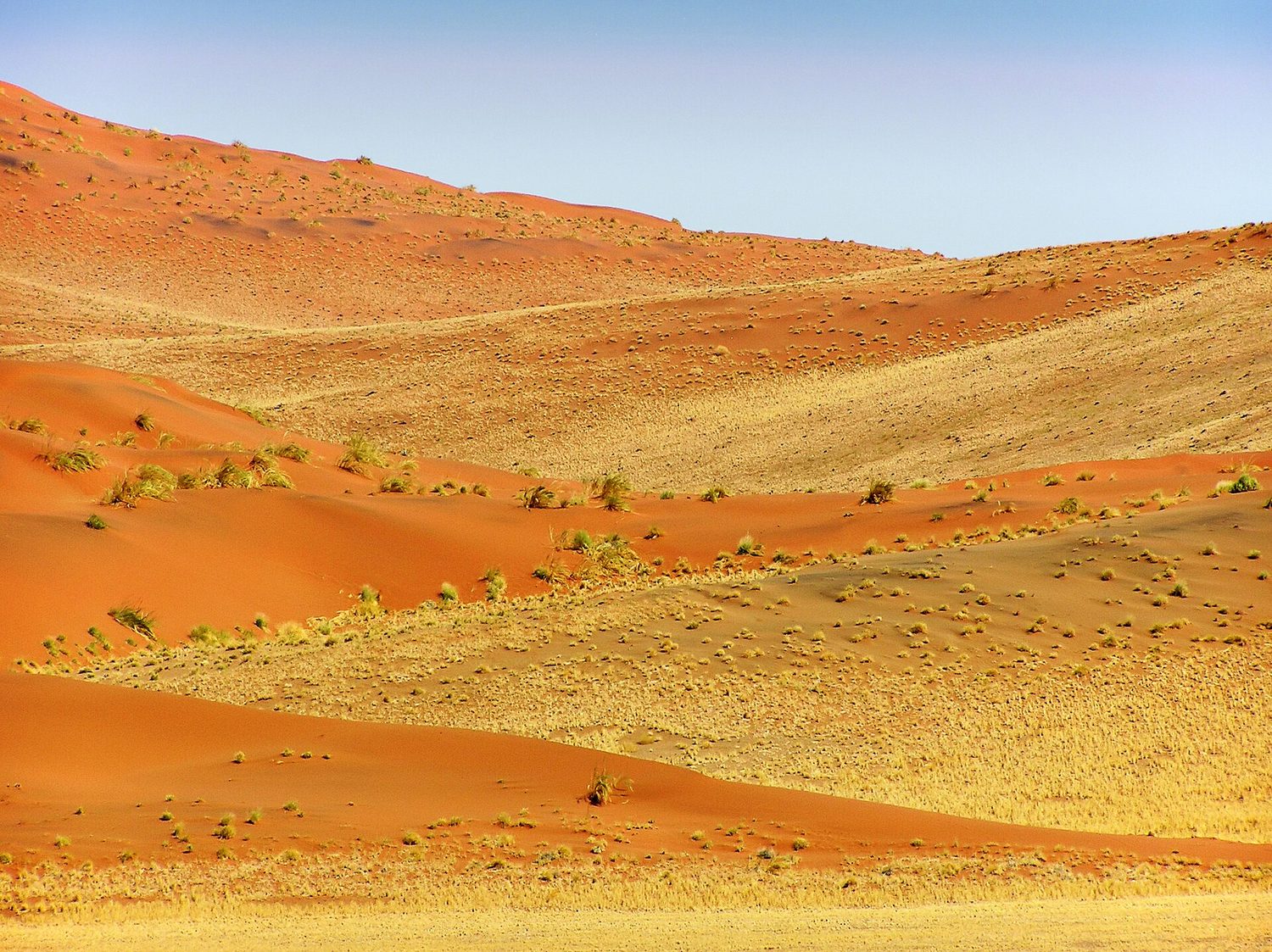
The two images below sit at opposite ends of the precipitation scale, which is why their life looks so different:

ไทย

A biome (ชีวภาค) คือบริเวณกว้างใหญ่ที่กำหนดโดย climate (ภูมิอากาศ) และ characteristic life (ลักษณะชีวิตเฉพาะถิ่น) Terrestrial biomes (deserts, grasslands, tropical rainforest, temperate forest, taiga, tundra) ถูกกำหนดโดย temperature (อุณหภูมิ) และ precipitation (ปริมาณน้ำฝน) เป็นหลัก แต่ละชนิดมีพืชและสัตว์ที่ adapted to those conditions (ปรับตัวเข้ากับสภาวะนั้น)

ภาพทั้งสองด้านล่างตั้งอยู่两端ของสเกล precipitation (ปริมาณน้ำฝน) นี่คือเหตุผลที่ชีวิต它们在截然不同 (ต่างกันอย่างมาก):

ป่าฝนเขตร้อนที่มีหมอก  canopy สีเขียวหนาแน่นซ้อนชั้นอยู่บนเนินเขาสูง A tropical rainforest: hot and wet all year, giving dense layered plant life and the richest biodiversity of any land biome (ป่าฝนเขตร้อน: ร้อนและชื้นตลอดปี ทำให้เกิดพืชพรรณหนาแน่นเป็นชั้นๆ และมี Biodiversity สูงที่สุดของชีวภาคบนบก)

ทะเลทรายแห้งแล้งที่มีเนินทรายเปล่าเปลี่ยวและพืชแทบไม่มีเลย
ทะเลทราย: มีปริมาณน้ำฝนต่ำมาก จึงมีเพียงสิ่งมีชีวิตที่ทนต่อความแห้งแล้งเพียงเล็กน้อยที่สามารถดำรงชีวิตอยู่ได้
Vocabulary · ⁨คำศัพท์⁩ Train · ⁨ฝึกฝน⁩
English ไทย
biome/ˈbaɪəʊm/ ระบบนิเวศ (biome)
temperature and precipitation/ˈtemprɪtʃə ænd prɪˌsɪpɪˈteɪʃn/ อุณหภูมิและปริมาณฝน
tropical rainforest/ˈtrɒpɪkl ˈreɪnfɒrɪst/ ป่าฝนเขตร้อน
desert/ˈdezət/ ทะเลทราย
salinity/seɪˈlɪnɪti/ ความเค็ม (salinity)
Estuaries/ˈestjuːəriz/ ปากแม่น้ำ
1.3

Aquatic Biomes · ⁨ระบบนิเวศทางน้ำ⁩

Syllabus · ⁨หลักสูตร⁩
English

Enduring Understanding (ERT-1): Ecosystems are the result of biotic and abiotic interactions.

Learning Objective ERT-1.C: Describe the global distribution and principal environmental aspects of aquatic biomes.

  • ERT-1.C.1 Freshwater biomes include streams, rivers, ponds, and lakes. These freshwater biomes are a vital resource for drinking water.
  • ERT-1.C.2 Marine biomes include oceans, coral reefs, marshland, and estuaries. Algae in marine biomes supply a large portion of the Earth's oxygen, and also take in carbon dioxide from the atmosphere.
  • ERT-1.C.3 The global distribution of nonmineral marine natural resources, such as different types of fish, varies because of some combination of salinity, depth, turbidity, nutrient availability, and temperature.
ไทย

ความเข้าใจที่ยั่งยืน (ERT-1): ระบบนิเวศเกิดจากการมีปฏิสัมพันธ์ระหว่างสิ่งมีชีวิตและปัจจัยที่ไม่ใช่สิ่งมีชีวิต

วัตถุประสงค์การเรียนรู้ ERT-1.C: อธิบายการกระจายตัวทั่วโลกและลักษณะสำคัญทางสิ่งแวดล้อมของระบบนิเวศทางน้ำ

  • ERT-1.C.1 ชีวภูมิเขตน้ำจืด ได้แก่ ลำน้ำ แม่น้ำ บึง และทะเลสาบ ชีวภูมิเขตน้ำจืดเหล่านี้เป็นแหล่งทรัพยากรสำคัญสำหรับน้ำดื่ม
  • ERT-1.C.2 ชีวภูมิเขตทะเล ได้แก่ มหาสมุทร ปะการัง หนองน้ำ และปากแม่น้ำ สาหร่ายในชีวภูมิเขตทะเลให้氧ส่วนมากของโลก และดูดซับคาร์บอนไดออกไซด์จากบรรยากาศ
  • ERT-1.C.3 การกระจายตัวของทรัพยากรธรรมชาติทางทะเลที่ไม่ใช่แร่ธาตุในระดับโลก เช่น ประเภทต่างๆ ของปลา มีความแตกต่างกันเนื่องจากปัจจัยผสมผสานระหว่างความเค็ม ความลึก ความขุ่น ความพร้อมใช้งานของสารอาหาร และอุณหภูมิ

Source: College Board AP Course and Exam Description · ⁨แหล่งที่มา: คำอธิบายหลักสูตรและข้อสอบ College Board AP⁩

English

Aquatic biomes cover more of Earth than land. Freshwater (streams, lakes, wetlands) and marine (open ocean, coral reefs, estuaries) systems differ in salinity 盐度, sunlight, and nutrients. Estuaries 河口 (where rivers meet the sea) and coral reefs are especially productive and biodiverse.

ไทย

ระบบนิเวศทางน้ำครอบคลุมพื้นที่โลกมากกว่าพื้นดิน ระบบน้ำจืด (ลำน้ำ, ทะเลสาบ, พื้นที่ชุ่มน้ำ) และระบบทะเล (มหาสมุทรเปิด, reefs ปะการัง, อ่าวปากแม่น้ำ) แตกต่างกันใน ความเค็ม, แสงแดด และสารอาหาร อ่าวปากแม่น้ำ (บริเวณที่แม่น้ำไหลออกสู่ทะเล) และ reef ปะการังมีความอุดมสมบูรณ์และหลากหลายทางชีวภาพสูงเป็นพิเศษ

มุมมองใต้ผิวน้ำของ reef ปะการังที่อยู่ใต้ผิวน้ำเล็กน้อย ครอบคลุมไปด้วยปะการัง
reef ปะการัง: น้ำอุ่น แสงแดดส่องถึง และตื้น ทำให้เป็นระบบนิเวศที่มีความอุดมสมบูรณ์และหลากหลายทางชีวภาพสูงสุดแห่งหนึ่ง
Vocabulary · ⁨คำศัพท์⁩ Train · ⁨ฝึกฝน⁩
English ไทย
coral reef/ˈkɒrəl riːf/ แนวปะการัง
1.4

The Carbon Cycle · ⁨วัฏจักรคาร์บอน⁩

Syllabus · ⁨หลักสูตร⁩
English

Enduring Understanding (ERT-1): Ecosystems are the result of biotic and abiotic interactions.

Learning Objective ERT-1.D: Explain the steps and reservoir interactions in the carbon cycle.

  • ERT-1.D.1 The carbon cycle is the movement of atoms and molecules containing the element carbon between sources and sinks.
  • ERT-1.D.2 Some of the reservoirs in which carbon compounds occur in the carbon cycle hold those compounds for long periods of time, while some hold them for relatively short periods of time.
  • ERT-1.D.3 Carbon cycles between photosynthesis and cellular respiration in living things.
  • ERT-1.D.4 Plant and animal decomposition have led to the storage of carbon over millions of years. The burning of fossil fuels quickly moves that stored carbon into atmospheric carbon, in the form of carbon dioxide.
ไทย

ความเข้าใจที่ยั่งยืน (ERT-1): ระบบนิเวศเกิดจากการมีปฏิสัมพันธ์ระหว่างสิ่งมีชีวิตและปัจจัยที่ไม่ใช่สิ่งมีชีวิต

วัตถุประสงค์การเรียนรู้ ERT-1.D: อธิบายขั้นตอนและการโต้ตอบของแหล่งเก็บในวัฏจักรคาร์บอน

  • ERT-1.D.1 วัฏจักรคาร์บอนคือการเคลื่อนที่ของอะตอมและโมเลกุลที่มีองค์ประกอบคาร์บอนระหว่างแหล่งกำเนิดและแหล่งกักเก็บ
  • ERT-1.D.2 บางแหล่งเก็บในวัฏจักรคาร์บอนที่สารประกอบคาร์บอน occurs hold those compounds for long periods of time, while some hold them for relatively short periods of time.
  • ERT-1.D.3 คาร์บอนหมุนเวียนระหว่าง photosynthesis และ cellular respiration ในสิ่งมีชีวิต
  • ERT-1.D.4 การย่อยสลายของพืชและสัตว์นำไปสู่การจัดเก็บคาร์บอนมาหลายล้านปี การเผาไหม้เชื้อเพลิงฟอสซิลทำให้stored carbon enters atmospheric carbon quickly, in the form of carbon dioxide.

Source: College Board AP Course and Exam Description · ⁨แหล่งที่มา: คำอธิบายหลักสูตรและข้อสอบ College Board AP⁩

English
The carbon cycle

The carbon cycle 碳循环 moves carbon between the atmosphere, organisms, oceans, and rocks. Photosynthesis removes $\text{CO}_2$; respiration, decomposition, and burning fossil fuels 化石燃料 return it. Burning fossil fuels adds carbon far faster than natural processes remove it.

ไทย

*วัฏจักรคาร์บอน

วัฏจักรคาร์บอนเคลื่อนย้ายคาร์บอนระหว่างบรรยากาศ สิ่งมีชีวิต มหาสมุทร และหิน การสังเคราะห์ด้วยแสงกำจัด $\text{CO}_2$; การหายใจ, การสลายตัว และการเผาไหม้ เชื้อเพลิงฟอสซิลคืนกลับมัน การเผาไหม้เชื้อเพลิงฟอสซิลเพิ่มคาร์บอนเร็วกว่ากระบวนการธรรมชาติในการกำจัดมันมาก

วัฏจักรคาร์บอนเคลื่อนย้ายคาร์บอนระหว่างบรรยากาศ สิ่งมีชีวิต และเชื้อเพลิงฟอสซิล *วัฏจักรคาร์บอนเคลื่อนย้ายคาร์บอนระหว่างบรรยากาศ สิ่งมีชีวิต และเชื้อเพลิงฟอสซิล

Vocabulary · ⁨คำศัพท์⁩ Train · ⁨ฝึกฝน⁩
English ไทย
carbon cycle/ˈkɑːbən ˈsaɪkl/ วัฏจักรคาร์บอน
fossil fuels/ˈfɒsl ˈfjuːəlz/ เชื้อเพลิงฟอสซิล
1.5

The Nitrogen Cycle · ⁨วัฏจักรไนโตรเจน⁩

Syllabus · ⁨หลักสูตร⁩
English

Enduring Understanding (ERT-1): Ecosystems are the result of biotic and abiotic interactions.

Learning Objective ERT-1.E: Explain the steps and reservoir interactions in the nitrogen cycle.

  • ERT-1.E.1 The nitrogen cycle is the movement of atoms and molecules containing the element nitrogen between sources and sinks.
  • ERT-1.E.2 Most of the reservoirs in which nitrogen compounds occur in the nitrogen cycle hold those compounds for relatively short periods of time.
  • ERT-1.E.3 Nitrogen fixation is the process in which atmospheric nitrogen is converted into a form of nitrogen (primarily ammonia) that is available for uptake by plants and that can be synthesized into plant tissue.
  • ERT-1.E.4 The atmosphere is the major reservoir of nitrogen.
ไทย

ความเข้าใจที่ยั่งยืน (ERT-1): ระบบนิเวศเกิดจากการมีปฏิสัมพันธ์ระหว่างสิ่งมีชีวิตและปัจจัยที่ไม่ใช่สิ่งมีชีวิต

วัตถุประสงค์การเรียนรู้ ERT-1.E: อธิบายขั้นตอนและการโต้ตอบของแหล่งเก็บในวัฏจักรไนโตรเจน

  • ERT-1.E.1 วัฏจักรไนโตรเจนคือการเคลื่อนที่ของอะตอมและโมเลกุลที่มีองค์ประกอบไนโตรเจนระหว่างแหล่งกำเนิดและแหล่งกักเก็บ
  • ERT-1.E.2 ส่วนใหญ่ของแหล่งเก็บในวัฏจักรไนโตรเจนที่สารประกอบไนโตรเจน occurs hold those compounds for relatively short periods of time.
  • ERT-1.E.3 Nitrogen fixation คือกระบวนการที่ atmospheric nitrogen ถูกแปลงเป็นรูปของไนโตรเจน (ส่วนใหญ่คือ ammonia) ที่พืชสามารถดูดซึมได้และสังเคราะห์เป็นเนื้อเยื่อพืชได้
  • ERT-1.E.4 บรรยากาศเป็นแหล่งเก็บหลักของไนโตรเจน

Source: College Board AP Course and Exam Description · ⁨แหล่งที่มา: คำอธิบายหลักสูตรและข้อสอบ College Board AP⁩

English
The nitrogen cycle

The nitrogen cycle 氮循环 makes nitrogen usable for life. Nitrogen fixation 固氮 (by bacteria) converts atmospheric $\text{N}_2$ to ammonia; nitrification and assimilation pass it through organisms; denitrification returns $\text{N}_2$ to the air. Fertilizer adds reactive nitrogen, which can pollute water.

ไทย

*วัฏจักรไนโตรเจน

วัฏจักรไนโตรเจนทำให้ไนโตรเจนพร้อมใช้งานสำหรับสิ่งมีชีวิต การตรึงไนโตรเจน (โดยแบคทีเรีย) เปลี่ยน $\text{N}_2$ ในบรรยากาศให้เป็นแอมโมเนีย; นิตริฟิเคชันและแอซซิมิลيشนส่งผ่านมันผ่านสิ่งมีชีวิต; เดไนทริฟิเคชันคืน $\text{N}_2$ กลับสู่อากาศ ปุ๋ยเพิ่มไนโตรเจนที่มีปฏิกิริยา ซึ่งอาจก่อให้เกิดมลพิษทางน้ำ

วัฏจักรไนโตรเจน: N ถูกตรึงเข้าเป็นไนเตรตในดิน ส่งผ่านผ่านห่วงโซ่อาหาร และถูกคืนสู่อากาศโดยการเดไนทริฟิเคชัน *วัฏจักรไนโตรเจน: N$_2$ ถูกตรึงเข้าเป็นไนเตรตในดิน ส่งผ่านผ่านห่วงโซ่อาหาร และถูกคืนสู่อากาศโดยการเดไนทริฟิเคชัน

Vocabulary · ⁨คำศัพท์⁩ Train · ⁨ฝึกฝน⁩
English ไทย
nitrogen cycle/ˈnaɪtrədʒn ˈsaɪkl/ วัฏจักรไนโตรเจน
Nitrogen fixation/ˈnaɪtrədʒn fɪkˈseɪʃn/ การตรึงไนโตรเจน
1.6

The Phosphorus Cycle · ⁨วัฏจักรฟอสฟอรัส⁩

Syllabus · ⁨หลักสูตร⁩
English

Enduring Understanding (ERT-1): Ecosystems are the result of biotic and abiotic interactions.

Learning Objective ERT-1.F: Explain the steps and reservoir interactions in the phosphorus cycle.

  • ERT-1.F.1 The phosphorus cycle is the movement of atoms and molecules containing the element phosphorus between sources and sinks.
  • ERT-1.F.2 The major reservoirs of phosphorus in the phosphorus cycle are rock and sediments that contain phosphorus-bearing minerals.
  • ERT-1.F.3 There is no atmospheric component in the phosphorus cycle, and the limitations this imposes on the return of phosphorus from the ocean to land make phosphorus naturally scarce in aquatic and many terrestrial ecosystems. In undisturbed ecosystems, phosphorus is the limiting factor in biological systems.
ไทย

ความเข้าใจที่ยั่งยืน (ERT-1): ระบบนิเวศเกิดจากการมีปฏิสัมพันธ์ระหว่างสิ่งมีชีวิตและปัจจัยที่ไม่ใช่สิ่งมีชีวิต

วัตถุประสงค์การเรียนรู้ ERT-1.F: อธิบายขั้นตอนและการโต้ตอบของแหล่งเก็บในวัฏจักรฟอสฟอรัส

  • ERT-1.F.1 วัฏจักรฟอสฟอรัสคือการเคลื่อนที่ของอะตอมและโมเลกุลที่มีองค์ประกอบฟอสฟอรัสระหว่างแหล่งกำเนิดและแหล่งกักเก็บ
  • ERT-1.F.2 แหล่งเก็บหลักของฟอสฟอรัสในวัฏจักรฟอสฟอรัสคือ rock and sediments that contain phosphorus-bearing minerals.
  • ERT-1.F.3 ไม่มีส่วนประกอบในบรรยากาศในวัฏจักรฟอสฟอรัส และการจำกัดนี้ส่งผลต่อการคืนฟอสฟอรัสจากมหาสมุทรสู่แผ่นดิน ทำให้ฟอสฟอรัสขาดแคลนตามธรรมชาติในระบบนิเวศทางน้ำและบนบกจำนวนมาก ในระบบนิเวศที่ไม่ถูกรบกวน ฟอสฟอรัสเป็นปัจจัยจำกัดในระบบชีวภาพ

Source: College Board AP Course and Exam Description · ⁨แหล่งที่มา: คำอธิบายหลักสูตรและข้อสอบ College Board AP⁩

English

The phosphorus cycle 磷循环 has no atmospheric (gas) stage – phosphorus moves through rock, soil, water, and organisms. It is slow and often the limiting nutrient 限制性营养 for growth, so added phosphorus (fertilizer, detergents) can trigger algal blooms.

ไทย

วัฏจักรฟอสฟอรัสไม่มี ขั้นตอนในบรรยากาศ (แก๊ส) – ฟอสฟอรัสเคลื่อนที่ผ่านหิน ดิน น้ำ และสิ่งมีชีวิต มันช้าและมักเป็น สารอาหารจำกัดสำหรับการเจริญเติบโต ดังนั้นฟอสฟอรัสที่เพิ่มเข้าไป (ปุ๋ย, สบู่) สามารถกระตุ้นให้เกิดการเบ่งบานของสาหร่าย

วัฏจักรฟอสฟอรัส: หินกร่อนกลายเป็นฟอสเฟตในดิน และตกตะกอนกลับอย่างช้าๆ โดยไม่มีระยะแก๊ส *วัฏจักรฟอสฟอรัส: หินกร่อนกลายเป็นฟอสเฟตในดิน และตกตะกอนกลับอย่างช้าๆ โดยไม่มีระยะแก๊ส

Vocabulary · ⁨คำศัพท์⁩ Train · ⁨ฝึกฝน⁩
English ไทย
phosphorus cycle/ˈfɒsfɔːrəs ˈsaɪkl/ วัฏจักรฟอสฟอรัส
limiting nutrient/ˈlɪmɪtɪŋ ˈnjuːtrɪənt/ สารอาหารจำกัด
1.7

The Hydrologic (Water) Cycle · ⁨วัฏจักรไฮโดรโลজิก (น้ำ)⁩

Syllabus · ⁨หลักสูตร⁩
English

Enduring Understanding (ERT-1): Ecosystems are the result of biotic and abiotic interactions.

Learning Objective ERT-1.G: Explain the steps and reservoir interactions in the hydrologic cycle.

  • ERT-1.G.1 The hydrologic cycle, which is powered by the sun, is the movement of water in its various solid, liquid, and gaseous phases between sources and sinks.
  • ERT-1.G.2 The oceans are the primary reservoir of water at the Earth's surface, with ice caps and groundwater acting as much smaller reservoirs.
ไทย

ความเข้าใจที่ยั่งยืน (ERT-1): ระบบนิเวศเกิดจากการมีปฏิสัมพันธ์ระหว่างสิ่งมีชีวิตและปัจจัยที่ไม่ใช่สิ่งมีชีวิต

วัตถุประสงค์การเรียนรู้ ERT-1.G: อธิบายขั้นตอนและการโต้ตอบของแหล่งเก็บในวัฏจักรไฮโดรลิก

  • ERT-1.G.1 วัฏจักรไฮโดรโลจิกซึ่งถูกขับเคลื่อนโดยพลังงานแสงอาทิตย์ คือการเคลื่อนที่ของน้ำในรูปของแข็ง ของเหลว และแก๊ส ระหว่างแหล่งกำเนิดและแหล่งกักเก็บ
  • ERT-1.G.2 มหาสมุทรเป็นแหล่งกักเก็บน้ำหลักบนพื้นผิวโลก โดยขั้วน้ำแข็งและน้ำใต้ดินทำหน้าที่เป็นแหล่งกักเก็บที่มีขนาดเล็กกว่ามาก

Source: College Board AP Course and Exam Description · ⁨แหล่งที่มา: คำอธิบายหลักสูตรและข้อสอบ College Board AP⁩

English
The hydrologic (water) cycle

The water cycle 水循环 moves water by evaporation 蒸发, transpiration 蒸腾 (from plants), condensation, precipitation, and runoff. It distributes fresh water and shapes climate; human use and land changes can alter its flow.

ไทย

*วัฏจักรไฮโดรโลจิก (น้ำ)

วัฏจักรน้ำเคลื่อนย้ายน้ำด้วยการ ระเหย, การคายน้ำ (จากพืช), การควบแน่น, การตกของฝน และการไหลบนพื้นดิน มันกระจายน้ำจืดและกำหนดสภาพภูมิอากาศ การใช้ของมนุษย์และการเปลี่ยนแปลงการใช้ที่ดินสามารถเปลี่ยนการไหลของมันได้

วัฏจักรน้ำ: การระเหยและการคายน้ำยกน้ำขึ้นสู่อากาศ; การตกของฝนและการไหลบนพื้นดินคืนน้ำกลับลงมา *วัฏจักรน้ำ: การระเหยและการคายน้ำยกน้ำขึ้นสู่อากาศ; การตกของฝนและการไหลบนพื้นดินคืนน้ำกลับลงมา

Vocabulary · ⁨คำศัพท์⁩ Train · ⁨ฝึกฝน⁩
English ไทย
water cycle/ˈwɔːtə ˈsaɪkl/ วัฏจักรน้ำ
evaporation/ɪˌvæpəˈreɪʃn/ การระเหย
transpiration/trænspəˈreɪʃn/ การคายน้ำ
Primary productivity/ˈpraɪməri ˌprɒdəkˈtɪvɪti/ ผลผลิตขั้นต้น
trophic levels/ˈtrəʊfɪk ˈlevlz/ ระดับโภชนาการ
producers/prəˈdjuːsəz/ ผู้ผลิต
primary, secondary, and tertiary consumers/ˈpraɪməri ˈsekəndəri ænd ˈtɜːʃjəri kənˈsuːməz/ ผู้บริโภคระดับแรก ระดับสอง และระดับสาม
decomposers/ˌdiːkəmˈpəʊzəz/ ตัวย่อยสลาย
food chain/fuːd tʃeɪn/ ห่วงโซ่อาหาร
1.8

Primary Productivity · ⁨ผลผลิตขั้นต้น⁩

Syllabus · ⁨หลักสูตร⁩
English

Enduring Understanding (ENG-1): Energy can be converted from one form to another.

Learning Objective ENG-1.A: Explain how solar energy is acquired and transferred by living organisms.

  • ENG-1.A.1 Primary productivity is the rate at which solar energy (sunlight) is converted into organic compounds via photosynthesis over a unit of time.
  • ENG-1.A.2 Gross primary productivity is the total rate of photosynthesis in a given area.
  • ENG-1.A.3 Net primary productivity is the rate of energy storage by photosynthesizers in a given area, after subtracting the energy lost to respiration.
  • ENG-1.A.4 Productivity is measured in units of energy per unit area per unit time (e.g., $\text{kcal/m}^2\text{/yr}$).
  • ENG-1.A.5 Most red light is absorbed in the upper 1m of water, and blue light only penetrates deeper than 100m in the clearest water. This affects photosynthesis in aquatic ecosystems, whose photosynthesizers have adapted mechanisms to address the lack of visible light.
ไทย

ความเข้าใจที่ยั่งยืน (ENG-1): พลังงานสามารถเปลี่ยนจากรูปแบบหนึ่งไปเป็นอีก形式หนึ่งได้

วัตถุประสงค์การเรียนรู้ ENG-1.A: อธิบายวิธีการที่สิ่งมีชีวิตได้รับและถ่ายโอนพลังงานแสงอาทิตย์

  • ENG-1.A.1 ผลิตภาพเบื้องต้นคืออัตราส่วนที่พลังงานแสงอาทิตย์ (แสงแดด) ถูกแปลงเป็นสารอินทรีย์ผ่านกระบวนการสังเคราะห์ด้วยแสงต่อหน่วยเวลา
  • ENG-1.A.2 ผลิตภาพเบื้องต้นรวมคืออัตราส่วนการสังเคราะห์ด้วยแสงทั้งหมดในพื้นที่หนึ่ง
  • ENG-1.A.3 ผลิตภาพสุทธิเบื้องต้นคืออัตราส่วนการสะสมพลังงานของผู้สังเคราะห์ด้วยแสงในพื้นที่หนึ่ง หลังหักพลังงานที่สูญเสียไปจากการหายใจ
  • ENG-1.A.4 ผลิตภาพวัดได้ในหน่วยพลังงานต่อหน่วยพื้นที่ต่อหน่วยเวลา (เช่น $\text{kcal/m}^2\text{/yr}$)
  • ENG-1.A.5 แสงสีแดงส่วนใหญ่ถูกดูดกลืนในชั้นน้ำด้านบน 1 เมตร และแสงสีฟ้าจะทะลุลึกลงไปได้มากกว่า 100 เมตรในน้ำที่ใสที่สุด สิ่งนี้ส่งผลต่อการสังเคราะห์ด้วยแสงในระบบนิเวศทางน้ำ ซึ่งผู้สังเคราะห์ด้วยแสงมีกลไกปรับตัวเพื่อรับมือกับการขาดแคลนแสงที่มองเห็นได้

Source: College Board AP Course and Exam Description · ⁨แหล่งที่มา: คำอธิบายหลักสูตรและข้อสอบ College Board AP⁩

English

Primary productivity 初级生产力 is the rate at which producers capture energy (usually by photosynthesis). Gross primary productivity (GPP) is the total captured; net primary productivity (NPP) is what remains after the producers' own respiration – the energy available to the rest of the ecosystem. Warm, wet, sunlit systems (rainforests, reefs) are most productive.

Worked example. If producers in a grassland capture $20{,}000\ \text{kcal/m}^2/\text{yr}$ of energy (GPP) and burn $8{,}000\ \text{kcal/m}^2/\text{yr}$ in their own respiration, then $\text{NPP}=\text{GPP}-R=20{,}000-8{,}000=12{,}000\ \text{kcal/m}^2/\text{yr}$. Only that NPP – not the full GPP – is available to the consumers above.

ไทย

ผลผลิตขั้นต้นคืออัตราที่ผู้ผลิตจับพลังงาน (ส่วนใหญ่ด้วยการสังเคราะห์ด้วยแสง) ผลผลิตขั้นต้นรวม (GPP) คือพลังงานทั้งหมดที่จับได้; ผลผลิตขั้นต้นสุทธิ (NPP) คือสิ่งที่เหลืออยู่หลังจากการหายใจของผู้ผลิตเอง – ซึ่งเป็นพลังงานที่ متاحสำหรับส่วนอื่นของระบบนิเวศ ระบบที่มีอุณหภูมิอุ่น ชุ่มชื้น และมีแสงแดด (ป่าฝน, reef) มีความอุดมสมบูรณ์มากที่สุด

ตัวอย่างแบบฝึกหัด. หากผู้ผลิตใน草原 จับ $20{,}000\ \text{kcal/m}^2/\text{yr}$ ของพลังงาน (GPP) และเผา $8{,}000\ \text{kcal/m}^2/\text{yr}$ ในการหายใจของตัวเอง แล้ว $\text{NPP}=\text{GPP}-R=20{,}000-8{,}000=12{,}000\ \text{kcal/m}^2/\text{yr}$. มีเพียง NPP นั้นเท่านั้น – ไม่ใช่ GPP ทั้งหมด – ที่จะมีให้สำหรับผู้บริโภคด้านบน

Explore · ⁨สำรวจ⁩

Explore GPP, respiration and NPP · ⁨สำรวจ GPP, การหายใจ และการผลิต NPP⁩

The energy producers capture (GPP) splits into what they burn for their own respiration $R$ and what is left over as new biomass — $\text{NPP} = \text{GPP} - R$, and useful + wasted always equals the input. · ⁨พลังงานที่ผู้ผลิตจับได้ (GPP) แยกออกเป็นสิ่งที่ merekaเผาผลาญสำหรับการหายใจ $R$ ของตนเอง และสิ่งที่เหลือเป็นbiomass ใหม่ — $\text{NPP} = \text{GPP} - R$ และ useful + wasted เสมอเท่ากับ input⁩

1.9

Trophic Levels · ⁨ระดับโภชนาการ⁩

Syllabus · ⁨หลักสูตร⁩
English

Enduring Understanding (ENG-1): Energy can be converted from one form to another.

Learning Objective ENG-1.B: Explain how energy flows and matter cycles through trophic levels.

  • ENG-1.B.1 All ecosystems depend on a continuous inflow of high-quality energy in order to maintain their structure and function of transferring matter between the environment and organisms via biogeochemical cycles.
  • ENG-1.B.2 Biogeochemical cycles are essential for life and each cycle demonstrates the conservation of matter.
  • ENG-1.B.3 In terrestrial and near-surface marine communities, energy flows from the sun to producers in the lowest trophic levels and then upward to higher trophic levels.
ไทย

ความเข้าใจที่ยั่งยืน (ENG-1): พลังงานสามารถเปลี่ยนจากรูปแบบหนึ่งไปเป็นอีก形式หนึ่งได้

วัตถุประสงค์การเรียนรู้ ENG-1.B: อธิบายการไหลของพลังงานและการหมุนเวียนของมวลสารผ่านระดับโภชนาการ

  • ENG-1.B.1 ระบบนิเวศทั้งหมดขึ้นอยู่กับกระแสพลังงานคุณภาพสูงอย่างต่อเนื่องเพื่อรักษาโครงสร้างและหน้าที่ของการถ่ายโอนมวลสารระหว่างสิ่งแวดล้อมและสิ่งมีชีวิตผ่านวัฏจักรชีวเคมี
  • ENG-1.B.2 วัฏจักรชีวเคมีมีความจำเป็นต่อชีวิตและแต่ละวัฏจักรแสดงถึงการอนุรักษ์มวลสาร
  • ENG-1.B.3 ในชุมชนบนบกและ_near-surface marine communities พลังงานไหลจากดวงอาทิตย์ไปยังผู้ผลิตในระดับโภชนาการต่ำสุด แล้วไหลขึ้นไปยังระดับโภชนาการที่สูงขึ้น

Source: College Board AP Course and Exam Description · ⁨แหล่งที่มา: คำอธิบายหลักสูตรและข้อสอบ College Board AP⁩

English
Energy flow & the 10% rule

Organisms occupy trophic levels 营养级: producers 生产者 (make their own food), then primary, secondary, and tertiary consumers 消费者, with decomposers 分解者 recycling nutrients at every level. Each level depends on the energy captured below it.

ไทย
Energy flow & the 10% rule

สิ่งมีชีวิตอยู่ใน ระดับโภชนาการ: ผู้ผลิต (สร้างอาหารเอง), ตามด้วย ผู้บริโภค ระดับต้น, ระดับกลาง และระดับปลาย พร้อม ผู้ย่อยสลาย ที่รีไซเคิลสารอาหาร在每个ระดับ แต่ละระดับขึ้นอยู่กับพลังงานที่ถูกจับได้จากด้านล่าง

1.10

Energy Flow and the 10% Rule · ⁨การไหลของพลังงานและกฎ 10%⁩

Syllabus · ⁨หลักสูตร⁩
English

Enduring Understanding (ENG-1): Energy can be converted from one form to another.

Learning Objective ENG-1.C: Determine how the energy decreases as it flows through ecosystems.

  • ENG-1.C.1 The 10% rule approximates that in the transfer of energy from one trophic level to the next, only about 10% of the energy is passed on.
  • ENG-1.C.2 The loss of energy that occurs when energy moves from lower to higher trophic levels can be explained through the laws of thermodynamics.
ไทย

ความเข้าใจที่ยั่งยืน (ENG-1): พลังงานสามารถเปลี่ยนจากรูปแบบหนึ่งไปเป็นอีก形式หนึ่งได้

วัตถุประสงค์การเรียนรู้ ENG-1.C: วิเคราะห์ว่าพลังงานลดลงอย่างไรเมื่อไหลผ่านระบบนิเวศ

  • ENG-1.C.1 กฎ 10% ประมาณได้ว่าในการถ่ายโอนพลังงานจากระดับอาหารระดับหนึ่งไปยังระดับถัดไป มีพลังงานเพียงประมาณ 10% เท่านั้นที่ถูกส่งต่อไป
  • ENG-1.C.2 การสูญเสียพลังงานที่เกิดขึ้นเมื่อพลังงานเคลื่อนที่จากระดับอาหารต่ำไปยังระดับสูง สามารถอธิบายได้ด้วยกฎทางอุณหพลศาสตร์

Source: College Board AP Course and Exam Description · ⁨แหล่งที่มา: คำอธิบายหลักสูตรและข้อสอบ College Board AP⁩

English

Energy flows one way through an ecosystem and is lost as heat at each transfer. The 10% rule: only about 10% of the energy at one trophic level passes to the next; the other 90% powers life processes and escapes as heat. This is why food chains are short and top predators are few.

Worked example. Continuing from $12{,}000\ \text{kcal/m}^2/\text{yr}$ of NPP at the producer level, the primary consumers receive about $10\%=1{,}200\ \text{kcal}$, secondary consumers $\approx120\ \text{kcal}$, and tertiary consumers only $\approx12\ \text{kcal}$. After three transfers the energy has shrunk a thousand-fold – the arithmetic reason a fourth or fifth trophic level rarely has enough to support it.

ไทย

พลังงานไหล ทางเดียว ผ่านระบบนิเวศและสูญเสียไปเป็นความร้อนในการถ่ายโอนแต่ละครั้ง กฎ 10%: พลังงานประมาณ 10% เท่านั้นในระดับโภชนาการหนึ่งที่จะส่งต่อไปยังระดับถัดไป; ส่วนที่เหลืออีก 90% ใช้สำหรับกระบวนการทางชีวภาพและหลบหนีไปในรูปของความร้อน นี่คือเหตุผลที่ห่วงโซ่อาหารสั้นและสัตว์นักล่าระดับบนมีจำนวนน้อย

ตัวอย่างแบบฝึกหัด. ต่อจาก $12{,}000\ \text{kcal/m}^2/\text{yr}$ ของ NPP ที่ระดับผู้ผลิต ผู้บริโภคระดับต้นได้รับประมาณ $10\%=1{,}200\ \text{kcal}$, ผู้บริโภคระดับกลาง $\approx120\ \text{kcal}$, และผู้บริโภคระดับปลายเพียง $\approx12\ \text{kcal}$. หลังการถ่ายโอนสามครั้งพลังงานได้ลดลงร้อยเท่า – เหตุผลทางคณิตศาสตร์ที่ระดับโภชนาการที่สี่หรือห้า hiếmที่จะมีเพียงพอที่จะรองรับมันได้

ปิรามิดพลังงาน: พลังงานประมาณ 10% เท่านั้นที่ส่งต่อไปยังระดับโภชนาการถัดไป *ปิรามิดพลังงาน: พลังงานประมาณ 10% เท่านั้นที่ส่งต่อไปยังระดับโภชนาการถัดไป

Explore · ⁨สำรวจ⁩

Explore the 10% rule · ⁨สำรวจกฎ 10%⁩

Set the energy producers capture and the ecological efficiency, then watch only about a tenth pass to each level up — this is why the apex predator is left with so little and food chains stay short. · ⁨Set the energy producers capture และ ecological efficiency แล้วสังเกตว่าประมาณหนึ่งในสิบผ่านไปยังระดับถัดไป — นี่คือเหตุผลที่ apex predator มีเหลือเพียงน้อยนิดและ food chains มีสั้น⁩

1.11

Food Chains and Food Webs · ⁨ห่วงโซ่อาหารและตาข่ายอาหาร⁩

Syllabus · ⁨หลักสูตร⁩
English

Enduring Understanding (ENG-1): Energy can be converted from one form to another.

Learning Objective ENG-1.D: Describe food chains and food webs, and their constituent members by trophic level.

  • ENG-1.D.1 A food web is a model of an interlocking pattern of food chains that depicts the flow of energy and nutrients in two or more food chains.
  • ENG-1.D.2 Positive and negative feedback loops can each play a role in food webs. When one species is removed from or added to a specific food web, the rest of the food web can be affected.
ไทย

ความเข้าใจที่ยั่งยืน (ENG-1): พลังงานสามารถเปลี่ยนจากรูปแบบหนึ่งไปเป็นอีก形式หนึ่งได้

วัตถุประสงค์การเรียนรู้ ENG-1.D: อธิบายโซ่อาหารและตาข่ายอาหาร รวมถึงสมาชิก组成的由其各自的ระดับอาหาร

  • ENG-1.D.1 ตาข่ายอาหารคือแบบจำลองของรูปแบบโซ่อาหารที่ซ้อนทับกัน ซึ่งแสดงถึงการไหลของพลังงานและสารอาหารในโซ่อาหารสอง或以上
  • ENG-1.D.2 วงจรป้อนกลับบวกและวงจรป้อนกลับลบสามารถมีบทบาทในแต่ละในตาข่ายอาหาร เมื่อสปีชีส์หนึ่งถูกนำออกหรือเพิ่มเข้าไปในตาข่ายอาหารเฉพาะ部分,其余部分อาจได้รับผลกระทบ

Source: College Board AP Course and Exam Description · ⁨แหล่งที่มา: คำอธิบายหลักสูตรและข้อสอบ College Board AP⁩

English

A food chain 食物链 is a single line of who-eats-whom; a food web 食物网 links many chains into a realistic picture of feeding relationships. Because species are interconnected, removing one (especially a keystone species 关键种) can disrupt the whole web.

ไทย

ห่วงโซ่อาหารคือเส้นตรงเดียวของใครกินใคร; ตาข่ายอาหารเชื่อมหลายห่วงโซ่เข้าด้วยกันเป็นภาพที่สมจริงของความสัมพันธ์การกิน เนื่องจากสปีชีส์เชื่อมโยงกัน การลบหนึ่ง (โดยเฉพาะ สปีชีส์สำคัญ) สามารถรบกวนตาข่ายอาหารทั้งเครือข่ายได้

ตาข่ายอาหารเชื่อมหลายห่วงโซ่อาหาร; ลูกศรชี้ทางที่พลังงานไหล *ตาข่ายอาหารเชื่อมหลายห่วงโซ่อาหาร; ลูกศรชี้ทางที่พลังงานไหล

Vocabulary · ⁨คำศัพท์⁩ Train · ⁨ฝึกฝน⁩
English ไทย
food web/fuːd web/ เครือข่ายอาหาร
keystone species/ˈkiːstəʊn ˈspiːsiːz/ สปีชีส์สำคัญ
1.11

Exam tips · ⁨ข้อแนะนำสำหรับการสอบ⁩

English
  • Remember energy flows and is lost (the 10% rule) while matter cycles (carbon, nitrogen, phosphorus, water).
  • Apply the 10% rule down a food chain and know NPP = GPP − respiration (only NPP is available to consumers).
  • Learn each biogeochemical cycle's stores and how humans disturb it (burning fossil fuels adds CO₂; fertiliser adds nitrogen/phosphorus).
  • Producers are most abundant because so little energy reaches the top.
  • Use correct units and show your arithmetic on the free-response math questions (no calculator — keep numbers round).
ไทย
  • จำไว้ว่า พลังงานไหลและสูญเสีย (กฎ 10%) ในขณะที่ สสารหมุนเวียน (คาร์บอน, ไนโตรเจน, ฟอสฟอรัส, น้ำ).
  • ใช้กฎ 10% ลงไปตามห่วงโซ่อาหารและจำได้ว่า NPP = GPP − การหายใจ (มีเพียง NPP เท่านั้นที่มีให้ผู้บริโภค)
  • เรียนรู้สต็อกของแต่ละวัฏจักรไบโอจีโอเคมีและวิธีที่มนุษย์รบกวนมัน (การเผาไหม้เชื้อเพลิงฟอสซิลเพิ่ม CO₂; ปุ๋ยเพิ่มไนโตรเจน/ฟอสฟอรัส).
  • ผู้ผลิตมีจำนวนมากที่สุดเพราะพลังงานน้อยมากที่เข้าถึงระดับบน
  • ใช้หน่วยที่ถูกต้องและแสดงการคำนวณของคุณในคำถามคณิตศาสตร์แบบตอบเปิด (ไม่ใช้เครื่องคิดเลข – เก็บตัวเลขให้ง่าย)

Interactive lessons on this topic · ⁨บทเรียนเชิงโต้ตอบสำหรับหัวข้อนี้⁩

Work through it step by step, with instant-check exercises. · ⁨ทำทีละขั้นตอน พร้อมแบบฝึกหัดตรวจสอบผลทันที⁩

Past Papers · ⁨ข้อสอบย้อนหลัง⁩

More topics in AP Environmental Science · ⁨หัวข้อเพิ่มเติมใน AP Environmental Science⁩

Log in or create account · ⁨เข้าสู่ระบบหรือสร้างบัญชี⁩

IGCSE, A-Level & AP