Skip to content · ⁨Pular para o conteúdo⁩

Poesia I

Literatura e Composição Inglesas do AP · Topic 2 · ⁨Tópico 2⁩

Train · ⁨Treinar⁩
Video lesson for this topic · ⁨Videoaula para este tópico⁩ Open the video page · ⁨Abrir a página do vídeo⁩
6:10

Unidade 2: Poesia I

A Unidade 2 é a primeira unidade de poesia do curso e adiciona duas coisas ao kit de ferramentas da Unidade 1: estrutura como objeto de análise, e linguagem figurada tratada…

English narration · English + 中文 subtitles burned in · ⁨Narração em inglês · Legendas em inglês + 中文 gravadas⁩

2.1

What Textual Details Reveal About a Character · ⁨O Que Detalhes Textuais Revelam Sobre um Personagem⁩

Syllabus · ⁨Programa⁩
English

Enduring Understanding (CHR-1): Characters in literature allow readers to study and explore a range of values, beliefs, assumptions, biases, and cultural norms represented by those characters.

Learning Objective 1.A: Identify and describe what specific textual details reveal about a character, that character’s perspective, and that character’s motives.

  • CHR-1.E Characters reveal their perspectives and biases through the words they use, the details they provide in the text, the organization of their thinking, the decisions they make, and the actions they take.
Português

Compreensão Duradoura (CHR-1): Personagens em literatura permitem que os leitores estudem e explorem uma gama de valores, crenças, pressupostos, vieses e normas culturais representados por esses personagens.

Objetivo de Aprendizagem 1.A: Identificar e descrever quais detalhes textuais específicos revelam sobre um personagem, a perspectiva desse personagem e os motivos desse personagem.

  • CHR-1.E Personagens revelam suas perspectivas e vieses através das palavras que usam, os detalhes que fornecem no texto, a organização de seu pensamento, as decisões que tomam e as ações que realizam.

Source: College Board AP Course and Exam Description · ⁨Fonte: College Board AP Course and Exam Description⁩

English

Unit 2 is the course's first poetry unit, and it adds two things to Unit 1's toolkit: structure as an object of analysis, and figurative language 比喻性语言 handled precisely rather than by name-dropping.

One addition on character first: characters reveal their perspectives and biases through the words they use, the details they provide, and the details they omit.

That last item is the analytical opening. What a speaker does not mention, in a poem where everything is chosen, is evidence.

Português

A Unidade 2 é a primeira unidade de poesia do curso, e adiciona duas coisas à ferramenta da Unidade 1: estrutura como objeto de análise, e linguagem figurativa 比喻性语言 tratada com precisão em vez de apenas citando nomes.

Uma adição sobre o caráter primeiro: os personagens revelam suas perspectivas e vieses através das palavras que usam, dos detalhes que fornecem e dos detalhes que omitem.

Este último item é a abertura analítica. O que um falante não menciona, em um poema onde tudo é escolhido, é evidência.

2.2

The Function of Structure in a Text · ⁨A Função da Estrutura em um Texto⁩

Syllabus · ⁨Programa⁩
English

Enduring Understanding (STR-1): The arrangement of the parts and sections of a text, the relationship of the parts to each other, and the sequence in which the text reveals information are all structural choices made by a writer that contribute to the reader’s interpretation of a text.

Learning Objective 3.C: Explain the function of structure in a text.

  • STR-1.D Line and stanza breaks contribute to the development and relationship of ideas in a poem.
  • STR-1.E The arrangement of lines and stanzas contributes to the development and relationship of ideas in a poem.
  • STR-1.F A text’s structure affects readers’ reactions and expectations by presenting the relationships among the ideas of the text via their relative positions and their placement within the text as a whole.
Português

Compreensão Permanente (STR-1): A disposição das partes e seções de um texto, a relação das partes entre si e a sequência em que o texto revela informações são todas escolhas estruturais feitas por um escritor que contribuem para a interpretação do leitor de um texto.

Objetivo de Aprendizagem 3.C: Explicar a função da estrutura em um texto.

  • STR-1.D Quebras de linha e estrofe contribuem para o desenvolvimento e relação de ideias em um poema.
  • STR-1.E A disposição de linhas e estrofes contribui para o desenvolvimento e relação de ideias em um poema.
  • STR-1.F A estrutura de um texto afeta as reações e expectativas dos leitores ao apresentar as relações entre as ideias do texto por meio de suas posições relativas e sua colocação dentro do texto como um todo.

Source: College Board AP Course and Exam Description · ⁨Fonte: College Board AP Course and Exam Description⁩

English
  • Line and stanza breaks 行与诗节的断开 contribute to the development and relationship of ideas in a poem.
  • The arrangement of lines and stanzas contributes to that development.
  • A text's structure affects readers' reactions and expectations by presenting the relationships among ideas.

Structure in poetry is not decoration; it is punctuation for thought. Where a line breaks decides which words sit at the ends of lines, and the end of a line is the most emphatic position available. A sentence that runs past a line break asks the reader to hold something unresolved; one that stops at the break closes it.

Português
  • Quebras de verso e estrofe 行与诗节的断开 contribuem para o desenvolvimento e relacionamento de ideias em um poema.
  • O arranjo de versos e estrofes contribui para esse desenvolvimento.
  • A estrutura de um texto afeta as reações e expectativas dos leitores apresentando as relações entre as ideias.

A estrutura na poesia não é decoração; é pontuação para o pensamento. Onde um verso termina decide quais palavras ficam no final dos versos, e o fim de um verso é a posição mais enfática disponível. Uma frase que passa além de uma quebra de verso pede ao leitor que segure algo não resolvido; uma que para na quebra o fecha.

Descrever a forma não é nomear a função - diga o que se faz o leitor fazer
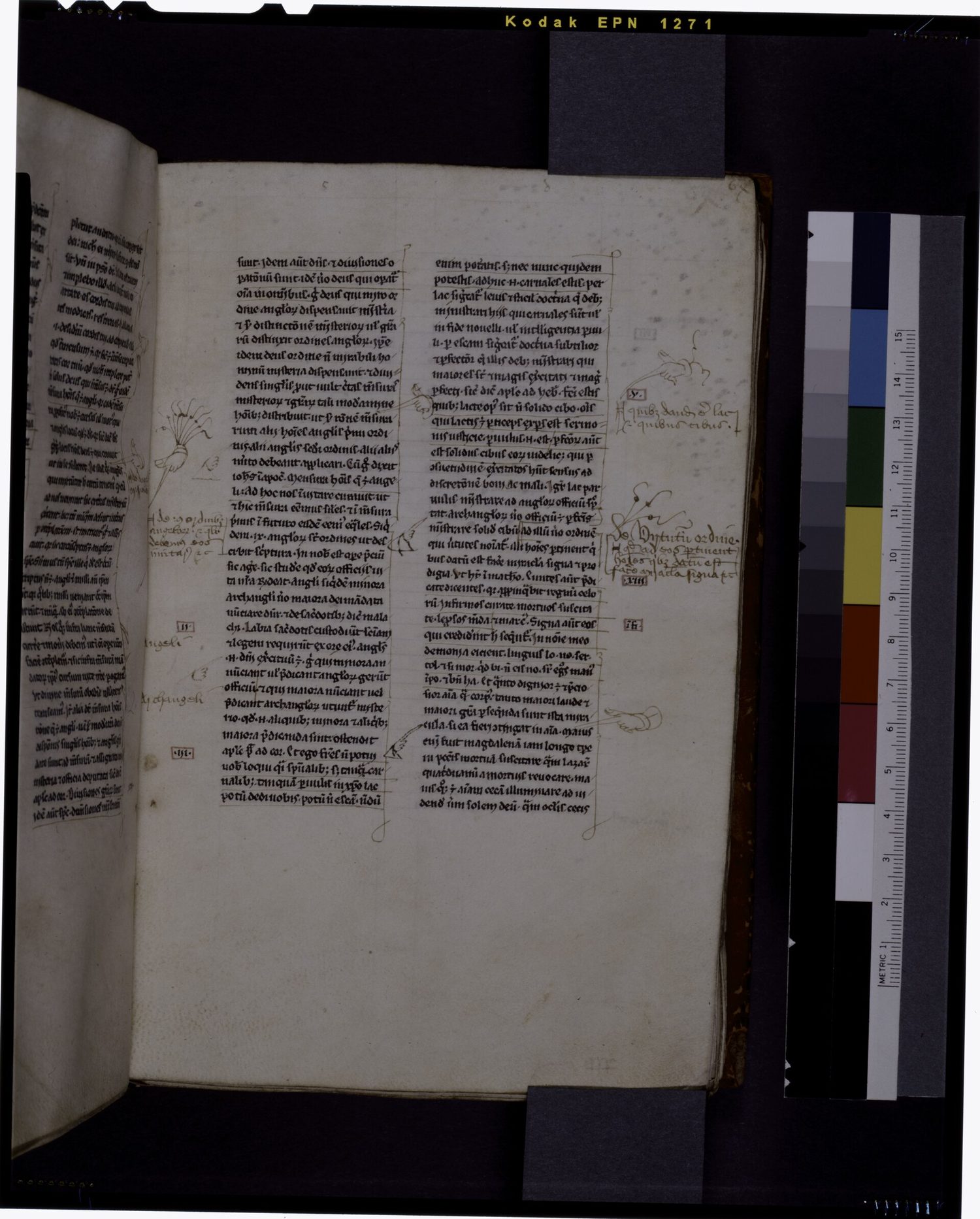
Uma página carregando seu próprio comentário nas margens - leitura atenta, vários séculos antes
Explore · ⁨Explorar⁩

Corresponda cada escolha estrutural à sua função

Descrever a forma não é nomear a função. Diga o que o leitor é levado a fazer e onde.

2.3

The Function of Contrasts Within a Text · ⁨A Função dos Contrastes Dentro de um Texto⁩

Syllabus · ⁨Programa⁩
English

Enduring Understanding (STR-1): The arrangement of the parts and sections of a text, the relationship of the parts to each other, and the sequence in which the text reveals information are all structural choices made by a writer that contribute to the reader’s interpretation of a text.

Learning Objective 3.D: Explain the function of contrasts within a text.

  • STR-1.G Contrast can be introduced through focus; tone; point of view; character, narrator, or speaker perspective; dramatic situation or moment; settings or time; or imagery.
  • STR-1.H Contrasts are the result of shifts or juxtapositions or both.
  • STR-1.I Shifts may be signaled by a word, a structural convention, or punctuation.
  • STR-1.J Shifts may emphasize contrasts between particular segments of a text.
Português

Compreensão Permanente (STR-1): A disposição das partes e seções de um texto, a relação das partes entre si e a sequência em que o texto revela informações são todas escolhas estruturais feitas por um escritor que contribuem para a interpretação do leitor de um texto.

Objetivo de Aprendizagem 3.D: Explicar a função de contrastes dentro de um texto.

  • STR-1.G O contraste pode ser introduzido através do foco; tom; ponto de vista; perspectiva de personagem, narrador ou falante; situação dramática ou momento; cenários ou tempo; ou imagens.
  • STR-1.H Contrastes são o resultado de mudanças ou justaposições ou ambas.
  • STR-1.I Mudanças podem ser sinalizadas por uma palavra, uma convenção estrutural ou pontuação.
  • STR-1.J Mudanças podem enfatizar contrastes entre segmentos particulares de um texto.

Source: College Board AP Course and Exam Description · ⁨Fonte: College Board AP Course and Exam Description⁩

English
  • Contrast 对照 can be introduced through focus, tone, point of view, character or speaker perspective, and dramatic situation.
  • Contrasts are the result of shifts or juxtapositions or both.
  • Shifts may be signalled by a word, a structural convention, or punctuation.
  • Shifts may emphasise contrasts between particular segments of a text.

This is the most reliable route into an unseen poem. Find the shift - a but, a stanza break, a change of tense or address - and the poem divides into a before and an after. What changed, and what the change costs or gains, is very often the poem's argument.

Português
  • O contraste 对照 pode ser introduzido através de foco, tom, ponto de vista, perspectiva de personagem ou falante, e situação dramática.
  • Os contrastes são o resultado de mudanças ou justaposições ou ambas.
  • Mudanças podem ser sinalizadas por uma palavra, uma convenção estrutural ou pontuação.
  • As mudanças podem enfatizar contrastes entre segmentos particulares de um texto.

Esta é a rota mais confiável para entrar em um poema desconhecido. Encontre a mudança - um mas, uma quebra de estrofe, uma mudança de tempo verbal ou endereço - e o poema se divide em um antes e um depois. O que mudou, e o que a mudança custa ou ganha, é frequentemente o argumento do poema.

Quatro lugares para procurar contraste, não um
Explore · ⁨Explorar⁩

Encontre o contraste em quatro lugares, não em um

Os alunos encontram o pareamento óbvio e param — e o contraste dentro de um personagem geralmente carrega a questão de complexidade.

Vocabulary · ⁨Vocabulário⁩ Train · ⁨Treinar⁩
English · ⁨Inglês⁩ Chinese · ⁨Chinês⁩ Pinyin
figurative language/ˈfɪɡjərətɪv ˈlæŋɡwɪdʒ/ 比喻性语言 bǐ yù xìng yǔ yán
Line and stanza breaks/laɪn ænd ˈstænzə breɪks/ 行与诗节的断开 xíng yǔ shī jié de duàn kāi
Contrast/ˈkɒntræst/ 对照 duì zhào
2.4

The Function of Specific Words and Phrases · ⁨A Função de Palavras e Frases Específicas⁩

Syllabus · ⁨Programa⁩
English

Enduring Understanding (FIG-1): Comparisons, representations, and associations shift meaning from the literal to the figurative and invite readers to interpret a text.

Learning Objective 5.B: Explain the function of specific words and phrases in a text.

  • FIG-1.A An antecedent is a word, phrase, or clause that precedes its referent. Referents may include pronouns, nouns, phrases, or clauses.
  • FIG-1.B Referents are ambiguous if they can refer to more than one antecedent, which affects interpretation.
  • FIG-1.C Words or phrases may be repeated to emphasize ideas or associations.
  • FIG-1.D Alliteration is the repetition of the same letter sound at the beginning of adjacent or nearby words to emphasize those words and their associations or representations.
Português

Compreensão Permanente (FIG-1): Comparações, representações e associações mudam o significado do literal para o figurado e convida os leitores a interpretar um texto.

Objetivo de Aprendizagem 5.B: Explicar a função de palavras e frases específicas em um texto.

  • FIG-1.A Um antecedente é uma palavra, frase ou oração que precede seu referente. Referentes podem incluir pronomes, substantivos, frases ou orações.
  • FIG-1.B Referentes são ambíguos se podem se referir a mais de um antecedente, o que afeta a interpretação.
  • FIG-1.C Palavras ou frases podem ser repetidas para enfatizar ideias ou associações.
  • FIG-1.D Aliteração é a repetição do mesmo som de letra no início de palavras adjacentes ou próximas para enfatizar essas palavras e suas associações ou representações.

Source: College Board AP Course and Exam Description · ⁨Fonte: College Board AP Course and Exam Description⁩

English
  • An antecedent 先行词 is a word, phrase, or clause that precedes its referent.
  • Referents are ambiguous if they can refer to more than one antecedent, which affects interpretation 影响阐释.
  • Words or phrases may be repeated to emphasise ideas or associations.
  • Alliteration 头韵 is the repetition of the same initial sound in adjacent or nearby words, emphasising those words.

Ambiguous reference is worth special attention. In prose it is usually a fault; in poetry it is often a device, and a pronoun that could point two ways may be holding both meanings deliberately.

Português
  • Um antecedente 先行词 é uma palavra, frase ou oração que precede seu referente.
  • Referentes são ambíguos se puderem se referir a mais de um antecedente, o que afeta a interpretação 影响阐释.
  • Palavras ou frases podem ser repetidas para enfatizar ideias ou associações.
  • Aliteração 头韵 é a repetição do mesmo som inicial em palavras adjacentes ou próximas, enfatizando essas palavras.

Referência ambígua merece atenção especial. Em prosa, geralmente é uma falha; em poesia, muitas vezes é um dispositivo, e um pronome que poderia apontar para dois caminhos pode estar segurando ambos os significados deliberadamente.

Uma palavra escolhida está fazendo até quatro coisas - 'poderoso' não é uma delas
Vocabulary · ⁨Vocabulário⁩ Train · ⁨Treinar⁩
English · ⁨Inglês⁩ Chinese · ⁨Chinês⁩ Pinyin
antecedent/ˌæntɪˈsiːdənt/ 先行词 xiān xíng cí
affects interpretation/əˈfekts ɪnˌtɜːprɪˈteɪʃn/ 影响阐释 yǐng xiǎng chǎn shì
Alliteration/əˌlɪtəˈreɪʃn/ 头韵 tóu yùn
2.5

The Function of a Simile · ⁨A Função de uma Metáfora Comparativa (Símile)⁩

Syllabus · ⁨Programa⁩
English

Enduring Understanding (FIG-1): Comparisons, representations, and associations shift meaning from the literal to the figurative and invite readers to interpret a text.

Learning Objective 6.A: Identify and explain the function of a simile.

  • FIG-1.E A simile uses the words “like” or “as” to liken two objects or concepts to each other.
  • FIG-1.F Similes liken two different things to transfer the traits or qualities of one to the other.
  • FIG-1.G In a simile, the thing being compared is the main subject; the thing to which it is being compared is the comparison subject.
Português

Compreensão Permanente (FIG-1): Comparações, representações e associações mudam o significado do literal para o figurado e convida os leitores a interpretar um texto.

Objetivo de Aprendizagem 6.A: Identificar e explicar a função de um símile.

  • FIG-1.E Um símile usa as palavras "como" ou "tal" para semelhar dois objetos ou conceitos uns aos outros.
  • FIG-1.F Símiles semelham duas coisas diferentes para transferir as características ou qualidades de uma para a outra.
  • FIG-1.G Em um símile, a coisa sendo comparada é o sujeito principal; a coisa com a qual está sendo comparada é o sujeito de comparação.

Source: College Board AP Course and Exam Description · ⁨Fonte: College Board AP Course and Exam Description⁩

English
  • A simile 明喻 uses "like" or "as" to liken two objects or concepts.
  • Similes liken two different things to transfer the traits or qualities of one to the other.
  • In a simile, the thing being compared is the main subject; the thing to which it is compared is the comparison subject.

Those two terms are the whole method. A scoring answer names the main subject, names the comparison subject, and then says which quality was transferred - because that quality is the claim the poem is making.

Português
Os próprios termos do CED - e a transferência ocorre apenas em uma direção
Nomeie o assunto principal, nomeie o assunto da comparação, então diga qual qualidade cruzou
  • Uma símile 明喻 usa "como" ou "assim como" para comparar dois objetos ou conceitos.
  • Sílices comparam duas coisas diferentes para transferir os traços ou qualidades de uma para a outra.
  • Em uma símile, a coisa sendo comparada é o assunto principal; a coisa à qual é comparada é o assunto da comparação.

Esses dois termos são todo o método. Uma resposta pontuada nomeia o assunto principal, nomeia o assunto da comparação, e então diz qual qualidade foi transferida - porque essa qualidade é a afirmação que o poema está fazendo.

Vocabulary · ⁨Vocabulário⁩ Train · ⁨Treinar⁩
English · ⁨Inglês⁩ Chinese · ⁨Chinês⁩ Pinyin
simile/ˈsɪmɪlɪ/ 明喻 míng yù
metaphor/ˈmetəfɔː/ 隐喻 yǐn yù
2.6

The Function of a Metaphor · ⁨A Função de uma Metáfora⁩

Syllabus · ⁨Programa⁩
English

Enduring Understanding (FIG-1): Comparisons, representations, and associations shift meaning from the literal to the figurative and invite readers to interpret a text.

Learning Objective 6.B: Identify and explain the function of a metaphor.

  • FIG-1.H A metaphor implies similarities between two (usually unrelated) concepts or objects in order to reveal or emphasize one or more things about one of them, though the differences between the two may also be revealing.
  • FIG-1.I In a metaphor, as in a simile, the thing being compared is the main subject; the thing to which it is being compared is the comparison subject.
  • FIG-1.J Comparisons between objects or concepts draw on the experiences and associations readers already have with those objects and concepts.
  • FIG-1.K Interpretation of a metaphor may depend on the context of its use; that is, what is happening in a text may determine what is transferred in the comparison.
Português

Compreensão Permanente (FIG-1): Comparações, representações e associações mudam o significado do literal para o figurado e convida os leitores a interpretar um texto.

Objetivo de Aprendizagem 6.B: Identificar e explicar a função de uma metáfora.

  • FIG-1.H Uma metáfora implica semelhanças entre dois (geralmente não relacionados) conceitos ou objetos para revelar ou enfatizar uma ou mais coisas sobre uma delas, embora as diferenças entre as duas também possam ser reveladoras.
  • FIG-1.I Em uma metáfora, assim como em um símile, a coisa sendo comparada é o sujeito principal; a coisa com a qual está sendo comparada é o sujeito de comparação.
  • FIG-1.J Comparações entre objetos ou conceitos baseiam-se nas experiências e associações que os leitores já têm com esses objetos e conceitos.
  • FIG-1.K A interpretação de uma metáfora pode depender do contexto de seu uso; isto é, o que está acontecendo em um texto pode determinar o que é transferido na comparação.

Source: College Board AP Course and Exam Description · ⁨Fonte: College Board AP Course and Exam Description⁩

English
  • A metaphor 隐喻 implies similarities between two usually unrelated concepts to reveal or emphasise qualities of the main subject.
  • The same main-subject and comparison-subject structure applies.
  • Comparisons draw on the experiences and associations readers already have with the comparison subject - which is why a metaphor can fail with an audience that lacks those associations.
  • Interpretation of a metaphor may depend on the context of its use: what is happening in the text may determine which of the comparison subject's qualities is meant.

That last point protects you from the commonest error, which is importing every association a word has. If a poem calls grief a house, the relevant quality might be shelter, or confinement, or the fact that one must live inside it. The text decides which.

Português
  • Uma metáfora 隐喻 implica semelhanças entre dois conceitos geralmente não relacionados para revelar ou enfatizar qualidades do assunto principal.
  • A mesma estrutura de assunto principal e assunto da comparação se aplica.
  • As comparações se baseiam nas experiências e associações que os leitores já têm com o assunto da comparação - razão pela qual uma metáfora pode falhar com um público que não possui essas associações.
  • A interpretação de uma metáfora pode depender do contexto de seu uso: o que está acontecendo no texto pode determinar qual das qualidades do assunto da comparação é pretendida.

Esse último ponto protege você do erro mais comum, que é importar todas as associações que uma palavra tem. Se um poema chama a tristeza de uma casa, a qualidade relevante pode ser abrigo, confinamento, ou o fato de que se deve viver dentro dela. O texto decide qual.

2.7

Developing a Paragraph with Claim and Evidence · ⁨Desenvolvendo um Parágrafo com Afirmação e Evidência⁩

Syllabus · ⁨Programa⁩
English

Enduring Understanding (LAN-1): Readers establish and communicate their interpretations of literature through arguments supported by textual evidence.

Learning Objective 7.A: Develop a paragraph that includes 1) a claim that requires defense with evidence from the text and 2) the evidence itself.

  • LAN-1.A In literary analysis, writers read a text closely to identify details that, in combination, enable them to make and defend a claim about an aspect of the text.
  • LAN-1.B A claim is a statement that requires defense with evidence from the text.
  • LAN-1.C In literary analysis, the initial components of a paragraph are the claim and textual evidence that defends the claim.
Português

Compreensão Permanente (LAN-1): Os leitores estabelecem e comunicam suas interpretações da literatura através de argumentos apoiados por evidências textuais.

Objetivo de Aprendizagem 7.A: Desenvolver um parágrafo que inclua 1) uma afirmação que requer defesa com evidências do texto e 2) as próprias evidências.

  • LAN-1.A Na análise literária, os leitores leem um texto atentamente para identificar detalhes que, em combinação, permitem-lhes formular e defender uma afirmação sobre um aspecto do texto.
  • LAN-1.B Uma afirmação é uma declaração que requer defesa com evidências do texto.
  • LAN-1.C Na análise literária, os componentes iniciais de um parágrafo são a afirmação e as evidências textuais que defendem a afirmação.

Source: College Board AP Course and Exam Description · ⁨Fonte: College Board AP Course and Exam Description⁩

English

Same three components as Unit 1: a claim requiring textual defence, the textual evidence, and details identified in combination.

Worked example (a real AP exam task). A poetry-analysis prompt asks how the speaker's use of comparison conveys their attitude. A weak answer: "The poet uses a metaphor comparing memory to a house, which is effective." A scoring answer uses the CED's terms and the context rule: "The main subject is memory and the comparison subject a house, but the poem withholds warmth from the comparison: the house has 'rooms she no longer enters'. The quality transferred is therefore not shelter but confinement by a structure one built oneself - so the speaker's attitude to her own past is presented as inhabiting something she can neither leave nor fully occupy." Main subject, comparison subject, transferred quality, and the attitude it conveys.

Português

Mesmos três componentes da Unidade 1: uma afirmação (claim) exigindo defesa textual, a evidência textual, e detalhes identificados em combinação.

Exemplo resolvido (uma tarefa real do exame AP). Um prompt de análise de poesia pergunta como o uso de comparação pelo falante transmite sua atitude. Uma resposta fraca: "O poeta usa uma metáfora comparando memória a uma casa, o que é eficaz." Uma resposta pontuada usa os termos do CED e a regra de contexto: "O assunto principal é memória e o assunto da comparação uma casa, mas o poema retira o calor da comparação: a casa tem 'quartos que ela não entra mais'. A qualidade transferida é portanto não abrigo, mas confinamento por uma estrutura construída por si mesmo - então a atitude do falante em relação ao seu próprio passado é apresentada como habitar algo que ela nem pode deixar nem ocupar totalmente." Assunto principal, assunto da comparação, qualidade transferida, e a atitude que ela transmite.

2.7

Exam tips · ⁨Dicas de prova⁩

English
  • What a speaker omits is evidence. In a poem, everything present was chosen.
  • Find the shift first. A but, a stanza break, a change of tense - the poem divides there.
  • Line endings are the emphatic position. Say which words the poet put there.
  • An ambiguous referent in poetry is usually a device, not an error.
  • Always name main subject and comparison subject, then the quality transferred. That quality is the claim.
  • Context decides which quality a metaphor imports. Do not list every association the word has.
Português
  • O que um falante omite é evidência. Em um poema, tudo o que está presente foi escolhido.
  • Encontre a mudança primeiro. Um mas, uma quebra de estrofe, uma mudança de tempo verbal - o poema se divide ali.
  • Os finais de verso são a posição enfática. Diga quais palavras o poeta colocou lá.
  • Um referente ambíguo na poesia é geralmente um dispositivo, não um erro.
  • Nomeie sempre o sujeito principal e o sujeito da comparação, depois a qualidade transferida. Essa qualidade é a tese.
  • O contexto decide qual qualidade uma metáfora traz. Não liste todas as associações que a palavra possui.

Interactive lessons on this topic · ⁨Aulas interativas sobre este tópico⁩

Work through it step by step, with instant-check exercises. · ⁨Passe por ele passo a passo, com exercícios de verificação instantânea.⁩

Past Papers · ⁨Provas Anteriores⁩

More topics in Literatura e Composição Inglesas do AP · ⁨Mais tópicos em Literatura e Composição Inglesas do AP⁩

Log in or create account · ⁨Entrar ou criar conta⁩

IGCSE, A-Level & AP