Skip to content
Subjects

ACT · ACT · ACT

  • 1

    E.P · English: purpose, organisation and style

    Learning program coming soon

    Handout

    Scope and prerequisites

    ACT framework, February 2026 revision. Original classroom cases are not an official form; preserve the scored/field-test boundaries of each source form.

    • Determine relevance 相关性 and rhetorical purpose
    • Organise sentences and paragraphs
    • Choose precise, concise language consistent with tone

    Prerequisites: Paragraph purpose; relevant evidence 证据; claim and objection.

    Explain and choose the method

    English questions assess the passage as a whole. Read the surrounding sentences before judging a local change.

    For an add-or-delete question, name the paragraph’s purpose and test whether the proposed detail 细节 advances it.

    For placement, follow references and time order. A sentence using “this method” needs the method introduced first.

    Concise wording removes repetition without deleting a necessary meaning. Preserve the register 语域 and viewpoint of the passage.

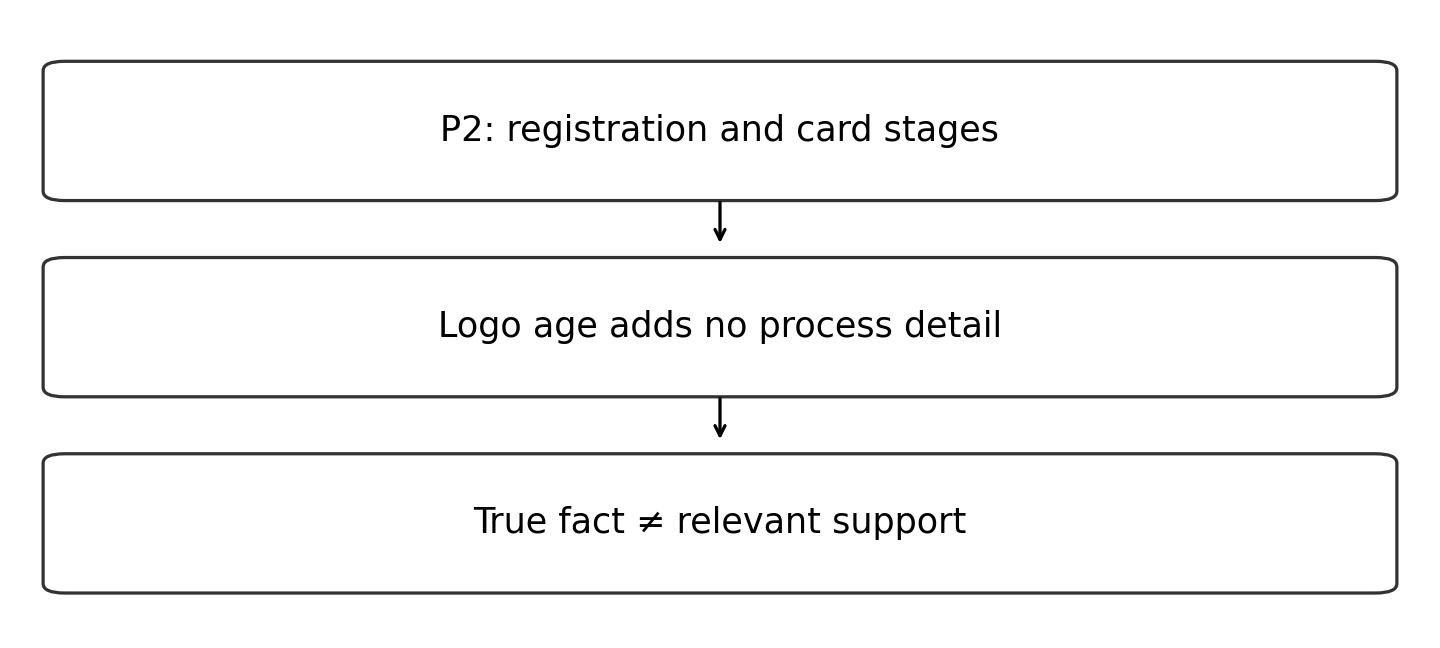
    Relevance asks whether a detail serves the paragraph's actual purpose. In a paragraph about queue management, an arrival log can support a claim about waiting. A true fact about a logo may still interrupt that purpose. A counterargument 反论点 can remain useful when the writer responds with a practical limit.
    Original diagram of the worked relationship; read the full wording and qualifications.
    Original diagram of the worked relationship; read the full wording and qualifications.

    Existing worked example: A paragraph explains how engineers inspect cracks. “The team used a camera to record the cracks” supports the method. “The team enjoyed the café nearby” adds no inspection detail and should be omitted. This is a relevance decision, not a grammar decision.

    Complete original context

    Original continuous editing passage — A place to mend

    [P1] On the first Saturday of each month, a group of volunteers opens a repair table in the public library. [S1] The project began when librarian Noor noticed a row of broken desk lamps outside a nearby building. [S2] Some needed specialist work, but others had loose switches or damaged cables. [S3] Noor did not want untrained visitors to try unsafe electrical repairs. [S4] She invited a qualified repairer to explain which items the group could inspect and which should go to a professional. The first session accepted only battery-powered objects, with damaged batteries excluded. Visitors registered their items and described the faults before any work began.

    [P2] At the entrance, two volunteers record each visitor's name and item. This record helps the group reunite objects with their owners. A blue card goes beside an object awaiting inspection; a white card marks one ready for collection. The cards do not certify safety or guarantee a repair. They simply show where an item is in the process. [S5] The library's logo was designed many years ago. Beside the cards, a sign asks visitors to stay while their object is examined. Staying allows owners to explain an intermittent fault that might not appear immediately. It also gives them a chance to learn a simple maintenance habit.

    [P3] Space soon became a problem. The repair table shared an alcove with readers who wanted a quiet place to work. During the first two sessions, a visitor log recorded six complaints about conversation near the alcove. Noor proposed moving the table into a meeting room. The room could hold fewer people, so a move alone would not solve the problem. The group introduced short arrival windows and kept two spaces for visitors without bookings. [S6] This totally amazing system fixed every problem forever. In fact, one visitor still waited outside, and the group had to improve the signs leading to the room. The log recorded one noise complaint during the next two sessions; attendance also fell, so the group did not attribute the whole reduction to the move.

    [P4] Volunteers were careful about how they described success. An object leaving the table might work again, need another part, or require professional attention. They recorded these outcomes separately. During the trial, forty objects were inspected. Eighteen worked after a permitted minor adjustment, twelve needed a part, and ten were referred elsewhere. Counting all forty as repaired would hide important differences. [S7] The volunteers recorded the outcomes and wrote the results down in their record. Noor used the figures to decide which spare parts might be useful at later sessions. She did not use them to promise that any particular object could be repaired.

    [P5] The project now has a practical aim: help visitors make an informed next decision about a broken object. For some, that means a working lamp. For others, it means knowing when further work would be unsafe or too costly. The group plans to keep the arrival windows for another trial and ask readers whether noise remains a problem. It will also compare attendance and waiting times before adding more spaces. A repair table succeeds through careful limits as well as useful repairs.

    Independent practice and checked reasoning

    This overview is completed through the detailed skill sequence: 19, 20, 21. Work those references and sheets in order; this orientation does not replace them.

    Transfer 1

    Should S5 remain in P2? Explain the decision by the paragraph's purpose, and propose a relevant replacement detail.

    Reasoning: Remove it; P2 explains registration and card use, while the logo's age contributes neither. A useful replacement could explain how a volunteer updates a card when an inspection finishes. Label that proposed detail as a suggestion requiring confirmation, not a fact already supplied.

    Transfer 2

    Which existing evidence supports the claim that noise was a problem? Why retain the sentence saying the meeting room holds fewer people?

    Reasoning: Six recorded complaints in the first two sessions support a local noise concern. The smaller capacity is a relevant objection to moving, motivating arrival windows and walk-in spaces. It does not show the move is worthless.

    Transfer 3

    Write a qualified conclusion about the change in noise complaints, including the attendance limit. Explain why “the move eliminated noise” fails.

    Reasoning: “Recorded complaints fell from six to one in the next two sessions, but attendance also fell, so the move's separate effect is uncertain.” One complaint remains, contradicting eliminated, and other conditions changed.

    Limits and next use

    The shortest answer is not always correct: it can remove a needed contrast, cause or identifying detail.

    All tasks here are public original practice with authored guidance. They are not official questions or fresh diagnostics. Existing protected tests and mocks remain separate.
    Vocabulary
    English
    counterargument/ˈkaʊntərɑːɡjuːmənt/
    relevance/ˈrelɪvəns/
    evidence/ˈevɪdəns/
    register/ˈredʒɪstə/
    detail/ˈdiːteɪl/
  • 2

    E.C · English: conventions and punctuation

    Learning program coming soon

    Handout

    Scope and prerequisites

    ACT framework, February 2026 revision. Original classroom cases are not an official form; preserve the scored/field-test boundaries of each source form.

    • Control clause boundaries and punctuation
    • Maintain agreement 一致关系, tense and pronoun reference
    • Place modifiers and parallel structures correctly

    Prerequisites: Independent clauses; subject head; possessives and parallel forms.

    Explain and choose the method

    An opening participle phrase modifies the subject that follows. Put the actual walker in that position.

    Use commas for nonessential information; do not separate a subject from its verb.

    Parallel lists keep a common grammatical form: reading, planning and drafting.

    For pronouns, check both number and clear reference. An unclear they can refer to two different groups.

    Conventions 语言规范 depend on grammar, not a preferred sound. “The group of volunteers records outcomes” uses singular group. “Recording the result, Noor checked the card” attaches the modifier 修饰语 to Noor. Use a comma plus conjunction, semicolon or period to separate complete clauses.

    Original diagram of the worked relationship; read the full wording and qualifications.
    Original diagram of the worked relationship; read the full wording and qualifications.

    Existing worked example: Repair the dangling modifier: “While I was walking to school, rain began.” The dependent clause now names the walker. For parallelism 平行结构, “She enjoys reading, to draw and swimming” becomes “She enjoys reading, drawing and swimming.”

    Complete original context

    Original continuous editing passage — A place to mend

    [P1] On the first Saturday of each month, a group of volunteers opens a repair table in the public library. [S1] The project began when librarian Noor noticed a row of broken desk lamps outside a nearby building. [S2] Some needed specialist work, but others had loose switches or damaged cables. [S3] Noor did not want untrained visitors to try unsafe electrical repairs. [S4] She invited a qualified repairer to explain which items the group could inspect and which should go to a professional. The first session accepted only battery-powered objects, with damaged batteries excluded. Visitors registered their items and described the faults before any work began.

    [P2] At the entrance, two volunteers record each visitor's name and item. This record helps the group reunite objects with their owners. A blue card goes beside an object awaiting inspection; a white card marks one ready for collection. The cards do not certify safety or guarantee a repair. They simply show where an item is in the process. [S5] The library's logo was designed many years ago. Beside the cards, a sign asks visitors to stay while their object is examined. Staying allows owners to explain an intermittent fault that might not appear immediately. It also gives them a chance to learn a simple maintenance habit.

    [P3] Space soon became a problem. The repair table shared an alcove with readers who wanted a quiet place to work. During the first two sessions, a visitor log recorded six complaints about conversation near the alcove. Noor proposed moving the table into a meeting room. The room could hold fewer people, so a move alone would not solve the problem. The group introduced short arrival windows and kept two spaces for visitors without bookings. [S6] This totally amazing system fixed every problem forever. In fact, one visitor still waited outside, and the group had to improve the signs leading to the room. The log recorded one noise complaint during the next two sessions; attendance also fell, so the group did not attribute the whole reduction to the move.

    [P4] Volunteers were careful about how they described success. An object leaving the table might work again, need another part, or require professional attention. They recorded these outcomes separately. During the trial, forty objects were inspected. Eighteen worked after a permitted minor adjustment, twelve needed a part, and ten were referred elsewhere. Counting all forty as repaired would hide important differences. [S7] The volunteers recorded the outcomes and wrote the results down in their record. Noor used the figures to decide which spare parts might be useful at later sessions. She did not use them to promise that any particular object could be repaired.

    [P5] The project now has a practical aim: help visitors make an informed next decision about a broken object. For some, that means a working lamp. For others, it means knowing when further work would be unsafe or too costly. The group plans to keep the arrival windows for another trial and ask readers whether noise remains a problem. It will also compare attendance and waiting times before adding more spaces. A repair table succeeds through careful limits as well as useful repairs.

    Independent practice and checked reasoning

    This overview is completed through the detailed skill sequence: 22. Work those references and sheets in order; this orientation does not replace them.

    Transfer 1

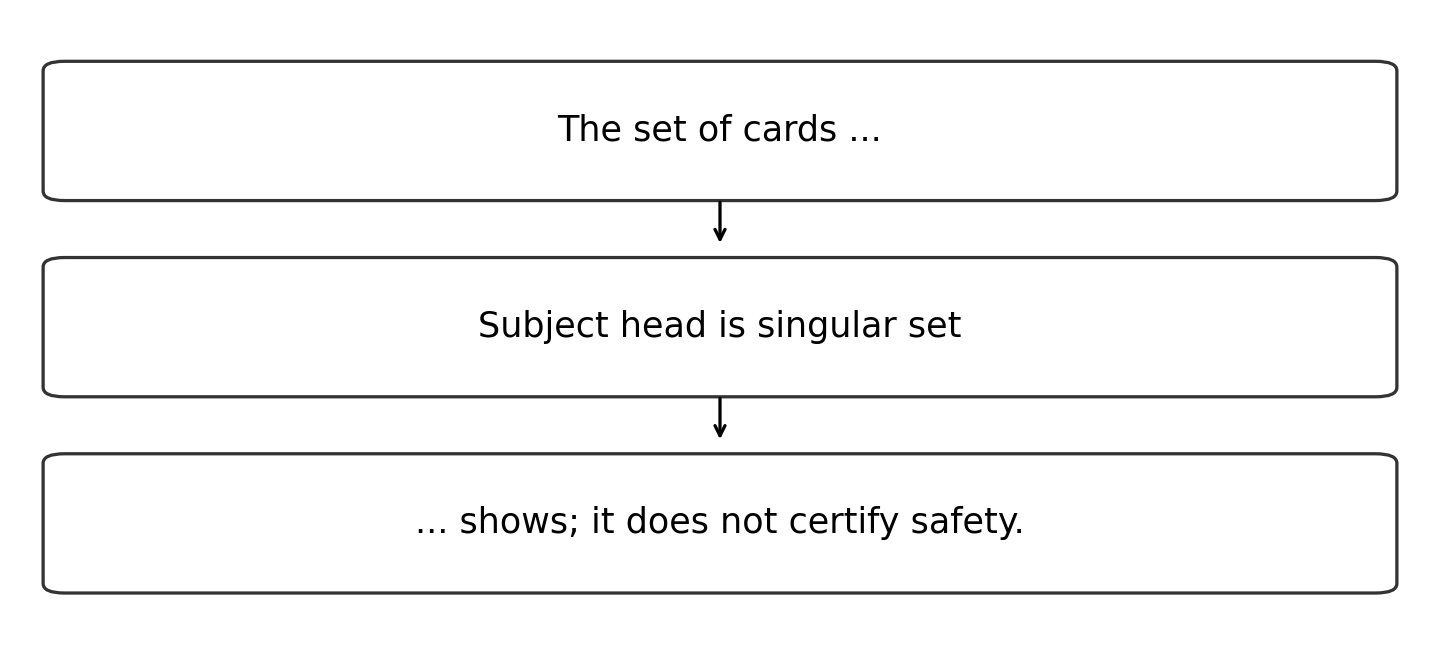
    Repair “The set of blue cards show the current stage, they do not certify safety.” Preserve both claims and explain agreement and boundary.

    Reasoning: “The set of blue cards shows the current stage; it does not certify safety.” Set is singular; the pronoun it refers to the set. A semicolon joins the independent clauses. A full stop or comma plus but also works with appropriate wording.

    Transfer 2

    Repair “Inspecting the lamp, a loose switch was noticed by Noor” and “The group aims to inspect, recording, and advise”.

    Reasoning: “Inspecting the lamp, Noor noticed a loose switch” attaches the inspection to its actor. “The group aims to inspect, record, and advise” uses parallel infinitive complements under to. Other grammatical rewrites preserving these meanings are acceptable.

    Transfer 3

    Choose “its/it's” in “The group updates ___ records” and “___ important to label outcomes”. Explain why the same spelling does not fit both.

    Reasoning: “its records” needs the possessive form. “It's important” means “It is important”. The apostrophe marks a contraction here, not possession; substitution of it is checks the distinction.

    Limits and next use

    Read the complete sentence after replacing the underlined text. A choice may create a new boundary error.

    All tasks here are public original practice with authored guidance. They are not official questions or fresh diagnostics. Existing protected tests and mocks remain separate.
    Vocabulary
    English
    conventions
    parallelism/ˈpærəlelɪzəm/
    agreement/əˈɡriːmənt/
    modifier/ˈmɒdɪfaɪə/
  • 3

    M · Mathematics: models, functions and higher maths

    Learning program coming soon

    Handout

    Scope and prerequisites

    ACT framework, February 2026 revision. Original classroom cases are not an official form; preserve the scored/field-test boundaries of each source form.

    • Apply number and quantity, algebra and functions
    • Use coordinate and Euclidean geometry and trigonometry
    • Interpret statistics, probability and essential-skill models

    Prerequisites: Distributive law; principal roots; $i^2=-1$.

    Explain and choose the method

    Preparing for higher mathematics covers number, algebra, functions, geometry and statistics/probability. Essential skills combine rates, units and proportions.

    For a function, track the input and output. Composition 函数复合 applies the inner function first.

    Coordinate geometry links slopes, distances and equations. Right-triangle ratios require the correct reference angle.

    Model a context with stated assumptions, then check whether the result is sensible. A calculator supports computation but cannot choose a model for you.

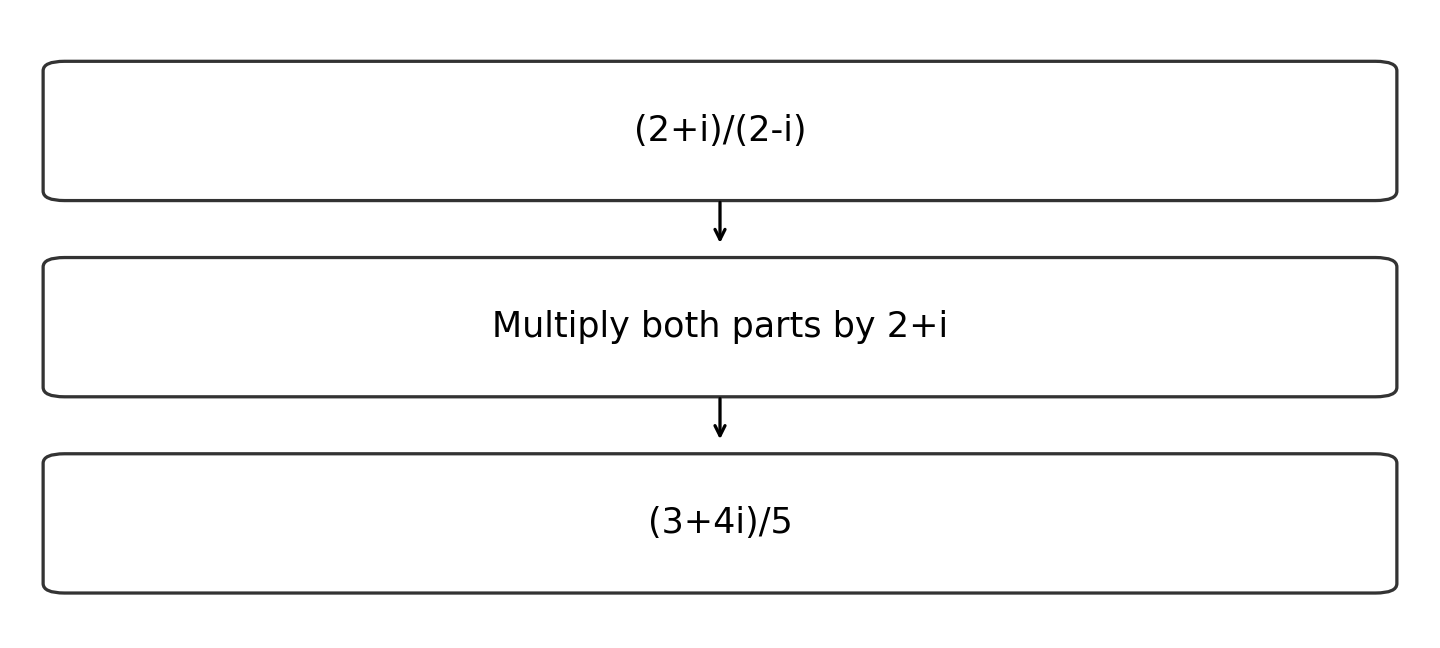
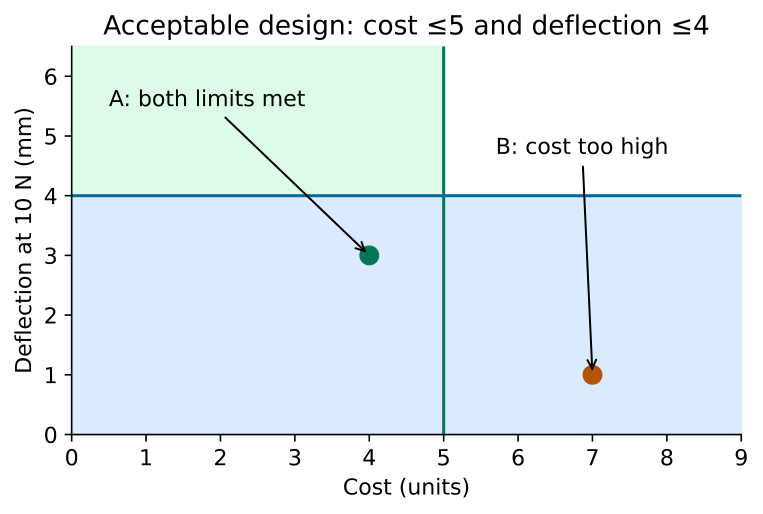
    A complex conjugate 复共轭 changes the imaginary sign. $(a+bi)(a-bi)=a^2+b^2$ for real $a,b$. Thus $(2+i)/(2-i)=(2+i)^2/5=(3+4i)/5$. The denominator is nonzero; distinguish an exact value from its decimal approximation.

    Original diagram of the worked relationship; read the full wording and qualifications.
    Original diagram of the worked relationship; read the full wording and qualifications.

    Existing worked example: If f(x)=2x+1 and g(x)=x², then f(g(3))=f(9)=19. But g(f(3))=g(7)=49. Order matters. For a probability check, two independent 独立的 fair coin tosses give P(two heads)=1/2×1/2=1/4.

    Complete original context

    Every transfer question states all data it needs.

    Independent practice and checked reasoning

    This overview is completed through the detailed skill sequence: 7, 8, 9, 10, 11, 12, 13, 14, 15, 16, 17, 18. Work those references and sheets in order; this orientation does not replace them.

    Transfer 1

    Calculate $(3-2i)/(1+i)$ in form $a+bi$.

    Reasoning: Multiply both parts by $1-i$. Numerator is $(3-2i)(1-i)=3-5i+2i^2=1-5i$. Denominator is 2. The answer is $1/2-(5/2)i$. Multiplying back by $1+i$ returns $3-2i$.

    Transfer 2

    Evaluate $32^{2/5}$ and $\sqrt{(-7)^2}$. Solve $z^2+16=0$ over the complex numbers.

    Reasoning: The fifth root of 32 is 2, so $32^{2/5}=2^2=4$. The principal square root is $|-7|=7$. For the equation, $z^2=-16$ gives $z=4i,-4i$, both nonreal.

    Transfer 3

    Give one example showing that the product of two irrational numbers can be rational, and one where it is irrational.

    Reasoning: $\sqrt2\sqrt2=2$ is rational. $\sqrt2\sqrt3=\sqrt6$ is irrational. Neither closure nor nonclosure for all products follows from the label irrational alone.

    Transfer 4

    Classify $\sqrt{50}$ and $\sqrt{50}\sqrt2$ as rational or irrational. Evaluate $32^{2/5}$ and $2^{-3}$. Use $\sqrt2$ and $-\sqrt2$ to test whether a sum of irrational numbers must be irrational.

    Reasoning: $\sqrt{50}=5\sqrt2$ is irrational, while $\sqrt{50}\sqrt2=\sqrt{100}=10$ is rational. $32^{2/5}=(\sqrt[5]{32})^2=2^2=4$ and $2^{-3}=1/2^3=1/8$. The two irrational numbers sum to zero, which is rational; irrational numbers are not closed under addition. These even-root products use nonnegative real radicands.

    Limits and next use

    Enhanced ACT maths uses four answer choices. A five-choice older item can teach a skill but should not define current test pacing.

    All tasks here are public original practice with authored guidance. They are not official questions or fresh diagnostics. Existing protected tests and mocks remain separate.
    Vocabulary
    English
    complex conjugate/ˈkɒmpleks ˈkɒndʒuːɡeɪt/
    composition/ˌkɒmpəˈzɪʃn/
    independent/ˌɪndɪˈpendənt/
  • 4

    R · Reading: details, structure and integration

    Learning program coming soon

    Handout

    Scope and prerequisites

    ACT framework, February 2026 revision. Original classroom cases are not an official form; preserve the scored/field-test boundaries of each source form.

    • Find key ideas, details and warranted inferences
    • Analyse author craft, viewpoint 观点 and structure
    • Compare passages and integrate textual or visual evidence 证据

    Prerequisites: Explicit detail 细节; inference 推断; cause versus chronology.

    Explain and choose the method

    Map a longer passage by paragraph roles: setting, claim, evidence, objection or resolution.

    Locate an answer’s evidence before selecting it. An inference must be supported even if no sentence states it directly.

    Separate a character’s belief from the narrator’s view. Tone 语气 emerges from wording and context.

    In paired passages, compare the authors on the question’s shared issue. For a graphic, verify that the visual supports the precise claim.

    A detail is directly stated; an inference joins clues. “The neighbour waited without complaint” does not tell us the neighbour felt no impatience. The narrator's discomfort is explicit, while the neighbour's private feelings remain unavailable.

    Original diagram of the worked relationship; read the full wording and qualifications.
    Original diagram of the worked relationship; read the full wording and qualifications.

    Existing worked example: Passage A values a museum because it protects objects. Passage B values it because it invites debate. Both can favour museums while offering different reasons. An answer claiming that B opposes all preservation would go beyond the evidence.

    Complete original context

    Original literary passage — The spare key

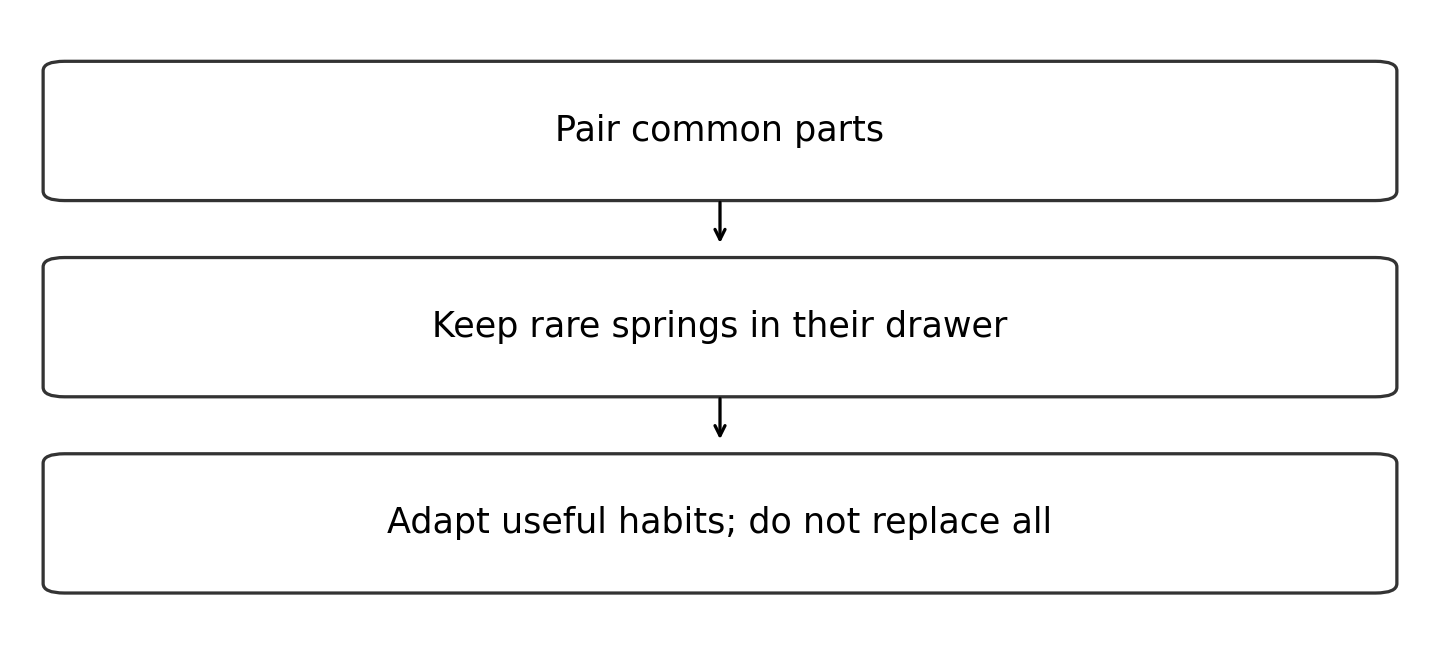
    When I returned to the workshop after my uncle retired, the key felt too small for the responsibility attached to it. He had left the drawers neatly labelled, as though the labels might continue his explanations in his absence. I turned on the overhead light and read “washers”, “pins”, “springs”. Each word named an orderly compartment. The workbench, however, carried a shallow circular mark where his tea cup had stood, and no label could explain why that empty circle held my attention longer than the stocked shelves.

    A neighbour arrived with a bent gate latch. I found a replacement pin quickly, then spent several minutes searching for the washer that would keep it in place. My uncle had sorted objects by size. He could see a repair in his mind before he opened a drawer; I could not. The neighbour waited without complaint, which made the delay feel more noticeable rather than less. At last I found the washer, fitted the pin and watched the latch swing freely. The repair was simple. Finding its parts had not been.

    That evening I placed commonly paired pieces in small trays. The shelves lost some of their symmetry. I imagined my uncle raising an eyebrow, then remembered how often he had moved a tool after noticing where his hand expected it to be. His neat labels had been the result of change, not a prohibition against it. I left the rare springs in their old drawer because they had no regular partners. There was no reason to change them merely to prove that the workshop was mine.

    A week later my uncle visited. He opened a tray and asked where the larger washers had gone. I showed him the remaining size-labelled drawer. “So you have kept both systems,” he said. I could not tell whether his smile meant approval or amusement at my earnestness. He tested a latch, set it down, and asked for tea. I placed his cup on the old mark without thinking. Only after he left did I notice that I had made room beside it for my own.

    I had expected taking charge to mean replacing his habits with mine. Instead, I was learning which habits solved a problem and which had depended on a skill I had not yet acquired. The workshop did not need a dramatic beginning. It needed a washer that could be found, a safe repair, and enough empty space for the next person to work.

    Independent practice and checked reasoning

    This overview is completed through the detailed skill sequence: 23, 24, 25. Work those references and sheets in order; this orientation does not replace them.

    Transfer 1

    Why does the narrator start pairing parts? Identify the observed problem and the change's stated result or purpose.

    Reasoning: A simple latch repair is delayed by searching separately for the matching washer. Pairing commonly used parts addresses retrieval for someone without the uncle's mental model. The passage does not supply a measured post-change speed, so describe the purpose rather than inventing a quantified result.

    Transfer 2

    What remains in the old arrangement, and why? Does the narrator replace every old habit?

    Reasoning: Rare springs remain in their old drawer because they have no regular partners; the larger-washer size drawer also remains. The narrator keeps useful parts of both systems, contradicting total replacement.

    Transfer 3

    Interpret the two cup marks at the end. Distinguish a supported reading from an unsupported claim that the uncle demanded a permanent desk.

    Reasoning: Making space beside the old mark suggests the narrator can develop a role while preserving a relationship with the uncle. The narrator places the cup without thinking; no demand for a desk is reported. Other readings grounded in continuity and change are acceptable if they acknowledge the inference.

    Limits and next use

    Do not choose an answer merely because it repeats a passage word. The relationship between ideas must also fit.

    All tasks here are public original practice with authored guidance. They are not official questions or fresh diagnostics. Existing protected tests and mocks remain separate.
    Vocabulary
    English
    inference/ˈɪnfərəns/
    viewpoint/ˈvjuːpɔɪnt/
    evidence/ˈevɪdəns/
    detail/ˈdiːteɪl/
    tone/təʊn/
  • 5

    S · Optional Science: data, investigations and models

    Learning program coming soon

    Handout

    Scope and prerequisites

    ACT framework, February 2026 revision. Original classroom cases are not an official form; preserve the scored/field-test boundaries of each source form.

    • Interpret data and graphical relationships
    • Evaluate experimental methods and variables
    • Compare scientific arguments and predictions against evidence 证据

    Prerequisites: Independent/dependent variables; controls; design constraints.

    Explain and choose the method

    Identify the independent and dependent variables, axes and units. Interpolate only within the supplied data range.

    Find which factor changes between trials and which factors remain controlled. Replication tests repeatability.

    For conflicting viewpoints, write one prediction for each model and look for a discriminating observation.

    Use the supplied scientific context. Many questions require evidence reasoning rather than recall of a specialist fact.

    A controlled comparison 控制比较 changes the proposed cause while holding alternative causes fixed. An engineering design 工程设计 must satisfy every stated constraint. Repetition estimates variation; it does not undo a change of both material and thickness.

    Original worked example from existing native teaching; transfer tasks use their own data.
    Original worked example from existing native teaching; transfer tasks use their own data.

    Existing worked example: Trial 1 uses 10 mL acid and takes 40 s; Trial 2 uses 20 mL and takes 25 s at the same temperature. More acid is associated with a shorter time here. A third trial at a hotter temperature cannot isolate the acid-volume effect.

    Complete original context

    Original hypothetical research summary — A cooling sleeve

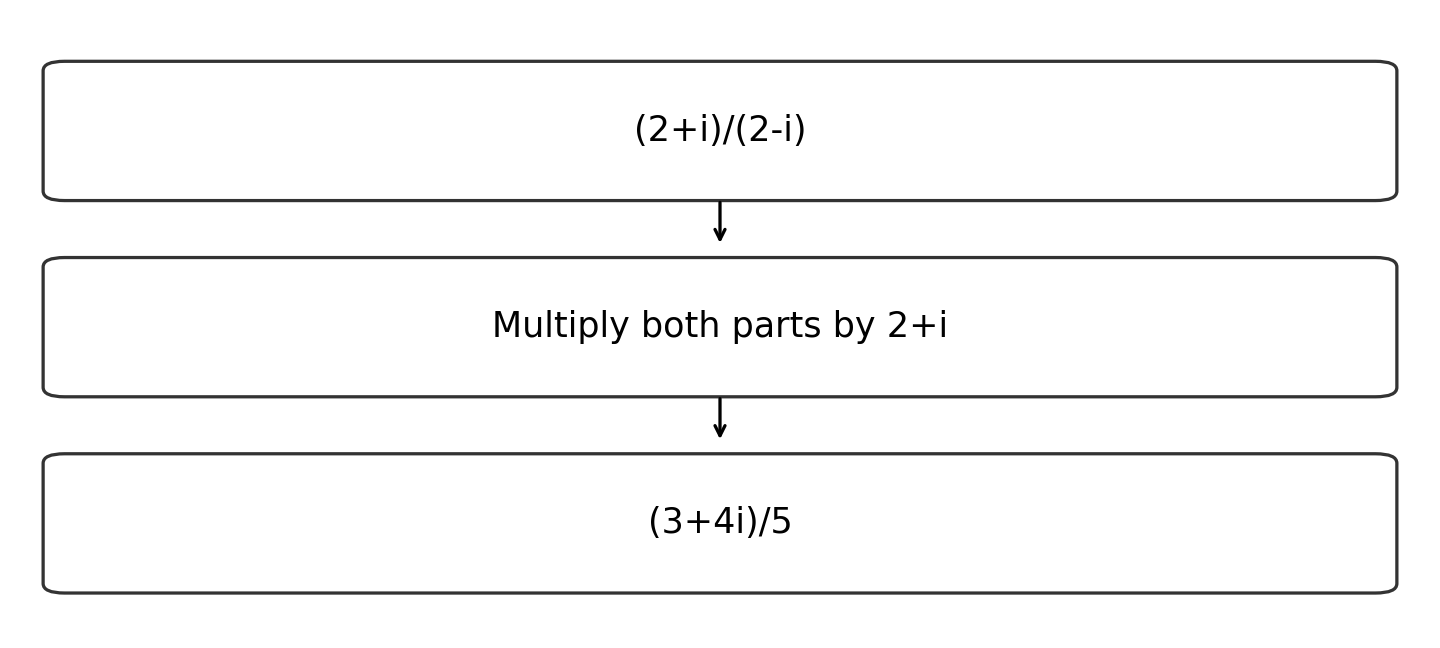
    A laboratory team tests sleeves intended to reduce a small sensor's temperature during operation. All sensors start at 22°C. Temperature is measured after ten minutes of use with the same power setting, room conditions and measuring instrument. Sleeve A costs 4 units, B costs 7 units, and an unsleeved sensor is the control. The design brief requires a cost no greater than 5 units and a final temperature no greater than 35°C. Lower temperature alone is not the only design criterion.

    Experiment 1 uses identical sensors and records three independent trials per sleeve. Final temperatures in °C are: control 41,42,43; A 33,34,35; B 30,31,32. The team resets the starting temperature and checks the sensor charge before each trial. They report the means and the full observed ranges. The ranges describe these trials, not every future result. The team has not yet measured sleeve durability.

    Experiment 2 investigates thickness for material A. Each sleeve has the same length and fit; thicknesses are 1,2,3 mm. Mean final temperatures are 38,34,32°C respectively. All other stated conditions match Experiment 1. Changing thickness also changes material quantity, so a future design review must measure costs instead of assuming they stay at 4 units. A student proposes testing a 3-mm sleeve in material B against a 1-mm sleeve in material A to identify thickness's effect. This comparison would change two factors at once.

    Two original models explain the observed temperature pattern. Model P says final temperature depends only on thickness, regardless of material. Model Q says both thickness and material matter; at equal thickness it predicts that material B produces a lower final temperature than A under the same conditions. Both models predict lower final temperatures as thickness rises over the tested 1–3 mm interval. A decreasing trend alone therefore cannot separate them.

    Experiment 3 tests new A and B sleeves, each 2 mm thick, in matched conditions. Mean final temperatures are A 34°C and B 31°C. The measuring instrument's stated resolution is 0.1°C, and the team checks its calibration with a reference. Repeated trials would still be needed to characterise variability and rule out other differences in manufacture. The result conflicts with P's material-independence prediction and is consistent with Q's direction; it is not proof that Q is the only possible explanation.

    A separate time series for one sensor with sleeve A records temperatures 22,28,32,34°C at 0,2,4,6 minutes. These observations show warming with successively smaller two-minute increases. No measurements beyond six minutes are supplied in this series. A proposal 提案 to continue the first interval's slope to twelve minutes is a model assumption that later measurements may contradict, not a reading from the table.

    Independent practice and checked reasoning

    This overview is completed through the detailed skill sequence: 26, 27, 28. Work those references and sheets in order; this orientation does not replace them.

    Transfer 1

    Find mean and observed range for control, A and B in Experiment 1. Which sleeve satisfies both design constraints in these trials?

    Reasoning: Control mean 42°C, range 41–43°C; A mean 34°C, range 33–35°C; B mean 31°C, range 30–32°C. A costs 4≤5 and reaches at most 35°C, so it meets both in these trials. B's lower temperatures do not overcome cost 7>5. This does not guarantee future durability or temperatures.

    Transfer 2

    Identify the changed and measured variables in Experiment 2. Why does the student's A-versus-B proposal fail to isolate thickness?

    Reasoning: Thickness is changed and final temperature measured. Material, length, fit, starting temperature and operating conditions are controlled in Experiment 2. The proposal changes material and thickness together, so either could explain a difference; repeats would not remove that confounding.

    Transfer 3

    Propose a follow-up for the 3-mm A design that addresses a previously unmeasured requirement and preserves a fair temperature comparison.

    Reasoning: Measure its actual cost and durability, while repeating matched final-temperature tests with the same material, length, fit, power, starting temperature and duration. The heavier sleeve's cost cannot be assumed unchanged. State acceptance limits before choosing, rather than deciding from cooling alone.

    Limits and next use

    Science is optional for individual ACT registrations, but a school contract or target institution may require it. It is not part of the enhanced EMR Composite.

    All tasks here are public original practice with authored guidance. They are not official questions or fresh diagnostics. Existing protected tests and mocks remain separate.
    Vocabulary
    English
    controlled comparison
    engineering design
    evidence/ˈevɪdəns/
    proposal/prəˈpəʊzl/
  • 6

    W · Optional Writing: perspectives and argument

    Learning program coming soon

    Handout

    Scope and prerequisites

    ACT framework, February 2026 revision. Original classroom cases are not an official form; preserve the scored/field-test boundaries of each source form.

    • Analyse multiple perspectives and develop a position
    • Support reasoning with relevant examples
    • Organise and express an argument 论证 clearly

    Prerequisites: A clear position; reasons linked to examples; fair treatment of alternatives.

    Explain and choose the method

    The optional ACT Writing task gives an issue and three perspectives, with 40 minutes for the complete essay. Develop your own position and analyse its relationship to at least one supplied perspective 视角. You may adopt, qualify or challenge a supplied view. Your stance itself is not a reason for a higher score; the quality of the argument matters.

    Separate agreement about the goal from agreement about the method. Identify a perspective’s assumption, likely benefit and limitation. A relationship statement should say where your position agrees or differs and why. Do not spend the essay merely restating the three views, or assume that listing all three amounts to analysis.

    Development connects a reason to a specific example and explains its implications. A hypothetical example is acceptable as reasoning practice when it is clearly hypothetical; do not invent statistics and present them as measured evidence 证据. Respond to a serious objection, including the conditions under which it would matter. A qualified policy can be stronger than an absolute claim unsupported by its examples.

    Organise paragraphs around the argument’s needs: position, developed reasons, engagement with another perspective and a coherent conclusion. This is a possible structure, not an official paragraph-count rule. A suggested practice budget is 6 minutes to plan, 29 to draft and 5 to revise; adjust it after timed trials. Revision checks reasoning, connections, precise wording and sentence control. Local checks teach these moves; the complete essay requires teacher review across four domains and is not exact-string graded or converted into an invented official score.

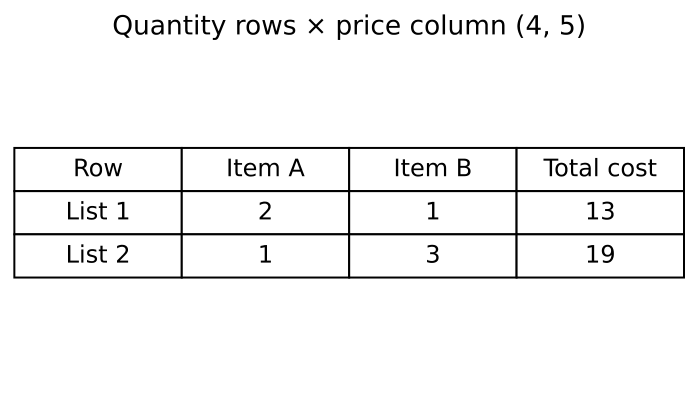
    An argument needs a position, a reason and an explained connection. A counterargument 反论点 tests the position rather than acting as a token objection. Distinguish what a perspective actually says from a stronger claim you find easier to attack. Plan by decision criteria: predictable access, spontaneous access, administration and fairness.

    Original diagram of the worked relationship; read the full wording and qualifications.
    Original diagram of the worked relationship; read the full wording and qualifications.

    Existing worked example: Original issue: should a community learning centre require advance booking for all equipment? Perspective 1: required booking reduces queues and makes schedules predictable. Perspective 2: open access lets people respond to needs that arise unexpectedly. Perspective 3: a combined system should reserve some capacity while preserving walk-in access. A defensible position is to reserve high-demand machines in peak hours and leave a portion available for walk-ins. This agrees with predictability as a goal but limits compulsory booking because urgent repairs cannot always be planned. Model development: “A resident whose only printer fails before an interview needs access that evening. If every slot must have been reserved yesterday, a nominally fair rule prevents an urgent use. Keeping one walk-in slot per hour would protect such access, though staff would need a clear queue rule to avoid arbitrary exceptions.” The example explains the policy’s mechanism and trade-off; it does not establish a universal optimal percentage.

    Complete original context

    Original Writing issue: A community learning centre has a small number of shared tools. Should every use require advance booking?

    Perspective 1: Requiring bookings for all tools makes access predictable and prevents visitors travelling only to find everything occupied.

    Perspective 2: Walk-in access is important because people may discover a need unexpectedly or be unable to book online.

    Perspective 3: A mixed system can reserve some capacity while retaining walk-in access, but staff must explain and administer the rules.

    Write a sustained argument stating your own position, analysing its relationship with all three perspectives, and developing reasons and examples. This is original classroom practice, not an official prompt, timed form or score prediction. No official word minimum is asserted here.

    Independent practice and checked reasoning

    Transfer 1

    Plan a position and explain how it relates to each perspective without describing them as identical.

    Reasoning: A mixed system agrees with P1 that predictable access matters, accepts P2's concern about unexpected needs and online barriers, and develops P3's compromise by specifying capacity, alternative booking routes and review. It rejects P1's universal requirement while avoiding unrestricted queues.

    Transfer 2

    Write the complete argument. Then identify a concession that changes or limits your own recommendation.

    Reasoning: A learning centre should make access predictable without requiring every visitor to predict every need. I would reserve some tool sessions in advance and keep others available to people who arrive without bookings. This position accepts the first perspective's concern about wasted journeys, the second perspective's concern about unexpected needs, and the third perspective's warning that a compromise requires clear administration. Its success would depend on practical rules rather than the word mixed alone.

    Advance booking has an important benefit. Imagine a visitor who needs a particular tool for a supervised project and must travel across town. Knowing that a session is reserved lets the visitor organise transport and bring the right materials. A queue discovered on arrival may waste both the journey and the preparation. The first perspective therefore identifies a real access problem. However, reserving every minute would solve that problem by creating another: someone whose tool breaks unexpectedly might find a room apparently full of reservations, even when several booked users do not arrive. Predictability should be protected, but it should not be confused with maximum use of every tool.

    The second perspective is strongest when it focuses on barriers rather than simply celebrating spontaneity. A visitor may not have reliable internet access, may struggle with an online form, or may discover a missing tool only while working. A rule requiring online reservations would treat these different situations as failures to plan. Yet unrestricted walk-in access also has limits. The same confident regular visitors could take the earliest spaces repeatedly, while a newcomer waits without knowing when a turn will come. Removing bookings would not automatically make access fair. The centre needs a visible queue and staff assistance as well as open spaces.

    A mixed system can address both sets of concerns. For an initial trial, the centre could offer bookable sessions and a clearly marked number of walk-in sessions for each heavily used tool. Reservations should also be possible in person or by telephone, so that online access does not become a condition of participation. A short grace period could release an unused reservation, provided the rule is stated when the booking is made. Visitors would then know both what a reservation protects and when it expires. These are proposed trial rules, not claims that one proportion of spaces suits every centre.

    Administration is a serious objection to this approach. Staff already supervise safe tool use, and a complicated allocation system could distract them. This is where the third perspective places a condition on its own compromise. The centre should start with a simple timetable for only its busiest tools, use one shared booking record, and display the next available session. If staff cannot apply a rule consistently, they should simplify it. Special exceptions that depend on who happens to be at the desk would undermine the fairness the system is intended to improve.

    The trial should be judged by more than the number of reservations. Staff could record unused booked sessions, waiting times, visitors turned away, and requests for help with booking. They should also ask whether newcomers and people without internet access can obtain a turn. If unused reservations remain common, more walk-in capacity may be needed. If long journeys frequently end in disappointment, more reserved capacity may be justified. The recommendation thus concedes that the balance should change with evidence rather than remain fixed for the sake of consistency.

    Shared tools exist to support learning, not to reward either perfect planning or early arrival alone. A clearly explained mixed system preserves useful certainty while leaving room for unexpected needs. Its limits must remain visible: alternative booking routes, manageable staff work, and a review of actual access. Those conditions turn a compromise into a policy that people can understand and the centre can revise.

    Transfer 3

    Evaluate the model's perspective relationships, evidence and qualification. Identify one further local fact needed before implementation.

    Reasoning: The model accepts predictable access from P1 but rejects making it universal; it accepts P2's barriers but tests the fairness of an unrestricted queue; it develops P3's administrative condition. Imagined visitors illustrate mechanisms and are not presented as measured results. The trial balance is explicitly revisable. Actual staffing, demand and safety requirements would be needed before selecting session lengths or capacity proportions. Other defensible positions are acceptable if they analyse the supplied perspectives and support a sustained argument.

    Limits and next use

    Mentioning a perspective without analysing its relationship to your argument is not enough.

    All tasks here are public original practice with authored guidance. They are not official questions or fresh diagnostics. Existing protected tests and mocks remain separate.
    Vocabulary
    English
    counterargument/ˈkaʊntərɑːɡjuːmənt/
    perspective/pəˈspektɪv/
    evidence/ˈevɪdəns/
    argument/ˈɑːɡjuːmənt/
  • 7

    N-real-complex · Real numbers, rational powers and complex arithmetic

    Learning program coming soon

    Handout

    Scope and prerequisites

    ACT framework, February 2026 revision. Original classroom cases are not an official form; preserve the scored/field-test boundaries of each source form.

    • Distinguish rational and irrational numbers without assuming their sums retain type
    • Apply exponent and radical rules on the permitted domain
    • Calculate with complex numbers using i²=-1 and conjugates

    Prerequisites: Distributive law; principal roots; $i^2=-1$.

    Explain and choose the method

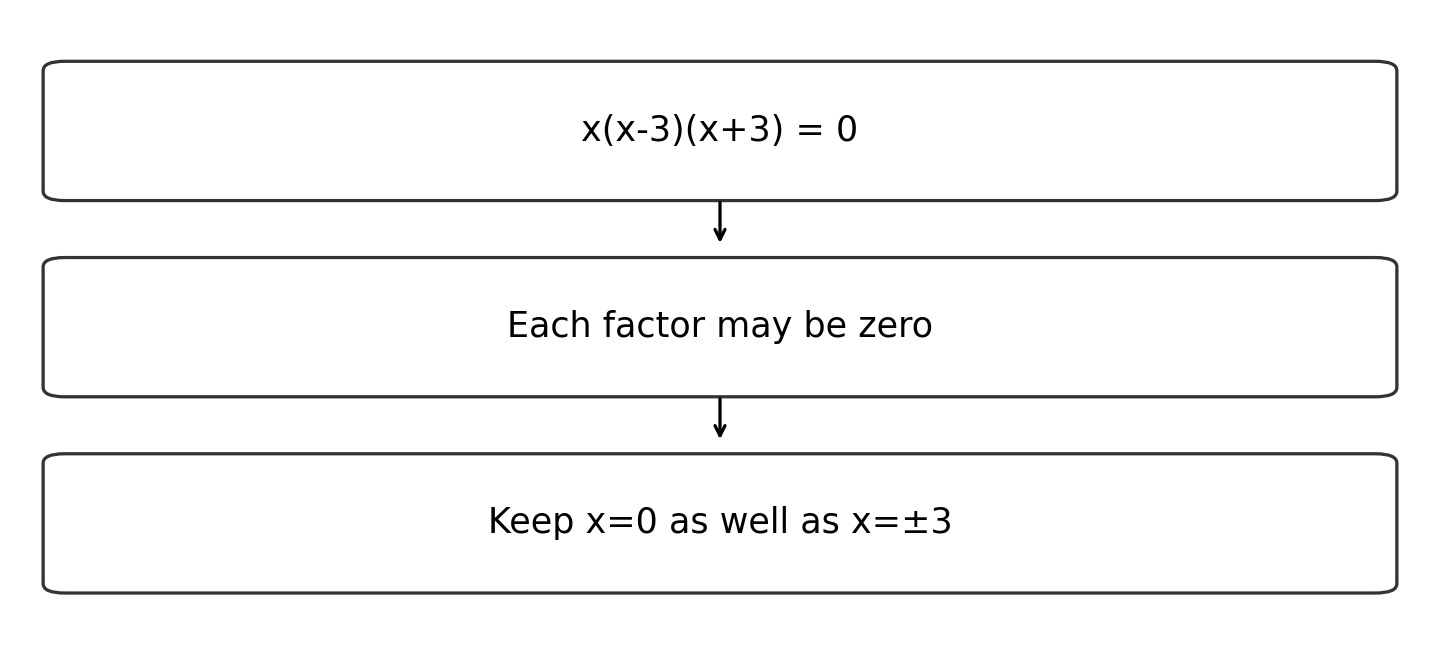
    A rational number is a ratio of integers with nonzero denominator; a terminating or repeating decimal is rational. An irrational real number is not such a ratio. Closure of rational numbers under addition and multiplication does not imply closure of irrational numbers. Exact roots may simplify: √18=3√2 remains irrational, whereas √16=4 is rational.

    For a positive base, a^(m/n) combines an nth root and an integer power. A negative exponent forms a reciprocal and requires a nonzero base. Distinguish √(x²)=|x| from x. When an even root is involved, respect the real domain and the principal nonnegative root. Distribute powers across products, not across sums: (a+b)² includes the cross term.

    Complex arithmetic uses i²=-1. Add real parts and imaginary parts separately, and multiply by distribution before reducing i². To divide by a+bi, multiply numerator and denominator by a-bi; the resulting denominator is a²+b² when the original is nonzero. Complex roots permit solutions to equations such as x²=-9 that have no real roots.

    Enhanced ACT still includes selected advanced topics, and no formula sheet is supplied. Build familiarity with the defining rules rather than guessing from a calculator display. Check whether the question asks for real or complex solutions, an exact radical or a decimal approximation. The local checks here are formative, not an official scored form.

    A complex conjugate 共轭复数 复共轭 changes the imaginary sign. $(a+bi)(a-bi)=a^2+b^2$ for real $a,b$. Thus $(2+i)/(2-i)=(2+i)^2/5=(3+4i)/5$. The denominator is nonzero; distinguish an exact value from its decimal approximation.

    Original diagram of the worked relationship; read the full wording and qualifications.
    Original diagram of the worked relationship; read the full wording and qualifications.

    Existing worked example: 16^(3/4)=2³=8. (2+3i)(1-2i)=2-4i+3i-6i²=8-i. For (1+i)/(1-i), multiplying by 1+i gives (1+i)²/2=2i/2=i. The solutions of x²+9=0 are ±3i; neither is real.

    Complete original context

    Every transfer question states all data it needs.

    Independent practice and checked reasoning

    Transfer 1

    Calculate $(3-2i)/(1+i)$ in form $a+bi$.

    Reasoning: Multiply both parts by $1-i$. Numerator is $(3-2i)(1-i)=3-5i+2i^2=1-5i$. Denominator is 2. The answer is $1/2-(5/2)i$. Multiplying back by $1+i$ returns $3-2i$.

    Transfer 2

    Evaluate $32^{2/5}$ and $\sqrt{(-7)^2}$. Solve $z^2+16=0$ over the complex numbers.

    Reasoning: The fifth root of 32 is 2, so $32^{2/5}=2^2=4$. The principal square root is $|-7|=7$. For the equation, $z^2=-16$ gives $z=4i,-4i$, both nonreal.

    Transfer 3

    Give one example showing that the product of two irrational numbers can be rational, and one where it is irrational.

    Reasoning: $\sqrt2\sqrt2=2$ is rational. $\sqrt2\sqrt3=\sqrt6$ is irrational. Neither closure nor nonclosure for all products follows from the label irrational alone.

    Transfer 4

    Classify $\sqrt{50}$ and $\sqrt{50}\sqrt2$ as rational or irrational. Evaluate $32^{2/5}$ and $2^{-3}$. Use $\sqrt2$ and $-\sqrt2$ to test whether a sum of irrational numbers must be irrational.

    Reasoning: $\sqrt{50}=5\sqrt2$ is irrational, while $\sqrt{50}\sqrt2=\sqrt{100}=10$ is rational. $32^{2/5}=(\sqrt[5]{32})^2=2^2=4$ and $2^{-3}=1/2^3=1/8$. The two irrational numbers sum to zero, which is rational; irrational numbers are not closed under addition. These even-root products use nonnegative real radicands.

    Limits and next use

    Do not infer that two irrational terms must have an irrational sum, distribute a square over addition, or replace √(x²) by x when x can be negative.

    All tasks here are public original practice with authored guidance. They are not official questions or fresh diagnostics. Existing protected tests and mocks remain separate.
    Vocabulary
    English
    complex conjugate/ˈkɒmpleks ˈkɒndʒuːɡeɪt/
    conjugate/ˈkɒndʒuːɡeɪt/
  • 8

    N-vectors-matrices · Vectors and matrices as organised quantitative models

    Learning program coming soon

    Handout

    Scope and prerequisites

    ACT framework, February 2026 revision. Original classroom cases are not an official form; preserve the scored/field-test boundaries of each source form.

    • Add and scale vectors component by component
    • Multiply a matrix 矩阵 and vector with matching dimensions
    • Interpret entries and units in a quantitative model

    Prerequisites: Ordered pairs; Pythagoras; multiplication and addition.

    Explain and choose the method

    A two-dimensional vector records an ordered displacement or another paired quantity. Add corresponding components and multiply both by a scalar. The vector from A to B is B-A, not A-B. Its magnitude is √(u²+v²) in a Euclidean coordinate plane; direction and magnitude are different pieces of information.

    A matrix organises entries into rows and columns. Add only matrices of the same shape, entry by entry. For multiplication, the number of columns in the first factor must equal the number of rows in the second. A 2-by-3 matrix times a 3-by-1 vector produces a 2-by-1 result: each output is one row’s dot product 点积 with the vector.

    Order matters: matrix multiplication is generally not commutative. If A times B is defined, B times A may be undefined or produce a different result. For a row containing item quantities and a column containing unit prices in the same item order, the dot product gives the total cost. A mismatched item order produces a numerically neat but meaningless answer.

    Label each component and unit before calculating. A displacement vector 位移向量 uses distance units, while a matrix entry may be a count, cost or rate 速率. After multiplication, interpret the output’s units. ACT problems may supply the operation definition; follow that definition rather than assuming an unfamiliar symbol always means ordinary multiplication.

    A matrix uses labelled rows and columns. A quantity row $(2,3)$ and price column $(4,5)^T$ give cost $2(4)+3(5)=23$. The inner dimensions must agree before a matrix product exists. A displacement vector from $A$ to $B$ is $B-A$.

    Original worked example from existing native teaching; transfer tasks use their own data.
    Original worked example from existing native teaching; transfer tasks use their own data.

    Existing worked example: Displacements (3,4) and (-1,2) sum to (2,6); the first has magnitude 5. Two shopping rows (2,1) and (1,3), with prices (4,5), give costs 2·4+1·5=13 and 1·4+3·5=19. The matrix [[2,1],[1,3]] times column [4,5] is column [13,19]. Entries represent counts times price per item.

    Complete original context

    Every transfer question states all data it needs.

    Independent practice and checked reasoning

    Transfer 1

    Points A and B in metres are $(1,-2)$ and $(7,6)$. Find the displacement A to B and its magnitude. Then find the endpoint after adding displacement $(-3,2)$ metres to B.

    Reasoning: $\overrightarrow{AB}=B-A=(6,8)\,\mathrm{m}$. Magnitude $|\overrightarrow{AB}|=\sqrt{6^2+8^2}\,\mathrm{m}=10\,\mathrm{m}$. New endpoint $B+(-3,2)=(4,8)$ metres. Direction must not be reversed.

    Transfer 2

    A shop's two orders have quantity rows $(3,2)$ and $(1,4)$ for pens and notebooks. Prices are 2 and 7 yuan respectively. Give the matrix product and both order costs.

    Reasoning: $Q=\begin{pmatrix}3&2\\1&4\end{pmatrix}$, $p=\begin{pmatrix}2\\7\end{pmatrix}$ yuan per item. $Qp=\begin{pmatrix}3(2)+2(7)\\1(2)+4(7)\end{pmatrix}=\begin{pmatrix}20\\30\end{pmatrix}$ yuan. The item order must match the price order.

    Transfer 3

    A is 2 by 3 and B is 3 by 4. State the size of AB and whether BA is defined.

    Reasoning: AB has matching inner dimension 3 and outer dimensions 2 by 4. BA would require 4=2, so it is undefined. Reversing a product is not harmless.

    Limits and next use

    Keep row/column shape and item order explicit. A vector’s magnitude is not the sum of its components.

    All tasks here are public original practice with authored guidance. They are not official questions or fresh diagnostics. Existing protected tests and mocks remain separate.
    Vocabulary
    English
    displacement vector/dɪˈspleɪsmənt ˈvektə/
    dot product/dɒt ˈprɒdʌkt/
    matrix/ˈmeɪtrɪks/
    rate/reɪt/
  • 9

    A-polynomial · Linear, quadratic and polynomial relationships

    Learning program coming soon

    Handout

    Scope and prerequisites

    ACT framework, February 2026 revision. Original classroom cases are not an official form; preserve the scored/field-test boundaries of each source form.

    • Choose equivalent expanded, factored or vertex forms for a task
    • Solve linear and polynomial equations using structure
    • Determine quadratic inequality regions from signs rather than roots alone

    Prerequisites: Collect like terms; substitute ordered pairs; signed arithmetic.

    Explain and choose the method

    Translate relationships into expressions before manipulating them. A fixed fee plus a per-unit charge is an affine linear model, while a product of dimensions can create a quadratic. An equivalent form should preserve the original expression on its domain. Factor common terms and recognise identities before expanding every product.

    A linear equation can have one, no or infinitely many solutions after simplifying; check zero coefficients before dividing. Multiplying or dividing an inequality by a negative reverses its direction. A polynomial product equals zero when at least one factor is zero. Keep all factors, including an extracted x, to avoid losing a zero root.

    A quadratic’s factored form exposes roots and its vertex form 顶点式 exposes an extremum. For an inequality, order the real roots and test the sign in each interval. Include boundaries only for ≤ or ≥. A parabola 抛物线 opening upward is negative between two distinct real roots and positive outside them.

    Use substitution into the original relation to check candidate values. An expanded coefficient question may require combining several contributions to the same power. A degree-three polynomial need not require a general cubic formula: a common factor or known root can reduce it to simpler factors. Choose the method based on structure.

    An identity holds for every permitted input. Start with $ax+b=cx+d$. Collect terms: $(a-c)x=d-b$. Inspect $a-c$ before dividing. If $a=c$ and $b=d$, every real input works. If only $a=c$, no input works. Otherwise $x=(d-b)/(a-c)$ gives one solution.

    Original diagram of the worked relationship; read the full wording and qualifications.
    Original diagram of the worked relationship; read the full wording and qualifications.

    Existing worked example: x²-5x+6=(x-2)(x-3), so x²-5x+6<0 gives 2<x<3. x³-4x=x(x-2)(x+2), giving roots -2,0,2. The expression 2(x-3)²+5 has minimum 5 at x=3. In (2x+1)(x-4), the x coefficient is -8+1=-7.

    Complete original context

    Every transfer question states all data it needs.

    Independent practice and checked reasoning

    Transfer 1

    Solve $x^3-9x=0$ and $(x+2)(x-5)\ge0$. Explain why dividing the cubic by $x$ at the start loses a solution.

    Reasoning: Factor $x(x-3)(x+3)=0$, giving $-3,0,3$. Dividing by $x$ improperly removes the allowed zero root. For the inequality, roots are $-2,5$; the product is nonnegative outside the roots, including endpoints, so $x\le-2$ or $x\ge5$.

    Transfer 2

    Write $2x^2-12x+23$ in vertex form and state its minimum. Find the coefficient of $x$ in $(2x-3)(x+4)$.

    Reasoning: Completing the square gives $2(x-3)^2+5$, with minimum 5 at $x=3$. Expansion of the product is $2x^2+5x-12$, so the coefficient is 5.

    Transfer 3

    A printer charges 25 yuan to set up a job and 0.40 yuan per page. Write the total charge for $n$ pages and solve the 65-yuan budget inequality for whole pages. Compare this with the area expression for a rectangle with sides $x$ and $x+3$ metres.

    Reasoning: $C=f+pn=25\,\mathrm{yuan}+(0.40\,\mathrm{yuan/page})(n\,\mathrm{pages})$. Budget $25+0.40n\le65$ gives $0\le n\le100$, with integer $n$. The charge is affine linear in $n$. The rectangle has $A=x(x+3)=x^2+3x$ square metres for numerical lengths in metres and $x>0$; multiplication of two variable lengths creates a quadratic, rather than a fixed fee plus a rate 速率.

    Limits and next use

    Do not omit an extracted factor, include a strict-inequality boundary, or report a vertex x-coordinate when the question asks for the minimum value.

    All tasks here are public original practice with authored guidance. They are not official questions or fresh diagnostics. Existing protected tests and mocks remain separate.
    Vocabulary
    English
    vertex form/ˈvɜːteks fɔːm/
    parabola/pəˈræbələ/
    rate/reɪt/
  • 10

    A-radical-systems · Rational equations, radical branches and systems

    Learning program coming soon

    Handout

    Scope and prerequisites

    ACT framework, February 2026 revision. Original classroom cases are not an official form; preserve the scored/field-test boundaries of each source form.

    • Record denominator and radical restrictions before solving
    • Check transformed-equation candidates in the original
    • Find and interpret simultaneous solutions or allowed regions

    Prerequisites: Factorisation; substitution; domain restrictions.

    Explain and choose the method

    For rational expressions, identify denominator zeros before cancelling factors or multiplying an equation by a denominator. Simplification may remove a visible factor while its original restriction remains. Cancel whole factors, not selected terms in an addition.

    Isolate a square root and respect its nonnegative value before squaring. Squaring preserves solutions but can add candidates, so substitute each candidate into the original. The same caution applies to multiplying by an expression that might be zero. A value that satisfies a transformed polynomial but fails the source is extraneous.

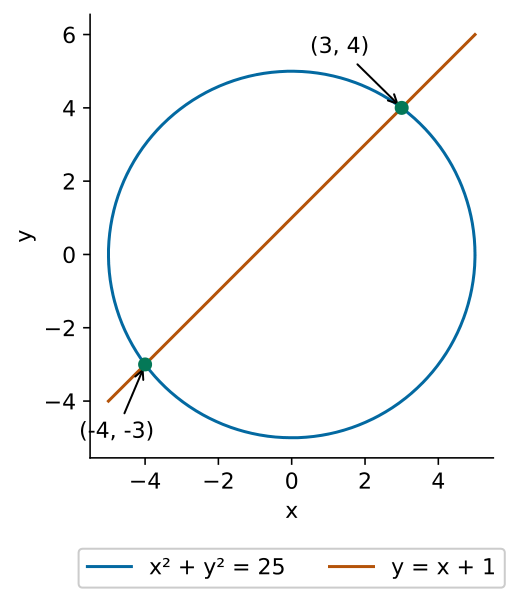
    A system requires the same ordered pair to satisfy every equation. Substitute a line into a circle or parabola 抛物线, solve the resulting quadratic and recover the second coordinate. Linear systems may have one intersection, no intersection or coincident lines. Do not confuse two algebraic roots with two separate systems.

    For systems of inequalities, each condition supplies an allowed region and the solution is their intersection. A point on a strict boundary is excluded even if it satisfies the other inequality. Verify a proposed point by substituting into each original inequality, including its equality sign.

    A candidate root 候选根 must satisfy the original equation. In $\sqrt{x+6}=x$, the right side must be nonnegative. Squaring gives $x^2-x-6=0$, so candidates are $3,-2$. Only $3$ survives the original check: $\sqrt9=3$.

    Original worked example from existing native teaching; transfer tasks use their own data.
    Original worked example from existing native teaching; transfer tasks use their own data.

    Existing worked example: √(x+6)=x implies x≥0. Squaring gives x²-x-6=0 with candidates 3 and -2; only 3 works. For x²+y²=25 and y=x+1, substitution gives x²+x-12=0, hence (3,4) and (-4,-3). (x²-4)/(x-2) simplifies to x+2 for x≠2, preserving the restriction.

    Complete original context

    Every transfer question states all data it needs.

    Independent practice and checked reasoning

    Transfer 1

    Solve simultaneously $x^2+y^2=25$ and $y=x-1$. Check each ordered pair in both equations.

    Reasoning: Substitute to get $x^2+(x-1)^2=25$, or $x^2-x-12=0$. Roots are $4,-3$, giving $(4,3)$ and $(-3,-4)$. Both give squared sum 25 and satisfy $y=x-1$.

    Transfer 2

    Solve $\sqrt{3x+4}=x$ and describe all points satisfying $y\ge x+1$ and $y<4-x$.

    Reasoning: Squaring with $x\ge0$ gives $(x-4)(x+1)=0$; only $x=4$ works. The region is on/above $y=x+1$ and below $y=4-x$. It exists only when $x+1<4-x$, so $x<3/2$; their meeting point is excluded.

    Transfer 3

    Simplify $F(x)=(x^2-4x)/(x^2-16)$. State every original restriction and explain why $F$ is not identical to $x/(x+4)$ on that latter formula's whole domain.

    Reasoning: Factor numerator $x(x-4)$ and denominator $(x-4)(x+4)$. The original domain excludes $x=4,-4$. Cancellation gives $F(x)=x/(x+4)$ for $x\ne4,-4$. The latter formula alone permits $4$, where it gives $1/2$, while $F(4)$ is undefined.

    Limits and next use

    Restrictions survive simplification. In a simultaneous system, check both coordinates in every original relation.

    All tasks here are public original practice with authored guidance. They are not official questions or fresh diagnostics. Existing protected tests and mocks remain separate.
    Vocabulary
    English
    candidate root
    parabola/pəˈræbələ/
  • 11

    F-compose · Functions, composition, transformations and inverses

    Learning program coming soon

    Handout

    Scope and prerequisites

    ACT framework, February 2026 revision. Original classroom cases are not an official form; preserve the scored/field-test boundaries of each source form.

    • Evaluate and convert between function rules, tables and graphs
    • Track input order and domain through composition 复合函数
    • Find an inverse after choosing a one-to-one 一一对应 domain

    Prerequisites: Function notation; substitution; equation solving.

    Explain and choose the method

    A function gives one output for each allowed input. A graph passing a vertical line at two different output points is not a function of x. Domain lists allowed inputs; range lists attained outputs. Convert a table to a rule only when the relationship is supported, and interpret each variable’s role.

    In f(g(x)), the inner function g acts first and its output must be in f’s domain. For f(u)=1/(u-1) and g(x)=x²+1, composition gives 1/x² and excludes x=0. Domain checking belongs to the original functions as well as the simplified result.

    An output change f(x)+k shifts vertically by k; f(x-h) shifts right by h. An outside multiplier changes output scale, while an inside multiplier changes how quickly the input reaches old points. Identify a known point to verify the transformation 转化 instead of guessing direction from a sign.

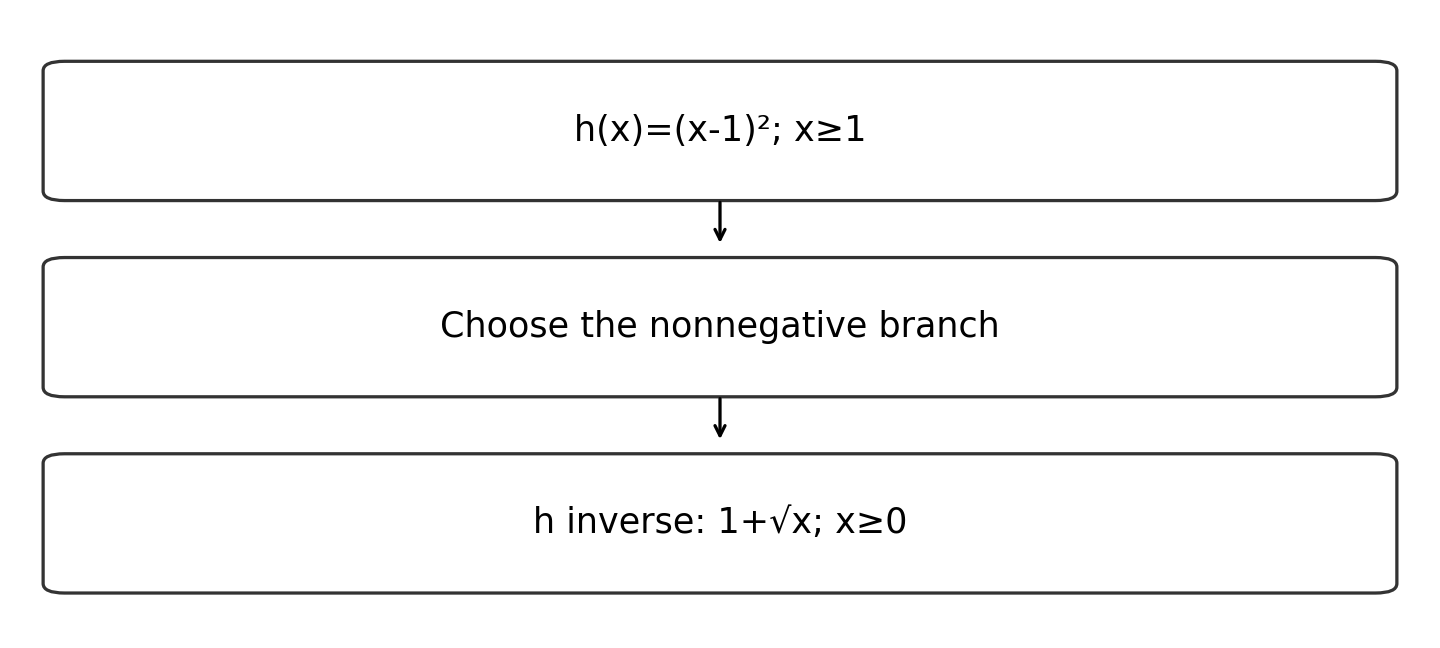
    An inverse exchanges input and output and requires a one-to-one relationship on the chosen domain. Solve y=f(x) for x, then exchange names. A quadratic must usually be restricted to one side of its vertex. The inverse function f⁻¹ is not the reciprocal 1/f. Check composition in both directions on the allowed domain.

    Composition applies the inside rule first. If $f(u)=1/(u-2)$ and $g(x)=x^2+2$, $f(g(x))=1/x^2$, with $x\ne0$. An inverse reverses input and output on a one-to-one domain. Restrict $h(x)=(x-1)^2$ to $x\ge1$ before taking $h^{-1}(x)=1+\sqrt{x}$.

    Original diagram of the worked relationship; read the full wording and qualifications.
    Original diagram of the worked relationship; read the full wording and qualifications.

    Existing worked example: f(x)=2x+3 and g(x)=x² give f(g(x))=2x²+3, but g(f(x))=(2x+3)². For h(x)=(x-2)² restricted to x≥2, the inverse is 2+√x with domain x≥0. A vertical shift of h by 4 has vertex (2,4); the unrestricted quadratic would not have a single-valued inverse.

    Complete original context

    Every transfer question states all data it needs.

    Independent practice and checked reasoning

    Transfer 1

    Let $f(u)=1/(u-3)$ and $g(x)=x^2+3$. Find $f(g(x))$ with domain. Find $g(f(4))$ and explain why these compositions differ.

    Reasoning: $f(g(x))=1/(x^2+3-3)=1/x^2$, excluding $x=0$. For the other order, $f(4)=1$ and $g(1)=4$. Composition order changes both operation and possibly domain; $f(g(4))=1/16$ is different.

    Transfer 2

    Restrict $h(x)=(x+2)^2$ to $x\le-2$. Find its inverse, including domain and range. Explain why the positive-root branch is wrong.

    Reasoning: Solve $y=(x+2)^2$ with $x+2\le0$ to get $x=-2-\sqrt y$. Thus $h^{-1}(x)=-2-\sqrt x$, domain $x\ge0$, range $y\le-2$. The plus branch returns values outside the chosen original domain.

    Transfer 3

    The graph of $f(x)=x^2$ is changed to $g(x)=3f(x+4)-2$. Find its vertex and range, checking one mapped point.

    Reasoning: $g(x)=3(x+4)^2-2$ has vertex $(-4,-2)$ and range $y\ge-2$. Old point $(1,1)$ maps to $(-3,1)$ because $3(1)-2=1$; substitution confirms $g(-3)=1$.

    Limits and next use

    Preserve composition order and the restricted inverse branch. Superscript -1 in function notation does not mean a reciprocal.

    All tasks here are public original practice with authored guidance. They are not official questions or fresh diagnostics. Existing protected tests and mocks remain separate.
    Vocabulary
    English
    transformation/trænsfɔːˈmeɪʃn/
    composition/ˌkɒmpəˈzɪʃn/
    one-to-one/wʌn tuː wʌn/
  • 12

    F-series-logs · Sequences, finite sums, exponentials and logarithms

    Learning program coming soon

    Handout

    Scope and prerequisites

    ACT framework, February 2026 revision. Original classroom cases are not an official form; preserve the scored/field-test boundaries of each source form.

    • Distinguish arithmetic difference from geometric ratio
    • Find a term or finite sum while keeping indexing consistent
    • Convert logarithmic equations to exponential form on the valid domain

    Prerequisites: Index notation; exponent rules; finite sequences.

    Explain and choose the method

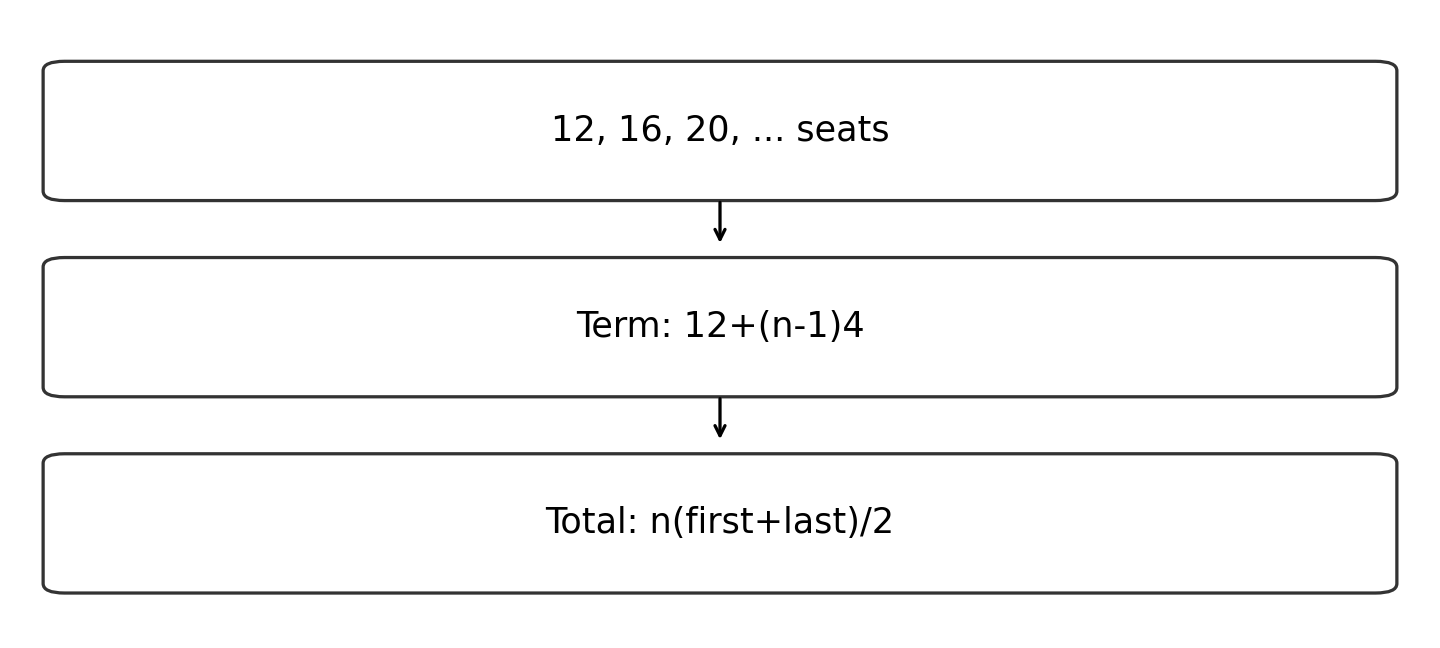
    An arithmetic sequence 等差数列 has constant difference d: aₙ=a₁+(n-1)d. Its finite sum is n(a₁+aₙ)/2. A geometric sequence 等比数列 has constant ratio r: aₙ=a₁r^(n-1). For r≠1, a finite sum is a₁(1-rⁿ)/(1-r); when r=1 it is simply n a₁. Match the requested term or total.

    An exponential model A b^t represents multiplication by b per stated time unit. A percentage growth r uses factor 1+r; repeated changes multiply factors rather than adding percentages. If doubling takes several time units, divide t by that interval in the exponent.

    For base b>0 with b≠1, log_b(a)=c means b^c=a and requires a>0. Solve a logarithmic equation by translating it to an exponential relationship, then check the argument 论证. Logarithms of products add under valid positive arguments; logarithms do not distribute over addition.

    Use exact powers when available. ACT may test a simple logarithmic relationship without requiring numerical logarithm 对数 tables. A calculated approximation must still respect the question’s representation and domain. Keep a sequence’s index, an exponential model’s time and a logarithm’s argument conceptually separate.

    Arithmetic sequence : $a_n=a_1+(n-1)d$. Its sum is $S_n=n(a_1+a_n)/2$. Geometric sequence : $a_n=a_1r^{n-1}$ and $S_n=a_1(1-r^n)/(1-r)$ for $r\ne1$. A logarithm reverses exponentiation: $\log_b a=c$ means $b^c=a$, with $a>0$, $b>0$, $b\ne1$.

    Original diagram of the worked relationship; read the full wording and qualifications.
    Original diagram of the worked relationship; read the full wording and qualifications.

    Existing worked example: Arithmetic 4,7,10,… has a₅=16 and sum of first five=5(4+16)/2=50. Geometric 3,6,12,24 has four-term sum 45. log₂(x-1)=4 gives x-1=16, so x=17, which satisfies x>1. A population 50·2^(t/3) reaches 200 after six time units.

    Complete original context

    Every transfer question states all data it needs.

    Independent practice and checked reasoning

    Transfer 1

    Seats in successive rows number 12,16,20,… . Find the eighth row and the total in the first eight rows. State the model assumption.

    Reasoning: Constant difference is 4 seats per row. $a_8=a_1+7d=12+7(4)=40$ seats. $S_8=8(a_1+a_8)/2=8(12+40)/2=208$ seats. This assumes the same four-seat increment through all eight rows.

    Transfer 2

    A geometric sequence starts 5,15,45,… . Find its fifth term and sum of the first five terms. Explain what changes if the ratio is 1.

    Reasoning: $a_5=a_1r^4=5(3)^4=405$. $S_5=a_1(1-r^5)/(1-r)=5(1-243)/(1-3)=605$. When $r=1$, the fraction has zero denominator and the correct sum is $na_1$, here 25 for five identical terms.

    Transfer 3

    Solve $\log_2(x-3)=5$ and explain why $\log_2(x+3)$ cannot generally be split into $\log_2x+\log_23$.

    Reasoning: The domain requires $x>3$. Exponential form gives $x-3=32$, so $x=35$ and the argument is positive. The sum of logs corresponds to the product $3x$, not $x+3$; at $x=1$, the proposed equality would equate 2 with $\log_23$.

    Transfer 4

    A culture model starts with 120 cells and grows by a factor of 1.5 every two hours. Write $N(t)$ for hours $t$, find $N(4)$, and distinguish factor from percentage growth.

    Reasoning: $N(t)=120(1.5)^{t/2}$ cells. $N(4)=120(1.5)^2=270$ cells. The growth is 50% per two hours, not 150%; the four-hour factor is 2.25. The hourly factor would be $\sqrt{1.5}$.

    Limits and next use

    Do not use n rather than n-1 for the nth term, confuse a finite sum with its last term, or expand log(a+b) as log a + log b.

    All tasks here are public original practice with authored guidance. They are not official questions or fresh diagnostics. Existing protected tests and mocks remain separate.
    Vocabulary
    English
    arithmetic sequence/əˈrɪθmətɪk ˈsiːkwəns/
    geometric sequence/ˌdʒiːəʊˈmetrɪk ˈsiːkwəns/
    logarithm/ˈlɒɡərɪθəm/
    argument/ˈɑːɡjuːmənt/
  • 13

    F-trigonometry · Trigonometric graphs, identities and general triangles

    Learning program coming soon

    Handout

    Scope and prerequisites

    ACT framework, February 2026 revision. Original classroom cases are not an official form; preserve the scored/field-test boundaries of each source form.

    • Interpret amplitude 振幅, period and vertical shift in a sinusoidal rule
    • Use unit-circle signs and basic identities
    • Choose a sine, cosine or area relation for a general triangle

    Prerequisites: Radians; right-triangle ratios; unit-circle coordinates.

    Explain and choose the method

    For a right triangle, sin is opposite/hypotenuse, cos adjacent/hypotenuse and tan opposite/adjacent relative to a chosen angle. Similar triangles explain why these ratios depend on angle rather than size. On the unit circle, coordinates are (cos θ,sin θ), extending the ratios to other quadrants with appropriate signs.

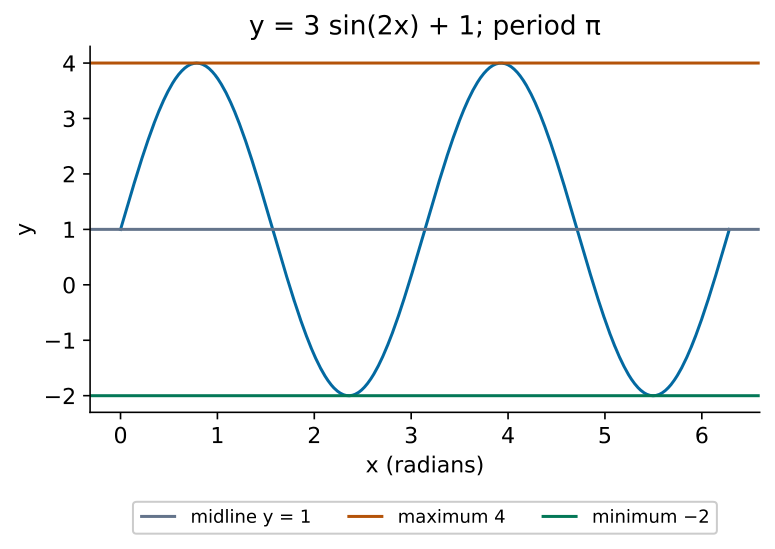
    sin²θ+cos²θ=1 and tan θ=sin θ/cos θ when cos θ≠0. For y=A sin(Bx)+D with radian x, amplitude is |A|, period 2π/|B| and midline D. A negative A reflects the wave; D shifts it vertically. Check whether the input is in radians or degrees before using a graph interval.

    For a general triangle, the cosine rule 余弦定理 c²=a²+b²-2ab cos C uses the included angle 夹角 C between a and b. The sine rule compares each side with the sine of its opposite angle. Area is ab sin C/2 when two sides and their included angle are known. Choose the relationship matching the supplied information.

    Do not infer a right angle from the sketch. A sine-based equation may allow more than one angle in a permitted interval; retain the quadrant information and any triangle sum condition. Keep amplitude distinct from total peak-to-trough distance, which is twice the amplitude.

    Amplitude is half the peak-to-trough distance. In $y=A\sin(Bx)+D$, it is $|A|$; radian period is $2\pi/|B|$. For a non-right triangle, match known sides and included angle before selecting the cosine rule . $c^2=a^2+b^2-2ab\cos C$.

    Original worked example from existing native teaching; transfer tasks use their own data.
    Original worked example from existing native teaching; transfer tasks use their own data.

    Existing worked example: y=3 sin(2x)+1 has amplitude 3, period π and values between -2 and 4. A triangle with sides 5 and 7 around a 60° angle has third side √(25+49-70·1/2)=√39 and area 35√3/4. At 150°, sine is 1/2 and cosine -√3/2.

    Complete original context

    Every transfer question states all data it needs.

    Independent practice and checked reasoning

    Transfer 1

    For radian input $y=-4\sin(2x)+3$, give amplitude, period, range and value at $x=\pi/4$.

    Reasoning: Amplitude is 4, period $2\pi/2=\pi$, range $-1\le y\le7$. At $x=\pi/4$, $y=-4\sin(\pi/2)+3=-1$. The negative coefficient reflects the wave; it does not make amplitude negative.

    Transfer 2

    A triangle has sides 6 cm and 10 cm enclosing 60°. Find its third side and area without assuming it is right-angled.

    Reasoning: $c^2=a^2+b^2-2ab\cos C=(6\,\mathrm{cm})^2+(10\,\mathrm{cm})^2-2(6\,\mathrm{cm})(10\,\mathrm{cm})\cos60^\circ=76\,\mathrm{cm^2}$, so $c=2\sqrt{19}\,\mathrm{cm}$. $A=ab\sin C/2=(6\,\mathrm{cm})(10\,\mathrm{cm})\sin60^\circ/2=15\sqrt3\,\mathrm{cm^2}$.

    Transfer 3

    Find every angle in $0^\circ\le\theta<360^\circ$ with $\sin\theta=1/2$. For each, give cosine and tangent.

    Reasoning: Angles are 30 and 150 degrees. Cosines are $\sqrt3/2$ and $-\sqrt3/2$; tangents are $1/\sqrt3$ and $-1/\sqrt3$. Sine is positive in quadrants I and II, so one acute answer would be incomplete.

    Transfer 4

    A right triangle has legs 9 and 12 cm. Find the hypotenuse and sine/cosine of the angle opposite 9 cm. A different triangle has angles 30° and 45° and side 8 cm opposite 30°. Find the side opposite 45°, explaining why the sine rule fits.

    Reasoning: $c=\sqrt{(9\,\mathrm{cm})^2+(12\,\mathrm{cm})^2}=15\,\mathrm{cm}$. Thus $\sin\theta=9/15=3/5$ and $\cos\theta=12/15=4/5$; their squares sum to 1. In the second triangle a known opposite side-angle pair permits $b/\sin45^\circ=(8\,\mathrm{cm})/\sin30^\circ$. Hence $b=(8\,\mathrm{cm})(\sqrt2/2)/(1/2)=8\sqrt2\,\mathrm{cm}$. This triangle is not assumed right-angled; its third angle is 105°.

    Limits and next use

    State angle units and identify the included angle. The highest value is midline plus amplitude, not the amplitude alone.

    All tasks here are public original practice with authored guidance. They are not official questions or fresh diagnostics. Existing protected tests and mocks remain separate.
    Vocabulary
    English
    included angle/ɪnˈkluːdɪd ˈæŋɡl/
    cosine rule/ˈkəʊsaɪn ruːl/
    amplitude/ˈæmplɪtjuːd/
  • 14

    G-plane · Plane transformations, coordinate reasoning and proof

    Learning program coming soon

    Handout

    Scope and prerequisites

    ACT framework, February 2026 revision. Original classroom cases are not an official form; preserve the scored/field-test boundaries of each source form.

    • Transform coordinates while distinguishing rigid motions 刚体变换 from dilation
    • Use distance, midpoint and slope as geometric evidence 证据
    • Use valid congruence 全等 and angle relationships rather than a diagram’s appearance

    Prerequisites: Coordinate differences; triangle congruence; angles on parallel lines.

    Explain and choose the method

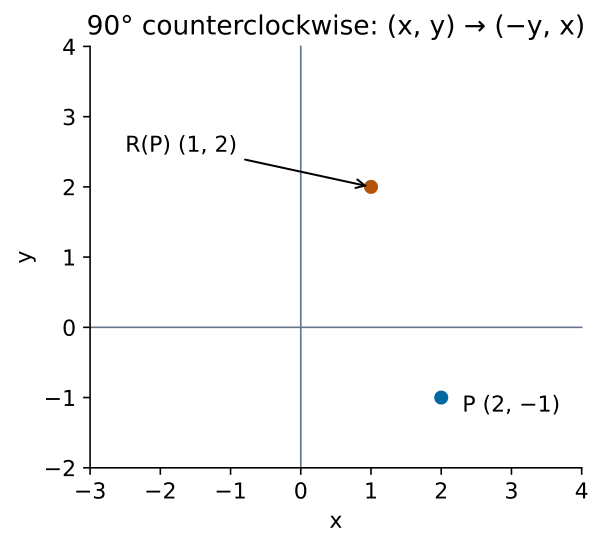
    A translation 翻译 adds a displacement to each point; reflection across the x-axis sends (x,y) to (x,-y). A 90° counterclockwise rotation around the origin sends (x,y) to (-y,x). These rigid motions preserve lengths and angles. Dilation by factor k about the origin scales coordinates and lengths by k when k is positive, preserving shape but generally changing size.

    Distance between two points follows the Pythagorean theorem: square the coordinate differences, add and take the root. The midpoint averages each coordinate. Slope compares vertical and horizontal change; perpendicular nonvertical slopes have product -1. Vertical and horizontal lines require separate treatment rather than division by zero.

    A geometric argument 论证 starts from stated or marked conditions. Vertical angles are equal; parallel lines give corresponding and alternate-angle relationships. Triangle angles sum to 180°. SSS, SAS and ASA/AAS can establish congruence with proper correspondence, while two equal angles establish similarity 相似 but not equal size.

    Construction reasoning uses a compass to transfer lengths and draw equal-radius arcs. An intersection of equal-distance arcs can locate a perpendicular bisector 垂直平分线; it is not a guessed midpoint from a sketch. Coordinate evidence can support a proof, but one specially chosen picture does not establish a general statement for every triangle.

    Rigid motions preserve lengths and angles. A 90-degree anticlockwise rotation sends $(x,y)$ to $(-y,x)$ about the origin. Distance is $d=\sqrt{(x_2-x_1)^2+(y_2-y_1)^2}$. Equal angles establish similarity , but congruence also fixes size.

    Original worked example from existing native teaching; transfer tasks use their own data.
    Original worked example from existing native teaching; transfer tasks use their own data.

    Existing worked example: Point (2,-1) translated by (3,4) becomes (5,3); rotated 90° counterclockwise about the origin it becomes (1,2). Between (1,2) and (7,10), distance is √(6²+8²)=10 and midpoint (4,6). Two triangles with matching side lengths 3,4,5 are congruent by SSS; triangles with equal angles may instead differ by scale.

    Complete original context

    Every transfer question states all data it needs.

    Independent practice and checked reasoning

    Transfer 1

    Rotate A = $(2,-3)$ by 90° anticlockwise about the origin, then translate by $(4,1)$. Reverse the order and compare endpoints.

    Reasoning: Rotate first to $(3,2)$, then translate to $(7,3)$. Translate first to $(6,-2)$, then rotate to $(2,6)$. The endpoints differ, so transformation 转化 order matters.

    Transfer 2

    A = $(-1,2)$ and B = $(5,10)$ are endpoints of a segment. Find its length, midpoint and perpendicular-bisector equation.

    Reasoning: $d=\sqrt{(5+1)^2+(10-2)^2}=10$. Midpoint $M=(({-1}+5)/2,(2+10)/2)=(2,6)$. Segment slope is $8/6=4/3$, so perpendicular slope is $-3/4$. The bisector is $y-6=-(3/4)(x-2)$.

    Transfer 3

    Two triangles have angles 40°,60°,80°. One has longest side 9 cm; the other 15 cm. State what is proved and the ratio of their areas.

    Reasoning: The triangles are similar by equal angles, not congruent because corresponding longest sides differ. Length ratio is $15/9=5/3$ and larger-to-smaller area ratio is $25/9$.

    Transfer 4

    Describe a compass-and-straightedge construction of the perpendicular bisector of segment AB. Give a reason valid for every constructed point, and distinguish it from measuring one diagram. Then explain what SSS proves for triangles with corresponding side lengths 3,4,5 cm.

    Reasoning: Use the same compass radius, greater than half AB, to draw arcs centred at A and B meeting at P and Q on opposite sides. Draw PQ. PA=PB and QA=QB by equal radii. Thus both P and Q lie on the locus equidistant from A and B; PQ is the perpendicular bisector. Equivalently use congruent triangles and the common chord to establish perpendicularity and bisection. A ruler reading on one picture does not prove the general locus. SSS proves the two stated triangles congruent, fixing size as well as shape; Pythagoras also shows these particular triangles are right-angled.

    Transfer 5

    Two parallel lines are cut by a transversal. One corresponding angle is 68°. Find its matching corresponding angle and the adjacent angle on the second line. Explain which given condition justifies each step.

    Reasoning: Parallelism gives the matching corresponding angle 68°. The adjacent pair forms a straight angle, so the other is 180°−68°=112°. Equal corresponding angles require the stated parallel lines; the straight-angle sum uses adjacency on one line. A similar-looking sketch without parallelism would not justify the first equality.

    Limits and next use

    Follow the specified centre and order of transformations. Do not use a visually parallel or perpendicular pair as a stated condition.

    All tasks here are public original practice with authored guidance. They are not official questions or fresh diagnostics. Existing protected tests and mocks remain separate.
    Vocabulary
    English
    perpendicular bisector/ˌpɜːpənˈdɪkjʊlə baɪˈsektə/
    rigid motions
    translation/trænˈsleɪʃn/
    similarity/ˌsɪmɪˈlærɪti/
    congruence/ˈkɒŋɡruːəns/
    evidence/ˈevɪdəns/
    argument/ˈɑːɡjuːmənt/
    transformation/trænsfɔːˈmeɪʃn/
  • 15

    G-conics · Conics, circle relationships and geometric measurement

    Learning program coming soon

    Handout

    Scope and prerequisites

    ACT framework, February 2026 revision. Original classroom cases are not an official form; preserve the scored/field-test boundaries of each source form.

    • Identify and interpret standard circle, ellipse 椭圆, parabola 抛物线 and hyperbola 双曲线 forms
    • Use circle angle, tangent and secant 割线 relationships under their conditions
    • Calculate area, surface area or volume with the correct dimension and units

    Prerequisites: Completing squares; squared semiaxes 半轴; circle geometry; volume units.

    Explain and choose the method

    A circle has form (x-h)²+(y-k)²=r². An ellipse uses two positive squared terms divided by squared semiaxes; a hyperbola has a difference of such terms. A parabola has one squared coordinate in its standard aligned form. In y²=4px, the vertex is the origin and the focus is (p,0); read the sign and axis before interpreting direction.

    For (x-1)²/9+(y+2)²/4=1, centre is (1,-2), horizontal semiaxis 3 and vertical semiaxis 2. Complete the square when the centre is hidden in an expanded circle. An equation’s coefficients and signs distinguish conic types; a rough sketch does not supply missing algebraic information.

    A tangent is perpendicular to the radius at contact. An inscribed angle is half the central angle subtending the same arc. For two secants from the same exterior point, outside segment times whole secant is equal for both; a tangent length squared equals that product. Whole length includes the outside portion, so do not multiply outside and inside alone.

    Separate boundary measures from space measures. Circle circumference is 2πr and area πr²; cylinder volume is πr²h; cone volume is πr²h/3; sphere volume is 4πr³/3. Surface area sums exposed faces. If all corresponding lengths scale by k, area scales by k² and volume by k³; changing only one dimension needs the original formula.

    An ellipse $(x-h)^2/a^2+(y-k)^2/b^2=1$ has centre $(h,k)$. Semiaxes are square roots of the positive denominators. A parabola $y^2=4px$ has focus $(p,0)$ and directrix $x=-p$. Distinguish these equations from a hyperbola with a difference of squares.

    Original worked example from existing native teaching; transfer tasks use their own data.
    Original worked example from existing native teaching; transfer tasks use their own data.

    Existing worked example: The ellipse (x-1)²/9+(y+2)²/4=1 has horizontal endpoints (-2,-2) and (4,-2). y²=8x has p=2 and focus (2,0). Secants with outside/whole lengths 3/12 and 4/9 both have product 36, so a tangent from the same point has length 6. A cone radius 3, height 8 has volume 24π.

    Complete original context

    Every transfer question states all data it needs.

    Independent practice and checked reasoning

    Transfer 1

    For $(x+2)^2/25+(y-1)^2/9=1$, state centre, horizontal and vertical semiaxes, and four axis endpoints. For $y^2=-12x$, state vertex and focus.

    Reasoning: Centre is $(-2,1)$, semiaxes 5 and 3, endpoints $(-7,1),(3,1),(-2,-2),(-2,4)$. In the parabola, $4p=-12$, so $p=-3$; vertex $(0,0)$, focus $(-3,0)$.

    Transfer 2

    From one exterior point a tangent has length 6 cm. A secant has outside segment 4 cm. Find its whole and inside lengths.

    Reasoning: Use tangent–secant relation $t^2=ew$. Rearrange $w=t^2/e=(6\,\mathrm{cm})^2/(4\,\mathrm{cm})=9\,\mathrm{cm}$. Inside length is $w-e=9\,\mathrm{cm}-4\,\mathrm{cm}=5\,\mathrm{cm}$. The product uses whole length, not just inside.

    Transfer 3

    A cylindrical container has radius 3 cm and height 8 cm. Find its volume and total closed surface area. What happens to each if every length doubles?

    Reasoning: $V=\pi r^2h=\pi(3\,\mathrm{cm})^2(8\,\mathrm{cm})=72\pi\,\mathrm{cm^3}$. $A=2\pi r^2+2\pi rh=2\pi(3\,\mathrm{cm})^2+2\pi(3\,\mathrm{cm})(8\,\mathrm{cm})=66\pi\,\mathrm{cm^2}$. Doubling all lengths multiplies volume by 8 and area by 4.

    Transfer 4

    Classify $x^2/16-y^2/9=1$ and $x^2+y^2=16$. Find the circle circumference and area. For two secants from the same exterior point, one has outside/whole lengths 3/12 cm and the other outside length 4 cm: find its whole and inside lengths.

    Reasoning: The difference of squared terms defines a hyperbola centred at the origin. The sum with equal coefficients defines a circle of radius 4. Its circumference is $C=2\pi r=8\pi$ and area $A=\pi r^2=16\pi$ in coordinate length and square-length units respectively. Secant products match: $e_1w_1=e_2w_2$. Thus $w_2=(3\,\mathrm{cm})(12\,\mathrm{cm})/(4\,\mathrm{cm})=9\,\mathrm{cm}$; inside length is $9-4=5\,\mathrm{cm}$. Outside times inside would apply the wrong relation.

    Limits and next use

    Take square roots for radii and semiaxes; use entire secant lengths and cubic units for volume.

    All tasks here are public original practice with authored guidance. They are not official questions or fresh diagnostics. Existing protected tests and mocks remain separate.
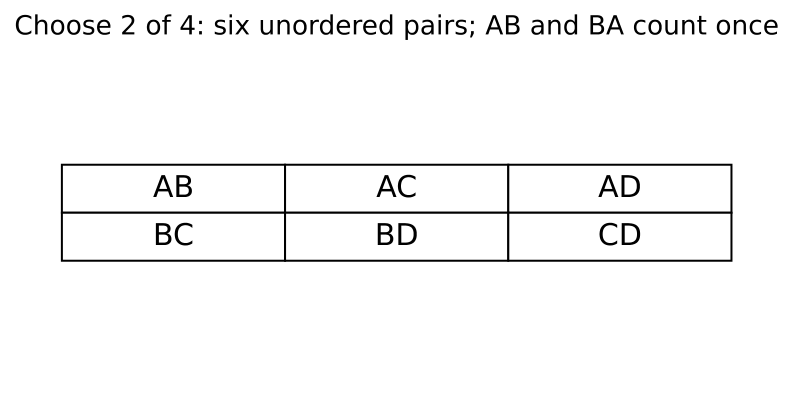
    Vocabulary
    English
    hyperbola/haɪˈpɜːbələ/
    semiaxes
    parabola/pəˈræbələ/
    ellipse/ɪˈlɪps/
    secant/ˈsiːkənt/
  • 16

    S-data · Data displays, normal distributions and association

    Learning program coming soon

    Handout

    Scope and prerequisites

    ACT framework, February 2026 revision. Original classroom cases are not an official form; preserve the scored/field-test boundaries of each source form.

    • Read centre, spread and shape from labelled data displays
    • Interpret a normal model using mean and standard deviation
    • Distinguish two-variable association from causal evidence 证据

    Prerequisites: Ordered data; frequency 频数; mean and median 中位数.

    Explain and choose the method

    The mean weights all observations; the median uses their ordered middle. A histogram groups numeric values into intervals, a box plot displays quartiles and a bar chart compares categories. Inspect units, scale and frequencies before comparing apparent width or height. Use the task’s stated quartile convention where calculation is required.

    Adding a constant shifts mean and median but leaves standard deviation unchanged; multiplying values by a positive factor scales both centre and spread. For a normal model, the mean is at the symmetric centre; approximately 68% lie within one standard deviation and 95% within two. These approximations concern a stated normal model, not every vaguely symmetric dataset.

    A scatterplot pairs quantitative measurements. A fitted line predicts a response; a residual 残差 is observed minus predicted. A two-way table instead compares categories and conditional shares. A trend can show association without proving cause, because other variables or selection may explain the relationship.

    An informal fitted line should follow the main trend, not join every point. Describe direction, shape and unusual points. Interpolation inside the observed range is better grounded than distant extrapolation. Changes in graphical scale can make an unchanged relationship look stronger or weaker, so read the actual coordinates and axes.

    A frequency counts repeated observations. Values 1, 3, 7 with frequencies 2, 1, 1 represent four observations: 1, 1, 3, 7. $\bar x=\sum fx/\sum f=(2(1)+1(3)+1(7))/4=3$. The median is $(1+3)/2=2$; it need not equal the mean.

    Original worked example from existing native teaching; transfer tasks use their own data.
    Original worked example from existing native teaching; transfer tasks use their own data.

    Existing worked example: A normal-model score distribution with mean 50 and standard deviation 5 places about 68% between 45 and 55 and about 95% between 40 and 60. Adding 10 shifts the mean to 60 but keeps standard deviation 5. For y=2x+4 at x=3, predicted y=10; an observed value 12 gives residual +2. These are hypothetical teaching models.

    Complete original context

    Every transfer question states all data it needs.

    Independent practice and checked reasoning

    Transfer 1

    A normal model has mean 80 and standard deviation 6. Give approximate central 68% and 95% intervals. Every score is changed to $z=2x+5$; give the transformed mean and standard deviation.

    Reasoning: Under the stated normal model, about 68% lie in 74–86 and 95% in 68–92. Transformed mean is $2(80)+5=165$ and standard deviation $2(6)=12$. These are model proportions, not guarantees for a finite sample.

    Transfer 2

    A fitted model is $y=4x+3$. At $x=5$ observed $y=20$. Find predicted output and residual. Can a positive slope alone prove causation?

    Reasoning: Prediction is $4(5)+3=23$. Residual $e=y_{obs}-y_{pred}=20-23=-3$. A positive slope gives association under the fit; confounding or selection can explain it without a direct cause.

    Transfer 3

    Data are 2,4,4,6,9,11,12,16. Using medians of the lower and upper halves, find the five-number summary and interquartile range. Which display preserves this summary: a box plot, a category bar chart or a scatterplot?

    Reasoning: Median $Q_2=(6+9)/2=7.5$. Lower half 2,4,4,6 has $Q_1=4$; upper half 9,11,12,16 has $Q_3=11.5$. Five-number summary is $(2,4,7.5,11.5,16)$ and $IQR=Q_3-Q_1=7.5$. A box plot displays these values. A category bar chart compares categorical counts; a scatterplot needs paired quantitative measurements. Neither directly displays this univariate five-number summary. The stated quartile convention prevents disagreement between other valid conventions 语言规范.

    Transfer 4

    A hypothetical histogram has equal-width bins [0,10), [10,20), [20,30] with frequencies 2,6,2. State the proportion below 20 and whether the exact mean is determined. A scatterplot of hours and output rises with a curved trend and one high outlier: explain why a straight line joining every point is unsuitable.

    Reasoning: Below 20 there are 2+6=8 of 10 observations, so 80%. The exact observations within bins are unknown, so no exact mean follows; midpoint estimates must be labelled estimates. A scatterplot represents pairs, and a fitted relation should describe its main shape with the unusual point considered. Joining every observation invents a path between separate cases and ignores the curved trend. Inspect actual axis scales and the outlier before fitting or extrapolating.

    Limits and next use

    Do not use normal percentages without a normal-model condition or interpret a scatterplot slope as an automatic causal effect.

    All tasks here are public original practice with authored guidance. They are not official questions or fresh diagnostics. Existing protected tests and mocks remain separate.
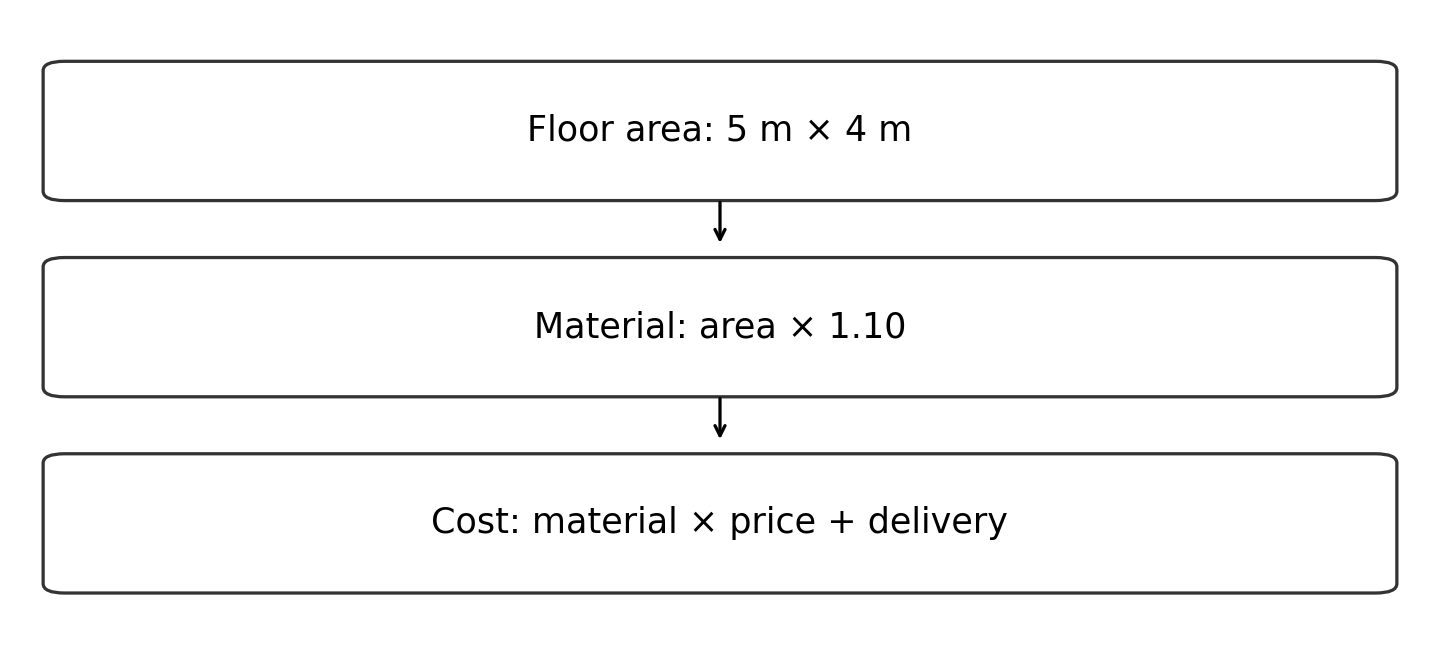
    Vocabulary
    English
    frequency/ˈfriːkwənsi/
    residual/rɪˈsɪdʒuːəl/
    evidence/ˈevɪdəns/
    median/ˈmiːdiːən/
    conventions
  • 17

    S-inference-probability · Sampling inference, expected value and counting

    Learning program coming soon

    Handout

    Scope and prerequisites

    ACT framework, February 2026 revision. Original classroom cases are not an official form; preserve the scored/field-test boundaries of each source form.

    • Interpret a population estimate and simulation evidence 证据 without claiming proof
    • Calculate conditional, compound and expected-value quantities
    • Choose permutations or combinations according to whether order matters

    Prerequisites: Percentages; populations; random selection versus assignment.

    Explain and choose the method

    A random sample supports inference 推断 to its source population; a margin of error 误差范围 gives a sampling-uncertainty interval around an estimate. Random assignment instead supports a causal treatment comparison. In a simulation, a result rarely produced under a claim can be evidence against that claim; failure to find an unusual result does not prove the claim true.

    Conditional probability 条件概率 restricts the denominator to the conditioning group. For either A or B, subtract their overlap after adding separate probabilities. Independence permits multiplication of unchanged probabilities; without-replacement draws require updated counts. Expected value 期望值 is the sum of each possible outcome times its probability, not necessarily an outcome achieved in one trial.

    Use the multiplication principle for successive choices. For n distinct objects, choosing r in order gives n!/(n-r)!; choosing an unranked set gives n!/[r!(n-r)!]. Dividing by r! removes the multiple orderings of the same set. These formulas assume distinct objects and no replacement; different conditions need a corresponding count.

    Translate the event to a count before calculating its probability. If a favourable event can occur in several disjoint ways, add those ways; if paths overlap, avoid double-counting. A numerical answer must be between zero and one for a probability, while an expected cost or score has the units of the outcomes.

    A margin of error is added and subtracted in percentage points. Estimate 63% with margin 4 points gives 59%–67%. It is an interval from a procedure, not a guarantee that each person's response is near 63%. Random sampling supports population inference; random assignment addresses treatment comparisons.

    Original worked example from existing native teaching; transfer tasks use their own data.
    Original worked example from existing native teaching; transfer tasks use their own data.

    Existing worked example: From five students, captain/deputy pairs number 5·4=20; unranked pairs number 5·4/2=10. A game awards 4 points with probability 1/4 and 0 otherwise, so expected award is 1 point per play. A sample estimate 52% ±3 percentage points gives 49%–55%; it is not a guarantee about every sample or individual.

    Complete original context

    Every transfer question states all data it needs.

    Independent practice and checked reasoning

    Transfer 1

    Six students choose a chairperson and a different secretary. How many assignments? How many unranked two-person committees? Explain the difference.

    Reasoning: Ordered roles give $6(5)=30$. Unranked pairs count each pair twice in that product, so there are $6(5)/2=15$. Swapping people changes roles but not an unranked committee.

    Transfer 2

    A game pays 12 tokens with probability 0.1, 3 with probability 0.4, and zero otherwise. Entry costs 2 tokens. Find expected payout and expected net gain. Does a player receive that amount every time?

    Reasoning: Remaining probability is 0.5. $E(P)=12(0.1)+3(0.4)+0(0.5)=2.4$ tokens. Expected net is $E(G)=E(P)-2=0.4$ token per play. Actual net outcomes are 10,1,-2; none equals 0.4, which is a long-run mean under the model.

    Transfer 3

    Two balls are drawn without replacement from a bag with 3 red and 2 blue balls. Find the probability both are red and of exactly one red.

    Reasoning: $P(RR)=(3/5)(2/4)=3/10$. Exactly one red can occur as RB or BR: $P=(3/5)(2/4)+(2/5)(3/4)=3/5$. The second denominator is 4; the draws are dependent.

    Transfer 4

    A random sample of 500 registered library members reports 62% support for a change, with stated margin 4 percentage points. State the interval and population. Does it establish support among every town resident?

    Reasoning: Interval is $62\%-4\%=58\%$ to $62\%+4\%=66\%$, where the subtraction denotes points. The population is registered members in the sampling frame. Nonmembers were not sampled, so the estimate does not establish all residents' support.

    Transfer 5

    Forty volunteers are randomly assigned to old or new instructions, with the same task and conditions. The new group finishes faster. What causal and population claims are reasonable?

    Reasoning: Random assignment supports a causal comparison of the instruction versions for these participants under the tested conditions, subject to variation. Volunteer selection limits population generalisation. It does not establish that every future user will finish faster.

    Transfer 6

    A poll of 10000 website volunteers has a narrow reported margin. Explain why size alone cannot repair selection bias, and propose a better recruitment method.

    Reasoning: People choosing to respond can differ systematically from those who do not. A margin for sampling variability does not remove that bias. Select randomly from the defined target population and follow up nonresponse; still report limitations.

    Limits and next use

    Order, replacement and conditioning change the calculation. Failing to reject a statistical claim is not proving it true.

    All tasks here are public original practice with authored guidance. They are not official questions or fresh diagnostics. Existing protected tests and mocks remain separate.
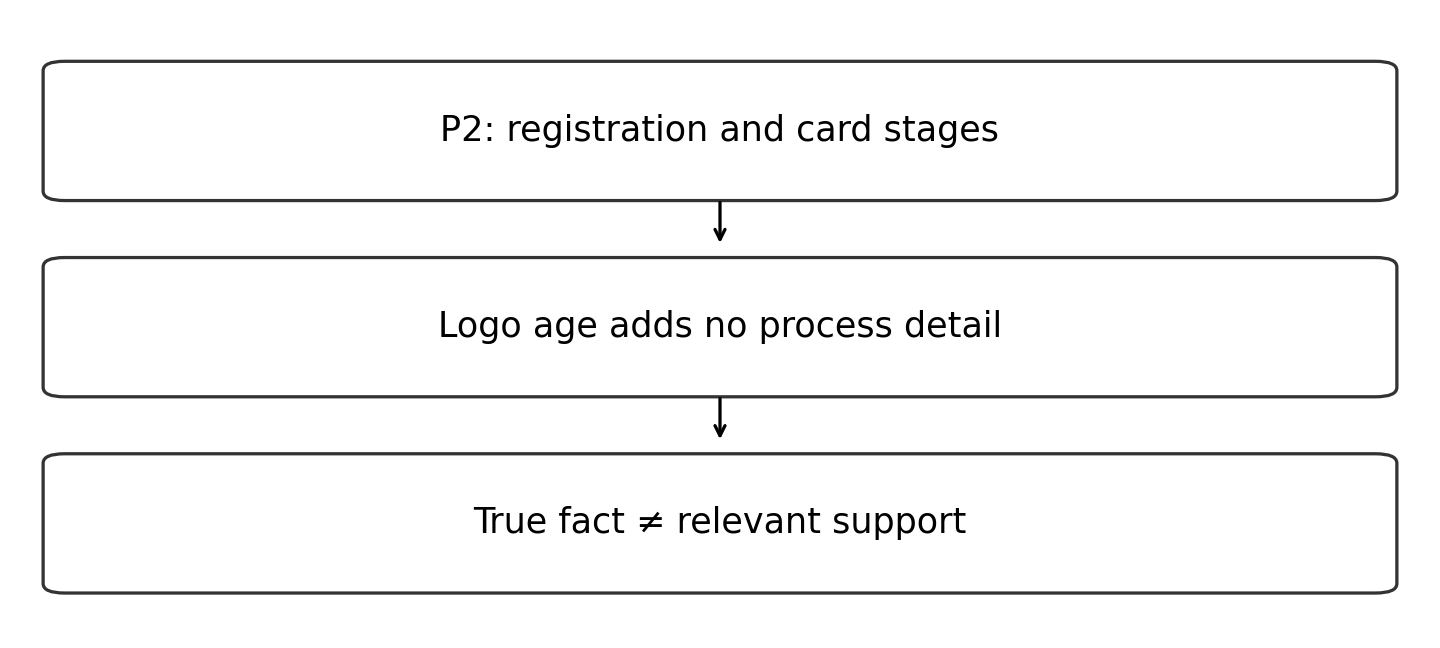
    Vocabulary
    English
    conditional probability/kənˈdɪʃənl ˌprɒbəˈbɪlɪti/
    margin of error/ˈmɑːdʒɪn ɒv ˈerə/
    expected value/ekˈspektɪd ˈvæljuː/
    inference/ˈɪnfərəns/
    evidence/ˈevɪdəns/
  • 18

    IES-models · Essential skills in a multi-step practical model

    Learning program coming soon

    Handout

    Scope and prerequisites

    ACT framework, February 2026 revision. Original classroom cases are not an official form; preserve the scored/field-test boundaries of each source form.

    • Build a model connecting quantities, rates and geometric measures
    • Interpret parameters and test the model’s assumptions
    • Evaluate predictions and adjust a parameter using new evidence 证据

    Prerequisites: Fractions; unit conversion; percentage base.

    Explain and choose the method

    Define variables with units and translate each part of the situation. A fixed fee plus a rate 速率 gives C=b+md; direct proportion C=md applies only when the intercept is zero. Ratios compare quantities in a chosen order, and successive percentage changes multiply their changing bases. A model should preserve those relationships before any arithmetic begins.

    Convert units by multiplying factors that cancel. For scale models, length factors square for area and cube for volume when every dimension is scaled. Combining a geometric formula with a unit price can model material cost; for example, paint area times cost per square metre gives currency, while using wall volume would have the wrong physical meaning.

    Interpret and test the model. Ask whether a constant rate is plausible across the domain, whether a fixed charge is already included and whether an estimated area excludes doors or overlap. Compare a prediction with observed data and identify which assumption or parameter may need revision. A model’s neat algebra does not establish that it fits reality.

    Improve a model by adjusting the parameter supported by evidence. If every predicted bill is exactly two units low, revising the fixed fee may fit better than changing the per-distance slope. A trend in errors with distance points toward the rate instead. Keep modelling as an overlapping activity across content areas, not a separate extra block of official questions.

    A rate compares quantities with their units. $v=d/t=(90\,\mathrm{km})/(1.5\,\mathrm{h})=60\,\mathrm{km/h}$. Convert using cancelling units: $v=(60\,\mathrm{km/h})(1000\,\mathrm{m/km})/(3600\,\mathrm{s/h})=50/3\,\mathrm{m/s}$. Do not convert only the numerator of a compound rate.

    Original diagram of the worked relationship; read the full wording and qualifications.
    Original diagram of the worked relationship; read the full wording and qualifications.

    Existing worked example: Original delivery model C=8+3d, d in kilometres, predicts 23 units for 5 km. Bills are consistently 2 units higher at several distances, supporting a revised intercept 10 while keeping slope 3. A wall 4 m by 2.5 m has area 10 m²; subtracting a 2 m² doorway gives 8 m² to paint. At 6 units/m², cost is 48. A 1:50 plan of a 4 m wall shows 8 cm.

    Complete original context

    Every transfer question states all data it needs.

    Independent practice and checked reasoning

    Transfer 1

    A room is 5 m by 4 m. Allow extra flooring equal to 10% of the room area for wastage, costs 35 yuan per square metre, and delivery adds 60 yuan. Build a cost model and find the total. A 1:50 plan shows the room; give its dimensions in centimetres.

    Reasoning: Area $A=LW=(5\,\mathrm{m})(4\,\mathrm{m})=20\,\mathrm{m^2}$. Required material $Q=1.10A=22\,\mathrm{m^2}$. Cost $C=pQ+d=(35\,\mathrm{yuan/m^2})(22\,\mathrm{m^2})+60\,\mathrm{yuan}=830\,\mathrm{yuan}$. Plan dimensions are $500/50=10$ cm and $400/50=8$ cm. Wastage is on area, not on both side lengths.

    Transfer 2

    A delivery model $C=6+4d$ yuan is consistently 5 yuan below observed bills at distances 2,4,6 km. Propose a first revision. Explain what pattern instead would suggest a slope error.

    Reasoning: A constant residual 残差 suggests raising the intercept by 5 to $C=11+4d$. A residual systematically growing with distance would suggest checking the per-kilometre rate. Neither pattern alone proves the reason; check fee definitions and other conditions.

    Limits and next use

    Do not treat an intercept model as direct proportion or adjust every parameter when evidence identifies one systematic error.

    All tasks here are public original practice with authored guidance. They are not official questions or fresh diagnostics. Existing protected tests and mocks remain separate.
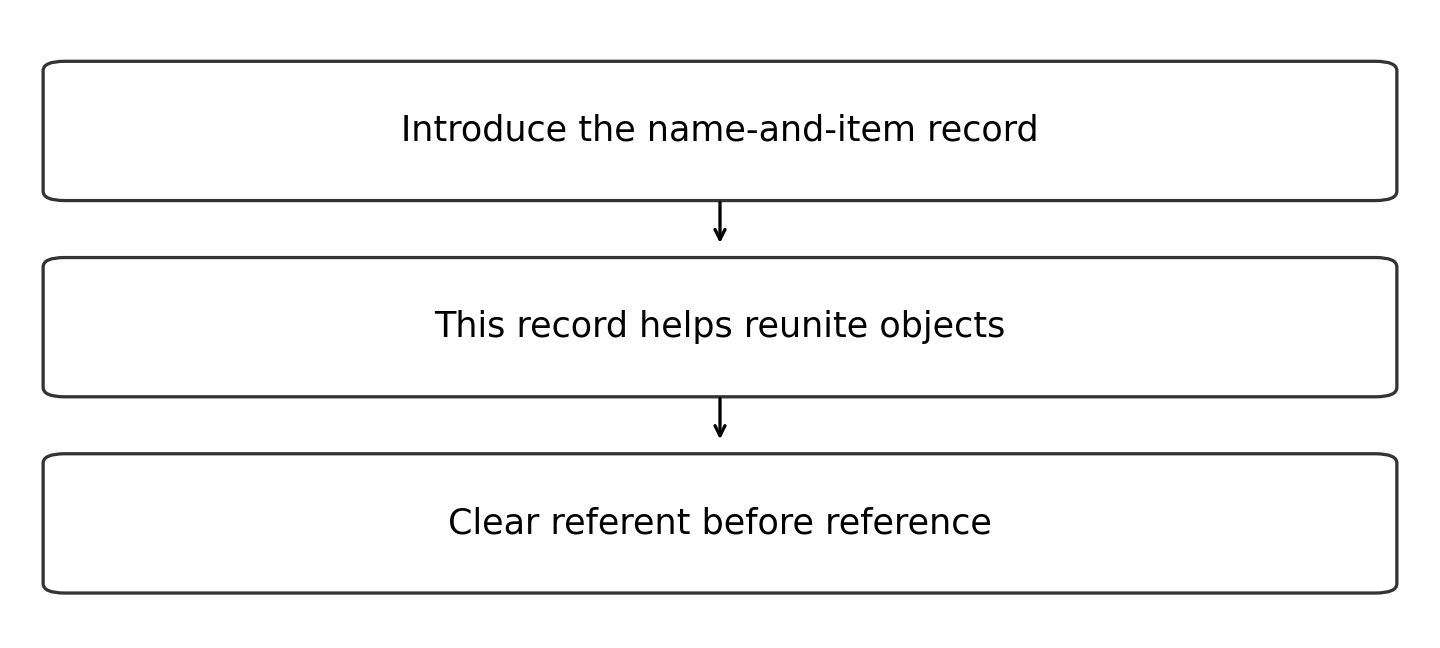
    Vocabulary
    English
    evidence/ˈevɪdəns/
    rate/reɪt/
    residual/rɪˈsɪdʒuːəl/
  • 19

    E-purpose · English: purpose, focus and argumentative support

    Learning program coming soon

    Handout

    Scope and prerequisites

    ACT framework, February 2026 revision. Original classroom cases are not an official form; preserve the scored/field-test boundaries of each source form.

    • Infer a paragraph’s purpose from the passage before judging an addition
    • Select evidence 证据 that directly supports the writer’s particular claim
    • Evaluate a counterclaim 反方观点 without mistaking relevance 相关性 for agreement

    Prerequisites: Paragraph purpose; relevant evidence; claim and objection.

    Explain and choose the method

    Enhanced ACT English uses passage-based editing, including argument 论证. Read the surrounding paragraph and its role in the complete passage; a proposed addition may be grammatical yet irrelevant. Name the writer’s purpose in a short phrase, such as explain a constraint, defend a choice or acknowledge a limitation. Then compare the sentence’s contribution to that purpose.

    For a question asking whether to add or delete material, decide first and choose the reason second. A detail 细节 supports a claim when it addresses the actual relationship asserted. Evidence of popularity does not automatically demonstrate accessibility, affordability or reliability. A plausible anecdote can illustrate an idea without proving a universal conclusion.

    An argument can acknowledge a competing view while maintaining its central claim. A useful counterclaim is specific enough to answer; caricaturing an opponent weakens reasoning. Qualification words such as some, during the trial or in this building limit a claim to the evidence. Do not broaden a passage merely to make its conclusion sound confident.

    The original passage below is a targeted editing case, not a complete official English form. Practise the exam’s passage context by rereading the whole paragraph after each edit. Judge options against the supplied goal, including an explicit focus in the stem; the most interesting detail is not necessarily the most relevant one.

    Relevance asks whether a detail serves the paragraph's actual purpose. In a paragraph about queue management, an arrival log can support a claim about waiting. A true fact about a logo may still interrupt that purpose. A counterargument 反论点 can remain useful when the writer responds with a practical limit.

    Original diagram of the worked relationship; read the full wording and qualifications.
    Original diagram of the worked relationship; read the full wording and qualifications.

    Existing worked example: Original passage: “The library should reserve a small quiet room for online interviews. Last month, three applicants had to leave the shared computer area because nearby conversations interrupted their calls. Some readers worry that reserving a room would reduce study space. Booking interviews only during the two least busy afternoon hours would limit that cost.” Proposed addition after sentence 2: “The library also owns a rare nineteenth-century atlas.” Delete it: the atlas does not support the case for interview space. An appropriate addition would report the duration and frequency 频数 of interrupted interviews, or evidence that the proposed hours are less busy. The counterclaim about study space is relevant and the final sentence answers it without claiming that all inconvenience disappears.

    Complete original context

    Original continuous editing passage — A place to mend

    [P1] On the first Saturday of each month, a group of volunteers opens a repair table in the public library. [S1] The project began when librarian Noor noticed a row of broken desk lamps outside a nearby building. [S2] Some needed specialist work, but others had loose switches or damaged cables. [S3] Noor did not want untrained visitors to try unsafe electrical repairs. [S4] She invited a qualified repairer to explain which items the group could inspect and which should go to a professional. The first session accepted only battery-powered objects, with damaged batteries excluded. Visitors registered their items and described the faults before any work began.

    [P2] At the entrance, two volunteers record each visitor's name and item. This record helps the group reunite objects with their owners. A blue card goes beside an object awaiting inspection; a white card marks one ready for collection. The cards do not certify safety or guarantee a repair. They simply show where an item is in the process. [S5] The library's logo was designed many years ago. Beside the cards, a sign asks visitors to stay while their object is examined. Staying allows owners to explain an intermittent fault that might not appear immediately. It also gives them a chance to learn a simple maintenance habit.

    [P3] Space soon became a problem. The repair table shared an alcove with readers who wanted a quiet place to work. During the first two sessions, a visitor log recorded six complaints about conversation near the alcove. Noor proposed moving the table into a meeting room. The room could hold fewer people, so a move alone would not solve the problem. The group introduced short arrival windows and kept two spaces for visitors without bookings. [S6] This totally amazing system fixed every problem forever. In fact, one visitor still waited outside, and the group had to improve the signs leading to the room. The log recorded one noise complaint during the next two sessions; attendance also fell, so the group did not attribute the whole reduction to the move.

    [P4] Volunteers were careful about how they described success. An object leaving the table might work again, need another part, or require professional attention. They recorded these outcomes separately. During the trial, forty objects were inspected. Eighteen worked after a permitted minor adjustment, twelve needed a part, and ten were referred elsewhere. Counting all forty as repaired would hide important differences. [S7] The volunteers recorded the outcomes and wrote the results down in their record. Noor used the figures to decide which spare parts might be useful at later sessions. She did not use them to promise that any particular object could be repaired.

    [P5] The project now has a practical aim: help visitors make an informed next decision about a broken object. For some, that means a working lamp. For others, it means knowing when further work would be unsafe or too costly. The group plans to keep the arrival windows for another trial and ask readers whether noise remains a problem. It will also compare attendance and waiting times before adding more spaces. A repair table succeeds through careful limits as well as useful repairs.

    Independent practice and checked reasoning

    Transfer 1

    Should S5 remain in P2? Explain the decision by the paragraph's purpose, and propose a relevant replacement detail.

    Reasoning: Remove it; P2 explains registration and card use, while the logo's age contributes neither. A useful replacement could explain how a volunteer updates a card when an inspection finishes. Label that proposed detail as a suggestion requiring confirmation, not a fact already supplied.

    Transfer 2

    Which existing evidence supports the claim that noise was a problem? Why retain the sentence saying the meeting room holds fewer people?

    Reasoning: Six recorded complaints in the first two sessions support a local noise concern. The smaller capacity is a relevant objection to moving, motivating arrival windows and walk-in spaces. It does not show the move is worthless.

    Transfer 3

    Write a qualified conclusion about the change in noise complaints, including the attendance limit. Explain why “the move eliminated noise” fails.

    Reasoning: “Recorded complaints fell from six to one in the next two sessions, but attendance also fell, so the move's separate effect is uncertain.” One complaint remains, contradicting eliminated, and other conditions changed.

    Limits and next use

    Keep the claim’s scope. “Three interrupted calls” supports a local problem; it does not establish that every visitor needs an interview room.

    All tasks here are public original practice with authored guidance. They are not official questions or fresh diagnostics. Existing protected tests and mocks remain separate.
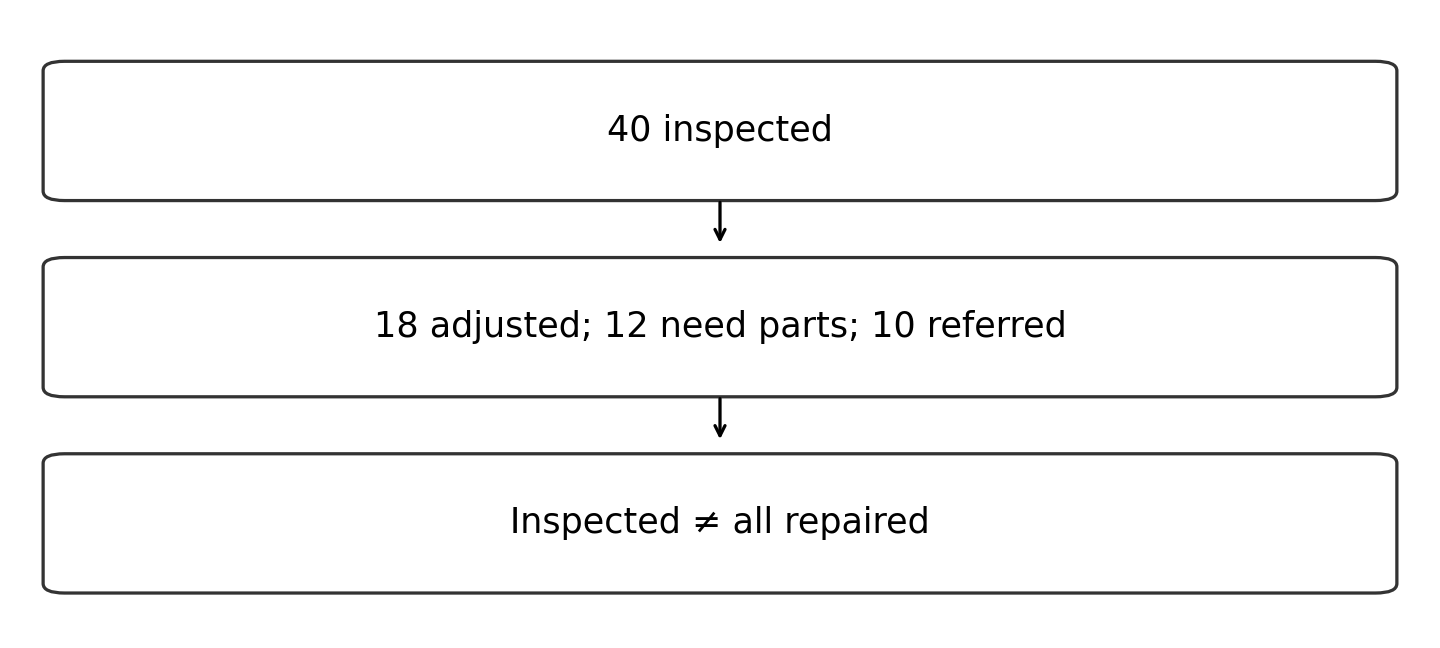
    Vocabulary
    English
    counterargument/ˈkaʊntərɑːɡjuːmənt/
    counterclaim/ˈkaʊntəkleɪm/
    frequency/ˈfriːkwənsi/
    relevance/ˈrelɪvəns/
    evidence/ˈevɪdəns/
    argument/ˈɑːɡjuːmənt/
    detail/ˈdiːteɪl/
  • 20

    E-cohesion · English: paragraph order, cohesion and introductions

    Learning program coming soon

    Handout

    Scope and prerequisites

    ACT framework, February 2026 revision. Original classroom cases are not an official form; preserve the scored/field-test boundaries of each source form.

    • Order sentences according to references and logical dependence
    • Choose transitions expressing the relationship actually present
    • Write an introduction or conclusion fitting the whole passage

    Prerequisites: Referents; paragraph sequence; logical links.

    Explain and choose the method

    Create a brief passage outline before a placement decision: problem, response, evidence 证据, limitation or another supported sequence. Paragraph order is not determined by length. A sentence beginning with this approach requires a recoverable approach before it; a reported result generally follows the procedure producing it. Check both the preceding and following sentence at each candidate position.

    Transitions express logic. Additionally adds support, however introduces contrast, consequently signals a result and for example introduces an instance. A transition 衔接词 can be locally fluent but wrong for the actual connection. Remove it mentally, name the relation between the ideas, then choose the expression. Chronological sequence and causal explanation can differ.

    An introduction should establish the passage’s subject and direction without overclaiming or detailing a result the passage never discusses. A conclusion can draw together the passage’s evidence or return to its purpose. It should not introduce an unrelated new problem requiring a separate argument 论证. The task may ask for a specific function, such as linking a paragraph back to the opening.

    For an insertion or reorder item, read the resulting whole paragraph. Pronoun reference, repeated terms and contrast pairs provide constraints, but one cue alone is not enough. Keep the passage’s unity: a sentence’s general topic may match while its function interrupts the argument. These targeted cases prepare the editing process rather than reproduce an official full-form passage.

    Cohesion 衔接 makes each reference and relationship followable. Introduce an arrangement before writing “This arrangement”. A conclusion should develop the passage's purpose and limits, rather than add an unrelated major topic.

    Original diagram of the worked relationship; read the full wording and qualifications.
    Original diagram of the worked relationship; read the full wording and qualifications.

    Existing worked example: Original paragraph, scrambled: [A] “This arrangement let two groups test the route on the same afternoon.” [B] “Volunteers first divided into a cycling group and a walking group.” [C] “Both groups then recorded where the route signs were hard to see.” [D] “Their notes guided the placement of larger signs the following week.” Order B–A–C–D establishes the arrangement, explains its benefit, reports the observation and follows with the response. In “The larger signs were easier to notice; however, one remained hidden by a branch,” however introduces a real limitation. A conclusion promising that no visitor will ever get lost would exceed the reported evidence.

    Complete original context

    Original continuous editing passage — A place to mend

    [P1] On the first Saturday of each month, a group of volunteers opens a repair table in the public library. [S1] The project began when librarian Noor noticed a row of broken desk lamps outside a nearby building. [S2] Some needed specialist work, but others had loose switches or damaged cables. [S3] Noor did not want untrained visitors to try unsafe electrical repairs. [S4] She invited a qualified repairer to explain which items the group could inspect and which should go to a professional. The first session accepted only battery-powered objects, with damaged batteries excluded. Visitors registered their items and described the faults before any work began.

    [P2] At the entrance, two volunteers record each visitor's name and item. This record helps the group reunite objects with their owners. A blue card goes beside an object awaiting inspection; a white card marks one ready for collection. The cards do not certify safety or guarantee a repair. They simply show where an item is in the process. [S5] The library's logo was designed many years ago. Beside the cards, a sign asks visitors to stay while their object is examined. Staying allows owners to explain an intermittent fault that might not appear immediately. It also gives them a chance to learn a simple maintenance habit.

    [P3] Space soon became a problem. The repair table shared an alcove with readers who wanted a quiet place to work. During the first two sessions, a visitor log recorded six complaints about conversation near the alcove. Noor proposed moving the table into a meeting room. The room could hold fewer people, so a move alone would not solve the problem. The group introduced short arrival windows and kept two spaces for visitors without bookings. [S6] This totally amazing system fixed every problem forever. In fact, one visitor still waited outside, and the group had to improve the signs leading to the room. The log recorded one noise complaint during the next two sessions; attendance also fell, so the group did not attribute the whole reduction to the move.

    [P4] Volunteers were careful about how they described success. An object leaving the table might work again, need another part, or require professional attention. They recorded these outcomes separately. During the trial, forty objects were inspected. Eighteen worked after a permitted minor adjustment, twelve needed a part, and ten were referred elsewhere. Counting all forty as repaired would hide important differences. [S7] The volunteers recorded the outcomes and wrote the results down in their record. Noor used the figures to decide which spare parts might be useful at later sessions. She did not use them to promise that any particular object could be repaired.

    [P5] The project now has a practical aim: help visitors make an informed next decision about a broken object. For some, that means a working lamp. For others, it means knowing when further work would be unsafe or too costly. The group plans to keep the arrival windows for another trial and ask readers whether noise remains a problem. It will also compare attendance and waiting times before adding more spaces. A repair table succeeds through careful limits as well as useful repairs.

    Independent practice and checked reasoning

    Transfer 1

    Could P3 precede P1 as written? Identify two dependencies making the existing order clearer.

    Reasoning: P3 presumes the repair table and Noor are already introduced. P1 establishes the project and its limits; P3's “soon” and space problem then develop that existing situation. A reordered opening would require rewriting those introductions.

    Transfer 2

    Where should “This record helps the group reunite objects with their owners” go — before P1, after P2's first sentence, or after the final sentence of P5? Explain all three alternatives.

    Reasoning: After P2's first sentence gives “This record” its immediate referent: the visitor name-and-item record. Before P1 no record exists in context. At P5's end the reference is remote and interrupts the concluding aim. The existing P2 location 位置 is clearest.

    Transfer 3

    Supply a transition between “The meeting room reduced noise around the alcove” and “it held fewer visitors”. Then write a closing sentence fitting the full passage without a guarantee.

    Reasoning: “However” or “nevertheless” signals the capacity limitation; use a full stop or semicolon before however between independent clauses. A fitting close is “The next trial should judge access, waiting and safety as well as the number of repairs.” This preserves the practical evaluation rather than promising universal success.

    Limits and next use

    Do not attach “this arrangement” before its antecedent 先行词 or use a result transition merely because events occurred later.

    All tasks here are public original practice with authored guidance. They are not official questions or fresh diagnostics. Existing protected tests and mocks remain separate.
    Vocabulary
    English
    transition/trænˈsɪʃn/
    antecedent/ˌæntɪˈsiːdənt/
    evidence/ˈevɪdəns/
    cohesion/kəʊˈhiːʒn/
    argument/ˈɑːɡjuːmənt/
    location/ləʊˈkeɪʃn/
  • 21

    E-language · English: precision, concision and consistent style

    Learning program coming soon

    Handout

    Scope and prerequisites

    ACT framework, February 2026 revision. Original classroom cases are not an official form; preserve the scored/field-test boundaries of each source form.

    • Remove redundancy 赘余 while retaining necessary qualifications
    • Select precise words suited to the meaning in context
    • Maintain a passage’s tone and level of formality

    Prerequisites: Denotation; register 语域; necessary qualifications.

    Explain and choose the method

    Use context to decide what a sentence must communicate. Concision 简洁 removes duplication, not distinctions. In a trial with limited evidence 证据, words such as approximately or during the first week may be essential. Replace a vague noun or verb with a precise choice supported by the passage rather than a more impressive word with a different meaning.

    Common redundancies include repeat again, a total sum and return back. Some repeated words instead create a deliberate rhetorical pattern or distinguish terms. Compare complete meanings, not word counts alone. A concise option that deletes the subject, reverses the relationship or removes a necessary condition is not a good revision.

    Style covers tone and language suited to purpose and audience. An informative report normally uses measured, specific language; a personal narrative may use informal wording consistently. There is no rule that the most formal option always wins. Detect sudden slang, inflated diction 措辞 or emotional judgement that conflicts with the passage’s established voice.

    Use the stem’s editing goal to decide whether an item concerns precision, economy or style. Read every option in its complete sentence, including unchanged text. Prefer an exact verb such as postponed over a loose phrase when the context supports delay rather than cancellation. Avoid introducing an unsupported opinion through a supposedly stylish adjective.

    Concision removes repetition while preserving meaning. “Recorded the outcomes and wrote the results down” repeats the same act here. Formal register 正式语域 uses measured claims, but it must not erase an essential limit such as “during the trial”.

    Original diagram of the worked relationship; read the full wording and qualifications.
    Original diagram of the worked relationship; read the full wording and qualifications.

    Existing worked example: Original report: “During the two-week trial, volunteers recorded the temperature every morning. They repeated the measurements again at noon. The second readings were approximately two degrees higher. This totally awesome discovery proves the room is always hotter after lunch.” Revise to “They repeated the measurements at noon” and “The noon readings were approximately two degrees higher during the trial.” The second revision restores a measured tone and the limited finding. It does not say that all afternoons or all rooms behave alike. “Postponed” fits a meeting moved to Friday; “cancelled” would change its status.

    Complete original context

    Original continuous editing passage — A place to mend

    [P1] On the first Saturday of each month, a group of volunteers opens a repair table in the public library. [S1] The project began when librarian Noor noticed a row of broken desk lamps outside a nearby building. [S2] Some needed specialist work, but others had loose switches or damaged cables. [S3] Noor did not want untrained visitors to try unsafe electrical repairs. [S4] She invited a qualified repairer to explain which items the group could inspect and which should go to a professional. The first session accepted only battery-powered objects, with damaged batteries excluded. Visitors registered their items and described the faults before any work began.

    [P2] At the entrance, two volunteers record each visitor's name and item. This record helps the group reunite objects with their owners. A blue card goes beside an object awaiting inspection; a white card marks one ready for collection. The cards do not certify safety or guarantee a repair. They simply show where an item is in the process. [S5] The library's logo was designed many years ago. Beside the cards, a sign asks visitors to stay while their object is examined. Staying allows owners to explain an intermittent fault that might not appear immediately. It also gives them a chance to learn a simple maintenance habit.

    [P3] Space soon became a problem. The repair table shared an alcove with readers who wanted a quiet place to work. During the first two sessions, a visitor log recorded six complaints about conversation near the alcove. Noor proposed moving the table into a meeting room. The room could hold fewer people, so a move alone would not solve the problem. The group introduced short arrival windows and kept two spaces for visitors without bookings. [S6] This totally amazing system fixed every problem forever. In fact, one visitor still waited outside, and the group had to improve the signs leading to the room. The log recorded one noise complaint during the next two sessions; attendance also fell, so the group did not attribute the whole reduction to the move.

    [P4] Volunteers were careful about how they described success. An object leaving the table might work again, need another part, or require professional attention. They recorded these outcomes separately. During the trial, forty objects were inspected. Eighteen worked after a permitted minor adjustment, twelve needed a part, and ten were referred elsewhere. Counting all forty as repaired would hide important differences. [S7] The volunteers recorded the outcomes and wrote the results down in their record. Noor used the figures to decide which spare parts might be useful at later sessions. She did not use them to promise that any particular object could be repaired.

    [P5] The project now has a practical aim: help visitors make an informed next decision about a broken object. For some, that means a working lamp. For others, it means knowing when further work would be unsafe or too costly. The group plans to keep the arrival windows for another trial and ask readers whether noise remains a problem. It will also compare attendance and waiting times before adding more spaces. A repair table succeeds through careful limits as well as useful repairs.

    Independent practice and checked reasoning

    Transfer 1

    Revise S7 concisely, preserving what the volunteers did. Explain whether deleting all recordkeeping information would be equivalent.

    Reasoning: “The volunteers recorded the outcomes.” Deleting the whole sentence would remove the act of recording; concision should remove duplicated meaning, not the information itself.

    Transfer 2

    Replace S6 with a measured sentence consistent with P3. Explain both the style and factual problems in the original.

    Reasoning: “The arrival windows improved scheduling, but one visitor still waited outside.” The original's “totally amazing” is informal and unsupported, while “every problem forever” contradicts the remaining wait and sign changes. The revised benefit is limited to the reported arrangement.

    Transfer 3

    Compare “forty objects were inspected” with “forty objects were repaired”. Can repaired replace inspected merely because it is shorter? Identify the counts that prevent this.

    Reasoning: No. Only eighteen worked after a permitted minor adjustment; twelve needed parts and ten were referred elsewhere. Inspected describes all forty, while repaired would falsely assign one successful outcome to all of them. Precision controls word choice.

    Limits and next use

    Do not delete a qualifier that limits evidence, choose a word for its length, or assume all passages need the same formality.

    All tasks here are public original practice with authored guidance. They are not official questions or fresh diagnostics. Existing protected tests and mocks remain separate.
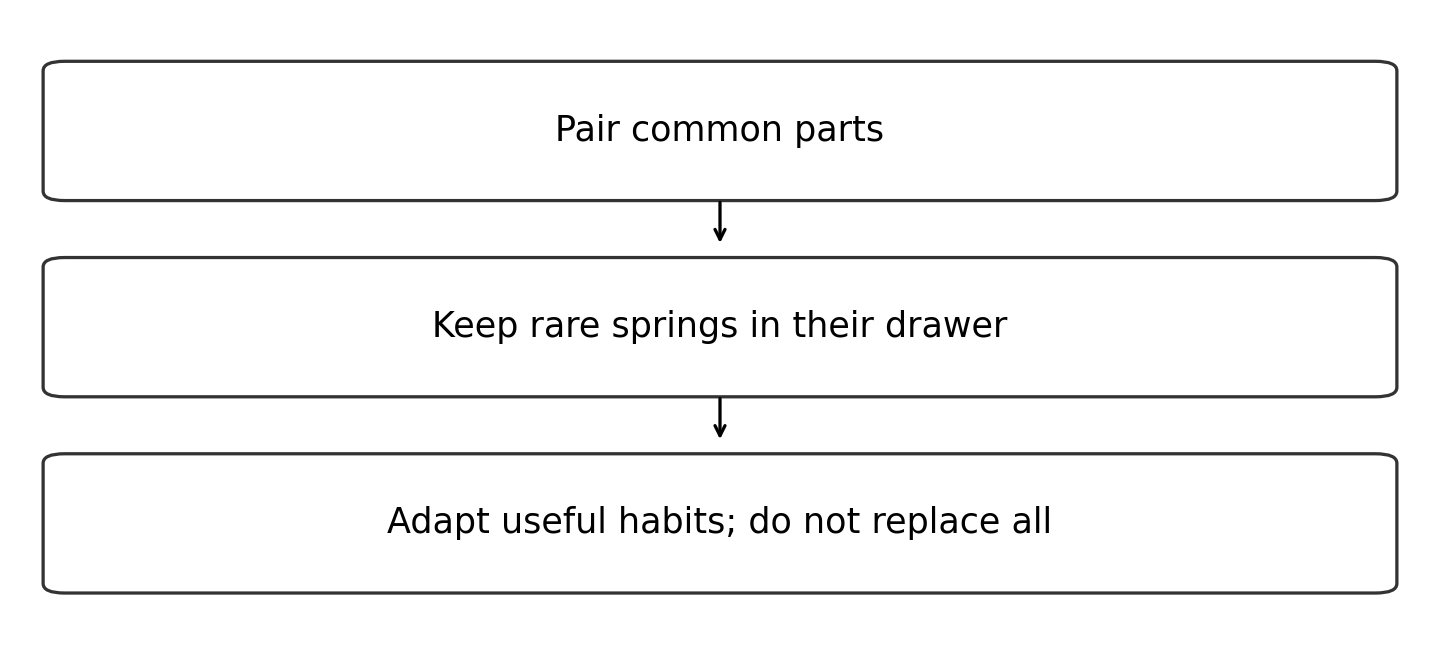
    Vocabulary
    English
    formal register
    redundancy/rɪˈdʌndənsi/
    concision
    evidence/ˈevɪdəns/
    register/ˈredʒɪstə/
    diction/ˈdɪkʃn/
  • 22

    E-conventions · English: sentence formation, agreement and punctuation

    Learning program coming soon

    Handout

    Scope and prerequisites

    ACT framework, February 2026 revision. Original classroom cases are not an official form; preserve the scored/field-test boundaries of each source form.

    • Distinguish complete clauses, fragments and comma splices
    • Locate the grammatical subject despite intervening phrases
    • Punctuate boundaries and modifiers according to structure

    Prerequisites: Independent clauses; subject head; possessives and parallel forms.

    Explain and choose the method

    A complete independent clause 独立分句 has a subject and finite verb 限定动词 and can stand alone. A dependent clause introduced by although or because needs a main clause. Join independent clauses with a period, a semicolon, or a comma plus an appropriate coordinating conjunction. A comma alone generally creates a comma splice. A semicolon does not repair a fragment.

    Identify the head of the subject rather than the nearest noun. Prepositional phrases and inserted comments may separate it from the verb. Pronouns must refer clearly to the intended antecedent and use the correct form in their grammatical role. Keep verb tense consistent with the actual sequence of events rather than mechanically making every verb identical.

    Use paired commas for a nonessential inserted element and avoid commas separating a subject from its verb. A colon 冒号 can introduce an explanation or list after a complete clause. Apostrophes mark possession or omitted letters, not ordinary plurals. Punctuation choices must be judged in the entire sentence, including material outside the selected span.

    Modifiers should attach to what they describe. In “Walking into the archive, the map caught Lena’s attention,” the introductory modifier 修饰语 wrongly makes the map the walker. Revise to “Walking into the archive, Lena noticed the map.” Parallel items should use compatible grammatical forms. Identify the structural error before comparing surface wording.

    Conventions 语言规范 depend on grammar, not a preferred sound. “The group of volunteers records outcomes” uses singular group. “Recording the result, Noor checked the card” attaches the modifier to Noor. Use a comma plus conjunction, semicolon or period to separate complete clauses.

    Original diagram of the worked relationship; read the full wording and qualifications.
    Original diagram of the worked relationship; read the full wording and qualifications.

    Existing worked example: Original editing case: “Although the archive was small. Its collection of local maps were extensive, visitors could compare several editions. Examining a faded sheet, a spelling error surprised Lena.” Revision: “Although the archive was small, its collection of local maps was extensive; visitors could compare several editions. Examining a faded sheet, Lena noticed a spelling error.” The first dependent clause now connects to a main clause. Collection is singular, so was agrees. A semicolon joins the two complete clauses. Lena becomes the subject described by examining.

    Complete original context

    Original continuous editing passage — A place to mend

    [P1] On the first Saturday of each month, a group of volunteers opens a repair table in the public library. [S1] The project began when librarian Noor noticed a row of broken desk lamps outside a nearby building. [S2] Some needed specialist work, but others had loose switches or damaged cables. [S3] Noor did not want untrained visitors to try unsafe electrical repairs. [S4] She invited a qualified repairer to explain which items the group could inspect and which should go to a professional. The first session accepted only battery-powered objects, with damaged batteries excluded. Visitors registered their items and described the faults before any work began.

    [P2] At the entrance, two volunteers record each visitor's name and item. This record helps the group reunite objects with their owners. A blue card goes beside an object awaiting inspection; a white card marks one ready for collection. The cards do not certify safety or guarantee a repair. They simply show where an item is in the process. [S5] The library's logo was designed many years ago. Beside the cards, a sign asks visitors to stay while their object is examined. Staying allows owners to explain an intermittent fault that might not appear immediately. It also gives them a chance to learn a simple maintenance habit.

    [P3] Space soon became a problem. The repair table shared an alcove with readers who wanted a quiet place to work. During the first two sessions, a visitor log recorded six complaints about conversation near the alcove. Noor proposed moving the table into a meeting room. The room could hold fewer people, so a move alone would not solve the problem. The group introduced short arrival windows and kept two spaces for visitors without bookings. [S6] This totally amazing system fixed every problem forever. In fact, one visitor still waited outside, and the group had to improve the signs leading to the room. The log recorded one noise complaint during the next two sessions; attendance also fell, so the group did not attribute the whole reduction to the move.

    [P4] Volunteers were careful about how they described success. An object leaving the table might work again, need another part, or require professional attention. They recorded these outcomes separately. During the trial, forty objects were inspected. Eighteen worked after a permitted minor adjustment, twelve needed a part, and ten were referred elsewhere. Counting all forty as repaired would hide important differences. [S7] The volunteers recorded the outcomes and wrote the results down in their record. Noor used the figures to decide which spare parts might be useful at later sessions. She did not use them to promise that any particular object could be repaired.

    [P5] The project now has a practical aim: help visitors make an informed next decision about a broken object. For some, that means a working lamp. For others, it means knowing when further work would be unsafe or too costly. The group plans to keep the arrival windows for another trial and ask readers whether noise remains a problem. It will also compare attendance and waiting times before adding more spaces. A repair table succeeds through careful limits as well as useful repairs.

    Independent practice and checked reasoning

    Transfer 1

    Repair “The set of blue cards show the current stage, they do not certify safety.” Preserve both claims and explain agreement and boundary.

    Reasoning: “The set of blue cards shows the current stage; it does not certify safety.” Set is singular; the pronoun it refers to the set. A semicolon joins the independent clauses. A full stop or comma plus but also works with appropriate wording.

    Transfer 2

    Repair “Inspecting the lamp, a loose switch was noticed by Noor” and “The group aims to inspect, recording, and advise”.

    Reasoning: “Inspecting the lamp, Noor noticed a loose switch” attaches the inspection to its actor. “The group aims to inspect, record, and advise” uses parallel infinitive complements under to. Other grammatical rewrites preserving these meanings are acceptable.

    Transfer 3

    Choose “its/it's” in “The group updates ___ records” and “___ important to label outcomes”. Explain why the same spelling does not fit both.

    Reasoning: “its records” needs the possessive form. “It's important” means “It is important”. The apostrophe marks a contraction here, not possession; substitution of it is checks the distinction.

    Limits and next use

    A pause is not a punctuation rule. Identify clause boundaries, modifier attachment and subject–verb relationships.

    All tasks here are public original practice with authored guidance. They are not official questions or fresh diagnostics. Existing protected tests and mocks remain separate.
    Vocabulary
    English
    independent clause/ˌɪndɪˈpendənt klɔːz/
    conventions
    finite verb/ˈfaɪnaɪt vɜːb/
    modifier/ˈmɒdɪfaɪə/
    colon/ˈkəʊlən/
  • 23

    R-details · Reading: explicit detail, inference and relationships

    Learning program coming soon

    Handout

    Scope and prerequisites

    ACT framework, February 2026 revision. Original classroom cases are not an official form; preserve the scored/field-test boundaries of each source form.

    • Separate directly stated details from supported inferences
    • Track causes, contrasts and chronological relationships
    • Reject conclusions requiring information outside the passage

    Prerequisites: Explicit detail 细节; inference 推断; cause versus chronology.

    Explain and choose the method

    Read an ACT passage for both its overall movement and its details. Build a paragraph map using a few words per paragraph, then return to the relevant lines when answering. A detail item asks what the text states; an inference item requires a conclusion supported by those details. Neither licences filling gaps with outside knowledge or a familiar story.

    Relationship questions may compare characters, explain a cause, establish sequence or connect a local detail to the whole. Distinguish chronology from cause: after does not by itself mean because. Track changes over time and the particular evidence 证据 making a contrast meaningful. If the text qualifies a claim, keep that qualification in the answer.

    Compare options for scope and certainty. All, never, only and proves may exceed a passage saying some, often or suggests. A plausible motive is weaker than a motive supported by reported action or speech. Narrative uncertainty can be deliberate; do not resolve it more definitely than the narrator does.

    The original extract is a short targeted case. Complete enhanced Reading practice also needs sustained long passages, paired texts and graphic information under the correct component timing. Use paragraph mapping here without treating this exercise as a full-length 36-item form or a scaled-score predictor.

    A detail is directly stated; an inference joins clues. “The neighbour waited without complaint” does not tell us the neighbour felt no impatience. The narrator's discomfort is explicit, while the neighbour's private feelings remain unavailable.

    Original diagram of the worked relationship; read the full wording and qualifications.
    Original diagram of the worked relationship; read the full wording and qualifications.

    Existing worked example: Original extract: “At first, Mina sorted the workshop’s spare parts by size, as the previous keeper had done. She could find a large bolt quickly, but visitors still waited while she searched for the matching washers. After watching a mechanic collect both parts for a repair, she placed commonly paired pieces together. The shelves looked less symmetrical. The waiting line, however, moved faster. Mina kept one drawer in the old arrangement because its rarely used pieces had no regular partners.” Explicit: she retained one drawer in the old arrangement. Supported inference: she valued practical retrieval over a fully symmetrical display. Cause: the observed pairing exposed a weakness in sorting by size alone. Unsupported: she disliked the previous keeper, or the new scheme improved every drawer.

    Complete original context

    Original literary passage — The spare key

    When I returned to the workshop after my uncle retired, the key felt too small for the responsibility attached to it. He had left the drawers neatly labelled, as though the labels might continue his explanations in his absence. I turned on the overhead light and read “washers”, “pins”, “springs”. Each word named an orderly compartment. The workbench, however, carried a shallow circular mark where his tea cup had stood, and no label could explain why that empty circle held my attention longer than the stocked shelves.

    A neighbour arrived with a bent gate latch. I found a replacement pin quickly, then spent several minutes searching for the washer that would keep it in place. My uncle had sorted objects by size. He could see a repair in his mind before he opened a drawer; I could not. The neighbour waited without complaint, which made the delay feel more noticeable rather than less. At last I found the washer, fitted the pin and watched the latch swing freely. The repair was simple. Finding its parts had not been.

    That evening I placed commonly paired pieces in small trays. The shelves lost some of their symmetry. I imagined my uncle raising an eyebrow, then remembered how often he had moved a tool after noticing where his hand expected it to be. His neat labels had been the result of change, not a prohibition against it. I left the rare springs in their old drawer because they had no regular partners. There was no reason to change them merely to prove that the workshop was mine.

    A week later my uncle visited. He opened a tray and asked where the larger washers had gone. I showed him the remaining size-labelled drawer. “So you have kept both systems,” he said. I could not tell whether his smile meant approval or amusement at my earnestness. He tested a latch, set it down, and asked for tea. I placed his cup on the old mark without thinking. Only after he left did I notice that I had made room beside it for my own.

    I had expected taking charge to mean replacing his habits with mine. Instead, I was learning which habits solved a problem and which had depended on a skill I had not yet acquired. The workshop did not need a dramatic beginning. It needed a washer that could be found, a safe repair, and enough empty space for the next person to work.

    Independent practice and checked reasoning

    Transfer 1

    Why does the narrator start pairing parts? Identify the observed problem and the change's stated result or purpose.

    Reasoning: A simple latch repair is delayed by searching separately for the matching washer. Pairing commonly used parts addresses retrieval for someone without the uncle's mental model. The passage does not supply a measured post-change speed, so describe the purpose rather than inventing a quantified result.

    Transfer 2

    What remains in the old arrangement, and why? Does the narrator replace every old habit?

    Reasoning: Rare springs remain in their old drawer because they have no regular partners; the larger-washer size drawer also remains. The narrator keeps useful parts of both systems, contradicting total replacement.

    Transfer 3

    Interpret the two cup marks at the end. Distinguish a supported reading from an unsupported claim that the uncle demanded a permanent desk.

    Reasoning: Making space beside the old mark suggests the narrator can develop a role while preserving a relationship with the uncle. The narrator places the cup without thinking; no demand for a desk is reported. Other readings grounded in continuity and change are acceptable if they acknowledge the inference.

    Limits and next use

    A character’s action may support a priority without proving an unreported emotion or universal benefit.

    All tasks here are public original practice with authored guidance. They are not official questions or fresh diagnostics. Existing protected tests and mocks remain separate.
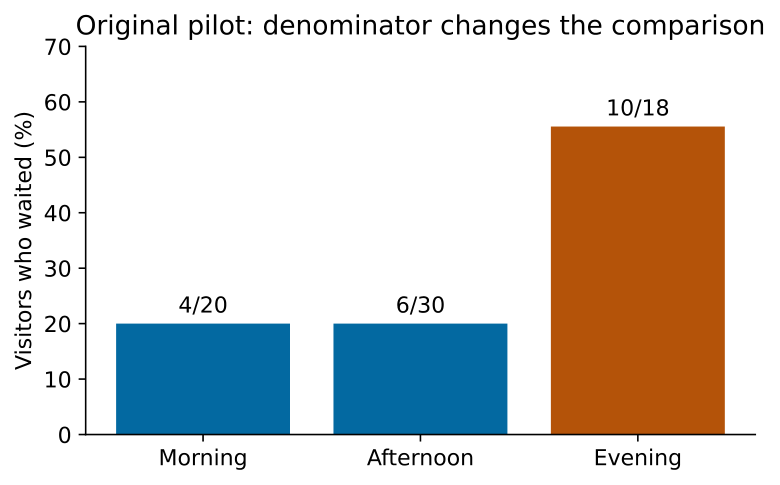
    Vocabulary
    English
    inference/ˈɪnfərəns/
    evidence/ˈevɪdəns/
    detail/ˈdiːteɪl/
  • 24

    R-craft · Reading: contextual meaning, structure and point of view

    Learning program coming soon

    Handout

    Scope and prerequisites

    ACT framework, February 2026 revision. Original classroom cases are not an official form; preserve the scored/field-test boundaries of each source form.

    • Infer a word’s local sense from surrounding evidence 证据
    • Explain how a passage’s structure shapes its effect
    • Distinguish narrator perspective, quoted views and author purpose

    Prerequisites: Speaker versus author; figurative meaning; structural shifts.

    Explain and choose the method

    For vocabulary in context, replace the word with a plain paraphrase and check the whole sentence. Familiar dictionary meanings compete; the passage’s situation selects one. Technical or figurative use may differ from everyday usage. A strongly positive or negative connotation 内涵色彩 also needs contextual support rather than an isolated association.

    Structure questions ask what a part does: introduce a problem, illustrate a claim, complicate an initial judgement or return to an image. Describe the function before picking an answer. A narrative may begin at an ending and then explain how it arose; a comparison may alternate topics rather than treating each in a separate block. Identify the effect of the arrangement, not merely the subject of a paragraph.

    Point of view 叙述视角 affects access to knowledge. A first-person narrator reports a particular perspective and may express uncertainty about someone else’s motives. A quoted opinion belongs to its speaker; it is not automatically endorsed by the author. Purpose concerns the passage’s communicative task, such as explaining a change or questioning an assumption, and should be supported by the whole text.

    Tone emerges from word choice and treatment of evidence. Mild scepticism differs from hostility, and affectionate humour differs from mockery. Use at least two local cues when alternatives differ by degree. Do not infer author biography or certainty from a narrator’s tentative observation. Read the beginning and ending together to see whether the perspective shifts.

    Point of view limits access to motives. First-person narration tells us what the narrator notices and thinks. “I could not tell” explicitly leaves the uncle's response uncertain; do not choose approval or ridicule as certain.

    Original diagram of the worked relationship; read the full wording and qualifications.
    Original diagram of the worked relationship; read the full wording and qualifications.

    Existing worked example: Original extract: “I called the restored clock stubborn when it refused to run. My aunt smiled: ‘It has been waiting longer than you have.’ She opened the case and pointed to a loose spring. By evening, the steady ticking made my accusation seem theatrical. I still do not know whether her smile was patience or amusement.” Stubborn personifies the clock’s resistance, not its deliberate intention. The movement from accusation to a simple repair gently qualifies the narrator’s first judgement. The final uncertainty limits access to the aunt’s motives. The quoted remark adds humour; it does not prove the aunt thought the clock could consciously wait.

    Complete original context

    Original literary passage — The spare key

    When I returned to the workshop after my uncle retired, the key felt too small for the responsibility attached to it. He had left the drawers neatly labelled, as though the labels might continue his explanations in his absence. I turned on the overhead light and read “washers”, “pins”, “springs”. Each word named an orderly compartment. The workbench, however, carried a shallow circular mark where his tea cup had stood, and no label could explain why that empty circle held my attention longer than the stocked shelves.

    A neighbour arrived with a bent gate latch. I found a replacement pin quickly, then spent several minutes searching for the washer that would keep it in place. My uncle had sorted objects by size. He could see a repair in his mind before he opened a drawer; I could not. The neighbour waited without complaint, which made the delay feel more noticeable rather than less. At last I found the washer, fitted the pin and watched the latch swing freely. The repair was simple. Finding its parts had not been.

    That evening I placed commonly paired pieces in small trays. The shelves lost some of their symmetry. I imagined my uncle raising an eyebrow, then remembered how often he had moved a tool after noticing where his hand expected it to be. His neat labels had been the result of change, not a prohibition against it. I left the rare springs in their old drawer because they had no regular partners. There was no reason to change them merely to prove that the workshop was mine.

    A week later my uncle visited. He opened a tray and asked where the larger washers had gone. I showed him the remaining size-labelled drawer. “So you have kept both systems,” he said. I could not tell whether his smile meant approval or amusement at my earnestness. He tested a latch, set it down, and asked for tea. I placed his cup on the old mark without thinking. Only after he left did I notice that I had made room beside it for my own.

    I had expected taking charge to mean replacing his habits with mine. Instead, I was learning which habits solved a problem and which had depended on a skill I had not yet acquired. The workshop did not need a dramatic beginning. It needed a washer that could be found, a safe repair, and enough empty space for the next person to work.

    Independent practice and checked reasoning

    Transfer 1

    What does “as though the labels might continue his explanations” suggest? Explain the wording without treating the drawers as literal speakers.

    Reasoning: It personifies or imagines the labels carrying the uncle's practical guidance after retirement. “As though” marks the comparison as figurative. It also prepares the contrast between labelled objects and the unlabelled cup mark's personal meaning.

    Transfer 2

    Explain the structural change from the first paragraph's small key to the final paragraph's practical list.

    Reasoning: The key initially makes responsibility feel large and abstract. The final list reduces that anxiety to concrete work—finding a washer, repairing safely and leaving room. The change qualifies the narrator's expectation of a dramatic break rather than proving complete expertise.

    Transfer 3

    Is the tone uniformly hostile to the uncle? Use two details and one limit on what the narrator knows.

    Reasoning: No. Remembering the uncle's adaptive tool placement and making room for his cup suggest respect and continuity. The narrator remains unsure about his smile, so neither wholly approving nor wholly mocking motives should be asserted as fact. An interpretation of affectionate unease can explain the mixed evidence.

    Limits and next use

    A quotation, narrator and author need not share one attitude. Match the answer to the viewpoint the stem names.

    All tasks here are public original practice with authored guidance. They are not official questions or fresh diagnostics. Existing protected tests and mocks remain separate.
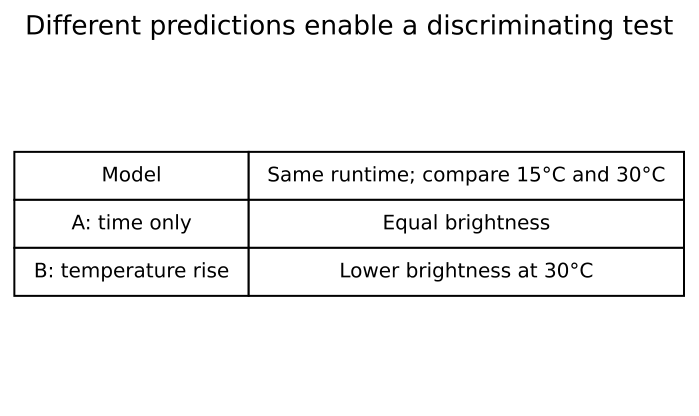
    Vocabulary
    English
    point of view/pɔɪnt ɒv vjuː/
    connotation/kɒnəˈteɪʃn/
    evidence/ˈevɪdəns/
  • 25

    R-integration · Reading: arguments, paired texts and graphic evidence

    Learning program coming soon

    Handout

    Scope and prerequisites

    ACT framework, February 2026 revision. Original classroom cases are not an official form; preserve the scored/field-test boundaries of each source form.

    • Evaluate whether evidence 证据 supports a specific argument 论证
    • Compare agreement and disagreement across paired texts
    • Integrate a graph or table without replacing the passage’s claim

    Prerequisites: Separate claims; rates and differences; representation limits.

    Explain and choose the method

    Identify each argument’s claim, evidence and limits separately before comparing texts. A criticism may concern method, cost or certainty rather than the goal itself. Relevance 相关性 asks whether evidence bears on the claim; sufficiency asks whether its amount and quality warrant the conclusion. A counterexample can weaken a universal claim without disproving a narrower one.

    For paired texts, make a two-column mental map of shared concerns and distinct positions. An answer can misrepresent both authors by combining one author’s evidence with the other’s conclusion. When predicting a response, use the responding author’s stated principle; do not invent a view simply because the authors disagree elsewhere.

    Read a visual’s title, axes, units, groups and notes before using its values. A table may summarise observed counts rather than rates; compare denominators before interpreting a difference. Link the exact visual finding to the claim in the passage. A numerical trend does not establish a causal mechanism unless the design and text supply that support.

    The original paired case uses a compact table represented in words. It is targeted practice, not a full long Reading passage set. In a complete set, return between passage and visual as needed and answer the specified relationship rather than every interesting numerical pattern. Keep survey, pilot and measured outcome claims distinct.

    Integration 综合 uses each source for the claim it actually supports. A retrieval-time table can test a claim about speed, but cannot establish historical value or safety. Two recommendations may be compatible when they serve different aims.

    Original worked example from existing native teaching; transfer tasks use their own data.
    Original worked example from existing native teaching; transfer tasks use their own data.

    Existing worked example: Original Text A: “Extend opening hours first. The pilot recorded 18 evening visits across four evenings, so access after work is a real concern. Before buying more equipment, see whether a longer schedule spreads demand.” Text B: “Evening access matters, but schedule changes alone will not solve equipment queues. In the same pilot, ten of the eighteen evening visitors waited for a machine. Purchase decisions should use both attendance and waiting data.” Pilot table: morning 20 visits/4 waited; afternoon 30/6; evening 18/10. Both authors value access, but B says capacity also matters. Waiting proportions are 20%, 20% and about 56%, so evening has the highest waiting proportion despite the lowest visit count. This supports investigating an evening bottleneck; the observational pilot does not prove buying a machine is the best solution.

    Complete original context

    Original argumentative Text A — Preserve the labels

    A workshop catalogue should preserve the names and categories used by its earlier keepers. These records show how people understood their tools. If each new keeper replaces every label with one chosen only for current convenience, later readers lose evidence of that earlier understanding. Preservation does not require freezing the room. A new index can connect old categories to present uses, while a record of each change lets readers reconstruct the earlier arrangement. Convenience matters, but a useful system need not erase its history.

    Original argumentative Text B — Let the search task guide the index

    An index is also a tool used by people who may lack the keeper's experience. In a trial with beginners, pairing commonly used parts reduced the average time needed to gather a repair kit. The improvement did not extend to the rare parts, which beginners used in several different combinations. We therefore recommend task-based trays for frequent combinations and an ordinary size index for the remainder. Old labels can be recorded separately. This recommendation concerns retrieval under the trial's tasks, not the historical value of the objects or a guarantee about every future repair.

    Original hypothetical retrieval table — average minutes per kit, same beginners completing matched tasks in counterbalanced order:

    • Frequent combinations: size index 8; task-based trays 5.
    • Rare combinations: size index 10; task-based trays 11.
    • Each average summarises twelve trials; no uncertainty estimates are supplied.

    The table does not compare historians, expert keepers, repair quality or object safety. It records retrieval times only.

    Independent practice and checked reasoning

    Transfer 1

    State each text's main concern. Could a system satisfy both? Give a concrete arrangement using only their stated proposals.

    Reasoning: A protects evidence of earlier categories; B improves task-based retrieval while preserving a size index for rare combinations. Keep a dated record of old labels and changes, provide task trays for frequent combinations, and retain the size index for the remainder. This follows both texts without claiming their purposes are identical.

    Transfer 2

    Calculate the time change for each task category. Does the table support “task-based trays speed every search”?

    Reasoning: Frequent kits fall from 8 to 5 minutes, a 3-minute or 37.5% reduction. Rare kits rise from 10 to 11 minutes, a 1-minute or 10% increase. The every-search claim is contradicted; averages also do not show every individual trial.

    Transfer 3

    Which would the authors challenge — “all old labels should be discarded” or “no category should ever change”? Explain their separate reasons.

    Reasoning: A challenges discarding old labels because it removes historical evidence, but explicitly permits a new index and records of change. B challenges freezing categories because beginners benefit from task trays, while permitting old labels to be recorded separately. Both reject an extreme that erases either usefulness or history.

    Limits and next use

    Counts are not rates, shared goals are not identical recommendations, and a four-evening pilot does not establish a universal causal claim.

    All tasks here are public original practice with authored guidance. They are not official questions or fresh diagnostics. Existing protected tests and mocks remain separate.
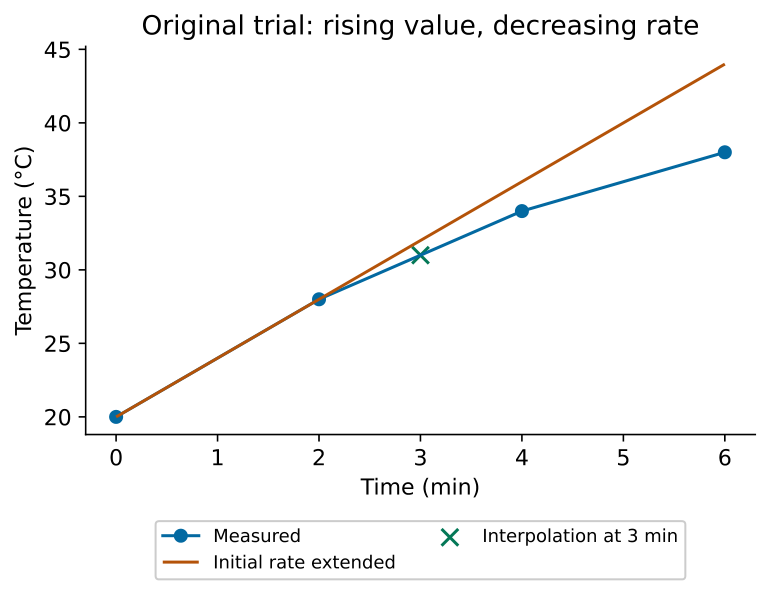
    Vocabulary
    English
    integration/ˌɪntɪˈɡreɪʃn/
    relevance/ˈrelɪvəns/
    evidence/ˈevɪdəns/
    argument/ˈɑːɡjuːmənt/
  • 26

    S-investigation · Science: research summaries, controls and engineering tests

    Learning program coming soon

    Handout

    Scope and prerequisites

    ACT framework, February 2026 revision. Original classroom cases are not an official form; preserve the scored/field-test boundaries of each source form.

    • Identify independent, dependent and controlled variables across experiments
    • Choose a follow-up that isolates the proposed explanation
    • Apply engineering criteria and constraints to a design comparison

    Prerequisites: Independent/dependent variables; controls; design constraints.

    Explain and choose the method

    Research Summaries passages describe experiments with related but distinct designs. Make a compact table of what changed, what was measured and what stayed fixed. Compare experiment numbers carefully: the same material might be used at a different volume, temperature or duration. A control supplies a comparison for a stated effect; it is not necessarily a trial with no treatment in every possible experiment.

    To isolate a variable, hold relevant alternatives constant and vary that variable deliberately. Repeated trials assess variability and reduce reliance on one observation. Random allocation can reduce systematic group differences when the design permits it. A result from one apparatus, duration or population does not automatically generalise to another.

    A follow-up experiment should distinguish the proposed explanations. Predict what each would expect and choose a measurement capable of separating them. Extending a study to a new range tests generality, but changing several conditions simultaneously can prevent a causal interpretation. State whether the new task explores a relationship or isolates an explanation.

    Engineering tasks add a goal, measurable criteria and constraints such as cost, mass or allowable deflection. A design is acceptable only when it satisfies the required constraints. Optimising one measurement does not necessarily make it best overall. A fair comparison applies the same test load and procedure, with repeat trials where feasible.

    A controlled comparison 控制比较 changes the proposed cause while holding alternative causes fixed. An engineering design 工程设计 must satisfy every stated constraint 约束条件. Repetition estimates variation; it does not undo a change of both material and thickness.

    Original worked example from existing native teaching; transfer tasks use their own data.
    Original worked example from existing native teaching; transfer tasks use their own data.

    Existing worked example: Original engineering study: beams A and B are tested at a 10 N load with identical length and supports. A costs 4 units and deflects 3 mm; B costs 7 and deflects 1 mm. Required cost ≤5 and deflection ≤4 mm. A satisfies both constraints; B fails cost despite smaller deflection. To test whether thickness explains deflection, use beams of the same material, length and support geometry at several thicknesses under the same load. Testing one thick wooden beam and one thin metal beam confounds material with thickness. Repeated measurements can reveal variation, but repetition alone does not remove that confounding.

    Complete original context

    Original hypothetical research summary — A cooling sleeve

    A laboratory team tests sleeves intended to reduce a small sensor's temperature during operation. All sensors start at 22°C. Temperature is measured after ten minutes of use with the same power setting, room conditions and measuring instrument. Sleeve A costs 4 units, B costs 7 units, and an unsleeved sensor is the control. The design brief requires a cost no greater than 5 units and a final temperature no greater than 35°C. Lower temperature alone is not the only design criterion.

    Experiment 1 uses identical sensors and records three independent trials per sleeve. Final temperatures in °C are: control 41,42,43; A 33,34,35; B 30,31,32. The team resets the starting temperature and checks the sensor charge before each trial. They report the means and the full observed ranges. The ranges describe these trials, not every future result. The team has not yet measured sleeve durability.

    Experiment 2 investigates thickness for material A. Each sleeve has the same length and fit; thicknesses are 1,2,3 mm. Mean final temperatures are 38,34,32°C respectively. All other stated conditions match Experiment 1. Changing thickness also changes material quantity, so a future design review must measure costs instead of assuming they stay at 4 units. A student proposes testing a 3-mm sleeve in material B against a 1-mm sleeve in material A to identify thickness's effect. This comparison would change two factors at once.

    Two original models explain the observed temperature pattern. Model P says final temperature depends only on thickness, regardless of material. Model Q says both thickness and material matter; at equal thickness it predicts that material B produces a lower final temperature than A under the same conditions. Both models predict lower final temperatures as thickness rises over the tested 1–3 mm interval. A decreasing trend alone therefore cannot separate them.

    Experiment 3 tests new A and B sleeves, each 2 mm thick, in matched conditions. Mean final temperatures are A 34°C and B 31°C. The measuring instrument's stated resolution is 0.1°C, and the team checks its calibration with a reference. Repeated trials would still be needed to characterise variability and rule out other differences in manufacture. The result conflicts with P's material-independence prediction and is consistent with Q's direction; it is not proof that Q is the only possible explanation.

    A separate time series for one sensor with sleeve A records temperatures 22,28,32,34°C at 0,2,4,6 minutes. These observations show warming with successively smaller two-minute increases. No measurements beyond six minutes are supplied in this series. A proposal 提案 to continue the first interval's slope to twelve minutes is a model assumption that later measurements may contradict, not a reading from the table.

    Independent practice and checked reasoning

    Transfer 1

    Find mean and observed range for control, A and B in Experiment 1. Which sleeve satisfies both design constraints in these trials?

    Reasoning: Control mean 42°C, range 41–43°C; A mean 34°C, range 33–35°C; B mean 31°C, range 30–32°C. A costs 4≤5 and reaches at most 35°C, so it meets both in these trials. B's lower temperatures do not overcome cost 7>5. This does not guarantee future durability or temperatures.

    Transfer 2

    Identify the changed and measured variables in Experiment 2. Why does the student's A-versus-B proposal fail to isolate thickness?

    Reasoning: Thickness is changed and final temperature measured. Material, length, fit, starting temperature and operating conditions are controlled in Experiment 2. The proposal changes material and thickness together, so either could explain a difference; repeats would not remove that confounding.

    Transfer 3

    Propose a follow-up for the 3-mm A design that addresses a previously unmeasured requirement and preserves a fair temperature comparison.

    Reasoning: Measure its actual cost and durability, while repeating matched final-temperature tests with the same material, length, fit, power, starting temperature and duration. The heavier sleeve's cost cannot be assumed unchanged. State acceptance limits before choosing, rather than deciding from cooling alone.

    Limits and next use

    A repeated confounded experiment remains confounded. Best performance on one metric can fail the design brief.

    All tasks here are public original practice with authored guidance. They are not official questions or fresh diagnostics. Existing protected tests and mocks remain separate.

    Vocabulary
    English
    controlled comparison
    engineering design
    constraint/kənˈstreɪnt/
    proposal/prəˈpəʊzl/
  • 27

    S-models · Science: conflicting viewpoints and evidence that separates models

    Learning program coming soon

    Handout

    Scope and prerequisites

    ACT framework, February 2026 revision. Original classroom cases are not an official form; preserve the scored/field-test boundaries of each source form.

    • Represent each model’s assumptions and predictions separately
    • Select observations that discriminate between competing explanations
    • Evaluate a model or design without claiming more than the evidence 证据 warrants

    Prerequisites: Explicit model predictions; comparison conditions; uncertainty.

    Explain and choose the method

    Conflicting Viewpoints passages present alternative explanations of the same observation. Label each model’s mechanism, assumptions and predicted behaviour before answering. A model may agree about the observation while disagreeing about the cause. Keep track of whether the stem asks what a model predicts or what the observed data actually establish.

    A useful discriminating test 鉴别性检验 places models where their predictions differ. Evidence consistent with both supports neither uniquely. Contradiction can weaken a model on its stated assumptions; it need not prove that a competing model is the only possible explanation. Identify conditions that could invalidate the comparison, including an unstated change in measurement method.

    When extending a model, apply its stated relationship consistently to the new situation. Do not import a familiar scientific law if the passage defines a different hypothetical mechanism. Compare predictions numerically where possible, and mark the assumptions needed for a causal inference 推断. Results can lead to a revised model rather than a simple winning viewpoint.

    Engineering design 工程设计 thinking weighs evidence against a target and considers a modification’s trade-offs. Explain why a change might address the observed failure and what new test would verify it. A design recommendation should use the passage’s criteria and acknowledge competing effects, rather than assume that the strongest material, highest speed or lowest price is always optimal.

    Discriminating evidence 区分性证据 is a result the competing models predict differently. If both predict cooling with greater thickness, observing that trend cannot select one. Hold thickness fixed and vary material to test their stated disagreement.

    Original worked example from existing native teaching; transfer tasks use their own data.
    Original worked example from existing native teaching; transfer tasks use their own data.

    Existing worked example: Original hypothetical study: a device’s indicator dims during repeated use. Model A says dimming depends only on elapsed running time: after 10 minutes it predicts the same brightness at all room temperatures. Model B says dimming is caused by an internal temperature rise: after 10 minutes it predicts lower brightness in a warmer room, provided the starting devices are identical. Test matched devices at 15°C and 30°C for ten minutes, controlling initial charge and measurement method. Equal brightness is consistent with A but does not decisively reject B unless temperature differences and sensitivity are verified. Much lower brightness at 30°C conflicts with A’s “time only” assumption and supports B’s predicted direction. A cooling modification should also be tested for cost and power consumption before recommending it.

    Complete original context

    Original hypothetical research summary — A cooling sleeve

    A laboratory team tests sleeves intended to reduce a small sensor's temperature during operation. All sensors start at 22°C. Temperature is measured after ten minutes of use with the same power setting, room conditions and measuring instrument. Sleeve A costs 4 units, B costs 7 units, and an unsleeved sensor is the control. The design brief requires a cost no greater than 5 units and a final temperature no greater than 35°C. Lower temperature alone is not the only design criterion.

    Experiment 1 uses identical sensors and records three independent trials per sleeve. Final temperatures in °C are: control 41,42,43; A 33,34,35; B 30,31,32. The team resets the starting temperature and checks the sensor charge before each trial. They report the means and the full observed ranges. The ranges describe these trials, not every future result. The team has not yet measured sleeve durability.

    Experiment 2 investigates thickness for material A. Each sleeve has the same length and fit; thicknesses are 1,2,3 mm. Mean final temperatures are 38,34,32°C respectively. All other stated conditions match Experiment 1. Changing thickness also changes material quantity, so a future design review must measure costs instead of assuming they stay at 4 units. A student proposes testing a 3-mm sleeve in material B against a 1-mm sleeve in material A to identify thickness's effect. This comparison would change two factors at once.

    Two original models explain the observed temperature pattern. Model P says final temperature depends only on thickness, regardless of material. Model Q says both thickness and material matter; at equal thickness it predicts that material B produces a lower final temperature than A under the same conditions. Both models predict lower final temperatures as thickness rises over the tested 1–3 mm interval. A decreasing trend alone therefore cannot separate them.

    Experiment 3 tests new A and B sleeves, each 2 mm thick, in matched conditions. Mean final temperatures are A 34°C and B 31°C. The measuring instrument's stated resolution is 0.1°C, and the team checks its calibration with a reference. Repeated trials would still be needed to characterise variability and rule out other differences in manufacture. The result conflicts with P's material-independence prediction and is consistent with Q's direction; it is not proof that Q is the only possible explanation.

    A separate time series for one sensor with sleeve A records temperatures 22,28,32,34°C at 0,2,4,6 minutes. These observations show warming with successively smaller two-minute increases. No measurements beyond six minutes are supplied in this series. A proposal 提案 to continue the first interval's slope to twelve minutes is a model assumption 模型假设 that later measurements may contradict, not a reading from the table.

    Independent practice and checked reasoning

    Transfer 1

    State P's and Q's predictions for equal-thickness A and B sleeves. Explain how Experiment 3 bears on each.

    Reasoning: P predicts the same final temperature because it says material is irrelevant. Q predicts B lower than A. The observed 31°C versus 34°C conflicts with P under matched conditions and agrees with Q's direction. Calibration supports a meaningful difference, but variability and manufacture still require investigation.

    Transfer 2

    Does Experiment 2's downward trend alone support Q over P? Propose a comparison that would separate them and name two controls.

    Reasoning: No; both predict the trend. Compare A and B of equal thickness while holding starting temperature, runtime, power, fit and room conditions constant. Repeated matched trials should measure uncertainty. The separating variable is material, not the names of the models.

    Transfer 3

    A redesigned B sleeve now costs 5 units and ends at 33°C in repeated matched tests. Does this establish P, Q, or only a design decision under the brief?

    Reasoning: It satisfies cost≤5 and final temperature≤35 in the stated tests. Without a matched A result it does not itself separate P and Q, and design feasibility is distinct from explaining the mechanism. Further durability and variation checks remain appropriate.

    Limits and next use

    A directionally supportive result is not unique proof. Check that the competing predictions truly differ under the test conditions.

    All tasks here are public original practice with authored guidance. They are not official questions or fresh diagnostics. Existing protected tests and mocks remain separate.

    Vocabulary
    English
    discriminating evidence
    discriminating test/dɪˈskrɪmɪneɪtɪŋ test/
    engineering design
    model assumption/ˈmɒdl əˈsʌmpʃn/
    inference/ˈɪnfərəns/
    evidence/ˈevɪdəns/
    proposal/prəˈpəʊzl/
  • 28

    S-data-representation · Science: data representation and defensible extrapolation

    Learning program coming soon

    Handout

    Scope and prerequisites

    ACT framework, February 2026 revision. Original classroom cases are not an official form; preserve the scored/field-test boundaries of each source form.

    • Read values with correct axes, units and conditions
    • Translate a table into a trend and interpolate within a measured interval
    • Evaluate an extrapolation 外推 against the model’s assumptions

    Prerequisites: Tables; units; slopes; interpolation 插值 versus extrapolation.

    Explain and choose the method

    Data Representation passages use tables, graphs or diagrams as primary evidence 证据. Start with the variable labels and units, and identify which conditions are held constant. A row may report one trial or an average; a legend may distinguish groups measured under different conditions. Locate the requested value before using prior scientific knowledge.

    Translate representations without changing their meaning. A rising quantity can have a falling rate 速率 of increase. A steep line is meaningful only relative to axis scales and units. When comparing curves, distinguish an absolute value, a difference and a rate. Use corresponding x-values for a fair comparison unless the stem explicitly asks for another relationship.

    Interpolation estimates inside observed bounds. For a straight segment between two points, use the fraction of the input interval and apply it to the output difference. Extrapolation extends beyond those bounds and depends more strongly on the proposed model. Negative predicted quantities or physical limits supplied by the passage can reveal a model’s invalid extension.

    Reevaluation asks whether new evidence supports an earlier trend or requires a different explanation. One discordant measurement could reflect noise or a model limitation; use the stated uncertainty and experimental conditions. The dataset here is original and hypothetical, so the task’s given model supplies the relevant relationships. It is not a claim about every real material.

    A rate of change 变化率 compares output change with the matching input interval. $r=\Delta T/\Delta t=(32-28)\,{}^\circ\mathrm C/(4-2)\,\mathrm{min}=2\,{}^\circ\mathrm C/\mathrm{min}$. A rising temperature can have a falling rate. Read units before calculating.

    Original worked example from existing native teaching; transfer tasks use their own data.
    Original worked example from existing native teaching; transfer tasks use their own data.

    Existing worked example: Original trial: identical containers hold a test liquid, starting at 20°C in the same room. Recorded times in minutes are 0, 2, 4, 6; measured temperatures in °C are 20, 28, 34, 38. The liquid warms, but consecutive two-minute rises are 8, 6 and 4°C: its average warming rate decreases. Linear interpolation between 2 and 4 minutes gives T(3)=28+(3−2)/(4−2)×(34−28)=31°C. Extending the first interval’s 4°C/min rate to 6 minutes predicts 44°C, inconsistent with the measured 38°C. New evidence therefore rejects a constant-rate model across all six minutes.

    Complete original context

    Original hypothetical research summary — A cooling sleeve

    A laboratory team tests sleeves intended to reduce a small sensor's temperature during operation. All sensors start at 22°C. Temperature is measured after ten minutes of use with the same power setting, room conditions and measuring instrument. Sleeve A costs 4 units, B costs 7 units, and an unsleeved sensor is the control. The design brief requires a cost no greater than 5 units and a final temperature no greater than 35°C. Lower temperature alone is not the only design criterion.

    Experiment 1 uses identical sensors and records three independent trials per sleeve. Final temperatures in °C are: control 41,42,43; A 33,34,35; B 30,31,32. The team resets the starting temperature and checks the sensor charge before each trial. They report the means and the full observed ranges. The ranges describe these trials, not every future result. The team has not yet measured sleeve durability.

    Experiment 2 investigates thickness for material A. Each sleeve has the same length and fit; thicknesses are 1,2,3 mm. Mean final temperatures are 38,34,32°C respectively. All other stated conditions match Experiment 1. Changing thickness also changes material quantity, so a future design review must measure costs instead of assuming they stay at 4 units. A student proposes testing a 3-mm sleeve in material B against a 1-mm sleeve in material A to identify thickness's effect. This comparison would change two factors at once.

    Two original models explain the observed temperature pattern. Model P says final temperature depends only on thickness, regardless of material. Model Q says both thickness and material matter; at equal thickness it predicts that material B produces a lower final temperature than A under the same conditions. Both models predict lower final temperatures as thickness rises over the tested 1–3 mm interval. A decreasing trend alone therefore cannot separate them.

    Experiment 3 tests new A and B sleeves, each 2 mm thick, in matched conditions. Mean final temperatures are A 34°C and B 31°C. The measuring instrument's stated resolution is 0.1°C, and the team checks its calibration with a reference. Repeated trials would still be needed to characterise variability and rule out other differences in manufacture. The result conflicts with P's material-independence prediction and is consistent with Q's direction; it is not proof that Q is the only possible explanation.

    A separate time series for one sensor with sleeve A records temperatures 22,28,32,34°C at 0,2,4,6 minutes. These observations show warming with successively smaller two-minute increases. No measurements beyond six minutes are supplied in this series. A proposal 提案 to continue the first interval's slope to twelve minutes is a model assumption that later measurements may contradict, not a reading from the table.

    Independent practice and checked reasoning

    Transfer 1

    For the separate time series, calculate the three average two-minute warming rates. Describe temperature and rate separately.

    Reasoning: $r_1=(28-22)/2=3$, $r_2=(32-28)/2=2$, $r_3=(34-32)/2=1$, all in °C/min. Temperature rises throughout, while these interval-average rates decrease. This does not specify every instantaneous rate.

    Transfer 2

    Estimate temperature at minute 3 by linear interpolation. Extend the first interval's slope to minute 6 and compare with the actual measurement.

    Reasoning: $T(3)=28\,{}^\circ\mathrm C+[(3-2)/(4-2)](32-28)\,{}^\circ\mathrm C=30\,{}^\circ\mathrm C$. First-slope model gives $T(6)=22\,{}^\circ\mathrm C+(3\,{}^\circ\mathrm C/\mathrm{min})(6\,\mathrm{min})=40\,{}^\circ\mathrm C$, above the observed 34°C. Constant early rate is inconsistent with the whole series.

    Transfer 3

    Is a minute-12 value read from these data or extrapolated? Explain why a graph with a rising curve does not establish indefinite constant-rate warming.

    Reasoning: It is extrapolated beyond 0–6 minutes. A rising curve can flatten, and the measured average rates already decline. Predicting minute 12 needs a stated model and additional evidence; temperature direction alone does not fix rate or long-term behaviour.

    Limits and next use

    A monotonic rise in temperature is not a constant rise per minute. Do not extrapolate an early slope as if later measurements did not exist.

    All tasks here are public original practice with authored guidance. They are not official questions or fresh diagnostics. Existing protected tests and mocks remain separate.

    Vocabulary
    English
    rate of change/reɪt ɒv tʃeɪndʒ/
    interpolation/ɪnˌtɜːpəˈleɪʃn/
    extrapolation/ekˈstræpəleɪʃn/
    evidence/ˈevɪdəns/
    rate/reɪt/
    proposal/prəˈpəʊzl/

Log in or create account

IGCSE, A-Level & AP