Scope and prerequisites
ACT framework, February 2026 revision. Original classroom cases are not an official form; preserve the scored/field-test boundaries of each source form.
- Order sentences according to references and logical dependence
- Choose transitions expressing the relationship actually present
- Write an introduction or conclusion fitting the whole passage
Prerequisites: Referents; paragraph sequence; logical links.
Explain and choose the method
Create a brief passage outline before a placement decision: problem, response, evidence 证据, limitation or another supported sequence. Paragraph order is not determined by length. A sentence beginning with this approach requires a recoverable approach before it; a reported result generally follows the procedure producing it. Check both the preceding and following sentence at each candidate position.
Transitions express logic. Additionally adds support, however introduces contrast, consequently signals a result and for example introduces an instance. A transition 衔接词 can be locally fluent but wrong for the actual connection. Remove it mentally, name the relation between the ideas, then choose the expression. Chronological sequence and causal explanation can differ.
An introduction should establish the passage’s subject and direction without overclaiming or detailing a result the passage never discusses. A conclusion can draw together the passage’s evidence or return to its purpose. It should not introduce an unrelated new problem requiring a separate argument 论证. The task may ask for a specific function, such as linking a paragraph back to the opening.
For an insertion or reorder item, read the resulting whole paragraph. Pronoun reference, repeated terms and contrast pairs provide constraints, but one cue alone is not enough. Keep the passage’s unity: a sentence’s general topic may match while its function interrupts the argument. These targeted cases prepare the editing process rather than reproduce an official full-form passage.
Cohesion 衔接 makes each reference and relationship followable. Introduce an arrangement before writing “This arrangement”. A conclusion should develop the passage's purpose and limits, rather than add an unrelated major topic.
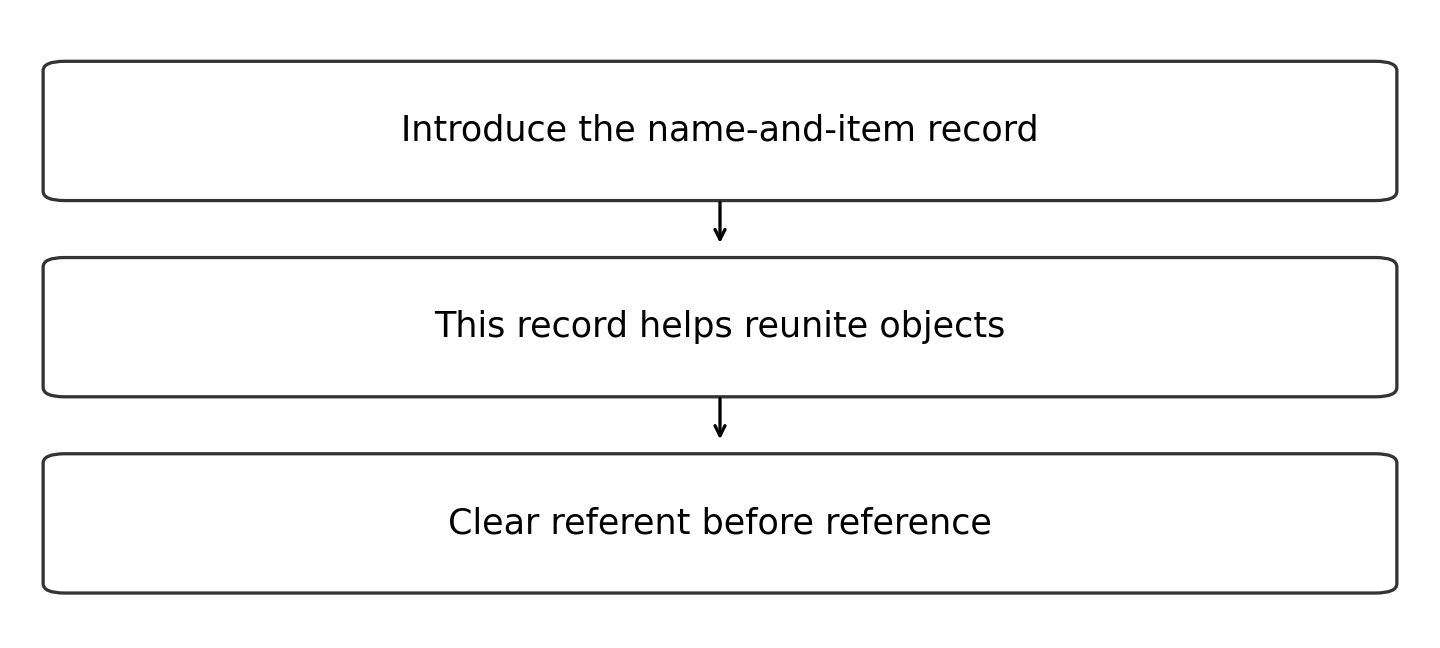
Existing worked example: Original paragraph, scrambled: [A] “This arrangement let two groups test the route on the same afternoon.” [B] “Volunteers first divided into a cycling group and a walking group.” [C] “Both groups then recorded where the route signs were hard to see.” [D] “Their notes guided the placement of larger signs the following week.” Order B–A–C–D establishes the arrangement, explains its benefit, reports the observation and follows with the response. In “The larger signs were easier to notice; however, one remained hidden by a branch,” however introduces a real limitation. A conclusion promising that no visitor will ever get lost would exceed the reported evidence.
Complete original context
Original continuous editing passage — A place to mend
[P1] On the first Saturday of each month, a group of volunteers opens a repair table in the public library. [S1] The project began when librarian Noor noticed a row of broken desk lamps outside a nearby building. [S2] Some needed specialist work, but others had loose switches or damaged cables. [S3] Noor did not want untrained visitors to try unsafe electrical repairs. [S4] She invited a qualified repairer to explain which items the group could inspect and which should go to a professional. The first session accepted only battery-powered objects, with damaged batteries excluded. Visitors registered their items and described the faults before any work began.
[P2] At the entrance, two volunteers record each visitor's name and item. This record helps the group reunite objects with their owners. A blue card goes beside an object awaiting inspection; a white card marks one ready for collection. The cards do not certify safety or guarantee a repair. They simply show where an item is in the process. [S5] The library's logo was designed many years ago. Beside the cards, a sign asks visitors to stay while their object is examined. Staying allows owners to explain an intermittent fault that might not appear immediately. It also gives them a chance to learn a simple maintenance habit.
[P3] Space soon became a problem. The repair table shared an alcove with readers who wanted a quiet place to work. During the first two sessions, a visitor log recorded six complaints about conversation near the alcove. Noor proposed moving the table into a meeting room. The room could hold fewer people, so a move alone would not solve the problem. The group introduced short arrival windows and kept two spaces for visitors without bookings. [S6] This totally amazing system fixed every problem forever. In fact, one visitor still waited outside, and the group had to improve the signs leading to the room. The log recorded one noise complaint during the next two sessions; attendance also fell, so the group did not attribute the whole reduction to the move.
[P4] Volunteers were careful about how they described success. An object leaving the table might work again, need another part, or require professional attention. They recorded these outcomes separately. During the trial, forty objects were inspected. Eighteen worked after a permitted minor adjustment, twelve needed a part, and ten were referred elsewhere. Counting all forty as repaired would hide important differences. [S7] The volunteers recorded the outcomes and wrote the results down in their record. Noor used the figures to decide which spare parts might be useful at later sessions. She did not use them to promise that any particular object could be repaired.
[P5] The project now has a practical aim: help visitors make an informed next decision about a broken object. For some, that means a working lamp. For others, it means knowing when further work would be unsafe or too costly. The group plans to keep the arrival windows for another trial and ask readers whether noise remains a problem. It will also compare attendance and waiting times before adding more spaces. A repair table succeeds through careful limits as well as useful repairs.
Independent practice and checked reasoning
Transfer 1
Could P3 precede P1 as written? Identify two dependencies making the existing order clearer.
Reasoning: P3 presumes the repair table and Noor are already introduced. P1 establishes the project and its limits; P3's “soon” and space problem then develop that existing situation. A reordered opening would require rewriting those introductions.
Transfer 2
Where should “This record helps the group reunite objects with their owners” go — before P1, after P2's first sentence, or after the final sentence of P5? Explain all three alternatives.
Reasoning: After P2's first sentence gives “This record” its immediate referent: the visitor name-and-item record. Before P1 no record exists in context. At P5's end the reference is remote and interrupts the concluding aim. The existing P2 location 位置 is clearest.
Transfer 3
Supply a transition between “The meeting room reduced noise around the alcove” and “it held fewer visitors”. Then write a closing sentence fitting the full passage without a guarantee.
Reasoning: “However” or “nevertheless” signals the capacity limitation; use a full stop or semicolon before however between independent clauses. A fitting close is “The next trial should judge access, waiting and safety as well as the number of repairs.” This preserves the practical evaluation rather than promising universal success.
Limits and next use
Do not attach “this arrangement” before its antecedent 先行词 or use a result transition merely because events occurred later.
All tasks here are public original practice with authored guidance. They are not official questions or fresh diagnostics. Existing protected tests and mocks remain separate.