English
This topic looks more deeply at consumers, costs and firms.
Português
Este tópico explora mais profundamente consumidores, custos e empresas.
Economia do A-Level · Topic 7 · Tópico 7
 18:50
18:50
O sistema de preços e a microeconomia (Nível A)
Olhe para esses compradores. Cada um tem um orçamento limitado, e cada coisa extra que compram dá um pouco menos de prazer que a última. Agora uma grande siderúrgica: ela fabrica…
English narration · English + 中文 subtitles burned in · Narração em inglês · Legendas em inglês + 中文 gravadas
This topic looks more deeply at consumers, costs and firms.
Este tópico explora mais profundamente consumidores, custos e empresas.

Source: Cambridge International syllabus · Fonte: Programa Cambridge International
utility 效用 is the satisfaction a consumer gets from a good.
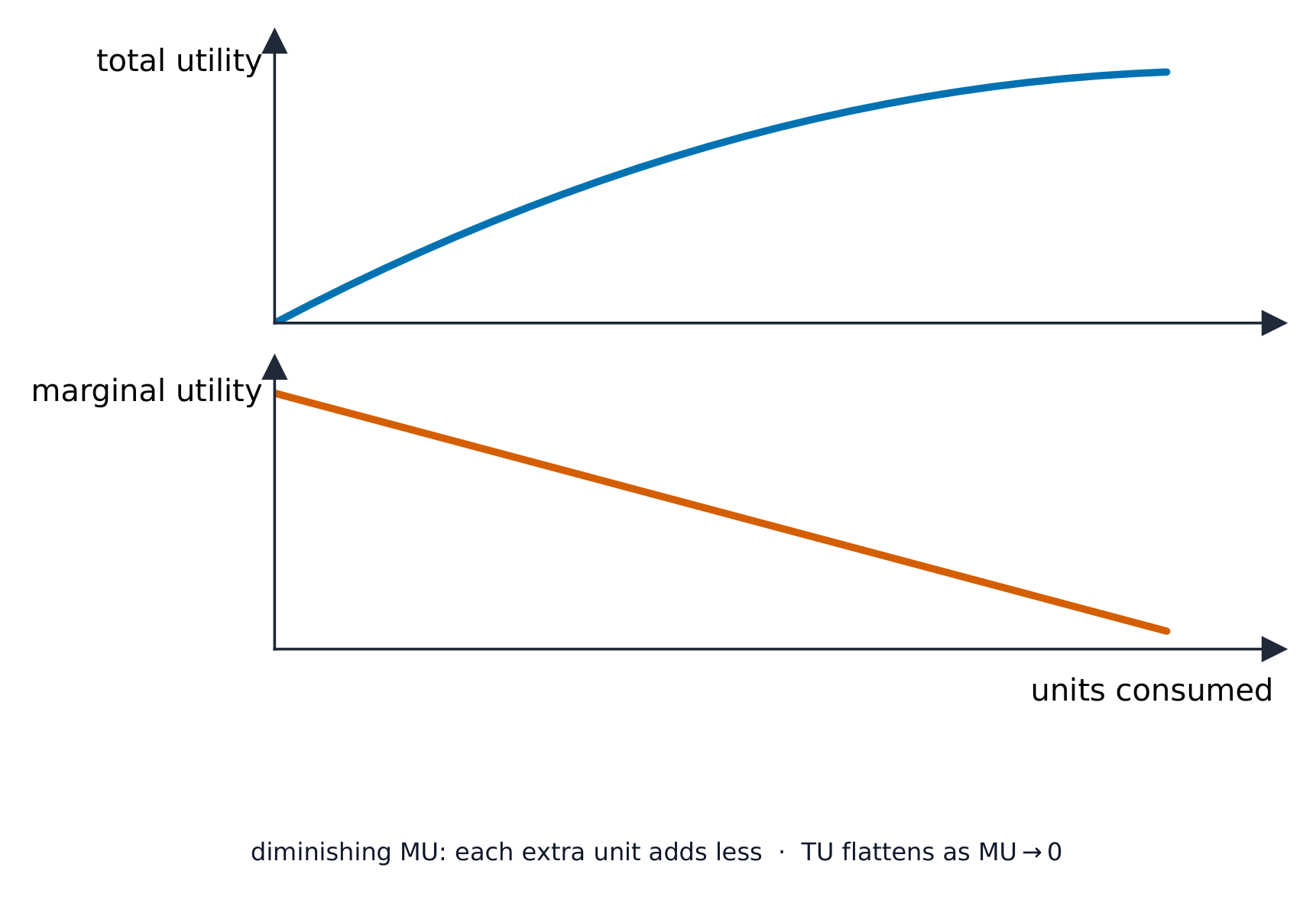
The law of diminishing marginal utility 边际效用递减 says each extra unit gives less extra satisfaction. Total utility still rises, but more and more slowly.
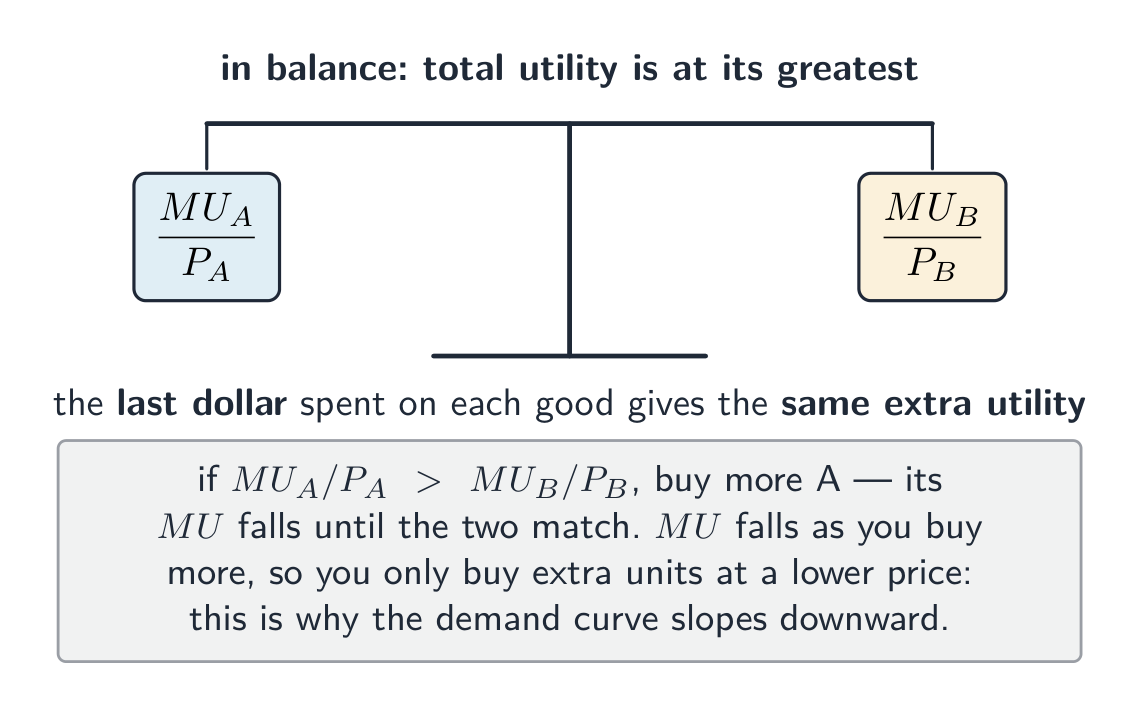
A consumer with a fixed budget gets the most total utility when the last dollar spent on each good gives the same extra utility. This is the equi-marginal principle 等边际原则:
Because marginal utility falls as you buy more, you only buy extra units when the price falls. This is why the demand curve 需求曲线 slopes downward.
The approach is hard to use in practice: utility cannot really be measured in numbers, and people do not calculate like this. It also ignores habit and advertising.
utilidade 效用 é a satisfação que um consumidor obtém de um bem.
A lei da utilidade marginal decrescente 边际效用递减 diz que cada unidade extra oferece menos satisfação adicional. A utilidade total ainda aumenta, mas cada vez mais lentamente.
Um consumidor com orçamento fixo obtém a maior utilidade total quando o último dólar gasto em cada bem oferece a mesma utilidade extra. Este é o princípio da igualdade marginal 等边际原则:
Como a utilidade marginal diminui à medida que você compra mais, você só compra unidades extras quando o preço cai. É por isso que a curva de demanda 需求曲线 tem inclinação descendente.
A abordagem é difícil de usar na prática: a utilidade não pode ser realmente medida em números, e as pessoas não calculam assim. Ela também ignora hábitos e publicidade.
a utilidade total sobe mais lentamente conforme a quantidade aumenta
Adicione unidades consumidas e veja por que a satisfação extra geralmente cai.
| English · Inglês | Chinese · Chinês | Pinyin |
|---|---|---|
| utility/juːˈtɪlɪti/ | 效用 | xiào yòng |
| total utility/ˈtəʊtl juːˈtɪlɪti/ | 总效用 | zǒng xiào yòng |
| marginal utility/ˈmɑːdʒɪnl juːˈtɪlɪti/ | 边际效用 | biān jì xiào yòng |
| diminishing marginal utility/dɪˈmɪnɪʃɪŋ ˈmɑːdʒɪnl juːˈtɪlɪti/ | 边际效用递减 | biān jì xiào yòng dì jiǎn |
| equi-marginal principle/ˈekwi ˈmɑːdʒɪnl ˈprɪnsɪpl/ | 等边际原则 | děng biān jì yuán zé |
| demand curve/dɪˈmænd kɜːv/ | 需求曲线 | xū qiú qū xiàn |
| indifference curve/ɪnˈdɪfrəns kɜːv/ | 无差异曲线 | wú chā yì qū xiàn |
| budget line/ˈbʌdʒɪt laɪn/ | 预算线 | yù suàn xiàn |
| consumer equilibrium/kənˈsuːmə ˌiːkwɪˈlɪbrɪəm/ | 消费者均衡 | xiāo fèi zhě jūn héng |
| substitution effect/ˌsʌbstɪˈtjuːʃn ɪˈfekt/ | 替代效应 | tì dài xiào yìng |
| income effect/ˈɪŋkʌm ɪˈfekt/ | 收入效应 | shōu rù xiào yìng |
| normal good/ˈnɔːml ɡʊd/ | 正常品 | zhèng cháng pǐn |
| inferior good/ɪnˈfɪərɪə ɡʊd/ | 低档品 | dī dàng pǐn |
| Giffen good/ˈdʒɪfən ɡʊd/ | 吉芬品 | jí fēn pǐn |
| productive efficiency/prəˈdʌktɪv ɪˈfɪʃənsi/ | 生产效率 | shēng chǎn xiào lǜ |
| allocative efficiency/ˈæləkətɪv ɪˈfɪʃənsi/ | 配置效率 | pèi zhì xiào lǜ |
| Pareto optimality/pæˈriːtəʊ ˌɒptɪˈmælɪti/ | 帕累托最优 | pà lèi tuō zuì yōu |
| dynamic efficiency/daɪˈnæmɪk ɪˈfɪʃənsi/ | 动态效率 | dòng tài xiào lǜ |
| market failure/ˈmɑːkɪt ˈfeɪlɪə/ | 市场失灵 | shì chǎng shī líng |
Source: Cambridge International syllabus · Fonte: Programa Cambridge International
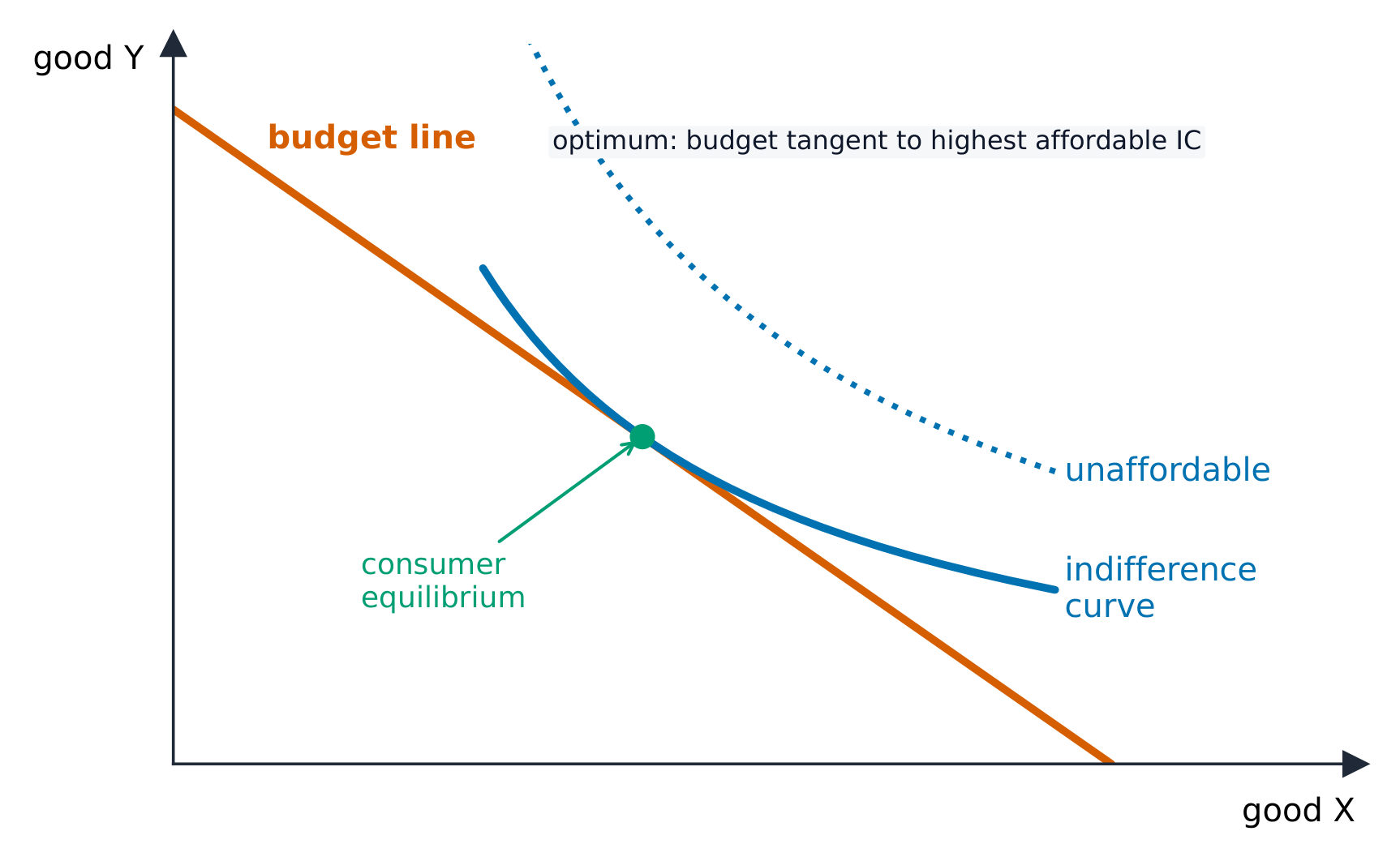
An indifference curve 无差异曲线 shows all the combinations of two goods that give a consumer the same total utility. It slopes downward (more of one good means less of the other) and bows in towards the origin.
A budget line 预算线 shows all the combinations the consumer can just afford with their income, at the current prices.
consumer equilibrium 消费者均衡 is the best the consumer can do: the point where the budget line just touches the highest possible indifference curve.
When the price of a good falls, the consumer buys more for two reasons:
These effects work differently for different goods:
Uma curva de indiferença 无差异 curva mostra todas as combinações de dois bens que oferecem ao consumidor a mesma utilidade total. Ela tem inclinação descendente (mais de um bem significa menos do outro) e se curva em direção à origem.
Uma linha de orçamento 预算线 mostra todas as combinações que o consumidor consegue pagar exatamente com sua renda, aos preços atuais.
equilíbrio do consumidor 消费者均衡 é o máximo que o consumidor pode fazer: o ponto onde a linha de orçamento toca a curva de indiferença mais alta possível.
Quando o preço de um bem cai, o consumidor compra mais por duas razões:
Esses efeitos funcionam de forma diferente para diferentes bens:
bem B = renda / preçoB - inclinação x bem A
Mova a quantidade de um bem e veja o trade-off com o outro bem.
Source: Cambridge International syllabus · Fonte: Programa Cambridge International
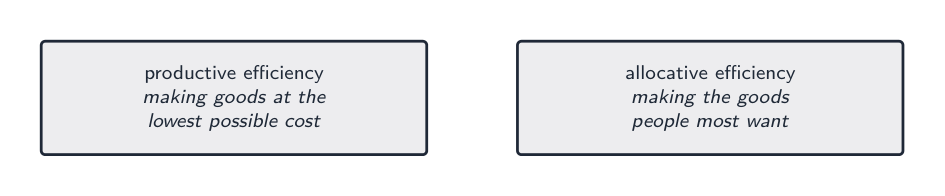
Economists judge how well resources are used.
market failure 市场失灵 happens when the free market does not reach an efficient result. The main causes are monopoly power, externalities 外部性, public goods 公共物品, information failure 信息失灵, and factor immobility 要素不流动性 (factors cannot move quickly to where they are needed).
Economistas julgam o quão bem os recursos são utilizados.
falha de mercado 市场失灵 acontece quando o mercado livre não alcança um resultado eficiente. As principais causas são poder de monopólio, externalidades 外部性, bens públicos 公共物品, falha de informação 信息失灵 e imobilidade de fatores 要素不流动性 (fatores não podem se mover rapidamente para onde são necessários).
O mercado é alocativamente eficiente onde oferta encontra demanda — preço equals custo marginal. Falhas de mercado o afastam desse ponto.

Source: Cambridge International syllabus · Fonte: Programa Cambridge International
Some costs and benefits fall on people outside the deal. We separate three levels:
We study externalities with marginal analysis 边际分析, using these curves:
The best outcome for society is where MSC = MSB. But the market produces where MPC = MPB. The gap between these creates lost welfare.
The lost welfare from making too much or too little is the deadweight welfare loss 无谓损失 — the triangle on the diagram between the social and private curves.
Alguns custos e benefícios recaem sobre pessoas fora da transação. Separamos três níveis:
Estudamos externalidades com análise marginal 边际分析, usando estas curvas:
O melhor resultado para a sociedade é onde MSC = MSB. Mas o mercado produz onde MPC = MPB. A diferença entre esses cria perda de bem-estar.
A perda de bem-estar resultante de produzir demais ou demais pouco é a perda de bem-estar sem causa 无谓损失 — o triângulo no diagrama entre as curvas social e privada.
Uma externalidade negativa significa que o custo social está acima da curva de oferta privada; a quantidade de livre mercado será então muito alta.
| English · Inglês | Chinese · Chinês | Pinyin |
|---|---|---|
| externality/ekˈstɜːnælɪti/ | 外部性 | wài bù xìng |
| public good/ˈpʌblɪk ɡʊd/ | 公共物品 | gōng gòng wù pǐn |
| information failure/ˌɪnfəˈmeɪʃn ˈfeɪlɪə/ | 信息失灵 | xìn xī shī líng |
| factor immobility/ˈfæktə ɪˌməʊˈbɪlɪti/ | 要素不流动性 | yào sù bù liú dòng xìng |
| private cost/ˈpraɪvət kɒst/ | 私人成本 | sī rén chéng běn |
| private benefit/ˈpraɪvət ˈbenɪfɪt/ | 私人收益 | sī rén shōu yì |
| external cost/ekˈstɜːnl kɒst/ | 外部成本 | wài bù chéng běn |
| external benefit/ekˈstɜːnl ˈbenɪfɪt/ | 外部收益 | wài bù shōu yì |
| social cost/ˈsəʊʃl kɒst/ | 社会成本 | shè huì chéng běn |
| social benefit/ˈsəʊʃl ˈbenɪfɪt/ | 社会收益 | shè huì shōu yì |
| marginal analysis/ˈmɑːdʒɪnl əˈnæləsɪs/ | 边际分析 | biān jì fēn xī |
| marginal private cost/ˈmɑːdʒɪnl ˈpraɪvət kɒst/ | 边际私人成本 | biān jì sī rén chéng běn |
| marginal social cost/ˈmɑːdʒɪnl ˈsəʊʃl kɒst/ | 边际社会成本 | biān jì shè huì chéng běn |
| marginal private benefit/ˈmɑːdʒɪnl ˈpraɪvət ˈbenɪfɪt/ | 边际私人收益 | biān jì sī rén shōu yì |
| marginal social benefit/ˈmɑːdʒɪnl ˈsəʊʃl ˈbenɪfɪt/ | 边际社会收益 | biān jì shè huì shōu yì |
| negative externality/ˈneɡətɪv ekˈstɜːnælɪti/ | 负外部性 | fù wài bù xìng |
| positive externality/ˈpɒzɪtɪv ekˈstɜːnælɪti/ | 正外部性 | zhèng wài bù xìng |
| deadweight welfare loss/ˈdedweɪt ˈwelfeə lɒs/ | 无谓损失 | wú wèi sǔn shī |
| short run/ʃɔːt rʌn/ | 短期 | duǎn qī |
| long run/lɒŋ rʌn/ | 长期 | cháng qī |
| fixed cost/fɪkst kɒst/ | 固定成本 | gù dìng chéng běn |
| variable cost/ˈveərɪəbl kɒst/ | 可变成本 | kě biàn chéng běn |
| total cost/ˈtəʊtl kɒst/ | 总成本 | zǒng chéng běn |
| average cost/ˈævrɪdʒ kɒst/ | 平均成本 | píng jūn chéng běn |
| marginal cost/ˈmɑːdʒɪnl kɒst/ | 边际成本 | biān jì chéng běn |
| diminishing returns/dɪˈmɪnɪʃɪŋ rɪˈtɜːnz/ | 边际报酬递减 | biān jì bào chóu dì jiǎn |
| returns to scale/rɪˈtɜːnz tə skeɪl/ | 规模报酬 | guī mó bào chóu |

Source: Cambridge International syllabus · Fonte: Programa Cambridge International
In the short run 短期, at least one factor is fixed; in the long run 长期, all factors can change.
| Cost | Meaning |
|---|---|
| fixed cost 固定成本 | does not change with output (rent on a factory) |
| variable cost 可变成本 | changes with output (raw materials) |
| total cost 总成本 | fixed cost plus variable cost |
| average cost 平均成本 | total cost per unit: $AC = TC / Q$ |
| marginal cost 边际成本 | the cost of one more unit: $MC = \Delta TC / \Delta Q$ |
Worked example. Making $10$ units costs £500 in total; making $11$ units costs £540. Find the average cost at $10$ units and the marginal cost of the 11th unit.
Here $MC$ ($\text{\pounds} 40$) is below $AC$ ($\text{\pounds} 50$), so making the 11th unit pulls the average cost down — whenever marginal cost is below average cost, average cost falls.
In the short run, output is limited by the law of diminishing returns 边际报酬递减: as you add more of a variable factor (workers) to a fixed factor (machines), each extra worker eventually adds less output. This makes marginal cost rise.
In the long run, all factors vary, so we look at returns to scale 规模报酬. As a firm grows, it can gain economies of scale 规模经济 (lower average cost from buying in bulk, using big machines, and specialising). If it grows too big, it may suffer diseconomies of scale 规模不经济 (poor communication and control), and average cost rises.
| Revenue | Meaning |
|---|---|
| total revenue 总收益 | all money from sales: $TR = P \times Q$ |
| average revenue 平均收益 | revenue per unit, which equals the price |
| marginal revenue 边际收益 | the revenue from one more unit: $MR = \Delta TR / \Delta Q$ |
Worked example. A firm sells $10$ units at £50 each. To sell an 11th unit it must lower the price to £48 on every unit. Find the total revenue at each output and the marginal revenue of the 11th unit.
The marginal revenue ($\text{\pounds} 28$) is well below the £48 price, because the lower price applies to all $11$ units, not just the extra one.
Profit is total revenue minus total cost. Economists include the opportunity cost of the owner's resources in cost, so:
A firm makes the most profit at the output where $MR = MC$.
Worked example. At its best output a firm makes $100$ units, sells each for £12 (its average revenue), and has an average cost of £9. Find the supernormal profit.
Because average revenue (£12) is above average cost (£9), the firm earns supernormal profit. If instead $AR = AC$, it would make only normal profit; if $AR < AC$, it would make a loss.
No curto prazo 短期, pelo menos um fator é fixo; no longo prazo 长期, todos os fatores podem mudar.
| Custo | Significado |
|---|---|
| custo fixo 固定成本 | não muda com a produção (aluguel de fábrica) |
| custo variável 可变成本 | muda com a produção (matérias-primas) |
| custo total 总成本 | custo fixo mais custo variável |
| custo médio 平均成本 | custo total por unidade: $AC = TC / Q$ |
| custo marginal 边际成本 | o custo de mais uma unidade: $MC = \Delta TC / \Delta Q$ |
Exemplo resolvido. Produzir $10$ unidades custa £500 no total; produzir $11$ unidades custa £540. Encontre o custo médio em $10$ unidades e o custo marginal da 11ª unidade.
Aqui $MC$ ($\text{\pounds} 40$) está abaixo $AC$ ($\text{\pounds} 50$), portanto produzir a 11ª unidade puxa o custo médio para baixo — sempre que o custo marginal está abaixo do custo médio, o custo médio cai.
No curto prazo, a produção é limitada pela lei dos rendimentos decrescentes 边际报酬递减: à medida que se adiciona mais de um fator variável (trabalhadores) a um fator fixo (máquinas), cada trabalhador extra acaba por adicionar menos produção. Isso faz com que o custo marginal suba.
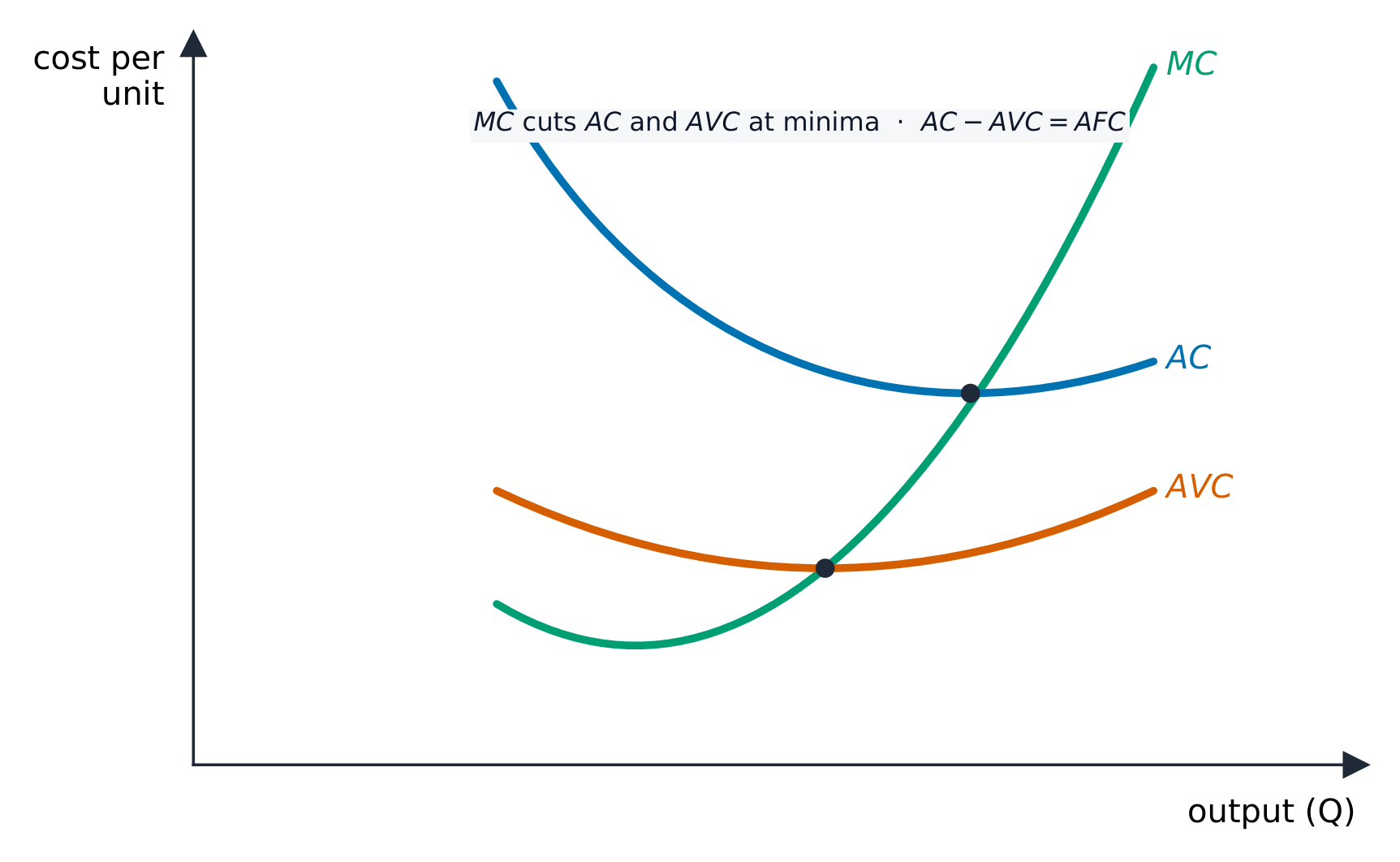
No longo prazo, todos os fatores variam, portanto olhamos para os rendimentos de escala 规模报酬. À medida que uma empresa cresce, pode obter economias de escala 规模经济 (custo médio mais baixo devido a compras em grande volume, uso de máquinas grandes e especialização). Se crescer demais, pode sofrer deseconomias de escala 规模不经济 (pessoa comunicação e controlo), e o custo médio sobe.

| Receita | Significado |
|---|---|
| receita total 总收益 | todo o dinheiro das vendas: $TR = P \times Q$ |
| receita média 平均收益 | receita por unidade, que é igual ao preço |
| receita marginal 边际收益 | a receita de mais uma unidade: $MR = \Delta TR / \Delta Q$ |
Exemplo resolvido. Uma empresa vende $10$ unidades a £50 cada. Para vender a 11ª unidade, ela deve baixar o preço para £48 em todas as unidades. Encontre a receita total em cada nível de produção e a receita marginal da 11ª unidade.
A receita marginal ($\text{\pounds} 28$) é bem inferior ao preço de £48, porque o preço mais baixo se aplica a todas as $11$ unidades, não apenas à adicional.
Lucro é receita total menos custo total. Os economistas incluem o custo de oportunidade dos recursos do proprietário no custo, logo:
Uma empresa maximiza o lucro no nível de produção onde $MR = MC$.
Exemplo resolvido. No melhor nível de produção, uma empresa produz $100$ unidades, vende cada uma por £12 (sua receita média) e tem um custo médio de £9. Encontre o lucro anormal.
Como a receita média (£12) está acima do custo médio (£9), a empresa obtém lucro supra-normal. Se, em vez disso, $AR = AC$, ela obteria apenas lucro normal; se $AR < AC$, ela teria prejuízo.
y = ax² + bx + c
Receita total sobe depois cai conforme o preço muda.
Custo médio tem formato de U; custo marginal o corta no mínimo. Diferentes estruturas de mercado precificam em relação a essas curvas.
Altere a produção. O custo marginal corta o custo médio em seu ponto mais baixo — o cerne da teoria da firma.
| English · Inglês | Chinese · Chinês | Pinyin |
|---|---|---|
| economies of scale/ɪˈkɒnəmiz ɒv skeɪl/ | 规模经济 | guī mó jīng jì |
| diseconomies of scale/ˌdɪsɪˈkɒnəmiz ɒv skeɪl/ | 规模不经济 | guī mó bù jīng jì |
| total revenue/ˈtəʊtl ˈrevənjuː/ | 总收益 | zǒng shōu yì |
| average revenue/ˈævrɪdʒ ˈrevənjuː/ | 平均收益 | píng jūn shōu yì |
| marginal revenue/ˈmɑːdʒɪnl ˈrevənjuː/ | 边际收益 | biān jì shōu yì |
| normal profit/ˈnɔːml ˈprɒfɪt/ | 正常利润 | zhèng cháng lì rùn |
| supernormal profit/ˈsuːpənɔːml ˈprɒfɪt/ | 超常利润 | chāo cháng lì rùn |
| subnormal profit/ˈsʌbnɔːml ˈprɒfɪt/ | 次正常利润 | cì zhèng cháng lì rùn |

Source: Cambridge International syllabus · Fonte: Programa Cambridge International
A market structure 市场结构 describes a market by the number of firms, the barriers to entry, and the type of product.
| Structure | Firms | Barriers | Product | Long-run profit |
|---|---|---|---|---|
| perfect competition 完全竞争 | very many | none | identical | normal only |
| monopolistic competition 垄断竞争 | many | low | slightly different | normal |
| oligopoly 寡头垄断 | a few | high | varies | often supernormal |
| monopoly 垄断 | one | very high | unique | supernormal |
price discrimination 价格歧视 is charging different consumers different prices for the same good (for example, cheaper train tickets for students). It needs price-setting power, groups with different elasticities, and a way to stop resale between groups. It raises the firm's profit.
Uma estrutura de mercado 市场结构 descreve um mercado pelo número de empresas, pelas barreiras de entrada e pelo tipo de produto.
| Estrutura | Empresas | Barreiras | Produto | Lucro de longo prazo |
|---|---|---|---|---|
| concorrência perfeita 完全竞争 | muitas | nenhuma | idêntico | apenas normal |
| concorrência monopolística 垄断竞争 | muitas | baixa | ligeiramente diferente | normal |
| oligopólio 寡头垄断 | poucas | alta | variado | frequentemente anormal |
| monopólio 垄断 | uma | muito alta | único | anormal |
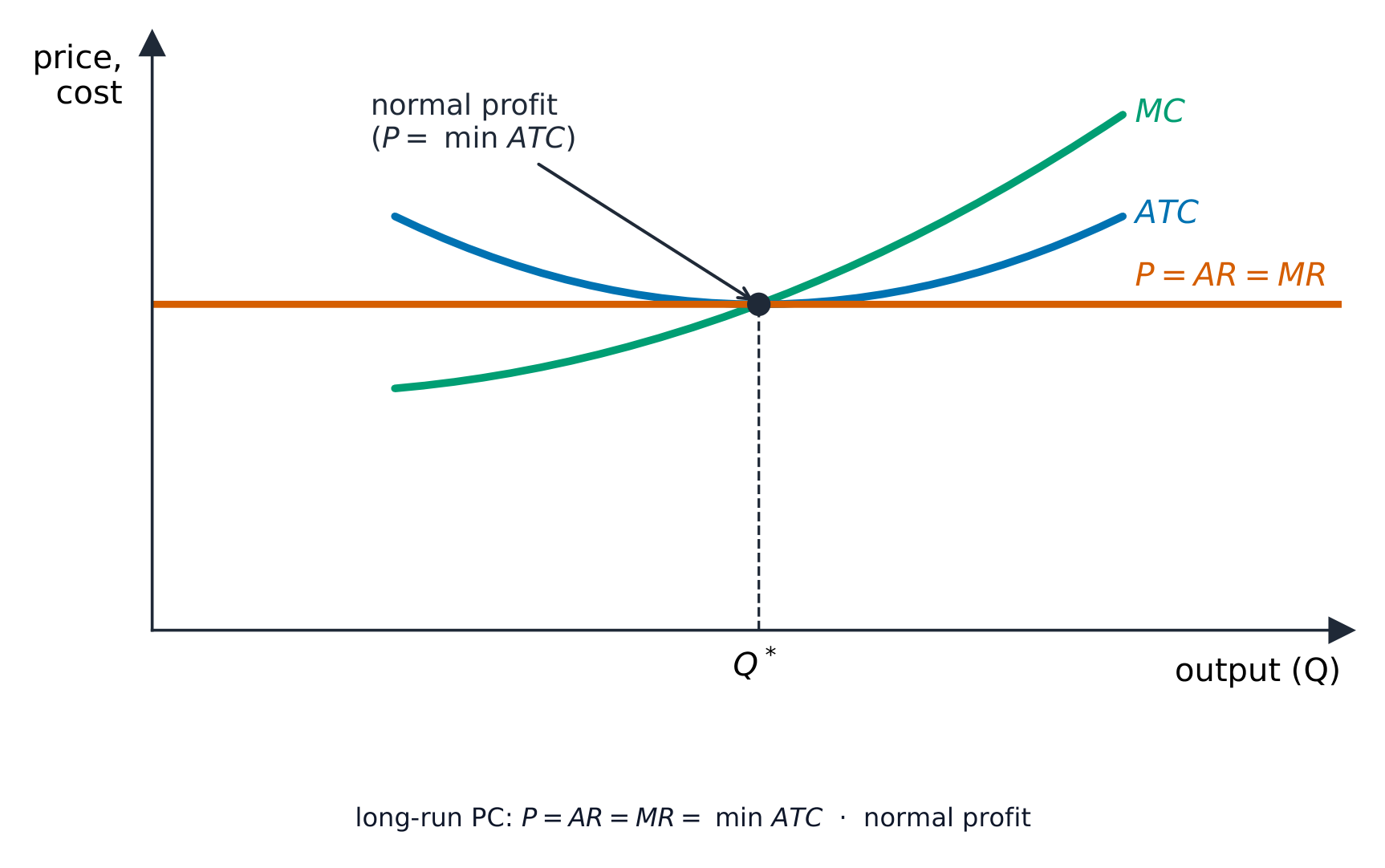
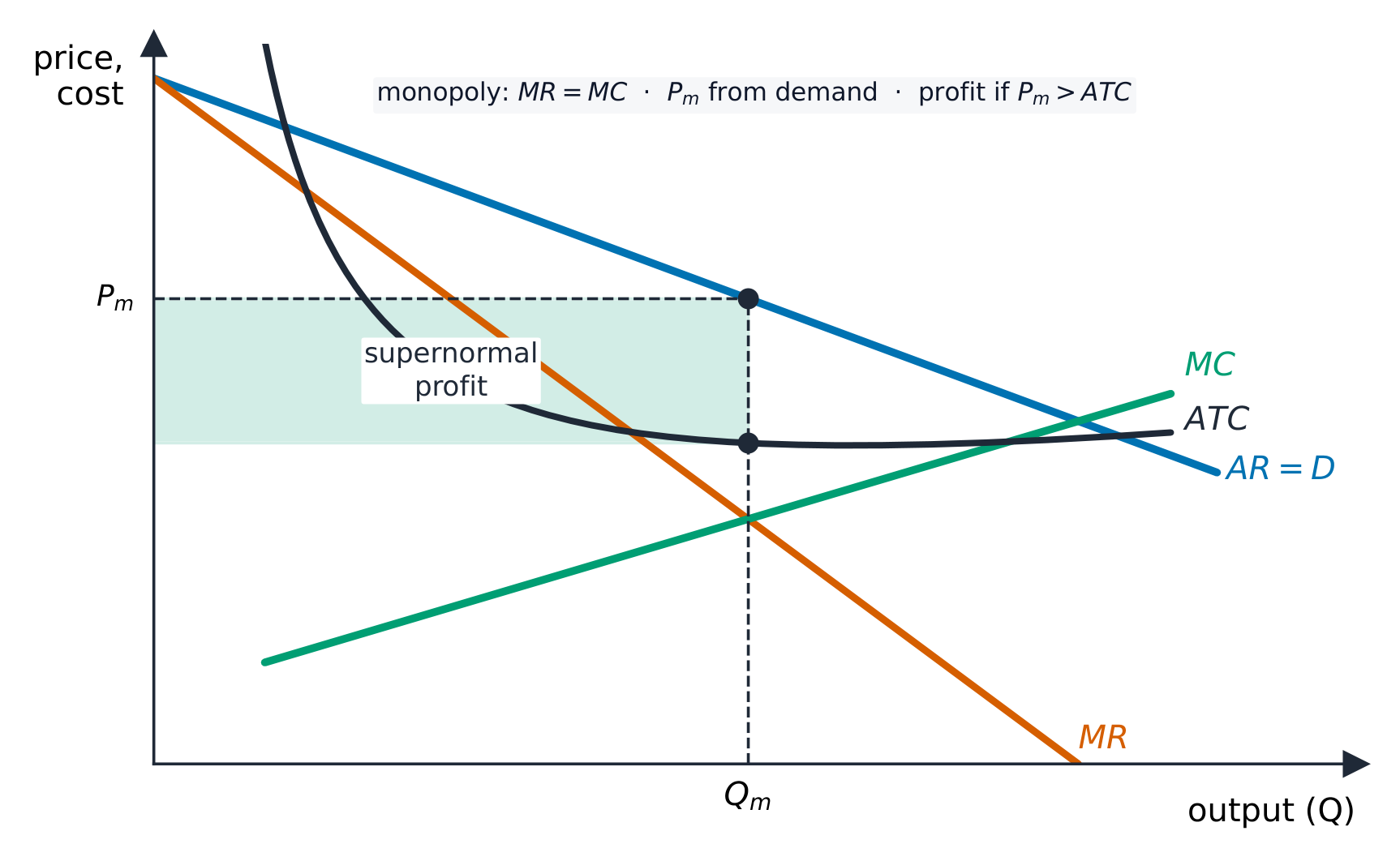
discriminação de preços 价格歧视 é cobrar preços diferentes de consumidores diferentes pelo mesmo bem (por exemplo, bilhetes de comboio mais baratos para estudantes). Precisa de poder de definição de preços, grupos com elasticidades diferentes e uma forma de impedir a revenda entre grupos. Aumenta o lucro da empresa.
Como uma empresa precifica depende de demanda e oferta; com poder de mercado ela pode cobrar acima do nível competitivo.
| English · Inglês | Chinese · Chinês | Pinyin |
|---|---|---|
| market structure/ˈmɑːkɪt ˈstrʌktʃə/ | 市场结构 | shì chǎng jié gòu |
| perfect competition/ˈpɜːfekt ˌkɒmpəˈtɪʃn/ | 完全竞争 | wán quán jìng zhēng |
| monopolistic competition/məˈnɒpəlɪstɪk ˌkɒmpəˈtɪʃn/ | 垄断竞争 | lǒng duàn jìng zhēng |
| oligopoly/ˌɒlɪˈɡɒpəli/ | 寡头垄断 | guǎ tóu lǒng duàn |
| monopoly/məˈnɒpəli/ | 垄断 | lǒng duàn |
| price taker/praɪs ˈteɪkə/ | 价格接受者 | jià gé jiē shòu zhě |
| product differentiation/ˈprɒdʌkt ˌdɪfəˌrenʃɪˈeɪʃn/ | 产品差异化 | chǎn pǐn chā yì huà |
| collusion/kəˈluːʒn/ | 合谋 | hé móu |
| cartel/kɑːˈtel/ | 卡特尔 | kǎ tè ěr |
| barriers to entry/ˈbærɪəz tʊ ˈentri/ | 进入壁垒 | jìn rù bì lěi |
| price competition/praɪs ˌkɒmpəˈtɪʃn/ | 价格竞争 | jià gé jìng zhēng |
| non-price competition/nɒn praɪs ˌkɒmpəˈtɪʃn/ | 非价格竞争 | fēi jià gé jìng zhēng |
| price discrimination/praɪs dɪˌskrɪmɪˈneɪʃn/ | 价格歧视 | jià gé qí shì |
| internal growth/ɪnˈtɜːnl ɡrəʊθ/ | 内部增长 | nèi bù zēng zhǎng |
| external growth/ekˈstɜːnl ɡrəʊθ/ | 外部增长 | wài bù zēng zhǎng |
| merger/ˈmɜːdʒə/ | 合并 | hé bìng |
| horizontal integration/ˌhɒrɪˈzɒntl ˌɪntɪˈɡreɪʃn/ | 横向一体化 | héng xiàng yī tǐ huà |
| vertical integration/ˈvɜːtɪkl ˌɪntɪˈɡreɪʃn/ | 纵向一体化 | zòng xiàng yī tǐ huà |
| conglomerate integration/kənˈɡlɒməreɪt ˌɪntɪˈɡreɪʃn/ | 混合一体化 | hùn hé yī tǐ huà |
| niche/niːʃ/ | 利基市场 | lì jī shì chǎng |
| barriers to exit/ˈbærɪəz tʊ ˈeɡzɪt/ | 退出壁垒 | tuì chū bì lěi |
| profit maximisation/ˈprɒfɪt ˌmæksɪmaɪˈzeɪʃn/ | 利润最大化 | lì rùn zuì dà huà |
| revenue maximisation/ˈrevənjuː ˌmæksɪmaɪˈzeɪʃn/ | 收益最大化 | shōu yì zuì dà huà |
| sales maximisation/seɪlz ˌmæksɪmaɪˈzeɪʃn/ | 销售最大化 | xiāo shòu zuì dà huà |
Source: Cambridge International syllabus · Fonte: Programa Cambridge International
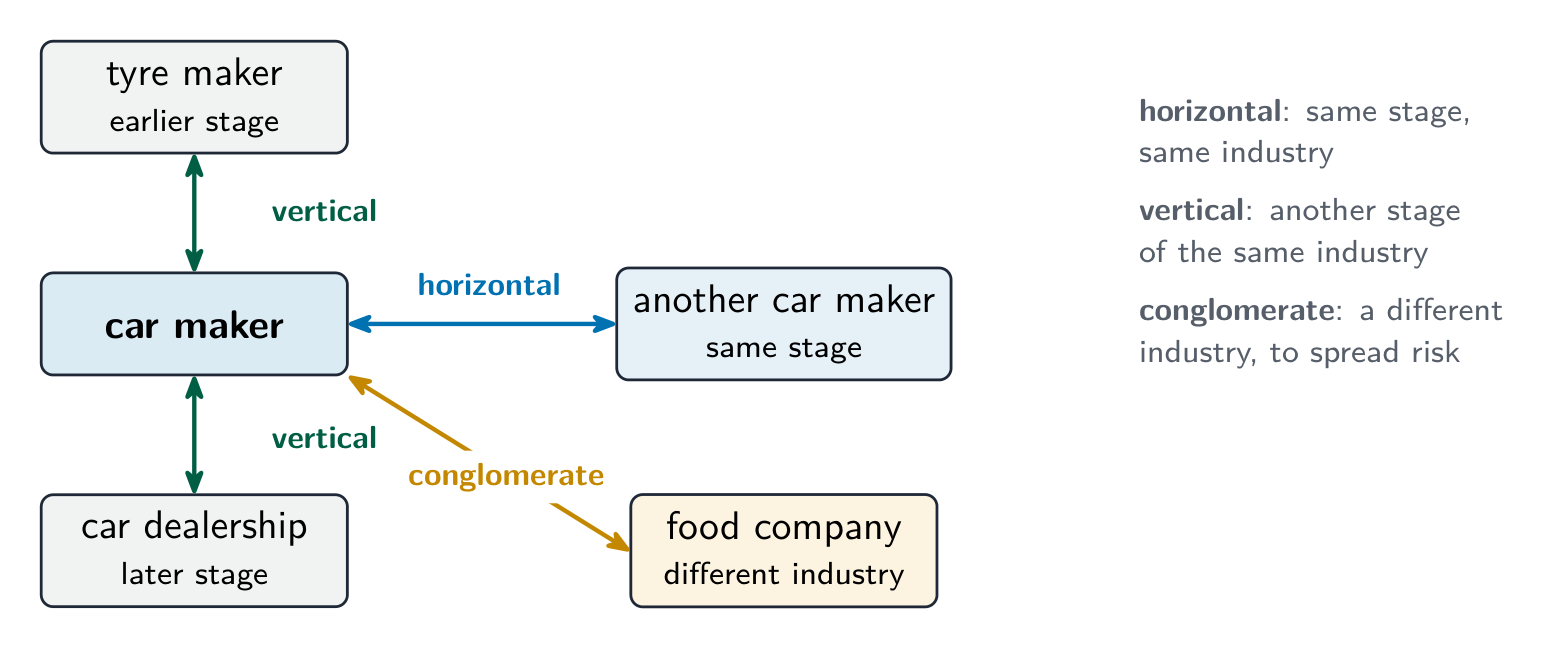
Firms grow in two ways:
Many firms stay small because the market is small (local services), the owner wants to keep control, or there are few economies of scale. They survive by offering personal service or filling a niche 利基市场.
Firms also face barriers to entry and barriers to exit 退出壁垒 (such as costly machines that cannot be sold). High exit barriers can trap a firm in a loss-making market.
As empresas crescem de duas maneiras:
Muitas empresas permanecem pequenas porque o mercado é pequeno (serviços locais), o proprietário quer manter o controlo ou há poucas economias de escala. Sobrevivem oferecendo atendimento pessoal ou preenchendo um nicho 利基市场.
As empresas também enfrentam barreiras de entrada e barreiras de saída 退出壁垒 (como máquinas caras que não podem ser vendidas). Altas barreiras de saída podem aprisionar uma empresa num mercado com prejuízos.
Classifique as decisões reais das empresas pelo objetivo que elas revelam.
Source: Cambridge International syllabus · Fonte: Programa Cambridge International
Not every firm simply chases the most profit.
In large companies the owners (shareholders) are not the managers. This divorce of ownership from control 所有权与控制权分离 creates the principal-agent problem 委托代理问题: managers (the agents) may pursue their own aims — bigger salaries or an easier life — instead of the owners' aim of maximum profit.
Nem toda a empresa persegue simplesmente o maior lucro.
Nas grandes empresas, os proprietários (acionistas) não são os gestores. Esta separação da propriedade do controlo 所有权与控制权分离 cria o problema do agente-principal 委托代理问题: os gestores (os agentes) podem perseguir seus próprios objetivos — salários maiores ou uma vida mais fácil — em vez do objetivo dos proprietários de lucro máximo.
Classifique as decisões reais das empresas pelo objetivo que elas revelam.
| English · Inglês | Chinese · Chinês | Pinyin |
|---|---|---|
| satisficing/ˈsætɪsfɪsɪŋ/ | 满意化 | mǎn yì huà |
| divorce of ownership from control/dɪˈvɔːs ɒv ˈəʊnəʃɪp frɒm kənˈtrəʊl/ | 所有权与控制权分离 | suǒ yǒu quán yǔ kòng zhì quán fēn lí |
| principal-agent problem/ˈprɪnsɪpl ˈeɪdʒənt ˈprɒbləm/ | 委托代理问题 | wěi tuō dài lǐ wèn tí |
Work through it step by step, with instant-check exercises. · Passe por ele passo a passo, com exercícios de verificação instantânea.
Past Papers · Provas Anteriores
Loading subjects… · Carregando matérias…