Skip to content · ⁨דלג לתוכן⁩

Magnetism and Electromagnetism · ⁨מגנטיות וחשמל-מגנטיות⁩

AP Physics 2 · ⁨פיזיקה AP 2⁩ · Topic 12 · ⁨נושא 12⁩

Video lesson for this topic · ⁨שיעור וידאו לנושא זה⁩ Open the video page · ⁨פתח את עמוד הוידאו⁩
9:21

מגנטיות וחשמל-מגנטיות

גבוה מעל הארקטיקה, השמי הלילה זוהרים בירוק. וילות האור הללו אינן אש. הן חלקיקים טעונים מהשמש, הגיעים במיליון…

English narration · English + 中文 subtitles burned in · ⁨קריאת קול באנגלית · תרגום אנגלי + סינית שרוף בתוך הסרטון⁩

12.1

Magnetic Fields · ⁨שדות מגנטיים⁩

Syllabus · ⁨סיילבוס⁩
English

Learning Objective 12.1.A: Describe the properties of a magnetic field.

  • 12.1.A.1 A magnetic field is a vector field that can be used to determine the magnetic force exerted on moving electric charges, electric currents, or magnetic materials.
    • 12.1.A.1.i Magnetic fields can be produced by magnetic dipoles or combinations of dipoles, but never by monopoles.
    • 12.1.A.1.ii Magnetic dipoles have north and south polarity.
  • 12.1.A.2 A magnetic field is a vector quantity and can be represented using vector field maps.
    • 12.1.A.2.i Magnetic field lines form closed loops.
    • 12.1.A.2.ii Magnetic fields in a bar magnet form closed loops, with the external magnetic field pointing away from one end (defined as the north pole) and returning to the other end (defined as the south pole).

Learning Objective 12.1.B: Describe the magnetic behavior of a material as a result of the configuration of magnetic dipoles in the material.

  • 12.1.B.1 Magnetic dipoles result from the circular or rotational motion of electric charges. In magnetic materials, this can be the motion of electrons.
    • 12.1.B.1.i Permanent magnetism and induced magnetism are system properties that both result from the alignment of magnetic dipoles within a system.
    • 12.1.B.1.ii No magnetic north pole is ever found in isolation from a south pole. For example, if a bar magnet is broken in half, both halves are magnetic dipoles.
    • 12.1.B.1.iii Magnetic poles of the same polarity will repel; magnetic poles of opposite polarity will attract.
    • 12.1.B.1.iv The magnitude of the magnetic field from a magnetic dipole decreases with increasing distance from the dipole.
  • 12.1.B.2 A magnetic dipole, such as a magnetic compass, placed in a magnetic field will tend to align with the magnetic field.
  • 12.1.B.3 A material's composition influences its magnetic behavior in the presence of an external magnetic field.
    • 12.1.B.3.i Ferromagnetic materials such as iron, nickel, and cobalt can be permanently magnetized by an external field that causes the alignment of magnetic domains or atomic magnetic dipoles.
    • 12.1.B.3.ii Paramagnetic materials such as aluminum, titanium, and magnesium interact weakly with an external magnetic field, in that the magnetic dipoles of the material do not remain aligned after the external field is removed.
    • 12.1.B.3.iii All materials have the property of diamagnetism, in that their electronic structure creates a usually weak alignment of the dipole moments of the material opposite the external magnetic field.
  • 12.1.B4 Earth's magnetic field may be approximated as a magnetic dipole.

Learning Objective 12.1.C: Describe the magnetic permeability of a material.

  • 12.1.C.1 Magnetic permeability is a measurement of the amount of magnetization in a material in response to an external magnetic field.
  • 12.1.C.2 Free space has a constant value of magnetic permeability, known as the vacuum permeability $\mu_0$, that appears in equations representing physical relationships.
  • 12.1.C.3 The permeability of matter has values different from that of free space and arises from the matter's composition and arrangement. It is not a constant for a material and varies based on many factors, including temperature, orientation, and strength of the external field.
עברית

מטרות למידה 12.1.A: תאר את מאפייני השדה המגנטי.

  • 12.1.A.1 שדה מגנטי הוא שדה וקטורי שיכול לשמש לקביעת הכוח המגנטי הפועל על מטענים חשמליים נעים, זרמים חשמליים או חומרים מגנטיים.
    • 12.1.A.1.i שדות מגנטיים יכולים להיות מופקים ממגנטים דו-קוטביים (דיפולים) או משילובים של דיפולים, אך לעולם לא ממגנטים חד-קוטביים (מונופולים).
    • 12.1.A.1.ii למגנטים דו-קוטביים יש קוטביות צפונית ודרומית.
  • 12.1.A.2 שדה מגנטי הוא גודל וקטורי ואפשר להציג אותו באמצעות מפות שדה וקטוריות.
    • 12.1.A.2.i קווי השדה המגנטי יוצרים לולאות סגורות.
    • 12.1.A.2.ii בשדה המגנטי של מקלט בר, קווי השדה יוצרים לולאות סגורות, כאשר השדה החיצוני מצביע הרחק מקצה אחד (שהוגדר כקוטב הצפוני) וחוזר לקצה השני (שהוגדר כקוטב הדרומי).

מטרות למידה 12.1.B: תאר את ההתנהגות המגנטית של חומר כתוצאה מהקונפיגורציה של הדיפולים המגנטיים בתוכו.

  • 12.1.B.1 דיפולים מגנטיים נובעים מתנועה מעגלית או סיבובית של מטענים חשמליים. בחומרים מגנטיים, זה עשוי להיות תנועת אלקטרונים.
    • 12.1.B.1.i מגנטיות קבועה ומגנטיות מושרדת הן מאפייני מערכת הנובעים משנייהם מהסדרת הדיפולים המגנטיים בתוך המערכת.
    • 12.1.B.1.ii לעולם לא נמצא קוטב צפוני בודד ללא קוטב דרומי. לדוגמה, אם מקלט בר נשבר לחצי, כל מחצית היא דיפול מגנטי.
    • 12.1.B.1.iii קוטבים מגנטיים בעלי אותה קוטביות ידחו זה את זה; קוטבים מגנטיים בעלי קוטביות הפוכה יתארו זה עם זה.
    • 12.1.B.1.iv הגודל של השדה המגנטי מדיפול מגנטי יור随着 העלייה במרחק מהדיפול.
  • 12.1.B.2 דיפול מגנטי, כמו מצפן מגנטי, הממוקם בשדה מגנטי י tende להתארגן בהתאם לשדה המגנטי.
  • 12.1.B.3 הרכב החומר משפיע על התנהגותו המגנטית בנוכחות שדה מגנטי חיצוני.
    • 12.1.B.3.i חומרים פרומגנטיים כמו ברזל, ניקל וקובלט יכולים להיות מוגנטיים באופן קבוע על ידי שדה חיצוני הגורם לסדרת הדומיינים המגנטיים או הדיפולים האטומיים המגנטיים.
    • 12.1.B.3.ii חומרים פאראמגנטיים כמו אלומיניום, טיטניום ומגנזיום מתאימים בצורה חלשה לשדה מגנטי חיצוני, שכן הדיפולים המגנטיים של החומר אינם נשארים מסודרים לאחר הסרת השדה החיצוני.
    • 12.1.B.3.iii לכל החומרים יש את התכונה של דיאמגנטיות, שבה המבנה האלקטרוני שלהם יוצר סדרת דיפולים בדרך כלל חלשה בכיוון הפוך לשדה המגנטי החיצוני.
  • 12.1.B.4 ניתן לקרב את השדה המגנטי של כדור הארץ כדיפול מגנטי.

מטרה לימודית 12.1.C: לתאר את הנפגעות המגנטית של חומר.

  • 12.1.C.1 נפגעות מגנטית היא מידה לכמות ההתמגנות בחומר כתגובה לשדה מגנטי חיצוני.
  • 12.1.C.2 לחלל הפנוי יש ערך קבוע של נפגעות מגנטית, המכונה נפגעות וקום $\mu_0$, הופיע במשוואות המייצגות קשרים פיזיקליים.
  • 12.1.C.3 לנפגעות החומר יש ערכים שונים מזה של החלל הפנוי והיא נובעת מההרכב והסידור של החומר. היא אינה קבועה עבור חומר מסוים ומשתנה בהתאם לגורמים רבים, כולל טמפרטורה, כיוון וחוזק השדה החיצוני.
Source: College Board AP Course and Exam Description · ⁨מקור: תיאור הקורס והמבחן של College Board AP⁩

English
The magnetic field around a current

Different materials respond very differently to a magnetic field, and the course names three. Ferromagnetic 铁磁性 materials (iron, nickel, cobalt) have dipoles that align strongly and stay aligned, so they can be permanent magnets. Paramagnetic 顺磁性 materials (aluminium, titanium) align only weakly and do not stay aligned. Diamagnetic 抗磁性 materials - in fact all materials have some diamagnetism - align weakly opposite the field. This behaviour comes from a material property, the permeability 磁导率: free space has a fixed permeability of free space $\mu_0$, while the permeability of matter differs from it and is not even constant for a given material.

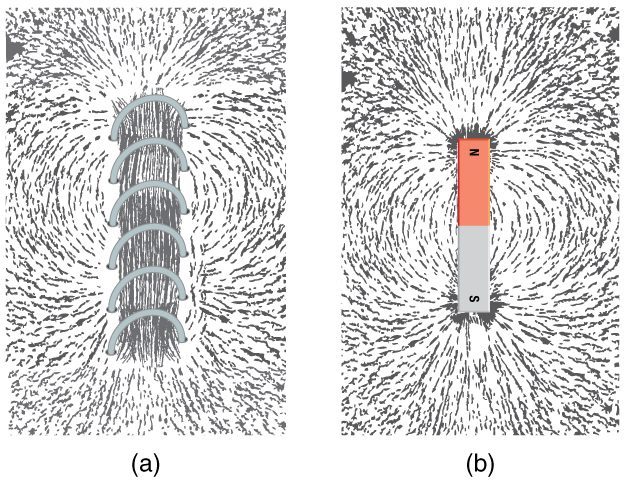
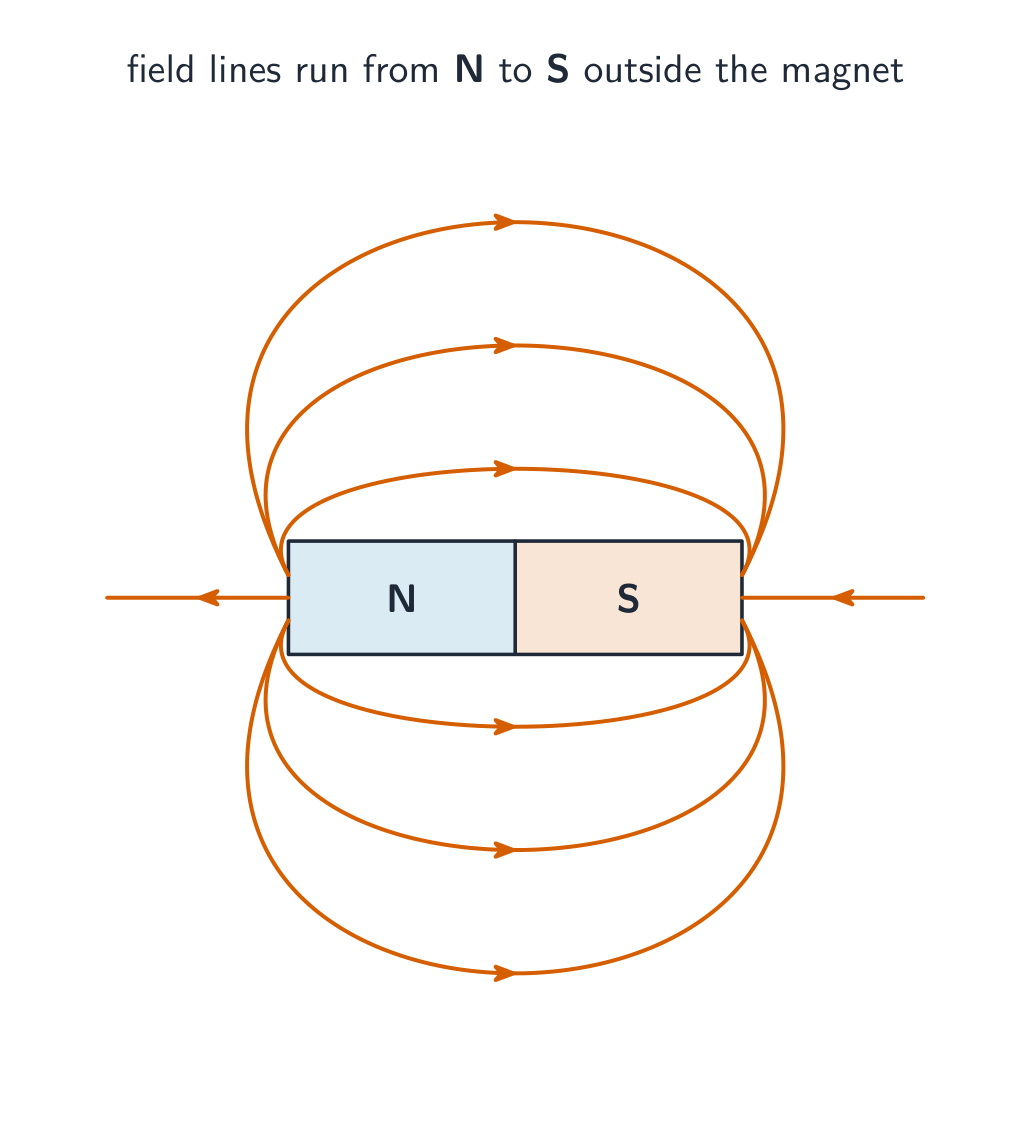
A magnetic field 磁场 $\vec{B}$ surrounds magnets and moving charges. Field lines run from a magnet's north pole to its south pole outside the magnet, and denser lines mean a stronger field. Magnetic poles always come in pairs – cutting a magnet in half makes two smaller magnets, never an isolated pole.

עברית
השדה המגנטי סביב זרם
מסכות אור ירוקות זוהרות בשמי הלילה מעל נוף שלגی
אורור: חלקיקים טעונים מהשמש מכוונים על ידי השדה המגנטי של כדור הארץ לכיוון הקטבים, שם הם פוגעים באוויר וגורמים לו לזרוח

חומרים שונים מגיבים בצורה שונה מאוד לשדה מגנטי, והקורס מציין שלושה. חומרים פרומגנטיים (ברזל, ניקל, קובלט) בעלי דו-קוטבים המתיישרים בחוזקה ונשארים מאונכים, ולכן יכולים להיות מגנטים קבועים. חומרים פאראמגנטיים (אלומיניום, טיטניום) מתיישרים רק במידה חלשה ואינם נשארים מאונכים. חומרים דיאמגנטיים – למעשה כל החומרים מצגימים דיאמגנטיזה מסוימת – מתיישרים במידה חלשה נגד השדה. התנהגות זו נובעת מתכונת של החומר, החדירות: ריקון בעל חדירות קבועה של ריקון $\mu_0$, בעוד שחדירות החומר שונה ממנה ואף אינה קבועה לחומר נתון.

שדה מגנטי $\vec{B}$ מקיף מגנטים ומטענים זזים. קווי השדה עוברים מקוטב הצפון של המגנט לקוטב הדרום שלו מחוץ למגנט, וקווים צפופים יותר משמעים שדה חזק יותר. קוטבים מגנטיים תמיד מגיעים בזוגות – חיתוך מגנט למחצית יוצר שני מגנטים קטנים יותר, לעולם לא קוטב מבודד.

קווי השדה עוברים מ-N ל-S מחוץ למגנט סגול, צפופים יותר כשהשדה חזק יותר
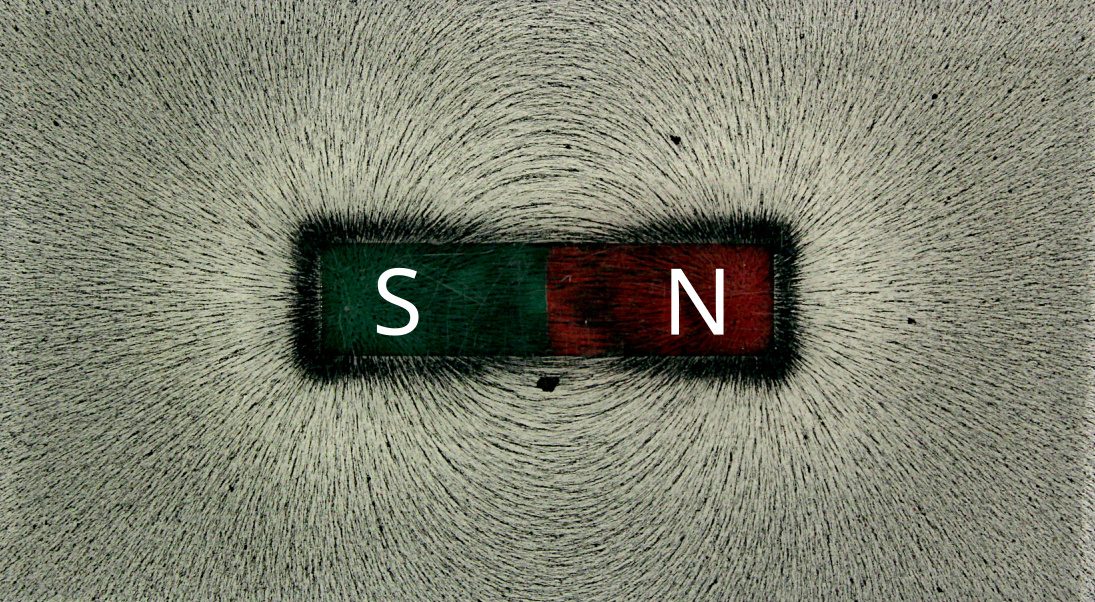
גרעיני ברזל יוצרים קווים מעוגלים סביב מגנט סגול
גרעיני ברזל מתיישרים לאורך השדה המגנטי, מה שהופך את קווי השדה הנסתרים של המגנט הסגול לגלויים
Explore · ⁨חקור⁩

See a magnet's field lines · ⁨ראה קווי שדה מגנטי⁩

Magnetic field lines run from the north pole to the south pole outside the magnet. Where the lines crowd together the field is strongest. · ⁨קווי השדה המגנטי עוברים מקוטב הצפון לקוטב הדרום מחוץ למגנט. ככל שקווים צפופים יותר, כך השדה חזק יותר.⁩

Vocabulary · ⁨מילון מונחים⁩ Train · ⁨אימון⁩
English עברית
Ferromagnetic/ˌferəməɡˈnetɪk/ פרומגנטי
Paramagnetic/ˌpærəməɡˈnetɪk/ פראמגנטי
Diamagnetic/ˌdaɪəməɡˈnetɪk/ דיאמגנטי
permeability/ˌpɜːməˈbɪlɪti/ פרמאיבליות
magnetic field/mæɡˈnetɪk fiːld/ שדה מגנטי
12.2

Magnetism and Moving Charges · ⁨מגנטיות ומטענים זזים⁩

Syllabus · ⁨סיילבוס⁩
English

Learning Objective 12.2.A: Describe the magnetic field produced by moving charged objects.

  • 12.2.A.1 A single moving charged object produces a magnetic field.
    • 12.2.A.1.i The magnetic field at a particular point produced by a moving charged object depends on the object's velocity and the distance between the point and the object.
    • 12.2.A.1.ii At a point in space, the direction of the magnetic field produced by a moving charged object is perpendicular to both the velocity of the object and the position vector from the object to that point in space and can be determined using the right-hand rule.
    • 12.2.A.1.iii The magnitude of the magnetic field is a maximum when the velocity vector and the position vector from the object to that point in space are perpendicular.

Learning Objective 12.2.B: Describe the force exerted on moving charged objects by a magnetic field.

  • 12.2.B.1 Magnetic forces describe interactions between moving charged objects.
  • 12.2.B.2 A magnetic field may exert a force on a charged object moving in that field.
    • 12.2.B.2.i The magnitude of the force exerted by a magnetic field on a moving charged object is proportional to the magnitude of the charge, the magnitude of the charged object's velocity, and the magnitude of the magnetic field and also depends on the angle between the velocity and magnetic field vectors.
      • Equation: $F_B = qvB\sin\theta$
    • 12.2.B.2.ii The direction of the force exerted by a magnetic field on a moving charged object is perpendicular to both the direction of the magnetic field and the velocity of the charge, as defined by the right-hand rule.
  • 12.2.B.3 In a region containing both a magnetic field and an electric field, a moving charged object will experience independent forces from each field.
  • 12.2.B.4 The Hall effect describes the potential difference created in a conductor by an external magnetic field that has a component perpendicular to the direction of charges moving in the conductor.

Boundary statement: Quantitative treatment of the magnitude of the magnetic force exerted by a magnetic field on a moving charge is limited to angles of 0, 90, and 180 degrees between the velocity and the magnetic field. Qualitative analysis of other angles is permitted.

עברית

מטרה לימודית 12.2.A: לתאר את השדה המגנטי הנוצר על ידי אובייקטים טעונים הזזים.

  • 12.2.A.1 אובייקט טעון זז יחיד מייצר שדה מגנטי.
    • 12.2.A.1.i השדה המגנטי בנקודה ספציפית הנוצר על ידי אובייקט טעון זז תלוי במהירות האובייקט ובמרחק בין הנקודה לבין האובייקט.
    • 12.2.A.1.ii בנקודה במרחב, הכיוון של השדה המגנטי הנוצר על ידי אובייקט טעון זז מאונך גם למהירות האובייקט וגם לווקטור המיקום מהאובייקט לנקודה זו במרחב,并可确定使用右手定则。 (Note: The original text had a mix of English and Chinese here; translating the full concept: ) ניתן לקבוע זאת באמצעות כלל היד הימנית.
    • 12.2.A.1.iii הגודל של השדה המגנטי הוא מקסימלי כאשר וקטור המהירות ווקטור המיקום מהאובייקט לנקודה זו במרחב מאונכים זה לזה.

מטרה לימודית 12.2.B: לתאר את הכוח הפועל על אובייקטים טעונים זזים על ידי שדה מגנטי.

  • 12.2.B.1 כוחות מגנטיים מתארים אינטראקציות בין אובייקטים טעונים זזים.
  • 12.2.B.2 שדה מגנטי עשוי להפעיל כוח על אובייקט טעון הנע בשדה זה.
    • 12.2.B.2.i גודל הכוח המופעל על ידי שדה מגנטי על אובייקט טעון זז פרופורציונלי לגודל המטען, לגודל מהירות האובייקט הטעון ולגודל השדה המגנטי, וכן תלוי בזווית בין וקטורי המהירות והשדה המגנטי.
      • משוואה: $F_B = qvB\sin\theta$
    • 12.2.B.2.ii כיוון הכוח המופעל על ידי שדה מגנטי על אובייקט טעון זז מאונך גם לכיוון השדה המגנטי וגם למהירות המטען, כפי שמוגדר על ידי כלל היד הימנית.
  • 12.2.B.3 באזור הכולל גם שדה מגנטי וגם שדה חשמלי, אובייקט טעון זז יחווה כוחות עצמאיים מכל שדה.
  • 12.2.B.4 אפקט הול מתאר את הפרש הפוטנציאל הנוצר במוליך על ידי שדה מגנטי חיצוני שמרכיב מאונך לכיוון המטענים הנעים במוליך.

ניסוח גבול: טיפול כמותי בגודל הכוח המגנטי הפועל על מטען זז מוגבל לזוויות של 0, 90 ו-180 מעלות בין המהירות לשדה המגנטי. ניתוח איכותי של זוויות אחרות מותר.

Source: College Board AP Course and Exam Description · ⁨מקור: תיאור הקורס והמבחן של College Board AP⁩

English
A moving charge in a magnetic field

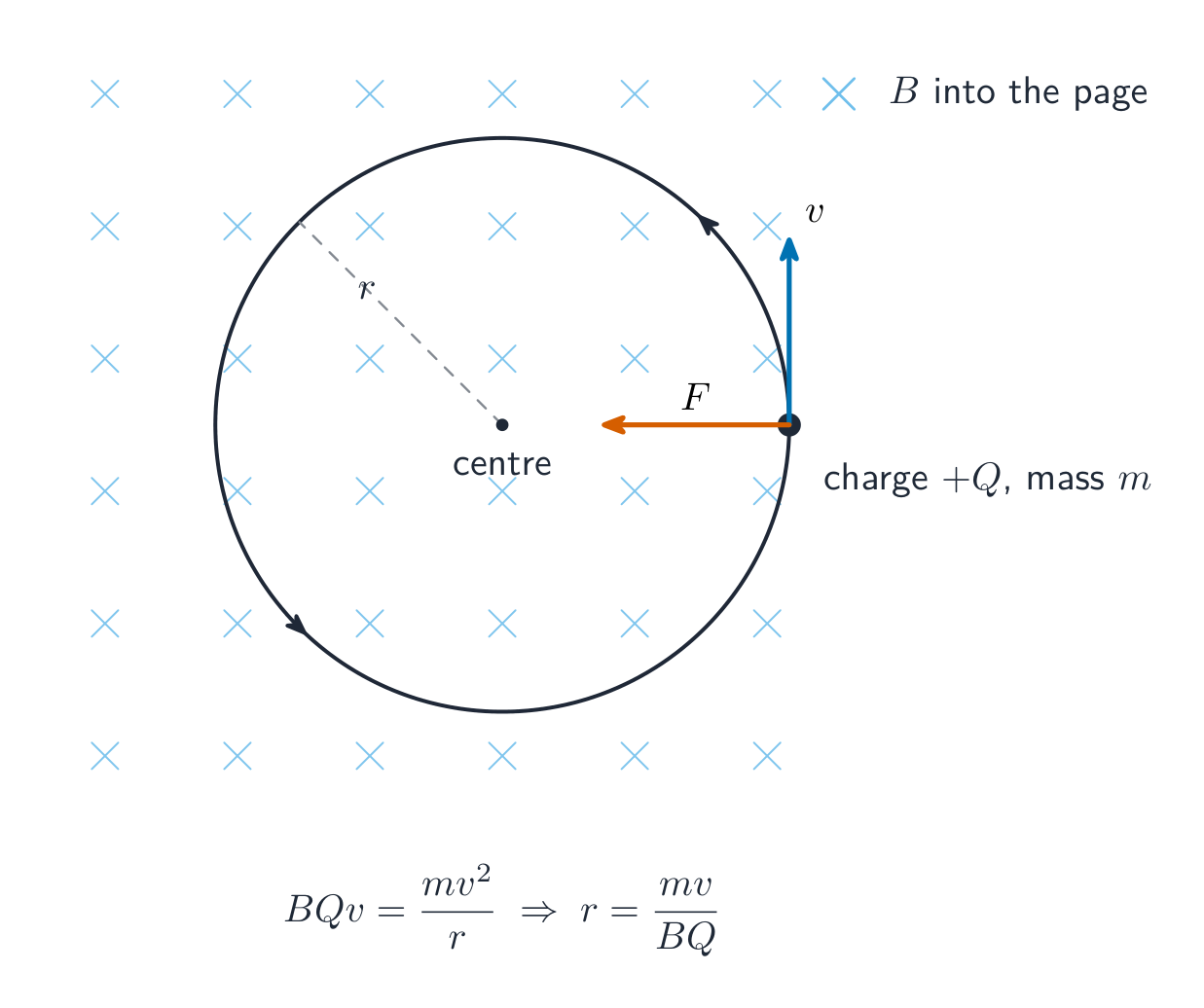
A charge moving through a magnetic field feels a magnetic force 磁力:

$$F=qvB\sin\theta,$$
where $\theta$ is the angle between the velocity and the field. The force is perpendicular to both $\vec{v}$ and $\vec{B}$ (use the right-hand rule), so it changes direction but not speed – a charge moving perpendicular to a uniform field travels in a circle. A stationary charge, or one moving parallel to the field, feels no magnetic force.

Worked example. A proton ($q=1.6\times10^{-19}\ \text{C}$, $m=1.67\times10^{-27}\ \text{kg}$) enters a $0.50\ \text{T}$ field at $2.0\times10^{5}\ \text{m/s}$, at right angles to the field. The magnetic force is

$$F=qvB=1.6\times10^{-19}\times2.0\times10^{5}\times0.50=1.6\times10^{-14}\ \text{N}.$$
This force is the centripetal force, so it bends the proton into a circle of radius
$$r=\frac{mv}{qB}=\frac{1.67\times10^{-27}\times2.0\times10^{5}}{1.6\times10^{-19}\times0.50}=4.2\times10^{-3}\ \text{m}.$$
Setting $qvB=\dfrac{mv^2}{r}$ and cancelling gives that neat $r=mv/(qB)$ – the principle behind mass spectrometers.

עברית
מטען נע בשדה מגנטי

מטען הנע דרך שדה מגנטי מרגיש כוח מגנטי:

$$F=qvB\sin\theta,$$
כאן $\theta$ הוא הזווית בין המהירות לבין השדה. הכוח הוא אנכי גם ל$\vec{v}$ וגם ל$\vec{B}$ (השתמשו בכלל היד הימנית), ולכן הוא משנה כיוון אך לא מהירות – מטען הנע אנכית לשדה אחיד נע על מעגל. מטען רדום או אחד הנע במקביל לשדה אינו מרגיש בכוח מגנטי.

חלקיק טעון הנע אופקית לשדה מגנטי עוקף מסלול מעגלי

דוגמה פתורה. פרוטון ($q=1.6\times10^{-19}\ \text{C}$, $m=1.67\times10^{-27}\ \text{kg}$) נכנס לשדה $0.50\ \text{T}$ במהירות $2.0\times10^{5}\ \text{m/s}$, אנכית לשדה. הכוח המגנטי הוא

$$F=qvB=1.6\times10^{-19}\times2.0\times10^{5}\times0.50=1.6\times10^{-14}\ \text{N}.$$
כוח זה הוא הכוח הצנטריפטי, ולכן הוא מכופף את הפרוטון למעגל בעל רדיוס
$$r=\frac{mv}{qB}=\frac{1.67\times10^{-27}\times2.0\times10^{5}}{1.6\times10^{-19}\times0.50}=4.2\times10^{-3}\ \text{m}.$$
השוואת $qvB=\dfrac{mv^2}{r}$ וביטול גורם לתוצאה נקייה של $r=mv/(qB)$ – העקרון שמניע את ספקטרומטרי המסה.

Vocabulary · ⁨מילון מונחים⁩ Train · ⁨אימון⁩
English עברית
magnetic force/mæɡˈnetɪk fɔːs/ כוח מגנטי
12.3

Magnetism and Current-Carrying Wires · ⁨מגנטיות וחוטים המוליכים זרם⁩

Syllabus · ⁨סיילבוס⁩
English

Learning Objective 12.3.A: Describe the magnetic field produced by a current-carrying wire.

  • 12.3.A.1 A current-carrying wire produces a magnetic field.
    • 12.3.A.1.i The magnetic field vectors around a long, straight, current-carrying wire are tangent to concentric circles centered on that wire. The field has no component toward, away from, or parallel to the long, straight, current-carrying wire.
    • 12.3.A.1.ii At a point in space, the magnitude of the magnetic field due to a long, straight, current-carrying wire is proportional to the magnitude of the current in the wire and inversely proportional to the perpendicular distance from the central axis of the wire to the point.
      • Equation: $B = \dfrac{\mu_0}{2\pi}\dfrac{I}{r}$
    • 12.3.A.1.iii The direction of the magnetic field created by a current-carrying wire is determined with the right-hand rule.
    • 12.3.A.1.iv The direction of the magnetic field at the center of a current-carrying loop is directed along the axis of the loop and can be found using the right-hand rule.
    • 12.3.A.1.v The magnetic field at a location near two or more current-carrying wires can be determined using vector addition principles.

Learning Objective 12.3.B: Describe the force exerted on a current-carrying wire by a magnetic field.

  • 12.3.B.1 A magnetic field may exert a force on a current-carrying wire.
    • 12.3.B.1.i The magnitude of the force exerted by a magnetic field on a current-carrying wire is proportional to the current, the length of the portion of the wire within the magnetic field, and the magnitude of the magnetic field, and also depends on the angle between the direction of the current in the wire and the direction of the magnetic field.
      • Equation: $F_B = I\ell B\sin\theta$
    • 12.3.B.1.ii The direction of the force exerted by the magnetic field on a current-carrying wire is determined by the right-hand rule.
עברית

מטרה לימודית 12.3.A: לתאר את השדה המגנטי הנוצר על ידי חוט המעביר זרם.

  • 12.3.A.1 חוט המעביר זרם יוצר שדה מגנטי.
    • 12.3.A.1.i וקטורי השדה המגנטי סביב חוט ארוך, ישר ומעביר זרם הם משיקים לעיגולים ממוקדים שמרכזם הוא החוט. לשדה אין רכיב הנשאל אליו, נסוג ממנו או מקביל לחוט הארוך, הישר ומעביר הזרם.
    • 12.3.A.1.ii בנקודה במרחב, הגודל של השדה המגנטי הנובע מחוט ארוך, ישר ומעביר זרם פרופורציונלי לגודל הזרם בחוט והופך ביחס הפוך למרחק האנכי מהציר המרכזי של החוט לנקודה.
      • משוואה: $B = \dfrac{\mu_0}{2\pi}\dfrac{I}{r}$
    • 12.3.A.1.iii כיוון השדה המגנטי הנוצר על ידי חוט מעביר זרם נקבע באמצעות כלל היד הימנית.
    • 12.3.A.1.iv כיוון השדה המגנטי במרכז לולאה המעבירה זרם הוא לאורך ציר הלולאה ואפשר למצוא אותו באמצעות כלל היד הימנית.
    • 12.3.A.1.v את השדה המגנטי במקום הקרוב לשני חוטים או יותר המעבירים זרם ניתן לקבוע באמצעות עקרונות חיבור וקטורי.

מטרת למידה 12.3.B: לתאר את הכוח הפועל על חוט המעביר זרם על ידי שדה מגנטי.

  • 12.3.B.1 שדה מגנטי עשוי לפעול בכוח על חוט המעביר זרם.
    • 12.3.B.1.i גודל הכוח הפועל על ידי שדה מגנטי על חוט המעביר זרם פרופורציונלי לזרם, לאורך החלק מהחוט הנמצא בתוך השדה המגנטי ולגודל השדה המגנטי, וכן תלוי בזווית שבין כיוון הזרם בחוט לבין כיוון השדה המגנטי.
      • משוואה: $F_B = I\ell B\sin\theta$
    • 12.3.B.1.ii כיוון הכוח הפועל על ידי השדה המגנטי על חוט המעביר זרם נקבע באמצעות כלל היד הימנית.

Source: College Board AP Course and Exam Description · ⁨מקור: תיאור הקורס והמבחן של College Board AP⁩

English

Because a current is moving charge, a magnetic field pushes on a current-carrying wire:

$$F=BIL\sin\theta.$$
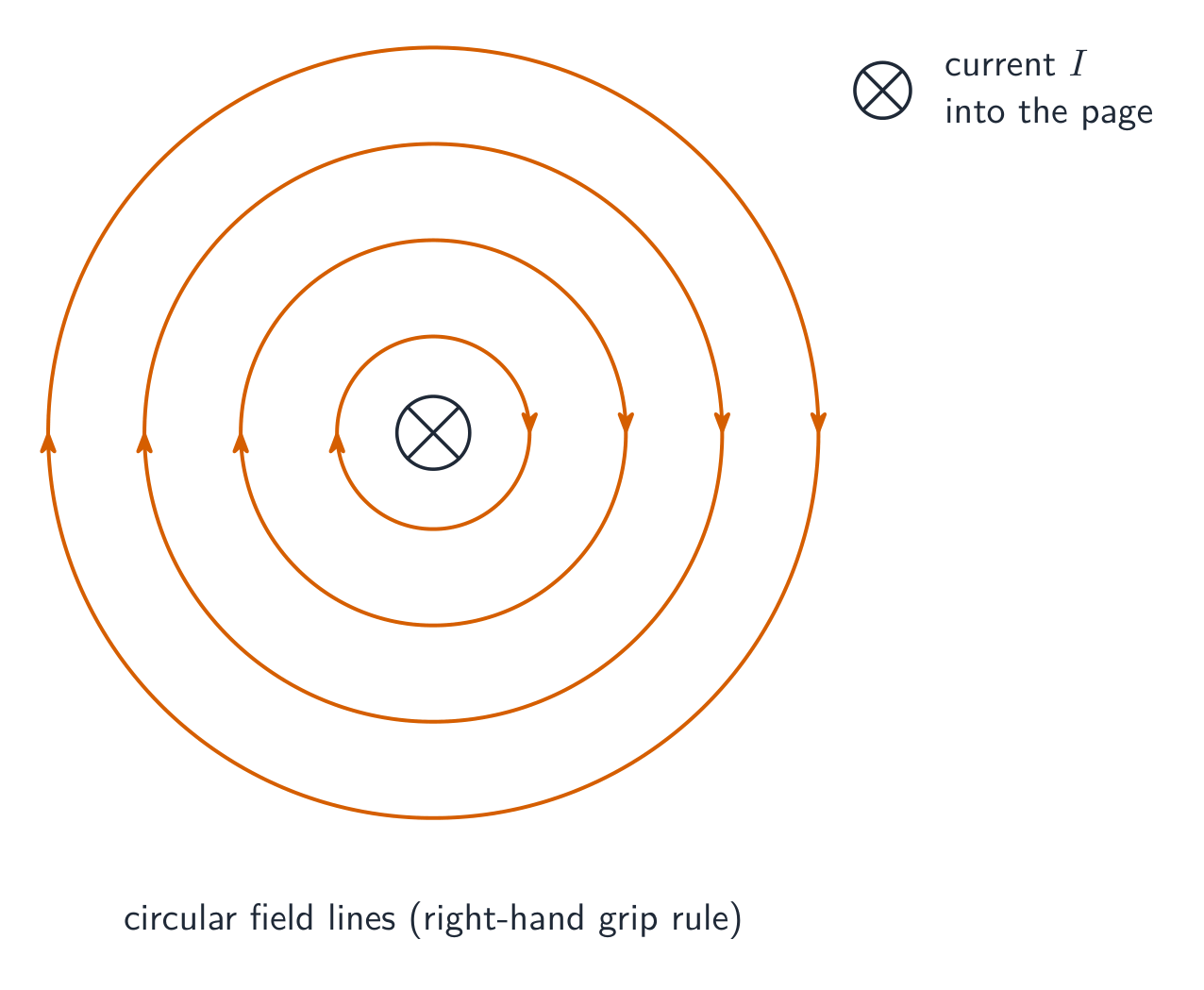
A current also creates its own magnetic field: circular field lines wrap around a straight wire (right-hand rule), and a coil (solenoid) makes a field like a bar magnet. This is how electromagnets and motors work.

Worked example. A $0.30\ \text{m}$ length of wire carries $4.0\ \text{A}$ at right angles to a $0.20\ \text{T}$ field. The force on it is $F=BIL=0.20\times4.0\times0.30=0.24\ \text{N}$ – the push that turns a motor's coil.

עברית

מכיוון שזרם הוא מטען נע, שדה מגנטי דוחף על חוט המעביר זרם:

$$F=BIL\sin\theta.$$
זרם גם יוצר את השדה המגנטי שלו: קווי שדה מעגליים עוטפים חוט ישר (כלל היד הימנית), וסליל (סולנויד) יוצר שדה כמו מגנט סגול. כך עובדים מגנטים חשמליים ומנועים.

קווי שדה מעגליים קונצנטריים מקיפים חוט ישר המעביר זרם
קווי שדה מעגליים קונצנטריים עוטפים חוט ישר המוליך זרם

דוגמה פתורה. חוט באורך $0.30\ \text{m}$ מוליך זרם $4.0\ \text{A}$ אנכית לשדה $0.20\ \text{T}$. הכוח עליו הוא $F=BIL=0.20\times4.0\times0.30=0.24\ \text{N}$ – הדחיפה שמסובבת את הסליל של המנוע.

סליל המעביר זרם (סולנואיד) יוצר שדה מגנטי דומה בדיוק לשדה של מקטב מוטרב
Explore · ⁨חקור⁩

Find the force on a current in a field · ⁨מצא את הכוח על זרם בשדה⁩

A current in a magnetic field feels a force $F = BIL$, at right angles to both. Use the left-hand rule; reverse the current or field and the force flips. · ⁨זרם בשדה מגנטי חווה כוח $F = BIL$, בניצוב לשני הקווים. השתמש בכלל היד השמאלית; הפכת הזרם או השדה תהפוך את הכוח.⁩

12.4

Electromagnetic Induction and Faraday's Law · ⁨השראה אלקטרומגנטית וחוק פארדיי⁩

Syllabus · ⁨סיילבוס⁩
English

Learning Objective 12.4.A: Describe the induced electric potential difference resulting from a change in magnetic flux.

  • 12.4.A.1 Magnetic flux is a description of the amount of the component of a magnetic field that is perpendicular to a cross-sectional area.
  • 12.4.A.2 Magnetic flux through a surface is proportional to the magnitude of the component of the magnetic field perpendicular to the surface and to the cross-sectional area of the surface.
    • Equation: $\Phi_B = BA\cos\theta$
    • 12.4.A.2.i The area vector is defined to be perpendicular to the plane of the surface and directed outward from a closed surface.
    • 12.4.A.2.ii The sign of the magnetic flux indicates whether the magnetic field is parallel to or antiparallel to the area vector.
  • 12.4.A.3 Faraday’s law describes the relationship between changing magnetic flux and the resulting induced emf in a system.
    • Equation: $|\mathcal{E}| = \left|\dfrac{\Delta\Phi_B}{\Delta t}\right|$
  • 12.4.A.4 Lenz’s law is used to determine the direction of an induced emf resulting from a changing magnetic flux.
    • Equation: $\mathcal{E} = -\dfrac{\Delta\Phi_B}{\Delta t} = -\dfrac{\Delta(BA\cos\theta)}{\Delta t}$
    • 12.4.A.4.i An induced emf generates a current that creates a magnetic field that opposes the change in magnetic flux.
    • 12.4.A.4.ii The right-hand rule is used to determine the relationships between current, emf, and magnetic flux.
  • 12.4.A.5 A common example of electromagnetic induction is a conducting rod on conducting rails in a region with a uniform magnetic field.
    • Derived equation: $\mathcal{E} = B\ell v$
עברית

מטרת למידה 12.4.A: לתאר את הפרש הפוטנציאל החשמלי המושרה כתוצאה משינוי בזרימת השדה המגנטי.

  • 12.4.A.1 זרימת השדה המגנטי היא תיאור של כמות הרכיב של השדה המגנטי שהוא אנכי למישור חתך מסוים.
  • 12.4.A.2 זרימת השדה המגנטי דרך משטח פרופורציונלית לגודל הרכיב של השדה המגנטי האנכי למשטח ולמישור החתך של המשטח.
    • משוואה: $\Phi_B = BA\cos\theta$
    • 12.4.A.2.i וקטור השטח מוגדר כאנכי למישור המשטח ובכיוון החוצה ממנו משטח סגור.
    • 12.4.A.2.ii סימן זרימת השדה המגנטי מצביע אם השדה המגנטי מקביל או אנטי-מקביל לוקטור השטח.
  • 12.4.A.3 חוק פאראדיי מתאר את הקשר בין שינוי בזרימת השדה המגנטי לבין ה-EMF המושרה בתוצאתו במערכת.
    • משוואה: $|\mathcal{E}| = \left|\dfrac{\Delta\Phi_B}{\Delta t}\right|$
  • 12.4.A.4 חוק לנץ משמש לקביעת כיוון של EMF מושרה הנובע משינוי בזרימת השדה המגנטי.
    • משוואה: $\mathcal{E} = -\dfrac{\Delta\Phi_B}{\Delta t} = -\dfrac{\Delta(BA\cos\theta)}{\Delta t}$
    • 12.4.A.4.i EMF מושרה מייצר זרם היוצר שדה מגנטי הנגד לשינוי בזרימת השדה המגנטי.
    • 12.4.A.4.ii כלל היד הימנית משמש לקביעת הקשרים בין זרם, EMF וזרימת השדה המגנטי.
  • 12.4.A.5 דוגמה נפוצה להשראה אלקטרומגנטית היא מוט מוליך על מסילות מוליכות באזור עם שדה מגנטי אחיד.
    • משוואה גזורה: $\mathcal{E} = B\ell v$

Source: College Board AP Course and Exam Description · ⁨מקור: תיאור הקורס והמבחן של College Board AP⁩

English
Electromagnetic induction

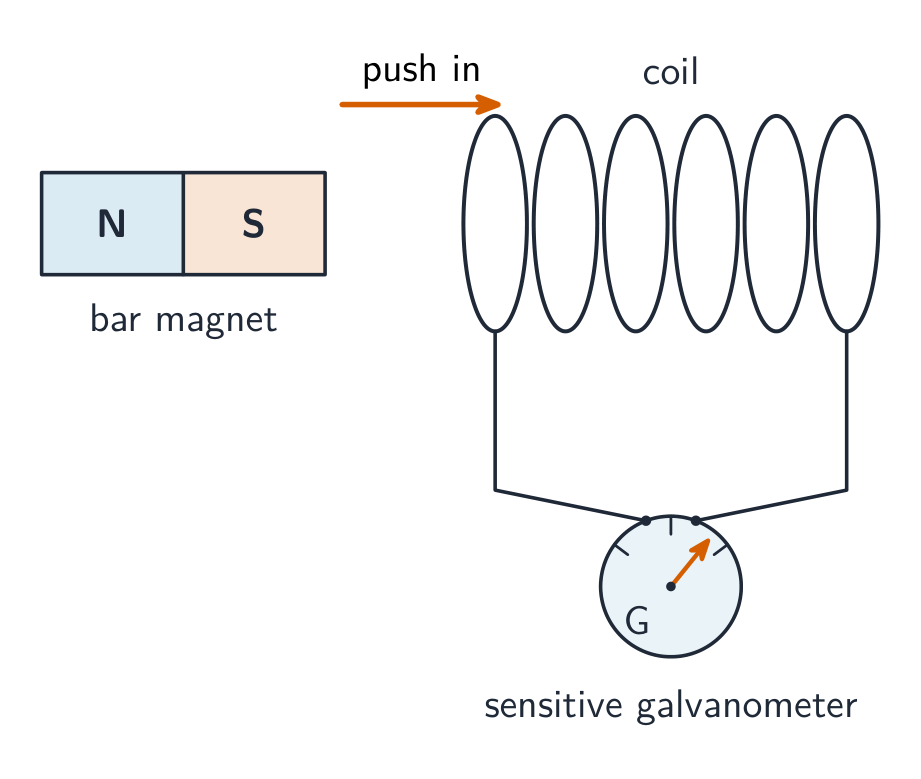
A changing magnetic field through a loop drives a current – electromagnetic induction 电磁感应. The magnetic flux 磁通量 $\Phi=BA\cos\theta$ measures how much field passes through the loop. Faraday's law 法拉第定律 gives the induced emf:

$$\varepsilon=-\frac{\Delta\Phi}{\Delta t}.$$
The flux changes if the field, the area, or the loop's orientation changes. Lenz's law 楞次定律 (the minus sign) says the induced current flows so as to oppose the change that caused it – the basis of generators.

Worked example. The magnetic flux through a single loop drops from $0.020\ \text{Wb}$ to $0.008\ \text{Wb}$ in $0.030\ \text{s}$. The average induced emf is

$$\varepsilon=\left|\frac{\Delta\Phi}{\Delta t}\right|=\frac{0.020-0.008}{0.030}=0.40\ \text{V}.$$
A coil of $N$ turns would give $N$ times this – which is why generators and transformers use many-turn coils.

עברית
השראת אלקטרומגנטית

שדה מגנטי משתנה החודר לתוך לולעה מדריך זרם – השראה אלקטרומגנטית. הזרם המגנטי $\Phi=BA\cos\theta$ מדד את כמות השדה העוברת דרך הלולאה. חוק פארדיי נותן את הכוח האלקטרו-מניעת המופעל:

$$\varepsilon=-\frac{\Delta\Phi}{\Delta t}.$$
הזרם משתנה אם השדה, השטח או ההתייחסות הלולאה משתנים. חוק לנץ (הסימן המינוס) קובע שהזרם המופעל זורם בכיוון שמצליח להתנגד לשינוי שיצר אותו – הבסיס למחולleys.

זזת מקטב לתוך סליל מופעת כוח אלקטרו-מניעי (e.m.f.) שמדריך זרם
זוזת מקטב לתוך סליל מופעת כוח אלקטרו-מניעי (e.m.f.) שמדריך זרם

דוגמה פתרה. השטף המגנטי דרך לולאה אחת יורד מ-$0.020\ \text{Wb}$ ל-$0.008\ \text{Wb}$ בתוך $0.030\ \text{s}$. ה-EMF המופעל הממוצע הוא

$$\varepsilon=\left|\frac{\Delta\Phi}{\Delta t}\right|=\frac{0.020-0.008}{0.030}=0.40\ \text{V}.$$
סליל בעל $N$ הילוכים יניב ⟨$N$⟩ פעמים זה – ולכן מחולleys ומפסים משתמשים בסלילים רבים-הילכיים.

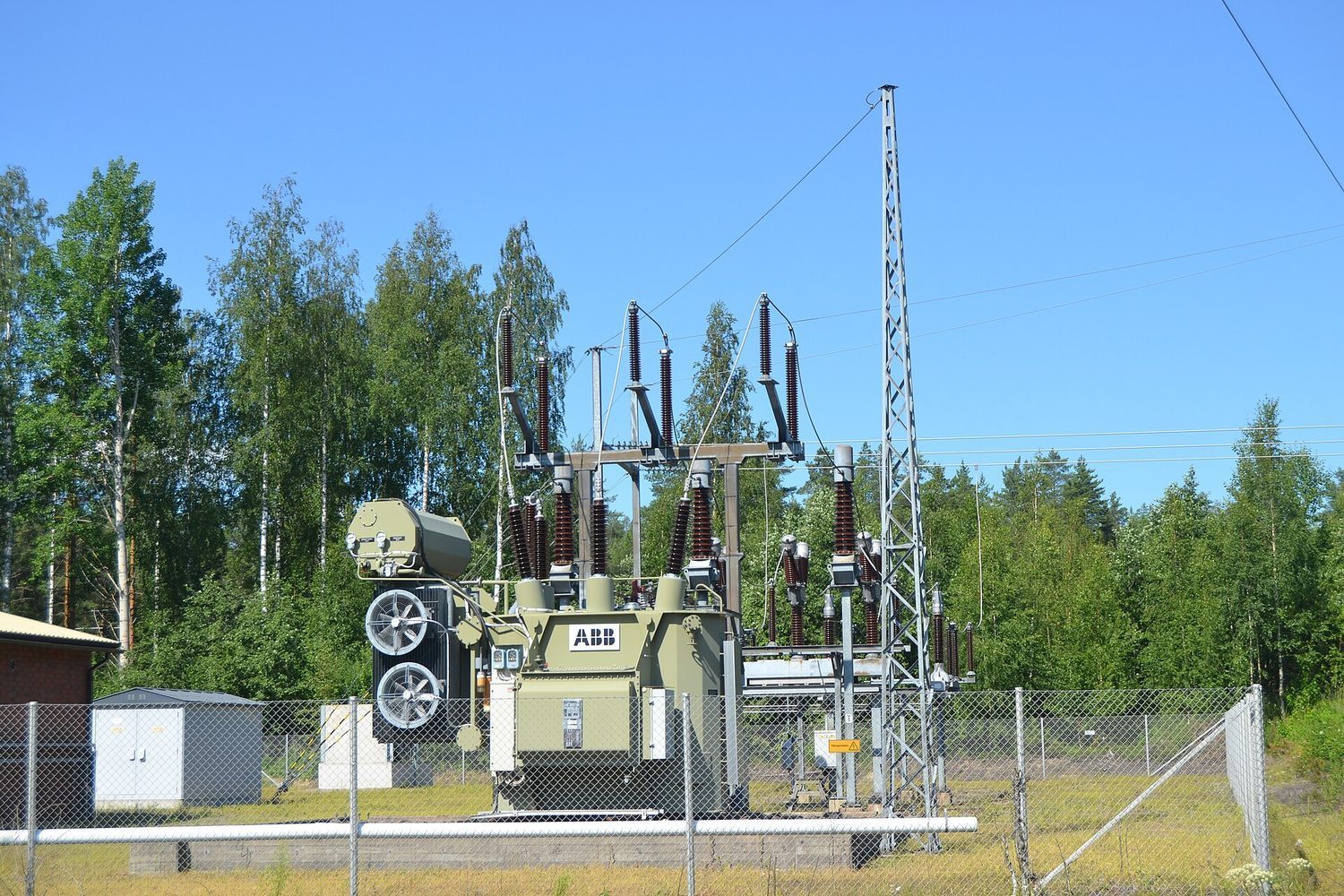
מתחנת חשמל: הזרם המגנטי המשתנה בסלילים מופע את המתחים המספקים חשמל לרשת
Explore · ⁨חקור⁩

Induce a voltage by moving a magnet · ⁨יצר מתח על ידי הזזת מגנט⁩

Faraday's law: a changing magnetic flux through a coil induces a voltage. Move the magnet faster and the induced EMF grows; Lenz's law sets its direction to oppose the change. · ⁨חוק פאראדיי: שינוי בפלוקס המגנטי דרך סליל יוצר מתח. הזזת המגנט מהר יותר מגבירה את ה-EMF המושבה; חוק לנץ קובע את הכיוון שלו כדי להתנגד לשינוי.⁩

Vocabulary · ⁨מילון מונחים⁩ Train · ⁨אימון⁩
English עברית
electromagnetic induction/ɪˌlektrəʊməɡˈnetɪk ɪnˈdʌkʃn/ הנדסה אלקטרומגנטית
magnetic flux/mæɡˈnetɪk flʌks/ רוחב זרם מגנטי
Faraday's law/ˈfærədeɪz lɔː/ חוק פאראדיי
Lenz's law/ˈlentsɪz lɔː/ חוק לנץ
12.4

Exam tips · ⁨טיפים לבחינות⁩

English
  • The magnetic force $F=qvB\sin\theta$ is perpendicular to the velocity, so it changes direction (a circle) but not speed; a stationary charge or one moving along the field feels no force.
  • Use $F=BIL$ for the force on a current-carrying wire (the motor effect).
  • A current creates a magnetic field (circles around a wire; a solenoid acts like a bar magnet).
  • Induction needs a changing flux $\Phi=BA$ — a stationary magnet in a coil induces nothing.
  • Faraday: $\varepsilon=\Delta\Phi/\Delta t$ (times $N$ turns); Lenz: the induced current opposes the change (energy conservation).
עברית
  • הכוח המגנטי $F=qvB\sin\theta$ הוא אנכי לכיוון המהירות, ולכן משנה כיוון (מעגל) אך לא מהירות; מטען שבווי or אחד הנע לאורך השדה אינו מרגיש כוח.
  • השתמש ב$F=BIL$ לכוח על חוט המעביר זרם (אפקט המנוע).
  • זרם יוצר שדה מגנטי (מעגלים סביב חוט; סולנואיד פועל כמו מקטב מוטרב).
  • השראה דורשת זרם משתנה $\Phi=BA$ – מקטב שבווי בתוך סליל אינו מופע כלום.
  • פארדיי: $\varepsilon=\Delta\Phi/\Delta t$ (פעמי $N$ הילוכים); לנץ: הזרם המופעל מתנגד לשינוי (שימור אנרגיה).

Interactive lessons on this topic · ⁨שיעורים אינטראקטיביים בנושא זה⁩

Work through it step by step, with instant-check exercises. · ⁨לעבור על הדברים צעד אחר צעד, עם תרגילים לבדיקה מיידית.⁩

Past Papers · ⁨מבחני עבר⁩

More topics in AP Physics 2 · ⁨פיזיקה AP 2⁩ · ⁨נושאים נוספים בAP Physics 2 · ⁨פיזיקה AP 2⁩⁩

Log in or create account · ⁨היכנס או צור חשבון⁩

IGCSE, A-Level & AP