Skip to content · ⁨Saltar al contenido⁩
Subjects · ⁨Temas⁩

IGCSE Inglés

Tips · ⁨Consejos⁩

El IGCSE English as a Second Language (0510) se evalúa en cuatro habilidades: lectura, escritura, comprensión auditiva y expresión oral. Los temas de escritura aquí están organizados según el tipo de texto que pide el examen — correo electrónico informal, carta formal, informe, artículo, reseña, ensayo — porque cada uno tiene sus propias convenciones y se califica en función de ellas.

Para un candidato de segunda lengua, las puntuaciones rara vez se pierden por ideas. Se pierden en el registro (un correo electrónico informal escrito de forma formal), la estructura (un artículo sin titular o párrafos) y la exactitud en algunos patrones repetidos — artículos, tiempos verbales, preposiciones.

Corregir tus cinco errores recurrentes vale más que aprender nuevo vocabulario.

  • 1

    Habilidad de lectura

    Watch lesson · ⁨Ver lección⁩
    1.1

    Reading for specific information · ⁨Lectura de información específica⁩

    Syllabus
    English
    1. skim a text quickly to get the general idea, then scan to locate specific facts, names, numbers, times and places
    2. answer short questions with a single word or short phrase, using the exact detail from the text
    3. predict what kind of information a question is asking for before reading the text closely
    Español
    1. lea un texto rápidamente para captar la idea general y, a continuación, escanee el documento para localizar hechos específicos, nombres, números, horas y lugares;
    2. responda preguntas breves con una sola palabra o frase corta, utilizando el dato exacto del texto;
    3. predecir qué tipo de información solicita una pregunta antes de leer el texto con detenimiento.

    Source: Cambridge International syllabus · ⁨Fuente: Plan de estudios Cambridge International⁩

    English

    In the exam you do not read every word slowly. You change your speed to fit your goal.

    Skim first, then scan

    • First skim 略读 the text. Read it fast to get the gist 大意 — the general idea. Look at the title, the first line of each paragraph 段落, and any pictures.
    • Then scan 扫读 to find one piece of information. Move your eyes quickly down the page. Do not read every word. Stop when you see what you need.
    • Use scanning for facts like names, numbers, dates, times and places.

    Match the question to the text

    • Read the question first. Decide what kind of answer it wants: a name? a number? a reason?
    • Predict 预测 the answer before you look. This helps your eyes find it faster.
    • Find the part of the text that talks about the same idea. The answer is usually there.

    Write short, exact answers

    • Here you write a single word or a short phrase 短语, not a full sentence.
    • Copy the exact word from the text when you can.
    • Answer only what the question asks. Extra words can lose the mark.
    Español

    En el examen no lee cada palabra lentamente. Cambia su velocidad según su objetivo.

    Escanee primero, luego busque

    • Primero escanee 略读 el texto. Léalo rápido para obtener la idea principal 大意 — la idea general. Mire el título, la primera línea de cada párrafo 段落 y cualquier imagen.
    • Luego busque 扫读 para encontrar un dato. Desplace los ojos rápidamente por la página. No lea cada palabra. Deténgase cuando vea lo que necesita.
    • Use la búsqueda de datos para hallar hechos como nombres, números, fechas, horas y lugares.
    Dos bloques de texto comparados: escanear es una pasada rápida sobre todas las líneas para la idea principal, buscar salta hacia abajo en la página y se detiene en un dato destacado
    Escanear pasa por encima de todo para captar la idea principal; buscar salta directamente a un dato
    Un panel de salida grande de aeropuerto con muchas horas de vuelo, destinos y puertas
    Un panel de salida es un texto real donde se busca: no se lee cada línea, sino que se salta directamente a la hora o puerta del vuelo necesaria

    Empareje la pregunta con el texto

    • Lea la pregunta primero. Decida qué tipo de respuesta busca: ¿un nombre? ¿un número? ¿una razón?
    • Prediga 预测 la respuesta antes de mirarla. Esto ayuda a sus ojos a encontrarla más rápido.
    • Busque la parte del texto que hable sobre la misma idea. La respuesta suele estar ahí.

    Escriba respuestas cortas y exactas

    • Aquí escribe una sola palabra o una frase corta 短语, no una oración completa.
    • Copie la palabra exacta del texto cuando sea posible.
    • Responda solo lo que pide la pregunta. Las palabras extra pueden hacerle perder puntos.
    Vocabulary · ⁨Vocabulario⁩ Train · ⁨Entrenar⁩
    English · ⁨Inglés⁩ Chinese · ⁨Chino⁩ Pinyin
    skim/skɪm/ 略读 lüè dú
    gist/dʒɪst/ 大意 dà yì
    paragraph/ˈpærəɡræf/ 段落 duàn luò
    scan/skæn/ 扫读 sǎo dú
    predict/prɪˈdɪkt/ 预测 yù cè
    phrase/freɪz/ 短语 duǎn yǔ
    1.2

    Connecting ideas across a text · ⁨Conectar ideas a través de un texto⁩

    Syllabus
    English
    1. follow how ideas, opinions and attitudes in a text connect to one another
    2. match each question to the section or short text that contains the relevant idea (multiple matching)
    3. recognise words and phrases that signal time, cause and effect, addition and contrast
    Español
    1. seguir cómo se conectan entre sí las ideas, opiniones y actitudes en un texto
    2. emparejar cada pregunta con la sección o el texto breve que contiene la idea pertinente (emparejamiento múltiple)
    3. reconocer palabras y frases que señalan tiempo, causa y efecto, adición y contraste

    Source: Cambridge International syllabus · ⁨Fuente: Plan de estudios Cambridge International⁩

    English

    A long text is not just a list of facts. The ideas link to each other, and you must follow how.

    Multiple matching

    • In a multiple matching 多项匹配 task you read several short texts, or several parts of one text.
    • Each question describes an idea. You choose the text or part that matches it.
    • The words in the question are usually different from the words in the text. Look for the same meaning, not the same words. This is called a paraphrase 改写.

    Signal words

    • Writers use small words to show how ideas connect. These are signal words 信号词.
    • Some show addition 递进 (also, in addition, as well as). Some show contrast 对比 (but, however, although). Some show cause and effect 因果 (because, so, as a result).
    • When you notice these words, you can see how the writer's ideas fit together.
    Español

    Un texto largo no es solo una lista de datos. Las ideas se vinculan entre sí y debe seguir cómo lo hacen.

    Selección múltiple (multiple matching)

    • En una tarea de selección múltiple 多项匹配 lee varios textos cortos, o varias partes de un mismo texto.
    • Cada pregunta describe una idea. Elige el texto o la parte que coincida con ella.
    • Las palabras de la pregunta suelen ser diferentes a las del texto. Busca el mismo significado, no las mismas palabras. A esto se le llama parafraseo 改写.

    Palabras clave

    • Los escritores usan palabras pequeñas para mostrar cómo se conectan las ideas. Estas son las palabras clave 信号词.
    • Algunas indican adición 递进 (también, además, así como). Otras indican contrastación 对比 (pero, sin embargo, aunque). Algunas indican causa y efecto 因果 (porque, así que, como resultado).
    • Cuando notas estas palabras, puedes ver cómo se articulan las ideas del autor.
    Tres tarjetas: palabras de adición añaden otra idea del mismo tipo, palabras de contrastación dirigen dos ideas en direcciones distintas, palabras de causa y efecto vinculan una causa con su efecto
    Las tres familias de palabras clave y lo que hacen con las ideas
    Vocabulary · ⁨Vocabulario⁩ Train · ⁨Entrenar⁩
    English · ⁨Inglés⁩ Chinese · ⁨Chino⁩ Pinyin
    multiple matching/ˈmʌltɪpl ˈmætʃɪŋ/ 多项匹配 duō xiàng pǐ pèi
    paraphrase/ˈpærəfreɪz/ 改写 gǎi xiě
    signal words/ˈsɪɡnl wɜːdz/ 信号词 xìn hào cí
    addition/əˈdɪʃn/ 递进 dì jìn
    contrast/ˈkɒntræst/ 对比 duì bǐ
    cause and effect/kɔːz ænd ɪˈfekt/ 因果 yīn guǒ
    note-making/nəʊt ˈmeɪkɪŋ/ 做笔记 zuò bǐ jì
    1.3

    Making notes and summaries · ⁨Hacer apuntes y resúmenes⁩

    Syllabus
    English
    1. select only the relevant points from a text for a given purpose
    2. complete a set of brief notes under headings, using short phrases rather than full sentences
    3. leave out examples and repetition, keeping just the key information
    Español
    1. seleccionar únicamente los puntos relevantes de un texto para un propósito determinado
    2. completar un conjunto de notas breves bajo encabezados, utilizando frases cortas en lugar de oraciones completas
    3. omitir ejemplos y repeticiones, conservando solo la información clave

    Source: Cambridge International syllabus · ⁨Fuente: Plan de estudios Cambridge International⁩

    English

    Sometimes you must take the main points out of a text and write them in a short form.

    Note-making

    • In a note-making 做笔记 task you complete notes under headings.
    • Write short notes, not full sentences. A word or a short phrase is enough.
    • Choose only the points that fit the heading. Leave out examples and extra detail.

    Summary skills

    • A summary 概括 gives only the most important ideas, in fewer words.
    • Find the key points. Ignore examples, repetition 重复 and small details.
    • Use your own words where you can. Do not copy whole sentences.
    Español

    A veces debes extraer los puntos principales de un texto y escribirlos en forma abreviada.

    Toma de apuntes

    • En una tarea de toma de apuntes 做笔记 completas los apuntes bajo encabezados.
    • Escribe notas cortas, no oraciones completas. Una palabra o una frase corta es suficiente.
    • Elige solo los puntos que correspondan al encabezado. Omite ejemplos y detalles adicionales.

    Habilidades para resumir

    • Un resumen 概括 da solo las ideas más importantes, en menos palabras.
    • Encuentra los puntos clave. Ignora los ejemplos, la repetición 重复 y los detalles pequeños.
    • Usa tus propias palabras siempre que puedas. No copies oraciones enteras.
    Un embudo: el texto completo entra por arriba, los ejemplos y la repetición se eliminan por los lados, permanecen los puntos clave y sale un resumen corto con tus propias palabras en la parte inferior
    Un resumen conserva solo los puntos clave, con tus propias palabras
    Vocabulary · ⁨Vocabulario⁩ Train · ⁨Entrenar⁩
    English · ⁨Inglés⁩ Chinese · ⁨Chino⁩ Pinyin
    summary/ˈsʌməri/ 概括 gài kuò
    repetition/ˌrepəˈtɪʃn/ 重复 chóng fù
    inference/ˈɪnfərəns/ 推断 tuī duàn
    implies/ɪmˈplaɪz/ 暗示 àn shì
    attitude/ˈætɪtjuːd/ 态度 tài dù
    word choice/wɜːd tʃɔɪs/ 用词 yòng cí
    multiple-choice/ˈmʌltɪpl tʃɔɪs/ 选择题 xuǎn zé tí
    1.4

    Reading between the lines · ⁨Leer entre líneas⁩

    Syllabus
    English
    1. understand meaning that is implied but not directly stated
    2. work out a writer's opinion, attitude or feelings from the words and phrases they choose
    3. deduce the meaning of an unfamiliar word from the information around it
    4. answer multiple-choice questions about main ideas, details and attitudes
    Español
    1. comprender el significado que se implica pero no se expresa directamente
    2. determinar la opinión, actitud o sentimientos del autor a partir de las palabras y frases que utiliza
    3. deducir el significado de una palabra desconocida a partir de la información que la rodea
    4. responder preguntas de opción múltiple sobre ideas principales, detalles y actitudes

    Source: Cambridge International syllabus · ⁨Fuente: Plan de estudios Cambridge International⁩

    English

    Some answers are not written directly in the text. You must work them out. This is called inference 推断.

    Implied meaning

    • Sometimes the writer implies 暗示 something without saying it openly. The meaning is there, but it is hidden.
    • Read the words around the idea. Ask: what does the writer want me to understand here?

    The writer's attitude

    • The writer's attitude 态度 is how they feel about the topic — for example, excited, worried, or unsure.
    • You find the attitude in the writer's word choice 用词. Strong or emotional words show feelings.
    • In a multiple-choice 选择题 question about attitude, read all the options. Choose the one that fits the whole text, not just one line.

    Unfamiliar words

    • You will meet words you do not know. Do not stop.
    • Use the context 语境 — the words around it — to guess the meaning of the new word.
    Español
    Una mujer sosteniendo una pila de libros antiguos, leyendo uno de ellos con atención
    Lectura atenta: una respuesta inferida proviene de las palabras que eligió el escritor, no de una oración que puedas copiar textualmente

    Algunas respuestas no están escritas directamente en el texto. Debes deducirlas. A esto se le llama inferencia 推断.

    Significado implícito

    • A veces el escritor implica 暗示 algo sin decirlo abiertamente. El significado está allí, pero está oculto.
    • Lee las palabras alrededor de la idea. Pregúntate: ¿qué quiere que entienda el escritor aquí?

    Actitud del escritor

    • La actitud 态度 del escritor es cómo se siente respecto al tema — por ejemplo, emocionado, preocupado o inseguro.
    • Encuentras la actitud en la elección de palabras 用词 del autor. Las palabras fuertes o emocionales muestran sentimientos.
    • En una pregunta de opción múltiple 选择题 sobre la actitud, lee todas las opciones. Elige la que encaje con todo el texto, no solo con una línea.

    Palabras desconocidas

    • Te encontrarás con palabras que no conozcas. No te detengas.
    • Usa el contexto 语境 — las palabras que lo rodean — para adivinar el significado de la nueva palabra.
    Vocabulary · ⁨Vocabulario⁩ Train · ⁨Entrenar⁩
    English · ⁨Inglés⁩ Chinese · ⁨Chino⁩ Pinyin
    context/ˈkɒntekst/ 语境 yǔ jìng
    1.4

    Exam tips · ⁨Consejos para el examen⁩

    English
    • Read the question before the text. Underline the key word: a name? a number? a reason?
    • Answers usually come in the same order as the text, so do not hunt backwards for question 1.
    • Copy the exact word from the text when you can; a changed word can lose the mark.
    • Check how many answers the question wants: "Give TWO reasons" needs two, not one.
    • In multiple matching, the text usually does not repeat the question's words. Hunt for the same idea said differently.
    • Never leave an empty line. A guess can win a mark; a blank never can.
    Español
    • Lee la pregunta antes que el texto. Subraya la palabra clave: ¿un nombre? ¿un número? ¿una razón?
    • Las respuestas suelen aparecer en el mismo orden que el texto, así que no busques hacia atrás para la pregunta 1.
    • Copia la palabra exacta del texto cuando sea posible; cambiar una palabra puede hacerte perder puntos.
    • Revisa cuántas respuestas pide la pregunta: "Da DOS razones" requiere dos, no una.
    • En selección múltiple, el texto usualmente no repite las palabras de la pregunta. Busca la misma idea expresada de manera diferente.
    • Nunca dejes una línea en blanco. Una suposición puede ganar puntos; una línea vacía nunca puede.
  • 2

    Redacción: propósito, destinatario y precisión

    Watch lesson · ⁨Ver lección⁩
    2.1

    Purpose, audience and register · ⁨Propósito, destinatario y registro⁩

    Syllabus
    English
    1. identify the purpose of a piece of writing: to inform, to argue or to discuss
    2. think about the audience and how formal or informal the language should be
    3. choose a register and style that suit the purpose and the reader
    Español
    1. identificar la finalidad de un escrito: informar, argumentar o debatir
    2. considerar al destinatario y determinar si el lenguaje debe ser formal o informal
    3. elegir un registro y un estilo que se ajusten a la finalidad del texto y al lector

    Source: Cambridge International syllabus · ⁨Fuente: Plan de estudios Cambridge International⁩

    English

    Before you write, ask two questions: why am I writing, and who will read it?

    Know your purpose

    • Every writing task has a purpose 目的: to inform 告知, to argue 论证, or to discuss 讨论.
    • The purpose decides what you write and how you write it.
    • The task tells you the purpose. Read it carefully and underline it.

    Know your audience

    • The audience 读者 is the person who will read your writing — a friend, a teacher, or an event organiser.
    • Write in a way that suits them. You write to a friend in a different way from a teacher.

    Choose the right register

    • Register 语域 means how formal 正式 or informal 非正式 your language is.
    • Use informal language for a friend: short forms (I'm, don't) and friendly words.
    • Use formal language for a teacher or a report: full forms (I am, do not) and polite words. No slang 俚语.
    Español

    Antes de escribir, hazte dos preguntas: ¿por qué estoy escribiendo y quién lo leerá?

    Conoce tu propósito

    • Cada tarea de escritura tiene un propósito 目的: informar 告知, argumentar 论证 o discutir 讨论.
    • El propósito determina qué escribes y cómo lo escribes.
    • La tarea te indica el propósito. Léela con atención y subraya la parte que lo define.

    Conoce a tu destinatario

    • El destinatario 读者 es quien leerá tu escrito —un amigo, un profesor u organizador de un evento—.
    • Escribe de una manera adecuada para ellos. Escribes diferente a un amigo que a un profesor.

    Elige el registro adecuado

    • El registro 语域 se refiere a qué tan formal 正式 o informal 非正式 es tu lenguaje.
    • Usa lenguaje informal para un amigo: formas abreviadas (I'm, don't) y palabras cercanas.
    • Usa lenguaje formal para un profesor o un informe: formas completas (I am, do not) y palabras corteses. Sin jerga 俚语.
    Diagrama de flujo: las preguntas ¿por qué estoy escribiendo y quién lo leerá? conducen al propósito y al destinatario, los cuales determinan conjuntamente entre un registro informal para un amigo y un registro formal para un profesor o un informe
    El propósito y el destinatario juntos determinan qué tan formal debe ser tu escritura
    Escritura en un escritorio: decide el propósito y el destinatario antes de organizar tus ideas en la página
    Escritura en un escritorio: decide el propósito y el destinatario antes de organizar tus ideas en la página
    Vocabulary · ⁨Vocabulario⁩ Train · ⁨Entrenar⁩
    English · ⁨Inglés⁩ Chinese · ⁨Chino⁩ Pinyin
    purpose/ˈpɜːpəs/ 目的 mù dì
    inform/ɪnˈfɔːm/ 告知 gào zhī
    argue/ˈɑːɡjuː/ 论证 lùn zhèng
    discuss/dɪˈskʌs/ 讨论 tǎo lùn
    audience/ˈɔːdɪəns/ 读者 dú zhě
    register/ˈredʒɪstə/ 语域 yǔ yù
    formal/ˈfɔːml/ 正式 zhèng shì
    informal/ɪnˈfɔːml/ 非正式 fēi zhèng shì
    slang/slæŋ/ 俚语 lǐ yǔ
    2.2

    Organising your ideas · ⁨Organización de ideas⁩

    Syllabus
    English
    1. plan what to include and the order in which to present it
    2. organise writing into clear paragraphs with a logical structure
    3. link ideas using devices for addition (in addition, moreover), contrast (however, although) and cause/effect (therefore, as a result)
    Español
    1. planificar qué incluir y el orden en que se presentará
    2. organizar la escritura en párrafos claros con una estructura lógica
    3. unir las ideas mediante dispositivos de adición (además, asimismo), contraste (sin embargo, aunque) y causa/efecto (por lo tanto, como resultado)

    Source: Cambridge International syllabus · ⁨Fuente: Plan de estudios Cambridge International⁩

    English

    Good writing is not just correct. It is also easy to follow.

    Plan before you write

    • Spend one minute on a plan 计划. Write down your main ideas and put them in order.
    • A plan stops you from forgetting a point or repeating yourself.

    Use paragraphs

    • Put each main idea in its own paragraph 段落.
    • Start a new paragraph for a new idea. This makes your writing clear.

    Link your ideas

    • Use linking words 衔接词 to join your ideas smoothly.
    • For adding: in addition, also, as well as. For contrast: however, but, although. For results: so, therefore, as a result.
    Español

    Una buena escritura no solo es correcta; también es fácil de seguir.

    Planifica antes de escribir

    • Dedica un minuto a hacer un plan 计划. Anota tus ideas principales y ordénalas.
    • Un plan evita que olvides algún punto o repitas información.
    Un plan de un minuto con tres ideas numeradas se convierte en tres párrafos, uno por idea, unidos mediante palabras de enlace como in addition y however
    Un plan de un minuto se convierte en tus párrafos: una idea cada uno, unidos por palabras de enlace

    Usa párrafos

    • Coloca cada idea principal en su propio párrafo 段落.
    • Inicia un nuevo párrafo para una nueva idea. Esto hace que tu escritura sea más clara.

    Une tus ideas

    • Usa palabras de enlace 衔接词 para conectar tus ideas fluidamente.
    • Para añadir: in addition, also, as well as. Para contrastar: however, but, although. Para indicar resultados: so, therefore, as a result.
    Vocabulary · ⁨Vocabulario⁩ Train · ⁨Entrenar⁩
    English · ⁨Inglés⁩ Chinese · ⁨Chino⁩ Pinyin
    plan/plæn/ 计划 jì huà
    paragraph/ˈpærəɡræf/ 段落 duàn luò
    linking words/ˈlɪŋkɪŋ wɜːdz/ 衔接词 xián jiē cí
    Watch lesson · ⁨Ver lección⁩
    2.3

    Accuracy: grammar, vocabulary and checking · ⁨Precisión: gramática, vocabulario y revisión⁩

    Syllabus
    English
    1. use a range of grammatical structures: different verb forms and tenses, conditionals and varied sentence types
    2. use a range of vocabulary, including set phrases, collocations and synonyms to avoid repetition
    3. check your writing for accuracy in grammar, spelling and punctuation
    Español
    1. utilizar una variedad de estructuras gramaticales: diferentes formas verbales y tiempos, condicionales y tipos variados de oraciones
    2. utilizar un amplio léxico, incluyendo frases hechas, colocaciones y sinónimos para evitar repeticiones
    3. revisar tu escritura en busca de precisión en la gramática, ortografía y puntuación

    Source: Cambridge International syllabus · ⁨Fuente: Plan de estudios Cambridge International⁩

    English

    Language marks come from range 多样性 and accuracy 准确性.

    Show a range

    • Use different tenses 时态 and sentence types. Do not write every sentence the same way.
    • Use a range of vocabulary 词汇. Choose a better word than the easy one, and use synonyms 同义词 to avoid repeating yourself.

    Be accurate

    • Check your grammar 语法, spelling 拼写 and punctuation 标点.
    • Common errors are subject–verb agreement, verb tenses, and missing capital letters.

    Check your work

    • Leave one or two minutes to read your work again.
    • Look for small mistakes you can fix quickly. Checking can save several marks.
    Español

    Las calificaciones de idioma provienen de la diversidad 多样性 y la precisión 准确性.

    Dos pilares llamados diversidad y precisión sostienen un techo llamado calificaciones de idioma, apoyado sobre una base que dice revisa tu trabajo
    Las calificaciones de idioma se sostienen sobre dos pilares: diversidad y precisión

    Demuestra diversidad

    • Utiliza diferentes tiempos verbales 时态 y tipos de oraciones. No escribas todas las oraciones de la misma manera.
    • Usa una variedad de vocabulario 词汇. Elige una palabra mejor que la más sencilla y usa sinónimos 同义词 para evitar repeticiones.

    Sé preciso

    • Revisa tu gramática 语法, ortografía 拼写 y puntuación 标点.
    • Los errores más comunes son la concordancia sujeto-verbo, los tiempos verbales y las letras mayúsculas ausentes.

    Revisa tu trabajo

    • Deja uno o dos minutos para releer tu escrito.
    • Busca errores pequeños que puedas corregir rápidamente. La revisión puede ahorrar varias calificaciones.
    Vocabulary · ⁨Vocabulario⁩ Train · ⁨Entrenar⁩
    English · ⁨Inglés⁩ Chinese · ⁨Chino⁩ Pinyin
    range/reɪndʒ/ 多样性 duō yàng xìng
    accuracy/ˈækjʊrəsi/ 准确性 zhǔn què xìng
    tenses/ˈtensɪz/ 时态 shí tài
    vocabulary/vəʊˈkæbjʊləri/ 词汇 cí huì
    synonyms/ˈsɪnənɪmz/ 同义词 tóng yì cí
    grammar/ˈɡræmə/ 语法 yǔ fǎ
    spelling/ˈspelɪŋ/ 拼写 pīn xiě
    punctuation/ˌpʌŋktʃuːˈeɪʃn/ 标点 biāo diǎn
    2.3

    Exam tips · ⁨Consejos para el examen⁩

    English
    • Before you write, say your job in one line: "an informal email to a friend, to invite him to a picnic".
    • Cover every content point in the task. Examiners tick each point; a missing one costs marks at once.
    • Learn what 120 to 160 words of your handwriting looks like, so you never count in the exam.
    • Save the last five minutes to check your usual errors: verb -s, past forms, a / an / the.
    • A short correct sentence beats a long broken one every time.
    Español
    • Antes de escribir, resume tu tarea en una línea: "un correo informal a un amigo, invitándolo a un picnic".
    • Cubre todos los puntos de contenido de la tarea. Los examinadores marcan cada punto; omitir uno resta calificaciones inmediatamente.
    • Aprende a estimar visualmente cuántas palabras equivalen a 120-160 palabras según tu letra, para no contarlas durante el examen.
    • Reserva los últimos cinco minutos para revisar tus errores habituales: -s en verbos, formas del pasado, a/an/the.
    • Una oración corta y correcta siempre supera a una larga pero mal construida.
  • 3

    Redacción de un correo electrónico informal

    Watch lesson · ⁨Ver lección⁩
    3.1

    Why and to whom you write · ⁨Por qué y a quién escribes⁩

    Syllabus
    English
    1. recognise that an informal email is written to a friend or relative
    2. respond to all of the prompts given in the task
    3. use a friendly, personal tone that suits the reader
    Español
    1. reconocer que un correo electrónico informal se escribe a un amigo o pariente
    2. responder a todos los indicativos proporcionados en la tarea
    3. utilizar un tono amigable y personal que sea adecuado para el receptor

    Source: Cambridge International syllabus · ⁨Fuente: Plan de estudios Cambridge International⁩

    English

    The first writing task asks you to write an informal email 非正式电子邮件 to a friend or a family member.

    Cover every prompt

    • The task gives you some prompts 提示 — short points you must write about.
    • You must cover every prompt. If you miss one, you lose content marks.
    • Tick each prompt as you write it, so you do not forget one.

    Use a friendly tone

    • An email to a friend is informal 非正式. Use a warm, friendly tone 语气.
    • Write as if you are talking to the person. Ask them questions too.
    Español

    La primera tarea de escritura te pide redactar un correo electrónico informal 非正式电子邮件 a un amigo o familiar.

    Cubre todos los enunciados

    • La tarea te proporciona algunos enunciados 提示 — puntos breves que debes tratar en tu texto.
    • Debes cubrir cada uno de los enunciados. Si omites alguno, perderás puntos por contenido.
    • Marca cada enunciado a medida que lo trates para no olvidarte de ninguno.

    Usa un tono amable

    • Un correo electrónico a un amigo es informal 非正式. Utiliza un tono 语气 cálido y cercano.
    • Escribe como si estuvieras hablando con la persona. Hazle preguntas también.
    Three school friends with their arms around each other, laughing
    Esto es a quién va dirigido el correo electrónico: alguien que ya te conoce, así que escribe como le hablarías directamente
    Writing on a laptop: informal emails still need a clear purpose, order and friendly tone
    Escribir en una laptop: los correos electrónicos informales aún necesitan un propósito claro, orden y un tono amable
    Vocabulary · ⁨Vocabulario⁩ Train · ⁨Entrenar⁩
    English · ⁨Inglés⁩ Chinese · ⁨Chino⁩ Pinyin
    informal email/ɪnˈfɔːml ˈiːmeɪl/ 非正式电子邮件 fēi zhèng shì diàn zi yóu jiàn
    prompts/prɒmpts/ 提示 tí shì
    informal/ɪnˈfɔːml/ 非正式 fēi zhèng shì
    tone/təʊn/ 语气 yǔ qì
    3.2

    How to build your email · ⁨Cómo construir tu correo electrónico⁩

    Syllabus
    English
    1. open and close an informal email appropriately (for example: Hi … / Write back soon …)
    2. organise the email into short paragraphs, with one main idea per paragraph
    3. use informal language: contractions, friendly phrases and questions to the reader
    Español
    1. abrir y cerrar un correo electrónico informal de forma adecuada (por ejemplo: Hi … / Write back soon …)
    2. organizar el correo en párrafos breves, con una idea principal por párrafo
    3. utilizar un lenguaje informal: contracciones, frases amables y preguntas al lector

    Source: Cambridge International syllabus · ⁨Fuente: Plan de estudios Cambridge International⁩

    English

    A good email has a clear shape.

    Greeting and ending

    • Start with a greeting 问候语: Hi Sam, or Dear Anna,
    • End with a friendly closing 结束语: Write back soon, or See you soon, then your name.

    Paragraphs

    • Use short paragraphs 段落. Put one main idea in each one.
    • Do not write one long block of text.

    Useful language

    • Informal language uses short forms 缩略形式: I'm, don't, can't.
    • Friendly phrases help: Guess what! / How are you? / I can't wait to…
    Español

    Un buen correo electrónico tiene una estructura clara.

    An informal email with labels: a friendly greeting, a warm opening line, one ticked paragraph for each prompt, a friendly closing and your name, about 120 to 160 words
    La estructura de un buen correo electrónico informal

    Saludo y despedida

    • Comienza con un saludo 问候语: Hi Sam, o Dear Anna,
    • Termina con un cierre 结束语 amable: Write back soon, o See you soon, seguido de tu nombre.

    Párrafos

    • Usa párrafos 段落 cortos. Coloca una idea principal en cada uno.
    • No escribas un solo bloque largo de texto.

    Lenguaje útil

    • El lenguaje informal utiliza formas abreviadas 缩略形式: I'm, don't, can't.
    • Frases cordiales ayudan: Guess what! / How are you? / I can't wait to…
    Vocabulary · ⁨Vocabulario⁩ Train · ⁨Entrenar⁩
    English · ⁨Inglés⁩ Chinese · ⁨Chino⁩ Pinyin
    greeting/ˈɡriːtɪŋ/ 问候语 wèn hòu yǔ
    closing/ˈkləʊzɪŋ/ 结束语 jié shù yǔ
    paragraphs/ˈpærəɡræfz/ 段落 duàn luò
    short forms/ʃɔːt fɔːmz/ 缩略形式 suō lüè xíng shì
    developed/dɪˈveləpt/ 展开的 zhǎn kāi de
    3.3

    Making your email better · ⁨Mejorar tu correo electrónico⁩

    Syllabus
    English
    1. develop each idea with a reason, example or detail rather than just listing points
    2. vary your sentence openings and link ideas smoothly
    3. check the length (120–160 words), the tone and the accuracy before finishing
    Español
    1. desarrolla cada idea con una razón, un ejemplo o un detalle, en lugar de limitarte a enumerar puntos
    2. varía el inicio de tus oraciones y conecta las ideas de forma fluida
    3. revisa la longitud (120–160 palabras), el tono y la precisión antes de finalizar

    Source: Cambridge International syllabus · ⁨Fuente: Plan de estudios Cambridge International⁩

    English

    Content marks reward developed 展开的 ideas, not a list.

    Develop your ideas

    • Do not just name an idea. Add a reason 原因, an example 例子, or a detail 细节.
    • "I loved the trip" is weak. "I loved the trip because we saw an old castle" is much better.

    Check before you finish

    • Count your words: aim for 120 to 160 words.
    • Check the tone is friendly, then fix small grammar and spelling mistakes.

    A model email

    See how the friendly tone and developed ideas work together.

    Hi Sam,

    Guess what — I finally visited the new science museum you told me about! I loved it, especially the space room, because you can sit in a real rocket seat and feel it shake. I went with my cousin, and we stayed until it closed.

    How about you? Have you been yet? We really should go together in the summer.

    Write back soon, Lin

    Notice the warm greeting, one developed idea with a reason, a question back to Sam, and a friendly closing. It reads like a real message to a friend — and it covers every prompt.

    Español

    Los puntos por contenido recompensan las ideas desarrolladas 展开的, no una simple lista.

    Desarrolla tus ideas

    • No te limites a nombrar una idea. Añade una razón 原因, un ejemplo 例子, o un detalle 细节.
    • "I loved the trip" es débil. "I loved the trip because we saw an old castle" es mucho mejor.
    A weak sentence grows in two steps: adding a reason, then adding a detail, earning more content marks at each step
    Cada razón o detalle adicional hace que la idea sea más sólida

    Revisa antes de terminar

    • Cuenta tus palabras: intenta alcanzar entre 120 y 160 palabras.
    • Verifica que el tono sea amable, luego corrige pequeños errores gramaticales y ortográficos.

    Correo electrónico modelo

    Observa cómo el tono amable y las ideas desarrolladas trabajan juntas.

    Hi Sam,

    Guess what — I finally visited the new science museum you told me about! I loved it, especially the space room, because you can sit in a real rocket seat and feel it shake. I went with my cousin, and we stayed until it closed.

    How about you? Have you been yet? We really should go together in the summer.

    Write back soon, Lin

    Fíjate en el saludo cálido, una idea desarrollada con una razón, una pregunta dirigida a Sam y un cierre amable. Se lee como un mensaje real enviado a un amigo — y cubre todos los enunciados.

    Vocabulary · ⁨Vocabulario⁩ Train · ⁨Entrenar⁩
    English · ⁨Inglés⁩ Chinese · ⁨Chino⁩ Pinyin
    reason/ˈriːzn/ 原因 yuán yīn
    example/eɡˈzæmpl/ 例子 lì zi
    detail/ˈdiːteɪl/ 细节 xì jié
    3.3

    Exam tips · ⁨Consejos para el examen⁩

    English
    • Open warmly: "Thanks for your email!" or "Great to hear from you!" sets the informal tone at once.
    • Use short forms (I'm, don't, can't). They are correct here and make you sound like a friend.
    • Give each prompt in the task its own short paragraph, and add one detail or reason to each.
    • Close like a friend: "Write back soon," plus your first name only, never a full name.
    • Keep the style informal from the first line to the last; one "Dear Sir" in the middle breaks the whole email.
    Español
    • Abre con calidez: "Thanks for your email!" o "Great to hear from you!" establecen el tono informal desde el principio.
    • Usa formas abreviadas (I'm, don't, can't). Son correctas aquí y hacen que suenes como un amigo.
    • Dedica un párrafo corto separado a cada enunciado de la tarea, y añade un detalle o una razón a cada uno.
    • Cierra como un amigo: "Write back soon," seguido solo de tu nombre, nunca de tu nombre completo.
    • Mantén el estilo informal desde la primera línea hasta la última; usar "Dear Sir" en medio arruina todo el correo electrónico.
  • 4

    Redacción de una carta o correo formal

    Watch lesson · ⁨Ver lección⁩
    4.1

    When to write formally · ⁨Cuándo escribir de forma formal⁩

    Syllabus
    English
    1. recognise when a task needs a formal or semi-formal response (for example, to a teacher or an event organiser)
    2. cover the purpose, format and audience information given in the task
    3. keep a polite, formal tone throughout
    Español
    1. reconocer cuándo una tarea requiere una respuesta formal o semiformal (por ejemplo, dirigida a un profesor u organizador de un evento)
    2. abordar la información sobre el propósito, formato y destinatario proporcionada en la tarea
    3. mantener un tono educado y formal a lo largo de todo el escrito

    Source: Cambridge International syllabus · ⁨Fuente: Plan de estudios Cambridge International⁩

    English

    The second writing task sometimes asks for a formal 正式 or semi-formal 半正式 letter or email.

    Spot a formal task

    • A formal task is written to someone you do not know well — a head teacher 校长, a manager 经理, or an event organiser 活动组织者.
    • The task tells you the format 格式, the purpose 目的 and the reader. Use all three.

    Keep a polite tone

    • Be polite 礼貌 and respectful. Do not use slang 俚语 or jokes.
    • Do not use short forms. Write "I am", not "I'm".
    Español

    La segunda tarea de escritura a veces pide una carta o correo electrónico formal 正式 or semi-formal 半正式.

    Identificar una tarea formal

    • Una tarea formal se escribe a alguien que no conoces bien: un director(a) 校长, un gerente 经理, o un organizador de eventos 活动组织者.
    • La tarea te indica el formato 格式, el propósito 目的 y el destinatario. Utiliza los tres elementos.
    A tidy office desk with a computer, a plant and a wall calendar, nobody sitting at it
    Una carta formal es leída en un escritorio como este — por alguien que no te conoce y que está ocupado

    Mantener un tono educado

    • Sé educado 礼貌 y respetuoso. No uses jerga 俚语 ni chistes.
    • No uses formas abreviadas. Escribe "I am", no "I'm".
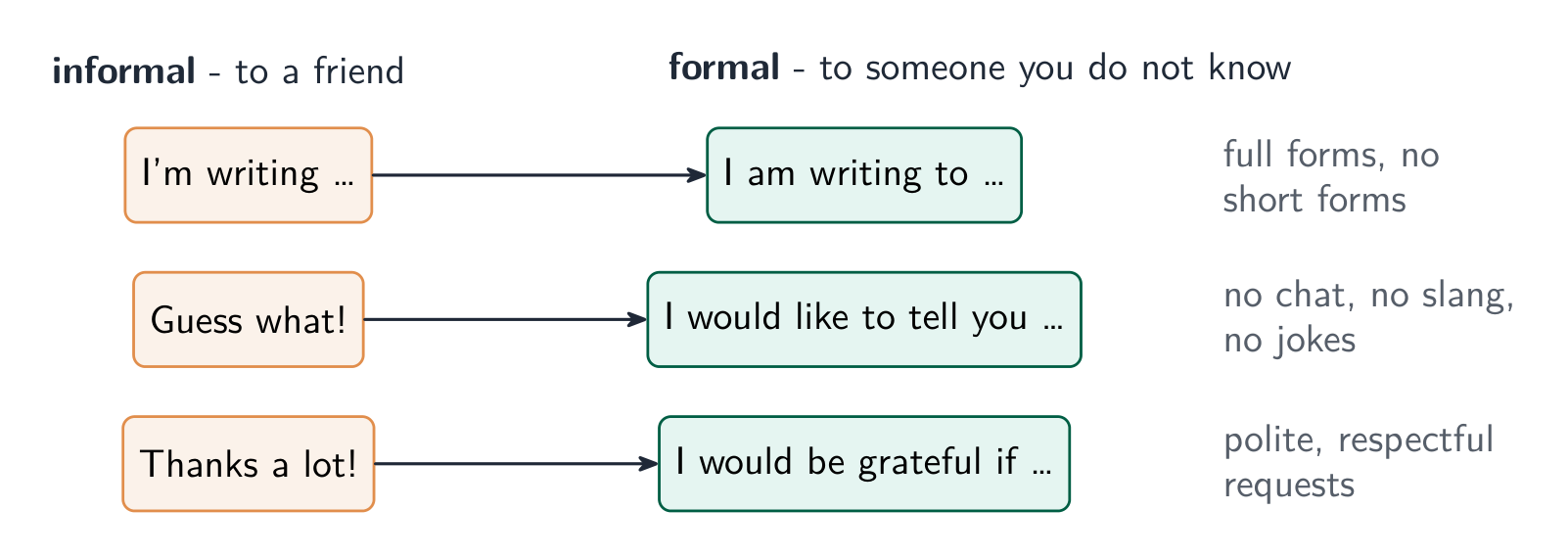
    Three informal phrases turn into formal ones: I'm writing becomes I am writing to, Guess what becomes I would like to tell you, Thanks a lot becomes I would be grateful if
    Cambiar frases amistosas por otras formales
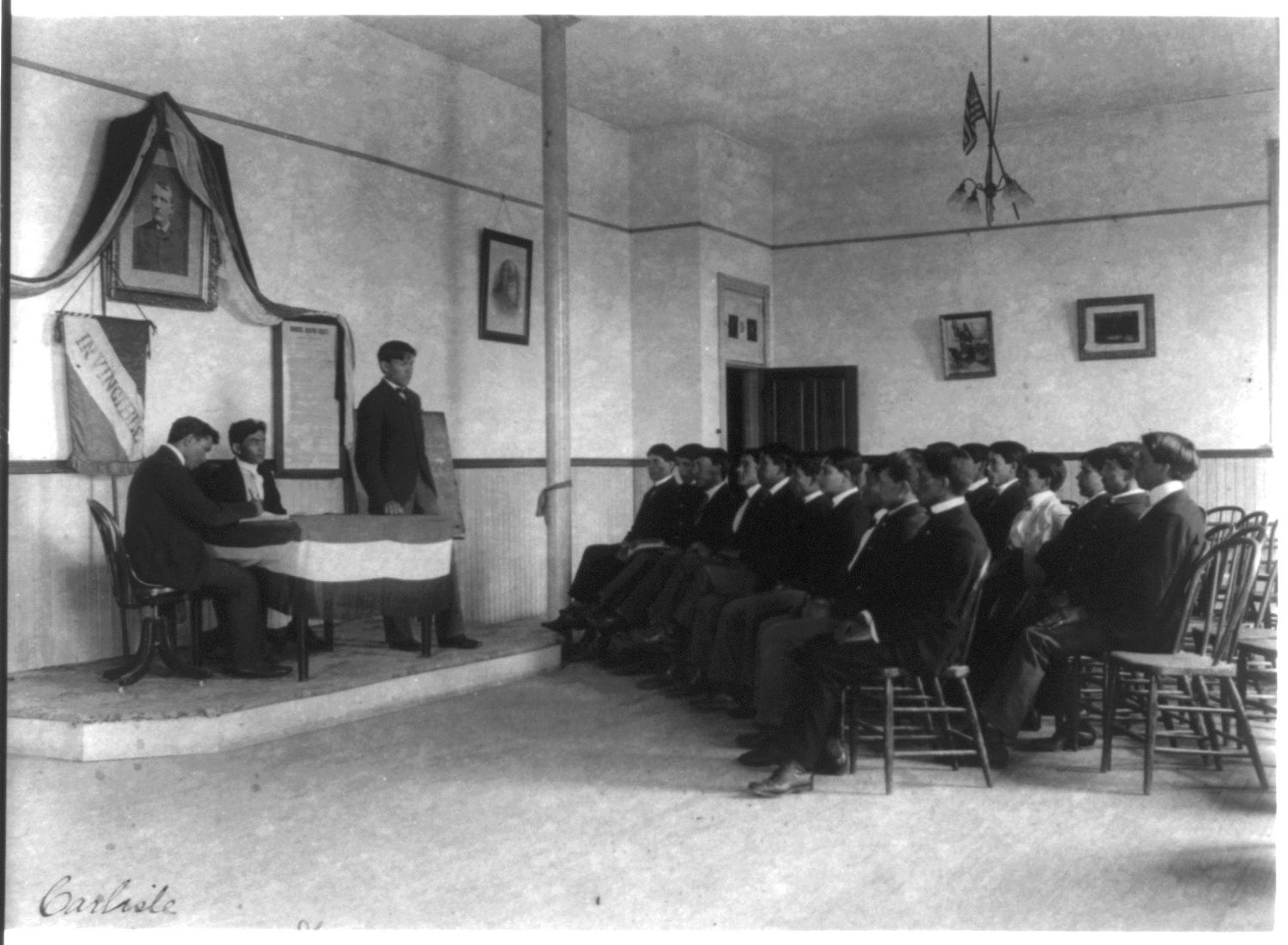
    A formal letter: careful structure, polite register and a clear reason for writing
    Una carta formal: estructura cuidadosa, registro educado y un motivo claro para escribir
    Vocabulary · ⁨Vocabulario⁩ Train · ⁨Entrenar⁩
    English · ⁨Inglés⁩ Chinese · ⁨Chino⁩ Pinyin
    formal/ˈfɔːml/ 正式 zhèng shì
    semi-formal/ˈsemi ˈfɔːml/ 半正式 bàn zhèng shì
    head teacher/hed ˈtiːtʃə/ 校长 xiào zhǎng
    manager/ˈmænɪdʒə/ 经理 jīng lǐ
    event organiser/ɪˈvent ˈɔːɡənaɪzə/ 活动组织者 huó dòng zǔ zhī zhě
    format/ˈfɔːmæt/ 格式 gé shì
    purpose/ˈpɜːpəs/ 目的 mù dì
    polite/pəˈlaɪt/ 礼貌 lǐ mào
    slang/slæŋ/ 俚语 lǐ yǔ
    4.2

    Building a formal letter or email · ⁨Construir una carta o correo electrónico formal⁩

    Syllabus
    English
    1. open and close a formal letter or email appropriately (for example: Dear … / Yours sincerely …)
    2. organise your points into clear paragraphs with a beginning, middle and end
    3. use formal language and avoid contractions and slang
    Español
    1. abrir y cerrar una carta o correo electrónico formal de manera adecuada (por ejemplo: Estimado/a … / Atentamente …)
    2. organizar sus ideas en párrafos claros con un inicio, un desarrollo y un cierre
    3. utilizar un lenguaje formal y evitar contracciones y coloquialismos

    Source: Cambridge International syllabus · ⁨Fuente: Plan de estudios Cambridge International⁩

    English

    A formal letter follows a clear order.

    Opening and closing

    • Open with Dear Sir/Madam, or Dear Mr Lee,
    • If you start with a name, close with Yours sincerely,. If you start with Sir/Madam, close with Yours faithfully,.

    Clear paragraphs

    • First paragraph: say why you are writing.
    • Middle paragraphs: give your points, one idea in each.
    • Last paragraph: say what you would like to happen next.

    Formal language

    • Use formal phrases: I would like to…, I am writing to…, I would be grateful 感激 if…
    • Keep sentences clear and complete. Check your grammar and spelling.

    A model formal letter

    See how a polite, complete opening sets the right tone.

    Dear Sir or Madam,

    I am writing to suggest an improvement to the town library. At present it closes at five o'clock, which is too early for students who finish school at four. I would be grateful if the council could consider opening it until seven in the evening on weekdays.

    Thank you for taking the time to read my letter.

    Yours faithfully, J. Chen

    Notice the Dear Sir or Madam / Yours faithfully pair, the clear first line stating the purpose, the polite request, and the complete sentences with no short forms.

    Español

    Una carta formal sigue un orden claro.

    A formal letter with labels: the first paragraph says why you are writing, middle paragraphs give one point each, the end says what you would like to happen, and a box shows that Dear Sir or Madam pairs with Yours faithfully while Dear Mr Lee pairs with Yours sincerely
    La estructura de una carta formal — y la despedida depende del saludo inicial

    Apertura y cierre

    • Inicia con Dear Sir/Madam, (Estimado Sr./Sra.) o Dear Mr Lee, (Estimado Sr. Lee).
    • Si empiezas con un nombre, cierra con Yours sincerely, (Atentamente). Si empiezas con Sir/Madam, cierra con Yours faithfully, (Cordialmente / Muy atentamente).

    Párrafos claros

    • Primer párrafo: explica por qué estás escribiendo.
    • Párrafos intermedios: presenta tus puntos, una idea en cada uno.
    • Último párrafo: indica lo que te gustaría que ocurriera a continuación.

    Lenguaje formal

    • Usa frases formales: I would like to… (Me gustaría…), I am writing to… (Le escribo para…), I would be grateful 感激 if… (Agradecería si…).
    • Mantén las oraciones claras y completas. Revisa tu gramática y ortografía.

    Ejemplo de carta formal

    Observa cómo una apertura educada y completa establece el tono adecuado.

    Dear Sir or Madam,

    I am writing to suggest an improvement to the town library. At present it closes at five o'clock, which is too early for students who finish school at four. I would be grateful if the council could consider opening it until seven in the evening on weekdays.

    Thank you for taking the time to read my letter.

    Yours faithfully, J. Chen

    Fíjate en la combinación Dear Sir or Madam / Yours faithfully, la primera línea clara que establece el propósito, la petición educada y las oraciones completas sin formas abreviadas.

    Vocabulary · ⁨Vocabulario⁩ Train · ⁨Entrenar⁩
    English · ⁨Inglés⁩ Chinese · ⁨Chino⁩ Pinyin
    grateful/ˈɡreɪtfl/ 感激 gǎn jī
    4.2

    Exam tips · ⁨Consejos para el examen⁩

    English
    • Match the greeting to the ending: Dear Mr Lee → Yours sincerely; Dear Sir or Madam → Yours faithfully.
    • Say why you are writing in the first line: "I am writing to apply for…" saves words and sounds formal.
    • Do not use short forms: write "I am" and "do not", never "I'm" or "don't".
    • One paragraph per point, and end by naming the action you hope for: "I would be grateful if…".
    • Stay polite even in a complaint: "I was disappointed to find…" wins marks; "This is terrible!" loses the tone.
    Español
    • Coincide el saludo con la despedida: Dear Mr Lee → Yours sincerely; Dear Sir or Madam → Yours faithfully.
    • Explica por qué escribes en la primera línea: "I am writing to apply for…" ahorra palabras y suena formal.
    • No uses formas abreviadas: escribe "I am" y "do not", nunca "I'm" o "don't".
    • Un párrafo por punto, y termina nombrando la acción que esperas: "I would be grateful if…".
    • Mantente educado incluso en una queja: "I was disappointed to find…" obtiene puntos; "This is terrible!" pierde el tono adecuado.
  • 5

    Redacción de un informe

    Watch lesson · ⁨Ver lección⁩
    5.1

    What a report is for · ⁨Para qué sirve un informe⁩

    Syllabus
    English
    1. recognise that a report is written for a superior or a group about an event, experience or situation
    2. give factual information clearly and add suggestions or recommendations
    3. use a neutral, factual tone
    Español
    1. reconocer que un informe se redacta para un superior o un grupo sobre un evento, una experiencia o una situación
    2. proporcionar información de manera clara y añadir sugerencias o recomendaciones
    3. utilizar un tono neutral y objetivo

    Source: Cambridge International syllabus · ⁨Fuente: Plan de estudios Cambridge International⁩

    English

    A report 报告 gives information to a person in charge — a teacher, a manager, or a club leader. They will act 行动 on what you write, so be clear and honest.

    Purpose and reader

    • A report describes an event 事件, an experience, or a situation 情况.
    • It gives facts 事实 clearly, then adds suggestions.
    • The reader wants useful information, not a story. Keep the tone factual 事实性的 and clear.

    Format

    • A report is usually semi-formal or formal.
    • A title at the top tells the reader what the report is about.
    Español

    Un informe report da información a una persona encargada: un profesor, un gerente o un líder de club. Ellos actuarán act based on what you write, so be clear and honest.

    Propósito y lector

    • Un informe describe un evento event, una experiencia o una situación situation.
    • Da hechos facts claramente, y luego añade sugerencias.
    • El lector busca información útil, no una historia. Mantén el tono factual factual y claro.
    The same event told two ways: a story sentence full of opinions is crossed out, a sentence with clear facts and numbers gets a tick
    Un informe proporciona hechos que el lector puede utilizar, no una historia

    Formato

    • Un informe suele ser semi-formal o formal.
    • Un título en la parte superior indica al lector de qué trata el informe.
    A formal discussion: reports give clear facts so decision-makers can act on them
    Una discusión formal: los informes proporcionan hechos claros para que los tomadores de decisiones puedan actuar sobre ellos
    A report organises facts for a clear purpose and a defined reader
    Un informe organiza los hechos con un propósito claro y para un lector definido
    Vocabulary · ⁨Vocabulario⁩ Train · ⁨Entrenar⁩
    English · ⁨Inglés⁩ Chinese · ⁨Chino⁩ Pinyin
    report/rɪˈpɔːt/ 报告 bào gào
    act/ækt/ 行动 xíng dòng
    event/ɪˈvent/ 事件 shì jiàn
    situation/ˌsɪtʃuːˈeɪʃn/ 情况 qíng kuàng
    facts/fækts/ 事实 shì shí
    factual/ˈfæktʃuːəl/ 事实性的 shì shí xìng de
    opinion/əˈpɪnɪən/ 观点 guān diǎn
    5.2

    How to organise a report · ⁨Cómo organizar un informe⁩

    Syllabus
    English
    1. organise a report using short headings or clearly separated sections
    2. separate facts from your own opinions and recommendations
    3. end with a clear recommendation or conclusion
    Español
    1. organice un informe utilizando títulos breves o secciones claramente separadas
    2. separe los hechos de sus propias opiniones y recomendaciones
    3. termine con una recomendación o conclusión clara

    Source: Cambridge International syllabus · ⁨Fuente: Plan de estudios Cambridge International⁩

    English

    A clear shape helps the reader find information fast.

    Use headings

    • Break the report into sections with short headings 小标题.
    • For example: Introduction, Good points, Problems, Recommendation.

    Facts, then recommendations

    • First give the facts. Keep your opinion 观点 out of this part.
    • Then give your recommendations 建议 — what you think should happen.

    End clearly

    • Finish with a clear recommendation or conclusion 结论.
    • Make your advice easy to follow.

    Useful language

    Keep a few report phrases 短语 ready. They make your writing sound organised and grown-up.

    • To introduce: The aim 目的 of this report is to… / This report looks at…
    • To give facts: At present… / The main problem is… / Many students felt that…
    • To recommend: I recommend that… / It would help if… / The best solution 解决办法 is to…

    Notice these are calm and impersonal. A report avoids strong words like "amazing" or "terrible".

    A model report extract

    Read how facts and a recommendation sit under clear headings.

    Introduction This report looks at the school library and suggests ways to improve it.

    Good points The library is quiet, and it has a wide range of science books. It opens every day after school.

    Problems There are only two computers, and every table is full by four o'clock.

    Recommendation The school should add five computers and open a second study room in the evening.

    Each section is short. The first three give only facts; the last gives the advice. That split is what makes it a report, not a story.

    Español

    Una estructura clara ayuda al lector a encontrar la información rápidamente.

    A report with a title and the headed sections Introduction, Good points, Problems and Recommendation; the first three sections hold facts only, the last holds your recommendations
    La estructura de un informe: hechos bajo encabezados claros, recomendaciones al final

    Usa encabezados

    • Divide el informe en secciones con encabezados headings cortos.
    • Por ejemplo: Introducción, Puntos positivos, Problemas, Recomendación.

    Hechos, luego recomendaciones

    • Primero presenta los hechos. Mantén tu opinión opinion fuera de esta parte.
    • Luego ofrece tus recomendaciones recommendations — lo que crees que debería suceder.

    Termina con claridad

    • Finaliza con una recomendación o conclusión conclusion clara.
    • Haz que tus consejos sean fáciles de seguir.

    Lenguaje útil

    Mantén a mano algunas frases típicas de informes. Hacen que tu escritura suene organizada y madura.

    • Para introducir: El objetivo aim de este informe es… / Este informe examina…
    • Para dar hechos: En la actualidad… / El problema principal es… / Muchos estudiantes sintieron que…
    • Para recomendar: Recomiendo que… / Ayudaría si… / La mejor solución solution es…

    Fíjate en que estas son calmadas e impersonales. Un informe evita palabras fuertes como "increíble" o "terrible".

    Extracto de un modelo de informe

    Lee cómo los hechos y una recomendación se sitúan bajo encabezados claros.

    Introducción Este informe examina la biblioteca escolar y sugiere formas de mejorarla.

    Puntos positivos La biblioteca es silenciosa y tiene una amplia gama de libros de ciencias. Está abierta todos los días después del horario escolar.

    Problemas Solo hay dos computadoras, y todas las mesas están ocupadas para las cuatro en punto.

    Recomendación La escuela debería añadir cinco computadoras y abrir una segunda sala de estudio por la tarde-noche.

    Cada sección es breve. Las tres primeras solo dan hechos; la última ofrece el consejo. Esa separación es lo que lo convierte en un informe, no en una historia.

    Vocabulary · ⁨Vocabulario⁩ Train · ⁨Entrenar⁩
    English · ⁨Inglés⁩ Chinese · ⁨Chino⁩ Pinyin
    headings/ˈhedɪŋz/ 小标题 xiǎo biāo tí
    recommendations/ˌrekəmenˈdeɪʃnz/ 建议 jiàn yì
    conclusion/kənˈkluːʒn/ 结论 jié lùn
    phrases/ˈfreɪzɪz/ 短语 duǎn yǔ
    aim/eɪm/ 目的 mù dì
    solution/səˈluːʃn/ 解决办法 jiě jué bàn fǎ
    5.2

    Exam tips · ⁨Consejos para el examen⁩

    English
    • Start with To / From / Subject or a clear title. A report never opens with "Dear…".
    • Use the introduction to say what the report covers and why, in one or two lines.
    • Group the facts under short headings, and keep your opinion out of the findings.
    • Save opinions for the end: one clear recommendation, "I recommend…" plus one action.
    • Keep the style neutral and calm: no exclamation marks, no jokes, no chat.
    Español
    • Comienza con A / De / Asunto o un título claro. Un informe nunca abre con "Estimado/a…".
    • Usa la introducción para decir de qué trata el informe y por qué, en una o dos líneas.
    • Agrupa los hechos bajo encabezados cortos, y mantén tu opinión fuera de los hallazgos.
    • Reserva las opiniones para el final: una recomendación clara ("Recomiendo…") más una acción concreta.
    • Mantén un estilo neutral y calmado: sin signos de exclamación, sin chistes, sin charlas informales.
  • 6

    Redacción de un artículo

    Watch lesson · ⁨Ver lección⁩
    6.1

    What an article is for · ⁨Para qué sirve un artículo⁩

    Syllabus
    English
    1. recognise that an article is written for a general audience to inform or entertain
    2. choose a title and an opening that catch the reader's interest
    3. keep the reader engaged with questions, examples and a clear point of view
    Español
    1. reconocer que un artículo está escrito para un público general con el fin de informar o entretener
    2. elegir un título y una introducción que capten el interés del lector
    3. mantener al lector interesado mediante preguntas, ejemplos y un punto de vista claro

    Source: Cambridge International syllabus · ⁨Fuente: Plan de estudios Cambridge International⁩

    English

    An article 文章 is written for a magazine, a newspaper, or a website. Many people read it.

    Purpose

    • An article informs 告知 or entertains 娱乐 a general reader.
    • You usually give your own view on a topic, with reasons.

    Engage the reader

    • You must engage 吸引 the reader — make them want to keep reading.
    • A good title 标题 and a strong first line catch their interest 兴趣.
    • Ask the reader a question, or start with a surprising fact.
    Español
    Un estante de quiosco lleno de muchos periódicos diferentes, con las portadas hacia afuera
    Un quiosco: cada uno de estos compite por el mismo lector, por lo que un artículo debe comenzar con un gancho

    Un artículo 文章 se escribe para una revista, un periódico o un sitio web. Muchas personas lo leen.

    Propósito

    • Un artículo informa 告知 o entretenne 娱乐 a un lector general.
    • Generalmente das tu propia opinión sobre un tema, con razones.

    Captar la atención del lector

    • Debes captar 吸引 la atención del lector — hacer que quiera seguir leyendo.
    • Un buen título 标题 y una primera línea fuerte captan su interés 兴趣.
    • Hazle una pregunta al lector, o comienza con un dato sorprendente.
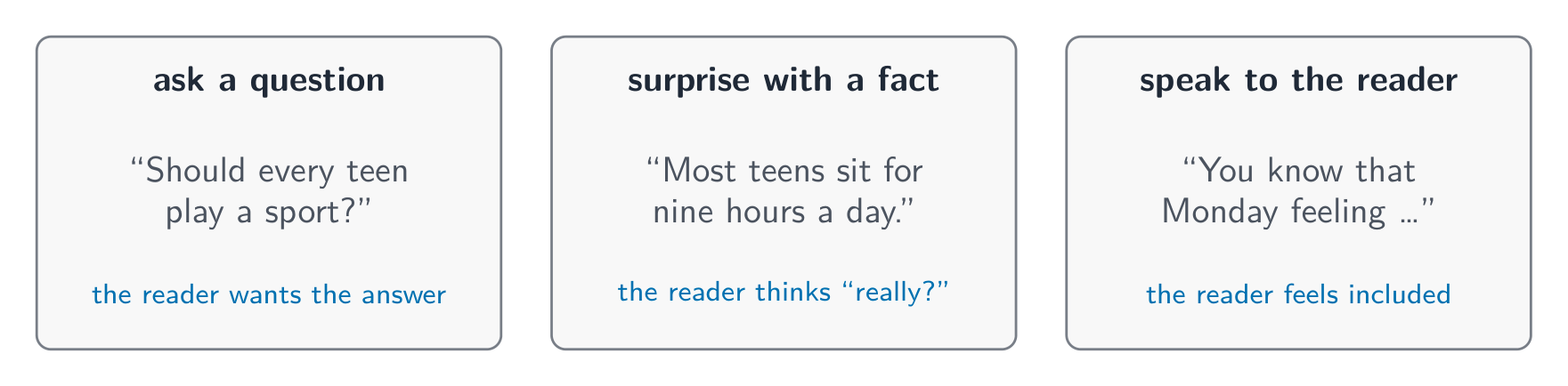
    Tres movimientos iniciales con ejemplos: hacer una pregunta, sorprender con un dato o hablar directamente al lector
    Tres formas de captar el interés del lector en tus primeras líneas
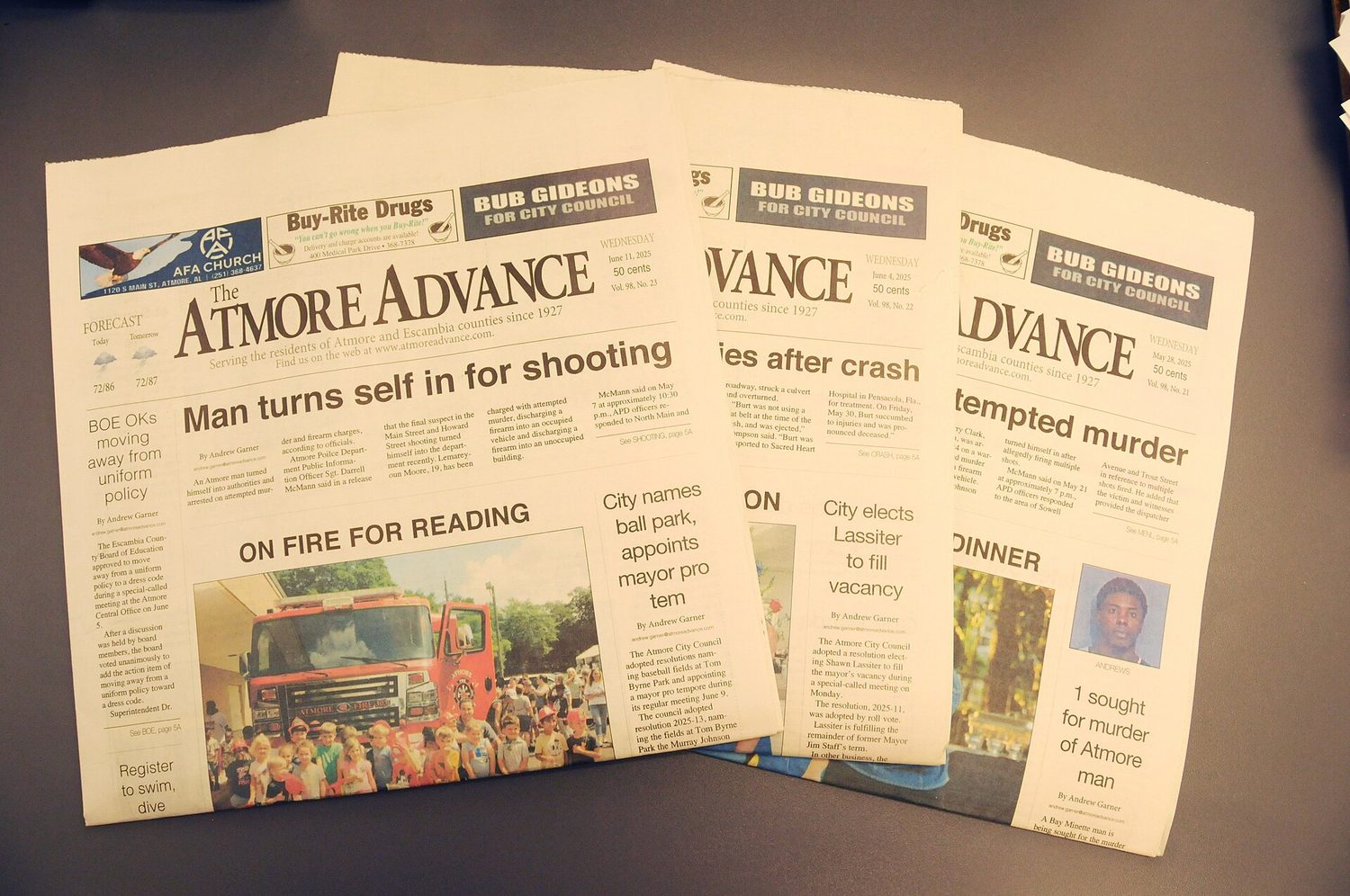
    Una portada de periódico: los artículos captan al lector, luego informan y entretienen con un ángulo claro
    Una portada de periódico: los artículos captan al lector, luego informan y entretienen con un ángulo claro
    Vocabulary · ⁨Vocabulario⁩ Train · ⁨Entrenar⁩
    English · ⁨Inglés⁩ Chinese · ⁨Chino⁩ Pinyin
    article/ˈɑːtɪkl/ 文章 wén zhāng
    informs/ɪnˈfɔːmz/ 告知 gào zhī
    entertains/ˌentəˈteɪnz/ 娱乐 yú lè
    engage/enˈɡeɪdʒ/ 吸引 xī yǐn
    title/ˈtaɪtl/ 标题 biāo tí
    interest/ˈɪntrest/ 兴趣 xìng qù
    introduction/ˌɪntrəˈdʌkʃn/ 引言 yǐn yán
    conclusion/kənˈkluːʒn/ 结论 jié lùn
    varied/ˈveərid/ 多样的 duō yàng de
    phrases/ˈfreɪzɪz/ 短语 duǎn yǔ
    flat/flæt/ 平淡 píng dàn
    6.2

    Writing a lively article · ⁨Escribir un artículo dinámico⁩

    Syllabus
    English
    1. organise the article into an introduction, development and conclusion
    2. use lively, varied language and a consistent tone
    3. address the reader directly where it suits the topic
    Español
    1. Organiza el artículo en una introducción, un desarrollo y una conclusión
    2. Utiliza un lenguaje dinámico y variado con un tono coherente
    3. Dirígete directamente al lector cuando el tema lo requiera

    Source: Cambridge International syllabus · ⁨Fuente: Plan de estudios Cambridge International⁩

    English

    An article should sound interesting, not flat.

    Structure

    • Begin with an introduction 引言 that names the topic.
    • Develop your points in the middle, one idea in each paragraph.
    • End with a short conclusion 结论 that leaves the reader thinking.

    Lively language

    • Use varied 多样的 words and sentence lengths to keep the energy up.
    • You can speak to the reader directly with "you".
    • Keep the tone friendly, but not too casual.

    Useful language

    A few flexible phrases 短语 let you hook the reader and glide between ideas.

    • To open with energy: Have you ever…? / Imagine you… / Last week, something odd happened to me.
    • To move between ideas: What's more… / On the other hand… / The truth is…
    • To speak to the reader: You might think… / We all know that… / Be honest —…
    • To end memorably: So next time you… / Perhaps the real question is…

    Vary how you open sentences. Ten sentences that all begin "I think" feel flat 平淡; mixing your openings keeps the reader awake.

    A model opening

    See how one opening hooks the reader, then points forward.

    Have you ever tried to sleep with a phone glowing beside your pillow? Most of us have — and most of us wake up tired. This article asks a simple question: could a good night's sleep be the cheapest way to feel happier?

    The question pulls the reader in, the honest detail keeps them, and the last line promises where the article is going. That is a lot of work for three sentences.

    Español

    Un artículo debe sonar interesante, no plano.

    Un artículo con etiquetas: una pregunta como título, una primera línea fuerte que engancha al lector, párrafos intermedios con una idea cada uno que hablan al lector contigo, y un final que deja pensando al lector
    La estructura de un artículo dinámico: engancha al lector, mantenlo, hazle pensar

    Estructura

    • Comienza con una introducción 引言 que nombre el tema.
    • Desarrolla tus puntos en medio, una idea en cada párrafo.
    • Termina con una breve conclusión 结论 que deje al lector pensando.

    Lenguaje vivo

    • Usa palabras y longitudes de oraciones variadas 多样的 para mantener la energía.
    • Puedes hablar directamente al lector usando "tú".
    • Mantén un tono amigable, pero no demasiado informal.

    Expresiones útiles

    Algunas frases flexibles 短语 te permiten captar al lector y transitar entre ideas.

    • Para abrir con energía: ¿Te ha pasado alguna vez…? / Imagina que… / La semana pasada, algo raro me pasó.
    • Para transitar entre ideas: Además… / Por otro lado… / La verdad es que…
    • Para hablar al lector: Puede que pienses… / Todos sabemos que… / Siendo honestos—…
    • Para terminar memorablemente: Así que la próxima vez que… / Tal vez la verdadera pregunta sea…

    Varía cómo abres las oraciones. Diez oraciones que empiezan todas con "Creo que" se sienten planas 平淡; mezclar tus inicios mantiene al lector despierto.

    Ejemplo de apertura

    Mira cómo una apertura captura al lector y después avanza.

    ¿Alguna vez has intentado dormir con un teléfono brillando junto a tu almohada? La mayoría de nosotros sí — y la mayoría nos despertamos cansados. Este artículo plantea una pregunta sencilla: ¿podría dormir bien ser la forma más barata de sentirse más feliz?

    La pregunta atrae al lector, el detalle sincero lo mantiene, y la última línea promete hacia dónde va el artículo. Eso es mucho trabajo en tres oraciones.

    6.2

    Exam tips · ⁨Consejos para el examen⁩

    English
    • Give the article a short, catchy title, then hook the reader with a question or surprise in the first lines.
    • Talk to the reader: "Have you ever…?" An article is the one formal task where personality wins marks.
    • One idea per paragraph, and make it real with a short example or a small story.
    • Numbers and small facts make an article feel true: "three out of five students…".
    • End with a line the reader remembers: a punchline, a question, or a call to act.
    Español
    • Ponle un título corto y pegadizo al artículo, luego captura al lector con una pregunta o sorpresa en las primeras líneas.
    • Habla al lector: ¿Te ha pasado alguna vez…? Un artículo es la única tarea formal donde la personalidad suma puntos.
    • Una idea por párrafo, y hazla real con un ejemplo breve o una pequeña historia.
    • Los números y pequeños datos hacen que el artículo parezca veraz: tres de cada cinco estudiantes….
    • Termina con una línea que el lector recuerde: un remate, una pregunta, o un llamado a la acción.
  • 7

    Redacción de una reseña

    Watch lesson · ⁨Ver lección⁩
    7.1

    What a review does · ⁨Qué hace una reseña⁩

    Syllabus
    English
    1. recognise that a review describes something you have experienced (a film, place or product) and gives your opinion
    2. balance description with personal opinion and reasons
    3. write for a general audience, for example of a magazine or website
    Español
    1. Reconocer que una reseña describe algo que has experimentado (una película, un lugar o un producto) y expresa tu opinión
    2. Equilibrar la descripción con la opinión personal y las razones
    3. Escribir para un público general, por ejemplo, para una revista o un sitio web

    Source: Cambridge International syllabus · ⁨Fuente: Plan de estudios Cambridge International⁩

    English

    A review 评论 tells readers about something you have tried — a film, a book, a restaurant, or a place. A good review helps the reader decide 决定 whether to try it too.

    Describe and judge

    • A review does two things: it describes 描述 the thing, and it gives your opinion 观点 of it.
    • Balance the two. Do not only describe, and do not only give opinions.
    • Describing answers "What is it like?" Judging answers "Is it any good?" Move between the two, sentence by sentence.

    Support your opinions

    • Give reasons for what you think. Say why it was good or bad.
    • Use examples 例子 from your experience to make your view believable 可信.
    • A weak review says "The food was nice." A strong review says "The soup was rich and warming, though the rice arrived cold." The detail is what convinces the reader.

    Useful language

    Learn a few phrases 短语 for each job. Then you never stare at a blank page.

    • To describe: It is set in… / The story follows… / The dish combines… / What stands out is…
    • To praise: The best part is… / I was impressed by… / It really succeeds in…
    • To criticise 批评 (gently): The one weakness is… / It could have been better if… / At times it feels slow.
    • To recommend: I would recommend it to… / It is well worth… / Don't miss…

    Mix praise and criticism so the review sounds fair 公正. A review that is all praise, or all complaint, is hard to trust.

    Español

    Una reseña 评论 cuenta a los lectores sobre algo que has probado —una película, un libro, un restaurante o un lugar—. Una buena reseña ayuda al lector a decidir 决定 si también debe probarlo.

    Describir y juzgar

    • Una reseña hace dos cosas: describe 描述 la cosa y da tu opinión 观点 sobre ella.
    • Equilibra ambos aspectos. No solo describas, ni solo des opiniones.
    • Describir responde a "¿Cómo es?". Juzgar responde a "¿Es bueno?". Alterna entre uno y otro, oración por oración.
    An opinion sits like a seat on two legs, one leg is a reason and the other is an example
    Una opinión se sostiene en una razón y un ejemplo

    Apoyar tus opiniones

    • Da razones de lo que piensas. Explica por qué fue bueno o malo.
    • Usa ejemplos 例子 de tu experiencia para hacer que tu punto de vista sea creíble 可信.
    • Una reseña débil dice: "La comida estaba rica." Una reseña fuerte dice: "El caldo era rico y reconfortante, aunque el arroz llegó frío." Los detalles son lo que convencen al lector.

    Lenguaje útil

    Aprende algunas frases 短语 para cada función. Así nunca te quedarás mirando una página en blanco.

    • Para describir: Está ambientada en… / La historia sigue… / El plato combina… / Lo que destaca es…
    • Para elogiar: Lo mejor es… / Me impresionó… / Realmente logra…
    • Para criticar 批评 (con suavidad): La única debilidad es… / Podría haber sido mejor si… / A veces se siente lento.
    • Para recomendar: La recomendaría a… / Vale totalmente la pena… / No te pierdas…

    Mezcla los elogios con las críticas para que la reseña suene justa 公正. Una reseña que es todo elogio o toda queja es difícil de creer.

    A theatre audience: reviews describe what you saw, give a clear opinion and support it with evidence
    Un público en el teatro: las reseñas describen lo que viste, dan una opinión clara y la respaldan con evidencia
    Vocabulary · ⁨Vocabulario⁩ Train · ⁨Entrenar⁩
    English · ⁨Inglés⁩ Chinese · ⁨Chino⁩ Pinyin
    review/rɪˈvjuː/ 评论 píng lùn
    decide/dɪˈsaɪd/ 决定 jué dìng
    describes/dɪˈskraɪbz/ 描述 miáo shù
    opinion/əˈpɪnɪən/ 观点 guān diǎn
    examples/eɡˈzæmplz/ 例子 lì zi
    believable/bɪˈliːvəbl/ 可信 kě xìn
    phrases/ˈfreɪzɪz/ 短语 duǎn yǔ
    criticise/ˈkrɪtɪsaɪz/ 批评 pī píng
    fair/feə/ 公正 gōng zhèng
    evaluate/ɪˈvæljuːeɪt/ 评价 píng jià
    tone/təʊn/ 语气 yǔ qì
    7.2

    How to build a review · ⁨Cómo construir una reseña⁩

    Syllabus
    English
    1. introduce what is being reviewed, then describe and evaluate it
    2. support your opinions with specific details and examples
    3. end with a clear recommendation to the reader
    Español
    1. presente lo que se está revisando, luego descríbalo y evalúelo
    2. respalde sus opiniones con detalles y ejemplos específicos
    3. termine con una recomendación clara para el lector

    Source: Cambridge International syllabus · ⁨Fuente: Plan de estudios Cambridge International⁩

    English

    Readers want a clear, helpful review.

    Structure

    • Start by saying what you are reviewing, and give the reader the basic facts.
    • In the middle, describe it and evaluate 评价 it — the good points and the weak points.
    • Write for a general reader, in a friendly but clear tone 语气.

    End with a recommendation

    • Finish with a recommendation 建议: do you advise the reader to try it or not?
    • Make your advice clear, for example: "I would recommend this film to anyone who likes adventure."
    • You can add a condition: "…as long as you don't mind a slow start." This sounds honest and grown-up.

    A model review

    Read this short review of a film. Notice how each sentence either describes or judges.

    Skyward is an adventure film about a girl who builds her own aircraft. The story is simple, but the flying scenes are breathtaking 惊人 and the young lead acts with real warmth. The middle drags a little, and a few jokes fall flat. Even so, it left the whole cinema smiling. I would recommend Skyward to any family looking for a bright, hopeful evening — just be ready for a slow first ten minutes.

    Count the moves: it names the film, describes it, praises it, admits two faults, and ends with a clear, honest recommendation. That is a complete review in five sentences.

    Español

    Los lectores quieren una reseña clara y útil.

    A review with labels: first say what you are reviewing, then two balanced columns for describing it and judging it, and a recommendation at the end
    Una reseña describe y juzga, y termina con consejos claros

    Estructura

    • Comienza diciendo qué estás reseñando y da al lector los datos básicos.
    • En el medio, descríbela y evalúa 评价 sus puntos fuertes y débiles.
    • Escribe para un lector general, en un tono 语气 amable pero claro.

    Termina con una recomendación

    • Finaliza con una recomendación 建议: ¿aconsejas al lector que lo pruebe o no?
    • Haz que tu consejo sea claro, por ejemplo: "Recomendaría esta película a cualquiera que le guste la aventura."
    • Puedes añadir una condición: "...siempre y cuando no te moleste un inicio lento." Esto suena honesto y maduro.

    Reseña modelo

    Lee esta breve reseña de una película. Fíjate en cómo cada oración describe o juzga.

    Skyward es una película de aventuras sobre una chica que construye su propia aeronave. La historia es sencilla, pero las escenas de vuelo son impactantes 惊人 y la joven protagonista actúa con gran calidez. La parte central arrastra un poco, y algunos chistes caen por tierra. Aun así, dejó a toda la sala sonriendo. Recomendaría Skyward a cualquier familia que busque una noche alegre y esperanzadora; solo prepárate para los primeros diez minutos lentos.

    Cuenta los movimientos: nombra la película, la describe, la elogia, admite dos defectos y termina con una recomendación clara y honesta. Eso es una reseña completa en cinco oraciones.

    The inside of a smart restaurant: low lighting, booth seating and set tables
    Interior de un restaurante elegante: baja iluminación, asientos tipo booth y mesas servidas
    Vocabulary · ⁨Vocabulario⁩ Train · ⁨Entrenar⁩
    English · ⁨Inglés⁩ Chinese · ⁨Chino⁩ Pinyin
    recommendation/ˌrekəmenˈdeɪʃn/ 建议 jiàn yì
    breathtaking/ˈbreθteɪkɪŋ/ 惊人 jīng rén
    7.2

    Exam tips · ⁨Consejos para el examen⁩

    English
    • Name what you are reviewing and your overall feeling in the first paragraph; do not keep it secret.
    • Do both jobs: describe it (what it is) and judge it (what is strong, what is weak).
    • Strong adjectives are the fuel of a review: gripping, delicious, disappointing, unforgettable.
    • Mention one weakness even in a good review; pure praise sounds like an advert.
    • Finish with a clear recommendation: who should try it, who should not, and why.
    Español
    • Nombra lo que estás reseñando y tu impresión general en el primer párrafo; no lo guardes en secreto.
    • Cumple ambas funciones: descríbela (qué es) y juígala (qué tiene de fuerte y de débil).
    • Los adjetivos fuertes son el combustible de una reseña: cautivadora, deliciosa, decepcionante, inolvidable.
    • Menciona una debilidad incluso en una reseña positiva; el elogio puro suena como un anuncio publicitario.
    • Termina con una recomendación clara: quién debería probarlo, quién no, y por qué.
  • 8

    Redacción de un ensayo

    Watch lesson · ⁨Ver lección⁩
    8.1

    Two kinds of essay · ⁨Dos tipos de ensayo⁩

    Syllabus
    English
    1. tell the difference between a discursive essay (balanced, both sides) and an argumentative essay (one main view)
    2. plan the main points and the reasons or evidence for each
    3. keep a formal, organised style
    Español
    1. diferenciar entre un ensayo discursivo (equilibrado, ambos lados) y un ensayo argumentativo (una postura principal)
    2. planificar los puntos principales y las razones o evidencias para cada uno
    3. mantener un estilo formal y organizado

    Source: Cambridge International syllabus · ⁨Fuente: Plan de estudios Cambridge International⁩

    English

    An essay 议论文 gives your ideas about a topic in an organised way.

    Discursive essays

    • A discursive 论述的 essay looks at both sides of a topic.
    • You give the points for and against, and perhaps your own view at the end.

    Argumentative essays

    • An argumentative 议论的 essay argues for one main view.
    • You give strong reasons and examples to support your opinion.

    Plan first

    • Decide your main points and the reasons for each, before you write.
    • A short plan keeps your essay organised.
    Español

    Un ensayo议论文 ofrece tus ideas sobre un tema de manera organizada.

    Dos esqueletos de ensayos lado a lado: un ensayo discursivo se move desde la introducción pasando por puntos a favor y en contra hasta una conclusión que puede incluir tu opinión; un ensayo argumentativo expone tu postura en la introducción, presenta dos razones fuertes con ejemplos y resume tu punto de vista en la conclusión
    Dos formas de ensayo: el discursivo sopesa ambos lados; el argumentativo defiende una postura

    Ensayos discursivos

    • Un ensayo discursivo论述的 analiza ambos lados de un tema.
    • Expones los argumentos a favor y en contra, y quizás tu propia opinión al final.

    Ensayos argumentativos

    • Un ensayo argumentativo议论 defends una postura principal.
    • Ofreces razones sólidas y ejemplos para respaldar tu opinión.

    Planifica primero

    • Define tus puntos principales y las razones para cada uno antes de empezar a escribir.
    • Un plan breve mantiene tu ensayo ordenado.
    Una sala de lectura llena de libros: los ensayos requieren lectura cuidadosa, planificación y un argumento estructurado
    Sala de lectura llena de libros: los ensayos necesitan lectura atenta, planificación y un argumento estructurado
    Vocabulary · ⁨Vocabulario⁩ Train · ⁨Entrenar⁩
    English · ⁨Inglés⁩ Chinese · ⁨Chino⁩ Pinyin
    essay/ˈeseɪ/ 议论文 yì lùn wén
    discursive/dɪˈskɜːsɪv/ 论述的 lùn shù de
    argumentative/ˌɑːɡjuːˈmentətɪv/ 议论的 yì lùn de
    introduction/ˌɪntrəˈdʌkʃn/ 引言 yǐn yán
    8.2

    How to structure an essay · ⁨Cómo estructurar un ensayo⁩

    Syllabus
    English
    1. introduce the topic and your approach in the introduction
    2. develop one main idea per paragraph in the body, with reasons and examples
    3. draw the ideas together in a clear conclusion
    Español
    1. Introduzca el tema y su enfoque en la introducción
    2. Desarrolle una idea principal por párrafo en el cuerpo, con razones y ejemplos
    3. Sintetice las ideas en una conclusión clara

    Source: Cambridge International syllabus · ⁨Fuente: Plan de estudios Cambridge International⁩

    English

    A clear shape makes your argument easy to follow.

    Introduction

    • The introduction 引言 names the topic and says how you will approach it.
    • Keep it short — two or three sentences.

    Body paragraphs

    • Put one main idea in each body 主体 paragraph.
    • Start the paragraph with the idea, then add reasons and examples.

    Conclusion

    • The conclusion 结论 brings your ideas together.
    • Do not add a new point here. Sum up your view clearly.

    Useful language

    Linking words 衔接词 signal your reader where the argument turns. They are the road signs of an essay.

    • To add a point: Firstly… / In addition… / Another reason is…
    • To show the other side: However… / On the other hand… / Some people argue that…
    • To give an example: For example… / For instance… / such as…
    • To conclude: In conclusion… / Overall… / Weighing both sides…

    Use them at the start of a sentence, and do not overuse one. Two or three well-placed links are enough for a paragraph.

    A model body paragraph

    Watch the three moves: idea, then reason, then example.

    Firstly, homework teaches students to work alone. In class, a teacher is always nearby to help. At home, a student must solve the problem by themselves — and that is where real learning happens. For example, a maths question that felt easy in the lesson can teach far more when you meet it again, alone, at your desk.

    The first sentence is the idea. The next two explain why. The last one makes it real with an example. Every body paragraph can follow this simple shape.

    Español

    Una forma clara hace que tu argumento sea fácil de seguir.

    Introducción

    • La introducción引言 nombra el tema y explica cómo lo abordarás.
    • Manténla corta — de dos o tres oraciones.

    Párrafos del cuerpo

    • Coloca una idea principal en cada párrafo del cuerpo主体.
    • Inicia el párrafo con la idea, luego añade razones y ejemplos.
    Un párrafo del cuerpo abierto en tres bandas: la idea principal como oración temática, seguido de las razones detrás de ella, y finalmente un ejemplo que lo hace real
    Párrafo del cuerpo: primero la idea, luego las razones y después un ejemplo

    Conclusión

    • La conclusión结论 une todas tus ideas.
    • No añadas un punto nuevo aquí. Resume tu punto de vista con claridad.

    Lenguaje útil

    Palabras de enlace衔接词 indican a tu lector dónde cambia el argumento. Son las señales de tráfico de un ensayo.

    • Para añadir un punto: Primero… / Además… / Otra razón es…
    • Para mostrar el otro lado: Sin embargo… / Por otro lado… / Algunos sostienen que…
    • Para dar un ejemplo: Por ejemplo… / Por instance… / tales como…
    • Para concluir: En conclusión… / En general… / Al sopesar ambos lados…

    Úsalas al inicio de una oración y no abuses de una sola. Dos o tres enlaces bien colocados son suficientes para un párrafo.

    Un modelo de párrafo del cuerpo

    Observa los tres movimientos: idea, luego razón, luego ejemplo.

    Primero, la tarea escolar enseña a los estudiantes a trabajar solos. En clase, un profesor siempre está cerca para ayudar. En casa, un estudiante debe resolver el problema por sí mismo — y ahí es donde ocurre el verdadero aprendizaje. Por ejemplo, una pregunta de matemáticas que parecía sencilla en clase puede enseñar mucho más cuando te encuentras con ella de nuevo, solo, en tu escritorio.

    La primera oración es la idea. Las siguientes dos explican por qué. La última la concreta con un ejemplo. Cada párrafo del cuerpo puede seguir esta estructura simple.

    Planifica la estructura primero: puntos claros, ejemplos y una conclusión firme
    Planifica la estructura primero: puntos claros, ejemplos y una conclusión firme
    Vocabulary · ⁨Vocabulario⁩ Train · ⁨Entrenar⁩
    English · ⁨Inglés⁩ Chinese · ⁨Chino⁩ Pinyin
    body/ˈbɒdi/ 主体 zhǔ tǐ
    conclusion/kənˈkluːʒn/ 结论 jié lùn
    linking words/ˈlɪŋkɪŋ wɜːdz/ 衔接词 xián jiē cí
    Watch lesson · ⁨Ver lección⁩
    8.2

    Exam tips · ⁨Consejos para el examen⁩

    English
    • Plan for three minutes before you write: your view, two reasons, one opposite view.
    • First paragraph introduces the question; each middle paragraph carries exactly one argument.
    • Signpost with linking words: First of all, However, On the other hand, In conclusion.
    • Give the other side one fair paragraph, then answer it. Balance shows thinking and earns marks.
    • The final paragraph states your opinion clearly. Do not sit on the fence.
    Español
    • Planifica durante tres minutos antes de escribir: tu postura, dos razones y una postura opuesta.
    • El primer párrafo introduce la pregunta; cada párrafo intermedio contiene exactamente un argumento.
    • Usa palabras de enlace como señales: En primer lugar, Sin embargo, Por otro lado, En conclusión.
    • Dedica un párrafo justo a presentar la postura contraria y luego refútalo. El equilibrio demuestra pensamiento crítico y obtiene puntuación.
    • El último párrafo expresa tu opinión con claridad. No te quedes a medio camino.
  • 9

    Habilidad de escucha

    Watch lesson · ⁨Ver lección⁩
    9.1

    Listening for facts · ⁨Escuchar para obtener datos⁩

    Syllabus
    English
    1. listen for specific facts and details: places, names, times, dates and directions
    2. predict what kind of information you will hear before you listen
    3. select the correct multiple-choice option based on what the speaker says
    Español
    1. Escuche hechos y detalles específicos: lugares, nombres, horas, fechas e instrucciones
    2. Prediga el tipo de información que escuchará antes de iniciar la escucha
    3. Seleccione la opción correcta del examen de selección múltiple basándose en lo que dice el orador

    Source: Cambridge International syllabus · ⁨Fuente: Plan de estudios Cambridge International⁩

    English

    In the listening exam you hear each recording 录音 twice. Use both chances well.

    Predict before you listen

    • Read the question before the recording starts.
    • Predict 预测 what kind of answer you need: a place, a name, a number, a time?

    Catch the detail

    • Listen for specific 具体的 facts: places, names, dates, times and directions 方向.
    • The answers usually come in the same order as the questions.

    Use both playings

    • On the first listening, choose your answer.
    • On the second, check it. Do not change a right answer without a good reason.
    Español

    En el examen de comprensión auditiva, cada grabación 录音 se escucha dos veces. Aprovecha bien ambas oportunidades.

    Predice antes de escuchar

    • Lee la pregunta antes de que comience la grabación.
    • Predice 预测 qué tipo de respuesta necesitas: un lugar, un nombre, un número, una hora?

    Captura los detalles

    • Presta atención a los datos específicos 具体的: lugares, nombres, fechas, horas y direcciones 方向.
    • Las respuestas suelen aparecer en el mismo orden que las preguntas.

    Usa ambas reproducciones

    • En la primera audición, elige tu respuesta.
    • En la segunda, verifícala. No cambies una respuesta correcta sin una buena razón.
    Una línea temporal: antes de la grabación lee las preguntas y predice el tipo de respuesta; en la primera reproducción elige tus respuestas; en la segunda verifica y rellena los huecos; las respuestas suelen seguir el orden de las preguntas
    Usa las dos reproducciones de forma diferente: responde primero, luego verifica
    Un estudio de radio: los exámenes de comprensión auditiva te piden captar datos, actitudes y significados implícitos a través de dos reproducciones
    Un estudio de radio: los exámenes de comprensión auditiva te piden captar datos, actitudes y significados implícitos a través de dos reproducciones
    Escuchando con atención: captura datos, actitudes y lo que está solo implícito
    Escuchando con atención: captura datos, actitudes y lo que está solo implícito
    9.2

    Hearing opinions and attitudes · ⁨Escuchar opiniones y actitudes⁩

    Syllabus
    English
    1. understand speakers' ideas, opinions, feelings and attitudes
    2. follow how ideas connect across a longer talk or conversation
    3. notice the language that speakers use to express how they feel
    Español
    1. comprender las ideas, opiniones, sentimientos y actitudes de los hablantes
    2. seguir cómo se conectan las ideas a lo largo de un discurso o conversación más extensa
    3. prestar atención al lenguaje que utilizan los hablantes para expresar sus sentimientos

    Source: Cambridge International syllabus · ⁨Fuente: Plan de estudios Cambridge International⁩

    English

    Some questions ask how a speaker thinks or feels, not just what they say.

    Opinions and feelings

    • Listen for the speaker's opinion 观点 and feelings 感受.
    • Notice the words they choose. Strong words show strong feelings.

    Follow the connections

    • In a longer talk, ideas connect 连接. Follow how one point leads to the next.
    • Words like "but", "because" and "so" show how ideas link.
    Español

    Algunas preguntas preguntan cómo piensa o siente un hablante, no solo qué dice.

    Opiniones y sentimientos

    • Presta atención a la opinión 观点 y los sentimientos 感受 del hablante.
    • Fíjate en las palabras que eligen. Las palabras fuertes indican sentimientos intensos.

    Sigue las conexiones

    • En un discurso más largo, las ideas se conectan 连接. Sigue cómo un punto lleva al siguiente.
    • Palabras como "pero", "porque" y "entonces" muestran cómo se vinculan las ideas.
    Vocabulary · ⁨Vocabulario⁩ Train · ⁨Entrenar⁩
    English · ⁨Inglés⁩ Chinese · ⁨Chino⁩ Pinyin
    recording/rɪˈkɔːdɪŋ/ 录音 lù yīn
    predict/prɪˈdɪkt/ 预测 yù cè
    specific/spəˈsɪfɪk/ 具体的 jù tǐ de
    directions/daɪˈrekʃnz/ 方向 fāng xiàng
    opinion/əˈpɪnɪən/ 观点 guān diǎn
    feelings/ˈfiːlɪŋz/ 感受 gǎn shòu
    connect/kəˈnekt/ 连接 lián jiē
    suggests/səˈdʒests/ 暗示 àn shì
    multiple-choice/ˈmʌltɪpl tʃɔɪs/ 选择题 xuǎn zé tí
    distractors/dɪˈstræktəz/ 干扰项 gān rǎo xiàng
    attitude/ˈætɪtjuːd/ 态度 tài dù
    9.3

    Listening between the lines · ⁨Escuchar entre líneas⁩

    Syllabus
    English
    1. understand what is implied but not directly stated
    2. work out a speaker's overall intention or attitude
    3. deduce the meaning of an unfamiliar word from the words around it
    Español
    1. entender lo que se da por sentado pero no se dice directamente
    2. determinar la intención o actitud general del hablante
    3. deducir el significado de una palabra desconocida a partir del contexto

    Source: Cambridge International syllabus · ⁨Fuente: Plan de estudios Cambridge International⁩

    English

    Not every answer is said directly.

    Implied meaning

    • Sometimes a speaker suggests 暗示 something without saying it openly.
    • Think about what they really mean, not only the exact words.

    Watch the distractors

    • In multiple-choice 选择题 questions, the wrong options are called distractors 干扰项.
    • A speaker may mention an option, then change their mind. Listen to the whole idea before you choose.

    Words that signal the answer

    Trained ears listen for small words that point to the answer.

    • A correction is coming: actually… / sorry, I mean… / on second thought… — the words after these usually hold the real answer, not the ones before.
    • The key point: the main thing is… / what matters is… / above all…
    • A feeling or attitude 态度: to be honest… / the trouble is… / I'm delighted that…
    • Order of steps: first… next… finally… — these help you follow a sequence.

    Catching one signal word can win you a mark. Note them down as you hear them.

    Español

    No todas las respuestas se dicen directamente.

    Significado implícito

    • A veces un hablante sugiere 暗示 algo sin decirlo abiertamente.
    • Piensa en lo que realmente quieren decir, no solo en las palabras exactas.

    Cuidado con los distractores

    • En preguntas de elección múltiple 选择题, las opciones incorrectas se llaman distractores 干扰项.
    • Un hablante puede mencionar una opción y luego cambiar de opinión. Escucha toda la idea antes de elegir.
    Un hablante dice que el partido es el sábado, luego lo corrige al domingo; el sábado es el distractor y está tachado, el día corregido, el domingo, es la respuesta
    Un distractor se menciona primero y luego se corrige - la corrección es la respuesta

    Palabras que señalan la respuesta

    Las personas entrenadas escuchan pequeñas palabras que apuntan a la respuesta.

    • Se viene una corrección: en realidad… / disculpa, quiero decir… / pensando mejor… — las palabras después de estas suelen contener la respuesta real, no las anteriores.
    • El punto clave: lo principal es… / lo que importa es… / sobre todo…
    • Un sentimiento o actitud 态度: para ser honesto… / el problema es… / me alegra que…
    • Orden de pasos: primero… luego… finalmente… — estas te ayudan a seguir una secuencia.

    Capturar una sola palabra señal puede darte un punto. Anótalas mientras las escuchas.

    9.3

    Exam tips · ⁨Consejos para el examen⁩

    English
    • Read the questions before the audio starts and underline the key words in each one.
    • You hear everything twice: answer what you can in round one, check and fill gaps in round two.
    • Speakers often correct themselves with numbers, days and spellings. The last version is the answer.
    • Missed one? Let it go and follow the next question; return to the gap in the second play.
    • Write something for every question. There is no penalty for a wrong guess.
    Español
    • Lee las preguntas antes de que comience el audio y subraya las palabras clave de cada una.
    • Escucharás todo dos veces: responde lo que puedas en la primera ronda, verifica y rellena los huecos en la segunda.
    • Los hablantes a menudo se corrigen con números, días y ortografías. La última versión es la respuesta.
    • ¿Te perdiste una? Pásala y sigue con la siguiente pregunta; vuelve al hueco en la segunda audición.
    • Escribe algo para cada pregunta. No hay penalización por una suposición incorrecta.
  • 10

    Habilidad de expresión oral

    Watch lesson · ⁨Ver lección⁩
    10.1

    Talking with the examiner · ⁨Hablando con el examinador⁩

    Syllabus
    English
    1. take part in a conversation or interview, giving factual information and opinions
    2. respond to questions and develop your answers with reasons and examples
    3. use interactive skills: starting, responding, asking for clarification and taking turns
    Español
    1. Participar en una conversación o entrevista, proporcionando información factual y opiniones
    2. Responder a preguntas y desarrollar las respuestas con razones y ejemplos
    3. Utilizar habilidades interactivas: iniciar, responder, pedir aclaraciones y turnarse

    Source: Cambridge International syllabus · ⁨Fuente: Plan de estudios Cambridge International⁩

    English

    The speaking test is a friendly conversation 对话, not a test you fail by being nervous.

    Take part fully

    • Answer the question, then add more. A one-word answer is too short.
    • Give reasons and examples. Show what you can do with English.

    Interact well

    • Listen to the examiner and respond 回应 to what they say.
    • If you do not understand, it is fine to ask: "Sorry, could you repeat that?"
    • Take turns 轮流 naturally, as in a real conversation.
    Español

    La prueba de expresión oral es una conversación amena, no un examen que se reprueba por estar nervioso.

    Participa activamente

    • Responde a la pregunta y añade más información. Una respuesta de una sola palabra es demasiado corta.
    • Da razones y ejemplos. Muestra lo que puedes hacer con el inglés.
    El examinador pregunta ¿Te gustan los deportes; la respuesta Sí sola es demasiado corta, pero responder más una razón y un ejemplo sube como escalera hacia una respuesta completa
    Responde y añade más: una razón y un ejemplo completan la respuesta

    Interactúa bien

    • Escucha al examinador y responde a lo que dice.
    • Si no entiendes, está bien preguntar: "Lo siento, ¿podría repetir eso?".
    • Respeta los turnos de palabra de forma natural, como en una conversación real.
    Desarrollar respuestas en conversación: añadir razones, ejemplos y una breve opinión
    Desarrolla respuestas en conversación: añade razones, ejemplos y una breve opinión
    Vocabulary · ⁨Vocabulario⁩ Train · ⁨Entrenar⁩
    English · ⁨Inglés⁩ Chinese · ⁨Chino⁩ Pinyin
    conversation/kɒnvəˈseɪʃn/ 对话 duì huà
    respond/rɪˈspɒnd/ 回应 huí yìng
    turns/tɜːnz/ 轮流 lún liú
    develop/dɪˈveləp/ 展开 zhǎn kāi
    pronunciation/prəˌnʌnsɪˈeɪʃn/ 发音 fā yīn
    intonation/ˌɪntəˈneɪʃn/ 语调 yǔ diào
    paraphrasing/ˈpærəfreɪzɪŋ/ 释义 shì yì
    phrases/ˈfreɪzɪz/ 短语 duǎn yǔ
    politely/pəˈlaɪtli/ 礼貌 lǐ mào
    revise/rɪˈvaɪz/ 复习 fù xí
    interrupts/ˈɪntərʌpts/ 打断 dǎ duàn
    10.2

    Giving a short talk · ⁨Hacer una exposición breve⁩

    Syllabus
    English
    1. give a short talk that describes an event or explains and justifies an opinion
    2. expand your answers by giving examples, justifying, comparing and speculating
    3. speak with control of vocabulary, grammar, pronunciation and intonation
    Español
    1. hacer una breve exposición que describa un evento o explique y justifique una opinión
    2. ampliar sus respuestas dando ejemplos, justificando, comparando y especulando
    3. hablar con dominio del vocabulario, la gramática, la pronunciación y la entonación

    Source: Cambridge International syllabus · ⁨Fuente: Plan de estudios Cambridge International⁩

    English

    You may be asked to talk about a topic for a short time.

    Develop your ideas

    • Do not just list points. Develop 展开 each one with a reason or an example.
    • Use phrases like "for example", "that is why" and "I suppose" to extend your answers.

    Speak clearly

    • Speak with good pronunciation 发音 and natural intonation 语调.
    • Do not rush. It is better to speak clearly than quickly.
    • If you forget a word, say it another way. This is called paraphrasing 释义.

    Useful language

    Memorise a few phrases 短语 for each move. They keep you talking when your mind goes blank.

    • To give an opinion: In my opinion… / I'd say… / For me,…
    • To add detail: for example… / that's why… / what I mean is…
    • To buy thinking time: That's a good question… / Well, let me think… / I suppose…
    • To agree or disagree politely 礼貌: That's true, but… / I see what you mean, though…

    A short pause with "Let me think…" sounds far better than silence. It shows control, not panic.

    A model turn

    See how one student turns a plain question into a full, natural answer.

    Examiner: Do you enjoy studying at home?

    Student: In my opinion, home is better for some subjects. For example, I revise 复习 maths well at home because it is quiet and nobody interrupts 打断 me. But I suppose group work is easier at school, where I can ask my friends straight away. So really, it depends on the task.

    The student gives an opinion, backs it with an example, admits the other side, and finishes with a neat conclusion. That is a top-mark turn — and anyone can build it with these phrases.

    Español

    Pueden pedirte que hables sobre un tema durante un corto periodo de tiempo.

    Desarrolla tus ideas

    • No te limites a enumerar puntos. Desarrolla cada uno con una razón o un ejemplo.
    • Usa frases como "por ejemplo", "por eso" y "supongo" para ampliar tus respuestas.

    Habla con claridad

    • Habla con buena pronunciación e intonación natural.
    • No corras. Es mejor hablar con claridad que con prisa.
    • Si olvidas una palabra, di otra cosa. A esto se le llama parafrasear.

    Lenguaje útil

    Memoriza algunas frases para cada situación. Te mantendrán hablando cuando se te nule la mente.

    • Para dar una opinión: En mi opinión… / Yo diría… / Para mí,…
    • Para añadir detalles: por ejemplo… / por eso… / lo que quiero decir es…
    • Para ganar tiempo de reflexión: Es una buena pregunta… / Bueno, déjame pensar… / Supongo que…
    • Para estar de acuerdo o estar en desacuerdo educadamente: Es cierto, pero… / Entiendo lo que dices, aunque…

    Una breve pausa con "Déjame pensar…" suena mucho mejor que el silencio. Demuestra control, no pánico.

    Ejemplo de respuesta

    Observa cómo un estudiante transforma una pregunta sencilla en una respuesta completa y natural.

    Examinador: ¿Disfrutas estudiando en casa?

    Estudiante: En mi opinión, en casa es mejor para algunas asignaturas. Por ejemplo, yo repaso las matemáticas bien en casa porque hay silencio y nadie me interrumpe. Pero supongo que el trabajo en grupo es más fácil en la escuela, donde puedo preguntarles a mis amigos directamente. Así que, en realidad, depende de la tarea.

    El estudiante da una opinión, la respalda con un ejemplo, reconoce el otro punto de vista y termina con una conclusión coherente. Esa es una respuesta de nota alta —y cualquiera puede construirla con estas frases.

    Una exposición breve ante un público: planificar puntos claros, hablar de forma natural y responder preguntas de seguimiento
    Exposición breve ante un público: planifica puntos claros, habla de forma natural y responde preguntas de seguimiento
    10.2

    Exam tips · ⁨Consejos para el examen⁩

    English
    • The warm-up chat is not marked. Use it to relax and start talking, not to recite prepared lines.
    • Never say memorised speeches. The examiner stops them, and real conversation earns more.
    • Grow every answer: point, reason, example. "I like… because… for example…" fills a minute well.
    • If you miss a question, ask: "Could you say that again, please?" That is good English, not a fault.
    • Take each prompt on the card in order; every prompt can become a small topic of its own.
    Español
    • La charla previa no se califica. Úsala para relajarte y empezar a hablar, no para recitar líneas memorizadas.
    • Nunca digas discursos memorizados. El examinador los detendrá, y la conversación auténtica obtiene mejores notas.
    • Amplía cada respuesta: punto, razón, ejemplo. "Me gusta… porque… por ejemplo…" llena bien un minuto.
    • Si te saltas una pregunta, pregunta: "¿Podría repetirlo, por favor?". Eso es buen inglés, no un error.
    • Sigue cada indicio de la tarjeta en orden; cada indicio puede convertirse en un pequeño tema propio.
  • 11

    Vocabulario y tipos de texto

    Watch lesson · ⁨Ver lección⁩
    11.1

    Growing your vocabulary · ⁨Ampliar tu vocabulario⁩

    Syllabus
    English
    1. learn new words together with their meaning, spelling and how they sound
    2. group vocabulary by topic and by everyday situation
    3. use set phrases, phrasal verbs and collocations naturally
    Español
    1. aprender nuevas palabras junto con su significado, ortografía y pronunciación
    2. agrupar el vocabulario por temas y por situaciones cotidianas
    3. utilizar frases hechas, verbos compuestos y colocaciones de forma natural

    Source: Cambridge International syllabus · ⁨Fuente: Plan de estudios Cambridge International⁩

    English

    A wide vocabulary 词汇 helps you in every part of the exam.

    Learn words well

    • Learn a new word with its meaning, its spelling, and how it sounds.
    • Keep a vocabulary notebook. Group words by topic, such as travel or health.

    Use natural phrases

    • Learn words that go together. These are called collocations 词语搭配, like "make a decision" or "heavy rain".
    • Learn set phrases 固定短语 and common phrasal verbs 短语动词, like "give up" or "look after".
    • Using natural phrases makes your English sound fluent 流利.
    Español

    Un vocabulario 词汇 amplio te ayuda en todas las partes del examen.

    Aprender palabras bien

    • Aprende una nueva palabra con su significado, su ortografía y cómo se pronuncia.
    • Lleva un cuaderno de vocabulario. Agrupa las palabras por temas, como viajes o salud.
    La palabra decision en el centro, conectada a cinco cosas que aprendes sobre ella: su significado, su ortografía y pronunciación, su familia de palabras, su colocación make a decision, y el grupo temático al que pertenece
    Conocer una palabra bien significa conocer todo esto

    Usar frases naturales

    • Aprende palabras que van juntas. Estas se llaman colocaciones 词语搭配, como "make a decision" o "heavy rain".
    • Aprende frases hechas 固定短语 y verbos compuestos (phrasal verbs) comunes, como "give up" o "look after".
    • Usar frases naturales hace que tu inglés suene fluido 流利.
    Ampliando vocabulario: fíjate en palabras útiles en cada tipo de texto y practícalas en tus propias redacciones
    Ampliando vocabulario: fíjate en palabras útiles en cada tipo de texto y practícalas en tus propias redacciones
    Vocabulary · ⁨Vocabulario⁩ Train · ⁨Entrenar⁩
    English · ⁨Inglés⁩ Chinese · ⁨Chino⁩ Pinyin
    vocabulary/vəʊˈkæbjʊləri/ 词汇 cí huì
    collocations/ˌkɒləʊˈkeɪʃnz/ 词语搭配 cí yǔ dā pèi
    set phrases/set ˈfreɪzɪz/ 固定短语 gù dìng duǎn yǔ
    phrasal verbs/ˈfreɪzl vɜːbz/ 短语动词 duǎn yǔ dòng cí
    fluent/ˈfluːənt/ 流利 liú lì
    text type/tekst taɪp/ 文本类型 wén běn lèi xíng
    article/ˈɑːtɪkl/ 文章 wén zhāng
    report/rɪˈpɔːt/ 报告 bào gào
    11.2

    Knowing your text types · ⁨Conocer los tipos de texto⁩

    Syllabus
    English
    1. recognise common text types: article, blog, email, essay, report, review, notice, leaflet and interview
    2. know the purpose and audience of each text type
    3. match the right style and format to each text type
    Español
    1. reconocer los tipos de texto más habituales: artículo, blog, correo electrónico, ensayo, informe, reseña, aviso, folleto e entrevista
    2. conocer el propósito y el público destinatario de cada tipo de texto
    3. adaptar el estilo y el formato adecuados a cada tipo de texto

    Source: Cambridge International syllabus · ⁨Fuente: Plan de estudios Cambridge International⁩

    English

    Each writing task is a text type 文本类型 with its own rules.

    Common text types

    • An email is a message to one person; an article 文章 is for many readers; a report 报告 gives facts to a person in charge.
    • A blog 博客 is a personal, informal online post – like an article but more personal and casual, so it sits near the informal end of the formality scale.
    • A review 评论 gives an opinion about something you tried; an essay 议论文 argues a point of view.
    • A notice 通知 and a leaflet 传单 give short, clear information.

    Match style to type

    • Each text type has its own purpose, reader and tone.
    • Before you write, ask: what is this text type, and what style does it need?

    A vocabulary routine

    Turn new words into words you truly own with four steps:

    1. Meet it — when you find a new word, write it down with one example sentence.
    2. File it — put it in your notebook under a topic group (travel, health, school).
    3. Test it — cover the meaning and try to recall it the next day, then again a week later. This spaced review 间隔复习 fixes words in your memory far better than reading a list once.
    4. Use it — put the word into your own writing or speaking within a few days, before you forget it.

    Five words learned this way each day is over a thousand a year.

    Español

    Cada tarea de escritura es un tipo de texto 文本 tipo con sus propias reglas.

    Tipos de texto comunes

    • Un correo electrónico es un mensaje para una persona; un artículo 文章 es para muchos lectores; un informe 报告 da hechos a alguien responsable.
    • Un blog 博客 es una publicación personal e informal en línea – similar a un artículo pero más personal y casual, por lo que se sitúa cerca del extremo informal de la escala de formalidad.
    • Una reseña 评论 da una opinión sobre algo que has probado; un ensayo 议论文 defiende un punto de vista.
    • Un aviso 通知 y un folleto 传单 dan información breve y clara.

    Ajustar el estilo al tipo

    • Cada tipo de texto tiene su propio propósito, lector y tono.
    • Antes de escribir, pregúntate: ¿qué tipo de texto es y qué estilo necesita?
    Una línea desde lo informal hasta lo formal: un correo a un amigo está en el extremo informal, artículos y reseñas en el medio, e informes, cartas formales y ensayos en el extremo formal, cada uno con su tono correspondiente
    Cada tipo de texto ocupa un lugar en la línea entre lo informal y lo formal

    Una rutina de vocabulario

    Convierte las nuevas palabras en palabras verdaderamente tuyas con cuatro pasos:

    1. Conócela — cuando encuentres una palabra nueva, escríbela junto con una oración de ejemplo.
    2. Archívala — colócala en tu cuaderno bajo un grupo temático (viajes, salud, escuela).
    3. Ponla a prueba — tapa el significado e intenta recordarla al día siguiente, y luego otra semana después. Esta revisión espaciada 间隔复习 fija las palabras en tu memoria mucho mejor que leer una lista una sola vez.
    4. Úsala — incluye la palabra en tus propias redacciones o discursos dentro de unos pocos días, antes de olvidarla.

    Cinco palabras aprendidas de esta manera cada día superan mil al año.

    Vocabulary · ⁨Vocabulario⁩ Train · ⁨Entrenar⁩
    English · ⁨Inglés⁩ Chinese · ⁨Chino⁩ Pinyin
    blog/blɒɡ/ 博客 bó kè
    review/rɪˈvjuː/ 评论 píng lùn
    essay/ˈeseɪ/ 议论文 yì lùn wén
    notice/ˈnəʊtɪs/ 通知 tōng zhī
    leaflet/ˈliːflɪt/ 传单 chuán dān
    spaced review/speɪst rɪˈvjuː/ 间隔复习 jiàn gé fù xí
    11.2

    Exam tips · ⁨Consejos para el examen⁩

    English
    • Learn words in families, one family per text type: email openers, report verbs, review adjectives.
    • In the writing exam, put the text type's fixed parts down first: greeting, title or headings. They are the easiest marks on the paper.
    • Keep a personal word list. Five new words a day beats fifty words once a month.
    • When a new word appears in the reading paper, guess it from the context and keep moving; never freeze on one word.
    Español
    • Aprende palabras en familias, una familia por tipo de texto: aperturas de correos electrónicos, verbos de informes, adjetivos de reseñas.
    • En el examen de escritura, anota primero las partes fijas del tipo de texto: saludo, título o encabezados. Son las marcas más fáciles en el papel.
    • Lleva una lista personal de palabras. Cinco palabras nuevas al día es mejor que cincuenta una vez al mes.
    • Cuando aparezca una palabra nueva en la parte de lectura, deduce su significado por el contexto y sigue adelante; nunca te quedes atascado en una sola palabra.

Log in or create account · ⁨Iniciar sesión o crear cuenta⁩

IGCSE, A-Level & AP