Skip to content · ⁨الانتقال إلى المحتوى⁩

Electric Circuits · ⁨الدوائر الكهربائية⁩

AP Physics 2 · ⁨AP الفيزياء 2⁩ · Topic 11 · ⁨الموضوع 11⁩

Video lesson for this topic · ⁨درس فيديو لهذا الموضوع⁩ Open the video page · ⁨افتح صفحة الفيديو⁩
7:45

الدوائر الكهربائية

تحوّل مفتاحاً، ويضيء الضوء فوراً. يجب أن تكون الإلكترونات تركض عبر السلك. ليست كذلك. داخل النحاس، تزحف الإلكترونات — أقل من…

English narration · English + 中文 subtitles burned in · ⁨سرد باللغة الإنجليزية · ترجمة مدمجة بالإنجليزية + الصينية⁩

11.1

Electric Current · ⁨التيار الكهربائي⁩

Syllabus · ⁨المنهج⁩
English

Learning Objective 11.1.A: Describe the movement of electric charges through a medium.

  • 11.1.A.1 Current is the rate at which charge passes through a cross-sectional area of a wire.
    • Equation: $I = \dfrac{\Delta q}{\Delta t}$
    • 11.1.A.1.i Electric charge moves in a circuit in response to an electric potential difference, sometimes referred to as electromotive force, or $\mathrm{emf}$ ($\varepsilon$).
    • 11.1.A.1.ii If the current is zero in a section of wire, the net motion of charge carriers in the wire is also zero, although individual charge carriers will not have zero speed.
  • 11.1.A.2 Although current is not a vector quantity, it does have a direction. The direction of current is associated with what the motion of positive charge would be but not with any coordinate system in space.
    • 11.1.A.2.i The direction of conventional current is chosen to be the direction in which positive charge would move.
    • 11.1.A.2.ii In common circuits, current is actually due to the movement of electrons (negative charge carriers).
العربية

الهدف التعليمي 11.1.A: وصف حركة الشحنات الكهربائية عبر وسط ما.

  • 11.1.A.1 التيار هو معدل مرور الشحنة عبر مساحة مقطع عرضي لسلك.
    • المعادلة: $I = \dfrac{\Delta q}{\Delta t}$
    • 11.1.A.1.i تتحرك الشحنة الكهربائية في الدائرة استجابةً لفرق جهد كهربائي، يُشار إليه أحيانًا بالقوة الدافعة الكهربائية أو $\mathrm{emf}$ ($\varepsilon$).
    • 11.1.A.1.ii إذا كان التيار مساويًا للصفر في جزء من السلك، فإن الحركة الصافية لحاملي الشحنة في السلك تكون أيضًا صفرًا، على الرغم من أن حاملي الشحنة الأفراد لن يكونوا بسرعة صفرية.
  • 11.1.A.2 على الرغم من أن التيار ليس كمية متجهة، إلا أنه له اتجاه. يرتبط اتجاه التيار بما سيكون عليه حركة الشحنة الموجبة وليس بأي نظام إحداثيات في الفضاء.
    • 11.1.A.2.i تم اختيار اتجاه التيار التقليدي ليكون الاتجاه الذي ستتحرك فيه الشحنة الموجبة.
    • 11.1.A.2.ii في الدوائر الشائعة، يكون التيار في الواقع بسبب حركة الإلكترونات (حاملي الشحنة السالبة).

Source: College Board AP Course and Exam Description · ⁨المصدر: وصف دورة وامتحان College Board AP⁩

English

Electric current 电流 is the rate at which charge flows past a point, measured in amperes 安培 (A):

$$I=\frac{\Delta q}{\Delta t}.$$
By convention, current points the way positive charge would move (opposite to the electrons in a wire). A steady current needs a complete loop and an energy source (a battery's electromotive force, or emf).

العربية
راسم إشارة: يتم قياس سلوك الدائرة بمرور الوقت كجهد مقابل زمن

التيار الكهربائي هو معدل تدفق الشحنة عبر نقطة، ويُقاس بـ أمبير (A):

$$I=\frac{\Delta q}{\Delta t}.$$
وفقاً للتقليد، يشير التيار نحو اتجاه الشحنة الموجبة التي ستتحرك (عكس اتجاه الإلكترونات في السلك). يتطلب التيار المستمر حلقة مغلقة ومصدر طاقة (القوة الدافعة الكهربائية لبطارية ما، أو emf).

ناقلات الشحنة تنزلق ببطء عبر الموصل لتكوين تيار
11.2

Simple Circuits · ⁨دوائر بسيطة⁩

Syllabus · ⁨المنهج⁩
English

Learning Objective 11.2.A: Describe the behavior of a circuit.

  • 11.2.A.1 A circuit is composed of electrical loops, which may include circuit elements such as wires, batteries, resistors, lightbulbs, capacitors, switches, ammeters, and voltmeters.
  • 11.2.A.2 A closed electrical loop is a closed path through which charges may flow.
    • 11.2.A.2.i A closed circuit is one in which charges would be able to flow.
    • 11.2.A.2.ii An open circuit is one in which charges would not be able to flow.
    • 11.2.A.2.iii A short circuit is one in which charges would be able to flow with no change in potential difference.
  • 11.2.A.3 A single circuit element may be part of multiple electrical loops.
  • 11.2.A.4 Circuit schematics are representations used to describe and analyze electric circuits.
    • 11.2.A.4.i The properties of an electric circuit are dependent on the physical arrangement of its constituent elements.
    • 11.2.A.4.ii Circuit elements have common symbols that are used to create schematic diagrams. Variable elements are indicated by a diagonal strikethrough arrow across the standard symbol for that element. (Standard symbols: Battery, Bulb, Switch, Capacitor, Resistor, Ammeter, Voltmeter.)

Boundary statement: Unless otherwise specified, all circuit schematic diagrams will be drawn using conventional current.

العربية

الهدف التعليمي 11.2.A: وصف سلوك الدائرة الكهربائية.

  • 11.2.A.1 تتكون الدائرة من حلقات كهربائية، قد تشمل عناصر دائرة مثل الأسلاك، البطاريات، المقاومات، المصابيح، المكثفات، المفاتيح، الأميتر، والفولتميتر.
  • 11.2.A.2 الحلقة الكهربائية المغلقة هي مسار مغلق يمكن للشحنات أن تتدفق خلاله.
    • 11.2.A.2.i الدائرة المغلقة هي التي يمكن فيها للشحنات أن تتدفق.
    • 11.2.A.2.ii الدائرة المفتوحة هي التي لا يمكن فيها للشحنات أن تتدفق.
    • 11.2.A.2.iii الدائرة القصيرة هي التي يمكن فيها للشحنات أن تتدفق دون تغير في فرق الجهد.
  • 11.2.A.3 قد يكون عنصر دائرة واحد جزءًا من عدة حلقات كهربائية.
  • 11.2.A.4 المخططات التخطيطية للدوائر هي تمثيلات تُستخدم لوصف وتحليل الدوائر الكهربائية.
    • 11.2.A.4.i تعتمد خصائص الدائرة الكهربائية على الترتيب الفعلي لعناصرها المكونة.
    • 11.2.A.4.ii للعناصر الكهربائية رموز شائعة تُستخدم لإنشاء المخططات التخطيطية. يتم تحديد العناصر المتغيرة بسهم مائل مشطوط عبر الرمز القياسي لذلك العنصر. (الرموز القياسية: بطارية، مصباح، مفتاح، مكثف، مقاومة، أميتر، فولتميتر.)

عبارة الحدود: ما لم يُذكر خلاف ذلك، سيتم رسم جميع المخططات التخطيطية للدوائر باستخدام التيار التقليدي.

Source: College Board AP Course and Exam Description · ⁨المصدر: وصف دورة وامتحان College Board AP⁩

English

A circuit is a closed loop of conductors, a source (battery), and components. In a series 串联 path the same current flows through each element; in a parallel 并联 path the same voltage is across each branch. A circuit diagram uses standard symbols; reading it correctly is the first step of any circuit problem.

العربية

الدائرة هي حلقة مغلقة من الموصلات، ومصدر (بطارية)، ومكونات. في المسار على التوالي يمر نفس التيار عبر كل عنصر؛ وفي المسار على التوازي يكون نفس الجهد عبر كل فرع. تستخدم مخطط الدائرة رموزاً قياسية؛ وقراءتها بشكل صحيح هي الخطوة الأولى لأي مسألة دوائر.

يمكن توصيل المكونات على التوالي أو على التوازي
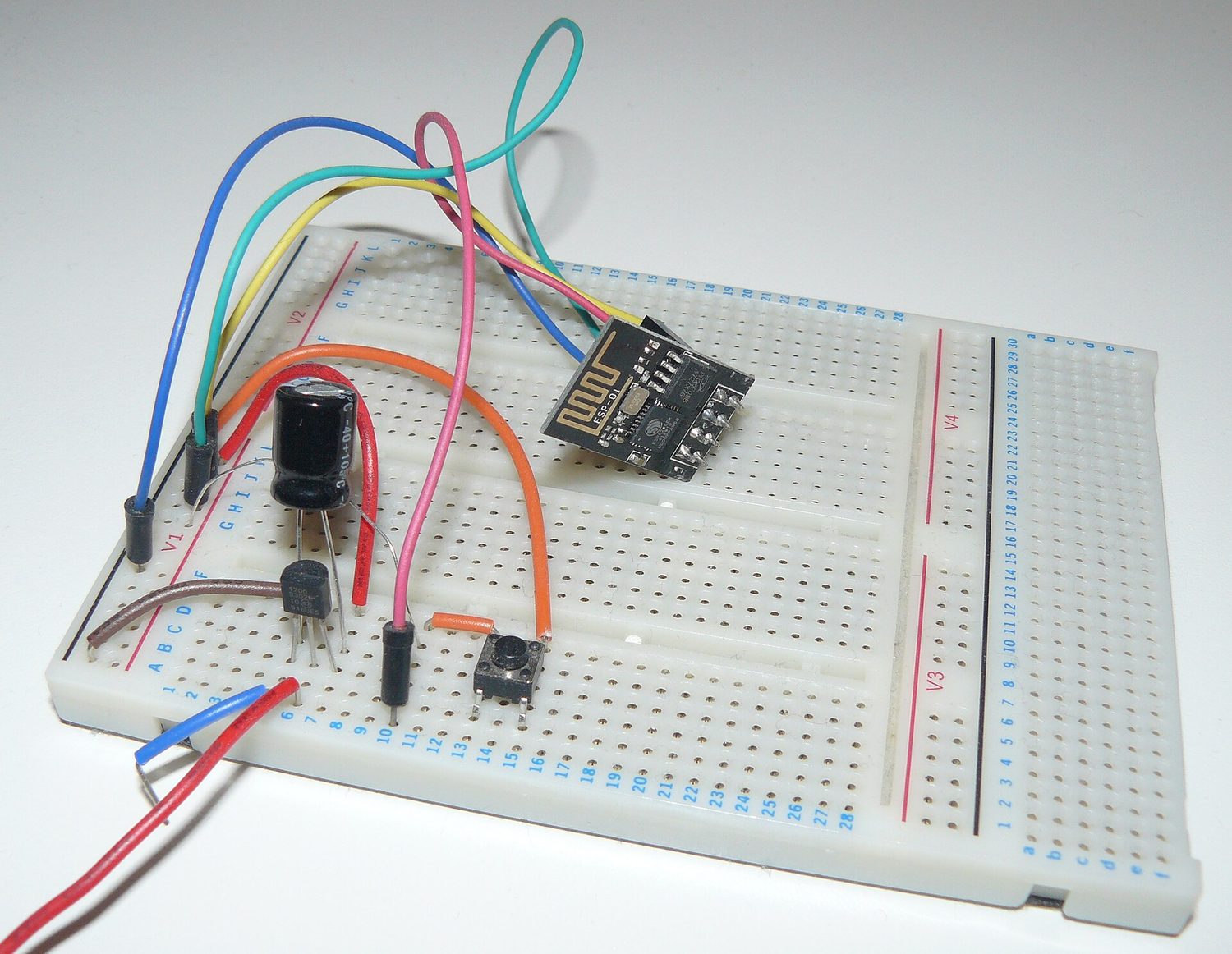
دائرة إلكترونية مبنية على لوحة تجارب
دائرة حقيقية: مكونات مدخلة في لوحة تجارب وموصولة بأسلاك بحيث يكون للتيار مسار كامل
Explore · ⁨استكشف⁩

Build series and parallel circuits · ⁨بني دوائر توالي وتوازي⁩

In series the same current flows through every bulb and voltage divides; in parallel each branch gets the full voltage. Switch mode to see the bulbs' brightness change. · ⁨في التوالي يمر نفس التيار عبر كل مصباح وينقسم الجهد؛ وفي التوازي تحصل كل فرع على الجهد الكامل. غيّر الوضع لترى تغير سطوع المصابيح.⁩

Vocabulary · ⁨مفردات⁩ Train · ⁨تدريب⁩
English العربية
Electric current/ɪˈlektrɪk ˈkʌrənt/ تيار كهربائي
amperes/ˈæmpeəz/ أمبير
series/ˈsɪəriːz/ التوالي
parallel/ˈpærəlel/ التوازي
Resistance/rɪˈzɪstəns/ المقاومة
Ohm's law/əʊmz lɔː/ قانون أوم
resistivity/ˌriːzɪˈstɪvəti/ المقاومة النوعية
Electric power/ɪˈlektrɪk ˈpaʊə/ الطاقة الكهربائية
light bulb/laɪt bʌlb/ مصباح كهربائي
brightness/ˈbraɪtnəs/ السطوع
equivalent resistance/ɪˈkwɪvələnt rɪˈzɪstəns/ المقاومة المكافئة
ammeter/ˈæmiːtə/ أميتر
voltmeter/ˈvəʊltmiːtə/ فولتميتر
nonideal/ˌnɒnaɪˈdɪəl/ غير مثالي
Kirchhoff's loop rule/ˈkɜːkhɒfs luːp ruːl/ قانون حلقة كيرشوف
Kirchhoff's junction rule/ˈkɜːkhɒfs ˈdʒʌŋkʃn ruːl/ قانون عقدة كيرشوف
RC circuit/ˌɑː ˈsiː ˈsɜːkɪt/ دائرة RC
11.3

Resistance, Resistivity, and Ohm's Law · ⁨المقاومة، المقاومة النوعية، وقانون أوم⁩

Syllabus · ⁨المنهج⁩
English

Learning Objective 11.3.A: Describe the resistance of an object using physical properties of that object.

  • 11.3.A.1 Resistance is a measure of the degree to which an object opposes the movement of electric charge.
  • 11.3.A.2 The resistance of a resistor with uniform geometry is proportional to its resistivity and length and is inversely proportional to its cross-sectional area.
    • Equation: $R = \dfrac{\rho \ell}{A}$
    • 11.3.A.2.i Resistivity is a fundamental property of a material that depends on its atomic and molecular structure and quantifies how strongly the material opposes the motion of electric charge.
    • 11.3.A.2.ii The resistivity of a conductor typically increases with temperature.

Learning Objective 11.3.B: Describe the electrical characteristics of elements of a circuit.

  • 11.3.B.1 Ohm's law relates current, resistance, and potential difference across a conductive element of a circuit.
    • Equation: $I = \dfrac{\Delta V}{R}$
    • 11.3.B.1.i Materials that obey Ohm's law have constant resistance for all currents and are called ohmic materials.
    • 11.3.B.1.ii The resistivity of an ohmic material is constant regardless of temperature.
    • 11.3.B.1.iii Resistors can also convert electrical energy to thermal energy, which may change the temperature of both the resistor and the resistor's environment.
    • 11.3.B.1.iv The resistance of an ohmic circuit element can be determined from the slope of a graph of the current in the element as a function of the potential difference across the element.
العربية

الهدف التعليمي 11.3.A: وصف مقاومة جسم باستخدام الخصائص الفيزيائية لذلك الجسم.

  • 11.3.A.1 المقاومة هي مقياس لدرجة معارضة الجسم لحركة الشحنة الكهربائية.
  • 11.3.A.2 مقاومة مقاوم ذي هندسة منتظمة تتناسب طرديًا مع مقاوميته وطوله وتتناسب عكسيًا مع مساحته المقطعية.
    • المعادلة: $R = \dfrac{\rho \ell}{A}$
    • 11.3.A.2.i المقاومة النوعية خاصية أساسية للمادة تعتمد على بنيتها الذرية والجزيئية وتحدد مدى قوة معارضة المادة لحركة الشحنة الكهربائية.
    • 11.3.A.2.ii تزداد المقاومة النوعية للموصل عادةً مع درجة الحرارة.

الهدف التعليمي 11.3.B: وصف الخصائص الكهربائية لعناصر الدائرة.

  • 11.3.B.1 يربط قانون أوم بين التيار، والمقاومة، وفرق الجهد عبر عنصر موصل في الدائرة.
    • المعادلة: $I = \dfrac{\Delta V}{R}$
    • 11.3.B.1.i المواد التي تخضع لقانون أوم لها مقاومة ثابتة لجميع التيارات وتُسمى مواد أومية.
    • 11.3.B.1.ii المقاومة النوعية للمادة الأومية ثابتة بغض النظر عن درجة الحرارة.
    • 11.3.B.1.iii يمكن للمقاومات أيضًا تحويل الطاقة الكهربائية إلى طاقة حرارية، مما قد يغير درجة حرارة كل من المقاومة وبيئتها.
    • 11.3.B.1.iv يمكن تحديد مقاومة عنصر دائرة أومية من خلال ميل بياني للتيار في العنصر بدلالة فرق الجهد عبره.

Source: College Board AP Course and Exam Description · ⁨المصدر: وصف دورة وامتحان College Board AP⁩

English

Resistance 电阻 $R$ opposes current, measured in ohms. Ohm's law 欧姆定律 links the three key quantities:

$$V=IR.$$
A component's resistance depends on the material's resistivity 电阻率 $\rho$, its length, and its cross-sectional area: $R=\dfrac{\rho L}{A}$ – longer and thinner means more resistance.

Worked example. A $2.0\ \text{A}$ current flows through a $6.0\ \Omega$ resistor. The voltage across it is $V=IR=2.0\times6.0=12\ \text{V}$.

العربية

المقاومة $R$ تعيق التيار، وتُقاس بالأوم. قانون أوم يربط بين الكميات الثلاث الرئيسية:

$$V=IR.$$
تعتمد مقاومة Component على المقاومة النوعية للمادة $\rho$، وطوله، ومساحة مقطعه العرضي: $R=\dfrac{\rho L}{A}$ – كلما كان أطول وأرفع زادت المقاومة.

خط I-V للموصل الأومي هو خط مستقيم يمر بنقطة الأصل

مثال محلول. يمر تيار مقداره $2.0\ \text{A}$ عبر مقاومة مقدارها $6.0\ \Omega$. الجهد عبرها هو $V=IR=2.0\times6.0=12\ \text{V}$.

Explore · ⁨استكشف⁩

Apply Ohm's law · ⁨طبق قانون أوم⁩

Ohm's law $V=IR$: for a fixed resistance, current is proportional to voltage. Raise the resistance and the same voltage pushes less current. · ⁨قانون أوم $V=IR$: لمقاومة ثابتة، التيار يتناسب طرديًا مع الجهد. ارفع المقاومة وسيدفع نفس الجهد تيارًا أقل.⁩

11.4

Electric Power · ⁨القدرة الكهربائية⁩

Syllabus · ⁨المنهج⁩
English

Learning Objective 11.4.A: Describe the transfer of energy into, out of, or within an electric circuit, in terms of power.

  • 11.4.A.1 The rate at which energy is transferred, converted, or dissipated by a circuit element depends on the current in the element and the electric potential difference across it.
    • Equation: $P = I \Delta V$
    • Equation (derived): $P = I^2 R = \dfrac{(\Delta V)^2}{R}$
  • 11.4.A.2 The brightness of a bulb increases with power, so power can be used to qualitatively predict the brightness of bulbs in a circuit.
العربية

الهدف التعليمي 11.4.A: وصف انتقال الطاقة إلى داخل أو خارج أو ضمن دائرة كهربائية، بدلالة القدرة.

  • 11.4.A.1 يعتمد معدل انتقال الطاقة أو تحويلها أو تبديدها بواسطة عنصر دائرة على التيار في العنصر وفرق الجهد الكهربائي عبره.
    • المعادلة: $P = I \Delta V$
    • معادلة (مشتقة): $P = I^2 R = \dfrac{(\Delta V)^2}{R}$
  • 11.4.A.2 تزداد سطوع المصباح مع القدرة، لذا يمكن استخدام القدرة للتنبؤ النوعي بسطوع المصابيح في دائرة.

Source: College Board AP Course and Exam Description · ⁨المصدر: وصف دورة وامتحان College Board AP⁩

English

Electric power 电功率 is the rate a component converts electrical energy (to heat, light, motion):

$$P=IV=I^2R=\frac{V^2}{R}.$$
Pick the form that uses the quantities you know. A resistor's power all becomes heat.

Worked example. The $6.0\ \Omega$ resistor above, carrying $2.0\ \text{A}$, dissipates $P=I^2R=2.0^2\times6.0=24\ \text{W}$ – equivalently $P=IV=2.0\times12=24\ \text{W}$.

A light bulb 灯泡 is just a resistor that glows, and its brightness 亮度 rises with the power it dissipates. So to rank bulbs, compare their power. In a series string every bulb carries the same current, so by $P=I^2R$ the bulb with the largest resistance is brightest; wired in parallel every bulb gets the full battery voltage, so by $P=V^2/R$ the bulb with the smallest resistance is brightest.

العربية

القدرة الكهربائية هي معدل تحويل Component للطاقة الكهربائية (إلى حرارة، ضوء، حركة):

$$P=IV=I^2R=\frac{V^2}{R}.$$
اختر الصيغة التي تستخدم الكميات المعروفة لديك. تتحول قدرة المقاومة بالكامل إلى حرارة.

مثال محلول. المقاومة $6.0\ \Omega$ أعلاه، التي يمر بها تيار $2.0\ \text{A}$، تبذر طاقة $P=I^2R=2.0^2\times6.0=24\ \text{W}$ – أو ما يعادلها $P=IV=2.0\times12=24\ \text{W}$.

مصباح ضوئي هو مجرد مقاومة تتوهج، وتزداد سطوعه مع القدرة التي تبذدها. لذا لترتيب المصابيح، قارن قدرتها. في سلسلة على التوالي تحمل كل مصباح نفس التيار، لذا وفقاً لـ $P=I^2R$ يكون المصباح ذو أكبر مقاومة هو الأكثر سطوعاً؛ وفي التوصيل على التوازي يحصل كل مصباح على فولتية البطارية الكاملة، لذا وفقاً لـ $P=V^2/R$ يكون المصباح ذو أصغر مقاومة هو الأكثر سطوعاً.

أسلاك نقل الطاقة عالية الجهد: تنتقل القدرة الكهربائية بجهد عالٍ ليظل التيار (وفقدان I²R) منخفضاً
Explore · ⁨استكشف⁩

Read an I-V characteristic · ⁨اقرأ خاصية I-V⁩

Power is $P=IV$. A resistor's I-V line is straight, but a lamp curves as it heats and its resistance rises. The area under I-V relates to the energy delivered. · ⁨الطاقة هي $P=IV$. خط I-V للمقاومة مستقيم، لكن المصباح منحني لأنه يسخن وتزداد مقاومته. المساحة تحت منحنى I-V ترتبط بالطاقة الموصلة.⁩

11.5

Compound DC Circuits · ⁨دوائر DC المركبة⁩

Syllabus · ⁨المنهج⁩
English

Learning Objective 11.5.A: Describe the equivalent resistance of multiple resistors connected in a circuit.

  • 11.5.A.1 Circuit elements may be connected in series and/or in parallel.
    • 11.5.A.1.i A series connection is one in which any charge passing through one circuit element must proceed through all elements in that connection and has no other path available. The current in each element in series must be the same.
    • 11.5.A.1.ii A parallel connection is one in which charges may flow through one of two or more paths. Across each path, the potential difference is the same.
  • 11.5.A.2 A collection of resistors in a circuit may be analyzed as though it were a single resistor with an equivalent resistance $R_{\text{eq}}$.
    • 11.5.A.2.i The equivalent resistance of a set of resistors in series is the sum of the individual resistances.
      • Equation: $R_{\text{eq},s} = \sum_i R_i$
    • 11.5.A.2.ii The inverse of the equivalent resistance of a set of resistors connected in parallel is equal to the sum of the inverses of the individual resistances.
      • Equation: $\dfrac{1}{R_{\text{eq},p}} = \sum_i \dfrac{1}{R_i}$
    • 11.5.A.2.iii When resistors are connected in parallel, the number of paths available to charges increases, and the equivalent resistance of the group of resistors decreases.

Learning Objective 11.5.B: Describe a circuit with resistive wires and a battery with internal resistance.

  • 11.5.B.1 Ideal batteries have negligible internal resistance. Ideal wires have negligible resistance.
    • 11.5.B.1.i The resistance of wires that are good conductors may normally be neglected, because their resistance is much smaller than that of other elements of a circuit.
    • 11.5.B.1.ii The resistance of wires may only be neglected if the circuit contains other elements that do have resistance.
    • 11.5.B.1.iii The potential difference a battery would supply if it were ideal is the potential difference measured across the terminals when there is no current in the battery and is sometimes referred to as its $\mathrm{emf}$ ($\varepsilon$).
  • 11.5.B.2 The internal resistance of a nonideal battery may be treated as the resistance of a resistor in series with an ideal battery and the remainder of the circuit.
  • 11.5.B.3 When there is current in a nonideal battery with internal resistance $r$, the potential difference across the terminals of the battery is reduced relative to the potential difference when there is no current in the battery.
    • Equation (derived): $\Delta V_{\text{terminal}} = \varepsilon - Ir$

Learning Objective 11.5.C: Describe the measurement of current and potential difference in a circuit.

  • 11.5.C.1 Ammeters are used to measure current at a specific point in a circuit.
    • 11.5.C.1.i Ammeters must be connected in series with the element in which current is being measured.
    • 11.5.C.1.ii Ideal ammeters have zero resistance so that they do not affect the current in the element that they are in series with.
  • 11.5.C.2 Voltmeters are used to measure electric potential difference between two points in a circuit.
    • 11.5.C.2.i Voltmeters must be connected in parallel with the element across which potential difference is being measured.
    • 11.5.C.2.ii Ideal voltmeters have an infinite resistance so that no charge flows through them.
  • 11.5.C.3 Nonideal ammeters and voltmeters will change the properties of the circuit being measured.

Boundary statement: AP Physics 2 only expects students to qualitatively discuss how a nonideal ammeter or voltmeter will affect the results of measurements. Unless otherwise stated, all batteries, wires, and meters are assumed to be ideal.

Boundary statement: Circuits with batteries of different potential differences connected in parallel will not be assessed.

العربية

الهدف التعليمي 11.5.A: وصف المقاومة المكافئة لمجموعة مقاومات متصلة في دائرة.

  • 11.5.A.1 يمكن توصيل عناصر الدائرة على التوالي و/أو على التوازي.
    • 11.5.A.1.i الاتصال على التوالي هو الذي يجب أن يمر خلاله أي شحنة مرورًا بعنصر دائرة واحد عبر جميع العناصر في هذا الاتصال ولا توجد طريق آخر متاح. يجب أن يكون التيار في كل عنصر على التوالي هو نفسه.
    • 11.5.A.1.ii الاتصال التوازي هو اتصال يمكن فيه للشحنات التدفق عبر أحد مسارين أو أكثر. عبر كل مسار، يكون فرق الجهد متساويًا.
  • 11.5.A.2 يمكن تحليل مجموعة من المقاومات في الدائرة وكأنها مقاومة واحدة بمقاومة مكافئة $R_{\text{eq}}$.
    • 11.5.A.2.i المقاومة المكافئة لمجموعة من المقاومات المتصلة على التوالي تساوي مجموع المقاومات الفردية.
      • معادلة: $R_{\text{eq},s} = \sum_i R_i$
    • 11.5.A.2.ii مقلوب المقاومة المكافئة لمجموعة من المقاومات المتصلة على التوازي يساوي مجموع مقلوبات المقاومات الفردية.
      • معادلة: $\dfrac{1}{R_{\text{eq},p}} = \sum_i \dfrac{1}{R_i}$
    • 11.5.A.2.iii عند توصيل المقاومات على التوازي، يزداد عدد المسارات المتاحة للشحنات، وتتناقص المقاومة المكافئة لمجموعة المقاومات.

الهدف التعليمي 11.5.B: وصف دائرة تحتوي على أسلاك مقاومة وبطارية ذات مقاومة داخلية.

  • 11.5.B.1 البطاريات المثالية لها مقاومة داخلية مهملة. الأسلاك المثالية لها مقاومة مهملة.
    • 11.5.B.1.i يمكن عادةً إهمال مقاومة الأسلاك التي تعمل كموصلات جيدة، لأن مقاومتها أصغر بكثير من مقاومة عناصر أخرى في الدائرة.
    • 11.5.B.1.ii لا يمكن إهمال مقاومة الأسلاك إلا إذا كانت الدائرة تحتوي على عناصر أخرى تمتلك مقاومة.
    • 11.5.B.1.iii فرق الجهد الذي ستزوده البطارية لو كانت مثالية هو فرق الجهد المقاس بين طرفيها عندما لا يمر تيار في البطارية، ويُشار إليه أحيانًا باسم $\mathrm{emf}$ ($\varepsilon$).
  • 11.5.B.2 يمكن اعتبار المقاومة الداخلية للبطارية غير المثالية على أنها مقاومة مقاومة متصلة على التوالي مع بطارية مثالية وبقية الدائرة.
  • 11.5.B.3 عندما يمر تيار في بطارية غير مثالية ذات مقاومة داخلية $r$، يقل فرق الجهد عبر طرفي البطارية مقارنة بفرق الجهد عندما لا يمر تيار في البطارية.
    • معادلة (مشتقة): $\Delta V_{\text{terminal}} = \varepsilon - Ir$

الهدف التعليمي 11.5.C: وصف قياس التيار وفرق الجهد في دائرة كهربائية.

  • 11.5.C.1 تُستخدم الأميتر لقياس التيار عند نقطة محددة في الدائرة.
    • 11.5.C.1.i يجب توصيل الأميتر على التوالي مع العنصر الذي يُقاس فيه التيار.
    • 11.5.C.1.ii الأميتر المثالي له مقاومة صفرية حتى لا يؤثر على التيار في العنصر المتصل به على التوالي.
  • 11.5.C.2 تُستخدم الفولتميتر لقياس فرق الجهد الكهربائي بين نقطتين في الدائرة.
    • 11.5.C.2.i يجب توصيل الفولتميتر على التوازي مع العنصر الذي يُقاس عليه فرق الجهد.
    • 11.5.C.2.ii الفولتميتر المثالي له مقاومة لا نهائية بحيث لا يتدفق تيار من خلاله.
  • 11.5.C.3 الأميتر والفولتميتر غير المثاليين سيغيران خصائص الدائرة المراد قياسها.

عبارة حدود: يتوقع امتحان AP Physics 2 من الطلاب مناقشة كيفية تأثير الأميتر أو الفولتميتر غير المثالي على نتائج القياس بشكل نوعي فقط. ما لم يُذكر خلاف ذلك، يُفترض أن جميع البطاريات والأسلاك والأجهزة القياسية مثالية.

عبارة حدود: لن يتم تقييم الدوائر التي تحتوي على بطاريات ذات فروق جهد مختلفة متصلة على التوازي.

Source: College Board AP Course and Exam Description · ⁨المصدر: وصف دورة وامتحان College Board AP⁩

English

Combine resistors to find an equivalent resistance 等效电阻:

  • Series: $R_{\text{eq}}=R_1+R_2+\cdots$ (resistances add).
  • Parallel: $\dfrac{1}{R_{\text{eq}}}=\dfrac{1}{R_1}+\dfrac{1}{R_2}+\cdots$ (the total is less than the smallest).

Reduce the network step by step to find the total current from the battery, then work back to each element.

Worked example. A $12\ \text{V}$ battery drives a $4.0\ \Omega$ and a $12\ \Omega$ resistor in parallel. First combine them: $\dfrac{1}{R_{\text{eq}}}=\dfrac14+\dfrac{1}{12}=\dfrac{4}{12}\Rightarrow R_{\text{eq}}=3.0\ \Omega$. The total current from the battery is $I=\dfrac{V}{R_{\text{eq}}}=\dfrac{12}{3.0}=4.0\ \text{A}$, which splits so that the smaller resistor carries the larger share ($3.0\ \text{A}$ through the $4\ \Omega$, $1.0\ \text{A}$ through the $12\ \Omega$).

العربية

قم بدمج المقاومات لإيجاد مقاومة مكافئة:

المقاومات المتصلة على التوالي تُجمع لتكوين مقاومة مكافئة واحدة
  • على التوالي: $R_{\text{eq}}=R_1+R_2+\cdots$ (تُجمع المقاومات).
  • على التوازي: $\dfrac{1}{R_{\text{eq}}}=\dfrac{1}{R_1}+\dfrac{1}{R_2}+\cdots$ (القيمة الكلية أقل من أصغر قيمة).

بسط الشبكة خطوة بخطوة لإيجاد التيار الكلي القادم من البطارية، ثم عُد للخلف لكل عنصر.

مثال محلول. بطارية $12\ \text{V}$ تدفع تياراً عبر مقاومتين $4.0\ \Omega$ و$12\ \Omega$ متصلتين على التوازي. أولاً نوحدهما: $\dfrac{1}{R_{\text{eq}}}=\dfrac14+\dfrac{1}{12}=\dfrac{4}{12}\Rightarrow R_{\text{eq}}=3.0\ \Omega$. التيار الكلي القادم من البطارية هو $I=\dfrac{V}{R_{\text{eq}}}=\dfrac{12}{3.0}=4.0\ \text{A}$، وينقسم بحيث يحمل المقاومة الأصغر الحصة الأكبر ($3.0\ \text{A}$ عبر $4\ \Omega$، $1.0\ \text{A}$ عبر $12\ \Omega$).

11.5

Measuring Current and Voltage · ⁨قياس التيار والجهد⁩

Syllabus · ⁨المنهج⁩
English

Learning Objective 11.5.A: Describe the equivalent resistance of multiple resistors connected in a circuit.

  • 11.5.A.1 Circuit elements may be connected in series and/or in parallel.
    • 11.5.A.1.i A series connection is one in which any charge passing through one circuit element must proceed through all elements in that connection and has no other path available. The current in each element in series must be the same.
    • 11.5.A.1.ii A parallel connection is one in which charges may flow through one of two or more paths. Across each path, the potential difference is the same.
  • 11.5.A.2 A collection of resistors in a circuit may be analyzed as though it were a single resistor with an equivalent resistance $R_{\text{eq}}$.
    • 11.5.A.2.i The equivalent resistance of a set of resistors in series is the sum of the individual resistances.
      • Equation: $R_{\text{eq},s} = \sum_i R_i$
    • 11.5.A.2.ii The inverse of the equivalent resistance of a set of resistors connected in parallel is equal to the sum of the inverses of the individual resistances.
      • Equation: $\dfrac{1}{R_{\text{eq},p}} = \sum_i \dfrac{1}{R_i}$
    • 11.5.A.2.iii When resistors are connected in parallel, the number of paths available to charges increases, and the equivalent resistance of the group of resistors decreases.

Learning Objective 11.5.B: Describe a circuit with resistive wires and a battery with internal resistance.

  • 11.5.B.1 Ideal batteries have negligible internal resistance. Ideal wires have negligible resistance.
    • 11.5.B.1.i The resistance of wires that are good conductors may normally be neglected, because their resistance is much smaller than that of other elements of a circuit.
    • 11.5.B.1.ii The resistance of wires may only be neglected if the circuit contains other elements that do have resistance.
    • 11.5.B.1.iii The potential difference a battery would supply if it were ideal is the potential difference measured across the terminals when there is no current in the battery and is sometimes referred to as its $\mathrm{emf}$ ($\varepsilon$).
  • 11.5.B.2 The internal resistance of a nonideal battery may be treated as the resistance of a resistor in series with an ideal battery and the remainder of the circuit.
  • 11.5.B.3 When there is current in a nonideal battery with internal resistance $r$, the potential difference across the terminals of the battery is reduced relative to the potential difference when there is no current in the battery.
    • Equation (derived): $\Delta V_{\text{terminal}} = \varepsilon - Ir$

Learning Objective 11.5.C: Describe the measurement of current and potential difference in a circuit.

  • 11.5.C.1 Ammeters are used to measure current at a specific point in a circuit.
    • 11.5.C.1.i Ammeters must be connected in series with the element in which current is being measured.
    • 11.5.C.1.ii Ideal ammeters have zero resistance so that they do not affect the current in the element that they are in series with.
  • 11.5.C.2 Voltmeters are used to measure electric potential difference between two points in a circuit.
    • 11.5.C.2.i Voltmeters must be connected in parallel with the element across which potential difference is being measured.
    • 11.5.C.2.ii Ideal voltmeters have an infinite resistance so that no charge flows through them.
  • 11.5.C.3 Nonideal ammeters and voltmeters will change the properties of the circuit being measured.

Boundary statement: AP Physics 2 only expects students to qualitatively discuss how a nonideal ammeter or voltmeter will affect the results of measurements. Unless otherwise stated, all batteries, wires, and meters are assumed to be ideal.

Boundary statement: Circuits with batteries of different potential differences connected in parallel will not be assessed.

العربية

الهدف التعليمي 11.5.A: وصف المقاومة المكافئة لمجموعة مقاومات متصلة في دائرة.

  • 11.5.A.1 يمكن توصيل عناصر الدائرة على التوالي و/أو على التوازي.
    • 11.5.A.1.i الاتصال على التوالي هو الذي يجب أن يمر خلاله أي شحنة مرورًا بعنصر دائرة واحد عبر جميع العناصر في هذا الاتصال ولا توجد طريق آخر متاح. يجب أن يكون التيار في كل عنصر على التوالي هو نفسه.
    • 11.5.A.1.ii الاتصال التوازي هو اتصال يمكن فيه للشحنات التدفق عبر أحد مسارين أو أكثر. عبر كل مسار، يكون فرق الجهد متساويًا.
  • 11.5.A.2 يمكن تحليل مجموعة من المقاومات في الدائرة وكأنها مقاومة واحدة بمقاومة مكافئة $R_{\text{eq}}$.
    • 11.5.A.2.i المقاومة المكافئة لمجموعة من المقاومات المتصلة على التوالي تساوي مجموع المقاومات الفردية.
      • معادلة: $R_{\text{eq},s} = \sum_i R_i$
    • 11.5.A.2.ii مقلوب المقاومة المكافئة لمجموعة من المقاومات المتصلة على التوازي يساوي مجموع مقلوبات المقاومات الفردية.
      • معادلة: $\dfrac{1}{R_{\text{eq},p}} = \sum_i \dfrac{1}{R_i}$
    • 11.5.A.2.iii عند توصيل المقاومات على التوازي، يزداد عدد المسارات المتاحة للشحنات، وتتناقص المقاومة المكافئة لمجموعة المقاومات.

الهدف التعليمي 11.5.B: وصف دائرة تحتوي على أسلاك مقاومة وبطارية ذات مقاومة داخلية.

  • 11.5.B.1 البطاريات المثالية لها مقاومة داخلية مهملة. الأسلاك المثالية لها مقاومة مهملة.
    • 11.5.B.1.i يمكن عادةً إهمال مقاومة الأسلاك التي تعمل كموصلات جيدة، لأن مقاومتها أصغر بكثير من مقاومة عناصر أخرى في الدائرة.
    • 11.5.B.1.ii لا يمكن إهمال مقاومة الأسلاك إلا إذا كانت الدائرة تحتوي على عناصر أخرى تمتلك مقاومة.
    • 11.5.B.1.iii فرق الجهد الذي ستزوده البطارية لو كانت مثالية هو فرق الجهد المقاس بين طرفيها عندما لا يمر تيار في البطارية، ويُشار إليه أحيانًا باسم $\mathrm{emf}$ ($\varepsilon$).
  • 11.5.B.2 يمكن اعتبار المقاومة الداخلية للبطارية غير المثالية على أنها مقاومة مقاومة متصلة على التوالي مع بطارية مثالية وبقية الدائرة.
  • 11.5.B.3 عندما يمر تيار في بطارية غير مثالية ذات مقاومة داخلية $r$، يقل فرق الجهد عبر طرفي البطارية مقارنة بفرق الجهد عندما لا يمر تيار في البطارية.
    • معادلة (مشتقة): $\Delta V_{\text{terminal}} = \varepsilon - Ir$

الهدف التعليمي 11.5.C: وصف قياس التيار وفرق الجهد في دائرة كهربائية.

  • 11.5.C.1 تُستخدم الأميتر لقياس التيار عند نقطة محددة في الدائرة.
    • 11.5.C.1.i يجب توصيل الأميتر على التوالي مع العنصر الذي يُقاس فيه التيار.
    • 11.5.C.1.ii الأميتر المثالي له مقاومة صفرية حتى لا يؤثر على التيار في العنصر المتصل به على التوالي.
  • 11.5.C.2 تُستخدم الفولتميتر لقياس فرق الجهد الكهربائي بين نقطتين في الدائرة.
    • 11.5.C.2.i يجب توصيل الفولتميتر على التوازي مع العنصر الذي يُقاس عليه فرق الجهد.
    • 11.5.C.2.ii الفولتميتر المثالي له مقاومة لا نهائية بحيث لا يتدفق تيار من خلاله.
  • 11.5.C.3 الأميتر والفولتميتر غير المثاليين سيغيران خصائص الدائرة المراد قياسها.

عبارة حدود: يتوقع امتحان AP Physics 2 من الطلاب مناقشة كيفية تأثير الأميتر أو الفولتميتر غير المثالي على نتائج القياس بشكل نوعي فقط. ما لم يُذكر خلاف ذلك، يُفترض أن جميع البطاريات والأسلاك والأجهزة القياسية مثالية.

عبارة حدود: لن يتم تقييم الدوائر التي تحتوي على بطاريات ذات فروق جهد مختلفة متصلة على التوازي.

Source: College Board AP Course and Exam Description · ⁨المصدر: وصف دورة وامتحان College Board AP⁩

English

Two meters read a circuit. An ammeter 电流表 measures the current at a point, so it must be wired in series – the current you want to measure has to flow through it. A voltmeter 电压表 measures the potential difference between two points, so it is wired in parallel, bridging across the component whose voltage you want.

For a meter to read the true value it must barely disturb the circuit:

  • an ideal ammeter has zero resistance, so putting it in series does not reduce the current it reads;
  • an ideal voltmeter has infinite resistance, so almost no current is diverted through it.

A real, nonideal 非理想 meter is imperfect: a real ammeter has a small resistance (it slightly lowers the current), and a real voltmeter lets a little current leak through (it slightly lowers the voltage it reads). So connecting any meter changes, a little, the very quantity it is measuring.

العربية

مقياسان يقرأان الدائرة. الأميتر يقيس التيار عند نقطة ما، لذا يجب توصيله على التوالي – حيث يجب أن يمر التيار الذي تريد قياسه * خلاله. الفولتميتر يقيس فرق الجهد بين نقطتين، لذا يُوصَل على التوازي، ممتداً عبر المكون الذي تريد قياس جهده.

لكي يعطي المقياس القيمة الصحيحة، يجب ألا يشوش على الدائرة:

  • الأميثر المثالي له مقاومة صفرية، لذا فإن وضعه على التوالي لا يقلل التيار الذي يقيسه;
  • الفولتميتر المثالي له مقاومة لا نهائية، لذا لا يتوزع تيار تقريبياً خلاله.

المقياس الحقيقي، غير المثالي، غير كامل: الأميتر الحقيقي له مقاومة صغيرة (يخفض التيار قليلاً)، والفولتميتر الحقيقي يسمح بتسرب القليل من التيار (يخفض الجهد الذي يقيسه قليلاً). لذا فإن توصيل أي مقياس يغيّر، قليلاً، الكمية التي يقوم بقياسها.

11.6

Kirchhoff's Loop Rule · ⁨قاعدة كيرشوف للحلقات⁩

Syllabus · ⁨المنهج⁩
English

Learning Objective 11.6.A: Describe a circuit or elements of a circuit by applying Kirchhoff's loop rule.

  • 11.6.A.1 Energy changes in simple electrical circuits may be represented in terms of charges moving through electric potential differences within circuit elements.
    • Equation: $\Delta U_E = q \Delta V$
  • 11.6.A.2 Kirchhoff's loop rule is a consequence of the conservation of energy.
  • 11.6.A.3 Kirchhoff's loop rule states that the sum of potential differences across all circuit elements in a single closed loop must equal zero.
    • Equation: $\sum \Delta V = 0$
  • 11.6.A.4 The values of electric potential at points in a circuit can be represented by a graph of electric potential as a function of position within a loop.
العربية

الهدف التعليمي 11.6.A: وصف دائرة أو عناصر دائرة بتطبيق قاعدة حلقة كيرشوف.

  • 11.6.A.1 يمكن تمثيل تغيرات الطاقة في الدوائر الكهربائية البسيطة بدلالة الشحنات التي تتحرك عبر فروق الجهد الكهربائية داخل عناصر الدائرة.
    • المعادلة: $\Delta U_E = q \Delta V$
  • 11.6.A.2 قاعدة حلقة كيرشوف هي نتيجة لقانون حفظ الطاقة.
  • 11.6.A.3 تنص قاعدة حلقة كيرشوف على أن مجموع فروق الجهد عبر جميع عناصر الدائرة في حلقة مغلقة واحدة يجب أن يساوي صفرًا.
    • المعادلة: $\sum \Delta V = 0$
  • 11.6.A.4 يمكن تمثيل قيم الجهد الكهربائي عند نقاط في الدائرة باستخدام رسم بياني للجهد الكهربائي دالة للموضع داخل الحلقة.

Source: College Board AP Course and Exam Description · ⁨المصدر: وصف دورة وامتحان College Board AP⁩

English

Kirchhoff's loop rule 基尔霍夫电压定律 (energy conservation): around any closed loop, the voltage gains and drops sum to zero. Add the battery's emf and subtract each $IR$ drop as you go around. This gives one equation per independent loop.

العربية

قاعدة كيرشوف للحلقات (حفظ الطاقة): حول أي حلقة مغلقة، مجموع زيادة الجهد ونزوله يساوي صفراً. أضف القوة الدافعة الكهربائية للبطارية وطرح كل نزول $IR$ أثناء الدوران. هذا يعطيك معادلة واحدة لكل حلقة مستقلة.

11.7

Kirchhoff's Junction Rule · ⁨قاعدة كيرشوف للعقد⁩

Syllabus · ⁨المنهج⁩
English

Learning Objective 11.7.A: Describe a circuit or elements of a circuit by applying Kirchhoff's junction rule.

  • 11.7.A.1 Kirchhoff's junction rule is a consequence of the conservation of electric charge.
  • 11.7.A.2 Kirchhoff's junction rule states that the total amount of charge entering a junction per unit time must equal the total amount of charge exiting that junction per unit time.
    • Equation: $\sum I_{\text{in}} = \sum I_{\text{out}}$
العربية

الهدف التعليمي 11.7.A: وصف دائرة أو عناصر دائرة بتطبيق قاعدة عقدة كيرشوف.

  • 11.7.A.1 قاعدة عقدة كيرشوف هي نتيجة لقانون حفظ الشحنة الكهربائية.
  • 11.7.A.2 تنص قاعدة عقدة كيرشوف على أن إجمالي كمية الشحنة الداخلة إلى العقدة في وحدة زمنية يجب أن يساوي إجمالي كمية الشحنة الخارجة من تلك العقدة في وحدة زمنية.
    • المعادلة: $\sum I_{\text{in}} = \sum I_{\text{out}}$

Source: College Board AP Course and Exam Description · ⁨المصدر: وصف دورة وامتحان College Board AP⁩

English

Kirchhoff's junction rule 基尔霍夫电流定律 (charge conservation): the total current into any junction equals the total current out. Together with the loop rule, it lets you solve any multi-loop circuit for its unknown currents.

العربية

قاعدة كيرشوف للعقد (حفظ الشحنة): التيار الكلي الوارد إلى أي عقدة يساوي التيار الكلي الخارج. مجتمعة مع قاعدة الحلقات، تسمح لك بحل أي دائرة متعددة الحلقات لإيجاد تياراتها المجهولة.

التيار ينقسم عند العقدة: ما يدخل يساوي ما يخرج
11.8

RC Circuits · ⁨دوائر RC⁩

Syllabus · ⁨المنهج⁩
Learning ObjectiveEssential Knowledge

11.8.A
Describe the equivalent capacitance of multiple capacitors.

  • 11.8.A.1 A collection of capacitors in a circuit may be analyzed as though it were a single capacitor with an equivalent capacitance $C_{\text{eq}}$.
    • 11.8.A.1.i The inverse of the equivalent capacitance of a set of capacitors connected in series is equal to the sum of the inverses of the individual capacitances.
      • Equation: $\dfrac{1}{C_{\text{eq},s}} = \sum_i \dfrac{1}{C_i}$
    • 11.8.A.1.ii The equivalent capacitance of a set of capacitors in series is less than the capacitance of the smallest capacitor.
    • 11.8.A.1.iii The equivalent capacitance of a set of capacitors in parallel is the sum of the individual capacitances.
      • Equation: $C_{\text{eq},p} = \sum_i C_i$
  • 11.8.A.2 As a result of conservation of charge, each of the capacitors in series must have the same magnitude of charge on each plate.

11.8.B
Describe the behavior of a circuit containing combinations of resistors and capacitors.

  • 11.8.B.1 The time constant $\tau$ is a significant feature of an RC circuit.
    • 11.8.B.1.i The time constant of an RC circuit is a measure of how quickly the capacitor will charge or discharge and is defined as $\tau = R_{\text{eq}} C_{\text{eq}}$.
    • 11.8.B.1.ii For a charging capacitor, the time constant represents the time required for the capacitor's charge to increase from zero to approximately 63 percent of its final asymptotic value.
    • 11.8.B.1.iii For a discharging capacitor, the time constant represents the time required for the capacitor's charge to decrease from fully charged to approximately 37 percent of its initial value.
  • 11.8.B.2 The potential difference across a capacitor and the current in the branch of the circuit containing the capacitor each change over time as the capacitor charges and discharges, but both will reach a steady state after a long time interval.
    • 11.8.B.2.i Immediately after being placed in a circuit, an uncharged capacitor acts like a wire, and charge can easily flow to or from the plates of the capacitor.
    • 11.8.B.2.ii As a capacitor charges, changes to the potential difference across the capacitor affect the charge on the plates of the capacitor, the current circuit branch in which the capacitor is located, and the electric potential energy stored in the capacitor.
    • 11.8.B.2.iii The potential difference across a capacitor, the current in the circuit branch in which the capacitor is located, and the electric potential energy stored in the capacitor all change with respect to time and asymptotically approach steady state conditions.
    • 11.8.B.2.iv After a long time, a charging capacitor approaches a state of being fully charged, reaching a maximum potential difference at which there is zero current in the circuit branch in which the capacitor is located.
    • 11.8.B.2.v Immediately after a charged capacitor begins discharging, the amount of charge on the capacitor plates and the energy stored in the capacitor begin to decrease.
    • 11.8.B.2.vi As a capacitor discharges, the amount of charge on the capacitor, the potential difference across the capacitor, and the current in the circuit branch in which the capacitor is located all decrease until a steady state is reached.
    • 11.8.B.2.vii After either charging or discharging for times much greater than the time constant, the capacitor and the relevant circuit branch may be modeled using steady-state conditions.

Boundary statement: Descriptions of charging/discharging RC circuits in AP Physics 2 are limited to qualitative descriptions and representations. While students should be able to mathematically describe initial and final states of RC circuits, students are not expected to mathematically model these behaviors with respect to time.

Source: College Board AP Course and Exam Description · ⁨المصدر: وصف دورة وامتحان College Board AP⁩

English
Charging a capacitor (RC)

An RC circuit RC电路 contains a resistor and a capacitor. When charging, the capacitor's voltage rises and the current falls, both exponentially, over a characteristic time $\tau=RC$. Key limits: at the first instant the uncharged capacitor acts like a plain wire (maximum current); after a long time it is fully charged and blocks current (acts like a break).

Worked example. For $R=10\ \text{k}\Omega$ and $C=100\ \mu\text{F}$, the time constant is $\tau=RC=(10\times10^{3})(100\times10^{-6})=1.0\ \text{s}$. After one time constant the capacitor reaches about $63\%$ of the supply voltage; after about $5\tau$ it is essentially fully charged.

العربية
شحن مكثف (RC)

الدائرة RC تحتوي على مقاومة ومكثف. عند الشحن، يرتفع جهد المكثف ويقل التيار، كلاهما أسياً، خلال زمن مميز $\tau=RC$. حدود رئيسية: في اللحظة الأولى، يعمل المكثف غير المشحون كسلك عادي (أقصى تيار)؛ بعد فترة طويلة يكون مشحوناً بالكامل ويمنع التيار (يعمل كقطع).

شحنة المكثف تتناقص أسياً أثناء التفريغ

مثال محلول. بالنسبة لـ $R=10\ \text{k}\Omega$ و$C=100\ \mu\text{F}$، ثابت الزمن هو $\tau=RC=(10\times10^{3})(100\times10^{-6})=1.0\ \text{s}$. بعد مرور ثابت زمني واحد، يصل المكثف إلى حوالي $63\%$ من جهد المصدر؛ بعد حوالي $5\tau$ يكون مشحوناً بشكل شبه كامل.

11.8

Exam tips · ⁨نصائح للامتحان⁩

English
  • In series the current is the same throughout; in parallel the voltage is the same across each branch — never mix these up.
  • Combine resistors: series add; parallel $1/R_{\text{eq}}=\sum 1/R_i$ (the total is less than the smallest).
  • Apply Kirchhoff's rules: junction (current in = current out, charge conserved) and loop (voltages sum to zero, energy conserved).
  • Pick the power form that fits your knowns: $P=IV=I^2R=V^2/R$.
  • An ammeter goes in series (ideal: zero resistance); a voltmeter goes in parallel (ideal: infinite resistance). A real meter slightly disturbs the circuit it measures.
  • A bulb is brighter when it dissipates more power – in series the biggest resistance ($I^2R$) glows brightest; in parallel the smallest ($V^2/R$) does.
  • In an RC circuit the capacitor acts like a plain wire the instant it starts charging and like a break once fully charged.
العربية
  • في التوالي يكون التيار نفسه في كل مكان؛ في التوازي يكون الجهد نفسه عبر كل فرع – لا تخلط أبداً بين هذين المفهومين.
  • اجمع المقاومات: التوالي يُجمَع؛ التوازي $1/R_{\text{eq}}=\sum 1/R_i$ (القيمة الكلية أقل من أصغر قيمة).
  • طبق قواعد كيرشوف: العقدة (تيار وارد = تيار خارج، حفظ الشحنة) والحلقة (مجموع الجهود يساوي صفراً، حفظ الطاقة).
  • اختر صيغة القدرة التي تناسب معطياتك: $P=IV=I^2R=V^2/R$.
  • الأميتر يوضع على التوالي (المثالي: مقاومة صفرية)؛ الفولتميتر يوضع على التوازي (المثالي: مقاومة لا نهائية). المقياس الحقيقي يشوش قليلاً على الدائرة التي يقيسها.
  • اللمبة تكون أكثر سطوعاً عندما تبذل قدرة أكبر – في التوالي، أكبر مقاومة ($I^2R$) تضيء بوضوح؛ في التوازي، أصغر مقاومة ($V^2/R$) تفعل ذلك.
  • في دائرة RC، يعمل المكثف كسلك عادي في اللحظة التي يبدأ فيها بالشحن، وكقطع بمجرد امتلاءه بالكامل.

Interactive lessons on this topic · ⁨دروس تفاعلية حول هذا الموضوع⁩

Work through it step by step, with instant-check exercises. · ⁨ا-working عليه خطوة بخطوة، مع تمارين تحقق فوري.⁩

Past Papers · ⁨أوراق الامتحانات السابقة⁩

More topics in AP Physics 2 · ⁨AP الفيزياء 2⁩ · ⁨المزيد من المواضيع في AP Physics 2 · ⁨AP الفيزياء 2⁩⁩

Log in or create account · ⁨تسجيل الدخول أو إنشاء حساب⁩

IGCSE, A-Level & AP