AP Biology is built on four big ideas: evolution, energetics, information storage and transmission, and systems interactions. Its content is huge, but the exam does not test recall of it. It tests whether you can use biology on an unfamiliar case — a species you have never met, an experiment you have never seen.
The science practices are the real syllabus: reading a graph, designing an experiment, identifying the control, and justifying a claim with evidence. These are exactly what the free-response section asks for.
Statistics is examinable.Chi-square, standard error and error bars appear regularly, and they carry marks that pure content revision never reaches.
Notes run through all eight units, with diagrams for the processes that are easier seen than read. The library holds released free-response questions; the biology rubric pays for linking structure to function and for handling data correctly, so the worked answers are built that way.
Big Idea 4 — Systems Interactions: Biological systems interact, and these systems and their interactions exhibit complex properties.
Learning Objective 1.1.A: Explain how the properties of water that result from its polarity and hydrogen bonding affect its biological function.
1.1.A.1 Living systems depend on the properties of water to sustain life.
1.1.A.1.i Water has polarity, because of the formation of polar covalent bonds between hydrogen and oxygen within water molecules. This polarity contributes to hydrogen bonding between and within biological molecules.
1.1.A.1.ii Water has a high specific heat capacity, which allows for the maintenance of homeostatic body temperature within living organisms.
1.1.A.1.iii Water has a high heat of vaporization, which allows for the evaporative cooling of the surrounding environment. In living organisms, this property allows for body temperature to be maintained.
1.1.A.2 The hydrogen bonds between adjacent polar water molecules result in cohesion, adhesion, and surface tension.
العربية
الفكرة الكبرى 4 — تفاعلات الأنظمة: تتفاعل الأنظمة البيولوجية، وتُظهر هذه الأنظمة وتفاعلاتها خصائص معقدة.
هدف التعلم 1.1.A: اشرح كيف تؤثر خصائص الماء الناتجة عن قطبيته ورابط الهيدروجين على وظيفتها البيولوجية.
1.1.A.1. تعتمد الأنظمة الحية على خصائص الماء لاستدامة الحياة.
1.1.A.1.i يمتلك الماء قطبية، بسبب تكوين روابط تساهمية قطبية بين الهيدروجين والأكسجين داخل جزيئات الماء. تساهم هذه القطبية في روابط الهيدروجين بين وبين الجزيئات البيولوجية.
1.1.A.1.ii يمتلك الماء سعة حرارية نوعية عالية، مما يسمح بالحفاظ على درجة حرارة الجسم الداخلية ضمن الكائنات الحية.
1.1.A.1.iii يمتلك الماء حرارة تبخر عالية، مما يسمح بالتبريد بالتبخير للبيئة المحيطة. في الكائنات الحية، تسمح هذه الخاصية بالحفاظ على درجة حرارة الجسم.
1.1.A.2. تؤدي روابط الهيدروجين بين جزيئات الماء القطبية المجاورة إلى التماسك والالتصاق وتوتر السطح.
Source: College Board AP Course and Exam Description · المصدر: وصف دورة وامتحان College Board AP
Ice floats on water because hydrogen bonding makes solid water less dense than liquid water
Water is polar 极性: its oxygen pulls electrons more strongly than its hydrogens, giving a slightly negative O and slightly positive H. This lets water molecules form hydrogen bonds 氢键 with each other, which explains water's life-supporting properties:
Cohesion 内聚力 and adhesion 附着力 (surface tension, capillary action, water rising in plants),
high specific heat 比热容 (resists temperature change, stabilizing organisms),
high heat of vaporization (evaporative cooling),
ice floating (less dense solid), and being a great solvent for polar and ionic substances.
A hydrogen bond between two polar water molecules
Explore · استكشف
Explore how a covalent bond shares electrons · استكشف كيف يشارك الرابطة التساهمية الإلكترونات
Step through two atoms overlapping to share a pair of electrons so each reaches a full shell. In $\text{H}_2$ the two atoms pull equally, so the bond is non-polar — the contrast that makes water's unequal sharing (and its $\delta^+/\delta^-$ dipole) so important. · تتبع ذرتين تتداخلان لـ مشاركة زوج من الإلكترونات بحيث يصل كل منهما إلى مستوى طاقة ممتلئ. في $\text{H}_2$ تسحب الذرتان بشكل متساوٍ، مما يجعل الرابطة غير قطبية — وهو التناقض الذي يجعل المشاركة غير المتساوية في الماء (ومعها $\delta^+/\delta^-$ العزم ثنائي القطب) أمرًا بالغ الأهمية.
Big Idea 2 — Energetics: Biological systems use energy and molecular building blocks to grow, reproduce, and maintain dynamic homeostasis.
Learning Objective 1.2.A: Describe the composition of macromolecules required by living organisms.
1.2.A.1 Atoms and molecules from the environment are necessary to build new molecules. Carbon, hydrogen, and oxygen are the most prevalent elements used to build biological molecules such as carbohydrates, proteins, lipids, and nucleic acids. Additionally:
1.2.A.1.i Sulfur is used in the building of proteins.
1.2.A.1.ii Phosphorus is used in the building of phospholipids (a type of lipid) and nucleic acids.
1.2.A.1.iii Nitrogen is used in the building of nucleic acids.
العربية
الفكرة الكبرى 2 — الديناميكا الحرارية: تستخدم الأنظمة البيولوجية الطاقة والكتل البنائية الجزيئية للنمو والتكاثر والحفاظ على ديناميكية التوازن الداخلي.
هدف التعلم 1.2.A: صف تركيب الجزيئات الكبيرة اللازمة للكائنات الحية.
1.2.A.1. الذرات والجزيئات من البيئة ضرورية لبناء جزيئات جديدة. الكربون والهيدروجين والأكسجين هي العناصر الأكثر شيوعًا المستخدمة لبناء الجزيئات البيولوجية مثل الكربوهيدرات والبروتينات والدهون والأحماض النووية. بالإضافة إلى ذلك:
1.2.A.1.i يُستخدم الكبريت في بناء البروتينات.
1.2.A.1.ii يُستخدم الفوسفور في بناء الدهون الفوسفورية (نوع من الدهون) والأحماض النووية.
1.2.A.1.iii يُستخدم النيتروجين في بناء الأحماض النووية.
Source: College Board AP Course and Exam Description · المصدر: وصف دورة وامتحان College Board AP
Living matter is built mostly from a few elements – carbon, hydrogen, oxygen, nitrogen, phosphorus, and sulfur. Carbon 碳 is central because it forms four stable covalent bonds, building long chains, branches, and rings – the skeletons of all biological molecules.
Carbohydrates and fats contain carbon, hydrogen, and oxygen; proteins also contain nitrogen
Big Idea 4 — Systems Interactions: Biological systems interact, and these systems and their interactions exhibit complex properties.
Learning Objective 1.3.A: Describe the chemical reactions that build and break biological macromolecules.
1.3.A.1 Hydrolysis is a chemical reaction involving the cleaving of covalent bonds. This type of reaction breaks down molecules into smaller molecules. When water is added to the bond between monomers in a polymer, the bond is broken. The hydrogen ion from a water molecule is added to one monomer and the hydroxyl group of the water molecule is added to the other monomer, completing the reaction.
1.3.A.2 Dehydration synthesis occurs when two smaller molecules are joined together through covalent bonding. A hydrogen ion is removed from one monomer and a hydroxyl group is removed from the other. This causes the loss of the equivalent of a water molecule from the reactants and the connection of the two remaining monomers. The connection of many monomers is known as polymerization.
العربية
الفكرة الكبرى 4 — تفاعلات الأنظمة: تتفاعل الأنظمة البيولوجية، وتُظهر هذه الأنظمة وتفاعلاتها خصائص معقدة.
هدف التعلم 1.3.A: صف التفاعلات الكيميائية التي تبني وتكسر الجزيئات الكبيرة البيولوجية.
1.3.A.1. التحلل المائي هو تفاعل كيميائي يتضمن قطع الروابط التساهمية. هذا النوع من التفاعلات يكسر الجزيئات إلى جزيئات أصغر. عند إضافة الماء إلى الرابطة بين الوحدات الأحادية في البوليمر، تنقطع الرابطة. يُضاف أيون الهيدروجين من جزيء الماء إلى وحدة أحادية واحدة، ويُضاف مجموعة الهيدروكسيل من جزيء الماء إلى الوحدة الأحادية الأخرى، مما يكمل التفاعل.
1.3.A.2. يحدث البناء بفقدان الماء عندما يتم ربط جزيئين أصغر معًا عبر الرابطة التساهمية. يتم إزالة أيون هيدروجين من وحدة أحادية واحدة ومجموعة هيدروكسيل من الأخرى. هذا يسبب فقدان ما يعادل جزيء ماء من المتفاعلات واتصال الوحدتين الأحاديتين المتبقيتين. يُعرف اتصال العديد من الوحدات الأحادية باسم البلمرة.
Source: College Board AP Course and Exam Description · المصدر: وصف دورة وامتحان College Board AP
Large biological molecules – macromolecules 大分子 – are polymers 聚合物 built from repeating monomers 单体. Cells join monomers by dehydration synthesis 脱水缩合 (removing water to form a bond) and break polymers by hydrolysis 水解 (adding water). Four classes: carbohydrates, lipids, nucleic acids, and proteins.
Dehydration synthesis builds polymers and releases water; hydrolysis reverses it
Explore · استكشف
Explore the four classes of macromolecule by their monomer · استكشف الفئات الأربع من الجزيئات الكبيرة عن طريق مونومراتها
Sort each clue into the right macromolecule class by matching the monomer that builds it — sugars, nucleotides or amino acids — and notice that lipids are the odd one out that are not true polymers. · صنّف كل دليل في الفئة الصحيحة للجزيء الكبير بمطابقة المونومر الذي يُكوّن — السكريات، النيوكليوتيدات أو الأحماض الأمينية — ولاحظ أن الدهون هي الاستثناء التي ليست بوليمرات حقيقية.
Big Idea 4 — Systems Interactions: Biological systems interact, and these systems and their interactions exhibit complex properties.
Learning Objective 1.4.A: Describe the structure and function of carbohydrates.
1.4.A.1 Monosaccharides (simple sugars) are the monomers for polysaccharides (complex carbohydrates). These monomers are connected by covalent bonds to form polymers such as complex carbohydrates, which may be linear or branched.
Illustrative examples for 1.4.A.1:
Cellulose
Starch
Glycogen
Exclusion statement: The molecular structure of specific carbohydrate polymers is beyond the scope of the AP Exam.
العربية
الفكرة الكبرى 4 — تفاعلات الأنظمة: تتفاعل الأنظمة البيولوجية، وتُظهر هذه الأنظمة وتفاعلاتها خصائص معقدة.
هدف التعلم 1.4.A: وصف بنية ووظائف الكربوهيدرات.
1.4.A.1 السكريات الأحادية (السكريات البسيطة) هي الوحدات البنائية للسكريات المتعددة (الكربوهيدرات المعقدة). ترتبط هذه الوحدات بواسطة روابط تساهمية لتكوين بوليمرات مثل الكربوهيدرات المعقدة، والتي قد تكون خطية أو متفرعة.
أمثلة توضيحية لـ 1.4.A.1:
السليلوز
النشا
الجلايكوجين
عبارة استبعاد: بنية جزيئية للبوليمرات الكربوهيدراتية المحددة تقع خارج نطاق امتحان AP.
Source: College Board AP Course and Exam Description · المصدر: وصف دورة وامتحان College Board AP
Carbohydrates 碳水化合物 are made of sugar monomers (monosaccharides 单糖 like glucose). They store energy (starch, glycogen) and provide structure (cellulose 纤维素 in plant walls). Their many hydroxyl groups make them polar and water-soluble.
The shapes of storage polysaccharides (starch, glycogen) and structural cellulose
Big Idea 4 — Systems Interactions: Biological systems interact, and these systems and their interactions exhibit complex properties.
Learning Objective 1.5.A: Describe the structure and function of lipids.
1.5.A.1 Lipids are typically nonpolar, hydrophobic molecules whose structure and function are derived from the way their subcomponents are assembled. Fatty acids can be described as either saturated or unsaturated.
1.5.A.1.i Saturated fatty acids contain only single bonds between carbon atoms.
1.5.A.1.ii Unsaturated fatty acids contain at least one double bond between carbon atoms, which causes the carbon chain to kink.
1.5.A.1.iii The more double bonds in a fatty acid tail, the more unsaturated the lipid becomes.
1.5.A.1.iv The more unsaturated a lipid is, the more liquid it is at room temperature.
1.5.A.2 Lipids provide a variety of functions for living organisms. Some examples of lipids are fats, steroids including cholesterol, and phospholipids.
1.5.A.2.i Fats provide energy storage and support cell function. In some cases, they can also provide insulation to help keep mammals warm.
1.5.A.2.ii Steroids are hormones that support physiological functions including growth and development, energy metabolism, and homeostasis.
1.5.A.2.iii Cholesterol provides essential structural stability to animal cell membranes.
1.5.A.2.iv Phospholipids group together to form the lipid bilayers found in plasma and cell membranes.
Exclusion statement: The molecular structure of specific lipids is beyond the scope of the AP Exam.
العربية
الفكرة الكبرى 4 — تفاعلات الأنظمة: تتفاعل الأنظمة البيولوجية، وتُظهر هذه الأنظمة وتفاعلاتها خصائص معقدة.
هدف التعلم 1.5.A: وصف بنية ووظائف الدهون.
1.5.A.1 الدهون عادة ما تكون جزيئات غير قطبية كارهة للماء، وتشتق بنيتها ووظيفتها من طريقة تجميع مكوناتها الفرعية. يمكن وصف الأحماض الدهنية بأنها مشبعة أو غير مشبعة.
1.5.A.1.i تحتوي الأحماض الدهنية المشبعة على روابط أحادية فقط بين ذرات الكربون.
1.5.A.1.ii تحتوي الأحماض الدهنية غير المشبعة على رابطة مزدوجة واحدة على الأقل بين ذرات الكربون، مما يسبب انحناءً في سلسلة الكربون.
1.5.A.1.iii كلما زادت الروابط المزدوجة في ذيل الحمض الدهني، أصبحت الدهون أكثر عدم تشبع.
1.5.A.1.iv كلما كانت الدهون أكثر عدم تشبعًا، كانت أكثر سيولة في درجة حرارة الغرفة.
1.5.A.2 توفر الدهون وظائف متنوعة للكائنات الحية. بعض أمثلة الدهون هي الدهون (الدهون الثلاثية)، والستيرويدات بما في ذلك الكوليسترول، والفوسفوليبيدات.
1.5.A.2.i توفر الدهون تخزين الطاقة ودعم وظيفة الخلية. في بعض الحالات، يمكنها أيضًا توفير العزل للمساعدة في الحفاظ على دفء الثدييات.
1.5.A.2.ii الستيرويدات هرمونات تدعم الوظائف الفسيولوجية بما في ذلك النمو والتطور، واستقلاب الطاقة، والاستتباب.
1.5.A.2.iii يوفر الكوليسترول استقرارًا بنيويًا أساسيًا لأغشية خلايا الحيوانات.
1.5.A.2.iv تتجمع الفوسفوليبيدات معًا لتكوين الطبقات الثنائية الدهنية الموجودة في أغشية البلازما والخلايا.
عبارة استبعاد: بنية جزيئية للدهون المحددة تقع خارج نطاق امتحان AP.
Source: College Board AP Course and Exam Description · المصدر: وصف دورة وامتحان College Board AP
Lipids 脂质 are nonpolar and do not mix with water (hydrophobic 疏水). They include fats (long-term energy storage), phospholipids 磷脂 (which build membranes), and steroids. A phospholipid has a polar "head" and nonpolar "tails," the key to the cell membrane.
A phospholipid has a polar head and two nonpolar tails, so phospholipids form a bilayerA triglyceride: glycerol joined to three fatty acids
Big Idea 3 — Information Storage and Transmission: Living systems store, retrieve, transmit, and respond to information essential to life processes.
Learning Objective 1.6.A: Describe the structure and function of DNA and RNA.
1.6.A.1 In nucleic acids (DNA and RNA), biological information is encoded in sequences of nucleotide monomers. Each nucleotide has the following structural components: a five-carbon sugar (deoxyribose or ribose), a phosphate, and a nitrogenous base (adenine, thymine, guanine, cytosine, or uracil).
1.6.A.2 Nucleic acids have a linear sequence of nucleotides that have ends, defined by the 3' (three prime) hydroxyl and 5' (five prime) phosphates of the sugar in the nucleotide. During nucleic acid synthesis, nucleotides are added to the 3' end of the growing strand, resulting in the formation of covalent bonds between nucleotides.
Exclusion statement: The molecular structure of specific nucleotides is beyond the scope of the AP Exam.
1.6.A.3 DNA is structured as an antiparallel double helix, with two strands of nucleotides running in opposite 5' to 3' orientation. In DNA, adenine nucleotides pair with thymine nucleotides via hydrogen bonds (A-T), and cytosine nucleotides pair with guanine nucleotides via hydrogen bonds (C-G). In RNA, adenine pairs with uracil (A-U).
1.6.A.4 Structural differences between DNA and RNA include:
1.6.A.4.i DNA contains the sugar deoxyribose, and RNA contains the sugar ribose.
1.6.A.4.ii DNA contains the nitrogenous base thymine, and RNA contains the nitrogenous base uracil.
1.6.A.4.iii DNA is typically double stranded, while RNA is typically single stranded.
العربية
الفكرة الكبرى 3 — تخزين المعلومات ونقلها: تخزن الأنظمة الحية وتسترجع وتُنتقل وتُرد على المعلومات الأساسية لعمليات الحياة.
هدف التعلم 1.6.A: وصف بنية ووظيفة DNA وRNA.
1.6.A.1 في الأحماض النووية (DNA وRNA)، يتم ترميز المعلومات البيولوجية في تسلسلات وحدات بناء نيوكليوتيدية. يحتوي كل نيوكليوتيد على المكونات الهيكلية التالية: سكر خماسي الكربون (ديوكسيريبوز أو ريبوز)، وفوسفات، وقاعدة نيتروجينية (أدينين، ثايمين، غوانين، سايتوسين، أو يوراسيل).
1.6.A.2 تحتوي الأحماض النووية على تسلسل خطي من النيوكليوتيدات التي لها نهايات، محددة بواسطة الهيدروكسيل عند 3' (ثلاثة بريمي) والفوسفات عند 5' (خمسة بريمي) للسكر في النيوكليوتيد. أثناء بناء الحمض النووي، تُضاف النيوكليوتيدات إلى النهاية 3' للسلسلة النامية، مما يؤدي إلى تكوين روابط تساهمية بين النيوكليوتيدات.
عبارة استبعاد: بنية جزيئية للنيوكليوتيدات المحددة تقع خارج نطاق امتحان AP.
1.6.A.3 يتكون DNA كحلزون مزدوج متعاكس الاتجاه، مع سلسلتين من النيوكليوتيدات تسيران في اتجاهين متعاكسين من 5' إلى 3'. في DNA، يرتبط نيوكليوتيدات الأدينين مع نيوكليوتيدات الثايمين عبر روابط هيدروجينية (A-T)، ويرتبط نيوكليوتيدات السايتوسين مع نيوكليوتيدات الغوانين عبر روابط هيدروجينية (C-G). في RNA، يرتبط الأدينين باليوراسيل (A-U).
1.6.A.4 تشمل الاختلافات الهيكلية بين DNA وRNA ما يلي:
1.6.A.4.i يحتوي DNA على سكر الديوكسيريبوز، بينما يحتوي RNA على سكر الريبوز.
1.6.A.4.ii يحتوي DNA على القاعدة النيتروجينية الثايمين، بينما يحتوي RNA على القاعدة النيتروجينية اليوراسيل.
1.6.A.4.iii يكون DNA عادةً مزدوج الشريط، بينما يكون RNA عادةً أحادي الشريط.
Source: College Board AP Course and Exam Description · المصدر: وصف دورة وامتحان College Board AP
Space-filling model of the DNA double helix (NHGRI)
Nucleic acids 核酸 (DNA and RNA) store and carry genetic information. Their monomers are nucleotides 核苷酸, each a sugar, a phosphate, and a nitrogen base. The base sequence encodes instructions; DNA is double-stranded, RNA single-stranded.
Complementary base pairing holds the two antiparallel strands of DNA together
Explore · استكشف
Explore complementary base pairing · استكشف配对 القواعد التكميلية
Step along a DNA template and watch each base pair to its partner by complementary base pairing ($A$ with $T$, $G$ with $C$) — the rule that lets either strand act as a template to rebuild the other. · تحرك على طول قالب DNA وانظر كيف يرتبط كل قاعدة بشريكتها عبر الزوجية التكميلية للقواعد ($A$ مع $T$، $G$ مع $C$) — القاعدة التي تسمح لأي شريط أن يعمل كقالب لإعادة بناء الشريط الآخر.
Big Idea 3 — Information Storage and Transmission: Living systems store, retrieve, transmit, and respond to information essential to life processes.
Learning Objective 1.7.A: Describe the structure and function of proteins.
1.7.A.1 Proteins comprise linear chains of amino acids connected by the formation of covalent (peptide) bonds that form between a carboxyl group ($-\text{COOH}$) of one amino acid and an amine group ($-\text{NH}_2$) of the next amino acid, resulting in a growing peptide chain.
1.7.A.2 Amino acids are composed of a central carbon atom with a hydrogen atom, a carboxyl group, an amine group, and a variable R group covalently bound to it. The R group of an amino acid can be categorized by three possible chemical properties: hydrophobic/nonpolar, hydrophilic/polar, or ionic. The interactions of these R groups determine the structure and function of that region of the protein.
1.7.A.3 The specific sequence of amino acids in proteins determines the primary structure of a polypeptide as well as the overall shape of the protein.
Exclusion statement: The molecular structure of amino acids is beyond the scope of the AP Exam.
1.7.A.4 Secondary structures of proteins are made through the local folding that forms from interactions between atoms of the polypeptide backbone of the amino acid chain. Hydrogen bonding forms shapes such as alpha-helices and beta-pleated sheets.
1.7.A.5 The three-dimensional shape of the tertiary structure of a protein results from the formation of hydrogen bonds, hydrophobic interactions, ionic interactions, or disulfide bridges.
1.7.A.6 The quaternary structure arises from interactions between multiple polypeptides. All four levels of a protein structure determine the function of a protein.
العربية
الفكرة الكبرى 3 — تخزين المعلومات ونقلها: تخزن الأنظمة الحية وتسترجع وتُنتقل وتُرد على المعلومات الأساسية لعمليات الحياة.
هدف التعلم 1.7.A: وصف بنية ووظائف البروتينات.
1.7.A.1 تتكون البروتينات من سلاسل خطية من الأحماض الأمينية مرتبطة بتكوين روابط تساهمية (ببتيد) تنشأ بين مجموعة كربوكسيل ($-\text{COOH}$) من حمض أميني ومجموعة أمين ($-\text{NH}_2$) من الحمض الأميني التالي، مما يؤدي إلى تكوين سلسلة ببتيدية متزايدة.
1.7.A.2 تتكون الأحماض الأمينية من ذرة كربون مركزية ترتبط بها ذرة هيدروجين، ومجموعة كربوكسيل، ومجموعة أمين، ومجموعة R متغيرة مرتبطة بها تساهميًا. يمكن تصنيف مجموعة R لأي حمض أميني وفقًا لثلاث خصائص كيميائية محتملة: كارهة للماء/غير قطبية، محبة للماء/قطبية، أو أيونية. تحدد تفاعلات مجموعات R هذه بنية ووظيفة تلك المنطقة من البروتين.
1.7.A.3 يحدد التسلسل المحدد للأحماض الأمينية في البروتينات البنية الأولية للبولي ببتيد بالإضافة إلى الشكل العام للبروتين.
عبارة استبعاد: بنية جزيئية للأحماض الأمينية تقع خارج نطاق امتحان AP.
1.7.A.4 تتشكل الهياكل الثانوية للبروتينات من خلال الطي المحلي الذي ينتج عن تفاعلات بين ذرات العمود الفقسي للبولي ببتيد لسلسلة الأحماض الأمينية. يشكل الارتباط الهيدروجيني أشكالًا مثل الحلزونات ألفا والأوراق المطوية بيتا.
1.7.A.5 ينتج الشكل ثلاثي الأبعاد للهياكل الثالثية للبروتين من تكوين الروابط الهيدروجينية، والتفاعلات الكارهة للماء، والتفاعلات الأيونية، أو الجسور ثنائية الكبريت.
1.7.A.6 تنشأ البنية الرباعية من التفاعلات بين عدة بولي ببتيدات. تحدد جميع المستويات الأربعة لبنية البروتين وظيفة البروتين.
Source: College Board AP Course and Exam Description · المصدر: وصف دورة وامتحان College Board AP
Haemoglobin quaternary structure: four folded polypeptide chains, each holding a haem group
Proteins 蛋白质 are polymers of amino acids 氨基酸 joined by peptide bonds 肽键. Their sequence folds into a specific 3-D shape at four levels (primary, secondary, tertiary, quaternary), and shape determines function – as enzymes, transporters, receptors, and structural parts. Changing the environment (heat, pH) can denature 变性 a protein, unfolding it and stopping its function.
An amino acid, and the peptide bond formed by condensationThe four levels of protein structure
Worked example. Building a polymer from 10 monomers by dehydration synthesis forms 9 bonds and releases 9 water molecules — one per bond, so $N$ monomers release $N-1$ waters. Hydrolysis reverses this exactly: adding those 9 waters breaks the polymer back into 10 monomers. This is why biosynthesis (dehydration) and digestion (hydrolysis) are chemical opposites.
Organelles and the Endomembrane System · العضيات ونظام الغشاء الداخلي
Syllabus · المنهج
English
Big Idea 4 — Systems Interactions (SYI): Biological systems interact, and these systems and their interactions exhibit complex properties.
Learning Objective 2.1.A: Explain how the structure and function of subcellular components and organelles contribute to the function of cells.
2.1.A.1 Ribosomes are comprised of ribosomal RNA (rRNA) and protein. These non-membrane, subcellular structures are found in cells in all forms of life and reflect the common ancestry in all known life. Ribosomes synthesize proteins according to messenger RNA (mRNA) sequences.
2.1.A.2 The endomembrane system consists of a group of membrane-bound organelles and subcellular components (endoplasmic reticulum (ER), Golgi complex, lysosomes, vacuoles and transport vesicles, the nuclear envelope, and the plasma membrane) that work together to modify, package, and transport polysaccharides, lipids, and proteins intercellularly.
2.1.A.3 Endoplasmic reticulum provides mechanical support by helping cells maintain shape and plays a role in intracellular transport.
i. Rough ER is associated with membrane-bound ribosomes, allows for the compartmentalization of cells, and helps carry out protein synthesis.
ii. Smooth ER functions include the detoxification of cells and lipid synthesis.
Exclusion statement: Knowledge of the specific functions of smooth ER in specialized cells is beyond the scope of the AP Exam.
2.1.A.4 The Golgi complex is a membrane-bound structure that consists of a series of flattened membrane sacs. Functions of the Golgi include:
i. Correctly folding and chemically modifying newly synthesized cellular products
ii. Packaging proteins for trafficking
Exclusion statement: Knowledge of the role of Golgi in the synthesis of specific phospholipids and packaging of specific enzymes for lysosomes, peroxisomes, and secretory vesicles is beyond the scope of the AP Exam.
Illustrative examples for 2.1.A.4:
Glycosylation and other chemical modifications of proteins that take place within the Golgi and determine protein function or targeting
2.1.A.5 Mitochondria have a double membrane that provides compartments for different metabolic reactions involved in aerobic cellular respiration. The outer membrane is smooth, while the inner membrane is highly convoluted, forming folds that enable ATP to be synthesized more efficiently.
2.1.A.6 Lysosomes are membrane-enclosed sacs that contain hydrolytic enzymes that digest material. Lysosomes also play a role in programmed cell death (apoptosis).
2.1.A.7 Vacuoles are membrane-bound sacs that play many different roles.
i. In plant cells, a specialized large vacuole maintains turgor pressure through nutrient and water storage.
ii. In animal cells, vacuoles are smaller in size, are more plentiful than in plant cells, and store cellular materials.
2.1.A.8 Chloroplasts are specialized organelles that are found in plants and photosynthetic algae. Chloroplasts contain a double membrane and serve as the location for photosynthesis.
العربية
الفكرة الكبرى 4 — تفاعل الأنظمة (SYI): تتفاعل الأنظمة البيولوجية، وتعرض هذه الأنظمة وتفاعلاتها خصائص معقدة.
هدف التعلم 2.1.A: شرح كيف تساهم بنية ووظائف المكونات تحت الخلوية والعضيات في وظيفة الخلايا.
2.1.A.1 تتكون الريبوسومات من الحمض النووي الريبوزي الريبوسومي (rRNA) والبروتين. هذه التراكيب غير الغشائية تحت الخلوية توجد في خلايا جميع أشكال الحياة وتعكس النسب المشترك في جميع الأحياء المعروفة. تقوم الريبوسومات بتركيب البروتينات وفقاً لتسلسلات الحمض النووي الريبوزي الرسول (mRNA).
2.1.A.2 يتكون الجهاز الغشائي الداخلي من مجموعة من العضيات والمكونات تحت الخلوية المحاطة بغشاء (الشبكة الإندوبلازمية (ER)، جهاز جولجي، الجسيمات الحالة، الفجوات، وحويصلات النقل، الغلاف النووي، والغشاء البلازمي) التي تعمل معاً لتعديل وتعبئة ونقل السكريات المتعددة والدهون والبروتينات بين الخلايا.
2.1.A.3 توفر الشبكة الإندوبلازمية دعماً ميكانيكياً عن طريق مساعدة الخلايا على الحفاظ على شكلها، وتلعب دوراً في النقل داخل الخلية.
i. ترتبط الشبكة الإندوبلازمية الخشنة بالريبوسومات المرتبطة بالغشاء، وتسمح بتقسيم الخلايا، وتساعد في إجراء عملية تركيب البروتينات.
ii. تشمل وظائف الشبكة الإندوبلازمية الملساء detoxification الخلايا وتركيب الدهون.
بيان الاستبعاد: معرفة الوظائف المحددة للشبكة الإندوبلازمية الملساء في الخلايا المتخصصة تقع خارج نطاق امتحان AP.
2.1.A.4 جهاز جولجي هو بنية محاطة بغشاء تتكون من سلسلة من أكياس غشائية مسطحة. تشمل وظائف جهاز جولجي:
i. الطي الصحيح والتعديل الكيميائي للمنتجات الخلوية الجديدة المصنوعة حديثاً
ii. تعبئة البروتينات للنقل
بيان الاستبعاد: معرفة دور جهاز جولجي في تركيب فوسفوليبيدات محددة وتعبئة إنزيمات معينة للجسيمات الحالة والبيروكسيسومات والحويصلات الإفرازية تقع خارج نطاق امتحان AP.
أمثلة توضيحية لـ 2.1.A.4:
التحلل السكري وغيرها من التعديلات الكيميائية للبروتينات التي تحدث داخل جهاز جولجي وتحدد وظيفة البروتين أو استهدافه
2.1.A.5 تمتلك الميتوكوندريا غشاءً مزدوجاً يوفر حجرات لتفاعلات أيضية مختلفة تشارك في التنفس الخلوي الهوائي. الغشاء الخارجي أملس، بينما الغشاء الداخلي مجعد بشدة، مشكلاً طيات تسمح بإنتاج ATP بكفاءة أكبر.
2.1.A.6 الجسيمات الحالة هي أكياس محاطة بغشاء تحتوي على إنزيمات محللة لهضم المواد. تلعب الجسيمات الحالة أيضاً دوراً في موت الخلية المبرمج (الاستماتة).
2.1.A.7 الفجوات هي أكياس محاطة بغشاء تلعب أدواراً مختلفة عديدة.
i. في الخلايا النباتية، تحافظ فجوة كبيرة متخصصة على ضغط الامتلاء من خلال تخزين العناصر الغذائية والماء.
ii. في الخلايا الحيوانية، تكون الفجوات أصغر حجماً وأكثر وفرة من تلك الموجودة في الخلايا النباتية، وتخزن مواد خلوية.
2.1.A.8 البلاستيدات الخضراء هي عضيات متخصصة توجد في النباتات والطحالب ذاتية التغذية الضوئية. تحتوي البلاستيدات الخضراء على غشاء مزدوج وتعمل كموقع لعملية البناء الضوئي.
Source: College Board AP Course and Exam Description · المصدر: وصف دورة وامتحان College Board AP
English
A eukaryotic cell divides its work among organelles 细胞器. The endomembrane system 内膜系统 is a connected set that makes, modifies, and ships molecules: the nucleus 细胞核 (holds DNA), rough and smooth endoplasmic reticulum 内质网 (protein and lipid synthesis), the Golgi 高尔基体 (modifies and packages), lysosomes 溶酶体 (digestion), and vesicles that carry material between them. Mitochondria 线粒体 (respiration) and chloroplasts 叶绿体 (photosynthesis) have their own membranes.
What each organelle actually does
The exam asks you to name a structure and say what it does, so learn them as pairs.
Ribosomes 核糖体 are made of ribosomal RNA 核糖体核糖核酸 (rRNA) and protein. They have no membrane, and they are found in every form of life — bacteria, archaea and eukaryotes alike. That shared presence is evidence of common ancestry: a structure this central was already present in the last common ancestor of all living things. A ribosome reads messenger RNA 信使核糖核酸 (mRNA) and builds the protein it codes for. Free ribosomes make proteins for use inside the cell; ribosomes bound to the rough endoplasmic reticulum make proteins for export or for the membrane.
The Golgi complex 高尔基复合体 is a series of flattened, membrane-bound sacs. A protein arriving from the endoplasmic reticulum is passed through them, and three things happen to it:
it is folded correctly and chemically modified — most often by glycosylation 糖基化, the attachment of short sugar chains;
it is sorted and targeted, so the modified sugar or phosphate tag decides which compartment the protein is sent to;
it is packaged into a vesicle for transport.
So the Golgi is not storage: it is the cell's finishing and dispatch department, and its modifications determine what a protein does and where it ends up.
Lysosomes are membrane-enclosed sacs of hydrolytic enzymes 水解酶 that digest material — worn-out organelles, engulfed bacteria, and food particles taken in by the cell. Their enzymes work best at a low pH, which the lysosome maintains inside itself; keeping them enclosed protects the rest of the cell. Lysosomes also take part in apoptosis 细胞凋亡, programmed cell death, in which a cell is dismantled deliberately, for example to sculpt fingers from a webbed embryonic hand.
Vacuoles 液泡 are membrane-bound sacs with many different roles: storing water, ions, nutrients or waste, and in a plant cell the large central vacuole also presses outwards on the cell wall to keep the cell firm.
Mitochondria and chloroplasts each have a double membrane and their own circular DNA and ribosomes — the evidence behind endosymbiotic theory below.
العربية
خلايا ورقة الإيلوديا الممتلئة بالكلروبلستات الخضراء (صورة مجهرية ضوئية)خلايا البشرة البصلية تحت المجهر الضوئي — جدران خلوية وأنوية واضحة بوضوح
تنقسم الخلية حقيقية النواة عملها بين العضيات. نظام الغشاء الداخلي هو مجموعة متصلة تصنع وتعدل وتشحن الجزيئات: النواة (تحتوي على الحمض النووي)، والشبكة الإندوبلازمية الخشنة والناعمة (تخليق البروتينات والدهون)، وجهاز جولجي (تعديل وتعبئة)، والجسيمات الحالة (هضم)، وحويصلات تنقل المواد بينها. الميتوكوندريا (تنفس) والكلروبلستات (تمثيل ضوئي) تمتلكان غشائهما الخاص.
الخلية النباتية تحتوي أيضًا على جدار خلوي، وفجوة عصارية كبيرة، وكلروبلستاتخلية حيوانية عامة وعضياتها
ما تفعله كل عضلة في الواقع
يطلب منك الامتحان تسمية بنية و قول ما تفعله، لذا ادرسها كأزواج.
الريبوسومات مصنوعة من الحمض النووي الريبوزي الريبوسومي (rRNA) والبروتين. ليس لها غشاء، وتوجد في كل أشكال الحياة — البكتيريا والعتائق وحقيقيات النوى معًا. وجودها المشترك هو دليل على النسب المشترك: كانت بنية مركزية كهذه موجودة بالفعل في السلف المشترك الأخير لكل الكائنات الحية. يقرأ الريبوسوم الحمض النووي الريبوزي الرسول (mRNA) ويبني البروتين الذي يشفر له. ribosomes الحرة تصنع بروتينات للاستخدام داخل الخلية؛ الريبوسومات المرتبطة بالشبكة الإندوبلازمية الخشنة تصنع بروتينات للتصدير أو للغشاء.
مجمع جولجي هو سلسلة من الأكياس المسطحة المحاطة بالغشاء. يتم تمرير بروتين قادم من الشبكة الإندوبلازمية عبرها، ويحدث ثلاثة أشياء له:
يتم طويه بشكل صحيح وتعديله كيميائيًا — غالبًا عن طريق الإسكار، وهو ارتباط سلاسل سكرية قصيرة;
يتم فرز واستهدافه، بحيث يحدد علامة السكر أو الفوسفات المعدلة أي حجرة سيتم إرسال البروتين إليها;
يتم تعبئته في حويصلة للنقل.
لذلك فإن جهاز جولجي ليس للتخزين: إنه قسم الإنهاء والشحن في الخلية، وتعديلاته تحديد ما يفعله البروتين وأين ينتهي به المطاف.
الجسيمات الحالة هي أكياس محاطة بغشاء من إنزيمات التحلل المائي تهضم المواد — العضيات التالفة، والبكتيريا المبتلعة، وجزيئات الطعام التي تدخلها الخلية. تعمل إنزيماتها بشكل أفضل عند حموضة منخفضة، وتحافظ الجسيمات الحالة على ذلك داخلها؛ مما يحفظها مغلفة يحمي بقية الخلية. تشارك الجسيمات الحالة أيضًا في الاستماتة، موت الخلية المبرمج، حيث يتم تفكيك الخلية عمدًا، على سبيل المثال لنحت الأصابع من يد جنينية مشبوكة.
الفجواتع هي أكياس محاطة بالغشاء ولها أدوار متعددة: تخزين الماء والأيونات والمغذيات أو الفضلات، وفي الخلية النباتية تضغط الفجوة المركزية الكبيرة أيضًا إلى الخارج على الجدار الخلوي لإبقاء الخلية صلبة.
الميتوكوندريا والكلروبلستات تمتلكان كل منهما غشاء مزدوج وحمض نووي دائري خاص بها وريبوسومات — الدليل وراء نظرية الاندماج الداخلي أدناه.
Big Idea 2 — Energetics (ENE): Biological systems use energy and molecular building blocks to grow, reproduce, and maintain dynamic homeostasis.
Learning Objective 2.2.A: Explain the effect of surface area-to-volume ratios on the exchange of materials between cells or organisms and the environment.
2.2.A.1 Surface area-to-volume ratios affect the ability of a biological system to obtain necessary nutrients, eliminate waste products, acquire or dissipate thermal energy, and otherwise exchange chemicals and energy with the environment.
Relevant equations:
Volume of a Sphere: $V = \dfrac{4}{3}\pi r^3$
Volume of a Cube: $V = s^3$
Volume of a Rectangular Solid: $V = lwh$
Volume of a Cylinder: $V = \pi r^2 h$
Surface Area of a Sphere: $SA = 4\pi r^2$
Surface Area of a Cube: $SA = 6s^2$
Surface Area of a Rectangular Solid: $SA = 2lh + 2lw + 2wh$
Surface Area of a Cylinder: $SA = 2\pi rh + 2\pi r^2$
$r$ = radius
$l$ = length
$h$ = height
$w$ = width
$s$ = length of one side of a cube
Illustrative examples for 2.2.A.1:
SA/V Ratios and Exchanges
Root hairs
Guard cells
Gut epithelial cells
Cilia
Stomata
2.2.A.2 The surface area of the plasma membrane must be large enough to adequately exchange materials.
i. The surface area-to-volume ratio can restrict cell size and shape. Smaller cells typically have a higher surface area-to-volume ratio as well as a more efficient exchange of materials with the environment than do larger cells.
ii. As cells increase in volume, the surface area-to-volume ratio decreases and the demand for internal resources increases.
iii. More complex cellular structures (e.g., membrane folds) are necessary to adequately exchange materials with the environment.
iv. As organisms increase in size, their surface area-to-volume ratio decreases, affecting properties like rate of heat exchange with the environment. Smaller amounts of mass exchange proportionally more heat with the ambient environment than do larger masses. As mass increases, both the surface area-to-volume ratio and the rate of heat exchange decrease.
v. There is a relationship between metabolic rate per unit body mass and the size of multicellular organisms; typically, the smaller the organism, the higher the metabolic rate per unit body mass.
العربية
الفكرة الكبرى 2 — الطاقة (ENE): تستخدم الأنظمة البيولوجية الطاقة والكتل البنائية الجزيئية للنمو والتكاثر والحفاظ على التوازن الديناميكي.
هدف التعلم 2.2.A: شرح تأثير نسب مساحة السطح إلى الحجم على تبادل المواد بين الخلايا أو الكائنات الحية والبيئة.
2.2.A.1 تؤثر نسب مساحة السطح إلى الحجم على قدرة النظام البيولوجي على الحصول على العناصر الغذائية اللازمة، والتخلص من الفضلات، واكتساب أو تبديد الطاقة الحرارية، وتبادل المواد الكيميائية والطاقة مع البيئة بشكل عام.
المعادلات ذات الصلة:
حجم الكرة: $V = \dfrac{4}{3}\pi r^3$
حجم المكعب: $V = s^3$
حجم المستطيل: $V = lwh$
حجم الأسطوانة: $V = \pi r^2 h$
مساحة سطح الكرة: $SA = 4\pi r^2$
مساحة سطح المكعب: $SA = 6s^2$
مساحة سطح المستطيل: $SA = 2lh + 2lw + 2wh$
مساحة سطح الأسطوانة: $SA = 2\pi rh + 2\pi r^2$
$r$ = نصف القطر
$l$ = الطول
$h$ = الارتفاع
$w$ = العرض
$s$ = طول ضلع واحد من أضلاع المكعب
أمثلة توضيحية لـ 2.2.A.1:
نسب SA/V والتبادلات
الشعيرات الجذرية
الخلايا الحارسة
الخلايا الظهارية للأمعاء
الأهداب
الثغور
2.2.A.2 يجب أن تكون مساحة الغشاء البلازمي كبيرة بما يكفي لتبادل المواد بشكل كافٍ.
i. يمكن أن تقيد نسبة مساحة السطح إلى الحجم حجم وشكل الخلية. عادة ما يكون للخلايا الأصغر نسبة مساحة سطح إلى حجم أعلى وكذلك تبادل مواد أكثر كفاءة مع البيئة مقارنة بالخلايا الأكبر حجماً.
ii. عندما تزداد الخلايا في الحجم، تنخفض نسبة مساحة السطح إلى الحجم وتزداد الحاجة إلى الموارد الداخلية.
iii. هناك حاجة إلى هياكل خلوية أكثر تعقيداً (مثل طيات الغشاء) لتبادل المواد مع البيئة بشكل كافٍ.
iv. مع زيادة حجم الكائنات الحية، ينخفض معدل سطحها إلى حجمها، مما يؤثر على خصائص مثل معدل تبادل الحرارة مع البيئة. تتبادل الكتل الأصغر حرارةً بشكل متناسب أكبر مقارنة بالكتل الأكبر مع البيئة المحيطة. ومع زيادة الكتلة، ينخفض كل من معدل السطح إلى الحجم ومعدل تبادل الحرارة.
v. توجد علاقة بين معدل الأيض لكل وحدة كتلة جسم وحجم الكائنات متعددة الخلايا؛ عادةً، كلما كان الكائن أصغر، كان معدل الأيض أعلى لكل وحدة كتلة جسم.
Source: College Board AP Course and Exam Description · المصدر: وصف دورة وامتحان College Board AP
English
Cells stay small because of the surface-area-to-volume ratio 表面积与体积比. As a cell grows, its volume rises faster than its surface area, so its membrane cannot exchange materials fast enough for the interior. Staying small (or being flat or folded) keeps enough surface to serve the volume.
Worked example. A cube-shaped cell $2\ \mu\text{m}$ on a side has surface area $6\times2^2=24\ \mu\text{m}^2$ and volume $2^3=8\ \mu\text{m}^3$, so its surface-area-to-volume ratio is $\tfrac{24}{8}=3$. Double the side to $4\ \mu\text{m}$: surface area $=6\times4^2=96$, volume $=4^3=64$, ratio $=\tfrac{96}{64}=1.5$. Doubling the size halved the ratio – the larger cell has far less membrane per unit of interior, which is why cells stay small.
العربية
صورة مجهرية إلكترونية مسحية لخلايا الدم الحمراء — لا نواة، مساحة سطح عالية لتبادل الغازات
تبقى الخلايا صغيرة بسبب نسبة مساحة السطح إلى الحجم. مع نمو الخلية، يرتفع حجمها أسرع من مساحة سطحها، لذلك لا يمكن لغشائها تبادل المواد بسرعة كافية للداخل. البقاء صغيرًا (أو أن تكون مسطحة أو مطوية) يحافظ على مساحة كافية لخدمة الحجم.
تتناقص نسبة مساحة السطح إلى الحجم كلما كبرت الخلية
مثال محلول. خلية مكعبة $2\ \mu\text{m}$ على الجانب لها مساحة سطح $6\times2^2=24\ \mu\text{m}^2$ وحجم $2^3=8\ \mu\text{m}^3$، لذا فإن نسبة مساحة السطح إلى الحجم الخاصة بها هي $\tfrac{24}{8}=3$. مضاعفة الجانب إلى $4\ \mu\text{m}$: مساحة سطح $=6\times4^2=96$، حجم $=4^3=64$، نسبة $=\tfrac{96}{64}=1.5$. مضاعفة الحجم نصف النسبة — الخلية الأكبر لديها غشاء أقل بكثير لكل وحدة من الداخل، ولهذا السبب تبقى الخلايا صغيرة.
Explore · استكشف
See surface area vs volume as a cube grows · شاهد المساحة السطحية مقابل الحجم بينما ينمو المكعب
As a cell grows, volume rises faster than surface area, so the surface-area-to-volume ratio falls. A small cell keeps enough membrane to exchange materials fast enough. · عندما تنمو الخلية، يرتفع الحجم أسرع من المساحة السطحية، مما يؤدي إلى انخفاض نسبة المساحة السطحية إلى الحجم. تحتفظ الخلية الصغيرة بما يكفي من الغشاء لتبادل المواد بسرعة كافية.
2.3
The Fluid Mosaic Model of the Membrane · نموذج المosaic السائل للغشاء
Syllabus · المنهج
English
Big Idea 2 — Energetics (ENE): Biological systems use energy and molecular building blocks to grow, reproduce, and maintain dynamic homeostasis.
Learning Objective 2.3.A: Describe the roles of each of the components of the cell membrane in maintaining the internal environment of the cell.
2.3.A.1 Phospholipids have both hydrophilic and hydrophobic regions. The polar hydrophilic phosphate regions of the phospholipids are oriented toward the aqueous external or internal environment, while the nonpolar hydrophobic fatty acid regions face each other within the interior of the membrane.
2.3.A.2 Embedded proteins can be hydrophilic (with charged and polar side groups), hydrophobic (with nonpolar side groups), or both.
i. Hydrophilic regions of the proteins are either inside the interior of the protein or exposed to the cytosol (cytoplasm).
ii. Hydrophobic regions of proteins make up the protein surface that interacts with the fatty acids in the interior membrane.
Learning Objective 2.3.B: Describe the fluid mosaic model of cell membranes.
2.3.B.1 Plasma membranes consist of a structural framework of phospholipid molecules embedded with proteins, steroids (such as cholesterol in vertebrate animals), glycoproteins, and glycolipids. All of these can move around the surface of the cell within the membrane, as illustrated by the fluid mosaic model.
العربية
الفكرة الكبرى 2 — الطاقة (ENE): تستخدم الأنظمة البيولوجية الطاقة والكتل البنائية الجزيئية للنمو والتكاثر والحفاظ على التوازن الديناميكي.
هدف التعلم 2.3.A: صف أدوار مكونات غشاء الخلية المختلفة في الحفاظ على البيئة الداخلية للخلية.
2.3.A.1 تمتلك الدهون الفوسفورية مناطق محبة للماء ومناطق كارهة للماء. تكون مناطق الفوسفات القطبية المحبة للماء موجهة نحو البيئة المائية الخارجية أو الداخلية، بينما تواجه المناطق غير القطبية الكارهة للماء للأحماض الدهنية بعضها البعض داخل غشاء الخلية.
2.3.A.2 يمكن أن تكون البروتينات المدمجة محبة للماء (ذات مجموعات جانبية مشحونة وقطبية)، أو كارهة للماء (ذات مجموعات جانبية غير قطبية)، أو كليهما.
i. تكون المناطق المحبة للماء للبروتينات إما داخل بنية البروتين أو مكشوفة تجاه السيتوسول (السيتوبلازم).
ii. تشكل المناطق الكارهة للماء للبروتينات سطح البروتين الذي يتفاعل مع الأحماض الدهنية في داخل الغشاء.
هدف التعلم 2.3.B: صف النموذج الفوضوي السائل لأغشية الخلية.
2.3.B.1 تتكون الأغشية البلازمية من إطار هيكلي من جزيئات الدهون الفوسفورية المدمجة مع البروتينات والستيرويدات (مثل الكوليسترول في الحيوانات الفقارية) والبروتينات السكرية والدهون السكرية. يمكن لجميع هذه المكونات التحرك حول سطح الخلية داخل الغشاء، كما يوضحه النموذج الفوضوي السائل.
Source: College Board AP Course and Exam Description · المصدر: وصف دورة وامتحان College Board AP
English
The cell membrane is a phospholipid bilayer 磷脂双分子层 – polar heads facing the water, nonpolar tails inside – studded with proteins. The fluid mosaic model 流动镶嵌模型 pictures it as a fluid sheet in which lipids and proteins drift. Cholesterol and the degree of unsaturation tune its fluidity.
العربية
غشاء الخلية هو طبقة ثنائية من الدهون الفسفورية — رؤوس قطبية تواجه الماء، وذيل غير قطبي بالداخل — مزينة بالبروتينات. يصور النموذج المosaic السائل نفسه على أنه ورقة سائلة تتحرك فيها الدهون والبروتينات. الكوليسترول ودرجة عدم التشبع تضبط سيولته.
النموذج المosaic السائل لغشاء الخلية
2.4
What Can Cross the Membrane · ما يمكنه عبور الغشاء
Syllabus · المنهج
English
Big Idea 2 — Energetics (ENE): Biological systems use energy and molecular building blocks to grow, reproduce, and maintain dynamic homeostasis.
Learning Objective 2.4.A: Explain how the structure of biological membranes influences selective permeability.
2.4.A.1 Plasma membranes separate the internal environment of the cell from the external environment. Selective permeability is the result of the plasma membrane having a hydrophobic interior.
2.4.A.2 Small nonpolar molecules, including $\mathrm{N_2}$, $\mathrm{O_2}$, and $\mathrm{CO_2}$, freely pass across the membrane. Hydrophilic substances, such as large polar molecules and ions, move across the membrane through embedded channels and transport proteins.
2.4.A.3 The nonpolar hydrocarbon tails of phospholipids prevent the movement of ions and polar molecules across the membrane. Small polar, uncharged molecules, like $\mathrm{H_2O}$ or $\mathrm{NH_3}$ (ammonia), pass through the membrane in small amounts.
Learning Objective 2.4.B: Describe the role of the cell wall in maintaining cell structure and function.
2.4.B.1 Cell walls of Bacteria, Archaea, Fungi, and plants provide a structural boundary as well as a permeability barrier for some substances to the internal or external cellular environments and protection from osmotic lysis.
العربية
الفكرة الكبرى 2 — الطاقة (ENE): تستخدم الأنظمة البيولوجية الطاقة والكتل البنائية الجزيئية للنمو والتكاثر والحفاظ على التوازن الديناميكي.
هدف التعلم 2.4.A: اشرح كيف يؤثر تركيب الأغشية البيولوجية على النفاذية الانتقائية.
2.4.A.1 تفصل الأغشية البلازمية البيئة الداخلية للخلية عن البيئة الخارجية. النفاذية الانتقائية هي نتيجة امتلاك الغشاء البلازمي لبيئة داخلية كارهة للماء.
2.4.A.2 الجزيئات الصغيرة غير القطبية، بما في ذلك $\mathrm{N_2}$ و$\mathrm{O_2}$ و$\mathrm{CO_2}$، تعبر الغشاء بحرية. المواد المحبة للماء، مثل الجزيئات القطبية الكبيرة والأيونات، تتحرك عبر الغشاء عبر قنوات مدمجة وبروتينات نقل.
2.4.A.3 تمنع الذيل الهيدروكربوني غير القطبي للدهون الفوسفورية حركة الأيونات والجزيئات القطبية عبر الغشاء. الجزيئات القطبية الصغيرة غير المشحونة، مثل $\mathrm{H_2O}$ أو $\mathrm{NH_3}$ (الأمونيا)، تعبر الغشاء بكميات صغيرة.
هدف التعلم 2.4.B: صف دور جدار الخلية في الحفاظ على بنية الخلية ووظيفتها.
2.4.B.1 توفر جدران الخلية للبكتيريا والأركيا والفطريات والنباتات حدودًا هيكلية بالإضافة إلى حاجز نفاذية لبعض المواد تجاه البيئات الخلوية الداخلية أو الخارجية والحماية من الانصهار التناضحي.
Source: College Board AP Course and Exam Description · المصدر: وصف دورة وامتحان College Board AP
English
The membrane is selectively permeable 选择透过性. Small nonpolar molecules ($\text{O}_2$, $\text{CO}_2$) and water cross easily; large or charged/polar particles (ions, glucose) cannot pass the nonpolar core without help. This selectivity lets the cell control its internal environment.
العربية
الغشاء اختيالي النفاذية. الجزيئات الصغيرة غير القطبية ($\text{O}_2$، $\text{CO}_2$) والماء تعبر بسهولة؛ الجسيمات الكبيرة أو المشحونة/القطبية (الأيونات، الجلوكوز) لا يمكنها المرور عبر القلب غير القطبي دون مساعدة. يسمح هذا الاختيار للخلية التحكم في بيئتها الداخلية.
ثلاث طرق لعبور المواد للغشاء
2.5
Passive and Active Transport · النقل السلبي والنشط
Syllabus · المنهج
English
Big Idea 2 — Energetics (ENE): Biological systems use energy and molecular building blocks to grow, reproduce, and maintain dynamic homeostasis.
Learning Objective 2.5.A: Describe the mechanisms that organisms use to maintain solute and water balance.
2.5.A.1 The selective permeability of membranes allows for the formation of concentration gradients of solutes across the membrane.
2.5.A.2 Passive transport is the net movement of molecules from regions of high concentration to regions of low concentration without the direct input of metabolic energy.
2.5.A.3 Active transport requires the direct input of energy to move molecules. In some cases, active transport is utilized to move molecules from regions of low concentration to regions of high concentration.
Learning Objective 2.5.B: Describe the mechanisms that organisms use to transport large molecules across the plasma membrane.
2.5.B.1 The processes of endocytosis and exocytosis require energy to move large substances or large amounts of substances into and out of cells.
i. In endocytosis, the cell takes in large molecules and particulate matter by folding the plasma membrane in on itself and forming new (small) vesicles that engulf material from the external environment.
ii. In exocytosis, internal vesicles release material from cells by fusing with the plasma membrane and secreting large molecules from the cell.
العربية
الفكرة الكبرى 2 — الطاقة (ENE): تستخدم الأنظمة البيولوجية الطاقة والكتل البنائية الجزيئية للنمو والتكاثر والحفاظ على التوازن الديناميكي.
هدف التعلم 2.5.A: صف الآليات التي تستخدمها الكائنات للحفاظ على توازن المذاب والماء.
2.5.A.1 تسمح النفاذية الانتقائية للأغشية بتكوين تدرجات تركيز للمذاب عبر الغشاء.
2.5.A.2 النقل السلبي هو الحركة الصافية للجزيئات من مناطق التركيز العالي إلى مناطق التركيز المنخفض دون إدخال مباشر للطاقة الأيضية.
2.5.A.3 يتطلب النقل النشط إدخالًا مباشرًا للطاقة لتحريك الجزيئات. في بعض الحالات، يُستخدم النقل النشط لنقل الجزيئات من مناطق التركيز المنخفض إلى مناطق التركيز العالي.
هدف التعلم 2.5.B: صف الآليات التي تستخدمها الكائنات لنقل الجزيئات الكبيرة عبر الغشاء البلازمي.
2.5.B.1 تتطلب عمليات الإدخال الخلوي والإخراج الخلوي طاقة لتحريك مواد كبيرة أو كميات كبيرة من المواد إلى داخل وخارج الخلايا.
i. في الإدخال الخلوي، تمتص الخلية الجزيئات الكبيرة والمواد الجسيمية عن طريق طي الغشاء البلازمي إلى الداخل وتشكيل حويصلات جديدة (صغيرة) تحيط بالمادة القادمة من البيئة الخارجية.
ii. في الإخراج الخلوي، تطلق الحويصلات الداخلية مواد من الخلايا عن طريق اندماجها مع الغشاء البلازمي وإفراز جزيئات كبيرة خارج الخلية.
Source: College Board AP Course and Exam Description · المصدر: وصف دورة وامتحان College Board AP
English
Passive transport 被动运输 moves substances down their concentration gradient (high → low) with no energy – diffusion 扩散.
Active transport 主动运输 moves substances against the gradient (low → high), requiring energy (ATP), via protein pumps like the sodium–potassium pump.
العربية
النقل السلبي ينقل المواد أسفل تدرج تركيزها (عالٍ ← منخفض) بدون طاقة — الانتشار.
النقل النشط ينقل المواد عكس التدرج (منخفض ← عالٍ)، يتطلب الطاقة (ATP)، عبر مضخات بروتينية مثل مضخة الصوديوم-البوتاسيوم.
النقل النشط ينقل الجسيمات عكس التدرج، باستخدام ATP وبروتين ناقل
Explore · استكشف
Pump a solute against its gradient · ضخ مذاب ضد تدرجه
Passive transport moves solutes down their gradient for free; active transport uses ATP to pump them the other way, from low to high concentration. · النقل السلبي يحرك المذابات顺着 تدرجها مجاناً؛ النقل النشط يستخدم ATP لضخها في الاتجاه المعاكس، من التركيز المنخفض إلى المرتفع.
Big Idea 2 — Energetics (ENE): Biological systems use energy and molecular building blocks to grow, reproduce, and maintain dynamic homeostasis.
Learning Objective 2.6.A: Explain how the structure of a molecule affects its ability to pass through the plasma membrane.
2.6.A.1 Facilitated diffusion requires transport or channel proteins to enable the movement of charged ions across the membrane.
i. Membranes may become polarized by the movement of ions across the membrane.
ii. Charged ions, including $\mathrm{Na^+}$ (sodium) and $\mathrm{K^+}$ (potassium), require channel proteins to move through the membrane.
2.6.A.2 Facilitated diffusion enables the movement of large polar molecules through membranes with no energy input. In this type of diffusion, substances move down the concentration gradient.
2.6.A.3 Aquaporins transport large quantities of water across membranes.
العربية
الفكرة الكبرى 2 — الطاقة (ENE): تستخدم الأنظمة البيولوجية الطاقة والكتل البنائية الجزيئية للنمو والتكاثر والحفاظ على التوازن الديناميكي.
هدف التعلم 2.6.A: اشرح كيف يؤثر تركيب الجزيء على قدرته على عبور الغشاء البلازمي.
2.6.A.1 يتطلب الانتشار المساعَد بروتينات نقل أو قنوات لتمكين حركة الأيونات المشحونة عبر الغشاء.
i. قد تصبح الأغشية مستقطبة بسبب حركة الأيونات عبر الغشاء.
ii. تتطلب الأيونات المشحونة، بما في ذلك $\mathrm{Na^+}$ (الصوديوم) و$\mathrm{K^+}$ (البوتاسيوم)، بروتينات قنالية للحركة عبر الغشاء.
2.6.A.2 يسمح الانتشار المساعَد بحركة الجزيئات القطبية الكبيرة عبر الأغشاء بدون إدخال طاقة. في هذا النوع من الانتشار، تتحرك المواد顺着 التدرج التركيز.
2.6.A.3 تنقل الأكوابورينات كميات كبيرة من الماء عبر الأغشاء.
Source: College Board AP Course and Exam Description · المصدر: وصف دورة وامتحان College Board AP
English
Facilitated diffusion 易化扩散 is passive transport through a membrane protein – a channel or carrier 载体 – for particles that cannot cross the lipid alone. It still goes down the gradient and needs no energy, but its rate can saturate when all the proteins are busy.
العربية
الانتشار الميسر هو نقل سلبي عبر بروتين غشائي – وهو قناة أو ناقل – لجزيئات لا يمكنها عبور الطبقة الدهنية وحدها. لا يزال ينتقل مع المنحدر ولا يحتاج إلى طاقة، ولكن معدله قد يصل إلى مرحلة التشبع عندما تكون جميع البروتينات مشغولة.
الانتشار: تنتشر الجسيمات من التركيز الأعلى إلى الأقل،顺着 الانحدار
Tonicity, Water Potential, and Osmoregulation · التونسية، الجهد المائي، وتنظيم الضغط الأسموزي
Syllabus · المنهج
English
Big Idea 2 — Energetics (ENE): Biological systems use energy and molecular building blocks to grow, reproduce, and maintain dynamic homeostasis.
Learning Objective 2.7.A: Explain how concentration gradients affect the movement of molecules across membranes.
2.7.A.1 External environments can be hypotonic, hypertonic, or isotonic to internal environments of cells. Movement of water can also be described as moving from hypotonic to hypertonic regions. Water moves by osmosis from regions of high water potential to regions of low water potential.
Learning Objective 2.7.B: Explain how osmoregulatory mechanisms contribute to the health and survival of organisms.
2.7.B.1 Growth and homeostasis are maintained by the constant movement of molecules across membranes.
2.7.B.2 Osmoregulation maintains water balance and allows organisms to control their internal solute composition and water potential. Water moves from regions of low osmolarity or solute concentration to regions of high osmolarity or solute concentration.
Equation (Solute Potential of a Solution):$\psi_s = -iCRT$
الفكرة الكبرى 2 — الطاقة (ENE): تستخدم الأنظمة البيولوجية الطاقة والكتل البنائية الجزيئية للنمو والتكاثر والحفاظ على التوازن الديناميكي.
هدف التعلم 2.7.A: اشرح كيف تؤثر التدرجات التركيزية على حركة الجزيئات عبر الأغشية.
2.7.A.1 يمكن أن تكون البيئات الخارجية ناقصة التنافسية أو زائدة التنافسية أو متساوية التنافسية بالنسبة للبيئات الداخلية للخلايا. يمكن أيضًا وصف حركة الماء بأنها تتحرك من المناطق ناقصة التنافسية إلى المناطق زائدة التنافسية. يتحرك الماء بالتناضح من مناطق جهد الماء العالي إلى مناطق جهد الماء المنخفض.
المعادلة (جهد الماء):$\psi = \psi_p + \psi_s$
حيث:
$\psi_p$ = الجهد الضغطي
$\psi_s$ = جهد المذاب
أمثلة توضيحية لـ 2.7.A.1:
الفجوة الانقباضية في البروتيزوات
الفجوة المركزية في الخلايا النباتية
الهدف التعليمي 2.7.B: اشرح كيف تساهم آليات تنظيم الأسموزية في صحة الكائنات وبقائها.
2.7.B.1 يُحافظ النمو والتوازن الداخلي على استمرارية الحركة المستمرة للجزيئات عبر الأغشية.
2.7.B.2 يحافظ تنظيم الأسموزية على توازن الماء ويُمكّن الكائنات من التحكم في تركيبها الداخلي للمذابات وجهد الماء. يتحرك الماء من مناطق ذات تركيز أسموزي منخفض أو تركيز مذاب إلى مناطق ذات تركيز أسموزي مرتفع أو تركيز مذاب مرتفع.
المعادلة (جهد المذاب لمحلول):$\psi_s = -iCRT$
حيث:
$i$ = ثابت التأين
$C$ = التركيز المولاري
$R$ = ثابت الضغط $\left(R = 0.0831 \dfrac{L \cdot bars}{mol \cdot K}\right)$
$T$ = درجة الحرارة بالكلفن (°C + 273)
Source: College Board AP Course and Exam Description · المصدر: وصف دورة وامتحان College Board AP
English
Osmosis 渗透 is the diffusion of water across a membrane. Tonicity 张力 compares solute concentrations: in a hypotonic 低渗 solution a cell gains water (may burst); in a hypertonic 高渗 one it loses water (shrinks); in an isotonic 等渗 one there is no net change. Water potential 水势 predicts the direction of water movement (water moves to lower water potential), and is the sum of a pressure term and a solute term: $\Psi=\Psi_p+\Psi_s$, where the solute potential $\Psi_s=-iCRT$. Osmoregulation 渗透调节 is how organisms control this balance.
Worked example. For a $0.1\,\text{M}$ sucrose solution ($i=1$) in an open beaker (so pressure potential $\Psi_p=0$) at $25\,°\text{C}$ ($T=298\,\text{K}$, $R=0.0831\ \text{L}\cdot\text{bar/mol}\cdot\text{K}$): $\Psi_s=-iCRT=-(1)(0.1)(0.0831)(298)\approx-2.48\ \text{bar}$, so $\Psi\approx-2.48\ \text{bar}$. A plant cell whose interior is $\Psi=-1.0\ \text{bar}$ sits in this solution: since the solution is more negative, water moves out of the cell into the solution, and the cell loses turgor.
العربية
خلايا البصل الأحمر في محلول مفرط التركيز: تنسحب الغشاء عن الجدار (انكماش السيتوبلازم)
الانتشار الأسموزي هو انتشار الماء عبر غشاء. التونية تقارن تراكيز المذاب: في محلول منخفض التركيز تكتسب الخلية ماءً (وقد تنفجر)؛ وفي محلول مفرط التركيز تفقد ماءً (تنكمش)؛ وفي محلول متساوي التركيز لا يوجد تغير صافي. الجهد المائي يتنبأ باتجاه حركة الماء (يتحرك الماء نحو جهد مائي أقل)، وهو مجموع حد الضغط وحد المذاب: $\Psi=\Psi_p+\Psi_s$، حيث جهد المذاب $\Psi_s=-iCRT$. تنظيم الضغط الأسموزي هو كيفية تحكم الكائنات الحية في هذا التوازن.
كيف تستجيب الخلايا النباتية والحيوانية لمحاليل ذات جهود مائية مختلفة
مثال محلل. لمحلول سكريوز $0.1\,\text{M}$ ($i=1$) في كوب مفتوح (لذا فإن جهد الضغط $\Psi_p=0$) عند درجة حرارة $25\,°\text{C}$ ($T=298\,\text{K}$، $R=0.0831\ \text{L}\cdot\text{bar/mol}\cdot\text{K}$): $\Psi_s=-iCRT=-(1)(0.1)(0.0831)(298)\approx-2.48\ \text{bar}$، وبالتالي $\Psi\approx-2.48\ \text{bar}$. خلية نباتية يكون داخلها $\Psi=-1.0\ \text{bar}$ موضوعة في هذا المحلول: بما أن المحلول أكثر سلبية، يتحرك الماء خارج الخلية إلى المحلول، وتفقود الخلية تورورها.
Explore · استكشف
Watch water move by osmosis · شاهد حركة الماء بالانتشار
Water moves across the membrane from high water potential to low, toward the more concentrated (hypertonic) side. Set the concentrations and watch which way the cell swells or shrinks. · يتحرك الماء عبر الغشاء من الجهد المائي العالي إلى المنخفض، نحو الجانب الأكثر تركيزاً (متفوق التناضح). حدد التراكيز وشاهد اتجاه انتفاخ الخلية أو انكماشها.
2.8
Mechanisms of Membrane Transport · آليات نقل الغشاء
Syllabus · المنهج
English
Big Idea 2 — Energetics (ENE): Biological systems use energy and molecular building blocks to grow, reproduce, and maintain dynamic homeostasis.
Learning Objective 2.8.A: Describe the processes that allow ions and other molecules to move across membranes.
2.8.A.1 Metabolic energy (such as that from ATP) is required for active transport of molecules across the membrane and to establish and maintain electrochemical gradients.
i. Membrane proteins are necessary for active transport.
ii. The $\mathrm{Na^+}/\mathrm{K^+}$ pump and ATPase contribute to the maintenance of the membrane potential.
العربية
الفكرة الكبرى 2 — الطاقة (ENE): تستخدم الأنظمة البيولوجية الطاقة والكتل البنائية الجزيئية للنمو والتكاثر والحفاظ على التوازن الديناميكي.
الهدف التعليمي 2.8.A: صف العمليات التي تسمح للأيونات والجزيئات الأخرى بالحركة عبر الأغشية.
2.8.A.1 يتطلب النقل النشط للجزيئات عبر الغشاء والطاقة الاستقلابية (مثل تلك الناتجة عن ATP) لإقامة وصيانة التدرجات الكهروكيميائية.
i. بروتينات الغشاء ضرورية للنقل النشط.
ii. مضخة $\mathrm{Na^+}/\mathrm{K^+}$ وأتبيز المساهمة في صيانة جهد الغشاء.
Source: College Board AP Course and Exam Description · المصدر: وصف دورة وامتحان College Board AP
English
Large materials move in bulk by vesicles: endocytosis 内吞 brings material in (the membrane engulfs it), and exocytosis 外排 sends material out (a vesicle fuses with the membrane). Both require energy and let cells import and secrete large molecules.
العربية
تتحرك المواد الكبيرة بالجملة عبر الحويصلات: البلعمة تجلب المواد إلى الداخل (يبتلعها الغشاء)، والإخراج الخلوي يرسل المواد إلى الخارج (تندمج حويصلة مع الغشاء). كلاهما يتطلب الطاقة ويسمح للخلايا باستيراد وإفراز جزيئات كبيرة.
Compartmentalization Inside the Cell · التقسيم الداخلي للخلية
Syllabus · المنهج
English
Big Idea 2 — Energetics (ENE): Biological systems use energy and molecular building blocks to grow, reproduce, and maintain dynamic homeostasis.
Learning Objective 2.9.A: Describe the membrane-bound structures of the eukaryotic cell.
2.9.A.1 Membranes and membrane-bound organelles in eukaryotic cells compartmentalize intracellular metabolic processes and specific enzymatic reactions.
Learning Objective 2.9.B: Explain how internal membranes and membrane-bound organelles contribute to compartmentalization of eukaryotic cell functions.
2.9.B.1 Internal membranes facilitate cellular processes by minimizing competing interactions and by increasing the surface area where reactions can occur.
العربية
الفكرة الكبرى 2 — الطاقة (ENE): تستخدم الأنظمة البيولوجية الطاقة والكتل البنائية الجزيئية للنمو والتكاثر والحفاظ على التوازن الديناميكي.
الهدف التعليمي 2.9.A: صف الهياكل المرتبطة بالأغشية في الخلية حقيقية النواة.
2.9.A.1 تقوم الأغشية والعضيات المرتبطة بأغشية في خلايا حقيقيات النواة بتجزئة العمليات الاستقلابية داخل الخلوية والتفاعلات الإنزيمية المحددة.
الهدف التعليمي 2.9.B: اشرح كيف تساهم الأغشية الداخلية والعضيات المرتبطة بأغشية في تجزئة وظائف خلية حقيقيات النواة.
2.9.B.1 تسهل الأغشية الداخلية العمليات الخلوية عن طريق تقليل التفاعلات المتنافسة وزيادة مساحة السطح التي يمكن أن تحدث فيها التفاعلات.
Source: College Board AP Course and Exam Description · المصدر: وصف دورة وامتحان College Board AP
English
Membranes create separate compartments 区室 so incompatible reactions can run at once and conditions (pH, ion levels) can be tuned locally. This organization boosts efficiency – the internal membranes also add surface area for reactions.
العربية
تخلق الأغشية مناطق منفصلة حتى يمكن للتفاعلات غير المتوافقة أن تجري في وقت واحد ويمكن ضبط الظروف (مثل الرقم الهيدروجيني ومستويات أيونات) محليًا. يعزز هذا التنظيم الكفاءة - كما أن الأغشية الداخلية تضيف أيضًا مساحة سطح للتفاعلات.
2.10
The Origins of Cell Compartmentalization · نشأة التقسيم الخلوي
Syllabus · المنهج
English
Big Idea 1 — Evolution (EVO): The process of evolution drives the diversity and unity of life.
Learning Objective 2.10.A: Describe similarities and/or differences in compartmentalization between prokaryotic and eukaryotic cells.
2.10.A.1 Membrane-bound organelles such as mitochondria and chloroplasts evolved from once free-living prokaryotic cells via endosymbiosis.
2.10.A.2 Prokaryotes typically lack internal membrane-bound organelles but have internal regions with specialized structures and functions.
2.10.A.3 Eukaryotic cells maintain internal membranes that partition the cell into specialized regions.
العربية
الفكرة الكبرى 1 — التطور (EVO): عملية التطور تقود تنوع ووحدانية الحياة.
هدف التعلم 2.10.A: وصف أوجه التشابه و/أو الاختلاف في التقسيم الخلوي بين الخلايا بدائية النواة والخلايا حقيقية النواة.
2.10.A.1 تطورت عضيات محاطة بغشاء مثل الميتوكوندريا والبلاستيدات الخضراء من خلايا بدائية نواة حرة المعيشة سابقاً عبر التكافؤ الداخلي.
2.10.A.2 تفتقر بدائيات النواة عادة إلى عضيات داخلية محاطة بغشاء ولكن لديها مناطق داخلية بهياكل ووظائف متخصصة.
2.10.A.3 تحافظ خلايا حقيقية النواة على أغشية داخلية تقسم الخلية إلى مناطق متخصصة.
Source: College Board AP Course and Exam Description · المصدر: وصف دورة وامتحان College Board AP
English
The endosymbiotic theory 内共生学说 explains mitochondria and chloroplasts: they arose when a larger cell engulfed free-living prokaryotes that then lived inside it. The evidence – their own circular DNA, their own ribosomes, and double membranes – supports this shared evolutionary origin.
العربية
تشرح نظرية التعايش الداخلي الميتوكوندريا والكلوروبلاست: فقد نشأت عندما ابتلعت خلية أكبر بكتيريا بدائية النواة حرة المعيشة التي استقرت بداخلها. الأدلة - وهي حمضها النووي الدائري الخاص بها، وريبوسوماتها الخاصة، وأغشيتها المزدوجة - تدعم هذا الأصل التطوري المشترك.
2.10
Exam tips · نصائح للامتحان
English
Use the two AP-formula skills: surface-area-to-volume ratio (why cells stay small) and water potential$\Psi=\Psi_p+\Psi_s$ ($\Psi_s=-iCRT$).
Water moves toward the lower (more negative) water potential; predict swelling or shrinking from tonicity (hypo/hyper/isotonic).
Passive transport and osmosis need no energy (down the gradient); active transport needs ATP (against the gradient).
Distinguish diffusion, facilitated diffusion (a channel/carrier protein), and active transport.
Explain membrane selectivity from the phospholipid bilayer — small non-polar molecules cross, large/charged ones need help.
العربية
استخدم مهارتي الصيغة من امتحانات AP: نسبة المساحة السطحية إلى الحجم (لماذا تبقى الخلايا صغيرة) والجهد المائي$\Psi=\Psi_p+\Psi_s$ ($\Psi_s=-iCRT$).
يتحرك الماء نحو الجهد المائي الأدنى (الأكثر سلبية)؛ تنبأ بالتورم أو الانكماش بناءً على التونسية (منخفض/مفرط/متساوي التركيز).
النقل السلبي والانتشار الأسموزي لا يحتاجان إلى طاقة (مع المنحدر)؛ بينما النقل النشط يحتاج إلى ATP (عكس المنحدر).
فرّق بين الانتشار، والانتشار الميسر (بروتين قناة/ناقل)، والنقل النشط.
اشرح انتقائية الغشاء من خلال طبقة الدهون المزدوجة - حيث تعبر الجزيئات الصغيرة غير القطبية، بينما تحتاج الكبيرة والمشحونة إلى مساعدة.
Enzymes as Biological Catalysts · الإنزيمات كمحفزات بيولوجية
Syllabus · المنهج
English
Big Idea 2 — Energetics: Biological systems use energy and molecular building blocks to grow, reproduce, and maintain dynamic homeostasis.
Learning Objective 3.1.A: Explain how enzymes affect the rate of biological reactions.
3.1.A.1 The structure and function of enzymes contribute to the regulation of biological processes. Enzymes are proteins that are biological catalysts that facilitate chemical reactions in cells by lowering the activation energy.
3.1.A.2 For an enzyme-mediated chemical reaction to occur, the shape and charge of the substrate must be compatible with the active site of the enzyme. This is illustrated by the enzyme-substrate complex model.
العربية
الفكرة الكبرى 2 — الديناميكا الحرارية: تستخدم الأنظمة البيولوجية الطاقة والكتل البنائية الجزيئية للنمو والتكاثر والحفاظ على ديناميكية التوازن الداخلي.
الهدف التعليمي 3.1.A: اشرح كيف تؤثر الإنزيمات على معدل التفاعلات البيولوجية.
3.1.A.1 يساهم البنية والوظيفة للإنزيمات في تنظيم العمليات البيولوجية. الإنزيمات هي بروتينات تعمل كمحفزات بيولوجية تسهل التفاعلات الكيميائية في الخلايا عن طريق خفض طاقة التنشيط.
3.1.A.2 لكي يحدث تفاعل كيميائي محفز بإنزيم، يجب أن يكون الشكل والشحنة للمادة المتفاعلة متوافقًا مع الموقع النشط للإنزيم. يتم ذلك التوضيح بواسطة نموذج معقد الإنزيم-المادة المتفاعلة.
Source: College Board AP Course and Exam Description · المصدر: وصف دورة وامتحان College Board AP
English
An enzyme 酶 is a protein catalyst 催化剂 that speeds a reaction by lowering its activation energy 活化能, without being used up. Each enzyme has an active site 活性位点 that binds a specific substrate 底物 (the "lock and key" or induced fit), so enzymes are highly specific. They do not change whether a reaction is favorable – only how fast it goes.
العربية
مسحوق غسيل حيوي يستخدم إنزيمات تعمل في درجة حرارة وحموضة معتدلتين
الإنزيم هو بروتين محفز يسرع التفاعل عن طريق خفض طاقة التنشيط، دون أن يُستهلك. لكل إنزيم موقع نشط يرتبط بـركيزة محددة (نموذج "القفل والمفتاح" أو التكيف المستحث)، مما يجعل الإنزيمات عالية التخصص. لا يغير الإنزيم ما إذا كان التفاعل مواتيًا أم لا - بل يحدد فقط سرعته.
Raise substrate and watch the rate saturate · ارفع المادة المتفاعلة وشاهد معدل التفاعل يصل إلى التشبع
An enzyme speeds a reaction by lowering activation energy. As substrate rises the rate climbs, then levels off once every active site is busy (saturation). · الإنزيم يسرع التفاعل عن طريق خفض طاقة التنشيط. كلما زاد المادة المتفاعلة ارتفع المعدل، ثم يستقر عندما تكون جميع المواقع النشطة مشغولة (التشبع).
constant input of free energy/ˈkɒnstənt ˈɪnpʊt ɒv friː ˈenədʒi/
مدخلات مستمرة للطاقة الحرة
Photosynthesis/ˌfəʊtəʊˈsɪnθəsɪs/
البناء الضوئي
Calvin cycle/ˈkælvɪn ˈsaɪkl/
دورة كالفن
prokaryotes/ˈprɒkərɪəʊts/
بدائيات النواة
cyanobacteria/ˌsaɪəˌnɒbəkˈtɪərɪə/
البكتيريا الخضراء المزرقة
oxygenated atmosphere/ˈɒksɪdʒeneɪtɪd ˈætməsfɪə/
الغلاف الجوي المؤكسد
banded iron formations/ˈbændɪd ˈaɪən fɔːˈmeɪʃnz/
تشكيلات الحديد المخطط
Cellular respiration/ˈseljʊlə ˌrespɪˈreɪʃn/
التنفس الخلوي
Glycolysis/ɡlaɪˈkɒləsɪs/
تحلل السكر
Krebs cycle/krebz ˈsaɪkl/
دورة كريبس
electron transport chain/ɪˈlektrɒn ˈtrænspɔːt tʃeɪn/
سلسلة نقل الإلكترون
fermentation/fɜːmənˈteɪʃn/
التخمر
3.2
Environmental Impacts on Enzyme Function · التأثيرات البيئية على عمل الإنزيم
Syllabus · المنهج
English
Big Idea 2 — Energetics: Biological systems use energy and molecular building blocks to grow, reproduce, and maintain dynamic homeostasis.
Learning Objective 3.2.A: Explain how changes to the structure of an enzyme may affect its function.
3.2.A.1 Change to the molecular structure of a component in an enzymatic system may result in a change to its function or efficiency.
i. Denaturation of proteins, such as enzymes, occurs when the protein structure is disrupted by a change in temperature, pH, or chemical environment, eliminating the ability to catalyze reactions.
ii. Environmental temperatures and pH outside the optimal range for a given enzyme will cause changes to its structure (by disrupting the hydrogen bonds), altering the efficiency with which it catalyzes reactions.
3.2.A.2 In some cases, enzyme denaturation is reversible, allowing the enzyme to regain activity.
Learning Objective 3.2.B: Explain how the cellular environment affects enzyme activity.
3.2.B.1 The relative concentrations of substrates and products determine how efficiently an enzymatic reaction proceeds.
العربية
الفكرة الكبرى 2 — الديناميكا الحرارية: تستخدم الأنظمة البيولوجية الطاقة والكتل البنائية الجزيئية للنمو والتكاثر والحفاظ على ديناميكية التوازن الداخلي.
الهدف التعليمي 3.2.A: اشرح كيف قد تؤثر التغييرات في بنية الإنزيم على وظيفته.
3.2.A.1 قد يؤدي التغيير في البنية الجزيئية لمكون في نظام إنزيمي إلى تغيير في وظيفته أو كفاءته.
i. يحدث تمسخ البروتينات، مثل الإنزيمات، عندما تتعرض بنية البروتين للاضطراب بسبب تغير في درجة الحرارة أو الرقم الهيدروجيني أو البيئة الكيميائية، مما يلغي القدرة على تحفيز التفاعلات.
ii. ستؤدي درجات الحرارة المحيطة والرقم الهيدروجيني خارج النطاق الأمثل لإنزيم معين إلى تغييرات في بنيته (عن طريق اضطراب الروابط الهيدروجينية)، مما يغير الكفاءة التي يحفز بها التفاعلات.
3.2.A.2 في بعض الحالات، يكون تمسخ الإنزيم عكسياً، مما يسمح للإنزيم باستعادة نشاطه.
الهدف التعليمي 3.2.B: اشرح كيف يؤثر البيئة الخلوية على نشاط الإنزيم.
3.2.B.1 تحدد النسب النسبية للمواد المتفاعلة والمنتجات مدى كفاءة سير التفاعل الإنزيمي.
Source: College Board AP Course and Exam Description · المصدر: وصف دورة وامتحان College Board AP
English
Enzyme activity depends on conditions. Each enzyme has an optimal temperature and pH; beyond it, the protein denatures 变性 (loses shape) and stops working. Substrate concentration raises the rate until the enzyme saturates. Inhibitors 抑制剂 slow enzymes – competitive ones block the active site, noncompetitive ones bind elsewhere and change the shape.
العربية
يعتمد نشاط الإنزيم على الظروف. لكل إنزيم درجة حرارة وحموضة مثلى; تتجاوزها، يتحلل البروتين (يفقد شكله) ويتوقف عن العمل. تركيز الركيزة يرفع السرعة حتى تشبع الإنزيم. المثبطات تُبطئ الإنزيمات - المنافسة تحجب الموقع النشط، وغير المنافسة ترتبط في مكان آخر وتغير الشكل.
لكل إنزيم حموضة مثلىيرتفع المعدل حتى تصل إلى درجة حرارة مثلى، ثم ينخفض عندما يتحلل الإنزيم
Explore · استكشف
Change temperature and watch enzyme activity · غيّر درجة الحرارة وشاهد نشاط الإنزيم
Each enzyme has an optimum temperature and pH. Too cold is slow; too hot denatures the enzyme so its active site loses shape and activity crashes. · لكل إنزيم درجة حرارة مثلى ودرجة حموضة. البرودة الشديدة تجعله بطيئاً؛ والحرارة الشديدة تُدمّره بحيث تفقد موقعه النشط شكله وينهار النشاط.
3.3
Cellular Energy and ATP · الطاقة الخلوية وATP
Syllabus · المنهج
English
Big Idea 2 — Energetics: Biological systems use energy and molecular building blocks to grow, reproduce, and maintain dynamic homeostasis.
Learning Objective 3.3.A: Describe the role of energy in living organisms.
3.3.A.1 All living systems require an input of energy.
3.3.A.2 Life requires a highly ordered system and does not violate the first and second laws of thermodynamics.
i. Energy input must exceed energy loss to maintain order and to power cellular processes.
ii. Cellular processes that release energy may be coupled with cellular processes that require energy.
iii. Significant loss of order or energy flow results in death.
Exclusion statement: Students will need to understand the concept of energy, but the equation for Gibbs free energy is beyond the scope of the AP Exam.
3.3.A.3 Energy-related pathways in biological systems are sequential to allow for a more controlled transfer of energy. A product of a reaction in a metabolic pathway is typically the reactant for the subsequent step in the pathway.
Learning Objective 3.3.B: Explain how shared, conserved, and fundamental processes and features support the concept of common ancestry for all organisms.
3.3.B.1 Core metabolic pathways (e.g., glycolysis, oxidative phosphorylation) are conserved across all currently recognized domains (Archaea, Bacteria, and Eukarya).
العربية
الفكرة الكبرى 2 — الديناميكا الحرارية: تستخدم الأنظمة البيولوجية الطاقة والكتل البنائية الجزيئية للنمو والتكاثر والحفاظ على ديناميكية التوازن الداخلي.
الهدف التعليمي 3.3.A: صف دور الطاقة في الكائنات الحية.
3.3.A.1 تتطلب جميع الأنظمة الحية إدخال طاقة.
3.3.A.2 تتطلب الحياة نظاماً عالي التنظيم ولا تنتهك القانونين الأول والثاني الديناميكي الحراري.
i. يجب أن يتجاوز إدخال الطاقة الفقدان للحفاظ على النظام ولتشغيل العمليات الخلوية.
ii. قد ترتبط العمليات الخلوية التي تطلق الطاقة بالعمليات الخلوية التي تتطلب الطاقة.
iii. يؤدي فقدان كبير للنظام أو تدفق الطاقة إلى الموت.
عبارة الاستبعاد: سيحتاج الطلاب إلى فهم مفهوم الطاقة، لكن معادلة الطاقة الحرة لجيبس تقع خارج نطاق امتحان AP.
3.3.A.3 مسارات الطاقة في الأنظمة البيولوجية متسلسلة للسماح بنقل أكثر تحكمًا للطاقة. عادة ما تكون ناتج تفاعل في مسار استقلابي هو المادة المتفاعلة للخطوة التالية في المسار.
الهدف التعليمي 3.3.B: اشرح كيف تدعم العمليات والميزات المشتركة والمحمية والأساسية مفهوم النسب المشترك لجميع الكائنات.
3.3.B.1 المسارات الاستقلابية الأساسية (مثل التحلل السكري، والفسفرة المؤكسدة) محفوظة عبر جميع المجالات المعترف بها حالياً (البدائيات العُظمى، البكتيريا، وحقيقيات النواة).
Source: College Board AP Course and Exam Description · المصدر: وصف دورة وامتحان College Board AP
English
ATP (adenosine triphosphate) is the cell's energy currency. Energy is stored in its phosphate bonds; breaking off a phosphate (ATP → ADP) releases energy to power cellular work, and reattaching one stores energy. Cells constantly recycle ATP, coupling energy-releasing reactions to energy-requiring ones.
Life and the laws of thermodynamics
A living cell is highly ordered, and that order is often mistaken for a violation of physics. It is not.
The first law 热力学第一定律 says energy is conserved: it changes form but is never created or destroyed. A cell does not make energy — it transforms the chemical energy of glucose, or the light energy of the Sun, into the chemical energy of ATP.
The second law 热力学第二定律 says that in any energy transfer, some energy is lost as heat and the entropy 熵 of the universe increases. A cell builds order inside itself, but only by releasing more disorder to its surroundings, mostly as heat.
So life requires a constant input of free energy 自由能 from outside. This is why an organism cut off from its energy source dies: maintaining order is not free, and the moment the input stops, the ordered system runs down.
العربية
ATP (أدينوسين ثلاثي الفوسفات) هو عملة الطاقة في الخلية. تُخزن الطاقة في روابط الفوسفات الخاصة بها؛ وكسر فوسفات (ATP → ADP) يطلق الطاقة لتشغيل العمل الخلوي، وإعادة attaching واحد يخزن الطاقة. تعيد الخلايا تدوير ATP باستمرار، بربط التفاعلات المصاحبة لإطلاق الطاقة بالتفاعلات التي تتطلب طاقة.
دورة ATP-ADP تخزن وتطلق الطاقة
الحياة وقوانين الديناميكا الحرارية
الخلية الحية مرتبة للغاية، وغالبًا ما يُخطئ في هذا النظام باعتباره انتهاكًا للفيزياء. الأمر ليس كذلك.
القانون الأول ينص على حفظ الطاقة: فهي تتحول من صورة إلى أخرى لكنها لا تُخلق أو تُدمر. الخلية لا تصنع الطاقة - بل تحوّل الطاقة الكيميائية للجلوكوز، أو الطاقة الضوئية للشمس، إلى الطاقة الكيميائية لـATP.
القانون الثاني ينص على أنه في أي نقل للطاقة، تُفقد بعض الطاقة كحرارة وتزداد ** الإنتروبيا** في الكون. تبني الخلية النظام داخل نفسها، لكن ذلك فقط عن طريق إطلاق مزيد من الفوضى إلى محيطها، معظمها كحرارة.
لذلك تتطلب الحياة مدخلًا مستمرًا للطاقة الحرة من الخارج. ولهذا السبب يموت الكائن الحي الذي يُقطع عن مصدر طاقته: الحفاظ على النظام ليس مجانيًا، ولحظة توقف المدخل، يبدأ النظام المرتب في التدهور.
3.4
Photosynthesis · البناء الضوئي
Syllabus · المنهج
English
Big Idea 2 — Energetics: Biological systems use energy and molecular building blocks to grow, reproduce, and maintain dynamic homeostasis.
Learning Objective 3.4.A: Describe the photosynthetic processes and structural features of the chloroplast that allow organisms to capture and store energy.
3.4.A.1 Photosynthesis is the series of reactions that use carbon dioxide $(\mathrm{CO_2})$, water $(\mathrm{H_2O})$, and light energy to make carbohydrates and oxygen $(\mathrm{O_2})$.
i. Photosynthetic organisms capture energy from the sun and produce sugars that can be used in biological processes or stored.
ii. Photosynthesis first evolved in prokaryotic organisms.
iii. Scientific evidence supports the claim that prokaryotic (cyanobacterial) photosynthesis was responsible for the production of an oxygenated atmosphere.
iv. Prokaryotic photosynthetic pathways were the foundation of eukaryotic photosynthesis.
Exclusion statement: Memorization of the steps in the Calvin cycle, the structure of the molecules, and the names of the enzymes involved, with the exception of ATP synthase, is beyond the scope of the AP Exam.
3.4.A.2 Stroma and thylakoids are found within the chloroplast.
i. The stroma is the fluid within the inner chloroplast membrane and outside the thylakoid. The carbon fixation (Calvin cycle) reactions of photosynthesis occur in the stroma.
ii. The thylakoid membranes contain chlorophyll pigments organized into two photosystems, as well as electron transport proteins.
iii. Thylakoids are organized in stacks called grana. The light reactions of photosynthesis occur in the grana.
3.4.A.3 The light reactions of photosynthesis in eukaryotes involve a series of coordinated reaction pathways that capture energy present in light to yield ATP and NADPH, which power the production of organic molecules in the Calvin cycle. This provides energy for metabolic processes.
Learning Objective 3.4.B: Explain how cells capture energy from light and transfer it to biological molecules for storage and use.
3.4.B.1 Electron transport chain (ETC) reactions occur in chloroplasts, in mitochondria, and across prokaryotic plasma membranes. In photosynthesis, electrons that pass through the thylakoid membrane are picked up and ultimately transferred to $\mathrm{NADP^+}$ reducing it to NADPH in photosystem I.
Exclusion statement: The full names of the specific electron carriers in the electron transport chain are beyond the scope of the AP Exam.
Exclusion statement: Specific steps, names of enzymes, and intermediates of the pathways for these processes are beyond the scope of this course and the AP Exam.
3.4.B.2 During photosynthesis, chlorophylls absorb energy from light, boosting electrons to a higher energy level in photosystems I and II. Water then splits, supplying electrons to replace those lost from photosystem II.
3.4.B.3 Photosystems I and II are embedded in the thylakoid membranes of chloroplasts and are connected by the transfer of electrons through an ETC.
3.4.B.4 When electrons are transferred between molecules in a series of oxidation/reduction reactions as they pass through the ETC, an electrochemical gradient of protons (hydrogen ions) is established across the thylakoid membrane. The membrane separates a region of low proton concentration outside the thylakoid membrane from a region of high proton concentration inside the thylakoid membrane.
3.4.B.5 The formation of the proton gradient is linked to the synthesis of ATP from ADP and inorganic phosphate via ATP synthase. The flow of protons back through membrane-bound ATP synthase by chemiosmosis drives the formation of ATP from ADP and inorganic phosphate; this is known as photophosphorylation.
3.4.B.6 The energy captured in the light reactions and transferred to ATP and NADPH powers the production of carbohydrates from carbon dioxide in the Calvin cycle. This occurs in the stroma of the chloroplast.
العربية
الفكرة الكبرى 2 — الديناميكا الحرارية: تستخدم الأنظمة البيولوجية الطاقة والكتل البنائية الجزيئية للنمو والتكاثر والحفاظ على ديناميكية التوازن الداخلي.
الهدف التعليمي 3.4.A: صف عمليات البناء الضوئي والميزات الهيكلية للبلاستيدات الخضراء التي تسمح للكائنات بالتقاط وتخزين الطاقة.
3.4.A.1 البناء الضوئي هو سلسلة من التفاعلات تستخدم ثاني أكسيد الكربون $(\mathrm{CO_2})$، والماء $(\mathrm{H_2O})$، وطاقة الضوء لصنع الكربوهيدرات والأكسجين $(\mathrm{O_2})$.
i. تأخذ الكائنات ذات البناء الضوئي الطاقة من الشمس وتنتج السكريات التي يمكن استخدامها في العمليات البيولوجية أو تخزينها.
ii. تطورت عملية البناء الضوئي لأول مرة في الكائنات بدائية النواة.
iii. تدعم الأدلة العلمية الادعاء بأن البناء الضوئي بدائي النواة (الزرقاء) كان مسؤولاً عن إنتاج غلاف جوي مؤكسد.
iv. كانت مسارات البناء الضوئي بدائية النواة أساس البناء الضوئي حقيقي النواة.
بيان الاستبعاد: حفظ خطوات دورة كالفين، وبنية الجزيئات، وأسماء الإنزيمات المشاركة، باستثناء ATP synthase، هو خارج نطاق امتحان AP.
3.4.A.2 يوجد الغشاء القاعدي والثيراكويدات داخل البلاستيد الأخضر.
i. الغشاء القاعدي هو السائل الموجود داخل الغشاء الداخلي للبلاستيد الأخضر وخارج الثيراكويدات. تحدث تفاعلات تثبيت الكربون (دورة كالفين) للبناء الضوئي في الغشاء القاعدي.
ii. تحتوي أغشية الثيراكويدات على صبغات الكلوروفيل منظمة في نظامين ضوئيين، بالإضافة إلى بروتينات نقل الإلكترون.
iii. تُنظم الثيراكويدات في تراكيب تسمى الكريات. تحدث التفاعلات الضوئية للبناء الضوئي في الكريات.
3.4.A.3 تتضمن التفاعلات الضوئية للبناء الضوئي في حقيقيات النواة سلسلة من المسارات التفاعلية المنسقة التي تحبس الطاقة الموجودة في الضوء للحصول على ATP وNADPH، اللذين يحفزان إنتاج الجزيئات العضوية في دورة كالفين. وهذا يوفر الطاقة للعمليات الأيضية.
هدف التعلم 3.4.B: اشرح كيف تمسك الخلايا بالطاقة من الضوء وتنقلها إلى جزيئات بيولوجية للتخزين والاستخدام.
3.4.B.1 تحدث تفاعلات سلسلة نقل الإلكترون (ETC) في البلاستيدات الخضراء والميتوكوندريا وعبر الأغشية البلازمية بدائية النواة. في البناء الضوئي، يتم التقاط الإلكترونات التي تمر عبر غشاء الثيراكويد ونقلها في النهاية إلى $\mathrm{NADP^+}$ مما يؤدي إلى اختزاله إلى NADPH في النظام الضوئي الأول.
بيان الاستبعاد: الأسماء الكاملة لحاملي الإلكترونات المحددة في سلسلة نقل الإلكترون هي خارج نطاق امتحان AP.
بيان الاستبعاد: الخطوات المحددة وأسماء الإنزيمات والوسطاء في مسارات هذه العمليات هي خارج نطاق هذا المقرر وامتحان AP.
3.4.B.2 أثناء البناء الضوئي، تمتص الصبغات الكلوروفيلية الطاقة من الضوء، مما يرفع الإلكترونات إلى مستوى طاقة أعلى في النظامين الضوئيين الأول والثاني. ثم يتفكك الماء، مما يوفر إلكترونات لاستبدال تلك المفقودة من النظام الضوئي الثاني.
3.4.B.3 مدمجة الأنظمة الضوئية الأولى والثانية في أغشية الثيراكويدات للبلاستيدات الخضراء ومتصلة بنقل الإلكترونات عبر ETC.
3.4.B.4 عند نقل الإلكترونات بين الجزيئات في سلسلة من تفاعلات الأكسدة/الاختزال أثناء مرورها عبر ETC، يُنشأ تدرج كهروكيميائي للبروتونات (أيونات الهيدروجين) عبر غشاء الثيراكويد. يفصل الغشاء منطقة ذات تركيز منخفض للبروتونات خارج غشاء الثيراكويد عن منطقة ذات تركيز عالٍ للبروتونات داخل غشاء الثيراكويد.
3.4.B.5 يرتبط تكوين تدرج البروتونات بتكوين ATP من ADP والفوسفات غير العضوي عبر إنزيم ATP synthase. يؤدي تدفق البروتونات عائدةً عبر ATP synthase المرتبطة بالغشاء بواسطة الكيمياء الأسموزية إلى تكوين ATP من ADP والفوسفات غير العضوي؛ ويُعرف هذا بالفسفرة الضوئية.
3.4.B.6 الطاقة المسجلة في التفاعلات الضوئية والمنقولة إلى ATP وNADPH تحفز إنتاج الكربوهيدرات من ثاني أكسيد الكربون في دورة كالفين. يحدث هذا في الغشاء القاعدي للبلاستيد الأخضر.
Source: College Board AP Course and Exam Description · المصدر: وصف دورة وامتحان College Board AP
English
Photosynthesis 光合作用 captures light energy to build sugar from $\text{CO}_2$ and water, releasing $\text{O}_2$. It has two stages:
The light reactions (in the thylakoid membranes) use light to make ATP and NADPH and split water, releasing oxygen.
The Calvin cycle 卡尔文循环 (in the stroma) uses that ATP and NADPH to fix $\text{CO}_2$ into sugar.
So light energy becomes chemical energy stored in glucose.
Where the oxygen in the air came from
Photosynthesis did not only feed the first organisms; it changed the planet. Scientific evidence supports the claim that photosynthesis by prokaryotes 原核生物 — specifically cyanobacteria 蓝细菌 — produced the oxygen that built Earth's oxygenated atmosphere 含氧大气.
The evidence is physical: banded iron formations 条带状铁建造 in rocks about 2.4 billion years old record iron dissolved in the ocean being oxidised and precipitating out, which needs free oxygen. Before that event, called the Great Oxidation Event, the atmosphere held almost none.
Two consequences matter for the rest of the course. Free oxygen made aerobic respiration possible, which releases far more ATP per glucose than anaerobic pathways do. And it was lethal to much of the anaerobic life already present, so it counts as one of the largest extinction events in Earth's history — an early example of organisms changing their own environment.
العربية
تعبأ البلاستيدات الخضراء خلايا النسيج الخشائي للنبات — وهي العضيات المسؤولة عن البناء الضوئي
البناء الضوئي يمتص الطاقة الضوئية لبناء السكر من $\text{CO}_2$ والماء، مع إطلاق $\text{O}_2$. يتكون من مرحلتين:
مرحلتا البناء الضوئي مترابطتان عبر ATP وNADPH
التفاعلات الضوئية (في أغشية الثايلاكويد) تستخدم الضوء لإنتاج ATP وNADHP وتكسير الماء، مما يطلق الأكسجين.
دورة كالفن (في السيتوبلازم) تستخدم هذا الـATP وNADHP لتثبيت $\text{CO}_2$ في السكر.
لذا تتحول الطاقة الضوئية إلى طاقة كيميائية مخزنة في الجلوكوز.
مصدر الأكسجين في الهواء
لم يقتصر دور البناء الضوئي على تغذية الكائنات الأولى فحسب؛ بل غير الكوكب أيضًا. تدعم الأدلة العلمية الادعاء بأن البناء الضوئي بواسطة بدائيات النوى — وتحديداً البكتيريا الزرقاء — أنتج الأكسجين الذي شكل الجو المؤكسد للأرض.
الدليل مادي: تسجل تشكيلات الحديد المخططة في الصخور التي يبلغ عمرها حوالي 2.4 مليار عام أن الحديد المذاب في المحيط قد تأكسد وترسب، وهو ما يتطلب وجود أكسجين حر. وقبل ذلك الحدث، المعروف باسم حدث التأكسد العظيم، كان الجو يحتوي على القليل جدًا منه.
نتيجتان مهمتان لباقي المقرر. جعل الأكسجين الحر التنفس الهوائي ممكنًا، والذي يحرر كمية أكبر بكثير من ATP لكل جزيء جلوكوز مقارنة بالمسارات اللاهوائية. وكان قاتلاً للعديد من الحياة اللاهوائية الموجودة مسبقًا، لذا يُعدّ واحدًا من أكبر أحداث الانقراض في تاريخ الأرض — كمثال مبكر على تغيير الكائنات الحية لبيئتها الخاصة.
3.5
Cellular Respiration · التنفس الخلوي
Syllabus · المنهج
English
Big Idea 2 — Energetics: Biological systems use energy and molecular building blocks to grow, reproduce, and maintain dynamic homeostasis.
Learning Objective 3.5.A: Describe the processes and structural features of mitochondria that allow organisms to use energy stored in biological macromolecules.
3.5.A.1 Cellular respiration uses energy from biological macromolecules to synthesize ATP. Respiration and fermentation are characteristic of all forms of life.
3.5.A.2 Aerobic cellular respiration in eukaryotes involves a series of coordinated enzyme-catalyzed reactions that capture energy from biological macromolecules.
3.5.A.3 The ETC transfers electrons in a series of oxidation-reduction reactions that establish an electrochemical gradient across membranes.
i. In cellular respiration, electrons delivered by NADH and $\mathrm{FADH_2}$ are passed to a series of electron acceptors as they move toward the terminal electron acceptor, oxygen. Aerobic prokaryotes use oxygen as a terminal electron acceptor, while anaerobic prokaryotes use other molecules.
ii. The transfer of electrons, through the ETC, is accompanied by the formation of a proton gradient across the inner mitochondrial membrane, with the membrane(s) separating a region of high proton concentration outside the membrane from a region of low proton concentration inside the membrane. The folding of the inner membrane increases the surface area, which allows for more ATP to be synthesized. In prokaryotes, the passage of electrons is accompanied by the movement of protons across the plasma membrane.
iii. The flow of protons back through membrane-bound ATP synthase by chemiosmosis drives the formation of ATP from ADP and inorganic phosphate. This is known as oxidative phosphorylation in aerobic cellular respiration.
iv. In aerobic cellular respiration, decoupling oxidative phosphorylation from electron transport generates heat. This heat can be used by endothermic organisms to regulate body temperature.
Exclusion statement: The full names of the specific electron carriers in the electron transport chain are beyond the scope of the AP Exam.
Exclusion statement: Specific steps, names of enzymes, and intermediates of the pathways for these processes are beyond the scope of this course and the AP Exam.
Learning Objective 3.5.B: Explain how cells obtain energy from biological macromolecules in order to power cellular functions.
3.5.B.1 Glycolysis is a biochemical pathway that releases the energy in glucose molecules to form ATP (from ADP and inorganic phosphate), NADH (from $\mathrm{NAD^+}$), and pyruvate.
3.5.B.2 Pyruvate is transported from the cytosol to the mitochondrion where oxidation occurs. This process releases electrons during the Krebs (citric acid) cycle, reducing $\mathrm{NAD^+}$ to NADH and FAD to $\mathrm{FADH_2}$, and releasing $\mathrm{CO_2}$.
3.5.B.3 The Krebs cycle takes place in the mitochondrial matrix. During the Krebs cycle, carbon dioxide is released from organic intermediates, ATP is synthesized from ADP and inorganic phosphate, and electrons are transferred by the coenzymes $\mathrm{NAD^+}$ and FAD.
3.5.B.4 Electrons extracted in glycolysis and Krebs cycle reactions are transferred by NADH and $\mathrm{FADH_2}$ to the ETC in the inner mitochondrial membrane.
3.5.B.5 When electrons are transferred between molecules in a sequence of reactions as they pass through the ETC, an electrochemical gradient of protons (hydrogen ions) across the inner mitochondrial membrane is established. The pH inside the mitochondrial matrix is higher than in the intermembrane space.
3.5.B.6 Fermentation allows glycolysis to proceed in the absence of oxygen and produces organic molecules such as alcohol and lactic acid.
Exclusion statement: Memorization of the steps in glycolysis and the Krebs cycle, and of the structures of the molecules and the names of the enzymes involved, is beyond the scope of this course and the AP Exam.
العربية
الفكرة الكبرى 2 — الديناميكا الحرارية: تستخدم الأنظمة البيولوجية الطاقة والكتل البنائية الجزيئية للنمو والتكاثر والحفاظ على ديناميكية التوازن الداخلي.
هدف التعلم 3.5.A: وصف عمليات وميزات البنية للميتوكوندريا التي تسمح للكائنات باستخدام الطاقة المخزنة في الجزيئات البيولوجية الكبيرة.
3.5.A.1 يستخدم التنفس الخلوي الطاقة من الجزيئات البيولوجية الكبيرة لتكوين ATP. التنفس والتخمر من سمات جميع أشكال الحياة.
3.5.A.2 يتضمن التنفس الخلوي الهوائي في حقيقيات النواة سلسلة من التفاعلات المحفزة بإنزيمات تنسق لاحتجاز الطاقة من الجزيئات البيولوجية الكبيرة.
3.5.A.3 ينقل ETC الإلكترونات في سلسلة من تفاعلات الأكسدة-الاختزال التي تنشئ تدرجاً كهروكيميائياً عبر الأغشية.
i. في التنفس الخلوي، يتم تمرير الإلكترونات التي يتم تسليمها بواسطة NADH و $\mathrm{FADH_2}$ إلى سلسلة من مستقبلات الإلكترونات أثناء حركتها نحو مستقبل الإلكترون النهائي، وهو الأكسجين. تستخدم بدائيات النواة الهوائية الأكسجين كمستقبل نهائي للإلكترونات، بينما تستخدم بدائيات النواة اللاهوائية جزيئات أخرى.
ii. يترافق نقل الإلكترونات، عبر ETC، مع تكوين تدرج بروتوني عبر الغشاء الداخلي للميتوكوندريا، حيث تفصل الغشاء(ات) منطقة ذات تركيز عالٍ للبروتونات خارج الغشاء عن منطقة ذات تركيز منخفض للبروتونات داخل الغشاء. يزيد طي الغشاء الداخلي من مساحة السطح، مما يسمح بمزيد من تصنيع ATP. في بدائيات النواة، يترافق مرور الإلكترونات مع حركة البروتونات عبر الغشاء البلازمي.
iii. يؤدي تدفق البروتونات عائدةً عبر ATP synthase المرتبطة بالغشاء بواسطة الكيمياء الأسموزية إلى تكوين ATP من ADP والفوسفات غير العضوي. يُعرف هذا بالفسفرة المؤكسدة في التنفس الخلوي الهوائي.
iv. في التنفس الخلوي الهوائي، فإن فصل الفسفرة المؤكسدة عن نقل الإلكترونات يولد الحرارة. يمكن استخدام هذه الحرارة من قبل الكائنات الدافئة الدم لتنظيم درجة حرارة الجسم.
بيان الاستبعاد: الأسماء الكاملة لحاملي الإلكترونات المحددة في سلسلة نقل الإلكترون هي خارج نطاق امتحان AP.
بيان الاستبعاد: الخطوات المحددة وأسماء الإنزيمات والوسطاء في مسارات هذه العمليات هي خارج نطاق هذا المقرر وامتحان AP.
هدف التعلم 3.5.B: اشرح كيف تحصل الخلايا على الطاقة من الجزيئات البيولوجية الكبيرة لتشغيل الوظائف الخلوية.
3.5.B.1 التحلل السكري هو مسار كيميائي حيوي يطلق الطاقة في جزيئات الجلوكوس لتكوين ATP (من ADP والفوسفات غير العضوي)، وNADH (من $\mathrm{NAD^+}$)، والبيروفات.
3.5.B.2 يتم نقل البيروفات من السيتوبلازم إلى الميتوكوندريا حيث يحدث الأكسدة. تطلق هذه العملية الإلكترونات خلال دورة كrebs (دورة حمض الستريك)، مما يؤدي إلى اختزال $\mathrm{NAD^+}$ إلى NADH و FAD إلى $\mathrm{FADH_2}$، مع إطلاق $\mathrm{CO_2}$.
3.5.B.3 تحدث دورة كrebs في مصفوفة الميتوكوندريا. أثناء دورة كrebs، يتم إطلاق ثاني أكسيد الكربون من الوسيط العضوي، ويتم تصنيع ATP من ADP والفوسفور غير العضوي، وتنتقل الإلكترونات بواسطة الإنزيمات المساعدة $\mathrm{NAD^+}$ و FAD.
3.5.B.4 تُنقل الإلكترونات المستخرجة في تفاعلات تحلل السكر ودورة كrebs بواسطة NADH و $\mathrm{FADH_2}$ إلى سلسلة نقل الإلكترون (ETC) في الغشاء الداخلي للميتوكوندريا.
3.5.B.5 عندما تنتقل الإلكترونات بين الجزيئات في تسلسل من التفاعلات أثناء مرورها عبر سلسلة نقل الإلكترون، يتشكل تدرج كهروكيميائي للبروتونات (أيونات الهيدروجين) عبر الغشاء الداخلي للميتوكوندريا. يكون الرقم الهيدروجيني (pH) داخل مصفوفة الميتوكوندريا أعلى منه في الحيز بين الغشائي.
3.5.B.6 يسمح التخمر بتقدم تحلل السكر في غياب الأكسجين وينتج جزيئات عضوية مثل الكحول وحمض اللاكتيك.
عبارة الاستبعاد: لا يُعد حفظ خطوات تحلل السكر ودورة كrebs، وهياكل الجزيئات وأسماء الإنزيمات المشاركة، ضمن نطاق هذا المقرر وامتحان AP.
Source: College Board AP Course and Exam Description · المصدر: وصف دورة وامتحان College Board AP
English
Cellular respiration 细胞呼吸 releases the energy in glucose to make ATP, mostly using oxygen. Its stages:
Glycolysis 糖酵解 (in the cytoplasm) splits glucose, making a little ATP.
The Krebs cycle 克雷布斯循环 (mitochondrial matrix) releases $\text{CO}_2$ and loads electron carriers.
The electron transport chain 电子传递链 (inner membrane) uses those electrons to pump protons and make most of the ATP, with oxygen as the final electron acceptor.
Without oxygen, cells use fermentation 发酵 to keep glycolysis running, making far less ATP. Photosynthesis and respiration are complementary – the products of one are the reactants of the other.
Worked example. Aerobic respiration of one glucose nets about 2 ATP from glycolysis, 2 ATP from the Krebs cycle, and about 28 ATP from oxidative phosphorylation, for $\approx$32 ATP total. With no oxygen only glycolysis runs, so fermentation nets just 2 ATP per glucose — roughly 16 times less energy, which is why aerobic pathways dominate in oxygen-rich cells.
التنفس الخلوي يحرر الطاقة المخزنة في الجلوكوز لإنتاج ATP، ويستخدم معظمها الأكسجين. مراحلها:
مراتب التنفس الهوائي وأماكن حدوثها داخل الخلية
تحلل السكر (في السيتوبلازم) يكسر الجلوكوز، منتجًا كمية صغيرة من ATP.
دورة كريبس (مصفوفة الميتوكوندريا) تطلق $\text{CO}_2$ وتحمل ناقلات الإلكترون.
سلسلة نقل الإلكترون (الغشاء الداخلي) تستخدم هذه الإلكترونات لضخ البروتونات وإنتاج معظم الـATP، مع اعتبار الأكسجين مستقبل الإلكترون النهائي.
بدون وجود الأكسجين، تستخدم الخلايا التخمر للحفاظ على عمل تحلل السكر، منتجةً كمية أقل بكثير من ATP. البناء الضوئي والتنفس متكاملان — فمنتجات أحدهما هي مواد متفاعلة للآخر.
مثال محلول. التنفس الهوائي لجزيء جلوكوز واحد يحقق صافي ربح قدره 2 ATP من تحلل السكر، و2 ATP من دورة كريبس، وحوالي 28 ATP من الفسفرة التأكسدية، ليصبح المجموع $\approx$32 ATP. وبغياب الأكسجين يعمل فقط تحلل السكر، لذا يحقق التخمر صافي ربح قدره 2 ATP فقط لكل جلوكوز — أي طاقة أقل بحوالي 16 مرة، وهذا هو السبب في سيطرة المسارات الهوائية في الخلايا الغنية بالأكسجين.
3.5
Exam tips · نصائح للامتحان
English
An enzyme lowers the activation energy and is not used up; its active site is specific to one substrate (lock and key).
Rate rises with temperature only up to the optimum — beyond it the enzyme denatures and the rate falls (unlike an ordinary reaction).
Know the ATP↔ADP cycle: breaking a phosphate releases energy to power the cell.
Write the overall equations: photosynthesis stores energy (builds glucose); respiration releases it (breaks glucose down) — they are opposites.
Match each stage to its location and whether it needs oxygen.
العربية
إنزيم يقلل طاقة التنشيط ولا يُستهلك؛ وموقعه النشط محدد لمادة تفاعل واحدة (نموذج القفل والمفتاح).
يرتفع المعدل مع درجة الحرارة فقط حتى يصل إلى الحد الأمثل — وما بعده ينكسر الإنزيم المؤثر وينخفض المعدل (على عكس التفاعلات العادية).
تعرف على دورة ATP↔ADP: تكسير مجموعة فوسفات يحرر الطاقة لتشغيل الخلية.
اكتب المعادلات الإجمالية: البناء الضوئي يخزن الطاقة (يبني الجلوكوز)؛ التنفس يحررها (يكسر الجلوكوز) — وهما عمليتان عكسيتان.
طابق كل مرحلة بمكانها وما إذا كانت تحتاج إلى أكسجين.
4
Cell Communication and Cell Cycle · اتصال الخلية ودورة الخلية
Big Idea 3 — Information Storage and Transmission: Living systems store, retrieve, transmit, and respond to information essential to life processes.
Learning Objective 4.1.A: Describe the ways that cells can communicate with one another.
4.1.A.1 Cells communicate with one another through direct contact with other cells or from a distance via chemical signaling.
Illustrative examples for 4.1.A.1:
Immune cells interact through cell-to-cell contact, antigen-presenting cells (APCs), helper T-cells, and killer T-cells.
Learning Objective 4.1.B: Explain how cells communicate with one another over short and long distances.
4.1.B.1 Cells communicate over short distances by using local regulators that target cells in the vicinity of the signal-emitting cell.
Illustrative examples for 4.1.B.1:
Neurotransmitters
Plant immune response
Quorum sensing in bacteria
Morphogens in embryonic development
4.1.B.2 Signals released by one cell type can travel long distances to target cells of another type.
Illustrative examples for 4.1.B.2:
Insulin
Human growth hormone
Thyroid hormones
Testosterone
Estrogen
العربية
الفكرة الكبرى 3 — تخزين المعلومات ونقلها: تخزن الأنظمة الحية وتسترجع وتُنتقل وتُرد على المعلومات الأساسية لعمليات الحياة.
هدف التعلم 4.1.A: وصف الطرق التي يمكن للخلايا من خلالها التواصل مع بعضها البعض.
4.1.A.1 تتواصل الخلايا مع بعضها البعض عن طريق الاتصال المباشر مع خلايا أخرى أو عن بُعد عبر الإشارات الكيميائية.
أمثلة توضيحية لـ 4.1.A.1:
تتفاعل الخلايا المناعية من خلال الاتصال بالخلية، والخلايا المقدمة للمستضد (APCs)، وخلايا T المساعدة، وخلايا T القاتلة.
هدف التعلم 4.1.B: شرح كيفية تواصل الخلايا مع بعضها البعض على مسافات قصيرة وطويلة.
4.1.B.1 تتواصل الخلايا على مسافات قصيرة باستخدام منظمات محلية تستهدف خلايا في محيط الخلية المنتجة للإشارة.
أمثلة توضيحية لـ 4.1.B.1:
النواقل العصبية
الاستجابة المناعية للنباتات
استشعار الكثافة البكتيرية (Quorum sensing)
المورفوجينات في التطور الجنيني
4.1.B.2 يمكن للإشارات التي تفرزها نوع واحد من الخلايا أن تسافر لمسافات طويلة لتصل إلى خلايا مستهدفة من نوع آخر.
أمثلة توضيحية لـ 4.1.B.2:
الأنسولين
هرمون النمو البشري
هرمونات الغدة الدرقية
التستوستيرون
الإستروجين
Source: College Board AP Course and Exam Description · المصدر: وصف دورة وامتحان College Board AP
English
Cells coordinate by sending and receiving chemical signals 信号. A signaling cell releases a ligand 配体 that binds a receptor 受体 on a target cell. Signals travel over different ranges: direct contact (cell junctions), local signaling (nearby cells, like neurotransmitters), and long-distance signaling (hormones 激素 through the blood).
العربية
تنسق الخلايا من خلال إرسال واستقبال إشارات كيميائية. تطلق الخلية المرسلة رابطًا يرتبط بـمستقبل على خلية مستهدفة. تنتقل الإشارات عبر نطاقات مختلفة: الاتصال المباشر (وصلات خلوية)، والإشارة المحلية (خلايا مجاورة، مثل الناقلات العصبية)، والإشارة بعيدة المدى (هرمونات عبر الدم).
جزيء إشارة (رابط) يرتبط بمستقبل مطابق على الخلية المستهدفة
4.2
Introduction to Signal Transduction · مقدمة في نقل الإشارة
Syllabus · المنهج
English
Big Idea 3 — Information Storage and Transmission: Living systems store, retrieve, transmit, and respond to information essential to life processes.
Learning Objective 4.2.A: Describe the components of a signal transduction pathway.
4.2.A.1 Signal transduction pathways link signal receptions with cellular responses.
4.2.A.2 Many signal transduction pathways include protein modifications and involve phosphorylation cascades.
Learning Objective 4.2.B: Describe the role of components of a signal transduction pathway in producing a cellular response.
4.2.B.1 Signaling begins with the recognition of a chemical messenger—a ligand—by a receptor protein in a target cell.
i. The ligand-binding domain of a receptor recognizes a specific chemical messenger, which can be a peptide (protein) or a small molecule.
ii. G protein-coupled receptors are an example of a receptor protein in eukaryotes.
iii. Receptors may be located on the surface of a target cell or in the cytoplasm or nucleus of the target cell.
4.2.B.2 Signaling cascades relay signals from receptors to cell targets, often amplifying the incoming signals, resulting in the appropriate responses by the cell. Responses could include cell growth, secretion of molecules, or gene expression.
i. After the ligand binds, the intracellular domain of a receptor protein changes shape, initiating transduction of the signal.
ii. Enzymes and second messengers such as cyclic AMP (cAMP) relay and amplify the intracellular signal.
iii. Hormones are an example of a signaling messenger that can travel long distances in the bloodstream.
iv. The binding of ligands to ligand-gated channels can cause the channel to open or close.
العربية
الفكرة الكبرى 3 — تخزين المعلومات ونقلها: تخزن الأنظمة الحية وتسترجع وتُنتقل وتُرد على المعلومات الأساسية لعمليات الحياة.
هدف التعلم 4.2.A: وصف مكونات مسار نقل الإشارة.
4.2.A.1 تربط مسارات نقل الإشارة بين استقبال الإشارات والاستجابات الخلوية.
4.2.A.2 تتضمن العديد من مسارات نقلSignal تعديلات بروتينية وتشمل سلاسل الفسفرة.
هدف التعلم 4.2.B: وصف دور مكونات مسار نقل الإشارة في إنتاج استجابة خلوية.
4.2.B.1 تبدأ الإشارة بالتعرف على رسول كيميائي - وهو ليغاند - بواسطة بروتين مستقبل في خلية مستهدفة.
i. يتعرف مجال ارتباط الليغاند في المستقبل على رسول كيميائي محدد، والذي يمكن أن يكون ببتيدا (بروتين) أو جزيئاً صغيراً.
ii. المستقبلات المرتبطة بالبروتين G هي مثال على بروتين مستقبل في حقيقيات النوى.
iii. قد تكون المستقبلات موجودة على سطح خلية مستهدفة أو في السيتوبلازم أو نواة الخلية المستهدفة.
4.2.B.2 تنقل سلاسل الإشارة إشارات من المستقبلات إلى أهداف الخلية، وغالباً ما تضخم الإشارات الواردة، مما يؤدي إلى استجابات مناسبة من الخلية. قد تشمل الاستجابات نمو الخلية، أو إفراز الجزيئات، أو التعبير الجيني.
i. بعد ارتباط الليغاند، يتغير شكل المجال داخل الخلوي لببروتين المستقبل، مما يivicates تحويل الإشارة.
ii. تقوم الإنزيمات والرسائل الثانوية مثل AMP الحلقي (cAMP) بنقل وإيضاح الإشارة داخل الخلية.
iii. الهرمونات هي مثال على رسول إشارة يمكن أن يسافر لمسافات طويلة في مجرى الدم.
iv. يمكن أن يؤدي ارتباط الليغاندات بقنوات معتمدة على الليغاند إلى فتح القناة أو إغلاقها.
Source: College Board AP Course and Exam Description · المصدر: وصف دورة وامتحان College Board AP
English
Signal transduction 信号转导 converts an outside signal into a cellular response in three stages: reception (ligand binds receptor), transduction (a relay of molecules inside the cell), and response (a change in the cell's activity, such as switching on a gene). Receptors are specific, so a cell only responds to signals it can receive.
العربية
نقل الإشارة يحول إشارة خارجية إلى استجابة خلوية عبر ثلاث مراحل: الاستقبال (ارتباط الرابط بالمستقبل)، والنقل (تسلسل من الجزيئات داخل الخلية)، والاستجابة (تغير في نشاط الخلية، مثل تشغيل جين معين). المستقبلات محددة، لذا تستجيب الخلية فقط للإشارات التي يمكنها استقبالها.
مشبك كيميائي: يمر نقل الإشارة رسالة عبر فجوة باستخدام رابط ومستقبل
4.3
Signal Transduction Pathways · مسارات نقل الإشارة
Syllabus · المنهج
English
Big Idea 3 — Information Storage and Transmission: Living systems store, retrieve, transmit, and respond to information essential to life processes.
Learning Objective 4.3.A: Describe the different types of cellular responses elicited by a signal transduction pathway.
4.3.A.1 Signal transduction may result in changes in gene expressions and cell function, which may alter phenotype or result in programmed cell death (apoptosis).
Illustrative examples for 4.3.A.1:
Use of chemical messengers by microbes to communicate with other nearby cells and to regulate specific pathways in response to population density (quorum sensing)
Epinephrine stimulation of glycogen breakdown in mammals
Learning Objective 4.3.B: Explain how a change in the structure of any signaling molecule affects the activity of the signaling pathway.
4.3.B.1 Changes in signal transduction pathways can alter cellular responses. Mutations in any domain of the receptor protein or in any component of the signaling pathway may affect the downstream components by altering the subsequent transduction of the signal.
Illustrative examples for 4.3.B.1:
Cytokines regulate gene expression to allow for cell replication and division.
Mating pheromones in yeast trigger mating gene expression.
Ethylene levels cause changes in the production of different enzymes allowing fruits to ripen.
HOX genes regulate animal body plans during embryonic development.
4.3.B.2 Chemicals that interact with any component of the signaling pathway may activate or inhibit the pathway.
العربية
الفكرة الكبرى 3 — تخزين المعلومات ونقلها: تخزن الأنظمة الحية وتسترجع وتُنتقل وتُرد على المعلومات الأساسية لعمليات الحياة.
هدف التعلم 4.3.A: وصف أنواع الاستجابات الخلوية المختلفة التي تستحثها مسار نقل الإشارة.
4.3.A.1 قد يؤدي نقل الإشارة إلى تغييرات في التعبير الجيني ووظيفة الخلية، والتي قد تغير النمط الظاهري أو تؤدي إلى موت الخلية المبرمج (apoptosis).
أمثلة توضيحية لـ 4.3.A.1:
استخدام الميكروبات للرسائل الكيميائية للتواصل مع خلايا قريبة أخرى ولتنظيم مسارات محددة استجابة لكثافة السكان (استشعار الكثافة)
تحفيز الأدرينالين لتحلل الجليكوجين في الثدييات
هدف التعلم 4.3.B: شرح كيف يؤثر التغيير في بنية أي جزيء إشارة على نشاط مسار الإشارة.
4.3.B.1 يمكن أن تؤدي التغييرات في مسارات نقل الإشارة إلى تغيير الاستجابات الخلوية. قد تؤثر الطفرات في أي مجال من مجالات بروتين المستقبل أو في أي مكون من مكونات مسار الإشارة على المكونات اللاحقة عن طريق تغيير تحويل الإشارة اللاحق.
أمثلة توضيحية لـ 4.3.B.1:
تنظم السيتوكينات التعبير الجيني للسماح بتكاثر وانقسام الخلايا.
فيرومونات التزاوج في الخميرة تحفز التعبير الجيني للتزاوج.
مستويات الإيثيلين تسبب تغييرات في إنتاج إنزيمات مختلفة تسمح لنضوج الفواكه.
genes HOX تنظم خطط جسم الحيوانات أثناء التطور الجنيني.
4.3.B.2 المواد الكيميائية التي تتفاعل مع أي مكون من مكونات مسار الإشارات يمكن أن تنشط أو تثبط المسار.
Source: College Board AP Course and Exam Description · المصدر: وصف دورة وامتحان College Board AP
English
In the transduction stage, the signal passes through a pathway – often a cascade of proteins that activate one another, frequently amplifying the signal so a few ligands trigger a large response. Second messengers (like cyclic AMP or calcium ions) spread the signal quickly through the cell. A change in one step can alter the whole outcome.
العربية
في مرحلة النقل، تمر الإشارة عبر مسار — وغالبًا ما يكون سلسلة من البروتينات التي تُفعّل بعضها البعض، مما يؤدي غالبًا إلى تضخيم الإشارة بحيث يُحفّز عدد قليل من الروابط استجابة كبيرة. الرسائل الثانوية (مثل AMP الحلقي أو أيونات الكالسيوم) تنشر الإشارة بسرعة عبر الخلية. يمكن أن يغير تغير في خطوة واحدة النتيجة الكلية.
تضخم سلسلة الإشارات الرسالة داخل الخلية
4.4
Feedback · التغذية الراجعة
Syllabus · المنهج
English
Big Idea 2 — Energetics: Biological systems use energy and molecular building blocks to grow, reproduce, and maintain dynamic homeostasis.
Learning Objective 4.4.A: Explain how positive and negative feedback helps maintain homeostasis.
4.4.A.1 Organisms use feedback mechanisms to maintain their internal environments in response to internal and external changes.
i. Negative feedback mechanisms maintain homeostasis by reducing the initial stimulus to regulate physiological processes. If a system is perturbed or disrupted, negative feedback mechanisms return the system back to its target set point. These processes operate at the molecular, cellular, and organismal levels.
Illustrative examples for 4.4.A.1.i:
Blood sugar regulation by insulin/glucagon
ii. Positive feedback mechanisms amplify responses and processes in biological organisms. The variable initiating the response is moved further away from the initial set point. Amplification occurs when the stimulus is further intensified, which, in turn, initiates an additional response that produces system change.
Illustrative examples for 4.4.A.1.ii:
Lactation in mammals
Onset of labor in childbirth
Ripening of fruit
العربية
الفكرة الكبرى 2 — الديناميكا الحرارية: تستخدم الأنظمة البيولوجية الطاقة والكتل البنائية الجزيئية للنمو والتكاثر والحفاظ على ديناميكية التوازن الداخلي.
هدف التعلم 4.4.A: اشرح كيف تساعد التغذية الراجعة الإيجابية والسلبية في الحفاظ على التوازن الداخلي.
4.4.A.1 تستخدم الكائنات الحية آليات التغذية الراجعة للحفاظ على بيئاتها الداخلية استجابةً للتغيرات الداخلية والخارجية.
i. تحافظ آليات التغذية الراجعة السلبية على التوازن الداخلي عن طريق تقليل المحفز الأولي لتنظيم العمليات الفسيولوجية. إذا تم اضطراب النظام أو تعطله، فإن آليات التغذية الراجعة السلبية تعيد النظام إلى نقطة الضبط المستهدفة. تعمل هذه العمليات على المستويات الجزيئية والخلوية والكائنية.
أمثلة توضيحية لـ 4.4.A.1.i:
تنظيم سكر الدم بواسطة الإنسولين/الجلوكاجون
ii. تعمل آليات التغذية الراجعة الإيجابية على تضخيم الاستجابات والعمليات في الكائنات الحية. يتم إبعاد المتغير الذي يبدأ الاستجابة أكثر عن نقطة الضبط الأولية. يحدث التضخيم عندما يتم تكثيف المحفز بشكل أكبر، مما يؤدي بدوره إلى بدء استجابة إضافية تنتج تغييراً في النظام.
أمثلة توضيحية لـ 4.4.A.1.ii:
الرضاعة عند الثدييات
بداية المخاض في الولادة
نضج الفاكهة
Source: College Board AP Course and Exam Description · المصدر: وصف دورة وامتحان College Board AP
English
Feedback 反馈 keeps systems balanced:
Negative feedback 负反馈 counteracts a change to restore a set point (like a thermostat) – it maintains homeostasis 稳态.
Positive feedback 正反馈 amplifies a change to push a process to completion (like childbirth contractions or blood clotting).
العربية
التغذية الراجعة تحافظ على توازن الأنظمة:
التغذية الراجعة السالبة تكشف عن التغير وتصححه
التغذية الراجعة السالبة تعاكس التغير لاستعادة نقطة ضبط (كمنظم الحرارة) — وتحافظ على التوازن الداخلي.
التغذية الراجعة الإيجابية تضخم التغير لدفع عملية ما إلى نهايتها (مثل انقباضات الولادة أو تخثر الدم).
Explore · استكشف
Negative feedback keeps things steady · التغذية الراجعة السالبة تحافظ على الاستقرار
Negative feedback senses a change and reverses it, holding a variable (like blood glucose) near a set point. Push it away and watch the system correct. · التغذية الراجعة السالبة تستشعر التغير وتعاكسه، مما يثبت متغيراً (مثل سكر الدم) قرب نقطة ضبط. ادفعه بعيداً وشاهد النظام يصحح.
Big Idea 3 — Information Storage and Transmission: Living systems store, retrieve, transmit, and respond to information essential to life processes.
Learning Objective 4.5.A: Describe the events that occur in the cell cycle.
4.5.A.1 The cell cycle is a highly regulated series of events that controls the growth and reproduction of eukaryotic cells.
i. The cell cycle consists of sequential stages of interphase (G1, S, G2), mitosis, and cytokinesis.
ii. G1 phase: The cell is metabolically active, duplicating organelles and cytosolic components.
iii. S phase: DNA is in the form of chromatin and replicates to form two sister chromatids connected at a centromere.
iv. G2 phase: Protein synthesis occurs, ATP is produced in large quantities, and centrosomes replicate.
v. A cell can enter a stage (G0) in which it no longer divides, but it can reenter the cell cycle in response to appropriate cues.
vi. Nondividing cells may exit the cell cycle or be held at a particular stage in the cell cycle.
Learning Objective 4.5.B: Explain how mitosis results in the transmission of chromosomes from one generation of cells to the next.
4.5.B.1 Mitosis is a process that ensures the transfer of a complete genome from a parent cell to two genetically identical daughter cells in eukaryotes.
i. Mitosis plays a role in growth, tissue repair, and asexual reproduction.
ii. Mitosis occurs in sequential steps (prophase, metaphase, anaphase, telophase) and alternates with interphase in the cell cycle.
iii. Prophase: Sister chromatids condense, mitotic spindle begins to form, and centrosomes move to opposite poles of the cell.
iv. Metaphase: Spindle fibers align chromosomes along the equator of the cell.
v. Anaphase: Paired sister chromatids separate as spindle fibers pull chromatids toward poles.
vi. Telophase: Mitotic spindle breaks down, a new nuclear envelope develops, and then the cytoplasm divides.
vii. Cytokinesis: A cleavage furrow forms in animal cells or a cell plate forms in plant cells, resulting in two new daughter cells.
العربية
الفكرة الكبرى 3 — تخزين المعلومات ونقلها: تخزن الأنظمة الحية وتسترجع وتُنتقل وتُرد على المعلومات الأساسية لعمليات الحياة.
هدف التعلم 4.5.A: صف الأحداث التي تحدث في دورة الخلية.
4.5.A.1 دورة الخلية هي سلسلة منظمة بعناية من الأحداث تتحكم في نمو وتكاثر الخلايا حقيقية النواة.
i. تتكون دورة الخلية من مراحل متتالية وهي الطور البيني (G1، S، G2)، والانقسام المتساوي، وانقسام السيتوبلازم.
ii. الطور B1: تكون الخلية نشطة أيضياً، وتقوم بتضاعف العضيات والمكونات السيتوبلازمية.
iii. الطور S: يكون الحمض النووي على شكل كروماتين ويتضاعف لتكوين كروماتيدات شقيقة متصلة عند السنترومير.
iv. الطور G2: يحدث تركيب البروتين، وإنتاج ATP بكميات كبيرة، وتضاعف المريكزات.
v. يمكن للخلية الدخول في مرحلة (G0) لا تنقسم فيها بعد ذلك، لكنها يمكن أن تعود إلى دورة الخلية استجابةً لإشارات مناسبة.
vi. قد تخرج الخلايا غير المنقسمة من دورة الخلية أو تُحتجز عند مرحلة معينة فيها.
هدف التعلم 4.5.B: اشرح كيف يؤدي الانقسام المتساوي إلى نقل الكروموسومات من جيل من الخلايا إلى الجيل التالي.
4.5.B.1 الانقسام المتساوي هو عملية تضمن نقل جينوم كامل من خلية أم إلى خليتين ابنتين متطابقتين وراثياً في حقيقيات النوى.
i. يلعب الانقسام المتساوي دوراً في النمو، وإصلاح الأنسجة، والتكاثر اللاجنسي.
ii. يحدث الانقسام المتساوي على خطوات متتالية (الطور التمهيدي، الاستوائي، الانفصالي، النهائي) ويتبادل مع الطور البيني في دورة الخلية.
iii. الطور التمهيدي: تكثف الكروماتيدات الشقيقة، ويبدأ تكوين المغزل الانقسامي، وتتحرك المريكزات إلى أقطاب الخلية المعاكسة.
iv. الطور الاستوائي: ترتبط ألياف المغزل الكروموسومات على طول استواء الخلية عند الصفيحة الاستوائية.
v. الطور الانفصالي: تنفصل الكروماتيدات الشقيقة المتجاورة بينما تسحب ألياف المغزل الكروماتيدات نحو الأقطاب.
vi. الطور النهائي: يتحلل المغزل الانقسامي، ويتطور غلاف نووي جديد، ثم ينقسم السيتوبلازم.
vii. انقسام السيتوبلازم: يتشكل تجعد انقساصي في الخلايا الحيوانية أو صفيحة خلوية في الخلايا النباتية، مما ينتج عنه خليتان ابنتان جديدتان.
Source: College Board AP Course and Exam Description · المصدر: وصف دورة وامتحان College Board AP
English
The cell cycle 细胞周期 is the life of a cell from one division to the next: interphase 间期 (G1 growth, S DNA replication, G2 preparation) followed by mitosis 有丝分裂 (M) and cytokinesis, which produce two identical daughter cells. Interphase takes most of the time; DNA is copied only in S phase.
العربية
خلايا جذر البصل في مراحل مختلفة من الانقسام المتساوي (صورة مجهرية ضوئية)
دورة الخلية هي حياة الخلية من انقسام إلى آخر: الطور البيني (نمو G1، تضاعف DNA في الطور S، استعداد G2) يليه الانقسام المتساوي (M) وانقسام السيتوبلازم، اللذان ينتجان خليتين ابنتين متطابقتين. يستغرق الطور البيني معظم الوقت؛ يتم نسخ DNA فقط في الطور S.
دورة الخلية: الطور البيني، ثم الانقسام المتساوي وانقسام السيتوبلازمليفوبلاست ينقسم: انقسام السيتوبلازم يقسم خلية واحدة إلى اثنتين بعد انتهاء الانقسام المتساويجذر البصل في طور الاستواء: الكروموسومات تصطف قبل انفصال الكروماتيدات الشقيقة
Explore · استكشف
Step through the cell cycle · مرّ عبر دورة الخلية
The cell cycle copies the DNA (S phase) then splits it evenly in mitosis, producing two identical cells. Step through the stages. · دورة الخلية تنسخ الـ DNA (طور S) ثم تقسمه بالتساوي في الانقسام المتساوي، منتجةً خليتين متطابقتين. مرّ بالمراحل.
Big Idea 3 — Information Storage and Transmission: Living systems store, retrieve, transmit, and respond to information essential to life processes.
Learning Objective 4.6.A: Describe the role of checkpoints in regulating the cell cycle.
4.6.A.1 A number of internal controls or checkpoints regulate progression through the cell cycle.
4.6.A.2 Interactions between cyclins and cyclin-dependent kinases control the cell cycle.
Exclusion statement: Knowledge of specific cyclin-CdK pairs or growth factors is beyond the scope of the AP Exam.
Learning Objective 4.6.B: Describe the effects of disruptions to the cell cycle on the cell or organism.
4.6.B.1 Disruptions to the cell cycle may result in cancer or apoptosis (programmed cell death).
العربية
الفكرة الكبرى 3 — تخزين المعلومات ونقلها: تخزن الأنظمة الحية وتسترجع وتُنتقل وتُرد على المعلومات الأساسية لعمليات الحياة.
هدف التعلم 4.6.A: صف دور نقاط التفتيش في تنظيم دورة الخلية.
4.6.A.1 عدد من التحكمات الداخلية أو نقاط التفتيش تنظم التقدم عبر دورة الخلية.
4.6.A.2 التفاعلات بين السيكلينات والإنزيمات المرتبطة بالسيكلين تتحكم في دورة الخلية.
بيان استثناء: معرفة أزواج السيكلين-CdK المحددة أو عوامل النمو تقع خارج نطاق امتحان AP.
هدف التعلم 4.6.B: صف تأثيرات الاضطرابات في دورة الخلية على الخلية أو الكائن الحي.
4.6.B.1 قد تؤدي الاضطرابات في دورة الخلية إلى السرطان أو الموت الخلوي المبرمج (Apoptosis).
Source: College Board AP Course and Exam Description · المصدر: وصف دورة وامتحان College Board AP
English
The cycle is controlled at checkpoints 检查点 that verify conditions before proceeding (Is the DNA intact? Are chromosomes attached?). Internal signals (cyclins and their kinases) and external signals drive the cycle forward. When this control fails – for example, a mutation that ignores a checkpoint – cells divide uncontrollably, which underlies cancer 癌症.
Worked example. Signal amplification in a cascade: one hormone activates one receptor, which switches on about 100 relay proteins, and each of those makes about 1,000 second-messenger molecules — so a single signal produces roughly $100 \times 1000 = 10^{5}$ product molecules. This is why a hormone concentration as low as $10^{-9}\,\text{M}$ can trigger a large cellular response.
العربية
تُتحكم الدورة عند نقاط تفتيش تتحقق من الظروف قبل المضي قدمًا (هل DNA سليم؟ هل الكروموسومات ملتصقة؟). الإشارات الداخلية (السايكلينات وكينازاتها) والإشارات الخارجية تدفع الدورة للأمام. عندما يفشل هذا التحكم – على سبيل المثال طفرة تتجاهل نقطة تفتيش – تنقسم الخلايا بشكل لا تحكم به، وهو ما يكمن underneath سرطان. ملاحظة: تم تصحيح الخطأ اللغوي في النص الأصلي 'underlies' إلى 'يكمن underneath' لتصبح جملة عربية صحيحة.
الانقسام غير المنضبط بسبب فشل نقاط التفتيش يشكل ورمًا
مثال محلول. تضخيم الإشارة في تسلسل هرموني: هرمون واحد يُفعّل مستقبلًا واحدًا، الذي يُشغل حوالي 100 بروتين وسيط، وكل واحد منها يُنتج حوالي 1,000 جزيء رسول ثانٍ — لذا فإن إشارة واحدة تُنتج تقريبًا $100 \times 1000 = 10^{5}$ جزيء منتج. وهذا هو السبب في أن تركيز هرمون منخفض قدره $10^{-9}\,\text{M}$ يمكن أن يحفز استجابة خلوية كبيرة.
4.6
Exam tips · نصائح للامتحان
English
In signal transduction name the three stages: reception → transduction → response.
Negative feedback reverses a change to keep conditions steady (homeostasis); positive feedback amplifies a change to completion (childbirth, clotting).
Order the cell cycle: interphase (grow, copy DNA in S phase) then mitosis → two identical daughter cells.
The DNA is copied once, in S phase, so each daughter gets a full copy.
Enduring Understanding (BIG IDEA 3 — Information Storage and Transmission): Living systems store, retrieve, transmit, and respond to information essential to life processes.
Learning Objective 5.1.A: Explain how meiosis results in the transmission of chromosomes from one generation to the next.
5.1.A.1 Meiosis is a process that ensures the formation of haploid gamete cells, sometimes referred to as daughter cells, in sexually reproducing diploid organisms.
5.1.A.2 Meiosis I involves the following steps:
i. Prophase I: Homologous chromosomes pair up and condense, synapsis occurs and then chiasmata may form, meiotic spindle begins to form, centrosomes move to opposite poles of the cell, and the nuclear envelope breaks down.
ii. Metaphase I: Meiotic spindle fibers align homologous pairs of chromosomes along the equator of the cell at the metaphase plate.
iii. Anaphase I: Homologous chromosomes separate, while sister chromatids remain attached, as meiotic spindle fibers pull chromosomes toward poles.
iv. Telophase I: Meiotic spindle breaks down, a new nuclear envelope develops, a cleavage furrow (animal cell) or cell plate (plant cell) forms, and cytokinesis occurs. Two haploid daughter cells are formed (at the end of meiosis I).
5.1.A.3 Meiosis II involves the following steps:
i. Prophase II: Meiotic spindle forms; sister chromatids connected at the centromere attach to meiotic spindle.
ii. Metaphase II: Chromosomes align along the metaphase plate; the kinetochore of each chromatid is attached to a microtubule extending from the poles.
iii. Anaphase II: Proteins at the centromeres break down, and sister chromatids are pulled apart and toward opposite poles in the cell.
iv. Telophase II: Meiotic spindle breaks down, a new nuclear envelope develops, a cleavage furrow (animal cell) or a cell plate (plant cell) forms, chromatids begin to decondense, and cytokinesis occurs. Four haploid daughter cells are formed, each with an unduplicated chromatid.
Learning Objective 5.1.B: Describe similarities and differences between the phases and outcomes of mitosis and meiosis.
5.1.B.1 Mitosis and meiosis are similar in the use of a spindle apparatus to move chromosomes but differ in the number of cells produced and the genetic content of the daughter cells.
العربية
الفهم الدائم (الفكرة الكبرى 3 — تخزين المعلومات ونقلها): تخزن الأنظمة الحية وتسترجع وتُنقل وتستجيب للمعلومات الضرورية للعمليات الحيوية.
هدف التعلم 5.1.A: اشرح كيف يؤدي الانقسام المنصف إلى نقل الكروموسومات من جيل إلى الجيل التالي.
5.1.A.1 الانقسام المنصف هو عملية تضمن تكوين خلايا مشيجية أحادية الصبغية، تُعرف أحياناً بالخلايا الابنة، في الكائنات ثنائية الصبغية ذات التكاثر الجنسي.
5.1.A.2 يتضمن الانقسام المنصف I الخطوات التالية:
i. الطور التمهيدي I: تتزاوج الكروموسومات المتماثلة وتتكثف، ويحدث الاقتران ثم قد تتشكل التقاطعات، ويبدأ تكوين المغزل المنصف، وتتحرك المريكزات إلى أقطاب الخلية المعاكسة، وينهار الغلاف النووي.
ii. الطور الاستوائي I: ترتبط ألياف المغزل المنصف الأزواج المتماثلة للكروموسومات على طول استواء الخلية عند الصفيحة الاستوائية.
iii. الطور الانفصالي I: تنفصل الكروموسومات المتماثلة بينما تظل الكروماتيدات الشقيقة متصلة، حيث تسحب ألياف المغزل المنصف الكروموسومات نحو الأقطاب.
iv. الطور النهائي I: يتحلل المغزل المنصف، ويتطور غلاف نووي جديد، ويتشكل تجعد انقساصي (خلية حيوانية) أو صفيحة خلوية (خلية نباتية)، ويحدث انقسام السيتوبلازم. تتكون خليتان ابنتان أحاديتا الصبغة (في نهاية الانقسام المنصف I).
5.1.A.3 يتضمن الانقسام المنصف II الخطوات التالية:
i. الطور التمهيدي II: يتشكل المغزل المنصف؛ ترتبط الكروماتيدات الشقيقة المتصلة عند السنترومير بالمغزل المنصف.
ii. الطور الاستوائي الثاني: تصطف الكروموسومات على الصفيحة الاستوائية؛ يرتبط الكينيتوكور لكل كروماتيد بمغزل دقيق يمتد من الأقطاب.
iii. الطور الانفصالي الثاني: تتحلل البروتينات عند المريكز، وتنفصل الكروماتيدات الشقيقة وتُسحب نحو أقطاب خلية متقابلة.
iv. الطور النهائي الثاني: يتحلل المغزل المنصف، وتتكون غلاف نووي جديد، وينشأ شق انقساص (في الخلية الحيوانية) أو صفيحة خلوية (في الخلية النباتية)، وتبدأ الكروماتيدات في فك التكاثف، وتتم الانقسام السيتوبلازمي. تتشكل أربع خلايا ابنة أحادية المجموعة الكروموسومية، كل منها يحتوي على كروماتيد غير مكرر.
الهدف التعليمي 5.1.B: وصف أوجه التشابه والاختلاف بين المراحل والنتائج لانقسام الخلية المتساوي والمنصف.
5.1.B.1 يتشابه انقسام الخلية المتساوي والمنصف في استخدام جهاز مغزل لتحريك الكروموسومات، لكنهما يختلفان في عدد الخلايا الناتجة والمحتوى الوراثي للخلايا الابنة.
Source: College Board AP Course and Exam Description · المصدر: وصف دورة وامتحان College Board AP
A human karyotype: 22 pairs of autosomes plus the sex chromosomes
Meiosis 减数分裂 makes gametes 配子 (eggs and sperm) with half the chromosome number, so fertilization restores the full set. One diploid cell divides twice to give four haploid cells. Meiosis I separates homologous chromosomes 同源染色体 (reducing the number); meiosis II separates sister chromatids (like mitosis).
Meiosis halves the chromosome number in two divisions
Explore · استكشف
Divide a cell's chromosomes · قسّم كروموسومات الخلية
Meiosis halves the chromosome number and shuffles genes, making four genetically varied gametes. Step through to see the divisions. · الانقسام المنصف يقلل عدد الكروموسومات للنصف ويخلط الجينات، مكوناً أربع خانات جنسية متنوعة وراثياً. مرّ لرؤية الانقسامات.
Enduring Understanding (BIG IDEA 3 — Information Storage and Transmission): Living systems store, retrieve, transmit, and respond to information essential to life processes.
Learning Objective 5.2.A: Explain how the process of meiosis generates genetic diversity.
5.2.A.1 Correct separation of the homologous chromosomes in meiosis I and sister chromatids in meiosis II ensures that each gamete receives a haploid (1n) set of chromosomes that comprises an assortment of both maternal and paternal chromosomes. When incorrect separation occurs (nondisjunction), gametes are no longer haploid.
5.2.A.2 During prophase I of meiosis, non-sister chromatids exchange genetic material via a process called crossing over (recombination), which increases genetic diversity among the resultant gametes.
5.2.A.3 Sexual reproduction in eukaryotes increases genetic variation, including crossing over, random assortment of chromosomes during meiosis, and subsequent fertilization of gametes.
Exclusion statement: Knowledge of the details of sexual reproduction cycles in various plants and animals is beyond the scope of the AP Exam.
العربية
الفهم الدائم (الفكرة الكبرى 3 — تخزين المعلومات ونقلها): تخزن الأنظمة الحية وتسترجع وتُنقل وتستجيب للمعلومات الضرورية للعمليات الحيوية.
الهدف التعليمي 5.2.A: شرح كيفية تولد عملية الانقسام المنصف للتنوع الوراثي.
5.2.A.1 يضمن الفصل الصحيح للكروموسومات المتجانسة في الانقسام المنصف الأول والكروماتيدات الشقيقة في الانقسام المنصف الثاني أن تستقبل كل مشيج مجموعة أحادية (1n) من الكروموسومات تتكون من مزيج من الكروموسومات الأم والأبوي. عند حدوث فصل خاطئ (عدم انفصال)، لم تعد المشيجات أحادية المجموعة الكروموسومية.
5.2.A.2 خلال الطور التمهيدي الأول للانقسام المنصف، تتبادل الكروماتيدات غير الشقيقة مواد وراثية عبر عملية تسمى العبور (إعادة التركيب)، مما يزيد التنوع الوراثي بين المشيجات الناتجة.
5.2.A.3 التكاثر الجنسي في حقيقيات النواة يزيد التنوع الوراثي، بما في ذلك العبور، والتوزيع العشوائي للكروموسومات أثناء الانقسام المنصف، وتخصيب المشيجات اللاحق.
عبارة الاستبعاد: معرفة تفاصيل دورات التكاثر الجنسي في النباتات والحيوانات المختلفة تقع خارج نطاق امتحان AP.
Source: College Board AP Course and Exam Description · المصدر: وصف دورة وامتحان College Board AP
Meiosis shuffles genes three ways, so offspring differ from parents and each other:
Independent assortment produces many gamete combinationsCrossing over swaps segments between homologous chromosomes
Crossing over 交叉互换: homologous chromosomes swap segments in meiosis I.
Independent assortment 自由组合: each homologous pair lines up and separates randomly.
Random fertilization: any sperm can meet any egg.
Together these create enormous variation – the raw material for evolution.
Enduring Understanding (BIG IDEA 1 — Evolution): The process of evolution drives the diversity and unity of life.
Enduring Understanding (BIG IDEA 3 — Information Storage and Transmission): Living systems store, retrieve, transmit, and respond to information essential to life processes.
Learning Objective 5.3.A: Explain the inheritance of genes and traits as described by Mendel's laws.
5.3.A.1 Mendel's laws of segregation and independent assortment can be applied to genes that are on different chromosomes.
5.3.A.2 In most cases, fertilization involves the fusion of two haploid gametes, restoring the diploid number of chromosomes and increasing genetic variation in populations by creating new combinations of alleles in the zygote.
i. Rules of probability can be applied to analyze the passing of single-gene traits from parent to offspring.
ii. Monohybrid, dihybrid, and test crosses can be used to determine whether alleles are dominant or recessive.
iii. An organism's genotype is the set of alleles inherited for one or more genes by an individual organism. An organism's genotype can be homozygous or heterozygous for each gene.
iv. An organism's phenotype is the observable expression of the inherited traits.
v. Patterns of inheritance (autosomal, genetically linked, sex-linked) and whether an allele is dominant or recessive can often be predicted from data, including pedigrees. Punnett squares can be used to predict the genotypes and phenotypes of parents and offspring.
Equation (Laws of Probability): If $A$ and $B$ are mutually exclusive, then: $P(A \text{ or } B) = P(A) + P(B)$
Equation (Laws of Probability): If $A$ and $B$ are independent, then: $P(A \text{ and } B) = P(A) \times P(B)$
العربية
الفهم الدائم (الفكرة الكبرى 1 — التطور): تقود عملية التطور إلى تنوع ووحدة الحياة.
الفهم الدائم (الفكرة الكبرى 3 — تخزين المعلومات ونقلها): تخزن الأنظمة الحية وتسترجع وتُنقل وتستجيب للمعلومات الضرورية للعمليات الحيوية.
الهدف التعليمي 5.3.A: شرح وراثة الجينات والصفات كما وردت في قوانين مندل.
5.3.A.1 يمكن تطبيق قوانين منفصل وتوزيع مستقل لمندل على الجينات الموجودة على كروموسومات مختلفة.
5.3.A.2 في معظم الحالات، يتضمن التخصيب اندماج مشيجين أحاديين المجموعة الكروموسومية، مما يعيد العدد الثنائي للكروموسومات ويزيد التنوع الوراثي في المجموعات السكانية عن طريق إنشاء تركيبات جديدة للأليلات في الزيجوت.
i. يمكن تطبيق قواعد الاحتمالات لتحليل انتقال صفات الجين الواحد من الآباء إلى الأبناء.
ii. يمكن استخدام التزاوج الأحادي والجيني ثنائي التزاوج واختبار التزاوج لتحديد ما إذا كانت الأليلات سائدة أو متنحية.
iii. الجينوتيب هو مجموعة الأليلات التي تُرث لجين واحد أو أكثر لكائن حي فردي. يمكن أن يكون جينوتيب الكائن الحي متماثل أو متباين لكل جين.
iv. الفينوتيب هو التعبير الظاهري للصفات المُرثّة.
v. يمكن غالبًا التنبؤ بأنماط الوراثة (الجسدية، المرتبطة وراثيًا، المرتبطة بالجنس) وما إذا كان الأليل سائدًا أو متنحيًا من البيانات، بما في ذلك مخططات النسب. يمكن استخدام مربعات بانيت للتنبؤ بجينوتيب وفينوتيب الآباء والأبناء.
المعادلة (قوانين الاحتمال): إذا كان $A$ و$B$ متباينين، فإن: $P(A \text{ or } B) = P(A) + P(B)$
معادلة (قوانين الاحتمالات): إذا $A$ و$B$ مستقلة، فإن: $P(A \text{ and } B) = P(A) \times P(B)$
Source: College Board AP Course and Exam Description · المصدر: وصف دورة وامتحان College Board AP
Natural variation in snail shell banding — heritable differences selection can act on
A gene's alternative versions are alleles 等位基因. An organism's genotype 基因型 (its alleles) produces its phenotype 表型 (its traits). Mendel's rules: a dominant 显性 allele masks a recessive 隐性 one; the two alleles segregate into different gametes (law of segregation); genes for different traits assort independently. A Punnett square 庞纳特方格 predicts offspring ratios (a heterozygous cross gives 3:1). Homozygous 纯合 means two identical alleles; heterozygous 杂合 means two different.
A monohybrid Punnett square giving a 3:1 ratio
Worked example. For a dihybrid cross of two independent genes, $AaBb\times AaBb$, use the multiplication rule instead of a $16$-box square. Each gene alone gives $\tfrac34$ dominant, so the chance an offspring shows both dominant traits is $\tfrac34\times\tfrac34=\tfrac{9}{16}$, and the chance of the fully recessive $aabb$ is $\tfrac14\times\tfrac14=\tfrac{1}{16}$. Multiplying two independent $3{:}1$ ratios is what produces the classic $9{:}3{:}3{:}1$ pattern.
Explore · استكشف
Cross two parents · أجرِ تزاوج بين أبوين
A Punnett square combines each parent's alleles to predict the offspring ratios. Set the parent genotypes and read off the expected proportions. · مربع بانيت يجمع أليلات كل أب للتنبؤ بنسبة النسل. حدد جينات الآباء واقرأ النسب المتوقعة.
Enduring Understanding (BIG IDEA 3 — Information Storage and Transmission): Living systems store, retrieve, transmit, and respond to information essential to life processes.
Learning Objective 5.4.A: Explain deviations from Mendel's model of the inheritance of traits.
5.4.A.1 Patterns of inheritance of many traits do not follow the ratios predicted by Mendel's laws and can be identified by quantitative analysis, when the observed phenotypic ratios statistically differ from the predicted ratios.
i. Genes located on the same chromosome are referred to as being genetically linked. The probability that these linked genes segregate together during meiosis can be used to calculate the map distance (or map units) between them on a chromosome. This calculation is called gene or genetic mapping.
ii. Codominance occurs when the phenotype from both alleles is expressed such that the heterozygote would have a different phenotype than either homozygote.
iii. Incomplete dominance occurs when neither allele of a gene can mask the other, so the phenotype of the heterozygote is a blended version of the dominant and recessive phenotypes.
5.4.A.2 Some traits, known as sex-linked traits (X- or Y-linked), are determined by genes on sex chromosomes. The pattern of inheritance of sex-linked traits can often be predicted from data, including pedigrees, indicating the genotypes and phenotypes of both parents and offspring.
Illustrative examples for EK 5.4.A.2:
Sex-linked traits (X- or Y-linked) reside on sex chromosomes.
Sex-linked traits (X- or Y-linked) are inherited at higher rates in XY individuals than they are in XX individuals.
In certain species, the chromosomal basis of sex determination is not based on X and Y chromosomes (e.g., ZW in birds, haplodiploidy in bees).
5.4.A.3 Pleiotropy is a phenomenon in which the expression of a single gene results in multiple traits or effects; these traits therefore do not segregate independently.
5.4.A.4 Some traits result from non-nuclear inheritance.
i. Chloroplasts and mitochondria are randomly assorted to gametes and daughter cells; thus, traits determined by chloroplast and mitochondrial DNA do not follow simple Mendelian rules.
ii. In animals, mitochondria are usually transmitted by the egg and not by sperm; thus, traits determined by the mitochondrial DNA are typically maternally inherited.
iii. In plants, mitochondria and chloroplasts are transmitted in the ovule and not in the pollen; as such, mitochondria-determined and chloroplast-determined traits are typically maternally inherited.
العربية
الفهم الدائم (الفكرة الكبرى 3 — تخزين المعلومات ونقلها): تخزن الأنظمة الحية وتسترجع وتُنقل وتستجيب للمعلومات الضرورية للعمليات الحيوية.
الهدف التعليمي 5.4.A: شرح الانحرافات عن نموذج مندل لإرث الصفات.
5.4.A.1 لا تتبع أنماط وراثة العديد من الصفات النسب التي تتنبأ بها قوانين مندل ويمكن تحديدها من خلال التحليل الكمي، عندما تختلف النسب الظاهرية المرصودة إحصائيًا عن النسب المتوقعة.
i. يُشار إلى الجينات الواقعة على نفس الكروموسوم بأنها مرتبطة وراثيًا. يمكن استخدام احتمال انفصال هذه الجينات المرتبطة معًا خلال الانقسام المنصف لحساب المسافة على الخريطة (أو الوحدات الخريطية) بينها على الكروموسوم. يسمى هذا الحساب رسم الخرائط الجينية أو الجيولوجية.
ii. يحدث السيادة المشتركة عندما يتم التعبير عن الفينوتيب من كلا الأليلين بحيث يكون للمتغاير فينوتيب مختلف عن أي متماثل.
iii. يحدث السيادة غير الكاملة عندما لا يستطيع أي أليل لجين أن يكتمل الآخر، sehingga يكون فينوتيب المتغاير نسخة مختلطة من الفينوتيب السائد والمتنحي.
5.4.A.2 بعض الصفات، المعروفة بالصفات المرتبطة بالجنس (X- أو Y-linked)، تُحدد بواسطة جينات على الكروموسونات الجنسية. يمكن غالبًا التنبؤ بنمط وراثة الصفات المرتبطة بالجنس من البيانات، بما في ذلك مخططات النسب، مما يشير إلى الجينوتيب والفينوتيب لكلا الآباء والأبناء.
*أمثلة توضيحية لـ EK 5.4.A2:
الصفات المرتبطة بالجنس (X- أو Y-linked) توجد على الكروموسونات الجنسية.
تُورث الصفات المرتبطة بالجنس (X- أو Y-linked) بمعدلات أعلى في الأفراد XY مقارنة بالأفراد XX.
في بعض الأنواع، لا يعتمد الأساس الكروموسومي لتحديد الجنس على كروموسومات X وY (مثل ZW في الطيور، والحديدبلويدploidy في النحل).
5.4.A.3 التعددية هي ظاهرة ينتج فيها التعبير عن جين واحد عدة صفات أو تأثيرات؛ لذلك لا تنفصل هذه الصفات بشكل مستقل.
5.4.A.4 تنتج بعض الصفات عن الوراثة غير النووية.
i. يتم توزيع البلاستيدات الخضراء والميتوكوندريا عشوائياً على المشيجات والخلايا الابنة؛ وبالتالي، لا تتبع الصفات المحددة بواسطة حمض نووي للبلاستيدات الخضراء والميتوكوندريا قواعد مندل البسيطة.
ii. في الحيوانات، تنتقل الميتوكوندريا عادةً عن طريق البويضة وليس عن طريق الحيوان المنوي؛ وبالتالي، تكون الصفات المحددة بواسطة الحمض النووي للميتوكوندريا موروثة أموميًا بشكل عام.
iii. في النباتات، تنتقل الميتوكوندريا والكلوبوست في البويضة ولا تنتقل في حبوب اللقاح؛ وبالتالي، تكون الصفات المحددة بالميتوكوندريا والصفات المحددة بالكلوبوست موروثات أمومية بشكل عام.
Source: College Board AP Course and Exam Description · المصدر: وصف دورة وامتحان College Board AP
Many traits do not follow simple dominance:
Sex linkage gives different results for sons and daughters
Incomplete dominance 不完全显性: heterozygotes are a blend (red × white → pink).
Codominance 共显性: both alleles show fully (AB blood type).
Multiple alleles, polygenic 多基因 traits (many genes, like height), pleiotropy (one gene, many effects), and sex-linked 伴性 genes (on the X chromosome) all give more complex ratios.
Worked example (chi-square test). To check whether real data fit a predicted ratio, use $\chi^2=\sum\dfrac{(o-e)^2}{e}$. A monohybrid cross predicts $3{:}1$, so of $80$ offspring you expect $60$ dominant and $20$ recessive, but you observe $55$ and $25$. Then $\chi^2=\dfrac{(55-60)^2}{60}+\dfrac{(25-20)^2}{20}=\dfrac{25}{60}+\dfrac{25}{20}=0.42+1.25=1.67$. With $1$ degree of freedom the critical value at $p=0.05$ is $3.84$; since $1.67<3.84$, we fail to reject the null hypothesis – the deviation is within chance.
Enduring Understanding (BIG IDEA 4 — Systems Interactions): Biological systems interact, and these systems and their interactions exhibit complex properties.
Learning Objective 5.5.A: Explain how the same genotype can result in multiple phenotypes under different environmental conditions.
5.5.A.1 Environmental conditions influence gene expression and can lead to phenotypic plasticity (e.g., the ability of individual genotypes to produce different phenotypes).
Illustrative examples for EK 5.5.A.1:
Height and weight in humans
Flower color based on soil pH
Seasonal fur color in arctic animals
Sex determination in reptiles
Effect of increased UV on melanin production in animals
Presence of the opposite mating type on pheromone production in yeast and other fungi
العربية
فهم دائم (الفكرة الكبرى 4 — تفاعلات الأنظمة): تتفاعل الأنظمة البيولوجية مع بعضها البعض، وتُظهر هذه الأنظمة وتفاعلاتها خصائص معقدة.
هدف التعلم 5.5.A: اشرح كيف يمكن لنمط جيني واحد أن يؤدي إلى نموظ ظاهري متعددة تحت ظروف بيئية مختلفة.
5.5.A.1 تؤثر الظروف البيئية على التعبير الجيني ويمكن أن تؤدي إلى المرونة الظاهرية (مثل قدرة النماذج الجينية الفردية على إنتاج نموظ ظاهرية مختلفة).
أمثلة توضيحية لـ EK 5.5.A.1:
الطول والوزن عند البشر
لون الزهور بناءً على حموضة التربة
لون الفراء الموسمي في الحيوانات القطبية
تحديد الجنس في الزواحف
تأثير زيادة الأشعة فوق البنفسجية على إنتاج الميلانين في الحيوانات
وجود نوع التزاوج المعاكس على إنتاج الفيرومونات في الخمائر والفطريات الأخرى
Source: College Board AP Course and Exam Description · المصدر: وصف دورة وامتحان College Board AP
Phenotype is not set by genes alone – the environment also matters. Temperature, nutrition, and other factors can change how genes are expressed (a Himalayan rabbit's dark fur where it is cold, a plant's height with more sunlight). So identical genotypes can give different phenotypes in different conditions.
5.5
Exam tips
Contrast mitosis (2 identical, full chromosome number) with meiosis (4 non-identical gametes, half the number).
Explain variation from crossing over, independent assortment, and random fertilisation.
Use the multiplication rule for dihybrid crosses (each gene's $3{:}1$ multiplied), and a chi-square test ($\chi^2=\sum\frac{(o-e)^2}{e}$) to judge observed vs expected ratios.
Keep genotype (the alleles) separate from phenotype (what you see) — $AA$ and $Aa$ can look the same.
Recognise non-Mendelian patterns: incomplete dominance, codominance, and sex linkage.
6
Gene Expression and Regulation · تعبير الجينات وتنظيمها
DNA and RNA Structure · بنية الحمض النووي والحمض النووي الريبوزي
Syllabus · المنهج
English
Enduring Understanding (BIG IDEA 3 — Information Storage and Transmission): Living systems store, retrieve, transmit, and respond to information essential to life processes.
Learning Objective 6.1.A: Describe the structures involved in passing hereditary information from one generation to the next.
6.1.A.1 Genetic information is stored in and passed to subsequent generations through DNA molecules and, in some cases, RNA molecules.
6.1.A.1.i Prokaryotic organisms typically have circular chromosomes.
6.1.A.1.ii Eukaryotic organisms typically have multiple linear chromosomes that are comprised of DNA. These chromosomes are condensed using histones and associated proteins.
6.1.A.2 Prokaryotes and eukaryotes can contain plasmids, which are extra-chromosomal circular molecules of DNA.
Learning Objective 6.1.B: Describe the characteristics of DNA that allow it to be used as hereditary material.
6.1.B.1 Nucleic acids exhibit specific nucleotide base pairing that is conserved through evolution.
6.1.B.1.i Purines (guanine and adenine) have a double ring structure.
6.1.B.1.ii Pyrimidines (cytosine, thymine, and uracil) have a single ring structure.
6.1.B.1.iii Purines pair with pyrimidines: adenine with thymine (or uracil in RNA) and guanine with cytosine.
العربية
الفهم الدائم (الفكرة الكبرى 3 — تخزين المعلومات ونقلها): تخزن الأنظمة الحية وتسترجع وتُنقل وتستجيب للمعلومات الضرورية للعمليات الحيوية.
هدف التعلم 6.1.A: صف الهياكل المشاركة في نقل المعلومات الوراثية من جيل إلى آخر.
6.1.A.1 تُخزن المعلومات الوراثية وتُنقل إلى الأجيال التالية عبر جزيئات الحمض النووي DNA، وفي بعض الحالات، جزيئات الحمض النووي الريبوزي RNA.
6.1.A.1.i تتميز الكائنات بدائية النواة عادةً بكروموسومات دائرية.
6.1.A.1.ii تتميز الكائنات حقيقية النواة عادةً بعدة كروموسومات خطية تتكون من الحمض النووي DNA. يتم تكثيف هذه الكروموسومات باستخدام الهيستونات والبروتينات المرتبطة بها.
6.1.A.2 يمكن أن تحتوي بدائيات النواة وحقيقية النواة على بلازميدات، وهي جزيئات دائرية إضافية للكروموسوم من الحمض النووي DNA.
هدف التعلم 6.1.B: صف خصائص الحمض النووي DNA التي تسمح له بالاستخدام كمادة وراثية.
6.1.B.1 تظهر الأحماض النووية ازدواجًا محددًا لقواعد النيوكليوتيد الذي تم الحفاظ عليه عبر التطور.
6.1.B.1.i البيورينات (الجوانين والأدينين) لها بنية حلقتين مزدوجة.
6.1.B.1.ii البيريميدينيات (السيتوسين والثيمين واليوراسيل) لها بنية حلقة واحدة.
6.1.B.1.iii تزدوج البيورينات مع البيريميدينيات: الأدينين مع الثيمين (أو اليوراسيل في الحمض النووي الريبوزي RNA) والجوانين مع السيتوسين.
Source: College Board AP Course and Exam Description · المصدر: وصف دورة وامتحان College Board AP
English
DNA carries genetic information as a double helix 双螺旋 of two strands. Its nucleotides 核苷酸 pair by rule – A with T, G with C (complementary base pairing 互补配对) – so one strand specifies the other. The strands run antiparallel 反平行. RNA is single-stranded, uses uracil (U) instead of thymine, and has ribose sugar.
How the DNA is packaged differs between the domains, and the CED asks for both.
Prokaryotic organisms typically have a single circular chromosome 环状染色体 in the cytoplasm, often with extra small circles called plasmids.
Eukaryotic organisms typically have multiple linear chromosomes 线性染色体, and each is condensed by wrapping around proteins called histones 组蛋白. That packing is what fits two metres of DNA into a nucleus a few micrometres across — and because a tightly wound region is hard for the transcription machinery to reach, the packing is itself a level of gene regulation.
العربية
دحرجة الحمض النووي المترسب من مستخلص خلوي — الحمض النووي جزيء حقيقي مرئي
الحمض النووي (DNA) يحمل المعلومات الوراثية على شكل حلزون مزدوج من شريطين. ترتبط نيوكليوتيداته بقاعدة محددة – A مع T، G مع C (ترابط القواعد المتممة) – بحيث يحدد أحد الشريطين الآخر. الشريطان يسيران في اتجاهين عكسيين. أما الحمض النووي الريبوزي (RNA) فهو أحادي الشريط، ويستخدم يوراسيل (U) بدلاً من الثايمين، ويحتوي على سكر ريبوز.
طريقة تعبئة الحمض النووي تختلف بين المجالات، ويطلب CED كلاهما.
الكائنات بدائية النواة عادة ما تحتوي على كروموسوم دائري واحد في السيتوبلازم، وغالبًا ما تكون هناك دوائر صغيرة إضافية تسمى البلاسميدات.
الكائنات حقيقية النواة عادة ما تحتوي على عدة كروموسومات خطية، وكل كروموسوم مكثف عن طريق لفه حول بروتينات تسمى الهستونات. هذه التعبئة هي ما يسمح بوضع مترين من الحمض النووي داخل نواة يبلغ قطرها بضعة ميكرومترات – وبما أن المنطقة الملفوفة بإحكام يصعب الوصول إليها بواسطة آلة النسخ، فإن التعبئة نفسها تمثل مستوى من مستويات تنظيم الجينات.
6.2
DNA Replication · تضاعف الحمض النووي
Syllabus · المنهج
English
Enduring Understanding (BIG IDEA 3 — Information Storage and Transmission): Living systems store, retrieve, transmit, and respond to information essential to life processes.
Learning Objective 6.2.A: Describe the mechanisms by which genetic information is copied for transmission between generations.
6.2.A.1 DNA replication ensures continuity of hereditary information.
6.2.A.1.i DNA is synthesized in the 5' to 3' direction.
6.2.A.1.ii Replication is a semiconservative process, meaning one strand of DNA serves as the template for a new strand of complementary DNA.
6.2.A.1.iii Helicase unwinds the DNA strands.
6.2.A.1.iv Topoisomerase relaxes supercoiling in front of the replication fork.
6.2.A.1.v DNA polymerase requires RNA primers to initiate DNA synthesis.
6.2.A.1.vi DNA polymerase synthesizes new strands of DNA continuously on the leading strand and discontinuously on the lagging strand.
6.2.A.1.vii Ligase joins the fragments on the lagging strand.
Exclusion statement: The names of the steps and particular enzymes involved, excluding DNA polymerase, ligase, RNA polymerase, helicase, and topoisomerase, are beyond the scope of the AP Exam.
العربية
الفهم الدائم (الفكرة الكبرى 3 — تخزين المعلومات ونقلها): تخزن الأنظمة الحية وتسترجع وتُنقل وتستجيب للمعلومات الضرورية للعمليات الحيوية.
هدف التعلم 6.2.A: صف الآليات التي يتم من خلالها نسخ المعلومات الوراثية للنقل بين الأجيال.
6.2.A.1 يضمن تضاعف الحمض النووي استمرارية المعلومات الوراثية.
6.2.A.1.i يُصنع الحمض النووي DNA في الاتجاه من 5' إلى 3'.
6.2.A.1.ii عملية التضاعف هي عملية شبه محتفظ بها، مما يعني أن أحد خيطي الحمض النووي DNA يعمل كنموذج لخيط جديد من الحمض النووي DNA المتمم.
6.2.A.1.iii إنزيم الهيليكاز يفك تشابك خيوط الحمض النووي DNA.
6.2.A.1.iv ينشيط إنزيم التوبويسوميريز الانعقافات الفائقة أمام شوكة التضاعف.
6.2.A.1.v يتطلب إنزيم بلمرة الحمض النووي DNA بادئات RNA لبدء تصنيع الحمض النووي DNA.
6.2.A.1.vi يقوم إنزيم بلمرة الحمض النووي DNA بتصنيع خيوط جديدة من الحمض النووي DNA بشكل مستمر على الخيط الرائد وبشكل متقطع على الخيط المتأخر.
6.2.A.1.vii يربط إنزيم الليجاز القطع على الخيط المتأخر.
بيان الاستبعاد: أسماء الخطوات والإنزيمات الخاصة المعنية، باستثناء إنزيمات بلمرة الحمض النووي DNA، والليجاز، وبلمرة الحمض النووي الريبوزي RNA، والهيليكاز، والتوبويسوميريز، تقع خارج نطاق امتحان AP.
Source: College Board AP Course and Exam Description · المصدر: وصف دورة وامتحان College Board AP
English
Before a cell divides, DNA is copied semiconservatively 半保留复制: the helix unwinds and each old strand templates a new one, so each daughter helix has one old and one new strand. DNA polymerase 聚合酶 adds nucleotides following base-pairing rules, building the new strand and proofreading as it goes.
العربية
قبل انقسام الخلية، يتم نسخ الحمض النووي بشكل شبه محافظ: ينفتح الحلزون وتكون كل شريط قديم قالبًا لشريط جديد، sehingga يكون لكل حلزون ابنة شريط قديم وشريط جديد. يضيف بوليميراز الحمض النووي النيوكليوتيدات وفقًا لقواعد ارتباط القواعد، مبنيًا الشريط الجديد ومصحح الأخطاء أثناء العملية.
تضاعف الحمض النووي شبه المحافظ عند شوكة التضاعف
6.3
Transcription and RNA Processing · النسخ ومعالجة الحمض النووي الريبوزي
Syllabus · المنهج
English
Enduring Understanding (BIG IDEA 3 — Information Storage and Transmission): Living systems store, retrieve, transmit, and respond to information essential to life processes.
Learning Objective 6.3.A: Describe the mechanisms by which genetic information flows from DNA to RNA to protein.
6.3.A.1 The sequence of the RNA bases, together with the structure of the RNA molecule, determines RNA function.
6.3.A.1.i Messenger RNA (mRNA) molecules carry information from DNA in the nucleus to the ribosome in the cytoplasm.
6.3.A.1.ii Distinct transfer RNA (tRNA) molecules bind specific amino acids and have anticodon sequences that base pair with the codons of mRNA. tRNA is recruited to the ribosome during translation to generate the primary peptide sequence based on the mRNA sequence.
6.3.A.1.iii Ribosomal RNA (rRNA) molecules are functional building blocks of ribosomes.
6.3.A.2 RNA polymerases use a single template strand of DNA to direct the inclusion of bases in the newly formed RNA molecule. This process is known as transcription.
6.3.A.3 The enzyme RNA polymerase synthesizes mRNA molecules in the 5' to 3' direction by reading the template DNA strand in the 3' to 5' direction.
6.3.A.4 In eukaryotic cells the mRNA transcript undergoes a series of enzyme-mediated modifications.
6.3.A.4.i The addition of a poly-A tail makes mRNA more stable.
6.3.A.4.ii The addition of a GTP cap helps with ribosomal recognition.
6.3.A.4.iii The excision of introns, along with the splicing and retention of exons, generates different versions of the resulting mature mRNA molecule. This process is known as alternative splicing.
العربية
الفهم الدائم (الفكرة الكبرى 3 — تخزين المعلومات ونقلها): تخزن الأنظمة الحية وتسترجع وتُنقل وتستجيب للمعلومات الضرورية للعمليات الحيوية.
هدف التعلم 6.3.A: صف الآليات التي يتدفق بها المعلومات الوراثية من الحمض النووي DNA إلى الحمض النووي الريبوزي RNA ثم إلى البروتين.
6.3.A.1 تحدد تسلسل قواعد الحمض النووي الريبوزي RNA، بالإضافة إلى بنية جزيء الحمض النووي الريبوزي RNA، وظيفة الحمض النووي الريبوزي RNA.
6.3.A.1.i تحمل جزيئات الحمض النووي الريبوزي الرسول (mRNA) المعلومات من الحمض النووي DNA في النواة إلى الريبوسوم في السيتوبلازم.
6.3.A.1.ii ترتبط جزيئات الحمض النووي الريبوزي الناقل (tRNA) المحددة بأحماض أمينية محددة ولها تسلسلات مضادة للتكود ترتبط بالقواعد مع تكيدات الحمض النووي الريبوزي الرسول mRNA. يتم تجنيد الحمض النووي الريبوزي الناقل tRNA إلى الريبوسوم أثناء الترجمة لتوليد التسلسل الببتيدي الأولي بناءً على تسلسل الحمض النووي الريبوزي الرسول mRNA.
6.3.A.1.iii جزيئات الحمض النووي الريبوزي الريبوسومي (rRNA) هي وحدات بناء وظيفية للريبوسومات.
6.3.A.2 تستخدم إنزيمات بلمرة الحمض النووي الريبوزي RNA خيط نموذج واحد من الحمض النووي DNA لتوجيه إدراج القواعد في جزيء الحمض النووي الريبوزي RNA الجديد. تُعرف هذه العملية باسم النسخ.
6.3.A.3 يصنع إنزيم بلمرة الحمض النووي الريبوزي RNA جزيئات الحمض النووي الريبوزي الرسول mRNA في الاتجاه من 5' إلى 3' عن طريق قراءة خيط الحمض النووي DNA النموذجي في الاتجاه من 3' إلى 5'.
6.3.A.4 في الخلايا حقيقية النواة، يخضع نسخ الحمض النووي الريبوزي Messenger mRNA لسلسلة من التعديلات التي يحفزها الإنزيم.
6.3.A.4.i إضافة ذيل متعدد-A يجعل الحمض النووي الريبوزي الرسول mRNA أكثر استقراراً.
6.3.A.4.ii إضافة قبعة GTP تساعد في التعرف الريبوسومي.
6.3.A.4.iii إزالة الإنترونات، جنبًا إلى استبدالها واستمرار الإكسونات، تولد إصدارات مختلفة من جزيء الحمض النووي الريبوزي الناضج الناتج. تُعرف هذه العملية بالاستبدال البديل.
Source: College Board AP Course and Exam Description · المصدر: وصف دورة وامتحان College Board AP
English
Transcription 转录 copies a gene's DNA into messenger RNA 信使RNA (mRNA). RNA polymerase reads the template strand and builds a complementary RNA. In eukaryotes the mRNA is then processed: a cap and tail are added, and introns 内含子 (non-coding parts) are spliced out, leaving the exons 外显子.
The 5′ cap added during processing is a modified guanine nucleotide — a GTP cap — and its job is recognition: it helps the ribosome recognise and bind the mRNA, as well as protecting the transcript from degradation as it leaves the nucleus.
العربية
النسخ ينسخ حمض نووي جين معين إلى حمض نووي رسول (mRNA). يقرأ بوليميراز الحمض النووي الريبوزي الشريط القائم ويبني حمض نووي ريبوزي مكتمل. في حقيقيات النواة، يتم بعد ذلك معالجة الـ mRNA: إضافة غطاء وذيل، واستئصال الإنترونات (الأجزاء غير المشفرة) عبر الاستئصال، متركًا الإكسونات.
تتم إزالة الإنترونات وربط الإكسونات للحصول على mRNA ناضج
الغطاء 5′ المضاف أثناء المعالجة هو نيوكليوتيد جوانين معدل — وهو غطاء GTP — ووظيفته التعرف: حيث يساعد الريبوسوم على التعرف على الـ mRNA والارتباط به، بالإضافة إلى حماية الرنا من التحلل أثناء مغادرته النواة.
Explore · استكشف
Transcribe DNA into messenger RNA · انسخ الـ DNA إلى الـ mRNA
Transcription copies a DNA template into mRNA, pairing A→U, T→A, C→G, G→C. Step through to build the RNA strand base by base. · النسخ ينسخ قالب DNA إلى mRNA، بربط A→U، T→A، C→G، G→C. مرّ لبناء سلسلة RNA قاعدة تلو الأخرى.
6.4
Translation · الترجمة
Syllabus · المنهج
English
Enduring Understanding (BIG IDEA 3 — Information Storage and Transmission): Living systems store, retrieve, transmit, and respond to information essential to life processes.
Learning Objective 6.4.A: Explain how the phenotype of an organism is determined by its genotype.
6.4.A.1 Translation of the mRNA to generate a polypeptide occurs on ribosomes that are present in the cytoplasm of both prokaryotic and eukaryotic cells, as well as the cytoplasmic surface of the rough ER of eukaryotic cells.
6.4.A.2 In prokaryotic organisms, translation of the mRNA molecule occurs while it is being transcribed.
6.4.A.3 Translation involves many sequential steps, including initiation, elongation, and termination. The salient features of translation include:
6.4.A.3.i Translation is initiated when the rRNA in the ribosome interacts with the mRNA at the start codon (AUG, coding for the amino acid methionine).
6.4.A.3.ii The sequence of nucleotides on the mRNA is read in triplets, called codons.
6.4.A.3.iii Each codon encodes a specific amino acid, which can be deduced by using a genetic code chart. Many amino acids are encoded by more than one codon.
6.4.A.3.iv Nearly all living organisms use the same genetic code, which is evidence for the common ancestry of all living organisms.
6.4.A.3.v tRNA brings the correct amino acid to the place specified by the codon on the mRNA.
6.4.A.3.vi The amino acid is transferred to the growing polypeptide chain.
6.4.A.3.vii The process continues along the mRNA until a stop codon is reached.
6.4.A.3.viii Translation terminates with the release of the newly synthesized protein.
Exclusion statement: The details and names of the enzymes and factors involved in each of these steps are beyond the scope of the AP Exam.
Exclusion statement: Memorization of the genetic code, with the exception of the start codon AUG, is beyond the scope of the AP Exam.
6.4.A.4 Genetic information in retroviruses is a special case and has an alternate flow of information: from RNA to DNA, made possible by reverse transcriptase, an enzyme that copies the viral RNA genome into DNA. This DNA integrates into the host genome and is transcribed and translated for the assembly of new viral progeny.
العربية
الفهم الدائم (الفكرة الكبرى 3 — تخزين المعلومات ونقلها): تخزن الأنظمة الحية وتسترجع وتُنقل وتستجيب للمعلومات الضرورية للعمليات الحيوية.
هدف التعلم 6.4.A: اشرح كيف يُحدد النمط الظاهري لكائن حي بواسطة نمظه الجيني.
6.4.A.1 يحدث ترجمة الحمض النووي الريبوزي الرسول mRNA لتوليد عديد الببتيد على الريبوسومات الموجودة في السيتوبلازم لكل من خلايا بدائيات النواة وحقيقية النواة، وكذلك على السطح السيتوبلازمي للشبكة الإندوبلازمية الخشنة في خلايا حقيقية النواة.
6.4.A.2 في الكائنات بدائية النواة، تحدث ترجمة جزيء الحمض النووي الريبوزي الرسول mRNA بينما يتم نسخه.
6.4.A.3 يتضمن الترجمة خطوات متسلسلة عديدة، بما في ذلك البدء والإطالة والإنهاء. تشمل الملامح البارزة للترجمة ما يلي:
6.4.A.3.i تبدأ الترجمة عندما يتفاعل rRNA في الريبوسوم مع mRNA عند الكودون البادئ (AUG، الذي يشفر حمض أميني الميثيونين).
6.4.A.3.ii تُقرأ سلسلة النيوكليوتيدات على mRNA على شكل ثلاثيات تسمى كودونات.
6.4.A.3.iii يشفر كل كودون حمضًا أمينيًا محددًا، يمكن استنتاجه باستخدام مخطط الشفرة الوراثية. يُشفر العديد من الأحماض الأمينية بواسطة أكثر من كودون واحد.
6.4.A.3.iv تستخدم معظم الكائنات الحية نفس الشفرة الوراثية، وهو دليل على النسب المشترك لجميع الكائنات الحية.
6.4.A.3.v يجلب tRNA الحمض الأميني الصحيح إلى الموقع المحدد بواسطة الكودون على mRNA.
6.4.A.3.vi يُنقل الحمض الأميني إلى سلسلة عديد الببتيد النامية.
6.4.A.3.vii تستمر العملية على طول mRNA حتى يتم الوصول إلى كودون توقف.
6.4.A.3.viii تنتهي الترجمة بإطلاق البروتين الجديد المُصنَّع حديثًا.
عبارة الاستبعاد: تفاصيل وأسماء الإنزيمات والعوامل المشاركة في كل من هذه الخطوات تقع خارج نطاق امتحان AP.
عبارة الاستبعاد: حفظ الشفرة الوراثية، باستثناء الكودون البادئ AUG، يقع خارج نطاق امتحان AP.
6.4.A.4 المعلومات الوراثية في الفيروسات العكسية حالة خاصة ولها تدفق معلومات بديل: من RNA إلى DNA، مما تمكّنت منه إنزيم النسخ العكسي، وهو إنزيم ينسخ الجينوم الفيروسي من RNA إلى DNA. يندمج هذا DNA في جينوم العائل ويتم نسخه وترجمته لتجميع أجيال فيروسية جديدة.
Source: College Board AP Course and Exam Description · المصدر: وصف دورة وامتحان College Board AP
English
Translation 翻译 builds a protein from the mRNA at the ribosome 核糖体. The mRNA is read in three-base codons 密码子, each specifying one amino acid (the genetic code). Transfer RNA 转运RNA brings the matching amino acid, and the ribosome links them into a polypeptide until a stop codon ends it. This is the "central dogma": DNA → RNA → protein.
العربية
الترجمة تبني بروتينًا من الـ mRNA عند الريبوسوم. يُقرأ الـ mRNA في مجموعات ثلاثية تسمى الكودونات، كل كودون يحدد حمضًا أمينيًا واحدًا (الشجرة الوراثية). الحمض النووي الريبوزي الناقل (tRNA) يحمل الحمض الأميني المطابق، ويربط الريبوسوم بينها في سلسلة عديد الببتيد حتى ينتهي كودون التوقف. هذا هو "المرتكز المركزي": DNA → RNA → protein.
يُقرأ الـ mRNA بواسطة ريبوسوم لبناء بروتين من أحماض أمينية
6.5
Regulation of Gene Expression · تنظيم التعبير الجيني
Syllabus · المنهج
English
Enduring Understanding (BIG IDEA 3 — Information Storage and Transmission): Living systems store, retrieve, transmit, and respond to information essential to life processes.
Learning Objective 6.5.A: Describe the types of interactions that regulate gene expression.
6.5.A.1 Regulatory sequences are stretches of DNA that interact with regulatory proteins to control transcription. Some genes are constitutively expressed, and others are inducible.
6.5.A.2 Epigenetic changes can affect gene expression through reversible modifications of DNA or histones.
6.5.A.3 The phenotype of a cell or an organism is determined by the combination of genes that are expressed and the levels at which they are expressed.
6.5.A.3.i Observable cell differentiation results from the expression of genes for tissue-specific proteins.
6.5.A.3.ii Induction of transcription factors during development results in sequential gene expression.
6.5.A.3.iii The function and amount of gene products determine the phenotype of organisms.
Learning Objective 6.5.B: Explain how the location of regulatory sequences relates to their function.
6.5.B.1 Both prokaryotes and eukaryotes have groups of genes that are coordinately regulated.
6.5.B.1.i Prokaryotes regulate operons in an inducible or repressible system.
6.5.B.1.ii In eukaryotes, groups of genes may be influenced by the same transcription factors to coordinately regulate expression.
العربية
الفهم الدائم (الفكرة الكبرى 3 — تخزين المعلومات ونقلها): تخزن الأنظمة الحية وتسترجع وتُنقل وتستجيب للمعلومات الضرورية للعمليات الحيوية.
الهدف التعليمي 6.5.A: وصف أنواع التفاعلات التي تنظم التعبير الجيني.
6.5.A.1 التسلسلات التنظيمية هي أجزاء من DNA تتفاعل مع بروتينات تنظيمية للتحكم في عملية النسخ. بعض الجينات تُعبَّر بشكل دائم، والبعض الآخر قابلاً للتحفيز.
6.5.A.2 يمكن أن تؤثر التغييرات الإبيجينية على التعبير الجيني من خلال تعديلات قابلة للعكس في DNA أو الهستونات.
6.5.A.3 يُحدد النمط الظاهري للخلية أو الكائن الحي بمجموعة الجينات المُعبَّرة ومستويات تعبيرها.
6.5.A.3.i ينتج عن تمايز الخلايا المرئي تعبير الجينات المسؤولة عن بروتينات محددة بالأنسجة.
6.5.A.3.ii يؤدي تحفيز عوامل النسخ أثناء التطور إلى تعبير جيني تسلسلي.
6.5.A.3.iii تحدد وظيفة وكمية منتجات الجينات النمط الظاهري للكائنات.
الهدف التعليمي 6.5.B: شرح العلاقة بين موقع التسلسلات التنظيمية ووظيفتها.
6.5.B.1 يمتلك كل من بدائيات النواة وحقيقيات النوى مجموعات من الجينات التي تخضع لتنظيم متناسق.
6.5.B.1.i تنظم بدائيات النواة العمليات الأوبرونية في نظام قابل للتحفيز أو قمع.
6.5.B.1.ii في حقيقيات النواة، قد تتأثر مجموعات الجينات بنفس عوامل النسخ لتنظيم التعبير بشكل متناسق.
Source: College Board AP Course and Exam Description · المصدر: وصف دورة وامتحان College Board AP
English
Cells control which genes are expressed and when. In prokaryotes, operons 操纵子 switch groups of genes on or off. In eukaryotes, regulation happens at many levels – which genes are transcribed (transcription factors, promoters, enhancers), RNA processing, and after translation. This lets a cell respond to its environment without changing its DNA.
العربية
تتحكم الخلايا في أي الجينات يتم التعبير عنها ومتى. في بدائيات النواة، تقوم الأوبرونات بتشغيل أو إيقاف مجموعات من الجينات. في حقيقيات النواة، يحدث التنظيم على مستويات متعددة - أي الجينات يتم نسخها (عوامل النسخ، المحفزات، المعززات)، معالجة الـ RNA، وما بعد الترجمة. هذا يسمح للخلية بالاستجابة لبيئتها دون تغيير حمضها النووي.
أوبرون lac يشغل الجينات فقط عند وجود اللاكتوز
6.6
Gene Expression and Cell Specialization · التعبير الجيني وتخصص الخلايا
Syllabus · المنهج
English
Enduring Understanding (BIG IDEA 3 — Information Storage and Transmission): Living systems store, retrieve, transmit, and respond to information essential to life processes.
Learning Objective 6.6.A: Explain how the binding of transcription factors to promoter regions affects gene expression and the phenotype of the organism.
6.6.A.1 RNA polymerase and transcription factors bind to promoter or enhancer DNA sequences to initiate transcription. These sequences can be upstream or downstream of the transcription start site.
6.6.A.2 Negative regulatory molecules inhibit gene expression by binding to DNA and blocking transcription.
Learning Objective 6.6.B: Explain the connection between the regulation of gene expression and phenotypic differences in cells and organisms.
6.6.B.1 Gene regulation results in differential gene expression and influences cell products and functions.
6.6.B.2 Certain small RNA molecules have roles in regulating gene expression.
العربية
الفهم الدائم (الفكرة الكبرى 3 — تخزين المعلومات ونقلها): تخزن الأنظمة الحية وتسترجع وتُنقل وتستجيب للمعلومات الضرورية للعمليات الحيوية.
الهدف التعليمي 6.6.A: شرح كيفية تأثير ارتباط عوامل النسخ بمنطقة المحفز على التعبير الجيني والنمط الظاهري للكائن الحي.
6.6.A.1 ترتبط بلمرناز RNA وعوامل النسخ بتسلسلات DNA المحفزة أو المعززة لبدء عملية النسخ. يمكن أن تكون هذه التسلسلات قبل أو بعد نقطة بدء النسخ.
6.6.A.2 تثبط الجزيئات التنظيمية السلبية التعبير الجيني عن طريق الارتباط بـ DNA وحجب عملية النسخ.
الهدف التعليمي 6.6.B: شرح الصلة بين تنظيم التعبير الجيني والاختلافات النمطية في الخلايا والكائنات الحية.
6.6.B.1 يؤدي تنظيم الجينات إلى تعبير جيني متفاوت ويؤثر على المنتجات والوظائف الخلوية.
6.6.B.2 تلعب بعض جزيئات RNA الصغيرة أدوارًا في تنظيم التعبير الجيني.
Source: College Board AP Course and Exam Description · المصدر: وصف دورة وامتحان College Board AP
English
Every cell in a body has the same DNA, yet cells differ because they express different genes – differential gene expression 差异表达. This is how one fertilized egg produces many specialized cell types (muscle, nerve, skin); signals during development turn specific genes on and off.
العربية
كل خلية في الجسم تمتلك نفس الحمض النووي، ومع ذلك تختلف الخلايا لأنها تعبر عن جينات مختلفة – التعبير الجيني التفاضلي. وهذا هو السبب الذي يجعل بويضة مخصبة واحدة تنتج أنواعًا عديدة من الخلايا المتخصصة (عضلية، عصبية، جلدية)؛ إشارات أثناء التطور تشغيل جينات معينة وتشغيل أخرى.
تتمايز الخلية الجذعية إلى أنواع خلايا متخصصة
6.7
Mutations · الطفرات
Syllabus · المنهج
English
Enduring Understanding (BIG IDEA 3 — Information Storage and Transmission): Living systems store, retrieve, transmit, and respond to information essential to life processes.
Learning Objective 6.7.A: Describe the various types of mutation.
6.7.A.1 Alterations in a DNA sequence are mutations that can cause changes in the type or amount of the protein produced and the consequent phenotype. DNA mutations can be beneficial, detrimental, or neutral based on the effect or the lack of effect they have on the resulting nucleic acid or protein and the phenotypes that are conferred by the protein.
6.7.A.1.i Point mutations occur when one nucleotide has been substituted for a different nucleotide.
6.7.A.1.ii Frameshift mutations occur when one or more nucleotides are inserted or deleted, causing the reading frame to be shifted.
6.7.A.1.iii Nonsense mutations occur when there is a point mutation that causes a premature stop.
6.7.A.1.iv Silent mutations occur when the change in the nucleotide sequence has no effect on the amino acid sequence.
Illustrative examples for 6.7.A.1:
Mutations in the CFTR gene disrupt ion transport and result in cystic fibrosis.
Mutations in the MC1R gene give adaptive melanism in pocket mice.
Exclusion statement: Knowledge of specific mutations and their effects is beyond the scope of the AP Exam.
Learning Objective 6.7.B: Explain how changes in genotype may result in changes in phenotype.
6.7.B.1 Errors in DNA replication or DNA repair mechanisms as well as external factors, including radiation and reactive chemicals, can cause random mutations in the DNA.
6.7.B.1.i Whether a mutation is beneficial, detrimental, or neutral depends on the environmental context.
6.7.B.1.ii Mutations are a source of genetic variation.
6.7.B.2 Errors in mitosis or meiosis can result in changes in phenotype.
6.7.B.2.i Changes in chromosome number resulting from nondisjunction often result in new phenotypes caused by triploidy (aneuploidy).
6.7.B.2.ii Changes in chromosome number often result in disorders with developmental limitations.
6.7.B.2.iii Alterations in chromosome structure lead to genetic disorders.
Exclusion statement: Knowledge of specific disorders related to changes in chromosome number is beyond the scope of the AP Exam.
Learning Objective 6.7.C: Explain how alterations in DNA sequences contribute to variation that can be subject to natural selection.
6.7.C.1 Changes in genotype may affect phenotypes that are subject to natural selection. Genetic changes that enhance survival and reproduction can be selected for by environmental conditions.
6.7.C.1.i The horizontal acquisitions of genetic information in prokaryotes via transformation (uptake of DNA), transduction (viral transmission of genetic information), conjugation (cell-to-cell transfer of DNA), and transposition (movement of DNA segments within and between DNA molecules) increase genetic variation.
6.7.C.1.ii Related viruses can recombine genetic information if they infect the same host cell.
6.7.C.1.iii Reproductive processes that increase genetic variation are evolutionarily conserved and are shared by various organisms.
Illustrative examples for 6.7.C.1: Sickle cell anemia
العربية
الفهم الدائم (الفكرة الكبرى 3 — تخزين المعلومات ونقلها): تخزن الأنظمة الحية وتسترجع وتُنقل وتستجيب للمعلومات الضرورية للعمليات الحيوية.
الهدف التعليمي 6.7.A: وصف الأنواع المختلفة للطفرات.
6.7.A.1 التغيرات في تسلسل DNA هي طفرات يمكن أن تسبب تغييرات في نوع أو كمية البروتين المنتَج والنمط الظاهري الناتج. يمكن أن تكون طفرات DNA مفيدة أو ضارة أو محايدة بناءً على تأثيرها أو عدم تأثيرها على حمض نووي أو بروتين ناتج والنمط الظاهري الذي يمنحه البروتين.
6.7.A.1.i تحدث الطفرات النقطةية عندما يتم استبدال نيوكليوتيد واحد بنيوكليوتيد مختلف.
6.7.A.1.ii تحدث طفرات إزاحة الإطار عندما يتم إدخال أو حذف نيوكليوتيد واحد أو أكثر، مما يسبب إزاحة إطار القراءة.
6.7.A.1.iii تحدث الطفرات غير المعبرة عندما يكون هناك طفرة نقطية تسبب توقفًا مبكرًا.
6.7.A.1.iv تحدث الطفرات الصامتة عندما لا يكون للتغير في تسلسل النيوكليوتيدات أي تأثير على تسلسل الأحماض الأمينية.
أمثلة توضيحية لـ 6.7.A.1:
الطفرات في جين CFTR تعطل نقل الأيونات وتؤدي إلى مرض التليف الكيسي.
الطفرات في جين MC1R تمنح الميلان التكيفي في فئران الجيب.
عبارة الاستبعاد: معرفة الطفرات المحددة وتأثيراتها تقع خارج نطاق امتحان AP.
الهدف التعليمي 6.7.B: شرح كيف يمكن أن تؤدي التغيرات في النمط الجيني إلى تغيرات في النمط الظاهري.
6.7.B.1 يمكن أن تسبب أخطاء في آليات نسخ DNA أو إصلاحه بالإضافة إلى العوامل الخارجية، بما في ذلك الإشعاع والمواد الكيميائية التفاعلية، طفرات عشوائية في DNA.
6.7.B.1.i يعتمد ما إذا كانت الطفرة مفيدة أو ضارة أو محايدة على السياق البيئي.
6.7.B.1.ii الطفرات مصدر للتنوع الجيني.
6.7.B.2 يمكن أن تؤدي الأخطاء في الانقسام المتساوي أو الانقسام المنصف إلى تغييرات في النمط الظاهري.
6.7.B.2.i غالبًا ما تؤدي التغيرات في عدد الكروموسومات الناتجة عن عدم الانفصال إلى نمط ظاهري جديد ناتج عن ثلاثية الصبغيات (عدم انتظام الصبغيات).
6.7.B.2.ii غالبًا ما تؤدي التغيرات في عدد الكروموسومات إلى اضطرابات مع قيود في النمو والتطور.
6.7.B.2.iii تؤدي التعديلات في بنية الكروموسوم إلى اضطرابات جينية.
عبارة الاستبعاد: معرفة الاضطرابات المحددة المتعلقة بالتغيرات في عدد الكروموسومات تقع خارج نطاق امتحان AP.
الهدف التعليمي 6.7.C: اشرح كيف تساهم التغييرات في تسلسلات الحمض النووي في التنوع الذي يمكن أن يخضع للاختيار الطبيعي.
6.7.C.1 قد تؤثر التغيرات في النمط الجيني على الأنماط الظاهرية التي تخضع للاختيار الطبيعي. يمكن أن يتم اختيار التغيرات الجينية التي تعزز البقاء والتكاثر من قبل الظروف البيئية.
6.7.C.1.i تزيد الاكتسابات الأفقية للمعلومات الجينية في بدائيات النوى عبر التحول (امتصاص الحمض النووي)، والعدوى الفيروسية (نقل المعلومات الجينية بواسطة فيروس)، والاقتران (نقل الحمض النووي بين الخلايا)، والنقل (حركة مقاطع الحمض النووي داخل وجزيئات الحمض النووي) التنوع الجيني.
6.7.C.1.ii يمكن للفيروسات ذات الصلة إعادة تركيب المعلومات الجينية إذا أصابت نفس الخلية المضيفة.
6.7.C.1.iii عمليات التكاثر التي تزيد من التنوع الجيني محفوظة تطوريًا ومشتركة بين مختلف الكائنات الحية.
أمثلة توضيحية لـ 6.7.C.1: فقر الدم المنجلي
Source: College Board AP Course and Exam Description · المصدر: وصف دورة وامتحان College Board AP
English
A mutation 突变 is a change in the DNA sequence. Point mutations change one base (silent, missense, or nonsense); insertions/deletions can cause a frameshift 移码 that garbles everything downstream. Mutations in gametes are heritable; they may be harmful, neutral, or beneficial – and beneficial ones supply the variation for natural selection.
Whole-chromosome errors change the phenotype too. Mutation is not only a change of base: errors in mitosis or meiosis can result in changes in phenotype. If chromosomes fail to separate — nondisjunction 不分离 — a gamete receives an extra copy or none, and the resulting zygote has an abnormal chromosome number (aneuploidy 非整倍性). Trisomy 21 is the familiar example. Because a whole chromosome carries hundreds of genes, the phenotypic effect is far broader than a point mutation's.
العربية
الطفرة هي تغيير في تسلسل الحمض النووي. الطفرات النقطية تغير قاعدة واحدة (صامتة، استبدال، أو توقف)؛ الإدراجات/الحذف يمكن أن تسبب إزاحة إطار القراءة التي تشوه كل ما يليها. الطفرات في الأمشاج قابلة للوراثة؛ قد تكون ضارة، محايدة، أو مفيدة – والمفيدة توفر التنوع للاختيار الطبيعي.
طفرات الاستبدال والحذف والإدراج
أخطاء الكروموسوم الكامل تغير النمط الظاهري أيضًا. الطفرة ليست مجرد تغيير في قاعدة: الأخطاء في الانقسام الخيطي أو الانقسام الميوزي قد تؤدي إلى تغييرات في النمط الظاهري. إذا فشلت الكروموسومات في الانفصال — عدم الانفصال — يتلقى مشيج نسخة إضافية أو لا شيء، ويكون الزيجوت الناتج لديه عدد كروموسومات غير طبيعي (عدم انتظام العدد الكروموسومي). متلازمة داون (الثلاثية 21) هي المثال المألوف. نظرًا لأن الكروموسوم الكامل يحمل مئات الجينات، فإن التأثير على النمط الظاهري أوسع بكثير من طفرة النقطة الواحدة.
Enduring Understanding (BIG IDEA 3 — Information Storage and Transmission): Living systems store, retrieve, transmit, and respond to information essential to life processes.
Learning Objective 6.8.A: Explain the use of genetic engineering techniques in analyzing or manipulating DNA.
6.8.A.1 Genetic engineering techniques can be used to analyze and manipulate DNA and RNA.
6.8.A.1.i Gel electrophoresis is a process that separates DNA fragments by size and charge.
6.8.A.1.ii During polymerase chain reaction (PCR), DNA fragments are amplified by denaturing DNA, annealing primers to the original strand, and extending the new DNA molecule.
6.8.A.1.iii Bacterial transformation introduces foreign DNA into bacterial cells.
6.8.A.1.iv DNA sequencing technology determines the order of nucleotides in a DNA molecule. Typically, these techniques result in a DNA fingerprint that allows for the comparison of DNA sequences from various samples.
Illustrative examples for 6.8.A.1:
Amplified DNA fragments can be used to identify organisms and perform phylogenetic analysis.
Analysis of DNA can be used for forensic identification.
Genetically modified organisms include transgenic animals.
Gene cloning allows propagation of DNA fragments.
Exclusion statement: Knowledge of the details of each of these genetic engineering techniques is beyond the scope of the AP Exam.
العربية
الفهم الدائم (الفكرة الكبرى 3 — تخزين المعلومات ونقلها): تخزن الأنظمة الحية وتسترجع وتُنقل وتستجيب للمعلومات الضرورية للعمليات الحيوية.
الهدف التعليمي 6.8.A: اشرح استخدام تقنيات الهندسة الوراثية في تحليل أو تعديل الحمض النووي.
6.8.A.1 يمكن استخدام تقنيات الهندسة الوراثية لتحليل وتعديل الحمض النووي والحمض النووي الريبوزي.
6.8.A.1.i الكهربية الهلامية هي عملية تفصل قطع الحمض النووي حسب الحجم والشحنة.
6.8.A.1.ii أثناء تفاعل البوليميراز المتسلسل (PCR)، يتم تضخيم قطع الحمض النووي عن طريق إذابة الحمض النووي، ولصق البادئات على السلسلة الأصلية، وتمديد جزيء الحمض النووي الجديد.
6.8.A.1.iii تحويل البكتيريا يدخل حمض نووي أجنبي إلى خلايا البكتيريا.
6.8.A.1.iv technology تسلسل الحمض النووي تحدد ترتيب النيوكليوتيدات في جزيء الحمض النووي. عادةً ما تؤدي هذه التقنيات إلى بصمة حمض نووي تسمح بمقارنة تسلسلات الحمض النووي من عينات مختلفة.
أمثلة توضيحية لـ 6.8.A.1:
يمكن استخدام قطع الحمض النووي المضخاة لتحديد الكائنات وإجراء التحليل التطوري.
يمكن استخدام تحليل الحمض النووي للتعرف الجنائي.
الكائنات المعدلة وراثيًا تشمل الحيوانات المستحدثة.
allows cloning الجينات انتشار قطع الحمض النووي.
عبارة الاستبعاد: معرفة تفاصيل كل من هذه التقنيات الهندسية الوراثية تقع خارج نطاق امتحان AP.
Source: College Board AP Course and Exam Description · المصدر: وصف دورة وامتحان College Board AP
English
Biotechnology 生物技术 tools manipulate genetic material: PCR 聚合酶链反应 copies DNA, gel electrophoresis 凝胶电泳 separates DNA fragments by size, restriction enzymes and cloning move genes between organisms, and CRISPR edits sequences. These techniques enable genetic testing, engineered organisms, and medical treatments.
Worked example. A template DNA strand 3'-TAC GGA TTC-5' is transcribed into mRNA 5'-AUG CCU AAG-3'. A ribosome reads three codons: AUG = Met (start), CCU = Pro, AAG = Lys — coding for Met–Pro–Lys. Changing the third base of a codon often gives the same amino acid, because the genetic code is degenerate, which softens the effect of many mutations.
Reading DNA identifies individuals. Because the number of repeats at certain non-coding loci varies from person to person, analysis of DNA can be used for forensic identification: amplify those regions by PCR, separate the fragments by gel electrophoresis, and compare the pattern of band positions with a reference sample. A match is a statement about probability rather than certainty, which is why several loci are tested rather than one.
العربية
آلة التسخين والتبريد الدورية تسخن وتبرد العينات بشكل متكرر لتضخيم الحمض النووي (تفاعل البوليميراز المتسلسل)هلام الأجار تحت ضوء الأشعة فوق البنفسجية: تنفصل фрагментات الحمض النووي حسب الحجم كأشرطة مضيئة
أدوات التكنولوجيا الحيوية تManipulate المادة الوراثية: تفاعل البوليميراز المتسلسل ينسخ الحمض النووي، الكهرباء الهلامية تفصل片段 الحمض النووي حسب الحجم، إنزيمات القص والتجميع تنقل الجينات بين الكائنات، وكريسبر يعدل التسلسلات. تمكن هذه التقنيات الفحوصات الوراثية، والكائنات المعدلة، والعلاجات الطبية.
الكهرباء الهلامية تفصل片段 الحمض النووي حسب الطولتفاعل البوليميراز المتسلسل يضاعف الحمض النووي في كل دورة
مثال محلول. شريط DNA قالب 3'-TAC GGA TTC-5' يتم نسخه إلى mRNA 5'-AUG CCU AAG-3'. تقرأ ريبوسوم ثلاثة كودونات: AUG = Met (بداية)، CCU = Pro، AAG = Lys — مشفرًا لـ Met–Pro–Lys. تغيير القاعدة الثالثة للكودون غالبًا ما يعطي نفس الأحماض الأمينية، لأن الشفرة الوراثية متدهورة، مما يخفف تأثير العديد من الطفرات.
قراءة الحمض النووي تحدد الأفراد. نظرًا لأن عدد التكرارات عند某些 مواقع غير مشفرة يتغير من شخص لآخر، يمكن استخدام تحليل الحمض النووي للتعرف الجنائي: تضخم تلك المناطق بواسطة PCR، وفصل片段ها بالكهرباء الهلامية، ومقارنة نمط مواقع الأشرطة مع عينة مرجعية. التطابق هو statement حول الاحتمالية وليس اليقين، ولهذا السبب يتم اختبار عدة مواقع بدلاً من واحدة.
Introduction to Natural Selection · مقدمة عن الاختيار الطبيعي
Syllabus · المنهج
English
Enduring Understanding (BIG IDEA 1 — Evolution): The process of evolution drives the diversity and unity of life.
Learning Objective 7.1.A: Describe the causes of natural selection.
7.1.A.1 Natural selection is a major mechanism of evolution.
7.1.A.2 According to Darwin's theory of natural selection, competition for limited resources results in differential survival. Individuals with more favorable phenotypes are more likely to survive and produce more offspring, thus passing on those favorable traits to subsequent generations.
Learning Objective 7.1.B: Explain how natural selection affects populations.
7.1.B.1 Evolutionary fitness is measured by reproductive success.
7.1.B.2 Biotic and abiotic environments can fluctuate, affecting the rate and direction of evolution. Different genetic variations can be selected in each generation.
العربية
الفهم الدائم (الفكرة الكبرى 1 — التطور): تقود عملية التطور إلى تنوع ووحدة الحياة.
الهدف التعليمي 7.1.A: صف أسباب الاختيار الطبيعي.
7.1.A.1 الاختيار الطبيعي آلية رئيسية للتطور.
7.1.A.2 وفقًا لنظرية داروين للاختيار الطبيعي، يؤدي التنافس على الموارد المحدودة إلى بقاء متمايز. الأفراد الذين لديهم أنماط ظاهرية أكثر ملاءمة هم أكثر احتمالًا للبقاء وإنتاج المزيد من النسل، وبالتالي نقل تلك الصفات المفضلة إلى الأجيال اللاحقة.
الهدف التعليمي 7.1.B: اشرح كيف يؤثر الاختيار الطبيعي على المجموعات.
7.1.B.1 يُقاس اللياقة التطورية بالنجاح التكاثري.
7.1.B.2 يمكن أن تتذبذب البيئات البيولوجية وغير البيولوجية، مما يؤثر على معدل واتجاه التطور. يمكن اختيار اختلافات جينية مختلفة في كل جيل.
Source: College Board AP Course and Exam Description · المصدر: وصف دورة وامتحان College Board AP
English
Evolution 进化 is a change in the heritable traits of a population over generations. Natural selection 自然选择 is its main driver: individuals vary, some variations are heritable, more offspring are produced than survive, and those with traits better suited to the environment survive and reproduce more. Over time, helpful traits become more common.
العربية
التطور هو تغيير في الصفات القابلة للوراثة لمجموعة سكانية عبر الأجيال. الاختيار الطبيعي هو محركه الرئيسي: الأفراد متنوعون، وبعض التنوعات قابلة للوراثة، يتم إنتاج نسل أكثر مما يبقى على قيد الحياة، والذين لديهم صفات أفضل ملاءمة للبيئة يبقون ويتكاثرون أكثر. مع مرور الوقت، تصبح الصفات المفيدة أكثر شيوعًا.
الاختيار الطبيعي: الأفضل تكيفًا يبقى ويتكاثر وينقل أليلاته
Enduring Understanding (BIG IDEA 1 — Evolution): The process of evolution drives the diversity and unity of life.
Learning Objective 7.2.A: Describe the importance of phenotypic variation in a population.
7.2.A.1 Natural selection acts on phenotypic variations in populations.
7.2.A.2 Environments change and apply selective pressures to populations.
Illustrative examples for 7.2.A.2: Flowering time in relation to global climate change
7.2.A.3 Some phenotypic variations can increase or decrease the fitness of an organism in particular environments.
Illustrative examples for 7.2.A.3: Sickle cell anemia; DDT resistance in insects
Learning Objective 7.2.B: Explain how variation in molecules within cells connects to the fitness of an organism.
7.2.B.1 Variation in the number and types of molecules within cells can provide populations a greater ability to survive and reproduce in different environments.
العربية
الفهم الدائم (الفكرة الكبرى 1 — التطور): تقود عملية التطور إلى تنوع ووحدة الحياة.
هدف التعلم 7.2.A: وصف أهمية التباين الظاهري في المجتمع.
7.2.A.1 يعمل الانتقاء الطبيعي على التباينات الظاهرية في المجتمعات.
7.2.A.2 تتغير البيئات وتطبق ضغوطاً انتقائية على المجتمعات.
أمثلة توضيحية لـ 7.2.A.2: وقت الإزهار بالنسبة لتغير المناخ العالمي
7.2.A.3 بعض التباينات الظاهرية يمكن أن تزيد أو تقلل من اللياقة الحيوية للكائن الحي في بيئات معينة.
أمثلة توضيحية لـ 7.2.A.3: فقر الدم المنجلي؛ مقاومة DDT في الحشرات
هدف التعلم 7.2.B: شرح كيفية ارتباط التباين في الجزيئات داخل الخلايا بلياقة الكائن الحي.
7.2.B.1 يمكن أن يوفر التباين في عدد وأنواع الجزيئات داخل الخلايا للمجتمعات قدرة أكبر على البقاء والتكاثر في بيئات مختلفة.
Source: College Board AP Course and Exam Description · المصدر: وصف دورة وامتحان College Board AP
English
Selection acts on variation 变异. Fitness 适合度 means reproductive success, not strength. Selection comes in modes: directional (favors one extreme), stabilizing (favors the average), and disruptive (favors both extremes). The environment does the "selecting," so a trait that helps in one setting may not in another. Well-suited traits are adaptations 适应.
العربية
عثة الفلفل الشكل الداكن (carbonaria) — الميلانيزم الصناعي هو دراسة حالة كلاسيكية للاختيار الطبيعي
يعمل الاختيار على التنوع. اللياقة تعني النجاح الإنجابي، وليس القوة. يأتي الاختيار بأوضاع: اتجاهي (يفضل طرفًا واحدًا)، ثابت (يفضل المتوسط)، و مفرق (يفضل الطرفين). البيئة تقوم بـ "الاختيار"، لذا فإن الصفة التي تساعد في بيئة معينة قد لا تساعد في أخرى. الصفات الملائمة جيدًا هي تكيفات.
الانتخاب الثابت، الاتجاهي، والمفرق
Explore · استكشف
Watch selection shift a population · شاهد如何选择 يحوّل مجموعة سكانية
Natural selection: individuals better suited to the environment survive and reproduce more, so helpful traits spread. Change the environment and watch the population adapt. · الانتقاء الطبيعي: الأفراد الأنسب للبيئة يبقون ويتوالدون أكثر، فتنتشر الصفات المفيدة. غيّر البيئة وشاهد المجموعة تتكيف.
7.3
Artificial Selection · الاصطناعي الاختيار
Syllabus · المنهج
English
Enduring Understanding (BIG IDEA 1 — Evolution): The process of evolution drives the diversity and unity of life.
Learning Objective 7.3.A: Explain how humans can affect diversity within a population.
7.3.A.1 Through artificial selection, humans affect variation in other species.
العربية
الفهم الدائم (الفكرة الكبرى 1 — التطور): تقود عملية التطور إلى تنوع ووحدة الحياة.
هدف التعلم 7.3.A: شرح كيف يمكن للبشر التأثير على التنوع داخل المجتمع.
7.3.A.1 من خلال الانتقاء الاصطناعي، يؤثر البشر على التباين في أنواع أخرى.
Source: College Board AP Course and Exam Description · المصدر: وصف دورة وامتحان College Board AP
English
In artificial selection 人工选择, humans – not nature – choose which individuals breed, selecting for desired traits (crops, livestock, dogs). It works the same way as natural selection and, being fast and visible, is strong evidence that selection can reshape populations.
العربية
في الاختيار الاصطناعي، البشر — وليس الطبيعة — يختارون أي الأفراد يتزاوجون، مختارين لصفات مرغوبة (محاصيل، ثروة حيوانية، كلاب). يعمل بنفس طريقة الاختيار الطبيعي، وبكونه سريعًا ومرئيًا، فهو دليل قوي على أن الاختيار يمكن أن يعيد تشكيل المجموعات السكانية.
التربية الانتقائية تجعل ميزة مرغوبة أكثر شيوعًا عبر الأجيال
7.4
Population Genetics · علم جينات السكان
Syllabus · المنهج
English
Enduring Understanding (BIG IDEA 1 — Evolution): The process of evolution drives the diversity and unity of life.
Learning Objective 7.4.A: Explain how random occurrences affect the genetic makeup of a population.
7.4.A.1 Evolution is also driven by random occurrences.
i. Mutation is a random process that adds new genetic variation to a population.
ii. Genetic drift is a change in allele frequencies attributable to a nonselective process occurring in small populations.
iii. The bottleneck effect is a type of genetic drift that occurs when a population size is reduced to a small number of individuals for at least one generation.
iv. The founder effect is a type of genetic drift that occurs when a population is separated from other members of the population. The frequency of genes and traits will shift based on the genes in this new founder population.
v. Migration can result in gene flow (the addition or removal of alleles from a population).
Learning Objective 7.4.B: Describe the role of random processes in the evolution of specific populations.
7.4.B.1 Random processes can lead to changes in allele frequencies in a population.
i. Mutations result in genetic variation, which provides phenotypes on which natural selection acts.
ii. Genetic drift can allow a small population to diverge from other populations of the same species.
iii. Gene flow between two populations prevents them from diverging into separate species.
Learning Objective 7.4.C: Describe the change in the genetic makeup of a population over time.
7.4.C.1 Changes in allele frequencies provide evidence for the occurrence of evolution in a population.
العربية
الفهم الدائم (الفكرة الكبرى 1 — التطور): تقود عملية التطور إلى تنوع ووحدة الحياة.
هدف التعلم 7.4.A: شرح كيف تؤثر الأحداث العشوائية على التركيب الجيني للمجتمع.
7.4.A.1 التطور يُدفع أيضاً بواسطة أحداث عشوائية.
i. الطفرة عملية عشوائية تضيف تنوعاً جينياً جديداً إلى المجتمع.
ii. الانجراف الجيني هو تغير في تكرارات الأليلات يُنسب إلى عملية غير انتقائية تحدث في المجتمعات الصغيرة.
iii. تأثير الزقزقة هو نوع من الانجراف الجيني يحدث عندما ينخفض حجم المجتمع إلى عدد قليل من الأفراد لمدة جيل واحد على الأقل.
iv. تأثير المؤسس هو نوع من الانجراف الجيني يحدث عندما ينفصل مجتمع عن بقية أفراد النوع. ستتحرك تكرارات الجينات والسمات بناءً على الجينات في هذا المجتمع المؤسس الجديد.
v. يمكن أن يؤدي الهجرة إلى تدفق الجينات (إضافة أو إزالة الأليلات من المجتمع).
هدف التعلم 7.4.B: وصف دور العمليات العشوائية في تطور مجتمعات محددة.
7.4.B.1 يمكن أن تؤدي العمليات العشوائية إلى تغييرات في تكرارات الأليلات في المجتمع.
i. تؤدي الطفرات إلى تنوع جيني، مما يوفر ظواهر (phenotypes) يعمل عليها الانتقاء الطبيعي.
ii. يمكن للانجراف الجيني أن يسمح للمجتمع الصغير بالتباعد عن مجتمعات أخرى من نفس النوع.
iii. يمنع تدفق الجينات بين مجتمعين تباعدهما لتكوين أنواع منفصلة.
هدف التعلم 7.4.C: وصف التغير في التركيب الجيني للمجتمع عبر الزمن.
7.4.C.1 توفر التغييرات في تكرارات الأليلات دليلاً على حدوث التطور في المجتمع.
Source: College Board AP Course and Exam Description · المصدر: وصف دورة وامتحان College Board AP
English
Population genetics 群体遗传学 studies the pool of alleles in a population. Evolution is a change in allele frequencies 等位基因频率 over time. Besides natural selection, allele frequencies change through mutation (new alleles), gene flow 基因流 (migration), and genetic drift 遗传漂变 (random change, strongest in small populations – the bottleneck and founder effects).
العربية
علم جينات السكان يدرس حوض أليلات في مجموعة سكانية. التطور هو تغيير في ترددات الأليلات عبر الزمن. بالإضافة إلى الاختيار الطبيعي، تتغير ترددات الأليلات من خلال الطفرة (أليلات جديدة)، تدفق الجينات (الهجرة)، و الانحراف الجيني (تغير عشوائي، الأقوى في المجموعات الصغيرة – تأثير الرققة المؤثرة وتأثير المؤسس).
Enduring Understanding (BIG IDEA 1 — Evolution): The process of evolution drives the diversity and unity of life.
Learning Objective 7.5.A: Describe the conditions under which allele and genotype frequencies will change in populations.
7.5.A.1 The Hardy–Weinberg Equilibrium is a model for describing and predicting allele frequencies in a non-evolving population. Conditions for a population or an allele to be in Hardy–Weinberg equilibrium are:
i. A large population size
ii. No migration
iii. No new mutations
iv. Random mating
v. No natural selection
These conditions are never met, but they provide a valuable null hypothesis.
7.5.A.2 Allele frequencies in a nonevolving population can be calculated from genotype frequencies.
Equation: Hardy–Weinberg Equation— $p^2 + 2pq + q^2 = 1$; $p + q = 1$, where: $p$ = frequency of allele 1 in the population; $q$ = frequency of allele 2 in the population
Illustrative examples for 7.5.A.2: Graphic analysis of allele frequencies in a population
العربية
الفهم الدائم (الفكرة الكبرى 1 — التطور): تقود عملية التطور إلى تنوع ووحدة الحياة.
هدف التعلم 7.5.A: وصف الظروف التي ستتغير فيها تكرارات الأليلات والجينوتيب في المجتمعات.
7.5.A.1 توازن هاردي-واينبرغ هو نموذج لوصف وتوقع تكرارات الأليلات في مجتمع غير متطور. شروط أن يكون المجتمع أو الأليل في حالة توازن هاردي-واينبرغ هي:
i. حجم مجتمع كبير
ii. عدم وجود هجرة
iii. عدم وجود طفرات جديدة
iv. التزاوج العشوائي
v. عدم وجود انتقاء طبيعي
لا تُحقق هذه الشروط أبداً، لكنها توفر فرضية صفرية قيمة.
7.5.A.2 يمكن حساب تكرارات الأليلات في مجتمع غير متطور من تكرارات الجينوتيب.
أمثلة توضيحية لـ 7.5.A.2: التحليل البياني لترددات الأليلات في مجموعة سكانية
Source: College Board AP Course and Exam Description · المصدر: وصف دورة وامتحان College Board AP
English
The Hardy–Weinberg 哈迪-温伯格 model gives the allele and genotype frequencies expected when a population is not evolving. With allele frequencies $p$ and $q$ ($p+q=1$):
$$p^2 + 2pq + q^2 = 1,$$
where $p^2$ and $q^2$ are the homozygotes and $2pq$ the heterozygotes. It holds only under five conditions (no selection, no mutation, no migration, random mating, large population); when real data differ from the prediction, the population is evolving.
Worked example. In a population, $16\%$ of individuals show the recessive phenotype, so $q^2=0.16$ and $q=\sqrt{0.16}=0.4$. Then $p=1-q=0.6$. The predicted carrier frequency (heterozygotes) is $2pq=2(0.6)(0.4)=0.48$, i.e. $48\%$, and the homozygous dominants are $p^2=0.6^2=0.36$, i.e. $36\%$. As a check, $0.36+0.48+0.16=1$. This is the standard route: recessive phenotype $\to q^2\to q\to p\to$ everything else.
العربية
نموذج هاردي-واينبرغ- يعطي ترددات الأليل والنمط الجيني المتوقعة عندما تكون المجموعة السكانية لا تتطور. مع ترددات الأليل $p$ و $q$ ($p+q=1$):
$$p^2 + 2pq + q^2 = 1,$$
حيث $p^2$ و $q^2$ هم النمطان الجينيون المتجانسان و $2pq$ النمط الجيني المتنوع. ينطبق فقط تحت خمس شروط (لا اختيار، لا طفرة، لا هجرة، تزاوج عشوائي، مجموعة سكانية كبيرة); عندما تختلف البيانات الحقيقية عن التوقع، فإن المجموعة السكانية تتطور.
مثال محلول. في مجتمع ما، $16\%$ من الأفراد يُظهرون النمط الظاهري المتنحي، لذا $q^2=0.16$ و$q=\sqrt{0.16}=0.4$. ثم $p=1-q=0.6$. التردد المتوقع للناقلين (المختلطات) هو $2pq=2(0.6)(0.4)=0.48$، أي $48\%$، والذووا النماذج الظاهرية السائدة المتجانسون هم $p^2=0.6^2=0.36$، أي $36\%$. كتحقق، $0.36+0.48+0.16=1$. هذا هو المسار القياسي: النمط الظاهري المتنحي $\to q^2\to q\to p\to$ كل شيء آخر.
*هاردي-واينبرغ: ترددات الأليل p و q تعطي ترددات النمط الجيني p²، 2pq، q²
Explore · استكشف
Allele frequencies across a cross · ترددات الأليلات عبر التزاوج
Hardy-Weinberg predicts genotype frequencies ($p^2+2pq+q^2$) in a population that isn't evolving. A Punnett square shows the same allele combining at the population scale. · هاردي-واينبرغ يتوقع ترددات الجينات ($p^2+2pq+q^2$) في مجموعة سكانية لا تتطور. يُظهر مربع بانيت نفس تجمع الأليل على مستوى المجموعة.
7.6
Evidence of Evolution · أدلة التطور
Syllabus · المنهج
English
Enduring Understanding (BIG IDEA 1 — Evolution): The process of evolution drives the diversity and unity of life.
Learning Objective 7.6.A: Describe the types of data that provide evidence for evolution.
7.6.A.1 Evolution is supported by scientific evidence from many disciplines (geographical, geological, physical, biochemical, and mathematical data).
Learning Objective 7.6.B: Explain how morphological, biochemical, and geological data provide evidence that organisms have changed over time.
7.6.B.1 Molecular, morphological, and genetic evidence from extant and extinct organisms adds to our understanding of evolution.
i. Fossils can be dated by a variety of methods. These include 1) the age of the rocks where a fossil is found; 2) the rate of decay of isotopes including carbon-14; and 3) geographical data.
ii. Morphological homologies, including vestigial structures, provide evidence of common ancestry.
7.6.B.2 A comparison of DNA nucleotide sequences and protein amino acid sequences provides evidence for evolution and common ancestry.
العربية
الفهم الدائم (الفكرة الكبرى 1 — التطور): تقود عملية التطور إلى تنوع ووحدة الحياة.
هدف التعلم 7.6.A: وصف أنواع البيانات التي تقدم أدلة على التطور.
7.6.A.1 يدعم التطور الأدلة العلمية من مجالات متعددة (بيانات جغرافية، جيولوجية، فيزيائية، كيميائية حيوية، ورياضية).
هدف التعلم 7.6.B: شرح كيف توفر البيانات المورفولوجية والكيميائية الحيوية والجيولوجية دليلاً على أن الكائنات الحية قد تغيرت عبر الزمن.
7.6.B.1 تضيف الأدلة الجزيئية والمورفولوجية والجينية من الكائنات الحية الحالية والمنقرضة إلى فهمنا للتطور.
i. يمكن تحديد عمر الحفريات بطرق متنوعة. وتشمل: 1) عمر الصخور التي توجد فيها حفرة؛ 2) معدل تحلل النظائر بما في ذلك الكربون-14؛ و3) البيانات الجغرافية.
ii. التشابهات المورفولوجية، بما في ذلك الهياكل المتبقية، توفر دليلاً على النسب المشترك.
7.6.B.2 مقارنة تسلسلات نيوكليوتيدات الحمض النووي وتسلسلات أحماض الأمينية للبروتينات تقدم دليلاً على التطور والنسب المشترك.
Source: College Board AP Course and Exam Description · المصدر: وصف دورة وامتحان College Board AP
English
Multiple independent lines support evolution: the fossil record 化石记录, homologous structures 同源结构 (shared anatomy from common ancestry), vestigial structures 痕迹器官, shared embryology, and molecular evidence – the near-universal genetic code and matching DNA/protein sequences.
العربية
مستحضر الأركيوبتريكس: ريش بالإضافة إلى ملامح زاحفة — دليل على النسب المشترك
تدعم خطوط متعددة ومستقلة فكرة التطور: السجل الأحفوري، الهياكل المتشابهة (تشترك في التشريح بسبب نسب مشترك)، الهياكل المتبقية، علم أجنة مشترك، والأدلة الجزيئية — الشفرة الوراثية شبه العالمية والتسلسلات المتطابقة للحمض النووي/البروتين.
7.7
Common Ancestry · النسب المشترك
Syllabus · المنهج
English
Enduring Understanding (BIG IDEA 1 — Evolution): The process of evolution drives the diversity and unity of life.
Learning Objective 7.7.A: Describe structural and functional evidence on cellular and molecular levels that provides evidence for the common ancestry of all eukaryotes.
7.7.A.1 Structural and functional evidence indicates common ancestry of all eukaryotes. This evidence includes:
i. Membrane-bound organelles
ii. Linear chromosomes
iii. Genes that contain introns
العربية
الفهم الدائم (الفكرة الكبرى 1 — التطور): تقود عملية التطور إلى تنوع ووحدة الحياة.
هدف التعلم 7.7.A: وصف الأدلة الهيكلية والوظيفية على المستوى الخلوي والجزيئي التي توفر دليلاً على النسب المشترك لجميع حقيقيات النواة.
7.7.A.1 تشير الأدلة الهيكلية والوظيفية إلى النسب المشترك لجميع حقيقيات النواة. تشمل هذه الأدلة:
i. عضيات محاطة بأغشية
ii. كروموسومات خطية
iii. جينات تحتوي على إنترونات
Source: College Board AP Course and Exam Description · المصدر: وصف دورة وامتحان College Board AP
English
All life shares a common ancestor 共同祖先, shown by universal features: the same DNA/RNA machinery, the same genetic code, ribosomes, and core metabolic pathways in all organisms. The more features and sequences two species share, the more recently they diverged.
العربية
تشترك جميع الكائنات الحية في نسب مشترك، وهو موضح بالسمات العالمية: نفس آليات الحمض النووي الريبوزي المنزوع الأكسجين/الريبوزي، نفس الشفرة الوراثية، الريبوسومات، والمسارات الأيضية الأساسية في جميع الكائنات. كلما اشتُرك بين نوعين في سمات أكثر وتسلسلات أكثر، كان تباعدهما حديثًا أكثر.
الأركيوبتريكس: المستحضرات الانتقالية تربط المجموعات الرئيسية وتدعم النسب المشترك
7.8
Continuing Evolution · تطور مستمر
Syllabus · المنهج
English
Enduring Understanding (BIG IDEA 1 — Evolution): The process of evolution drives the diversity and unity of life.
Learning Objective 7.8.A: Explain how evolution is an ongoing process in all living organisms.
7.8.A.1 All species have evolved and continue to evolve. Examples include:
i. Genomic changes over time
ii. Continuous change in the fossil record
iii. Evolution of resistance to antibiotics, pesticides, herbicides, or chemotherapy drugs
iv. Pathogens evolving and causing emergent diseases
العربية
الفهم الدائم (الفكرة الكبرى 1 — التطور): تقود عملية التطور إلى تنوع ووحدة الحياة.
هدف التعلم 7.8.A: شرح كيف أن التطور عملية مستمرة في جميع الكائنات الحية.
7.8.A.1 تطورت جميع الأنواع ولا تزال تتطور. ومن الأمثلة على ذلك:
i. التغيرات الجينومية بمرور الوقت
ii. التغير المستمر في السجل الأحفوري
iii. تطور مقاومة المضادات الحيوية والمبيدات الحشرية ومبيدات الأعشاب أو الأدوية الكيميائية العلاجية
iv. تطور مسببات الأمراض وتسببها في أمراض新興ية
Source: College Board AP Course and Exam Description · المصدر: وصف دورة وامتحان College Board AP
English
Evolution is ongoing and observable: antibiotic-resistant bacteria, pesticide-resistant insects, and rapid changes in fast-breeding species. Because environments keep changing, selection keeps acting – evolution has no endpoint.
العربية
صفيحة حساسية المضادات الحيوية: المناطق الصافية تُظهر أي المضادات تقتل البكتيريا
التطور عملية مستمرة وقابلة للملاحظة: بكتيريا مقاومة للمضادات، حشرات مقاومة للمبيدات، وتغيرات سريعة في أنواع ذات تكاثر سريع. نظرًا لأن البيئات تستمر في التغيير، فإن الاختيار الطبيعي يستمر في العمل — لا يوجد لتطور endpoint.
*كيف تنتشر مقاومة المضادات الحيوية عبر المجتمع عن طريق الاختيار الطبيعي
7.9
Phylogeny · علم السلالات
Syllabus · المنهج
English
Enduring Understanding (BIG IDEA 1 — Evolution): The process of evolution drives the diversity and unity of life.
Learning Objective 7.9.A: Describe the types of evidence that can be used to infer an evolutionary relationship.
7.9.A.1 Phylogenetic trees and cladograms show hypothetical evolutionary relationships among lineages that can be tested.
7.9.A.2 Phylogenetic trees show the amount of change over time calibrated by fossils or a molecular clock, whereas cladograms do not show time scale or the evolutionary difference between groups.
7.9.A.3 Traits that are either gained or lost during evolution can be used to construct phylogenetic trees and cladograms. The out-group represents the lineage that is least closely related to the remainder of the organisms in the phylogenetic tree or cladogram.
i. Shared derived characters can be present in more than one lineage and indicate common ancestry. These are informative for the construction of phylogenetic trees and cladograms.
ii. Molecular data typically provide more accurate and reliable evidence than morphological traits in the construction of phylogenetic trees or cladograms.
Learning Objective 7.9.B: Explain how phylogenetic trees and cladograms can be used to infer evolutionary relatedness.
7.9.B.1 Phylogenetic trees and cladograms can be used to illustrate speciation that has occurred. The nodes on a tree represent the most recent common ancestor of any two groups or lineages.
7.9.B.2 Phylogenetic trees and cladograms can be constructed from morphological similarities of living or fossil species and from DNA and protein sequence similarities.
7.9.B.3 Phylogenetic trees and cladograms represent hypotheses that are constantly being revised based on evidence.
العربية
الفهم الدائم (الفكرة الكبرى 1 — التطور): تقود عملية التطور إلى تنوع ووحدة الحياة.
هدف التعلم 7.9.A: وصف أنواع الأدلة التي يمكن استخدامها لاستنتاج علاقة تطورية.
7.9.A.1 تظهر الأشجار الفيلوجينية والشجرة الكلادية علاقات تطورية افتراضية بين السلالات يمكن اختبارها.
7.9.A.2 تُظهر الأشجار الفيلوجينية مقدار التغير عبر الزمن الذي تم ضبطه باستخدام الحفريات أو الساعة الجزيئية، بينما لا تُظهر الشجرة الكلادية مقياساً زمنياً أو الفرق التطوري بين المجموعات.
7.9.A.3 يمكن استخدام الصفات المكتسبة أو المفقودة أثناء التطور لبناء الأشجار الفيلوجينية والشجرة الكلادية. تمثل المجموعة الخارجية السلالة الأقل ارتباطاً بالباقي من الكائنات الحية في الشجرة الفيلوجينية أو الشجرة الكلادية.
i. يمكن أن تكون الصفات المشتقة المشتركة موجودة في أكثر من سلالة وتشير إلى النسب المشترك. وهي مفيدة لبناء الأشجار الفيلوجينية والشجرة الكلادية.
ii. عادةً ما توفر البيانات الجزيئية دليلاً أكثر دقة وموثوقية من الصفات المورفولوجية في بناء الأشجار الفيلوجينية أو الشجرة الكلادية.
هدف التعلم 7.9.B: شرح كيفية استخدام الأشجار الفيلوجينية والشجرة الكلادية لاستنتاج الارتباط التطوري.
7.9.B.1 يمكن استخدام الأشجار الفيلوجينية والشجرة الكلادية لتوضيح الانتواع الذي حدث. تمثل العقد (العقد) على الشجرة السلف المشترك الأكثر حداثة لأي مجموعتين أو سلالتين.
7.9.B.2 يمكن بناء الأشجار الفيلوجينية والشجرة الكلادية من أوجه التشابه المورفولوجية للأنواع الحية أو الأحفورية ومن أوجه التشابه في تسلسلات الحمض النووي والبروتين.
7.9.B.3 تمثل الأشجار الفيلوجينية والشجرة الكلادية فرضيات يتم تحديثها باستمرار بناءً على الأدلة.
Source: College Board AP Course and Exam Description · المصدر: وصف دورة وامتحان College Board AP
English
A phylogenetic tree 系统发育树 (cladogram) diagrams evolutionary relationships, with branch points marking common ancestors and shared derived traits grouping related species. Trees are hypotheses, revised as new (especially molecular) data arrive.
العربية
الشجرة الفيلوجينية (الشجرة التصنيفية) توضح العلاقات التطورية، حيث تحدد عقد التفرع الأجداد المشتركين وسمات المشتقة المشتركة التي تجمع بين الأنواع المرتبطة. تُعدّ الأشجار فرضيات، يتم تعديلها مع ورود بيانات جديدة (خاصة الجزيئية).
شجرة الحياة: يصنف علم السلالات الكائنات بناءً على النسب المشترك من أصل واحد
7.10
Speciation · نشأة الأنواع
Syllabus · المنهج
English
Enduring Understanding (BIG IDEA 1 — Evolution): The process of evolution drives the diversity and unity of life.
Learning Objective 7.10.A: Describe the conditions under which new species may arise.
7.10.A.1 Speciation occurs when two populations become reproductively isolated from each other.
7.10.A.2 The biological species concept provides a commonly used definition of a species for sexually reproducing organisms. It states that species can be defined as a group capable of interbreeding and exchanging genetic information to produce viable, fertile offspring.
Learning Objective 7.10.B: Describe the rate of evolution and speciation under different ecological conditions.
7.10.B.1 Punctuated equilibrium is when evolution occurs rapidly after a long period of stasis. Gradualism is when evolution occurs slowly over hundreds of thousands or millions of years.
7.10.B.2 Divergent evolution occurs when adaptation to new habitats results in phenotypic diversification. Speciation rates can be especially rapid during times of adaptive radiation as new habitats become available.
7.10.B.3 Convergent evolution occurs when similar selective pressures result in similar phenotypic adaptations in different populations or species.
Learning Objective 7.10.C: Explain the processes and mechanisms that drive speciation.
7.10.C.1 Sympatric speciation occurs in populations with geographic overlap. Allopatric speciation occurs in populations that are geographically isolated.
7.10.C.2 Various pre-zygotic and post-zygotic mechanisms can maintain reproductive isolation and prevent gene flow between populations.
Illustrative examples for 7.10.C: Hawaiian Drosophila; Caribbean Anolis; Apple maggot Rhagoletis
العربية
الفهم الدائم (الفكرة الكبرى 1 — التطور): تقود عملية التطور إلى تنوع ووحدة الحياة.
الهدف التعليمي 7.10.A: صف الظروف التي قد تنشأ فيها أنواع جديدة.
7.10.A.1 يحدث تكوين الأنواع عندما تصبح مجموعتان معزولتين تكاثريًا عن بعضهما البعض.
7.10.A.2 يوفر المفهوم البيولوجي للأنواع تعريفًا شائع الاستخدام للنوع للكائنات التي تتكاثر جنسيًا. ينص على أن الأنواع يمكن تعريفها بأنها مجموعة قادرة على التزاوج وتبادل المعلومات الجينية لإنتاج نسل قابل للحياة ومخصب.
الهدف التعليمي 7.10.B: صف معدل التطور وتكوين الأنواع تحت ظروف بيئية مختلفة.
7.10.B.1 التوازن المنقطع هو عندما يحدث التطور بسرعة بعد فترة طويلة من السكون. التدريجية هي عندما يحدث التطور ببطء على مدى مئات الآلاف أو ملايين السنين.
7.10.B.2 يحدث التطور المتباين عندما تؤدي التكيفات مع موائل جديدة إلى تنوع في النمط الظاهري. يمكن أن تكون معدلات تكوين الأنواع سريعة بشكل خاص خلال فترات الانتشار التكيفي حيث تصبح موائل جديدة متاحة.
7.10.B.3 يحدث التطور المتقارب عندما تؤدي ضغوط اختيار مماثلة إلى تكيفات ظاهرية مماثلة في مجموعات أو أنواع مختلفة.
الهدف التعليمي 7.10.C: اشرح العمليات والآليات التي تقود تكوين الأنواع.
7.10.C.1 يحدث تكوين الأنواع المتماثل في المجموعات ذات التداخل الجغرافي. يحدث تكوين الأنواع المعزول جغرافيًا في المجموعات المعزولة جغرافيًا.
7.10.C.2 يمكن أن تحافظ آليات ما قبل الزيجوت وما بعد الزيجوت المختلفة على العزل التكاثري وتمنع تدفق الجينات بين المجموعات.
Source: College Board AP Course and Exam Description · المصدر: وصف دورة وامتحان College Board AP
English
Speciation 物种形成 is the origin of new species, usually when populations become reproductively isolated 生殖隔离 and diverge. Allopatric speciation follows a geographic split; sympatric speciation happens without one. Once populations can no longer interbreed, they are separate species.
العربية
نشأة الأنواع هي نشوء أنواع جديدة، عادةً عندما تصبح المجتمعات معزولة تناسلياً وتتباين. تتبع النشأة العزلية انفصالًا جغرافيًا؛ بينما تحدث النشأة المتداخلة بدون ذلك. بمجرد أن لم تعد المجتمعات قادرة على التزاوج، تصبح أنواعًا منفصلة.
Variations in Populations · التباينات في المجتمعات
Syllabus · المنهج
English
Enduring Understanding (BIG IDEA 4 — Systems Interactions): Biological systems interact, and these systems and their interactions exhibit complex properties.
Learning Objective 7.11.A: Explain how the genetic diversity of a species or population affects its ability to withstand environmental pressures.
7.11.A.1 The level of variation in a population affects population dynamics.
i. The ability of a population to respond to changes in the environment is influenced by genetic diversity. Species and populations with little genetic diversity are at risk of decline or extinction.
ii. Genetically diverse populations are more resilient to environmental perturbation because they are more likely to contain individuals that can withstand the environmental pressure.
iii. Alleles that are adaptive in one environmental condition may be deleterious in another because of different selective pressures.
Illustrative examples for 7.11.A.1: California condors; Black-footed ferrets; Prairie chickens; Potato blight; Corn rust; Genetic diversity and selective pressures; Antibiotic resistance in bacteria (not all individuals in a diverse population are susceptible to a disease outbreak)
العربية
فهم دائم (الفكرة الكبرى 4 — تفاعلات الأنظمة): تتفاعل الأنظمة البيولوجية مع بعضها البعض، وتُظهر هذه الأنظمة وتفاعلاتها خصائص معقدة.
الهدف التعليمي 7.11.A: اشرح كيف يؤثر التنوع الجيني للنوع أو المجموعة على قدرته على مقاومة الضغوط البيئية.
7.11.A.1 يؤثر مستوى التباين في المجتمع على ديناميكيات المجتمع.
i. تتأثر قدرة المجتمع على الاستجابة لتغيرات البيئة بالتنوع الجيني. الأنواع والمجتمعات ذات التنوع الجيني القليل معرضة لخطر الانحدار أو الانقراض.
ii. المجتمعات المتنوعة جينياً أكثر مقاومة للاضطرابات البيئية لأنها أكثر احتمالاً أن تحتوي على أفراد يمكنهم تحمل الضغط البيئي.
iii. قد تكون الأليلات الملائمة في ظرف بيئي معين ضارة في ظرف آخر بسبب اختلاف الضغوط الانتقائية.
أمثلة توضيحية لـ 7.11.A.1: الغراب النادر (الكوندور) في كاليفورنيا؛ الثعالب السوداء القدمين؛ الدجاج البري؛ مرض تبقع البطاطا؛ صدأ الذرة؛ التنوع الجيني والضغوط الانتقائية؛ مقاومة المضادات الحيوية في البكتيريا (ليس كل الأفراد في المجتمع المتنوع عرضة لوباء مرضي)
Source: College Board AP Course and Exam Description · المصدر: وصف دورة وامتحان College Board AP
English
Genetic diversity 多样性 helps a population survive change – if conditions shift, some variants may already be suited to them. Low diversity (as in an endangered species) leaves a population vulnerable. Variation arises from mutation and the reshuffling of meiosis and sexual reproduction.
العربية
يساعد التنوع الوراثي المجتمع على البقاء أمام التغيير — إذا تحولت الظروف، قد تكون بعض المتغيرات جاهزة بالفعل للتكيف معها. يقلل التنوع المنخفض (كما في الأنواع المهددة بالانقراض) من قدرة المجتمع على المقاومة. تنشأ التباينات من الطفرات وإعادة ترتيب الانقسام المنصف والتكاثر الجنسي.
Origins of Life on Earth · أصول الحياة على الأرض
Syllabus · المنهج
English
Enduring Understanding (BIG IDEA 4 — Systems Interactions): Biological systems interact, and these systems and their interactions exhibit complex properties.
Learning Objective 7.12.A: Describe the scientific evidence that supports models of the origin of life on Earth.
7.12.A.1 The origin of life on Earth is supported by scientific evidence.
i. Geological evidence reinforces models of the origin of life on Earth.
ii. Earth formed approximately 4.6 billion years ago (bya). The environment was too hostile for life until about 3.9 bya, and the earliest fossil evidence for life dates to 3.5 bya. Taken together, this evidence provides a plausible range of dates for the origin of life.
7.12.A.2 The RNA world hypothesis proposes that RNA could have been the earliest genetic material. There are three assumptions:
i. At some point in time, genetic continuity was assured by the replication of RNA.
ii. Base-pairing is necessary for replication.
iii. Genetically encoded proteins were not involved as catalysts.
العربية
فهم دائم (الفكرة الكبرى 4 — تفاعلات الأنظمة): تتفاعل الأنظمة البيولوجية مع بعضها البعض، وتُظهر هذه الأنظمة وتفاعلاتها خصائص معقدة.
هدف التعلم 7.12.A: وصف الأدلة العلمية التي تدعم نماذج نشأة الحياة على الأرض.
7.12.A.1 تدعم الأدلة العلمية نشأة الحياة على الأرض.
i. تعزز الأدلة الجيولوجية نماذج نشأة الحياة على الأرض.
ii. تشكلت الأرض قبل حوالي 4.6 مليار سنة (bya). كانت البيئة عدائية للحياة حتى حوالي 3.9 مليار سنة، وتعود أقدم الأدلة الأحفورية للحياة إلى 3.5 مليار سنة. وبشكل مجتمعة، توفر هذه الأدجة نطاقاً معقولاً من التواريخ لنشأة الحياة.
7.12.A.2 تفترض فرضية عالم RNA أن RNA كان قد يكون المادة الوراثية الأولى. هناك ثلاثة افتراضات:
i. في مرحلة ما من الزمن، تم ضمان الاستمرارية الوراثية عن طريق تضاعف RNA.
ii. ارتباط القواعد ضروري للتضاعف.
iii. لم تكن البروتينات المشفرة وراثياً متضمنة كإنزيمات (محفزات).
Source: College Board AP Course and Exam Description · المصدر: وصف دورة وامتحان College Board AP
English
Evidence suggests early Earth's conditions could form simple organic molecules (the Miller–Urey type experiments), which assembled into polymers, then self-replicating RNA (the "RNA world"), and eventually membrane-bound cells. The first cells were prokaryotes; eukaryotes arose later through endosymbiosis 内共生.
العربية
تشير الأدلة إلى أن ظروف الأرض المبكرة كانت قادرة على تكوين جزيئات عضوية بسيطة (مثل تجارب ميلر-يوراي)، والتي تجمعت لتشكل بوليمرات، ثم حمض نووي ribوزي ذاتي النسخ (RNA) (
*الاستروماتوليتات: الطبقات الميكروبية المتراكمة هي من أقدم أدلة الحياة على الأرض
*فتحة هيدرothermality: الماء الساخن الغني بالمواد الكيميائية قد يكون زود الأيض المبكر عند نشأة الحياة
7.12
Exam tips · نصائح للامتحان
English
State natural selection cleanly: variation → differential survival and reproduction → helpful traits become common.
Fitness = reproductive success, not strength or health.
Evolution is a change in allele frequencies in a population — individuals do not evolve.
Use Hardy–Weinberg ($p^2+2pq+q^2=1$): start from the recessive phenotype $q^2\to q\to p$.
Cite independent evidence (fossils, homologous structures, DNA) and explain speciation via reproductive isolation.
العربية
عرّف الاختيار الطبيعي بوضوح: تباين ← بقاء وتكاثر متفاوت ← صفات مفيدة تصبح شائعة.
اللياقة = النجاح التناسلي، وليس القوة أو الصحة.
التطور هو تغيير في ترددات الأليلات في مجتمع — الأفراد لا يتطورون.
استخدم هاردي-واينبرغ ($p^2+2pq+q^2=1$): ابدأ من النمط الظاهري المتنحي $q^2\to q\to p$.
استشهد بأدلة مستقلة (مستحضرات، هياكل متشابهة، حمض نووي) واشرح نشأة الأنواع عبر العزل التناسلي.
Responses to the Environment · الاستجابات للبيئة
Syllabus · المنهج
English
Big Idea 2 — Energetics: Biological systems use energy and molecular building blocks to grow, reproduce, and maintain dynamic homeostasis.
Learning Objective 8.1.A: Explain how the behavioral and physiological response of an organism is related to changes in internal or external environment.
8.1.A.1 Organisms respond to changes in their environment through behavioral and physiological mechanisms.
Exclusion statement: Knowledge of specific behavioral or physiological mechanisms is beyond the scope of the AP Exam.
Illustrative examples for 8.1.A.1:
Photoperiodism and phototropism in plants
Taxis and kinesis in animals
Nocturnal and diurnal activity
8.1.A.2 Organisms exchange information with one another in response to internal changes and external cues, which can change behavior.
Illustrative examples for 8.1.A.2:
Fight-or-flight response
Predator warnings
Plant responses to herbivory
Big Idea 3 — Information Storage and Transmission: Living systems store, retrieve, transmit, and respond to information essential to life processes.
Learning Objective 8.1.B: Explain how the behavioral responses of organisms affect their overall fitness and may contribute to the success of a population.
8.1.B.1 Organisms communicate through various mechanisms (visual, audible, tactile, electrical, and/or chemical signals).
i. Organisms have a variety of signaling behaviors that produce changes in the behavior of other organisms and can result in differential reproductive success.
ii. Animals use signals to indicate dominance, find food, establish territory, and ensure reproductive success.
Exclusion statement: Knowledge of specific mechanisms of communication is beyond the scope of the AP Exam.
Illustrative examples for 8.1.B.1:
Territorial marking in mammals
Coloration in flowering plants and animals
Bird songs
Pack behaviors in animals
Predatory warnings
8.1.B.2 Responses to information and communication of information are vital to natural selection and evolution.
i. Fitness favors innate and learned behaviors that increase survival and reproductive success.
ii. Cooperative behavior tends to increase the fitness of the individual and the survival of the population.
Exclusion statement: The details of the various communications and community behavioral systems are beyond the scope of the AP Exam.
Illustrative examples for 8.1.B.2.i:
Parent and offspring interactions
Courtship and mating behaviors
Foraging by bees and other animals
Illustrative examples for 8.1.B.2.ii:
Pack behavior in animals
Herd, flock, and schooling behavior in animals
Predator warnings
Colony and swarming behavior in insects
Kin selection
العربية
الفكرة الكبرى 2 — الديناميكا الحرارية: تستخدم الأنظمة البيولوجية الطاقة والكتل البنائية الجزيئية للنمو والتكاثر والحفاظ على ديناميكية التوازن الداخلي.
هدف التعلم 8.1.A: شرح كيف يرتبط الاستجابة السلوكية والفسيولوجية للكائن الحي بالتغيرات في البيئة الداخلية أو الخارجية.
8.1.A.1 تستجيب الكائنات الحية للتغيرات في بيئتها من خلال آليات سلوكية وفسيولوجية.
عبارة استبعاد: معرفة الآليات السلوكية أو الفسيولوجية المحددة خارج نطاق امتحان AP.
أمثلة توضيحية لـ 8.1.A.1:
الطول اليومي والتجهيز الضوئي في النباتات
التاكسيس والكينيسيس في الحيوانات
النشاط الليلي والنهاري
8.1.A.2 تتبادل الكائنات الحية المعلومات مع بعضها البعض استجابةً للتغيرات الداخلية والإشارات الخارجية، مما قد يغير السلوك.
أمثلة توضيحية لـ 8.1.A.2:
استجابة القتال أو الهروب
تحذيرات المفترسات
استجابات النبات للأكل من قبل العاشبات
الفكرة الكبرى 3 — تخزين المعلومات ونقلها: تخزن الأنظمة الحية وتسترجع وتُنتقل وتُرد على المعلومات الأساسية لعمليات الحياة.
هدف التعلم 8.1.B: شرح كيف تؤثر الاستجابات السلوكية للكائنات الحية على لياقتها الإجمالية وقد تساهم في نجاح المجموعة السكانية.
8.1.B.1 تتواصل الكائنات الحية عبر آليات مختلفة (إشارات بصرية، سمعية، لمسية، كهربائية و/أو كيميائية).
i. تمتلك الكائنات الحية مجموعة متنوعة من سلوكيات الإشارة التي تنتج تغييرات في سلوك كائنات أخرى ويمكن أن تؤدي إلى نجاح تكاثري متفاوت.
ii. تستخدم الحيوانات الإشارات للإشارة إلى الهيمنة، وإيجاد الطعام، وتحديد المناطق، وضمان النجاح التكاثري.
عبارة استبعاد: معرفة آليات الاتصال المحددة خارج نطاق امتحان AP.
أمثلة توضيحية لـ 8.1.B.1:
وضع علامات على المنطقة في الثدييات
التصبغ في النباتات المزهرة والحيوانات
أغنية الطيور
سلوكيات القطيع في الحيوانات
تحذيرات المفترسات
8.1.B.2 استجابات المعلومات وتواصلها أمر حيوي للاختيار الطبيعي والتطور.
i. اللياقة تفضل السلغيات الغريزية والمكتسبة التي تعزز البقاء والنجاح الإنجابي.
ii. يميل السلوك التعاوني إلى زيادة لياقة الفرد وبقاء الجمهرة.
عبارة الاستبعاد: تفاصيل أنظمة التواصل والسلوك المجتمعي المختلفة تتجاوز نطاق امتحان AP.
أمثلة توضيحية لـ 8.1.B.2.i:
تفاعل الوالدين والأبناء
سلوكيات التزاوج والقرض
البحث عن الطعام من قِبل النحل وكائنات أخرى
أمثلة توضيحية لـ 8.1.B.2.ii:
سلوك القطيع في الحيوانات
سلوك القطعان والسرابيب والسمك المتجمع في أسماك
تحذيرات المفترسات
سلوك المستعمرات والتجمعات الحشرية
اختيار القربى
Source: College Board AP Course and Exam Description · المصدر: وصف دورة وامتحان College Board AP
English
Organisms sense and respond to their surroundings in ways that aid survival and reproduction. Behaviors may be innate (inherited, like reflexes and instincts) or learned. Responses such as migration, hibernation, and phototropism, and signals between organisms, are shaped by natural selection because they improve fitness.
The behaviours the CED lists by name
These are the illustrative behaviours an exam question builds its scenario from, so learn what each one is and what it buys the organism:
Behaviour
What it is
Why it aids fitness
taxis 趋性
movement directed towards or away from a stimulus
reaches food, light or moisture, or escapes a hazard
kinesis 动性
a change in the rate of random movement, with no direction
keeps the animal in favourable conditions by moving less there and more elsewhere
nocturnal and diurnal activity 夜行性与昼行性
being active at night, or by day
avoids predators or heat, and matches activity to when food is available
territorial marking 领域标记
scent, sound or visual marks that claim an area
secures food, nesting sites and mates without repeated fighting
coloration 体色
pigmentation in animals and flowering plants
warning, camouflage, mate attraction — and in flowers, attracting pollinators
foraging 觅食 by bees and others
searching for and collecting food
efficient foraging returns more energy than it costs, which is what selection acts on
⚠️ Taxis and kinesis are the pair most often confused. Taxis has a direction: the woodlouse walks towards the damp. Kinesis has only a rate: the woodlouse moves quickly and turns often in dry air and slows down in damp air, so it ends up in the damp without ever steering there.
Life-history strategy 生活史策略 is the pattern of when an organism grows, reproduces and dies, and it too is shaped by selection: a biennial plant stores resources in its first year and flowers in its second; reproductive diapause pauses development until conditions improve, so offspring arrive when they can survive. Both trade the timing of reproduction against the chance that it succeeds.
العربية
تستشعر الكائنات الحية وتستجيب لمحيطها بطرق تعزز البقاء والتكاثر. السلوكيات قد تكون فطرية (موروثة، مثل المنعكسات والغرائز) أو متعلمة. استجابات مثل الهجرة، السبات، والاستجابة الضوئية، والإشارات بين الكائنات، تتشكل بواسطة الاختيار الطبيعي لأنها تحسن اللياقة.
*دوار الشمس يوجه نحو الضوء: تكشف الكائنات الحية وتستجبه للمؤثرات البيئية
السلوكيات التي يعددها CED باسمائها
هذه هي السلوكيات النموذجية التي يبني عليها سؤال الامتحان سيناريوه، لذا احفظ ما هو كل واحد منها وماذا يوفر للكائن الحي:
السلوك
ما هو
لماذا يعزز اللياقة
الحركة الاتجاهية (taxis)
حركة موجهة نحو أو بعيدًا عن مؤثر
الوصول إلى الغذاء أو الضوء أو الرطوبة، أو الهروب من خطر
الحركة العشوائية (kinesis)
تغير في معدل الحركة العشوائية، دون اتجاه
إبقاء الحيوان في ظروف مواتية عن طريق تقليل الحركة هناك وزيادة الحركة في أماكن أخرى
النشاط الليلي والنهاري
النشاط ليليًا، أو نهارًا
تجنب المفترسات أو الحرارة، ومواءمة النشاط مع وقت توفر الغذاء
التعلم الإقليمي
علامات عطر أو صوتية أو بصرية تدعي منطقة ما
يضمن الحصول على الغذاء ومواقع التعشيش والشركاء دون قتال متكرر
التلوين
صبغة في الحيوانات والنباتات المزهرة
تحذير، تمويه، جذب الشركاء — وفي الزهور، جذب ملقحاتها
التغذية بواسطة النحل وغيرهم
البحث عن الطعام وجمعه
التغذية الفعالة تعيد طاقة أكبر مما تكلفها، وهو ما يعمل عليه الانتقاء
⚠️ الحركات الاتجاهية والحركة الحركية هما الأكثر عرضة للخلط بينهما. الحركة الاتجاهية لها اتجاه: يسير العفريت نحو الرطوبة. الحركة الحركية لها فقط معدل: يتحرك العفريت بسرعة ويدير نفسه كثيراً في الهواء الجاف ويتباطأ في الهواء الرطب، ليصل إلى مكان رطب دون أن يتجه إليه عمداً أبداً.
استراتيجية تاريخ الحياة هي نمط نمو الكائن الحي وتكاثره وموته، وهي أيضاً تتشكل عبر الانتقاء: النبات ثنائي السنين يخزن الموارد في سنته الأولى ويتفتح في الثانية؛ السكون الإنجابي يوقف التطور حتى تتحسن الظروف، لتصل الأجيال الجديدة عندما تستطيع البقاء. كلاهما يتنازل عن توقيت التكاثر مقابل فرصة نجاحه.
nocturnal and diurnal activity/nɒkˈtɜːnl ænd ˈdɪɜːnl ækˈtɪvɪti/
النشاط الليلي والنهاري
territorial marking/ˌterɪˈtɔːrɪəl ˈmɑːkɪŋ/
وضع العلامات الإقليمية
coloration/ˌkʌləˈreɪʃn/
التلوين
foraging/ˈfɒrɪdʒɪŋ/
التغذية
Life-history strategy/laɪf ˈhɪstəri ˈstrætədʒi/
استراتيجية تاريخ الحياة
ecosystems/ˈiːkəʊsɪstəmz/
النظم البيئية
producers/prəˈdjuːsəz/
المنتجين
consumers/kənˈsuːməz/
المستهلكين
food chain/fuːd tʃeɪn/
السلسلة الغذائية
trophic level/ˈtrəʊfɪk ˈlevl/
المستوى الغذائي
8.2
Energy Flow Through Ecosystems · تدفق الطاقة عبر الأنظمة البيئية
Syllabus · المنهج
English
Big Idea 2 — Energetics: Biological systems use energy and molecular building blocks to grow, reproduce, and maintain dynamic homeostasis.
Learning Objective 8.2.A: Describe the strategies organisms use to acquire and use energy.
8.2.A.1 Organisms use energy to organize, grow, reproduce, and maintain homeostasis.
i. Organisms use different strategies to regulate body temperature and metabolism. Endotherms use thermal energy generated by metabolism to maintain homeostatic body temperatures. Ectotherms lack efficient internal mechanisms for maintaining body temperature, although they may regulate their temperature behaviorally by moving into the sun or shade or by aggregating with other individuals.
ii. A net gain in energy results in energy storage, the growth of an organism, and increased reproductive output.
iii. A net loss of energy results in loss of mass, a decrease in reproductive output, and, eventually, the death of an organism.
8.2.A.2 Different organisms use various reproductive strategies in response to energy availability. Some organisms alternate between asexual and sexual reproduction in response to energy availability.
Learning Objective 8.2.B: Explain how energy flows and matter cycles through trophic levels.
8.2.B.1 Ecological levels of organization include populations, communities, ecosystems, and biomes.
8.2.B.2 Energy flows through ecosystems, while matter and nutrients cycle between the environment and organisms via biogeochemical cycles. The cycles are essential for life, and each cycle demonstrates the conservation of matter. The cycles are interdependent.
8.2.B.3 Biogeochemical cycles include abiotic and biotic reservoirs, as well as processes that cycle matter between reservoirs.
8.2.B.4 The hydrologic (water) cycle involves water movement and storage within the hydrosphere. Reservoirs include oceans, surface water, the atmosphere, and living organisms. Processes include evaporation, condensation, precipitation, and transpiration.
8.2.B.5 The carbon cycle involves recycling carbon atoms through Earth's biosphere into organisms as carbohydrates and back into the atmosphere as carbon dioxide $\left(\mathrm{CO_2}\right)$. At the highest levels of organization, the carbon cycle can be simplified into four parts: photosynthesis, cellular respiration, decomposition, and combustion.
8.2.B.6 The nitrogen cycle involves several steps, including nitrogen fixation, assimilation, ammonification, nitrification, and denitrification. These steps are performed by microorganisms in the soil. The largest reservoir of nitrogen is the atmosphere. In nitrogen fixation, nitrogen gas $\left(\mathrm{N_2}\right)$ is fixed into ammonia $\left(\mathrm{NH_3}\right)$, which ionizes to ammonium $\left(\mathrm{NH_4^+}\right)$ by acquiring hydrogen ions from the soil solution.
8.2.B.7 The phosphorus cycle involves weathering rocks releasing phosphate $\left(\mathrm{PO_4^{3-}}\right)$ into soil and groundwater. Producers take in phosphate, which is incorporated into biological molecules; consumers eat producers, transferring phosphate to animals. Phosphorus returns to the soil via decomposition of biomass, or excretion. Phosphate can also be incorporated back into the environment via decomposition of decaying organic matter.
Learning Objective 8.2.C: Explain how changes in energy availability affect populations, communities, and ecosystems.
8.2.C.1 Changes in energy availability can result in changes in population size.
8.2.C.2 Changes in energy availability can result in disruptions to an ecosystem.
i. A change in energy resources such as sunlight can affect the number and size of the trophic levels. Trophic levels include producers; primary, secondary, tertiary, and quaternary consumers; and decomposers.
ii. A change in the biomass or number of producers in a given geographic area can affect the number and size of other trophic levels.
Learning Objective 8.2.D: Explain how the activities of autotrophs and heterotrophs enable the flow of energy within an ecosystem.
8.2.D.1 Autotrophs capture energy from physical or chemical sources in the environment.
i. Photosynthetic organisms capture energy present in sunlight contributing to primary productivity.
ii. Chemosynthetic organisms capture energy from small inorganic molecules present in their environment, which can occur in the absence of oxygen.
8.2.D.2 Heterotrophs, which include carnivores, herbivores, omnivores, decomposers, and scavengers, metabolize carbohydrates, lipids, and proteins as sources of energy. Heterotrophs capture the energy present in carbon compounds by consuming organic matter derived from autotrophs incorporating matter into their tissues.
العربية
الفكرة الكبرى 2 — الديناميكا الحرارية: تستخدم الأنظمة البيولوجية الطاقة والكتل البنائية الجزيئية للنمو والتكاثر والحفاظ على ديناميكية التوازن الداخلي.
الهدف التعليمي 8.2.A: وصف الاستراتيجيات التي تستخدمها الكائنات للحصول على الطاقة واستخدامها.
8.2.A.1 تستخدم الكائنات الطاقة لتنظيم النمو والإنجاب والحفاظ على التوازن الداخلي.
i. تستخدم الكائنات استراتيجيات مختلفة لتنظيم درجة حرارة الجسم والتمثيل الغذائي. تستخدم الكائنات الدافئة (Endotherms) الطاقة الحرارية الناتجة عن التمثيل الغذائي للحفاظ على درجات الحرارة الداخلية الثابتة. أما الكائنات الباردة (Ectotherms) فتفتقر إلى آليات داخلية فعالة للحفاظ على درجة حرارة الجسم، على الرغم من أنها قد تنظم حرارتها سلوكياً بالحركة نحو الشمس أو الظل أو بالتجمع مع أفراد آخرين.
ii. يؤدي الفائض الصافي في الطاقة إلى تخزين الطاقة ونمو الكائن وزيادة الإنتاج الإنجابي.
iii. يؤدي الخسارة الصافية في الطاقة إلى فقدان الكتلة وانخفاض الإنتاج الإنجابي، وفي النهاية موت الكائن.
8.2.A.2 تستخدم الكائنات المختلفة استراتيجيات إنجابية متنوعة استجابةً لتوفر الطاقة. بعض الكائنات تتناوب بين التكاثر اللاجنسي والجنسي استجابةً لتوفر الطاقة.
أمثلة توضيحية لـ 8.2.A:
التكاثر الموسمي في الحيوانات والنباتات
استراتيجية تاريخ الحياة (النباتات ثنائية السنة، السبات الإنجابي)
الهدف التعليمي 8.2.B: شرح كيفية تدفق الطاقة ودوران المادة عبر المستويات الغذائية.
8.2.B.2 تتدفق الطاقة عبر النظم البيئية، بينما تدور المادة والعناصر الغذائية بين البيئة والكائنات الحية عبر الدورات الجيوكيميائية الحيوية. هذه الدورات ضرورية للحياة، وتُظهر كل دورة حفظ المادة. الدورات مترابطة.
8.2.B.3 تشمل الدورات الجيوكيميائية الحيوية مخازن غير حية وحيوية، بالإضافة إلى عمليات تدوير المادة بين المخازن.
8.2.B.4 يتضمن الدورة الهيدرولوجية (دورة الماء) حركة المياه وتخزينها ضمن الغلاف المائي. تشمل المخازن المحيطات والمياه السطحية والغلاف الجوي والكائنات الحية. تشمل العمليات التبخر والتكثف والهطول والنقل.
8.2.B.5 يتضمن دورة الكربون إعادة تدوير ذرات الكربون عبر الغلاف الحيوي للأرض إلى الكائنات على شكل سكريات ومخاطرة إلى الغلاف الجوي ك ثاني أكسيد الكربون $\left(\mathrm{CO_2}\right)$. في أعلى مستويات التنظيم، يمكن تبسيط دورة الكربون إلى أربعة أجزاء: البناء الضوئي، والتنفس الخلوي، والتحلل، والاحتراق.
8.2.B.6 يتضمن دورة النيتروجين عدة خطوات، بما في ذلك تثبيت النيتروجين، Assimilation (الاستيعاب)، Ammonification (تحويل الأمونيا)، Nitrification (النترتة)، و Denitrification (إزالة النترات). تُنفذ هذه الخطوات بواسطة الكائنات الدقيقة في التربة. أكبر خزان للنيتروجين هو الغلاف الجوي. في عملية تثبيت النيتروجين، يتم تثبيت غاز النيتروجين $\left(\mathrm{N_2}\right)$ إلى الأمونيا $\left(\mathrm{NH_3}\right)$، والتي تتأين لتصبح أيون الأمونيوم $\left(\mathrm{NH_4^+}\right)$ من خلال اكتساب أيونات الهيدروجين من محلول التربة.
8.2.B.7 تتضمن دورة الفوسفات تجوية الصخور مما يحرر الفوسفات $\left(\mathrm{PO_4^{3-}}\right)$ إلى التربة والمياه الجوفية. تمتص المنتجات الفوسفات، والذي يُدمج في الجزيئات البيولوجية؛ تأكل المستهلكات المنتجات، مما ينقل الفوسفات إلى الحيوانات. يعود الفوسفات إلى التربة عبر تحلل الكتلة الحيوية أو الإخراج. يمكن أيضاً إدراج الفوسفات مرة أخرى في البيئة عبر تحلل المواد العضوية المتحللة.
الهدف التعليمي 8.2.C: شرح كيف تؤثر التغيرات في توفر الطاقة على الجمهرات والمجتمعات والنظم البيئية.
8.2.C.1 يمكن أن تؤدي التغيرات في توفر الطاقة إلى تغييرات في حجم الجمهرة.
8.2.C.2 يمكن أن تؤدي التغيرات في توفر الطاقة إلى اضطرابات في النظام البيئي.
i. يمكن أن يؤثر تغير موارد الطاقة مثل ضوء الشمس على عدد وحجم المستويات الغذائية. تشمل المستويات الغذائية المنتجين؛ والمستهلكين الأوليين والثانويين والثالثي والرابعي؛ والمتحللات.
ii. يمكن أن يؤثر تغير الكتلة الحيوية أو عدد المنتجين في منطقة جغرافية معينة على عدد وحجم المستويات الغذائية الأخرى.
الهدف التعليمي 8.2.D: شرح كيف تمكّن أنشطة ذاتية التغذية وغير ذاتية التغذية تدفق الطاقة داخل النظام البيئي.
8.2.D.1 تلتقط ذاتيات التغذية الطاقة من مصادر فيزيائية أو كيميائية في البيئة.
i. تلتقط الكائنات الضوئية الطاقة الموجودة في ضوء الشمس مما يساهم في الإنتاجية الأولية.
ii. تلتقط الكائنات الكيميائية التخليق الطاقة من جزيئات غير عضوية صغيرة موجودة في بيئتها، ويمكن أن يحدث ذلك في غياب الأكسجين.
8.2.D.2 لا ذاتية التغذية، التي تشمل اللحوميات والعلفية والمختلطة والمتحللات والقاذفات، تقوم بتمثيل السكريات والدهون والبروتينات كمصادر للطاقة. تلتقط لا ذاتية التغذية الطاقة الموجودة في المركبات الكربونية عن طريق تناول المواد العضوية المستمدة من ذاتيات التغذية وإدراج المادة في أنسجتها.
Source: College Board AP Course and Exam Description · المصدر: وصف دورة وامتحان College Board AP
English
Energy enters most ecosystems 生态系统 as sunlight, is captured by producers 生产者 (photosynthesizers), and passes to consumers 消费者 along a food chain 食物链. Each level is a trophic level 营养级. Only about 10% of energy transfers up each level (the rest is lost as heat), so food chains are short and producers are the most abundant. Energy flows through and is lost, while matter (carbon, nitrogen) cycles.
Worked example. Suppose producers capture $10{,}000\ \text{kcal}$. Applying the $10\%$ rule, primary consumers receive about $1{,}000\ \text{kcal}$, secondary consumers $100\ \text{kcal}$, and tertiary consumers only $10\ \text{kcal}$. Losing $90\%$ as heat at every step is exactly why food chains rarely exceed four or five levels – there is too little energy left to support another.
العربية
تدخل الطاقة معظم الأنظمة البيئية كضوء شمس، تُلتقط بواسطة المنتجين (المصنِّعين ضوئياً)، وتنقل إلى المستهلكين عبر سلسلة غذائية. كل مستوى هو مستوى غذائي. ينتقل حوالي 10% من الطاقة لكل مستوى (ما تبقى يُفقد كحرارة)، لذا سلاسل الغذاء قصيرة والمنتجون الأكثر وفرة. الطاقة تتدفق وتُفقد، بينما المادة (الكربون، النيتروجين) تدور.
فقط حوالي 10% من الطاقة تنتقل للمستوى الغذائي التالي
مثال محلول. لنفترض أن المنتجين يلتقط $10{,}000\ \text{kcal}$. بتطبيق قاعدة $10\%$، يستقبل المستهلكون الأوليون حوالي $1{,}000\ \text{kcal}$، والمستهلكون الثانويون $100\ \text{kcal}$، والمستهلكون الثالثون فقط $10\ \text{kcal}$. فقدان $90\%$ كحرارة في كل خطوة هو بالضبط السبب في أن سلاسل الغذاء نادراً ما تتجاوز أربعة أو خمسة مستويات – فلا توجد طاقة كافية لدعم المزيد.
Explore · استكشف
Energy up a food chain · زيادة الطاقة عبر سلسلة غذائية
Only about 10% of energy passes to the next trophic level; the rest is lost as heat. That's why food chains are short and top predators are few. · يعبر حوالي 10% فقط من الطاقة إلى المستوى الغذائي التالي؛ ما يتبقى يُفقد كحرارة. ولهذا سلاسل الغذاء قصيرة وأعداد الحيوانات المفترسة العلوية قليلة.
8.3
Population Ecology · علم بيولوجيا السكان
Syllabus · المنهج
English
Big Idea 3 — Information Storage and Transmission: Living systems store, retrieve, transmit, and respond to information essential to life processes.
Learning Objective 8.3.A: Describe factors that influence growth dynamics of populations.
8.3.A.1 Populations comprise individual organisms of the same species that interact with one another and with the environment in complex ways.
8.3.A.2 Many adaptations in organisms are related to obtaining and using energy and matter in a particular environment.
i. Population growth dynamics depend on birth rate, death rate, and population size.
Equation: Population Growth — $\dfrac{dN}{dt} = B - D$
where $dt$ = chage in time; $B$ = birth rate; $D$ = death rate; $N$ = population size; $dN$ = change in population size
ii. Reproduction without constraints results in the exponential growth of a population.
Equation: Exponential Growth — $\dfrac{dN}{dt} = r_{max} N$
where $dt$ = change in time; $N$ = population size; $dN$ = change in population size; $r_{max}$ = maximum per capita growth rate of population
العربية
الفكرة الكبرى 3 — تخزين المعلومات ونقلها: تخزن الأنظمة الحية وتسترجع وتُنتقل وتُرد على المعلومات الأساسية لعمليات الحياة.
هدف التعلم 8.3.A: وصف العوامل التي تؤثر على ديناميات نمو populations.
8.3.A.1 تتكون populations من كائنات حية فردية من نفس النوع تتفاعل مع بعضها البعض ومع البيئة بطرق معقدة.
8.3.A.2 ترتبط العديد من التكيّفات في الكائنات الحية بالحصول على الطاقة والمادة واستخدامها في بيئة معينة.
i. تعتمد ديناميات نمو population على معدل المواليد، ومعدل الوفيات، وحجم population.
المعادلة: نمو population — $\dfrac{dN}{dt} = B - D$
حيث $dt$ = التغير في الوقت؛ $B$ = معدل المواليد؛ $D$ = معدل الوفيات؛ $N$ = حجم population؛ $dN$ = التغير في حجم population
ii. يؤدي التكاثر دون قيود إلى النمو الأسي لـ population.
المعادلة: النمو الأسي — $\dfrac{dN}{dt} = r_{max} N$
حيث $dt$ = التغير في الوقت؛ $N$ = حجم population؛ $dN$ = التغير في حجم population؛ $r_{max}$ = أعلى معدل نمو فردي (per capita) لـ population
Source: College Board AP Course and Exam Description · المصدر: وصف دورة وامتحان College Board AP
English
A population 种群 is the individuals of one species in an area. Its growth depends on birth, death, immigration, and emigration. Exponential growth 指数增长 ($J$-shaped) happens with unlimited resources; logistic growth 逻辑斯蒂增长 ($S$-shaped) levels off at the carrying capacity 环境容纳量$K$ – the maximum the environment can sustain – following $\dfrac{dN}{dt}=r_{\max}N\dfrac{K-N}{K}$.
Worked example. A population has $r_{\max}=0.5\ \text{yr}^{-1}$, carrying capacity $K=1000$, and current size $N=400$. Then $\dfrac{dN}{dt}=0.5\times400\times\dfrac{1000-400}{1000}=0.5\times400\times0.6=120$ individuals per year. The $\frac{K-N}{K}$ term is why growth is fastest near $N=K/2$ and slows toward zero as $N$ approaches $K$.
العربية
السكان هم أفراد نوع واحد في منطقة ما. يعتمد نموهم على المواليد، الوفيات، الهجرة، والهجرة الخارجية. النمو الأسّي (على شكل $J$) يحدث مع موارد غير محدودة؛ النمو اللوجستي (على شكل $S$) يستقر عند الطاقة الاستيعابية$K$ – الحد الأقصى الذي يمكن للبيئة دعمه – following $\dfrac{dN}{dt}=r_{\max}N\dfrac{K-N}{K}$.
نمو السكان: تأخر، نمو أسّي، ثم استقرار عند الطاقة الاستيعابية
مثال محلول. عدد السكان له $r_{\max}=0.5\ \text{yr}^{-1}$، الطاقة الاستيعابية $K=1000$، والحجم الحالي $N=400$. إذن $\dfrac{dN}{dt}=0.5\times400\times\dfrac{1000-400}{1000}=0.5\times400\times0.6=120$ فرداً سنوياً. مصطلح $\frac{K-N}{K}$ هو سبب كون النمو أسرع بالقرب من $N=K/2$ وتتباطأ نحو الصفر كلما اقترب $N$ من $K$.
Explore · استكشف
Grow a population to carrying capacity · نمِّ مجموعة سكانية حتى الوصول إلى السعة التحملية
A population grows fast when small, then slows as it nears its carrying capacity$K$ — logistic growth. Raise the growth rate and watch it level off. · تنمو المجموعة السريعة عندما تكون صغيرة، ثم تتباطأ عند الاقتراب من السعة التحملية$K$ — النمو اللوجستي. ارفع معدل النمو وشاهده يستقر.
Effect of Density on Populations · تأثير الكثافة على populations
Syllabus · المنهج
English
Big Idea 4 — Systems Interactions: Biological systems interact, and these systems and their interactions exhibit complex properties.
Learning Objective 8.4.A: Explain how the density of a population affects and is determined by resource availability in the environment.
8.4.A.1 Carrying capacity is the sustainable abundance of a species that can be supported by the ecosystem's total available resources.
8.4.A.2 As limits to growth attributable to density-dependent and density-independent factors are imposed, a logistic growth model typically ensues.
Equation: Logistical Growth — $\dfrac{dN}{dt} = r_{max} N \left( \dfrac{K - N}{K} \right)$
where $dt$ = change in time; $N$ = population size; $dN$ = change in population size; $r_{max}$ = maximum per capita growth rate of population; $K$ = carrying capacity
العربية
الفكرة الكبرى 4 — تفاعلات الأنظمة: تتفاعل الأنظمة البيولوجية، وتُظهر هذه الأنظمة وتفاعلاتها خصائص معقدة.
هدف التعلم 8.4.A: شرح كيف يؤثر كثافة population على ما يتم تحديده بواسطة توافر الموارد في البيئة.
8.4.A.1 السعة التحملية هي الوفرة المستدامة لنوع يمكن أن تدعمه إجمالي الموارد المتاحة في النظام البيئي.
8.4.A.2 عندما تُفرض حدود للنمو attributable لعوامل مرتبطة بالكثافة وعوامل غير مرتبطة بالكثافة، يتبع عادةً نموذج النمو اللوجستي.
المعادلة: النمو اللوجستي — $\dfrac{dN}{dt} = r_{max} N \left( \dfrac{K - N}{K} \right)$
حيث $dt$ = التغير في الوقت؛ $N$ = حجم population؛ $dN$ = التغير في حجم population؛ $r_{max}$ = أعلى معدل نمو فردي (per capita) لـ population؛ $K$ = السعة التحملية
Source: College Board AP Course and Exam Description · المصدر: وصف دورة وامتحان College Board AP
English
Some factors depend on crowding, others do not:
Density-dependent 密度制约 factors intensify as a population grows – competition, predation, disease.
Density-independent 非密度制约 factors act regardless of density – weather, natural disasters.
These factors regulate population size around the carrying capacity.
العربية
بعض العوامل تعتمد على الازدحام، وبعضها لا:
عوامل معتمدة على الكثافة: تت intensify随着 population growth – competition, predation, disease.
عوامل غير معتمدة على الكثافة: تعمل بغض النظر عن الكثافة – الطقس، الكوارث الطبيعية.
تنظم هذه العوامل حجم السكان حول الطاقة الاستيعابية.
قطيع كثيف من الغزلان: عوامل معتمدة على الكثافة مثل الأمراض ومنافسة الغذاء تت Intensify随着 numbers rise
Big Idea 2 — Energetics: Biological systems use energy and molecular building blocks to grow, reproduce, and maintain dynamic homeostasis.
Learning Objective 8.5.A: Describe the structure of a community according to its species composition and diversity.
8.5.A.1 The structure of a community is measured and described in terms of species composition and species diversity.
Equation: Simpson's Diversity Index — $\text{Diversity Index} = 1 - \sum \left( \dfrac{n}{N} \right)^2$
where $n$ = total number of organisms of a particular species; $N$ = total number of organisms of all species
Learning Objective 8.5.B: Explain how interactions within and among populations influence community structure.
8.5.B.1 Communities are groups of interacting populations of different species that change over time based on the interactions between those populations.
8.5.B.2 Interactions among populations determine how they access energy and matter within a community.
8.5.B.3 Relationships among interacting populations can be characterized by positive and negative effects and can be modeled. Examples include predator/prey interactions, cooperation, trophic cascades, and niche partitioning.
8.5.B.4 Competition, predation, and symbioses, including parasitism, mutualism, and commensalism, can drive population dynamics.
العربية
الفكرة الكبرى 2 — الديناميكا الحرارية: تستخدم الأنظمة البيولوجية الطاقة والكتل البنائية الجزيئية للنمو والتكاثر والحفاظ على ديناميكية التوازن الداخلي.
هدف التعلم 8.5.A: وصف بنية Community وفقاً لتكوينها الأنواع وتنوعها.
8.5.A.1 تُقاس بنية Community وتُوصف بدلالة تكوين الأنواع وتنوعها.
المعادلة: مؤشر تنوع سيمبسون — $\text{Diversity Index} = 1 - \sum \left( \dfrac{n}{N} \right)^2$
حيث $n$ = العدد الكلي للكائنات الحية لنوع معين؛ $N$ = العدد الكلي للكائنات الحية لجميع الأنواع
هدف التعلم 8.5.B: شرح كيف تؤثر التفاعلات داخل وبين populations على بنية Community.
8.5.B.1 Community هي مجموعات من populations متداخلة لأنواع مختلفة تتغير عبر الزمن بناءً على التفاعلات بين تلك populations.
8.5.B.2 تحدد التفاعلات بين populations كيفية وصولها إلى الطاقة والمادة داخل Community.
8.5.B.3 يمكن characterization العلاقات بين populations المتداخلة بالتأثيرات الإيجابية والسلبية ويمكن نمذجتها. تشمل الأمثلة تفاعلات المفترس/الفريسة، والتعاون، والانهيارات الغذائية، وتقسيم النiche.
8.5.B.4 يمكن أن تقود المنافسة، والافتراس، والتكافل (symbioses)، بما في ذلك التطفل، والتبادل المنافع، والتعاشر، ديناميات population.
Source: College Board AP Course and Exam Description · المصدر: وصف دورة وامتحان College Board AP
English
A community 群落 is all the interacting populations in an area. Key interactions: competition 竞争 (for shared resources), predation 捕食, symbiosis 共生 – mutualism (both benefit), commensalism (one benefits, other unaffected), and parasitism (one benefits, other harmed). These relationships shape which species coexist.
العربية
سمك الشيطان بين مخالب الخيمياء البحرية — تكافل نصفي textbook
المجتمع هو جميع populations المتفاعلة في منطقة ما. التفاعلات الرئيسية: المنافسة (على الموارد المشتركة)، الفريسة، التكافل – التكافل المتبادل (كلاهما يستفيد)، التعاشر (واحد يستفيد، الآخر غير متأثر)، والطفيلية (واحد يستفيد، الآخر يتضرر). تشكل هذه العلاقات أي species تتعايش.
شبكة غذاء تربط عدة سلاسل غذائية معاً
8.6
Biodiversity · التنوع البيولوجي
Syllabus · المنهج
English
Big Idea 4 — Systems Interactions: Biological systems interact, and these systems and their interactions exhibit complex properties.
Learning Objective 8.6.A: Describe the relationship between ecosystem diversity and its resilience to changes in the environment.
8.6.A.1 Natural and artificial ecosystems with fewer component parts, and with little diversity among the parts, are often less resilient to changes in the environment.
8.6.A.2 Keystone species, producers, and essential abiotic and biotic factors contribute to maintaining the diversity of an ecosystem.
Learning Objective 8.6.B: Explain how the addition or removal of any component of an ecosystem will affect its overall short-term and long-term structure.
8.6.B.1 The effects of keystone species on the ecosystem are disproportionate relative to their abundance in the ecosystem. When they are removed from the ecosystem, it often collapses.
العربية
الفكرة الكبرى 4 — تفاعلات الأنظمة: تتفاعل الأنظمة البيولوجية، وتُظهر هذه الأنظمة وتفاعلاتها خصائص معقدة.
هدف التعلم 8.6.A: وصف العلاقة بين تنوع النظم البيئية ومقاومتها للتغيرات في البيئة.
8.6.A.1 غالباً ما تكون النظم البيئية الطبيعية والصناعية ذات المكونات الأقل، والتي تحتوي على القليل من التنوع بين الأجزاء، أقل مقاومة للتغيرات في البيئة.
8.6.A.2 تساهم أنواع openkey، والمُنتِجات، والعوامل غير الحية والحيوية الأساسية في الحفاظ على تنوع النظام البيئي.
هدف التعلم 8.6.B: شرح كيف سيؤثر إضافة أو إزالة أي مكون من مكونات النظام البيئي على بنيته الكلية قصيرة وطويلة المدى.
8.6.B.1 تأثيرات openkey species على النظام البيئي تكون مبالغًا فيها (disproportionate) مقارنة بكثافتها في النظام البيئي. عند إزالتها من النظام البيئي، ينهار غالباً.
Source: College Board AP Course and Exam Description · المصدر: وصف دورة وامتحان College Board AP
English
Biodiversity 生物多样性 is the variety of life – genes, species, and ecosystems. Higher diversity generally makes a community more resilient 有韧性, better able to withstand and recover from disturbance. A keystone species 关键种 has an outsized effect, so losing it can collapse the community.
العربية
منطقة شعاب مرجانية: تنوع حيوي عالي في نظام بيئي بحري منتج
التنوع البيولوجي هو تنوع الحياة – جينات، species، وsystems. التنوع الأعلى يجعل المجتمع أكثر مرونة، وقدرة أفضل على تحمل التعرض للاضطراب والتعافي منه. النوع المحوري له تأثير مبالغ فيه، لذا فقدانه قد يهدد المجتمع.
التنوع البيولوجي على ثلاثة مستويات: جيني، نوعي، وhabitat
Disruptions in Ecosystems · اضطرابات في الأنظمة البيئية
Syllabus · المنهج
English
Big Idea 1 — Evolution: The process of evolution drives the diversity and unity of life.
Learning Objective 8.7.A: Explain the interaction between the environment and random or preexisting variations in populations.
8.7.A.1 An adaptation is a genetic variation that is favored by selection and manifests as a trait that provides an advantage to an organism in a particular environment.
8.7.A.2 Heterozygote advantage is when the heterozygous genotype has a higher relative fitness than either the homozygous dominant or homozygous recessive genotype.
8.7.A.3 Mutations are not directed by specific environmental pressures.
Big Idea 4 — Systems Interactions: Biological systems interact, and these systems and their interactions exhibit complex properties.
Learning Objective 8.7.B: Explain how invasive species affect ecosystem dynamics.
8.7.B.1 The intentional or unintentional introduction of an invasive species can allow the species to exploit a new niche free of predators or competitors or to outcompete native species for resources.
Illustrative examples for 8.7.B.1:
Kudzu
Zebra mussels
Learning Objective 8.7.C: Describe human activities that lead to changes in ecosystem structure and dynamics.
8.7.C.1 Human impact accelerates changes at local and global levels. These activities can drive changes in ecosystems, such as the following, that cause extinctions to occur:
i. Biomagnification
ii. Eutrophication
Illustrative examples for 8.7.C.1:
Dutch elm disease
Potato blight
Learning Objective 8.7.D: Explain how geological and meteorological activity leads to changes in ecosystem structure and dynamics.
8.7.D.1 Geological and meteorological events affect habitat change and ecosystem distribution. Biogeographical studies illustrate these changes.
Illustrative examples for 8.7.D.1:
Global climate change
Logging
Urbanization
Monocropping
El Nino
Continental drift
Meteor impact on dinosaurs
العربية
الفكرة الكبرى 1 — التطور: عملية التطور تقود إلى تنوع ووحدة الحياة.
هدف التعلم 8.7.A: شرح التفاعل بين البيئة والتغيرات العشوائية أو المسبقة الموجودة مسبقاً في populations.
8.7.A.1 التكيف هو variation جيني يُفضل عن طريق الانتقاء ويظهر كصفة توفر ميزة لكائن حي في بيئة معينة.
8.7.A.2 أفضلية heterozygote هي عندما يكون genotype heterozygous له لياقة نسبية أعلى من genotype homozygous dominant أو genotype homozygous recessive.
8.7.A.3 الطفرات لا توجهها ضغوط بيئية محددة.
الفكرة الكبرى 4 — تفاعلات الأنظمة: تتفاعل الأنظمة البيولوجية، وتُظهر هذه الأنظمة وتفاعلاتها خصائص معقدة.
هدف التعلم 8.7.B: شرح كيف تؤثر الأنواع الغازية على ديناميات النظام البيئي.
8.7.B.1 يمكن أن يسمح الإدخال المقصود أو غير المقصود لنوع غازي للنوع باستغلال niche جديدة خالية من المفترسات أو المنافسين أو التفوق على الأنواع المحلية للحصول على الموارد.
أمثلة توضيحية لـ 8.7.B1:
Kudzu
Zebra mussels
هدف التعلم 8.7.C: وصف الأنشطة البشرية التي تؤدي إلى تغييرات في بنية ديناميات النظام البيئي.
8.7.C.1 يؤثر الإنسان على التسريع في التغيرات على المستويات المحلية والعالمية. يمكن لهذه الأنشطة أن تقود تغييرات في النظم البيئية، مثل ما يلي، مما يسبب حدوث الانقراضات:
i. التكبير الحيوي (Biomagnification)
ii. التسمّي الغذائي (Eutrophication)
أمثلة توضيحية لـ 8.7.C.1:
Dutch elm disease
Potato blight
هدف التعلم 8.7.D: شرح كيف تؤدي النشاطات الجيولوجية والم%n meteorological إلى تغييرات في بنية ديناميات النظام البيئي.
8.7.D.1 تؤثر الأحداث الجيولوجية والم%n meteorological على تغيير الموائل وتوزيع النظم البيئية. توضح الدراسات Biogeographical هذه التغييرات.
*أمثلة توضيحية لـ 8.7.D.1:}
التغير المناخي العالمي
قطع الأشجار
التحضر
الزراعة الأحادية
ظاهرة إل نينو
انجراف القارات
اصطدام النيزك بالديناصورات
Source: College Board AP Course and Exam Description · المصدر: وصف دورة وامتحان College Board AP
English
Ecosystems change from natural and human causes – climate shifts, invasive species, habitat loss, and pollution. A disturbance can trigger ecological succession 生态演替 (the community rebuilds over time). Because species are interconnected, a change to one – especially a keystone or a trophic level – can ripple through the whole ecosystem.
العربية
الأراضي المتهجرة – فقدان الموائل هو اضطراب رئيسي للأنظمة البيئية
تتغير الأنظمة البيئية بسبب أسباب طبيعية وبشرية – تغير المناخ، الأنواع الغازية، فقدان الموائل، والتلوث. الاضطراب يمكن أن يُفعّل التتابع البيئي (重建社区 over time). لأن species مترابطة، فإن تغيير أحدها – خاصة النوع المحوري أو المستوى الغذائي – يمكن أن يتردد عبر النظام البيئي بأكمله.
إزالة الغابات تقلل التنوع البيولوجي وتسبب تعرية التربة، الفيضانات، وارتفاع CO2
8.7
Exam tips · نصائح للامتحان
English
Apply the 10% rule: about 90% of energy is lost at each trophic level, so food chains are short.
Distinguish exponential ($J$) from logistic ($S$) growth; the latter levels off at the carrying capacity ($\frac{dN}{dt}=r_{\max}N\frac{K-N}{K}$).
Separate density-dependent (competition, disease, predation) from density-independent (weather) limiting factors.
Name community interactions (competition, predation, symbiosis) and the effect of a keystone species.
Explain how disturbing one species — especially a keystone or a whole trophic level — ripples through the ecosystem.
العربية
تطبيق قاعدة 10%: يُفقد حوالي 90% من الطاقة عند كل مستوى غذائي، لذا سلاسل الغذاء قصيرة.
التمييز بين النمو الأسّي ($J$) والنمو اللوجستي ($S$)؛ الأخير يستقر عند الطاقة الاستيعابية ($\frac{dN}{dt}=r_{\max}N\frac{K-N}{K}$).
افصل بين العوامل المحددة المعتمدة على الكثافة (التنافس، الأمراض، الافتراس) والعوامل المحددة غير المعتمدة على الكثافة (الطقس).
سمِّ تفاعلات المجتمع (التنافس، الافتراس، التكافل) وتأثير النوع المحوري.
اشرح كيف أن إزعاج نوع واحد — خاصةً النوع المحوري أو مستوى غذائي كامل — يخلق تموجات عبر النظام البيئي.
Pick one and the site follows you — notes, papers, videos and practice all open on it. · اختر واحدًا وسيتبعك الموقع — الملاحظات، الأوراق، الفيديوهات والتدريب جميعها تفتح عليه.
Type to search notes, lessons, code, vocabulary and past-paper questions across every subject. · اكتب للبحث عن ملاحظات، دروس، أكواد، مفردات وأسئلة امتحانات سابقة عبر جميع المواد.

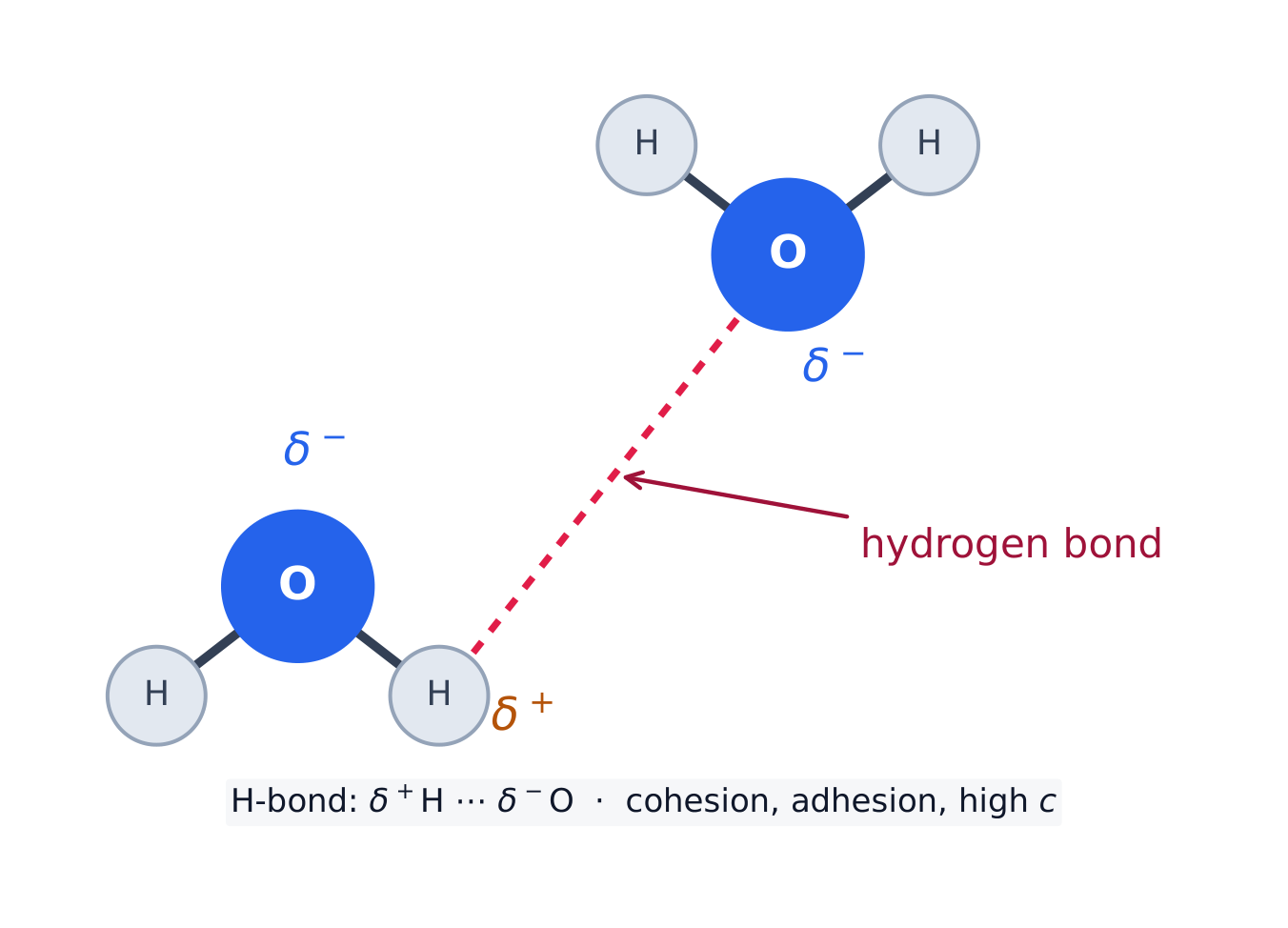


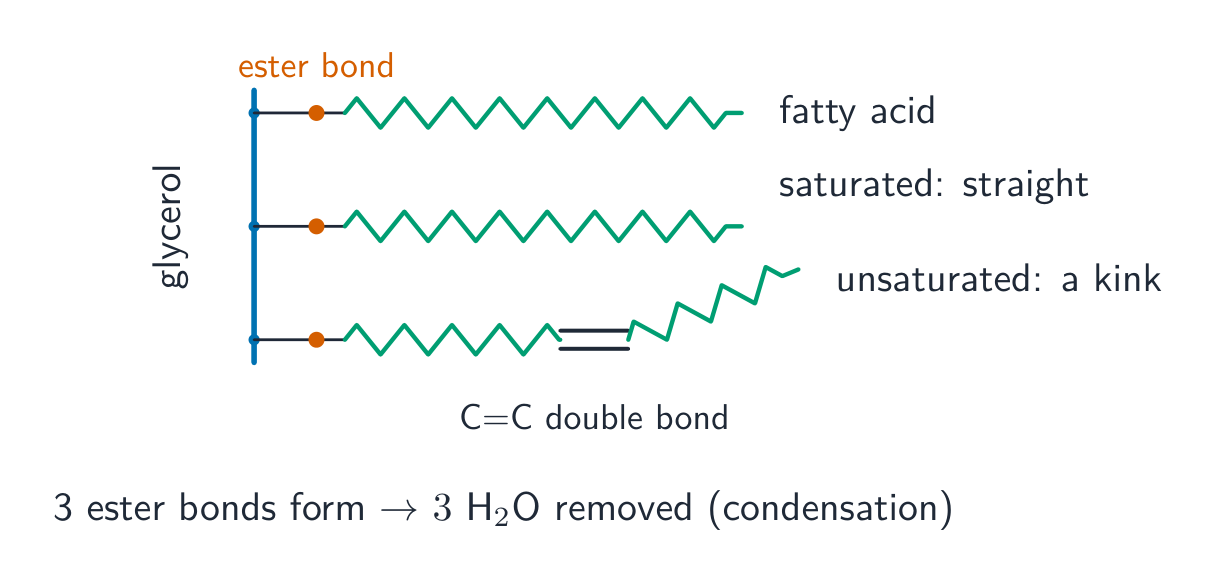

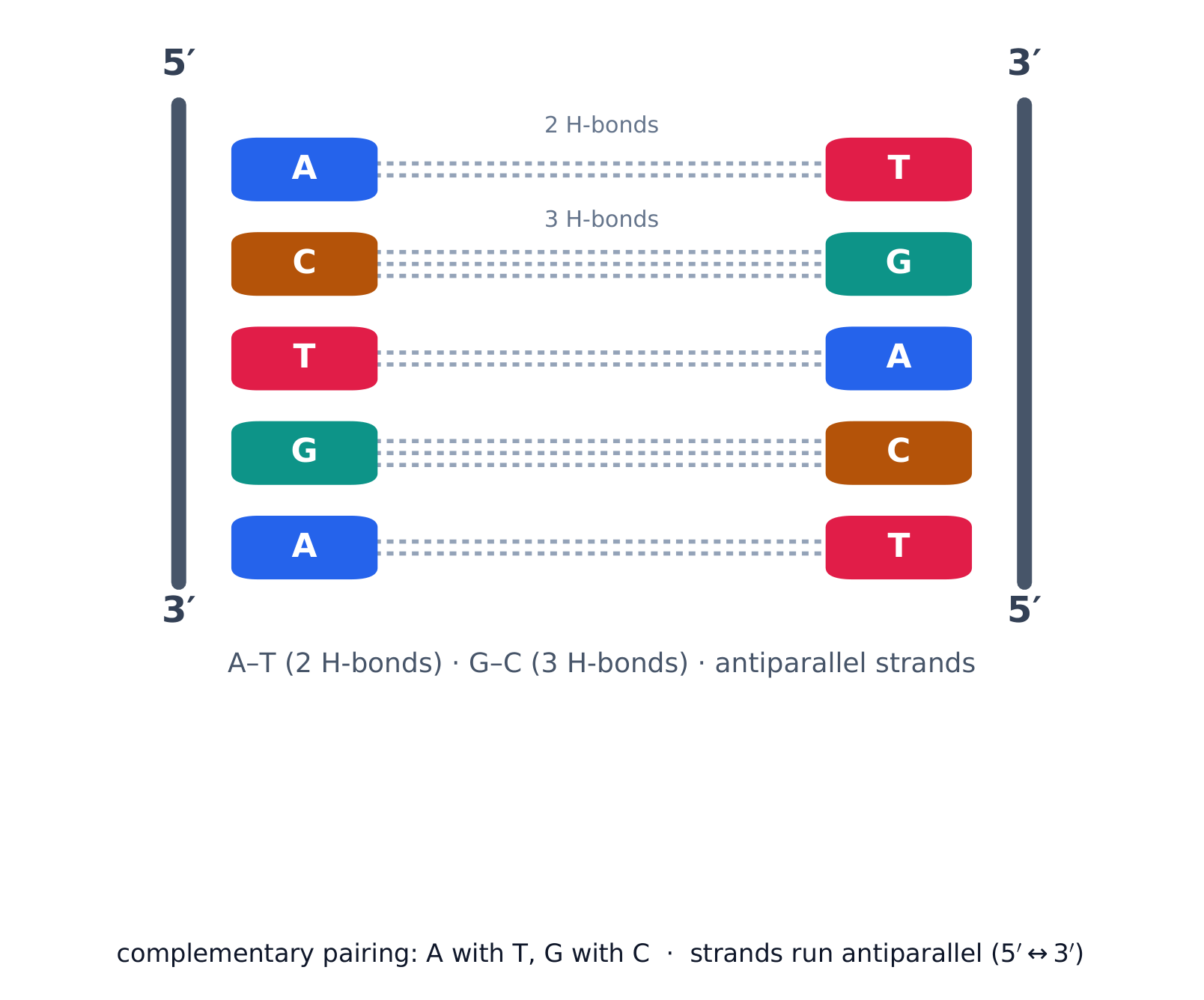


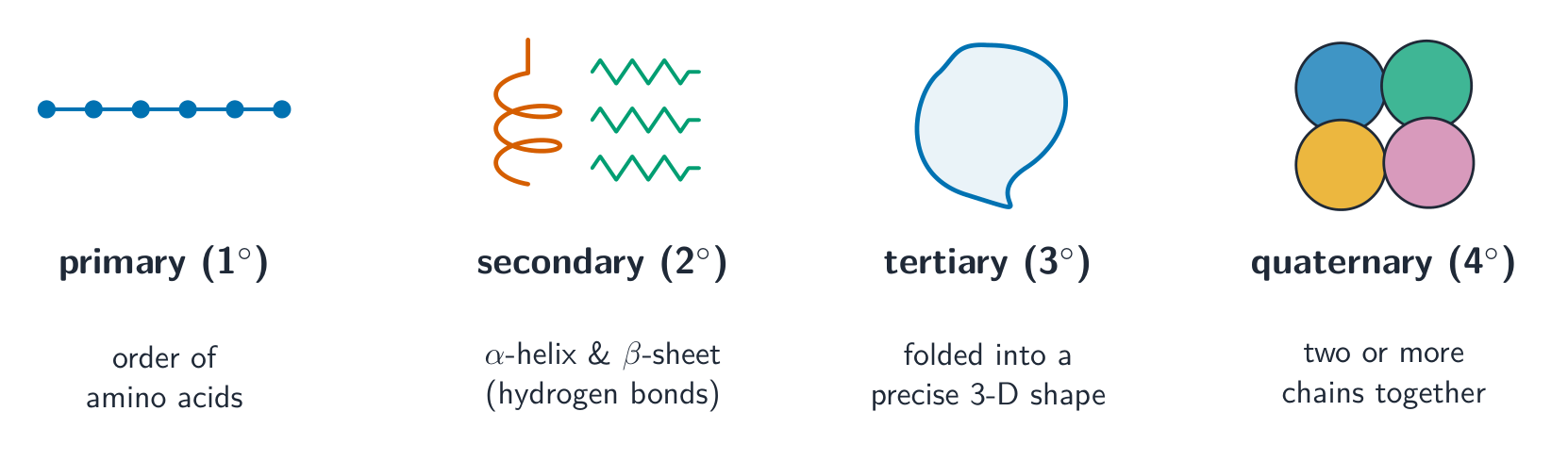


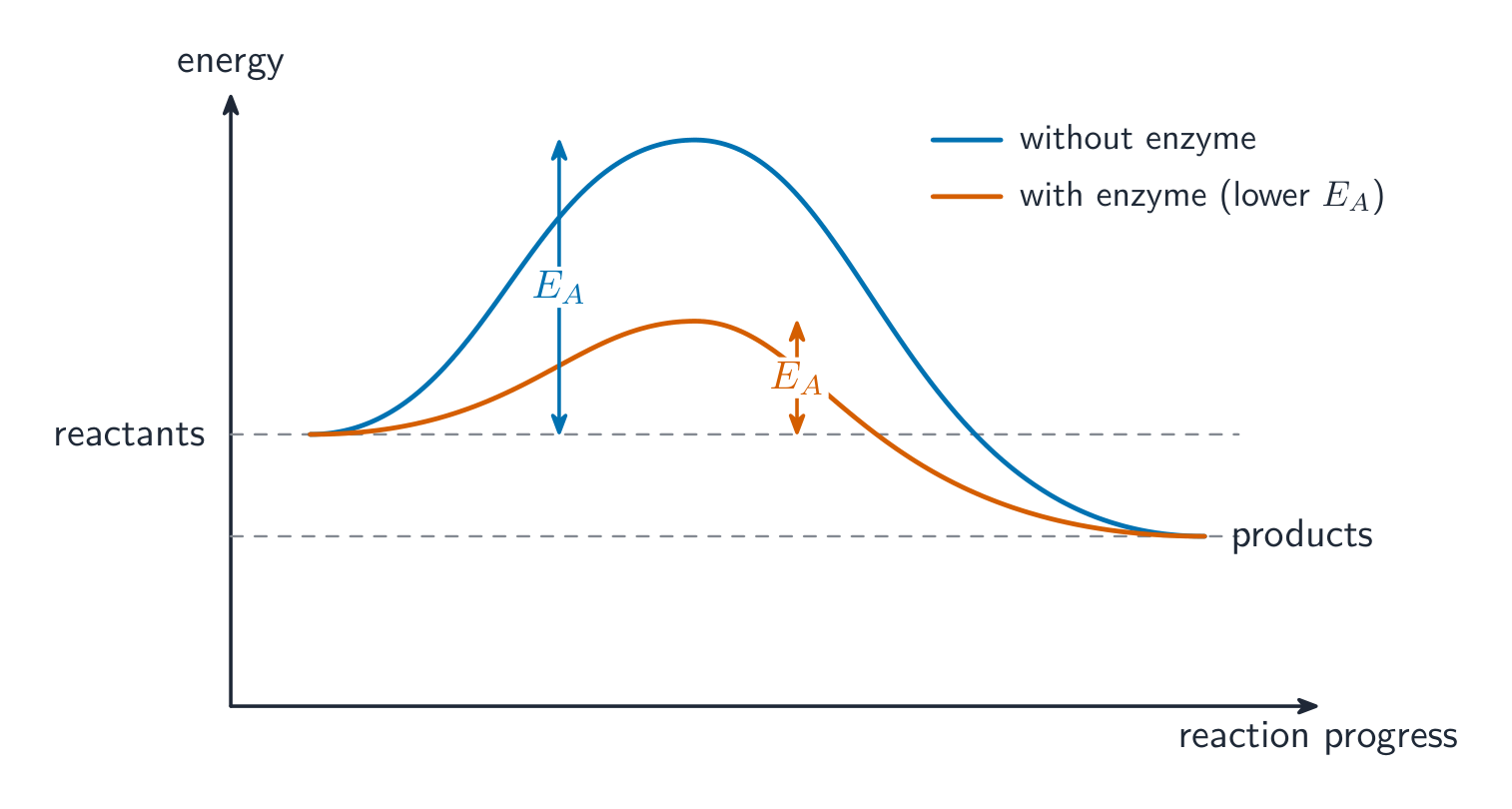
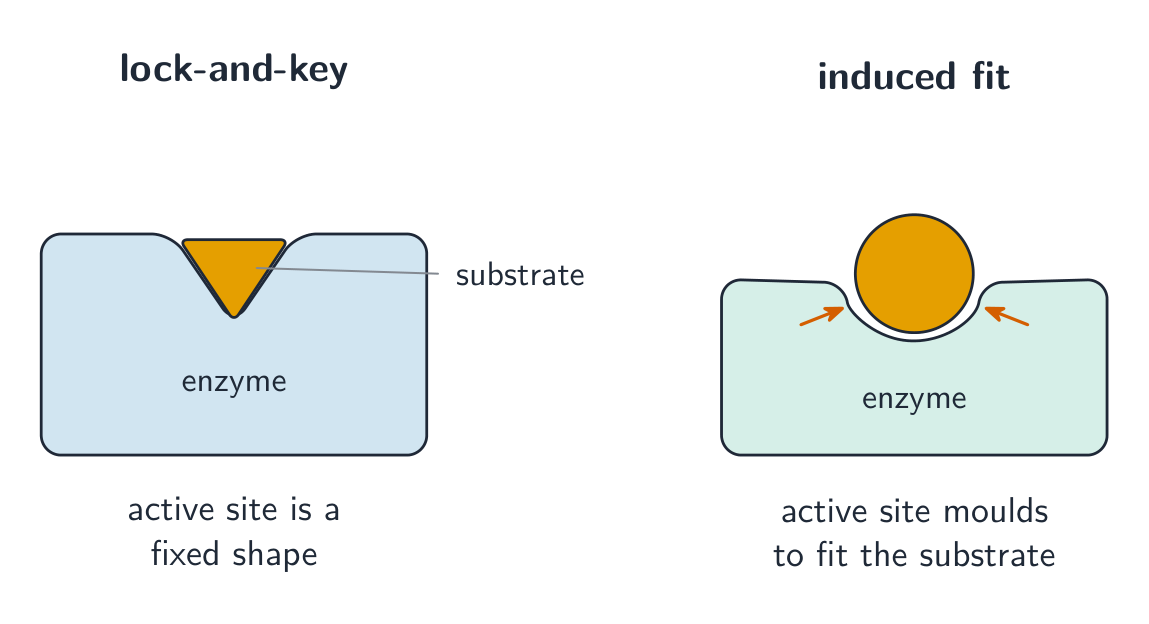

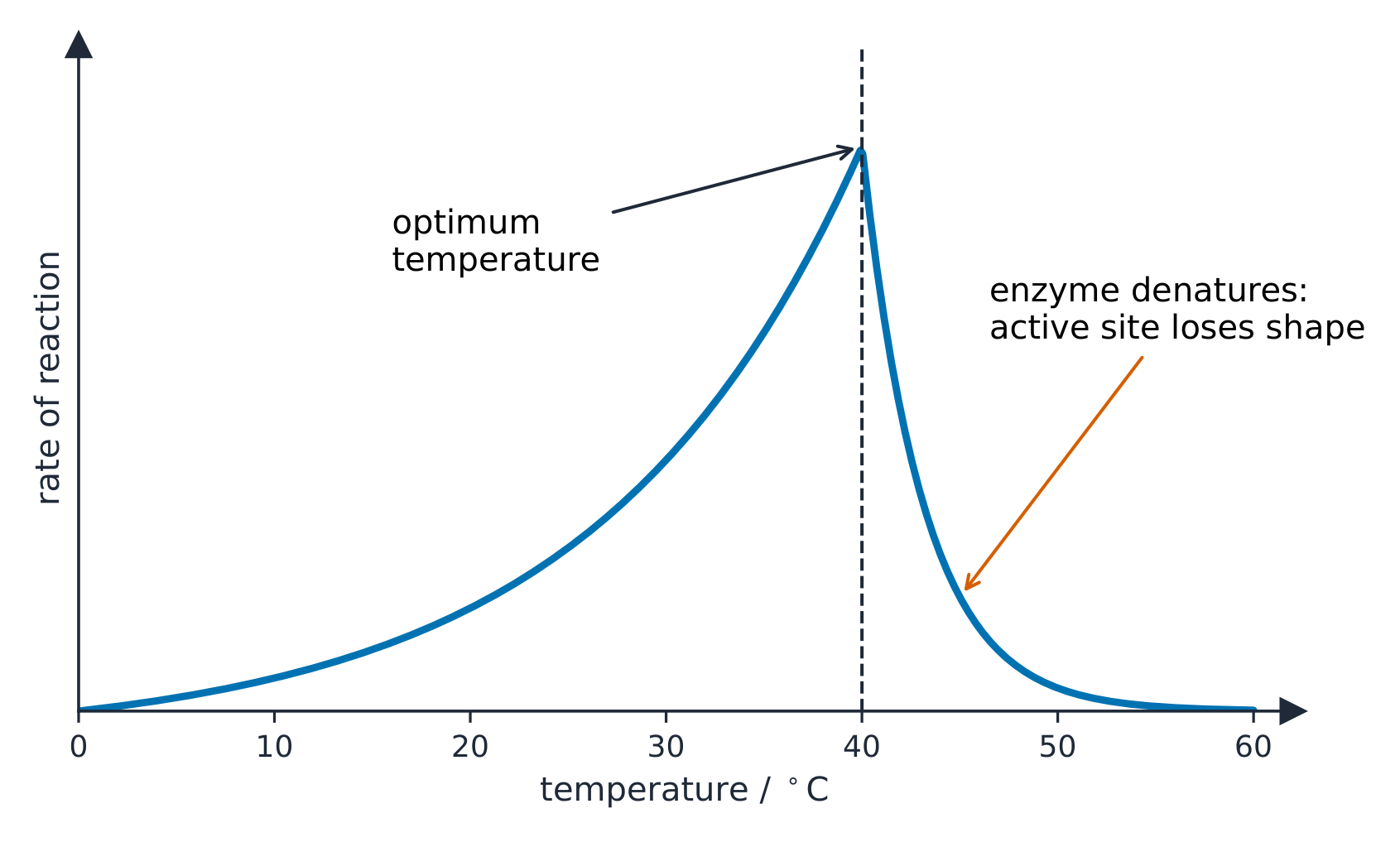


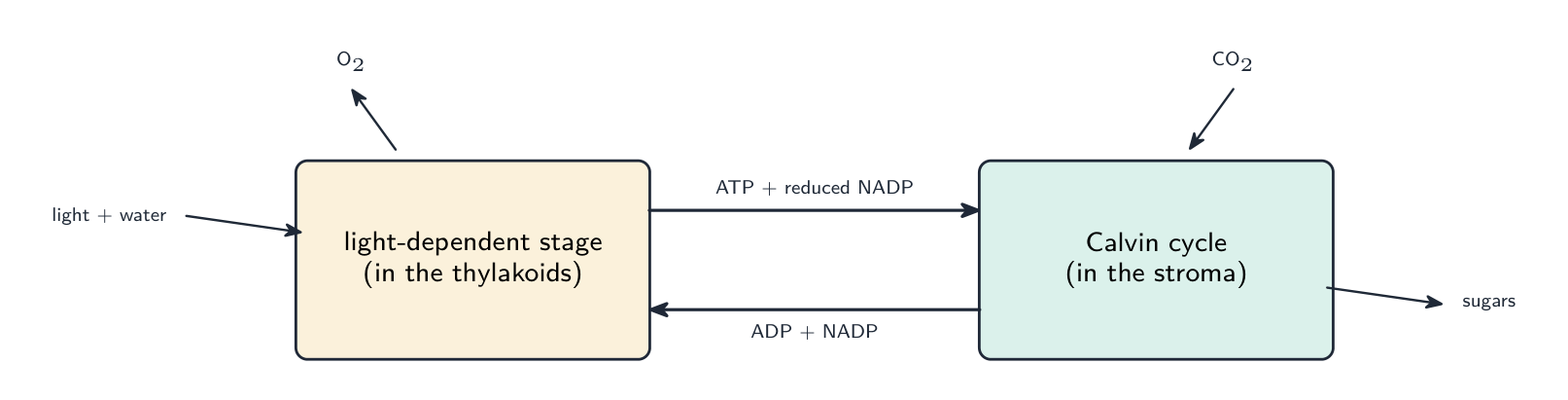

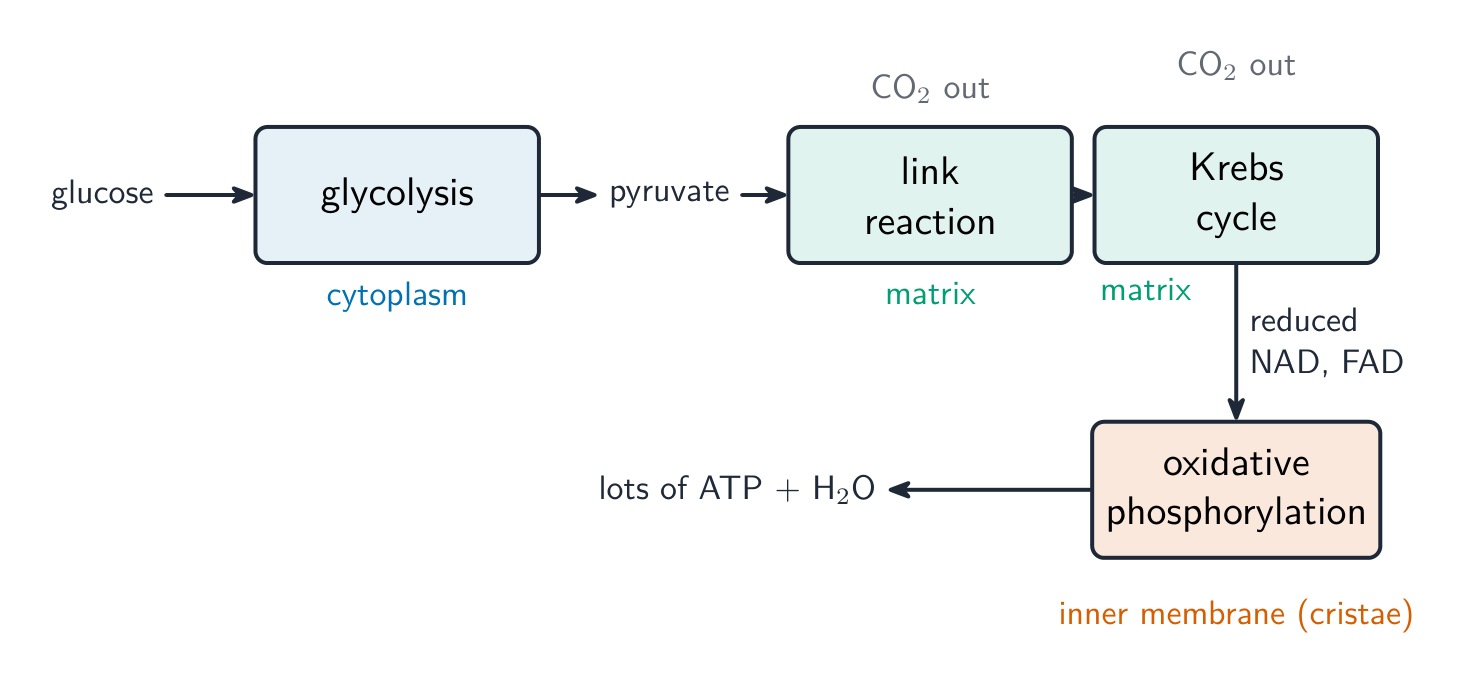


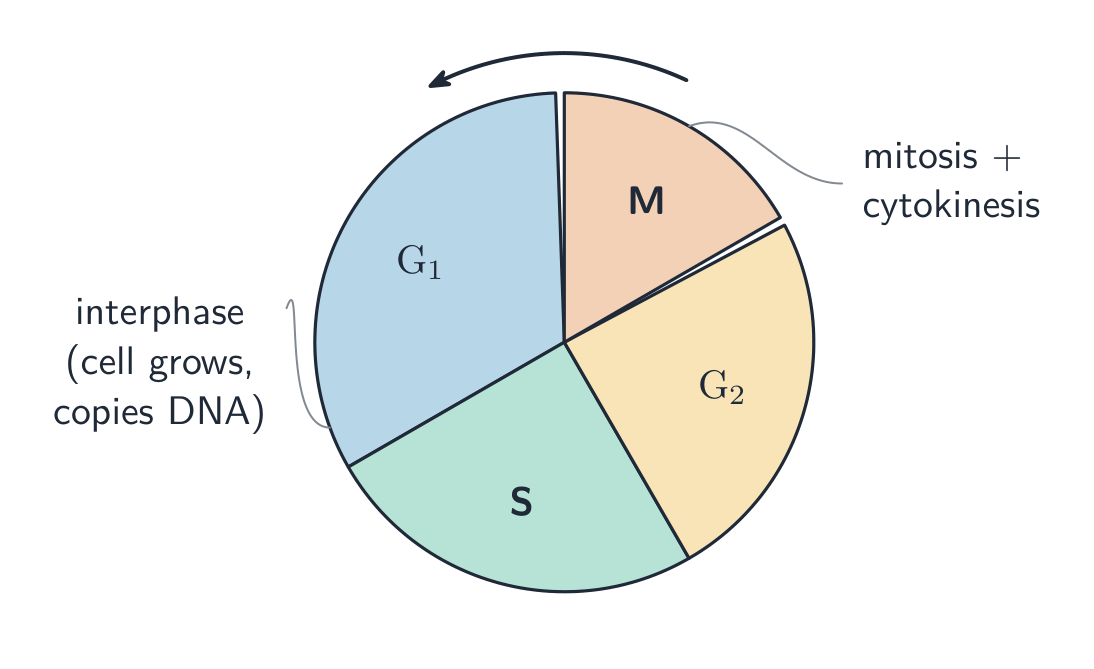
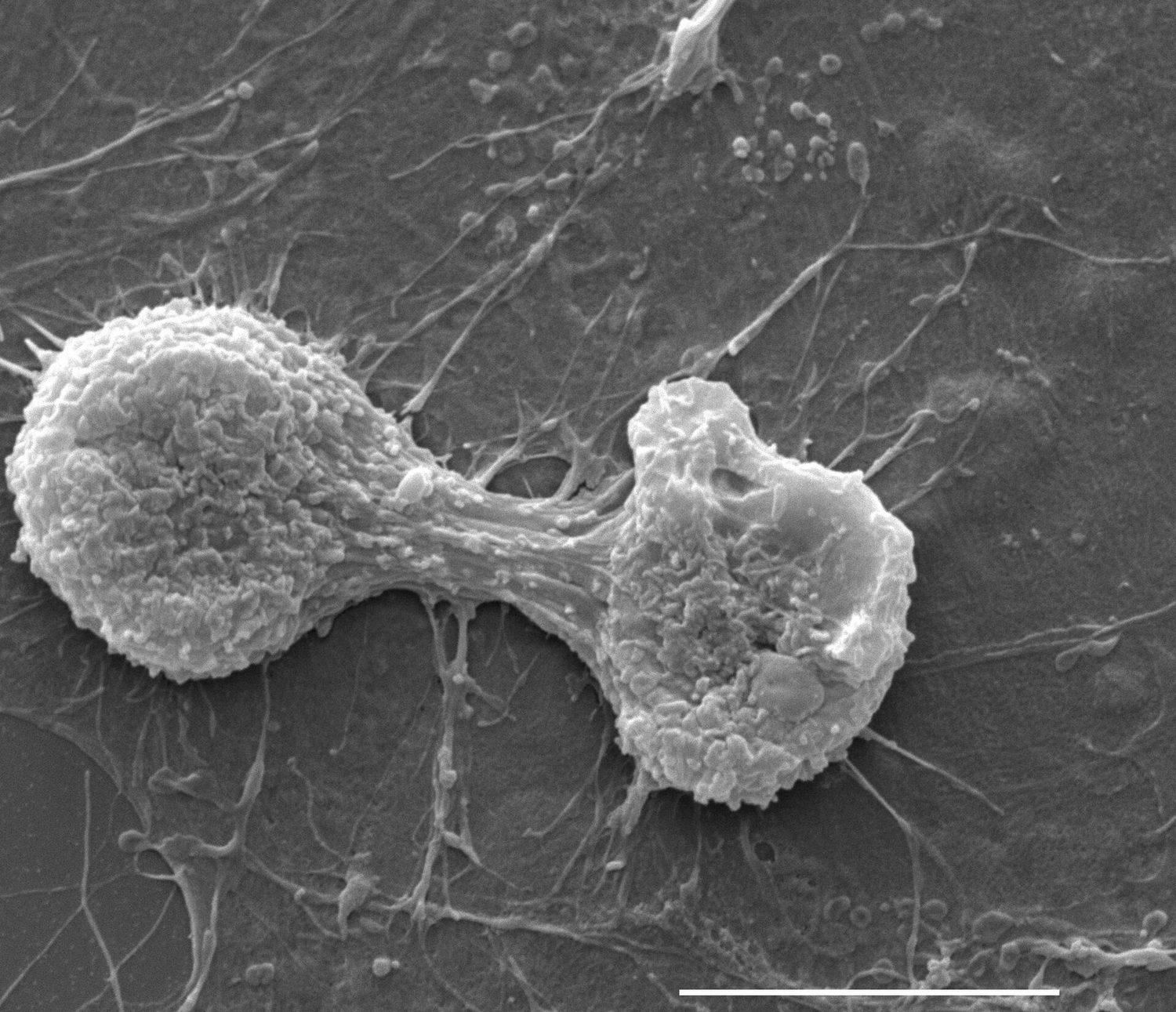
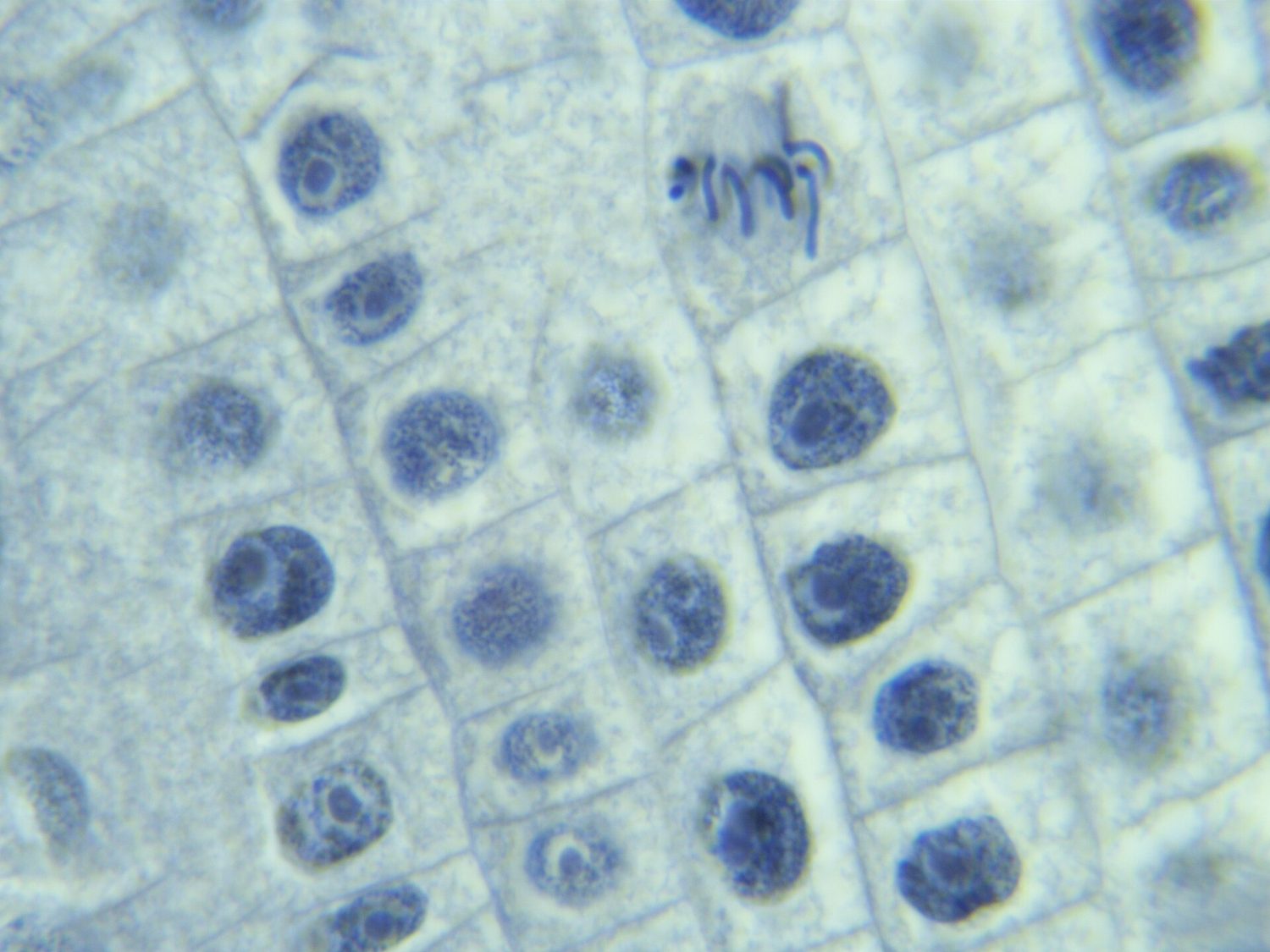


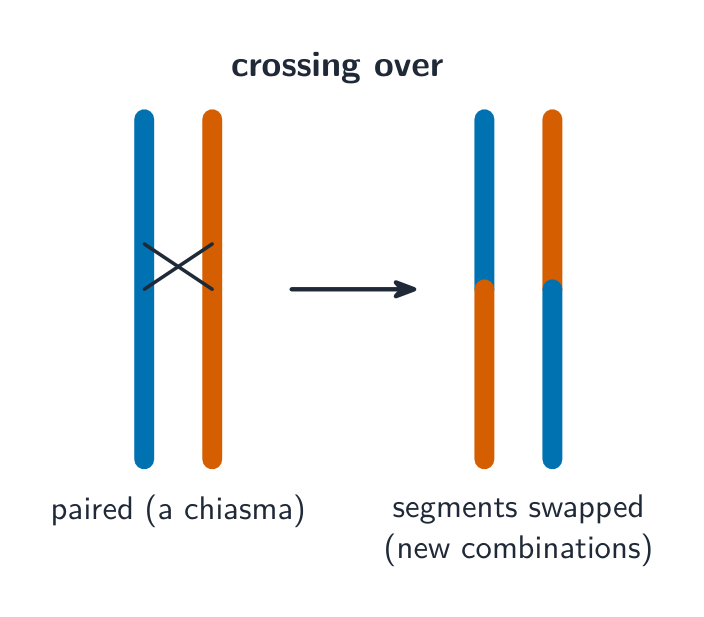

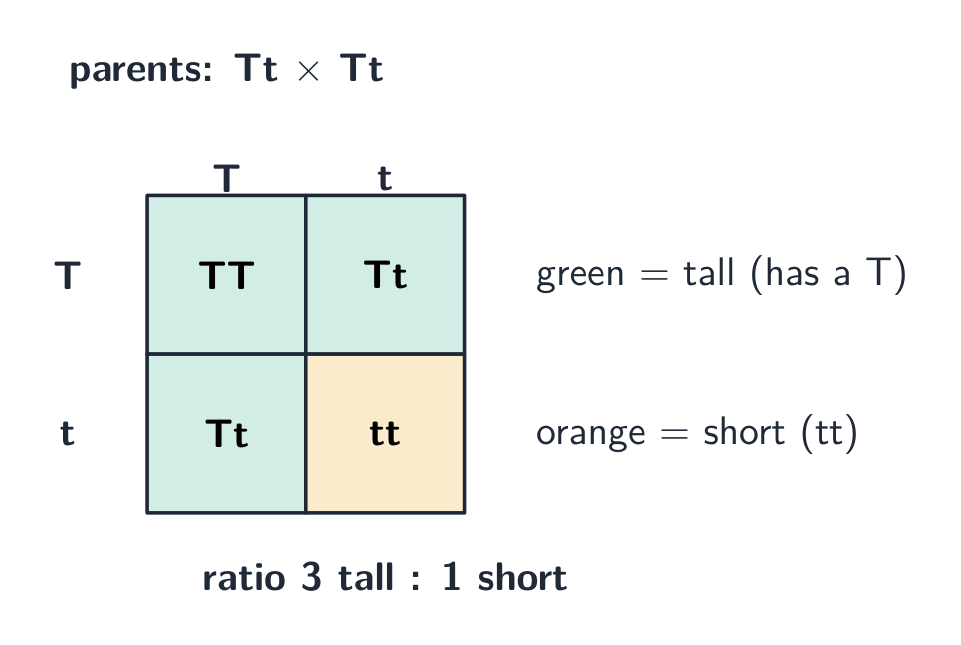


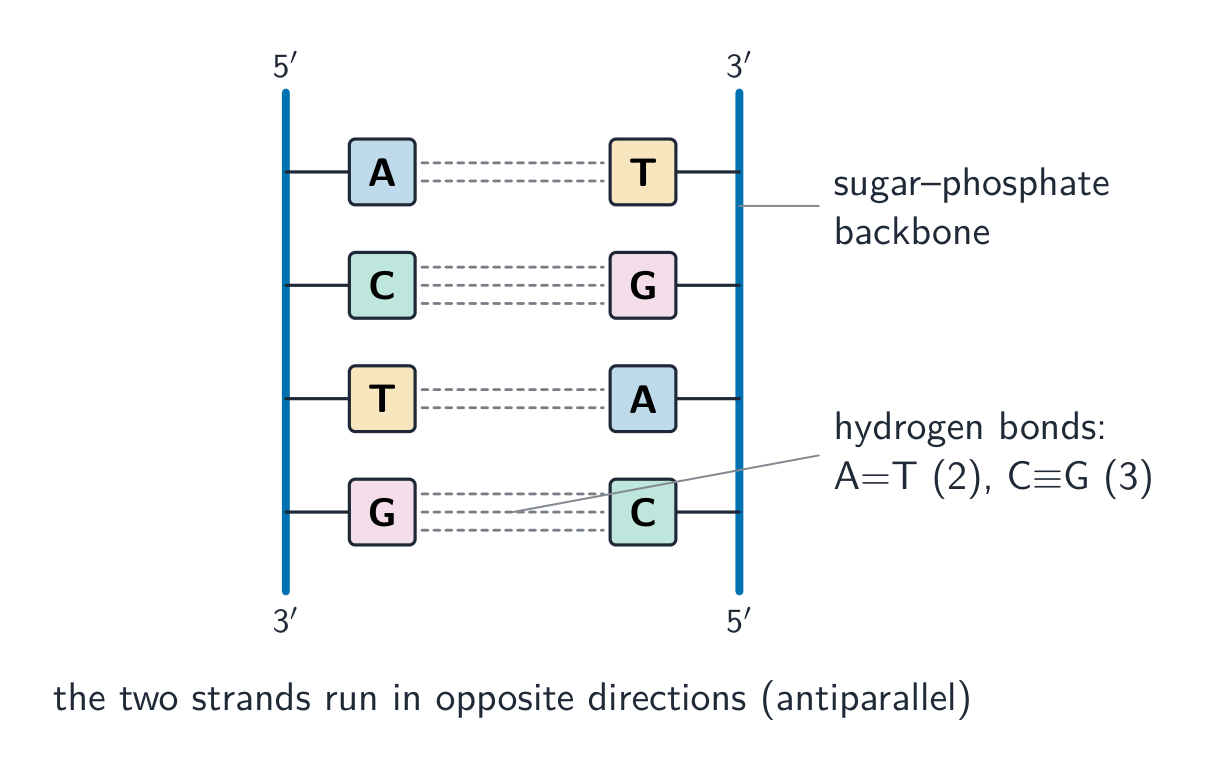


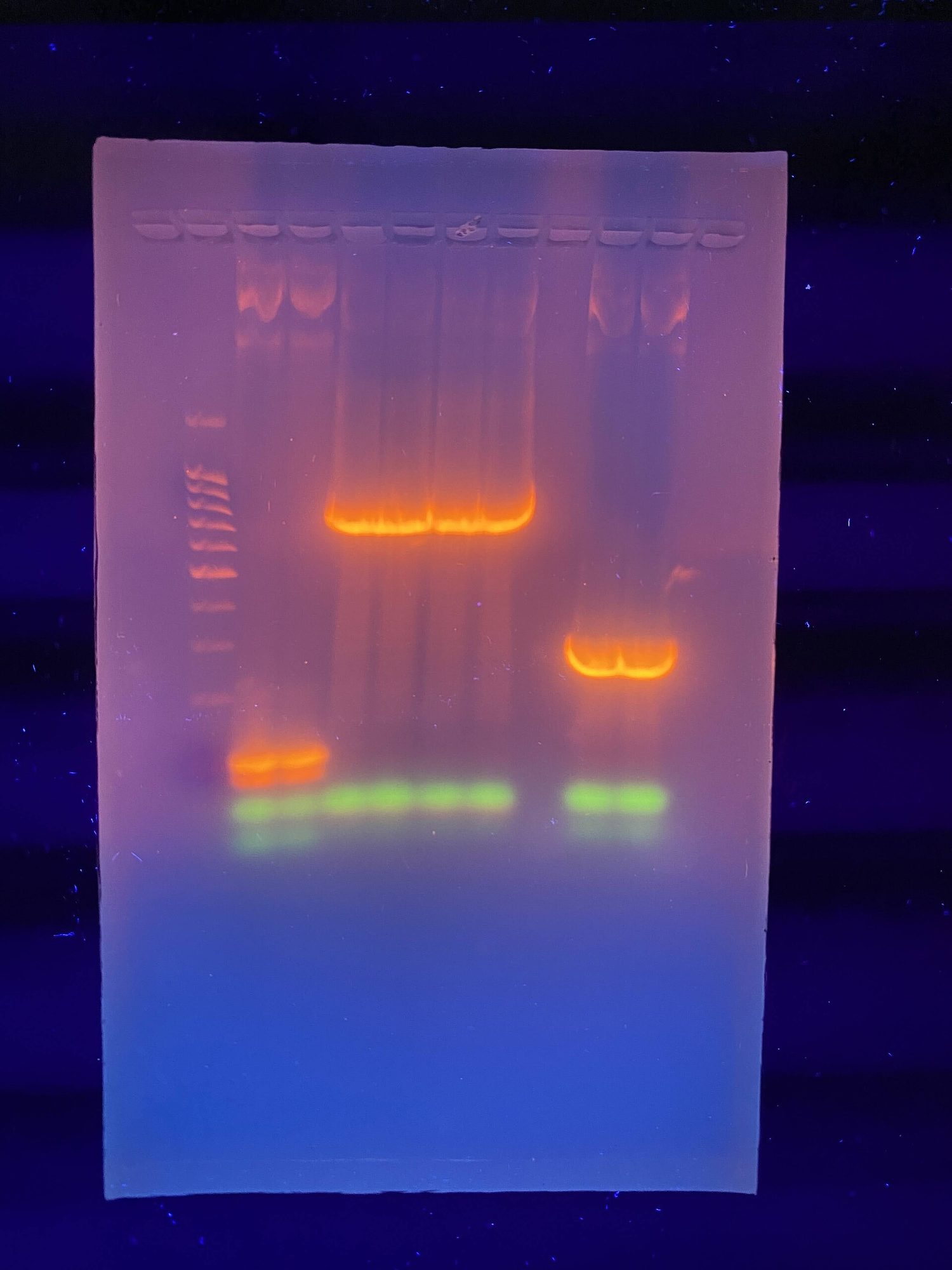
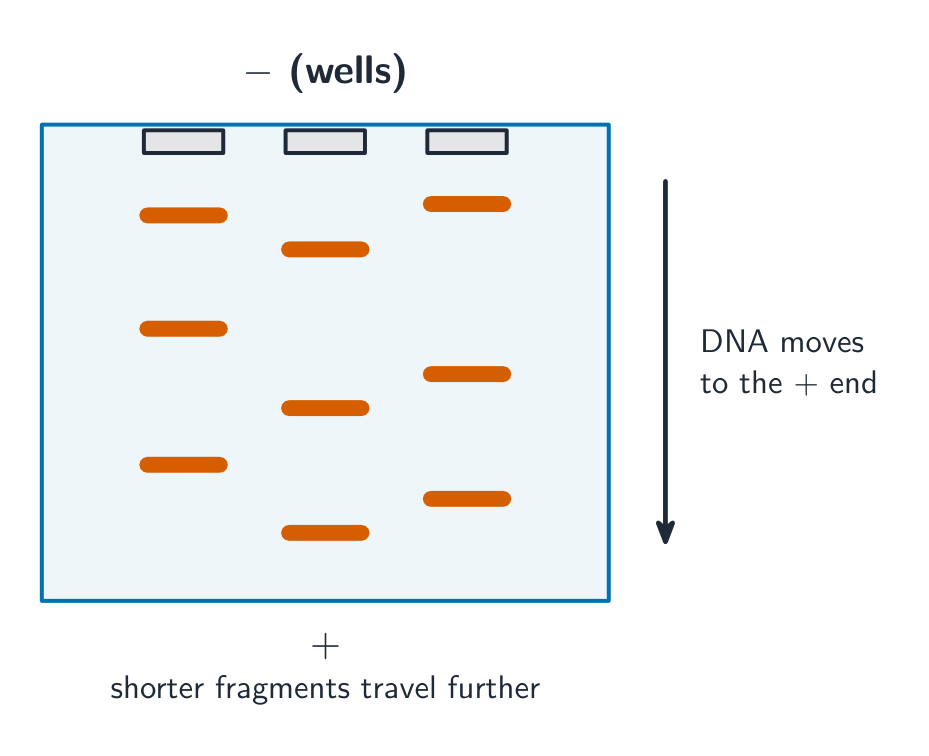
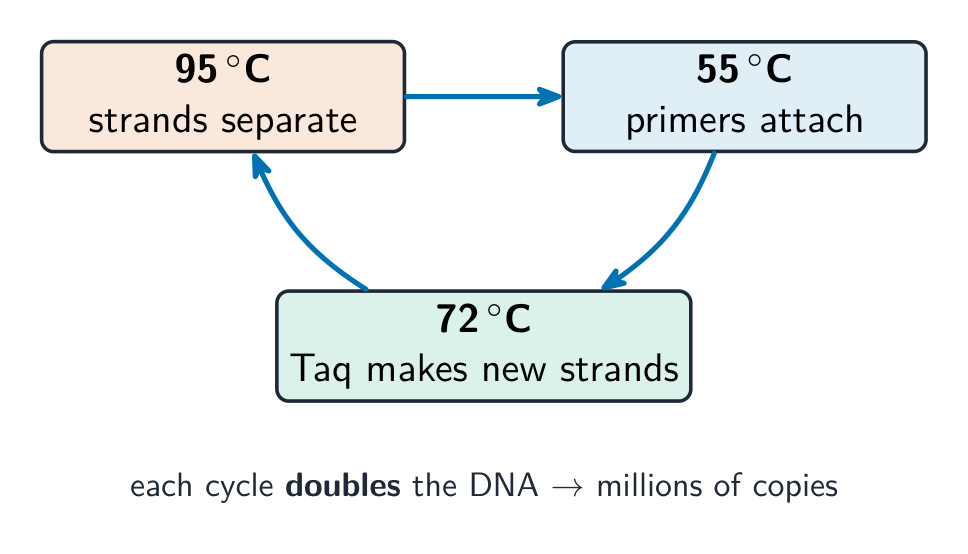


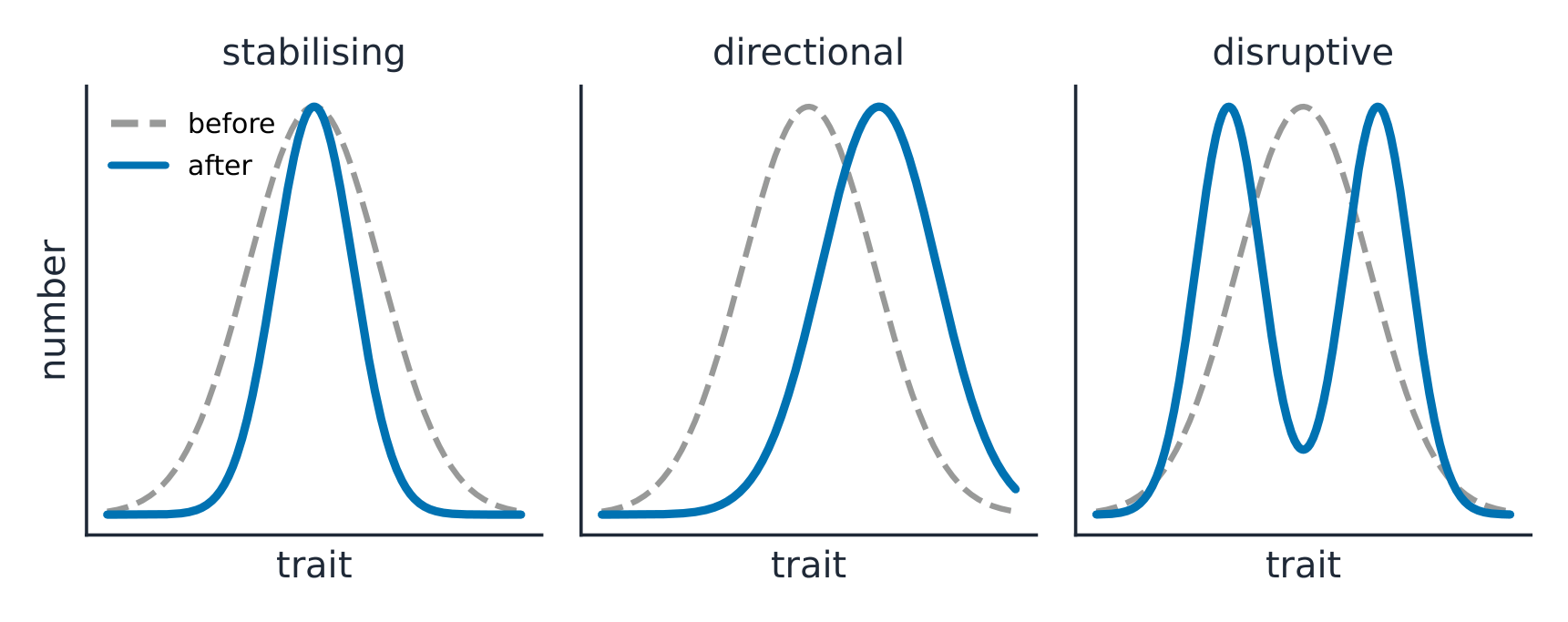


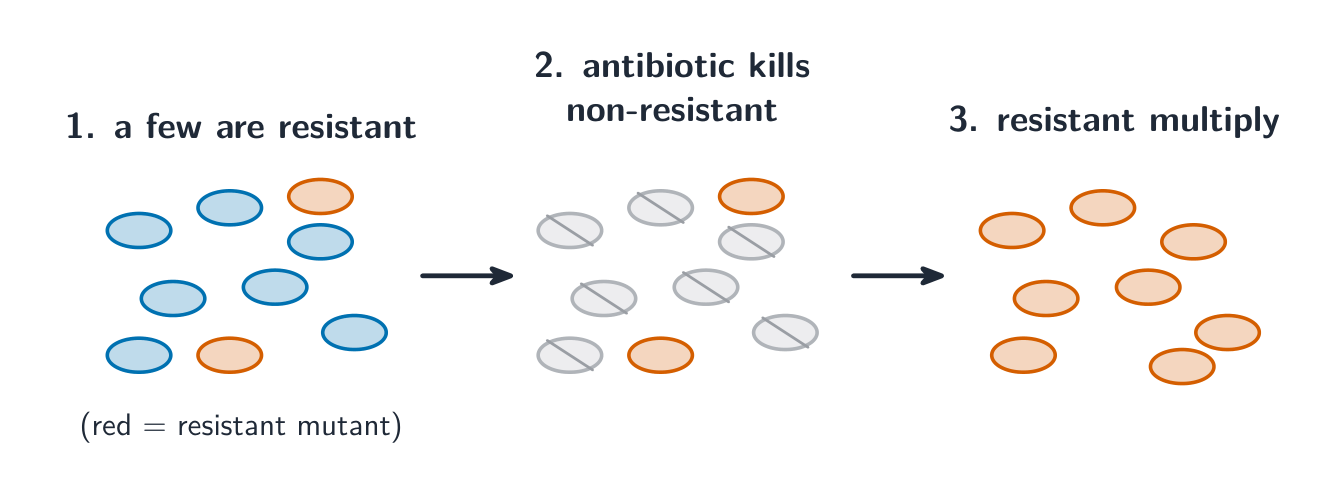 *كيف تنتشر مقاومة المضادات الحيوية عبر المجتمع عن طريق الاختيار الطبيعي


 *فتحة هيدرothermality: الماء الساخن الغني بالمواد الكيميائية قد يكون زود الأيض المبكر عند نشأة الحياة