Skip to content · ⁨Saltar al contenido⁩

Poesía I

AP Literatura Inglesa y Composición · Topic 2 · ⁨Tema 2⁩

Train · ⁨Entrenar⁩
Video lesson for this topic · ⁨Lección de video para este tema⁩ Open the video page · ⁨Abrir la página de video⁩
6:10

Unidad 2: Poesía I

La Unidad 2 es la primera unidad de poesía del curso, y añade dos cosas al kit de herramientas de la Unidad 1: la estructura como objeto de análisis, y el lenguaje figurado manejado…

English narration · English + 中文 subtitles burned in · ⁨Narración en inglés · Subtítulos en inglés + 中文 quemados en pantalla⁩

2.1

What Textual Details Reveal About a Character · ⁨Lo que los detalles textuales revelan sobre un personaje⁩

Syllabus
English

Enduring Understanding (CHR-1): Characters in literature allow readers to study and explore a range of values, beliefs, assumptions, biases, and cultural norms represented by those characters.

Learning Objective 1.A: Identify and describe what specific textual details reveal about a character, that character’s perspective, and that character’s motives.

  • CHR-1.E Characters reveal their perspectives and biases through the words they use, the details they provide in the text, the organization of their thinking, the decisions they make, and the actions they take.
Español

Comprensión perdurable (CHR-1): Los personajes en la literatura permiten a los lectores estudiar y explorar una variedad de valores, creencias, supuestos, prejuicios y normas culturales representados por dichos personajes.

Objetivo de aprendizaje 1.A: Identificar y describir qué detalles textuales específicos revelan sobre un personaje, la perspectiva de ese personaje y los motivos de ese personaje.

  • CHR-1.E Los personajes revelan sus perspectivas y prejuicios a través de las palabras que utilizan, los detalles que proporcionan en el texto, la organización de su pensamiento, las decisiones que toman y las acciones que realizan.

Source: College Board AP Course and Exam Description · ⁨Fuente: College Board AP Course and Exam Description⁩

English

Unit 2 is the course's first poetry unit, and it adds two things to Unit 1's toolkit: structure as an object of analysis, and figurative language 比喻性语言 handled precisely rather than by name-dropping.

One addition on character first: characters reveal their perspectives and biases through the words they use, the details they provide, and the details they omit.

That last item is the analytical opening. What a speaker does not mention, in a poem where everything is chosen, is evidence.

Español

La Unidad 2 es la primera unidad de poesía del curso y añade dos elementos al kit de herramientas de la Unidad 1: la estructura como objeto de análisis y el lenguaje figurado, abordado con precisión en lugar de nombrarlo superficialmente.

Una adición sobre el personaje primero: los personajes revelan sus perspectivas y sesgos a través de las palabras que usan, los detalles que proporcionan y los detalles que omiten.

Este último punto es la apertura analítica. Lo que un hablante no menciona, en un poema donde todo está elegido, es evidencia.

2.2

The Function of Structure in a Text · ⁨La función de la estructura en un texto⁩

Syllabus
English

Enduring Understanding (STR-1): The arrangement of the parts and sections of a text, the relationship of the parts to each other, and the sequence in which the text reveals information are all structural choices made by a writer that contribute to the reader’s interpretation of a text.

Learning Objective 3.C: Explain the function of structure in a text.

  • STR-1.D Line and stanza breaks contribute to the development and relationship of ideas in a poem.
  • STR-1.E The arrangement of lines and stanzas contributes to the development and relationship of ideas in a poem.
  • STR-1.F A text’s structure affects readers’ reactions and expectations by presenting the relationships among the ideas of the text via their relative positions and their placement within the text as a whole.
Español

Comprensión duradera (STR-1): La disposición de las partes y secciones de un texto, la relación entre dichas partes y la secuencia mediante la cual el texto revela información son todas decisiones estructurales tomadas por un escritor que contribuyen a la interpretación del lector sobre el mismo.

Objetivo de aprendizaje 3.C: Explicar la función de la estructura en un texto.

  • STR-1.D Los saltos de línea y estrofa contribuyen al desarrollo y la relación de ideas en un poema.
  • STR-1.E La disposición de líneas y estrofas contribuye al desarrollo y la relación de ideas en un poema.
  • STR-1.F La estructura de un texto afecta las reacciones y expectativas del lector al presentar las relaciones entre las ideas del texto a través de sus posiciones relativas y su colocación dentro del texto en su conjunto.

Source: College Board AP Course and Exam Description · ⁨Fuente: College Board AP Course and Exam Description⁩

English
  • Line and stanza breaks 行与诗节的断开 contribute to the development and relationship of ideas in a poem.
  • The arrangement of lines and stanzas contributes to that development.
  • A text's structure affects readers' reactions and expectations by presenting the relationships among ideas.

Structure in poetry is not decoration; it is punctuation for thought. Where a line breaks decides which words sit at the ends of lines, and the end of a line is the most emphatic position available. A sentence that runs past a line break asks the reader to hold something unresolved; one that stops at the break closes it.

Español
  • Los saltos de línea y estrofa contribuyen al desarrollo y la relación de ideas en un poema.
  • La disposición de líneas y estrofas contribuye a ese desarrollo.
  • La estructura de un texto afecta las reacciones y expectativas de los lectores al presentar las relaciones entre las ideas.

La estructura en la poesía no es decoración; es puntuación para el pensamiento. Dónde se rompe una línea decide qué palabras quedan al final de la línea, y el final de una línea es la posición más enfática disponible. Una oración que continúa más allá de un salto de línea obliga al lector a mantener algo sin resolver; una que se detiene en el salto lo cierra.

Describir la forma no es nombrar la función - diga qué se le hace hacer al lector
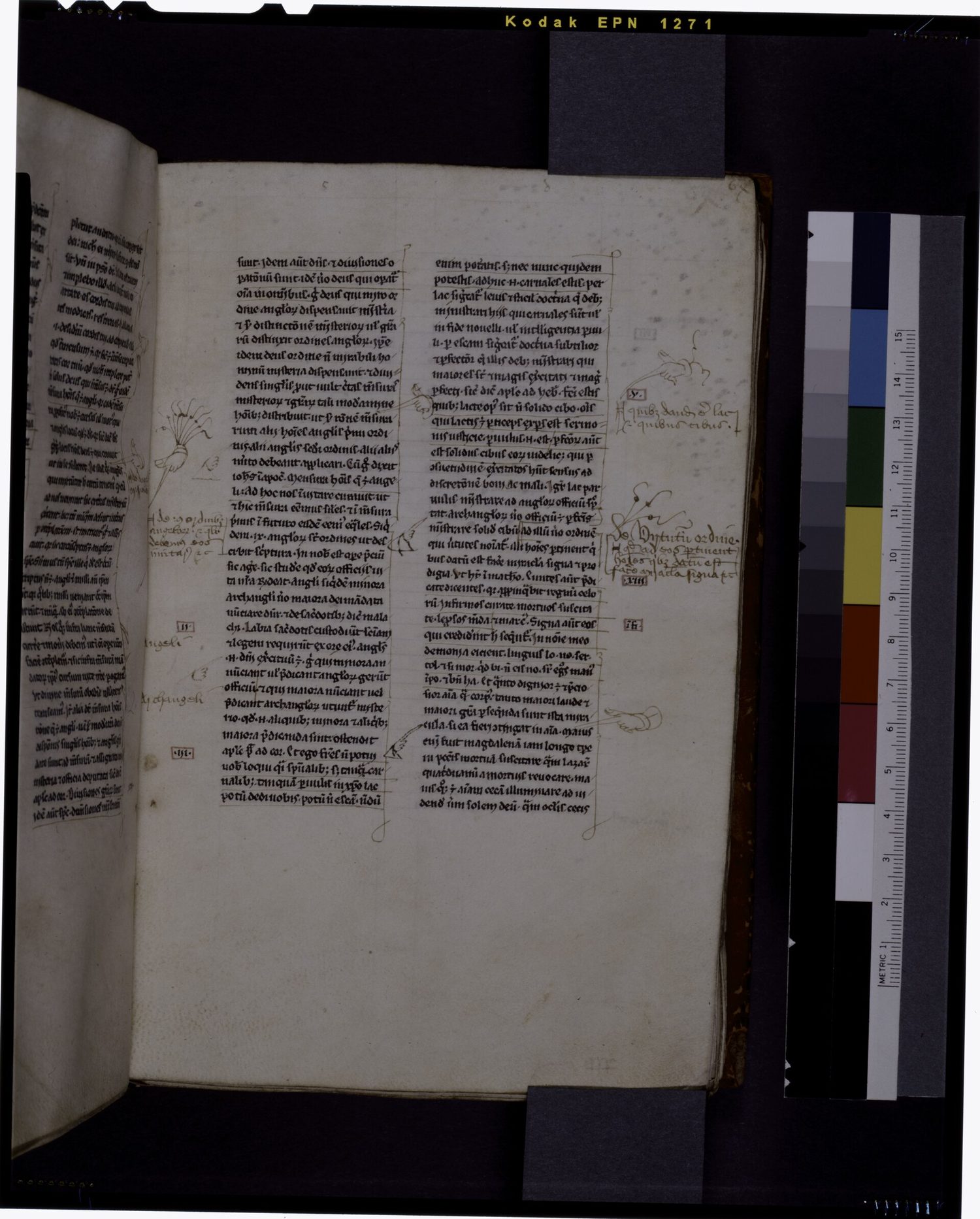
Una página que lleva su propio comentario en los márgenes - lectura atenta, siglos antes de tiempo
Explore · ⁨Explorar⁩

Asociar cada elección estructural con su función

Describir la forma no es nombrar la función. Di lo que se obliga a hacer al lector, y dónde.

2.3

The Function of Contrasts Within a Text · ⁨La función de los contrastes dentro de un texto⁩

Syllabus
English

Enduring Understanding (STR-1): The arrangement of the parts and sections of a text, the relationship of the parts to each other, and the sequence in which the text reveals information are all structural choices made by a writer that contribute to the reader’s interpretation of a text.

Learning Objective 3.D: Explain the function of contrasts within a text.

  • STR-1.G Contrast can be introduced through focus; tone; point of view; character, narrator, or speaker perspective; dramatic situation or moment; settings or time; or imagery.
  • STR-1.H Contrasts are the result of shifts or juxtapositions or both.
  • STR-1.I Shifts may be signaled by a word, a structural convention, or punctuation.
  • STR-1.J Shifts may emphasize contrasts between particular segments of a text.
Español

Comprensión perdurable (STR-1): La disposición de las partes y secciones de un texto, la relación entre esas partes y la secuencia mediante la cual el texto revela información son todas elecciones estructurales realizadas por el autor que contribuyen a la interpretación del lector sobre el texto.

Objetivo de aprendizaje 3.D: Explicar la función de los contrastes dentro de un texto.

  • STR-1.G El contraste puede introducirse mediante el enfoque; el tono; el punto de vista; la perspectiva del personaje, narrador o hablante; la situación dramática o momento; los escenarios o el tiempo; o la imagen.
  • STR-1.H Los contrastes son el resultado de cambios o yuxtaposiciones, o de ambos.
  • STR-1.I Los cambios pueden estar señalados por una palabra, una convención estructural o la puntuación.
  • STR-1.J Los cambios pueden enfatizar los contrastes entre segmentos específicos de un texto.

Source: College Board AP Course and Exam Description · ⁨Fuente: College Board AP Course and Exam Description⁩

English
  • Contrast 对照 can be introduced through focus, tone, point of view, character or speaker perspective, and dramatic situation.
  • Contrasts are the result of shifts or juxtapositions or both.
  • Shifts may be signalled by a word, a structural convention, or punctuation.
  • Shifts may emphasise contrasts between particular segments of a text.

This is the most reliable route into an unseen poem. Find the shift - a but, a stanza break, a change of tense or address - and the poem divides into a before and an after. What changed, and what the change costs or gains, is very often the poem's argument.

Español
  • El contraste puede introducirse a través del foco, el tono, el punto de vista, la perspectiva del personaje o del hablante, y la situación dramática.
  • Los contrastes son el resultado de cambios, yuxtaposiciones o ambos.
  • Los cambios pueden ser señalados por una palabra, una convención estructural o la puntuación.
  • Los cambios pueden acentuar los contrastes entre segmentos específicos de un texto.

Esta es la ruta más confiable para acceder a un poema desconocido. Encuentre el cambio —un pero, un salto de estrofa, un cambio de tiempo verbal o de dirección— y el poema se divide en un antes y un después. Qué cambió y cuál es el costo o ganancia del cambio es muy a menudo el argumento del poema.

Cuatro lugares para buscar contraste, no uno solo
Explore · ⁨Explorar⁩

Encontrar el contraste en cuatro lugares, no en uno

Los estudiantes encuentran el emparejamiento obvio y se detienen — y el contraste dentro de un personaje suele llevar la pregunta de complejidad.

Vocabulary · ⁨Vocabulario⁩ Train · ⁨Entrenar⁩
English · ⁨Inglés⁩ Chinese · ⁨Chino⁩ Pinyin
figurative language/ˈfɪɡjərətɪv ˈlæŋɡwɪdʒ/ 比喻性语言 bǐ yù xìng yǔ yán
Line and stanza breaks/laɪn ænd ˈstænzə breɪks/ 行与诗节的断开 xíng yǔ shī jié de duàn kāi
Contrast/ˈkɒntræst/ 对照 duì zhào
2.4

The Function of Specific Words and Phrases · ⁨La función de palabras y frases específicas⁩

Syllabus
English

Enduring Understanding (FIG-1): Comparisons, representations, and associations shift meaning from the literal to the figurative and invite readers to interpret a text.

Learning Objective 5.B: Explain the function of specific words and phrases in a text.

  • FIG-1.A An antecedent is a word, phrase, or clause that precedes its referent. Referents may include pronouns, nouns, phrases, or clauses.
  • FIG-1.B Referents are ambiguous if they can refer to more than one antecedent, which affects interpretation.
  • FIG-1.C Words or phrases may be repeated to emphasize ideas or associations.
  • FIG-1.D Alliteration is the repetition of the same letter sound at the beginning of adjacent or nearby words to emphasize those words and their associations or representations.
Español

Comprensión duradera (FIG-1): Las comparaciones, representaciones y asociaciones desplazan el significado del sentido literal al figurado e invitan a los lectores a interpretar un texto.

Objetivo de aprendizaje 5.B: Explicar la función de palabras y frases específicas en un texto.

  • FIG-1.A Un antecedente es una palabra, frase o cláusula que precede a su referente. Los referentes pueden incluir pronombres, sustantivos, frases o cláusulas.
  • FIG-1.B Los referentes son ambiguos si pueden referirse a más de un antecedente, lo cual afecta la interpretación.
  • FIG-1.C Las palabras o frases pueden repetirse para enfatizar ideas o asociaciones.
  • FIG-1.D La aliteración es la repetición del mismo sonido de letra al inicio de palabras adyacentes o cercanas para enfatizar dichas palabras y sus asociaciones o representaciones.

Source: College Board AP Course and Exam Description · ⁨Fuente: College Board AP Course and Exam Description⁩

English
  • An antecedent 先行词 is a word, phrase, or clause that precedes its referent.
  • Referents are ambiguous if they can refer to more than one antecedent, which affects interpretation 影响阐释.
  • Words or phrases may be repeated to emphasise ideas or associations.
  • Alliteration 头韵 is the repetition of the same initial sound in adjacent or nearby words, emphasising those words.

Ambiguous reference is worth special attention. In prose it is usually a fault; in poetry it is often a device, and a pronoun that could point two ways may be holding both meanings deliberately.

Español
  • Un antecedente es una palabra, frase o cláusula que precede a su referente.
  • Los referentes son ambiguos si pueden referirse a más de un antecedente, lo cual afecta la interpretación.
  • Las palabras o frases pueden repetirse para enfatizar ideas o asociaciones.
  • La aliteración es la repetición del mismo sonido inicial en palabras adyacentes o cercanas, enfatizando esas palabras.

La referencia ambigua merece atención especial. En la prosa suele ser un defecto; en la poesía es a menudo un dispositivo, y un pronombre que podría apuntar en dos direcciones puede estar manteniendo ambos significados deliberadamente.

Una sola palabra elegida realizando hasta cuatro funciones - 'poderosa' no es una de ellas
Vocabulary · ⁨Vocabulario⁩ Train · ⁨Entrenar⁩
English · ⁨Inglés⁩ Chinese · ⁨Chino⁩ Pinyin
antecedent/ˌæntɪˈsiːdənt/ 先行词 xiān xíng cí
affects interpretation/əˈfekts ɪnˌtɜːprɪˈteɪʃn/ 影响阐释 yǐng xiǎng chǎn shì
Alliteration/əˌlɪtəˈreɪʃn/ 头韵 tóu yùn
2.5

The Function of a Simile · ⁨La función de una símil⁩

Syllabus
English

Enduring Understanding (FIG-1): Comparisons, representations, and associations shift meaning from the literal to the figurative and invite readers to interpret a text.

Learning Objective 6.A: Identify and explain the function of a simile.

  • FIG-1.E A simile uses the words “like” or “as” to liken two objects or concepts to each other.
  • FIG-1.F Similes liken two different things to transfer the traits or qualities of one to the other.
  • FIG-1.G In a simile, the thing being compared is the main subject; the thing to which it is being compared is the comparison subject.
Español

Comprensión perdurable (FIG-1): Las comparaciones, representaciones y asociaciones desplazan el significado de lo literal a lo figurado e invitan al lector a interpretar un texto.

Objetivo de aprendizaje 6.A: Identificar y explicar la función de un símil.

  • FIG-1.E Un símil utiliza las palabras "like" o "as" para asemejar dos objetos o conceptos entre sí.
  • FIG-1.F Los similes asemejan dos cosas distintas para transferir las características o cualidades de una a la otra.
  • FIG-1.G En un símil, el objeto que se compara es el sujeto principal; el objeto al que se compara es el sujeto de comparación.

Source: College Board AP Course and Exam Description · ⁨Fuente: College Board AP Course and Exam Description⁩

English
  • A simile 明喻 uses "like" or "as" to liken two objects or concepts.
  • Similes liken two different things to transfer the traits or qualities of one to the other.
  • In a simile, the thing being compared is the main subject; the thing to which it is compared is the comparison subject.

Those two terms are the whole method. A scoring answer names the main subject, names the comparison subject, and then says which quality was transferred - because that quality is the claim the poem is making.

Español
Los términos mismos del CED, y la transferencia solo ocurre en una dirección
Nombre el sujeto principal, nombre el sujeto de comparación, luego diga qué calidad cruzó
  • Una símil utiliza "como" o "de" para asemejar dos objetos o conceptos.
  • Las símiles asemejan dos cosas diferentes para transferir las rasgos o cualidades de una a la otra.
  • En una símil, la cosa que se compara es el sujeto principal; la cosa a la que se compara es el sujeto de comparación.

Esos dos términos son todo el método. Una respuesta evaluadora nombra el sujeto principal, nombra el sujeto de comparación, y luego dice qué calidad fue transferida —porque esa calidad es la afirmación que el poema está haciendo.

Vocabulary · ⁨Vocabulario⁩ Train · ⁨Entrenar⁩
English · ⁨Inglés⁩ Chinese · ⁨Chino⁩ Pinyin
simile/ˈsɪmɪlɪ/ 明喻 míng yù
metaphor/ˈmetəfɔː/ 隐喻 yǐn yù
2.6

The Function of a Metaphor · ⁨La función de una metáfora⁩

Syllabus
English

Enduring Understanding (FIG-1): Comparisons, representations, and associations shift meaning from the literal to the figurative and invite readers to interpret a text.

Learning Objective 6.B: Identify and explain the function of a metaphor.

  • FIG-1.H A metaphor implies similarities between two (usually unrelated) concepts or objects in order to reveal or emphasize one or more things about one of them, though the differences between the two may also be revealing.
  • FIG-1.I In a metaphor, as in a simile, the thing being compared is the main subject; the thing to which it is being compared is the comparison subject.
  • FIG-1.J Comparisons between objects or concepts draw on the experiences and associations readers already have with those objects and concepts.
  • FIG-1.K Interpretation of a metaphor may depend on the context of its use; that is, what is happening in a text may determine what is transferred in the comparison.
Español

Comprensión perdurable (FIG-1): Las comparaciones, representaciones y asociaciones desplazan el significado desde lo literal hacia lo figurado e invitan a los lectores a interpretar un texto.

Objetivo de aprendizaje 6.B: Identificar y explicar la función de una metáfora.

  • FIG-1.H Una metáfora implica similitudes entre dos conceptos o objetos (generalmente no relacionados) con el fin de revelar o enfatizar una o más características de uno de ellos, aunque las diferencias entre ambos también pueden ser reveladoras.
  • FIG-1.I En una metáfora, al igual que en una símil, el elemento que se compara es el sujeto principal; el elemento al cual se compara es el sujeto de comparación.
  • FIG-1.J Las comparaciones entre objetos o conceptos recurren a las experiencias y asociaciones que los lectores ya poseen sobre dichos objetos y conceptos.
  • FIG-1.K La interpretación de una metáfora puede depender del contexto de su uso; es decir, lo que sucede en un texto puede determinar qué elementos se transfieren en la comparación.

Source: College Board AP Course and Exam Description · ⁨Fuente: College Board AP Course and Exam Description⁩

English
  • A metaphor 隐喻 implies similarities between two usually unrelated concepts to reveal or emphasise qualities of the main subject.
  • The same main-subject and comparison-subject structure applies.
  • Comparisons draw on the experiences and associations readers already have with the comparison subject - which is why a metaphor can fail with an audience that lacks those associations.
  • Interpretation of a metaphor may depend on the context of its use: what is happening in the text may determine which of the comparison subject's qualities is meant.

That last point protects you from the commonest error, which is importing every association a word has. If a poem calls grief a house, the relevant quality might be shelter, or confinement, or the fact that one must live inside it. The text decides which.

Español
  • Una metáfora implica similitudes entre dos conceptos usualmente no relacionados para revelar o enfatizar cualidades del sujeto principal.
  • Se aplica la misma estructura de sujeto principal y sujeto de comparación.
  • Las comparaciones apelan a las experiencias y asociaciones que los lectores ya tienen con el sujeto de comparación —por eso una metáfora puede fallar con una audiencia que carece de esas asociaciones.
  • La interpretación de una metáfora puede depender del contexto de su uso: lo que sucede en el texto puede determinar cuál de las cualidades del sujeto de comparación se pretende.

Ese último punto lo protege del error más común, que es importar todas las asociaciones que tiene una palabra. Si un poema llama al duelo una casa, la cualidad relevante podría ser el refugio, la confinamiento, o el hecho de que uno debe vivir dentro de ella. El texto decide cuál.

2.7

Developing a Paragraph with Claim and Evidence · ⁨Desarrollo de un párrafo con afirmación y evidencia⁩

Syllabus
English

Enduring Understanding (LAN-1): Readers establish and communicate their interpretations of literature through arguments supported by textual evidence.

Learning Objective 7.A: Develop a paragraph that includes 1) a claim that requires defense with evidence from the text and 2) the evidence itself.

  • LAN-1.A In literary analysis, writers read a text closely to identify details that, in combination, enable them to make and defend a claim about an aspect of the text.
  • LAN-1.B A claim is a statement that requires defense with evidence from the text.
  • LAN-1.C In literary analysis, the initial components of a paragraph are the claim and textual evidence that defends the claim.
Español

Comprensión duradera (LAN-1): Los lectores establecen y comunican sus interpretaciones de la literatura mediante argumentos respaldados por evidencia textual.

Objetivo de aprendizaje 7.A: Desarrollar un párrafo que incluya: 1) una afirmación que requiera defensa con evidencia del texto y 2) la evidencia misma.

  • LAN-1.A En el análisis literario, los escritores leen un texto detenidamente para identificar detalles que, en conjunto, les permiten formular y defender una afirmación sobre algún aspecto del texto.
  • LAN-1.B Una afirmación es una declaración que requiere defensa mediante evidencia del texto.
  • LAN-1.C En el análisis literario, los componentes iniciales de un párrafo son la afirmación y la evidencia textual que la respalda.

Source: College Board AP Course and Exam Description · ⁨Fuente: College Board AP Course and Exam Description⁩

English

Same three components as Unit 1: a claim requiring textual defence, the textual evidence, and details identified in combination.

Worked example (a real AP exam task). A poetry-analysis prompt asks how the speaker's use of comparison conveys their attitude. A weak answer: "The poet uses a metaphor comparing memory to a house, which is effective." A scoring answer uses the CED's terms and the context rule: "The main subject is memory and the comparison subject a house, but the poem withholds warmth from the comparison: the house has 'rooms she no longer enters'. The quality transferred is therefore not shelter but confinement by a structure one built oneself - so the speaker's attitude to her own past is presented as inhabiting something she can neither leave nor fully occupy." Main subject, comparison subject, transferred quality, and the attitude it conveys.

Español

Mismos tres componentes que en la Unidad 1: una afirmación que requiere defensa textual, la evidencia textual y detalles identificados en combinación.

Ejemplo resuelto (una tarea real del examen AP). Un enunciado de análisis poético pregunta cómo el uso de la comparación por parte del hablante transmite su actitud. Una respuesta débil: "El poeta usa una metáfora comparando la memoria con una casa, lo cual es efectivo." Una respuesta evaluadora usa los términos del CED y la regla del contexto: "El sujeto principal es la memoria y el sujeto de comparación una casa, pero el poema retiene la calidez de la comparación: la casa tiene 'habitaciones que ella ya no entra'. Por lo tanto, la calidad transferida no es el refugio sino el confinamiento por una estructura construida por uno mismo —así que la actitud del hablante hacia su propio pasado se presenta como habitar algo que ni puede dejar ni ocupar plenamente." Sujeto principal, sujeto de comparación, calidad transferida y la actitud que transmite.

2.7

Exam tips · ⁨Consejos para el examen⁩

English
  • What a speaker omits is evidence. In a poem, everything present was chosen.
  • Find the shift first. A but, a stanza break, a change of tense - the poem divides there.
  • Line endings are the emphatic position. Say which words the poet put there.
  • An ambiguous referent in poetry is usually a device, not an error.
  • Always name main subject and comparison subject, then the quality transferred. That quality is the claim.
  • Context decides which quality a metaphor imports. Do not list every association the word has.
Español
  • Lo que un hablante omite es evidencia. En un poema, todo lo presente fue elegido.
  • Encuentre el cambio primero. Un pero, un salto de estrofa, un cambio de tiempo verbal: ahí se divide el poema.
  • Los finales de línea son la posición enfática. Diga qué palabras puso el poeta allí.
  • Un referente ambiguo en la poesía es generalmente un dispositivo, no un error.
  • Siempre nombre sujeto principal y sujeto de comparación, luego la calidad transferida. Esa calidad es la afirmación.
  • El contexto decide qué calidad importa una metáfora. No enumere cada asociación que tiene la palabra.

Interactive lessons on this topic · ⁨Lecciones interactivas sobre este tema⁩

Work through it step by step, with instant-check exercises. · ⁨Trátalo paso a paso, con ejercicios de verificación instantánea.⁩

Past Papers · ⁨Exámenes Anteriores⁩

More topics in AP Literatura Inglesa y Composición · ⁨Más temas en AP Literatura Inglesa y Composición⁩

Log in or create account · ⁨Iniciar sesión o crear cuenta⁩

IGCSE, A-Level & AP