Skip to content · ⁨ข้ามไปยังเนื้อหา⁩

Basic Economic Concepts · ⁨แนวคิดพื้นฐานทางเศรษฐศาสตร์⁩

AP Microeconomics · ⁨AP เศรษฐศาสตร์จุลภาค⁩ · Topic 1 · ⁨หัวข้อ 1⁩

Video lesson for this topic · ⁨บทเรียนวิดีโอสำหรับหัวข้อนี้⁩ Open the video page · ⁨เปิดหน้าวิดีโอ⁩
8:34

แนวคิดพื้นฐานทางเศรษฐศาสตร์

วันหนึ่งมีเพียงtwenty-four hours. Think what you want to fit into one: sleep, school, homework, sport, time with friends. Add it up honestly and it comes to...

English narration · English + 中文 subtitles burned in · ⁨การบรรยายภาษาอังกฤษ · คำบรรยายภาษาอังกฤษ + 中文 ลอยตัวบนภาพ⁩

1.1

Scarcity · ⁨ความขาดแคลน⁩

Syllabus · ⁨หลักสูตร⁩
English

Enduring Understanding (MKT-1): Most resources are scarce, and in most cases the use of resources involves constraints and trade-offs.

Learning Objective MKT-1.A: Define resources and the cause(s) of their scarcity.

  • MKT-1.A.1 Economic trade-offs arise from the lack of sufficient resources (scarcity) to meet society's wants and needs.
  • MKT-1.A.2 Most factors of production (such as land, labor, and capital) are scarce, but some factors of production (such as established knowledge) may not be scarce due to their non-rival nature.
ไทย

ความเข้าใจที่ยั่งยืน (MKT-1): ทรัพยากรส่วนใหญ่มีอยู่จำกัด และในกรณีส่วนใหญ่การใช้ทรัพยากรมีข้อจำกัดและต้องมีการแลกเปลี่ยนทางเลือก

วัตถุประสงค์การเรียนรู้ MKT-1.A: นิยามทรัพยากรและสาเหตุของความหายากของทรัพยากร

  • MKT-1.A.1 การแลกเปลี่ยนทางเลือกทางเศรษฐกิจเกิดขึ้นจากความไม่เพียงพอของทรัพยากร (ความหายาก) เพื่อตอบสนองความต้องการและความต้องการของสังคม
  • MKT-1.A.2 ปัจจัยการผลิตส่วนใหญ่ (เช่น ที่ดิน แรงงาน และทุน) มีอยู่จำกัด แต่บางปัจจัยการผลิต (เช่น ความรู้ established) อาจไม่มีความหายากเนื่องจากลักษณะ non-rival ของมัน
Source: College Board AP Course and Exam Description · ⁨แหล่งที่มา: คำอธิบายหลักสูตรและข้อสอบ College Board AP⁩

English

Economics 经济学 begins with one stubborn fact: people's wants are effectively unlimited, but the resources 资源 to satisfy them are limited. This gap is scarcity 稀缺性, and it is why economics exists – if everything were free and endless, there would be nothing to decide.

The resources (the factors of production 生产要素) are land (natural resources), labor 劳动 (human effort), capital 资本 (tools, machines, buildings), and entrepreneurship 企业家才能 (organizing the other three and taking risks). Because these are scarce, every economy must answer three questions: what to produce, how to produce it, and for whom to produce.

Scarcity forces choice, and every choice has an opportunity cost 机会成本 – the value of the next-best alternative you give up. This single idea runs through the whole course: the true cost of anything is what you sacrifice to get it, not just the money you pay.

ไทย
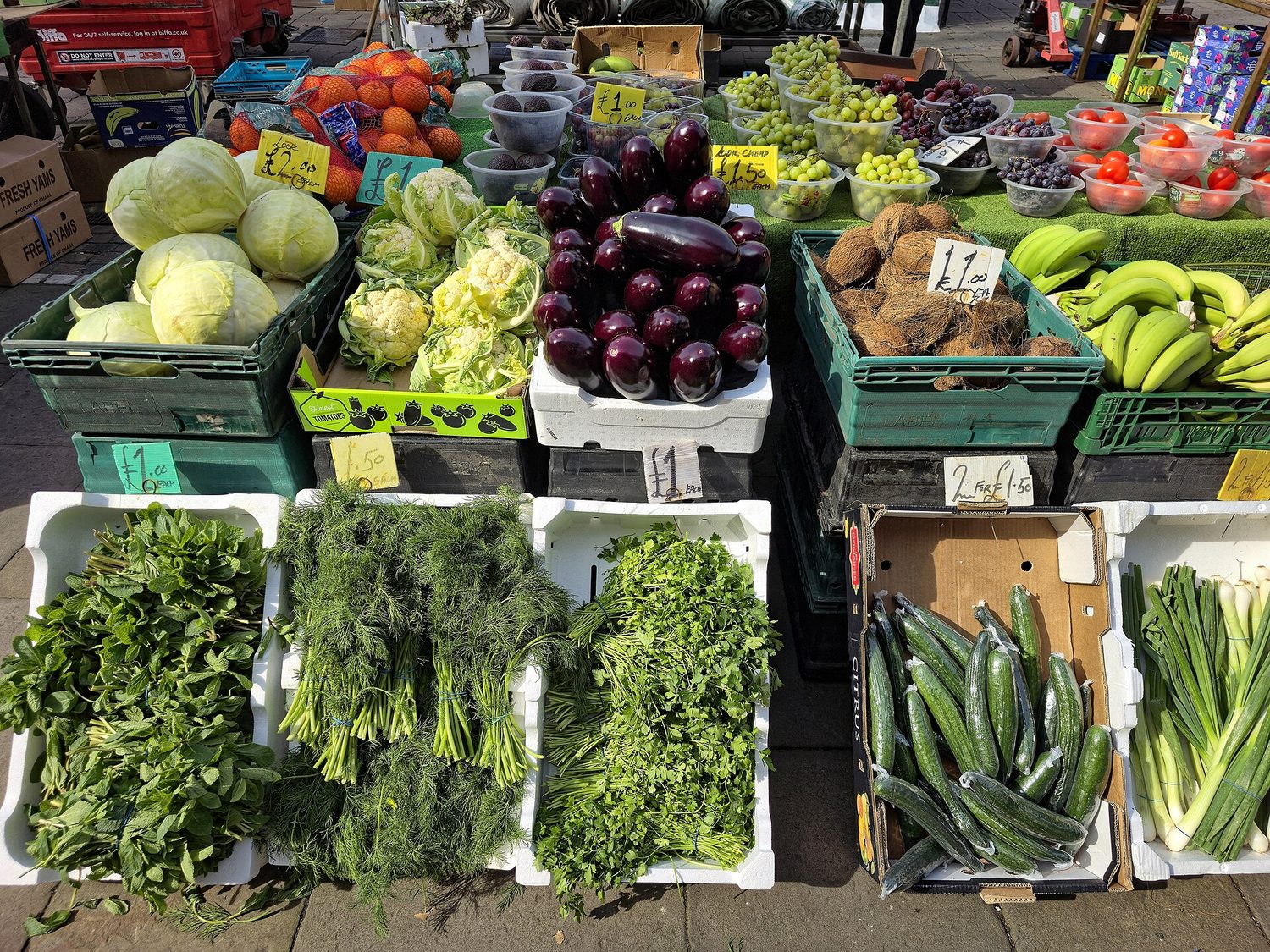
ตลาดกลางแจ้ง: ตลาดจัดสรรทรัพยากรที่มีอยู่จำกัดให้กับการใช้งานที่แข่งขันกัน

เศรษฐศาสตร์ เริ่มต้นด้วยความจริงที่ดื้อรั้นอันหนึ่ง: ความต้องการของมนุษย์มีไม่สิ้นสุด แต่ ทรัพยากร เพื่อตอบสนองความต้องการเหล่านั้นมีจำกัด ช่องว่างนี้คือ ความขาดแคลน (scarcity) และนี่คือเหตุผลที่เศรษฐศาสตร์มีอยู่ – หากทุกอย่างฟรีและไม่限量 ไม่มีอะไรต้องตัดสินใจเลย

ทรัพยากร (ปัจจัยการผลิต) ได้แก่ ที่ดิน (ทรัพยากรธรรมชาติ), แรงงาน (แรงคน), ทุน (เครื่องมือ เครื่องจักร อาคาร) และ ** entrepreneurship** (การจัดระเบียบสามอย่างอื่นและความเสี่ยง) เนื่องจากสิ่งเหล่านี้มีอยู่จำกัด ทุกเศรษฐกิจต้องตอบคำถามสามข้อ: อะไร ผลิต, อย่างไร ผลิต, และ 为谁 ผลิต

ความขาดแคลนบังคับให้ต้อง เลือก และทุกการเลือกมี ค่าโอกาส – คือมูลค่าของทางเลือกที่ดีที่สุดในบรรดาทางเลือกที่เหลือที่คุณสละไป แนวคิดเดียวนี้贯穿ทั้งหลักสูตร: ค่าที่แท้จริงของสิ่งใดสิ่งหนึ่งคือสิ่งที่คุณเสียสละเพื่อได้มันมา ไม่ใช่เพียงเงินที่คุณจ่าย

Vocabulary · ⁨คำศัพท์⁩ Train · ⁨ฝึกฝน⁩
English ไทย
Economics/ˌiːkəˈnɒmɪks/ เศรษฐศาสตร์
resources/rɪˈzɔːsɪz/ ทรัพยากร
scarcity/ˈskeəsɪti/ ความขาดแคลน
factors of production/ˈfæktəz ɒv prəˈdʌkʃn/ ปัจจัยการผลิต
labor/ˈleɪbə/ แรงงาน
capital/ˈkæpɪtl/ ทุน (capital)
entrepreneurship/ˌɒntrɪprəˈnjʊəʃɪp/ entrepreneurship
opportunity cost/ɒpəˈtjuːnɪti kɒst/ ต้นทุนโอกาส
1.2

Resource Allocation and Economic Systems · ⁨การจัดสรรทรัพยากรและระบบเศรษฐกิจ⁩

Syllabus · ⁨หลักสูตร⁩
English

Enduring Understanding (MKT-1): Most resources are scarce, and in most cases the use of resources involves constraints and trade-offs.

Learning Objective MKT-1.B: Define how resource allocation is influenced by the economic system adopted by society.

  • MKT-1.B.1 Resource allocation involves answering three basic questions: What goods and services to produce? How to produce those goods and services? And who consumes those goods and services?
  • MKT-1.B.2 Resource allocation is significantly influenced by the economic system adopted by society, such as command economy, market economy, or mixed economy. Each system involves a particular set of institutional arrangements and a coordinating mechanism for allocating scarce resources and distributing output.
ไทย

ความเข้าใจที่ยั่งยืน (MKT-1): ทรัพยากรส่วนใหญ่มีอยู่จำกัด และในกรณีส่วนใหญ่การใช้ทรัพยากรมีข้อจำกัดและต้องมีการแลกเปลี่ยนทางเลือก

วัตถุประสงค์การเรียนรู้ MKT-1.B: นิยามการจัดสรรทรัพยากรได้รับอิทธิพลจากระบบเศรษฐกิจที่สังคมเลือกใช้อย่างไร

  • MKT-1.B.1 การจัดสรรทรัพยากรเกี่ยวข้องกับการตอบคำถามพื้นฐานสามข้อ: ผลิตสินค้าและบริการอะไร? ผลิตสินค้าและบริการเหล่านั้นอย่างไร? และใครเป็นผู้บริโภคสินค้าและบริการเหล่านี้?
  • MKT-1.B.2 การจัดสรรทรัพยากรได้รับอิทธิพลอย่างมากจากระบบเศรษฐกิจที่สังคมเลือกใช้ เช่น ระบบเศรษฐกิจแบบสั่งการ ระบบเศรษฐกิจตลาด หรือระบบเศรษฐกิจผสม แต่ละระบบมีชุดการจัดตั้งสถาบันและกลไกการประสานงานเฉพาะสำหรับจัดสรรทรัพยากรที่มีอยู่จำกัดและกระจายผลผลิต

Source: College Board AP Course and Exam Description · ⁨แหล่งที่มา: คำอธิบายหลักสูตรและข้อสอบ College Board AP⁩

English

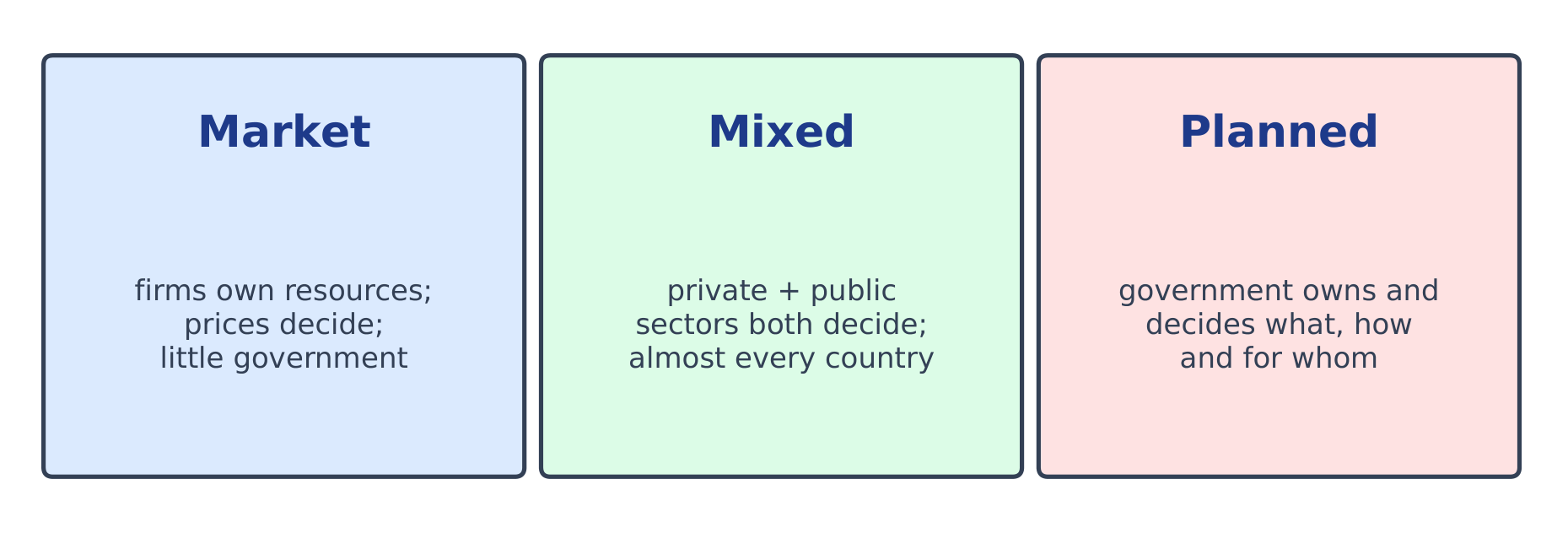
An economic system 经济体制 is a society's way of answering the three questions.

  • In a market economy 市场经济, private buyers and sellers decide through prices; self-interest and competition coordinate them (the "invisible hand").
  • In a command economy 计划经济, the government owns resources and plans production.
  • Real economies are mixed 混合经济 – mostly markets, with government providing some goods and correcting problems.

The key advantage of markets is that prices carry information and incentives 激励 automatically, with no central planner needed.

ไทย

ระบบเศรษฐกิจ คือวิธีที่สังคมตอบคำถามสามข้อ

ระบบเศรษฐกิจเป็นสเปกตรัมตั้งแต่ตลาดเสรีไปจนถึงการวางแผนของรัฐบาลเต็มรูปแบบ
ระบบเศรษฐกิจสร้างสเปกตรัมตั้งแต่ตลาดเสรีไปจนถึงการวางแผนโดยรัฐบาลเต็มรูปแบบ
  • ใน เศรษฐกิจตลาด ผู้ซื้อและผู้ขายภาคเอกชนตัดสินใจผ่านราคา; ความสนใจส่วนตัวและการแข่งขันประสานงานกัน (มืออันล่องหน)
  • ใน เศรษฐกิจแบบวางแผนกลาง รัฐบาลเป็นเจ้าของทรัพยากรและวางแผนการผลิต
  • เศรษฐกิจจริงเป็น ระบบผสม – ส่วนใหญ่เป็นตลาด โดยรัฐบาลจัดหาสินค้าบางชนิดและแก้ไขปัญหา

ข้อดีหลักของตลาดคือ ราคาส่งข้อมูลและ แรงจูงใจ อัตโนมัติ โดยไม่ต้องใช้ผู้วางแผนส่วนกลาง

Explore · ⁨สำรวจ⁩

Explore how prices coordinate a market · ⁨สำรวจว่าราคาประสานงานตลาดอย่างไร⁩

In a market economy no one is in charge, yet the price finds the level where quantity supplied meets quantity demanded. Drag the demand and supply lines and watch the equilibrium price act as a signal and an incentive. · ⁨ในเศรษฐกิจแบบตลาดไม่มีใครเป็นผู้ควบคุม แต่ราคาคือสิ่งที่หาจุดที่อุปทานเท่ากับอุปสงค์ได้ ลากเส้น อุปสงค์ และ อุปทาน แล้วดูว่าราคาสมดุลทำหน้าที่เป็น สัญญาณ และ แรงจูงใจ อย่างไร⁩

Vocabulary · ⁨คำศัพท์⁩ Train · ⁨ฝึกฝน⁩
English ไทย
economic system/ˌiːkəˈnɒmɪk ˈsɪstəm/ ระบบเศรษฐกิจ
market economy/ˈmɑːkɪt ɪˈkɒnəmi/ ระบบเศรษฐกิจตลาด
command economy/kəˈmænd ɪˈkɒnəmi/ ระบบเศรษฐกิจแบบบังคับใช้แผนกลาง
mixed/mɪkst/ ผสม
incentives/ɪnˈsentɪvz/ แรงจูงใจ
production possibilities curve (PPC)/prəˈdʌkʃn ˌpɒsəˈbɪlɪtiz kɜːv/ เส้นโค้งความเป็นไปได้ในการผลิต (PPC)
efficient/ɪˈfɪʃənt/ มีประสิทธิภาพ
unattainable/ʌnəˈteɪnəbl/ ไม่สามารถบรรลุได้
Economic growth/ˌiːkəˈnɒmɪk ɡrəʊθ/ การเติบโตทางเศรษฐกิจ
specializing/ˈspeʃəlaɪzɪŋ/ การเชี่ยวชาญในสิ่งที่ทำ
absolute advantage/ˈæbsəluːt ədˈvæntɪdʒ/ ข้อได้เปรียบสัมบูรณ์
1.3

The Production Possibilities Curve · ⁨เส้นโค้งความเป็นไปได้ในการผลิต⁩

Syllabus · ⁨หลักสูตร⁩
English

Enduring Understanding (MKT-1): Most resources are scarce, and in most cases the use of resources involves constraints and trade-offs.

Learning Objective MKT-1.C: a. Define (using graphs as appropriate) the production possibilities curve (PPC) and related terms. b. Explain (using graphs as appropriate) how the production possibilities curve (PPC) illustrates opportunity costs, trade-offs, inefficiency, efficiency, and economic growth or contraction under various conditions. c. Calculate (using data from PPCs or tables as appropriate) opportunity cost.

  • MKT-1.C.1 The PPC is a model used to show the trade-offs associated with allocating resources.
  • MKT-1.C.2 The PPC can be used to illustrate the concepts of scarcity, opportunity cost, efficiency, underutilized resources, and economic growth or contraction.
  • MKT-1.C.3 The shape of the PPC depends on whether opportunity costs are constant, increasing, or decreasing.
  • MKT-1.C.4 The PPC can shift due to changes in factors of production as well as changes in productivity/technology.
  • MKT-1.C.5 Economic growth results in an outward shift of the PPC.
ไทย

ความเข้าใจที่ยั่งยืน (MKT-1): ทรัพยากรส่วนใหญ่มีอยู่จำกัด และในกรณีส่วนใหญ่การใช้ทรัพยากรมีข้อจำกัดและต้องมีการแลกเปลี่ยนทางเลือก

จุดประสงค์การเรียนรู้ MKT-1.C: ก. นิยาม (โดยใช้กราฟเมื่อเหมาะสม) เส้นโค้งความสามารถในการผลิต (PPC) และศัพท์ที่เกี่ยวข้อง ข. อธิบาย (โดยใช้กราฟเมื่อเหมาะสม) ว่าเส้นโค้งความสามารถในการผลิต (PPC) แสดงถึงต้นทุนโอกาส ความขัดแย้ง การขาดประสิทธิภาพ ประสิทธิภาพ และการเติบโตหรือหดตัวของเศรษฐกิจภายใต้สภาวะต่างๆ ได้อย่างไร ค. คำนวณ (โดยใช้ข้อมูลจาก PPC หรือตารางเมื่อเหมาะสม) ค่าโอกาสเสีย

  • MKT-1.C.1 PPC เป็นโมเดลที่ใช้แสดงความขัดแย้งที่เกี่ยวข้องกับการจัดสรรทรัพยากร
  • MKT-1.C.2 PPC สามารถใช้แสดงแนวคิดเรื่องความจำกัด ต้นทุนโอกาส ประสิทธิภาพ การใช้ทรัพยากรไม่เต็มประสิทธิภาพ และการเติบโตหรือหดตัวของเศรษฐกิจ
  • MKT-1.C.3 รูปร่างของ PPC ขึ้นอยู่กับว่าต้นทุนโอกาสจะคงที่ เพิ่มขึ้น หรือลดลง
  • MKT-1.C.4 PPC สามารถshiftได้จากการเปลี่ยนแปลงในfactors of production以及changes in productivity/technology.
  • MKT-1.C.5 การเติบโตทางเศรษฐกิจส่งผลให้ PPC เคลื่อนที่ออกด้านนอก

Source: College Board AP Course and Exam Description · ⁨แหล่งที่มา: คำอธิบายหลักสูตรและข้อสอบ College Board AP⁩

English
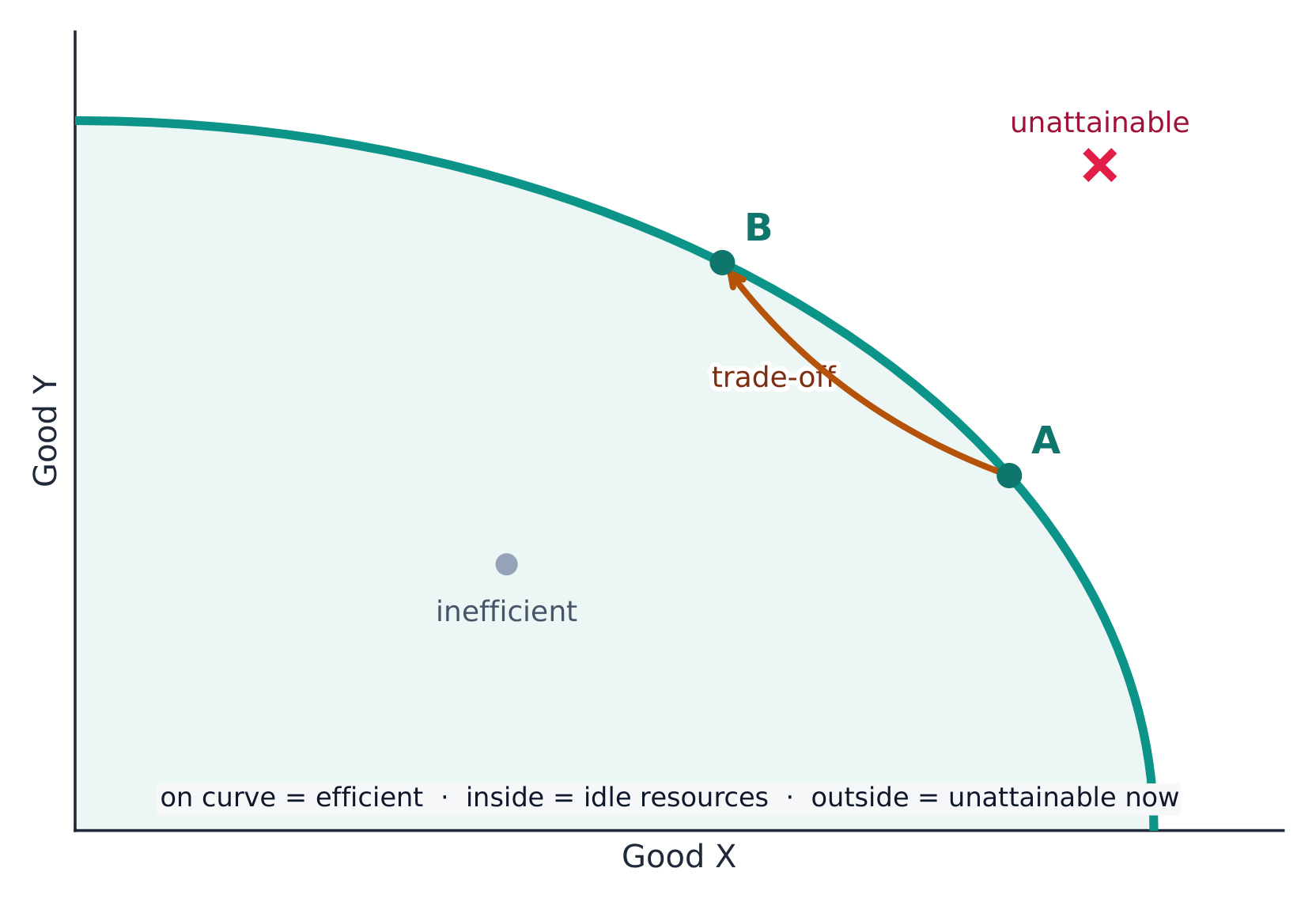
The production possibility frontier

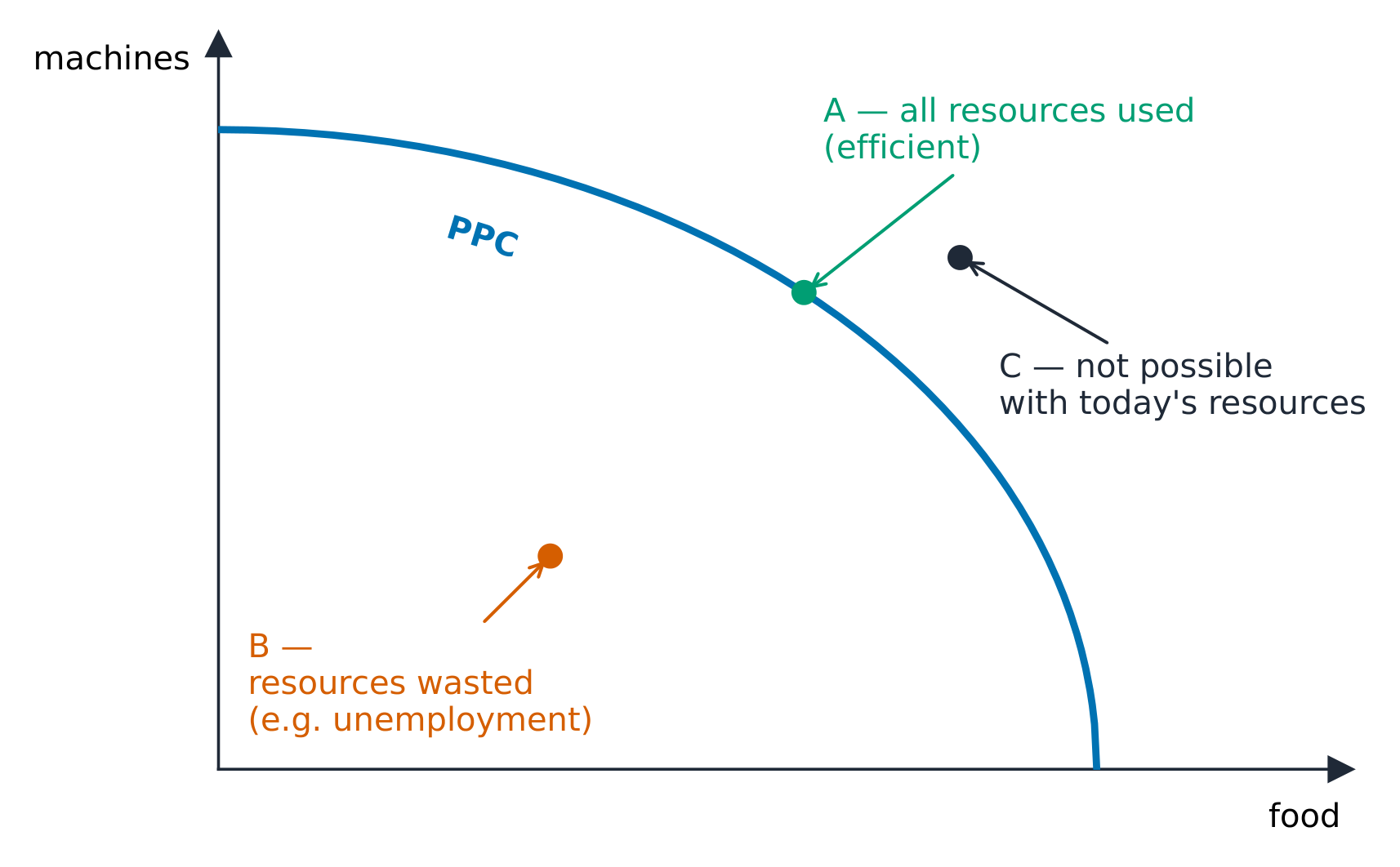
The production possibilities curve (PPC) 生产可能性曲线 shows the maximum combinations of two goods an economy can produce with its resources and technology fully and efficiently used.

  • Points on the curve are efficient 有效率; points inside are inefficient (wasted or unemployed resources); points outside are currently unattainable 无法实现.
  • The PPC's downward slope shows opportunity cost: making more of one good means making less of the other. The slope at a point is the opportunity cost of the good on the horizontal axis.
  • A bowed-out (concave) PPC shows increasing opportunity cost – resources are not equally suited to both goods, so making more of one costs ever more of the other. A straight-line PPC means constant opportunity cost.
  • Economic growth 经济增长 (more resources, better technology) shifts the whole curve outward.

Exam skill: be ready to read opportunity cost off a PPC, decide if a point is efficient/inefficient/unattainable, and explain what shifts the curve.

ไทย

*เส้นขอบเขตความสามารถในการผลิต

เส้นโค้งความเป็นไปได้ในการผลิต (PPC) แสดงชุดผลผลิตสูงสุดของสินค้าสองชนิดที่เศรษฐกิจสามารถผลิตได้ด้วยทรัพยากรและเทคโนโลยีที่มีอยู่อย่างเต็มประสิทธิภาพ

จุดบน ภายใน และภายนอกเส้นโค้งความเป็นไปได้ในการผลิต
  • จุด บน เส้นโค้งเป็น ประสิทธิภาพ; จุด ภายใน ไม่เป็นประสิทธิภาพ (ทรัพยากรถูกทำลายหรือว่างเปล่า); จุด ภายนอก ปัจจุบัน ไม่สามารถทำได้
  • ความชันลดลงของ PPC แสดงถึง ค่าโอกาส: การผลิตสินค้าหนึ่งเพิ่มมากขึ้นหมายถึงการผลิตอีกชนิดหนึ่งลดน้อยลง ความชัน ที่จุดใดๆ คือค่าโอกาสของสินค้าบนแกนนอน
  • PPC แบบโค้งเว้าออก (เว้าเข้า) แสดงถึง ค่าโอกาสที่เพิ่มขึ้น – ทรัพยากรไม่เหมาะสมเท่าเทียมกันสำหรับทั้งสองสินค้า ดังนั้นการผลิตสินค้าหนึ่งเพิ่มมากขึ้นจะต้องใช้สินค้าอีกชนิดหนึ่งมากเรื่อยๆ PPC แบบเส้นตรง หมายถึงค่าโอกาสคงที่
  • การเติบโตทางเศรษฐกิจ (ทรัพยากรเพิ่มขึ้น เทคโนโลยีดีขึ้น) ขยับเส้นโค้งทั้งหมด ออกไปด้านนอก

ทักษะการสอบ: เตรียมตัวอ่านค่าโอกาสจาก PPC ตัดสินใจว่าจุดนั้นมีประสิทธิภาพ/ไม่มีประสิทธิภาพ/ทำไม่ได้ และอธิบายปัจจัยที่ทำให้เส้นโค้งขยับ

เส้นโค้งความเป็นไปได้ในการผลิต: จุดที่มีประสิทธิภาพ ไม่มีประสิทธิภาพ และทำไม่ได้
Explore · ⁨สำรวจ⁩

Explore the production possibilities curve

Making more of one good means giving up some of the other — that trade-off is the opportunity cost, and the bowed shape shows the law of increasing opportunity cost. Drag along the curve, then grow the economy to push the whole frontier out. · ⁨การผลิตสินค้าชนิดหนึ่งมากขึ้นหมายถึงการเสียสละสินค้าอีกชนิดหนึ่ง — ความขัดแย้งนี้คือ โอกาสสูญเสีย และรูปทรงโค้งแสดงถึง กฎแห่งโอกาสสูญเสียที่เพิ่มขึ้น ลากตามเส้นโค้ง แล้วขยายเศรษฐกิจเพื่อดันขอบเขตการผลิตทั้งหมดออกด้านนอก⁩

1.4

Comparative Advantage and Gains from Trade · ⁨ความได้เปรียบสัมพัทธ์และประโยชน์จากการค้า⁩

Syllabus · ⁨หลักสูตร⁩
English

Enduring Understanding (MKT-2): The consequences of scarcity can be mitigated through specialization in production and by exchange.

Learning Objective MKT-2.A: a. Define absolute advantage and comparative advantage. b. Determine (using data from PPCs or tables as appropriate) absolute and comparative advantage.

  • MKT-2.A.1 Absolute advantage describes a situation in which an individual, business, or country can produce more of a good or service than any other producer with the same quantity of resources.
  • MKT-2.A.2 Comparative advantage describes a situation in which an individual, business, or country can produce a good or service at a lower opportunity cost than another producer.

Learning Objective MKT-2.B: a. Explain (using data from PPCs or tables as appropriate) how specialization according to comparative advantage with appropriate terms of trade can lead to gains from trade. b. Calculate (using data from PPCs or tables as appropriate) mutually beneficial terms of trade.

  • MKT-2.B.1 Production specialization according to comparative advantage, not absolute advantage, results in exchange opportunities that lead to consumption possibilities beyond the PPC.
  • MKT-2.B.2 Comparative advantage and opportunity costs determine the terms of trade for exchange under which mutually beneficial trade can occur.
ไทย

ความเข้าใจที่ยั่งยืน (MKT-2): ผลกระทบจากความจำกัดสามารถบรรเทาได้ด้วยการเชี่ยวชาญในการผลิตและการแลกเปลี่ยน

วัตถุประสงค์การเรียนรู้ MKT-2.A: ก. นิยามข้อได้เปรียบสัมบูรณ์และข้อได้เปรียบเปรียบเทียบ ข. ตระหนัก (โดยใช้ข้อมูลจาก PPC หรือตารางเมื่อเหมาะสม) ข้อได้เปรียบสัมบูรณ์และข้อได้เปรียบเปรียบเทียบ

  • MKT-2.A.1 ความได้เปรียบสัมบูรณ์อธิบายสถานการณ์ที่บุคคล ธุรกิจ หรือประเทศหนึ่งสามารถผลิตสินค้าหรือบริการได้มากกว่าผู้ผลิตอื่นใด ด้วยปริมาณทรัพยากรเท่ากัน
  • MKT-2.A.2 ความได้เปรียบสัมพัทธ์อธิบายสถานการณ์ที่บุคคล ธุรกิจ หรือประเทศหนึ่งสามารถผลิตสินค้าหรือบริการได้ด้วยต้นทุนโอกาสต่ำกว่าผู้ผลิตอื่น

จุดประสงค์การเรียนรู้ MKT-2.B: ก. อธิบาย (โดยใช้ข้อมูลจาก PPC หรือตารางเมื่อเหมาะสม) ว่าการแบ่งความเชี่ยวชาญตามข้อได้เปรียบพร้อมอัตราแลกเปลี่ยนที่เหมาะสมสามารถนำไปสู่ผลประโยชน์ทางการค้าได้อย่างไร ข. คำนวณ (โดยใช้ข้อมูลจาก PPC หรือตารางเมื่อเหมาะสม) อัตราแลกเปลี่ยนที่เป็นประโยชน์ร่วมกัน

  • MKT-2.B.1 การเชี่ยวชาญในการผลิตตามความได้เปรียบสัมพัทธ์ ไม่ใช่ความได้เปรียบสัมบูรณ์ จะนำไปสู่โอกาสในการแลกเปลี่ยนซึ่งทำให้ความเป็นไปได้ในการบริโภคเกินกว่าเส้น PPC
  • MKT-2.B.2 Comparative advantageและopportunity costsกำหนดterms of tradeสำหรับการ交换ที่ mutually beneficial tradeสามารถเกิดขึ้นได้

Source: College Board AP Course and Exam Description · ⁨แหล่งที่มา: คำอธิบายหลักสูตรและข้อสอบ College Board AP⁩

English

Two producers can both gain from trade by specializing 专业化.

  • A producer has an absolute advantage 绝对优势 in a good if it can make more of it with the same resources.
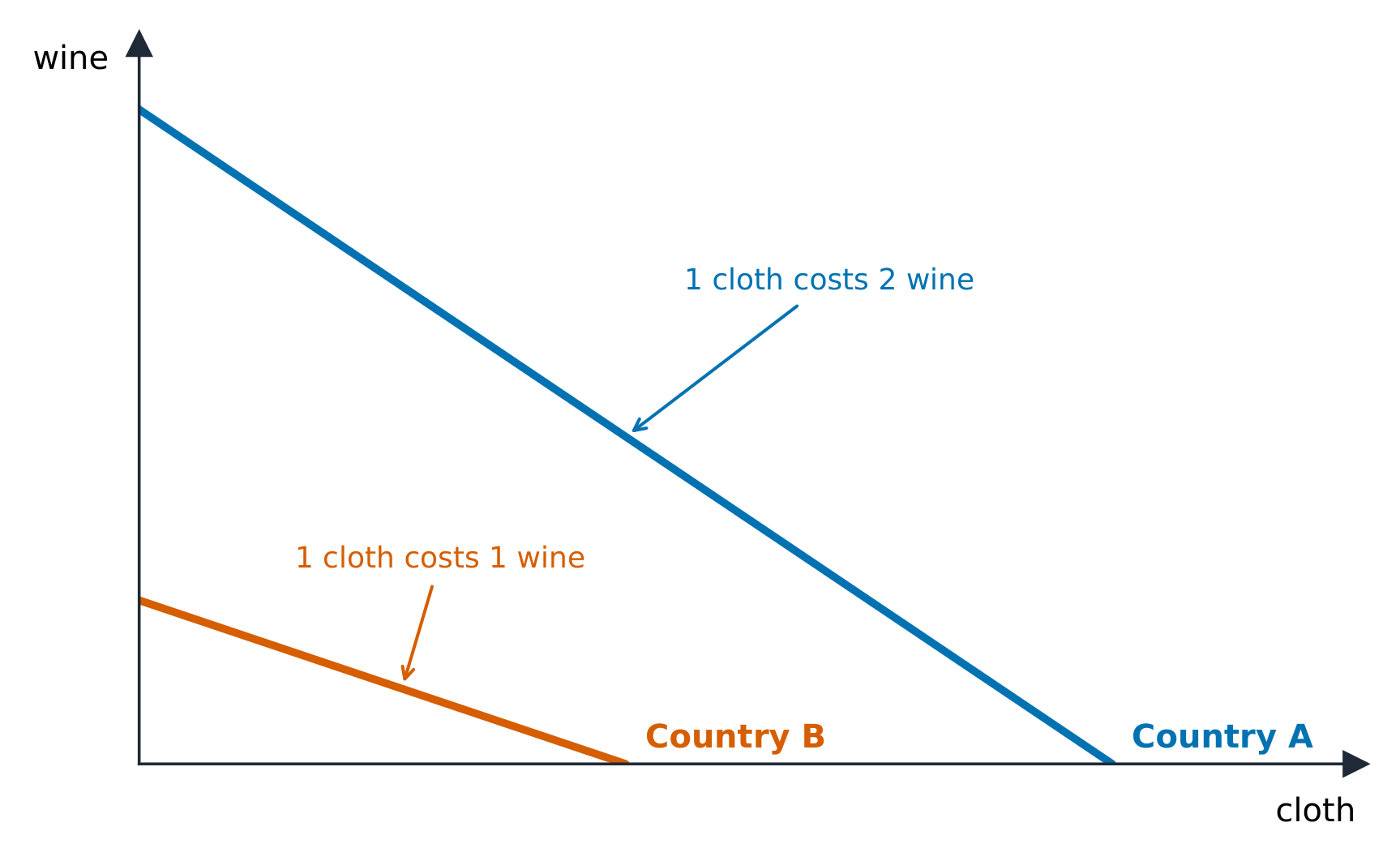
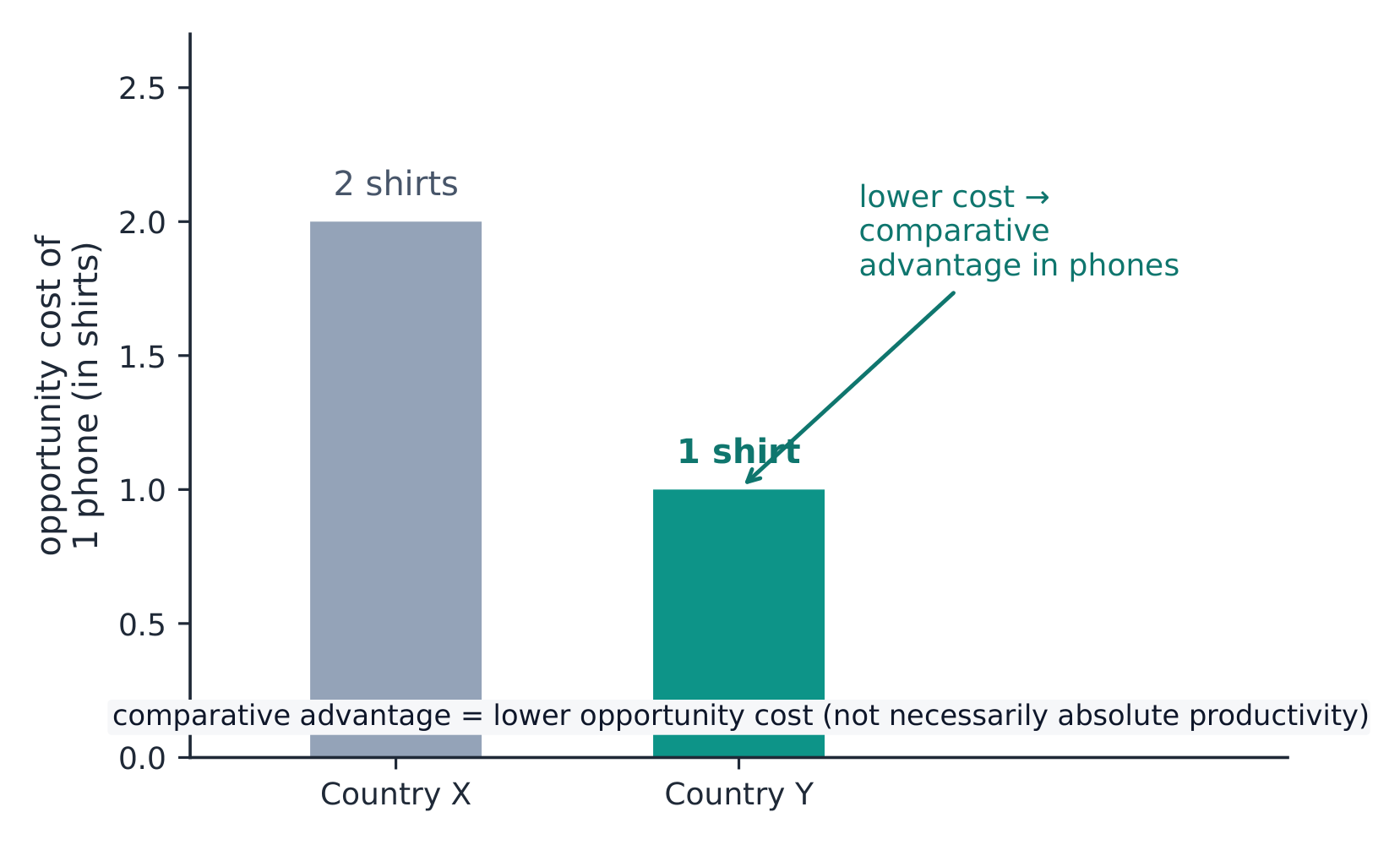
  • A producer has a comparative advantage 比较优势 if it has the lower opportunity cost for that good. Comparative advantage – not absolute – determines who should specialize.
  • Compute opportunity cost from output data: for each producer, one unit of good X costs (units of Y) $\div$ (units of X). The producer who gives up less Y should make X.
  • Both sides gain if they trade at a rate between their two opportunity costs – the terms of trade 贸易条件. Specializing by comparative advantage lets total output exceed what either could make alone, so consumption can lie outside each producer's own PPC.

Worked example. Anna can make $20$ shirts or $10$ tables a day; Ben can make $12$ shirts or $12$ tables. For Anna one table costs $\tfrac{20}{10}=2$ shirts; for Ben it costs $\tfrac{12}{12}=1$ shirt. Ben gives up fewer shirts, so Ben specializes in tables and Anna in shirts. Any terms of trade between $1$ and $2$ shirts per table – say $1.5$ – leaves both better off than producing alone.

Exam skill: these calculations appear almost every year – practice finding comparative advantage from both output tables and input tables, and stating a valid terms-of-trade range.

ไทย

ผู้ผลิตสองรายสามารถได้รับประโยชน์จากการแลกเปลี่ยนกันได้โดย ** specialization (การทำเฉพาะด้าน)**

ความได้เปรียบสัมพัทธ์เกิดจากเส้น frontier ของการผลิตที่มีความชันต่างกัน
  • ผู้ผลิตมี ความได้เปรียบสัมบูรณ์ ในสินค้าหากสามารถผลิตได้มากกว่าด้วยทรัพยากรเท่าเดิม
  • ผู้ผลิตมี ความได้เปรียบสัมพัทธ์ หากมี ค่าโอกาสที่ต่ำกว่า สำหรับสินค้านั้น ความได้เปรียบสัมพัทธ์ (ไม่ใช่สัมบูรณ์) เป็นตัวกำหนดว่าใครควรทำเฉพาะด้าน
  • คำนวณค่าโอกาสจากข้อมูลผลผลิต: สำหรับแต่ละผู้ผลิต สินค้า X หนึ่งหน่วยมีต้นทุนคือ (หน่วยของ Y) $\div$ (หน่วยของ X) ผู้ผลิตที่สละ Y น้อยกว่าควรผลิต X
  • ทั้งสองฝ่ายได้ประโยชน์หากแลกเปลี่ยนในอัตรา ระหว่าง ค่าโอกาสของทั้งสองฝ่าย –即 เงื่อนไขการค้า การทำเฉพาะด้านด้วยความได้เปรียบสัมพัทธ์ทำให้ผลผลิตรวมเกินกว่าที่任何一方独自ผลิตได้ ดังนั้นการบริโภคสามารถอยู่ใน ภายนอก เส้นโค้งความเป็นไปได้ในการผลิตของแต่ละผู้ผลิตเอง

ตัวอย่างฝึกฝน. Anna สามารถทำ $20$ เสื้อ หรือ $10$ โต๊ะต่อวัน; Ben สามารถทำ $12$ เสื้อ หรือ $12$ โต๊ะ สำหรับ Anna โต๊ะหนึ่งมีต้นทุน $\tfrac{20}{10}=2$ เสื้อ; สำหรับ Ben มีต้นทุน $\tfrac{12}{12}=1$ เสื้อ Ben สละเสื้อน้อยกว่า ดังนั้น Ben ทำเฉพาะด้านโต๊ะ และ Anna ทำเฉพาะด้านเสื้อ เงื่อนไขการค้าใดๆ ระหว่าง $1$ และ $2$ เสื้อต่อโต๊ะ – เช่น $1.5$ – ทำให้ทั้งสองฝ่ายดีกว่าการผลิตเอง

ทักษะการสอบ: การคำนวณเหล่านี้ปรากฏเกือบทุกปี – ฝึกหาความได้เปรียบสัมพัทธ์จากตารางผลผลิตและตารางอินพุต และการระบุช่วงเงื่อนไขการค้าที่เป็นไปได้

ความได้เปรียบเชิงเปรียบเทียบเป็นของผู้ผลิตที่มีต้นทุนโอกาสต่ำกว่า
ความได้เปรียบสัมพัทธ์อยู่ที่ผู้ผลิตที่มีค่าโอกาสต่ำกว่า
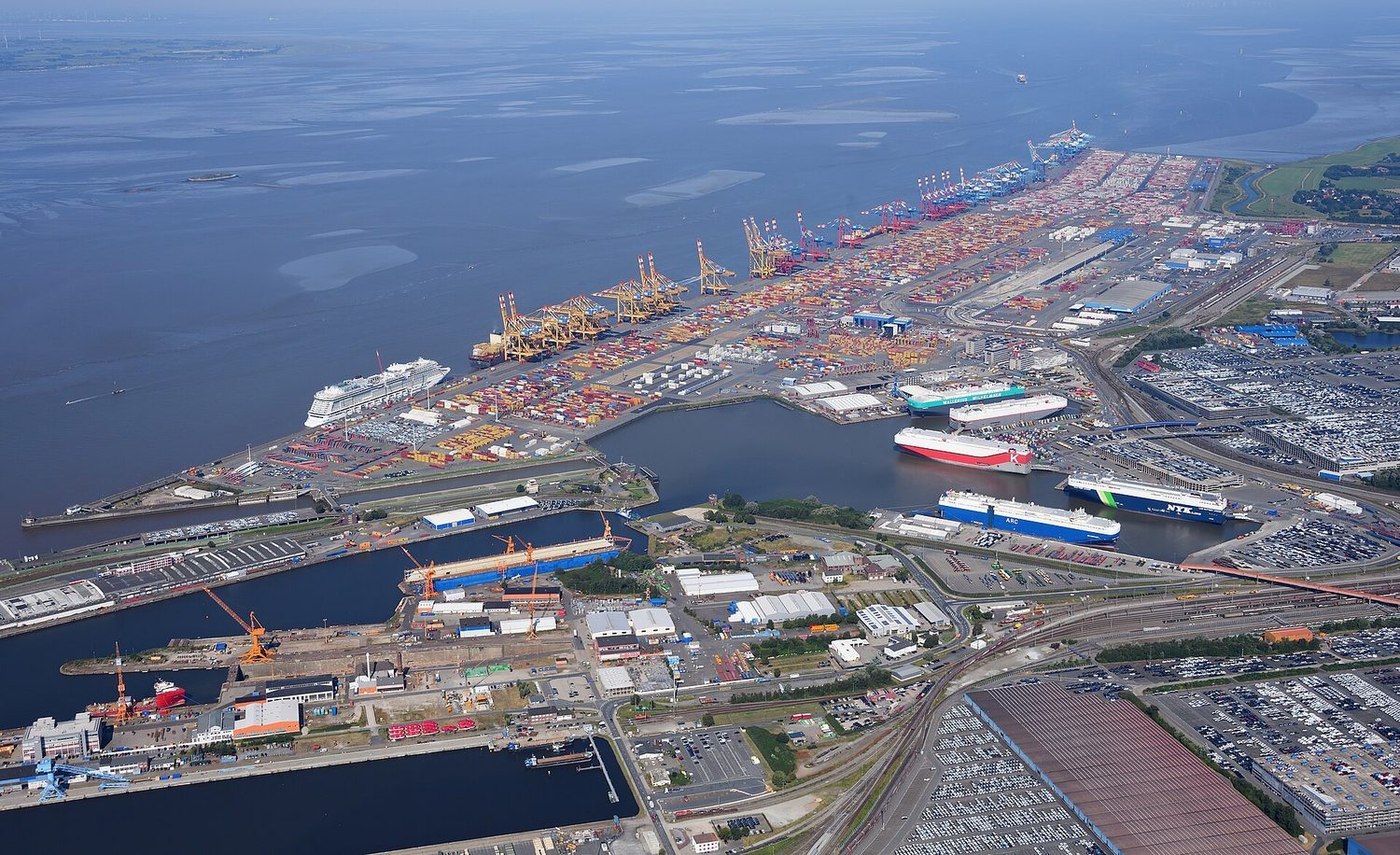
การขนส่งแบบคอนเทนเนอร์: ความได้เปรียบสัมพัทธ์และการค้าช่วยให้ประเทศเชี่ยวชาญและได้รับประโยชน์
Explore · ⁨สำรวจ⁩

See why trade lets you consume beyond the frontier · ⁨เห็นว่าการค้าทำให้บริโภคเกินขอบเขตการผลิตได้⁩

A producer should specialize where its opportunity cost is lowest, then trade for the rest. Because the terms of trade lie between the two producers' costs, trade lets a country consume outside its own production frontier. · ⁨ผู้ผลิตควรเชี่ยวชาญในพื้นที่ที่มี โอกาสสูญเสีย ต่ำที่สุด แล้วไปแลกเปลี่ยนส่วนที่เหลือ เนื่องจากเงื่อนไขการค้าอยู่ระหว่างต้นทุนของผู้ผลิตทั้งสอง การค้าช่วยให้ประเทศบริโภค นอกเหนือ จากเส้น frontier การผลิตของตนเอง⁩

Vocabulary · ⁨คำศัพท์⁩ Train · ⁨ฝึกฝน⁩
English ไทย
comparative advantage/kəmˈpærətɪv ədˈvæntɪdʒ/ ความได้เปรียบสัมพัทธ์
terms of trade/tɜːmz ɒv treɪd/ terms of trade
sunk cost/sʌŋk kɒst/ 沉没 cost (sunk cost)
Marginal analysis/ˈmɑːdʒɪnl əˈnæləsɪs/ การวิเคราะห์边际
marginal benefit/ˈmɑːdʒɪnl ˈbenɪfɪt/ ประโยชน์ส่วนเพิ่ม
marginal cost/ˈmɑːdʒɪnl kɒst/ ต้นทุน边际 (marginal cost)
1.5

Cost-Benefit Analysis · ⁨การวิเคราะห์ต้นทุนและผลประโยชน์⁩

Syllabus · ⁨หลักสูตร⁩
English

Enduring Understanding (CBA-1): Rational economic decisions require the evaluation of costs and benefits.

Learning Objective CBA-1.A: a. Define opportunity cost. b. Explain the opportunity costs associated with choices. c. Calculate the opportunity costs associated with choices.

  • CBA-1.A.1 Rational agents consider opportunity costs, whether implicit or explicit, when calculating the total economic costs of any decision.
  • CBA-1.A.2 Total benefits form the metric "utility" for consumers and total revenue for firms.

Learning Objective CBA-1.B: a. Explain a decision by comparing total benefits and total costs (using a table or a graph when appropriate). b. Calculate total benefits and total costs (using a table or graph where appropriate).

  • CBA-1.B.1 Total net benefits, the difference between total benefits and total costs, are maximized at the optimal choice.
  • CBA-1.B.2 Some decisions permit rational agents to look at only marginal benefit and marginal cost. Other decisions cannot be broken down into increments in this way and must be evaluated by looking at total benefits and total costs.
ไทย

ความเข้าใจที่ยั่งยืน (CBA-1): การตัดสินใจทางเศรษฐกิจอย่างมีเหตุผลจำเป็นต้องมีการประเมินต้นทุนและผลได้

จุดประสงค์การเรียนรู้ CBA-1.A: a. นิยามต้นทุนโอกาส b. อธิบายต้นทุนโอกาสที่เกี่ยวข้องกับการเลือก c. คำนวณต้นทุนโอกาสที่เกี่ยวข้องกับการเลือก

  • CBA-1.A.1 Rational agentsจะ考虑opportunity costs,无论是implicit还是explicit,เมื่อcalculating the total economic costs of any decision.
  • CBA-1.A.2 ผลได้รวมเป็นเกณฑ์ "Utility" สำหรับผู้บริโภค และรายได้รวมสำหรับกิจการ

จุดประสงค์การเรียนรู้ CBA-1.B: a. อธิบายการตัดสินใจโดยการเปรียบเทียบผลได้รวมกับต้นทุนรวม (ใช้ตารางหรือกราฟเมื่อเหมาะสม) b. คำนวณผลได้รวมและต้นทุนรวม (ใช้ตารางหรือกราฟเมื่อเหมาะสม)

  • CBA-1.B.1 ผลได้สุทธิรวม ซึ่งเป็นผลต่างระหว่างผลได้รวมกับต้นทุนรวม จะถูกทำให้สูงสุดที่ทางเลือกที่เหมาะสมที่สุด
  • CBA-1.B.2 บางการอนุญาตให้ตัวแทนที่มีเหตุผลพิจารณาเฉพาะผลได้ส่วนเพิ่มและต้นทุนส่วนเพิ่มเท่านั้น แต่บางการตัดสินใจไม่สามารถแยกออกเป็นหน่วยย่อยๆ ได้ในลักษณะนี้ จึงต้องประเมินโดยพิจารณาผลได้รวมและต้นทุนรวม

Source: College Board AP Course and Exam Description · ⁨แหล่งที่มา: คำอธิบายหลักสูตรและข้อสอบ College Board AP⁩

English

Rational decision-makers weigh benefits against costs. An action is worthwhile only when its benefit is at least as large as its cost – including the opportunity cost. Money already spent and unrecoverable is a sunk cost 沉没成本 and should be ignored in decisions: only future costs and benefits matter.

ไทย

ผู้ตัดสินใจอย่างมีเหตุผลชั่ง ประโยชน์เทียบกับต้นทุน การกระทำหนึ่งจะมีคุณค่าก็ต่อเมื่อประโยชน์อย่างน้อยเท่ากับต้นทุน – รวมถึงค่าโอกาส เงินที่จ่ายไปแล้วและไม่คืนกลับมาได้คือ ต้นทุนจม และควร เพิกเฉย ในการตัดสินใจ: เฉพาะต้นทุนและผลประโยชน์ในอนาคตเท่านั้นที่สำคัญ

Explore · ⁨สำรวจ⁩

Weigh total benefit against total cost · ⁨ชั่งน้ำหนักประโยชน์รวมเทียบกับต้นทุนรวม⁩

A choice is worth it only while the benefit of one more unit beats its cost. Where total revenue meets total cost is the break-even point; past it, extra activity adds more cost than value. · ⁨ทางเลือกจะมีคุณค่าก็ต่อเมื่อ ประโยชน์ ของหน่วยเพิ่มอีกหนึ่งยังเหนือกว่า ต้นทุน ของมัน จุดที่รายรับรวมเท่ากับรายจ่ายรวมคือจุด คุ้มทุน; เกินจุดนั้นแล้ว กิจกรรมเพิ่มเติมจะเพิ่มต้นทุนมากกว่ามูลค่า⁩

1.6

Marginal Analysis and Consumer Choice · ⁨การวิเคราะห์ขอบเขตและการเลือกของผู้บริโภค⁩

Syllabus · ⁨หลักสูตร⁩
English

Enduring Understanding (CBA-2): To determine the optimal level at which to pursue an activity whose total benefits exceed total cost, rational economic agents compare marginal benefits and marginal costs.

Learning Objective CBA-2.A: a. Define the key assumptions of consumer choice theory. b. Explain (using a table or graph as appropriate) how a rational consumer's decision making involves the use of marginal benefits and marginal costs. c. Calculate (using a table or a graph when appropriate) how a rational consumer's decision making involves the use of marginal benefits and marginal costs.

  • CBA-2.A.1 Consumers face constraints and have to make optimal decisions accounting for these constraints.
  • CBA-2.A.2 In a model of rational consumer choice, consumers are assumed to make choices so as to maximize their total utility.
  • CBA-2.A.3 Consumers experience diminishing marginal utility in the consumption of goods and services.
  • CBA-2.A.4 Consumers allocate their limited income to purchase the combination of goods that maximizes their utility by equating/comparing the marginal utility of the last dollar spent on each good.
    • Exclusion statement: Indifference curves are beyond the scope of the course and the AP Exam, but equating the ratios of marginal utility to price is within the scope.

Learning Objective CBA-2.B: a. Define marginal analysis and related terms. b. Explain a decision using marginal analysis (using a table or a graph when appropriate).

  • CBA-2.B.1 Marginal analysis involves comparing the additional benefit of increasing a given activity with the additional cost. Comparing marginal benefit (MB) with marginal cost (MC) helps individuals (firms) decide whether to increase, decrease, or maintain their consumption (production) levels.
  • CBA-2.B.2 The optimal quantity at any point in time does not depend on fixed costs (sunk costs) or fixed benefits that have already been determined by past choices.
  • CBA-2.B.3 The optimal quantity is achieved when marginal benefit is equal to marginal cost or where total benefit is maximized.
ไทย

ความเข้าใจที่ยั่งยืน (CBA-2): เพื่อระบุระดับที่เหมาะสมในการดำเนินกิจกรรมซึ่งผลได้รวมเกินกว่าต้นทุนรวม ตัวแทนทางเศรษฐกิจที่มีเหตุผลจะเปรียบเทียบผลได้ส่วนเพิ่มและต้นทุนส่วนเพิ่ม

จุดประสงค์การเรียนรู้ CBA-2.A: a. นิยามสมมติฐานหลักของทฤษฎีการเลือกของผู้บริโภค b. อธิบาย (โดยใช้ตารางหรือกราฟเมื่อเหมาะสม) ว่าการตัดสินใจของผู้บริโภคที่มีเหตุผลเกี่ยวข้องกับการใช้ผลได้ส่วนเพิ่มและต้นทุนส่วนเพิ่มอย่างไร c. คำนวณ (โดยใช้ตารางหรือกราฟเมื่อเหมาะสม) ว่าการตัดสินใจของผู้บริโภคที่มีเหตุผลเกี่ยวข้องกับการใช้ผลได้ส่วนเพิ่มและต้นทุนส่วนเพิ่มอย่างไร

  • CBA-2.A.1 ผู้บริโภคเผชิญกับข้อจำกัดและต้องทำการตัดสินใจที่เหมาะสมโดยคำนึงถึงข้อจำกัดเหล่านี้
  • CBA-2.A.2 ในโมเดลการเลือกของผู้บริโภคอย่างมีเหตุผล สมมติว่าผู้บริโภคจะเลือกซื้อเพื่อเพิ่มอรรถประโยชน์รวมให้สูงสุด
  • CBA-2.A.3 ผู้บริโภคจะมีอรรถประโยชน์ส่วนเพิ่มที่ลดลงเมื่อ tiêuโภคสินค้าและบริการ
  • CBA-2.A.4 ผู้บริโภคจัดสรรรายได้ที่มีจำกัดของตนเพื่อซื้อชุดสินค้าที่เพิ่มอรรถประโยชน์ได้สูงสุด โดยเท่าเทียมหรือเปรียบเทียบอรรถประโยชน์ส่วนเพิ่มของเงินดอลลาร์สุดท้ายที่ใช้ในการซื้อแต่ละชนิดสินค้า
    • ข้อความยกเว้น: เส้นความไม่แตกต่าง (Indifference curves)อยู่นอกเหนือขอบเขตของหลักสูตรและข้อสอบ AP แต่การใช้สมการอัตราส่วนระหว่างอรรถประโยชน์ส่วนเพิ่มต่อราคาอยู่ในขอบเขต

วัตถุประสงค์การเรียนรู้ CBA-2.B: ก. นิยามการวิเคราะห์ส่วนเพิ่มและศัพท์ที่เกี่ยวข้อง ข. อธิบายการตัดสินใจโดยใช้การวิเคราะห์ส่วนเพิ่ม (ใช้ตารางหรือกราฟเมื่อเหมาะสม)

  • CBA-2.B.1 การวิเคราะห์ส่วนเพิ่มเกี่ยวข้องกับการเปรียบเทียบผลประโยชน์ส่วนเพิ่มจากการเพิ่มกิจกรรมหนึ่งๆ กับต้นทุนส่วนเพิ่ม การเปรียบเทียบผลประโยชน์ส่วนเพิ่ม (MB) กับต้นทุนส่วนเพิ่ม (MC) ช่วยให้อุคคล (บริษัท) ตัดสินใจว่าจะเพิ่ม ลด หรือรักษาระดับการบริโภค (การผลิต) ไว้
  • CBA-2.B.2 ปริมาณที่เหมาะสมในช่วงเวลาใดเวลาหนึ่งไม่ขึ้นอยู่กับต้นทุนคงที่ (ต้นทุนจม) หรือผลประโยชน์คงที่ที่ถูกกำหนดไว้แล้วจากการกระทำในอดีต
  • CBA-2.B.3 ปริมาณที่เหมาะสมจะเกิดขึ้นเมื่อผลประโยชน์ส่วนเพิ่มเท่ากับต้นทุนส่วนเพิ่ม หรือเมื่อผลประโยชน์รวมมีค่าสูงสุด

Source: College Board AP Course and Exam Description · ⁨แหล่งที่มา: คำอธิบายหลักสูตรและข้อสอบ College Board AP⁩

English

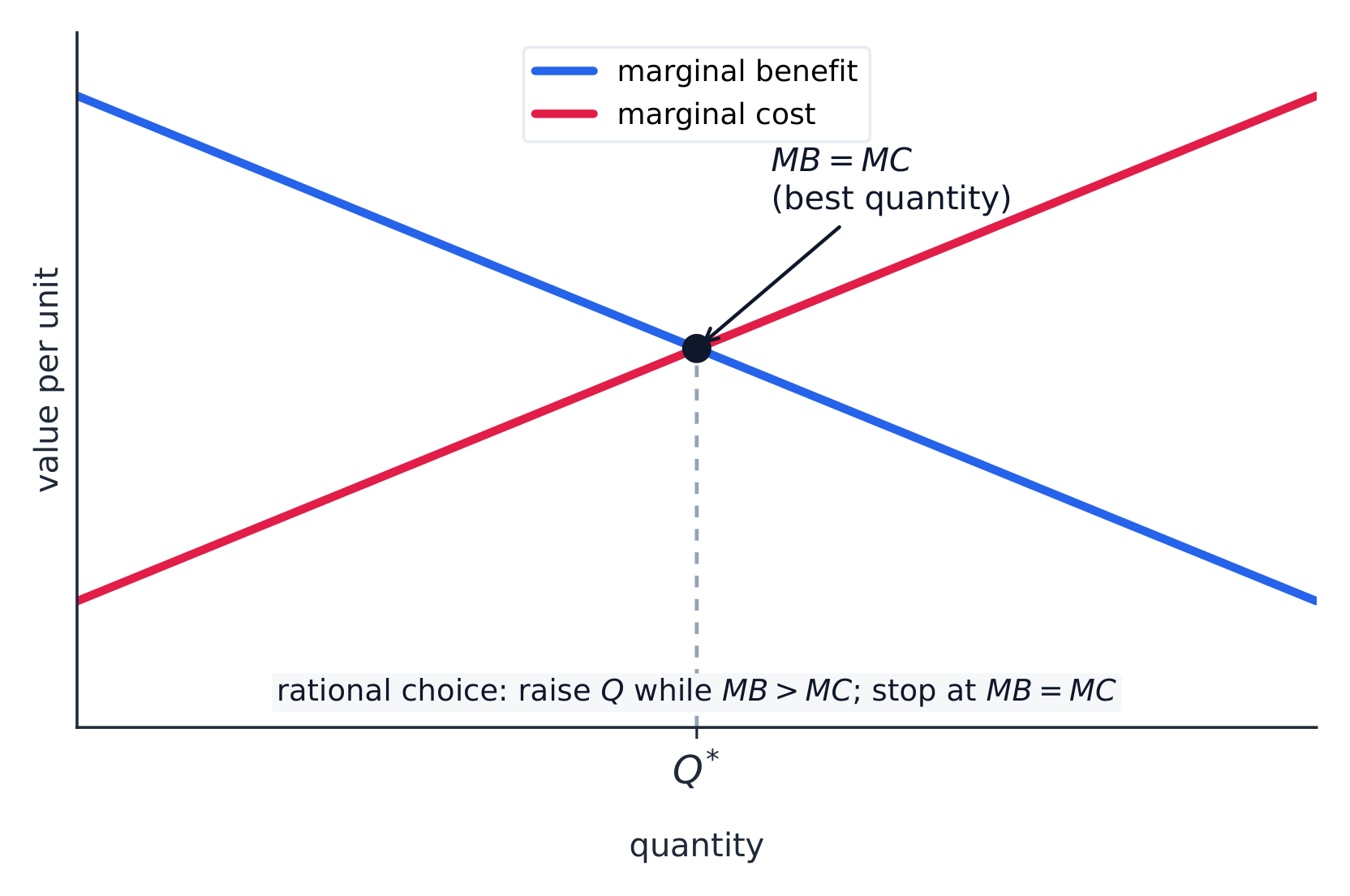
Most real decisions are not "all or nothing" but "a little more or a little less." Marginal analysis 边际分析 compares the marginal benefit 边际收益 (the benefit of one more unit) with the marginal cost 边际成本 (the cost of one more unit).

  • Decision rule: keep doing the activity while marginal benefit $>$ marginal cost; stop where MB $=$ MC. That point maximizes net benefit (total benefit minus total cost).
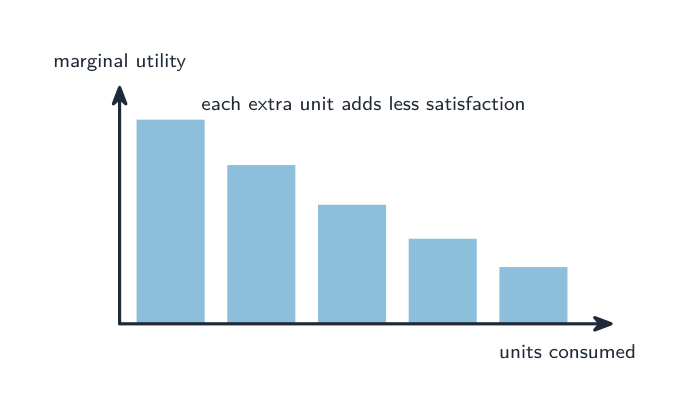
  • Consumers get utility 效用 (satisfaction) from goods, but each extra unit usually gives less added satisfaction – the law of diminishing marginal utility 边际效用递减法则.
  • A consumer maximizes total utility by the utility-maximizing rule: spend so that the marginal utility per dollar is equal across all goods, $\dfrac{MU_x}{P_x}=\dfrac{MU_y}{P_y}$, using up the whole budget. If one good gives more utility per dollar, buy more of it until the ratios equalize.

Worked example. A consumer is choosing between good X ($MU_x=20$, $P_x=\$2$) and good Y ($MU_y=15$, $P_y=\$1$). The utility per dollar is $\tfrac{20}{2}=10$ for X but $\tfrac{15}{1}=15$ for Y. Y delivers more satisfaction per dollar, so the consumer should buy more Y and less X; as they do, $MU_y$ falls and $MU_x$ rises until $\tfrac{MU_x}{2}=\tfrac{MU_y}{1}$ and the budget is spent.

Exam skill: the "MB = MC" logic and the "equal MU-per-dollar" rule are tested repeatedly – be able to find the optimal quantity from a table and explain why it is optimal.

ไทย

การตัดสินใจส่วนใหญ่ในชีวิตจริงไม่ใช่ "ทั้งหมดหรือไม่มีเลย" แต่เป็น "เพิ่มเล็กน้อยหรือลดเล็กน้อย" การวิเคราะห์ขอบเขต เปรียบเทียบ ประโยชน์边际 (ประโยชน์จากการผลิตเพิ่มอีกหนึ่งหน่วย) กับ ต้นทุน边际 (ต้นทุนจากการผลิตเพิ่มอีกหนึ่งหน่วย)

的每一额外消费单位带来的额外满足感递减 (边际效用递减)
每一额外消费单位带来的额外满足感递减 (边际效用递减)
  • กฎการตัดสินใจ: ดำเนินกิจกรรมต่อไปจนกว่าประโยชน์边际 $>$ ต้นทุน边际; หยุดเมื่อ MB $=$ MC จุดนี้จะทำให้ประโยชน์สุทธิสูงสุด (ประโยชน์รวมหักต้นทุนรวม)
  • ผู้บริโภคได้รับ Utility (ความพึงพอใจ) จากสินค้า แต่每一额外单位通常带来更少的附加满足感 –即 法则 of diminishing marginal utility
  • ผู้บริโภคทำให้ Utility รวมสูงสุดตาม กฎการเพิ่ม Utility สูงสุด: จัดสรรเงินเพื่อให้ Utility边际 per dollar เท่ากันสำหรับสินค้าทุกชนิด, $\dfrac{MU_x}{P_x}=\dfrac{MU_y}{P_y}$, ใช้งบประมาณทั้งหมด หากสินค้าใดให้ Utility per dollar มากกว่า ให้ซื้อมากขึ้นจนอัตราส่วนเท่ากัน

ตัวอย่างฝึกฝน. ผู้บริโภคกำลังเลือกระหว่างสินค้า X ($MU_x=20$, $P_x=\$2$) and good Y ($MU_y=15$, $P_y=\$1$). Utility per dollar คือ $\tfrac{20}{2}=10$ สำหรับ X แต่ $\tfrac{15}{1}=15$ สำหรับ Y Y ให้ความพึงพอใจต่อ dollar มากกว่า ดังนั้นผู้บริโภคควรซื้อ Y มากขึ้นและ X น้อยลง; เมื่อทำเช่นนั้น, $MU_y$ ลดลงและ $MU_x$ เพิ่มขึ้นจน $\tfrac{MU_x}{2}=\tfrac{MU_y}{1}$ และงบประมาณหมดสิ้น

ทักษะการสอบ: หลักการ "MB = MC" และกฎ "utility per dollar เท่ากัน" ถูกทดสอบบ่อยครั้ง – ต้องสามารถหาปริมาณที่เหมาะสมจากตารางและอธิบาย ทำไม จึงเหมาะสม

การตัดสินใจอย่างมีเหตุผล: ทำต่อไปจนกว่าประโยชน์ส่วนเพิ่มจะมากกว่าต้นทุนส่วนเพิ่ม และหยุดเมื่อเท่ากัน
Vocabulary · ⁨คำศัพท์⁩ Train · ⁨ฝึกฝน⁩
English ไทย
utility/juːˈtɪlɪti/ Utility
law of diminishing marginal utility/lɔː ɒv dɪˈmɪnɪʃɪŋ ˈmɑːdʒɪnl juːˈtɪlɪti/ กฎของอรรถประโยชน์ส่วนเพิ่มที่ลดลง
1.6

Exam tips · ⁨ข้อแนะนำสำหรับการสอบ⁩

English
  • Opportunity cost is the next-best alternative given up; ignore sunk costs in any decision.
  • Comparative advantage (lower opportunity cost) determines specialisation and the gains from trade.
  • Apply marginal analysis: keep doing an activity while MB > MC, stopping where MB = MC.
  • Maximise utility by equalising the marginal utility per dollar across goods.
  • Read opportunity cost off the PPC slope; a bowed curve shows increasing cost.
ไทย
  • ต้นทุนโอกาสคือทางเลือกที่ดีถัดไปที่ถูกทิ้งไป; เพิกเฉยต่อต้นทุนที่ sunk ในทุกการตัดสินใจ
  • ความได้เปรียบเชิงเปรียบเทียบ (ต้นทุนโอกาสต่ำกว่า) กำหนดการเชี่ยวชาญและการได้รับประโยชน์จากการค้า
  • ใช้การวิเคราะห์ส่วนเพิ่ม: ทำกิจกรรมนั้นต่อไปจนกว่า MB > MC, หยุดเมื่อ MB = MC
  • สูงสุดแห่งความสุขโดยทำให้ ความพึงพอใจส่วนเพิ่มต่อหนึ่งดอลลาร์ เท่ากัน Across สินค้า
  • อ่านต้นทุนโอกาสจากความชันของ PPC; curves ที่โค้งเข้าหาจุดกำเนิดแสดงถึงต้นทุนที่เพิ่มขึ้น

Interactive lessons on this topic · ⁨บทเรียนเชิงโต้ตอบสำหรับหัวข้อนี้⁩

Work through it step by step, with instant-check exercises. · ⁨ทำทีละขั้นตอน พร้อมแบบฝึกหัดตรวจสอบผลทันที⁩

Past Papers · ⁨ข้อสอบย้อนหลัง⁩

More topics in AP Microeconomics · ⁨AP เศรษฐศาสตร์จุลภาค⁩ · ⁨หัวข้อเพิ่มเติมใน AP Microeconomics · ⁨AP เศรษฐศาสตร์จุลภาค⁩⁩

Log in or create account · ⁨เข้าสู่ระบบหรือสร้างบัญชี⁩

IGCSE, A-Level & AP