English
Learning Objective 1.1.A: Describe a scalar or vector quantity using magnitude and direction, as appropriate.
- 1.1.A.1 Scalars are quantities described by magnitude only; vectors are quantities described by both magnitude and direction.
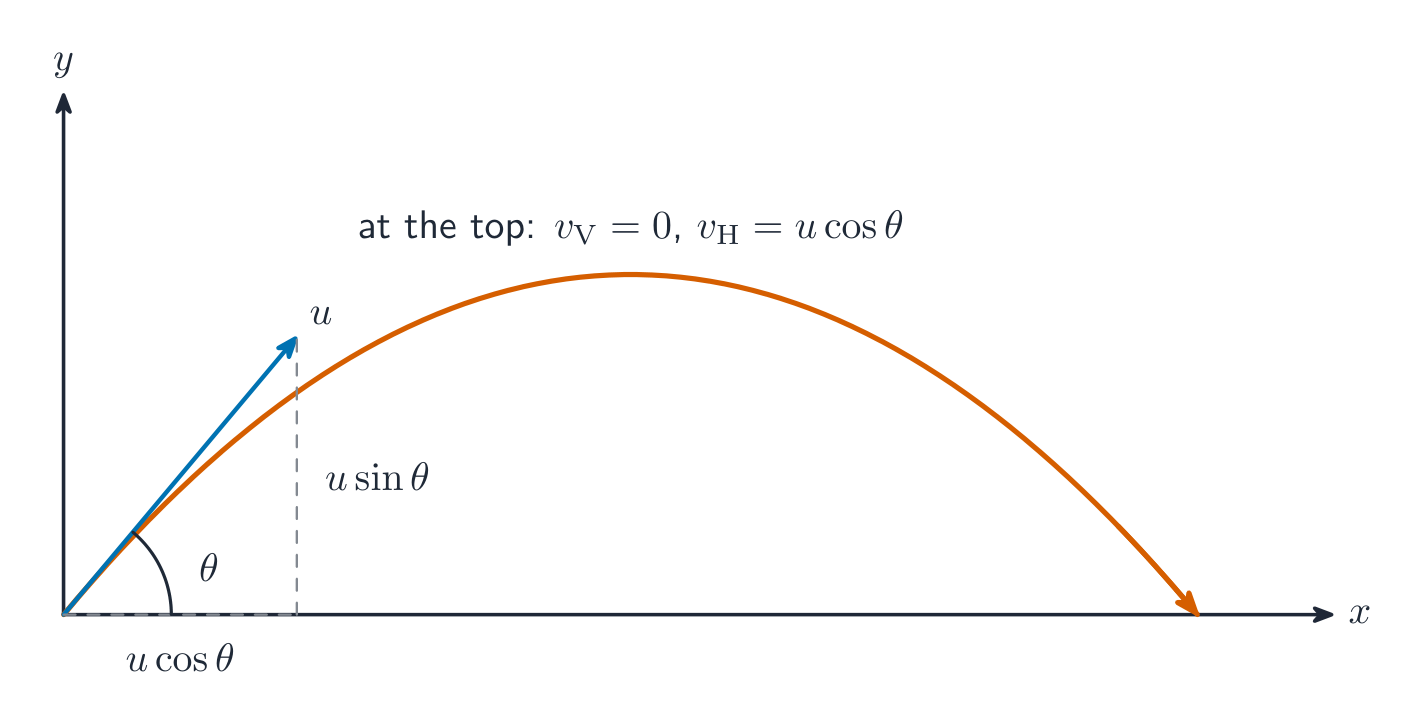
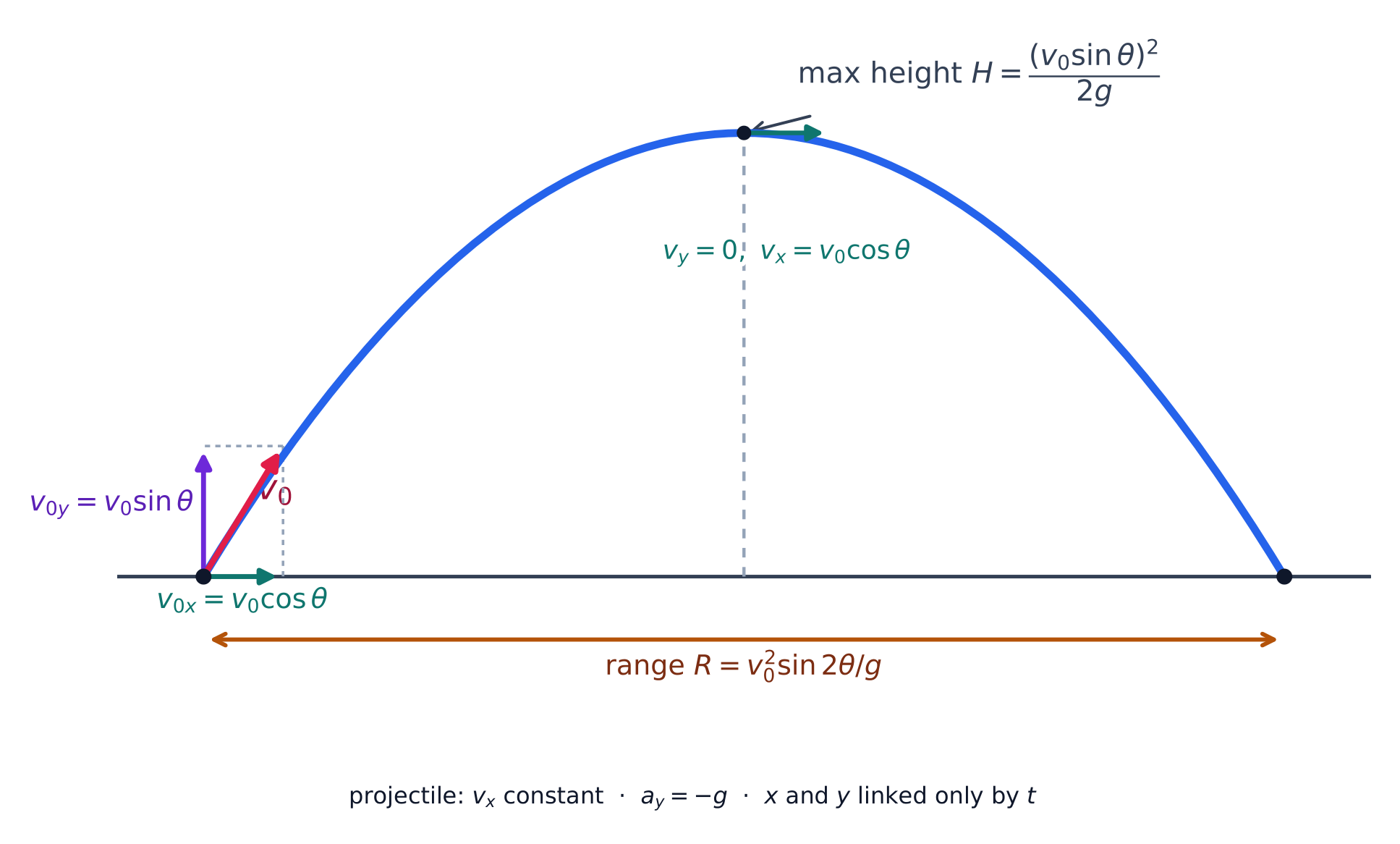
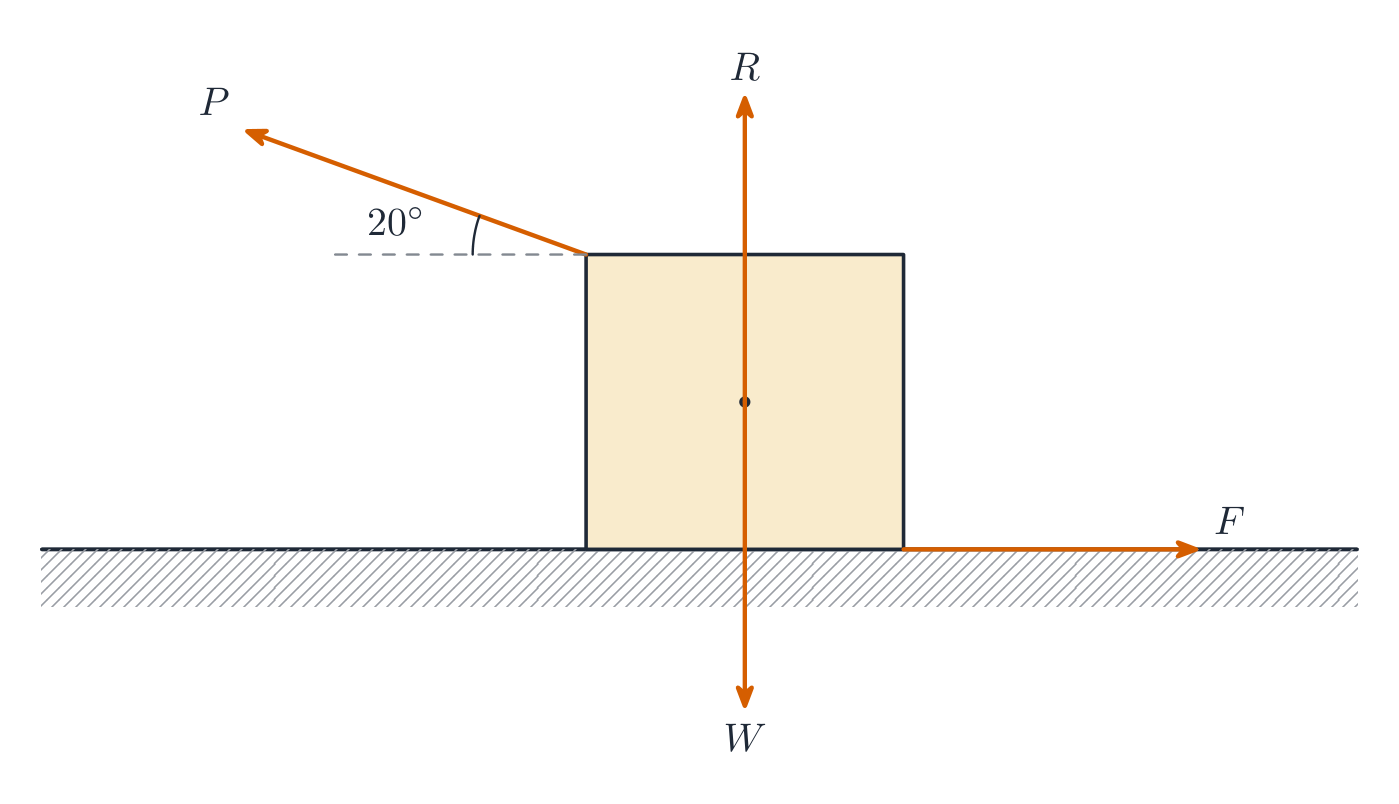
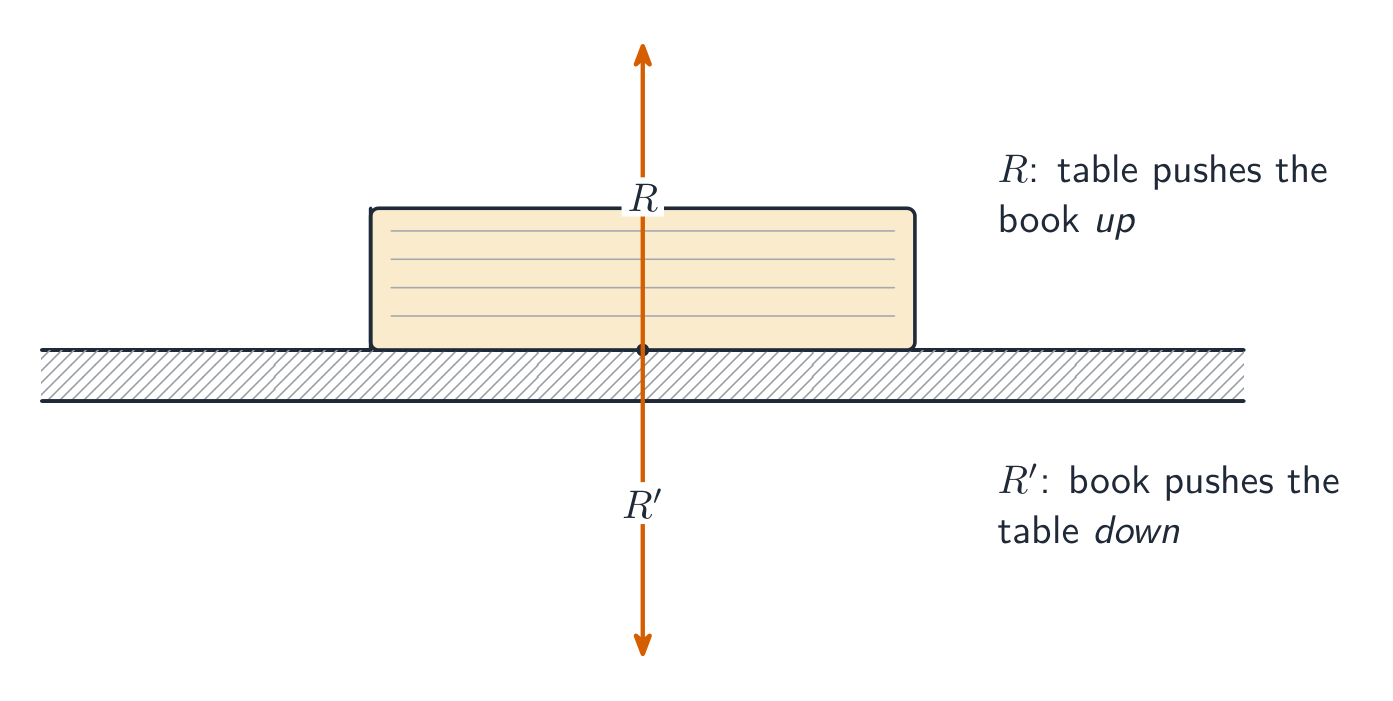
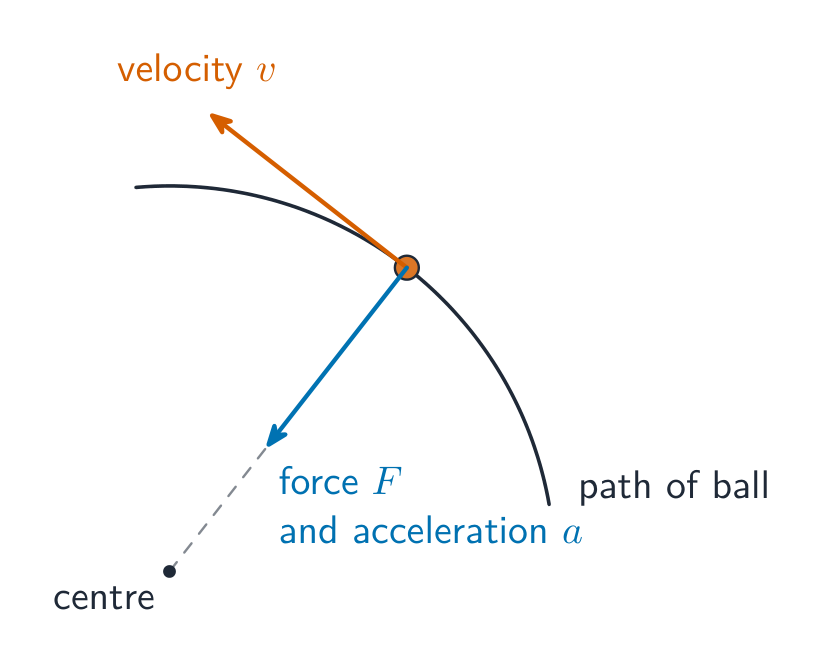
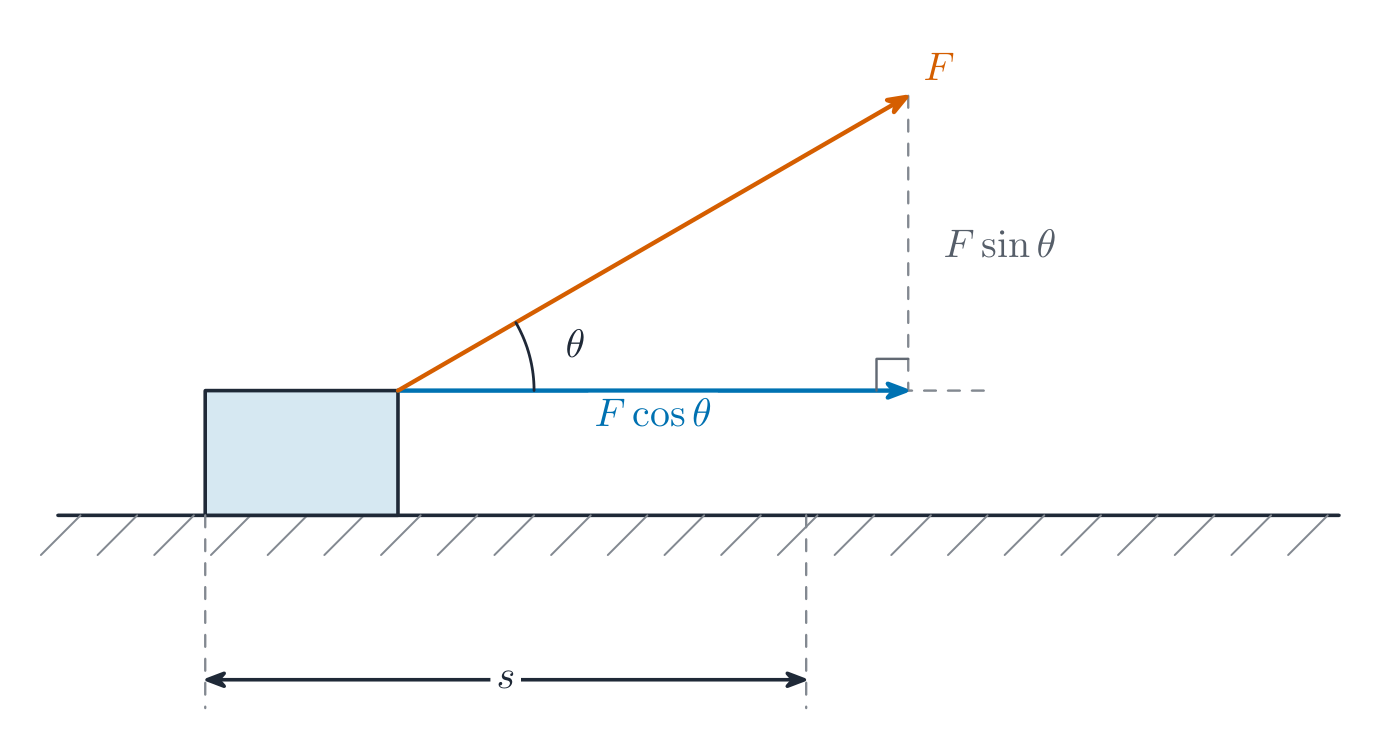
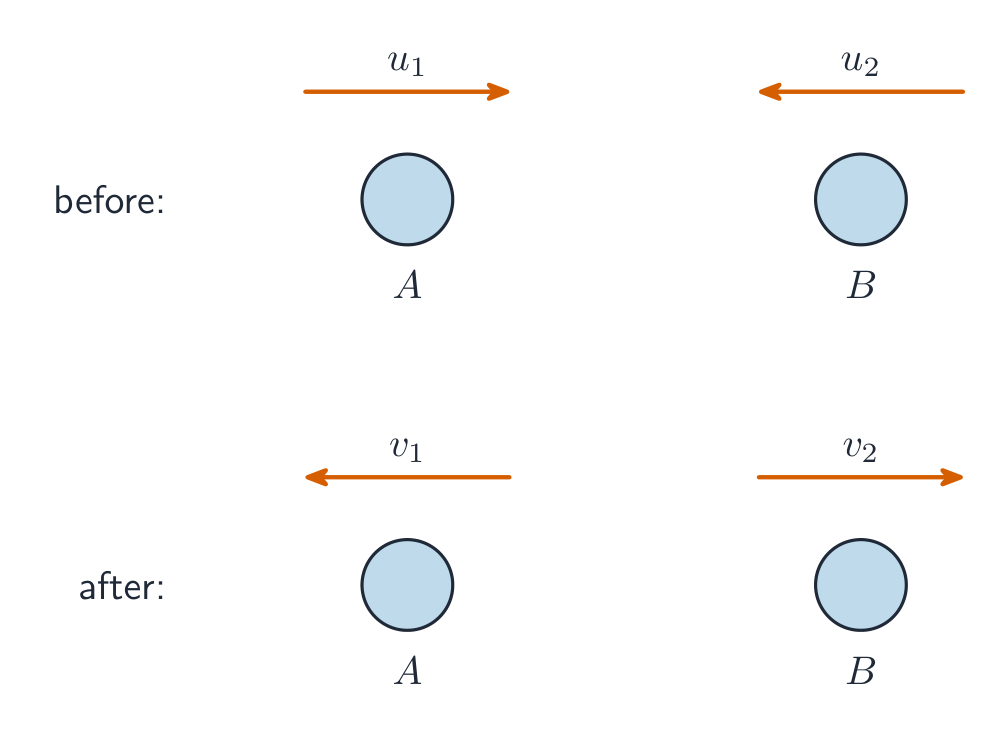
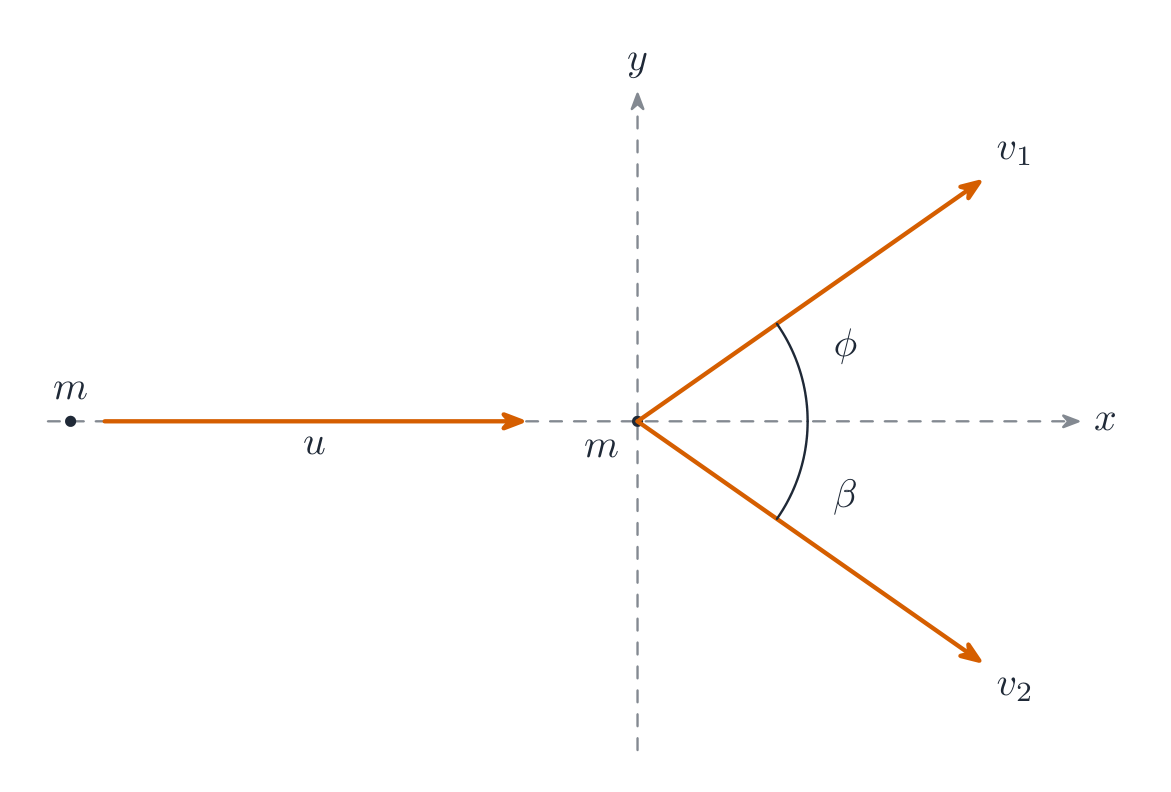
- 1.1.A.2 Vectors can be visually modeled as arrows with appropriate direction and lengths proportional to their magnitude.
- 1.1.A.3 Distance and speed are examples of scalar quantities, while position, displacement, velocity, and acceleration are examples of vector quantities.
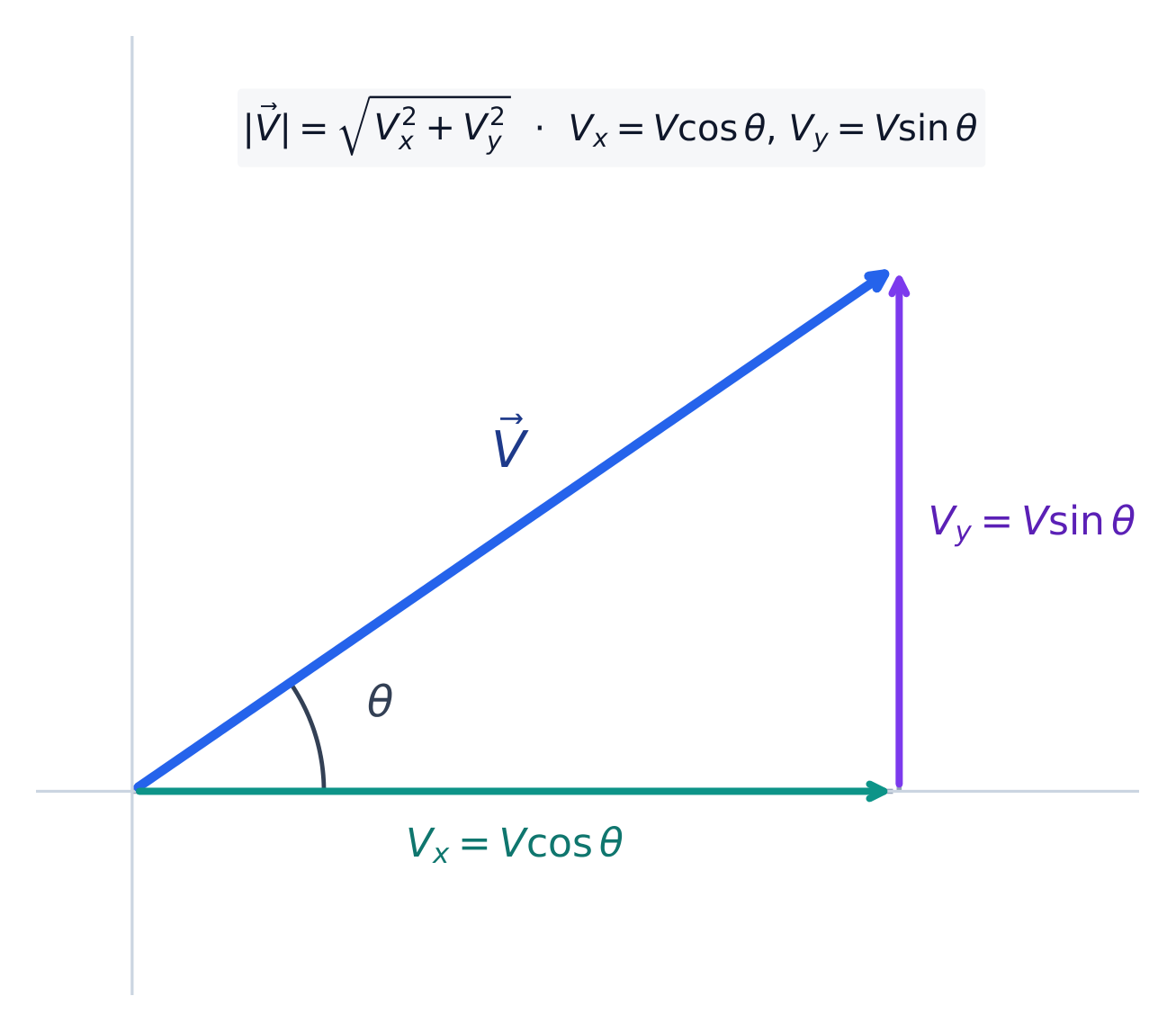
- 1.1.A.4 Vectors can be expressed in unit vector notation or as a magnitude and a direction.
- 1.1.A.4.i Unit vector notation can be used to represent vectors as the sum of their constituent components in the $x$-, $y$-, and $z$-directions, denoted by $\hat{i}$, $\hat{j}$, and $\hat{k}$, respectively.
- Equation: $\vec{r} = \left( A\hat{i} + B\hat{j} + C\hat{k} \right)$
- 1.1.A.4.ii The position vector of a point is given by $\vec{r}$, and the unit vector in the direction of the position vector is denoted $\hat{r}$.
- 1.1.A.4.iii A resultant vector is the vector sum of the addend vectors' components.
- Equation: $\vec{C} = \vec{A} + \vec{B}$
- Equation: $\vec{C} = \left( A_x + B_x \right)\hat{i} + \left( A_y + B_y \right)\hat{j}$
- 1.1.A.4.i Unit vector notation can be used to represent vectors as the sum of their constituent components in the $x$-, $y$-, and $z$-directions, denoted by $\hat{i}$, $\hat{j}$, and $\hat{k}$, respectively.
- 1.1.A.5 In a given one-dimensional coordinate system, opposite directions are denoted by opposite signs.
Português
Objetivo de Aprendizagem 1.1.A: Descreva uma grandeza escalar ou vetorial usando magnitude e direção, conforme apropriado.
- 1.1.A.1 Escalares são grandezas descritas apenas por magnitude; vetores são grandezas descritas por magnitude e direção.
- 1.1.A.2 Vetores podem ser modelados visualmente como setas com direção adequada e comprimentos proporcionais à sua magnitude.
- 1.1.A.3 Distância e velocidade escalar são exemplos de grandezas escalares, enquanto posição, deslocamento, velocidade e aceleração são exemplos de grandezas vetoriais.
- 1.1.A.4 Vetores podem ser expressos em notação de vetores unitários ou como uma magnitude e uma direção.
- 1.1.A.4.i A notação de vetores unitários pode ser usada para representar vetores como a soma de seus componentes constituintes nas direções $x$-, $y$- e $z$-, denotadas por $\hat{i}$, $\hat{j}$ e $\hat{k}$, respectivamente.
- Equação: $\vec{r} = \left( A\hat{i} + B\hat{j} + C\hat{k} \right)$
- 1.1.A.4.ii O vetor posição de um ponto é dado por $\vec{r}$, e o vetor unitário na direção do vetor posição é denotado $\hat{r}$.
- 1.1.A.4.iii Um vetor resultante é a soma vetorial dos componentes dos vetores adendos.
- Equação: $\vec{C} = \vec{A} + \vec{B}$
- Equação: $\vec{C} = \left( A_x + B_x \right)\hat{i} + \left( A_y + B_y \right)\hat{j}$
- 1.1.A.4.i A notação de vetores unitários pode ser usada para representar vetores como a soma de seus componentes constituintes nas direções $x$-, $y$- e $z$-, denotadas por $\hat{i}$, $\hat{j}$ e $\hat{k}$, respectivamente.
- 1.1.A.5 Em um sistema de coordenadas unidimensional dado, direções opostas são denotadas por sinais opostos.