Skip to content · ⁨ข้ามไปยังเนื้อหา⁩

Audience, Tone, and Sentence Craft · ⁨กลุ่มผู้ฟัง น้ำเสียง และการประพันธ์ประโยค⁩

AP English Language and Composition · ⁨AP ภาษาอังกฤษเพื่อการสื่อสารและการเขียน⁩ · Topic 8 · ⁨หัวข้อ 8⁩

Video lesson for this topic · ⁨บทเรียนวิดีโอสำหรับหัวข้อนี้⁩ Open the video page · ⁨เปิดหน้าวิดีโอ⁩
5:44

หน่วยที่ 8: ผู้ฟัง น้ำเสียง และทักษะการเขียนประโยค

สไตล์ของผู้เขียนคือส่วนผสมของการเลือกคำ โครงสร้างประโยค และระเบียบวิธีที่ใช้โดยผู้เขียนนั้น สไตล์เป็นองค์ประกอบรวม — นั่นคือเหตุผลที่ "สไตล์ของผู้เขียนเป็นทางการ"...

English narration · English + 中文 subtitles burned in · ⁨การบรรยายภาษาอังกฤษ · คำบรรยายภาษาอังกฤษ + 中文 ลอยตัวบนภาพ⁩

8.1

Understanding an Audience's Beliefs and Needs · ⁨เข้าใจความเชื่อและความต้องการของกลุ่มผู้ฟัง⁩

Syllabus · ⁨หลักสูตร⁩
English

Enduring Understanding (RHS-1): Individuals write within a particular situation and make strategic writing choices based on that situation.

Learning Objective 1.B: Reading – Explain how an argument demonstrates understanding of an audience’s beliefs, values, or needs.

  • RHS-1.K Writers may make comparisons (e.g., similes, metaphors, analogies, or anecdotes) in an attempt to relate to an audience. Effective comparisons must be shared and understood by the audience to advance the writer’s purpose.
  • RHS-1.L Writers’ choices regarding syntax and diction influence how the writer is perceived by an audience and may influence the degree to which an audience accepts an argument.
  • RHS-1.M Word choice may reflect writers’ biases and may affect their credibility with a particular audience.
  • RHS-1.N Because audiences are unique and dynamic, writers must consider the perspectives, contexts, and needs of the intended audience when making choices of evidence, organization, and language in an argument.
ไทย

ความเข้าใจที่ยั่งยืน (RHS-1): บุคคลเขียนภายในสถานการณ์เฉพาะและเลือกการเขียนเชิงกลยุทธ์โดยอาศัยสถานการณ์นั้น

เป้าหมายการเรียนรู้ 1.B: การอ่าน – อธิบายว่าข้อโต้แย้งแสดงถึงการเข้าใจความเชื่อ ค่านิยม หรือความต้องการของกลุ่มผู้อ่านอย่างไร

  • RHS-1.K ผู้เขียนอาจ进行比较 (เช่น เปรียบเทียบ simile, เปรียบเทียบ metaphor, คำเปรียบ analogies หรือ เรื่องเล่า anecdotes) ในความพยายามที่จะสร้างความสัมพันธ์กับผู้ฟัง การเปรียบเทียบที่มีประสิทธิภาพต้องถูกแบ่งปันและเข้าใจโดยผู้ฟังเพื่อสนับสนุนวัตถุประสงค์ของผู้เขียน
  • RHS-1.L ตัวเลือกของผู้เขียนเกี่ยวกับโครงสร้างประโยคและการเลือกใช้คำมีอิทธิพลต่อการรับรู้ของผู้ฟังและผู้เขียน และอาจมีอิทธิพลต่อระดับที่ผู้ฟังยอมรับข้อโต้แย้ง
  • RHS-1.M การเลือกใช้คำอาจสะท้อนความลำเอียงของผู้เขียนและอาจส่งผลกระทบถึงความน่าเชื่อถือกับกลุ่มผู้ฟัง某一个
  • RHS-1.N เนื่องจากผู้ฟังมีความหลากหลายและเปลี่ยนแปลงอยู่ตลอดเวลา ผู้เขียนต้องพิจารณา มุมมอง บริบท และความต้องการของกลุ่มผู้ฟังเป้าหมายเมื่อเลือกหลักฐาน การจัดระเบียบ และภาษาในข้อโต้แย้ง

Source: College Board AP Course and Exam Description · ⁨แหล่งที่มา: คำอธิบายหลักสูตรและข้อสอบ College Board AP⁩

English

Unit 8 is the course's most advanced treatment of style 文体 - the point at which word choice, syntax, and audience stop being separate topics.

  • Writers may make comparisons - similes, metaphors, analogies, or anecdotes - in an attempt to relate to an audience.
  • Writers' choices regarding syntax and diction 句法与措辞 influence how the writer is perceived by an audience.
  • Word choice may reflect a writer's biases and may affect their credibility with a particular audience.
  • Because audiences are unique and dynamic, writers must consider the perspectives, contexts, and needs of the intended audience.

The third point is worth dwelling on. Diction does not only characterise the subject - it characterises the writer. A reader who notices loaded word choice starts to discount everything that follows, which is why an unqualified vocabulary is a credibility risk, not a strength.

ไทย

หน่วย 8 เป็นการนำเสนอระดับสูงสุดของรายวิชาเกี่ยวกับ สไตล์ 文体 - จุดที่การเลือกคำ, โครงสร้างประโยคและกลุ่มผู้ฟังไม่แยกออกจากกันอีกต่อไป

  • นักเขียนอาจใช้ การเปรียบเทียบ - การเปรียบเปรย, นัยยะ, อุปมาอุปไมย หรือเรื่องเล่าส่วนตัว เพื่อสร้างความสัมพันธ์กับผู้ฟัง
  • การเลือกของนักเขียนเกี่ยวกับ โครงสร้างประโยคและการใช้คำ 句法与措辞 ส่งผลต่อ วิธีที่ผู้ฟังมองตัวนักเขียน
  • การเลือกคำอาจสะท้อนอคติของนักเขียน และอาจส่งผลต่อ ความน่าเชื่อถือ กับกลุ่มผู้ฟัง某一个特定
  • เนื่องจาก กลุ่มผู้ฟังมีความหลากหลายและเปลี่ยนแปลงได้ นักเขียนจึงต้องพิจารณา มุมมอง, บริบทและความต้องการ ของกลุ่มเป้าหมาย

ประเด็นที่สามมีค่าพอที่จะหยุดคิดไว้สักครู่ การใช้คำไม่ได้เพียงแต่อธิบายถึงตัวถูกพูดเท่านั้น แต่ยังอธิบายถึงตัวนักเขียนด้วย ผู้ đọc ที่สังเกตเห็นการใช้คำที่มีน้ำหนักจะเริ่มลดทอนสิ่งที่ตามมา ซึ่งนี่คือเหตุผลว่าทำไมคำศัพท์ที่ไม่เหมาะสมจึงเป็นความเสี่ยงต่อความน่าเชื่อถือ ไม่ใช่จุดแข็ง

8.2

Writing for an Audience's Beliefs and Needs · ⁨เขียนเพื่อตอบสนองความเชื่อและความต้องการของกลุ่มผู้ฟัง⁩

Syllabus · ⁨หลักสูตร⁩
English

Enduring Understanding (RHS-1): Individuals write within a particular situation and make strategic writing choices based on that situation.

Learning Objective 2.B: Writing – Demonstrate an understanding of an audience’s beliefs, values, or needs.

  • RHS-1.K Writers may make comparisons (e.g., similes, metaphors, analogies, or anecdotes) in an attempt to relate to an audience. Effective comparisons must be shared and understood by the audience to advance the writer’s purpose.
  • RHS-1.L Writers’ choices regarding syntax and diction influence how the writer is perceived by an audience and may influence the degree to which an audience accepts an argument.
  • RHS-1.M Word choice may reflect writers’ biases and may affect their credibility with a particular audience.
  • RHS-1.N Because audiences are unique and dynamic, writers must consider the perspectives, contexts, and needs of the intended audience when making choices of evidence, organization, and language in an argument.
ไทย

ความเข้าใจที่ยั่งยืน (RHS-1): บุคคลเขียนภายในสถานการณ์เฉพาะและเลือกการเขียนเชิงกลยุทธ์โดยอาศัยสถานการณ์นั้น

เป้าหมายการเรียนรู้ 2.B: การเขียน – แสดงให้เห็นถึงความรู้ความเข้าใจในความเชื่อ ค่านิยม หรือความต้องการของกลุ่มผู้อ่าน

  • RHS-1.K ผู้เขียนอาจ进行比较 (เช่น เปรียบเทียบ simile, เปรียบเทียบ metaphor, คำเปรียบ analogies หรือ เรื่องเล่า anecdotes) ในความพยายามที่จะสร้างความสัมพันธ์กับผู้ฟัง การเปรียบเทียบที่มีประสิทธิภาพต้องถูกแบ่งปันและเข้าใจโดยผู้ฟังเพื่อสนับสนุนวัตถุประสงค์ของผู้เขียน
  • RHS-1.L ตัวเลือกของผู้เขียนเกี่ยวกับโครงสร้างประโยคและการเลือกใช้คำมีอิทธิพลต่อการรับรู้ของผู้ฟังและผู้เขียน และอาจมีอิทธิพลต่อระดับที่ผู้ฟังยอมรับข้อโต้แย้ง
  • RHS-1.M การเลือกใช้คำอาจสะท้อนความลำเอียงของผู้เขียนและอาจส่งผลกระทบถึงความน่าเชื่อถือกับกลุ่มผู้ฟัง某一个
  • RHS-1.N เนื่องจากผู้ฟังมีความหลากหลายและเปลี่ยนแปลงอยู่ตลอดเวลา ผู้เขียนต้องพิจารณา มุมมอง บริบท และความต้องการของกลุ่มผู้ฟังเป้าหมายเมื่อเลือกหลักฐาน การจัดระเบียบ และภาษาในข้อโต้แย้ง
Source: College Board AP Course and Exam Description · ⁨แหล่งที่มา: คำอธิบายหลักสูตรและข้อสอบ College Board AP⁩

English

The instruction here is that audiences are dynamic: they change as they read. An argument that has just conceded something is being read by a slightly different audience than the one that began the essay.

Practically, this means the ordering of concession and claim matters. Concede before you press, and you address a reader who now believes you are fair. Press first and concede afterwards, and the concession reads as retreat.

ไทย

คำสั่งในที่นี้คือ กลุ่มผู้ฟังมีการเปลี่ยนแปลง: พวกเขาเปลี่ยนไปเมื่อ他們อ่าน ข้อโต้แย้งที่ยอม承认某件事 recently กำลังถูกอ่านโดยกลุ่มผู้ฟังที่แตกต่างกันเล็กน้อยจากกลุ่มที่เริ่มต้นบทความ

ในทางปฏิบัติสิ่งนี้หมายถึงการจัดลำดับการยอม承认และข้ออ้างสำคัญ การยอม承认ก่อนแล้วค่อยกดดัน คุณกำลังพูดคุยกับผู้อ่านที่ตอนนี้เชื่อว่าคุณยุติธรรม กดดันก่อนแล้วค่อยยอม承认 afterwards การยอม承认จะดูเป็นการถอยหลัง

การกล่าวถึงข้อโต้แย้งไม่ใช่การตอบกลับมัน - กล่องที่สี่คือความแตกต่าง
Explore · ⁨สำรวจ⁩

Anticipate where the reader will refuse · ⁨ anticipate where the reader will refuse⁩

Mentioning an objection is not answering it. The fourth step is the difference, and it is where the sophistication credit lives.

8.3

Word Choice, Comparisons, and Syntax

Syllabus · ⁨หลักสูตร⁩
English

Enduring Understanding (STL-1): The rhetorical situation informs the strategic stylistic choices that writers make.

Learning Objective 7.A: Reading – Explain how word choice, comparisons, and syntax contribute to the specific tone or style of a text.

  • STL-1.Q A writer’s style is made up of the mix of word choice, syntax, and conventions employed by that writer.
  • STL-1.R Writers may signal a complex or ironic perspective through stylistic choices. Irony may emerge from the differences between an argument and the readers’ expectations or values.
ไทย

ความเข้าใจที่ยั่งยืน (STL-1): สถานการณ์ทาง retorics informing การเลือก stylistic แบบกลยุทธ์ที่นักเขียนทำ

วัตถุประสงค์การเรียนรู้ 7.A: การอ่าน – อธิบายว่าการเลือกคำ, การเปรียบเทียบ, และไวยากรณ์มีผลต่อ tone หรือ style เฉพาะของข้อความอย่างไร

  • STL-1.Q สไตล์ของนักเขียนประกอบด้วยองค์ประกอบที่ผสมผสานกันระหว่างการใช้คำ โครงสร้างประโยค และรูปแบบการเขียนที่นักเขียนนั้นเลือกใช้
  • STL-1.R นักเขียนอาจสื่อสารมุมมองที่ซับซ้อนหรือมีนัยยะทางอ้อมผ่านทางเลือกด้านสไตล์ นัยยะทางอ้อมอาจเกิดขึ้นจากความแตกต่างระหว่างข้อโต้แย้งกับสิ่งที่ผู้อ่านคาดหวังหรือคุณค่าที่ผู้อ่านยึดถือ

Source: College Board AP Course and Exam Description · ⁨แหล่งที่มา: คำอธิบายหลักสูตรและข้อสอบ College Board AP⁩

English
  • A writer's style is the mix of word choice, syntax, and conventions employed by that writer. Style is a composite, which is why "the writer's style is formal" is not analysis - it names the result without any of the components.
  • Writers may signal a complex or ironic perspective through stylistic choices. Irony 反讽 may emerge from the difference between what is said and what is meant, or between what is expected and what occurs.

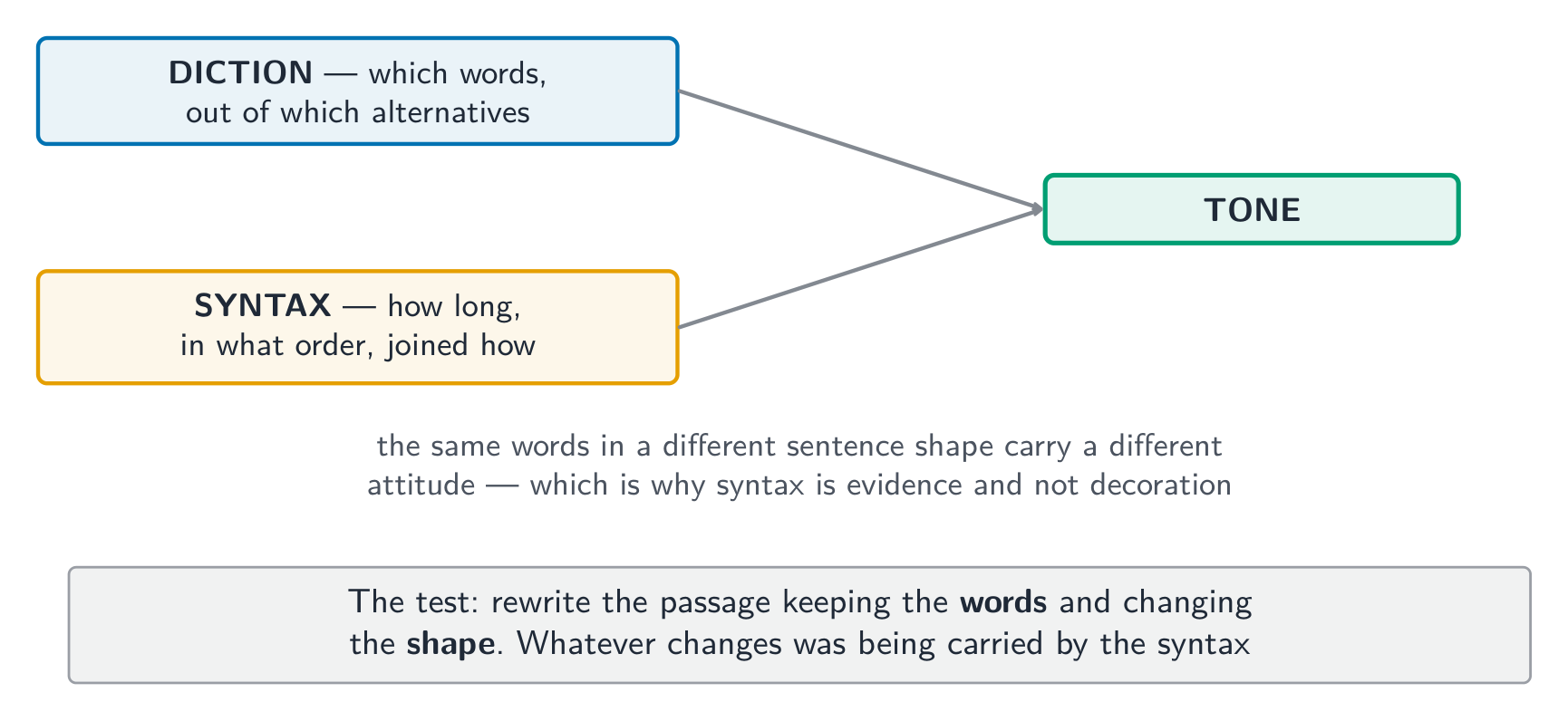
Irony is the hardest thing on this exam for a second-language reader, because it cannot be looked up. The workable method is structural rather than intuitive: find a sentence whose literal content does not match its surroundings - excessive praise beside damaging evidence, calm register beside an outrageous fact - and the mismatch is the signal.

ไทย
  • สไตล์ ของนักเขียนคือ ส่วนผสมของการเลือกคำ, โครงสร้างประโยคและขนบธรรมเนียม ที่นักเขียนคนนั้นใช้ สไตล์เป็น composite, นี่คือเหตุผลที่ว่า "สไตล์ของนักเขียนเป็นทางการ" ไม่ใช่การวิเคราะห์ - มันระบุผลลัพธ์โดยไม่提及ส่วนประกอบใด ๆ
  • นักเขียนอาจส่งสัญญาณ มุมมองที่ซับซ้อนหรือมีนัย讽刺 ผ่านการเลือกทางสไตล์ Irony 反讽 อาจเกิดขึ้นจากความแตกต่างระหว่างสิ่งที่พูดกับสิ่งที่หมาย, หรือระหว่างสิ่งที่คาดหวังกับสิ่งที่เกิดขึ้นจริง
Irony คือช่องว่าง และการวิเคราะห์คือการระบุทั้งสองด้านของมัน
บอกสิ่งที่คำเหล่านั้นอ้าง, บอกสิ่งที่นักเขียนหมายถึง, และช่องว่างนั้นคือข้อโต้แย้ง

Irony คือสิ่งที่ยากที่สุดในการสอบนี้สำหรับผู้读ภาษาที่สอง เพราะมันไม่สามารถค้นคว้าได้ในพจนานุกรม วิธีที่ใช้งานได้จริงคือโครงสร้างมากกว่าสัญชาตญาณ: หาประโยค whose เนื้อหาตามตัวอักษรไม่ตรงกับบริบทรอบข้าง - การชมเชยเกินจริงข้างหลักฐานที่ทำลาย, ระดับเสียงสงบข้างข้อเท็จจริงที่ประหลาดใจ - และความไม่ตรงกันนี้คือสัญญาณ

Tone มีสองแหล่งเข้า และ大多数การวิเคราะห์ระบุเพียงหนึ่ง
Vocabulary · ⁨คำศัพท์⁩ Train · ⁨ฝึกฝน⁩
English ไทย
style/staɪl/ style
syntax and diction/ˈsɪntæks ænd ˈdɪkʃn/ ไวยากรณ์และการเลือกคำ
Irony/ˈaɪrəni/ Irony
8.4

Using Words and Syntax for Tone and Style · ⁨การใช้คำและไวยากรณ์เพื่อสร้างอารมณ์และสไตล์⁩

Syllabus · ⁨หลักสูตร⁩
English

Enduring Understanding (STL-1): The rhetorical situation informs the strategic stylistic choices that writers make.

Learning Objective 8.A: Writing – Strategically use words, comparisons, and syntax to convey a specific tone or style in an argument.

  • STL-1.Q A writer’s style is made up of the mix of word choice, syntax, and conventions employed by that writer.
  • STL-1.R Writers may signal a complex or ironic perspective through stylistic choices. Irony may emerge from the differences between an argument and the readers’ expectations or values.
ไทย

ความเข้าใจที่ยั่งยืน (STL-1): สถานการณ์ทาง retorics informing การเลือก stylistic แบบกลยุทธ์ที่นักเขียนทำ

จุดประสงค์การเรียนรู้ 8.A: การเขียน – ใช้คำ เปรียบเทียบ และโครงสร้างประโยคอย่างมีกลยุทธ์เพื่อบอกอารมณ์หรือสไตล์เฉพาะในบทวิพากษ์วิจารณ์

  • STL-1.Q สไตล์ของนักเขียนประกอบด้วยองค์ประกอบที่ผสมผสานกันระหว่างการใช้คำ โครงสร้างประโยค และรูปแบบการเขียนที่นักเขียนนั้นเลือกใช้
  • STL-1.R นักเขียนอาจสื่อสารมุมมองที่ซับซ้อนหรือมีนัยยะทางอ้อมผ่านทางเลือกด้านสไตล์ นัยยะทางอ้อมอาจเกิดขึ้นจากความแตกต่างระหว่างข้อโต้แย้งกับสิ่งที่ผู้อ่านคาดหวังหรือคุณค่าที่ผู้อ่านยึดถือ

Source: College Board AP Course and Exam Description · ⁨แหล่งที่มา: คำอธิบายหลักสูตรและข้อสอบ College Board AP⁩

English

For your own writing, the safest use of irony is none. What the sophistication point actually rewards is control: a consistent register, a vocabulary that is precise rather than inflated, and syntax that ranks ideas deliberately.

ไทย

สำหรับการเขียนของคุณเอง วิธีที่ปลอดภัยที่สุดในการใช้ irony คือการไม่ใช้เลย จุดที่ความซับซ้อนของภาษาให้รางวัลนั้นจริงๆ คือ การควบคุม: ระดับภาษาที่สม่ำเสมอ, คำศัพท์ที่แม่นยำและไม่ฟุ่มเฟือย, และโครงสร้างประโยคที่จัดลำดับความคิดอย่างมีเจตนา

คำอธิบายโทนเสียงเป็นการอ้างถึง - หากคุณไม่สามารถชี้ไปที่คอลัมน์ที่สามได้ แสดงว่าคุณไม่ได้ทำมันสำเร็จ
Explore · ⁨สำรวจ⁩

Match each tone to the evidence for it · ⁨จับคู่ tone กับหลักฐานสำหรับมัน⁩

A tone word is a claim like any other. If you cannot point at the evidence, you have not established it. · ⁨tone word คือข้ออ้างอย่างอื่น ๆ หากคุณไม่สามารถชี้ไปที่หลักฐาน คุณยังไม่ได้establishing它⁩

8.5

Clauses and Relationships Between Ideas · ⁨ประโยคย่อยและความสัมพันธ์ระหว่างความคิด⁩

Syllabus · ⁨หลักสูตร⁩
English

Enduring Understanding (STL-1): The rhetorical situation informs the strategic stylistic choices that writers make.

Learning Objective 7.B: Reading – Explain how writers create, combine, and place independent and dependent clauses to show relationships between and among ideas.

  • STL-1.S Modifiers—including words, phrases, or clauses—qualify, clarify, or specify information about the thing with which they are associated. To reduce ambiguity, modifiers should be placed closest to the word, phrase, or clause that they are meant to modify.
  • STL-1.T Parenthetical elements—though not essential to understanding what they are describing—interrupt sentences to provide additional information that may address an audience’s needs and/or advance a writer’s purpose.
ไทย

ความเข้าใจที่ยั่งยืน (STL-1): สถานการณ์ทาง retorics informing การเลือก stylistic แบบกลยุทธ์ที่นักเขียนทำ

วัตถุประสงค์การเรียนรู้ 7.B: การอ่าน – อธิบายว่านักเขียนสร้าง ผสมผสาน และวางตำแหน่งประโยคอิสระและประโยคขึ้นตอนอย่างไรเพื่อแสดงความสัมพันธ์ระหว่างและภายในแนวคิดต่างๆ

  • STL-1.S คำขยาย—includingคำ,วลี,หรือประโยค–ช่วยกำหนดขอบเขต อธิบาย หรือระบุรายละเอียดเพิ่มเติมเกี่ยวกับสิ่งที่มันเกี่ยวข้อง เพื่อลดความกำกวม คำขยายควรอยู่ใกล้กับคำ วลี หรือประโยคที่ต้องการขยายมากที่สุดเท่าที่จะทำได้
  • STL-1.T ส่วนเสริมในวงเล็บ–แม้จะไม่จำเป็นต่อการเข้าใจสิ่งที่กำลังถูกอธิบาย–แต่จะรบกวนความต่อเนื่องของประโยคเพื่อให้ข้อมูลเพิ่มเติมซึ่งอาจตอบโจทย์ความต้องการของผู้อ่านและ/หรือส่งเสริมจุดประสงค์ของนักเขียน

Source: College Board AP Course and Exam Description · ⁨แหล่งที่มา: คำอธิบายหลักสูตรและข้อสอบ College Board AP⁩

English
  • Modifiers 修饰成分 - words, phrases, or clauses - qualify, clarify, or specify information about the thing they modify.
  • Parenthetical elements 插入成分 - though not essential to understanding what they describe - interrupt the sentence to add information, comment, or emphasis.

Both are stylistically rich and analytically useful. A modifier is where a writer's judgement hides: the long-delayed report has evaluated the report while appearing only to identify it. A parenthetical is an aside the writer chose to make - and the choice to interrupt is itself an emphasis.

ไทย
  • คำขยาย (Modifiers) - คำ,วลี หรือ clause - ช่วยระบุ, อธิบาย หรือระบุรายละเอียดเกี่ยวกับสิ่งที่กำลังถูกขยายความ
  • ส่วนแทรกในวงเล็บ (Parenthetical elements) - แม้จะไม่จำเป็นต่อการเข้าใจสิ่งที่กำลังถูกอธิบาย - แต่จะ ขัดจังหวะประโยคเพื่อเพิ่มข้อมูล, ความเห็น หรือเน้นย้ำ

ทั้งสองอย่างนี้มีความหลากหลายทางสไตล์และมีประโยชน์ในการวิเคราะห์ คำขยายคือจุดที่ตัดสินของผู้เขียนซ่อนอยู่: รายงานที่ถูกเลื่อนนาน ได้มีการประเมินรายงานแล้วแม้ว่าจะดูเหมือนแค่ระบุชื่อ它也 A parenthetical is an aside the writer chose to make - and the choice to interrupt is itself an emphasis.

Vocabulary · ⁨คำศัพท์⁩ Train · ⁨ฝึกฝน⁩
English ไทย
Modifiers/ˈmɒdɪfaɪəz/ คำขยาย
Parenthetical elements/pərənˈθetɪkl ˈelɪmənts/ องค์ประกอบในวงเล็บ
8.6

Writing Clear Sentences · ⁨การเขียนประโยคที่ชัดเจน⁩

Syllabus · ⁨หลักสูตร⁩
English

Enduring Understanding (STL-1): The rhetorical situation informs the strategic stylistic choices that writers make.

Learning Objective 8.B: Writing – Write sentences that clearly convey ideas and arguments.

  • STL-1.S Modifiers—including words, phrases, or clauses—qualify, clarify, or specify information about the thing with which they are associated. To reduce ambiguity, modifiers should be placed closest to the word, phrase, or clause that they are meant to modify.
  • STL-1.T Parenthetical elements—though not essential to understanding what they are describing—interrupt sentences to provide additional information that may address an audience’s needs and/or advance a writer’s purpose.
ไทย

ความเข้าใจที่ยั่งยืน (STL-1): สถานการณ์ทาง retorics informing การเลือก stylistic แบบกลยุทธ์ที่นักเขียนทำ

จุดประสงค์การเรียนรู้ 8.B: การเขียน – เขียนประโยคที่สื่อสารความคิดและข้อโต้แย้งได้อย่างชัดเจน

  • STL-1.S คำขยาย—includingคำ,วลี,หรือประโยค–ช่วยกำหนดขอบเขต อธิบาย หรือระบุรายละเอียดเพิ่มเติมเกี่ยวกับสิ่งที่มันเกี่ยวข้อง เพื่อลดความกำกวม คำขยายควรอยู่ใกล้กับคำ วลี หรือประโยคที่ต้องการขยายมากที่สุดเท่าที่จะทำได้
  • STL-1.T ส่วนเสริมในวงเล็บ–แม้จะไม่จำเป็นต่อการเข้าใจสิ่งที่กำลังถูกอธิบาย–แต่จะรบกวนความต่อเนื่องของประโยคเพื่อให้ข้อมูลเพิ่มเติมซึ่งอาจตอบโจทย์ความต้องการของผู้อ่านและ/หรือส่งเสริมจุดประสงค์ของนักเขียน

Source: College Board AP Course and Exam Description · ⁨แหล่งที่มา: คำอธิบายหลักสูตรและข้อสอบ College Board AP⁩

English

A concrete discipline: place modifiers next to what they modify, and use parentheticals sparingly. One well-placed interruption creates emphasis; three in a paragraph destroy it, because a reader cannot tell which interruption mattered.

Worked example (a real AP exam task). A rhetorical-analysis passage says of a policy: "The results, such as they were, arrived exactly on schedule." A low answer says the writer "uses a parenthetical phrase". A scoring answer explains both parts: "The parenthetical 'such as they were' dismisses the results in four words, without offering an argument against them - and placing it before 'arrived exactly on schedule' means the praise for punctuality lands on results the reader has just been told to discount. The sentence appears to compliment the programme and in fact withdraws the only thing it could be complimented for." Modifier, parenthetical, irony, and effect on audience, all in one.

ไทย

วินัยที่เป็นรูปธรรม: วางคำขยายไว้ใกล้กับสิ่งที่มันขยาย, และใช้ส่วนแทรกในวงเล็บอย่างประหยัด การขัดจังหวะหนึ่งครั้งที่มีตำแหน่งเหมาะสมจะสร้างความเน้นย้ำ; แต่สามครั้งในย่อหน้าเดียวจะทำลายผลดังกล่าว เพราะผู้อ่านจะไม่รู้ว่าการขัดจังหวะไหนสำคัญ

ตัวอย่างที่แสดงวิธีทำ (โจทย์จริงจากข้อสอบ AP). ข้อเขียนวิเคราะห์การสื่อสารระบุว่าเกี่ยวกับนโยบายว่า: "ผลลัพธ์ที่มีอยู่ ซึ่งก็เท่าที่มีนั้น มาถึงตามกำหนดเวลาพอดี" คำตอบระดับต่ำระบุเพียงว่าผู้เขียน "ใช้วลีแทรกในวงเล็บ" แต่คำตอบที่ได้คะแนนสูงจะอธิบายทั้งสองส่วน: "วลีแทรกในวงเล็บ 'ซึ่งก็เท่าที่มีนั้น' ตัดทอนค่าของผลลัพธ์ให้เหลือเพียงสี่คำ โดยไม่เสนอข้อโต้แย้งใด ๆ ต่อผลลัพธ์ tersebut - และการวางไว้ก่อน 'มาถึงตามกำหนดเวลาพอดี' ทำให้คำชมเชยในความตรงต่อเวลาตกลงบนผลลัพธ์ที่เพิ่งบอกให้ผู้อ่านลดทอนค่าไปแล้ว ประโยคนี้ดูเหมือนจะชมเชยโครงการ แต่ในความเป็นจริงกลับถอนสิ่งที่สามารถชมเชยได้เพียงอย่างเดียวออก" คำขยาย, วลีแทรกในวงเล็บ, อารมณ์ขันแบบย้อนแย้ง และผลกระทบต่อดูเอียนซ์ รวมอยู่ในประโยคเดียว

8.6

Exam tips · ⁨ข้อแนะนำสำหรับการสอบ⁩

English
  • Style is a composite - word choice, syntax, conventions. Naming the components is analysis; naming the result is not.
  • Loaded diction damages the writer's credibility. Say so; it is examinable.
  • Find irony structurally: a sentence whose literal content clashes with its surroundings.
  • Concede before you press. The audience that reads your claim will already have decided whether you are fair.
  • A modifier is where judgement hides. The long-delayed report has already evaluated it.
  • Use parentheticals sparingly in your own writing. Three in a paragraph cancel each other out.
ไทย
  • สไตล์เป็นการผสมผสาน - การเลือกคำ, โครงสร้างประโยค, และธรรมเนียมปฏิบัติ การระบุองค์ประกอบเหล่านี้คือการวิเคราะห์ แต่การระบุผลลัพธ์เพียงอย่างเดียวไม่ใช่การวิเคราะห์
  • การใช้คำที่มีน้ำหนักทางอารมณ์ (Loaded diction) ทำลายความน่าเชื่อถือของผู้เขียน ให้ระบุสิ่งนี้ไว้อย่างชัดเจน เพราะเป็นสิ่งที่ออกข้อสอบได้
  • ค้นหาอารมณ์ขันแบบย้อนแย้งในระดับโครงสร้าง: หาประโยค whose เนื้อหาตามตัวอักษรขัดแย้งกับบริบทโดยรอบ
  • ยอม承认ก่อนแล้วค่อยกดดัน ผู้อ่านที่จะรับข้อความอ้างของคุณอาจตัดสินใจไปแล้วว่าคุณยุติธรรมหรือไม่
  • คำขยาย (Modifier) คือจุดที่การตัดสินซ่อนอยู่ เช่น รายงานที่ล่าช้านาน ได้มีการประเมินค่ามันไปล่วงหน้าแล้ว
  • ใช้วลีแทรกในวงเล็บอย่างประหยัด ในการเขียนของคุณเอง สามวลีในย่อหน้าเดียวจะหักล้างกันเอง

Interactive lessons on this topic · ⁨บทเรียนเชิงโต้ตอบสำหรับหัวข้อนี้⁩

Work through it step by step, with instant-check exercises. · ⁨ทำทีละขั้นตอน พร้อมแบบฝึกหัดตรวจสอบผลทันที⁩

Past Papers · ⁨ข้อสอบย้อนหลัง⁩

More topics in AP English Language and Composition · ⁨AP ภาษาอังกฤษเพื่อการสื่อสารและการเขียน⁩ · ⁨หัวข้อเพิ่มเติมใน AP English Language and Composition · ⁨AP ภาษาอังกฤษเพื่อการสื่อสารและการเขียน⁩⁩

Log in or create account · ⁨เข้าสู่ระบบหรือสร้างบัญชี⁩

IGCSE, A-Level & AP