Skip to content · ⁨ข้ามไปยังเนื้อหา⁩

2-D Media, Materials, and Techniques · ⁨สื่อ 2 มิติ วัสดุ และเทคนิค⁩

AP 2-D Art and Design · ⁨AP ศิลปะและออกแบบ 2 มิติ⁩ · Topic 3 · ⁨หัวข้อ 3⁩

Video lesson for this topic · ⁨บทเรียนวิดีโอสำหรับหัวข้อนี้⁩ Open the video page · ⁨เปิดหน้าวิดีโอ⁩
8:00

สื่อ 2 มิติ วัสดุ และเทคนิค

สังเกตอย่างละเอียด ไม่มีหมึกสีเทาในภาพวาดนี้ เงาที่นุ่มนวลทั้งหมดถูกสร้างด้วยเส้นแยกต่างหาก ซึ่งวาดเรียงต่อกัน เมื่อเส้นเหล่านั้นแน่นหนาเข้าด้วยกัน…

English narration · English + 中文 subtitles burned in · ⁨การบรรยายภาษาอังกฤษ · คำบรรยายภาษาอังกฤษ + 中文 ลอยตัวบนภาพ⁩

3.1

Drawing Media · ⁨สื่อวาดภาพ⁩

Syllabus · ⁨หลักสูตร⁩
English

Focus: Drawing media make marks directly on a surface — the foundation of most 2-D work.

  • Dry media: graphite (pencil), charcoal, conte, chalk and oil pastel, coloured pencil.
  • Wet media: pen and ink, brush and ink, markers.
  • Mark-making techniques: hatching, cross-hatching, stippling, blending, and scribbling.
  • Choice of media and paper (tooth/texture) changes the line and value possible.
  • Drawing is used both to investigate ideas (studies, sketches) and to make finished works.
ไทย

จุดเน้น: วัสดุสำหรับการวาดภาพสร้างรอยขีดข่วนบนพื้นผิวโดยตรง — เป็นพื้นฐานของงาน 2 มิติส่วนใหญ่

  • วัสดุแห้ง: ดินสอ (กราไฟต์), ถ่าน, كونเต้, ชอล์ก, สีพาสเทลน้ำมัน, ปากกาสี
  • วัสดุเปียก: ปากกาหมึก, พู่กันหมึก, มาร์คเกอร์
  • เทคนิคการสร้างลายเส้น: การขีดเส้นตรง, การขีดไขว้, การขีดจุด, การเกลี่ยสี, และการขีดพาดๆ
  • การเลือกวัสดุและกระดาษ (ความหยาบ/พื้นผิว) เปลี่ยนแปลงลักษณะเส้นและค่าโทนสีที่เป็นไปได้
  • การวาดภาพใช้เพื่อ สำรวจ ไอเดีย (การศึกษา, สเก็ตช์) และเพื่อสร้างผลงานสำเร็จรูป

Source: College Board AP Course and Exam Description · ⁨แหล่งที่มา: คำอธิบายหลักสูตรและข้อสอบ College Board AP⁩

English

Media 媒介 are the materials an artist works with. Drawing media make marks directly on a surface and are the foundation of most 2-D work.

  • Dry media 干性媒介: graphite (pencil), charcoal, conté, chalk and oil pastel, coloured pencil.
  • Wet media 湿性媒介: pen and ink, brush and ink, markers.
  • Mark-making techniques: hatching 排线, cross-hatching 交叉排线, stippling 点画, blending, and scribbling.
  • The tooth 纸纹 (texture) of the paper changes the line and value possible.

Drawing is used both to investigate ideas (studies and sketches) and to make finished works.

ไทย

สื่อ คือวัสดุที่ศิลปินใช้ทำงาน สื่อวาดภาพสร้างเส้นตรงบนพื้นผิวและเป็นรากฐานของงาน 2-D ส่วนใหญ่

  • สื่อแห้ง: กราไฟต์ (ดินสอ), Than charcoal, conté, ชอล์ก และ油性 pastel, ดินสอสี
  • สื่อแบบเปียก: ปากกาหมึก, แปรงกับหมึก,-marker
  • เทคนิคการสร้างลายเส้น: การขีดเส้น, การขีดไขว้, การจุด, การผสม และ การขีดเขียนมั่วซั่ว
  • ความหยาบ (เนื้อกระดาษ) ของกระดาษส่งผลต่อลักษณะเส้นและค่าโทนที่เป็นไปได้

การวาดภาพใช้ทั้งเพื่อ สำรวจ แนวคิด (การศึกษาและสเก็ตช์) และการสร้างผลงานสำเร็จรูป

3.2

Painting Media · ⁨สื่อบนผ้าใบ/สี⁩

Syllabus · ⁨หลักสูตร⁩
English

Focus: Painting applies pigment suspended in a binder to a surface, building colour, value, and texture.

  • Common media: watercolour (transparent), gouache (opaque water-based), acrylic (fast-drying), oil (slow, blendable).
  • Support and ground (paper, canvas, board; primer/gesso) affect how paint behaves.
  • Techniques: washes, glazing, wet-on-wet, dry-brush, impasto, and layering.
  • Water-based paints dry quickly and clean with water; oils dry slowly and blend richly.
  • Brush choice, dilution, and paint thickness control mark, edge, and texture.
ไทย

จุดเน้น: การระบายสีเป็นการติดเม็ดสีที่แขวนลอยในสาร связ onto a surface, สร้างสี, ค่าโทนสี, และพื้นผิว

  • วัสดุทั่วไป: สีอะคริลิก (โปร่งแสง), กาวเช (ทึบแสง, น้ำ溶性), อะคริลิก (แห้งเร็ว), สีน้ำมัน (แห้งช้า, ผสมสีได้)
  • ฐานรองรับ และ พื้นรองสี (กระดาษ, ผ้าใบ, กระดาน; โปสเตอร์/กิสโซ) ส่งผลต่อการ behaving ของสี
  • เทคนิค: การล้างสี, การเคลือบ, เปียกบนเปียก, แปรงแห้ง, อิมแป스토, และการลงชั้นสี
  • สีน้ำ溶性 แห้งเร็วและล้างออกด้วยน้ำ; น้ำมันแห้งช้าและผสมสีได้อย่างอุดมสมบูรณ์
  • การเลือกแปรง, การเจือจาง, และความหนาของสีควบคุมลายเส้น, ขอบ, และพื้นผิว

Source: College Board AP Course and Exam Description · ⁨แหล่งที่มา: คำอธิบายหลักสูตรและข้อสอบ College Board AP⁩

English

Painting 绘画 applies pigment held in a binder 粘合剂 to a surface, building colour, value, and texture.

  • Watercolour 水彩 is transparent; gouache 水粉 is opaque and water-based; acrylic 丙烯 dries fast; oil 油画 dries slowly and blends richly.
  • The support 底材 and ground (paper, canvas, board; primer or gesso 石膏底料) affect how paint behaves.
  • Techniques include washes, glazing 罩染, wet-on-wet, dry-brush, and impasto.
ไทย

การวาดสี ใช้สารสีที่ผสมกับ ตัวประสาน ทาบนพื้นผิว เพื่อสร้างสี ค่าโทน และพื้นผิว

  • สีน้ำ ใส; กัวช opaque และใช้น้ำเป็นฐาน; อะคริลิก แห้งเร็ว; สีน้ำมัน แห้งช้าและผสมได้ละเอียด
  • รองรับ และ พื้นรอง (กระดาษ, ผ้าใบ, กระดาน; สีรองพื้นหรือ กesses) ส่งผลต่อการ behaving ของสี
  • เทคนิค รวมถึง Washes, กลาซซิ่ง (Glazing), Wet-on-wet, Dry-brush, และ Impasto
สีน้ำมันสร้างสีเป็นชั้นๆ: ตัวเลือกสื่อกำหนดพื้นผิว ค่าโทนและพื้นที่
Vocabulary · ⁨คำศัพท์⁩ Train · ⁨ฝึกฝน⁩
English ไทย
Painting/ˈpeɪntɪŋ/ จิตรกรรม
binder/ˈbaɪndə/ สารยึดเกาะ
Watercolour/ˈwɔːtəkʌlə/ ไวท์วอเตอร์
gouache/ɡwɑːtʃ/ โกอาช
acrylic/əˈkrɪlɪk/ อะคริลิก
oil/ɔɪl/ สีน้ำมัน
support/səˈpɔːt/ ฐานรองรับ
gesso/ˈdʒesəʊ/ สีรองพื้น (เจสโซ)
glazing/ˈɡleɪzɪŋ/ การเคลือบสี
3.3

Printmaking · ⁨การพิมพ์⁩

Syllabus · ⁨หลักสูตร⁩
English

Focus: Printmaking transfers an image from a prepared surface (matrix) to paper, allowing multiple copies (an edition).

  • Relief (linocut, woodcut): ink the raised surface; the cut-away areas stay blank.
  • Intaglio (etching, engraving): ink sits in incised lines below the surface.
  • Planographic (lithography): image and non-image areas are on the same level, using grease and water.
  • Stencil (screen printing): ink is pushed through open areas of a mesh.
  • Prints are usually made in a numbered edition; the reversed matrix flips the image.
ไทย

จุดเน้น: การพิมพ์ภาพเป็นการถ่ายโอนภาพจากพื้นผิวที่เตรียมไว้ (แม่พิมพ์) ไปยังกระดาษ, อนุญาตให้ทำสำเนาหลายฉบับ (ชุดพิมพ์)

  • แบบนูน (ลิโนคัต, ไม้แกะสลัก): ทาหมึกบนส่วนที่ยื่นออกมา; ส่วนที่ถูกตัดออกไปจะว่างเปล่า
  • แบบลึก (การกัด, การแกะสลัก): หมึกอยู่ในร่องที่ขุดลึกอยู่ใต้พื้นผิว
  • Planographic (Lithography):的区域ภาพและพื้นที่ที่ไม่ใช่ภาพอยู่บนระดับเดียวกัน โดยใช้ไขมันและน้ำ
  • Stencil (Screen printing): หมึกถูกดันผ่านช่องเปิดของตาข่าย
  • ภาพพิมพ์มักทำเป็น ชุดพิมพ์ ที่มีหมายเลข; แม่พิมพ์ที่กลับด้านจะทำให้ภาพกลับด้าน

Source: College Board AP Course and Exam Description · ⁨แหล่งที่มา: คำอธิบายหลักสูตรและข้อสอบ College Board AP⁩

English

Printmaking 版画 transfers an image from a prepared surface (the matrix 版) to paper, so many copies (an edition 版数) can be made.

  • Relief 凸版 (linocut, woodcut) — ink sits on the raised surface; cut-away areas stay blank.
  • Intaglio 凹版 (etching, engraving) — ink sits in lines cut below the surface.
  • Planographic 平版 (lithography) — image and non-image areas are on the same level, using grease and water.
  • Stencil 孔版 (screen printing) — ink is pushed through open areas of a mesh.

The matrix is reversed, so the printed image is a mirror of the plate.

ไทย

การพิมพ์ คือการถ่ายโอนภาพจากพื้นผิวที่เตรียมไว้ (คือ แม่แบบ) ไปยังกระดาษ ทำให้สามารถผลิตสำเนาได้จำนวนมาก (ซึ่งเรียกว่า ชุดพิมพ์)

ครอบครัวสี่ประเภทของการพิมพ์: ผิวนูน, ลึก, แพลนোগราฟ และสเต็มซิล
งานพิมพ์ผิวนูนเกิดจากพื้นผิวที่ยื่นออกมา; งานพิมพ์ลึกเกิดจากร่องที่ขุดลึกลงไป; แพลนोगราฟเกิดจากภาพที่มีมันบนพื้นเรียบ; สเต็มซิลใช้วิธีดันหมึกผ่านตาข่าย
  • งานพิมพ์ผิวนูน (เช่น ปั้นลิโนเลอัม, ตัดไม้) — หมึกจะเกาะอยู่บนส่วนที่ยื่น ออก; ส่วนที่ถูกตัดออกไปจะว่างเปล่า
  • งานพิมพ์ลึก (เช่น อีทชิ่ง, แกะสลัก) — หมึกจะเกาะอยู่ในร่องที่ถูก ขุดลึกลงไป จากพื้นผิว
  • แพลงโกลาฟ (เช่น ลิโทกราฟ) — พื้นที่ที่เป็นภาพและพื้นที่ที่ไม่ใช่ภาพอยู่บน ระดับเดียวกัน โดยใช้หลักการของน้ำมันและน้ำ
  • สเตนซิล (การพิมพ์สกรีน) — หมึกถูกดัน ผ่าน พื้นที่เปิดของตาข่าย

เมทริกซ์กลับด้าน ดังนั้นภาพที่พิมพ์ออกมาจึงเป็นภาพสะท้อนของแผ่นพิมพ์

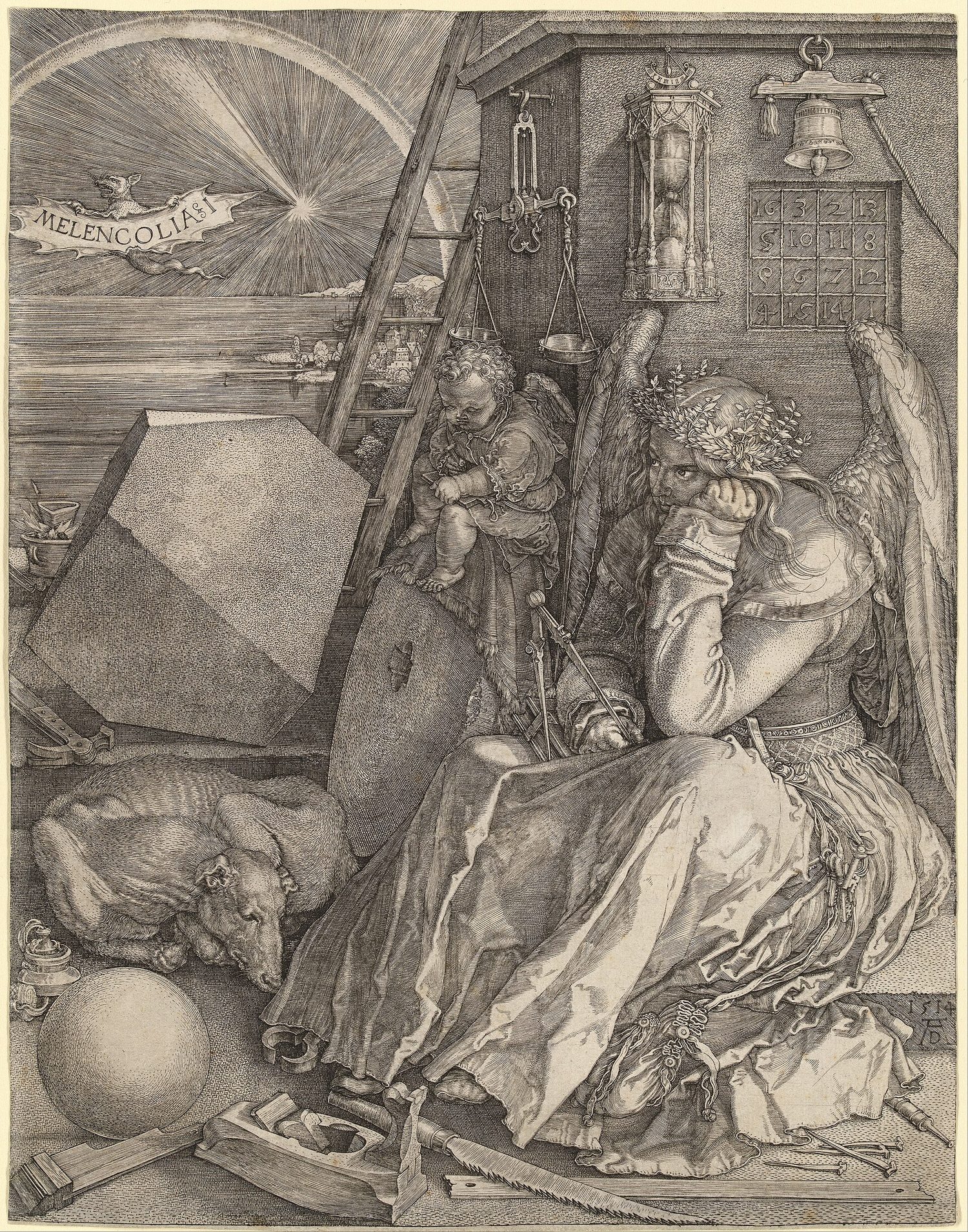
ภาพพิมพ์เก่าที่หนาแน่นและมีรายละเอียดสูงมากของรูปทรงมีปีกนั่งอยู่ ล้อมรอบด้วยเครื่องมือและสัญลักษณ์ทั้งหมดสร้างจากเส้นแกะสลักละเอียด
งานแกะสลักของดูเรอร์เรื่อง Melencolia I: ในเทคนิคอินตaglio เส้นจะถูกขูดเข้าไปในแผ่นโลหะ และเส้นที่ละเอียดและหนาแน่นซึ่งการแกะสลักเอื้อให้สร้างเงาที่ลึกและรายละเอียดที่อุดมสมบูรณ์
Explore · ⁨สำรวจ⁩

Which printmaking process? · ⁨กระบวนการพิมพ์ประเภทใด?⁩

Relief prints from the raised surface; intaglio from lines cut below the surface; planographic from a flat greasy image; stencil pushes ink through a mesh. · ⁨พิมพ์นูน จากพื้นผิวที่ยกสูง; พิมพ์ฉลุ จากเส้นที่ตัดลึกเข้าไป; พิมพ์หิน จากภาพมันบนพื้นเรียบ; สแตนซิล ดันหมึกผ่านตาข่าย⁩

Vocabulary · ⁨คำศัพท์⁩ Train · ⁨ฝึกฝน⁩
English ไทย
Printmaking/ˈprɪntmeɪkɪŋ/ งานพิมพ์
matrix/ˈmeɪtrɪks/ เมทริกซ์
edition/ɪˈdɪʃn/ ชุดพิมพ์
Intaglio/ɪnˈtæɡlɪəʊ/ Intaglio
Planographic/ˌplænəˈɡræfɪk/ พิมพ์หิน
Stencil/ˈstensl/ Stencil
Collage/kɒˈlɑːʒ/ คอลลาจ
mixed media/mɪkst ˈmiːdiːə/ ผสมผสานสื่อ
3.4

Collage and Mixed Media · ⁨คอลลาจและสื่อผสม⁩

Syllabus · ⁨หลักสูตร⁩
English

Focus: Collage assembles found materials onto a surface; mixed media combines two or more materials or processes.

  • Collage glues papers, photos, fabric, or found objects into a composition.
  • Mixed media layers, for example, drawing over paint, or print with stitching.
  • These processes add actual texture and unexpected juxtapositions of image and meaning.
  • Materials can carry meaning (a ticket, a map) beyond their visual role.
  • Good mixed-media work still uses the elements and principles to stay unified.
ไทย

จุดเน้น: คอลลาจคือการประกอบวัสดุที่หาได้จากภายนอก onto a surface; มิกซ์เมเดียเป็นการรวมวัสดุหรือกระบวนการตั้งแต่สองชนิดขึ้นไป

  • คอลลาจ ยึดกระดาษ, ภาพถ่าย, ผ้า, หรือวัตถุที่หาได้ เข้ากับการจัดองค์ประกอบ
  • มิกซ์เมเดีย ลงชั้น, เช่น การวาดภาพทับสี, หรือภาพพิมพ์พร้อมการเย็บ
  • กระบวนการเหล่านี้เพิ่ม พื้นผิวจริง และการ juxtapositions ที่ไม่คาดคิดของภาพและความหมาย
  • วัสดุสามารถสื่อความหมาย (บัตร, แผนที่) นอกเหนือจากบทบาททางสายตา
  • งานมิกซ์มีเดียที่ดียังคงใช้องค์ประกอบและหลักการเพื่อให้คงความเป็นหนึ่งเดียว

Source: College Board AP Course and Exam Description · ⁨แหล่งที่มา: คำอธิบายหลักสูตรและข้อสอบ College Board AP⁩

English

Collage 拼贴 assembles found materials onto a surface; mixed media 综合媒介 combines two or more materials or processes.

  • Collage glues papers, photos, fabric, or found objects into a composition.
  • Mixed media layers processes — for example, drawing over paint, or print with stitching.
  • These add actual texture and unexpected meaning; a found material (a ticket, a map) can carry meaning beyond its look.
ไทย

คอลลาจ คือการประกอบวัสดุที่หาได้มาบนพื้นผิว; สื่อผสม คือการรวมวัสดุหรือกระบวนการตั้งแต่สองชนิดขึ้นไปเข้าด้วยกัน

  • คอลลาจใช้กาวติดกระดาษ ภาพถ่าย ผ้า หรือวัตถุที่หาได้เข้ามาเป็นส่วนหนึ่งขององค์ประกอบ
  • สื่อผสมเป็นการซ้อนชั้นกระบวนการ เช่น การวาดทับสี หรือการพิมพ์พร้อมเย็บ
  • สิ่งเหล่านี้เพิ่ม เนื้อสัมผัสจริง และความหมายที่ไม่คาดคิด; วัสดุที่หาได้มา (เช่น ตั๋ว, แผนที่) สามารถพกพาความหมายที่เกินกว่ารูปลักษณ์ของมันได้
3.5

Photography and Lens-Based Media · ⁨การถ่ายภาพและสื่อที่ใช้เลนส์⁩

Syllabus · ⁨หลักสูตร⁩
English

Focus: Photography makes images with light and a lens; the same elements and principles apply to the frame.

  • Key controls: framing/composition, focus, exposure (light), depth of field, and viewpoint.
  • The rule of thirds, leading lines, and negative space compose a photograph.
  • Light direction and quality (hard/soft) shape value, form, and mood.
  • Editing (cropping, contrast, colour) is part of the creative process, not just correction.
  • Digital and darkroom processes both count as lens-based 2-D art and design.
ไทย

จุดเน้น: การถ่ายภาพสร้างภาพด้วยแสงและเลนส์; องค์ประกอบและหลักการเดียวกันนี้ยังใช้กับกรอบภาพได้

  • ปุ่มควบคุมหลัก: การจัดเฟรม/การจัดองค์ประกอบ, การโฟกัส, การเปิดรับแสง (แสง), ความลึกของ-field, และมุมมอง
  • กฎสามส่วน, เส้นนำสายตา และพื้นที่ว่าง ช่วยในการจัดองค์ประกอบภาพถ่าย
  • ทิศทางและคุณภาพของแสง (แข็ง/นุ่ม) สร้างค่าความสว่างรูปร่าง (value/form) และอารมณ์ของภาพ
  • การแก้ไข (ตัดต่อ, ความ tươngต่าง, สี) เป็นส่วนหนึ่งของกระบวนการสร้างสรรค์ ไม่ใช่แค่การแก้ไข
  • กระบวนการดิจิทัลและห้องพัฒนาฟิล์ม ล้วนถือเป็นศิลปะและการออกแบบสองมิติที่อาศัยเลนส์ 2-D

Source: College Board AP Course and Exam Description · ⁨แหล่งที่มา: คำอธิบายหลักสูตรและข้อสอบ College Board AP⁩

English

Photography 摄影 makes images with light and a lens; the elements and principles apply to the frame just as in any 2-D work.

  • Key controls: framing, focus 对焦, exposure 曝光 (light), depth of field 景深, and viewpoint.
  • The rule of thirds, leading lines, and negative space compose a photograph.
  • Editing 后期 (cropping, contrast, colour) is part of the creative process, not just correction.
ไทย

การถ่ายภาพ สร้างภาพด้วยแสงและเลนส์; องค์ประกอบและหลักการนำไปใช้ได้กับกรอบภาพเท่ากับงานศิลปะ任何其他 2-มิติ

ภาพถ่ายขาวดำผู้โดยสารบนเรือหนาแน่น ซึ่งถูกแบ่งด้วยทางเดินเป็นสองชั้น สร้างรูปทรงเรขาคณิตที่ชัดเจน *The Steerage ของ Alfred Stieglitz เป็นภาพถ่ายศิลปะที่มีชื่อเสียงในยุคแรก: ทางเดิน ท่อไอเสีย และบุคคลสร้างองค์ประกอบทางเรขาคณิตที่แข็งแกร่ง ดังนั้นองค์ประกอบและหลักการจึงใช้กับการถ่ายภาพได้ด้วย

  • การควบคุมหลัก: การจัดเฟรม, โฟกัส, การเปิดรับแสง (แสง), ความลึกของพื้นที่ชัด, และมุมมอง
  • กฎสามส่วน เส้นนำสายตา และพื้นที่ว่างช่วยจัดองค์ประกอบภาพถ่าย
  • การแก้ไข (ตัดต่อ, ความ tươngต่าง, สี) เป็นส่วนหนึ่งของกระบวนการสร้างสรรค์ ไม่ใช่แค่การแก้ไข
Vocabulary · ⁨คำศัพท์⁩ Train · ⁨ฝึกฝน⁩
English ไทย
Photography/fəˈtɒɡrəfi/ การถ่ายภาพ
focus/ˈfəʊkəs/ focus
exposure/ekˈspəʊʒə/ exposure
depth of field/depθ ɒv fiːld/ depth of field
Editing/ˈedɪtɪŋ/ การแก้ไข
Digital media/ˈdɪdʒɪtl ˈmiːdiːə/ สื่อดิจิทัล
3.6

Digital Art and Design · ⁨ศิลปะดิจิทัลและการออกแบบ⁩

Syllabus · ⁨หลักสูตร⁩
English

Focus: Digital tools create and edit images on a computer or tablet, working in layers and pixels or vectors.

  • Raster images are made of pixels (photo editing, painting apps); vector images use math paths (scalable).
  • Layers let an artist build, mask, and revise non-destructively.
  • Digital colour uses RGB (screen, additive) or CMYK (print, subtractive).
  • Resolution (DPI/PPI) affects print quality; keep files high-resolution for the portfolio.
  • The same elements and principles guide digital work as any other 2-D medium.
ไทย

จุดเน้น: เครื่องมือดิจิทัลช่วยสร้างและแก้ไขภาพบนคอมพิวเตอร์หรือแท็บเล็ต โดยใช้ระบบเลเยอร์ พิกเซล หรือเวกเตอร์

  • ภาพ Raster สร้างจากพิกเซล (ใช้สำหรับแอปตัดต่อภาพ, วาดภาพ); ภาพ Vector ใช้เส้นโค้งทางคณิตศาสตร์ (ปรับขนาดได้ไม่เสียคุณภาพ)
  • เลเยอร์ (Layers) ช่วยให้นักสร้างสรรค์สร้าง, บังคับ, และแก้ไขงานได้อย่างปลอดภัยโดยไม่ทำลายชั้นเดิม
  • สีดิจิทัลใช้ RGB (หน้าจอ, เพิ่มแสง) หรือ CMYK (พิมพ์, ลดแสง)
  • ความละเอียด (DPI/PPI) ส่งผลต่อคุณภาพการพิมพ์; ควรเก็บไฟล์ที่มีความละเอียดสูงไว้ในพอร์ตโฟลิโอ
  • องค์ประกอบและหลักการเดียวกันนี้ยังใช้กำกับงานดิจิทัลเช่นเดียวกับสื่อ 2-D อื่นๆ

Source: College Board AP Course and Exam Description · ⁨แหล่งที่มา: คำอธิบายหลักสูตรและข้อสอบ College Board AP⁩

English

Digital media 数字媒介 create and edit images on a computer or tablet, working in layers.

  • Raster 位图 images are made of pixels (photo editing, digital painting); vector 矢量 images use maths paths and scale without losing quality.
  • Layers 图层 let an artist build, mask, and revise without damaging earlier work.
  • Digital colour uses RGB (screen, additive) or CMYK (print, subtractive); keep files high-resolution 分辨率 for the portfolio.
ไทย

สื่อดิจิทัล สร้างและแก้ไขภาพบนคอมพิวเตอร์หรือแท็บเล็ต โดยใช้การทำงานแบบชั้น

  • ภาพเรสเตอร์ สร้างจากพิกเซล (การแก้ไขภาพ, การวาดดิจิทัล); ภาพเวกเตอร์ ใช้เส้นทางคณิตศาสตร์และปรับขนาดโดยไม่สูญเสียคุณภาพ
  • ชั้น ช่วยให้งานศิลปะสามารถสร้าง บังคับ และแก้ไขโดยไม่ต้องทำลายชิ้นงานเดิม
  • สีดิจิทัลใช้ RGB (หน้าจอ, แบบบวก) หรือ CMYK (การพิมพ์, แบบลบ); เก็บไฟล์ที่มีความละเอียดสูงสำหรับแฟ้มผลงาน

สีแบบบวกและลบ *การผสมแสง (RGB) จะสว่างขึ้น向着สีขาว; การผสมสี.extent (CMY) จะมืดลง向着สีดำ

3.7

Graphic Design and Illustration · ⁨การออกแบบกราฟิกและการวาดภาพประกอบ⁩

Syllabus · ⁨หลักสูตร⁩
English

Focus: Graphic design communicates a message visually; illustration makes images that support or tell a story.

  • Design combines type, image, colour, and layout to communicate to a viewer or client.
  • Visual hierarchy (size, weight, contrast, placement) guides the eye to what matters first.
  • Typography — typeface, size, spacing, alignment — is a core design element.
  • Illustration serves a purpose: editorial, book, product, poster, or narrative.
  • Design and illustration are problem-solving: audience and message shape every choice.
ไทย

จุดเน้น: การออกแบบกราฟิกสื่อสารข้อความผ่านภาพ; การวาดภาพ (Illustration) สร้างภาพเพื่อสนับสนุนเรื่องราวหรือบอกเล่าเรื่องราว

  • การออกแบบรวม ตัวอักษร, ภาพ, สี และการจัดวาง เพื่อสื่อสารกับผู้ชมหรือลูกค้า
  • ลำดับความสำคัญทางภาพ (Visual hierarchy) (ขนาด, น้ำหนัก, ความแตกต่าง, ตำแหน่ง) นำสายตาไปยังสิ่งที่สำคัญที่สุดก่อน
  • ตัวอักษร (Typography) — ฟอนต์, ขนาด, ระยะห่าง, การจัดแนว — เป็นองค์ประกอบการออกแบบที่สำคัญ
  • การวาดภาพมีวัตถุประสงค์: สำหรับหนังสือพิมพ์, หนังสือ, ผลิตภัณฑ์, โปสเตอร์, หรือการเล่าเรื่อง
  • การออกแบบและการสร้างภาพคือการแก้ปัญหา: ผู้ชมและข้อความกำหนดทุกการตัดสินใจ

Source: College Board AP Course and Exam Description · ⁨แหล่งที่มา: คำอธิบายหลักสูตรและข้อสอบ College Board AP⁩

English

Graphic design 平面设计 communicates a message visually; illustration 插画 makes images that support or tell a story.

  • Design combines type 字体, image, colour, and layout to reach a viewer or client.
  • Visual hierarchy guides the eye to what matters first, through size, weight, and placement.
  • Typography 字体排印 — typeface, size, spacing, alignment — is a core design tool.
  • Design and illustration are problem-solving: the audience and message shape every choice.

Worked example (writing about process). When your written evidence must explain a material and process: "I used charcoal on toned paper because its soft, smudgeable line let me build deep shadow quickly, and I lifted highlights with an eraser to suggest form." Notice the shape — name the medium, say why you chose it, and connect it to the idea you were exploring. Listing a material with no reason earns little.

ไทย

การออกแบบกราฟิก สื่อสารข้อความผ่านภาพ; ภาพประกอบ สร้างภาพเพื่อสนับสนุนหรือบอกเล่าเรื่องราว

  • การออกแบบรวม ตัวอักษร, ภาพ, สี และการจัดวางเพื่อเข้าถึงผู้ชมหรือลูกค้า
  • ลำดับขั้นทางภาพ นำสายตาไปยังสิ่งที่สำคัญที่สุดก่อน ผ่านขนาด น้ำหนัก และการวางตำแหน่ง
  • Typography — ตัวอักษร, ขนาด, ระยะห่าง, การจัดแนว — เป็นเครื่องมือหลักในการออกแบบ
  • การออกแบบและการวาดภาพประกอบคือ การแก้ปัญหา: ผู้ชมและข้อความกำหนดทุกการเลือก

ตัวอย่างวิธีทำ (การเขียนเกี่ยวกับกระบวนการ). เมื่อหลักฐานการเขียนต้องอธิบาย วัสดุและกระบวนการ: "ฉันใช้ถ่านบนกระดาษสีเพราะเส้นที่นุ่มและเลอะง่ายช่วยให้ฉันสร้างเงาที่ลึกได้อย่างรวดเร็ว และฉันดึงไฮไลท์ด้วยยางลบเพื่อแสดงรูปร่าง" ระวังรูปแบบ — ชื่อบันเทิง手段, บอก ทำไม ถึงเลือกใช้มัน, และเชื่อมโยง它与 แนวคิด ที่กำลังสำรวจ การระบุวัสดุโดยไม่มีเหตุผลจะได้รับการประเมินต่ำ

Vocabulary · ⁨คำศัพท์⁩ Train · ⁨ฝึกฝน⁩
English ไทย
Typography/taɪˈpɒɡrəfi/ ตัวอักษร
3.7

Exam tips · ⁨ข้อแนะนำสำหรับการสอบ⁩

English
  • Match the medium to the intended effect, and justify the choice.
  • For printmaking, state relief versus intaglio, and remember the printed image reverses.
  • Explain transparent versus opaque paint, and layers and vector versus raster in digital work.
  • Treat collage and mixed media materials as meaning, not just texture.
  • In graphic design, show a clear visual hierarchy serving the message.
ไทย
  • จับคู่ -media手段 กับผลลัพธ์ที่ต้องการ และให้เหตุผลในการเลือก
  • สำหรับ การพิมพ์, ระบุ relief เทียบกับ intaglio, และจำไว้ว่าภาพที่พิมพ์ออกมามีการกลับด้าน
  • อธิบายสี โปร่งใส เทียบกับ ทึบแสง, และ ชั้น และ vector เทียบกับ raster ในงานดิจิทัล
  • จัดการวัสดุ คอลลาจ และ สื่อผสม ว่ามีความหมาย ไม่ใช่แค่เนื้อสัมผัส
  • ในการ ออกแบบกราฟิก, แสดง ลำดับขั้นทางภาพ ที่ชัดเจนเพื่อรองรับข้อความ
Vocabulary · ⁨คำศัพท์⁩ Train · ⁨ฝึกฝน⁩
English ไทย
Media/ˈmiːdiːə/ สื่อ
Dry media/draɪ ˈmiːdiːə/ สื่อแบบแห้ง
Wet media/wet ˈmiːdiːə/ สื่อแบบเปียก
hatching/ˈhætʃɪŋ/ การขีดเส้นทแยงมุม
cross-hatching/krɒs ˈhætʃɪŋ/ การขีดเส้นไขว้
stippling/ˈstɪplɪŋ/ stippling
tooth/tuːθ/ ความหยาบของพื้นผิว
Relief/rɪˈliːf/ Relief
Raster/ˈræstə/ เรสเตอร์
vector/ˈvektə/ เวกเตอร์
Layers/ˈleɪəz/ ชั้น
resolution/ˌrezəˈluːʃn/ ความละเอียด
Graphic design/ˈɡræfɪk dɪˈzaɪn/ กราฟิกดีไซน์
illustration/ˌɪləˈstreɪʃn/ ภาพประกอบ
type/taɪp/ ตัวอักษร

Interactive lessons on this topic · ⁨บทเรียนเชิงโต้ตอบสำหรับหัวข้อนี้⁩

Work through it step by step, with instant-check exercises. · ⁨ทำทีละขั้นตอน พร้อมแบบฝึกหัดตรวจสอบผลทันที⁩

More topics in AP 2-D Art and Design · ⁨AP ศิลปะและออกแบบ 2 มิติ⁩ · ⁨หัวข้อเพิ่มเติมใน AP 2-D Art and Design · ⁨AP ศิลปะและออกแบบ 2 มิติ⁩⁩

Log in or create account · ⁨เข้าสู่ระบบหรือสร้างบัญชี⁩

IGCSE, A-Level & AP