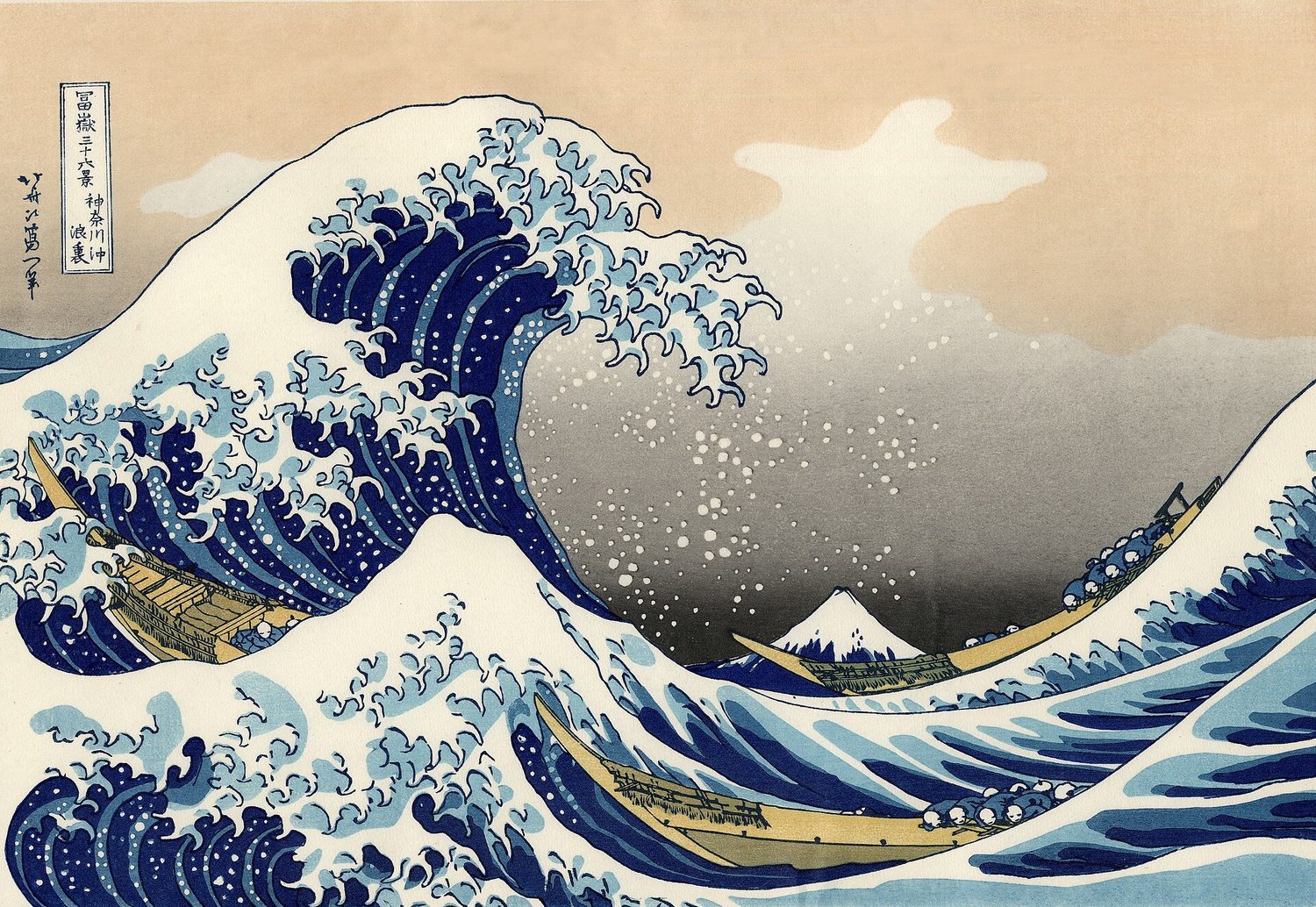
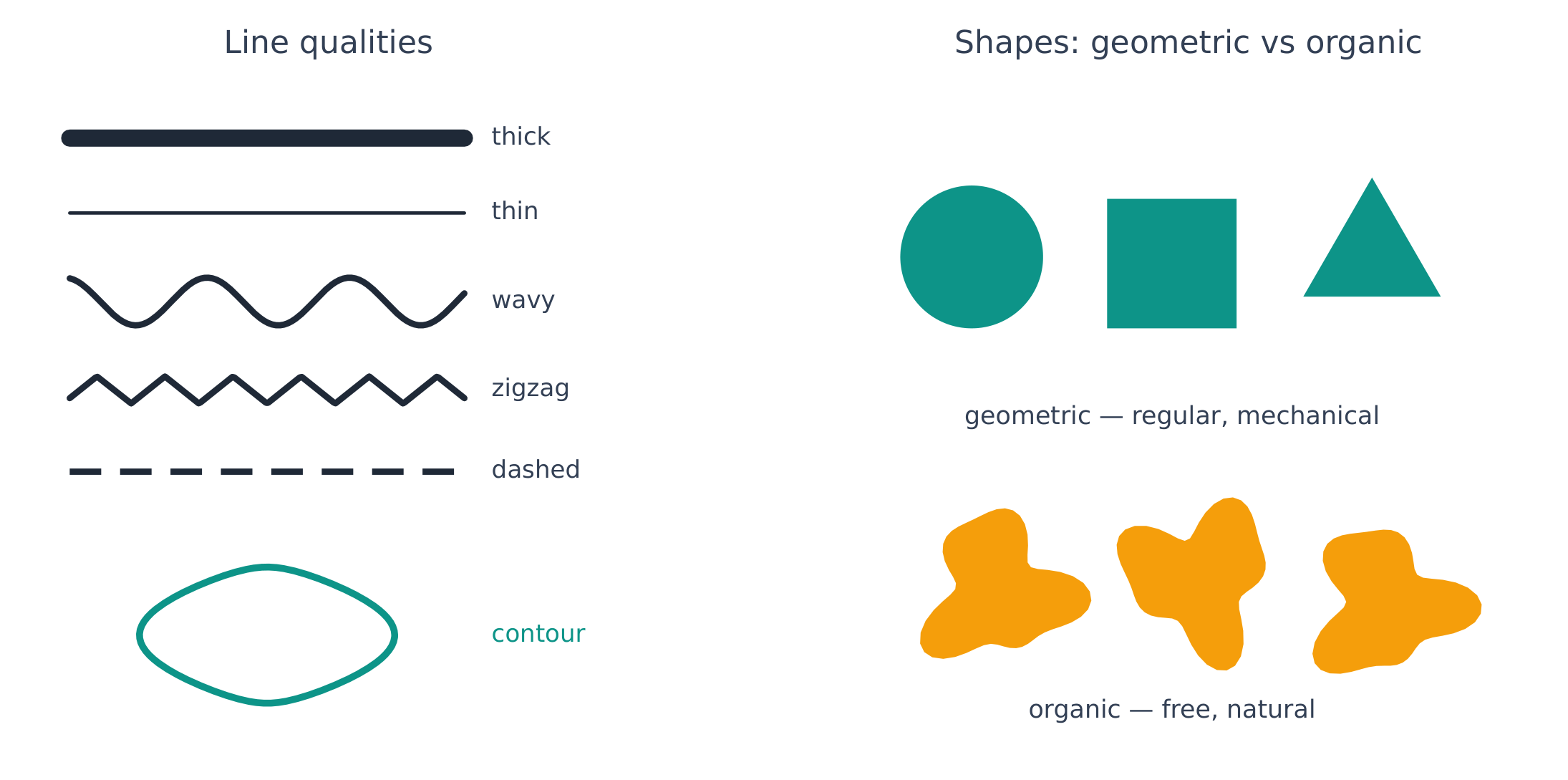
- Name the element precisely — line, shape or form, value, colour, texture, space — in any analysis.
- Justify how form is modelled with a value scale and a single light source.
- Read the colour wheel: identify complementary versus analogous schemes and warm or cool temperature.
- Separate shape (2-D) from form (3-D) and actual from implied texture.
- Explain depth with overlap, size, linear perspective, and atmospheric perspective.
Vocabulary card meanings
line: A thin mark that can run straight or curve.
Contour: The outer edge that describes a shape.
gesture: A quick drawing that catches movement rather than detail.
Implied lines: Edges the eye follows even though no stroke is drawn there.
form: A solid shape, or the illusion of volume on a flat surface.
organic: A shape that looks grown, with a curved outline or a jagged one.
negative shape: The empty area around an object, which can itself form a design.
midtones: The greys or colours between the lightest and darkest values.
core shadow: The dark band on the side of a form turned away from the light. The paired Chinese term names the boundary where the light stops.
Colour: What the eye reads as hue, lightness, and intensity on a surface.
colour wheel: A circle that arranges hues so relationships among them are easy to see.
hue: The name of a colour, such as red or blue, apart from how light or dark it is.
Primary: In one colour system, the starting hues of that system, often three, which a different system may mix from other hues.
secondary: A hue made by mixing two of the basic hues.
neutralise: To dull a hue by mixing in its opposite on the wheel.
Analogous: Hues that sit next to each other and therefore look related.
Warm: Hues such as red and orange, often felt as energetic.
cool: Hues such as blue and green, often felt as calm.
Actual (tactile) texture: A surface you could feel with your fingers, not only see.
impasto: Paint laid on so thickly that the strokes stand up.
overlapping: Placing one shape in front of another so depth is suggested.
foreground: The part of a picture that seems nearest to the viewer.
middle ground: The zone of a picture between what is nearest and what is farthest.
background: The part of a picture that seems farthest away.