6.1 Rationales for Imperialism from1750 to 1900
| Thematic Focus | Learning Objective | Historical Developments |
|---|---|---|
CDI | Unit 6.A |
|
AP 世界历史 · 第 6 主题
 6:14
6:14
Unit 6: Consequences of Industrialization
This is the unit on the consequences of industrialisation, 1750 to 1900. One distinction decides most of the marks in this unit, and it is easy to state and…
英文讲解 · 内嵌中英文字幕
| Thematic Focus | Learning Objective | Historical Developments |
|---|---|---|
CDI | Unit 6.A |
|
来源:美国大学理事会 AP 课程与考试说明
第六单元讲述 1750 至 1900 年工业化的后果:工业国家为何扩张、人们如何抵抗、世界经济如何重组,以及谁在迁移。
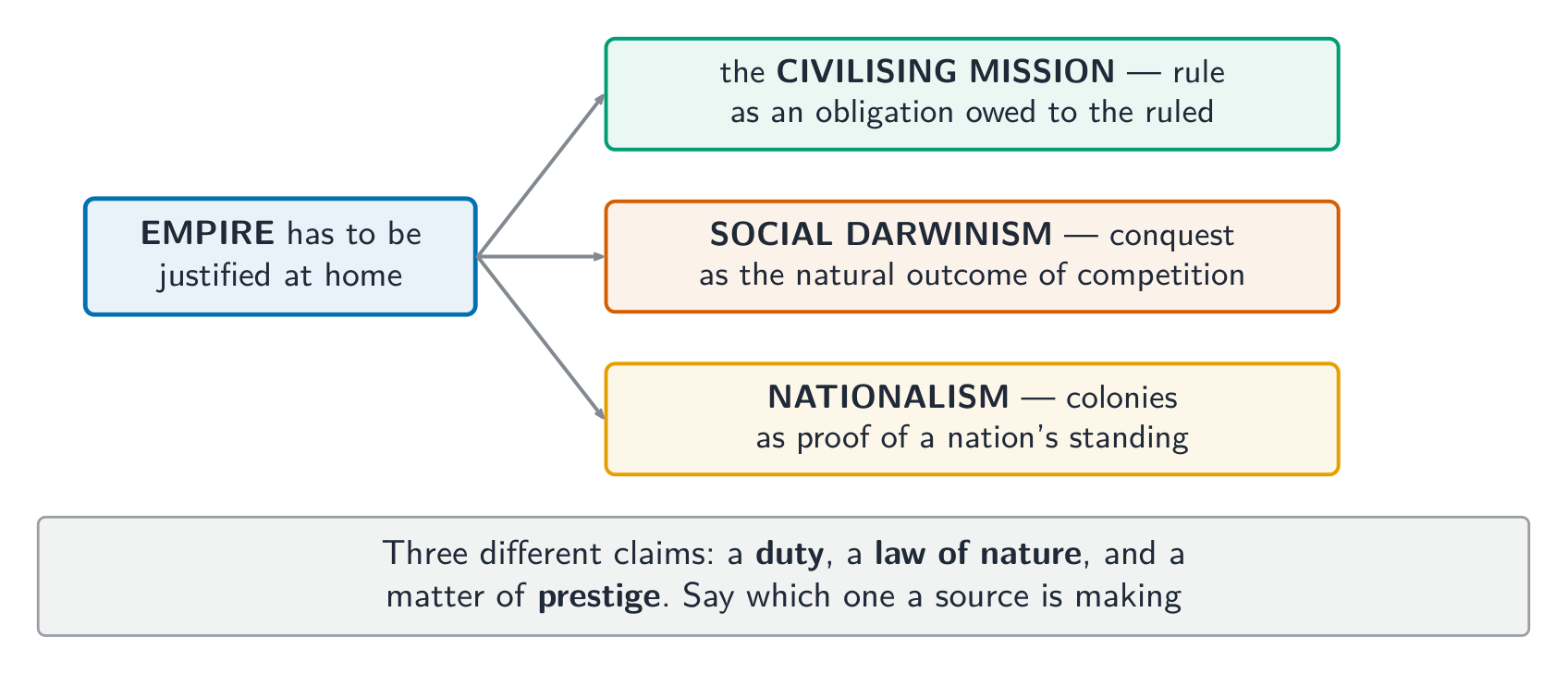
各种文化、宗教与种族意识形态(cultural, religious, and racial ideologies)被用来为帝国主义辩护。考试范围内的包括文明教化使命(civilising mission)、传教活动、被用于国家与族群的社会达尔文主义(Social Darwinism),以及民族主义——即认为殖民地证明了一个国家的伟大。
这些是辩护理由,而不是原因。把它们指认为意识形态,并与下文的经济与战略动机区分开,正是有力答案的做法。
They are not one bundle of ideas: a duty, a law of nature and a matter of prestige are three different arguments.
| 英文 | 中文 | 拼音 |
|---|---|---|
| cultural, religious, and racial ideologies | 文化、宗教与种族意识形态 | wén huà 、 zōng jiào yǔ zhǒng zú yì shí xíng tài |
| civilising mission | 文明教化使命 | wén míng jiào huà shǐ mìng |
| Social Darwinism | 社会达尔文主义 | shè huì dá ěr wén zhǔ yì |
| Thematic Focus | Learning Objective | Historical Developments |
|---|---|---|
GOV | Unit 6.B |
|
Illustrative examples:
来源:美国大学理事会 AP 课程与考试说明
扩张有多种形式,CED 对它们作了区分:
| 英文 | 中文 | 拼音 |
|---|---|---|
| warfare and diplomacy | 战争与外交 | zhàn zhēng yǔ wài jiāo |
| settler colonies | 定居殖民地 | dìng jū zhí mín dì |
| Thematic Focus | Learning Objective | Historical Developments |
|---|---|---|
GOV | Unit 6.C |
|
Illustrative examples:
来源:美国大学理事会 AP 课程与考试说明
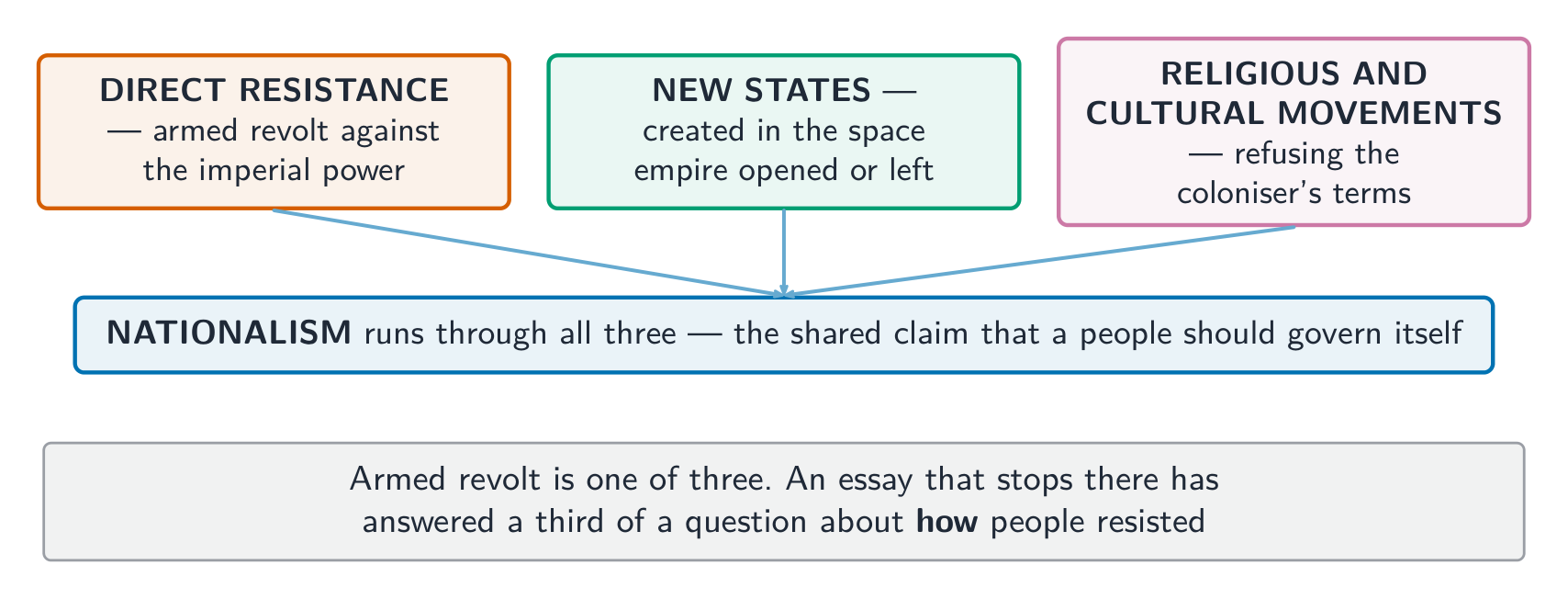
反帝抵抗(resistance)有多种形式,只写武装反抗会失分:
对政治权威日益增多的质疑,以及被殖民地区不断增长的民族主义,引发了各种起义,其中一些持续之久足以改变帝国政策。要点在于:抵抗贯穿整个时期,而不是后期才出现的反应。
| 英文 | 中文 | 拼音 |
|---|---|---|
| resistance | 抵抗 | dǐ kàng |
| Direct resistance | 直接抵抗 | zhí jiē dǐ kàng |
| Creation of new states | 建立新国家 | jiàn lì xīn guó jiā |
| Religious and cultural movements | 宗教与文化运动 | zōng jiào yǔ wén huà yùn dòng |
| Thematic Focus | Learning Objective | Historical Developments |
|---|---|---|
ENV | Unit 6.D |
|
Illustrative examples:
| Thematic Focus | Learning Objective | Historical Developments |
|---|---|---|
ECN | Unit 6.E |
|
Illustrative examples:
来源:美国大学理事会 AP 课程与考试说明
工厂对原材料(raw materials)的需求,以及不断增长的城市人口对粮食供应(food supplies)的需求,重组了全世界的生产。殖民地与依附地区被推向经济作物(cash crops)与采掘业(extractive industries),往往以牺牲本地口粮生产为代价。
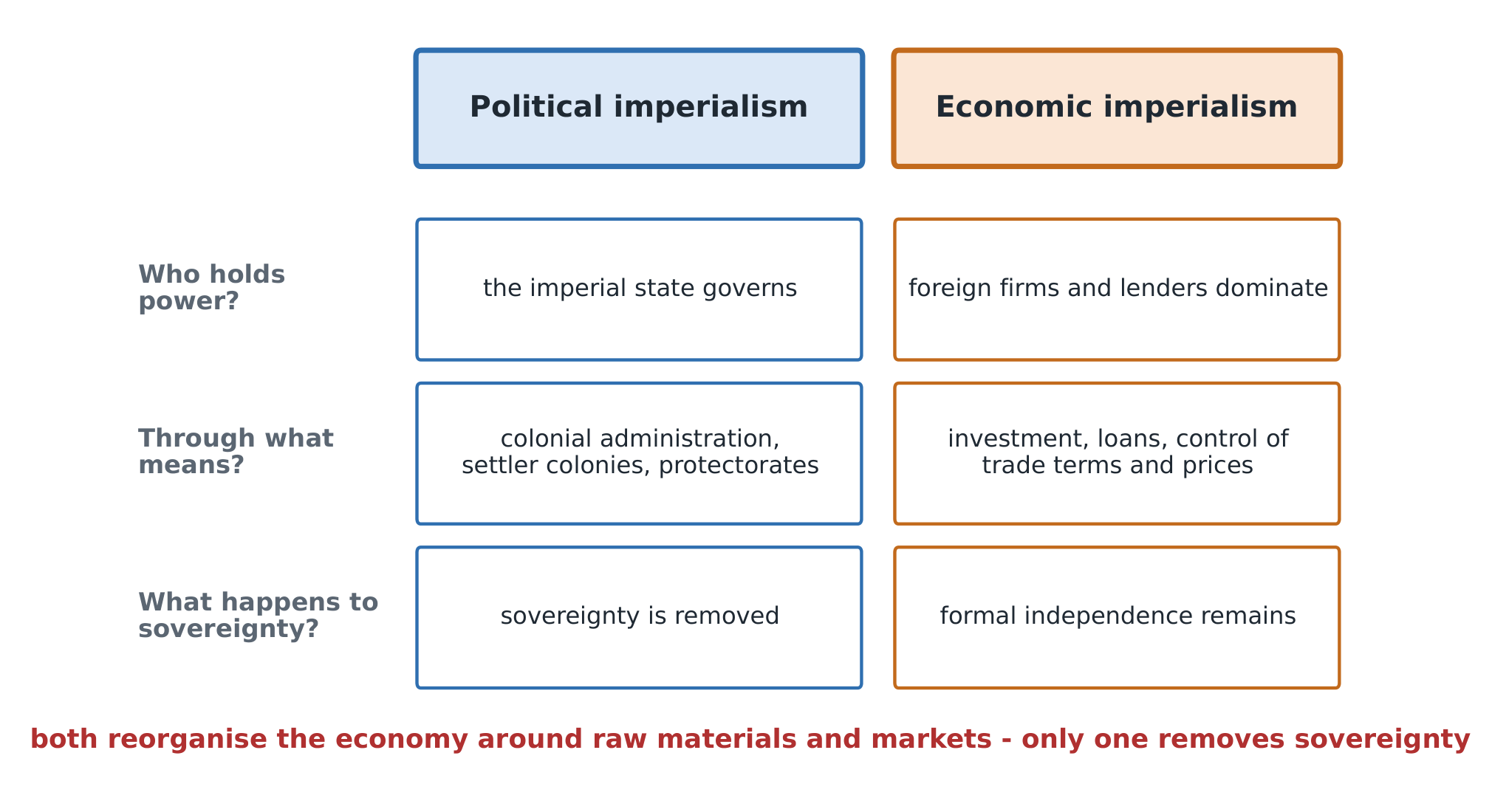
经济帝国主义(economic imperialism)是考点所在的区分。工业化国家及其企业通过投资、贷款与贸易支配(investment, loans, and trade dominance)施加控制,而不一定取得政治控制——因此一个地区可以在保持形式独立的同时被经济支配。
某些大宗商品的贸易被组织成这样一种方式:工业化国家的商人与公司对生产者拥有不成比例的权力(disproportionate power),得以决定价格与条件。
| 英文 | 中文 | 拼音 |
|---|---|---|
| raw materials | 原材料 | yuán cái liào |
| food supplies | 粮食供应 | liáng shí gōng yìng |
| cash crops | 经济作物 | jīng jì zuò wù |
| extractive industries | 采掘业 | cǎi jué yè |
| Economic imperialism | 经济帝国主义 | jīng jì dì guó zhǔ yì |
| investment, loans, and trade dominance | 投资、贷款与贸易支配 | tóu zī 、 dài kuǎn yǔ mào yì zhī pèi |
| disproportionate power | 不成比例的权力 | bù chéng bǐ lì de quán lì |
| Thematic Focus | Learning Objective | Historical Developments |
|---|---|---|
ECN | Unit 6.F |
|
Unit 6.G |
|
Illustrative examples:
来源:美国大学理事会 AP 课程与考试说明
这一时期的迁移受输出与输入社会人口变化的影响,也受新的交通方式(modes of transportation)——蒸汽船与铁路——影响,后者首次使长距离且常常是临时或季节性(temporary or seasonal)的流动成为可能。
必须区分两类:
| 英文 | 中文 | 拼音 |
|---|---|---|
| modes of transportation | 交通方式 | jiāo tōng fāng shì |
| temporary or seasonal | 临时或季节性 | lín shí huò jì jié xìng |
| coerced and semi-coerced labour | 强制与半强制劳动 | qiáng zhì yǔ bàn qiáng zhì láo dòng |
| indentured servitude | 契约劳工 | qì yuē láo gōng |

| Thematic Focus | Learning Objective | Historical Developments |
|---|---|---|
SIO | Unit 6.H |
|
Illustrative examples:
来源:美国大学理事会 AP 课程与考试说明
CED 直接点名了三项影响:
The effects follow from the composition of the flow, not from whether it was voluntary — which is why they are the same on both sides.
| 英文 | 中文 | 拼音 |
|---|---|---|
| women to take on new roles | 女性承担新角色 | nǚ xìng chéng dān xīn jué sè |
| ethnic enclaves | 族裔聚居区 | zú yì jù jū qū |
| Learning Objective | Review: Unit 6 Key Concepts |
|---|---|
Unit 6.I |
|
来源:美国大学理事会 AP 课程与考试说明
本单元考查的推理能力是因果关系。最有力的链条是:工业生产造成对原材料与市场的需求,从而推动扩张;扩张需要辩护,意识形态提供了它;而两者又共同引发抵抗与大规模迁移。
Worked example(一道真实的 AP 考题)。本单元的 AP 世界历史简答题会要求,例如「解释 1750 至 1900 年间工业化促成帝国主义的一种方式」。满分答案会追溯其机制:「工业工厂需要棉花、橡胶等欧洲无法生产的原材料,于是工业国家对能够供应这些原料的地区取得政治或经济控制,并把那些经济体重组为以出口作物为中心。」*注意其结构:得分点在于那个联系*,而不是断言工业化与帝国主义有关。
逐步学习,并即时检测练习。