3.1 Empires Expand
| Thematic Focus | Learning Objective | Historical Developments |
|---|---|---|
GOV | Unit 3.A |
|
Illustrative examples:
- State rivalries:
- Safavid–Mughal conflict
- Songhai Empire’s conflict with Morocco
AP World History: Modern · Topic 3
 5:35
Unit 3: Land-Based Empires
Every ruler in this unit faces the same practical problem. You have conquered territory that is weeks of travel from your capital, and the people who actually…
English narration · English + 中文 subtitles burned in

| Thematic Focus | Learning Objective | Historical Developments |
|---|---|---|
GOV | Unit 3.A |
|
Illustrative examples:
Source: College Board AP Course and Exam Description
In the spring of 1453 the Ottoman sultan Mehmed II brought huge bronze cannons to the walls of Constantinople. The walls had protected the city for about a thousand years. The guns fired stone balls of several hundred kilograms, broke the walls day after day, and on 29 May the city fell and became the Ottoman capital. Constantinople is now known as Istanbul. The city's fall ended the Byzantine imperial government there. The walls had resisted many earlier sieges, but the Crusaders had captured the city in 1204; gunpowder was not the first means by which an army overcame its defences.
Unit 3 covers the great land-based empires 陆基帝国 of roughly 1450 to 1750. Four questions organise it: how they expanded, how they governed, how they paid for themselves, and how they used religion.
Expansion relied on the increased use of gunpowder, cannons, and armed trade - which is why these are often called the gunpowder empires 火药帝国. Access to gunpowder weapons let a central ruler overpower regional rivals and fortified nobles, so military technology and political centralisation grew together.
The empires to know:
| Year | Event | What gunpowder did |
|---|---|---|
| 1453 | Ottomans take Constantinople | cannons broke the city's walls |
| 1514 | Battle of Chaldiran: Ottomans defeat the Safavids | Ottoman cannons and janissary firearms beat Safavid cavalry |
| 1526 | First Battle of Panipat: Babur founds the Mughal Empire | cannons and matchlock guns beat a much larger army with war elephants |
| 1644 | the Manchu take Beijing; the Qing name had been proclaimed in 1636 | Qing armies used cannons and firearms, then expanded into Mongolia, Tibet and Xinjiang in the 1700s |
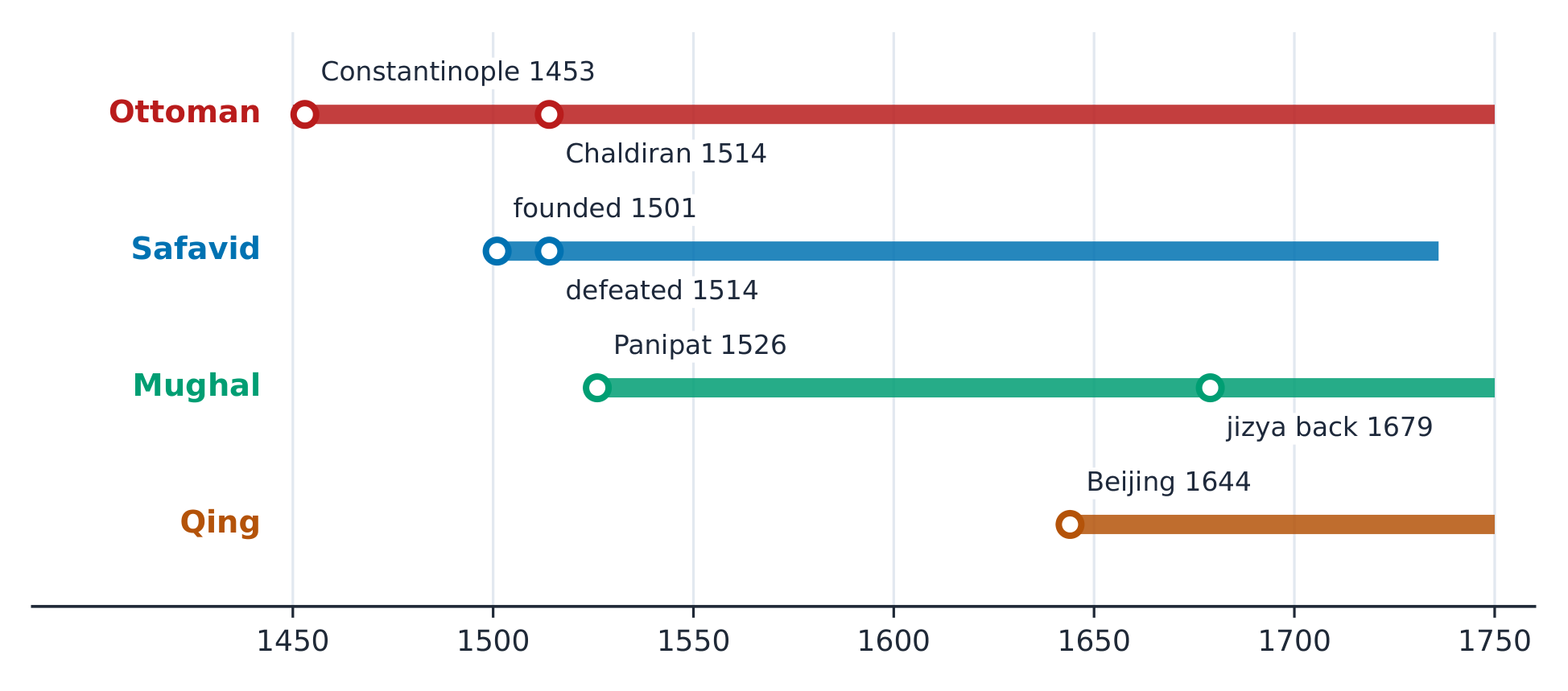
Historical chronology: Palace Museum: Hong Taiji and the Qing name in 1636; Metropolitan Museum: Byzantium, including the 1204 occupation and 1453 conquest.
Military technology and political centralisation grew together — and the mechanism is that a cannon ends a fortified lord's advantage.
| English |
|---|
| land-based empires/lænd beɪst ˈempaɪəz/ |
| gunpowder empires/ˈɡʌnpaʊdə ˈempaɪəz/ |
| Manchu (Qing)/ˈmæntʃuː/ |
| Mughal/ˈməʊɡl/ |
| Ottoman/ˈɒtəmən/ |
| Safavid/ˈsæfəvɪd/ |

| Thematic Focus | Learning Objective | Historical Developments |
|---|---|---|
GOV | Unit 3.B |
|
Illustrative examples:
Source: College Board AP Course and Exam Description
Rulers faced the same problem: how to control territory far from the capital. The CED names the tools they used.
Recruitment of bureaucratic elites 官僚精英的选任 and the development of military professionals 职业军人 gave rulers officials who owed their position to the state rather than to birth. The clearest case is the Ottoman devshirme 德夫希尔梅 system, which recruited and trained administrators and soldiers, including the janissaries 耶尼切里; the Manchu continued China's examination system; the Safavids used ghulams 古拉姆.
Revenue came through tribute collection 纳贡, tax farming 包税制, and innovative tax-collection systems. The Mughal zamindar 柴明达尔 system and Ottoman tax farming are the standard examples, and the Ming practice of collecting taxes in hard currency 硬通货 is another.
Worked example: the Ming "single whip". Ming China had collected taxes in grain, cloth and unpaid labour. From the 1570s the reform called the Single Whip 一条鞭法 joined these into one payment in silver. It was simpler to collect, but it made China's tax system depend on silver, much of which came from Spanish mines in the Americas through Manila. This is why Unit 3 links to Unit 4: a change in how one empire collected taxes helped create global trade.
Other empires show the same problem solved in different ways. The Aztec Empire in Mexico collected tribute from conquered city-states (cloth, food, feathers), recorded in tribute lists; it did not rule them directly. In West Africa, the Songhai Empire used Islamic scholars and appointed governors to run its provinces and collect taxes.
| English |
|---|
| Recruitment of bureaucratic elites/rɪˈkruːtmənt ɒv ˌbjʊərəʊˈkrætɪk ɪˈliːts/ |
| military professionals/ˈmɪlɪtəri prəˈfeʃənlz/ |
| devshirme/ˈdevʃɜːm/ |
| janissaries/ˈdʒænɪsəriz/ |
| ghulams/ˈɡjʊlæmz/ |
| tribute collection/ˈtrɪbjuːt kəˈlekʃn/ |
| tax farming/tæks ˈfɑːmɪŋ/ |
| zamindar/ˈzæmaɪndɑː/ |
| hard currency/hɑːd ˈkʌrənsi/ |
| Single Whip |
| Thematic Focus | Learning Objective | Historical Developments |
|---|---|---|
CDI | Unit 3.C |
|
Source: College Board AP Course and Exam Description
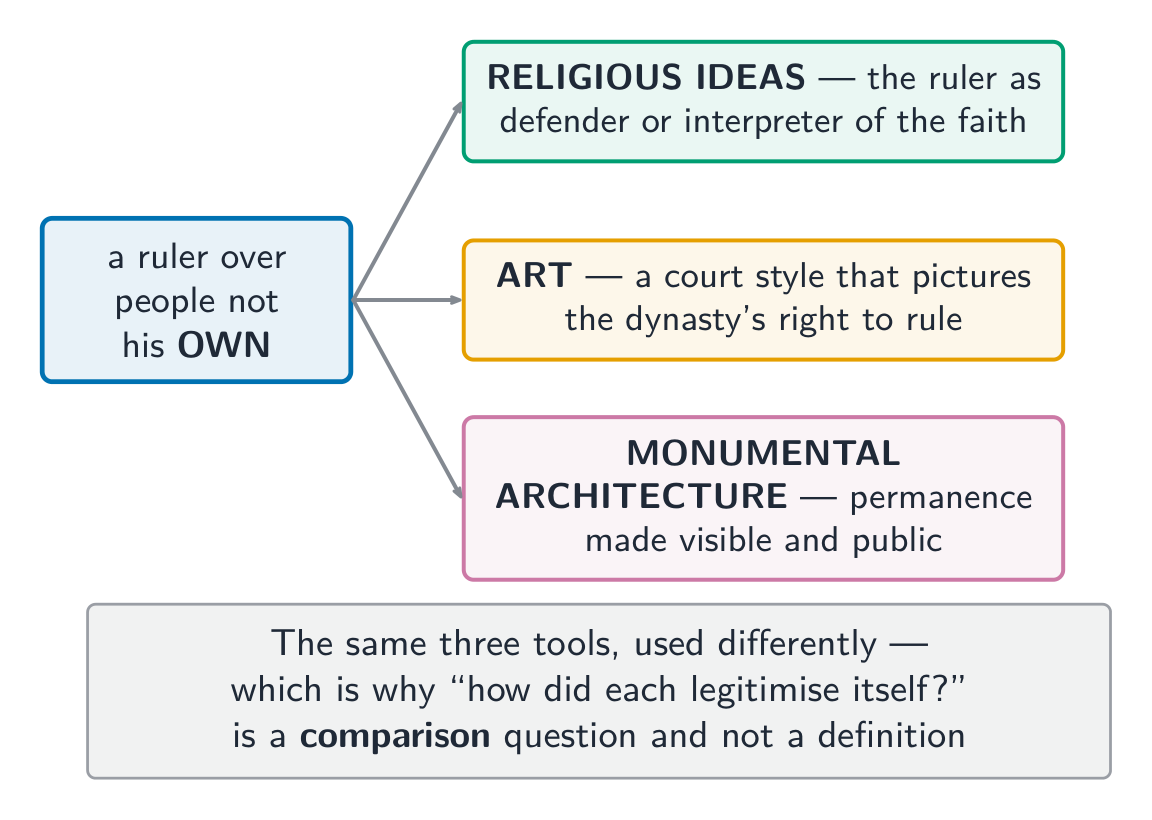
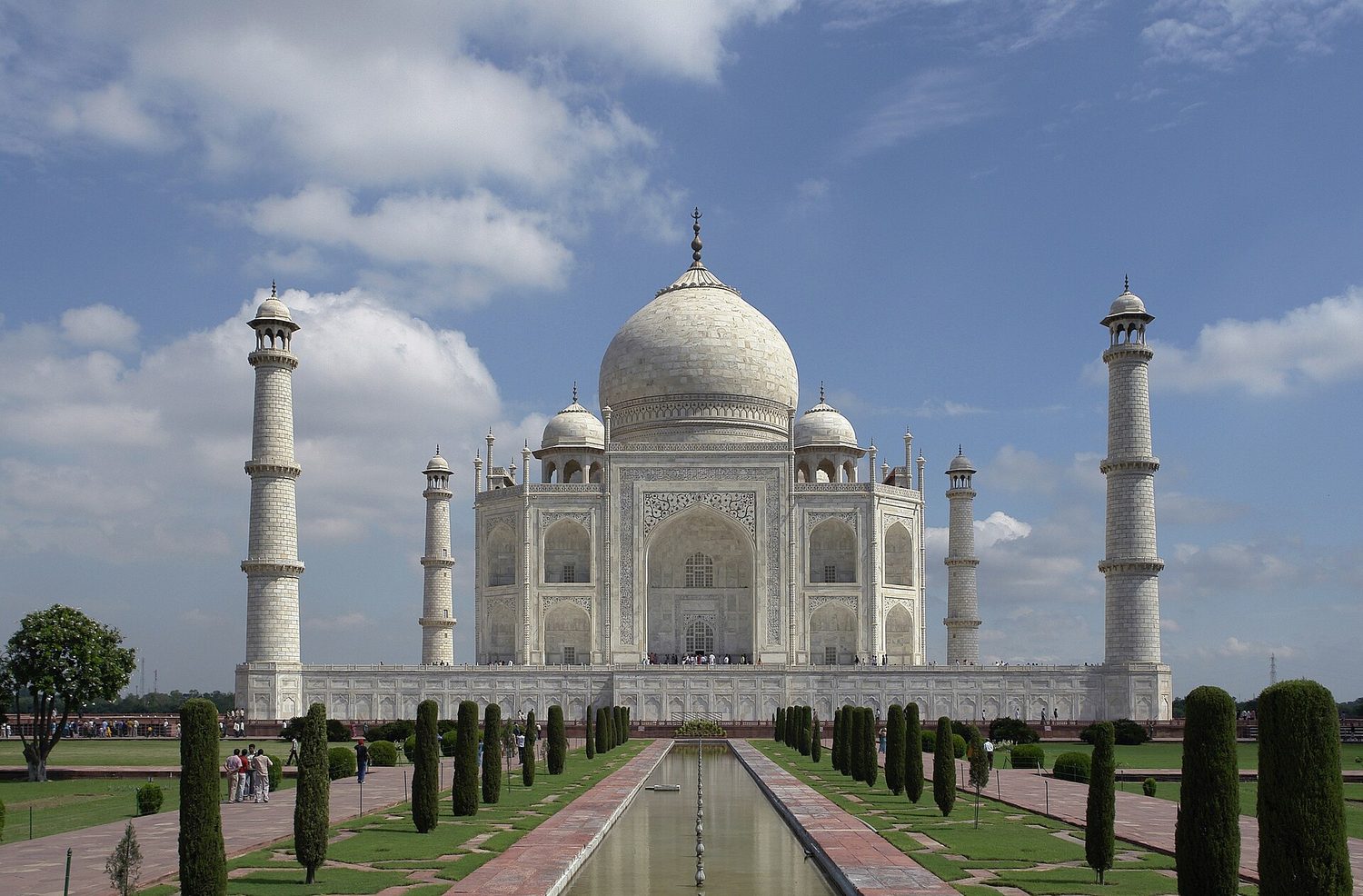
Rulers continued to use religious ideas, art, and monumental architecture to legitimise their rule - Mughal mosques and mausolea, Ottoman mosque complexes, Qing imperial portraits, and European palaces such as Versailles all do the same work.
Religious change also produced conflict:
Political and religious disputes together produced rivalries and conflict between states across Eurasia.
Worked example: change over time in the Mughal Empire. The Mughal rulers were Muslims ruling a mostly Hindu population. Akbar (ruled 1556–1605) ended the jizya 吉兹亚税, the tax on non-Muslims, in 1564, brought Hindu Rajput nobles into his government and married a Rajput princess. Aurangzeb (ruled 1658–1707) brought back the jizya in 1679 and ruled as a stricter Muslim. Many historians link this to revolts by the Marathas and others, which weakened the empire after his death. The same tool, religion, could hold a diverse empire together or help pull it apart.
In Europe, rulers claimed the divine right of kings 君权神授: that their power came from God. Louis XIV of France built the palace of Versailles and drew many leading nobles to his court through patronage and ceremony, strengthening his control over them. Not all French nobles lived there. In the Americas, the Inca ruler was the son of the sun god, and the Aztec rulers used large public temple ceremonies, including human sacrifice, to show their power.
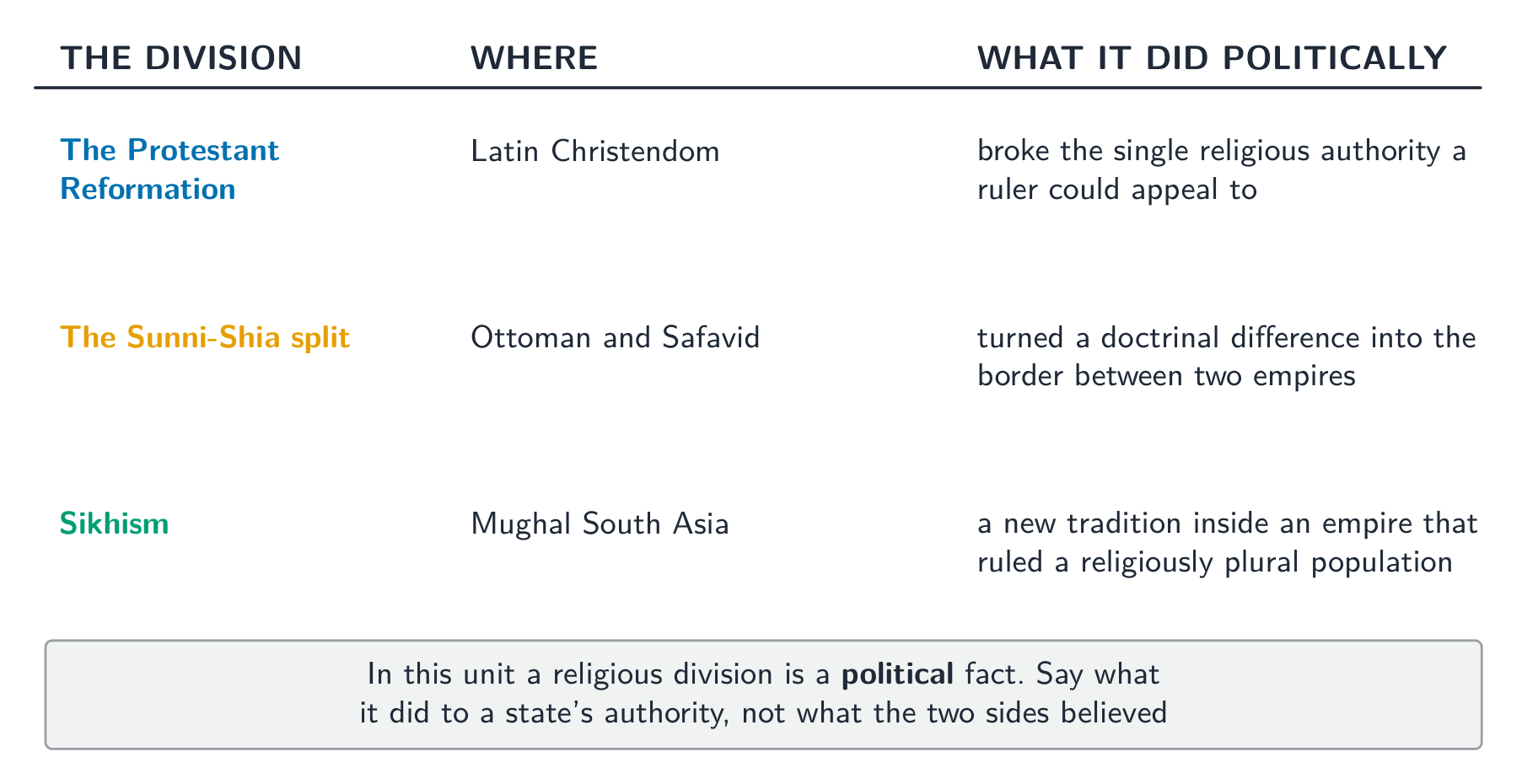

These rulers governed people who shared neither their language nor their faith, so legitimacy had to be manufactured.
| English |
|---|
| Protestant Reformation/ˈprɒtɪstənt rɪfɔːˈmeɪʃn/ |
| Sunni-Shia split/ˈsʌni ʃɪə splɪt/ |
| Sikhism/ˈsiːkɪzəm/ |
| jizya |
| divine right of kings |
| Learning Objective | Review: Unit 3 Key Concepts |
|---|---|
Unit 3.D |
|
Source: College Board AP Course and Exam Description
The unit's reasoning skill is comparison, and the productive comparisons are about method, not size:
Original worked comparison. For original short-answer practice, try "Explain one similarity" or "Explain one difference in how land-based empires maintained power." An illustrative answer names the method for both and explains the effect: "Both the Ottoman and Mughal empires used intermediaries to collect revenue rather than salaried tax officials, but the Ottomans used tax farming, which sold the right to collect for a fixed payment, while the Mughals relied on zamindars, hereditary landholders whose local standing gave them a permanent interest in the countryside." Notice the shape: the comparison is one function (raising revenue), performed two ways, with the consequence stated.
Each part needs only one or two sentences: answer the question, cite one specific piece of evidence, and explain how it supports the answer.
Answer (a), (b) and (c).
(a) Briefly describe ONE method the Ottoman Empire used to administer its territory.
(b) Briefly describe ONE way a ruler of a land-based empire legitimised their power.
(c) Briefly explain ONE way gunpowder weapons helped land-based empires expand.
Model answer.
Vocabulary card meanings
land-based empires: Large states whose power rested on armies and territory rather than on ocean fleets. gunpowder empires: The Ottoman, Safavid, and Mughal states that used cannon and firearms to expand. Manchu (Qing): The people from the northeast who conquered China and ruled as the Qing dynasty. Recruitment of bureaucratic elites: How empires chose the officials who ran taxation and law. military professionals: Soldiers whose career was war, rather than part-time levies. devshirme: The Ottoman levy of Christian boys for state and military service. janissaries: Elite Ottoman infantry, many of them raised through the child levy. ghulams: Slave-soldiers in Safavid and other Persianate armies. tribute collection: Gathering goods or money that subject peoples owed a ruler. hard currency: Money that people trust to hold its value. In this topic that trust is placed in coin of reliable metal. Protestant Reformation: The sixteenth-century break that created Protestant churches in Europe. Sunni-Shia split: The division in Islam over rightful leadership after the Prophet. Sikhism: A religion founded in the Punjab that drew on both Islamic and Hindu settings.
Work through it step by step, with instant-check exercises.
Loading subjects…