Skip to content · ⁨コンテンツへスキップ⁩

Land-Based Empires · ⁨陸上帝国⁩

AP World History: Modern · ⁨AP 世界史:近代⁩ · Topic 3 · ⁨トピック 3⁩

View Slides · ⁨查看幻灯片⁩ Train · ⁨練習する⁩
Video lesson for this topic · ⁨このトピックのビデオレッスン⁩ Open the video page · ⁨動画ページを開く⁩
5:35

Unit 3: 陸上帝国

この単位に登場するすべての統治者は、同じ実務的な問題に直面します。首都から旅で数週間かかる領土を征服しましたが、実際に…

English narration · English + 中文 subtitles burned in · ⁨英語ナレーション・英語+中文字幕 burning-in⁩

3.1

How the Land Empires Expanded · ⁨陸上帝国の拡大方法⁩

Syllabus · ⁨シラバス⁩
English

3.1 Empires Expand

Thematic Focus (GOV): Governance — A variety of internal and external factors contribute to state formation, expansion, and decline. Governments maintain order through a variety of administrative institutions, policies, and procedures, and governments obtain, retain, and exercise power in different ways and for different purposes.

Learning Objective Unit 3.A: Explain how and why various land-based empires developed and expanded from 1450 to 1750.

  • KC-4.3.II Imperial expansion relied on the increased use of gunpowder, cannons, and armed trade to establish large empires in both hemispheres.
  • KC-4.3.II.B Land empires included the Manchu in Central and East Asia; the Mughal in South and Central Asia; the Ottoman in Southern Europe, the Middle East, and North Africa; and the Safavids in the Middle East.
  • KC-4.3.III.i Political and religious disputes led to rivalries and conflict between states.

Illustrative examples:

  • State rivalries:
    • Safavid–Mughal conflict
    • Songhai Empire’s conflict with Morocco
日本語

3.1 帝国の拡大

テーマの焦点(GOV): 統治 — 多様な内外的要因が国家の形成、拡大、衰退に寄与する。政府は多様な行政機関、政策、手続きを通じて秩序を維持し、異なる方法・目的で権力を獲得・保持・行使する。

学習目標 Unit 3.A: 1450年〜1750年にかけて、多様な陸上帝国がどのようにして、なぜ発展・拡大したかについて説明せよ。

  • KC-4.3.II 帝国の拡大は、両半球で巨大な帝国を確立するために火薬、大砲、武装商船の多用に依存していた。
  • KC-4.3.II.B 陸上帝国には、中央および東アジアのマンchu朝、南および中央アジアのムガル朝、南ヨーロッパ・中東・北アフリカのオスマン朝、中東のサファヴィー朝が含まれた。
  • KC-4.3.III.i 政治的・宗教的な対立は、国家間の競合と衝突をもたらした。

具体例:

  • 国家間の競合:
    • サファヴィー朝とムガル朝の衝突
    • ソンハイ帝国とモロッコの衝突

Source: College Board AP Course and Exam Description · ⁨出典: College Board AP コースおよび試験説明書⁩

English

Unit 3 covers the great land-based empires 陆基帝国 of roughly 1450 to 1750. Four questions organise it: how they expanded, how they governed, how they paid for themselves, and how they used religion.

Expansion relied on the increased use of gunpowder, cannons, and armed trade - which is why these are often called the gunpowder empires 火药帝国. Access to gunpowder weapons let a central ruler overpower regional rivals and fortified nobles, so military technology and political centralisation grew together.

The empires to know:

  • The Manchu (Qing) 满清 in Central and East Asia.
  • The Mughal 莫卧儿 in South Asia.
  • The Ottoman 奥斯曼 in the eastern Mediterranean and beyond.
  • The Safavid 萨法维 in Persia.
日本語

単元3では、おおよそ1450年から1750年にかけての巨大な陸上帝国を取り上げる。4つの問いで構成される: どのように拡大したか、どのように統治したか、財政をどう賄ったか、以及如何に宗教を利用したか。

拡大には、火薬、大砲、武装商取引の増大利用が基盤となっており、これらが火薬帝国と呼ばれる所以である。火薬兵器へのアクセスは中央権力が地方の対立勢力や要塞化された貴族に優位に立つことを可能にし、軍事技術と政治の中央集権化がともに発展した。

知っておくべき帝国:

  • 中央および東アジアの満州(清)。
  • 南アジアのムガル。
  • 東地中海およびそれ以南のオスマン。
  • パースのサファヴィー。
なぜ火薬帝国と呼ばれたのか: 軍事技術と中央集権化がともに発展した
Explore · ⁨探索⁩

Assemble the gunpowder-empire claim · ⁨火薬帝国の主張を構成する⁩

Military technology and political centralisation grew together — and the mechanism is that a cannon ends a fortified lord's advantage. · ⁨軍事技術と政治的中央集権は共に発展した——メカニズムは、大砲が砦を持つ貴族の優位性を終えることだ。⁩

Vocabulary · ⁨語彙⁩ Train · ⁨練習する⁩
English 日本語
land-based empires/lænd beɪst ˈempaɪəz/ 陸上帝国
gunpowder empires/ˈɡʌnpaʊdə ˈempaɪəz/ 火薬帝国
Manchu (Qing)/ˈmæntʃuː/ 満州(清)
Mughal/ˈməʊɡl/ ムガル
Ottoman/ˈɒtəmən/ オスマン
Safavid/ˈsæfəvɪd/ サファヴィー朝
Recruitment of bureaucratic elites/rɪˈkruːtmənt ɒv ˌbjʊərəʊˈkrætɪk ɪˈliːts/ 官僚エリート層の登用
military professionals/ˈmɪlɪtəri prəˈfeʃənlz/ 軍事専門家
devshirme/ˈdevʃɜːm/ デヴシルメ
janissaries/ˈdʒænɪsəriz/ ヤニッサーリー
ghulams/ˈɡjʊlæmz/ グルーム
tribute collection/ˈtrɪbjuːt kəˈlekʃn/ 貢納徴収
tax farming/tæks ˈfɑːmɪŋ/ 租税収取権の売却(タックスファーマー)
zamindar/ˈzæmaɪndɑː/ ザミンドール
hard currency/hɑːd ˈkʌrənsi/ 硬貨
Protestant Reformation/ˈprɒtɪstənt rɪfɔːˈmeɪʃn/ プロテスタント改革
Sunni-Shia split/ˈsʌni ʃɪə splɪt/ スンナ派とシーア派の分裂
Sikhism/ˈsiːkɪzəm/ シク教
3.2

Administration · ⁨行政⁩

Syllabus · ⁨シラバス⁩
English

3.2 Empires: Administration

Thematic Focus (GOV): Governance — A variety of internal and external factors contribute to state formation, expansion, and decline. Governments maintain order through a variety of administrative institutions, policies, and procedures, and governments obtain, retain, and exercise power in different ways and for different purposes.

Learning Objective Unit 3.B: Explain how rulers used a variety of methods to legitimize and consolidate their power in land-based empires from 1450 to 1750.

  • KC-4.3.I.C Recruitment and use of bureaucratic elites, as well as the development of military professionals, became more common among rulers who wanted to maintain centralized control over their populations and resources.
  • KC-4.3.I.A Rulers continued to use religious ideas, art, and monumental architecture to legitimize their rule.
  • KC-4.3.I.D Rulers used tribute collection, tax farming, and innovative tax-collection systems to generate revenue in order to forward state power and expansion.

Illustrative examples:

  • Bureaucratic elites or military professionals:
    • Ottoman devshirme
    • Salaried samurai
  • Religious ideas:
    • Mexica practice of human sacrifice
    • European notions of divine right
    • Songhai promotion of Islam
  • Art and monumental architecture:
    • Qing imperial portraits
    • Incan sun temple of Cuzco
    • Mughal mausolea and mosques
    • European palaces, such as Versailles
  • Tax-collection systems:
    • Mughal zamindar tax collection
    • Ottoman tax farming
    • Mexica tribute lists
    • Ming practice of collecting taxes in hard currency
日本語

3.2 帝国:行政

テーマの焦点(GOV): 統治 — 多様な内外的要因が国家の形成、拡大、衰退に寄与する。政府は多様な行政機関、政策、手続きを通じて秩序を維持し、異なる方法・目的で権力を獲得・保持・行使する。

学習目標 Unit 3.B: 1450年〜1750年にかけて、支配者は陸上帝国においてどのような方法を用いて自らの権力を正当化し、強化したかについて説明せよ。

  • KC-4.3.I.C 官僚エリートの人材採用・活用、ならびに軍事専門家の育成は、人民および資源に対する中央集権的統制を維持したい支配者にとってより一般的になった。
  • KC-4.3.I.A 支配者は引き続き、宗教思想、芸術、そして巨塔建築を用いて自らの統治を正当化した。
  • KC-4.3.I.D 支配者は租税徴収、租税請負、革新的な租税徴収システムを用いて国家権力と扩张のための財源を調達した。

具体例:

  • 官僚エリートまたは軍事専門家:
    • オスマン朝のデヴシルメ
    • 俸禄侍士(奉公侍士)
  • 宗教思想:
    • メキシカ人の生贄儀式
    • 欧州の神授王権説
    • ソンハイによるイスラム教の推進
  • 芸術と巨塔建築:
    • クリア朝の皇帝肖像画
    • インカ帝国のクスコ太陽神殿
    • ムガル朝の陵墓とモスク
    • ヴァルサイユ宮殿などの欧州宮廷建築
  • 租税徴収システム:
    • ムガル朝のザミンダー租税徴収
    • オスマン朝の租税請負
    • メキシカ人の貢納リスト
    • 明の現物課税(硬貨課税)の慣習

Source: College Board AP Course and Exam Description · ⁨出典: College Board AP コースおよび試験説明書⁩

English

Rulers faced the same problem: how to control territory far from the capital. The CED names the tools they used.

Recruitment of bureaucratic elites 官僚精英的选任 and the development of military professionals 职业军人 gave rulers officials who owed their position to the state rather than to birth. The clearest case is the Ottoman devshirme 德夫希尔梅 system, which recruited and trained administrators and soldiers, including the janissaries 耶尼切里; the Manchu continued China's examination system; the Safavids used ghulams 古拉姆.

Revenue came through tribute collection 纳贡, tax farming 包税制, and innovative tax-collection systems. The Mughal zamindar 柴明达尔 system and Ottoman tax farming are the standard examples, and the Ming practice of collecting taxes in hard currency 硬通货 is another.

日本語
4つの帝国、1セットの道具: 各帝国が官僚を如何に採用し、財源を調達し、正当性を主張したか
同一の3つの問題 - 人材、財源、正当性 - を各帝国が異なる解決策で対処

君主は同じ問題に直面した: 首都から遠い領土をいかに支配するか。CED(College Board)が提示するツールがある。

官僚エリートへの採用および軍事専門家の育成により、君主は出身ではなく国家に対する忠誠心を有する官僚を得た。最も明確な例は、行政官および兵士、すなわちヤニッサーリーを含め採用・訓練を行ったオスマンのデヴシルメ制度である。満州は中国の科挙制度を継承し、サファヴィーはグールームを使用した。

財源は朝貢の徴収、租税請負制、革新的な租税徴収システムによって得られた。ムガルのザミンダー制度とオスマンの租税請負制が標準的な例であり、明の硬貨での租税徴収もその一例である。

3.3

Legitimacy and Belief · ⁨正当性と信仰⁩

Syllabus · ⁨シラバス⁩
English

3.3 Empires: Belief Systems

Thematic Focus (CDI): Cultural Developments and Interactions — The development of ideas, beliefs, and religions illustrates how groups in society view themselves, and the interactions of societies and their beliefs often have political, social, and cultural implications.

Learning Objective Unit 3.C: Explain continuity and change within the various belief systems during the period from 1450 to 1750.

  • KC-4.1.VI.i The Protestant Reformation marked a break with existing Christian traditions and both the Protestant and Catholic reformations contributed to the growth of Christianity.
  • KC-4.1.VI.ii Political rivalries between the Ottoman and Safavid empires intensified the split within Islam between Sunni and Shi’a.
  • KC-4.1.VI.iii Sikhism developed in South Asia in a context of interactions between Hinduism and Islam.
日本語

3.3 帝国:信仰体系

テーマの焦点(CDI): 文化的発展と相互作用 — 思想、信仰、宗教の発展は、社会内の集団が自らをどのように認識しているかを示しており、社会やその信念の相互作用は政治的、社会的、文化的な影響を及ぼすことが往往ある。

学習目標 Unit 3.C: 1450年〜1750年にかけて、多様な信仰体系における継続性と変容について説明せよ。

  • KC-4.1.VI.i プロテスタント改革は既存のキリスト教伝統との断絶を示し、プロテスタント改革とカトリック改革の双方がキリスト教の拡大に寄与した。
  • KC-4.1.VI.ii オスマン朝とサファヴィー朝の政治的対立は、イスラム教内のスンナ派とシーア派の分裂を激化させた。
  • KC-4.1.VI.iii シーク教はヒンドゥー教とイスラム教の相互作用という文脈の中で、南アジアで発生した。

Source: College Board AP Course and Exam Description · ⁨出典: College Board AP コースおよび試験説明書⁩

English

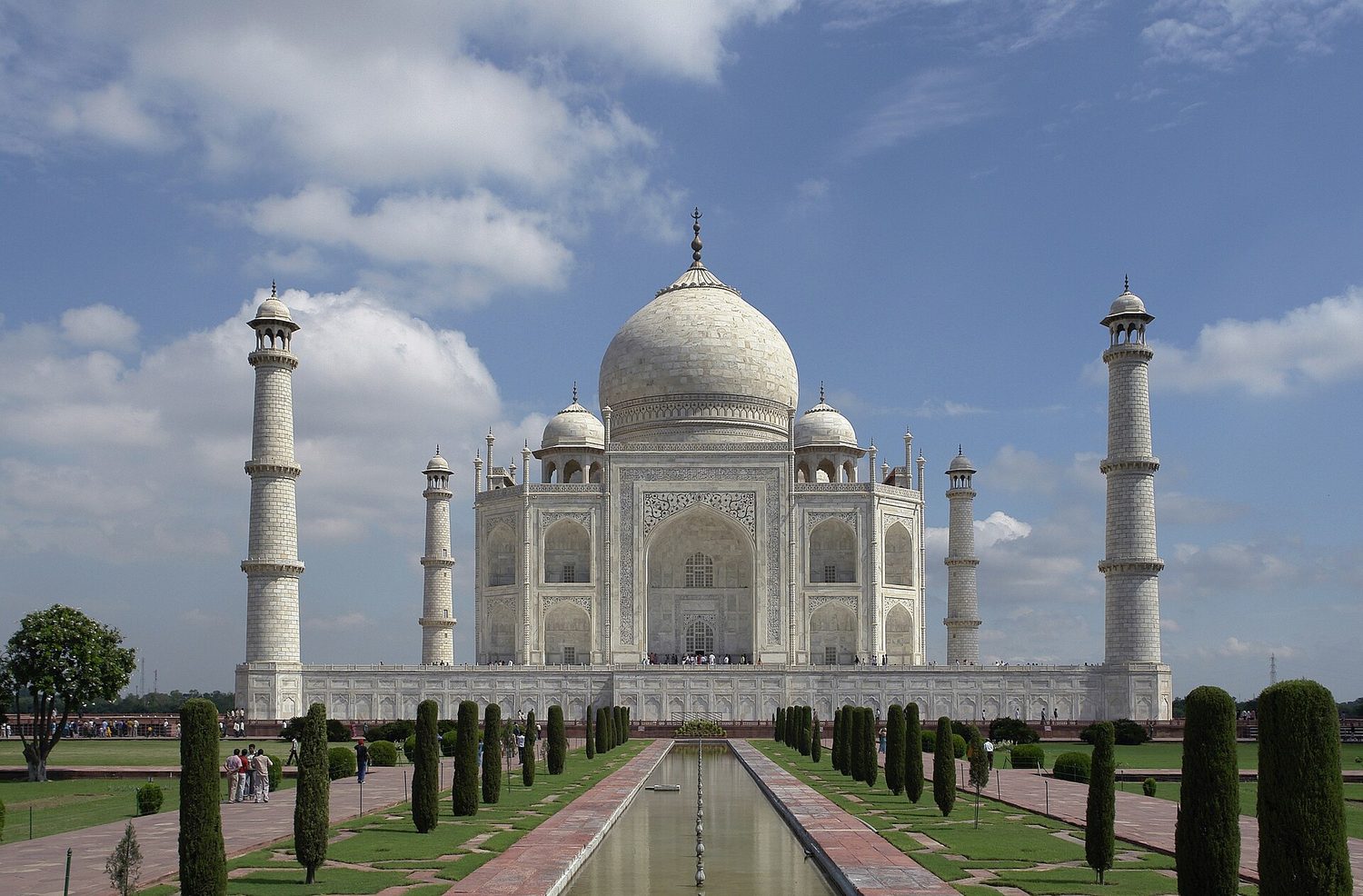
Rulers continued to use religious ideas, art, and monumental architecture to legitimise their rule - Mughal mosques and mausolea, Ottoman mosque complexes, Qing imperial portraits, and European palaces such as Versailles all do the same work.

Religious change also produced conflict:

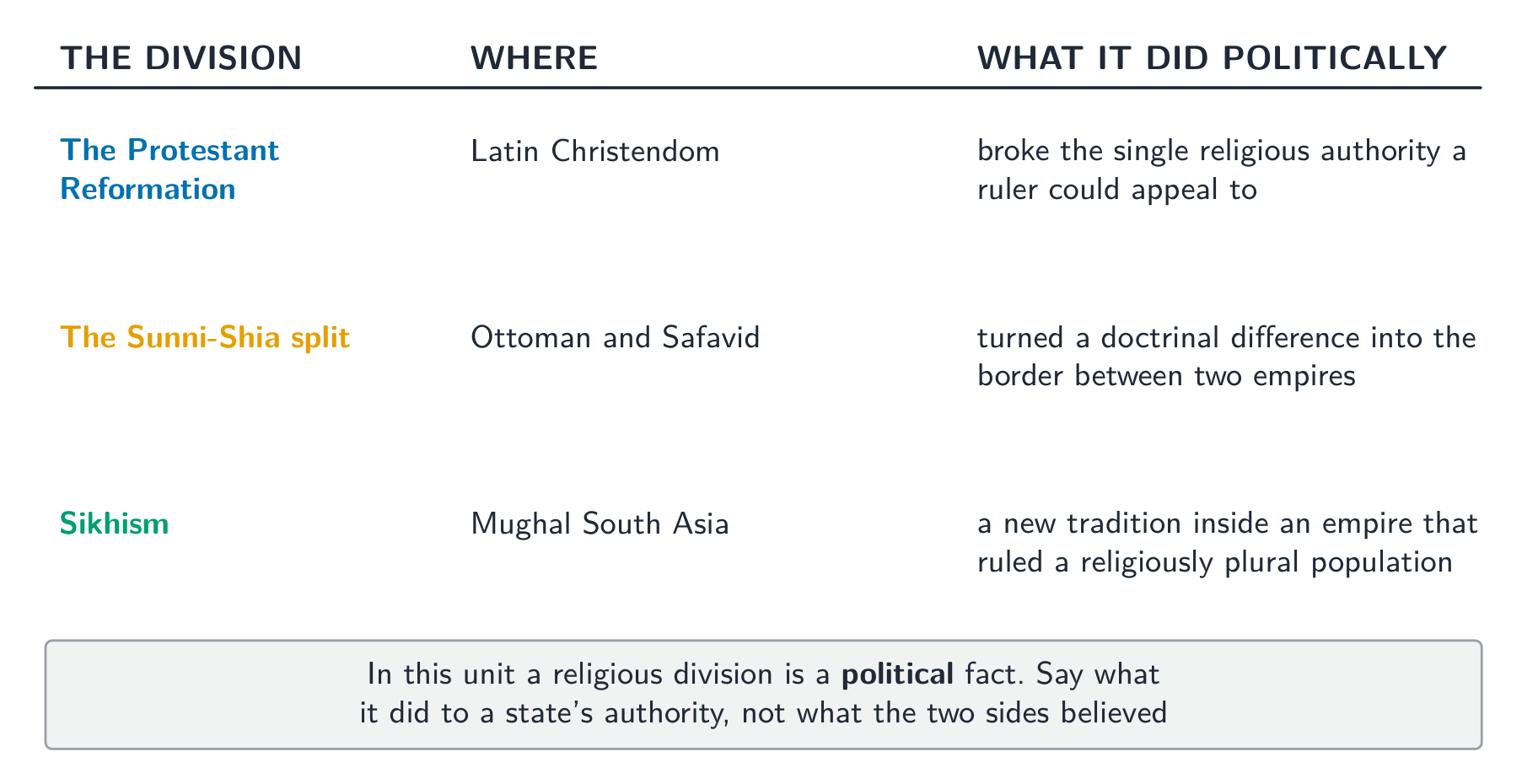
  • The Protestant Reformation 新教改革 marked a break with existing Christian traditions and led to sustained religious and political conflict in Europe.
  • Political rivalry between the Ottoman and Safavid empires intensified the Sunni-Shia split 逊尼派与什叶派分裂, showing how state rivalry can deepen a religious division.
  • Sikhism 锡克教 developed in South Asia in a context of interaction between Hinduism and Islam.

Political and religious disputes together produced rivalries and conflict between states across Eurasia.

日本語

君主は引き続き、宗教的アイデア、芸術、巨塔建築を用いて自らの統治の正当性を証明した。ムガルのモスクおよび陵墓、オスマンのモスク複合体、清の皇帝肖像画、ヴェルサイユ宮殿のようなヨーロッパの宮殿などが同様の機能を果たしている。

宗教の変動は紛争も引き起こした:

  • プロテスタント改革は既存のキリスト教伝統との決別を意味し、ヨーロッパにおける持続的な宗教的・政治的紛争をもたらした。
  • オスマンとサファヴィー帝国間の政治的対立は、スンナ派とシーア派の分裂を激化させ、国家间的対立が宗教的分断を深めることを示した。
  • シク教はヒンドゥー教とイスラム教の相互作用という文脈の中で南アジアで誕生した。

政治的および宗教的紛争は、ユーラシア全域において国家間の対立と紛争を生み出した。

自分の人民ではない人々に対する君主の3つの手段 — 各帝国で異なった使われ方をした
3つの宗教的分派、それぞれが国家の権威に対して何を行ったか
スレイマニ耶モスク - 合法性を担保するための象徴的建築
タージ・マハル - 同一の機能を持つ象徴的建築。宗教的多様性社会を支配したムガル君主によって用いられた
Explore · ⁨探索⁩

Sort each instrument of legitimacy · ⁨各正当性の手段を分類せよ⁩

These rulers governed people who shared neither their language nor their faith, so legitimacy had to be manufactured. · ⁨これらの支配者は言語も信仰も共有しない人民を支配したため、正当性は意図的に製造されねばならなかった。⁩

3.4

Comparison in Land-Based Empires · ⁨陸上帝国における比較⁩

Syllabus · ⁨シラバス⁩
English

3.4 Comparison in Land-Based Empires

Learning Objective Unit 3.D: Compare the methods by which various empires increased their influence from 1450 to 1750.

  • KC-4.1 The interconnection of the Eastern and Western Hemispheres made possible by transoceanic voyaging, transformed trade and had a significant social impact on the world.
    • KC-4.1.VI In some cases, the increase and intensification of interactions between newly connected hemispheres expanded the reach and furthered development of existing religions, and contributed to religious conflicts and the development of syncretic belief systems and practices.
  • KC-4.3 Empires achieved increased scope and influence around the world, shaping and being shaped by the diverse populations they incorporated.
    • KC-4.3.II Imperial expansion relied on the increased use of gunpowder, cannons, and armed trade to establish large empires in both hemispheres.
    • KC-4.3.II.B Land empires included the Manchu in Central and East Asia; Mughal in South and Central Asia; Ottoman in Southern Europe, the Middle East, and North Africa; and the Safavids in the Middle East.
    • KC-4.3.III.i Political and religious disputes led to rivalries and conflict between states.
日本語

3.4 陸上帝国の比較

学習目標 Unit 3.D: 1450年〜1750年にかけて、多様な帝国が影響力を増大させるための方法について比較せよ。

  • KC-4.1 越洋航海によって可能となった東半球と西半球の相互接続は、貿易を変革し、世界に対して大きな社会的影響を与えた。
    • KC-4.1.VI 一部のケースでは、新たに接続された半球間の相互作用の増大と激化が、既存の宗教の波及を拡大させ、発展を促すとともに、宗教紛争および折衷主義的信仰体系・実践の発展にも寄与した。
  • KC-4.3 帝国は世界各地でより広い範囲と影響力を獲得し、取り込んだ多様な人口によって形作られると同時に、それ自身もまた人口によって形作られた。
    • KC-4.3.II 帝国主義拡大は、両半球に大規模な帝国を確立するために、火薬、大砲、武装貿易の増加利用に依存していた。
    • KC-4.3.II.B 陸上帝国には、中央および東アジアのマンチュ朝、南および中央アジアのムガル朝、南ヨーロッパ・中東・北アフリカのオスマン朝、中東のサファヴィー朝が含まれた。
    • KC-4.3.III.i 政治的および宗教的な対立が、国家間の競合と衝突を生み出した。

Source: College Board AP Course and Exam Description · ⁨出典: College Board AP コースおよび試験説明書⁩

English

The unit's reasoning skill is comparison, and the productive comparisons are about method, not size:

  • Recruiting officials by examination (Qing) against by enslaved-elite systems (Ottoman devshirme, Safavid ghulams).
  • Tax farming (Ottoman) against land-revenue intermediaries (Mughal zamindars) against direct taxation (Ming hard currency).
  • Legitimacy through religious identity (Safavid Shi'ism as state religion) against through tolerance of diversity (Mughal policy under Akbar).

Worked example (a real AP exam question). AP World short-answer questions in this unit typically ask students to "Explain one similarity" or "Explain one difference in how land-based empires maintained power." A full-mark answer names the method for both and explains the effect: "Both the Ottoman and Mughal empires used intermediaries to collect revenue rather than salaried tax officials, but the Ottomans used tax farming, which sold the right to collect for a fixed payment, while the Mughals relied on zamindars, hereditary landholders whose local standing gave them a permanent interest in the countryside." Notice the shape: the comparison is one function (raising revenue), performed two ways, with the consequence stated.

日本語

この単元の論理的思考技能は比較であり、生産的な比較の対象は規模ではなく手法である:

  • 試験による官僚採用(清)対 奴隷エリート制度(オスマン・デヴシルメ、サファヴィー・グラムス)。
  • 租税請負制(オスマン)対 土地税仲介者(ムガル・ザミンダー)対 直接課税(明・硬貨)。
  • 宗教的アイデンティティによる正当性の確立(サファヴィー・シャア派を国教とする)対 多様性の容認によるもの(アクバー治世下のムガル政策)。

** worked example (実際のAP試験問題)。** この単元におけるAP世界史短答問題は、学生に「陸上帝国が権力を維持する際の一様な点」または「違い」を説明することを求めるのが一般的である。満点の回答では、両方の帝国についてその手法を挙げ、その影響を説明する必要がある。「オスマン帝国とムガル帝国の両方とも、給料制の税務官ではなく仲介者を通じて歳入を収集したが、オスマンは一定の金額で徴収権を売却する租税請負制を用いたのに対し、ムガルは地元の地位に基づき地方に恒久的な関心を持つ世襲的土地保有者であるザミンダーに依存していた。」というように記述される。この構成に注意されたい:比較は、2つの異なる方法で行われる一機能(歳入の調達)であり、その結果が明記されている。

3.4

Exam tips · ⁨試験対策⁩

English
  • Say why gunpowder mattered: it let central rulers overpower regional rivals, so military change and centralisation go together.
  • Learn the four empires by their administrative method, not their territory - devshirme, examinations, zamindars, ghulams.
  • Tax farming sells the right to collect; a zamindar is a hereditary landholder. Questions turn on that difference.
  • Monumental architecture is evidence of legitimation, not decoration. Say what it was doing.
  • The Ottoman-Safavid rivalry is the example of political conflict deepening a religious divide.
  • Comparisons should be one function performed two ways, with the consequence stated.
日本語
  • なぜ火薬が重要だったかを理由で説明せよ:中央政権が地域的反対勢力に優位に立つことを可能にし、軍事改革と中央集権化がセットで進行したためである。
  • 領土ではなく、行政手法によって4つの帝国を学ぶこと:デヴシルメ、試験、ザミンダー、グラムス。
  • 租税請負制は徴収権を売却するものであり、ザミンダーは世襲的土地保有者である。この違いが問われる。
  • 象徴的建築は装飾ではなく、合法性の証拠である。それがどのような役割を果たしていたかを述べよ。
  • オスマンとサファヴィーの対立は、政治的対立が宗教的対立を深めた例である。
  • 比較は、2つの異なる方法で行われる一機能であり、その結果が明記されているべきである。

Interactive lessons on this topic · ⁨このトピックのインタラクティブ授業⁩

Work through it step by step, with instant-check exercises. · ⁨一歩ずつ進め、即時チェック付きの問題で学習します。⁩

Past Papers · ⁨過去問⁩

More topics in AP World History: Modern · ⁨AP 世界史:近代⁩ · ⁨AP World History: Modern · ⁨AP 世界史:近代⁩ の他のトピック⁩

Log in or create account · ⁨ログインまたはアカウント作成⁩

IGCSE, A-Level & AP