NEI
National and European Identity — Definitions and perceptions of regional, cultural, national, and European identity have developed and been challenged over time, with varied and often profound effects on the political, social, and cultural order in Europe. | Unit 7.B
Explain how the development and spread of nationalism affected Europe from 1815 to 1914. |
- KC-3.3.I.F Nationalists encouraged loyalty to the nation in a variety of ways, including romantic idealism, liberal reform, political unification, racialism with a concomitant anti-Semitism, and chauvinism justifying national aggrandizement.
- KC-3.3.I.G While during the 19th century western European Jews became more socially and politically acculturated, Zionism, a form of Jewish nationalism, developed late in the century as a response to growing anti-Semitism throughout Europe.
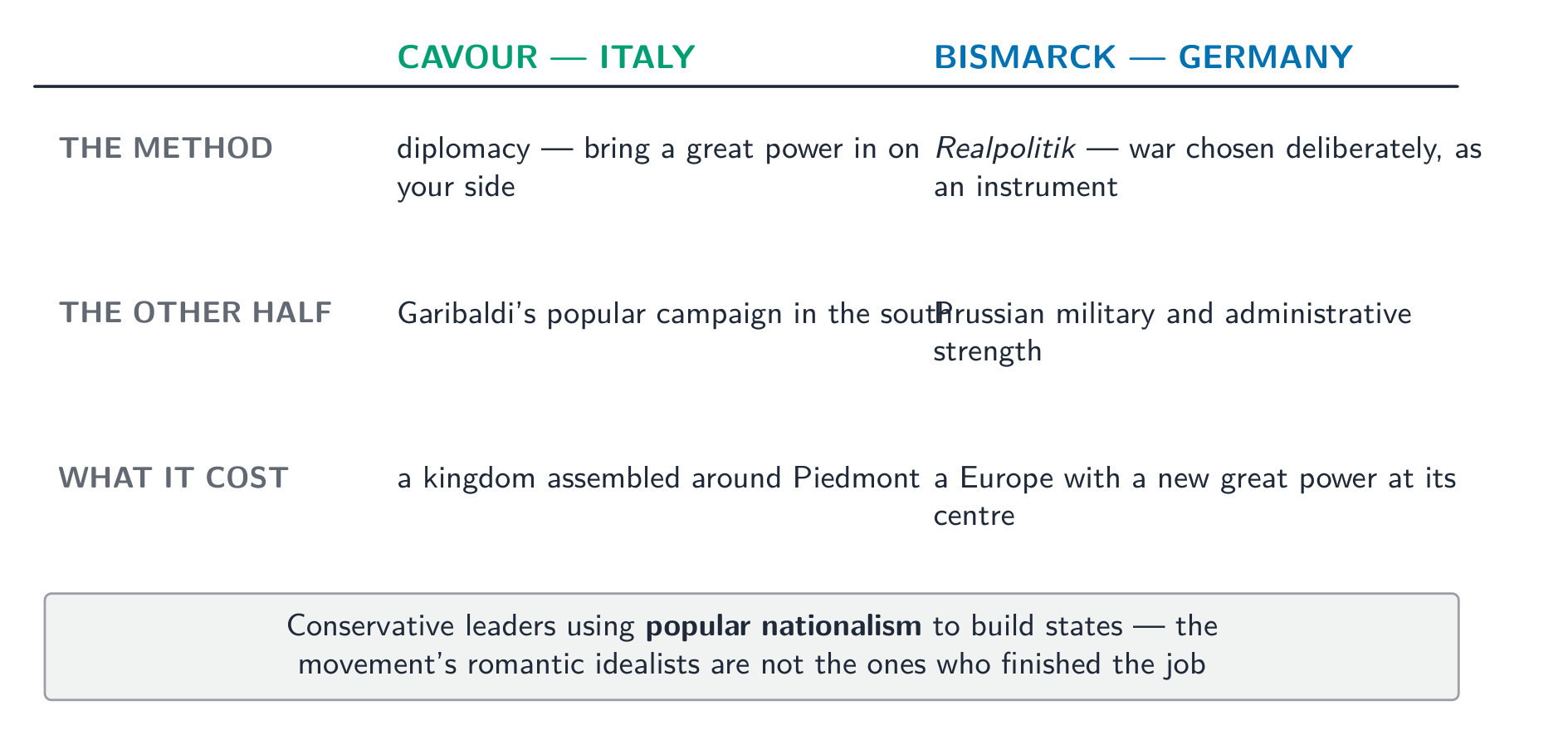
- KC-3.4.II.B A new generation of conservative leaders, including Napoleon III, Cavour, and Bismarck, used popular nationalism to create or strengthen the state.
- KC-3.4.II.C The creation of the dual monarchy of Austria-Hungary, which recognized the political power of the largest ethnic minority, was an attempt to stabilize the state by reconfiguring national unity.
|