Skip to content · ⁨דלג לתוכן⁩
Subjects · ⁨נושאים⁩

AP World History: Modern · ⁨היסטוריה עולמית: זמנים מודרניים - AP⁩

Tips · ⁨טיפים⁩

AP World History: Modern covers roughly 1200 CE to the present in nine units - the global tapestry of societies around 1200, networks of exchange, land-based empires, transoceanic connections, revolutions, the consequences of industrialisation, global conflict, the Cold War and decolonisation, and globalisation.

The scale is global, and so is the thinking. Questions rarely ask about one country alone. They ask you to compare regions, trace a network across continents, or explain why a similar pressure produced different outcomes in different places.

Themes carry across the whole course: governance, economic systems, cultural developments, social interactions and organisation, technology and innovation, and humans and the environment. Each topic names the theme it belongs to, which is the fastest way to see how distant units connect.

Learn processes, not just events. Trade networks, state formation, industrialisation and migration are processes with causes, mechanisms and effects - and that structure is what written answers are built on.

The notes below follow the College Board framework unit by unit, with the key concepts and the illustrative examples the framework itself offers.

  • 1

    The Global Tapestry · ⁨הטפטה הגלובלית⁩

    Watch lesson · ⁨צפה בשיעור⁩
    1.1

    Reading the World in 1200 · ⁨קריאת העולם בשנת 1200⁩

    Syllabus · ⁨סיילבוס⁩
    English

    1.1 Developments in East Asia from c. 1200 to c. 1450

    Thematic Focus (GOV): Governance — A variety of internal and external factors contribute to state formation, expansion, and decline. Governments maintain order through a variety of administrative institutions, policies, and procedures, and governments obtain, retain, and exercise power in different ways and for different purposes.

    Thematic Focus (CDI): Cultural Developments and Interactions — The development of ideas, beliefs, and religions illustrates how groups in society view themselves, and the interactions of societies and their beliefs often have political, social, and cultural implications.

    Learning Objective Unit 1.A: Explain the systems of government employed by Chinese dynasties and how they developed over time.

    • KC-3.2.I.A Empires and states in Afro-Eurasia and the Americas demonstrated continuity, innovation, and diversity in the 13th century. This included the Song Dynasty of China, which utilized traditional methods of Confucianism and an imperial bureaucracy to maintain and justify its rule.

    Learning Objective Unit 1.B: Explain the effects of Chinese cultural traditions on East Asia over time. THEMATIC FOCUS Economics Systems ECN As societies develop, they affect and are affected by the ways that they produce, exchange, and consume goods and services. LEARNING OBJECTIVE

    • KC-3.1.III.D.i Chinese cultural traditions continued, and they influenced neighboring regions.
    • KC-3.1.III.D.ii Buddhism and its core beliefs continued to shape societies in Asia and included a variety of branches, schools, and practices. HISTORICAL DEVELOPMENTS

    Learning Objective Unit 1.C: Explain the effects of innovation on the Chinese economy over time.

    • KC-3.3.III.A.i The economy of Song China became increasingly commercialized while continuing to depend on free peasant and artisanal labor.
    • KC-3.1.I.D The economy of Song China flourished as a result of increased productive capacity, expanding trade networks, and innovations in agriculture and manufacturing.

    Illustrative examples:

    • Cultural traditions:
      • Filial piety in East Asia
      • Influence of Neo-Confucianism and Buddhism in East Asia
      • Confucian traditions of both respect for and expected deference from women
      • Chinese literary and scholarly traditions and their spread to Heian Japan and Korea
    • Branches of Buddhism:
      • Theravada
      • Mahayana
      • Tibetan
    • Technological innovations:
      • Champa rice
      • Transportation innovations, like the Grand Canal expansion
      • Steel and iron production
      • Textiles and porcelains for export
    עברית

    1.1 התפתחויות במזרח אסיה מכ-1200 עד כ-1450

    מיקוד נושא (GOV): שלטון — מגוון גורמים פנימיים וחיצוניים תורמים ליצירת מדינות, הרחבתן ונפילתן. ממשלות שומרות על סדר באמצעות מגוון מוסדות, מדיניות ונהלים מנהליים, וממשלות רוכשות, שומרות ומפעילות כוח בדרכים ובמטרות שונות.

    מיקוד נושא (CDI): התפתחויות ותفاعלים תרבותיים — פיתוח רעיונות, אמונות ודתות מדגיש כיצד קבוצות בחברה רואות את עצמן, והתفاعלים בין חברות ואמונותיהן לעיתים קרובות יש להם משמעויות פוליטיות, חברתיות ותרבותיות.

    מטרת הלמידה ליחידה 1.A: הסבר על מערכי הממשל שהשתמשו בהן השושלות הסיניות וכיצד התפתחו לאורך הזמן.

    • KC-3.2.I.A אימפריות ומדינות באפריקה-אסיה-אירופה ובאמריקות הראו רציפות, חדשנות ומגוון במאה ה-13. הדבר כלל את שושלת סונג בסין, שהשתמשה בשיטות מסורתיות של הקונפיוציאניות ובמשרתים האימפריאליים כדי לשמור ולהצדיק את שלטונה.

    מטרת הלמידה ליחידה 1.B: הסבר על השפעות המסורות התרבותיות הסיניות על מזרח אסיה לאורך הזמן. מיקוד נושא: כלכלה מערכות ECN ככל שהחברות מתפתחות, הן משפיעות ונשפעות מהדרכים שבהן הן מייצרות, מחליפות וצורכות סחורות ושירותים. מטרת הלמידה

    • KC-3.1.III.D.i המסורות התרבותיות הסיניות המשיכו להתקיים והשפיעו על אזורים שכנים.
    • KC-3.1.III.D.ii בודהיזם ואמונותיו הבסיסיות המשיכו לעצב את החברות באסיה וכלל מגוון זרמים, בתי ספר ושיטות. התפתחויות היסטוריות

    מטרת הלמידה ליחידה 1.C: הסבר על השפעות החדשנות על הכלכלה הסינית לאורך הזמן.

    • KC-3.3.III.A.i הכלכלה בסין של שונג הפכה הולך וגם למסחרית תוך שהמשיכה להסתמך על עבודת חקלאים וחרשים חופשיים.
    • KC-3.1.I.D הכלכלה בסין של שונג פרחה כתוצאה מעלייה בכושר הייצור, הרחבת רשתות המסחר וחדשנות בחקלאות ובתעשייה.

    דוגמאות מדגמיות:

    • מסורות תרבותיות:
      • כבוד להורים במזרח אסיה
      • השפעת הקונפוציאניות והבודהיזם במזרח אסיה
      • המסורת הקונפוציאנית של כבוד ומשמעת מצופים מנשים
      • המסורות הספרותיות והאקדמיות הסיניות והתפשטותן ליפן היאן ולקוריאה
    • זרעי בודהיזם:
      • ט'ראוודה
      • מהאיינה
      • טיבטי
    • חדשונות טכנולוגיים:
      • אורז צ'אמפה
      • חדשונות בתחום ההובלה, כמו הרחבת התעלה הגדולה
      • ייצור פלדה ברזל
      • טקסטיל ופורצלן לייצוא
    Source: College Board AP Course and Exam Description · ⁨מקור: תיאור הקורס והמבחן של College Board AP⁩

    English

    Unit 1 surveys the major regions of the world around 1200 to 1450, just before the great connecting networks of Unit 2. Its purpose is comparison: by the end you should be able to say how any two of these societies were governed, what held them together, and how they made their living.

    Three questions apply everywhere, and answering them for each region is the whole unit:

    • How is the state organised? Who rules, through what officials, and paid for how?
    • What belief system shapes society? Religion supplies law, education, and legitimacy in every region here.
    • What is the economic base? Agriculture almost everywhere, but with very different labour systems and levels of trade.
    עברית

    יחידה 1 סוקרת את האזורים המרכזיים בעולם סביב 1200 עד 1450, ממש לפני רשתות הקישור הגדולות של יחידה 2. מטרתה היא ההשוואה: בסוף היחידה תצלי לומר כיצד שתי כל אחת מהחברות הללו נשלטו, מה החזיק אותן יחד, וכיצד פרנסו את עצמן.

    שלוש שאלות חלות על כולם, והתשובה עליהן לכל אזור מהוות את整整个 היחידה:

    • כיצד המדינה מאורגנת? מי שלט, דרך איזה פקידים, וכיצד שולם עבורם?
    • איזה מערכת אמונות עיצבה את החברה? הדת מספקת חוק, חינוך וסמכות בכל אזור כאן.
    • מהי הבסיס הכלכלי? חקלאות כמעט בכל מקום, אך עם מערכות עבודה ורמות מסחר שונות מאוד.
    1.1

    East Asia · ⁨מזרח אסיה⁩

    Syllabus · ⁨סיילבוס⁩
    English

    1.1 Developments in East Asia from c. 1200 to c. 1450

    Thematic Focus (GOV): Governance — A variety of internal and external factors contribute to state formation, expansion, and decline. Governments maintain order through a variety of administrative institutions, policies, and procedures, and governments obtain, retain, and exercise power in different ways and for different purposes.

    Thematic Focus (CDI): Cultural Developments and Interactions — The development of ideas, beliefs, and religions illustrates how groups in society view themselves, and the interactions of societies and their beliefs often have political, social, and cultural implications.

    Learning Objective Unit 1.A: Explain the systems of government employed by Chinese dynasties and how they developed over time.

    • KC-3.2.I.A Empires and states in Afro-Eurasia and the Americas demonstrated continuity, innovation, and diversity in the 13th century. This included the Song Dynasty of China, which utilized traditional methods of Confucianism and an imperial bureaucracy to maintain and justify its rule.

    Learning Objective Unit 1.B: Explain the effects of Chinese cultural traditions on East Asia over time. THEMATIC FOCUS Economics Systems ECN As societies develop, they affect and are affected by the ways that they produce, exchange, and consume goods and services. LEARNING OBJECTIVE

    • KC-3.1.III.D.i Chinese cultural traditions continued, and they influenced neighboring regions.
    • KC-3.1.III.D.ii Buddhism and its core beliefs continued to shape societies in Asia and included a variety of branches, schools, and practices. HISTORICAL DEVELOPMENTS

    Learning Objective Unit 1.C: Explain the effects of innovation on the Chinese economy over time.

    • KC-3.3.III.A.i The economy of Song China became increasingly commercialized while continuing to depend on free peasant and artisanal labor.
    • KC-3.1.I.D The economy of Song China flourished as a result of increased productive capacity, expanding trade networks, and innovations in agriculture and manufacturing.

    Illustrative examples:

    • Cultural traditions:
      • Filial piety in East Asia
      • Influence of Neo-Confucianism and Buddhism in East Asia
      • Confucian traditions of both respect for and expected deference from women
      • Chinese literary and scholarly traditions and their spread to Heian Japan and Korea
    • Branches of Buddhism:
      • Theravada
      • Mahayana
      • Tibetan
    • Technological innovations:
      • Champa rice
      • Transportation innovations, like the Grand Canal expansion
      • Steel and iron production
      • Textiles and porcelains for export
    עברית

    1.1 התפתחויות במזרח אסיה מכ-1200 עד כ-1450

    מיקוד נושא (GOV): שלטון — מגוון גורמים פנימיים וחיצוניים תורמים ליצירת מדינות, הרחבתן ונפילתן. ממשלות שומרות על סדר באמצעות מגוון מוסדות, מדיניות ונהלים מנהליים, וממשלות רוכשות, שומרות ומפעילות כוח בדרכים ובמטרות שונות.

    מיקוד נושא (CDI): התפתחויות ותفاعלים תרבותיים — פיתוח רעיונות, אמונות ודתות מדגיש כיצד קבוצות בחברה רואות את עצמן, והתفاعלים בין חברות ואמונותיהן לעיתים קרובות יש להם משמעויות פוליטיות, חברתיות ותרבותיות.

    מטרת הלמידה ליחידה 1.A: הסבר על מערכי הממשל שהשתמשו בהן השושלות הסיניות וכיצד התפתחו לאורך הזמן.

    • KC-3.2.I.A אימפריות ומדינות באפריקה-אסיה-אירופה ובאמריקות הראו רציפות, חדשנות ומגוון במאה ה-13. הדבר כלל את שושלת סונג בסין, שהשתמשה בשיטות מסורתיות של הקונפיוציאניות ובמשרתים האימפריאליים כדי לשמור ולהצדיק את שלטונה.

    מטרת הלמידה ליחידה 1.B: הסבר על השפעות המסורות התרבותיות הסיניות על מזרח אסיה לאורך הזמן. מיקוד נושא: כלכלה מערכות ECN ככל שהחברות מתפתחות, הן משפיעות ונשפעות מהדרכים שבהן הן מייצרות, מחליפות וצורכות סחורות ושירותים. מטרת הלמידה

    • KC-3.1.III.D.i המסורות התרבותיות הסיניות המשיכו להתקיים והשפיעו על אזורים שכנים.
    • KC-3.1.III.D.ii בודהיזם ואמונותיו הבסיסיות המשיכו לעצב את החברות באסיה וכלל מגוון זרמים, בתי ספר ושיטות. התפתחויות היסטוריות

    מטרת הלמידה ליחידה 1.C: הסבר על השפעות החדשנות על הכלכלה הסינית לאורך הזמן.

    • KC-3.3.III.A.i הכלכלה בסין של שונג הפכה הולך וגם למסחרית תוך שהמשיכה להסתמך על עבודת חקלאים וחרשים חופשיים.
    • KC-3.1.I.D הכלכלה בסין של שונג פרחה כתוצאה מעלייה בכושר הייצור, הרחבת רשתות המסחר וחדשנות בחקלאות ובתעשייה.

    דוגמאות מדגמיות:

    • מסורות תרבותיות:
      • כבוד להורים במזרח אסיה
      • השפעת הקונפוציאניות והבודהיזם במזרח אסיה
      • המסורת הקונפוציאנית של כבוד ומשמעת מצופים מנשים
      • המסורות הספרותיות והאקדמיות הסיניות והתפשטותן ליפן היאן ולקוריאה
    • זרעי בודהיזם:
      • ט'ראוודה
      • מהאיינה
      • טיבטי
    • חדשונות טכנולוגיים:
      • אורז צ'אמפה
      • חדשונות בתחום ההובלה, כמו הרחבת התעלה הגדולה
      • ייצור פלדה ברזל
      • טקסטיל ופורצלן לייצוא

    Source: College Board AP Course and Exam Description · ⁨מקור: תיאור הקורס והמבחן של College Board AP⁩

    English

    Song China 宋朝中国 is the unit's benchmark state. Its economy became increasingly commercialized 商业化 while remaining largely agrarian 农业为主, supported by rising productive capacity - Champa rice 占城稻, iron and steel production, and transport improvements such as the expanded Grand Canal 大运河.

    Government ran through a bureaucracy 官僚体系 staffed by the civil service examination 科举制度, which recruited officials on merit and gave the state unusual administrative depth.

    Chinese cultural traditions continued and influenced neighbouring regions - Korea, Japan, and Vietnam adopted writing, bureaucratic models, and belief systems. Neo-Confucianism 新儒学 shaped society, including filial piety 孝道 and the expectation of women's deference. Buddhism 佛教 continued to shape Asian societies and spread further, in forms including Theravada 上座部佛教, Mahayana 大乘佛教, and Tibetan 藏传佛教 Buddhism.

    What Song China made, and why it matters later. The commercialised economy did not only feed itself: it produced textiles 纺织品, porcelains 瓷器 and iron for export, in workshops organised for volume rather than for a household's own use. Paper money and credit instruments circulated to pay for it. This is the supply side of the Indian Ocean trade you meet in the next unit — the demand for Chinese porcelain and silk is what put ships on those routes, so treat Song manufacturing as a cause of the trading world, not a detail about China.

    Confucian expectations cut both ways for women. Neo-Confucianism held that women were owed respect within the family and were morally central to it, while also expecting deference 顺从 to father, husband and son. Both halves are in the CED, and a question asking about continuity and change in women's status wants the tension between them rather than one side alone; the spread of foot binding 缠足 among elite families in this period is the usual evidence for the restrictive half.

    עברית

    סין של סונג היא מדינת הבית参照 של היחידה. כלכלתה הפכה יותר ויותר מסחרית תוך שהיא נותרה בעיקר חקלאית, נתמכת על ידי עלייה בקיבולת הייצורית - אורז צ'אמפה, ייצור ברזל ופלדה, ושדרוגי תחבורה כמו התעלה הגדולה המורחבת.

    הממשל פעל דרך ביורוקרטיה המיושבת על ידי מבחני השירות המדיני, שגייסו פקידים לפי כושר ומנו למדינה עומק מנהלי בלתי שגרתי.

    מסורות תרבותיות סיניות המשיכו והשפיעו על אזורים שכנים - קוריאה, יפן ווייטנאם אימצו כתב, דגמי ביורוקרטיה ומערכות אמונות. נאו-קונפיוציאניות עיצבה את החברה, כולל חובת כבוד להורים וציפיות לכניעת נשים. בודהיזם המשיך לעצב חברות אסייתיות והתפשט עוד יותר, בדגמים כולל תרבודה, מאיהנה ובודהיזם טיבטי.

    סין של סונג כשרשרת אחת: רווחים חקלאיים מממנים את הביורוקרטיה שמשרתים המבחנים

    מה שיצר סין של סונג, ולמה זה חשוב בהמשך. הכלכלה המסחרית לא רק הזינה את עצמה: היא ייצרה טקסטיל, פורצלן וברזל ליצוא, בסדנאות שאורגנו לכמות ולא לצורך בית משפחתי. מטבע נייר וכלי האמצעה זרמו כדי לשלם על כך. זוהי צד ההיצע במסחר באוקיינוס ההודי שתפגשו בו ביחידה הבאה - הביקוש לפורצלן ומשי סיניים הוא מה שהכניס אוניות למסלולים הללו, לכן יש להסתכל על הייצור בסונג כגורם בעולם המסחר, ולא כפרט אודות סין.

    ציפיות קונפיוציאניות גלגלו דו-כיווניות עבור נשים. נאו-קונפיוציאניות הטילה כי נשים זכויות לכבוד בתוך המשפחה והיו מרכזיות מוסרית בה, תוך ציפיות לכניעה כלפי אב, בעל ובן. שני החלקים נוכחים ב-CED, ושאלה ששואלת על הרצף ושינוי במעמד הנשים מחפשת את המתח ביניהם ולא צד אחד בלבד; התפשטות קשירת הרגליים בקרב משפחות אליטות בתקופה זו היא העדויה המקובלת לחלק המגביל.

    Explore · ⁨חקור⁩

    Build the Song engine · ⁨בניית מנוע שושלת סונג⁩

    Champa rice, the canal and the examination are one chain: agricultural gains pay for a bureaucracy that merit staffs. · ⁨אורז צ'אמפה, התעלה והמבחן הם שרשרת אחת: השגים חקלאיים מממנים ביurocracy שמשרתים אותה באמצעות קצינים על בסיס מסירות.⁩

    1.2

    Dar al-Islam · ⁨בית האסלאם⁩

    Syllabus · ⁨סיילבוס⁩
    English

    1.2 Developments in Dar al-Islam from c. 1200 to c. 1450

    Thematic Focus (CDI): Cultural Developments and Interactions — The development of ideas, beliefs, and religions illustrates how groups in society view themselves, and the interactions of societies and their beliefs often have political, social, and cultural implications.

    Learning Objective Unit 1.D: Explain how systems of belief and their practices affected society in the period from c. 1200 to c. 1450. THEMATIC FOCUS Governance GOV A variety of internal and external factors contribute to state formation, expansion, and decline. Governments maintain order through a variety of administrative institutions, policies, and procedures, and governments obtain, retain, and exercise power in different ways and for different purposes. LEARNING OBJECTIVE

    • KC-3.1.III.D.iii Islam, Judaism, Christianity, and the core beliefs and practices of these religions continued to shape societies in Africa and Asia. HISTORICAL DEVELOPMENTS

    Learning Objective Unit 1.E: Explain the causes and effects of the rise of Islamic states over time.

    • KC-3.2.I As the Abbasid Caliphate fragmented, new Islamic political entities emerged, most of which were dominated by Turkic peoples. These states demonstrated continuity, innovation, and diversity.
    • KC-3.1.III.A Muslim rule continued to expand to many parts of Afro-Eurasia due to military expansion, and Islam subsequently expanded through the activities of merchants, missionaries, and Sufis. HISTORICAL DEVELOPMENTS

    Learning Objective Unit 1.F: Explain the effects of intellectual innovation in Dar al-Islam.

    • KC-3.2.II.A.i Muslim states and empires encouraged significant intellectual innovations and transfers.

    Illustrative examples:

    • New Islamic political entities:
      • Seljuk Empire
      • Mamluk sultanate of Egypt
      • Delhi sultanates (CONT’D) Innovations:
      • Advances in mathematics (Nasir al-Din al-Tusi)
      • Advances in literature ('A'ishah al-Ba'uniyyah)
      • Advances in medicine Transfers:
      • Preservation and commentaries on Greek moral and natural philosophy
      • House of Wisdom in Abbasid Bagdad
      • Scholarly and cultural transfers in Muslim and Christian Spain
    עברית

    1.2 התפתחויות בארץ האסלאם מכ-1200 ועד לכ-1450

    מיקוד נושא (CDI): התפתחויות ותفاعלים תרבותיים — פיתוח רעיונות, אמונות ודתות מדגיש כיצד קבוצות בחברה רואות את עצמן, והתفاعלים בין חברות ואמונותיהן לעיתים קרובות יש להם משמעויות פוליטיות, חברתיות ותרבותיות.

    מטרות למידה ליחידה 1.D: הסבר כיצד מערכות אמונה ומעשי הדת השפיעו על החברה בתקופה מכ-1200 ועד לכ-1450. דגש נושא: ממשל GOV גורמים פנימיים וחיצוניים מגוונים תורמים ליצירת מדינות, הרחבתן וירידתן. ממשלות שומרות על סדר באמצעות מוסדות מינהליים, מדיניות ונהלים מגוונים, וממשלות רוכשות, שומרות ומפעילות כוח בדרכים ובמטרות שונות. מטרת למידה

    • KC-3.1.III.D.iii האסלאם, היהדות, הנצרות והאמונות והמעשים המרכזיים של דתות אלו המשיכו לעצב את החברות באפריקה ובאסיה. התפתחויות היסטוריות

    מטרות למידה ליחידה 1.E: הסבר על הסיבות והתוצאות של עלייתן של מדינות אסלאמיות לאורך הזמן.

    • KC-3.2.I כשהח'ליפות העבאסית התפרקה, נוצרו ישויות פוליטיות אסלאמיות חדשות, רובן נשלטו על ידי עמים טורקים. מדינות אלו הראו המשכיות, חדשנות וריכוזיות.
    • KC-3.1.III.A שלטון מוסלמי המשיך להתרחב למרבית חלקי אפריקה-אירואסיה בשל הרחבות צבאיות, ולאחר מכן האסלאם התפשט באמצעות פעילות סוחרים, מיסיונרים וסופים. התפתחויות היסטוריות

    מטרות לימוד יחידה 1.F: הסבר השפעות החדשנות האינטלקטואלית בدار الإسلام (ארץ האסלאם).

    • KC-3.2.II.A.i מדינות ואימפריות מוסלמיות קידמו חדשנות אינטלקטואלית והעברות ידע משמעותיות.

    דוגמאות מדגמיות:

    • ישויות פוליטיות אסלאמיות חדשות:
      • האימפריה הסג'וקית
      • הסולטנות הממלוכית במצרים
      • הסולטנויות בדלהי (המשך) חדשונות:
      • התקדמות במתמטיקה (נציר א-דין א-תוסי)
      • התקדמות בספרות ('איישה אל-באונייה)',
      • התקדמות ברפואה העברות:
      • שימור ומפרשים על פילוסופיה מוסרית וטבעית יוונית
      • בית החכמה בבגדאד העבאסית
      • העברות אקדמיות ותרבותיות בספרד המוסלמית והנוצרית

    Source: College Board AP Course and Exam Description · ⁨מקור: תיאור הקורס והמבחן של College Board AP⁩

    English

    As the Abbasid Caliphate 阿拔斯哈里发国 fragmented, new Islamic political entities emerged, most of them Turkic 突厥人 in origin - among them the Seljuk Empire 塞尔柱帝国, the Mamluk sultanate of Egypt 埃及马穆鲁克苏丹国, and the Delhi Sultanate 德里苏丹国.

    Muslim rule continued to expand across Afro-Eurasia through military expansion, merchant activity 商人活动, and the work of missionaries 传教士, especially Sufis 苏非派, whose adaptable practice helped Islam spread.

    Muslim states encouraged significant intellectual innovations and transfers 智识创新与传播: advances in mathematics, medicine, and astronomy, gathered in the House of Wisdom 智慧宫 in Abbasid Baghdad, and the preservation and extension of Greek learning that later moved into Europe.

    עברית

    כשהח'ליפות העבאסית התפרקה, הופיעו יחידות פוליטיות אסלאמיות חדשות, רובן ממוצא טורקי - ביניהם האימפריה הסלג'וקית, סולטנות הממלוכים של מצרים, וסולטנות דלהי.

    שלטון מוסלמי המשיך להתרחב על פני אפריקה-אסיה-אירופה דרך הרחבה צבאית, פעילות סוחרים, ועבודתם של מיסיונרים, במיוחד סופים, ששאיפתם האדפטיבית סייעה להפצת האסלאם.

    מדינות מוסלמיות עודדו חדשנות אינטלקטואלית והעברות ידע משמעותיות: התקדמויות במתמטיקה, רפואה ואסטרונומיה, שנאספו בבית החכמה בבגדד העבאסית, ושמירה והרחבה של הידע היווני שזו עבר לאחר מכן לאירופה.

    שלושה מכניזמים שונים להרחבה - איזה מהם העדויות תומכות הוא בדרך כלל השאלה
    Explore · ⁨חקור⁩

    Match each expansion to its mechanism · ⁨התאמו כל הרחבה למנגנון שלה⁩

    Military expansion, merchant activity and Sufi missionaries leave different evidence — which one a region supports is usually the question. · ⁨הרחבה צבאית, פעילות מסחרית ומיסיונרים סופיים משאירים עדויות שונות — השאלה היא לרוב איזה סוג של עדות אזור נתון תומך.⁩

    1.3

    South and Southeast Asia · ⁨דרום ודרום-מזרח אסיה⁩

    Syllabus · ⁨סיילבוס⁩
    English

    1.3 Developments in South and Southeast Asia from c. 1200 to c. 1450

    Thematic Focus (CDI): Cultural Developments and Interactions — The development of ideas, beliefs, and religions illustrates how groups in society view themselves, and the interactions of societies and their beliefs often have political, social, and cultural implications.

    Learning Objective Unit 1.G: Explain how the various belief systems and practices of South and Southeast Asia affected society over time. THEMATIC FOCUS Governance GOV A variety of internal and external factors contribute to state formation, expansion, and decline. Governments maintain order through a variety of administrative institutions, policies, and procedures, and governments obtain, retain, and exercise power in different ways and for different purposes. LEARNING OBJECTIVE

    • KC-3.1.III.D.iv Hinduism, Islam, and Buddhism, and their core beliefs and practices, continued to shape societies in South and Southeast Asia. HISTORICAL DEVELOPMENTS

    Learning Objective Unit 1.H: Explain how and why various states of South and Southeast Asia developed and maintained power over time.

    • KC-3.2.I.B.i State formation and development demonstrated continuity, innovation, and diversity, including the new Hindu and Buddhist states that emerged in South and Southeast Asia.

    Illustrative examples:

    • Beliefs and practices:
      • Bhakti movement
      • Sufism
      • Buddhist monasticism
    • Hindu/Buddhist states:
      • Vijayanagara Empire
      • Srivijaya Empire
      • Rajput kingdoms
      • Khmer Empire
      • Majapahit
      • Sukhothai kingdom
      • Sinhala dynasties
    עברית

    1.3 פיתוחים בדרום ובדרום-מזרח אסיה מכ-1200 ועד כ-1450

    מיקוד נושא (CDI): התפתחויות ותفاعלים תרבותיים — פיתוח רעיונות, אמונות ודתות מדגיש כיצד קבוצות בחברה רואות את עצמן, והתفاعלים בין חברות ואמונותיהן לעיתים קרובות יש להם משמעויות פוליטיות, חברתיות ותרבותיות.

    מטרת הלמידה ליחידה 1.G: הסבר כיצד מערכות אמונה ומעשים שונים בדרום ובדרום-מזרח אסיה השפיעו על החברה לאורך הזמן. דגש נושאי: שלטון GOV גורמים פנימיים וחיצוניים רבים תורמים לקמת מדינה, להרחבתה ולירידתה. ממשלות שומרות על סדר באמצעות מגוון מוסדות מנהליים, מדיניות ונהלים, וממשלות משיגות, שומרות ומפעילות כוח בדרכים ובמטרות שונות. מטרת למידה

    • KC-3.1.III.D.iv הינדואיזם, האסלאם והבודהיזם, ואת האמונות והמעשים המרכזיים שלהם, המשיכו לעצב את החברות בדרום ובדרום-מזרח אסיה. פיתוחים היסטוריים

    מטרת הלמידה ליחידה 1.H: הסבר כיצד ומדוע מדינות שונות בדרום ובדרום-מזרח אסיה התפתחו ושStorageו כוח לאורך זמן.

    • KC-3.2.I.B.i קמת מדינה והתפתחות הראו רציפות, חדשנות ומגוון, כולל המדינות ההינדואיות והבודהיסטיות החדשות שהופיעו בדרום ובדרום-מזרח אסיה.

    דוגמאות מדגמיות:

    • אמונות ומעשים:
      • תנועת הבחטי
      • סופיזם
      • מנזרות בודהיסטית
    • מדינות הינדואיות/בודדיות:
      • אימפריית ויצ'אנאגרה
      • אימפריית שריביג'יה
      • ממלכות ראג'פוט
      • האימפריה הקמרית
      • מאג'פהיט
      • ממלכת סוקוטהאי
      • שושלות סינהלה

    Source: College Board AP Course and Exam Description · ⁨מקור: תיאור הקורס והמבחן של College Board AP⁩

    English

    Hinduism 印度教, Islam, and Buddhism continued to shape the region, and their meeting produced new devotional forms - the bhakti movement 巴克提运动 in Hinduism and Sufism in Islam, both emphasising direct personal devotion.

    State formation showed the unit's theme of continuity and diversity: the Delhi Sultanate ruled much of the north, Vijayanagara 维查耶纳伽尔 arose in the south, and in Southeast Asia the sea-based Majapahit 满者伯夷 and the land-based Khmer Empire 高棉帝国 organised power in different ways.

    עברית

    הינדואיזם, אסלאם ובודהיזם המשיכו לעצב את האזור, ומפגשם יצר צורות תפילה חדשות - תנועת הבקטי בהינדואיזם וסופיזם באסלאם, ששתיים מהן מדגישות תפילה אישית ישירה.

    היווצרות מדינות הדגימה את נושא היחידה של רציפות מגוון: סולטנות דלהי שלטה על חלק גדול מצפון הודו, ויג'יאנאגרה התרוממה בדרום, ובמזרח אסיה מג'אפאhit (הסתמך על ימי) ואימפריית הקמר (הסתמך על יבשה) ארגנו כוח בדרכים שונות.

    1.4 1.5

    The Americas and Africa · ⁨האמריקות ואפריקה⁩

    Syllabus · ⁨סיילבוס⁩
    English

    1.4 State Building in the Americas

    Thematic Focus (GOV): Governance — A variety of internal and external factors contribute to state formation, expansion, and decline. Governments maintain order through a variety of administrative institutions, policies, and procedures, and governments obtain, retain, and exercise power in different ways and for different purposes.

    Learning Objective Unit 1.I: Explain how and why states in the Americas developed and changed over time.

    • KC-3.2.I.D.i In the Americas, as in Afro-Eurasia, state systems demonstrated continuity, innovation, and diversity, and expanded in scope and reach.

    Illustrative examples:

    • State systems in the Americas:
      • Maya city-states
      • Mexica
      • Inca
      • Chaco
      • Mesa Verde
      • Cahokia
    עברית

    1.4 בניית מדינות באמריקות

    מיקוד נושא (GOV): שלטון — מגוון גורמים פנימיים וחיצוניים תורמים ליצירת מדינות, הרחבתן ונפילתן. ממשלות שומרות על סדר באמצעות מגוון מוסדות, מדיניות ונהלים מנהליים, וממשלות רוכשות, שומרות ומפעילות כוח בדרכים ובמטרות שונות.

    מטרות לימוד יחידה 1.I: הסבר כיצד ומדוע פיתחו ושינו מדינות באמריקות לאורך הזמן.

    • KC-3.2.I.D.i באמריקות, כמו באפרו-אורסיה, מערכות המדינות הצגו רציפות, חדשנות מגוון, והתרחבו בתחום ובנגישותן.

    דוגמאות מדגמיות:

    • מערכות מדיניות באמריקות:
      • ערי-מדינת מאיה
      • מקסיקה
      • אינקה
      • צ'אקו
      • מסה ורדה
      • קוהאקה
    English

    1.5 State Building in Africa

    Thematic Focus (GOV): Governance — A variety of internal and external factors contribute to state formation, expansion, and decline. Governments maintain order through a variety of administrative institutions, policies, and procedures, and governments obtain, retain, and exercise power in different ways and for different purposes.

    Learning Objective Unit 1.J: Explain how and why states in Africa developed and changed over time.

    • KC-3.2.I.D.ii In Africa, as in Eurasia and the Americas, state systems demonstrated continuity, innovation, and diversity and expanded in scope and reach.

    Illustrative examples:

    • State systems in Africa:
      • Great Zimbabwe
      • Ethiopia
      • Hausa kingdoms
    עברית

    1.5 בניית מדינה באפריקה

    מיקוד נושא (GOV): שלטון — מגוון גורמים פנימיים וחיצוניים תורמים ליצירת מדינות, הרחבתן ונפילתן. ממשלות שומרות על סדר באמצעות מגוון מוסדות, מדיניות ונהלים מנהליים, וממשלות רוכשות, שומרות ומפעילות כוח בדרכים ובמטרות שונות.

    מטרת לימודים יחידה 1.J: הסבר כיצד ומדוע מדינות באפריקה התפתחו ושנו עד לזמננו.

    • KC-3.2.I.D.ii באפריקה, כמו באוראסיה ובאמריקות, מערכות המדינה הציגו רציפות, חדשנות וניקיון והתרחבו בקוטר ובתחום השפעה.

    דוגמאות מדגמיות:

    • מערכות מדינה באפריקה:
      • זימבבווה הגדולה
      • אתיופיה
      • ממלכות האוסא

    Source: College Board AP Course and Exam Description · ⁨מקור: תיאור הקורס והמבחן של College Board AP⁩

    English

    In the Americas, state systems showed continuity, innovation, and diversity: the Maya 玛雅 city-states, the Mexica 墨西加人 (Aztec) with tribute-based expansion, and the Inca 印加 with a centralised administration, labour obligation, and road system.

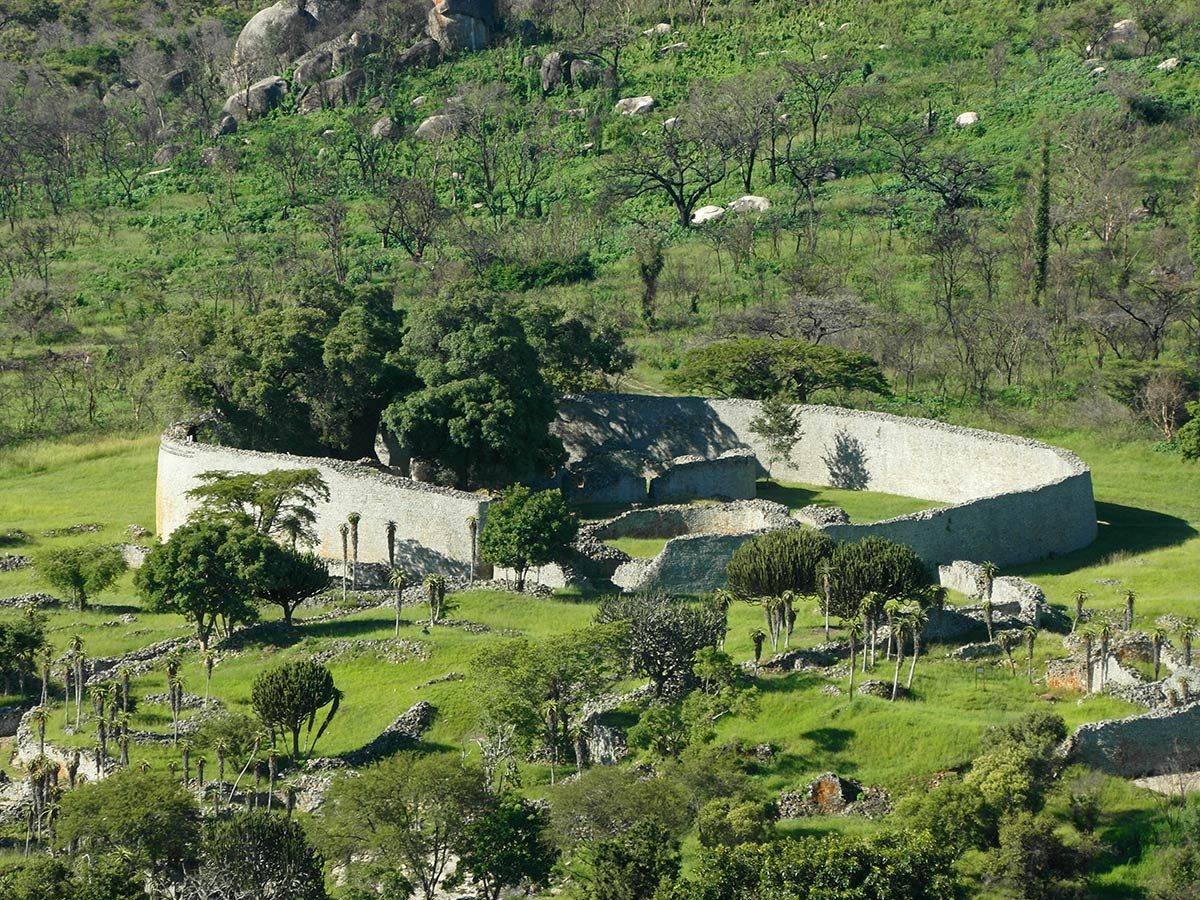
    In Africa, state systems likewise varied: Great Zimbabwe 大津巴布韦 grew on gold and cattle, Ethiopia 埃塞俄比亚 was a long-established Christian kingdom, and the Hausa Kingdoms 豪萨城邦 sat on trans-Saharan trade routes.

    עברית
    אותן שלושה שאלות שנשאלו בששת האזורים – ההשוואה שהיחידה נועדה לתמוך עליה
    מסגרת אחת, שישה אזורים: מדינה, מערכת אמונה ובסיס כלכלי הם מה ששאלות השוואה מבקשות בפועל

    באמריקות, מערכות המדינה הראו רציפות, חדשנות ומגוון: ערי-מדינת מהיה, מסקה (אצטק) עם הרחבה המבוססת על מיסים, ואינקה עם מנהל מרכזי, חובה עבודה ומערכת כבישים.

    באפריקה, מערכות המדינה היו גם הן מגוונות: ג'ייט זימבבווה צמחה על זהב ובקר, אתיופיה הייתה ממלכה נוצרית קיימת מזמן רב, וממלכות האוסה שכנו על מסלולי הסחר החוצה-מדבריים.

    החומות החיצוניות של ג'ייט זימבבווה – בנייה מאבן יבשה, ומדינה שנבנתה על סחר הזהב
    Vocabulary · ⁨מילון מונחים⁩ Train · ⁨אימון⁩
    English עברית
    Song China/sɒŋ ˈtʃaɪnə/ סונג צ'ינה
    commercialized/kəˈmɜːʃəlaɪzd/ מסחריות
    agrarian/æˈɡreərɪən/ חקלאותי
    Champa rice/ˈtʃæmpə raɪs/ אורז צ'אמפה
    Grand Canal/ɡrænd kəˈnæl/ התעלה הגדולה
    bureaucracy/bjʊəˈrɒkrəsi/ ביורוקרטיה
    civil service examination/ˈsɪvl ˈsɜːvɪs eɡˌzæmɪˈneɪʃn/ מבחן השירות האזרחי
    Neo-Confucianism/ˈniːəʊ kənˈfjuːʃɪənɪzəm/ הניאו-קונפוציאניות
    filial piety/ˈfɪlɪəl ˈpaɪəti/ כבוד להורים
    Buddhism/ˈbʊdɪzəm/ בודהיזם
    Theravada/ðəræˈvɑːdə/ תרבדה
    Mahayana/ˌmæheɪˈɑːnə/ מהאיאנה
    Tibetan/tɪˈbetn/ טיבתי
    textiles/ˈtekstaɪlz/ טקסטיל
    porcelains/ˈpɔːsɪlɪnz/ פורצלן
    deference/ˈdefrəns/ כבוד
    foot binding/fʊt ˈbaɪndɪŋ/ קישוט כפות הרגליים
    Abbasid Caliphate/ˈæbeɪsɪd ˈkælɪfeɪt/ הח'ליפות העבאסית
    Turkic/ˈtɜːkɪk/ טורקי
    Seljuk Empire/ˈseldʒʌk ˈempaɪə/ אימפריית הסל'ג'קים
    Mamluk sultanate of Egypt/ˈmæmlʌk ˈsʌltəneɪt ɒv ˈiːdʒɪpt/ שלטון הממלוכים במצרים
    Delhi Sultanate/ˈdeli ˈsʌltəneɪt/ שלטון דיל्ली
    merchant activity/ˈmɜːtʃənt ækˈtɪvɪti/ פעילות מסחרית
    missionaries/ˈmɪʃənəriz/ משיחנים
    Sufis/ˈsjuːfiz/ סופיזם
    intellectual innovations and transfers/ˌɪntəˈlektʃuːəl ˌɪnəˈveɪʃnz ænd ˈtrænsfɜːz/ חדשות אינטלקטואליות והעברות ידע
    House of Wisdom/haʊs ɒv ˈwɪzdəm/ בית החכמה
    Hinduism/ˈhɪndjuːɪzəm/ הינדואיזם
    bhakti movement/ˈbʌkti ˈmuːvmənt/ תנועת הבקטי
    Vijayanagara/ˌvɪdʒeɪˌænəˈɡɑːrə/ ויג'אנאגרה
    Majapahit/ˈmædʒəpæhɪt/ מג'אפאhit
    Khmer Empire/kmɪə ˈempaɪə/ אימפריית המכר
    Maya/ˈmaɪə/ מציות
    Mexica/ˈmeksɪkə/ מקסיקה
    Inca/ˈɪŋkə/ אינקה
    Great Zimbabwe/ɡreɪt zɪmˈbɑːbwi/ זימבבווה הגדולה
    Ethiopia/ˌiːθɪˈəʊpɪə/ אתיופיה
    Hausa Kingdoms/ˈhɔːsə ˈkɪŋdəmz/ ממלכות האוסא
    politically fragmented/pəˈlɪtɪkli fræɡˈmentɪd/ פיצול פוליטי
    feudalism/ˈfjuːdəlɪzəm/ פאודליזם
    Christianity/ˌkrɪstɪˈænɪti/ נוצריות
    Judaism/ˈdʒuːdeɪɪzəm/ יהדות
    free and coerced labour/friː ænd ˌkəʊˈɜːst ˈleɪbə/ עבודה חופשית ועבודה מוטרדת
    serfdom/ˈsɜːfdəm/ סרבות
    comparison/kəmˈpærɪsn/ השוואה
    1.6

    Europe · ⁨אירופה⁩

    Syllabus · ⁨סיילבוס⁩
    English

    1.6 Developments in Europe from c. 1200 to c. 1450

    Thematic Focus (CDI): Cultural Developments and Interactions — The development of ideas, beliefs, and religions illustrates how groups in society view themselves, and the interactions of societies and their beliefs often have political, social, and cultural implications.

    Thematic Focus (SIO): Social Interactions and Organization — The process by which societies group their members and the norms that govern the interactions between these groups and between individuals influence political, economic, and cultural institutions and organization.

    Learning Objective Unit 1.K: Explain how the beliefs and practices of the predominant religions in Europe affected European society. THEMATIC FOCUS Governance GOV A variety of internal and external factors contribute to state formation, expansion, and decline. Governments maintain order through a variety of administrative institutions, policies, and procedures, and governments obtain, retain, and exercise power in different ways and for different purposes. LEARNING OBJECTIVE

    • KC-3.1.III.D.v Christianity, Judaism, Islam, and the core beliefs and practices of these religions continued to shape societies in Europe. HISTORICAL DEVELOPMENTS

    Learning Objective Unit 1.L: Explain the causes and consequences of political decentralization in Europe from c. 1200 to c. 1450.

    • KC-3.2.I.B.ii Europe was politically fragmented and characterized by decentralized monarchies, feudalism, and the manorial system.

    Learning Objective Unit 1.M: Explain the effects of agriculture on social organization in Europe from c. 1200 to c. 1450.

    • KC-3.3.III.C Europe was largely an agricultural society dependent on free and coerced labor, including serfdom.
    עברית

    1.6 התפתחות באירופה מקרוב שנת 1200 ועד קרוב שנת 1450

    מיקוד נושא (CDI): התפתחויות ותفاعלים תרבותיים — פיתוח רעיונות, אמונות ודתות מדגיש כיצד קבוצות בחברה רואות את עצמן, והתفاعלים בין חברות ואמונותיהן לעיתים קרובות יש להם משמעויות פוליטיות, חברתיות ותרבותיות.

    מיקוד נושאי (SIO): אינטראקציות חברתיות וארגון — התהליך שבו societies מחלקות את חבריהן והנורמות שמפקדות את האינטראקציות בין קבוצות אלו ובין פרטים משפיעות על המוסדות והארגון הפוליטיים, הכלכליים והתרבותיים.

    מטרת לימודים יחידה 1.K: הסבר כיצד אמונות ומעשים הדתיים הדומיננטיים באירופה השפיעו על החברה האירופאית. מיקוד נושאי: שלטון GOV מגוון גורמים פנימיים וחיצוניים תורמים לגבי יצירת מדינה, הרחבה ונפילה. ממשלות שומרות על סדר דרך מגוון מוסדות, מדיניות ופרוצדורות מינהליות, וממשלות מקבלות, שומרות ומפעילות כוח בדרכים ובמטרות שונות. מטרת לימודים

    • KC-3.1.III.D.v נצרות, יהדות, אסלאם והאמונות והמעשים המרכזיים של דתות אלו המשיכו לעצב חברה באירופה. התפתחות היסטורית

    מטרת לימודים יחידה 1.L: הסבר הסיבות וה consequences של פיצול פוליטי באירופה מקרוב שנת 1200 ועד קרוב שנת 1450.

    • KC-3.2.I.B.ii אירופה הייתה פוליטית מפוצלת ואופיינה במלוכיות מרוכזות, פיאודליזם ומערכת המנוריאלית.

    מטרת לימודים יחידה 1.M: הסבר ההשפעות של חקלאות על הארגון החברתי באירופה מקרוב שנת 1200 ועד קרוב שנת 1450.

    • KC-3.3.III.C אירופה הייתה בעיקר חברה חקלאית התלויה בעבודה חופשית ומכובה, כולל עבדות.

    Source: College Board AP Course and Exam Description · ⁨מקור: תיאור הקורס והמבחן של College Board AP⁩

    English

    Europe was politically fragmented 政治上分裂, characterised by decentralised monarchies and by feudalism 封建制度 - a system of land held in exchange for service. Monarchs slowly consolidated power, but nothing here approached the administrative reach of Song China.

    Christianity 基督教, Judaism 犹太教, and Islam all shaped European society, with the Church supplying law, learning, and legitimacy.

    Europe was largely agricultural, dependent on free and coerced labour 自由与强制劳动, including serfdom 农奴制.

    עברית

    אירופה הייתה פוליטית מפוצלת, מאופיינת בממלכות מרוכזות-למחצה ובפאודליזם – מערכת של אדמות הנחלות בתמורה לשירות. מלכים איחדו לאט את כוחם, אך כאן אין דבר הגיע לרמת ההתפשטות המנהלתית של צ'ין סונג.

    נוצריה, יהדות ואסלאם עיצבו כולם את החברה האירופאית, כאשר הכנסיה סיפקה חוק, למידה ולגיטימציה.

    אירופה הייתה בעיקר חקלאית, תלויה בעבודה חופשית וכפויה, כולל עבדות קרקע.

    1.7

    Comparison in the Period · ⁨השוואה בתקופה זו⁩

    Syllabus · ⁨סיילבוס⁩
    English

    1.7 Comparison in the Period from c. 1200 to c. 1450

    Learning Objective Unit 1.N: Explain the similarities and differences in the processes of state formation from c. 1200 to c. 1450.

    • KC-3.2 State formation and development demonstrated continuity, innovation, and diversity in various regions.
      • KC-3.2.I As the Abbasid Caliphate fragmented, new Islamic political entities emerged, most of which were dominated by Turkic peoples. These states demonstrated continuity, innovation, and diversity.
      • KC-3.2.I.A Empires and states in Afro-Eurasia and the Americas demonstrated continuity, innovation, and diversity in the 13th century. This included the Song Dynasty of China, which utilized traditional methods of Confucianism and an imperial bureaucracy to maintain and justify its rule.
      • KC-3.2.I.B.i State formation and development demonstrated continuity, innovation, and diversity, including the new Hindu and Buddhist states that emerged in South and Southeast Asia.
      • KC-3.2.I.D.i In the Americas, as in Afro-Eurasia, state systems demonstrated continuity, innovation, and diversity, and expanded in scope and reach.
      • KC-3.2.I.D.ii In Africa, as in Eurasia and the Americas, state systems demonstrated continuity, innovation, and diversity, and expanded in scope and reach.
    עברית

    1.7 השוואה בתקופה מקרוב שנת 1200 ועד קרוב שנת 1450

    מטרת לימודים יחידה 1.N: הסבר הדמיונות וההבדלים בתהליכי יצירת מדינה מקרוב שנת 1200 ועד קרוב שנת 1450.

    • KC-3.2 יצירת מדינה והתפתחות הראו רציפות, חדשנות וניקיון באזורים שונים.
      • KC-3.2.I כאשר החליף העבאסים התפרקו, הופיעו ישויות פוליטיות אסלאמיות חדשות, רובן דומיננטיות על ידי עמים טורקים. מדינות אלו הצביעו על רציפות, חדשנות וניקיון.
      • KC-3.2.I.A האימפריות והמדינות באפריקה, איראסיה והאמריקות הצביעו על רציפות, חדשנות וגיוון במאה ה-13. הדבר כלל את שושלת סונג בסין, שהשתמשה בשיטות מסורתיות של הקונפיציוניות ובמינהל אימפריאלי כדי לשמר ולנזר את שלטונה.
      • KC-3.2.I.B.i יצירת מדינה ופיתוחה הצביעו על רציפות, חדשנות וגיוון, כולל המדינות ההינדואיסטיות והבודדיות החדשות שנובעו בדרום ובדרום-מזרח אסיה.
      • KC-3.2.I.D.i באמריקות, כמו באפריקה ואיראסיה, מערכות המדינה הצביעו על רציפות, חדשנות וגיוון, והתרחבו בהיקף ובשליטה.
      • KC-3.2.I.D.ii באפריקה, כמו באיראסיה ובאמריקות, מערכות המדינה הצביעו על רציפות, חדשנות וגיוון, והתרחבו בהיקף ובשליטה.

    Source: College Board AP Course and Exam Description · ⁨מקור: תיאור הקורס והמבחן של College Board AP⁩

    English

    The unit's reasoning skill is comparison 比较. The productive comparisons are structural rather than evaluative:

    • Centralised administration (Song China, Inca) against fragmented or decentralised rule (Europe, post-Abbasid Islamic states).
    • Recruitment by examination against recruitment by birth.
    • States funded by tribute (Mexica) against states funded by taxation (Song China).

    Worked example (a real AP exam question). AP World short-answer questions regularly ask students to "Identify one similarity" or "Explain one difference" between two regions in a period. A full-mark answer for this unit names the feature and applies it to both: "Both Song China and the Inca Empire used a centralised bureaucracy to govern a large territory, but Song China recruited officials through a competitive examination system while the Inca staffed administration through hereditary elites and a labour obligation." Notice the shape: a comparison must be one feature, two societies. Describing each society in turn and leaving the reader to infer the comparison does not earn the point.

    עברית

    מיומנות המחשבתית של היחידה היא השוואה. ההשוואות המפרות הן מבניות ולא הערכיות:

    • מנהל מרכזי (צ'ין סונג, אינקה) מול שלטון מפוצל או מרוכז-למחצה (אירופה, מדינות אסלאם לאחר האבסידים).
    • גיוס באמצעות מבחנים מול גיוס באמצעות יחסים משפחתיים.
    • מדינות הממומנות על ידי מיסים (מסקה) מול מדינות הממומנות על ידי מסים (צ'ין סונג).

    דוגמה פתורה (שאלה אמיתית בבחינת AP). שאלות התשובה הקצרה לבחינת AP World שואלות תלמידים בקביעות ל*"זהות דמיון אחד"* או ל*"הסבר הבדל אחד"* בין שני אזורים בתקופה. תשובה מלאה לקבלת ציון מלא ליחידה זו מציינת את התכונה ומיישמת אותה בשתי המדינות: "גם צ'ין סונג וגם האימפריה האינקית השתמשו במשרד מנהלי מרכזי כדי לשלטון בשטח גדול, אך צ'ין סונג גייסה פקידים באמצעות מערכת מבחנים תחרותית בעוד שאינקה מילאה את המנהל באמצעות אליטים מורשים ועל ידי חובת עבודה." שימו לב לצורה: השוואה חייבת להיות תכונה אחת, שתי חברות. תיאור כל חברה בנפרד והשארת הקורא לחשוב על ההשוואה לא מניח את הנקודה.

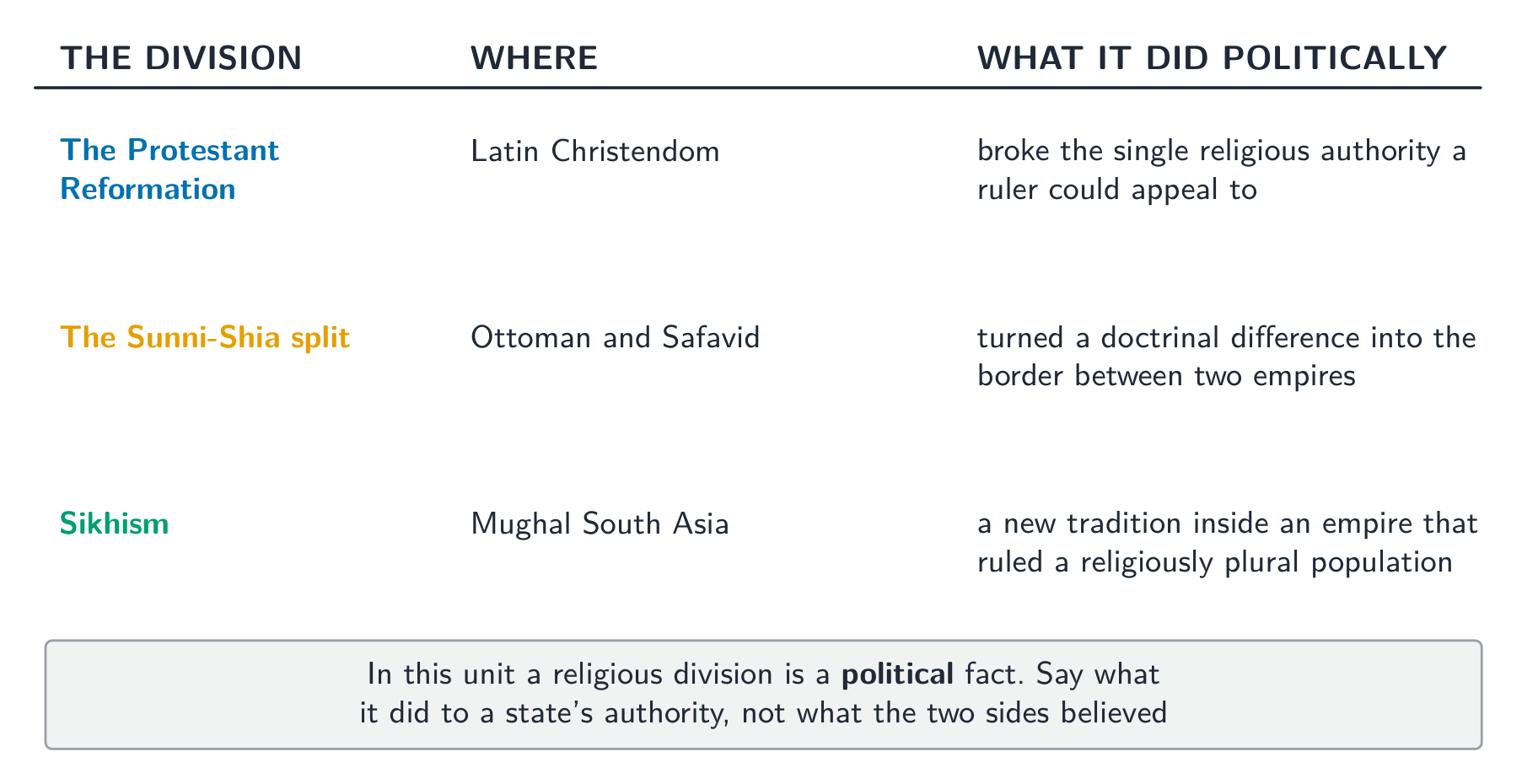
    מערכות אמונה לפי מה שהן עשו עבור הסמכות, ולא לפי מה שהן לימדו
    1.7

    Exam tips · ⁨טיפים לבחינות⁩

    English
    • Learn each region through the same three questions - state, belief system, economy - so any comparison question already has a structure.
    • Song China is the benchmark: examination-based bureaucracy, commercialised agriculture, and cultural influence on neighbours.
    • For Dar al-Islam, remember the pattern is fragmentation into new states plus continued expansion by trade and Sufi missionaries.
    • Give a named state for the Americas and Africa. Mexica tribute, Inca labour obligation, Mali and Great Zimbabwe gold are the reliable examples.
    • Europe's distinguishing features are fragmentation, feudalism, and coerced agricultural labour.
    • Write comparisons as one feature across two societies, never as two separate descriptions.
    עברית
    • ללמוד כל אזור באמצעות אותן שלושה שאלות - מדינה, מערכת אמונה, כלכלה – כך שכל שאלת השוואה כבר יש לה מבנה.
    • סין סונג היא הקנה מידה: מינהל מבוסס בדיחות, חקלאות מסחרית והשפעה תרבותית על שכנים.
    • עבור דאר א-אסלאם, יש לזכור שהדפוס הוא פירוק למדינות חדשות יחד עם הרחבה מתמשכת באמצעות מסחר ומיסיונרים צופיST.
    • תן מדינה שמונה לאמריקות ולאפריקה. מס המצ'יקה, חוב עבודה אינקה, מאלי וזהב גרייט זימבבואה הם הדוגמאות האמינות ביותר.
    • המאפיינים המייחדים של אירופה הם פירוק, פיאודליזם ועבודת חקלאות כפויה.
    • כתב השוואות כתכונה אחת בשתי חברות, לעולם לא כשתי תיאורים נפרדים.
  • 2

    Networks of Exchange · ⁨רשתות חילופין⁩

    Watch lesson · ⁨צפה בשיעור⁩
    2.1

    What Made the Networks Grow · ⁨מה הניע את הרשתות לצמוח⁩

    Syllabus · ⁨סיילבוס⁩
    English

    2.1 The Silk Roads

    Thematic Focus (ECN): Economics Systems — As societies develop, they affect and are affected by the ways that they produce, exchange, and consume goods and services.

    Learning Objective Unit 2.A: Explain the causes and effects of growth of networks of exchange after 1200.

    • KC-3.1.I.A.i Improved commercial practices led to an increased volume of trade and expanded the geographical range of existing trade routes— including the Silk Roads—promoting the growth of powerful new trading cities.
    • KC-3.1.I.C.i The growth of interregional trade in luxury goods was encouraged by innovations in previously existing transportation and commercial technologies, including the caravanserai, forms of credit, and the development of money economies.
    • KC-3.3.I.B Demand for luxury goods increased in Afro-Eurasia. Chinese, Persian, and Indian artisans and merchants expanded their production of textiles and porcelains for export; manufacture of iron and steel expanded in China.

    Illustrative examples:

    • Trading cities:
      • Kashgar
      • Samarkand
    • New forms of credit and money economies:
      • Bills of exchange
      • Banking houses
      • Use of paper money
    עברית

    2.1 דרכי המשי

    הדגשה נושאית (ECN): מערכות כלכליות — כאשר חברות מתפתחות, הן משפיעות ומושפעות מהדרך שבהן הן מייצרות, מחליפות וצורכות סחורות ושירותים.

    מטרות למידה ליחידה 2.A: הסבר על הגורמים וההשלכות של גידול ברשתות החלפה לאחר 1200.

    • KC-3.1.I.A.i שיפורים בפעילות המסחרית הובילו לעלייה בנפח המסחר והרחיבו את התחום הגיאוגרפי של נתיבי המסחר הקיימים—כולל דרכי המשי—ומקדמים את צמיחתם של ערי מסחר חזקות חדשות.
    • KC-3.1.I.C.i גידול במסחר בין-אזורי בסחורות מפנקות תומך על ידי חדשנות בטכנולוגיות תחבורה ומסחר קיימות מראש, כולל הקאראוואנסרי, צורות של האמנה, ופיתוח כלכלות המבוססות על מטבע.
    • KC-3.3.I.B הביקוש לסחורות מפנקות עלה באפריקה ואיראסיה. אומנים וסוחרים סיניים, פרסיים והודיים הרחיבו את הייצור שלהם של טקסטיל וקרמיקה ליצוא; ייצור ברזל ופלדה התרחב בסין.

    דוגמאות מדגמיות:

    • ערי מסחר:
      • קאשגר
      • סמרקנד
    • צורות חדשות של האמנה וכלכלות מבוססות מטבע:
      • שטרות חילופין
      • בתי הלוואי
      • שימוש במטבע נייר

    Source: College Board AP Course and Exam Description · ⁨מקור: תיאור הקורס והמבחן של College Board AP⁩

    English

    Unit 2 covers the three great exchange networks of 1200 to 1450 - the Silk Roads, the Indian Ocean, and the trans-Saharan routes - and asks the same question of each: what made trade grow, and what did that growth change?

    Growth had three common causes, and naming them is worth more than listing goods:

    • Improved commercial practices 商业惯例的改进 - money economies 货币经济, credit 信贷, and forms of partnership that spread risk.
    • Improved transportation technologies 交通技术的改进 - better ships, saddles, and navigation.
    • State support 国家支持 - empires that secured routes and taxed the trade benefited from protecting it.

    Demand mattered too: luxury goods 奢侈品 from Chinese, Persian, and Indian artisans found expanding markets across Afro-Eurasia, and producers increased output to meet that demand.

    עברית

    יחידה 2 עוסקת בשלוש רשתות החילופין הגדולות של 1200 עד 1450 - דרכי המשי, האוקיינוס ההודי והשבילים חוצה הסהרה - ושואלת את אותה שאלה בכל אחת מהן: מה גרם לסחר לצמוח, ומה שינוי הצמיחה הזו?

    לצמיחה היו שלושה גורמים משותפים, ושמות שלהם שווים יותר מרשימת סחורות:

    • שיפור במעשי המסחר - כלכלות מטבע, הון וצורות שיתוף פעולה שהפצו סיכון.
    • שיפור בטכנולוגיות ההובלה - אוניות טובות יותר, קתולי ערבה וניווט.
    • תמיכה מדינתית - אימפריות שהבטיחו שבילים ומסו את המסחר נהנו מהגנה עליו.

    הביקוש היה חשוב גם כן: סחורות יוקרה מאומני סיניים, פרסים והודיים מצאו שווקים מתרחבים בכל אפרו-אוראסיה, ויצרנים הגדילו את הייצור כדי לענות על ביקוש זה.

    כל גורם תומך הסיר מכשול שמונה - הזוגיות הזו היא מה שהופכת תיאור להסבר
    Explore · ⁨חקור⁩

    Pair each enabler with the obstacle it removed

    Growth is not a mood: each enabler removes a named obstacle, and that pairing turns description into explanation.

    2.1

    The Silk Roads · ⁨דרכי המשי⁩

    Syllabus · ⁨סיילבוס⁩
    English

    2.1 The Silk Roads

    Thematic Focus (ECN): Economics Systems — As societies develop, they affect and are affected by the ways that they produce, exchange, and consume goods and services.

    Learning Objective Unit 2.A: Explain the causes and effects of growth of networks of exchange after 1200.

    • KC-3.1.I.A.i Improved commercial practices led to an increased volume of trade and expanded the geographical range of existing trade routes— including the Silk Roads—promoting the growth of powerful new trading cities.
    • KC-3.1.I.C.i The growth of interregional trade in luxury goods was encouraged by innovations in previously existing transportation and commercial technologies, including the caravanserai, forms of credit, and the development of money economies.
    • KC-3.3.I.B Demand for luxury goods increased in Afro-Eurasia. Chinese, Persian, and Indian artisans and merchants expanded their production of textiles and porcelains for export; manufacture of iron and steel expanded in China.

    Illustrative examples:

    • Trading cities:
      • Kashgar
      • Samarkand
    • New forms of credit and money economies:
      • Bills of exchange
      • Banking houses
      • Use of paper money
    עברית

    2.1 דרכי המשי

    הדגשה נושאית (ECN): מערכות כלכליות — כאשר חברות מתפתחות, הן משפיעות ומושפעות מהדרך שבהן הן מייצרות, מחליפות וצורכות סחורות ושירותים.

    מטרות למידה ליחידה 2.A: הסבר על הגורמים וההשלכות של גידול ברשתות החלפה לאחר 1200.

    • KC-3.1.I.A.i שיפורים בפעילות המסחרית הובילו לעלייה בנפח המסחר והרחיבו את התחום הגיאוגרפי של נתיבי המסחר הקיימים—כולל דרכי המשי—ומקדמים את צמיחתם של ערי מסחר חזקות חדשות.
    • KC-3.1.I.C.i גידול במסחר בין-אזורי בסחורות מפנקות תומך על ידי חדשנות בטכנולוגיות תחבורה ומסחר קיימות מראש, כולל הקאראוואנסרי, צורות של האמנה, ופיתוח כלכלות המבוססות על מטבע.
    • KC-3.3.I.B הביקוש לסחורות מפנקות עלה באפריקה ואיראסיה. אומנים וסוחרים סיניים, פרסיים והודיים הרחיבו את הייצור שלהם של טקסטיל וקרמיקה ליצוא; ייצור ברזל ופלדה התרחב בסין.

    דוגמאות מדגמיות:

    • ערי מסחר:
      • קאשגר
      • סמרקנד
    • צורות חדשות של האמנה וכלכלות מבוססות מטבע:
      • שטרות חילופין
      • בתי הלוואי
      • שימוש במטבע נייר

    Source: College Board AP Course and Exam Description · ⁨מקור: תיאור הקורס והמבחן של College Board AP⁩

    English

    The Silk Roads 丝绸之路 carried high-value, low-bulk goods overland across Eurasia: silk, porcelain, spices, and precious metals.

    Its enabling innovations were commercial as much as technical - caravanserai 商队旅馆 along the routes, the use of paper money 纸币 and bills of exchange 汇票 in China, and forms of credit that let merchants trade without carrying bullion.

    The consequence for producers: Chinese artisans expanded output, and cities along the routes grew wealthy on the traffic passing through.

    עברית

    דרכי המשי הובילו סחורות בעלות ערך גבוהה ונפח נמוך על פני יבשת אוראסיה: משי, קרמיקה, תבלינים ומטבעות יקרים.

    החדשנות התומכות בהן היו מסחריות autant טכניות - מסעדות לאורך השבילים, השימוש במטבע נייר ובשוטרי חובה בסין, וצורות הון שאפשרו לסוחרים להסתחר ללא נשיאת מטבע מלאכה.

    התוצאה ליצרנים: אומני סין הרחיבו את הייצור, וערים לאורך השבילים התעשרו מהתנועה העוברת דרכן.

    2.2

    The Mongol Empire · ⁨האימפריה המונגולית⁩

    Syllabus · ⁨סיילבוס⁩
    English

    2.2 The Mongol Empire and the Making of the Modern World

    Thematic Focus (GOV): Governance — A variety of internal and external factors contribute to state formation, expansion, and decline. Governments maintain order through a variety of administrative institutions, policies, and procedures, and governments obtain, retain, and exercise power in different ways and for different purposes.

    Thematic Focus (CDI): Cultural Developments and Interactions — The development of ideas, beliefs, and religions illustrates how groups in society view themselves, and the interactions of societies and their beliefs often have political, social, and cultural implications.

    Learning Objective Unit 2.B: Explain the process of state building and decline in Eurasia over time. THEMATIC FOCUS Economics Systems ECN As societies develop, they affect and are affected by the ways that they produce, exchange, and consume goods and services. LEARNING OBJECTIVE

    • KC-3.2.I.B.iii Empires collapsed in different regions of the world and in some areas were replaced by new imperial states, including the Mongol khanates. HISTORICAL DEVELOPMENTS

    Learning Objective Unit 2.C: Explain how the expansion of empires influenced trade and communication over time.

    • KC-3.1.I.E.i The expansion of empires—including the Mongols—facilitated Afro-Eurasian trade and communication as new people were drawn into their conquerors’ economies and trade networks.

    Learning Objective Unit 2.D: Explain the significance of the Mongol Empire in larger patterns of continuity and change.

    • KC-3.2.II.A.ii Interregional contacts and conflicts between states and empires, including the Mongols, encouraged significant technological and cultural transfers.

    Illustrative examples:

    • Technological and cultural transfers:
      • Transfer of Greco– Islamic medical knowledge to western Europe
      • Transfer of numbering systems to Europe
      • Adoption of Uyghur script
    עברית

    2.2 האימפריה המונגולית ויצירת העולם המודרני

    מיקוד נושא (GOV): שלטון — מגוון גורמים פנימיים וחיצוניים תורמים ליצירת מדינות, הרחבתן ונפילתן. ממשלות שומרות על סדר באמצעות מגוון מוסדות, מדיניות ונהלים מנהליים, וממשלות רוכשות, שומרות ומפעילות כוח בדרכים ובמטרות שונות.

    מיקוד נושא (CDI): התפתחויות ותفاعלים תרבותיים — פיתוח רעיונות, אמונות ודתות מדגיש כיצד קבוצות בחברה רואות את עצמן, והתفاعלים בין חברות ואמונותיהן לעיתים קרובות יש להם משמעויות פוליטיות, חברתיות ותרבותיות.

    מטרות למידה ליחידה 2.B: הסבר על תהליך בניית המדינה ודעיכתה באיראסיה לאורך הזמן. הדגשה נושאית: מערכות כלכליות ECN. כאשר חברות מתפתחות, הן משפיעות ומושפעות מהדרך שבהן הן מייצרות, מחליפות וצורכות סחורות ושירותים. מטרות למידה

    • KC-3.2.I.B.iii האימפריות התמוטטו באזורים שונים בעולם ובאזורים מסוימים הוחלפו על ידי מדינות אימפריאליות חדשות, כולל החאנויות המונגוליות. התפתחויות היסטוריות

    מטרות למידה ליחידה 2.C: הסבר על אופן השפעת הרחבת האימפריות על המסחר והתקשורת לאורך הזמן.

    • KC-3.1.I.E.i הרחבת האימפריות, כולל של המונגולים, קידמה את המסחר והתקשורת באפריקה ואירואסיה כאשר אנשים חדשים נמשכו לכלכלות ולרשתות המסחר של הכובשים שלהם.

    מטרות למידה ליחידה 2.D: הסבר על חשיבות האימפריה המונגולית בתבניות רחבות יותר של רציפות ושינוי.

    • KC-3.2.II.A.ii מגעים ומאבקים בין-אזוריים בין מדינות ואימפריות, כולל של המונגולים, עודדו העברות טכנולוגיות ותרבותיות משמעותיות.

    דוגמאות מדגמיות:

    • העברות טכנולוגיות ותרבותיות:
      • העברת ידע רפואי גראקו-אסלאמי לדרום-מערב אירופה
      • העברת מערכות ספירה לאירופה
      • אימוץ אלפבית הויג'ור

    Source: College Board AP Course and Exam Description · ⁨מקור: תיאור הקורס והמבחן של College Board AP⁩

    English

    Empires collapsed and were reconstituted in this period, and the largest transformation came from the Mongol Empire 蒙古帝国.

    Mongol expansion facilitated Afro-Eurasian trade and communication by bringing much of the network under a single authority, which lowered the risk of long-distance travel - a period often called the Pax Mongolica 蒙古和平.

    Interregional contacts and conflicts also encouraged technological and cultural transfers: gunpowder technology moved west, Chinese administrative and medical knowledge circulated, and scholars and craftsmen were relocated across the empire.

    The Mongols illustrate the unit's central irony: conquest and destruction produced the conditions for exchange.

    עברית

    אימפריות קרסו והתארגנו מחדש בתקופה זו, והשינוי הגדול ביותר בא מה-אימפריה המונגולית.

    הרחבת המונגולים קידמה מסחר ותקשורת אפרו-אוראסיאית על ידי הובלת חלק גדול מהרשתה תחת סמכות אחת, מה שהוריד את הסיכון בנסיעות לטווח ארוך - תקופה הנקראת לעיתים קרובות פאקס מונגוליקה.

    מגע ומחלוקת בין-אזוריים עודדו גם העברות טכנולוגיות ותרבותיות: טכנולוגיית האבקן התפשטה למערב, ידע מנהלי ורפואי סיני זרם, וסופרים ואומנים הועברו ברחבי האימפריה.

    המונגולים ממחישים את האירוניה המרכזית של היחידה: הכיבוש וההרס יצרו את התנאים להחלפה.

    האירוניה המרכזית של היחידה: גורם אחד, שני תוצאות הפוכות, ובמבחן דורשים את השניים
    2.3

    The Indian Ocean · ⁨האוקיינוס ההודי⁩

    Syllabus · ⁨סיילבוס⁩

    2.3 Exchange in the Indian Ocean

    Thematic FocusLearning ObjectiveHistorical Developments

    CDI
    Cultural Developments and Interactions — The development of ideas, beliefs, and religions illustrates how groups in society view themselves, and the interactions of societies and their beliefs often have political, social, and cultural implications.

    Unit 2.E
    Explain the causes of the growth of networks of exchange after 1200.

    • KC-3.1.I.A.ii Improved transportation technologies and commercial practices led to an increased volume of trade and expanded the geographical range of existing trade routes, including the Indian Ocean, promoting the growth of powerful new trading cities.
    • KC-3.1.I.C.ii The growth of interregional trade in luxury goods was encouraged by significant innovations in previously existing transportation and commercial technologies, including the use of the compass, the astrolabe, and larger ship designs.
    • KC-3.1.I.A.iii The Indian Ocean trading network fostered the growth of states.

    Unit 2.F
    Explain the effects of the growth of networks of exchange after 1200. THEMATIC FOCUS Humans and the Environments ENV The environment shapes human societies, and as populations grow and change, these populations in turn shape their environments. LEARNING OBJECTIVE

    • KC-3.1.III.B In key places along important trade routes, merchants set up diasporic communities where they introduced their own cultural traditions into the indigenous cultures and, in turn, indigenous cultures influenced merchant cultures.
    • KC-3.2.II.A.iii Interregional contacts and conflicts between states and empires encouraged significant technological and cultural transfers, including during Chinese maritime activity led by Ming Admiral Zheng He. HISTORICAL DEVELOPMENTS

    Unit 2.G
    Explain the role of environmental factors in the development of networks of exchange in the period from c. 1200 to c. 1450.

    • KC-3.1.II.A.i The expansion and intensification of long-distance trade routes often depended on environmental knowledge, including advanced knowledge of the monsoon winds.

    Illustrative examples:

    • Growth of states:
      • City-states of the Swahili Coast
      • Gujarat
      • Sultanate of Malacca
    • (CONT’D) Diasporic communities:
      • Arab and Persian communities in East Africa
      • Chinese merchant communities in Southeast Asia
      • Malay communities in the Indian Ocean basin

    Source: College Board AP Course and Exam Description · ⁨מקור: תיאור הקורס והמבחן של College Board AP⁩

    English

    The Indian Ocean network moved bulkier goods than the Silk Roads - textiles, timber, grain, and spices - because ships carry more than camels.

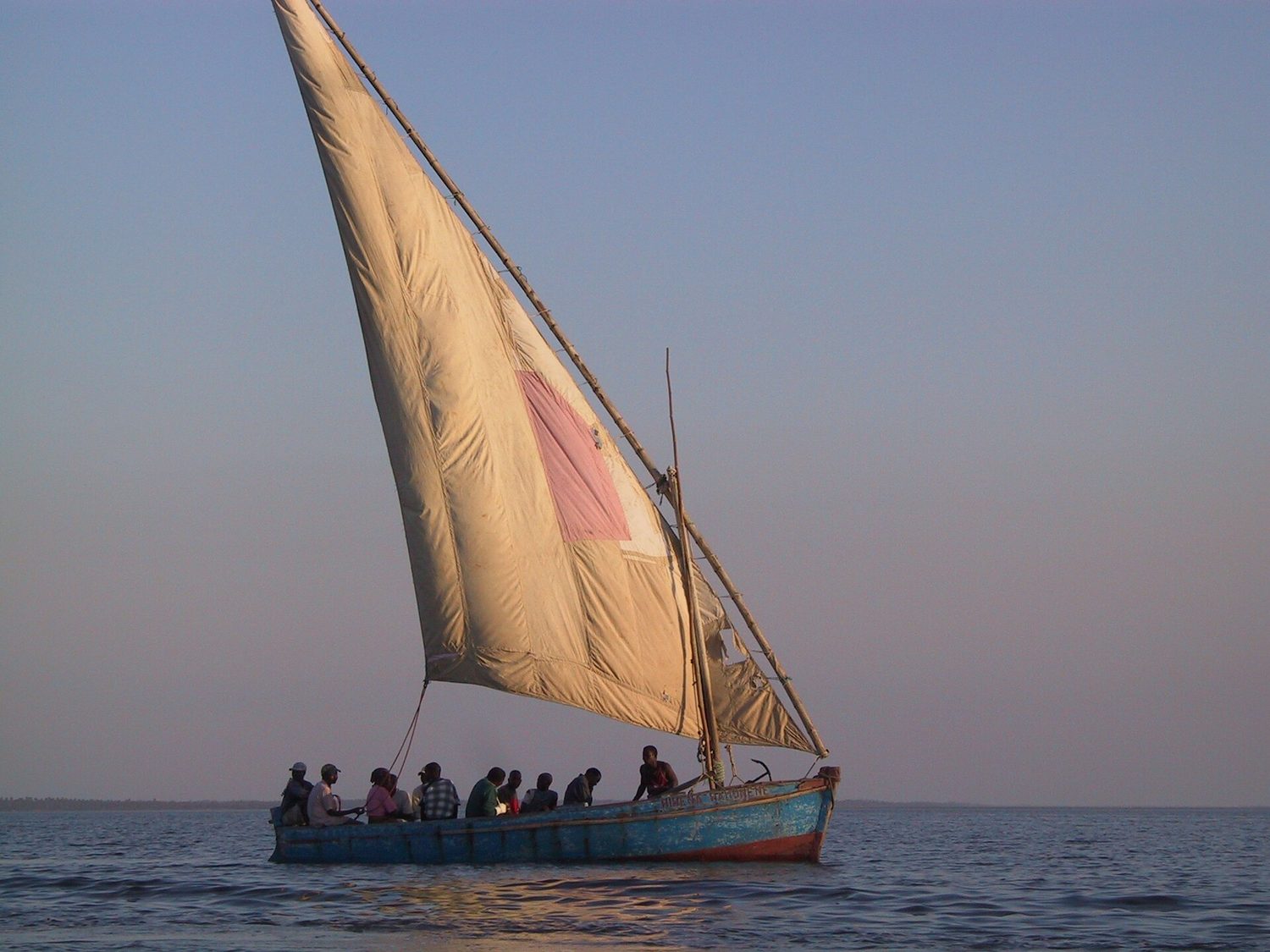
    Its enabling technologies were maritime: knowledge of the monsoon winds 季风, the lateen sail 三角帆, the dhow 单桅帆船, and navigational tools including the compass 罗盘 and astrolabe 星盘.

    Its consequences are the most examinable in the unit:

    • The network fostered the growth of states, such as the Swahili city-states on the East African coast and Srivijaya and Majapahit in Southeast Asia.
    • Merchants established diasporic communities 侨居社群 in key ports, introducing their own culture while adopting local ways.
    • Long-distance trade depended on and expanded coerced labour and on the movement of people as well as goods.
    עברית
    שלושת הרשתות מושווה לפי מה שהן הובילו, מה שאיפשר אותן, ומה שהן שינו
    שלוש רשתות, מסגרת אחת: סחורות, טכנולוגיה מאפשרת ותוצאות הם מה שמבחני השוואה שואלים

    רשת האוקיינוס ההודי הובילה סחורות נפחות יותר מכבישי המשי - טקסטיל, עץ, דגן ותבלינים - כי אוניות נושאות יותר מגמלים.

    הטכנולוגיות המאפשרות שלה היו ימיות: ידע על רוחות המונסון, התורן המשולש, הדאו וכלי ניווט כולל מצפן ואסטרולאב.

    התוצאות שלה הן הנבדקות ביותר ביחידה:

    • הרשת עודדה צמיחה של מדינות, כמו ערי-מדינת הסוואהילי בחוף אפריקה המזרחית ושריביג'יה ומג'אפהה במזרח אסיה.
    • סוחרים הקימו קהילות פזורה בנמלים מרכזיים, והציגו את תרבותם בעוד שהתאימו לדרך המקומית.
    • המסחר לטווח ארוך נ dépend על עבודת חובה מוגבלת ועל תנועת אנשים לצד סחורות.
    דאו עם תורן משולש - התצורה שהאפשרת לאונייה לנוע בכל מערכת המונסון
    Vocabulary · ⁨מילון מונחים⁩ Train · ⁨אימון⁩
    English עברית
    Improved commercial practices/ɪmˈpruːvd kəˈmɜːʃl ˈpræktɪsɪz/ שיפור בשיטות מסחריות
    money economies/ˈmʌni ɪˈkɒnəmiz/ כלכלות מוניטיות
    credit/ˈkredɪt/ אמון / הסכר
    Improved transportation technologies/ɪmˈpruːvd trænspɔːˈteɪʃn tekˈnɒlədʒiz/ שיפור בטכנולוגיות תחבורה
    State support/steɪt səˈpɔːt/ תמיכה ממשלתית
    luxury goods/ˈlʌkʃəri ɡʊdz/ סחורות יוקרה
    Silk Roads/sɪlk rəʊdz/ דרך המשי
    caravanserai/ˈkærəvænsəraɪ/ קרואנסרי
    paper money/ˈpeɪpə ˈmʌni/ מטבע נייר
    bills of exchange/bɪlz ɒv eksˈtʃeɪndʒ/ שטרות חליפין
    Mongol Empire/ˈmɒŋɡɒl ˈempaɪə/ אימפריית המונגולים
    Pax Mongolica/pæks mɒnˈɡɒlɪkə/ פאקס מונגולי
    monsoon winds/mɒnˈsuːn wɪndz/ רוחות מונון
    lateen sail/ˈlætiːn seɪl/ תורן משולש
    dhow/ˈdiːhaʊ/ דאו
    compass/ˈkʌmpəs/ מצפן
    astrolabe/ˈæstrəleɪb/ אסטולב
    diasporic communities/ˌdaɪəˈspɒrɪk kəˈmjuːnɪtiz/ קהילות פזורות
    camel saddle/ˈkæml ˈsædl/ ארגז גמל
    caravans/ˈkærəvænz/ שיירות
    salt/sɒlt/ מלח
    Mali/ˈmɑːli/ מאלי
    diffusion/dɪˈfjuːʒn/ דיפוזיה
    travellers/ˈtræveləz/ נוסעים
    2.4

    Trans-Saharan Trade · ⁨המסחר החוצה-סהרה⁩

    Syllabus · ⁨סיילבוס⁩
    English

    2.4 Trans-Saharan Trade Routes

    Thematic Focus (TEC): Technology and Innovation — Human adaptation and innovation have resulted in increased efficiency, comfort, and security, and technological advances have shaped human development and interactions with both intended and unintended consequences.

    Thematic Focus (GOV): Governance — A variety of internal and external factors contribute to state formation, expansion, and decline. Governments maintain order through a variety of administrative institutions, policies, and procedures, and governments obtain, retain, and exercise power in different ways and for different purposes.

    Learning Objective Unit 2.H: Explain the causes and effects of the growth of trans-Saharan trade.

    • KC-3.1.II.A.ii The growth of interregional trade was encouraged by innovations in existing transportation technologies.
    • KC-3.1.I.A.iv Improved transportation technologies and commercial practices led to an increased volume of trade and expanded the geographical range of existing trade routes, including the trans-Saharan trade network.

    Learning Objective Unit 2.I: Explain how the expansion of empires influenced trade and communication over time.

    • KC-3.1.I.E.ii The expansion of empires—including Mali in West Africa–facilitated Afro-Eurasian trade and communication as new people were drawn into the economies and trade networks.

    Illustrative examples:

    • Technologies encouraging interregional trade:
      • Camel saddle
      • Caravans
    עברית

    2.4 מסלולי המסחר חוצה-הסahara

    דגש נושא (TEC): טכנולוגיה וחדשנות — הסתגלות אנושית וחדשנות הובילו לשיפור היעילות, הנוחות והביטחון, והתקדמות טכנולוגית עיצבה את הפיתוח האנושי ואת האינטראקציות עם השלכות מתוכננות ולא מתוכננות.

    מיקוד נושא (GOV): שלטון — מגוון גורמים פנימיים וחיצוניים תורמים ליצירת מדינות, הרחבתן ונפילתן. ממשלות שומרות על סדר באמצעות מגוון מוסדות, מדיניות ונהלים מנהליים, וממשלות רוכשות, שומרות ומפעילות כוח בדרכים ובמטרות שונות.

    מטרות למידה יחידה 2.H: הסבר על הגורמים וההשלכות של צמיחת המסחר חוצה-הסahara.

    • KC-3.1.II.A.ii צמיחת המסחר בין-אזורי עודדה על ידי חדשנות בטכנולוגיות תחבורה קיימות.
    • KC-3.1.I.A.iv שיפור בטכנולוגיות התחבורה וב practices מסחריים הביאו להגדלת נפח המסחר ולהרחבת הטווח הגיאוגרפי של מסלולי המסחר הקיימים, כולל רשת המסחר חוצה-הסahara.

    מטרות למידה יחידה 2.I: הסבר כיצד הרחבת האימפריות השפיעה על המסחר והתקשורת לאורך זמן.

    • KC-3.1.I.E.ii הרחבת האימפריות — כולל מאלי במערב אפריקה — קידמה את המסחר והתקשורת אפריקה-אירואסיה כאשר אנשים חדשים נכללו בכלכלות ברשתות המסחר.

    דוגמאות מדגמיות:

    • טכנולוגיות המעודדות מסחר בין-אזורי:
      • אוכף גמל
      • משלחות

    Source: College Board AP Course and Exam Description · ⁨מקור: תיאור הקורס והמבחן של College Board AP⁩

    English

    The trans-Saharan routes crossed the desert on innovations in existing technology - above all the camel saddle 骆驼鞍 and organised caravans 商队.

    Gold from West Africa moved north and salt 盐 moved south. The expansion of empires, including Mali 马里帝国, facilitated Afro-Eurasian trade by securing the routes and taxing them - and Mali's wealth and its ruler's famous pilgrimage advertised the region across the Islamic world.

    עברית

    שבילי החוצה-סהרה חצו את המדבר באמצעות חדשנות בטכנולוגיה קיימת - בעיקר מסכת הגמל וקרבנות מאורגנות.

    זהב ממערב אפריקה זרם צפונה ומלח זרם דרומה. הרחבת האימפריות, כולל מאלי, קידמה את המסחר האפרו-אירואסייתי על ידי הבטחת השבילים והטלת מסים עליהם - ועושרה של מאלי והמסע המפורסם של שליטה הכריז על האזור בכל העולם האסלאמי.

    2.5 2.6

    Cultural and Environmental Consequences · ⁨תוצאות תרבותיות וסביבתיות⁩

    Syllabus · ⁨סיילבוס⁩
    English

    2.5 Cultural Consequences of Connectivity

    Thematic Focus (CDI): Cultural Developments and Interactions — The development of ideas, beliefs, and religions illustrates how groups in society view themselves, and the interactions of societies and their beliefs often have political, social, and cultural implications.

    Learning Objective Unit 2.J: Explain the intellectual and cultural effects of the various networks of exchange in Afro-Eurasia from c. 1200 to c. 1450.

    • KC-3.1.III.D Increased cross-cultural interactions resulted in the diffusion of literary, artistic, and cultural traditions, as well as scientific and technological innovations.
    • KC-3.3.II The fate of cities varied greatly, with periods of significant decline and periods of increased urbanization, buoyed by rising productivity and expanding trade networks.
    • KC-3.1.III.C As exchange networks intensified, an increasing number of travelers within Afro-Eurasia wrote about their travels.

    Illustrative examples:

    • Diffusion of cultural traditions:
      • The influence of Buddhism in East Asia
      • The spread of Hinduism and Buddhism into Southeast Asia
      • The spread of Islam in sub-Saharan Africa and Asia
    • Diffusion of scientific or technological innovations:
      • Gunpowder from China
      • Paper from China
    • Travelers:
      • Ibn Battuta
      • Margery Kempe
      • Marco Polo
    עברית

    2.5 השלכות תרבותיות של קישוריות

    מיקוד נושא (CDI): התפתחויות ותفاعלים תרבותיים — פיתוח רעיונות, אמונות ודתות מדגיש כיצד קבוצות בחברה רואות את עצמן, והתفاعלים בין חברות ואמונותיהן לעיתים קרובות יש להם משמעויות פוליטיות, חברתיות ותרבותיות.

    מטרות למידה יחידה 2.J: הסבר על ההשפעות האינטלקטואליות והתרבותיות של רשתות החילופין השונות באפריקה-אירואסיה מכ-1200 ועד לכ-1450.

    • KC-3.1.III.D אינטראקציות חוצה-תרבותיות מוגברות הובילו לפיזור של מסורות ספרותיות, אמנותיות ותרבותיות, כמו גם חדשנות מדעיות וטכנולוגיות.
    • KC-3.3.II גורל הערים השתנה מאוד, עם תקופות של ירידה משמעותית ותקופות של עירוניות מוגברת, שהיו נתמכות על ידי עלייה במוצרי扩展 ורשתות מסחר מורחבות.
    • KC-3.1.III.C כשהרשתות החילופין התעצמו, מספר הולך וגובר של נוסעים באפריקה-אוראסיה כתבו על נסיעותיהם.

    דוגמאות מדגמיות:

    • התפשטות של מסורות תרבותיות:
      • השפעת הבודהיזם במזרח אסיה
      • התפשטות ההינדואיזם והבודהיזם לדרום-מזרח אסיה
      • התפשטות האסלאם באפריקה דרומית לסהרה ובאסיה
    • התפשטות של חדשנות מדעיות או טכנולוגיות:
      • אבקת שחיקה מסין
      • נייר מסין
    • נוסעים:
      • אבן בטוטה
      • מרג'רי קמפ
      • מרקו פולו
    English

    2.6 Environmental Consequences of Connectivity

    Thematic Focus (ENV): Humans and the Environments — The environment shapes human societies, and as populations grow and change, these populations in turn shape their environments.

    Learning Objective Unit 2.K: Explain the environmental effects of the various networks of exchange in Afro-Eurasia from c. 1200 to c. 1450.

    • KC-3.1.IV There was continued diffusion of crops and pathogens, with epidemic diseases, including the bubonic plague, along trade routes.

    Illustrative examples:

    • Diffusion of crops:
      • Bananas in Africa
      • New rice varieties in East Asia
      • Spread of citrus in the Mediterranean
    עברית

    2.6 השלכות סביבתיות של קישוריות

    דגש נושאי (ENV): אנושים וסביבות — הסביבה מעצבת את המיזמים האנושיים, וככל שהאוכלוסיות גדלות ומשתנות, כך המיזמים הללו עוצבים בתורם את הסביבות שלהם.

    מטרות למידה יחידה 2.K: הסבר על ההשפעות הסביבתיות של רשתות החילופין השונות באפריקה-אוראסיה מכ-1200 ועד כ-1450.

    • KC-3.1.IV המשיכה התפשטות של צמחים ופתוגנים, עם מחלות אפידמיאליות, כולל השחפת, לאורך דרכי המסחר.

    דוגמאות מדגמיות:

    • התפשטות של צמחים:
      • בננות באפריקה
      • זני אורז חדשים במזרח אסיה
      • התפשטות הצימרים בים התיכון

    Source: College Board AP Course and Exam Description · ⁨מקור: תיאור הקורס והמבחן של College Board AP⁩

    English

    Increased cross-cultural interaction produced diffusion 传播 of literary, artistic, scientific, and religious traditions - the spread of Islam along trade routes, Buddhist and Neo-Confucian influence in East Asia, and the movement of scientific and mathematical knowledge.

    An increasing number of travellers 旅行者 moved within and between regions, and their accounts are the period's key evidence.

    The fate of cities varied: some declined as routes shifted or invasions came, while others grew into major commercial centres.

    The environmental consequences were as large as the cultural ones. There was continued diffusion of crops and pathogens, and epidemic disease travelled with trade - most catastrophically the Black Death 黑死病, which moved along the same routes that carried goods and killed a large share of the population of Afro-Eurasia.

    עברית

    הגברת האינטראקציה בין-תרבותית הביאה לפיזור של מסורות ספרותיות, אמנותיות, מדעיות ודתיות - התפשטות האסלאם לאורך שבלי המסחר, השפעה בודהיסטית וניאו-קונפוציאנית במזרח אסיה, ותנועת ידע מדעי ומתמטי.

    מספר הולך וגובר של נוסעים נעו בתוך אזוריים ובין אזוריים, וחשיפותיהם הן העדות המרכזית לתקופה זו.

    גורל הערים השתנה: חלקן דעכו כאשר השבילים השתנו או כשהגיעו פולשים, בעוד שאחרות גדלו למרכזים מסחריים מרכזיים.

    ההשלכות הסביבתיות היו באותו גודל כמו ההשלכות התרבותיות. המשיכה פיזור של תוצרים ומחלות, וחולי מדינה צמדו למסחר – במיוחד הקטסטרופה הגדולה ביותר, שחית האדמה, שהתפשטה לאורך אותם נתיבים שנועדו להוביל סחורות והרגו חלק ניכר מאוכלוסיית אפריקה-אוראסיה.

    המחלות התפשטו משום שהרשת הייתה פעילה – אותו עיקרון, מיושם למחלות
    Explore · ⁨חקור⁩

    Follow the network's most consequential cargo

    The pathogens travelled because the network worked — the same argument the unit makes about goods, applied to disease.

    Vocabulary · ⁨מילון מונחים⁩ Train · ⁨אימון⁩
    English עברית
    Black Death/blæk deθ/ מוות שחור
    2.7

    Comparison of Economic Exchange · ⁨השוואת החלפת כלכלית⁩

    Syllabus · ⁨סיילבוס⁩
    English

    2.7 Comparison of Economic Exchange

    Learning Objective Unit 2.L: Explain the similarities and differences among the various networks of exchange in the period from c. 1200 to c. 1450.

    • KC-3.1 A deepening and widening of networks of human interaction within and across regions contributed to cultural, technological, and biological diffusion within and between various societies.
      • KC-3.1.I.A.i Improved commercial practices led to an increased volume of trade and expanded the geographical range of existing trade routes—including the Silk Roads—promoting the growth of powerful new trading cities.
      • KC-3.1.I.C.i The growth of interregional trade in luxury goods was encouraged by innovations in previously existing transportation and commercial technologies, including the caravanserai, forms of credit, and the development of money economies.
    • KC-3.3 Changes in trade networks resulted from and stimulated increasing productive capacity, with important implications for social and gender structures and environmental processes.
      • KC-3.3.I.B Demand for luxury goods increased in Afro-Eurasia. Chinese, Persian, and Indian artisans and merchants expanded their production of textiles and porcelains for export; manufacture of iron and steel expanded in China.
    עברית

    2.7 השוואת החלפת כלכלית

    מטרת הלמידה יחידה 2.L: הסבר על הדמיון וההבדלים בין רשתות החלפה שונות בתקופה שבין 1200 ל-1450.

    • KC-3.1 עומק ורחב של רשתות אינטראקציה אנושית בתוך אזוריים ובין אזורים תרמו לפיזור תרבותי, טכנולוגי וביולוגי בתוך ובין חברה שונות.
      • KC-3.1.I.A.i שיפורים במעשי המסחר הובילו לעלייה בנפח הסחר ולהרחבת התחום הגיאוגרפי של נתיבי המסחר הקיימים—כולל דרכי המשי—וכך קידמו את צמיחתם של ערי מסחר חדשות וחזקות.
      • KC-3.1.I.C.i גידול הסחר הבינאזורי בסחורות יוקרה עודד על ידי חדשנות בטכנולוגיות הובלה ומסחר קיימות מראש, כולל קארואנסרי, סוגים של האמצעות, ופיתוח משקי מטבע.
    • KC-3.3 שינויים ברשתות המסחר נובעו מתוך והפעילו זרימה לגבי הגדלת היכולת הפורית, עם השלכות חשובות למבנים חברתיים ולמגדר ולתהליכים סביבתיים.
      • KC-3.3.I.B הביקוש לסחורות יוקרה עלה באפריקה ואירואסיה. אומני ומסחר סיניים, פרסי והודיים הרחיבו את ייצור הטקסטיל והקרמיקה ליצוא; ייצור ברזל ופלדה התרחב בסין.

    Source: College Board AP Course and Exam Description · ⁨מקור: תיאור הקורס והמבחן של College Board AP⁩

    English

    The unit's reasoning skill is comparison. Compare the networks on what they carried, what made them possible, and what they changed - not on which was "most important".

    Worked example (a real AP exam question). AP World short-answer questions frequently ask students to "Explain one similarity" or "Explain one difference" between two trade networks in this period. A full-mark answer names the feature and applies it to both, then explains: "Both the Silk Roads and the Indian Ocean network expanded because of improved commercial practices, but the Indian Ocean carried heavier, lower-value goods such as timber and grain because ships could transport far greater bulk than overland caravans." Notice the shape: the because clause is what turns a difference into an explanation, and without it the answer only describes.

    עברית

    מיומנות ההיסקולוגית של הנושא היא השוואה. השוו את הרשתות לפי מה שהן הובילו, מה איפשר אותן ומה שינויי – ולא לפי איזו רשת "הייתה חשובה יותר".

    דוגמה פותרת (שאלה אמיתית מבחן AP). שאלות מענה קצר בבחינת AP World דורשות לעיתים קרובות מהתלמידים ל*"הסביר דמיון אחד"* או "הסביר הבדל אחד" בין שתי רשתות מסחר בתקופה זו. תשובה מלאה בנקודות מזהה את המאפיין ומיישמת אותו לשתי הרשתות, ואז מסבירה: "גם דרכי המשי וגם רשת הים ההודי התרחבו בשל שיפור במערכי המסחר, אך רשת הים ההודי הובילה סחורות כבדות ובעלות ערך נמוך יותר כמו עץ ודגנים, משום שהספינות יכלו להוביל מחסנים גדולים בהרבה מאשר משאיות על פני היבשה." שמו לב לצורה: המשפט שמשום הוא מה שממיר הבדל להסבר, וללאו התשובה רק מתארת.

    2.7

    Exam tips · ⁨טיפים לבחינות⁩

    English
    • Explain growth with the three causes - commercial practices, transport technology, state support - rather than listing trade goods.
    • Match cargo to carrier: overland routes move high-value, low-bulk goods; maritime routes move bulk.
    • Learn the enabling technologies by network: caravanserai and credit; monsoons, lateen sail and dhow; the camel saddle.
    • The Mongols' examinable role is facilitating exchange, not conquest for its own sake.
    • The Black Death is the environmental consequence to name, and it travelled on the trade network itself.
    • On difference questions, always add the because. A stated difference without a cause is only half an answer.
    עברית
    • הסבר את הצמיחה באמצעות שלושת הגורמים – מערכי מסחר, טכנולוגיית הובלה ותמיכה ממשלתית – במקום לסדר סחורות מסחר.
    • התאם מטען לנשיאה: נתיבים יבשתיים מובילים סחורות בעלות ערך גבוהה ונפח נמוך; נתיבים ימיים מובילים מחסנים.
    • למד את הטכנולוגיות האפשריות לפי הרשת: קרואון ומסחר על פי חוב; מונסונים, מפרש טריאנגולרי ודו; רתמת הגמל.
    • התפקיד הנבחן של המונגולים הוא קידום החלפה, ולא כיבוש למען עצמו.
    • שחית האדמה היא ההשלכה הסביבתית שיש לציין, והיא התפשטה דרך רשת המסחר עצמה.
    • בשאלות על הבדלים, תמיד הוסף את משום. הבדל שנאמר ללא סיבה הוא רק חצי מתשובה.
  • 3

    Land-Based Empires · ⁨אימפריות מבוססות יבשה⁩

    Watch lesson · ⁨צפה בשיעור⁩
    3.1

    How the Land Empires Expanded · ⁨כיצד האימפריות היבשתיות התרחבו⁩

    Syllabus · ⁨סיילבוס⁩
    English

    3.1 Empires Expand

    Thematic Focus (GOV): Governance — A variety of internal and external factors contribute to state formation, expansion, and decline. Governments maintain order through a variety of administrative institutions, policies, and procedures, and governments obtain, retain, and exercise power in different ways and for different purposes.

    Learning Objective Unit 3.A: Explain how and why various land-based empires developed and expanded from 1450 to 1750.

    • KC-4.3.II Imperial expansion relied on the increased use of gunpowder, cannons, and armed trade to establish large empires in both hemispheres.
    • KC-4.3.II.B Land empires included the Manchu in Central and East Asia; the Mughal in South and Central Asia; the Ottoman in Southern Europe, the Middle East, and North Africa; and the Safavids in the Middle East.
    • KC-4.3.III.i Political and religious disputes led to rivalries and conflict between states.

    Illustrative examples:

    • State rivalries:
      • Safavid–Mughal conflict
      • Songhai Empire’s conflict with Morocco
    עברית

    3.1 אימפריות מתרחבות

    מיקוד נושא (GOV): שלטון — מגוון גורמים פנימיים וחיצוניים תורמים ליצירת מדינות, הרחבתן ונפילתן. ממשלות שומרות על סדר באמצעות מגוון מוסדות, מדיניות ונהלים מנהליים, וממשלות רוכשות, שומרות ומפעילות כוח בדרכים ובמטרות שונות.

    מטרת הלמידה יחידה 3.A: הסבר כיצד ואיך פיתחו והתרחבו אימפריות יבשתיות שונות בין 1450 ל-1750.

    • KC-4.3.II הרחבת אימפריות הסתמכה על השימוש המוגבר באבקת שער, תותחים ומסחר מזוין כדי להקים אימפריות גדולות בשני חצאי הכדור.
    • KC-4.3.II.B האימפריות היבשתיות כללו את המנצ'ואים במרכז וברזון המזרחי; המוגולים בדרום ובמרכז אסיה; העות'מאנים באירופה הדרומית, במזרח התיכון ובצפון אפריקה; ואת הספווידים במזרח התיכון.
    • KC-4.3.III.i מחלוקות פוליטיות ודתיות הובילו לתחרויות ולסכסוך בין מדינות.

    דוגמאות מדגמיות:

    • תחרויות מדיניות:
      • סכסוך ספאווידי-מוגולי
      • סכסוך האימפריה של סונגהאי עם מרוקו

    Source: College Board AP Course and Exam Description · ⁨מקור: תיאור הקורס והמבחן של College Board AP⁩

    English

    Unit 3 covers the great land-based empires 陆基帝国 of roughly 1450 to 1750. Four questions organise it: how they expanded, how they governed, how they paid for themselves, and how they used religion.

    Expansion relied on the increased use of gunpowder, cannons, and armed trade - which is why these are often called the gunpowder empires 火药帝国. Access to gunpowder weapons let a central ruler overpower regional rivals and fortified nobles, so military technology and political centralisation grew together.

    The empires to know:

    • The Manchu (Qing) 满清 in Central and East Asia.
    • The Mughal 莫卧儿 in South Asia.
    • The Ottoman 奥斯曼 in the eastern Mediterranean and beyond.
    • The Safavid 萨法维 in Persia.
    עברית

    הנושא 3 מכסה את האימפריות היבשתיות הגדולות של כ-1450 עד 1750. ארבע שאלות מארגנות אותו: כיצד הן התרחבו, כיצד שלטו, כיצד מימן את עצמו, וכיצד השתמשו בדת.

    ההרחבה הסתמכה על שימוש מוגבר באבקת שריפה, תותחים ומסחר מזויין – ולכן נקראות לעיתים האימפריות של אבקת השריפה. גישה לנשקי אבקת שריפה אפשרה לשלטSubmit המרכזי לגבר על יריבים אזוריים ועל אצילים מצודים, כך שהטכנולוגיה הצבאית והמרכזיות הפוליטית גדלו יחד.

    האימפריות שיש לדעת:

    • מנצ'ו (צ'ינג) במרכז ובמזרח אסיה.
    • מוגול בדרום אסיה.
    • עות'מאני במזרח הים התיכון ובנוסף.
    • ספאווידי בפארס.
    מדוע הן נקראות אימפריות אבקת שריפה: טכנולוגיה צבאית ומרכזיות גדלו יחד
    Explore · ⁨חקור⁩

    Assemble the gunpowder-empire claim · ⁨הרכב את טענת האימפריית אבק-השדה⁩

    Military technology and political centralisation grew together — and the mechanism is that a cannon ends a fortified lord's advantage. · ⁨טכנולוגיה צבאית וריכוז פוליטי התפתחו יחד – והמנגנון הוא שקנה תת-קרקע מסתיים את היתרון של אדון מצוד.⁩

    Vocabulary · ⁨מילון מונחים⁩ Train · ⁨אימון⁩
    English עברית
    land-based empires/lænd beɪst ˈempaɪəz/ אימפריות קרקעיות
    gunpowder empires/ˈɡʌnpaʊdə ˈempaɪəz/ אימפריות אבקת נשק
    Manchu (Qing)/ˈmæntʃuː/ מנצ'ו (צ'ינג)
    Mughal/ˈməʊɡl/ מוגול
    Ottoman/ˈɒtəmən/ עות'מאני
    Safavid/ˈsæfəvɪd/ ספאבי
    Recruitment of bureaucratic elites/rɪˈkruːtmənt ɒv ˌbjʊərəʊˈkrætɪk ɪˈliːts/ גיוס אליטות בירוקרטיות
    military professionals/ˈmɪlɪtəri prəˈfeʃənlz/ מקצוענים צבאיים
    devshirme/ˈdevʃɜːm/ דישירמה
    janissaries/ˈdʒænɪsəriz/ יניצ'רים
    ghulams/ˈɡjʊlæmz/ ג'ולאמים
    tribute collection/ˈtrɪbjuːt kəˈlekʃn/ איסוף מס הכבוד
    tax farming/tæks ˈfɑːmɪŋ/ חכירת מיסים
    zamindar/ˈzæmaɪndɑː/ זמנדר
    hard currency/hɑːd ˈkʌrənsi/ מטבע קשיח
    Protestant Reformation/ˈprɒtɪstənt rɪfɔːˈmeɪʃn/ הרפורמה הפרוטסטנטית
    Sunni-Shia split/ˈsʌni ʃɪə splɪt/ התפצלות סוני-שיעית
    Sikhism/ˈsiːkɪzəm/ סיקיזם
    3.2

    Administration · ⁨מינהל⁩

    Syllabus · ⁨סיילבוס⁩
    English

    3.2 Empires: Administration

    Thematic Focus (GOV): Governance — A variety of internal and external factors contribute to state formation, expansion, and decline. Governments maintain order through a variety of administrative institutions, policies, and procedures, and governments obtain, retain, and exercise power in different ways and for different purposes.

    Learning Objective Unit 3.B: Explain how rulers used a variety of methods to legitimize and consolidate their power in land-based empires from 1450 to 1750.

    • KC-4.3.I.C Recruitment and use of bureaucratic elites, as well as the development of military professionals, became more common among rulers who wanted to maintain centralized control over their populations and resources.
    • KC-4.3.I.A Rulers continued to use religious ideas, art, and monumental architecture to legitimize their rule.
    • KC-4.3.I.D Rulers used tribute collection, tax farming, and innovative tax-collection systems to generate revenue in order to forward state power and expansion.

    Illustrative examples:

    • Bureaucratic elites or military professionals:
      • Ottoman devshirme
      • Salaried samurai
    • Religious ideas:
      • Mexica practice of human sacrifice
      • European notions of divine right
      • Songhai promotion of Islam
    • Art and monumental architecture:
      • Qing imperial portraits
      • Incan sun temple of Cuzco
      • Mughal mausolea and mosques
      • European palaces, such as Versailles
    • Tax-collection systems:
      • Mughal zamindar tax collection
      • Ottoman tax farming
      • Mexica tribute lists
      • Ming practice of collecting taxes in hard currency
    עברית

    3.2 אימפריות: מינהל

    מיקוד נושא (GOV): שלטון — מגוון גורמים פנימיים וחיצוניים תורמים ליצירת מדינות, הרחבתן ונפילתן. ממשלות שומרות על סדר באמצעות מגוון מוסדות, מדיניות ונהלים מנהליים, וממשלות רוכשות, שומרות ומפעילות כוח בדרכים ובמטרות שונות.

    מטרת הלמידה יחידה 3.B: הסבר כיצד שליטים השתמשו במגוון שיטות כדי ללגיטימץ ולחזק את כוחם באימפריות יבשתיות בין 1450 ל-1750.

    • KC-4.3.I.C גיוס והשתמשות בעליות ביורוקרטיות, כמו גם פיתוח מקצוענים צבאיים, הפכו לנפוצות יותר בקרב שליטים שרצו לשמור על שליטה מרכזית על אוכלוסיותיהם ועל המשאבים שלהם.
    • KC-4.3.I.A שליטים המשיכו להשתמש ברעיונות דתיים, אמנות וארכיטקטורה מונומנטלית כדי ללגיטימץ את שלטונם.
    • KC-4.3.I.D שליטים השתמשו באיסוף תשלום, מכירת רישיונות מס ומערכות איסוף מס חדשניות כדי לייצר הכנסות כדי לקדם את כוח המדינה והתרחבותה.

    דוגמאות מדגמיות:

    • אלית ביורוקרטית או מקצועות צבאיים:
      • דוושירמה העות'מאנית
      • סמוראי משוכנים
    • רעיונות דתיים:
      • מעשי הקרבת קורבן אנושי על ידי המקסיקה
      • תפיסות אירופאיות של זכות אלוהית
      • קידום האסלאם על ידי סונגחאי
    • אמנות וארכיטקטורה מונומנטלית:
      • דיוקנאות קיסריות של שין
      • מקדש השמש האינקאי בקוסקו
      • מאוזוליאומים ומסגדים מהוגלים
      • ארמונות אירופאיים, כגון ורसाי
    • מערכות איסוף מסים:
      • איסוף מסים על ידי זמינדרים מהוגלים
      • חכירת מסים עות'מאנית
      • רשימות תשלומי הכבוד של המקסיקה
      • שיטת איסוף המסים במטבע קשיח על ידי מינג

    Source: College Board AP Course and Exam Description · ⁨מקור: תיאור הקורס והמבחן של College Board AP⁩

    English

    Rulers faced the same problem: how to control territory far from the capital. The CED names the tools they used.

    Recruitment of bureaucratic elites 官僚精英的选任 and the development of military professionals 职业军人 gave rulers officials who owed their position to the state rather than to birth. The clearest case is the Ottoman devshirme 德夫希尔梅 system, which recruited and trained administrators and soldiers, including the janissaries 耶尼切里; the Manchu continued China's examination system; the Safavids used ghulams 古拉姆.

    Revenue came through tribute collection 纳贡, tax farming 包税制, and innovative tax-collection systems. The Mughal zamindar 柴明达尔 system and Ottoman tax farming are the standard examples, and the Ming practice of collecting taxes in hard currency 硬通货 is another.

    עברית
    ארבעה אימפריות, ערכת כלים אחת: כיצד כל אחת מהן גייסה פקידים, גבה הכנסות והכריזה על סמכותה
    אותם שלושה בעיות - כוח אדם, הכנסות, סמכות - נפתרו בצורה שונה על ידי כל אימפריה

    שלטונים נתקלו באותו בעיה: כיצד לשלוט במרחקים הרחוקים מבירת המדינה. ה-CED מציין את הכלים שהשתמשו בהם.

    גיוסElites של מינהל ופיתוח מקצועיים צבאיים סיפקו לשלטון פקידים שזכו למעמדם בזכות המדינה ולא בזכות ייחוס. המקרה הבולט ביותר הוא מערכת דששירמה העות'מנית, שגייסה ואימנה מנהלים וחיילים, כולל ה-ג'ניסרים; המנצ'וארים המשיכו את מערכת ה-מבחנים של סין; הספבידים השתמשו ב-ג'ולמים.

    הכנסות הגיעו דרך איסוף מסים, מכירת זכויות גביית מסים, ומערכות איסוף מסים חדשניות. מערכת זמינדר המוגולית ומכירת זכויות גביית מסים עות'מנית הן הדוגמאות הסטנדרטיות, ושיטת איסוף המסים במטבע קשיח של המינג היא עוד דוגמה.

    3.3

    Legitimacy and Belief · ⁨סמכות ואמונה⁩

    Syllabus · ⁨סיילבוס⁩
    English

    3.3 Empires: Belief Systems

    Thematic Focus (CDI): Cultural Developments and Interactions — The development of ideas, beliefs, and religions illustrates how groups in society view themselves, and the interactions of societies and their beliefs often have political, social, and cultural implications.

    Learning Objective Unit 3.C: Explain continuity and change within the various belief systems during the period from 1450 to 1750.

    • KC-4.1.VI.i The Protestant Reformation marked a break with existing Christian traditions and both the Protestant and Catholic reformations contributed to the growth of Christianity.
    • KC-4.1.VI.ii Political rivalries between the Ottoman and Safavid empires intensified the split within Islam between Sunni and Shi’a.
    • KC-4.1.VI.iii Sikhism developed in South Asia in a context of interactions between Hinduism and Islam.
    עברית

    3.3 אימפריות: מערכות אמונה

    מיקוד נושא (CDI): התפתחויות ותفاعלים תרבותיים — פיתוח רעיונות, אמונות ודתות מדגיש כיצד קבוצות בחברה רואות את עצמן, והתفاعלים בין חברות ואמונותיהן לעיתים קרובות יש להם משמעויות פוליטיות, חברתיות ותרבותיות.

    מטרות למידה ליחידה 3.C: הסבר על הרצף והשינוי בתוך מערכות האמונה השונות בתקופה שבין 1450 ל-1750.

    • KC-4.1.VI.i הרפורמה הפרוטסטנטית סימלה שבירה עם המסורות הנוצריות הקיימות, והרפורמות הפרוטסטנטיות והקתוליות תרמו כולם לגודל הנצרות.
    • KC-4.1.VI.ii המריבות הפוליטיות בין האימפריות העות'מאנית והספווידית חידדו את השבר בתוך האסלאם בין הסונים לשיעים.
    • KC-4.1.VI.iii הסיחיות התפתחה בדרום אסיה במרחב של אינטראקציות בין ההינדואיזם לאסלאם.

    Source: College Board AP Course and Exam Description · ⁨מקור: תיאור הקורס והמבחן של College Board AP⁩

    English

    Rulers continued to use religious ideas, art, and monumental architecture to legitimise their rule - Mughal mosques and mausolea, Ottoman mosque complexes, Qing imperial portraits, and European palaces such as Versailles all do the same work.

    Religious change also produced conflict:

    • The Protestant Reformation 新教改革 marked a break with existing Christian traditions and led to sustained religious and political conflict in Europe.
    • Political rivalry between the Ottoman and Safavid empires intensified the Sunni-Shia split 逊尼派与什叶派分裂, showing how state rivalry can deepen a religious division.
    • Sikhism 锡克教 developed in South Asia in a context of interaction between Hinduism and Islam.

    Political and religious disputes together produced rivalries and conflict between states across Eurasia.

    עברית

    שלטונים המשיכו להשתמש ב-רעיונות דתיים, אמנות ואדריכלות אנדרטית כדי להקנות סמכות לשלטונם - מסגדים וקברות מוגולים, קומפלקסי מסגדים עות'מניים, תמונות קיסריות צ'ינג, וארמונות אירופאיים כמו ורסאי עושים את אותה עבודה.

    שינוי דתי יצר גם מחלוקת:

    • הרפורמה הפרוטסטנטית סימלה שבירה עם המסורות הנוצריות הקיימות והובילה למחלוקת דתית ופוליטית מתמשכת באירופה.
    • תחרות פוליטית בין האימپرיות העות'מנית והספבית החמירה את השבר הסוני-שיעי, מראה כיצד תחרות מדינית יכולה לעמיק חלוקה דתית.
    • הסיקיזם התפתח בדרום אסיה בתוך הקשר של אינטראקציה בין הינדואיזם לאסלאם.

    מחלוקות פוליטיות ודתיות יחד יצרו תחרויות ומחלוקות בין מדינות בכל רחבי אוראסיה.

    שלושה כלים לשליטה של שלטון על עמים שאינם שלו - ששימשו בצורה שונה על ידי כל אימפריה
    שלושה חלוקות דתיות, לקריאה לכך שכל אחת מהן ביצעה למסדרת האutority של המדינה
    מסגד הסולטנייה - אדריכלות אנדרטית ככלי לסמכות
    הטאג' מאהל - אותו כלי, שימש על ידי שלטון מוגולי על אוכלוסייה פלורלית דתית
    Explore · ⁨חקור⁩

    Sort each instrument of legitimacy · ⁨סדר כל כלי חוקיות⁩

    These rulers governed people who shared neither their language nor their faith, so legitimacy had to be manufactured. · ⁨שלטונים אלו שלטו על עמים שלא חלקו את שפתם או את דתם, ולכן החוקיות הייתה חייבת להיות נוצרת באופן מלאכותי.⁩

    3.4

    Comparison in Land-Based Empires · ⁨השוואה באימפריות מבוססות יבשה⁩

    Syllabus · ⁨סיילבוס⁩
    English

    3.4 Comparison in Land-Based Empires

    Learning Objective Unit 3.D: Compare the methods by which various empires increased their influence from 1450 to 1750.

    • KC-4.1 The interconnection of the Eastern and Western Hemispheres made possible by transoceanic voyaging, transformed trade and had a significant social impact on the world.
      • KC-4.1.VI In some cases, the increase and intensification of interactions between newly connected hemispheres expanded the reach and furthered development of existing religions, and contributed to religious conflicts and the development of syncretic belief systems and practices.
    • KC-4.3 Empires achieved increased scope and influence around the world, shaping and being shaped by the diverse populations they incorporated.
      • KC-4.3.II Imperial expansion relied on the increased use of gunpowder, cannons, and armed trade to establish large empires in both hemispheres.
      • KC-4.3.II.B Land empires included the Manchu in Central and East Asia; Mughal in South and Central Asia; Ottoman in Southern Europe, the Middle East, and North Africa; and the Safavids in the Middle East.
      • KC-4.3.III.i Political and religious disputes led to rivalries and conflict between states.
    עברית

    3.4 השוואה באימפריות יבשתיות

    מטרות לימוד ליחידה 3.D: השוו את השיטות שבהן אימפריות שונאות הגדילו את השפעתן מ-1450 עד 1750.

    • KC-4.1 הקישור בין החציכד המזרחי למערבי, שהתאפשר בזכות ספינות מעבר לאוקיינוסים, שינה את המסחר וגרם להשפעה חברתית משמעותית על העולם.
      • KC-4.1.VI במקרים מסוימים, הגידול וההידוק של האינטראקציות בין החציכדים המחודשים הרחיבו את היקף הדתות הקיימות וקידמו את פיתוחן, ותרום לסכסוכים דתיים ולפיתוח מערכי אמונה ומעשים סינקרטיים.
    • KC-4.3 האימפריות השיגו היקף והשפעה מוגברים בכל רחבי העולם, עיצבו את אוכלוסיות המגוון שהשתלבו בהן והיו עצמן מעוצבות על ידי אלו.
      • KC-4.3.II הרחבת אימפריות נסמכה על שימוש מוגבר באבקן, תותחים ומסחר מזוין כדי לקיים אימפריות גדולות בשני החציכדים.
      • KC-4.3.II.B האימפריות היבשתיות כללו את המנצ'ו במרכז ובמזרח אסיה; המוגולים בדרום ובמרכז אסיה; העות'מאנים בדרום אירופה, המזרח התיכון ואפריקה הצפונית; ואת הספווידים במזרח התיכון.
      • KC-4.3.III.i מחלוקות פוליטיות ודתיות הובילו למריבות ולסכסוכים בין מדינות.

    Source: College Board AP Course and Exam Description · ⁨מקור: תיאור הקורס והמבחן של College Board AP⁩

    English

    The unit's reasoning skill is comparison, and the productive comparisons are about method, not size:

    • Recruiting officials by examination (Qing) against by enslaved-elite systems (Ottoman devshirme, Safavid ghulams).
    • Tax farming (Ottoman) against land-revenue intermediaries (Mughal zamindars) against direct taxation (Ming hard currency).
    • Legitimacy through religious identity (Safavid Shi'ism as state religion) against through tolerance of diversity (Mughal policy under Akbar).

    Worked example (a real AP exam question). AP World short-answer questions in this unit typically ask students to "Explain one similarity" or "Explain one difference in how land-based empires maintained power." A full-mark answer names the method for both and explains the effect: "Both the Ottoman and Mughal empires used intermediaries to collect revenue rather than salaried tax officials, but the Ottomans used tax farming, which sold the right to collect for a fixed payment, while the Mughals relied on zamindars, hereditary landholders whose local standing gave them a permanent interest in the countryside." Notice the shape: the comparison is one function (raising revenue), performed two ways, with the consequence stated.

    עברית

    מיומנות ההסתכלות של היחידה היא השוואה, וההשוואות הפורמטיביות הן על שיטה, ולא על גודל:

    • גיוס פקידים באמצעות מבחנים (צ'ינג) לעומת מערכות Elites משועבדות (דששירמה עות'מנית, ג'ולמים ספבידי).
    • חקירה מוסכמת (עות'מאנית) נגד מתווכים באיסוף מיסים על אדמה (זמינדרים מוגוליים) נגד מיסוי ישיר (מטבע קשיח במינג).
    • סמכות דתית דרך זהות דתית (שיעיות בספווידית כדת המדינה) נגד דרך סובלנות כלפי מגוון (מדיניות המוגולים בתקופת אקבר).

    דוגמה פתורה (שאלה אמיתית מבחן AP). שאלות תשובה קצרה בהיסטוריה עולמית בפרק זה בדרך כלל מבקשות מהתלמידים ל*"הסביר דמיון אחד"* או ל*"הסביר הבדל אחד באופן שבו אימפריות יבשתיות שמרו על כוחם."* תשובה מלאה ונקודות מציינת את השיטה עבור שתי האימپرיות ומסבירה את ההשפעה: "האימפריות העות'מאנית והמוגולית השתמשו במתווכים לאיסוף מיסים במקום פקידים משולמים, אך העות'מאנים השתמשו בחקירה מוסכמת, שהייתה מכירה את הזכות לאסוף מיסים לתמורה קבועה, בעוד שהמוגולים הסתמכו על זמינדרים, בעלי אדמות אריתראליים שלדעת המקומית נתנה להם עניין מתמשך בשטח הכפרי." שימו לב למבנה: ההשוואה היא לפונקציה אחת (איסוף הכנסות), שנעשתה בשתי דרכים, עם ציון ההשלכה.

    3.4

    Exam tips · ⁨טיפים לבחינות⁩

    English
    • Say why gunpowder mattered: it let central rulers overpower regional rivals, so military change and centralisation go together.
    • Learn the four empires by their administrative method, not their territory - devshirme, examinations, zamindars, ghulams.
    • Tax farming sells the right to collect; a zamindar is a hereditary landholder. Questions turn on that difference.
    • Monumental architecture is evidence of legitimation, not decoration. Say what it was doing.
    • The Ottoman-Safavid rivalry is the example of political conflict deepening a religious divide.
    • Comparisons should be one function performed two ways, with the consequence stated.
    עברית
    • אמרו למה אבק-שרף היה חשוב: הוא אפשר לשלטונים מרכזיים לגבור על יריבים אזוריים, ולכן שינוי צבאי ומרכזיות הולכים יחד.
    • למדו את ארבע האימپرיות לפי שיטת המנהל שלהן, ולא לפי השטח שלהן - דבשירמה, ביקורות, זמינדרים, גולאמים.
    • חקירה מוסכמת מוכרת את הזכות לאסוף; זמינדר הוא בעל אדמה אריתראלי. שאלות נסובבות סביב ההבדל הזה.
    • אדריכלות מונומנטלית היא עדאה לסמכות, ולא לעיטור. אמרו מה היא הייתה עושה.
    • המתחרות בין עות'מאנים לספווידים היא הדוגמה לסכסוך פוליטי שמעמיק חלוקה דתית.
    • השוואות צריכות להיות לפונקציה אחת שנעשית בשתי דרכים, עם ציון ההשלכה.
  • 4

    Transoceanic Interconnections · ⁨קישורים טרנס-אוקיינוסיים⁩

    Watch lesson · ⁨צפה בשיעור⁩
    4.1 4.2

    Why Europeans Sailed · ⁨מדוע האירופאים הפליגו⁩

    Syllabus · ⁨סיילבוס⁩

    4.1 Technological Innovations from1450 to 1750

    Thematic FocusLearning ObjectiveHistorical Developments

    TEC
    Technology and Innovation — Human adaptation and innovation have resulted in increased efficiency, comfort, and security, and technological advances have shaped human development and interactions with both intended and unintended consequences.

    Unit 4.A
    Explain how cross-cultural interactions resulted in the diffusion of technology and facilitated changes in patterns of trade and travel from 1450 to 1750.

    • KC-4.1.II Knowledge, scientific learning, and technology from the Classical, Islamic, and Asian worlds spread, facilitating European technological developments and innovation.
    • KC-4.1.II.A The developments included the production of new tools, innovations in ship designs, and an improved understanding of regional wind and currents patterns—all of which made transoceanic travel and trade possible.

    Illustrative examples:

    • Innovations in ship design:
      • Caravel
      • Carrack
      • Fluyt
    • European technological developments influenced by cross-cultural interactions with the Classical, Islamic, and Asian worlds:
      • Lateen sail
      • Compass
      • Astronomical charts
    English

    4.2 Exploration: Causes and Events from 1450 to 1750

    Thematic Focus (GOV): Governance — A variety of internal and external factors contribute to state formation, expansion, and decline. Governments maintain order through a variety of administrative institutions, policies, and procedures, and governments obtain, retain, and exercise power in different ways and for different purposes.

    Learning Objective Unit 4.B: Describe the role of states in the expansion of maritime exploration from 1450 to 1750. THEMATIC FOCUS Economics Systems ECN As societies develop, they affect and are affected by the ways that they produce, exchange, and consume goods and services. LEARNING OBJECTIVE

    • KC-4.1.III New state-supported transoceanic maritime exploration occurred in this period. HISTORICAL DEVELOPMENTS

    Learning Objective Unit 4.C: Explain the economic causes and effects of maritime exploration by the various European states.

    • KC-4.1.III.A Portuguese development of maritime technology and navigational skills led to increased travel to and trade with Africa and Asia and resulted in the construction of a global trading-post empire.
    • KC-4.1.III.B Spanish sponsorship of the voyages of Columbus and subsequent voyages across the Atlantic and Pacific dramatically increased European interest in transoceanic travel and trade.
    • KC-4.1.III.C Northern Atlantic crossings were undertaken under English, French, and Dutch sponsorship, often with the goal of finding alternative sailing routes to Asia.
    עברית

    4.2 חקירה: גורמים ואירועים משנת 1450 עד 1750

    מיקוד נושא (GOV): שלטון — מגוון גורמים פנימיים וחיצוניים תורמים ליצירת מדינות, הרחבתן ונפילתן. ממשלות שומרות על סדר באמצעות מגוון מוסדות, מדיניות ונהלים מנהליים, וממשלות רוכשות, שומרות ומפעילות כוח בדרכים ובמטרות שונות.

    מטרת הלמידה ליחידה 4.B: לתאר את תפקוד המדינות בהרחבת החקר הימי משנת 1450 ועד 1750. דגש נושאי: כלכלה מערכות ECN ככל שהחברות מתפתחות, הן משפיעות ונשפעות מהדרכים שבהן הן מייצרות, מחליפות ומצרכות סחורות ושירותים. מטרת למידה

    • KC-4.1.III נעשתה בתקופה זו חקירה ימית טרנס-אוקייאנית חדשה התומכת במדינה. התפתחויות היסטוריות

    מטרת הלמידה ליחידה 4.C: להסביר את הגורמים וההשפעות הכלכליים של החקר הימי על ידי מדינות אירופאיות שונות.

    • KC-4.1.III.A פיתוח הטכנולוגיה הימית והיכולותניווט על ידי הפורטוגזים הביאו לעלייה בנסיעות מסחר עם אפריקה ואסיה והובילו לבניית אימפריה של בתי מסחר עולמיים.
    • KC-4.1.III.B הממון הספרדי לשייטי קולומבוס ולשייטים שלאחריו על פני האטלנטית והפסיפי הקיף באופן דרמטי את העניין האירופאי בנסיעות ומסחר טרנס-אוקייאניים.
    • KC-4.1.III.C מעבר האטלנטי הצפוני בוצע תחת חסות אנגלית, צרפתית והולנדית, לעיתים קרובות במטרה למצוא דרכי sailed חלופיות לאסיה.

    Source: College Board AP Course and Exam Description · ⁨מקור: תיאור הקורס והמבחן של College Board AP⁩

    English

    Unit 4 covers 1450 to 1750 - the period in which the Eastern and Western Hemispheres are permanently joined, and the consequences of that joining.

    The voyages rested on borrowed knowledge. Learning and technology from the Classical, Islamic, and Asian worlds was gathered and applied in Europe: new tools, innovations in ship design 船舶设计, and better understanding of navigation 航海 - the caravel 卡拉维尔帆船, the astrolabe, the magnetic compass, and knowledge of wind patterns.

    State-supported maritime exploration 国家支持的海上探索 then followed:

    • Portuguese development of maritime technology and navigational skill led to the sea route around Africa to the Indian Ocean.
    • Spanish sponsorship of Columbus and subsequent voyages opened the Atlantic to the Americas.
    • English, French, and Dutch crossings of the northern Atlantic followed.

    Motives combined the search for wealth, competition between states, and religious mission.

    עברית

    הפרק 4 מכסה את התקופה מ-1450 עד 1750 - התקופה שבה החצי כדור הארץ המזרחי והמערבי נחברו לצמיתות, ובתוצאות חיבור זה.

    המסעות התבססו על ידע מלווה. ידע וטכנולוגיה מהעולם הקלאסי, האסלאמי והאסייתי אוספו והוחלו באירופה: כלים חדשים, חדשנות בעיצוב ספינות, והבנה טובה יותר של ניווט - הקרבל, האסטרולאב, המצפן המגנטי, וידע על דפוסי רוח.

    התגליות הימיות בתמיכת המדינה באו לאחר מכן:

    • פיתוח טכנולוגיית ימיות ויכולות ניווט פורטוגזיות הביאו למסלול ימי סביב אפריקה אל הים האינדי.
    • חסות ספרדית לקולומבוס ולמסעות שלאחריו פתחה את האטלנטי אל האמריקות.
    • מעבר אנגלים, צרפתים והולנדים באטלנטי הצפוני באו לאחר מכן.

    המניעים שילבו את החיפוש אחרי עושר, התחרות בין מדינות, והמשימה הדתית.

    ארבע תנאים הכרחיים, ולא מOtive אחד - ידע וכלים עדיין זקוקים למימן
    מודל של קארבלה - עיצוב הספינה שאיפשר את המסעות הימיים
    Explore · ⁨חקור⁩

    Collect the four conditions for a voyage · ⁨אספו ארבעה תנאים להפלגה⁩

    Knowledge, ship design, navigation and a sponsor: any three without the fourth produces no voyage. · ⁨ידע, עיצוב ספינה, ניווט ותומך: כל שלושה מבין ארבעה ללא הרביעי לא יובילו להפלגה.⁩

    Vocabulary · ⁨מילון מונחים⁩ Train · ⁨אימון⁩
    English עברית
    ship design/ʃɪp dɪˈzaɪn/ עיצוב ספינות
    navigation/ˌnævɪˈɡeɪʃn/ ניווט
    caravel/ˈkærævl/ קרבלה
    State-supported maritime exploration/steɪt səˈpɔːtɪd ˈmærɪtaɪm eksplɔːˈreɪʃn/ חקירה ימית נתמכת על ידי המדינה
    4.3

    The Columbian Exchange · ⁨החילופים הקולומביים⁩

    Syllabus · ⁨סיילבוס⁩

    4.3 Columbian Exchange

    Thematic FocusLearning ObjectiveHistorical Developments

    ENV
    Humans and the Environments — The environment shapes human societies, and as populations grow and change, these populations in turn shape their environments.

    Unit 4.D
    Explain the causes of the Columbian Exchange and its effects on the Eastern and Western Hemispheres.

    • KC-4.1.V The new connections between the Eastern and Western Hemispheres resulted in the exchange of new plants, animals, and diseases, known as the Columbian Exchange.
    • KC-4.1.V.A European colonization of the Americas led to the unintentional transfer of disease vectors, including mosquitoes and rats, and the spread of diseases that were endemic in the Eastern Hemisphere, including smallpox, measles, and malaria. Some of these diseases substantially reduced the indigenous populations, with catastrophic effects in many areas.
    • KC-4.1.V.B American foods became staple crops in various parts of Europe, Asia, and Africa. Cash crops were grown primarily on plantations with coerced labor and were exported mostly to Europe and the Middle East.
    • KC-4.1.V.C Afro-Eurasian fruit trees, grains, sugar, and domesticated animals were brought by Europeans to the Americas, while other foods were brought by African enslaved persons.
    • KC-4.1.V.D Populations in Afro-Eurasia benefitted nutritionally from the increased diversity of American food crops.

    Illustrative examples:

    • Domesticated animals:
      • Horses
      • Pigs
      • Cattle
    • Foods brought by African enslaved persons:
      • Okra
      • Rice

    Source: College Board AP Course and Exam Description · ⁨מקור: תיאור הקורס והמבחן של College Board AP⁩

    English

    New connections between the hemispheres produced the Columbian Exchange 哥伦布大交换, and the CED spells out four consequences.

    • European colonisation led to the unintentional transfer of disease 疾病的非蓄意传播 to the Americas, causing catastrophic population loss.
    • American foods 美洲作物 - maize, potatoes, cassava - became staple crops in parts of Europe, Asia, and Africa.
    • Afro-Eurasian fruit trees, grains, sugar, and domesticated animals 驯化动物 were brought to the Americas, reshaping its landscapes and economies.
    • Populations in Afro-Eurasia benefited nutritionally 营养状况改善 from a more diverse diet, contributing to population growth.

    The asymmetry is the examinable point: the same exchange raised population in Afro-Eurasia and destroyed it in the Americas.

    עברית
    ההחלפה הקולומביאית בשני הכיוונים, עם ההשפעה הדמוגרפית שהניעה את מסחר העבדים באטלנטיק
    החלפה התרחשה בשני הכיוונים, אך ההשלכות לא היו סימטריות

    קשרים חדשים בין חצאי הכדור הארצי הובילו להחלפה הקולומביאנית, ו-CED מפרט ארבע השלכות.

    • התיישבות אירופית הביאה להעברת מחלות בלתי רצונית לאמריקות, וגרמה לאובדן אוכלוסייה קטסטרופלי.
    • מזונות אמריקאים – תירס, תפוחי אדמה, קסבה – הפכו לתבואה עיקרית בחלקים מאירופה, אסיה ואפריקה.
    • עצים פריים, דגנים, סוכר ובעלי חיים מבויתים מאפרו-אוראסיה הובאו לאמריקות, ומייצרים את הנוף והכלכלה שלה מחדש.
    • האוכלוסיות באפרו-אוראסיה התעשרו מזון בזכות תזונה מגוונת יותר, מה שתרם לגידול האוכלוסייה.

    הלא-סימטריה היא הנקודה הנבדקת: אותה החלפה העלתה את האוכלוסייה באפרו-אוראסיה והשמידה אותה באמריקות.

    Vocabulary · ⁨מילון מונחים⁩ Train · ⁨אימון⁩
    English עברית
    Columbian Exchange/kəˈlʌmbɪən eksˈtʃeɪndʒ/ החלפה הקולומביה
    unintentional transfer of disease/ˌʌnɪnˈtenʃənl ˈtrænsfɜː ɒv dɪˈziːz/ העברת מחלות לא רצונית
    American foods/əˈmerɪkən fuːdz/ מזון אמריקאי
    domesticated animals/dəˈmestɪkeɪtɪd ˈænɪmlz/ בעלי חיים מבויתים
    benefited nutritionally/ˈbenɪfɪtɪd njuːˈtrɪʃənəli/ הפרעה תזונתית
    trading posts/ˈtreɪdɪŋ pəʊsts/ נוקדות מסחר
    rivalries/ˈraɪvəlriz/ יריבויות
    4.4

    Maritime Empires Established · ⁨אימפריות ימיות נוספו⁩

    Syllabus · ⁨סיילבוס⁩
    English

    4.4 Maritime Empires Established

    Thematic Focus (GOV): Governance — A variety of internal and external factors contribute to state formation, expansion, and decline. Governments maintain order through a variety of administrative institutions, policies, and procedures, and governments obtain, retain, and exercise power in different ways and for different purposes.

    Thematic Focus (ECN): Economics Systems — As societies develop, they affect and are affected by the ways that they produce, exchange, and consume goods and services.

    Learning Objective Unit 4.E: Explain the process of state building and expansion among various empires and states in the period from 1450 to 1750.

    • KC-4.3.II.A.i Europeans established new trading posts in Africa and Asia, which proved profitable for the rulers and merchants involved in new global trade networks. Some Asian states sought to limit the disruptive economic and cultural effects of European-dominated long-distance trade by adopting restrictive or isolationist trade policies.
    • KC-4.3.II.C Driven largely by political, religious, and economic rivalries, European states established new maritime empires, including the Portuguese, Spanish, Dutch, French, and British.
    • KC-4.3.II.A.ii The expansion of maritime trading networks fostered the growth of states in Africa, including the Asante and the Kingdom of the Kongo, whose participation in trading networks led to an increase in their influence.

    Learning Objective Unit 4.F: Explain the continuities and changes in economic systems and labor systems from 1450 to 1750. THEMATIC FOCUS Social Interactions and Organization SIO The process by which societies group their members and the norms that govern the interactions between these groups and between individuals influence political, economic, and cultural institutions and organization. LEARNING OBJECTIVE

    • KC-4.3.II.A.iii Despite some disruption and restructuring due to the arrival of Portuguese, Spanish, and Dutch merchants, existing trade networks in the Indian Ocean continued to flourish and included intra-Asian trade and Asian merchants.
    • KC-4.2.II.D Newly developed colonial economies in the Americas largely depended on agriculture, utilized existing labor systems, including the Incan mit’a, and introduced new labor systems including chattel slavery, indentured servitude, and encomienda and hacienda systems. HISTORICAL DEVELOPMENTS

    Learning Objective Unit 4.G: Explain changes and continuities in systems of slavery in the period from 1450 to 1750.

    • KC-4.2.II.B Enslavement in Africa continued in its traditional forms, including incorporation of enslaved persons into households and the export of enslaved persons to the Mediterranean and the Indian Ocean regions.
    • KC-4.2.II.C The growth of the plantation economy increased the demand for enslaved labor in the Americas, leading to significant demographic, social, and cultural changes.

    Illustrative examples:

    • Asian states that adopted restrictive or isolationist trade policies:
      • Ming China
      • Tokugawa Japan
    • (CONT’D) Indian Ocean Asian merchants:
      • Swahili Arabs
      • Omanis
      • Gujaratis
      • Javanese
    עברית

    4.4 אימפריות ימיות שהוקמו

    מיקוד נושא (GOV): שלטון — מגוון גורמים פנימיים וחיצוניים תורמים ליצירת מדינות, הרחבתן ונפילתן. ממשלות שומרות על סדר באמצעות מגוון מוסדות, מדיניות ונהלים מנהליים, וממשלות רוכשות, שומרות ומפעילות כוח בדרכים ובמטרות שונות.

    הדגשה נושאית (ECN): מערכות כלכליות — כאשר חברות מתפתחות, הן משפיעות ומושפעות מהדרך שבהן הן מייצרות, מחליפות וצורכות סחורות ושירותים.

    מטרת למידה יחידה 4.E: הסבר תהליך בניית המדינה וההתפשטות של אימפריות ומדינות שונות בתקופה שבין 1450 ל-1750.

    • KC-4.3.II.A.i האירופאים הקימו עמדות מסחר חדשות באפריקה ובאסיה, שהוכיחו כרווחיות עבור השולטים והסוחרים המעורבים ברשתות סחר גלובליות חדשות. חלק ממדינות אסיה נסו להגביל את ההשפעות הכלכליות והתרבותיות המערערות של הסחר הנייד המדומה על ידי אירופה, על ידי קביעת מדיניות סחר מגבלתית או בודדיםית.
    • KC-4.3.II.C נתמחים בעיקר על ידי יריבויות פוליטיות, דתיות וכלכליות, מדינות אירופה הקימו אימפריות ימיות חדשות, כולל הפורטוגזים, הספרדים, ההולנדים, הצרפתים והבריטים.
    • KC-4.3.II.A.ii הרחבת רשתות הסחר הימיות עודדה את צמיחתן של מדינות באפריקה, כולל האסאנטה וממלכת הקונגו, שהשתתפותם ברשתות הסחר הביאה לעלייה בהשפעתן.

    מטרת למידה יחידה 4.F: הסבר המשכיות ושינויים במערכות כלכליות ומערכות עבודה מתוך תקופה 1450 עד 1750. פוקוס נושאאי: אינטראקציות חברתיות וארגון SIO התהליך שבו חברות מקבוצות את חבריהן והנורמות המכוונות את האינטראקציות בין קבוצות אלו ובין פרטים משפיעים על מוסדות וארגונים פוליטיים, כלכליים ותרבותיים. מטרת למידה

    • KC-4.3.II.A.iii למרות הפרעות ומבנים מחודשים בשל הגעתם של סוחרים פורטוגזים, ספרדים והולנדים, רשתות הסחר הקיימות באוקיינוס ההודי המשיכו לפרוח וכלללו סחר תוך-אסייתי וסוחרים אסייתים.
    • KC-4.2.II.D כלכלות המושבה החדשות שהתפתחו באמריקות הסתמכו בעיקר על חקלאות, השתמשו במערכות עבודה קיימות, כולל המיטה האינקית, והכניסו מערכות עבודה חדשות כולל עבדות נכס, שירותיות מוזמנת, ומערכות אנקומינדה וסקינדה. התפתחויות היסטוריות

    מטרת למידה יחידה 4.G: הסבר שינויים ומשמרים במערכות העבדות בתקופה שבין 1450 ל-1750.

    • KC-4.2.II.B העיבדות באפריקה המשיכה בצורותיה המסורתיות, כולל שילוב עבדים בבתי משפחה ויצוא עבדים לאזורי הים התיכון ואוקיינוס ההודי.
    • KC-4.2.II.C צמיחתה של הכלכלת הנטיעות הגבירה את הביקוש לעבודת עבדים באמריקות, מה שהוביל לשינויים דמוגרפיים, חברתיים ותרבותיים משמעותיים.

    דוגמאות מדגמיות:

    • מדינות אסיה שאמצו מדיניות סחר מגבלתית או בודדיםית:
      • סין מינג
      • יפן טוקוגאו
    • (המשך) סוחרים אסייתים באוקיינוס ההודי:
      • ערבי סוואהילי
      • עומאנים
      • ג'וראטיים
      • יאווניים

    Source: College Board AP Course and Exam Description · ⁨מקור: תיאור הקורס והמבחן של College Board AP⁩

    English

    Europeans established trading posts 商站 in Africa and Asia, which proved profitable, and pursued colonisation in the Americas driven by political, religious, and economic rivalries 对抗.

    Where existing states were strong, Europeans traded rather than conquered: despite disruption caused by Portuguese arrival, existing trade networks in the Indian Ocean continued, and Asian states largely dictated the terms.

    In the Americas the pattern was different. Colonial economies depended on agriculture and on coerced labour 强制劳动:

    • Enslavement in Africa continued in its traditional forms, including incorporation into households.
    • The growth of the plantation economy 种植园经济 increased demand for enslaved labour, and the Atlantic slave trade expanded enormously to supply it.
    • Systems such as the encomienda and mita 米塔制 compelled Indigenous labour.
    עברית

    אירופאים הקימו נקודות מסחר באפריקה ובאסיה, שהוכיחו כרווחיות, ורדפו אחרי התיישבות באמריקות בהשפעת מתחרויות פוליטיות, דתיות וכלכליות.

    כאשר מדינות קיימות היו חזקות, אירופאים מסחרו במקום לכבוש: למרות ההפרעה שנגרמה מהגעת הפורטוגזים, רשתות המסחר בקו האוקיינוס ההודי המשיכו, והמדינות האסייתיות קבעו בעיקר את התנאים.

    באמריקות הדפוס היה שונה. כלכלות המושבות הסתמכו על חקלאות ועל עבודת כפייה:

    • העבדה באפריקה המשיכה בצורותיה המסורתיות, כולל הכללה לתוך משקי הבית.
    • צמיחת הכלכלה של הפלנטציות הגברה את הביקוש לעובדים עבדים, והסחר בעבדים באטלנטי התרחב באופן עצום כדי לספק אותו.
    • מערכות כמו אנקומינדה ומיטה הכריחו עבודה מקומית.
    ארבע מערכות עבודת כפייה המובדלות לפי מי, היכן, ומה כל אחת ספקה
    סרו ריקו בפוטוסי - ההר שבו אורגנה מערכת עבודת המיטה
    Explore · ⁨חקור⁩

    Tell the coerced-labour systems apart · ⁨להבין את הבדלים בין מערכות העבודה המאולצת⁩

    'Coerced labour' is a category, not an answer: name the system, its people and its purpose. · ⁨'עבודה מאולצת' היא קטגוריה, לא תשובה: יש לציין את שם המערכת, את אנשיה ואת מטרתה.⁩

    Vocabulary · ⁨מילון מונחים⁩ Train · ⁨אימון⁩
    English עברית
    coerced labour/ˌkəʊˈɜːst ˈleɪbə/ עבודה מוכרעת
    plantation economy/plænˈteɪʃn ɪˈkɒnəmi/ כלכלת פלאנטיציה
    mita/ˈmiːtə/ מיטה
    Mercantilist/ˈmɜːkæntɪlɪst/ מרקantilist (מרקנטיליסטי)
    Atlantic trading system/ətˈlæntɪk ˈtreɪdɪŋ ˈsɪstəm/ מערכת המסחר האטלנטית
    social hierarchies/ˈsəʊʃl ˈhaɪərɑːkiz/ היררכיות חברתיות
    rebellion/rɪˈbelɪən/ מרידה
    maroon communities/məˈruːn kəˈmjuːnɪtiz/ קהילות מרון
    4.5 4.7

    Maritime Empires Maintained · ⁨אימפריות ימיות שומרו⁩

    Syllabus · ⁨סיילבוס⁩
    English

    4.5 Maritime Empires Maintained and Developed

    Thematic Focus (GOV): Governance — A variety of internal and external factors contribute to state formation, expansion, and decline. Governments maintain order through a variety of administrative institutions, policies, and procedures, and governments obtain, retain, and exercise power in different ways and for different purposes.

    Thematic Focus (ECN): Economics Systems — As societies develop, they affect and are affected by the ways that they produce, exchange, and consume goods and services.

    Thematic Focus (CDI): Cultural Developments and Interactions — The development of ideas, beliefs, and religions illustrates how groups in society view themselves, and the interactions of societies and their beliefs often have political, social, and cultural implications.

    Learning Objective Unit 4.H: Explain how rulers employed economic strategies to consolidate and maintain power throughout the period from 1450 to 1750.

    • KC-4.1.IV.C Mercantilist policies and practices were used by European rulers to expand and control their economies and claim overseas territories. Joint-stock companies, influenced by these mercantilist principles, were used by rulers and merchants to finance exploration and were used by rulers to compete against one another in global trade.
    • KC-4.3.III.ii Economic disputes led to rivalries and conflict between states.

    Learning Objective Unit 4.I: Explain the continuities and changes in networks of exchange from 1450 to 1750. THEMATIC FOCUS Social Interactions and Organization SIO The process by which societies group their members and the norms that govern the interactions between these groups and between individuals influence political, economic, and cultural institutions and organization. LEARNING OBJECTIVE

    • KC-4.1.IV.D.i The Atlantic trading system involved the movement of goods, wealth, and labor, including enslaved persons.
    • KC-4.1.IV The new global circulation of goods was facilitated by chartered European monopoly companies and the global flow of silver, especially from Spanish colonies in the Americas, which was used to purchase Asian goods for the Atlantic markets and satisfy Chinese demand for silver. Regional markets continued to flourish in Afro-Eurasia by using established commercial practices and new transoceanic and regional shipping services developed by European merchants.
    • KC-4.2.II.A Peasant and artisan labor continued and intensified in many regions as the demand for food and consumer goods increased. HISTORICAL DEVELOPMENTS

    Learning Objective Unit 4.J: Explain how political, economic, and cultural factors affected society from 1450 to 1750.

    • KC-4.2.III.C Some notable gender and family restructuring occurred, including demographic changes in Africa that resulted from the trade of enslaved persons.
    • KC-4.1.IV.D.ii The Atlantic trading system involved the movement of labor—including enslaved persons and the mixing of African, American, and European cultures and peoples, with all parties contributing to this cultural synthesis.

    Learning Objective Unit 4.K: Explain the similarities and differences in how various belief systems affected societies from 1450 to 1750.

    • KC-4.1.VI In some cases, the increase and intensification of interactions between newly connected hemispheres expanded the reach and furthered development of existing religions, and contributed to religious conflicts and the development of syncretic belief systems and practices.

    Illustrative examples:

    • Competition over trade routes:
      • Muslim–European rivalry in the Indian Ocean
      • Moroccan conflict with the Songhai Empire
    • (CONT’D) Increased peasant and artisan labor:
      • Western Europe— wool and linen
      • India—cotton
      • China—silk
    עברית

    4.5 אימפריות ימיות שומרו ופותחו

    מיקוד נושא (GOV): שלטון — מגוון גורמים פנימיים וחיצוניים תורמים ליצירת מדינות, הרחבתן ונפילתן. ממשלות שומרות על סדר באמצעות מגוון מוסדות, מדיניות ונהלים מנהליים, וממשלות רוכשות, שומרות ומפעילות כוח בדרכים ובמטרות שונות.

    הדגשה נושאית (ECN): מערכות כלכליות — כאשר חברות מתפתחות, הן משפיעות ומושפעות מהדרך שבהן הן מייצרות, מחליפות וצורכות סחורות ושירותים.

    מיקוד נושא (CDI): התפתחויות ותفاعלים תרבותיים — פיתוח רעיונות, אמונות ודתות מדגיש כיצד קבוצות בחברה רואות את עצמן, והתفاعלים בין חברות ואמונותיהן לעיתים קרובות יש להם משמעויות פוליטיות, חברתיות ותרבותיות.

    מטרת למידה יחידה 4.H: הסבר כיצד שלטים השתמשו באסטרטגיות כלכליות לקונסולידציה ולשמירה על כוח לאורך התקופה שבין 1450 ל-1750.

    • KC-4.1.IV.C מדיניות ומעשים מרקנטיליסטיים שימשו את השליטים האירופיים להרחבה ולשליטה בכלכלותיהם ולהתחייבות בשטחי מעבר לים. חברות מניות, שנמצאו תחת ערכי המרקנטיליזם, שימשו את השליטים והסוחרים לממון חקירות ימיות ושימשו את השליטים להתחרות זה בזה במסחר גלובלי.
    • KC-4.3.III.ii מחלוקות כלכליות הובילו לתחרויות ולסכסוך בין מדינות.

    מטרות לימוד ליחידה 4.I: הסביר את הרצף והשינויים ברשתות החלפה מתאריך 1450 ועד 1750. פוקוס נושאי אינטראקציות חברתיות וארגון SIO התהליך שבו קבוצות חברתיות מקבצות את חבריהן והנורמות שמכוונות את האינטראקציות בין קבוצות אלו ובין פרטים משפיעות על מוסדות וארגונים פוליטיים, כלכליים ותרבותיים. מטרת לימוד

    • KC-4.1.IV.D.i מערכת המסחר באוקיינוס האטלנטי כללה הזזת סחורות, עושר ועבודה, כולל אנשים עבדים.
    • KC-4.1.IV ההתגלגלות הגלובלית החדשה של סחורות נועלה על ידי חברות מונופול מצויות רישיון אירופיות וזרימת הכסף הגלובלית, במיוחד מהמושבות הספרדיות באמריקה, שהושקעה לרכישת סחורות אסיאתיות לשוקי האטלנטי ולסיפוק הביקוש הסיני לכסף. שווקים אזוריים המשיכו לפרוח באפריה-אוראסיה באמצעות שימוש בתרגולי מסחר מקובלים ושירותי משלוח חדשים טרנס-אוקייאניים ואזוריים שפותחו על ידי סוחרים אירופיים.
    • KC-4.2.II.A עבודת הפועלים והבעלי מלאכה המשיכה והתעצמה באזורים רבים כאשר הביקוש למזון ולסחורות צריכה עלה. התפתחויות היסטוריות

    מטרות לימוד ליחידה 4.J: הסביר כיצד גורמים פוליטיים, כלכליים ותרבותיים השפיעו על החברה מתאריך 1450 ועד 1750.

    • KC-4.2.III.C התרחשו שינויים בולטים במבנה מגדר ומשפחה, כולל שינויים דמוגרפיים באפריה שנובעו ממסחר העבדים.
    • KC-4.1.IV.D.ii מערכת המסחר באוקיינוס האטלנטי כללה הזזת עבודה—כולל אנשים עבדים—ומעורבבות של תרבויות ואנשים אפריקאים, אמריקאים ואירופיים, כאשר כל הצדדים תרמו לסנתזה התרבותית זו.

    מטרות לימוד ליחידה 4.K: הסביר את הדמיון וההבדלים בכיצד מערכות אמונה שונות השפיעו על החברה מתאריך 1450 ועד 1750.

    • KC-4.1.VI במקרים מסוימים, העלייה וההתעצמות של האינטראקציות בין חצי הכדורים המתחברים החדשים הרחיבו את ההשפעה וקידמו את פיתוח הדתות הקיימות, ותרומו לסכסוכים דתיים ולפיתוח מערכות אמונה ופעולות סנקרטטיות.

    דוגמאות מדגמיות:

    • תחרות על מסלולי המסחר:
      • תחרות מוסלמית-אירופית באוקיינוס ההודי
      • הסכסוך המרוקאי עם האימפריה של סונגהאי
    • (המשך) עלייה בעבודת הפועלים והבעלי מלאכה:
      • אירופה המערבית—צמר ופשתן
      • הודו—כותנה
      • סין—משי

    4.7 Changing Social Hierarchies from1450 to 1750

    Thematic FocusLearning ObjectiveHistorical Developments

    SIO
    Social Interactions and Organization — The process by which societies group their members and the norms that govern the interactions between these groups and between individuals influence political, economic, and cultural institutions and organization.

    Unit 4.M
    Explain how social categories, roles, and practices have been maintained or have changed over time.

    • KC-4.3.I.B Many states, such as the Mughal and Ottoman empires, adopted practices to accommodate the ethnic and religious diversity of their subjects or to utilize the economic, political, and military contributions of different ethnic or religious groups. In other cases, states suppressed diversity or limited certain groups’ roles in society, politics, or the economy.
    • KC-4.2.III.A Imperial conquests and widening global economic opportunities contributed to the formation of new political and economic elites, including in China with the transition to the Qing Dynasty and in the Americas with the rise of the Casta system.
    • KC-4.2.III.B The power of existing political and economic elites fluctuated as the elites confronted new challenges to their ability to affect the policies of the increasingly powerful monarchs and leaders.

    Illustrative examples:

    • Differential treatment of groups in society, politics, and the economy:
      • Expulsion of Jews from Spain and Portugal; the acceptance of Jews in the Ottoman Empire
      • Restrictive policies against Han Chinese in Qing China
      • Varying status of different classes of women within the Ottoman Empire
    • Existing elites:
      • Ottoman timars
      • Russian boyars
      • European nobility

    Source: College Board AP Course and Exam Description · ⁨מקור: תיאור הקורס והמבחן של College Board AP⁩

    English

    Mercantilist 重商主义 policies were used by European rulers to expand and control their economies: colonies existed to supply raw materials and buy finished goods, and trade was directed through the mother country.

    The Atlantic trading system 大西洋贸易体系 moved goods, wealth, and people between Europe, Africa, and the Americas - the pattern usually taught as triangular trade, though real routes were more complex.

    Economic disputes led to rivalries and conflict between states, and commercial competition became a standing cause of European war.

    Colonial societies developed new social hierarchies 社会等级, defined by ancestry and by place of birth - the Spanish casta system being the most formally codified.

    עברית

    מדיניות מרקantilist שימשו על ידי שליטי אירופה להרחיב ולשלוט בכלכלותיהם: המושבות קיימו כדי לספק חומרי גלם ולקנות סחורות מוגמרות, והמסחר הופנה דרך המדינה האם.

    מערכת המסחר באטלנטי הזיזה סחורות, עושר ואנשים בין אירופה, אפריקה ואמריקות - הדפוס שמלמד בדרך כלל כמסחר משולש, אף שנתבי המסחר האמיתיים היו מורכבים יותר.

    מחלוקות כלכליות הובילו למתחרויות ולסכסוך בין מדינות, והתחרות המסחרית הפכה לגורם מתמשך במלחמות אירופה.

    החברות המושבתיות פיתחו היררכיות חברתיות חדשות, שהוגדרו על פי ייחוס ועל פי מקום הלידה - כאשר מערכת הקסטות הספרדית הייתה המערכת הממוסדת ביותר.

    4.6

    Internal and External Challenges · ⁨אתגרים פנימיים וחיצוניים⁩

    Syllabus · ⁨סיילבוס⁩
    English

    4.6 Internal and External Challenges to State Power from 1450 to 1750

    Thematic Focus (GOV): Governance — A variety of internal and external factors contribute to state formation, expansion, and decline. Governments maintain order through a variety of administrative institutions, policies, and procedures, and governments obtain, retain, and exercise power in different ways and for different purposes.

    Learning Objective Unit 4.L: Explain the effects of the development of state power from 1450 to 1750.

    • KC-4.3.III.iii State expansion and centralization led to resistance from an array of social, political, and economic groups on a local level.
    • KC-5.3.III.C Enslaved persons challenged existing authorities in the Americas through organized resistance.

    Illustrative examples:

    • Local resistance:
      • Pueblo Revolts
      • Fronde
      • Cossack revolts
      • Maratha conflict with Mughals
      • Ana Nzinga’s resistance (as ruler of Ndongo and Matamba)
      • Metacom’s War (King Philip’s War)
    • Resistance of enslaved persons:
      • The establishment of Maroon societies in the Caribbean and Brazil
      • Resistance of enslaved persons in North America
    עברית

    4.6 אתגרים פנימיים וחיצוניים לעוצמת המדינה מתאריך 1450 ועד 1750

    מיקוד נושא (GOV): שלטון — מגוון גורמים פנימיים וחיצוניים תורמים ליצירת מדינות, הרחבתן ונפילתן. ממשלות שומרות על סדר באמצעות מגוון מוסדות, מדיניות ונהלים מנהליים, וממשלות רוכשות, שומרות ומפעילות כוח בדרכים ובמטרות שונות.

    מטרות לימוד ליחידה 4.L: הסביר את ההשפעות של פיתוח עוצמת המדינה מתאריך 1450 ועד 1750.

    • KC-4.3.III.iii הרחבה ומרכזיות הובילו להתנגדות מצד מגוון קבוצות חברתיות, פוליטיות וכלכליות ברמה המקומית.
    • KC-5.3.III.C עבדים התנגדו לסמכויות הקיימות באמריקות דרך התנגדות מאורגנת.

    דוגמאות מדגמיות:

    • התנגדות מקומית:
      • מרדינות פואבלו
      • פרונד
      • מרדינות הקוזאקים
      • הסכסוך המראטה עם המוגולים
      • ההתנגדות של אנה ניזינגה (כשלטנית אנדונגו ומטמבה)
      • מלחמת מתקומם (מלחמת המלך פיליפ)
    • התנגדות של עבדים:
      • הקמת קהילות מרונון בקריבי ובברזיל
      • התנגדות של עבדים בצפון אמריקה

    Source: College Board AP Course and Exam Description · ⁨מקור: תיאור הקורס והמבחן של College Board AP⁩

    English

    Rulers everywhere faced resistance. Enslaved people resisted through rebellion 起义 and maroon communities 逃奴社群; Indigenous peoples resisted colonial demands; peasants and religious groups challenged state power across Eurasia.

    עברית

    שלטונים בכל מקום נפגעו מהתנגדות. עבדים התנגדו דרך מרידות וקהילות מרונות; תושבים ילידים התנגדו לדרישות המושבה; חקלאים וקבוצות דתיות אתגרו את סמכות המדינה ברחבי אוראסיה.

    מרידה והתיישבות בקהילות מרונות הן שתי תגובות שונות לסדר שנכפה
    4.8

    Continuity and Change from 1450 to 1750 · ⁨רצף ומעבר בין השנים 1450 ל-1750⁩

    Syllabus · ⁨סיילבוס⁩
    English

    4.8 Continuity and Change from 1450 to 1750

    Learning Objective Unit 4.N: Explain how economic developments from 1450 to 1750 affected social structures over time.

    • KC-4.1 The interconnection of the Eastern and Western Hemispheres, made possible by transoceanic voyaging, transformed trade and had a significant social impact on the world.
      • KC-4.1.II Knowledge, scientific learning, and technology from the Classical, Islamic, and Asian worlds spread, facilitating European technological developments and innovation.
      • KC-4.1.II.A The developments included the production of new tools, innovations in ship designs, and an improved understanding of regional wind and currents patterns—all of which made transoceanic travel and trade possible.
    • KC-4.2 Although the world’s productive systems continued to be heavily centered on agriculture, major changes occurred in agricultural labor, the systems and locations of manufacturing, gender and social structures, and environmental processes.
      • KC-4.2.II The demand for labor intensified as a result of the growing global demand for raw materials and finished products. Traditional peasant agriculture increased and changed in nature, plantations expanded, and the Atlantic slave trade developed and intensified.
    • KC-4.3 Empires achieved increased scope and influence around the world, shaping and being shaped by the diverse populations they incorporated.
      • KC-4.3.III.ii Economic disputes led to rivalries and conflict between states.
    עברית

    4.8 רציפות ושינויים בין 1450 ל-1750

    יעד למידה ליחידה 4.N: הסבר כיצד פיתוחים כלכליים בין 1450 ל-1750 השפיעו על המבנים החברתיים לאורך הזמן.

    • KC-4.1 הקישוריות בין חצי הכדור המזרחי למערבי, שהיאפשרה באמצעות הפלגות מולט-אוקייניות, שינתה את המסחר והייתה בעלת השפעה חברתית משמעותית על העולם.
      • KC-4.1.II ידע, למידה מדעית וטכנולוגיה ממזרח התיכון, העולם האסלאמי והאסייתי התפשטו, וקידמו פיתוחים וחדשנות טכנולוגיים באירופה.
      • KC-4.1.II.A הפיתוחים כללו ייצור כלי עבודה חדשים, חדשנות בעיצוב ספינות, והבנה משופרת של דפוסי רוח ואגמים אזוריים—כל אלו איפשרו מסע ומסחר מולט-אוקייני.
    • KC-4.2 למרות שמערכות הייצור העולמיות המשיכו להיות ממוקדות במידה רבה בחקלאות, התרחשו שינויים גדולים בעבודת חקלאית, במערכות ובמיקומי הייצור, במבנים מגדרים וחברתיים, ובתהליכים סביבתיים.
      • KC-4.2.II הביקוש לעבודה התגבר כתוצאה מהביקוש הגובר בעולם לחומרי גלם ולמוצרים מוגמרים. חקלאות כפרית מסורתית צמה ושונה באופי שלה, פלנטציות התרחבו, ומסחר העבדים באטלנטי התפתח והתגבר.
    • KC-4.3 האימפריות השיגו היקף והשפעה מוגברים בכל רחבי העולם, עיצבו את אוכלוסיות המגוון שהשתלבו בהן והיו עצמן מעוצבות על ידי אלו.
      • KC-4.3.III.ii מחלוקות כלכליות הובילו להתחרויות ולמלחמות בין מדינות.

    Source: College Board AP Course and Exam Description · ⁨מקור: תיאור הקורס והמבחן של College Board AP⁩

    English

    The unit's reasoning skill is continuity and change. The strongest answers hold both: connection between hemispheres was genuinely new, while the dominance of agriculture, coerced labour, and land empires continued.

    Worked example (a real AP exam question). AP World short-answer questions in this unit ask, for example, to "Explain one effect of the Columbian Exchange on the Americas" and "…on Afro-Eurasia." A full-mark pair states the effect and the mechanism for each: "In the Americas, transferred diseases such as smallpox caused a demographic collapse, which created the labour shortage that European colonisers met by expanding the Atlantic slave trade. In Afro-Eurasia, American crops such as the potato and maize improved nutrition and contributed to population growth." Notice the shape: effect questions want the consequence traced, and the two halves must not be the same answer twice.

    עברית

    מיומנות החשיבה של היחידה היא רצף ומעבר. התשובות החזקות ביותר משלבות שניהן: הקשר בין חצי הכדורים היה חדש באמת, בעוד שהדומיננטיות של חקלאות, עבודה מאולצת ואימפריות קרקע המשיכו להתקיים.

    דוגמה מפורטת (שאלה אמיתית מבחינת AP). שאלות התשובה הקצרה בבחינת AP ביחידה זו שואלות, למשל, "הסבר השפעה אחת של ההחלפה הקולומביית על האמריקות" ו*"…על אפרו-אוראסיה."* זוג תשובות מלאות מקבלות נקודות מלאות מציין את ההשפעה והמנגנון עבור כל אחד: "באמריקות, מחלות שהועברו כמו אבעבות גרמו לקריסה דמוגרפית, שיצרה מחסור בעבודה שמשקיפי אירופה פתרו על ידי הרחבת מסחר העבדים באטלנטי. באפרו-אוראסיה, יבולים אמריקאים כמו תפוח אדמה ותירס שיפרו תזונה ותרמו לגידול אוכלוסייה." שים לב לצורה: שאלות השפעה דורשות מעקב אחר התוצאה, ושתי החלקים לא יכולים להיות אותה תשובה פעמיים.

    4.8

    Exam tips · ⁨טיפים לבחינות⁩

    English
    • Explain the voyages with borrowed technology plus state support, not with individual explorers.
    • Keep the Columbian Exchange two-directional and asymmetrical: population fell in the Americas and rose in Afro-Eurasia.
    • Where Asian states were strong, Europeans traded; where disease had shattered societies, they conquered. That contrast answers many questions.
    • Mercantilism is the policy, the Atlantic system is the flow, and coerced labour is what made the plantation economy work.
    • Always include resistance - rebellion, maroon communities, Indigenous refusal - since it is examinable and often omitted.
    • On effect questions, trace the consequence. A named change with no mechanism is only half the mark.
    עברית
    • הסבר את הפניות עם טכנולוגיה מלווה בתמיכה מדינית, ולא עם מגלי ים פרטיים.
    • שמור על ההחלפה הקולומביית כדו-כיוונית ולא סימטרית: האוכלוסייה ירדה באמריקות ועלתה באפרו-אוראסיה.
    • במקומות בהם מדינות אסיה היו חזקות, האירופאים סחרו; במקומות בהם מחלות הרוסו חברות, הם כבשו. ניגוד זה עונה על הרבה שאלות.
    • מרקantilism היא המדיניות, ה-מערכת האטלנטית היא הזרימה, וה-עבודה המאולצת היא מה שהפך את הכלכלה של הנטעים לפונקציונלית.
    • תמיד כלול התנגדות - מרידות, קהילות מרונות, סירוב תושבים ילידים - שכן זה נבחן לעיתים קרובות ונשכח לעיתים.
    • בשאלות השפעה, עקוב אחר התוצאה. שינוי שמיוחס לשם ללא מנגנון הוא רק חצי מהנקודות.
  • 5

    Revolutions · ⁨מהפכות⁩

    Watch lesson · ⁨צפה בשיעור⁩
    5.1

    The Enlightenment · ⁨האורנות⁩

    Syllabus · ⁨סיילבוס⁩
    English

    5.1 The Enlightenment

    Thematic Focus (CDI): Cultural Developments and Interactions — The development of ideas, beliefs, and religions illustrates how groups in society view themselves, and the interactions of societies and their beliefs often have political, social, and cultural implications.

    Thematic Focus (SIO): Social Interactions and Organization — The process by which societies group their members and the norms that govern the interactions between these groups and between individuals influence political, economic, and cultural institutions and organization.

    Learning Objective Unit 5.A: Explain the intellectual and ideological context in which revolutions swept the Atlantic world from 1750 to 1900.

    • KC-5.3.I.A Enlightenment philosophies applied new ways of understanding and empiricist approaches to both the natural world and human relationships; they also reexamined the role that religion played in public life and emphasized the importance of reason. Philosophers developed new political ideas about the individual, natural rights, and the social contract.
    • KC-5.3.I The rise and diffusion of Enlightenment thought that questioned established traditions in all areas of life often preceded revolutions and rebellions against existing governments.
    • KC-5.3.II.i Nationalism also became a major force shaping the historical development of states and empires.

    Learning Objective Unit 5.B: Explain how the Enlightenment affected societies over time.

    • KC-5.3.I.C Enlightenment ideas and religious ideals influenced various reform movements. These reform movements contributed to the expansion of rights, as seen in expanded suffrage, the abolition of slavery, and the end of serfdom.
    • KC-5.3.IV.B Demands for women’s suffrage and an emergent feminism challenged political and gender hierarchies.

    Illustrative examples:

    • Demands:
      • Mary Wollstonecraft’s A Vindication of the Rights of Woman
      • Olympe de Gouges’s Declaration of the Rights of Woman and of the Female Citizen
      • Seneca Falls Conference (1848) organized by Elizabeth Cady Stanton and Lucretia Mott
    עברית

    5.1 ההתעוררות

    מיקוד נושא (CDI): התפתחויות ותفاعלים תרבותיים — פיתוח רעיונות, אמונות ודתות מדגיש כיצד קבוצות בחברה רואות את עצמן, והתفاعלים בין חברות ואמונותיהן לעיתים קרובות יש להם משמעויות פוליטיות, חברתיות ותרבותיות.

    מיקוד נושאי (SIO): אינטראקציות חברתיות וארגון — התהליך שבו societies מחלקות את חבריהן והנורמות שמפקדות את האינטראקציות בין קבוצות אלו ובין פרטים משפיעות על המוסדות והארגון הפוליטיים, הכלכליים והתרבותיים.

    יעד למידה ליחידה 5.A: הסבר על ההקשר האינטלקטואלי והאידיאולוגי שבו מהפכות השטפו את עולם האטלנטי בין 1750 ל-1900.

    • KC-5.3.I.A פילוסופיות ההתעוררות יישמו דרכי הבנה חדשות וגישות אמפיריות גם לעולם הטבעי וגם לקשרים האנושיים; הן also בודקו מחדש את התפקיד שמשחק הדת בחיי הציבור והדגישו את חשיבות הרצון. פילוסופים פיתחו רעיונות פוליטיים חדשים לגבי האדם, זכויות טבעיות והסכם חברתי.
    • KC-5.3.I עלייתו והתפשטותו של המחשבת ההתעוררות, שפקפקה במסורות מקובלות בכל תחומי החיים, לעיתים קרובות קדמה למהפכות ולמרידות נגד ממשלות קיימות.
    • KC-5.3.II.i לאומיזם הפך גם הוא לכוח מרכזי העיצוב את ההתפתחות ההיסטורית של מדינות ואימפריות.

    יעד למידה ליחידה 5.B: הסבר כיצד ההתעוררות השפיעה על societies לאורך הזמן.

    • KC-5.3.I.C רעיונות ההתעוררות וערכים דתיים השפיעו על תנועות רפורמה שונות. תנועות אלו תרמו להרחבת זכויות, כפי שנראה בהרחבת זכות הבחירה, ביטול העבדות ובסוף העבדות.
    • KC-5.3.IV.B הדרישות לזכות בחוק לבחירה של נשים ונשיאות תרומת שגבשו את ההיררכיות הפוליטיות והמגדריות.

    דוגמאות מדגמיות:

    • דרישות:
      • "הגנה על זכויות האישה" מאת מרי וולסטונקראפט
      • "הצהרת זכויות האישה ואזרחת הנשית" מאת אולימפ דה גוג'
      • ועדת סניקה פולס (1848) שאורגנו על ידי אליזבת קדי סטנטון ולוקרטיה מוט

    Source: College Board AP Course and Exam Description · ⁨מקור: תיאור הקורס והמבחן של College Board AP⁩

    English

    Unit 5 covers 1750 to 1900, and it has two engines running at once: an intellectual revolution that changed how people justified political authority, and an industrial revolution that changed how societies produced and lived. Most questions ask you to connect them.

    Enlightenment 启蒙运动 philosophies applied new ways of understanding and empirical approaches 实证方法 to both the natural world and human relationships. From that came ideas that questioned established traditions:

    • Individualism 个人主义, natural rights 天赋权利, and the social contract 社会契约.
    • Calls for religious tolerance 宗教宽容 and limits on established authority.

    Those ideas influenced reform movements 改革运动: the expansion of suffrage, the abolition of slavery, and demands for women's suffrage 妇女选举权诉求 alongside an emergent feminism 女权主义 that challenged political and gender hierarchies.

    עברית

    יחידה 5 מכסה את 1750 עד 1900, ויש בה שני מנועים הפועלים בו-זמנית: מהפכה אינטלקטואלית שינתה כיצד אנשים הצדיקו סמכות פוליטית, ומהפכה תעשייתית שינתה כיצד חברות ייצרו וחיו. רוב השאלות מבקשות ממך לחבר ביניהן.

    האורות יישמו דרכי הבנה חדשות וגישה אמפירית גם לעולם הטבעי וגם ליחסי האדם. מכך נולדו רעיונות שפקפקו במסורות established:

    • אינדיווידואליזם, זכויות טבע וחברת החברה.
    • דרישות לסובלנות דתית ומגבלות על סמכות established.

    רעיונות אלו השפיעו על תנועות רפורמה: הרחבת הזכות לבחור, ביטול העבדות ודרישות להזכות בחירה לנשים לצד פמיניזם צעיר שאתגר היררכיות פוליטיות ומגדריות.

    רעיון, סיבה, תנועה - העמודה האמצעית היא שם הנקודות נמצאות
    Explore · ⁨חקור⁩

    Trace an idea to a movement · ⁨לעקוב אחרי רעיון ולמצוא את התנועה שהובילה אליו⁩

    'Enlightenment ideas led to revolution' is the claim. The reason in the middle is the explanation. · ⁨'רעיונות ההתעוררות הביאו מהפכה' הוא הטענה. הסיבה באמצע היא ההסבר.⁩

    Vocabulary · ⁨מילון מונחים⁩ Train · ⁨אימון⁩
    English עברית
    Enlightenment/enˈlaɪtənmənt/ תנועת האורות
    empirical approaches/emˈpɪrɪkl əˈprəʊtʃɪz/ גישות אמפיריות
    Individualism/ˌɪndɪˈvɪdʒuːəlɪzəm/ אינדיוואידיזם
    natural rights/ˈnætʃərəl raɪts/ זכויות טבעיות
    social contract/ˈsəʊʃl ˈkɒntrækt/ חברת החברה
    religious tolerance/rɪˈlɪdʒəs ˈtɒlərəns/ סובלנות דתית
    reform movements/rɪˈfɔːm ˈmuːvmənts/ תנועות רפורמה
    demands for women's suffrage/dɪˈmændz fɔː ˈwɪmɪnz ˈsʌfrɪdʒ/ דרישות להכרת זכות הבחירה לנשים
    feminism/ˈfemɪnɪzəm/ נשיאות
    Nationalism/ˈnæʃənəlɪzəm/ לאומיות
    commonality/ˌkɒməˈnælɪti/ שיתוף פעולה / משותף
    5.2

    Nationalism and Revolution · ⁨לאומיות ומהפכה⁩

    Syllabus · ⁨סיילבוס⁩
    English

    5.2 Nationalism and Revolutions in the Period from 1750 to 1900

    Thematic Focus (GOV): Governance — A variety of internal and external factors contribute to state formation, expansion, and decline. Governments maintain order through a variety of administrative institutions, policies, and procedures, and governments obtain, retain, and exercise power in different ways and for different purposes.

    Learning Objective Unit 5.C: Explain causes and effects of the various revolutions in the period from 1750 to 1900.

    • KC-5.3.II.ii People around the world developed a new sense of commonality based on language, religion, social customs, and territory. This was sometimes harnessed by governments to foster a sense of unity.
    • KC-5.3 The 18th century marked the beginning of an intense period of revolution and rebellion against existing governments, leading to the establishment of new nation-states around the world.
    • KC-5.3.IV.A.i Discontent with monarchist and imperial rule encouraged the development of systems of government and various ideologies, including democracy and 19th-century liberalism.
    • KC-5.3.III.B Colonial subjects in the Americas led a series of rebellions inspired by democratic ideals. The American Revolution, and its successful establishment of a republic, the United States of America, was a model and inspiration for a number of the revolutions that followed. The American Revolution, the Haitian Revolution, and the Latin American independence movements facilitated the emergence of independent states in the Americas.
    • KC-5.3.I.B The ideas of Enlightenment philosophers, as reflected in revolutionary documents— including the American Declaration of Independence during the American Revolution, the French “Declaration of the Rights of Man and of the Citizen” during the French Revolution, and Bolívar’s “Letter from Jamaica” on the eve of the Latin American revolutions— influenced resistance to existing political authority, often in pursuit of independence and democratic ideals.
    • KC-5.3.II.iii Newly imagined national communities often linked this new national identity with borders of the state, and in some cases, nationalists challenged boundaries or sought unification of fragmented regions.

    Illustrative examples:

    • Call for national unification or liberation:
      • Propaganda Movement in the Philippines
      • Maori nationalism and the New Zealand wars in New Zealand
      • Puerto Rico—writings of Lola Rodríguez de Tió
      • German and Italian unifications
      • Balkan nationalisms
      • Ottomanism
    עברית

    5.2 לאומיזם ומהפכות בתקופה שבין 1750 ל-1900

    מיקוד נושא (GOV): שלטון — מגוון גורמים פנימיים וחיצוניים תורמים ליצירת מדינות, הרחבתן ונפילתן. ממשלות שומרות על סדר באמצעות מגוון מוסדות, מדיניות ונהלים מנהליים, וממשלות רוכשות, שומרות ומפעילות כוח בדרכים ובמטרות שונות.

    מטרות למידה ליחידה 5.C: הסבר גורמים והשלכות של המהפכות השונות בתקופה שבין 1750 ל-1900.

    • KC-5.3.II.ii אנשים בכל רחבי העולם פיתחו תחושת שיתוף חדשה המבוססת על שפה, דת, מנהגים חברתיים ושטח. לעיתים קרובות השתמשו במה בכוח ממשלתיים כדי לחזק תחושת אחדות.
    • KC-5.3 המאה ה-18 סימלה את תחילת תקופה אינטנסיבית של מהפכות ומרידות נגד הממשלות הקיימות, מה שהוביל להקמת מדינות לאום חדשות בכל העולם.
    • KC-5.3.IV.A.i אי-רוויה מפני שלטון מלוכני ואימפריאלי עודדו את פיתוח מערכי משפט וזרמים אידאולוגיים שונים, כולל דמוקרטיה וליברליזם מהמאה ה-19.
    • KC-5.3.III.B תושבי האיים בקולוניות באמריקות הובילו סדרה של מרידות שהיו מושרות מערכי דמוקרטיה. המהפכה האמריקאית, והקימונה המוצלחת שלה של רפובליקה, ארצות הברית של אמריקה, היו לדגם ולמקור השראה למספר מהמהפכות שלאחר מכן. המהפכה האמריקאית, המהפכה ההaitian, ותנועות העצמאות בלתינו אמריקה אפשרו את צמיחתן של מדינות עצמאיות באמריקות.
    • KC-5.3.I.B רעיונותיהם של פילוסופי הנאורה, כפי שהשתקפו בדוקומנטים מהפכניים—כולל "הצהרת העצמאות" האמריקאית במהלך המהפכה האמריקאית, "הצהרת זכויות האדם והאזרח" הצרפתית במהלך המהפכה הצרפתית, ו"מכתב מיימקה" של בוליבאר בלילה לפני המהפכות בלתינו אמריקה—השפיעו על התנגדות לשלטון פוליטי קיים, לעיתים קרובות מתוך מטרה להגיע לעצמאות ולערכי דמוקרטיה.
    • KC-5.3.II.iii קהלאים לאומיים מדומים מחדש קשרו לעיתים קרובות זהות לאומית זו עם הגבולות של המדינה, ובמקרים מסוימים, לאומנים עיסקו בגבולות או שאפו לאיחוד אזורים מפוצלים.

    דוגמאות מדגמיות:

    • קריאה לאיחוד או לשחרור לאומיים:
      • תנועת פרופגנדה בפיליפינים
      • לאומיות מאורית ומלחמות ניו זילנד בניו זילנד
      • פוארto ריקו – כתבי לולה רודריגז דה טיו
      • האיחוד הגרמני והאיטלקי
      • לאומיות הבלקנית
      • עות'מניות

    Source: College Board AP Course and Exam Description · ⁨מקור: תיאור הקורס והמבחן של College Board AP⁩

    English

    Nationalism 民族主义 became a major force shaping historical developments. People developed a new sense of commonality 共同体意识 based on language, religion, social customs, and territory, and these newly imagined national communities were often linked to state-building.

    Discontent with monarchist and imperial rule encouraged revolution 革命. Enlightenment ideas, as reflected in revolutionary documents, justified those movements, and colonial subjects in the Americas led a series of rebellions inspired by them - the examinable set being the American, French, Haitian, and Latin American revolutions.

    The pattern to hold: an idea (rights, consent, nation) plus a grievance (taxation, exclusion, slavery, colonial rule) produces a movement. Answers that give only the idea, or only the grievance, explain nothing.

    עברית

    לאומיות הפכה לכוח מרכזי העצב את התפתחויות ההיסטוריה. אנשים פיתחו תחושה חדשה של שיתוף פעולה המבוססת על שפה, דת, מנהגים חברתיים ושטח, והקהילות הלאומיות שהוידויו נהרגו לעיתים קרובות הקושרו לבניית מדינה.

    התנגדות לשלטון מלכותי ואימפריאלי עודדה מהפכה. רעיונות הנאורה, כפי שהשתקפו במסמכים מהפכניים, הצדיקו תנועות אלו, ונושאי מושבות באמריקות הובילו סדרת מרידות שהיו מעוררות בהם - הסוג הנבדק הוא מהפכות אמריקאית, צרפתית, היטינית ולטינית-אמריקאית.

    הדפוס להחזיק: רעיון (זכויות, הסכמה, לאום) plus תביעה (מיסוי, גירוש, עבדות, שלטון מושבתי) מייצר תנועה. תשובות שמציאות רק את הרעיון או רק את התביעה, אינן מסבירות כלום.

    5.3

    The Industrial Revolution Begins · ⁨תחילת המהפכה התעשייתית⁩

    Syllabus · ⁨סיילבוס⁩
    English

    5.3 Industrial Revolution Begins

    Thematic Focus (ENV): Humans and the Environments — The environment shapes human societies, and as populations grow and change, these populations in turn shape their environments.

    Learning Objective Unit 5.D: Explain how environmental factors contributed to industrialization from 1750 to 1900.

    • KC-5.1.I.A A variety of factors contributed to the growth of industrial production and eventually resulted in the Industrial Revolution, including: Bullet Proximity to waterways; access to rivers and canals Bullet Geographical distribution of coal, iron, and timber Bullet Urbanization Bullet Improved agricultural productivity Bullet Legal protection of private property Bullet Access to foreign resources Bullet Accumulation of capital
    • KC-5.1.I.C The development of the factory system concentrated production in a single location and led to an increasing degree of specialization of labor.
    עברית

    5.3 התחלת המהפכה התעשייתית

    דגש נושאי (ENV): אנושים וסביבות — הסביבה מעצבת את המיזמים האנושיים, וככל שהאוכלוסיות גדלות ומשתנות, כך המיזמים הללו עוצבים בתורם את הסביבות שלהם.

    מטרות לימוד יחידה 5.D: הסבר כיצד גורמים סביבתיים תרמו לתעשייה בין השנים 1750 ל-1900.

    • KC-5.1.I.A מגוון גורמים תרמו לצמיחת הייצור התעשייתי ובעקבות זאת הביאו למהפכה התעשייתית, כולל: נקודת קרבה למסלולי מים; גישה לנהרות ולתעלות; חלוקה גיאוגרפית של פחם, ברזל ועץ; עירוניות; שיפור בפרודוקטיביות החקלאית; הגנה משפטית על קניין פרטי; גישה למשאבים זרים; הצטברות הון.
    • KC-5.1.I.C פיתוח מערכת המפעל ריכזה את הייצור במיקום אחד והובילה לרמת התמחות גוברת בעבודה.

    Source: College Board AP Course and Exam Description · ⁨מקור: תיאור הקורס והמבחן של College Board AP⁩

    English

    A variety of factors contributed to the growth of industrial production: access to coal 煤炭 and iron 铁, navigable rivers and canals, agricultural productivity 农业生产率 that freed labour, capital 资本 and legal protection for it, urbanisation, and access to raw materials and markets through overseas empire.

    The factory system 工厂制度 concentrated production in a single location under supervision, replacing dispersed household production. That change - as much organisational as technical - is what made the scale of output possible.

    עברית
    מדוע בריטניה ראשונה: הגורמים ש-CED מציין, ומה שכל אחד מהם סיפק
    התעשייה דרשה מספר תנאים בו-זמנית - ומכאן השאלה היא תמיד "מדוע כאן, ומדוע אז"

    מגוון גורמים תרמו לצמיחת ייצור תעשייתי: גישה לפחם ולברזל, נהרות וקנוונים נווטים, תפוקה חקלאית שחררה כוח עבודה, הון והגנה משפטית לו, עירוניות, וגישה לחומרי גלם ולשווקים דרך האימפריה החוצית.

    מערכת המפעל ריכזה ייצור במיקום יחיד תחת פיקוח, במקום ייצור ביתי מפוזר. שינוי זה - שהוא ככל הנראה ארגוני יותר טכני - הוא מה שהפך את קנה המידה של התפוקה למאפשר.

    מנוע קיט של בולטון וואט - כוח שאינו תלוי בנהר, רוח או בעלי חיים
    Vocabulary · ⁨מילון מונחים⁩ Train · ⁨אימון⁩
    English עברית
    steam engine/stiːm ˈendʒɪn/ מנוע קיטור
    internal combustion engine/ɪnˈtɜːnl kəmˈbʌstʃn ˈendʒɪn/ מנוע בעירה פנימית
    second industrial revolution/ˈsekənd ɪnˈdʌstrɪəl ˌrevəˈluːʃn/ המהפכה התעשייתית השנייה
    railroads/ˈreɪlrəʊdz/ מסילות רכבת
    steamships/ˈstiːmʃɪps/ אוניות קיטור
    telegraph/ˈtelɪɡræf/ טלגרף
    states sponsored industrialisation/steɪts ˈspɒnsəd ɪnˌdʌstrɪəlaɪˈzeɪʃn/ מדינות המעודדות תעשייה
    free trade/friː treɪd/ סחר חופשי
    transnational businesses/trænˈsnæʃənl ˈbɪznəsɪz/ חברות רב-לאומיות
    labour unions/ˈleɪbə ˈjuːnɪənz/ איגודי עובדים
    socialism/ˈsəʊʃəlɪzəm/ סוציאליזם
    communism/ˈkɒmjuːnɪzəm/ קומוניזם
    anarchism/ˈænəkɪzəm/ אנרכיזם
    reform legislation/rɪˈfɔːm ˌledʒɪˈsleɪʃn/ חוקים לרפורמה חברתית
    internal reform movements/ɪnˈtɜːnl rɪˈfɔːm ˈmuːvmənts/ תנועות רפורמה פנימיות
    social classes/ˈsəʊʃl ˈklæsɪz/ מעמדות חברתיים
    middle class/ˈmɪdl klæs/ המעמד הבינוני
    industrial working class/ɪnˈdʌstrɪəl ˈwɜːkɪŋ klæs/ המעמד העובד התעשייתי
    urbanisation/ˌɜːbənaɪˈzeɪʃn/ התעוררות עירונית
    family structure/ˈfæmɪli ˈstrʌktʃə/ מבנה משפחתי
    standards of living/ˈstændədz ɒv ˈlɪvɪŋ/ רמות חיים
    5.4 5.5

    Industrialisation Spreads · ⁨התפשטות התעשייה⁩

    Syllabus · ⁨סיילבוס⁩
    English

    5.4 Industrialization Spreads in the Period from 1750 to 1900

    Thematic Focus (TEC): Technology and Innovation — Human adaptation and innovation have resulted in increased efficiency, comfort, and security, and technological advances have shaped human development and interactions with both intended and unintended consequences.

    Learning Objective Unit 5.E: Explain how different modes and locations of production have developed and changed over time.

    • KC-5.1.II.B The rapid development of steam-powered industrial production in European countries and the U.S. contributed to the increase in these regions’ share of global manufacturing during the first Industrial Revolution. While Middle Eastern and Asian countries continued to produce manufactured goods, these regions’ share in global manufacturing declined.
    • KC-5.1.I.D As new methods of industrial production became more common in parts of northwestern Europe, they spread to other parts of Europe and the United States, Russia, and Japan.

    Illustrative examples:

    • Decline of Middle Eastern and Asian share in global manufacturing:
      • Shipbuilding in India and Southeast Asia
      • Iron works in India
      • Textile production in India and Egypt
    עברית

    5.4 התעשייה מתפשטת בתקופה מ-1750 עד 1900

    דגש נושא (TEC): טכנולוגיה וחדשנות — הסתגלות אנושית וחדשנות הובילו לשיפור היעילות, הנוחות והביטחון, והתקדמות טכנולוגית עיצבה את הפיתוח האנושי ואת האינטראקציות עם השלכות מתוכננות ולא מתוכננות.

    מטרות לימוד יחידה 5.E: הסבר כיצד אמצעים ומיקומים שונים לייצור התפתחו ושנו משמעות לאורך הזמן.

    • KC-5.1.II.B הפיתוח המהיר של ייצור תעשייתי המונע בקיטור במדינות אירופה ובארצות הברית תרם לעליית נתח הייצור העולמי של אזורים אלו במהלך המהפכה התעשייתית הראשונה. בעוד שמדינות המזרח התיכון ואסיה המשיכו לייצר מוצרי תעשייה, הנתח שלהן בייצור העולמי ירד.
    • KC-5.1.I.D כאשר שיטות חדשות לייצור תעשייתי הפכו לנפוצות יותר בחלקים מסין-מערב אירופה, הן התפשטו לחלקים אחרים באירופה ובארצות הברית, רוסיה ויפן.

    דוגמאות מדגמיות:

    • ירידת הנתח של המזרח התיכון ואסיה בייצור העולמי:
      • בניית ספינות בהודו ובדרום-מזרח אסיה
      • מפעלי ברזל בהודו
      • ייצור טקסטיל בהודו ובמצרים
    English

    5.5 Technology of the Industrial Age

    Thematic Focus (TEC): Technology and Innovation — Human adaptation and innovation have resulted in increased efficiency, comfort, and security, and technological advances have shaped human development and interactions with both intended and unintended consequences.

    Learning Objective Unit 5.F: Explain how technology shaped economic production over time.

    • KC-5.1.I.B The development of machines, including steam engines and the internal combustion engine, made it possible to take advantage of both existing and vast newly discovered resources of energy stored in fossil fuels, specifically coal and oil. The fossil fuels revolution greatly increased the energy available to human societies.
    • KC-5.1.I.E The “second industrial revolution” led to new methods in the production of steel, chemicals, electricity, and precision machinery during the second half of the 19th century.
    • KC-5.1.IV Railroads, steamships, and the telegraph made exploration, development, and communication possible in interior regions globally, which led to increased trade and migration.
    עברית

    5.5 הטכנולוגיה של עידן התעשייה

    דגש נושא (TEC): טכנולוגיה וחדשנות — הסתגלות אנושית וחדשנות הובילו לשיפור היעילות, הנוחות והביטחון, והתקדמות טכנולוגית עיצבה את הפיתוח האנושי ואת האינטראקציות עם השלכות מתוכננות ולא מתוכננות.

    מטרת הלמידה ליחידה 5.F: הסבר כיצד טכנולוגיה עיצבה את הייצור הכלכלי לאורך הזמן.

    • KC-5.1.I.B פיתוח המכונות, כולל מנועי קיטור ומנוע בעירה פנימי, אפשרו לנצל גם משאבי אנרגיה קיימים וגם משאבים חדשים שנמצאו באופן נרחב הנאגרים בדלקים מאובנים, ובפרש פחם ושמן. המהפכה בדלקים מאובנים הגדילה באופן משמעותי את האנרגיה הניתנת לחברות אנושיות.
    • KC-5.1.I.E "המהפכה התעשייתית השנייה" הביאה לשיטות חדשות בייצור פלדה, כימיקלים, חשמל ומכונות דיוק במהלך החצי השני של המאה ה-19.
    • KC-5.1.IV מסילות רכבת, ספינות קיטור וטלגרף אפשרו חקירה, פיתוח ותקשורת באזורים פנימיים בכל העולם, מה שהוביל להגברת המסחר וההגירה.

    Source: College Board AP Course and Exam Description · ⁨מקור: תיאור הקורס והמבחן של College Board AP⁩

    English

    The rapid development of steam-powered 蒸汽动力 industrial production in Europe spread to other regions, and as new methods became common, states that industrialised gained enormous advantages in wealth and military power over those that did not.

    Technology compounded the change: the steam engine 蒸汽机 and later the internal combustion engine 内燃机; the second industrial revolution 第二次工业革命 in steel, chemicals, and electricity; and railroads 铁路, steamships 蒸汽船, and the telegraph 电报, which made exploration, colonisation, and administration at a distance possible.

    עברית

    הפיתוח המהיר של ייצור תעשייתי המופעל בקיט באירופה התפשט לאזורים אחרים, וכשיטודים חדשים הפכו לרווחים, מדינות שהתעשייה שלהן התרחבה רכשו יתרונות עצומים בעושר ובכוח צבאי על פני אלו שלא עשו זאת.

    טכנולוגיה הכפילה את השינוי: מנוע הקיט ולאחר מכן מנוע הדלק הפנימי; המהפכה התעשייתית השנייה בפלדה, כימיקלים וחשמל; ומסילות רכבת, אוניות קיט וטלגרף, שהפכו חקר, התיישבות וניהול ממרחק לאפשר.

    המהפכה התעשייתית הראשונה והשנייה, המופרדות כדי לאפשר תאורוך של עדפים
    Vocabulary · ⁨מילון מונחים⁩ Train · ⁨אימון⁩
    English עברית
    revolution/ˌrevəˈluːʃn/ סיבוב
    coal/kəʊl/ פחם
    iron/ˈaɪən/ ברזל
    agricultural productivity/ˌæɡrɪˈkʌltʃərəl ˌprɒdəkˈtɪvɪti/ פרודוקטיביות חקלאית
    capital/ˈkæpɪtl/ הון
    factory system/ˈfæktəri ˈsɪstəm/ מערכת המפעלים
    steam-powered/stiːm ˈpaʊəd/ מונע קיטור
    5.6 5.7 5.8

    Government, Economy, and Reaction · ⁨ממשלה, כלכלה ותגובה⁩

    Syllabus · ⁨סיילבוס⁩
    English

    5.6 Industrialization: Government’s Role from 1750 to 1900

    Thematic Focus (GOV): Governance — A variety of internal and external factors contribute to state formation, expansion, and decline. Governments maintain order through a variety of administrative institutions, policies, and procedures, and governments obtain, retain, and exercise power in different ways and for different purposes.

    Learning Objective Unit 5.G: Explain the causes and effects of economic strategies of different states and empires.

    • KC-5.1.V.C As the influence of the Industrial Revolution grew, a small number of states and governments promoted their own state-sponsored visions of industrialization.
    • KC-5.2.II.A The expansion of U.S. and European influence in Asia led to internal reform in Japan that supported industrialization and led to the growing regional power of Japan in the Meiji Era.

    Illustrative examples:

    • State-sponsored visions of industrialization:
      • Muhammad Ali’s development of a cotton textile industry in Egypt
    עברית

    5.6 תעשייה: תפקיד הממשלה בין 1750 ל-1900

    מיקוד נושא (GOV): שלטון — מגוון גורמים פנימיים וחיצוניים תורמים ליצירת מדינות, הרחבתן ונפילתן. ממשלות שומרות על סדר באמצעות מגוון מוסדות, מדיניות ונהלים מנהליים, וממשלות רוכשות, שומרות ומפעילות כוח בדרכים ובמטרות שונות.

    מטרת הלמידה ליחידה 5.G: הסבר על הסיבות וההשלכות של אסטרטגיות כלכליות של מדינות ואימפריות שונות.

    • KC-5.1.V.C כשהשפעת המהפכה התעשייתית גדלה, מספר מעט של מדינות ושלטונות קידמו את הבנותיהם הפרטיים לתעשייה שתומכת במדינה.
    • KC-5.2.II.A הרחיב ההשפעה של ארצות הברית ואירופה באסיה הובילו לרפורמות פנימיות ביפן שתומכות בתעשייה והובילו לגידול בכוח האזורי של יפן בתקופת מייג'י.

    דוגמאות מדגמיות:

    • הבנות פרטיות לתעשייה שתומכות במדינה:
      • פיתוח תעשיית הטקסטיל משי בגינה על ידי מוחמד עלי במצרים
    English

    5.7 Economic Developments and Innovations in the Industrial Age

    Thematic Focus (ECN): Economics Systems — As societies develop, they affect and are affected by the ways that they produce, exchange, and consume goods and services.

    Learning Objective Unit 5.H: Explain the development of economic systems, ideologies, and institutions and how they contributed to change in the period from 1750 to 1900.

    • KC-5.1.III.A Western European countries began abandoning mercantilism and adopting free trade policies, partly in response to the growing acceptance of Adam Smith’s theories of laissez-faire capitalism and free markets.
    • KC-5.1.III.B The global nature of trade and production contributed to the proliferation of large-scale transnational businesses that relied on new practices in banking and finance.
    • KC-5.1 The development of industrial capitalism led to increased standards of living for some, and to continued improvement in manufacturing methods that increased the availability, affordability, and variety of consumer goods.

    Illustrative examples:

    • Transnational businesses:
      • Hong Kong and Shanghai Banking Corporation (HSBC)
      • Unilever based in England and the Netherlands and operating in British West Africa and the Belgian Congo
    • Financial instruments:
      • Stock markets
      • Limited-liability corporations
    עברית

    5.7 התפתחויות וחדשניות כלכליות בתקופת המערכות התעשייתיות

    הדגשה נושאית (ECN): מערכות כלכליות — כאשר חברות מתפתחות, הן משפיעות ומושפעות מהדרך שבהן הן מייצרות, מחליפות וצורכות סחורות ושירותים.

    מטרת הלמידה ליחידה 5.H: הסבר על פיתוח מערכות כלכליות, אידיאולוגיות ומוסדות וכיצד תרמו לשינוי בתקופה שבין 1750 ל-1900.

    • KC-5.1.III.A מדינות אירופה המערבית החלו להתרחק ממercantilism ולקבל מדיניות של סחר חופשי, חלקית כתגובה לקבלתן הגוברת של תיאוריותיו של אדם סמית לקפיטליזם לייז-פאר ומשווקים חופשיים.
    • KC-5.1.III.B האופי הגלובלי של המסחר והייצור תרם להתפשטות של עסקים רב-לאומיים בקנה מידה גדול שיסתמכו על שיטות חדשות בבנקאות וברמת גבוהה.
    • KC-5.1 פיתוח הקפיטליזם התעשייתי הוביל להגברת רמת החיים עבור חלק מהאוכלוסייה, וכן להמשך שיפור בשיטות הייצור שהגדילו את הזמינות, השתלמות ומגוון המוצרים הצריכתיים.

    דוגמאות מדגמיות:

    • עסקים רב-לאומיים:
      • הונג קונג ושאנגחאי בנק (HSBC)
      • Unilever הממוקמת באנגליה בהולנד ועובדת במערב אפריקה הבריטית ובקונגו הביבלית
    • כלי פיננסים:
      • שווקי מניות
      • חברות בעלות אחריות מוגבלת
    English

    5.8 Reactions to the Industrial Economy from 1750 to 1900

    Thematic Focus (SIO): Social Interactions and Organization — The process by which societies group their members and the norms that govern the interactions between these groups and between individuals influence political, economic, and cultural institutions and organization.

    Learning Objective Unit 5.I: Explain the causes and effects of calls for changes in industrial societies from 1750 to 1900.

    • KC-5.1.V.D In response to the social and economic changes brought about by industrial capitalism, some governments, organizations, and individuals promoted various types of political, social, educational, and urban reforms.
    • KC-5.1.V.A In industrialized states, many workers organized themselves, often in labor unions, to improve working conditions, limit hours, and gain higher wages. Workers’ movements and political parties emerged in different areas, promoting alternative visions of society.
    • KC-5.3.IV.A.ii Discontent with established power structures encouraged the development of various ideologies, including those espoused by Karl Marx, and the ideas of socialism and communism.
    • KC-5.1.V.B In response to the expansion of industrializing states, some governments in Asia and Africa, including the Ottoman Empire and Qing China, sought to reform and modernize their economies and militaries. Reform efforts were often resisted by some members of government or established elite groups.
    עברית

    5.8 תגובות לכלכלת התעשייהית מ-1750 עד 1900

    מיקוד נושאי (SIO): אינטראקציות חברתיות וארגון — התהליך שבו societies מחלקות את חבריהן והנורמות שמפקדות את האינטראקציות בין קבוצות אלו ובין פרטים משפיעות על המוסדות והארגון הפוליטיים, הכלכליים והתרבותיים.

    מטרות למידה ליחידה 5.I: הסבר על הסיבות וההשפעות של דרישות לשינוי בחברות תעשייהיות מ-1750 עד 1900.

    • KC-5.1.V.D כתגובה לשינויים החברתיים והכלכליים שהובאו על ידי הקפיטליזם התעשייתי, מספר ממשלות, ארגונים ואנשים קידמו סוגים שונים של רפורמות פוליטיות, חברתיות, חינוכיות ועירוניות.
    • KC-5.1.V.A במדינות מתעשייהיות, עובדים רבים אורגנו בעצמם, לעיתים קרובות באיגודים מקצועיים, כדי לשפר את תנאי העבודה, להגביל את שעות העבודה ולקבל שכר גבוה יותר. תנועות עובדים ומפלגות פוליטיות צמחו באזורים שונים, וקידמו ראייה אלטרנטיבית לחברה.
    • KC-5.3.IV.A.ii אי-רווח מהמבני כוח הממוסדים עודד את פיתוחן של אידיאולוגיות שונות, לרבות אלו שהועלו על ידי קרל מארקס, וגם את הרעיונות של סוציאליזם וקומוניזם.
    • KC-5.1.V.B כתגובה להתרחבותן של מדינות בתהליך תעשייה, חלק מממשלות באסיה ובאפריקה, לרבות האימפריה העות'מאנית וסין בשושלת צ'ינג, נסו לבצע רפורמות ולתעש את הכלכלות והצבאות שלהן. מאמצי הרפורמה נחלצו לעיתים קרובות מהתנגדות מצד חלק מהממשלה או מקבוצות האליטה הממוסדות.

    Source: College Board AP Course and Exam Description · ⁨מקור: תיאור הקורס והמבחן של College Board AP⁩

    English

    As industrial influence grew, a small number of states sponsored industrialisation 国家推动工业化 directly - the standard examples being Meiji Japan, Russia under state-led programmes, and Egypt under Muhammad Ali.

    Western European countries began abandoning mercantilism and adopting free trade 自由贸易 policies, and the global nature of trade and production contributed to the proliferation of transnational businesses 跨国企业 and new financial instruments.

    Reaction came from several directions:

    • Workers organised, often in labour unions 工会, and pressed for shorter hours, safety, and wages.
    • Alternative visions of society emerged - socialism 社会主义, communism 共产主义, and anarchism 无政府主义 - as critiques of industrial capitalism.
    • Some governments passed reform legislation 改革立法 on working conditions, child labour, and public health.
    • The expansion of industrialising states led to internal reform movements 内部改革运动 elsewhere in Asia, as states tried to respond to new pressure.
    עברית

    כשהשפעת התעשייה גדלה, מספר קטן של מדינות תמך בתעשייה ישירות - הדוגמאות המקובלות הן יפן במשך מייג'י, רוסיה תחת תוכניות מובילות מדינה, ומצרים תחת מוחמד עלי.

    מדינות באירופה המערבית החלו להיפרד ממרצנטיליזם ולאמץ מדיניות שלסחר חופשי, והאופי הגלובלי של הסחר והייצור תרמו להתפשטות של חברות טרנס-לאומיות וכלי פיננסיים חדשים.

    התגובה באה מכמה כיוונים:

    • העובדים אורגנו, לעיתים קרובות באיגודי עובדים, והצביעו על שעות עבודה קצרות, בטיחות ושכר.
    • ראיות אלטרנטיביות של החברה התגלשו - סוציאליזם, קומוניזם ואנרכיזם - כביקורת על קפיטליזם תעשייתי.
    • חלק מהממשלות העבירו חוקים לרפורמה בנוגע לתנאי עבודה, עבודת ילדים ובריאות ציבורית.
    • הרחבתם של מדינות בתהליך תעשיור הובילה לתנועות רפורמה פנימיות באזורים אחרים באסיה, כאשר המדינות נסו להגיב ללחצים חדשים.
    ארבע תגובות מחולקות לפי שאלה אחת: חברה תעשייתית נכונה, או סופה?
    Explore · ⁨חקור⁩

    Sort each response by what it wants · ⁨לסדר כל תשובה לפי מה שהיא שואפת להוכיח⁩

    Unions, socialism, communism, anarchism and reform legislation split on one question: correct industrial society, or end it? · ⁨האיגודים, הסוציאליזם, הקומוניזם, האנרכיזם והחוקיות הרפורמיסטית חולקו בנושא אחד: החברה התעשייתית הנכונה או סיומה?⁩

    5.9

    Society in the Industrial Age · ⁨חברה בתקופת התעשייה⁩

    Syllabus · ⁨סיילבוס⁩
    English

    5.9 Society and the Industrial Age

    Thematic Focus (SIO): Social Interactions and Organization — The process by which societies group their members and the norms that govern the interactions between these groups and between individuals influence political, economic, and cultural institutions and organization.

    Learning Objective Unit 5.J: Explain how industrialization caused change in existing social hierarchies and standards of living.

    • KC-5.1.VI.A New social classes, including the middle class and the industrial working class, developed.
    • KC-5.1.VI.B While women and often children in working class families typically held wage-earning jobs to supplement their families’ income, middle-class women who did not have the same economic demands to satisfy were increasingly limited to roles in the household or roles focused on child development.
    • KC-5.1.VI.C The rapid urbanization that accompanied global capitalism at times led to a variety of challenges, including pollution, poverty, increased crime, public health crises, housing shortages, and insufficient infrastructure to accommodate urban growth.
    עברית

    5.9 החברה בתקופת התעשייה

    מיקוד נושאי (SIO): אינטראקציות חברתיות וארגון — התהליך שבו societies מחלקות את חבריהן והנורמות שמפקדות את האינטראקציות בין קבוצות אלו ובין פרטים משפיעות על המוסדות והארגון הפוליטיים, הכלכליים והתרבותיים.

    מטרות למידה ליחידה 5.J: הסבר כיצד תעשייה גרמה לשינוי בהיררכיות החברתיות הקיימות ובסטנדרטים של רמת החיים.

    • KC-5.1.VI.A התפתחו מחלקות חברתיות חדשות, לרבות המחנה הבינוני ומעמד העובדים התעשייתי.
    • KC-5.1.VI.B בעוד שנשים וילדים לעיתים קרובות במשפחות מעמד העובדים שימשו בדרך כלל בעבודות משוכרות כדי להשלים את הכנסת המשפחה, נשים מהמחנה הבינוני שלא היו נדרשות לספק את אותם דרישות כלכליות הוגבלו increasingly לתפקידים בבית או לתפקידים הממוקדים בפיתוח הילדים.
    • KC-5.1.VI.C העירization המהירה שהתלוותה לקפיטליזם הגלובלי הפעם לגרמה מגוון אתגרים, לרבות זיהום, עוני, עלייה בשיעורי פשע, משברים ברפואה הציבורית, מחסור במגורים ותשתיות לא מספיקות כדי להתאים לצמיחה עירונית.

    Source: College Board AP Course and Exam Description · ⁨מקור: תיאור הקורס והמבחן של College Board AP⁩

    English

    New social classes 社会阶级 formed, including a middle class 中产阶级 and an industrial working class 工业工人阶级, each with its own culture and politics.

    Other changes are examinable: rapid urbanisation 城市化 with overcrowding and disease; changes in family structure 家庭结构 and in women's work as production left the home; and rising standards of living 生活水平 over the long run, unevenly distributed and reached only after decades of hardship.

    עברית

    נוצרו מעמדות חברתיים חדשים, כולל מעמד אמצעי ומעמד עובדים תעשייתי, לכל אחד מהם תרבות ופוליטיקה משלו.

    שינויים אחרים הנבדקים במבחנים: אורבניזציה מהירה עם צפיפות יתר ומחלות; שינויים במבנה המשפחה ובעבודת הנשים בהתאם לעזיבת הפקודה מהבית; ועלייה ברמת החיים לאורך זמן, שהתפלגה באופן לא שוויוני והושגה רק לאחר עשורים של קשיים.

    5.10

    Continuity and Change in the Industrial Age · ⁨רציפות ושינויים בתקופת התעשייה⁩

    Syllabus · ⁨סיילבוס⁩
    English

    5.10 Continuity and Change in the Industrial Age

    Learning Objective Unit 5.K: Explain the extent to which industrialization brought change from 1750 to 1900.

    • KC-5.1 The development of industrial capitalism led to increased standards of living for some, and to continued improvement in manufacturing methods that increased the availability, affordability, and variety of consumer goods.
      • KC-5.1.IV Railroads, steamships, and the telegraph made exploration, development, and communication possible in interior regions globally, which led to increased trade and migration.
    • KC-5.3 The 18th century marked the beginning of an intense period of revolution and rebellion against existing governments, leading to the establishment of new nation-states around the world.
      • KC-5.3.I.A Enlightenment philosophies applied new ways of understanding and empiricist approaches to both the natural world and human relationships; they also reexamined the role that religion played in public life and emphasized the importance of reason. Philosophers developed new political ideas about the individual, natural rights, and the social contract.
      • KC-5.3.I The rise and diffusion of Enlightenment thought that questioned established traditions in all areas of life often preceded revolutions and rebellions against existing governments.
      • KC-5.3.II.i Nationalism also became a major force shaping the historical development of states and empires
    עברית

    5.10 רציפות ושינויים בתקופת המהפכה התעשייתית

    מטרות למידה ליחידה 5.K: הסבר עד כמה שהתעשייה הביאה לשינויים בין השנים 1750 ל-1900.

    • KC-5.1 פיתוח הקפיטליזם התעשייתי הוביל להגברת רמת החיים עבור חלק מהאוכלוסייה, וכן להמשך שיפור בשיטות הייצור שהגדילו את הזמינות, השתלמות ומגוון המוצרים הצריכתיים.
      • KC-5.1.IV מסילות ברזל, אוניות קיטור ותלגרף אפשרו חקר, פיתוח ותקשורת באזורי פנים בעולם, מה שהוביל להגברת המסחר וההגירה.
    • KC-5.3 המאה ה-18 סימלה את תחילת תקופה אינטנסיבית של מהפכות ומרידות נגד הממשלות הקיימות, מה שהוביל להקמת מדינות לאום חדשות בכל העולם.
      • KC-5.3.I.A פילוסופיות הנאורה יישמו דרכי הבנה חדשות וגישות אמפיריות גם לעולם הטבעי וגם לקשרים האנושיים; הן גם עיסקו מחדש את התפקיד שמילאה הדת בחיי הציבור והדגישו את חשיבות הרצון. פילוסופים פיתחו רעיונות פוליטיים חדשים לגבי הפרט, זכויות טבע וחברת האזרחים.
      • KC-5.3.I עליית ההתפשטות של מחשבת הנאורה, שפקפקה במסורות מקובלים בכל תחומי החיים, לעיתים קרובות קדמה למהפכות ומרידות נגד הממשלות הקיימות.
      • KC-5.3.II.i לאומיזם הפך גם הוא לכוח מרכזי בעיצוב ההתפתחות ההיסטורית של מדינות ואימפריות

    Source: College Board AP Course and Exam Description · ⁨מקור: תיאור הקורס והמבחן של College Board AP⁩

    English

    The unit's reasoning skill is continuity and change. Production and class structure changed fundamentally, while imperial competition, coerced labour in colonised regions, and inequality persisted in new forms.

    Worked example (a real AP exam question). AP World short-answer questions here ask, for example, to "Explain one way in which industrialisation changed social structures" between 1750 and 1900. A full-mark answer names the change and traces it: "Industrialisation created a large industrial working class, because the factory system concentrated production in single locations and drew rural labourers into cities to work for wages, replacing household production and the rural social order that depended on it." Notice the shape: explain requires the mechanism - factory system, urban migration, wage labour - not just the statement that new classes appeared.

    עברית

    המיומנות הלוגית של היחידה היא רציפות ושינוי. הייצור ומבנה המעמדות השתנו באופן יסודי, בעוד שהתחרות האימפרטוריאלית, העבודה המאוכפת באזורים המושבים, והאי-שוויון המשיכו להתקיים בצורות חדשות.

    דוגמה פותרת (שאלה אמיתית מבחן AP). בשאלות התשובה הקצרה לבחינת AP העולם, למשל, נדרש "להסביר דרך אחת שבה תעשיור שינה את המבנים החברתיים" בין 1750 ל-1900. תשובה מלאה נקודות מזהה את השינוי ועוקבת אחריו: "התעשייה יצרה מעמד עובדים תעשייתיים גדול, משום שמערכת המפעלים רכזה את הייצור במקומות יחידים ומשתלתה עובדים כפריים לערים כדי לעבוד בשכר, ולהחליף את הייצור הביתי והסדר החברתי הכפרי שעמד על גבי זה." שמו לב לצורה: הסבר דורש את המנגנון - מערכת המפעלים, ההגירה לעיר, עבודה בשכר - ולא רק את האמירה כי נוצרו מעמדות חדשים.

    5.10

    Exam tips · ⁨טיפים לבחינות⁩

    English
    • Answer "why Britain first" with several factors at once - coal, capital, agriculture, empire - not one cause.
    • The factory system is an organisational change; say what it replaced.
    • For revolutions, pair an idea with a grievance. Either alone explains nothing.
    • State-sponsored industrialisation (Meiji Japan, Russia, Egypt) is the contrast to the British pattern.
    • Give the reactions as a set: unions, socialism and communism, and reform legislation.
    • Living standards rose eventually and unevenly. Saying so is what makes an answer an evaluation.
    עברית
    • יש לתת מענה לשאלה "למה בריטניה ראשונה" עם מספר גורמים בו-זמנית - פחם, הון, חקלאות, אימפריה - ולא גורם אחד.
    • מערכת המפעלים היא שינוי ארגוני; יש לומר מה היא החליפה.
    • עבור מהפכות, יש לזוג רעיון עם תחושת פגיעה. כל אחד מהם בנפרד אינו מסביר דבר.
    • תעשיור הממומן על ידי המדינה (יפן מיג'י, רוסיה, מצרים) הוא הניגוד לדגם הבריטי.
    • יש לתת את התגובות כסט: איגודים, סוציאליזם וקומוניזם, וחקיקה לרפורמה.
    • רמות החיים עלו לבסוף ובאופן לא שוויוני. אמירה זו היא מה שהופכת תשובה לאמינות (הערכה).
  • 6

    Consequences of Industrialization · ⁨ consequences of Industrialization (השלכות התעשייה)⁩

    Watch lesson · ⁨צפה בשיעור⁩
    6.1

    Justifying Empire · ⁨הוכחת הצדק למושביות⁩

    Syllabus · ⁨סיילבוס⁩
    English

    6.1 Rationales for Imperialism from1750 to 1900

    Thematic Focus (CDI): Cultural Developments and Interactions — The development of ideas, beliefs, and religions illustrates how groups in society view themselves, and the interactions of societies and their beliefs often have political, social, and cultural implications.

    Learning Objective Unit 6.A: Explain how ideologies contributed to the development of imperialism from 1750 to 1900.

    • KC-5.2.III A range of cultural, religious, and racial ideologies were used to justify imperialism, including Social Darwinism, nationalism, the concept of the civilizing mission, and the desire to religiously convert indigenous populations.
    עברית

    6.1 הצדקות לאימפריאליזם מ-1750 עד 1900

    מיקוד נושא (CDI): התפתחויות ותفاعלים תרבותיים — פיתוח רעיונות, אמונות ודתות מדגיש כיצד קבוצות בחברה רואות את עצמן, והתفاعלים בין חברות ואמונותיהן לעיתים קרובות יש להם משמעויות פוליטיות, חברתיות ותרבותיות.

    מטרות למידה ליחידה 6.A: הסבר כיצד אידיאולוגיות תרמו לפיתוח האימפריאליזם מ-1750 עד 1900.

    • KC-5.2.III מגוון של אידיאולוגיות תרבותיות, דתיות וגזעניות שימשו להצדקת אימפריאליזם, לרבות דארווینیזם חברתי, לאומיות, קונספט המשימה המלמדת, ואת הרצון להמיר דתית את האוכלוסיות המקומיות.

    Source: College Board AP Course and Exam Description · ⁨מקור: תיאור הקורס והמבחן של College Board AP⁩

    English

    Unit 6 covers the consequences of industrialisation, 1750 to 1900: why industrial states expanded, how people resisted, how the world economy reorganised, and who moved.

    A range of cultural, religious, and racial ideologies were used to justify imperialism. The examinable ones are the civilising mission 文明教化使命, missionary activity, Social Darwinism 社会达尔文主义 applied to nations and peoples, and nationalism - the claim that colonies proved a state's greatness.

    These are justifications, not causes. Naming them as ideology, and separating them from the economic and strategic motives in the next sections, is what a strong answer does.

    עברית

    היחידה 6 עוסקת בתוצאות התעשיור, 1750 עד 1900: מדוע מדינות תעשייתיות התרחבו, איך אנשים התנגדו, איך הכלכלה העולמית אורגנה מחדש, ומי עבר.

    מגוון של אידיאולוגיות תרבותיות, דתיות וגזעניות שימשו להצדקת האימפריאליזם. אלו שנבדקות במבחנים הן המשימה המצביעה, פעילות מיסיונרית, דארוויניזם חברתי שהוחל על מדינות ועמים, ולאומיות - הטענה שהמושבים הוכיחו את עוצמתה של מדינה.

    אלו הן הצדקות, לא סיבות. זיהוי שלהן כאידיאולוגיה, והפרדה ביניהן מהמוטיבים הכלכליים והאסטרטגיים בפרקים הבאים, הוא מה שתשובה חזקה עושה.

    שלוש הצדקות המעלות שלושה טענות שונות: חובה, חוק טבע, תהילה
    Explore · ⁨חקור⁩

    Match each justification to the claim it makes · ⁨התאם כל הסיבה לטענה שהיא מעלה⁩

    They are not one bundle of ideas: a duty, a law of nature and a matter of prestige are three different arguments. · ⁨הן אינן חבילה אחת של רעיונות: חובה, חוק טבע ונושא של כבוד הם שלושה ארגומנטים שונים.⁩

    6.2

    State Expansion · ⁨הרחבת המדינה⁩

    Syllabus · ⁨סיילבוס⁩
    English

    6.2 State Expansion from 1750 to 1900

    Thematic Focus (GOV): Governance — A variety of internal and external factors contribute to state formation, expansion, and decline. Governments maintain order through a variety of administrative institutions, policies, and procedures, and governments obtain, retain, and exercise power in different ways and for different purposes.

    Learning Objective Unit 6.B: Compare processes by which state power shifted in various parts of the world from 1750 to 1900.

    • KC-5.2.I.A Some states with existing colonies strengthened their control over those colonies and in some cases assumed direct control over colonies previously held by non-state entities.
    • KC-5.2.I.B European states as well as the United States and Japan acquired territories throughout Asia and the Pacific, while Spanish and Portuguese influence declined.
    • KC-5.2.I.C Many European states used both warfare and diplomacy to expand their empires in Africa.
    • KC-5.2.I.D Europeans established settler colonies in some parts of their empires.
    • KC-5.2.II.B The United States, Russia, and Japan expanded their land holdings by conquering and settling neighboring territories.

    Illustrative examples:

    • Non-state to state colonial control:
      • Shift from the private ownership of the Congo by King Leopold II to the Belgium government
      • Shift from the Dutch East India Company to Dutch government control in Indonesia and Southeast Asia
    • European states that expanded empires in Africa:
      • Britain in West Africa
      • Belgium in the Congo
      • French in West Africa
    • Settler colonies established in empires:
      • New Zealand
    עברית

    6.2 הרחבת מדינה מ-1750 עד 1900

    מיקוד נושא (GOV): שלטון — מגוון גורמים פנימיים וחיצוניים תורמים ליצירת מדינות, הרחבתן ונפילתן. ממשלות שומרות על סדר באמצעות מגוון מוסדות, מדיניות ונהלים מנהליים, וממשלות רוכשות, שומרות ומפעילות כוח בדרכים ובמטרות שונות.

    מטרות למידה ליחידה 6.B: השוואה בין תהליכים שבהם כוח המדינה השתנה באזורים שונים בעולם מ-1750 עד 1900.

    • KC-5.2.I.A חלק ממדינות עם מושבות קיימות חיזקו את שליטתן על המושבות הללו ובמקרים מסוימים קיבלו שליטה ישירה על מושבות שהוחזקו בעבר על ידי יישומי שאינם מדינה.
    • KC-5.2.I.B מדינות אירופאיות כמו גם ארצות הברית ויפן רכשו שטחים בכל רחבי אסיה והפסיפיק, בעוד שהשפעת ספרד ופורטוגל ירדה.
    • KC-5.2.I.C מדינות אירופאיות רבות השתמשו גם במלחמה וגם דיפלומטיה כדי להרחיב את האימפריות שלהן באפריקה.
    • KC-5.2.I.D אירופאים הקימו מושבות התיישבותיות בחלקים מסוימים מאימפריותיהם.
    • KC-5.2.II.B ארצות הברית, רוסיה ויפן הרחיבו את שטחי היבשה שלהן על ידי כיבוש והתיישבות בשטחים שכנים.

    דוגמאות מדגמיות:

    • שלטון קולוניאלי מעל מדינות:
      • המעבר מהמלכות הפרטית של הקונגו על ידי המלך לאופולד השני לממשלת בלגיה
      • המעבר מחברת הודו המזרחית ההולנדית לשלטון ממשלתי הולנדי באינדונזיה ובדרום-מזרח אסיה
    • מדינות אירופיות שהרחיבו אימפריות באפריקה:
      • בריטניה במערב אפריקה
      • בלגיה בקונגו
      • צרפת במערב אפריקה
    • מושבות מתיישבים שהוקמו באימפריות:
      • ניו זילנד

    Source: College Board AP Course and Exam Description · ⁨מקור: תיאור הקורס והמבחן של College Board AP⁩

    English

    Expansion took several forms, and the CED distinguishes them:

    • Some states strengthened control over existing colonies, converting trading relationships into direct rule.
    • European states, the United States, and Japan acquired new territory, showing that imperialism was not only European.
    • Many European states used both warfare and diplomacy 战争与外交 to expand - conquest, but also treaties, protectorates, and partition agreements made in Europe.
    • Europeans established settler colonies 定居殖民地 in some places, which displaced Indigenous populations far more thoroughly than administrative rule.
    • The United States, Russia, and Japan expanded by taking contiguous land rather than overseas territory.
    עברית

    ההתפשטות קיבלה מספר צורות שונות, וה-CED מבדיל ביניהן:

    • מדינות רבות חיזקו את השליטה על המושבות הקיימות, ומרתו יחסי מסחר לשלטון ישיר.
    • מדינות אירופאיות, ארצות הברית ויפן רכשו שטחים חדשים, מה שהראה כי האימפריאליזם לא היה רק אירופאי.
    • מדינות אירופאיות רבות השתמשו גם במלחמה וגם במדיניות כדי להתרחב - כיבוש, אך גם הסכמים, חסותיות והסכמי חלוקה שנערכו באירופה.
    • האירופאים הקימו מושבות התיישבות במקומות מסוימים, שה desplazו את האוכלוסיות המקומיות בצורה הרבה יותר כוללת מאשר שלטון מנהלי.
    • ארצות הברית, רוסיה ויפן התרחבו על ידי acquisition של אדמות סמוכות ולא שטח מעבר לים.
    6.3

    Resistance · ⁨התנגדות⁩

    Syllabus · ⁨סיילבוס⁩
    English

    6.3 Indigenous Responses to State Expansion from 1750 to 1900

    Thematic Focus (GOV): Governance — A variety of internal and external factors contribute to state formation, expansion, and decline. Governments maintain order through a variety of administrative institutions, policies, and procedures, and governments obtain, retain, and exercise power in different ways and for different purposes.

    Learning Objective Unit 6.C: Explain how and why internal and external factors have influenced the process of state building from 1750 to 1900.

    • KC-5.3.III.D Increasing questions about political authority and growing nationalism contributed to anticolonial movements.
    • KC-5.2.II.C Anti-imperial resistance took various forms, including direct resistance within empires and the creation of new states on the peripheries.
    • KC-5.3.III.E Increasing discontent with imperial rule led to rebellions, some of which were influenced by religious ideas.

    Illustrative examples:

    • Direct resistance:
      • Túpac Amaru II’s rebellion in Peru
      • Samory Touré’s military battles in West Africa
      • Yaa Asantewaa War in West Africa
      • 1857 rebellion in India
    • New states:
      • Establishment of independent states in the Balkans
      • Sokoto Caliphate in modern-day Nigeria
      • Cherokee Nation
      • Zulu Kingdom
    • Rebellions:
      • Ghost Dance in the U.S.
      • Xhosa Cattle-Killing Movement in Southern Africa
      • Mahdist wars in Sudan
    עברית

    6.3 תגובות ילידות להתרחבות מדינית משנת 1750 ועד 1900

    מיקוד נושא (GOV): שלטון — מגוון גורמים פנימיים וחיצוניים תורמים ליצירת מדינות, הרחבתן ונפילתן. ממשלות שומרות על סדר באמצעות מגוון מוסדות, מדיניות ונהלים מנהליים, וממשלות רוכשות, שומרות ומפעילות כוח בדרכים ובמטרות שונות.

    מטרות לימוד ליחידה 6.C: הסבר כיצד וגם מדוע גורמים פנימיים וחיצוניים השפיעו על תהליך בניית המדינה משנת 1750 ועד 1900.

    • KC-5.3.III.D העלייה בשאלות לגבי סמכות פוליטית והלאומיות הגוברת תרמו לתנועות אנטי-קולוניאליות.
    • KC-5.2.II.C התנגדות לאימפריאליסטית קיבלה צורות שונות, כולל התנגדות ישירה בתוך האימפריות ויצירת מדינות חדשות בפריפריה.
    • KC-5.3.III.E חוסר שביעות רצון growing עם שלטון אימפריאלי הביא למרדים, חלקם שנשפעו מאידאולוגיות דתיות.

    דוגמאות מדגמיות:

    • התנגדות ישירה:
      • המרד של טואפק אמארו השני בפרו
      • הקרבות הצבאיים של סמורי טורה במערב אפריקה
      • מלחמת יאה אסנטווה במערב אפריקה
      • המרד בשנת 1857 בהודו
    • מדינות חדשות:
      • הקמת מדינות עצמאיות במבלקן
      • הח'ליפה בסוקוטה בג'ינג'ה המודרנית
      • האומה הצ'ירוקית
      • ממלכת הזולואים
    • מרידות:
      • מחול הרוחות בארה"ב
      • תנועת הרגת הבקר של הכוסה בדרום אפריקה
      • מלחמות המהדסטים בסודאן

    Source: College Board AP Course and Exam Description · ⁨מקור: תיאור הקורס והמבחן של College Board AP⁩

    English

    Anti-imperial resistance 抵抗 took various forms, and listing only armed revolt loses marks:

    • Direct resistance 直接抵抗 - armed rebellion against colonial authority.
    • Creation of new states 建立新国家 by leaders organising against imperial power.
    • Religious and cultural movements 宗教与文化运动 that reasserted local identity against colonial rule.

    Increasing questions about political authority and growing nationalism in colonised regions led to rebellions, some of which were sustained enough to change imperial policy. The important point: resistance is continuous throughout the period, not a late reaction.

    The examples the CED names, one per form

    An essay needs a case, not a category. These are the ones the CED lists, sorted by the form of resistance they illustrate:

    Case Where Form it illustrates
    Samory Touré's 萨莫里·杜尔 military campaigns West Africa direct armed resistance, sustained for years against the French
    Yaa Asantewaa War 雅阿·阿散蒂瓦战争 Asante, West Africa direct resistance led by a woman, in defence of a sacred symbol of sovereignty
    Sokoto Caliphate 索科托哈里发国 modern-day Nigeria the creation of a NEW state, founded in a religious reform movement

    The Congo shows how the argument about empire changed. The territory was first held as the private property of King Leopold II of Belgium rather than as a colony of Belgium at all; the atrocities of the rubber regime became an international scandal, and in 1908 ownership was transferred to the Belgian government. It is the clearest case in the unit of imperial practice being altered by publicity and criticism — useful evidence in any question about how empire was justified or challenged.

    עברית

    ההתנגדות נגד האימפריאליזם קיבלה צורות שונות, והצגת מרד מוזרק בלבד תגרור הפחתת נקודות:

    • התנגדות ישירה - מרד מזויין נגד הרשות המושבתית.
    • יצירת מדינות חדשות על ידי מנהיגים שארגנו נגד הכוח האימפריאלי.
    • תנועות דתיות ותרבותיות שמחדשות זהות מקומית נגד השלטון המושבת.

    שאלות מוגברות לגבי סמכות פוליטית ואומנות לאומית מתגברת באזורים המושבים הובילו למרדים, חלקם היו ממושכים מספיק כדי לשנות את המדיניות האימפריאלית. הנקודה החשובה: ההתנגדות היא רציפה לאורך כל התקופה, ולא תגובה מאוחרת.

    ההתנגדות קיבלה שלוש צורות, כאשר לאומנות עוברת דרך כולן

    הדוגמאות שה-CED מציינת, אחת לכל צורה

    מאמר זקוק למקרה ספציפי, לא לקטגוריה. אלו הם אלו שה-CED מונה, מסודרים לפי הצורה של ההתנגדות שהן ממחישות:

    מקרה היכן צורה שהוא ממחיש
    הקמפניות הצבאיות של סמורי טורה מערב אפריקה התנגדות מוזרقت ישירה, שהייתה ממושכת שנים רבות נגד הצרפתים
    מלחמת יאה אסנטווה אסנטה, מערב אפריקה התנגדות ישירה שהובילה על ידי אישה, בהגנה על סמל קדוש של ריבונות
    ח'ליפות סוקוטו ניגריה המודרנית יצירת מדינה חדשה, שהוקמה בתנועת רפורמה דתית

    הקונגו מדגימה כיצד הטיחוני לגבי האימפריה השתנה. השטח נשלט במקור כהחברה הפרטית של המלך ליאופולד השני של בלגיה ולא כמושבה של בלגיה; העבירות של משטר הגומי הפכו לסקנדל בינלאומי, וב-1908 המעבר לבעלות הועבר לממשלת בלגיה. זהו המקרה הבולט ביותר ביחידה שבו שימוש אימפריאלי שונה על ידי פרסום וביקורת - עדות שימושית בכל שאלה לגבי כיצד האימפריה הוצדקה או נקלה.

    Vocabulary · ⁨מילון מונחים⁩ Train · ⁨אימון⁩
    English עברית
    civilising mission/ˈsɪvəlaɪzɪŋ ˈmɪʃn/ משימת האזנה
    Social Darwinism/ˈsəʊʃl ˈdɑːwɪnɪzəm/ דארוויניזם חברתי
    warfare and diplomacy/ˈwɔːfeə ænd dɪˈpləʊməsi/ מלחמות ודיפלומטיה
    settler colonies/ˈsetlə ˈkɒləniz/ מושבות מתיישבים
    resistance/rɪˈzɪstəns/ התנגדות
    Direct resistance/daɪˈrekt rɪˈzɪstəns/ התנגדות ישירה
    Creation of new states/kriːˈeɪʃn ɒv njuː steɪts/ יצירת מדינות חדשות
    Religious and cultural movements/rɪˈlɪdʒəs ænd ˈkʌltʃərəl ˈmuːvmənts/ תנועות דתיות ותרבותיות
    Samory Touré's/ˈsæməri tʊəˈreɪz/ של סמורי טורה
    Yaa Asantewaa War/jɑː əˈsæntjuːɑː wɔː/ מלחמת יאה אסנטווה
    Sokoto Caliphate/səˈkəʊtəʊ ˈkælɪfeɪt/ הקליפייה של סוקוטה
    raw materials/rɔː məˈtɪərɪəlz/ חומרי גלם
    food supplies/fuːd səˈplaɪz/ אספקת מזון
    cash crops/kæʃ krɒps/ גידולי מסחר
    extractive industries/ekˈstræktɪv ˈɪndʌstriz/ תעשיות חילוץ
    6.4 6.5

    The Global Economy · ⁨הכלכלה העולמית⁩

    Syllabus · ⁨סיילבוס⁩
    English

    6.4 Global Economic Development from1750 to 1900

    Thematic Focus (ENV): Humans and the Environments — The environment shapes human societies, and as populations grow and change, these populations in turn shape their environments.

    Learning Objective Unit 6.D: Explain how various environmental factors contributed to the development of the global economy from 1750 to 1900.

    • KC-5.1.II.A The need for raw materials for factories and increased food supplies for the growing population in urban centers led to the growth of export economies around the world that specialized in commercial extraction of natural resources and the production of food and industrial crops. The profits from these raw materials were used to purchase finished goods.

    Illustrative examples:

    • Resource export economies:
      • Cotton production in Egypt
      • Rubber extraction in the Amazon and the Congo basin
      • The palm oil trade in West Africa
      • The guano industries in Peru and Chile
      • Meat from Argentina and Uruguay
      • Diamonds from Africa
    עברית

    6.4 פיתוח כלכלי עולמי משנת 1750 עד 1900

    דגש נושאי (ENV): אנושים וסביבות — הסביבה מעצבת את המיזמים האנושיים, וככל שהאוכלוסיות גדלות ומשתנות, כך המיזמים הללו עוצבים בתורם את הסביבות שלהם.

    מטרת למידה ליחידה 6.D: הסבר כיצד גורמים סביבתיים שונים תרמו לפיתוח הכלכלה העולמית בין השנים 1750 ל-1900.

    • KC-5.1.II.A הצורך בחומרי גלם למפעלים ובעודף מזון לאוכלוסייה הגדולה במרכזים העירוניים הובילו לגידול כלכלות יצוא בעולם כולו, שהתמחו בפיקוח מסחרי על משאבי טבע ובהפקת מזון וצמחי תעשייה. הרווחים מחומרי הגלם הללו שימשו לרכישת מוצרים מוגמרים.

    דוגמאות מדגמיות:

    • כלכלות יצוא משאבים:
      • ייצור כותנה במצרים
      • פיקוח גומי באמזונאס ובאגן הקונגו
      • המסחר בשמן דקלים במערב אפריקה
      • תעשיית הדשן (גואנו) בפרו ובצ'ילה
      • בשר מארגנטינה ומאורוגוואי
      • יהלומים מאפריקה
    English

    6.5 Economic Imperialism from 1750 to 1900

    Thematic Focus (ECN): Economics Systems — As societies develop, they affect and are affected by the ways that they produce, exchange, and consume goods and services.

    Learning Objective Unit 6.E: Explain how various economic factors contributed to the development of the global economy from 1750 to 1900.

    • KC-5.2.I.E Industrialized states and businesses within those states practiced economic imperialism primarily in Asia and Latin America.
    • KC-5.1.II.C Trade in some commodities was organized in a way that gave merchants and companies based in Europe and the U.S. a distinct economic advantage.

    Illustrative examples:

    • Industrialized states practicing economic imperialism:
      • Britain and France expanding their influence in China through the Opium Wars
      • The construction of the Port of Buenos Aires with the support of British firms
    • Commodities that contributed to European and American economic advantage:
      • Opium produced in the Middle East or South Asia and exported to China
      • Cotton grown in South Asia and Egypt and exported to Great Britain and other European countries
      • Palm oil produced in sub-Saharan Africa and exported to European countries
      • Copper extracted in Chile
    עברית

    6.5 אימפריאליזם כלכלי משנת 1750 עד 1900

    הדגשה נושאית (ECN): מערכות כלכליות — כאשר חברות מתפתחות, הן משפיעות ומושפעות מהדרך שבהן הן מייצרות, מחליפות וצורכות סחורות ושירותים.

    מטרת הלמידה ליחידה 6.E: הסבר כיצד גורמים כלכליים שונים תרמו לפיתוח הכלכלה הגלובלית בין השנים 1750 ל-1900.

    • KC-5.2.I.E מדינות מודרניות וחברות בתוכם הפעילו אימפריאליזם כלכלי בעיקר באסיה ובאמריקה הדרומית.
    • KC-5.1.II.C המסחר במספר סוגי מוצרים אורגן כך שהעניק לסוחרים ולחברות הממוקמות באירופה ובארצות הברית יתרון כלכלי בולט.

    דוגמאות מדגמיות:

    • מדינות מודרניות המפעילות אימפריאליזם כלכלי:
      • בריטניה וצרפת הרחיבו את השפעתן בסין באמצעות מלחמות האופיום
      • בניית נמל בואנוס איירס עם תמיכה של חברות בריטיות
    • מוצרים שתרמו ליתרון הכלכלי האירופאי והאמריקאי:
      • אופיום שיוצר במזרח התיכון או בדרום אסיה וצווא לשוק סין
      • כותנה שגודלה בדרום אסיה ובמצרים וצואה לבריטניה ומדינות אירופאיות אחרות
      • שמן דקל שיוצר באפריקה דרומית לסהרה וצואה למדינות אירופאיות
      • נחושת שנחפרה בצ'ילה

    Source: College Board AP Course and Exam Description · ⁨מקור: תיאור הקורס והמבחן של College Board AP⁩

    English

    The need for raw materials 原材料 for factories and increased food supplies 粮食供应 for growing urban populations reorganised production across the world. Colonies and dependent regions were pushed toward cash crops 经济作物 and extractive industries 采掘业, often at the cost of food production for local use.

    The commodities are worth knowing by name and origin, because a question usually supplies one and expects you to place it: cotton from Egypt and India, rubber from the Congo and the Amazon, palm oil from West Africa, sugar from the Caribbean, guano from Peru, and meat from Argentina and Uruguay — the last made possible by refrigerated shipping, which turned distant grassland into a supplier for European cities.

    Economic imperialism 经济帝国主义 is the examinable distinction. Industrialised states and their businesses exercised control through investment, loans, and trade dominance without necessarily taking political control - so a region could be economically dominated while remaining formally independent.

    Trade in some commodities was organised so that merchants and firms in industrialised states held disproportionate power 不成比例的权力 over producers, setting prices and terms.

    עברית
    מדינות תעשייתיות צרכו חומרי גלם ושוקים; המושבות אורגנו מחדש כדי לספק אותם
    אימפריאליזם כלכלי לא דרש תמיד שליטה פוליטית - ולכן יש להבדיל בין השניים

    הצורך בחומרי גלם למפעלים ובספקי מזון מוגברים לאוכלוסיות עירוניות גדלות ארגן מחדש את הייצור בכל העולם. מושבות ואזורים תלויים הועברו לייצור תוצאות חקלאיות יצוא ותעשיות חילוץ, לעיתים קרובות על חשבון ייצור מזון לצריכה מקומית.

    חשוב לדעת בשמותיהם ומקורותיהם של הסחורות, משום ששאלה בדרך כלל מספקת אחת ומצפה שתמקמה: כותנה ממצרים והודו, גומי מקונגו ומהאמזונאס, שמן דקל ממערב אפריקה, סוכר מהכריבי, גואנו מפרו, ובשר מארגנטינה ואורוגוואי – האחרון הפך אפשרי בזכות משלוחים מקורבים, שהפכו את הדשא הרחוק לספק עבור ערי אירופה.

    אימפריאליזם כלכלי הוא ההבדל הנדרש לבחינה. מדינות ממוחשפות וחברותיהן הפעילו שליטה דרך השקעות, הלוואות ועליונות במסחר מבלי לקחת בהכרח שליטה פוליטית – כך שאזור יכול להיות נשלט כלכלית תוך שמירה על עצמאות פורמלית.

    המסחר בסחורות מסוימות אורגן כך שסוחרים וחברות במדינות ממוחשפות החזיקו בכוח בלתי פרופורציונלי מעל המייצרים, קבעו מחירים ותנאים.

    Vocabulary · ⁨מילון מונחים⁩ Train · ⁨אימון⁩
    English עברית
    Economic imperialism/ˌiːkəˈnɒmɪk ɪmˈpɪərɪəlɪzəm/ אימפריאליזם כלכלי
    disproportionate power/ˌdɪsprəˈpɔːʃənət ˈpaʊə/ כוח לא פרופורציונלי
    modes of transportation/məʊdz ɒv trænspɔːˈteɪʃn/ שיטות תחבורה
    temporary or seasonal/ˈtemprəri ɔː ˈsiːzənl/ זמני או עונתי
    coerced and semi-coerced labour/ˌkəʊˈɜːst ænd ˈsemi ˌkəʊˈɜːst ˈleɪbə/ עבודה מוכרחת וחצי-מוכרחת
    indentured servitude/ˌɪnˈdentʃəd ˈsɜːvɪtjuːd/ עבודת כפייה בהסכם
    ethnic enclaves/ˈeθnɪk ˈeŋkleɪvz/ ערים קהילתיות אתניות
    6.6

    Migration · ⁨הגירה⁩

    Syllabus · ⁨סיילבוס⁩

    6.6 Causes of Migration in an Interconnected World

    Thematic FocusLearning ObjectiveHistorical Developments

    ECN
    Economics Systems — As societies develop, they affect and are affected by the ways that they produce, exchange, and consume goods and services.

    Unit 6.F
    Explain how various environmental factors contributed to the development of varied patterns of migration from 1750 to 1900.

    • KC-5.4.I Migration in many cases was influenced by changes in demographics in both industrialized and unindustrialized societies that presented challenges to existing patterns of living.
    • KC-5.4.I.B Because of the nature of new modes of transportation, both internal and external migrants increasingly relocated to cities. This pattern contributed to the significant global urbanization of the 19th century. The new methods of transportation also allowed for many migrants to return, periodically or permanently, to their home societies.

    Unit 6.G
    Explain how various economic factors contributed to the development of varied patterns of migration from 1750 to 1900.

    • KC-5.4.II.A Many individuals chose freely to relocate, often in search of work.
    • KC-5.4.II.B The new global capitalist economy continued to rely on coerced and semicoerced labor migration, including enslavement Chinese and Indian indentured servitude, and convict labor.

    Illustrative examples:

    • Return of migrants:
      • Japanese agricultural workers in the Pacific
      • Lebanese merchants in the Americas
      • Italian industrial workers in Argentina
    • (CONT’D) Migrants:
      • Irish to the United States
      • British engineers and geologists to South Asia and Africa

    Source: College Board AP Course and Exam Description · ⁨מקור: תיאור הקורס והמבחן של College Board AP⁩

    English

    Migration in this period was shaped by demographic change in both sending and receiving societies, and by new modes of transportation 交通方式 - steamships and railways - which made long-distance and often temporary or seasonal 临时或季节性 movement possible for the first time.

    Two kinds must be distinguished:

    • Many people chose freely to relocate, usually in search of work.
    • The global capitalist economy continued to rely on coerced and semi-coerced labour 强制与半强制劳动, including indentured servitude 契约劳工 and convict labour, after the legal end of the slave trade.
    עברית

    הגירה בתקופה זו עוצבה על ידי שינויים דמוגרפיים בחברות המשלחות ובמקבלות, ועל ידי מודעי תחבורה חדשים – אוניות קיטור ורכבות – שהפכו תנועה לטווח ארוך ולעיתים זמנית או עונתית אפשרית לראשונה.

    יש להבחין בין שני סוגים:

    • אנשים רבים בחרו בחופשיות להשתכן, לרוב במטרות עבודה.
    • הכלכלה הקפיטליסטית העולמית המשיכה להסתמך על עבודה מאולצת וחצי-מאולצת, כולל עבדות חוזים ועבודת אסירים, לאחר הסיום המשפטי של המסחר בעבדים.
    6.7

    Effects of Migration · ⁨השפעות ההגירה⁩

    Syllabus · ⁨סיילבוס⁩
    English

    6.7 Effects of Migration

    Thematic Focus (SIO): Social Interactions and Organization — The process by which societies group their members and the norms that govern the interactions between these groups and between individuals influence political, economic, and cultural institutions and organization.

    Learning Objective Unit 6.H: Explain how and why new patterns of migration affected society from 1750 to 1900.

    • KC-5.4.III.A Migrants tended to be male, leaving women to take on new roles in the home society that had been formerly occupied by men.
    • KC-5.4.III.B Migrants often created ethnic enclaves in different parts of the world that helped transplant their culture into new environments.
    • KC-5.4.III.C Receiving societies did not always embrace immigrants, as seen in the various degrees of ethnic and racial prejudice and the ways states attempted to regulate the increased flow of people across their borders.

    Illustrative examples:

    • Migrant ethnic enclaves:
      • Chinese in Southeast Asia, the Caribbean, South America, and North America
      • Indians in East and Southern Africa, the Caribbean, and Southeast Asia
      • Irish in North America
      • Italians in North and South America
    • Regulation of immigrants:
      • Chinese Exclusion Act
      • White Australia policy
    עברית

    6.7 השפעות ההגירה

    מיקוד נושאי (SIO): אינטראקציות חברתיות וארגון — התהליך שבו societies מחלקות את חבריהן והנורמות שמפקדות את האינטראקציות בין קבוצות אלו ובין פרטים משפיעות על המוסדות והארגון הפוליטיים, הכלכליים והתרבותיים.

    מטרות למידה ליחידה 6.H: הסבר כיצד ובאיזה אופן דפוסי הגירה חדשים השפיעו על החברה בין 1750 ל-1900.

    • KC-5.4.III.A המהגרים היו נוטים להיות זכרים, מה שהשאיר נשים לקחת תפקידים חדשים בחברה המקומית שבעבר תופסו גברים.
    • KC-5.4.III.B המהגרים יצרו לעיתים קרובות מחנות אתניים במרחבי העולם השונים, מה שסייע בהעתקת התרבות שלהם לסביבות חדשות.
    • KC-5.4.III.C החברות המקבלות לא תמיד קיבלו את המהגרים בחום, כפי שנראה בדרגות השונות של גזענות ודוחי אתניות ובדרך שבה מדינות ניסו לווסת את הזרם המוגבר של אנשים חוצה גבולותיהן.

    דוגמאות מדגמיות:

    • מחנות אתניים של מהגרים:
      • סינים בדרום-מזרח אסיה, הקריביים, דרום אמריקה וצפון אמריקה
      • הודים במזרח אפריקה ובדרומה, בקריביים ובדרום-מזרח אסיה
      • איריים בצפון אמריקה
      • איטלקים בצפון ובדרום אמריקה
    • ויסות של מהגרים:
      • חוק האיסור על סין
      • מדיניות אוסטרליה הלבנה

    Source: College Board AP Course and Exam Description · ⁨מקור: תיאור הקורס והמבחן של College Board AP⁩

    English

    Three effects are named directly in the CED:

    • Migrants tended to be male, leaving women to take on new roles in the home societies they left.
    • Migrants created ethnic enclaves 族裔聚居区 in destination societies, transplanting and adapting their cultures.
    • Receiving societies did not always embrace immigrants, and the examinable evidence is legal exclusion - most clearly the restriction of Chinese and other Asian migration in several countries.
    עברית

    שלושה השפעות מצוינות במפורש ב-CED:

    • הגירים היו נוטים להיות זכרים, מה שהשאיר נשים לקחת תפקידים חדשים בחברות המקור שלהן.
    • הגירים יצרו חבלי תרבות בחברות היעד, התרבות והתאגדו לתרבויותיהם.
    • חברות מקבלות לא תמיד קיבלו את הגירים, וההוכחה הנדרשת לבחינה היאheit משפטי – במיוחד ההגבלה על הגירה סינית ואסייתית אחרת במדינות רבות.
    שני סוגי תנועה, סוג אחד של השפעות – הן נובעות מההרכב של הזרימה
    Explore · ⁨חקור⁩

    Sort the two kinds of movement and their effects · ⁨סווג את שני סוגי התנועה והשפעותיהם⁩

    The effects follow from the composition of the flow, not from whether it was voluntary — which is why they are the same on both sides. · ⁨ההשפעות נובעות מהרכב הזרימה, ולא מיותו וולונטרי — ולכן הן זהות בשני הצדדים.⁩

    6.8

    Causation in the Imperial Age · ⁨סיבתיות בתקופת האימפריאליזם⁩

    Syllabus · ⁨סיילבוס⁩
    English

    6.8 Causation in the Imperial Age

    Learning Objective Unit 6.I: Explain the relative significance of the effects of imperialism from 1750 to 1900.

    • KC-5.1 The development of industrial capitalism led to increased standards of living for some, and to continued improvement in manufacturing methods that increased the availability, affordability, and variety of consumer goods.
    • KC-5.2 As states industrialized, they also expanded existing overseas empires and established new colonies and transoceanic relationships.
    • KC-5.3 The 18th century marked the beginning of an intense period of revolution and rebellion against existing governments, leading to the establishment of new nation-states around the world.
    • KC-5.4 As a result of the emergence of transoceanic empires and a global capitalist economy, migration patterns changed dramatically, and the numbers of migrants increased significantly.
    עברית

    6.8 גורמים בעידן האימפריאלי

    מטרות למידה ליחידה 6.I: הסבר על המשמעות היחסית של השפעות האימפריאליזם בין 1750 ל-1900.

    • KC-5.1 פיתוח הקפיטליזם התעשייתי הוביל להגברת רמת החיים עבור חלק מהאוכלוסייה, וכן להמשך שיפור בשיטות הייצור שהגדילו את הזמינות, השתלמות ומגוון המוצרים הצריכתיים.
    • KC-5.2 כשהמדינות התעשייניות, הן גם הרחיבו את האימפריות המהגרות הקיימות והקימו מושבות חדשות ויחסים טרנס-אוקיינוסיים.
    • KC-5.3 המאה ה-18 סימלה את תחילת תקופה אינטנסיבית של מהפכות ומרידות נגד הממשלות הקיימות, מה שהוביל להקמת מדינות לאום חדשות בכל העולם.
    • KC-5.4 כתוצאה מהתפתחותם של אימפריות טרנס-אוקיינוסיות ומשק קפיטליסטי גלובלי, דפוסי ההגירה השתנו באופן משמעותי, ומספר המהגרים גדל בצורה ניכרת.

    Source: College Board AP Course and Exam Description · ⁨מקור: תיאור הקורס והמבחן של College Board AP⁩

    English

    The unit's reasoning skill is causation. The strongest chain: industrial production created demand for raw materials and markets, which drove expansion; expansion required justification, which ideology supplied; and both produced resistance and mass migration.

    Worked example (a real AP exam question). AP World short-answer questions here ask, for example, to "Explain one way in which industrialisation contributed to imperialism" between 1750 and 1900. A full-mark answer traces the mechanism: "Industrial factories required raw materials such as cotton and rubber that could not be produced in Europe, so industrial states took political or economic control of regions that could supply them, reorganising those economies around export crops." Notice the shape: the mark is for the link, not for asserting that industrialisation and imperialism are connected.

    עברית

    הכישור הסיבתיות של היחידה הוא סיבתיות. השרשרת החזקה ביותר: ייצור תעשייתי יצר ביקוש לחומרי גלם ושוקים, שהניע הרחבה; הרחבה דרשה הצדקה, שהאידאולוגיה סיפקה; ושניהם ייצרו התנגדות והגירה המונית.

    דוגמה מפורטת (שאלה אמיתית בבחינת AP). שאלות מענה קצר ב-AP World כאן מבקשות, לדוגמה, "להסביר דרך אחת שבה תעשייה תרמה לאימפריאליזם" בין 1750 ל-1900. תשובה מלאה נקודות מנכסה את המנגנון: "מפעלים תעשייתיים דרשו חומרי גלם כמו כותנה וגומי שלא יכלו להיות מיוצרים באירופה, ולכן מדינות תעשייתיות קיבלו שליטה פוליטית או כלכלית על אזורים שיכולים לספק אותם, ומארגנים מחדש את כלכלותיהן סביב תוצאות יצוא." שמו לב למבנה: הנקודה היא עבור הקשר, ולא עבור הטענה כי תעשייה ואימפריאליזם קשורים זה לזה.

    6.8

    Exam tips · ⁨טיפים לבחינות⁩

    English
    • Separate justifications (civilising mission, Social Darwinism) from causes (raw materials, markets, strategy). Questions often ask for one and reward not confusing it with the other.
    • Economic imperialism works without political control; that distinction answers many questions on its own.
    • Give three kinds of resistance - direct, new states, religious and cultural movements.
    • Migration questions want the split between free and coerced or semi-coerced movement.
    • For effects, use the CED's own three: male migration changing home societies, ethnic enclaves, and exclusion laws.
    • Causation answers must trace a mechanism. Asserting a connection is not explaining one.
    עברית
    • הפרד בין הצדקות (משימה מלכדת, דוויניזם חברתי) לבין גורמים (חומרי גלם, שווקים, אסטרטגיה). השאלות בדרך כלל מבקשות אחת מהן ומעניקות ניקוד רק כאשר לא מתבלבלים ביניהן.
    • אימפריאליזם כלכלי פועל ללא שליטה פוליטית; הבחנה זו היא התשובה לשאלות רבות בעצמה.
    • ציינו שלושה סוגי התנגדות: התנגדות ישירה, מדינות חדשות, ותנועות דתיות ותרבותיות.
    • בשאלות מעבר, יש להבדיל בין תנועה חופשית לבין תנועה מוכרחת או חצי-מוכרחת.
    • עבור השפעות, השתמשו בשלושת הסעיפים של ה-CED עצמו: הגירה של גברים המשנה את החברה המקורית, מחלقات אתניות, וחוקי אינטגרציה.
    • בתשובות לגורמים, יש לעקוב אחר המנגנון. האמרת קשר אינה מספקת הסבר עליו.
  • 7

    Global Conflict · ⁨סכסוך עולמי⁩

    Watch lesson · ⁨צפה בשיעור⁩
    7.1

    Shifting Power After 1900 · ⁨שינוי כוח לאחר 1900⁩

    Syllabus · ⁨סיילבוס⁩
    English

    7.1 Shifting Power After 1900

    Thematic Focus (GOV): Governance — A variety of internal and external factors contribute to state formation, expansion, and decline. Governments maintain order through a variety of administrative institutions, policies, and procedures, and governments obtain, retain, and exercise power in different ways and for different purposes.

    Learning Objective Unit 7.A: Explain how internal and external factors contributed to change in various states after 1900.

    • KC-6.2.I The West dominated the global political order at the beginning of the 20th century, but both land-based and maritime empires gave way to new states by the century’s end.
    • KC-6.2.I.A The older, land-based Ottoman, Russian, and Qing empires collapsed due to a combination of internal and external factors. These changes in Russia eventually led to communist revolution.
    • KC-6.2.II.D States around the world challenged the existing political and social order, including the Mexican Revolution that arose as a result of political crisis.
    עברית

    7.1 העברת סמכויות לאחר 1900

    מיקוד נושא (GOV): שלטון — מגוון גורמים פנימיים וחיצוניים תורמים ליצירת מדינות, הרחבתן ונפילתן. ממשלות שומרות על סדר באמצעות מגוון מוסדות, מדיניות ונהלים מנהליים, וממשלות רוכשות, שומרות ומפעילות כוח בדרכים ובמטרות שונות.

    מטרות למידה ליחידה 7.A: הסבר כיצד גורמים פנימיים וחיצוניים תרמו לשינוי במדינות שונות לאחר 1900.

    • KC-6.2.I במהלך תחילת המאה ה-20, המערב שלטה בסדר הפוליטי הגלובלי, אך בסוף המאה, אימפריות היבשתיות וימיות חולפו מקומן למדינות חדשות.
    • KC-6.2.I.A האימפריות היבשתיות הישנות של העות'מאנים, רוסיה וצ'ינג נפלו בשל שילוב של גורמים פנימיים וחיצוניים. שינויים אלו ברוסיה הביאו לבסוף למהפכה קומוניסטית.
    • KC-6.2.II.D מדינות בכל רחבי העולם עמדו מול הסדר הפוליטי והחברתי הקיים, כולל המהפכה המקסיקנית שהופיעה כתוצאה ממשבר פוליטי.

    Source: College Board AP Course and Exam Description · ⁨מקור: תיאור הקורס והמבחן של College Board AP⁩

    English

    Unit 7 covers global conflict from 1900, and its organising question is not "what happened in the wars" but why the political order that existed in 1900 collapsed, and what replaced it.

    At the start of the century the West dominated the global political order. Over the following decades both land-based and maritime empires gave way to new states, and the CED names the mechanism as a combination of internal and external factors 内外因素.

    • The older land-based Ottoman, Russian, and Qing empires collapsed under that combination - internal strain and pressure from outside at the same time.
    • States around the world challenged the existing political and social order, and the CED's named case is the Mexican Revolution 墨西哥革命, which arose from political and economic inequality.

    The examinable habit here is pairing. An answer that gives only internal weakness, or only external pressure, has given half the explanation.

    עברית

    יחידה 7 עוסקת בסכסוך גלבי משנת 1900, והשאלה המנחה שלה אינה "מה קרה במלחמות", אלא מדוע הסדר הפוליטי שקיים בשנת 1900 התפורר, ומה בא במקום זאת.

    בתחילת המאה, המערב שלט בסדר הפוליטי הגלבי. במהלך העשורים הבאים, גם האימפריות היבשתיות וגם הימיות פינו מקום למדינות חדשות, וה-CED מכנה את המנגנון כשילוב של גורמים פנימיים וחיצוניים.

    • האימפריות היבשתיות הישנות – העות'מאנית, הרוסית והצ'ינג – התפוררו תחת השילוב הזה – מתח פנימי ולחץ חיצוני בו זמנית.
    • מדינות בכל רחבי העולם ה挑战ו את הסדר הפוליטי והחברתי הקיים, והמקרה המפורש של ה-CED הוא המהפכה המקסיקנית, שהתעוררה מתוך אי-שוויון פוליטי וכלכלי.

    ההרגל הנבדק כאן הוא זיווג. תשובה המציינת רק חולשה פנימית, או רק לחץ חיצוני, מספקת רק חצי מההסבר.

    7.2

    Causes of World War I · ⁨גורמי מלחמת העולם הראשונה⁩

    Syllabus · ⁨סיילבוס⁩
    English

    7.2 Causes of World War I

    Thematic Focus (GOV): Governance — A variety of internal and external factors contribute to state formation, expansion, and decline. Governments maintain order through a variety of administrative institutions, policies, and procedures, and governments obtain, retain, and exercise power in different ways and for different purposes.

    Learning Objective Unit 7.B: Explain the causes and consequences of World War I.

    • KC-6.2.IV.B.i The causes of World War I included imperialist expansion and competition for resources. In addition, territorial and regional conflicts combined with a flawed alliance system and intense nationalism to escalate the tensions into global conflict.
    עברית

    7.2 סיבות מלחמת העולם הראשונה

    מיקוד נושא (GOV): שלטון — מגוון גורמים פנימיים וחיצוניים תורמים ליצירת מדינות, הרחבתן ונפילתן. ממשלות שומרות על סדר באמצעות מגוון מוסדות, מדיניות ונהלים מנהליים, וממשלות רוכשות, שומרות ומפעילות כוח בדרכים ובמטרות שונות.

    מטרות למידה ליחידה 7.B: הסבר על הסיבות והתוצאות של מלחמת העולם הראשונה.

    • KC-6.2.IV.B.i הסיבות למלחמת העולם הראשונה כללו הרחבה אימפריאליסטית ותחרות על משאבים. בנוסף, סכסוכים טריטוריאליים ואזוריים שולבו עם מערכת ברית לקויה ולאומיזם אינטנסיבי, מה שהגביר את המתחים לסכסוך גלובלי.

    Source: College Board AP Course and Exam Description · ⁨מקור: תיאור הקורס והמבחן של College Board AP⁩

    English

    The CED compresses the causes into one statement, and every element of it is worth marks:

    • Imperialist expansion 帝国主义扩张 and competition for resources 资源竞争.
    • Territorial and regional conflicts 领土与地区冲突.
    • A flawed alliance system 结盟体系 that turned a local conflict into a general one.
    • Intense nationalism 极端民族主义.

    Notice the shape of the claim: the first three supply the tension, and the alliance system supplies the escalation 升级. That distinction - between what made conflict likely and what made it global - is the single most useful thing to hold from this topic.

    עברית

    ה-CED מדחס את הגורמים לטענה אחת, וכל אלמנט בה ראוי לנקודות:

    • הרחבה אימפריאליסטית ותחרות על משאבים.
    • סכסוכים טריטוריאליים ואזוריים.
    • מערכת בריתות לקויה שהפכת סכסוך מקומי לסכסוך כללי.
    • לאומנות אינטנסיבית.

    שימו לב לצורת הטענה: שלושת האלמנטים הראשונים מספקים את המתח, ומערכת הבריתות מספקת את הה escalation. הבחנה זו – בין מה שהפך את הסכסוך לסביר לבין מה שהפך אותו לגלבי – היא הדבר היעיל ביותר להוציא מהנושא הזה.

    ארבעה תנאים מתמזגים – שלושה מסבירים מתח, רק מערכת הבריתות מסבירה escalation
    Explore · ⁨חקור⁩

    Assemble the causes, then find the escalator · ⁨אספו את הסיבות, ולאחר מכן מצאו את מעלה העצמות⁩

    Three conditions explain tension; only the alliance system explains how a local conflict became a general one. · ⁨שלושה תנאים מסבירים את המתח; רק מערכת הברית מסבירה כיצד סכסוך מקומי הפך לסכסוך כללי.⁩

    Vocabulary · ⁨מילון מונחים⁩ Train · ⁨אימון⁩
    English עברית
    internal and external factors/ɪnˈtɜːnl ænd ekˈstɜːnl ˈfæktəz/ גורמים פנימיים וחיצוניים
    Mexican Revolution/ˈmeksɪkən ˌrevəˈluːʃn/ מהפכת מקסיקו
    Imperialist expansion/ɪmˈpɪərɪəlɪst ekˈspænʃn/ הרחבה אימפריאלית
    competition for resources/ˌkɒmpəˈtɪʃn fɔː rɪˈzɔːsɪz/ תחרות על משאבים
    Territorial and regional conflicts/ˌterɪˈtɔːrɪəl ænd ˈriːdʒənl ˈkɒnflɪkts/ מלחמות טריטוריאליות ואזוריות
    flawed alliance system/flɔːd əˈlaɪəns ˈsɪstəm/ מערכת בריתות פגומה
    Intense nationalism/ɪnˈtens ˈnæʃənəlɪzəm/ לאומנות אינטנסיבית
    escalation/ˌeskəˈleɪʃn/ הסקלציה
    first total war/fɜːst ˈtəʊtl wɔː/ המלחמה הכוללת הראשונה
    Political propaganda/pəˈlɪtɪkl ˌprɒpəˈɡændə/ פרופוגנדה פוליטית
    Intensified forms of nationalism/ɪnˈtensɪfaɪd fɔːmz ɒv ˈnæʃənəlɪzəm/ צורות מאוצבות של לאומנות
    economies and populations/ɪˈkɒnəmiz ænd ˌpɒpjʊˈleɪʃnz/ כלכלות ואוכלוסיות
    colonial subjects/kəˈləʊnɪəl ˈsʌbdʒekts/ נושאי המושבה
    Great Depression/ɡreɪt dɪˈpreʃn/ השקעה הגדולה
    Soviet Union/ˈsəʊvɪət ˈjuːnɪən/ ברית המועצות
    Five Year Plans/faɪv jɪə plænz/ תוכניות חמש שנים
    cost to the population/kɒst tə ðə ˌpɒpjʊˈleɪʃn/ העלות לאוכלוסייה
    extent/ekˈstent/ היקף
    self-determination/self dɪˌtɜːmɪˈneɪʃn/ זכות לקביעת גורל
    unsustainable peace settlement/ʌnsəˈsteɪnəbl piːs ˈsetəlmənt/ הסכם שלום בלתי בר-קיימא
    global economic crisis/ˈɡləʊbl ˌiːkəˈnɒmɪk ˈkraɪsɪs/ משבר כלכלי עולמי
    Continued imperialist practices/kənˈtɪnjuːd ɪmˈpɪərɪəlɪst ˈpræktɪsɪz/ המשך פוליטיקה אימפריאליסטית
    atomic bomb/əˈtɒmɪk bɒm/ פצצה אטומית
    civilian/sɪˈvɪlɪən/ אזרחי
    extremist groups in power/ekˈstriːmɪst ɡruːps ɪn ˈpaʊə/ קבוצות קיצוניות בשלטון
    Holocaust/ˈhɒləkɔːst/ ה Shoah (השמדה)
    relative significance/ˈrelətɪv sɪɡˈnɪfɪkəns/ חשיבות יחסית
    7.3

    Conducting World War I · ⁨קיום מלחמת העולם הראשונה⁩

    Syllabus · ⁨סיילבוס⁩
    English

    7.3 Conducting World War I

    Thematic Focus (TEC): Technology and Innovation — Human adaptation and innovation have resulted in increased efficiency, comfort, and security, and technological advances have shaped human development and interactions with both intended and unintended consequences.

    Learning Objective Unit 7.C: Explain how governments used a variety of methods to conduct war.

    • KC-6.2.IV.A.i World War I was the first total war. Governments used a variety of strategies, including political propaganda, art, media, and intensified forms of nationalism, to mobilize populations (both in the home countries and the colonies) for the purpose of waging war.
    • KC-6.1.III.C.i New military technology led to increased levels of wartime casualties.
    עברית

    7.3 הנהלת מלחמת העולם הראשונה

    דגש נושא (TEC): טכנולוגיה וחדשנות — הסתגלות אנושית וחדשנות הובילו לשיפור היעילות, הנוחות והביטחון, והתקדמות טכנולוגית עיצבה את הפיתוח האנושי ואת האינטראקציות עם השלכות מתוכננות ולא מתוכננות.

    מטרות למידה ליחידה 7.C: הסבר כיצד ממשלות השתמשו במגוון שיטות להנהלת מלחמה.

    • KC-6.2.IV.A.i מלחמת העולם הראשונה הייתה המלחמה הכוללת הראשונה. ממשלות השתמשו במגוון אסטרטגיות, כולל פרופוגנדה פוליטית, אמנות, תקשורת וצורות מחודשות של לאומיזם, כדי לגייס את האוכלוסייה (גם במדינות המקור וגם במושבות) למטרת הנהלת המלחמה.
    • KC-6.1.III.C.i טכנולוגיה צבאית חדשה הובילה לעלייה ברמות הנפגעים במהלך המלחמה.

    Source: College Board AP Course and Exam Description · ⁨מקור: תיאור הקורס והמבחן של College Board AP⁩

    English

    World War I was the first total war 总体战. The CED lists the methods governments used, and they are not only military:

    • Political propaganda 政治宣传, art, and media to sustain public support.
    • Intensified forms of nationalism 强化的民族主义.
    • Mobilisation of economies and populations 经济与人口动员 - conscription, war production, and the direction of labour.
    • Recruitment and use of colonial subjects 殖民地臣民 as soldiers and labourers.

    Alongside this, new military technology led to increased levels of wartime casualties. The technological point and the mobilisation point are separate marks, so give both.

    עברית
    מלחמה כוללת: מה על ממשלה לשלוט לאחר שמלחמה אינה עוד עניין של צבאות בלבד
    הארבעה כלים האלו מופיעים בשתי המלחמות, ולכן שאלת ההשוואה ניתנת לתשובה

    מלחמת העולם הראשונה הייתה המלחמה הכוללת הראשונה. רשימת ה-CED מפרטת את השיטות שהממשלות השתמשו בהן, והן אינן רק צבאיות:

    • פרופוגנדה פוליטית, אמנות ותקשורת כדי להעניק תמיכה ציבורית מתמשכת.
    • צורות מוגברות של לאומיות.
    • גיוס כלכלות ואוכלוסיות: גיוס חובה, ייצור למטרות מלחמה והנחיית עבודה.
    • גיוס ושימוש בנושאי מושבות כחטיבי לוחמים ועובדים.

    בנוסף לכך, טכנולוגיה צבאית חדשה הביאה לעלייה ברמות הפגועים במהלך המלחמה. נקודת הטכנולוגיה ונקודת הגיוס הן נקודות ציון נפרדות, ולכן יש לתת את שניהם.

    7.4

    Economy in the Interwar Period · ⁨הכלכלה בתקופת המעבר בין המלחמות⁩

    Syllabus · ⁨סיילבוס⁩

    7.4 Economy in the Interwar Period

    Thematic FocusLearning ObjectiveHistorical Developments

    ECN
    Economics Systems — As societies develop, they affect and are affected by the ways that they produce, exchange, and consume goods and services.

    Unit 7.D
    Explain how different governments responded to economic crisis after 1900.

    • KC-6.3.I.B Following World War I and the onset of the Great Depression, governments began to take a more active role in economic life.
    • KC-6.3.I.A.i In the Soviet Union, the government controlled the national economy through the Five Year Plans, often implementing repressive policies, with negative repercussions for the population.

    Illustrative examples:

    • Government intervention in the economy:
      • The New Deal
      • The fascist corporatist economy
      • Governments with strong popular support in Brazil and Mexico

    Source: College Board AP Course and Exam Description · ⁨מקור: תיאור הקורס והמבחן של College Board AP⁩

    English

    Following World War I and the onset of the Great Depression 大萧条, governments began to take a more active role in economic life. That is the general claim; the CED then supplies contrasting cases of how far that role went.

    In the Soviet Union 苏联, the government controlled the national economy through the Five Year Plans 五年计划, implementing repressive policies at significant cost to the population 人口代价 while achieving rapid industrialisation.

    The general pattern that makes this comparable across cases: economic crisis increased the state's claim on the economy everywhere, but the extent 程度 differed enormously - from regulation and public works at one end to full state control at the other. Questions about the interwar economy almost always reward that spectrum.

    עברית

    לאחר מלחמת העולם הראשונה ומפגש הבהלה הגדולה, החלו ממשלות לקחת תפקיד פעיל יותר בחיי הכלכלה. זהו הטענה הכללית; ה-CED מספק לאחר מכן מקרים נגדיים של עד כמה תפקיד זה הגיע.

    ברית המועצות, שלטה הממשלה בכלכלה הלאומית דרך תוכניות לחמש שנים, ויישמה מדיניות מדכאת בעלות עלות גבוהה לאוכלוסייה תוך השגת תעשייה מהירה.

    התבנית הכללית הופכת זאת להשוואה אפשרית בין המקרים: משבר כלכלי הגדיל את הדרישה של המדינה לכלכלה בכל מקום, אך ההיקף הבדל באופן ניכר - מווסת וכנסות ציבור בקצה אחד ועד לשליטה מדינית מלאה בקצה השני. שאלות על הכלכלה בתקופת המעבר בין המלחמות מעניקות כמעט תמיד תגמול עבור ספקטרום זה.

    ההבהלה דחפה מדינות שונות מאוד בכיוון אחד, בהיקפים שונים מאוד
    7.5

    Unresolved Tensions After World War I · ⁨מתחים שלא נפתרו לאחר מלחמת העולם הראשונה⁩

    Syllabus · ⁨סיילבוס⁩

    7.5 Unresolved Tensions After World War I

    Thematic FocusLearning ObjectiveHistorical Developments

    GOV
    Governance — A variety of internal and external factors contribute to state formation, expansion, and decline. Governments maintain order through a variety of administrative institutions, policies, and procedures, and governments obtain, retain, and exercise power in different ways and for different purposes.

    Unit 7.E
    Explain the continuities and changes in territorial holdings from 1900 to the present.

    • KC-6.2.I.B Between the two world wars, Western and Japanese imperial states predominantly maintained control over colonial holdings; in some cases, they gained additional territories through conquest or treaty settlement and in other cases faced anti-imperial resistance.

    Illustrative examples:

    • Territorial gains:
      • Transfer of former German colonies to Great Britain and France under the system of League of Nations mandates
      • Manchukuo/Greater East Asia Co-Prosperity Sphere
    • Anti-imperial resistance:
      • Indian National Congress
      • West African resistance (strikes/congresses) to French rule

    Source: College Board AP Course and Exam Description · ⁨מקור: תיאור הקורס והמבחן של College Board AP⁩

    English

    Between the two world wars, Western and Japanese imperial states predominantly maintained control over colonial holdings, and in some cases gained new territory. The hopes for self-determination 民族自决 raised by the peace settlement were largely not met for colonised peoples.

    This is the bridge topic: the tensions the settlement left unresolved feed directly into both the causes of the next war and the anti-imperial movements of Unit 8. Naming that link is what makes a continuity answer strong.

    עברית

    בין שתי המלחמות העולמיות, מדינות האימפריה המערביות והיפניות שמרו בעיקר על שליטה במושבותיהן, ובמקרים מסוימים אף רכשו שטחים חדשים. התקוות לאזהרה עצמאית שהועלו על ידי הסכם השלום לא הו实现ו בעיקר עבור העמים המושבים.

    זהו נושא הגשר: המתחים שהשאר הסכם השלום ללא פתרון מזינים ישירות גם את הסיבות למלחמה הבאה וגם את תנועות האנטי-אימפריאליזם ביחידה 8. זיהוי הקשר הזה הוא מה שהופך תשובה על רציפות לחזקה.

    7.6

    Causes of World War II · ⁨סיבות מלחמת העולם השנייה⁩

    Syllabus · ⁨סיילבוס⁩
    English

    7.6 Causes of World War II

    Thematic Focus (GOV): Governance — A variety of internal and external factors contribute to state formation, expansion, and decline. Governments maintain order through a variety of administrative institutions, policies, and procedures, and governments obtain, retain, and exercise power in different ways and for different purposes.

    Learning Objective Unit 7.F: Explain the causes and consequences of World War II.

    • KC-6.2.IV.B.ii The causes of World War II included the unsustainable peace settlement after World War I, the global economic crisis engendered by the Great Depression, continued imperialist aspirations, and especially the rise to power of fascist and totalitarian regimes that resulted in the aggressive militarism of Nazi Germany under Adolf Hitler.
    עברית

    7.6 סיבות מלחמת העולם השנייה

    מיקוד נושא (GOV): שלטון — מגוון גורמים פנימיים וחיצוניים תורמים ליצירת מדינות, הרחבתן ונפילתן. ממשלות שומרות על סדר באמצעות מגוון מוסדות, מדיניות ונהלים מנהליים, וממשלות רוכשות, שומרות ומפעילות כוח בדרכים ובמטרות שונות.

    מטרות לימוד יחידה 7.F: הסבר על הסיבות והתוצאות של מלחמת העולם השנייה.

    • KC-6.2.IV.B.ii הסיבות למלחמת העולם השנייה כללו את הסכם השלום שאינו מתמיד לאחר מלחמת העולם הראשונה, המשבר הכלכלי הגלובלי שנובע מהדפסיה הגדולה, המשך שאפתנות אימפריאלית, ובמיוחד עלייתו להסכמה של משטר פשיסטי וטוטליטרי שהובילו למיליטריזם אגרסיבי של גרמניה הנאצית תחת אדולף היטלר.

    Source: College Board AP Course and Exam Description · ⁨מקור: תיאור הקורס והמבחן של College Board AP⁩

    English

    The CED again gives a compound cause, and each element is examinable:

    • The unsustainable peace settlement 和约 after World War I.
    • The global economic crisis 全球经济危机 produced by the Great Depression.
    • Continued imperialist practices 帝国主义行径.
    • The rise of fascism and extreme nationalism.

    Compare this with the World War I list and a real pattern appears: economic pressure and nationalism are common to both, while the specific additions in 1939 are the failed settlement and the new ideological regimes. A comparison question wants exactly that structure - shared causes named, then the differences.

    עברית

    ה-CED שוב נותן סיבה מורכבת, וכל אלמנט נבחן:

    • הסכם השלום שאינו בר-קיימה לאחר מלחמת העולם הראשונה.
    • משבר כלכלי עולמי שנוצר על ידי השפל הגדול.
    • המשך בפעילות אימפריאליסטית.
    • עליית הפשיזם והלאומנות הקיצונית.

    השוו את זה לרשימת מלחמת העולם הראשונה ותגלה דפוס אמיתי: לחץ כלכלי ולאומניות נפוצים בשניהם, בעוד שהתוספות הספציפיות לשנת 1939 הן הסדרה הכושלת והמשטר האידאולוגי החדש. שאלת השוואה דורשת בדיוק מבנה זה - זיהוי סיבות משותפות, ולאחר מכן הבדלים.

    7.7

    Conducting World War II · ⁨ניהול מלחמת העולם השנייה⁩

    Syllabus · ⁨סיילבוס⁩
    English

    7.7 Conducting World War II

    Thematic Focus (GOV): Governance — A variety of internal and external factors contribute to state formation, expansion, and decline. Governments maintain order through a variety of administrative institutions, policies, and procedures, and governments obtain, retain, and exercise power in different ways and for different purposes.

    Learning Objective Unit 7.G: Explain similarities and differences in how governments used a variety of methods to conduct war.

    • KC-6.2.IV.A.ii World War II was a total war. Governments used a variety of strategies, including political propaganda, art, media, and intensified forms of nationalism, to mobilize populations (both in the home countries and the colonies or former colonies) for the purpose of waging war. Governments used ideologies, including fascism and communism to mobilize all of their state’s resources for war and, in the case of totalitarian states, to repress basic freedoms and dominate many aspects of daily life during the course of the conflicts and beyond.
    • KC-6.1.III.C.ii New military technology and new tactics, including the atomic bomb, fire-bombing, and the waging of “total war” led to increased levels of wartime casualties.

    Illustrative examples:

    • Western democracies mobilizing for war:
      • Great Britain under Winston Churchill
      • United States under Franklin Roosevelt
    • Totalitarian states mobilizing for war:
      • Germany under Adolf Hitler
      • USSR under Joseph Stalin
    עברית

    7.7 הפעלת מלחמת העולם השנייה

    מיקוד נושא (GOV): שלטון — מגוון גורמים פנימיים וחיצוניים תורמים ליצירת מדינות, הרחבתן ונפילתן. ממשלות שומרות על סדר באמצעות מגוון מוסדות, מדיניות ונהלים מנהליים, וממשלות רוכשות, שומרות ומפעילות כוח בדרכים ובמטרות שונות.

    מטרות לימוד יחידה 7.G: הסבר על הדמיונות וההבדלים בדרך שבה ממשלות השתמשו במגוון שיטות כדי להפעיל מלחמה.

    • KC-6.2.IV.A.ii מלחמת העולם השנייה הייתה מלחמה כוללת. הממשלות השתמשו במגוון אסטרטגיות, כולל פרופוגנדה פוליטית, אמנות, תקשורת וצורות מחוזקות של לאומיזם, כדי לגייס את האוכלוסיות (גם במדינות המקור וגם במושבות או בעבר מושבות) למטרת הפעלת המלחמה. הממשלות השתמשו באידאולוגיות, כולל פשיזם וקומוניזם, כדי לגייס את כל המשאבים של המדינה למלחמה, ובמקרה של מדינות טוטאלitarיות, לדכא חירויות בסיסיות ולשלוט בתחומים רבים מהחיים היומיומיים במהלך הסכסוכים ואף לאחריהם.
    • KC-6.1.III.C.ii טכנולוגיה צבאית חדשה וטקטיקות חדשות, כולל הפצצה אטומית, הפצצות אש והפעלת "מלחמה כוללת", הובילו לעלייה ברמות הנפגעים בזמן מלחמה.

    דוגמאות מדגמיות:

    • דמוקרטיות מערביות שמגייסות למלחמה:
      • בריטניה תחת וינסטון צ'רצ'יל
      • ארצות הברית תחת פרנקלין רוזוולט
    • מדינות טוטאלטאריות המובילות למלחמה:
      • גרמניה תחת אדולף היינריך
      • ברית המועצות תחת יוסף סטלין

    Source: College Board AP Course and Exam Description · ⁨מקור: תיאור הקורס והמבחן של College Board AP⁩

    English

    World War II was also a total war, and governments used the same broad categories of method: propaganda, art and media, intensified nationalism, and the mobilisation of economies and populations including colonial subjects.

    What changed was the technology and its scale. New military technology and new tactics - including the atomic bomb 原子弹, fire-bombing, and the waging of total war - led to increased levels of casualties, including a far higher proportion of civilian 平民 deaths than in the previous conflict.

    The examinable comparison is therefore: methods largely similar, scale and technology different. An answer that says only "both were total wars" has not compared them; an answer that says only "the second was more destructive" has not explained why.

    עברית

    מלחמת העולם השנייה הייתה גם מלחמה כוללת, וממשלות השתמשו באותן קטגוריות רחבות של שיטות: פרופגנדה, אמנות ו media , לאומנות מחודדת וגיוס כלכלות ואוכלוסיות, כולל תושבי המושבות.

    מה ששתנה היו הטכנולוגיה והיקפה. טכנולוגיה צבאית חדשה וטקטיקות חדשות - כולל הפצצה אטומית, פצצות אש וניהול מלחמה כוללת - הובילו לעלייה ברמות הנזקים, כולל אחוז גבוה הרבה יותר של פגיעה אזרחית מאשר במלחמה הקודמת.

    ההשוואה הנדרפת במבחן היא לכן: שיטות דומות למדי, היקף וטכנולוגיה שונים. תשובה שאומרת רק "שתי המלחמות היו מלחמות כוללות" אינה משווה; תשובה שאומרת רק "השנייה הרסה יותר" אינה מסבירה מדוע.

    שתי המלחמות הכוללות: רציפות מעל הקו, שינויים מתחת לו
    Explore · ⁨חקור⁩

    Sort each feature as continuity or change · ⁨סווגו כל מאפיין כרציפות או שינוי⁩

    The CED's own verdict: methods largely similar, scale and technology different. That is a continuity-and-change judgement. · ⁨הפסקת דין של CED בעצמו: שיטות דומות לחלוטין, קנה מידה וטכנולוגיה שונים. זוהי החלטה על רציפות ושינוי.⁩

    7.8

    Mass Atrocities After 1900 · ⁨טבח המוני לאחר 1900⁩

    Syllabus · ⁨סיילבוס⁩
    English

    7.8 Mass Atrocities After 1900

    Thematic Focus (SIO): Social Interactions and Organization — The process by which societies group their members and the norms that govern the interactions between these groups and between individuals influence political, economic, and cultural institutions and organization.

    Learning Objective Unit 7.H: Explain the various causes and consequences of mass atrocities in the period from 1900 to the present.

    • KC-6.2.III.C The rise of extremist groups in power led to the attempted destruction of specific populations, notably the Nazi killing of the Jews in the Holocaust during World War II, and to other atrocities, acts of genocide, or ethnic violence.

    Illustrative examples:

    • Genocide, ethnic violence, or attempted destruction of specific populations:
      • Armenians in the Ottoman Empire during and after World War I
      • Cambodia during the late 1970s
      • Tutsi in Rwanda in the 1990s
      • Ukraine in the Soviet Union in the 1920s and 1930s
    עברית

    7.8 רצחות חבאה לאחר 1900

    מיקוד נושאי (SIO): אינטראקציות חברתיות וארגון — התהליך שבו societies מחלקות את חבריהן והנורמות שמפקדות את האינטראקציות בין קבוצות אלו ובין פרטים משפיעות על המוסדות והארגון הפוליטיים, הכלכליים והתרבותיים.

    מטרות לימוד ליחידה 7.H: הסבר על הסיבות והתוצאות השונות של רצחות חבאה בתקופה שבין 1900 ועד היום.

    • KC-6.2.III.C עלייתם של קבוצות קיצוניות לשלטון הביאה לניסיון להשמיד אוכלוסיות ספציפיות, ובמיוחד רצח היהודים בידי הנאצים בשואה במהלך מלחמת העולם השנייה, וכן לרצחות חבאה אחרות, מעשי גנוcide או אלינות אתנית.

    דוגמאות מדגמיות:

    • גנוocide, אלינות אתנית או ניסיון להשמיד אוכלוסיות ספציפיות:
      • הארמנים באימפריה העות'מאנית במהלך ואחרי מלחמת העולם הראשונה
      • קמבודיה בסוף שנות ה-1970
      • הטוטי ברואנדה בשנות ה-1990
      • אוקראינה בברית המועצות בשנות ה-1920 וה-1930

    Source: College Board AP Course and Exam Description · ⁨מקור: תיאור הקורס והמבחן של College Board AP⁩

    English

    This topic asks for causes and consequences of mass atrocities in the period from 1900 to the present. The CED's framing is that the rise of extremist groups in power 极端主义团体 led to the attempted destruction of specific populations, and it names the Holocaust 犹太人大屠杀 - the Nazi killing of Jewish people - as the principal case, alongside other twentieth-century genocides and mass killings.

    Handled as history, the examinable content is the pattern: an extremist regime takes state power, defines a population as outside the political community, and uses the machinery of the modern state - bureaucracy, transport, communication - to carry out destruction on a scale earlier regimes could not achieve. That last point connects this topic to the technology theme running through the whole unit.

    עברית

    נושא זה דורש סיבות ותוצאות של פשעי רצח המוני בתקופה משנת 1900 ועד היום. ההגשה של CED היא שה עלייתם של קבוצות קיצוניות לכוח הובילו לניסיון לחסל אוכלוסיות ספציפיות, והיא מייחסת את השואה – הרצח הנאצי של יהודים – כמקרה המרכזי, לצד גנוצידות ופשעי רצח המוני אחרים במאה העשרים.

    כאשר מטופל בהיסטוריה, התוכן הנבחן הוא הדפוס: משטר קיצוני תופס את כוח המדינה, מגדיר אוכלוסייה כחוץ לקהילה הפוליטית, ומשתמש במנגנון המדינה המודרנית - ביורוקרטיה, תחבורה, תקשורת - כדי לבצע הרס בקנה מידה שממשטים קודמים לא יכלו להשיג. נקודה זו מקשרת נושא זה לנושא הטכנולוגיה העובר בכל היחידה.

    7.9

    Causation in Global Conflict · ⁨סיבתיות בסכסוך עולמי⁩

    Syllabus · ⁨סיילבוס⁩
    English

    7.9 Causation in Global Conflict

    Learning Objective Unit 7.I: Explain the relative significance of the causes of global conflict in the period 1900 to the present.

    • KC-6.1 Rapid advances in science and technology altered the understanding of the universe and the natural world and led to advances in communication, transportation, industry, agriculture, and medicine.
    • KC-6.2 Peoples and states around the world challenged the existing political and social order in varying ways, leading to unprecedented worldwide conflicts.
      • KC-6.2.I The West dominated the global political order at the beginning of the 20th century, but both land-based and maritime empires gave way to new states by the century’s end.
      • KC-6.2.I.A The older, land-based Ottoman, Russian, and Qing empires collapsed due to a combination of internal and external factors. These changes in Russia eventually led to communist revolution.
      • KC-6.2.II.D States around the world challenged the existing political and social order, including the Mexican Revolution that arose as a result of political crisis.
    עברית

    7.9 גורמים בעימותים גלובליים

    מטרות לימוד ליחידה 7.I: הסבר על משמעותם היחסית של הגורמים לעימותים גלובליים בתקופה שבין 1900 ועד היום.

    • KC-6.1 התקדמויות מהירות במדע ובטכנולוגיה שינו את ההבנה של היקום והעולם הטבעי והובילו להתקדמויות בתקשורת, תחבורה, תעשייה, חקלאות ורפואה.
    • KC-6.2 עמים ומדינות בכל העולם挑战了现有的政治和社会秩序在 varying ways, leading to unprecedented worldwide conflicts.
      • KC-6.2.I המערב שלט בסדר הפוליטי הגלובלי בתחילת המאה ה-20, אך גם האימפריות היבשתיות והימיות פינו מקום למדינות חדשות בסוף המאה.
      • KC-6.2.I.A האימפריות הישנות, היבשתיות של העות'מאנים, הרוסים והצ'ינג התמוטטו בשל שילוב של גורמים פנימיים וחיצוניים. שינויים אלו ברוסיה הובילו לבסוף למהפכה הקומוניסטית.
      • KC-6.2.II.D מדינות בכל העולם挑战了现有的政治和社会秩序包括墨西哥革命 arising as a result of political crisis.

    Source: College Board AP Course and Exam Description · ⁨מקור: תיאור הקורס והמבחן של College Board AP⁩

    English

    The unit's reasoning skill is causation, and specifically the relative significance 相对重要性 of causes. That word "relative" is the whole task: you are not listing causes, you are ranking them and defending the ranking.

    Worked example (a real AP exam question). AP World short-answer questions in this unit ask, for example, to "Explain one similarity between the ways governments conducted World War I and World War II." A full-mark answer names the similarity and supports it with specifics from both: "Both wars were total wars in which governments mobilised entire economies and populations. In both, states used propaganda and media to sustain public support, directed industrial production toward war material, and recruited soldiers and labourers from their colonies." Notice the requirement: a similarity claim must be evidenced on both sides. Evidence from one war only cannot demonstrate a similarity.

    עברית

    מיומנות החישוב של היחידה היא סיבתיות, ובפרט החשיבות היחסית של הסיבות. המילה "יחסית" היא כל המשימה: אינך רשום סיבות, אלא מדרג אותן ומגן על הדירוג.

    דוגמה פותרת (שאלת מבחן AP אמיתית). שאלות תשובה קצרה ב-AP World ליחידה זו שואלות, לדוגמה, "הסבר דמאות אחת בין הדרך שבה ממשלות ניהלו את מלחמת העולם הראשונה ומלחמת העולם השנייה." תשובה מלאה נקודות מזהה את הדמאות ותומכת בה בפרטים משתי המלחמות: "שתי המלחמות היו מלחמות כוללות שבהן ממשלות גייסו כלכלות ואוכלוסיות שלמות. בשתי המלחמות, מדינות השתמשו בפרופגנדה וב media כדי לתמוך בציבור, הפנו את הייצור התעשייתי למוצרי מלחמה וגייסו חיילים ועובדים ממושבותיהן." שים לב לדרישה: טענת דמאות חייבת להיות מועדת משני הצדדים. עדות ממלחמה אחת בלבד לא יכולה להראות דמאות.

    7.9

    Exam tips · ⁨טיפים לבחינות⁩

    English
    • For the collapse of the Ottoman, Russian, and Qing empires, always pair internal strain with external pressure. One alone is half an answer.
    • Separate what made World War I likely (imperial competition, nationalism, regional conflict) from what made it global (the alliance system).
    • Total war has a checklist: propaganda, nationalism, economic mobilisation, colonial recruitment. Use it for both wars and the comparison writes itself.
    • The interwar economy is a spectrum of state involvement, not a single policy. Say how far a state went, not just that it intervened.
    • Comparison questions need evidence on both sides. A detail about only one case cannot support a similarity or a difference.
    • "Relative significance" means rank and justify. A list of causes with no argument about which mattered most does not answer the question asked.
    עברית
    • עבור קריסת האימפריות העות'מאנית, הרוסית והצ'ינג, תמיד שלב מתיחות פנימיות עם לחץ חיצוני. אחד בלבד הוא חצי מתשובה.
    • הפרד בין מה שהפך את מלחמת העולם הראשונה לסבירה (תחרות אימפריאלית, לאומניות, סכסוך אזורי) לבין מה שהפך אותה לעולמית (מערכת בריתות).
    • מלחמה כוללת יש לה צ'ק ליסט: פרופגנדה, לאומניות, גיוס כלכלי, גיוס מושבות. השתמש בזה בשתי המלחמות וההשוואה כותבת את עצמה.
    • הכלכלה בין המלחמות היא סקאלה של מעורבות מדינתית, לא מדיניות אחת. אמור כמה מדינה הלכה, לא רק שהיא התערבה.
    • שאלות השוואה צריכות עדות משני הצדדים. פרט על מקרה אחד בלבד לא יכול לתמוך בדמאות או בהבדל.
    • "משמעות יחסית" פירושה דירוג והסבר. רשימת סיבות ללא ארגומנט לגבי מי מהן הייתה החשובה ביותר אינה עונה על השאלה.
  • 8

    Cold War and Decolonization · ⁨מלחמת קרה ודה-קולוניזציה⁩

    Watch lesson · ⁨צפה בשיעור⁩
    8.1

    Setting the Stage for the Cold War · ⁨זרועות למלחמה הקרה⁩

    Syllabus · ⁨סיילבוס⁩
    English

    8.1 Setting the Stage for the Cold War and Decolonization

    Thematic Focus (GOV): Governance — A variety of internal and external factors contribute to state formation, expansion, and decline. Governments maintain order through a variety of administrative institutions, policies, and procedures, and governments obtain, retain, and exercise power in different ways and for different purposes.

    Learning Objective Unit 8.A: Explain the historical context of the Cold War after 1945.

    • KC-6.2.II Hopes for greater self-government were largely unfulfilled following World War I; however, in the years following World War II, increasing anti-imperialist sentiment contributed to the dissolution of empires and the restructuring of states.
    • KC-6.2.IV.C.i Technological and economic gains experienced during World War II by the victorious nations shifted the global balance of power.
    עברית

    8.1 הכנת הבמה למלחמת קרה ולדיקולוניזציה

    מיקוד נושא (GOV): שלטון — מגוון גורמים פנימיים וחיצוניים תורמים ליצירת מדינות, הרחבתן ונפילתן. ממשלות שומרות על סדר באמצעות מגוון מוסדות, מדיניות ונהלים מנהליים, וממשלות רוכשות, שומרות ומפעילות כוח בדרכים ובמטרות שונות.

    מטרות לימוד ליחידה 8.A: הסבר על ההקשר ההיסטורי של מלחמת קרה לאחר 1945.

    • KC-6.2.II התקוות לקבלת אוטונומיה עצמית גדולה נכשלו ברובן לאחר מלחמת העולם הראשונה; עם זאת, בשנים שלאחר מלחמת העולם השנייה, תחושת אנטי-אימפריאליזם הולכת וגוברת תרמה לפירוק האימפריות ולעיצוד מחדש של המדינות.
    • KC-6.2.IV.C.i ההישגים הטכנולוגיים והכלכליים שהושגו על ידי המדינות המנצחות במהלך מלחמת העולם השנייה שינו את מאזן הכוחות הגלובלי.

    Source: College Board AP Course and Exam Description · ⁨מקור: תיאור הקורס והמבחן של College Board AP⁩

    English

    Unit 8 covers the period after 1945, and two processes run through it at once: a global ideological rivalry and the end of empire. Most of the unit's questions turn on how those two interacted.

    Hopes for greater self-government were largely unfulfilled after World War I. In the years following World War II, increasing anti-imperialist sentiment 反帝情绪 built momentum in colonised regions, and this time it produced independence rather than promises.

    At the same time, the technological and economic gains 技术与经济收益 made during World War II by the victorious nations shifted the global balance of power. This is the historical context the CED asks for: the war did not just destroy, it redistributed capability.

    עברית

    יחידה 8 עוסקת בתקופה שלאחר 1945, ועוברות בה שני תהליכים בו-זמנית: יריביות אידאולוגית גלובלית וסוף האימפריה. רוב השאלות ביחידה נסבבות על האופן שבו שני תהליכים אלו הושפעו זה מזה.

    התקוות למועילת עצמית מוגברת לא התמשתו בעיקר לאחר מלחמת העולם הראשונה. בשנים שלאחר מלחמת העולם השנייה, רגשות אנטי-אימפריאליסטיים מוגברים צברו תאוצה באזורים המוחזקים,这一次 הפעם הדבר הביא לעצמאות ולא רק להבטחות.

    באותה עת, התגבורים הטכנולוגיים והכלכליים שהושגו במהלך מלחמת העולם השנייה על ידי המדינות המנצחות שינו את מאזן הכוחות העולמי. זהו ההקשר ההיסטורי שמצפה לו CED: המלחמה לא רק הרסה, אלא גם חלקה מחדש יכולות.

    Vocabulary · ⁨מילון מונחים⁩ Train · ⁨אימון⁩
    English עברית
    increasing anti-imperialist sentiment/ɪnˈkriːsɪŋ ˈænti ɪmˈpɪərɪəlɪst ˈsentɪmənt/ גילוי נוגד-אימפריאליסטי הולך וגובר
    technological and economic gains/ˌteknəˈlɒdʒɪkl ænd ˌiːkəˈnɒmɪk ɡeɪnz/ השגים טכנולוגיים וכלכליים
    ideological struggle/ˌaɪdɪəˈlɒdʒɪkl ˈstrʌɡl/ מאבק אידאולוגי
    Non-Aligned Movement/nɒn əˈlaɪnd ˈmuːvmənt/ תנועת המדינות שאינן מצטרפות
    New military alliances/njuː ˈmɪlɪtəri əˈlaɪənsɪz/ בריתות צבאיות חדשות
    NATO/ˈneɪtəʊ/ נאט"ו
    Warsaw Pact/ˈwɔːsɔː pækt/ ברית ורשה
    Nuclear proliferation/ˈnjuːklɪə prəˌlɪfəˈreɪʃn/ התפשטות נשק גרעיני
    Proxy wars/ˈprɒksi wɔːz/ מלחמות סוכנים
    internal tension/ɪnˈtɜːnl ˈtenʃn/ מתחים פנימיים
    Japanese aggression/ˌdʒæpəˈniːz əˈɡreʃn/ אגרסייה יפנית
    Great Leap Forward/ɡreɪt liːp ˈfɔːwəd/ הדחיפה הגדולה קדימה
    Nationalist leaders and parties/ˈnæʃənəlɪst ˈliːdəz ænd ˈpɑːtiz/ מנהיגים ומפלגות לאומניות
    inherited imperial boundaries/ɪnˈherɪtɪd ɪmˈpɪərɪəl ˈbaʊndəriz/ גבולות אימפריאליים שנורשו
    Mohandas Gandhi/məʊˈhændəz ˈɡɑːndi/ מוהנדס גנדי
    Martin Luther King Jr./ˈmɑːtɪn ˈluːðə kɪŋ ˌdʒeɪˈɑː/ מרטין לותר קינג ג'וניור
    Nelson Mandela/ˈnelsn mænˈdelə/ נלסון מנדילה
    promoted non-violence/prəˈməʊtɪd nɒn ˈvaɪələns/ קידום אי-אלימות
    public discontent/ˈpʌblɪk dɪskənˈtent/ תסכול ציבורי
    economic problems/ˌiːkəˈnɒmɪk ˈprɒbləmz/ בעיות כלכליות
    8.2

    The Cold War · ⁨המלחמה הקרה⁩

    Syllabus · ⁨סיילבוס⁩
    English

    8.2 The Cold War

    Thematic Focus (CDI): Cultural Developments and Interactions — The development of ideas, beliefs, and religions illustrates how groups in society view themselves, and the interactions of societies and their beliefs often have political, social, and cultural implications.

    Learning Objective Unit 8.B: Explain the causes and effects of the ideological struggle of the Cold War.

    • KC-6.2.IV.C.ii The global balance of economic and political power shifted during and after World War II and rapidly evolved into the Cold War. The democracy of the United States and the authoritarian communist Soviet Union emerged as superpowers, which led to ideological conflict and a power struggle between capitalism and communism across the globe.
    • KC-6.2.V.B Groups and individuals, including the Non-Aligned Movement, opposed and promoted alternatives to the existing economic, political, and social orders.

    Illustrative examples:

    • Non-Aligned Movement:
      • Sukarno in Indonesia
      • Kwame Nkrumah in Ghana
    עברית

    8.2 המלחמה הקרה

    מיקוד נושא (CDI): התפתחויות ותفاعלים תרבותיים — פיתוח רעיונות, אמונות ודתות מדגיש כיצד קבוצות בחברה רואות את עצמן, והתفاعלים בין חברות ואמונותיהן לעיתים קרובות יש להם משמעויות פוליטיות, חברתיות ותרבותיות.

    מטרות למידה ליחידה 8.B: הסבר את הסיבות והתוצאות של הקרע האידאולוגי במהלך המלחמה הקרה.

    • KC-6.2.IV.C.ii מאזן הכוחות הכלכלי והפוליטי הגלובלי השתנה במהלך ומאחרי מלחמת העולם השנייה והתפתח במהירות למהלך המלחמה הקרה. הדמוקרטיה של ארצות הברית והקומוניסטית האוטוריטרית של ברית המועצות צמחו כעוצמות על, מה שהוביל לקרע אידאולוגי ולמאבק כוחות בין קפיטליזם לקומוניזם בכל רחבי העולם.
    • KC-6.2.V.B קבוצות ואנשים, כולל תנועת המדינות הלא-מיושרות, התנגדו וקידמו אלטרנטיבות לסדר הכלכלי, הפוליטי והחברתי הקיים.

    דוגמאות מדגמיות:

    • תנועת המדינות הלא-מיושרות:
      • סוקארנו באינדונזיה
      • קוואמה נקרומה בגאנה

    Source: College Board AP Course and Exam Description · ⁨מקור: תיאור הקורס והמבחן של College Board AP⁩

    English

    The shifted balance rapidly evolved into the Cold War - a rivalry between the democracies led by the United States and the communist states led by the Soviet Union, conducted as an ideological struggle 意识形态斗争 rather than direct war between the two principals.

    The CED insists that this was not a world of only two options. Groups and individuals - including the Non-Aligned Movement 不结盟运动 - opposed and promoted alternatives to the existing economic, political, and social order. Leaving the non-aligned states out of an answer describes a two-sided world that did not exist.

    עברית

    מאזן הכוחות המשונה התפתח במהירות למלחמה קרה - יריביות בין הדמוקרטיה בראשות ארצות הברית ובין המדינות הקומוניסטיות בראשות ברית המועצות, שנערכה כקרב אידאולוגי ולא כמלחמה ישירה בין שני הצדדים.

    ה-CED מדגיש כי זה לא היה עולם עם אפשרויות שתי בלבד. קבוצות ואנשים – כלל תנועת בלתי-מיושרים – התנגדו וקידמו חלופות לסדר הכלכלי, הפוליטי והחברתי הקיים. השארת מדינות בלתי-מיושרות מחוץ לתשובה מתארת עולם דו-צדדי שלא קיים.

    8.3

    Effects of the Cold War · ⁨השפעות המלחמה הקרה⁩

    Syllabus · ⁨סיילבוס⁩

    8.3 Effects of the Cold War

    Thematic FocusLearning ObjectiveHistorical Developments

    GOV
    Governance — A variety of internal and external factors contribute to state formation, expansion, and decline. Governments maintain order through a variety of administrative institutions, policies, and procedures, and governments obtain, retain, and exercise power in different ways and for different purposes.

    Unit 8.C
    Compare the ways in which the United States and the Soviet Union sought to maintain influence over the course of the Cold War.

    • KC-6.2.IV.D The Cold War produced new military alliances, including NATO and the Warsaw Pact, and led to nuclear proliferation and proxy wars between and within postcolonial states in Latin America, Africa, and Asia.

    Illustrative examples:

    • Proxy wars:
      • Korean War
      • Angolan Civil War
      • Sandinista-Contras conflict in Nicaragua

    Source: College Board AP Course and Exam Description · ⁨מקור: תיאור הקורס והמבחן של College Board AP⁩

    English

    The rivalry produced concrete institutions and conflicts:

    • New military alliances 军事同盟 - NATO 北约 and the Warsaw Pact 华沙条约组织.
    • Nuclear proliferation 核扩散 - the spread of nuclear weapons to more states.
    • Proxy wars 代理人战争 between and within states, in which the two blocs supported opposing sides in conflicts elsewhere rather than fighting each other directly.

    The comparison this topic sets up is how each superpower maintained influence over other states - through alliances, aid, military support, and intervention. Both used all four, which is why the comparison question is answerable in both directions.

    עברית

    היריביות ייצרה מוסדות ומלחמות ממשיות:

    • בריתות צבאיות חדשות – נאטו וברית ורשה.
    • התפשטות נוקלئרית – התפשטות נשק גרעיני למדינות נוספות.
    • מלחמות סוכנים בין מדינות בתוך מדינות, שבהן שני המחנות תומכו בצדדים נגודים בסכסוכים אחרים במקום להילחם זה בזה ישירות.

    ההשוואה שנושא זה מציב היא איך כל אחד מהעצמות שמר על השפעה על מדינות אחרות – באמצעות בריתות, עזרה, תמיכה צבאית והתערבות. שניהם השתמשו בכל ארבע השיטות, ולכן שאלת ההשוואה ניתנת לעבודה משני הכיוונים.

    יריביות שבנתה שלושה דברים – והבלתי-מיושרות הייתה תגובה לכל אחד מהם
    Explore · ⁨חקור⁩

    Follow the rivalry to what it built · ⁨עקוב אחר היריבות עד למה שהיא בנתה⁩

    A rivalry that never becomes a direct war produces alliances, proliferation and proxy wars instead — and non-alignment is a response to all three. · ⁨יריבות מעולם לא הופכת למלחמה ישירה מייצרת בריתות, התפשטות ומלחמות גבוי — ואי-התחברות היא תגובה לכל שלושת האלו.⁩

    8.4

    Spread of Communism After 1900 · ⁨התפשטות הקומוניזם לאחר 1900⁩

    Syllabus · ⁨סיילבוס⁩
    English

    8.4 Spread of Communism After 1900

    Thematic Focus (ECN): Economics Systems — As societies develop, they affect and are affected by the ways that they produce, exchange, and consume goods and services.

    Learning Objective Unit 8.D: Explain the causes and consequences of China’s adoption of communism. THEMATIC FOCUS Social Interactions and Organization SIO The process by which societies group their members and the norms that govern the interactions between these groups and between individuals influence political, economic, and cultural institutions and organization. LEARNING OBJECTIVE

    • KC-6.2.I.i As a result of internal tension and Japanese aggression, Chinese communists seized power. These changes in China eventually led to communist revolution.
    • KC-6.3.I.A.ii In communist China, the government controlled the national economy through the Great Leap Forward, often implementing repressive policies, with negative repercussions for the population. HISTORICAL DEVELOPMENTS

    Learning Objective Unit 8.E: Explain the causes and effects of movements to redistribute economic resources.

    • KC-6.2.II.D.i Movements to redistribute land and resources developed within states in Africa, Asia, and Latin America, sometimes advocating communism or socialism.

    Illustrative examples:

    • Land and resource redistribution:
      • Communist Revolution for Vietnamese independence
      • Mengistu Haile Mariam in Ethiopia
      • Land reform in Kerala and other states within India
      • White Revolution in Iran
    עברית

    8.4 התפשטות הקומוניזם לאחר 1900

    הדגשה נושאית (ECN): מערכות כלכליות — כאשר חברות מתפתחות, הן משפיעות ומושפעות מהדרך שבהן הן מייצרות, מחליפות וצורכות סחורות ושירותים.

    מטרות למידה ליחידה 8.D: הסבר את הסיבות והתוצאות של אימוץ הקומוניזם בסין. דגש נושאי: אינטראקציות חברתיות וארגון SIO התהליך שבו חברה מקבוצה את חבריה והnorms שמכוונים את האינטראקציות בין קבוצות אלו ובין פרטים משפיעים על מוסדות וארגון פוליטי, כלכלי ותרבותי. מטרת למידה

    • KC-6.2.I.i כתוצאה ממתיחות פנימיות ואגרסיביות יפנית, הקומוניסטים הסיניים תפסו את השלטון. שינויים אלו בסין הובילו לבסוף מהפכה קומוניסטית.
    • KC-6.3.I.A.ii בקומוניסטי סין, הממשלה שלטה בכלכלה הלאומית דרך "המפלצה הגדולה", לעיתים קרובות ביצירה מדיניות דיכוי, עם השלכות שליליות עבור האוכלוסייה. התפתחויות היסטוריות

    מטרות למידה ליחידה 8.E: הסבר את הסיבות והתוצאות של תנועות לחלוקה מחדש של משאבים כלכליים.

    • KC-6.2.II.D.i תנועות להעברת קרקע ומשאבים שפותחו בתוך מדינות באפריקה, אסיה ולטינה אמריקה, לעיתים קרובות תומכות בקומוניזם או סוציאליזם.

    דוגמאות מדגמיות:

    • העברת קרקע ומשאבים:
      • מהפכה קומוניסטית למען עצמאות וייטנאם
      • מנגיסטו היילה מרים באתיופיה
      • реформа קרקע בקראלה ובמדינות אחרות בהודו
      • המהפכה הלבנה באיראן

    Source: College Board AP Course and Exam Description · ⁨מקור: תיאור הקורס והמבחן של College Board AP⁩

    English

    Two examinable threads run here. First, China: as a result of internal tension 内部矛盾 and Japanese aggression 日本侵略, Chinese communists seized power, and the CED notes this eventually contributed to communist revolutions elsewhere.

    Second, state control of the economy. As in the Soviet Five Year Plans of Unit 7, the Chinese government controlled the national economy through the Great Leap Forward 大跃进, implementing repressive policies with significant costs to the population. The CED presents these as a matched pair, which is exactly how a comparison question will ask for them.

    Beyond these, movements to redistribute land and resources developed within states in Africa, Asia, and Latin America, some advocating communism or socialism and some not. That distinction matters: land reform is not the same claim as revolution, and the CED separates them.

    עברית

    שני סיבים לבחינה עוברים כאן. ראשית, סין: כתוצאה ממתח פנימי והתקפות יפניות, הקומוניסטים הסין טלטלו כוח, וה-CED מציין שדבר זה תרם לבסוף למהפכות קומוניסטיות אחרות.

    שני, שליטה מדינית בכלכלה. כמו בתוכניות החמש שנים של ברית המועצות ביחידה 7, הממשלה הסינית שלטה בכלכלה הלאומית באמצעות המפלצה הגדולה, ומימשה מדיניות ריכוזית עם עלויות משמעותיות לאוכלוסייה. ה-CED מציג אותם כזוג מאוזן, בדיוק כפי ששאלת השוואה תבקש אותם.

    מעבר לכך, תנועות להעברת קרקע ומשאבים התפתחו בתוך מדינות באפריקה, אסיה ולטינה, חלקן תומכות בקומוניזם או סוציאליזם וחלקן לא. הבחנה זו חשובה: רפורמת הקרקע אינה אותו דבר כמו מהפכה, וה-CED מפריד ביניהם.

    8.5

    Decolonization After 1900 · ⁨פינוק colonialism לאחר 1900⁩

    Syllabus · ⁨סיילבוס⁩
    English

    8.5 Decolonization After 1900

    Thematic Focus (GOV): Governance — A variety of internal and external factors contribute to state formation, expansion, and decline. Governments maintain order through a variety of administrative institutions, policies, and procedures, and governments obtain, retain, and exercise power in different ways and for different purposes.

    Learning Objective Unit 8.F: Compare the processes by which various peoples pursued independence after 1900.

    • KC-6.2.II.A Nationalist leaders and parties in Asia and Africa sought varying degrees of autonomy within or independence from imperial rule.
    • KC-6.2.I.C After the end of World War II, some colonies negotiated their independence, while others achieved independence through armed struggle.
    • KC-6.2.II.B Regional, religious, and ethnic movements challenged colonial rule and inherited imperial boundaries. Some of these movements advocated for autonomy.

    Illustrative examples:

    • Nationalist leaders and parties:
      • Indian National Congress
      • Ho Chi Minh in French Indochina (Vietnam)
      • Kwame Nkrumah in British Gold Coast (Ghana)
      • Gamal Abdel Nasser in Egypt
    • Negotiated independence:
      • India from the British Empire
      • The Gold Coast from the British Empire
      • French West Africa
    • Independence through armed struggle:
      • Algeria from the French empire
      • Angola from the Portuguese empire
      • Vietnam from the French empire
    • Regional, religious, and ethnic movements:
      • Muslim League in British India
      • Québécois separatist movement in Canada
      • Biafra secessionist movement in Nigeria
    עברית

    8.5 עיקור לאחר 1900

    מיקוד נושא (GOV): שלטון — מגוון גורמים פנימיים וחיצוניים תורמים ליצירת מדינות, הרחבתן ונפילתן. ממשלות שומרות על סדר באמצעות מגוון מוסדות, מדיניות ונהלים מנהליים, וממשלות רוכשות, שומרות ומפעילות כוח בדרכים ובמטרות שונות.

    מטרות לימוד יחידה 8.F: השוו את התהליכים שבהם עמים שונים רדפו אחר עצמאות לאחר 1900.

    • KC-6.2.II.A מנהיגים לאומיים ומפלגות באסיה ובאפריקה ביקשו דרגות שונות של אוטונומיה בתוך שלטון אימפריאלי או עצמאות ממנו.
    • KC-6.2.I.C לאחר סוף מלחמת העולם השנייה, חלק מהמושבות משאו על עצמאותן, בעוד שאחרות השיגו אותה דרך מאבק מזוין.
    • KC-6.2.II.B תנועות אזוריות, דתיות ואתניות הת挑战 שלטון קולוניאלי וגבולות אימפריאליים שהושארו מהם. חלק מתנועות אלו תמכו באוטונומיה.

    דוגמאות מדגמיות:

    • מנהיגים לאומיים ומפלגות:
      • הקונגרס הלאומי ההודי
      • הו צ'י מינה בצפון וייטנאם הצרפתית (וייטנאם)
      • קוואמה נקרומה בגולד קוסט הבריטית (גאנה)
      • גמאל עבד אל-נסר במצרים
    • עצמאות משאית:
      • הודו מהאימפריה הבריטית
      • הגולד קוסט מהאימפריה הבריטית
      • מערב אפריקה הצרפתית
    • עצמאות דרך מאבק מזוין:
      • אל#defineia מהאימפריה הצרפתית
      • אנגולה מהאימפריה הפורטוגזית
      • וייטנאם מהאימפריה הצרפתית
    • תנועות אזוריות, דתיות ואתניות:
      • הליגה המוסלמית בהודו הבריטית
      • התנועה הספרטניסטית הקווקולואית בקנדה
      • תנועת ההפרדה ביאפרה בניגריה

    Source: College Board AP Course and Exam Description · ⁨מקור: תיאור הקורס והמבחן של College Board AP⁩

    English

    Nationalist leaders and parties 民族主义领袖与政党 in Asia and Africa sought varying degrees of autonomy within, or independence from, imperial rule. The examinable set of examples includes the Indian National Congress, Ho Chi Minh in French Indochina, Kwame Nkrumah in the Gold Coast, and Gamal Abdel Nasser in Egypt.

    After World War II, some colonies negotiated their independence while others achieved it through armed struggle. India and the Gold Coast are the standard negotiated cases; Angola, Vietnam, and Algeria the standard armed ones.

    A third strand is easily missed: regional, religious, and ethnic movements challenged both colonial rule and the inherited imperial boundaries 沿袭的帝国边界 those empires left behind. Those boundaries are the reason so many post-independence conflicts were about borders rather than about the departing power.

    עברית
    החלוקה של ה-CED עצמו: כיצד המדינה המושבת הגיעה לעצמאות קבעה מה המדינה החדשה ירשה
    שתי הדרכים מסתיימות במצב חדש - אך הן אינן מסתיימות באותו מצב חדש

    מנהיגים ומפלגות לאומניות באסיה ובאפריקה ביקשו רמות שונות של אוטונומיה בתוך, או עצמאות מול, השלטון האימפריאלי. סט דוגמאות לבדיקות כולל הקונגרס הלאומי ההודי, הו צ'י מינג בחוזה וייטנאם הצרפתית, קוואמה נקרומה בגולד קוסט, וג'מאל עבד אל-נאצר במצרים.

    לאחר מלחמת העולם השנייה, חלק מהמושבות גיבשו את עצמאותן באמצעות משא ומתן, בעוד שאחרים השיגו אותה באמצעות מאבק מזוין. הודי וגולד קוסט הן המקרים הסטנדרטיים למשא ומתן; אנגולה, וייטנאם ואלג'יריה הן המקרים הסטנדרטיים למאבק מזוין.

    זרם שלישי קל לפספס: תנועות אזוריות, דתיות ואתניות התמודדו גם עם השלטון המושבתי וגם עם הגבולות האימפריאליים שהשאירו האימפריות אחריהן. גבולות אלו הם הסיבה לכך שכך כך הרבה סכסוכים לאחר העצמאות היו עניין של גבולות ולא של הכוח היוצא.

    8.6

    Newly Independent States · ⁨מדינות חדשות ועצמאיות⁩

    Syllabus · ⁨סיילבוס⁩

    8.6 Newly Independent States

    Thematic FocusLearning ObjectiveHistorical Developments

    ECN
    Economics Systems — As societies develop, they affect and are affected by the ways that they produce, exchange, and consume goods and services.

    Unit 8.G
    Explain how political changes in the period from c. 1900 to the present led to territorial, demographic, and nationalist developments.

    • KC-6.2.III.A.i The redrawing of political boundaries after the withdrawal of former colonial authorities led to the creation of new states.
    • KC-6.2.III.A.ii The redrawing of political boundaries in some cases led to conflict as well as population displacement and/or resettlements, including those related to the Partition of India and the creation of the state of Israel.

    Unit 8.H
    Explain the economic changes and continuities resulting from the process of decolonization.

    • KC-6.3.I.C In newly independent states after World War II, governments often took on a strong role in guiding economic life to promote development.
    • KC-6.2.III.B The migration of former colonial subjects to imperial metropoles (the former colonizing country), usually in the major cities, maintained cultural and economic ties between the colony and the metropole even after the dissolution of empires.

    Illustrative examples:

    • States created by redrawing of political boundaries:
      • Israel
      • Cambodia
      • Pakistan
    • (CONT’D) Governments guiding economic life:
      • Gamal Abdel Nasser’s promotion of economic development in Egypt
      • Indira Gandhi's economic policies in India
      • Julius Nyerere’s modernization in Tanzania
      • Sirimavo Bandaranaike’s economic policies in Sri Lanka
    • Migrations:
      • South Asians to Britain
      • Algerians to France
      • Filipinos to the United States

    Source: College Board AP Course and Exam Description · ⁨מקור: תיאור הקורס והמבחן של College Board AP⁩

    English

    The redrawing of political boundaries after colonial withdrawal led to the creation of new states, and in some cases to conflict, population displacement, and resettlement. The partition of British India is the standard case of all three at once.

    Economically, governments in newly independent states often took a strong role in guiding economic life to promote development - a continuity with the interwar pattern of Unit 7, arrived at from a completely different direction.

    There was also a reverse flow of people: the migration of former colonial subjects to imperial metropoles - usually to major cities - which maintained cultural and economic ties between the former colony and the former colonial power long after independence.

    עברית

    שרטוט מחדש של הגבולות הפוליטיים לאחר יציאת הכוחות המושבתיים הביא ליצירת מדינות חדשות, ובמקרים מסוימים גם לסכסוך, הזזה של אוכלוסיות והתיישבות מחדש. חלוקת הודו הבריטית היא המקרה הסטנדרטי לשלושת האפשרויות בו זמנית.

    כלכלית, ממשלות במדינות חדשות ועצמאיות נקטו לעיתים קרובות תפקיד חזק בהנחיית החיים הכלכליים כדי לקדם פיתוח - המשכיות לדפוס של תקופת בין המלחמות בסל של יחידה 7, אך בכיוון לחלוטין שונה.

    היה גם זרימת אנשים הפוכה: ההגירה של תושבי מושבות בעבר למטרופולינים האימפריאליים - בדרך כלל לערים גדולות - שמירה על קשרים תרבותיים וכלכליים בין המושבה בעבר לבין הכוח המושבתי בעבר גם זמן רב לאחר העצמאות.

    העצמאות היא שם הבעיה מתחילה: ירושה אחת, שלושה תוצאות
    Explore · ⁨חקור⁩

    Sort what a new state inherited from what it then did · ⁨מיוין מה מדינה חדשה ירשה ממה שעשתה לאחר מכן⁩

    Independence is where the examinable problem starts: a boundary the new state did not draw produces the rest. · ⁨עצמאות היא המקום שבו הבעיה הנבחנת מתחילה: גבול שמדינה חדשה לא ציירת מייצר את השאר.⁩

    8.7

    Global Resistance to Established Power Structures · ⁨התנגדות גלובלית למבני כוח ממוסדים⁩

    Syllabus · ⁨סיילבוס⁩

    8.7 Global Resistance to Established Power Structures After 1900

    Thematic FocusLearning ObjectiveHistorical Developments

    CDI
    Cultural Developments and Interactions — The development of ideas, beliefs, and religions illustrates how groups in society view themselves, and the interactions of societies and their beliefs often have political, social, and cultural implications.

    Unit 8.I
    Explain various reactions to existing power structures in the period after 1900.

    • KC-6.2.V Although conflict dominated much of the 20th century, many individuals and groups— including states—opposed this trend. Some individuals and groups, however, intensified the conflicts.
    • KC-6.2.V.A Groups and individuals challenged the many wars of the century, and some, such as Mohandas Gandhi, Martin Luther King Jr., and Nelson Mandela, promoted the practice of nonviolence as a way to bring about political change.
    • KC-6.2.V.C Militaries and militarized states often responded to the proliferation of conflicts in ways that further intensified conflict.
    • KC-6.2.V.D Some movements used violence against civilians in an effort to achieve political aims.

    Illustrative examples:

    • Responses that intensified conflict:
      • Chile under Augusto Pinochet
      • Spain under Francisco Franco
      • Uganda under Idi Amin
      • The buildup of the military–industrial complex and weapons trading
    • Movements that used violence:
      • Shining Path
      • Al-Qaeda

    Source: College Board AP Course and Exam Description · ⁨מקור: תיאור הקורס והמבחן של College Board AP⁩

    English

    Although conflict dominated much of the twentieth century, many individuals and groups - including states - opposed that trend. The CED names three distinct patterns, and they should not be blurred:

    • Groups and individuals challenged the wars of the century, and some - Mohandas Gandhi 甘地, Martin Luther King Jr. 马丁·路德·金, and Nelson Mandela 曼德拉 - promoted non-violence 非暴力 as a method of change.
    • Militaries and militarised states often responded to the proliferation of conflicts in ways that further intensified them.
    • Some movements used violence against civilians in an effort to achieve political aims.

    Both the third and second points are examinable content, not asides. A question on "reactions to existing power structures" expects the full range, not only the non-violent one.

    עברית

    אף על פי שסכסוך שלט על חלק ניכר מהמאה העשרים, אנשים וקבוצות רבים - כולל מדינות - התנגדו למגמה זו. ה-CED מיינה שלושה דפוסים נפרדים, ואין לערבב ביניהם:

    • קבוצות ואנשים התנגדו למלחמות המאה, וחלקם - מוהנדס גנדי, מרטין לותר קינג Jr. ו-נלסון מנדלה - קידמו אי-אלימות כשיטה לשינוי.
    • כוחות צבאיים ומדינות מיליטריסטיות נהגו לעיתים לתגובת התפשטות הסכסוכים בצורה שהחמירה אותם עוד יותר.
    • חלק מהתנועות השתמשו באלימות נגד אזרחים במטרה להשיג מטרות פוליטיות.

    גם הנקודה השלישית וגם השנייה הן תוכן לבדיקות, לא חטפים. שאלה על "תגובות למבני כוח קיימים" מצפה לכל הטווח, לא רק לרמה הא-אלמית.

    שתי התגובות למבני כוח ממוסדים - המאה מכילה את שניהם בו זמנית
    8.8

    End of the Cold War · ⁨סוף המלחמה הקרה⁩

    Syllabus · ⁨סיילבוס⁩
    English

    8.8 End of the Cold War

    Thematic Focus (GOV): Governance — A variety of internal and external factors contribute to state formation, expansion, and decline. Governments maintain order through a variety of administrative institutions, policies, and procedures, and governments obtain, retain, and exercise power in different ways and for different purposes.

    Learning Objective Unit 8.J: Explain the causes of the end of the Cold War.

    • KC-6.2.IV.E Advances in U.S. military and technological development, the Soviet Union’s costly and ultimately failed invasion of Afghanistan, and public discontent and economic weakness in communist countries led to the end of the Cold War and the collapse of the Soviet Union.
    עברית

    8.8 סוף המלחמה הקרה

    מיקוד נושא (GOV): שלטון — מגוון גורמים פנימיים וחיצוניים תורמים ליצירת מדינות, הרחבתן ונפילתן. ממשלות שומרות על סדר באמצעות מגוון מוסדות, מדיניות ונהלים מנהליים, וממשלות רוכשות, שומרות ומפעילות כוח בדרכים ובמטרות שונות.

    מטרת למידה ליחידה 8.J: הסבר על הסיבות לסוף המלחמה הקרה.

    • KC-6.2.IV.E התקדמות בתחום ההתפתחות הצבאית והטכנולוגית של ארצות הברית, פלישת ברית המועצות לאפגניסטן היקרה שסתיימה בכישלון, וחוסר שביעות רצון ציבורית וחולשה כלכלית במדינות קומוניסטיות הביאו לסוף המלחמה הקרה ולקריסת ברית המועצות.

    Source: College Board AP Course and Exam Description · ⁨מקור: תיאור הקורס והמבחן של College Board AP⁩

    English

    The CED gives a compound cause here too: advances in United States military and technological development, the Soviet Union's costly and ultimately failed invasion of Afghanistan, public discontent 公众不满, and economic problems 经济困难 within the Soviet system.

    Notice that three of the four are internal to the Soviet Union. An answer that explains the end of the Cold War purely as external pressure has missed the CED's own weighting.

    עברית

    CED נותן כאן גם סיבה מורכבת: התקדמות בפיתוח צבאי וטכנולוגי של ארצות הברית, הכישלון המצריך והסופי של הפלישה הסובייטית לאפגניסטן, תסכול ציבורי ובעיות כלכליות בתוך המערכת הסובייטית.

    שימו לב כי שלושה מארבעת הגורמים הם פנימיים לסובייטיות. תשובה שמסבירה את סוף המלחמה הקרה רק כלחץ חיצוני טועה במשקל עצמי של CED.

    8.9

    Causation in the Age of the Cold War · ⁨סיבתיות בתקופת המלחמה הקרה⁩

    Syllabus · ⁨סיילבוס⁩
    English

    8.9 Causation in the Age of the Cold War and Decolonization

    Learning Objective Unit 8.K: Explain the extent to which the effects of the Cold War were similar in the Eastern and Western Hemispheres.

    • KC-6.2 Peoples and states around the world challenged the existing political and social order in varying ways, leading to unprecedented worldwide conflicts.
      • KC-6.2.II Hopes for greater self-government were largely unfulfilled following the World War I; however, in the years following the World War II, increasing anti-imperialist sentiment contributed to the dissolution of empires and the restructuring of states.
      • KC-6.2.IV.C The Cold War conflict extended beyond its basic ideological origins to have profound effects on economic, political, social, and cultural aspects of global events.
    • KC-6.3 The role of the state in the domestic economy varied, and new institutions of global association emerged and continued to develop throughout the century.
      • KC-6.3.I States responded in a variety of ways to the economic challenges of the 20th century.
    עברית

    8.9 גורמים בעידן המלחמה הקרה ובתהליך העימוש

    מטרת למידה ליחידה 8.K: הסבר עד כמה השפעות המלחמה הקרה היו דומות בחצי הכדור המזרחי ובמערבי.

    • KC-6.2 עמים ומדינות בכל העולם挑战了现有的政治和社会秩序在 varying ways, leading to unprecedented worldwide conflicts.
      • KC-6.2.II תקוות לשלטון עצמי מוגבר נכשלו לחלוטין לאחר מלחמת העולם הראשונה; עם זאת, בשנים שלאחר מלחמת העולם השנייה, תחושות אנטי-אימפריאליסטיות הולכות וגוברות תרמו לפירוק האימפריות ולשינוי מבנה המדינות.
      • KC-6.2.IV.C הסכסוך במלחמה הקרה התפשט מעבר למוצאים האידיאולוגיים הבסיסיים שלו והוביל להשפעות עמוקות על היבטים כלכליים, פוליטיים, חברתיים ותרבותיים באירועים גלובליים.
    • KC-6.3 תפקיד המדינה בכלכלה הפנימית משתנה, ומוסדות חדשים לקשרים גלובליים נוצרו והמשיכו להתפתח לאורך המאה.
      • KC-6.3.I מדינות הגיבו בדרכים מגוונות לאתגרים הכלכליים של המאה ה-20.

    Source: College Board AP Course and Exam Description · ⁨מקור: תיאור הקורס והמבחן של College Board AP⁩

    English

    The unit's reasoning task is to explain the extent to which the effects of the Cold War were similar in the Eastern and Western Hemispheres. "Extent" is a comparison word: it asks for similarity and difference, with a judgement about which dominates.

    Worked example (a real AP exam question). AP World short-answer questions here ask, for example, to "Explain one difference between the processes of decolonisation in two different regions after 1945." A full-mark answer names both cases and the difference between them: "In the Gold Coast, independence was achieved largely through negotiation, as nationalist parties won elections and Britain transferred power without a war. In Algeria, independence came through a prolonged armed struggle against France, which left the new state with a military-led government and a devastated economy." Notice what earns the mark: the difference is stated in terms that apply to both cases, and each side carries its own evidence.

    עברית

    משימת ההסתדרות של היחידה היא להסביר עד איזה מידה ההשפעות של המלחמה הקרה היו דומות בחצי הכדור המזרחי ובחצי הכדור המערבי. "עד איזה מידה" הוא ביטוי השוואתי: הוא דורש התייחסות גם לדמיון וגם להבדלים, תוך מתן הערכה לגבי מה שוקל יותר.

    דוגמה מפורטת (שאלה אמיתית בבחן AP). שאלות התשובה הקצרה AP World כאן מבקשות לדוגמה "להסביר הבדל אחד בין תהליכי העימוש בשתי אזורות שונות לאחר 1945." תשובה מלאה נקבת שני המקרים וההבדל ביניהם: "בקוסט הזהב, עצמאות הושגה בעיקר דרך מגורים, כאשר מפלגות לאומניות ניצחו בבחירות ובריטניה העבירה את השלטון ללא מלחמה. באלג'יריה, העצמאות הגיעה דרך מאבק מזוין ממושנג נגד צרפת, שהשאיר למדינה החדשה ממשל מצפון-צבאי וכלכלה חרובה." שים לב למה מוכיח נקודה: ההבדל מנוסח בצורה החלה על שני המקרים, וכל צד נושא את העדפתו משלו.

    8.9

    Exam tips · ⁨טיפים לבחינות⁩

    English
    • The Cold War was not two-sided. The Non-Aligned Movement is examinable content, and including it lifts an answer immediately.
    • Give the effects as the CED does: alliances, nuclear proliferation, proxy wars. Three named effects beat one described at length.
    • Negotiated versus armed independence is the highest-value comparison in the unit, because it explains what the new state inherited.
    • Inherited imperial boundaries explain post-independence conflict better than any other single factor. Use the phrase.
    • For resistance, give all three CED patterns - non-violence, militarised response, and violence against civilians.
    • The end of the Cold War was mostly internal to the Soviet system. Weight the causes that way and say why.
    עברית
    • המלחמה הקרה לא הייתה דו-צדדית. תנועת המדינות הבלתי-ממוקמות היא תוכן נבחן, והכללתה מעלה מיד את רמת התשובה.
    • נתנו את ההשפעות כפי שהן מופיעות ב-CED: בריתות, התפשטות גרעינית, מלחמות סוביסטיים. שלוש השפעות המוזכרות בשמן יעלו על אחת שתתואר בפירוט.
    • עצמאות משא ומתן מול עצמאות באמצעות מאבק מזוין היא ההשוואה בעלת הערך הגבוה ביותר ביחידה, מכיוון שהיא מסבירה מה המדינה החדשה ירשה.
    • גבולות אימפריאליים מורשים מסבירים את הסכסוך לאחר העצמאות טוב יותר מכל גורם יחיד. השתמש בביטוי זה.
    • עבור התנגדות, תן את שלושת דפוסי ה-CED - אי-אלימות, תגובה ממוחצנת, ואלימות כלפי אזרחים.
    • סוף המלחמה הקרה היה בעיקר פנימי למערכת הסובייטית. הערך את הסיבות לפי משקל זה ואמור מדוע.
  • 9

    Globalization · ⁨גלובליזציה⁩

    Watch lesson · ⁨צפה בשיעור⁩
    9.1

    Advances in Technology and Exchange · ⁨התקדמות בטכנולוגיה ובחילופין⁩

    Syllabus · ⁨סיילבוס⁩
    English

    9.1 Advances in Technology and Exchange After 1900

    Thematic Focus (TEC): Technology and Innovation — Human adaptation and innovation have resulted in increased efficiency, comfort, and security, and technological advances have shaped human development and interactions with both intended and unintended consequences.

    Learning Objective Unit 9.A: Explain how the development of new technologies changed the world from 1900 to present.

    • KC-6.1.I.A New modes of communication—including radio communication, cellular communication, and the internet—as well as transportation, including air travel and shipping containers, reduced the problem of geographic distance.
    • KC-6.1.I.D Energy technologies, including the use of petroleum and nuclear power, raised productivity and increased the production of material goods.
    • KC-6.1.III.B More effective forms of birth control gave women greater control over fertility, transformed reproductive practices, and contributed to declining rates of fertility in much of the world.
    • KC-6.1.I.B The Green Revolution and commercial agriculture increased productivity and sustained the earth’s growing population as it spread chemically and genetically modified forms of agriculture.
    • KC-6.1.I.C Medical innovations, including vaccines and antibiotics, increased the ability of humans to survive and live longer lives.
    עברית

    9.1 התקדמות בטכנולוגיה ובחילופין לאחר 1900

    דגש נושא (TEC): טכנולוגיה וחדשנות — הסתגלות אנושית וחדשנות הובילו לשיפור היעילות, הנוחות והביטחון, והתקדמות טכנולוגית עיצבה את הפיתוח האנושי ואת האינטראקציות עם השלכות מתוכננות ולא מתוכננות.

    מטרת למידה ליחידה 9.A: הסבר כיצד התפתחות טכנולוגיות חדשות שינתה את העולם מ-1900 ועד היום.

    • KC-6.1.I.A שיטות תקשורת חדשות – כולל תקשורת רדיו, תקשורת ניידת והאינטרנט – כמו גם תחבורה, כולל טיסות אוויר ומכולות משלוח, צמצמו את הבעיה של מרחק גיאוגרפי.
    • KC-6.1.I.D טכנולוגיות אנרגיה, כולל השימוש בפטרול ואנרגיה גרעינית, העלו את התפוקה והגדילו את ייצור הסחורות החומריות.
    • KC-6.1.III.B צורות יעילות יותר של מניעת הריון נתנו לנשים שליטה מוגברת על הלידה, שינו את הפרקטיקות הרפרודוקטיביות ותרמו לירידה בקצבי הלידה בבתי-האם העולם.
    • KC-6.1.I.B המהפכה הירוקה והחקלאות המסחרית הגדילו את התפוקה ושמרו על האוכלוסייה הגדלה של כדור הארץ כאשר היא התפשטה בכיוונים כימיים וגנטיים של חקלאות מודרנית.
    • KC-6.1.I.C חדשנות רפואית, כולל חיסונים ואנטיביוטיקה, הגבירו את יכולת האדם לשרוד ולהתאריך חיים ארוכים.

    Source: College Board AP Course and Exam Description · ⁨מקור: תיאור הקורס והמבחן של College Board AP⁩

    English

    Unit 9 covers 1900 to the present, and its central move is evaluative rather than narrative: almost every development it names produced both a benefit and a cost, and questions reward answers that hold both.

    The CED names the advances directly:

    • New modes of communication 通信方式 - radio, cellular technology, and the internet.
    • Energy technologies 能源技术, including the use of petroleum 石油 and nuclear power 核能.
    • Medical innovations 医学创新, including vaccines 疫苗 and antibiotics 抗生素, which increased lifespans 寿命.
    • The Green Revolution 绿色革命 and commercial agriculture, which increased the global food supply.
    • More effective forms of birth control 节育, which gave women greater control over fertility 生育, transformed reproductive practices, and contributed to declining fertility rates in industrialised states.

    Note the last one carefully. It is a technological change with a demographic and a social consequence, which makes it unusually useful evidence in questions about the changing role of women.

    עברית

    יחידה 9 מכסה מ1900 ועד היום, והפעולה המרכזית שלה היא הערכתית ולא ספרתית: כמעט כל פיתוח שהיא מציין יצר גם יתרון וגם עלות, ושאלות מעריכות תשובות שמחזיקות בשתי הצדדים.

    ה-CED מיינה את ההתקדמויות ישירות:

    • סוגי תקשורת חדשים - רדיו, טכנולוגיה ניידת, ואינטרנט.
    • טכנולוגיות אנרגיה, כולל השימוש בנפט ובאנרגיה גרעינית.
    • חדשנות רפואית, כולל חיסונים ואנטיביוטיקה, שהאריכו את תוחלת החיים.
    • המהפכה הירוקה וחקלאות מסחרית, שהגדילו את האספקה הגלובלית למזון.
    • צורות יעילות יותר של מניעת הריון, שנתנו לנשים שליטה רבה יותר על פיריון, שינו את השיטות הרפרודוקטיביות ותרמו לירידה בקצב הפיריון במדינות מפותחות.

    שימו לב לזה. מדובר בשינוי טכנולוגי עם תוצאה דמוגרפית וגם חברתית, מה שהופך אותו להוכחה ייחודית ומועילה בשאלות על השינוי בתפקיד הנשים.

    Vocabulary · ⁨מילון מונחים⁩ Train · ⁨אימון⁩
    English עברית
    New modes of communication/njuː məʊdz ɒv kəˌmjuːnɪˈkeɪʃn/ שיטות תקשורת חדשות
    Energy technologies/ˈenədʒi tekˈnɒlədʒiz/ טכנולוגיות אנרגטיות
    petroleum/pəˈtrəʊliːəm/ נפט
    nuclear power/ˈnjuːklɪə ˈpaʊə/ אנרגיה גרעינית
    Medical innovations/ˈmedɪkl ˌɪnəˈveɪʃnz/ חדשנות רפואית
    vaccines/vækˈsiːnz/ חיסונים
    antibiotics/ˌæntɪbaɪˈɒtɪks/ אנטיביוטיקה
    increased lifespans/ɪnˈkriːst ˈlaɪfspænz/ הארכת תוחלת חיים
    Green Revolution/ɡriːn ˌrevəˈluːʃn/ המהפכה הירוקה
    birth control/bɜːθ kənˈtrəʊl/ מניעת הריון
    fertility/fɜːˈtɪlɪti/ פריון
    deforestation/diːˌfɒrɪˈsteɪʃn/ הכחדת יערות
    desertification/dɪˌzɜːtɪfɪˈkeɪʃn/ מדבריות
    decline in air quality/dɪˈklaɪn ɪn eə ˈkwɒlɪti/ ירידה באיכות האוויר
    fresh water/freʃ ˈwɔːtə/ מים מתוקים
    greenhouse gases/ˈɡriːnhaʊs ˈɡæsɪz/ גזי חממה
    debates about climate change/dɪˈbeɪts əˈbaʊt ˈklaɪmət tʃeɪndʒ/ דיונים על שינויי האקלים
    free-market economic policies/friː ˈmɑːkɪt ˌiːkəˈnɒmɪk ˈpɒlɪsiz/ מדיניות כלכלית של שוק חופשי
    knowledge economies/ˈnɒlɪdʒ ɪˈkɒnəmiz/ כלכלות הידע
    and regional trade agreements/ænd ˈriːdʒənl treɪd əˈɡriːmənts/ וסכמי סחר אזוריים
    Rights-based discourses/raɪts beɪst ˈdɪskɔːsɪz/ דיסקורסים מבוססי זכויות
    access to education/ˈækses tʊ ˌedʒuːˈkeɪʃn/ גישה לחינוך
    global integration/ˈɡləʊbl ˌɪntɪˈɡreɪʃn/ אינטגרציה גלובלית
    increasingly reflected global influence/ɪnˈkriːsɪŋli rɪˈflektɪd ˈɡləʊbl ˈɪnfluːəns/ שקפה越来越反映全球影响力 increasingly reflected global influence
    Consumer culture/kənˈsuːmə ˈkʌltʃə/ תרבות הצריכה
    Religious and traditionalist movements/rɪˈlɪdʒəs ænd trəˈdɪʃənəlɪst ˈmuːvmənts/ תנועות דתיות ומסורתיות
    New international organisations/njuː ˌɪntəˈnæʃənl ˌɔːɡənaɪˈzeɪʃnz/ ארגונים בינלאומיים חדשים
    United Nations/juːˈnaɪtɪd ˈneɪʃnz/ האומות המאוחדות
    9.2

    Technological Advances and Limitations: Disease · ⁨התקדמות טכנולוגית וגבולות: מחלות⁩

    Syllabus · ⁨סיילבוס⁩
    English

    9.2 Technological Advances and Limitations After 1900: Disease

    Thematic Focus (ENV): Humans and the Environments — The environment shapes human societies, and as populations grow and change, these populations in turn shape their environments.

    Learning Objective Unit 9.B: Explain how environmental factors affected human populations over time.

    • KC-6.1.III Diseases, as well as medical and scientific developments, had significant effects on populations around the world.
    • KC-6.1.III.A Diseases associated with poverty persisted while other diseases emerged as new epidemics and threats to human populations, in some cases leading to social disruption. These outbreaks spurred technological and medical advances. Some diseases occurred at higher incidence merely because of increased longevity.

    Illustrative examples:

    • Diseases associated with poverty: § Malaria § Tuberculosis § Cholera Emergent epidemic diseases: § 1918 influenza pandemic § Ebola § HIV/AIDS Diseases associated with increased longevity: § Heart disease § Alzheimer’s disease
    עברית

    9.2 התקדמויות טכנולוגיות ומגבלות לאחר 1900: מחלות

    דגש נושאי (ENV): אנושים וסביבות — הסביבה מעצבת את המיזמים האנושיים, וככל שהאוכלוסיות גדלות ומשתנות, כך המיזמים הללו עוצבים בתורם את הסביבות שלהם.

    מטרת למידה ליחידה 9.B: הסבר כיצד גורמים סביבתיים השפיעו על אוכלוסיות אנושיות לאורך הזמן.

    • KC-6.1.III מחלות, כמו גם התפתחויות רפואיות ומדעיות, היו בעלות השפעות משמעותיות על אוכלוסיות ברחבי העולם.
    • KC-6.1.III.A מחלות הקשורות לעוני המשיכו להתקיים בעוד שהתפתחו מחלות חדשות כמגפות ומאיימות על האוכלוסייה האנושית, ובמקרים מסוימים הדבר הוביל להפרעה חברתית. התפרצויות אלו זרזו פיתוחים טכנולוגיים ורפואיים. חלק מהמחלות התרחשו בתדירות גבוהה יותר רק בשל הגדלת צפיפות האוכלוסייה.

    דוגמאות מדגמיות:

    • מחלות הקשורות לעוני: § מלריה § שחמת § קולירה מגפות מתפתחות: § תופעת הש flu של 1918 § אבולה § HIV/AIDS מחלות הקשורות לגישה לרפואה וליומיות: § מחלות לב § אל茨היימר

    Source: College Board AP Course and Exam Description · ⁨מקור: תיאור הקורס והמבחן של College Board AP⁩

    English

    Diseases, as well as medical and scientific developments, had significant effects on populations across the century. The CED splits the effect in two:

    • Diseases associated with poverty persisted, while other diseases emerged as epidemics and pandemics.
    • Diseases associated with longer lifespans - conditions such as heart disease and neurological illnesses of old age - became more prominent precisely because medical advances extended life.

    That second point is the unit's logic in miniature: the success of one intervention produced the conditions for a different problem. It is not a contradiction, and saying so is what makes an answer analytical.

    עברית
    כל התקדמות ביחידה זו מגיעה עם מחיר, והמבחן מעריך זיהוי של שניהם
    לכן, שאלות ביחידה 9 מבקשות ממך לערך במקום לסדר

    מחלות, לצד פיתוחים רפואיים ומדעיים, השפיעו משמעותית על האוכלוסיות לאורך המאה. ה-CED מחלק את ההשפעה לשתי תחומים:

    • מחלות הקשורות לעוני המשיכו להתקיים, בעוד שמחלות אחרות הופיעו כמגפות ופנדמיות.
    • מחלות הקשורות לתוחות חיים ארוכים יותר – מצבים כמו מחלות לב ומחלות נוירולוגיות בקשישות – הפכו בולטות במיוחד בגלל שהתקדמות רפואיה האריכה את החיים.

    נקודה זו היא לוגית היחידה בצורת מיקרו: הצלחת התערבות אחת יצרה תנאים לבעיה שונה. זה אינו סתירה, והצהרה על כך הופכת תשובה לאנליטית.

    9.3

    Debates About the Environment · ⁨דיונים סביב הסביבה⁩

    Syllabus · ⁨סיילבוס⁩
    English

    9.3 Technological Advances: Debates About the Environment After 1900

    Thematic Focus (ENV): Humans and the Environments — The environment shapes human societies, and as populations grow and change, these populations in turn shape their environments.

    Learning Objective Unit 9.C: Explain the causes and effects of environmental changes in the period from 1900 to present.

    • KC-6.1.II.A As human activity contributed to deforestation, desertification, a decline in air quality, and increased consumption of the world’s supply of fresh water, humans competed over these and other resources more intensely than ever before.
    • KC-6.1.II.B The release of greenhouse gases and pollutants into the atmosphere contributed to debates about the nature and causes of climate change.
    עברית

    9.3 פיתוחים טכנולוגיים: דיונים סביב הסביבה לאחר 1900

    דגש נושאי (ENV): אנושים וסביבות — הסביבה מעצבת את המיזמים האנושיים, וככל שהאוכלוסיות גדלות ומשתנות, כך המיזמים הללו עוצבים בתורם את הסביבות שלהם.

    מטרת הלמידה ליחידה 9.C: הסבר את הגורמים וההשפעות של שינויים בסביבה בתקופה שבין 1900 ועד היום.

    • KC-6.1.II.A כאשר פעילות אנושית תרמה לקיצוץ יערות, מדבור, ירידה באיכות האוויר ועלייה בצריכת אספקת המים המתוקים העולמית, האנושות התחרתה על משאבים אלו ועל משאבים אחרים באופן אינטנסיבי יותר מא ever before.
    • KC-6.1.II.B שחרור גזי החממה ומזיקים לאטמוספירה תרם לדיונים סביב טבע וגורמי השינוי האקלימי.

    Source: College Board AP Course and Exam Description · ⁨מקור: תיאור הקורס והמבחן של College Board AP⁩

    English

    Human activity contributed to deforestation 森林砍伐, desertification 荒漠化, a decline in air quality 空气质量下降, and increased consumption of the world's supply of fresh water 淡水.

    The release of greenhouse gases 温室气体 and pollutants into the atmosphere provoked debates about climate change 气候变化. The CED's word is debates - the examinable content is that the science and its policy implications became a subject of international argument, not a settled instruction.

    עברית

    פעילות אנושית תרמה להיעדר יערות, מדבור, ירידה באיכות האוויר, ולצמיחה בצריכת אספקת המים המתוקים של העולם.

    שחרורם של גזי חממה וזיהומים לאטמוספירה גרם לדיונים סביב שינויי האקלים. המילה של ה-CED היא דיונים – תוכן הבחינה הוא שהמדע והשלכות המדיניות שלו הפכו לנושא למחלוקת בינלאומית, ולא להנחיה מוסכמת.

    לחצים נמדדים; התגובה נדונה
    Explore · ⁨חקור⁩

    Separate what is measured from what is argued · ⁨הפרד בין מה שנמדד לבין מה שנ争论 (נטען)⁩

    The pressures are measured; the response is argued. A question here is usually about the second and needs the first as evidence. · ⁨הלחצים נמדדים; התגובה נ争论 (נטענת). שאלה כאן היא בדרך כלל על השני וזקוקה לראשון כעדות.⁩

    9.4

    Economics in the Global Age · ⁨כלכלה בתקופה הגלובלית⁩

    Syllabus · ⁨סיילבוס⁩

    9.4 Economics in the Global Age

    Thematic FocusLearning ObjectiveHistorical Developments

    ECN
    Economics Systems — As societies develop, they affect and are affected by the ways that they produce, exchange, and consume goods and services.

    Unit 9.D
    Explain the continuities and changes in the global economy from 1900 to present.

    • KC-6.3.I.D In a trend accelerated by the end of the Cold War, many governments encouraged free-market economic policies and promoted economic liberalization in the late 20th century.
    • KC-6.3.I.E In the late 20th century, revolutions in information and communications technology led to the growth of knowledge economies in some regions, while industrial production and manufacturing were increasingly situated in Asia and Latin America.
    • KC-6.3.II.B Changing economic institutions, multinational corporations, and regional trade agreements reflected the spread of principles and practices associated with free-market economics throughout the world.

    Illustrative examples:

    • Governments’ increased encouragement of free-market policies: § The United States under Ronald Reagan § Britain under Margaret Thatcher § China under Deng Xiaoping § Chile under Augusto Pinochet Knowledge economies: § Finland § Japan § U.S. Asian production and manufacturing economies: § Vietnam
      • Bangladesh
    • Latin American production and manufacturing economies:
      • Mexico
      • Honduras
    • Economic institutions and regional trade agreements:
      • World Trade Organization (WTO)
      • North American Free Trade Agreement (NAFTA)
      • Association of Southeast Asian Nations (ASEAN)
    • Multinational corporations:
      • Nestlé
      • Nissan
      • Mahindra and Mahindra

    Source: College Board AP Course and Exam Description · ⁨מקור: תיאור הקורס והמבחן של College Board AP⁩

    English

    Three developments define the period's economic history, and all three accelerated after 1990:

    • Many governments encouraged free-market economic policies 自由市场政策, a trend accelerated by the end of the Cold War.
    • Revolutions in information and communications technology led to the growth of knowledge economies 知识经济 in some regions, while other regions remained centred on agriculture or manufacturing.
    • Changing economic institutions, multinational corporations, and regional trade agreements 区域贸易协定 reshaped how production and trade were organised across borders.

    The continuity worth naming: this is the same story as Unit 6's economic imperialism, in new institutional form. Firms in wealthy states again hold disproportionate influence over the terms on which producers elsewhere participate.

    עברית

    שלושה פיתוחים מגדירים את ההיסטוריה הכלכלית של תקופה זו, ושלושתם ציטוץ לאחר 1990:

    • ממשלות רבות קידמו מדיניות כלכלית של שוק חופשי, מגמה שהאיטצה עם סוף המלחמה הקרה.
    • מהפכות בטכנולוגיות מידע ותקשורת הביאו לצמיחת כלכלות ידע באזורים מסוימים, בעוד שאזורים אחרים נותרו מתמקדים בחקלאות או בתעשייה.
    • מוסדות כלכליים משתנים, חברות רב-לאומיות והסכמי סחר אזוריים עיצבו מחדש כיצד ייצור וסחר אורגנו מעבר לגבולות.

    הרציפות שראוי לציין: זו אותה סיפורת של אימפריאליזם כלכלי מיחידה 6, בצורה מוסדית חדשה. חברות במדינות עשירות שוב מחזיקות בהשפעה בלתי פרופורציונלית על התנאים בהם מייצרים אחרים משתפים פעולה.

    9.5

    Calls for Reform and Responses · ⁨קריאות לרפורמה ותגובות⁩

    Syllabus · ⁨סיילבוס⁩

    9.5 Calls for Reform and Responses After 1900

    Thematic FocusLearning ObjectiveHistorical Developments

    SIO
    Social Interactions and Organization — The process by which societies group their members and the norms that govern the interactions between these groups and between individuals influence political, economic, and cultural institutions and organization.

    Unit 9.E
    Explain how social categories, roles, and practices have been maintained and challenged over time.

    • KC-6.3.III.i Rights-based discourses challenged old assumptions about race, class, gender, and religion.
    • KC-6.3.III.ii In much of the world, access to education as well as participation in new political and professional roles became more inclusive in terms of race, class, gender, and religion.
    • KC-6.3.II.C Movements throughout the world protested the inequality of the environmental and economic consequences of global integration.

    Illustrative examples:

    • Challenges to assumptions about race, class, gender, and religion:
      • The U.N. Universal Declaration of Human Rights, especially as it sought to protect the rights of children, women, and refugees
      • Global feminism movements
      • Negritude movement
      • Liberation theology in Latin America
    • Increased access to education and political and professional roles:
      • The right to vote and/ or to hold public office granted to women in the United States (1920), Brazil (1932), Turkey (1934), Japan (1945), India (1947), and Morocco (1963)
      • The rising rate of female literacy and the increasing numbers of women in higher education, in most parts of the world
      • The U.S. Civil Rights Act of 1965
      • The end of apartheid
      • Caste reservation in India
    • Environmental movements:
      • Greenpeace
      • Professor Wangari Maathai’s Green Belt Movement in Kenya
    • Economic movements:
      • World Fair Trade Organization

    Source: College Board AP Course and Exam Description · ⁨מקור: תיאור הקורס והמבחן של College Board AP⁩

    English

    Rights-based discourses 权利话语 challenged old assumptions about race, class, gender, and religion. In much of the world, access to education 受教育机会 and participation in new political and professional roles became more inclusive - an uneven process, but a real one.

    At the same time, movements throughout the world protested the inequality of the environmental and economic consequences of global integration 全球一体化. Both halves are examinable: greater inclusion, and organised objection to how the benefits were distributed.

    עברית

    ניסוחים המבוססים על זכויות אתגרו הנחות יסוד ישנות לגבי גזע, מעמד, מגדר ודת. ברוב העולם, גישה לחינוך והשתתפות בתפקידים פוליטיים ומקצועיים חדשים הפכו לפגיעים יותר – תהליך לא אחיד, אך אמיתי.

    באותו זמן, תנועות בכל העולם מחו תנגדה לאי-שוויון בתוצאות הסביבתיות והכלכליות של השילוב הגלובלי. שני החלקים נבדקים: פגיעה מוגברת, וגם התנגדות מאורגנת לכך כיצד הרווחים חולקו.

    צורה אחת של ניאום, שנאמרת על ידי קבוצות שונות מאוד
    9.6

    Globalized Culture · ⁨תרבות גלובלית⁩

    Syllabus · ⁨סיילבוס⁩

    9.6 Globalized Culture After 1900

    Thematic FocusLearning ObjectiveHistorical Developments

    CDI
    Cultural Developments and Interactions — The development of ideas, beliefs, and religions illustrates how groups in society view themselves, and the interactions of societies and their beliefs often have political, social, and cultural implications.

    Unit 9.F
    Explain how and why globalization changed culture over time.

    • KC-6.3.IV.i Political and social changes of the 20th century led to changes in the arts and in the second half of the century, popular and consumer culture became more global.
    • KC-6.3.IV.ii Arts, entertainment, and popular culture increasingly reflected the influence of a globalized society.
    • KC-6.3.IV.iii Consumer culture became globalized and transcended national borders.

    Illustrative examples:

    • Global culture:
      • Music: Reggae
      • Movies: Bollywood
      • Social media: Facebook, Twitter
      • Television: BBC
      • Sports: World Cup soccer, the Olympics
    • Global consumerism:
      • Online commerce: Alibaba, eBay
      • Global brands: Toyota, Coca-Cola

    Source: College Board AP Course and Exam Description · ⁨מקור: תיאור הקורס והמבחן של College Board AP⁩

    English

    The CED makes three separate claims about culture, and they are not the same claim:

    • Political and social changes of the twentieth century led to changes in the arts and other forms of cultural expression.
    • Arts, entertainment, and popular culture increasingly reflected global influence 全球影响 - forms borrowed, adapted, and recombined across regions.
    • Consumer culture 消费文化 became globalised and transcended national borders.

    The third is the strongest for essays because it is the most measurable: the same products, brands, and consumption patterns appearing across very different societies.

    עברית

    ה-CED טוען שלוש טענות נפרדות לגבי תרבות, והן אינן אותו דבר.

    • שינויים פוליטיים וחברתיים במאה העשראי הובילו לשינויים באמנות ובצורות ביטוי תרבותיות אחרות.
    • אמנות, בידור ותרבות עממית השתקפו יותר ויותר השפעות גלובליות - צורות שנלומו, הותאמו ונעבדו מחדש על פני אזורים שונים.
    • תרבות צריכה הפכה לגלובלית ועברה גבולות לאומיים.

    השלישי הוא החזק ביותר לערכות כי הוא הנמדד ביותר: אותם מוצרים, מותגים ודפוסי צריכה המופיעים בחברות שונות מאוד.

    9.7

    Resistance to Globalization · ⁨התנגדות לגלובליזציה⁩

    Syllabus · ⁨סיילבוס⁩

    9.7 Resistance to Globalization After 1900

    Thematic FocusLearning ObjectiveHistorical Developments

    CDI
    Cultural Developments and Interactions — The development of ideas, beliefs, and religions illustrates how groups in society view themselves, and the interactions of societies and their beliefs often have political, social, and cultural implications.

    Unit 9.G
    Explain the various responses to increasing globalization from 1900 to present.

    • KC-6.3.IV.iv Responses to rising cultural and economic globalization took a variety of forms.

    Illustrative examples:

    • Responses to economic globalization:
      • Anti-IMF and anti-World Bank activism
      • Advent of locally developed social media (Weibo in China)

    Source: College Board AP Course and Exam Description · ⁨מקור: תיאור הקורס והמבחן של College Board AP⁩

    English

    Responses to rising cultural and economic globalisation took a variety of forms. The CED deliberately leaves the category broad, and a good answer fills it with distinct kinds rather than repeating one:

    • Movements defending local or national cultural identity against homogenising influence.
    • Organised opposition to trade agreements and international financial institutions on economic grounds.
    • Religious and traditionalist movements 宗教与传统主义运动 rejecting the social changes that accompanied integration.
    עברית

    תגובות לגלובליזציה תרבותית וכלכלית עולה נטלו צורות מגוונות. ה-CED משאירה את הקטגוריה רחבה במכוון, ותשובה טובה ממלאת אותה בסוגים שונים ולא חוזרת על אותו סוג אחד:

    • תנועות להגנה על זהות תרבותית מקומית או לאומית מול השפעה מאחיינית.
    • התנגדות מאורגנת לסכמי מסחר ומוסדות פיננסיים בינלאומיים מטעמים כלכליים.
    • תנועות דתיות ומסורתניות המדחות את השינויים החברתיים שהיו伴随 בשיבוץ.
    שלוש סירובים לשלושה דברים שונים - 'אנטי-גלובליזציה' מקבילה אותם למילה אחת
    Explore · ⁨חקור⁩

    Sort each refusal by what it defends · ⁨סדרו כל סירוב לפי מה שהוא מגן עליו⁩

    'Anti-globalisation' collapses three refusals of three different things into one word. · ⁨'אנטי-גלובליזציה' מכנס שלושה סירובים לשלושה דברים שונים במילה אחת.⁩

    9.8

    Institutions in a Globalized World · ⁨מוסדות בעולם גלובלי⁩

    Syllabus · ⁨סיילבוס⁩
    English

    9.8 Institutions Developing in a Globalized World

    Thematic Focus (GOV): Governance — A variety of internal and external factors contribute to state formation, expansion, and decline. Governments maintain order through a variety of administrative institutions, policies, and procedures, and governments obtain, retain, and exercise power in different ways and for different purposes.

    Learning Objective Unit 9.H: Explain how and why globalization changed international interactions among states.

    • KC-6.3.II.A New international organizations, including the United Nations, formed with the stated goal of maintaining world peace and facilitating international cooperation.
    עברית

    9.8 מוסדות הנמנים בעולם גלובלי

    מיקוד נושא (GOV): שלטון — מגוון גורמים פנימיים וחיצוניים תורמים ליצירת מדינות, הרחבתן ונפילתן. ממשלות שומרות על סדר באמצעות מגוון מוסדות, מדיניות ונהלים מנהליים, וממשלות רוכשות, שומרות ומפעילות כוח בדרכים ובמטרות שונות.

    מטרת הלמידה ליחידה 9.H: הסבר כיצד ולמה הגלובליזציה שינתה את האינטראקציה הבינלאומית בין מדינות.

    • KC-6.3.II.A ארגונים בינלאומיים חדשים, כולל האו

    Source: College Board AP Course and Exam Description · ⁨מקור: תיאור הקורס והמבחן של College Board AP⁩

    English

    New international organisations 国际组织, including the United Nations 联合国, emerged to manage problems no single state could handle alone - security, health, refugees, trade, and the environment.

    This closes the arc of the course: Unit 7 opened with the collapse of an order and unprecedented conflict; Unit 9 ends with the institutions built in response, and with the argument - still unresolved - about how much authority they should hold.

    עברית

    ארגונים בינלאומיים חדשים, כולל האומות המאוחדות, נוצרו כדי לנהל בעיות שאף מדינה בודדת לא יכולה להתמודד איתה לבד - ביטחון, בריאות, פליטים, מסחר וסביבה.

    זהו הסיום של קשת הקורס: יחידה 7 נפתחה עם קריסת סדר ולחימה חסרת תקדים; יחידה 9 מסתיימת במוסדות שנבנו בתגובה, ובטענה - שעדיין אינה פתורה - לגבי כמה סמכות הם צריכים להחזיק.

    9.9

    Continuity and Change in a Globalized World · ⁨רציפות ושינויים בעולם גלובלי⁩

    Syllabus · ⁨סיילבוס⁩
    English

    9.9 Continuity and Change in a Globalized World

    Learning Objective Unit 9.I: Explain the extent to which science and technology brought change in the period from 1900 to the present.

    • KC-6.1 Rapid advances in science and technology altered the understanding of the universe and the natural world and led to advances in communication, transportation, industry, agriculture, and medicine.
      • KC-6.1.I.A New modes of communication— including radio communication, cellular communication, and the internet—as well as transportation, including air travel and shipping containers, reduced the problem of geographic distance.
      • KC-6.1.I.D Energy technologies, including the use of petroleum and nuclear power, raised productivity and increased the production of material goods.
      • KC-6.1.III.B More effective forms of birth control gave women greater control over fertility, transformed reproductive practices, and contributed to declining rates of fertility in much of the world.
      • KC-6.1.I.B The Green Revolution and commercial agriculture increased productivity and sustained the earth’s growing population as it spread chemically and genetically modified forms of agriculture.
      • KC-6.1.I.C Medical innovations, including vaccines and antibiotics, increased the ability of humans to survive and live longer lives.
    • KC-6.3.I States responded in a variety of ways to the economic challenges of the 20th century.
    • KC-6.3.III.i Rights-based discourses challenged old assumptions about race, class, gender, and religion.
    • KC-6.3.III.ii In much of the world, access to education as well as participation in new political and professional roles became more inclusive in terms of race, class, gender, and religion.
    • KC-6.3.IV.i Political and social changes of the 20th century led to changes in the arts and in the second half of the century, popular and consumer culture became more global.
    • KC-6.3.IV.ii Arts, entertainment, and popular culture increasingly reflected the influence of a globalized society.
    • KC-6.3.IV.iii Consumer culture became globalized and transcended national borders.
    עברית

    9.9 המשכיות ושינוי בעולם גלובלי

    מטרת לימוד יחידה 9.I: להסביר עד כמה מדע וטכנולוגיה הביאו לשינוי בתקופה מ1900 ועד היום.

    • KC-6.1 התקדמויות מהירות במדע ובטכנולוגיה שינו את ההבנה של היקום והעולם הטבעי והובילו להתקדמויות בתקשורת, תחבורה, תעשייה, חקלאות ורפואה.
      • KC-6.1.I.A אמצעי תקשורת חדשים — כגון תקשורת רדיו, תקשורת ניידת והאינטרנט — ainsi que תחבורה, כולל טיסות אוויר ומכולות משלוח, צמצמו את בעיית המרחק הגיאוגרפי.
      • KC-6.1.I.D טכנולוגיות אנרגיה, כולל שימוש בנפט ובאנרגיה גרעינית, השיבו את הפריחה וגם את ייצור הסחורות החומריות.
      • KC-6.1.III.B צורות יעילות יותר של מניעת הריון נתנו לנשים שליטה גדולה יותר על פוריון, שינו את השימושים בהפלה ותרומו לירידה בקצבי הפוריון ברוב העולם.
      • KC-6.1.I.B המהפכה הירוקה והחקלאות המסחרית השיבו את הפריחה ושזיפו את האוכלוסייה העולמית הגוברת כאשר היא התפשטה בכיוונים כימיים וגנטיים בצורה חקלאית.
      • KC-6.1.I.C חדשות רפואיות, כולל חיסונים ואנטיביוטיקה, השיבו את היכולת של בני האדם לחיות ולהישאר בחיים לאורך זמן רב יותר.
    • KC-6.3.I המדינות הגיבו במגוון דרכים לאתגרים הכלכליים של המאה ה20.
    • KC-6.3.III.i דיבורים המבוססים על זכויות עוררו אתגרים להנחות יסוד ישנות לגבי גזע, מעמד, מגדר ודת.
    • KC-6.3.III.ii בחלק רב של העולם, הגישה לחינוך וגם השתתפות בתפקידים פוליטיים ומקצועיים חדשים הפכו ליותר כללית מבחינת גזע, מעמד, מגדר ודת.
    • KC-6.3.IV.i שינויים פוליטיים וחברתיים במאה ה-20 הביאו לשינויים באמנות ובחצי השני של המאה, תרבות פופולרית ותרבות צריכה הפכו לגלובליות יותר.
    • KC-6.3.IV.ii אמנות, בידור ותרבות פופולרית החלו לשקף increasingly את ההשפעה של חברה גלובלית.
    • KC-6.3.IV.iii תרבות הצריכה הפכה לגלובלית ועברה גבולות לאומיים.

    Source: College Board AP Course and Exam Description · ⁨מקור: תיאור הקורס והמבחן של College Board AP⁩

    English

    The unit's reasoning skill is continuity and change, applied across the whole modern period.

    Worked example (a real AP exam question). AP World short-answer questions here ask, for example, to "Explain one way in which technological developments after 1900 affected the world's population." A full-mark answer names the development and traces its effect: "Medical innovations such as vaccines and antibiotics reduced deaths from infectious disease, which increased average lifespans and contributed to rapid population growth, particularly in regions where these treatments were introduced faster than birth rates fell." Notice the mechanism: a reason the population changed, not the statement that it did.

    עברית

    מיומנות החשיבה של היחידה היא רציפות ושינוי, המיושמת לאורך כל התקופה המודרנית.

    דוגמה מפורטת (שאלה אמיתית מבחן AP). שאלות תשובה קצרה ב-AP World ביקשו, לדוגמה, "הסבר אופן אחד שבו פיתוחים טכנולוגיים לאחר 1900 השפיעו על אוכלוסיית העולם." תשובה מלאה נקבעת לפיתוח ועוקבת אחר ההשפעה שלו: "חדשות רפואיות כמו חיסונים ואנטיביוטיקות הפחיתו את התמותה מחוליות, מה שהגדיל את תוחלת החיים הממוצעת ותרם לצמיחה דמוגרפית מהירה, במיוחד באזורים בהם טיפולים אלו הוכנסו מהר יותר מאשר קצב הלידה ירד." שמו לב למנגנון: סיבה למה האוכלוסייה השתנתרה, ולא רק הצהרה שהיא עשתה זאת.

    9.9

    Exam tips · ⁨טיפים לבחינות⁩

    English
    • Unit 9 questions are evaluative. For almost every advance, name the benefit and the cost. That single habit lifts most answers here.
    • Birth control is technological, demographic, and social evidence at once - unusually flexible in questions about women's changing roles.
    • The rise of diseases of longer life is caused by medical success. Say that explicitly; it demonstrates causal reasoning.
    • On climate, the CED's word is debates. Write about the argument, not a verdict.
    • Connect the global economy back to Unit 6: the same asymmetry, new institutions. Cross-period links score well on essays.
    • For resistance to globalisation, give distinct kinds - cultural, economic, religious - not one kind three times.
    עברית
    • שאלות יחידה 9 הן מערכות. לכל התקדמות, נקוב את היתרון וגם את העלות. הרגל זה בלבד מרים את רוב התשובות כאן.
    • בקרת ילודה היא עדות טכנולוגית, דמוגרפית וחברתית בו-זמנית - גמישה במיוחד בשאלות על שינוי תפקידי הנשים.
    • עליית מחלות הקשורות לחיים ארוכים נגרמת בהצלחה רפואית. אמור זאת במפורש; זה מדגיש חשיבה סיבתית.
    • בנושא האקלים, המילה של ה-CED היא דיונים. כתוב על הוויכוח, ולא על פסק דין.
    • קשר את הכלכלה הגלובלית חזרה ליחידה 6: אותה אי-סימטריות, מוסדות חדשים. קשרים בין-תקופתיים צוברים נקודות גבוהות במאמרים.
    • לגבי התנגדות לגלובליזציה, ספק סוגים שונים - תרבותי, כלכלי, דתי - ולא סוג אחד בשלוש הזדמנויות.

Log in or create account · ⁨היכנס או צור חשבון⁩

IGCSE, A-Level & AP