Skip to content · ⁨الانتقال إلى المحتوى⁩

Factor Markets · ⁨أسواق عوامل الإنتاج⁩

AP Microeconomics · ⁨الاقتصاد الجزئي (AP)⁩ · Topic 5 · ⁨الموضوع 5⁩

Video lesson for this topic · ⁨درس فيديو لهذا الموضوع⁩ Open the video page · ⁨افتح صفحة الفيديو⁩
7:56

أسواق عوامل الإنتاج

عاملان. أحدهما يخيط قمصانًا في مصنع ملابس. والآخر يبني سيارات على خط التجميع. الثاني يكسب أكثر بكثير. لماذا؟ في هذه الوحدة الشركة هي…

English narration · English + 中文 subtitles burned in · ⁨سرد باللغة الإنجليزية · ترجمة مدمجة بالإنجليزية + الصينية⁩

5.1

Introduction to Factor Markets · ⁨مقدمة الأسواق والعوامل⁩

Syllabus · ⁨المنهج⁩
English

Enduring Understanding (PRD-4): Factor prices provide incentives and convey information to firms and factors of production.

Learning Objective PRD-4.A: a. Define (using graphs where appropriate) key terms and concepts relating to factor markets. b. Explain (using graphs where appropriate) the relationship between factors of production, firms, and factor prices. c. Calculate (using data from a graph or table where appropriate) the marginal revenue product and marginal resource cost.

  • PRD-4.A.1 Factors of production (labor, capital, and land) respond to factor prices (wages, interest, and rent), and employers' (firms') decision to hire is based on the productivity of the factors, output price, and cost of the factor.
  • PRD-4.A.2 The quantity of labor demanded is negatively related to the wage rate, while the quantity of labor supplied is positively related to the wage rate in a given labor market, other things constant.
العربية

الفهم الدائم (PRD-4): توفر أسعار العوامل حوافز وتوصيل معلومات للشركات وعوامل الإنتاج.

هدف التعلم PRD-4.A: أ.عرّف (باستخدام الرسوم البيانية حيثما كان مناسباً) المصطلحات والمفاهيم الرئيسية المتعلقة بأسواق العوامل. ب.اشرح (باستخدام الرسوم البيانية حيثما كان مناسباً) العلاقة بين عوامل الإنتاج والشركات وأسعار العوامل. ج.احسب (باستخدام بيانات من رسم بياني أو جدول حيثما كان مناسباً) الإيراد الحدي للمنتج والتكلفة الحدية للموارد.

  • PRD-4.A.1 تستجيب عوامل الإنتاج (العمل، رأس المال، والأرض) لأسعار العوامل (الأجور، الفائدة، والإيجار)، وتعتمد قرار أصحاب العمل (الشركات) بالتوظيف على إنتاجية العوامل، وسعر الناتج، وتكلفة العامل.
  • PRD-4.A.2 ترتبط الكمية المطلوبة من العمل سلباً بمعدل الأجر، بينما ترتبط الكمية المعروضة من العمل إيجاباً بمعدل الأجر في سوق عمل معينة، بافتراض ثبات باقي العوامل.

Source: College Board AP Course and Exam Description · ⁨المصدر: وصف دورة وامتحان College Board AP⁩

English

A factor market 要素市场 is where firms buy the factors of production – labor, land, capital. The roles reverse: firms demand and households supply. The most-tested factor is labor.

Factor demand is a derived demand 派生需求 – firms want labor not for itself but for the output (and revenue) it produces. So the demand for workers depends on the demand for the product they make.

العربية
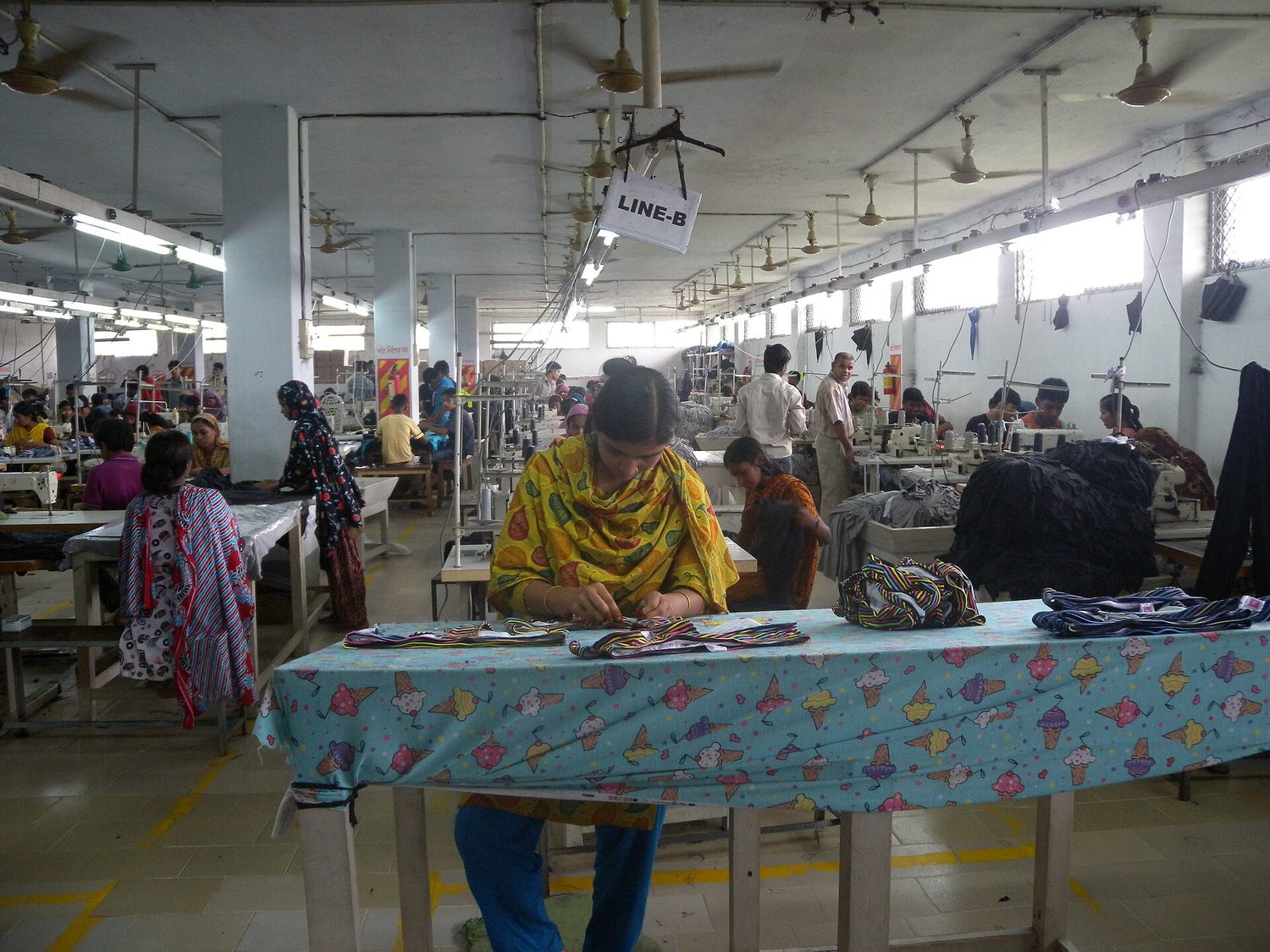
مصنع ملابس: تحديد أسواق العوامل الأجور للعمل وغيرها من المدخلات

سوق العامل هو المكان الذي تشتري فيه عوامل الإنتاج – العمل، الأرض، رأس المال. الأدوار تنعكس: الشركات تطلب والأسر توفر. عامل العمل هو الأكثر اختبارًا.

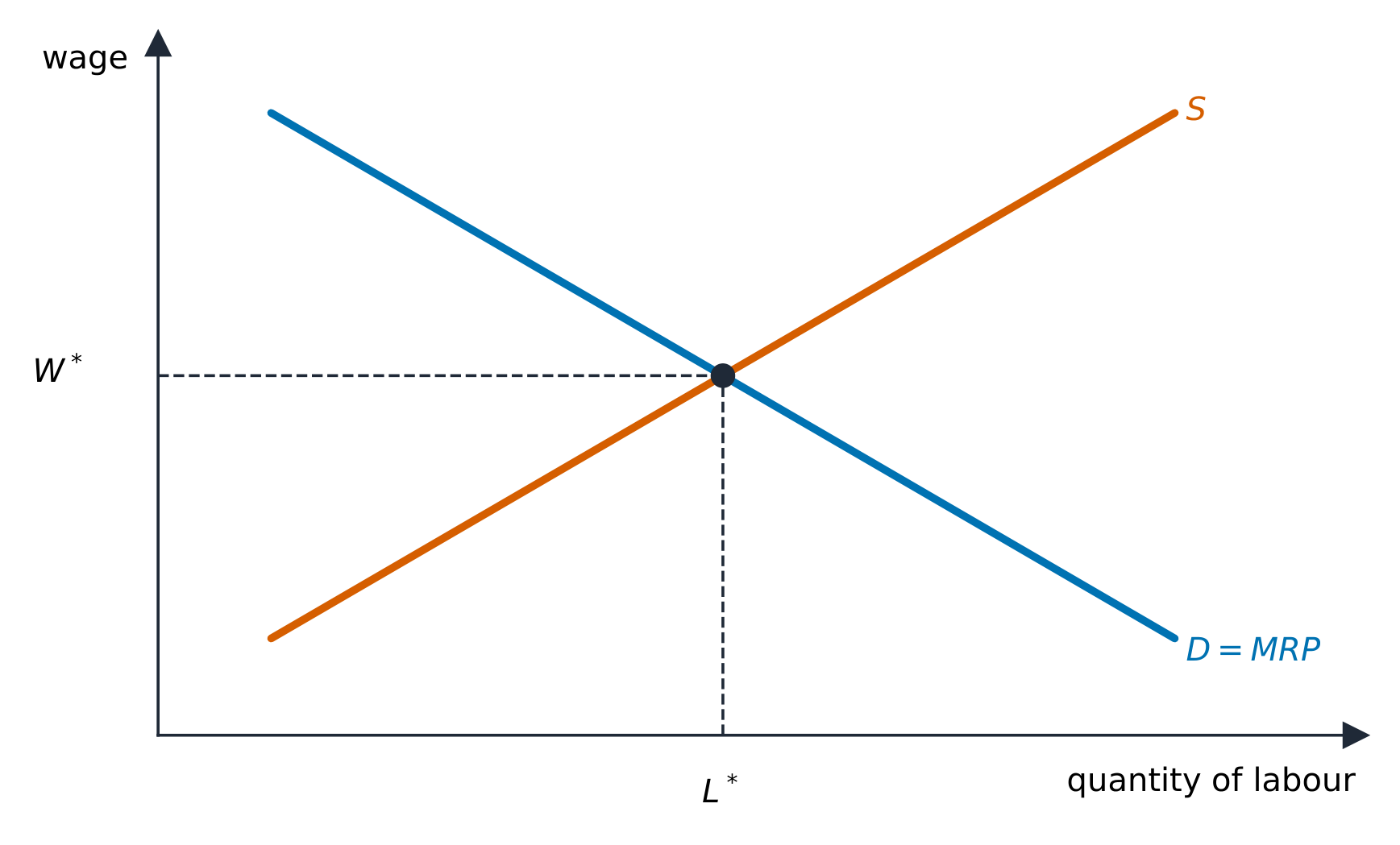
سوق عمل تنافسي يحدد الأجر عند تقاطع طلب العمل وعرض العمل

طلب العامل هو طلب مشتق – الشركات تريد العمل ليس من أجله بحد ذاته بل من أجل الناتج (والإيرادات) التي ينتجه. لذا فإن طلب العمال يعتمد على طلب المنتج الذي يصنعونه.

Explore · ⁨استكشف⁩

A labour (factor) market · ⁨سوق العمل (عامل)⁩

In a factor market firms demand labour and households supply it; the wage settles where demand meets supply. Shift either curve and watch the wage and employment move. · ⁨في سوق العوامل تطلب الشركات العمالة وتوفرها الأسر؛ ويستقر الأجر عند تقاطع الطلب والعرض. غيّر أي من المنحنيين وشاهد تحرك الأجر والتوظيف.⁩

5.2

Changes in Factor Demand and Factor Supply · ⁨تغيرات طلب وعرض العوامل⁩

Syllabus · ⁨المنهج⁩
English

Enduring Understanding (PRD-4): Factor prices provide incentives and convey information to firms and factors of production.

Learning Objective PRD-4.B: Explain (using graphs where appropriate) firms' and factors' responses to changes in incentives and constraints.

  • PRD-4.B.1 Changes in the determinants of labor demand, such as the output price and the productivity of the worker, cause the labor demand curve to shift.
  • PRD-4.B.2 Changes in the determinants of labor supply (such as immigration, education, working conditions, age distribution, availability of alternative options, preferences for leisure, and cultural expectations) cause the labor supply curve to shift.
العربية

الفهم الدائم (PRD-4): توفر أسعار العوامل حوافز وتوصيل معلومات للشركات وعوامل الإنتاج.

هدف التعلم PRD-4.B: اشرح (باستخدام الرسوم البيانية حيثما كان مناسباً) استجابات الشركات وعوامل الإنتاج للتغيرات في الحوافز والقيود.

  • PRD-4.B.1 تؤدي التغيرات في محددات طلب العمل، مثل سعر الناتج وإنتاجية العامل، إلى انزياح منحنى طلب العمل.
  • PRD-4.B.2 تؤدي التغيرات في محددات عرض العمل (مثل الهجرة، والتعليم، وظروف العمل، والتوزيع العمري، وتوفر البدائل، وتفضيلات وقت الفراغ، والتوقعات الثقافية) إلى انزياح منحنى عرض العمل.

Source: College Board AP Course and Exam Description · ⁨المصدر: وصف دورة وامتحان College Board AP⁩

English

Labor demand shifts when:

  • the product price or product demand changes (more valuable output $\Rightarrow$ more labor demanded),
  • worker productivity changes (better training or capital),
  • the price of other inputs changes (a substitute input like machines, or a complement).

Labor supply shifts with the number of qualified workers, immigration, workers' preferences (wages needed to attract them), and the wages available in other jobs. The market wage is set where labor demand meets labor supply.

العربية

طلب العمل ينزاح عندما:

  • يتغير سعر المنتج أو طلب المنتج (زيادة قيمة الناتج $\Rightarrow$ زيادة طلب العمل)،
  • تتغير إنتاجية العمال (تحسين التدريب أو رأس المال)،
  • يتغير سعر المدخلات الأخرى (مدخل بديل مثل الآلات، أو مدخل مكمّل).

عرض العمل ينزاح مع عدد العمال المؤهلين، الهجرة، تفضيلات العمال (الأجور اللازمة لجذبهم)، والأجور المتاحة في وظائف أخرى. يُحدد أجر السوق عند نقطة تقاطع طلب العمل وعرض العمل.

5.3

Profit-Maximizing Behavior in Perfectly Competitive Factor Markets · ⁨سلوك تعظيم الربح في أسواق عوامل تنافسية تمامًا⁩

Syllabus · ⁨المنهج⁩
English

Enduring Understanding (PRD-4): Factor prices provide incentives and convey information to firms and factors of production.

Learning Objective PRD-4.C: a. Define (using graphs as appropriate) the characteristics of perfectly competitive factor markets. b. Explain (using graphs where appropriate) the profit-maximizing behavior of firms buying labor (with other inputs fixed) in perfectly competitive markets. c. Calculate (using data from a graph or table where appropriate) measures representing the profit-maximizing behavior of firms buying labor (with other inputs fixed) in perfectly competitive markets.

  • PRD-4.C.1 In a perfectly competitive labor market, the wage is set by the market and each firm hires the quantity of workers, where the marginal factor (resource) cost (wage) equals the marginal revenue product of labor. A typical firm may be a perfect competitor in the labor market even if it is an imperfect competitor in its output markets.
  • PRD-4.C.2 A typical firm hires labor in a perfectly competitive labor market as long as the marginal revenue product of labor is greater than the market wage.
  • PRD-4.C.3 To minimize costs or maximize profits, firms allocate inputs such that the last dollar spent on each input yields the same amount of marginal product.
العربية

الفهم الدائم (PRD-4): توفر أسعار العوامل حوافز وتوصيل معلومات للشركات وعوامل الإنتاج.

هدف التعلم PRD-4.C: أ.عرّف (باستخدام الرسوم البيانية كما هو مناسب) خصائص أسواق العوامل التنافسية تماماً. ب.اشرح (باستخدام الرسوم البيانية حيثما كان مناسباً) سلوك تعظيم الربح للشركات التي تشتري العمل (مع بقاء المدخلات الأخرى ثابتة) في الأسواق التنافسية تماماً. ج.احسب (باستخدام بيانات من رسم بياني أو جدول حيثما كان مناسباً) المقاييم التي تمثل سلوك تعظيم الربح للشركات التي تشتري العمل (مع بقاء المدخلات الأخرى ثابتة) في الأسواق التنافسية تماماً.

  • PRD-4.C.1 في سوق العمل التنافسي تماماً، يُحدد الأجر بواسطة السوق، وتشتري كل شركة الكمية المناسبة من العمال حيث يتساوى التكلفة الحدية للعامل (المورد) (الأجر) مع الإيراد الحدي لمنتج العمل. قد تكون الشركة النموذجية منافسة تماماً في سوق العمل حتى لو كانت غير تنافسية تماماً في أسواق منتجاتها.
  • PRD-4.C.2 تشتري الشركة النموذجية العمل في سوق عمل تنافسي تماماً طالما أن الإيراد الحدي لمنتج العمل أكبر من أجر السوق.
  • PRD-4.C.3 لتقليل التكاليف أو تعظيم الأرباح، تخصص الشركات المدخلات بحيث يوفر الدولار الأخير المُنفق على كل مدخل نفس مقدار المنتج الحدي.

Source: College Board AP Course and Exam Description · ⁨المصدر: وصف دورة وامتحان College Board AP⁩

English

A firm decides how many workers to hire with the same marginal logic as everything else – compare the marginal benefit and marginal cost of one more worker.

  • The marginal benefit of a worker is the marginal revenue product 边际收益产品 (MRP): the extra revenue from one more worker, $MRP = MP \times$ product price (in a competitive product market, where $P=MR$). MRP falls as more workers are hired, because of diminishing marginal product.
  • The marginal cost of a worker is the wage (in a competitive labor market the firm is a wage taker, so marginal factor cost $=$ the wage).
  • Hiring rule: hire workers up to where $MRP = \text{wage}$ (more generally, $MRP = MFC$). The MRP curve is the firm's labor demand curve.

Worked example. A worker's marginal product is $8$ units and the firm sells each in a competitive market for $\$5$, so $MRP=8\times\$5=\$40$. If the wage is $\$30$, the firm hires this worker because $MRP>\text{wage}$. As more workers join, diminishing marginal product pulls MRP down; the firm keeps hiring until a worker whose $MP=6$ gives $MRP=6\times\$5=\$30$, exactly the wage – the profit-maximizing stopping point.

To choose the least-cost combination of two inputs, set the MP-per-dollar equal across inputs: $\dfrac{MP_L}{P_L}=\dfrac{MP_K}{P_K}$ – the same equal-bang-per-buck rule as consumer choice.

Exam skill: compute MRP from a table (marginal product $\times$ price) and find how many workers to hire at a given wage – a common free-response task.

العربية

تقرر الشركة عدد العمال الذين ستوظفهم بنفس المنطق الهامشي كما في كل شيء آخر – بمقارنة الفائدة الهامشية والتكلفة الهامشية للعمال الإضافيين.

  • الفائدة الهامشية للعامل هي المنتج الإجمالي للإيرادات الهامشية (MRP): الإيرادات الإضافية من عامل إضافي، $MRP = MP \times$ سعر المنتج (في سوق منتج تنافسي، حيث $P=MR$). ينخفض MRP مع توظيف عمال أكثر بسبب تراجع العائد الهامشي.
  • التكلفة الهامشية للعامل هي الأجر (في سوق عمل تنافسي، تكون الشركة تأخذ الأجر، لذا فإن التكلفة الهامشية للعامل $=$ الأجر).
  • قاعدة التوظيف: وظّف عمالًا حتى حيث $MRP = \text{wage}$ (بشكل عام، $MRP = MFC$). منحنى MRP هو منحنى طلب العمل للشركة.

مثال محلول. إنتاج العامل الهامشي هو $8$ وحدة وتبيع الشركة كل وحدة في سوق تنافسي بسعر $\$5$, so $MRP=8\times\$5=\$40$. If the wage is $\$30$، توظف الشركة هذا العامل لأن $MRP>\text{wage}$. ومع انضمام عمال أكثر، يسحب تراجع الإنتاج الهامشي MRP للأسفل؛ تستمر الشركة بالتوظيف حتى يصل عامل whose $MP=6$ يعطي $MRP=6\times\$5=\$30$، بالضبط الأجر – نقطة التوقف لتعظيم الربح.

لاختيار أقل ترکیب تكلفة من مدخلين، اجعل الإنتاج الهامشي لكل دولار متساويًا عبر المدخلات: $\dfrac{MP_L}{P_L}=\dfrac{MP_K}{P_K}$ – نفس قاعدة "أفضل قيمة مقابل المال" المستخدمة في اختيار المستهلك.

مهارة الامتحان: حساب MRP من جدول (الإنتاج الهامشي $\times$ × السعر) وإيجاد عدد العمال الذين يجب توظيفهم عند أجر معين – مهمة شائعة في الأسئلة المقالية.

خط تجميع سيارات: توظف الشركات العمالة حتى يتساوى المنتج الإجمالي للإيرادات الهامشية مع الأجر
5.4

Monopsonistic Markets · ⁨أسواق المونوبسون⁩

Syllabus · ⁨المنهج⁩
English

Enduring Understanding (PRD-4): Factor prices provide incentives and convey information to firms and factors of production.

Learning Objective PRD-4.D: a. Define (using graphs as appropriate) the characteristics of monopsonistic markets. b. Explain (using graphs where appropriate) the profit-maximizing behavior of firms buying labor (with other inputs fixed) in monopsonistic markets. c. Calculate (using data from a graph or table where appropriate) measures representing the profit-maximizing behavior of firms buying labor (with other inputs fixed) in monopsonistic markets.

  • PRD-4.D.1 In a monopsonistic labor market, a typical firm hires additional labor as long as the marginal revenue product is greater than the marginal factor (resource) cost (the wage of a new unit of labor plus the wage increase given to all existing labor).
  • PRD-4.D.2 When a typical firm hires additional workers in a monopsonistic labor market, the marginal factor (resource) cost is greater than the supply price of labor.
العربية

الفهم الدائم (PRD-4): توفر أسعار العوامل حوافز وتوصيل معلومات للشركات وعوامل الإنتاج.

هدف التعلم PRD-4.D: أ.عرّف (باستخدام الرسوم البيانية كما هو مناسب) خصائص الأسواق أحادية الشراء. ب.اشرح (باستخدام الرسوم البيانية حيثما كان مناسباً) سلوك تعظيم الربح للشركات التي تشتري العمل (مع بقاء المدخلات الأخرى ثابتة) في الأسواق أحادية الشراء. ج.احسب (باستخدام بيانات من رسم بياني أو جدول حيثما كان مناسباً) المقاييم التي تمثل سلوك تعظيم الربح للشركات التي تشتري العمل (مع بقاء المدخلات الأخرى ثابتة) في الأسواق أحادية الشراء.

  • PRD-4.D.1 في سوق العمل أحادي الشراء، تضيف الشركة النموذجية عملاً جديداً طالما أن الإيراد الحدي لمنتجها أكبر من التكلفة الحدية للعامل (المورد) (أجر الوحدة الجديدة من العمل بالإضافة إلى زيادة الأجر المقدمة لجميع العمال الحاليين).
  • PRD-4.D.2 عندما تضيف الشركة النموذجية عملاً جديداً في سوق عمل أحادي الشراء، تكون التكلفة الحدية للعامل (المورد) أكبر من سعر عرض العمل.

Source: College Board AP Course and Exam Description · ⁨المصدر: وصف دورة وامتحان College Board AP⁩

English

A monopsony 买方垄断 is a market with a single buyer of a factor – for example, the only large employer in a town.

  • Because it is the whole market, the monopsonist faces an upward-sloping labor supply curve: to hire more workers it must raise the wage for everyone.
  • So the marginal factor cost 边际要素成本 (MFC) is above the wage (like $MR for a monopoly, in reverse), and the MFC curve lies above the supply curve.
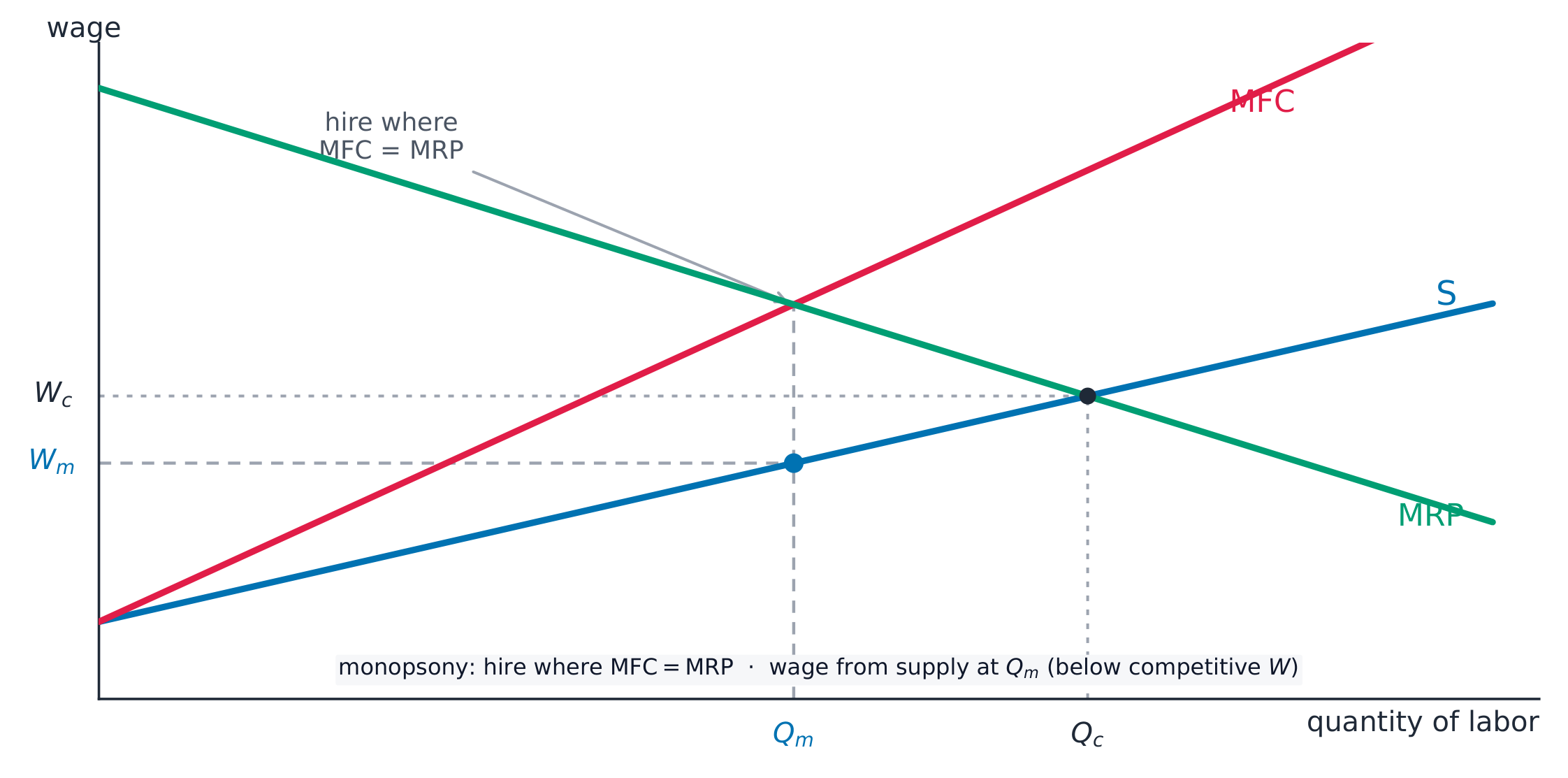
  • The monopsonist hires where $MRP = MFC$, then pays the lower wage the supply curve allows at that quantity.
  • Result: compared with a competitive labor market, a monopsony hires fewer workers at a lower wage – the mirror image of monopoly.

Exam skill: draw the monopsony graph (supply, MFC above it, MRP as demand), mark quantity at $MRP=MFC$ and the wage down on the supply curve, and contrast it with the competitive wage and quantity.

العربية

المونوبسون هو سوق له مشترٍ واحد لعامل – على سبيل المثال، صاحب العمل الوحيد الكبير في بلدة ما.

  • نظرًا لأنها تمثل السوق بأكمله، فإن المونوبسون يواجه منحنى عرض عمل متدرج صعودًا: لتوظيف عمال أكثر، يجب أن ترفع الأجر للجميع.
  • إذن فإن تكلفة العامل الهامش (MFC) تكون أعلى من الأجر (مثل $MR في حالة الاحتكار، ولكن بالعكس)، ومنحنى MFC يقع فوق منحنى العرض.
  • المشتري الأحادي يستقطع العمالة عند $MRP = MFC$، ثم يدفع الأجر الأقل الذي يسمح به منحنى العرض عند تلك الكمية.
  • النتيجة: مقارنةً بسوق عمل تنافسي، يستقطع الاحتكار الأحادي عددًا أقل من العمال بأجر أقل – وهو صورة معكوسة للاحتكار.
يشتري الاحتكار الأحادي حيث MFC = MRP ويدفع أجرًا أقل من السوق التنافسي

مهارة الامتحان: ارسم رسم الاحتكار الأحادي (العرض، MFC فوقه، MRP كطلب)، وعلّم الكمية عند $MRP=MFC$ والأجر للأسفل على منحنى العرض، وقارنه بالأجر والكمية في السوق التنافسي.

Vocabulary · ⁨مفردات⁩ Train · ⁨تدريب⁩
English العربية
factor market/ˈfæktə ˈmɑːkɪt/ سوق العوامل
derived demand/dɪˈraɪvd dɪˈmænd/ الطلب المشتق
marginal revenue product/ˈmɑːdʒɪnl ˈrevənjuː ˈprɒdʌkt/ المنتج الإيرادي الحدي
monopsony/ˈmɒnəʊpsəni/ شراء أحادي
marginal factor cost/ˈmɑːdʒɪnl ˈfæktə kɒst/ تكلفة العامل الحدية
5.4

Exam tips · ⁨نصائح للامتحان⁩

English
  • Factor demand is derived demand; hire labour up to where MRP = wage (MRP = marginal product × price).
  • MRP falls as more workers are hired (diminishing marginal product).
  • For least-cost input use, equalise the marginal product per dollar across inputs.
  • A monopsony faces an upward supply, so its marginal factor cost is above the wage; it hires fewer workers at a lower wage.
  • Draw the monopsony graph (supply, MFC above it, MRP as demand) and contrast with the competitive outcome.
العربية
  • طلب العوامل هو طلب مشتق؛ استقطب العمالة حتى يتساوى MRP = الأجر (MRP = المنتج الهامش × السعر).
  • ينخفض MRP كلما تم استقطاع عمالة أكثر (نقص المنتج الهامش).
  • للاستخدام الأمثل للداخلات بتكلفة أدنى، أجبّل المنتج الهامش لكل دولار عبر الداخلات.
  • يواجه الاحتكار الأحادي عرضًا تصاعديًا، لذا فإن تكلفته العاملية الهامشة تكون أعلى من الأجر؛ ويستقطع عددًا أقل من العمال بأجر أقل.
  • ارسم رسم الاحتكار الأحادي (العرض، MFC فوقه، MRP كطلب) وقارنه بالنتيجة التنافسية.

Interactive lessons on this topic · ⁨دروس تفاعلية حول هذا الموضوع⁩

Work through it step by step, with instant-check exercises. · ⁨ا-working عليه خطوة بخطوة، مع تمارين تحقق فوري.⁩

Past Papers · ⁨أوراق الامتحانات السابقة⁩

More topics in AP Microeconomics · ⁨الاقتصاد الجزئي (AP)⁩ · ⁨المزيد من المواضيع في AP Microeconomics · ⁨الاقتصاد الجزئي (AP)⁩⁩

Log in or create account · ⁨تسجيل الدخول أو إنشاء حساب⁩

IGCSE, A-Level & AP