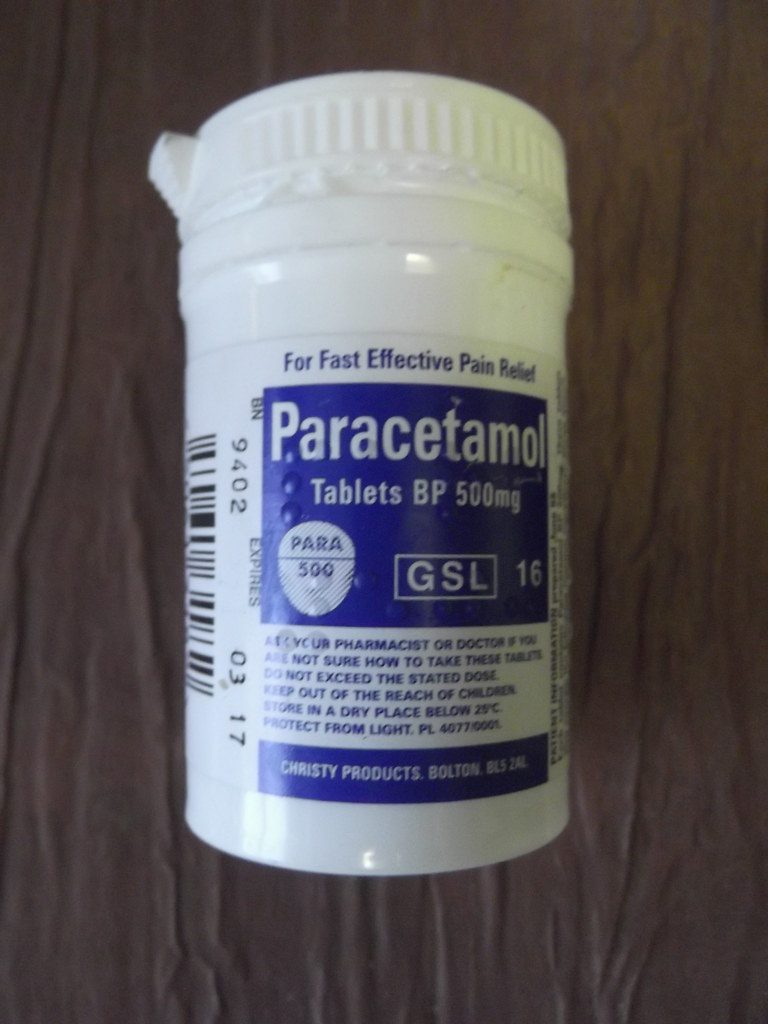
انظر إلى ثلاثة أشياء مختلفة تمامًا. سكر ملوّن برتقالي فاقع. قرص مسكن للألم. وبروتين عضلاتك. لا يجمعهم سوى القليل — باستثناء واحد…
English narration · English + 中文 subtitles burned in · سرد باللغة الإنجليزية · ترجمة مدمجة بالإنجليزية + الصينية
34.1
Primary and secondary amines · الأمينات الأولية والثانوية
Syllabus · المنهج
English
recall the reactions (reagents and conditions) by which primary and secondary amines are produced: (a) reaction of halogenoalkanes with $\text{NH}_3$ in ethanol heated under pressure (b) reaction of halogenoalkanes with primary amines in ethanol, heated in a sealed tube/under pressure (c) the reduction of amides with $\text{LiAlH}_4$ (d) the reduction of nitriles with $\text{LiAlH}_4$ or $\text{H}_2/\text{Ni}$
describe the condensation reaction of ammonia or an amine with an acyl chloride at room temperature to give an amide
describe and explain the basicity of aqueous solutions of amines
العربية
تذكر التفاعلات (الكواشف والشروط) التي يمكن من خلالها إنتاج الأمينات الأولية والثانوية: (أ) تفاعل هالوجينو ألكانات مع $\text{NH}_3$ في الإيثانول مُسخّن تحت ضغط (ب) تفاعل هالوجينو ألكانات مع أمين أولي في الإيثانول، مُسخّن في أنبوب مغلق/تحت الضغط (ج) اختزال الأميدات مع $\text{LiAlH}_4$ (د) اختزال النشاترات مع $\text{LiAlH}_4$ أو $\text{H}_2/\text{Ni}$
صف تفاعل التكثيف للأمونيا أو الأمين مع كلوريد الأسيل في درجة حرارة لإنتاج أميد
صف واشرح القاعدية لمحلول المائية للأمينات
Source: Cambridge International syllabus · المصدر: منهج كامبريدج الدولي
English
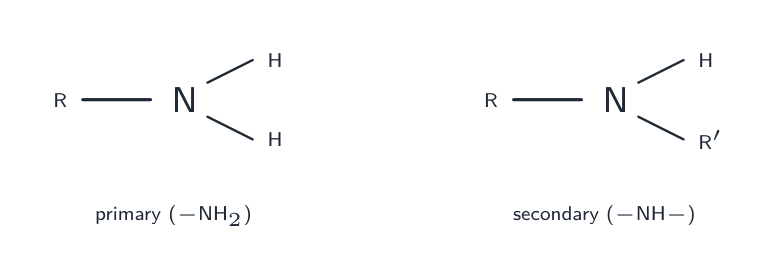
An amine 胺 has an $\text{–NH}_2$ (primary) or $\text{–NH}$ (secondary) group.
Making amines
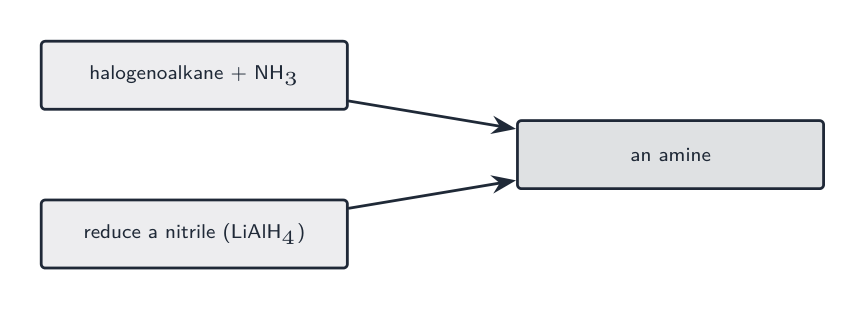
a halogenoalkane 卤代烷 with $\text{NH}_3$ in ethanol, heated under pressure → a primary amine.
a halogenoalkane with a primary amine, heated under pressure → a secondary amine.
reduction 还原 of an amide 酰胺 with $\text{LiAlH}_4$.
reduction of a nitrile 腈 with $\text{LiAlH}_4$ or $\text{H}_2/\text{Ni}$.
An amine (or ammonia 氨) reacts with an acyl chloride in a condensation 缩合 reaction to give an amide. The reagent is an acyl chloride 酰氯.
Basicity of amines
The basicity 碱性 of an amine comes from the lone pair on its nitrogen, which can accept an $\text{H}^+$ from water.
العربية
يحتوي الأمين على مجموعة $\text{–NH}_2$ (أولي) أو $\text{–NH}$ (ثانوي).
الأمين الأولي له -NH2؛ الأمين الثانوي له -NH-
تحضير الأمينات
هالوجينوألكان مع $\text{NH}_3$ في الإيثانول، ساخن تحت الضغط → أمين أولي.
هالوجينوألكان مع أمين أولي، ساخن تحت الضغط → أمين ثانوي.
اختزالأميد بواسطة $\text{LiAlH}_4$.
اختزال نايترايل بواسطة $\text{LiAlH}_4$ أو $\text{H}_2/\text{Ni}$.
طريقان للحصول على أمين: من هالوجينو ألكان، أو عن طريق اختزال سايانيد
يتفاعل أمين (أو أمونيا) مع كلوريد الأسيل في تفاعل تكاثف ليعطي أميد. الكاشف هو كلوريد الأسيل.
قاعدية الأمينات
تأتي قاعدية الأمين من الزوج الحر على نيتروجينه، الذي يمكنه قبول $\text{H}^+$ من الماء.
Explore · استكشف
Amine type lab · معمل نوع الأمين
Classify amines by substitution at nitrogen and basic behaviour. · صنّف الأمينات حسب الاستبدال عند النيتروجين والسلوك القاعدي.
34.2
Phenylamine and azo compounds · فينيل أمين ومركبات الأزو
Syllabus · المنهج
English
describe the preparation of phenylamine via the nitration of benzene to form nitrobenzene followed by reduction with hot Sn/concentrated $\text{HCl}$ followed by $\text{NaOH(aq)}$
describe: (a) the reaction of phenylamine with $\text{Br}_2\text{(aq)}$ at room temperature (b) the reaction of phenylamine with $\text{HNO}_2$ or $\text{NaNO}_2$ and dilute acid below $10\text{ }^\circ\text{C}$ to produce the diazonium salt; further warming of the diazonium salt with $\text{H}_2\text{O}$ to give phenol
describe and explain the relative basicities of aqueous ammonia, ethylamine and phenylamine
recall the following about azo compounds: (a) describe the coupling of benzenediazonium chloride with phenol in $\text{NaOH(aq)}$ to form an azo compound (b) identify the azo group (c) state that azo compounds are often used as dyes (d) that other azo dyes can be formed via a similar route
العربية
صف تحضير الفينيل أمين عبر نيترة البنزين لتكوين النيترو بنزين ثم اختزاله باستخدام القصدير الساخن/تركيز $\text{HCl}$ يليه $\text{NaOH(aq)}$
صف: (أ) تفاعل الفينيل أمين مع $\text{Br}_2\text{(aq)}$ في درجة حرارة (ب) تفاعل الفينيل أمين مع $\text{HNO}_2$ أو $\text{NaNO}_2$ والحميد المخفف دون $10\text{ }^\circ\text{C}$ لإنتاج ملح الديازونيوم؛ والتسخين الإضافي لملح الديازونيوم مع $\text{H}_2\text{O}$ للحصول على الفينول
صف واشرح القواعد النسبية للأمونيا المائية وإيثيل أمين وفينيل أمين
تذكر ما يلي عن المركبات الأزوية: (أ) صف الاقتران بين كلوريد بنزين ثنائي الأمين مع الفينول في $\text{NaOH(aq)}$ لتكوين مركب أزوي (ب) حدد المجموعة الأزوية (ج) أذكر أن المركبات الأزوية تُستخدم غالباً كصبغات (د) يمكن تكوين صبغات آزوية أخرى عبر مسار مشابه
Source: Cambridge International syllabus · المصدر: منهج كامبريدج الدولي
English
Making phenylamine
Make phenylamine 苯胺 from benzene in two steps: nitrate benzene to nitrobenzene, then reduce it with hot $\text{Sn}$ and concentrated $\text{HCl}$, followed by $\text{NaOH(aq)}$.
Reactions
with bromine water at room temperature → 2,4,6-tribromophenylamine (a white precipitate). The ring is activated, like phenol.
with $\text{HNO}_2$ (from $\text{NaNO}_2$ and dilute acid) below $10\,°\text{C}$ → a diazonium salt; warming this with water gives phenol.
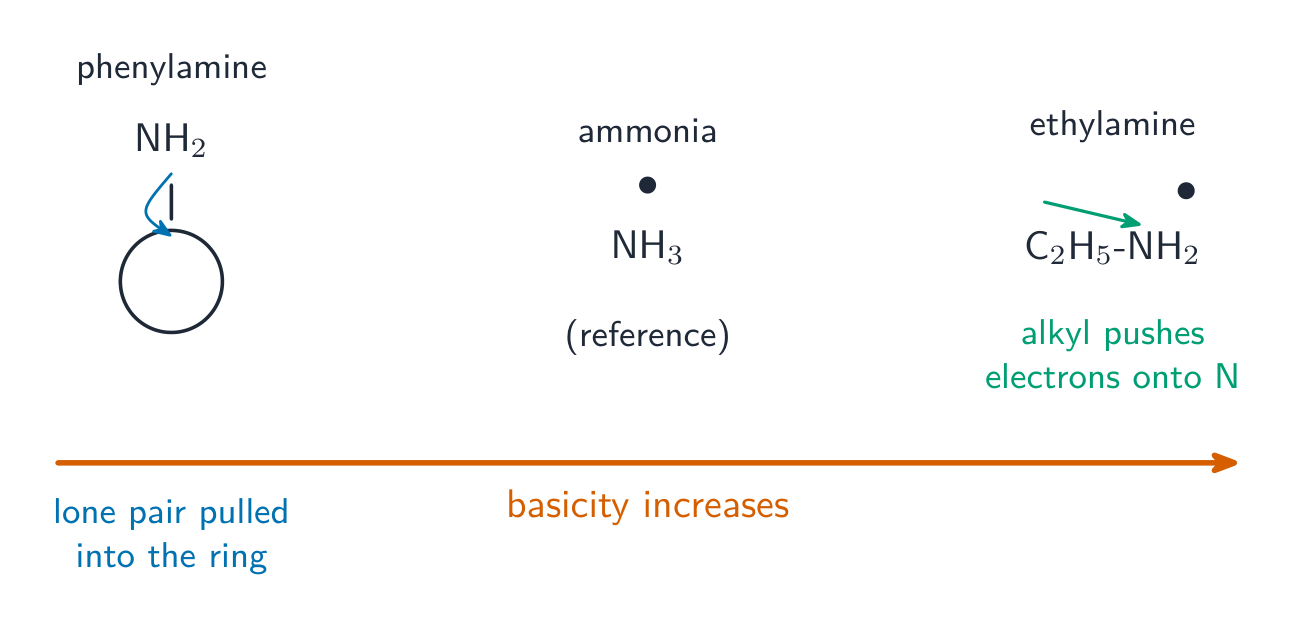
Ethylamine is the strongest base: its alkyl group pushes electron density onto the nitrogen, making the lone pair more available. Phenylamine is the weakest, because its lone pair is delocalised 离域 into the benzene ring, so it is less available to accept an $\text{H}^+$.
Azo compounds
A diazonium salt 重氮盐 (benzenediazonium chloride) couples with phenol 苯酚 in $\text{NaOH(aq)}$ to form an azo compound 偶氮化合物. The azo group is $\text{–N=N–}$. Azo compounds are brightly coloured and are often used as dye 染料s; many other azo dyes are made the same way.
Worked example. An amino acid has an isoelectric point of pH 6.0. Give its charge, and the electrode it moves towards in electrophoresis, at pH 2, at pH 6.0 and at pH 11. Compare the solution's pH with the isoelectric point each time. At pH 2, well below it, the solution is acidic, so the $\text{–NH}_2$ gains an $\text{H}^{+}$: the amino acid is positive and moves to the cathode (negative electrode). At pH 6.0, exactly its isoelectric point, it is the zwitterion with no net charge, so it does not move. At pH 11, well above it, the $\text{–COOH}$ loses its $\text{H}^{+}$: the amino acid is negative and moves to the anode. Compare the pH with the isoelectric point, never with 7 - and note the zwitterion still carries both charges, it simply has no net charge.
العربية
تحضير الفينيل أمين
حضّر فينيل أمين من البنزين في خطوتين: نترات البنزين إلى نيتروبنزين، ثم اختزله بواسطة $\text{Sn}$ الساخن و$\text{HCl}$ المركزة، يليه $\text{NaOH(aq)}$.
التفاعلات
مع ماء البروم في درجة حرارة الغرفة → 2,4,6-ثلاثي برومو فينيل أمين (راسب أبيض). الحلقة مفعّلة، مثل الفينول.
مع $\text{HNO}_2$ (من $\text{NaNO}_2$ وحامض مخفف) تحت $10\,°\text{C}$ → ملح ديازونيوم؛ تسخينه مع الماء يعطي الفينول.
إيثيل أمين هو أقوى قاعدة: مجموعة الألكيل تدفع كثافة إلكترونية نحو النيتروجين، مما يجعل الزوج الحر أكثر توفراً. الفينيل أمين هو الأضعف، لأنزوجته الحرة متفرقة داخل حلقة البنزين، لذا فهي أقل توفراً لاستقبال $\text{H}^+$.
تعتمد القاعدية على زوج النيتروجين الحر: المجموعة الألكيلية تجعله أكثر توفراً (أقوى قاعدة: إيثيل أمين)، بينما سحب الحلقة البنزينيه للزوج يجعله أضعف (أضعف قاعدة: فينيل أمين)
مركبات الأزو
يرتبط ملح الديازونيوم (كلوريد بنزينifferentونيوم) بـالفينول في $\text{NaOH(aq)}$ لتكوين مركب أزو. مجموعة الأزو هي $\text{–N=N–}$. مركبات الأزو ذات ألوان زاهية وتُستخدم غالباً كـأصباغ؛ تُصنع العديد من أصباغ الأزو الأخرى بنفس الطريقة.
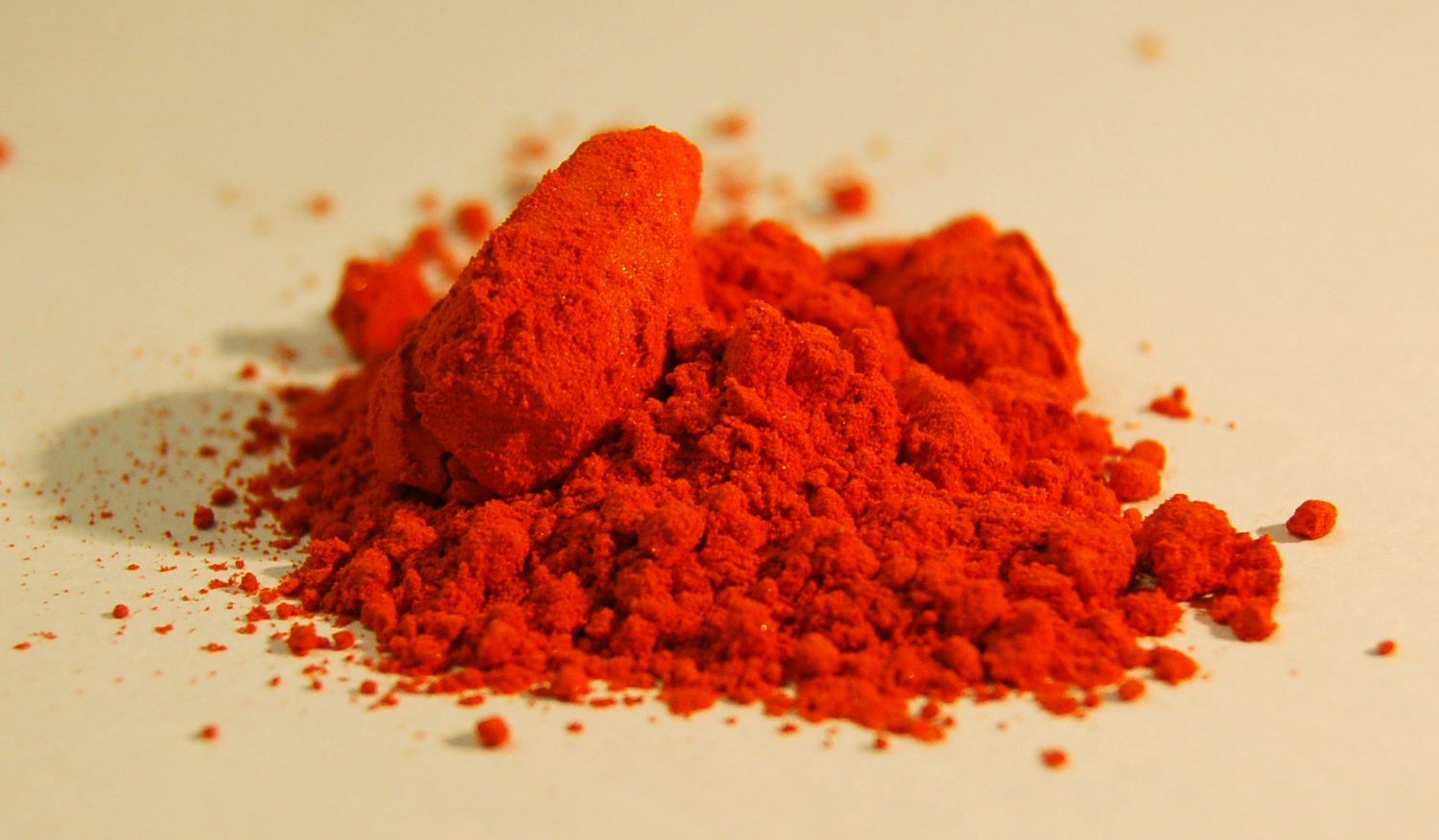
بروتان الأحمر، صبغة أزو برتقالية ساطعة؛ يعود اللون القوي إلى $\text{–N=N–}$ مجموعة الأزو، ولهذا السبب تُستخدم مركبات الأزو على نطاق واسع كأصباغ
مثال محلول. حمض أميني له نقطة تعادل كهربائي عند pH 6.0. حدد شحنته، والقطب الذي يتحرك نحوه في الكهروفوز، عند pH 2، وعند pH 6.0، وعند pH 11. قارن pH المحلول مع نقطة التعادل الكهربائي في كل مرة. عند pH 2، وهو أقل بكثير منها، يكون المحلول حامضياً، لذا يكتسب الـ $\text{–NH}_2$$\text{H}^{+}$: الحمض الأميني موجب ويتحرك نحو الكاثود (القطب السالب). عند pH 6.0، أي عند نقطة تعادله الكهربائي بالضبط، يكون زويتريون بلا شحنة صافية، لذا فهو لا يتحرك. عند pH 11، وهو أعلى بكثير منها، يفقد الـ $\text{–COOH}$$\text{H}^{+}$: الحمض الأميني سالب ويتحرك نحو الأنود. قارن pH مع نقطة التعادل الكهربائي، ولا تقارنه أبداً مع 7 - ولاحظ أن الزويتريون يحمل كلا الشحنتين، بل إن الشحنة الصافية فقط هي التي تساوي صفراً.
Explore · استكشف
Phenylamine to azo dye route · طريق فينيل أمين إلى صبغة أزو
Follow phenylamine from diazotisation to coloured azo compound. · تابع فينيل أمين من التفاعلDiazo إلى مركب azo ملون.
recall the reactions (reagents and conditions) by which amides are produced: (a) the reaction between ammonia and an acyl chloride at room temperature (b) the reaction between a primary amine and an acyl chloride at room temperature
describe the reactions of amides: (a) hydrolysis with aqueous alkali or aqueous acid (b) the reduction of the CO group in amides with $\text{LiAlH}_4$ to form an amine
state and explain why amides are much weaker bases than amines
العربية
تذكر التفاعلات (الكواشف والشروط) التي يمكن من خلالها إنتاج الأميدات: (أ) التفاعل بين الأمونيا وكلوريد الأسيل في درجة حرارة (ب) التفاعل بين أمين أولي وكلوريد الأسيل في درجة حرارة
صف تفاعلات الأميدات: (أ) التحلل المائي مع القلوي المائي أو الحميد المائي (ب) اختزال مجموعة CO في الأميدات مع $\text{LiAlH}_4$ لتكوين أمين
قُل واشرح لماذا تكون الأميدات قواعد أضعف بكثير من الأمينات
Source: Cambridge International syllabus · المصدر: منهج كامبريدج الدولي
English
An amide is made from ammonia or a primary amine with an acyl chloride at room temperature.
Its reactions:
hydrolysis with aqueous acid or alkali, giving the carboxylic acid (or its salt) and the amine (or ammonium).
reduction of the C=O group with $\text{LiAlH}_4$ to give an amine.
An amide is a much weaker base than an amine, because the nitrogen lone pair is delocalised onto the neighbouring C=O group, so it is not available to accept an $\text{H}^+$.
العربية
تُصنع الأميد من الأمونيا أو الأمين الأولي مع كلوريد الأسيل عند درجة حرارة الغرفة.
باراسيتامول مسكن للألم شائع يحتوي على مجموعة الأميد (–CONH–)
تفاعلاته:
تحلل مائي مع حمض أو قاعدة مائية، إعطاء حمض الكربوكسيل (أو ملحه) والأمين (أو الأمونيوم).
اختزال مجموعة C=O مع $\text{LiAlH}_4$ لإنتاج أمين.
الأميد قاعدة أضعف بكثير من الأمين، لأن زوج النيتروجين الحر متفرق نحو مجموعة C=O المجاورة، لذا فهو غير متاح لاستقبال $\text{H}^+$.
Explore · استكشف
Amide formation route · مسار تكوين الأميد
Follow acyl chloride or acid derivative to an amide. · اتباع كلوريد الأسيل أو مشتق الحمض لتكوين أميد.
34.4
Amino acids · أحماض أمينية
Syllabus · المنهج
English
describe the acid/base properties of amino acids and the formation of zwitterions, to include the isoelectric point
describe the formation of amide (peptide) bonds between amino acids to give di- and tripeptides
interpret and predict the results of electrophoresis on mixtures of amino acids and dipeptides at varying pHs (the assembling of the apparatus will not be tested)
العربية
صف الخصائص الحمضية/القاعدية لـ الأحماض الأمينية وتكوين الأيونات الثنائية القطب، بما في ذلك النقطة المتكافئة
صف تكوين روابط الأميد (الببتيد) بين الأحماض الأمينية للحصول على ثنائي和三肽 (di- و tripeptides)
فسّر وتنبأ بنتائج الكهربائية على مخاليط الأحماض الأمينية وثنائي الببتيد عندDifferent pHs (سيتم اختبار تجميع المعدات)
Source: Cambridge International syllabus · المصدر: منهج كامبريدج الدولي
English
An amino acid 氨基酸 has both a basic $\text{–NH}_2$ group and an acidic $\text{–COOH}$ group.
Zwitterions and the isoelectric point
The $\text{–COOH}$ can give its $\text{H}^+$ to the $\text{–NH}_2$ in the same molecule, forming a zwitterion 两性离子 ($\text{H}_3\text{N}^+\text{–CHR–COO}^-$) — an ion with both a positive and a negative end but no overall charge.
in acid (low pH), the amino acid gains $\text{H}^+$ and becomes positive.
in alkali (high pH), it loses $\text{H}^+$ and becomes negative.
at one special pH, the isoelectric point 等电点, it is mostly the zwitterion with no net charge.
Peptide bonds
Two amino acids join in a condensation reaction: the $\text{–COOH}$ of one and the $\text{–NH}_2$ of the other react, losing water and forming a peptide bond 肽键 (an amide link). Two amino acids give a dipeptide 二肽, three give a tripeptide.
Electrophoresis
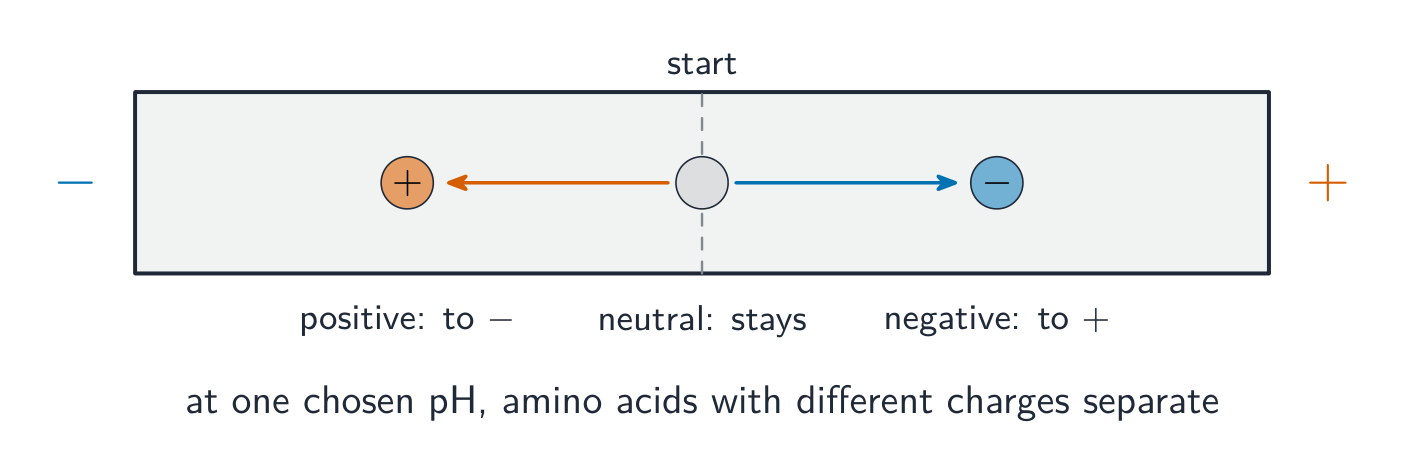
In electrophoresis 电泳, a mixture is placed in an electric field at a chosen pH:
above its isoelectric point, an amino acid is negative and moves to the positive electrode.
below its isoelectric point, it is positive and moves to the negative electrode.
at its isoelectric point, it does not move. So different amino acids separate.
العربية
الـحمض الأميني يحتوي على كل من مجموعة $\text{–NH}_2$ قاعدية ومجموعة $\text{–COOH}$ حامضية.
الزويتريون ونقطة التعادل الكهربائي
يمكن للـ $\text{–COOH}$ أن يعطي $\text{H}^+$ الخاص به للـ $\text{–NH}_2$ في نفس الجزيء، مشكلاً زويتريون ($\text{H}_3\text{N}^+\text{–CHR–COO}^-$) — أيون له طرف موجب وطرف سالب لكن بدون شحنة كلية.
في وسط حامضي (pH منخفض)، يكتسب الحمض الأميني $\text{H}^+$ ويصبح موجباً.
في وسط قاعدي (pH مرتفع)، يفقد $\text{H}^+$ ويصبح سالباً.
عند pH واحد خاص يُسمى نقطة التعادل الكهربائي، يكون بشكل رئيسي زويتريون بلا شحنة صافية.
شحنة الحمض الأميني تعتمد على pH: موجبة في الوسط الحامضي، زويتريون متعادل عند نقطة التعادل الكهربائي، وسالبة في الوسط القاعدي
روابط الببتيد
يرتبط حمضان أمينيان في تفاعل تكاثف: تتفاعل $\text{–COOH}$ أحدهما و$\text{–NH}_2$ الآخر، مع فقدان جزيء ماء وتشكيل رابط ببتيد (رابطة أميد). حمضان أمينيان يُنتجان ثنائي ببتيد، وثلاثة يُنتجون ثلاثي ببتيد.
تكاثف حمضين أمينيين: مغادرة –OH من –COOH واحدة و–H من –NH$_2$ الأخرى على شكل ماء، لتشكيل رابط الببتيد (الأميد)
الكهروفوز
في الكهروفوز، تُوضع خليط في مجال كهربائي عند pH مختار:
فوق نقطة تعادله الكهربائي، يكون الحمض الأميني سالباً ويتحرك نحو القطب الموجب.
تحت نقطة تعادله الكهربائي، يكون موجباً ويتحرك نحو القطب السالب.
عند نقطة تعادله الكهربائي، لا يتحرك. hence تنفصل الأحماض الأمينية المختلفة.
الكهروفوز عند pH مختار: حمض أميني موجب يتحرك نحو القطب السالب، وسالب نحو القطب الموجب، ومتعادل يبقى في مكانه — لذلك تنفصل
Explore · استكشف
Amino acid lab · معمل الأحماض الأمينية
Classify amino acid behaviour by the group that reacts. · صنّف سلوك الحمض الأميني حسب المجموعة المتفاعلة.
Pick one and the site follows you — notes, papers, videos and practice all open on it. · اختر واحدًا وسيتبعك الموقع — الملاحظات، الأوراق، الفيديوهات والتدريب جميعها تفتح عليه.
Type to search notes, lessons, code, vocabulary and past-paper questions across every subject. · اكتب للبحث عن ملاحظات، دروس، أكواد، مفردات وأسئلة امتحانات سابقة عبر جميع المواد.