- explain absolute and comparative advantage and the gains from specialisation and trade
- explain the terms of trade and the benefits and limitations of trade theory
国际经济问题
A-Level 经济学 · 第 6 主题
 9:07
9:07
International economic issues
Look at the label on your phone, your shoes, your desk lamp. Almost none of it was made in the country where you are sitting. It arrived in steel boxes, on…
英文讲解 · 内嵌中英文字幕
6.1
国际贸易的原因

大纲
来源:剑桥国际大纲
国际贸易(international trade)让国家彼此买卖。贸易让每个国家在它制造得最好的东西上专业化(specialise),所以世界总共制造得更多。
Absolute and comparative advantage
- 若一个国家能用同样的资源制造比另一个国家更多的一个物品,它在该物品上有一个绝对优势(absolute advantage)。
- 若一个国家能以比另一个国家更低的机会成本(opportunity cost)制造一个物品,它在该物品上有一个比较优势(comparative advantage)。
比较优势是关键思想:一个国家应当制造它放弃最少来生产的物品,并交易换取其余的。看这个例子,每个国家用同样的资源:
| 国家 | 酒(单位) | 布(单位) |
|---|---|---|
| 国家 A | 20 | 10 |
| 国家 B | 5 | 5 |
国家 A 在两者上都更好(在两者上有绝对优势)。但想想机会成本:
- 在 A,制造 1 布意味着放弃 2 酒。
- 在 B,制造 1 布意味着放弃 1 酒。
所以 B 放弃更少来制造布——B 在布上有比较优势。A 在酒上有它。若 A 只制造酒而 B 只制造布,并且它们交易,两者都能以比之前更多的东西结束。

Terms of trade
贸易条件(terms of trade)测量一个国家出口的价格与它进口的价格相比。它被算作一个指数:
$$\text{terms of trade} = \frac{\text{index of export prices}}{\text{index of import prices}} \times 100.$$
若出口价格比进口价格上升得更快,贸易条件"改善"——国家能用同样的出口买更多的进口。
例题。 一年内,一个国家的出口价格指数从 $100$ 上升到 $110$,而它的进口价格指数从 $100$ 上升到 $105$。求新的贸易条件。
$$\text{terms of trade} = \frac{110}{105} \times 100 = 104.8.$$
这个数字在 $100$ 之上,所以贸易条件改善了:每单位出口现在买比之前多约 $4.8\%$ 的进口。
Limits of the theory
收益是真实的,但简单的理论假设没有运输成本、没有贸易壁垒,以及成本不随产出改变。在真实世界中这些不完全成立,而且若一个物品的价格下降,在它上面专业化是有风险的。
探索
Why countries trade
Each country specialises where its opportunity cost is lowest, then trades — both can consume beyond their own frontier.
词汇表
训练
| 英文 | 中文 | 拼音 |
|---|---|---|
| international trade | 国际贸易 | guó jì mào yì |
| specialise | 专业化 | zhuān yè huà |
| absolute advantage | 绝对优势 | jué duì yōu shì |
| comparative advantage | 比较优势 | bǐ jiào yōu shì |
| opportunity cost | 机会成本 | jī huì chéng běn |
| terms of trade | 贸易条件 | mào yì tiáo jiàn |
6.2
贸易保护主义

大纲
- describe tools of protection (tariffs, quotas, subsidies, embargoes, administrative barriers)
- explain the arguments for and against protectionism and its effects on stakeholders
来源:剑桥国际大纲
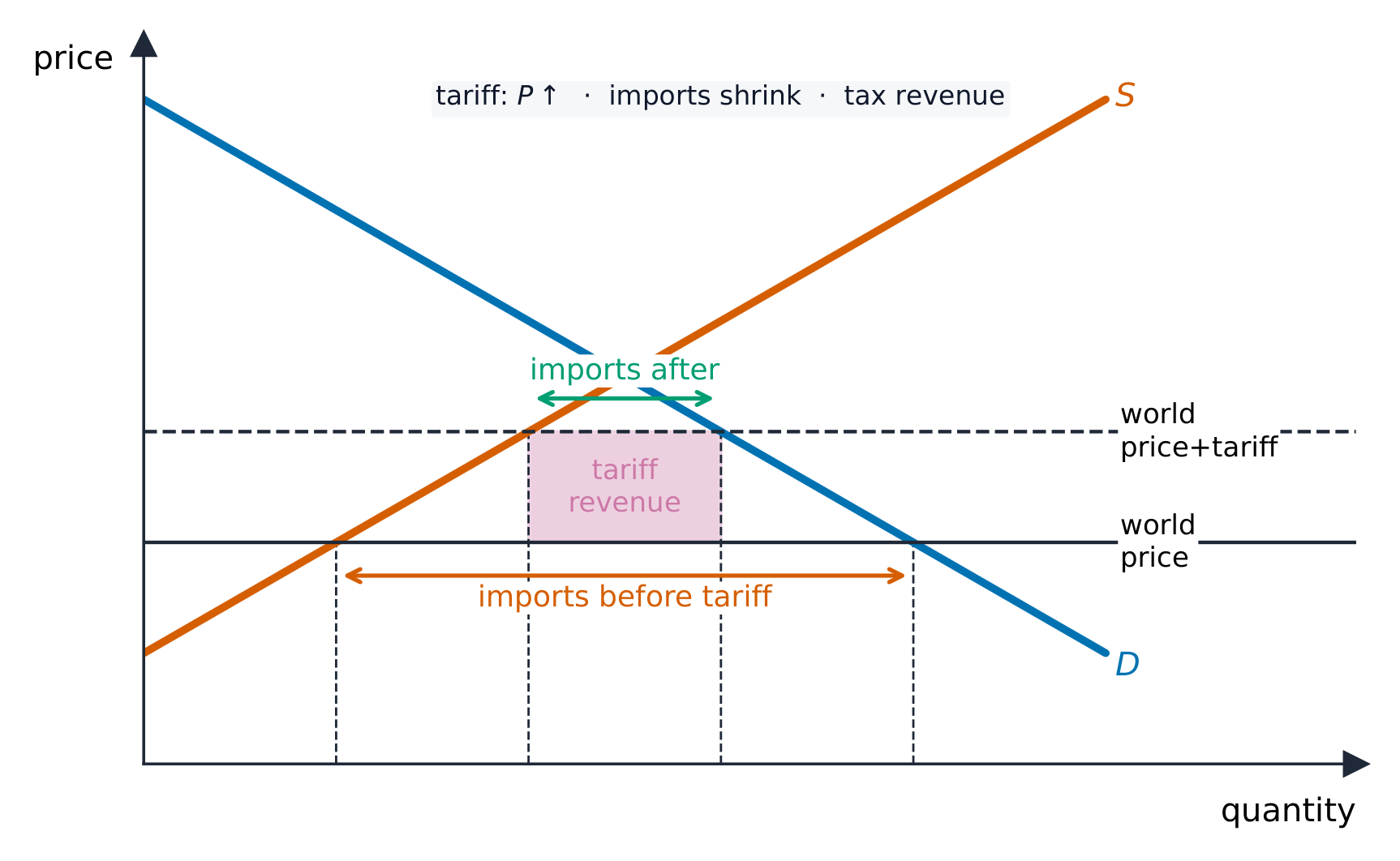
贸易保护主义(protectionism)意味着一个政府保护本国生产者免于外国竞争。主要的工具:
- 一个关税(tariff)——对进口的一个税,它提高它们的价格。
- 一个配额(quota)——对可以进口的一个物品数量的一个合法限制。
- 一个给本国生产者的补贴(subsidy),所以他们能比外国竞争对手卖得更便宜。
- 一个禁运(embargo)——对与一个国家或在一个物品上的贸易的一个完全禁止。
- 行政壁垒(administrative barriers)——使进口困难的额外文书工作和严格标准。
For and against
支持保护的论点包括保护一个幼稚产业(infant industry,一个需要时间成长的年轻产业)、拯救就业,以及阻止倾销(dumping,外国企业以低于成本的价格出售以摧毁本地竞争对手)。
反对的论点很强:保护提高消费者的价格、保护弱的企业所以它们保持低效,并能导致报复(retaliation)——其他国家用它们自己的壁垒回击。
Effects on stakeholders
一个关税对每个利益相关者(stakeholder)有不同的影响:本国生产者获益、政府获得关税收入,但消费者受损(更高的价格、更少的选择)而外国生产者失去销售。
探索
Protectionism in the market
A tariff or quota shifts effective supply and raises the domestic price, protecting home producers but costing consumers. Shift the lines to see it.
词汇表
训练
| 英文 | 中文 | 拼音 |
|---|---|---|
| protectionism | 贸易保护主义 | mào yì bǎo hù zhǔ yì |
| tariff | 关税 | guān shuì |
| quota | 配额 | pèi é |
| subsidy | 补贴 | bǔ tiē |
| embargo | 禁运 | jìn yùn |
| administrative barriers | 行政壁垒 | xíng zhèng bì lěi |
| infant industry | 幼稚产业 | yòu zhì chǎn yè |
| dumping | 倾销 | qīng xiāo |
| retaliation | 报复 | bào fù |
| stakeholder | 利益相关者 | lì yì xiāng guān zhě |
6.3
国际收支经常账户
大纲
- describe the structure of the balance of payments and the components of the current account (trade in goods and services, primary and secondary income)
- explain the causes and consequences of current account deficits and surpluses
来源:剑桥国际大纲
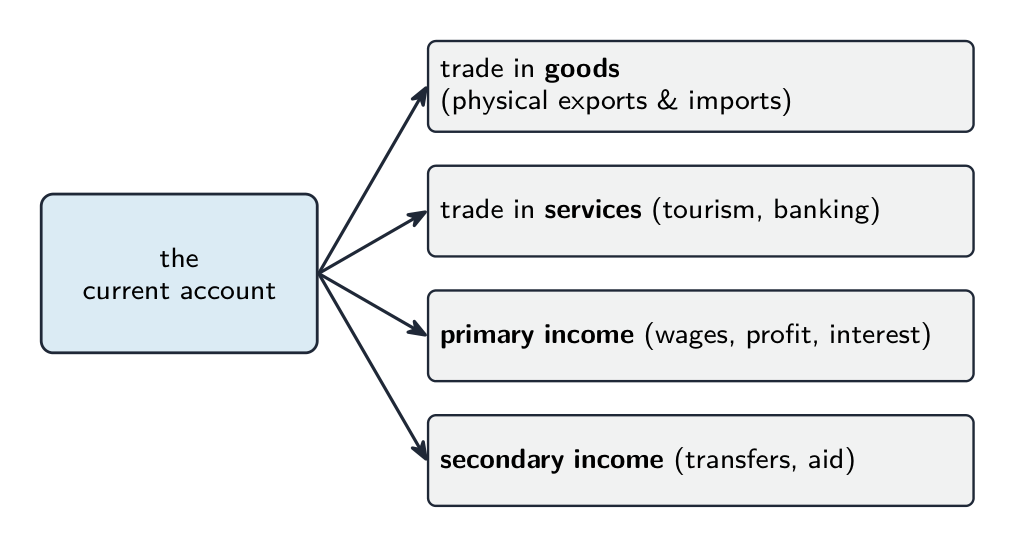
国际收支(balance of payments)是一个国家和世界其余部分之间所有货币流动的一个记录。它被研究得最多的部分是经常账户(current account),它有四个部分:
- 货物贸易(trade in goods)——实物物品的出口和进口。
- 服务贸易(trade in services)——服务的出口和进口(旅游、银行)。
- 初次收入(primary income)——来自国外工作和投资的收入(工资、利润、利息)。
- 二次收入(secondary income)——没有回报的转移,像外国援助。
一个经常账户赤字(current account deficit)意味着一个国家从国外买得比它卖出的更多。一个经常账户盈余(current account surplus)是相反的。一个长的赤字能意味着对其他国家上升的债务;一个大的盈余能意味着国家储蓄很多但消费很少。
探索
Current account flow
Track exports, imports and income flows into the current account.
词汇表
训练
| 英文 | 中文 | 拼音 |
|---|---|---|
| balance of payments | 国际收支 | guó jì shōu zhī |
| current account | 经常账户 | jīng cháng zhàng hù |
| trade in goods | 货物贸易 | huò wù mào yì |
| trade in services | 服务贸易 | fú wù mào yì |
| primary income | 初次收入 | chū cì shōu rù |
| secondary income | 二次收入 | èr cì shōu rù |
| current account deficit | 经常账户赤字 | jīng cháng zhàng hù chì zì |
| current account surplus | 经常账户盈余 | jīng cháng zhàng hù yíng yú |
6.4
汇率
大纲
- explain the determination of floating exchange rates by demand and supply of currency, and fixed and managed systems
- explain the causes and effects of appreciation and depreciation on the economy
来源:剑桥国际大纲
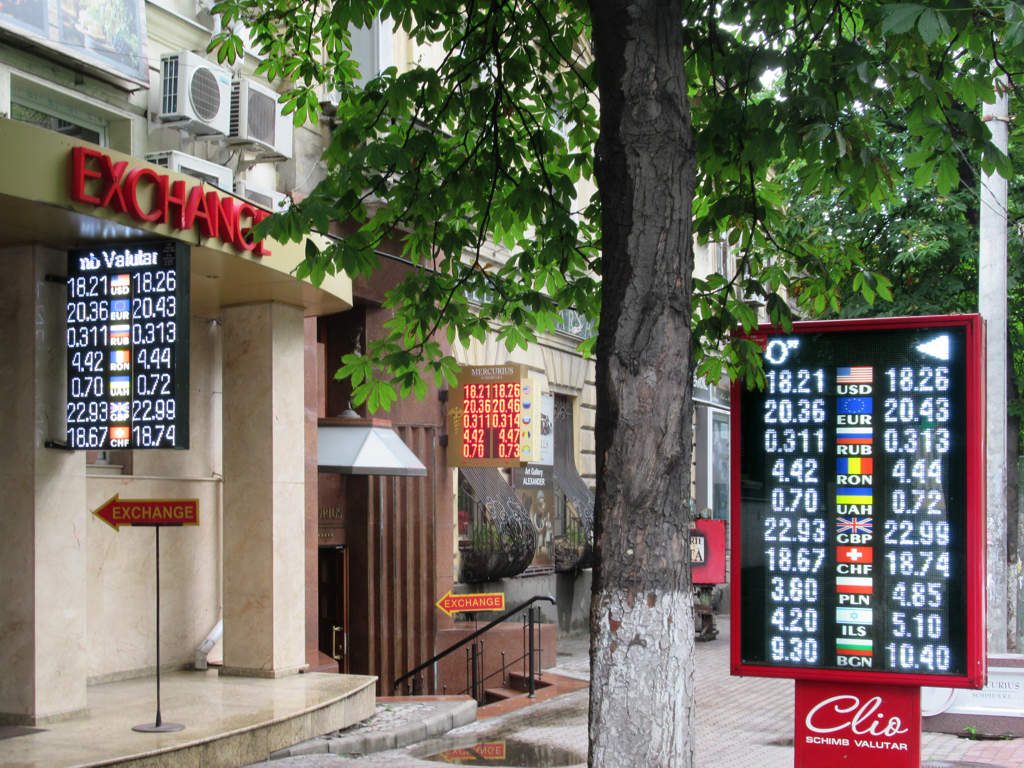
一个汇率(exchange rate)是一种货币以另一种货币计的价格。有三个主要的制度。
- 一个浮动汇率(floating exchange rate)由对货币的需求和供给自由地设定。若更多的人想要一种货币(以买它的出口),它的价值上升。
- 一个固定汇率(fixed exchange rate)被中央银行保持在一个设定的价值,它买卖货币以把它保持在那里。
- 一个管理浮动汇率(managed exchange rate)大多浮动,但中央银行时不时介入以稳定它。

Appreciation and depreciation
在浮动汇率下:
- 升值(appreciation)是货币价值的一个上升。出口对外国人变得更贵,而进口变得更便宜。
- 贬值(depreciation)是货币价值的一个下降。出口变得更便宜,而进口变得更贵。
所以一次贬值能提高出口销售并削减进口,帮助经常账户——但它也能提高通货膨胀,因为进口花费更多。
例题。 假设汇率是 $\text{\pounds} 1 = \$1.40$。
一个英国出口商的 $\text{\pounds} 200$ 机器花一个美国买者 $\text{\pounds} 200 \times 1.40 = \$280$。若英镑随即升值到 $\text{\pounds} 1 = \$1.60$,同样的机器花 $\text{\pounds} 200 \times 1.60 = \$320$——对美国人更贵,所以卖得更少。反过来走,一个来自美国供应商的 $\$700$ 发票花一个英国企业 $\$700 \div 1.40 = \text{\pounds} 500$。
探索
The foreign-exchange market
A currency has its own market. More demand for £ (or less supply) pushes the exchange rate up — it appreciates.
词汇表
训练
| 英文 | 中文 | 拼音 |
|---|---|---|
| exchange rate | 汇率 | huì lǜ |
| floating exchange rate | 浮动汇率 | fú dòng huì lǜ |
| fixed exchange rate | 固定汇率 | gù dìng huì lǜ |
| managed exchange rate | 管理浮动汇率 | guǎn lǐ fú dòng huì lǜ |
| appreciation | 升值 | shēng zhí |
| depreciation | 贬值 | biǎn zhí |
6.5
纠正经常账户失衡的政策

大纲
- explain expenditure-switching and expenditure-reducing policies and supply-side measures to correct a deficit
- evaluate the effectiveness of these policies
来源:剑桥国际大纲
一个政府能用三种政策来削减一个赤字:
- 支出减少(expenditure-reducing)政策降低总需求(更高的税或利率),所以人们买更少的进口。但它们也减慢增长并提高失业。
- 支出转换(expenditure-switching)政策把支出从进口移向本国物品(一个关税,或一个更低的汇率)。但它们能引起报复或通货膨胀。
- 供给侧政策提高本国企业的竞争力(competitiveness,更好的技能和技术),所以出口上升。这些在长期效果最好但缓慢。
探索
Current account flow
Track exports, imports and income flows into the current account.
词汇表
训练
| 英文 | 中文 | 拼音 |
|---|---|---|
| expenditure-reducing | 支出减少 | zhī chū jiǎn shǎo |
| expenditure-switching | 支出转换 | zhī chū zhuǎn huàn |
| competitiveness | 竞争力 | jìng zhēng lì |
6.5
考试技巧
- 通过机会成本解释比较优势(在你放弃最少的地方专业化)并陈述它的假设和限度。
- 评估贸易保护主义(关税、配额):它能保护就业但提高价格并冒报复的风险。
- 读国际收支(经常账户涵盖贸易、收入和转移)。
- 一次贬值使出口更便宜、进口更贵,只在需求足够有弹性时才帮助经常账户(马歇尔-勒纳)。
本主题的互动课程
逐步学习,并即时检测练习。