Skip to content · ⁨ข้ามไปยังเนื้อหา⁩

Microeconomic decision-makers · ⁨ผู้ตัดสินใจทางเศรษฐศาสตร์微观⁩

IGCSE Economics · ⁨Economics IGCSE⁩ · Topic 3 · ⁨หัวข้อ 3⁩

Video lesson for this topic · ⁨บทเรียนวิดีโอสำหรับหัวข้อนี้⁩ Open the video page · ⁨เปิดหน้าวิดีโอ⁩
12:41

ผู้ตัดสินใจทางเศรษฐศาสตร์จุลภาค

คุณมีปลา คุณต้องการรองเท้าคู่หนึ่ง เมื่อครั้งโบราณมันหมายถึงการแลกเปลี่ยนสินค้า — การสับเปลี่ยนสินค้าโดยตรง และเพื่อทำเช่นนี้ คุณต้องหาคนที่มีรองเท้า และคนที่…

English narration · English + 中文 subtitles burned in · ⁨การบรรยายภาษาอังกฤษ · คำบรรยายภาษาอังกฤษ + 中文 ลอยตัวบนภาพ⁩

3.1

Money and banking · ⁨เงินและการธนาคาร⁩

Syllabus · ⁨หลักสูตร⁩
English
  1. state the functions of money (medium of exchange, store of value, unit of account, means of deferred payment) and the characteristics of money
  2. explain the role of central banks and commercial banks
ไทย
  1. ระบุหน้าที่ของเงิน (สื่อกลางในการแลกเปลี่ยน, เครื่องมือเก็บมูลค่า, หน่วยบัญชี,Instrument of deferred payment) และลักษณะของเงิน
  2. อธิบายบทบาทของธนาคารกลางและธนาคารพาณิชย์
Source: Cambridge International syllabus · ⁨แหล่งที่มา: หลักสูตร Cambridge International⁩

English

Long ago, people swapped goods directly. This is called barter 物物交换. Barter is hard: you must find someone who has what you want and wants what you have. Money 货币 solves this problem.

The functions of money

Money does four jobs:

  • a medium of exchange 交换媒介 — you swap money for goods, so you do not need barter.
  • a store of value 价值储藏 — you can hold money now and spend it later, because it keeps its value.
  • a unit of account 记账单位 — money measures and compares the value of things (this is the price).
  • a means of deferred payment 延期支付手段 — you can buy now and pay later.

The characteristics of money

Good money must be:

  • durable 耐用的 — it lasts a long time.
  • portable 便于携带的 — easy to carry.
  • divisible 可分割的 — can be split into small amounts for small payments.
  • limited in supply, hard to copy, and accepted by everyone.

Banks

  • A central bank 中央银行 is the government's bank. It issues notes, looks after the banking system, and sets interest rates 利率. There is one in each country.
  • commercial banks 商业银行 are the ordinary banks that people and firms 企业 use. They keep savings safe, lend money, and let people pay each other.
ไทย

ในอดีต คนแลกเปลี่ยนสินค้ากันโดยตรง สิ่งนี้เรียกว่า การค้าแลกของ การแลกเปลี่ยนของยาก: คุณต้องหาคนที่มีสิ่งที่คุณต้องการ และ ต้องการสิ่งที่คุณมี เงิน แก้ไขปัญหานี้

หน้าที่ของเงิน

เงินทำหน้าที่สี่อย่าง:

  • ตัวกลางในการแลกเปลี่ยน — bạn trao đổi tiền để lấy hàng hóa, vì vậy không cần trao đổi hàng hóa.
  • เครื่องกักเก็บมูลค่า — คุณสามารถถือเงินตอนนี้และใช้จ่ายทีหลัง เพราะมันรักษามูลค่าไว้ได้
  • หน่วยนับมูลค่า — เงินวัดและเปรียบเทียบมูลค่าของสิ่งต่างๆ (นี่คือราคา)
  • ** Means of deferred payment** —คุณสามารถซื้อตอนนี้และจ่ายทีหลัง
หน้าที่สี่อย่างของเงิน: ตัวกลางในการแลกเปลี่ยน, เครื่องกักเก็บมูลค่า, หน่วยนับมูลค่า, Means of deferred payment
หน้าที่สี่อย่างของเงิน: ตัวกลางในการแลกเปลี่ยน, เครื่องกักเก็บมูลค่า, หน่วยนับมูลค่า, และ Means of deferred payment
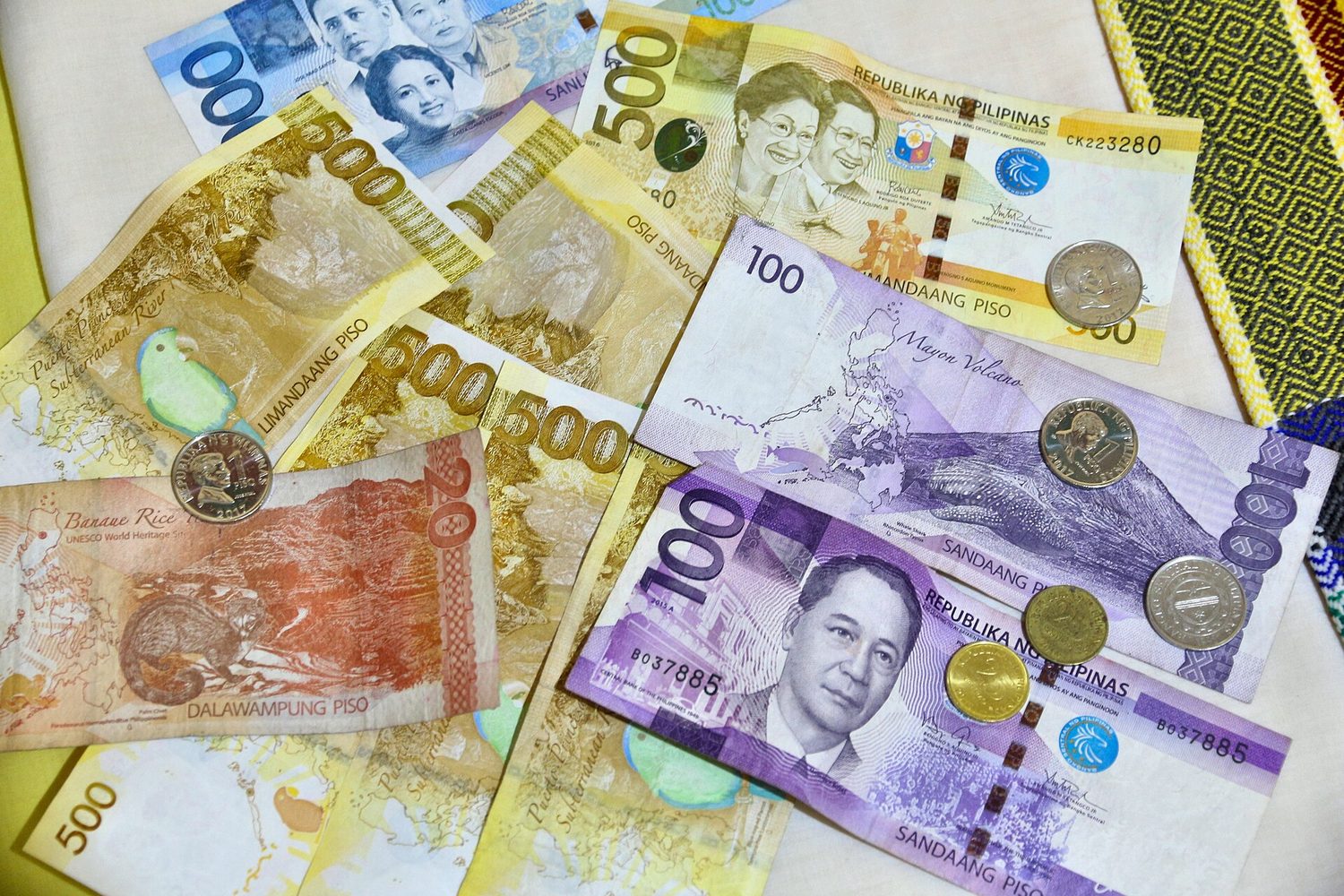
ธนบัตรและเหรียญหลากหลายชนิดวางอยู่ด้วยกัน
เงิน — ธนบัตรและเหรียญ — ทำหน้าที่เป็นสื่อกลางในการแลกเปลี่ยน ผู้เก็บรักษามูลค่า หน่วยนับราคา และเครื่องมือในการชำระหนี้ในอนาคต

ลักษณะของเงิน

เงินที่ดีต้องมี:

  • ทนทาน — ใช้ได้นาน
  • พกพาสะดวก — พกพาง่าย
  • แบ่งย่อยได้ — สามารถแบ่งเป็นจำนวนเล็กสำหรับการชำระเงินเล็กๆ น้อยๆ
  • จำนวนจำกัด ทำเลียนยาก และทุกคนยอมรับ

ธนาคาร

  • ธนาคารกลาง เป็นธนาคารของรัฐบาล它 issues notes, looks after the banking system, and sets interest rates. There is one in each country.
  • ธนาคารพาณิชย์ เป็นธนาคารทั่วไปที่บุคคลและ บริษัท ใช้ เก็บเงินออมให้ปลอดภัย กู้เงิน และช่วยให้คนชำระเงินให้กัน
Explore · ⁨สำรวจ⁩

Economics case lab · ⁨ห้องปฏิบัติการกรณีศึกษาเศรษฐศาสตร์⁩

Classify real examples by the economic idea they show. · ⁨จำแนกตัวอย่างจริงตามแนวคิดทางเศรษฐศาสตร์ที่แสดงออก⁩

Vocabulary · ⁨คำศัพท์⁩ Train · ⁨ฝึกฝน⁩
English ไทย
barter/ˈbɑːtə/ การแลกเปลี่ยนสินค้า
money/ˈmʌni/ เงิน
medium of exchange/ˈmiːdɪəm ɒv eksˈtʃeɪndʒ/ สื่อกลางในการแลกเปลี่ยน
store of value/stɔː ɒv ˈvæljuː/ เก็บรักษามูลค่า
unit of account/ˈjuːnɪt ɒv əˈkaʊnt/ หน่วยวัดมูลค่า
means of deferred payment/miːnz ɒv dɪˈfɜːd ˈpeɪmənt/ เครื่องมือสำหรับการชำระเงินในอนาคต
durable/ˈdjʊərəbl/ คงทน
portable/ˈpɔːtəbl/ portable
divisible/dɪˈvɪzɪbl/ หารลง
central bank/ˈsentrəl bæŋk/ ธนาคารกลาง
interest rate/ˈɪntrest reɪt/ อัตราดอกเบี้ย
commercial banks/kəˈmɜːʃl bæŋks/ ธนาคารพาณิชย์
firms/fɜːmz/ บริษัท
household/ˈhaʊshəʊld/ ครัวเรือน
saving/ˈseɪvɪŋ/ การออม
borrowing/ˈbɒrəʊɪŋ/ การกู้ยืม
3.2

Households · ⁨ครอบครัว⁩

Syllabus · ⁨หลักสูตร⁩
English
  1. explain the influences on spending, saving and borrowing by households (income, interest rates, confidence)
ไทย
  1. อธิบายปัจจัยที่มีผลต่อการใช้จ่าย การออม และการกู้ยืมเงินของครัวเรือน (รายได้, อัตราดอกเบี้ย, ความเชื่อมั่น)

Source: Cambridge International syllabus · ⁨แหล่งที่มา: หลักสูตร Cambridge International⁩

English

A household 家庭 is a person or group living together and making money decisions. Each household must choose how much to spend, save, and borrow.

  • saving 储蓄 is income that is not spent now.
  • borrowing 借贷 is spending money you do not have yet, and paying it back later (usually with an extra charge).

Three main things change these choices:

  • income 收入 — with more income, people spend and save more.
  • interest rates — a higher interest rate makes saving more rewarding and borrowing dearer. So saving rises and borrowing falls.
  • confidence 信心 — if people feel sure about their jobs and the future, they spend and borrow more. If they are worried, they save more.
ไทย

ครัวเรือน คือ บุคคลหรือกลุ่มคนที่อยู่ด้วยกันและตัดสินใจเรื่องการเงิน ครัวเรือนแต่ละแห่งต้องเลือกว่าจะใช้จ่าย บำรุงรักษาเงินออม และกู้ยืมเท่าใด

รายได้สามารถใช้จ่าย ประหยัด หรือเสียภาษี
ครัวเรือนสามารถใช้เงินเพื่อใช้จ่าย ออม หรือเสียภาษี
  • การออม คือรายได้ที่ไม่ได้ใช้จ่ายในปัจจุบัน
  • การกู้ยืม คือการใช้เงินที่ยังไม่มี และคืนทีหลัง (มักพร้อมค่าธรรมเนียมเพิ่มเติม)

สามปัจจัยหลักเปลี่ยนการตัดสินใจเหล่านี้:

  • รายได้ — เมื่อมีรายรับมากขึ้น คนจะใช้จ่ายและออมมากขึ้น
  • อัตราดอกเบี้ย — อัตราดอกเบี้ยที่สูงขึ้นทำให้การออมคุ้มค่ามากขึ้นและการกู้ยืมแพงขึ้น ดังนั้นการออมเพิ่มขึ้นและการกู้ยืมลดลง
  • ความเชื่อมั่น — หากผู้คนมั่นใจในงานและอนาคต พวกเขาจะใช้จ่ายและกู้ยืมมากขึ้น หากกังวล他们将 save more.
Explore · ⁨สำรวจ⁩

Economics case lab · ⁨ห้องปฏิบัติการกรณีศึกษาเศรษฐศาสตร์⁩

Classify real examples by the economic idea they show. · ⁨จำแนกตัวอย่างจริงตามแนวคิดทางเศรษฐศาสตร์ที่แสดงออก⁩

Vocabulary · ⁨คำศัพท์⁩ Train · ⁨ฝึกฝน⁩
English ไทย
income/ˈɪŋkʌm/ รายได้
confidence/ˈkɒnfɪdəns/ ความเชื่อมั่น
occupation/ˌɒkjʊˈpeɪʃn/ อาชีพ
3.3

Workers · ⁨พนักงาน⁩

Syllabus · ⁨หลักสูตร⁩
English
  1. explain the factors that determine an individual's choice of occupation (wage and non-wage factors)
  2. explain the reasons for differences in earnings (skills, qualifications, danger, trade unions, discrimination)
  3. explain division of labour/specialisation and its advantages and disadvantages
ไทย
  1. อธิบายปัจจัยที่กำหนดการเลือกอาชีพของบุคคล (ค่าจ้างและปัจจัยนอกเหนือจากค่าจ้าง)
  2. อธิบายเหตุผลของความแตกต่างของรายได้ (ทักษะ, คุณวุฒิ, ความเสี่ยง, สหภาพแรงงาน, การเลือกปฏิบัติ)
  3. อธิบายการแบ่งหน้าที่การผลิต/ความเชี่ยวชาญ และข้อดีข้อเสีย

Source: Cambridge International syllabus · ⁨แหล่งที่มา: หลักสูตร Cambridge International⁩

English

Choosing a job

When a worker chooses an occupation 职业 (a type of job), two kinds of factor matter:

  • wage factors — the pay. The wage 工资 is the money you earn. Higher pay attracts more workers.
  • non-wage factors — everything else: working hours, holidays, how safe or pleasant the job is, whether you enjoy the work, distance from home, and the chance to move up to a higher job.

Why workers earn different amounts

Workers are not all paid the same. The reasons include:

  • skill 技能 and qualifications 资格 — workers who are hard to replace, or who studied for years, earn more.
  • danger — risky or dirty jobs may pay more to attract workers.
  • trade unions 工会 — a trade union is a group of workers who join together to bargain for better pay and conditions. Strong unions can raise pay.
  • discrimination 歧视 — unfair treatment because of gender, race, or age can cause unfair pay gaps.

Division of labour

Division of labour 劳动分工 (also called specialisation 专业化) means splitting a job into small tasks, with each worker doing one task again and again.

Advantages: workers get faster and better at their one task; less time is wasted moving between tasks; this raises output.

Disadvantages: doing one task is boring, so workers may make mistakes or leave; if one worker is absent, the whole line can stop; each worker learns only one skill.

ไทย

การเลือกอาชีพ

เมื่อพนักงานเลือก อาชีพ (ประเภทงาน) ปัจจัยสองประเภทมีผล:

  • ปัจจัยด้านเงินเดือน — การจ่าย compensation The wage is the money you earn. Higher pay attracts more workers.
  • ปัจจัยนอกเหนือจากเงินเดือน — สิ่งอื่นๆ: ชั่วโมงการทำงาน วันลา ความปลอดภัยหรือสภาพแวดล้อมในการทำงาน คุณชอบงานหรือไม่ ระยะทางจากบ้าน และโอกาสในการเลื่อนตำแหน่ง

ทำไมพนักงานจึงได้รับเงินต่างกัน

พนักงานไม่ได้รับค่าตอบแทนเท่ากัน สาเหตุรวมถึง:

ค่าจ้างของพนักงานขึ้นอยู่กับทักษะ ความเสี่ยงหรือความยากของงานและความต้องการ
ค่าจ้างขึ้นอยู่กับทักษะ, ความยากของงาน, และอุปสงค์
  • ทักษะ และ คุณสมบัติ — พนักงานที่แทนที่ยาก หรือศึกษามานาน ได้รับค่าจ้าง выше
  • ความเสี่ยง — งานอันตรายหรือสกปรกอาจจ่ายค่าจ้างสูงขึ้นเพื่อดึงดูดพนักงาน
  • สหภาพแรงงาน — สหภาพแรงงานคือกลุ่มคนงานที่รวมตัวกันเพื่อเจรจาเรื่องค่าตอบแทนและสภาพการทำงานที่ดีขึ้น สหภาพแรงงานที่มีอำนาจสามารถเพิ่มค่าจ้างได้
  • การเลือกปฏิบัติ — การปฏิบัติที่ไม่เป็นธรรมเนื่องจากเพศ เชื้อชาติ หรือ อายุ สามารถนำไปสู่ช่องว่างด้านค่าตอบแทนที่ไม่ยุติธรรม

การแบ่งแยกการปฏิบัติงาน

การแบ่งแยกการปฏิบัติงาน (หรือที่เรียกว่า ความเชี่ยวชาญเฉพาะทาง) หมายถึงการแบ่งงานใหญ่ออกเป็นงานย่อยๆ โดยแต่ละคนงานจะทำงานหนึ่งอย่างซ้ำๆ ไปเรื่อยๆ

ข้อดี: คนงานจะทำงานได้อย่างรวดเร็วและมีประสิทธิภาพมากขึ้นในหน้าที่เดียว; ลดเวลาสิ้นเปลืองในการเคลื่อนย้ายระหว่างงาน; ซึ่งช่วยเพิ่มผลผลิต

ข้อเสีย: การทำงานซ้ำซากจำเจอาจน่าเบื่อ ทำให้คนงานทำผิดพลาดหรือลาออก; หากมีพนักงานขาดหายไปเพียงคนเดียว อาจทำให้ทั้งสายการผลิตหยุดชะงัก; คนงานจะได้เรียนรู้ทักษะเพียงอย่างเดียวเท่านั้น

งานชิ้นใหญ่ถูกแบ่งเป็นงานย่อยซ้ำๆ คนละงานต่อคน เพิ่มผลผลิต
การแบ่งแยกการปฏิบัติงาน: การแบ่งงานออกเป็นงานย่อยซ้ำๆ ช่วยเพิ่มผลผลิตต่อคนงาน
Explore · ⁨สำรวจ⁩

Economics case lab · ⁨ห้องปฏิบัติการกรณีศึกษาเศรษฐศาสตร์⁩

Classify real examples by the economic idea they show. · ⁨จำแนกตัวอย่างจริงตามแนวคิดทางเศรษฐศาสตร์ที่แสดงออก⁩

Vocabulary · ⁨คำศัพท์⁩ Train · ⁨ฝึกฝน⁩
English ไทย
wage/weɪdʒ/ ค่าจ้าง
skill/skɪl/ ทักษะ
qualifications/ˌkwɒlɪfɪˈkeɪʃnz/ คุณวุฒิ
trade unions/treɪd ˈjuːnɪənz/ สหภาพแรงงาน
discrimination/dɪˌskrɪmɪˈneɪʃn/ การเลือกปฏิบัติ
division of labour/dɪˈvɪʒn ɒv ˈleɪbə/ การแบ่งงาน
specialisation/ˌspeʃəlaɪˈzeɪʃn/ specialisation
labour/ˈleɪbə/ แรงงาน
3.4

Firms · ⁨ธุรกิจ⁩

Syllabus · ⁨หลักสูตร⁩
English
  1. classify firms by size and explain why some firms remain small and why/how firms grow (mergers: horizontal, vertical, conglomerate)
  2. explain the causes of business failure
ไทย
  1. จำแนกประเภทธุรกิจตามขนาดและอธิบายว่าทำไมบางธุรกิจจึงมีขนาดเล็ก以及如何 why/how businesses grow (การรวมกิจการ: แบบแนวนอน, แบบแนวตั้ง, แบบกลุ่มธุรกิจ)
  2. อธิบายสาเหตุของการล้มละลายทางธุรกิจ

Source: Cambridge International syllabus · ⁨แหล่งที่มา: หลักสูตร Cambridge International⁩

English
Economies of scale: average cost falls

The size of firms

Firms come in many sizes, from one person to huge companies. We can measure size by the number of workers, the amount of capital 资本 used, or the output.

Some firms stay small because: the market 市场 is small; the product is personal (like a hairdresser); the owner wants to stay in control; or there is little money to grow.

How firms grow

Firms grow by selling more, or by joining with other firms. When two firms join, it is a merger 合并 (or takeover). There are three types:

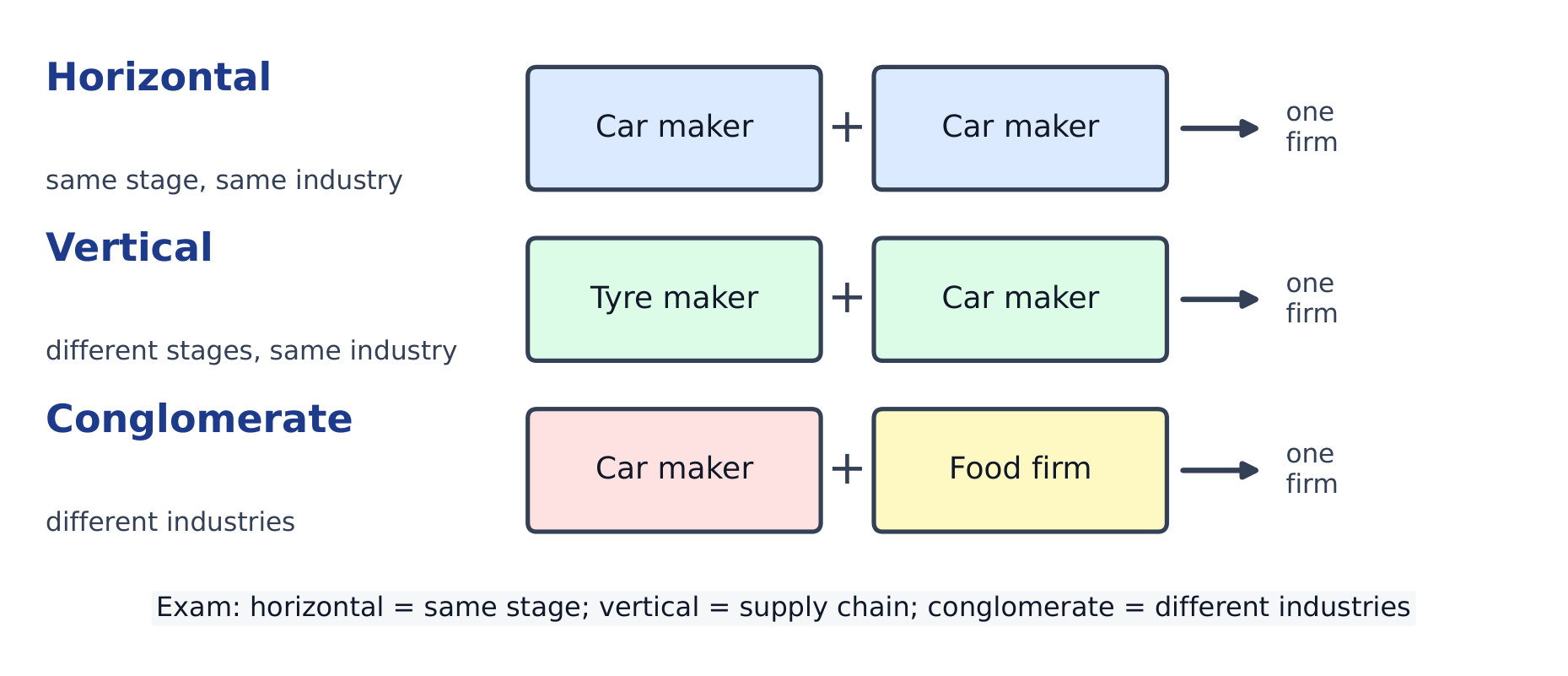
  • horizontal merger 横向合并 — two firms at the same stage of the same industry join (two car makers).
  • vertical merger 纵向合并 — two firms at different stages of the same industry join (a car maker and a tyre maker). "Backward" is towards the supplier; "forward" is towards the seller.
  • conglomerate merger 混合合并 — two firms in different industries join (a car maker and a food company).

Business failure

Firms can suffer business failure 企业倒闭 (they close down) for many reasons: costs too high, too few sales, poor management, too many rivals, not enough cash, or a fall in demand 需求.

ไทย
ประโยชน์จากขนาด economy of scale: ค่าเฉลี่ยลดลง

ขนาดของธุรกิจ

ธุรกิจมีหลายขนาด ตั้งแต่บุคคลเดียวไปจนถึงบริษัทขนาดใหญ่ เราสามารถวัดขนาดได้จากจำนวนคนงาน ปริมาณ ทุน ที่ใช้ หรือผลผลิต

บางธุรกิจยังคงมีขนาดเล็กเพราะ: ตลาด มีขนาดเล็ก; สินค้าเป็นแบบส่วนบุคคล (เช่น ร้านตัดผม); เจ้าของต้องการควบคุมเอง; หรือมีเงินทุนจำกัดในการขยาย

การขยายตัวของธุรกิจ

ธุรกิจขยายตัวโดยการขายมากขึ้น หรือ通过将与其他企业合并。当两个企业合并时,称为合并(或收购)。有三种类型:

  • 横向合并 — 处于同一阶段、同一行业的两家公司合并(如两家汽车制造商)。
  • 纵向合并 — 处于不同阶段、但属于同一行业的两家公司合并(如一家汽车制造商和一家轮胎制造商)。“向后”指靠近供应商;“向前”指靠近销售商。
  • 混合合并 — 处于不同行业的两家公司合并(如一家汽车制造商和一家食品公司)。
三行图示展示横向、纵向和混合整合,即两家公司合并为一家
三种整合类型:横向(同一阶段)、纵向(同一行业不同阶段)和混合(不同行业)

经营失败

企业可能因多种原因遭遇经营失败(倒闭):成本过高、销量不足、管理不善、竞争对手过多、现金流不足或需求下降。

Explore · ⁨สำรวจ⁩

Firm objective lab · ⁨ห้องปฏิบัติการวัตถุประสงค์บริษัท⁩

Classify real firm decisions by the objective they reveal. · ⁨จำแนกการตัดสินใจของบริษัทจริงตามวัตถุประสงค์ที่เปิดเผย⁩

3.5

Firms and production · ⁨企业与生产⁩

Syllabus · ⁨หลักสูตร⁩
English
  1. distinguish labour-intensive and capital-intensive production and explain productivity
  2. explain demand for and supply of factors of production and economies and diseconomies of scale
ไทย
  1. แยกแยะระหว่างการผลิตที่ใช้แรงงานมากและการผลิตที่ใช้ทุนมาก และอธิบายประสิทธิภาพการผลิต
  2. อธิบายความต้องการและอุปทานของปัจจัยการผลิต รวมถึงประโยชน์จากขนาดที่เพิ่มขึ้นและผลเสียจากขนาดที่เพิ่มขึ้น

Source: Cambridge International syllabus · ⁨แหล่งที่มา: หลักสูตร Cambridge International⁩

English

Labour-intensive and capital-intensive

  • labour-intensive 劳动密集型 production uses a lot of labour 劳动 (many workers) and little machinery — for example, hand-made crafts.
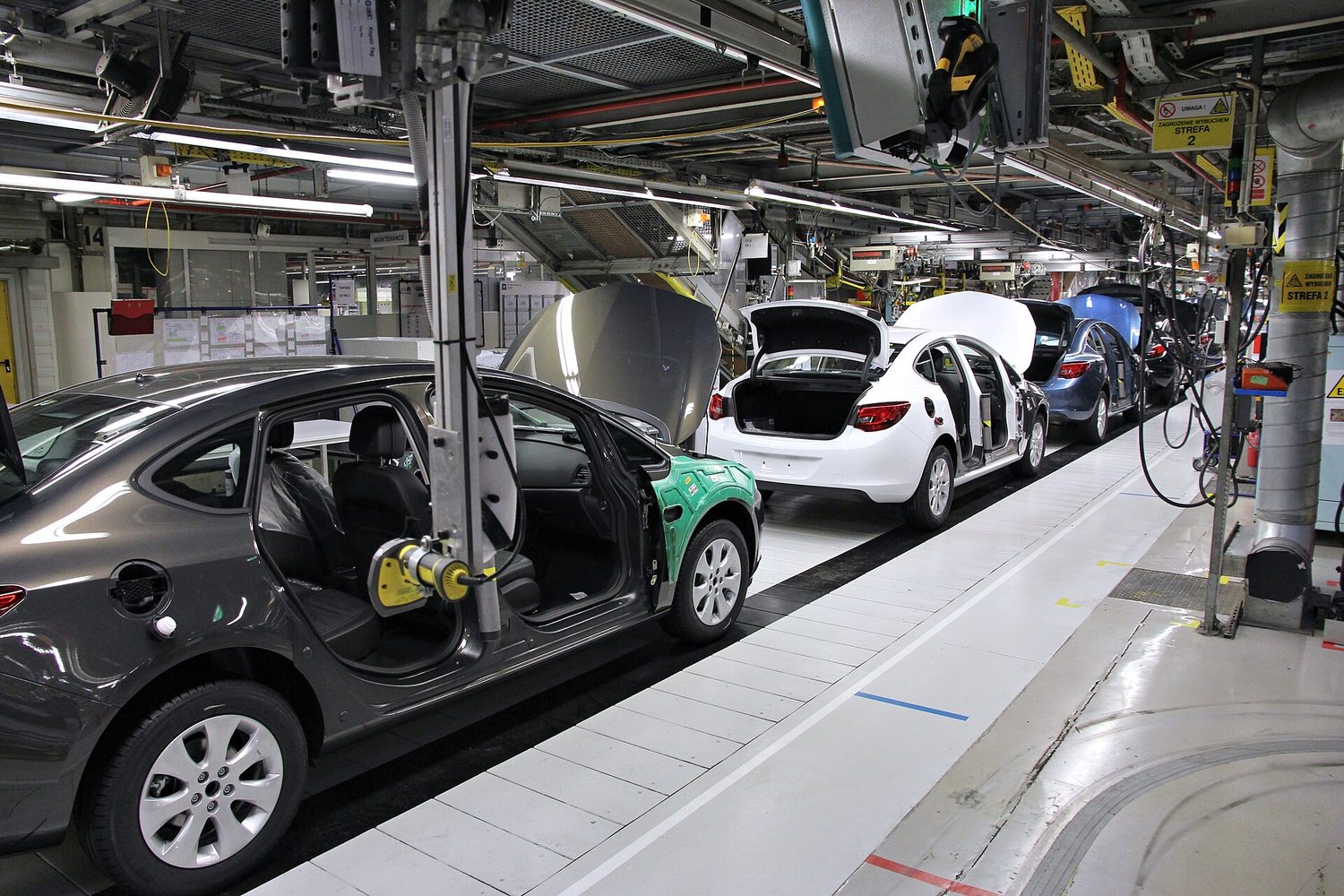
  • capital-intensive 资本密集型 production uses a lot of capital (machines) and few workers — for example, a modern car factory.

Productivity

Productivity 生产率 means output per worker (or per machine) in a set time. Higher productivity means each worker makes more, so the cost of each unit falls. Training, better machines, and good management all raise productivity.

Demand for and supply of factors

Firms buy factors of production 生产要素 (land 土地, labour, capital, and enterprise 企业家才能). The price and amount of each factor are set by its own demand and supply, just like any market. For example, if many firms want skilled workers, the wage for those workers rises.

Economies and diseconomies of scale

As a firm grows and makes more, the cost of each unit can change:

  • economies of scale 规模经济 — as output rises, the average cost of each unit falls. Reasons: buying materials in bulk is cheaper, big machines work more efficiently, and large firms borrow money cheaply.
  • diseconomies of scale 规模不经济 — if a firm grows too big, the average cost of each unit starts to rise. Reasons: a huge firm is hard to manage, messages travel slowly, and workers may feel less important.

These can be internal (caused by the firm's own size) or external (caused by the whole industry growing).

ไทย

劳动密集型与资本密集型

  • 劳动密集型生产使用大量劳动力(多名工人)和少量机械——例如手工艺品制作。
  • 资本密集型生产使用大量资本(机器)和少量工人——例如现代汽车工厂。
汽车在装配线上移动,配有机械臂和少量工人
สายประกอบรถยนต์เป็น-capital-intensive (เครื่องจักรเยอะ คนงานน้อย) และใช้การแบ่งงาน — คนงานแต่ละคนทำงานซ้ำ-task เดียวกัน

ประสิทธิภาพการผลิต

生产率是指在特定时间内每位工人(或每台机器)的产出。更高的生产率意味着每位工人生产更多,从而降低单位成本。培训、更好的设备和良好的管理都能提高生产率。

生产要素的需求与供给

企业购买生产要素(土地、劳动力、资本和企业家才能)。每种要素的价格和数量由其自身的需求和供给决定,就像任何市场一样。例如,如果许多企业需要熟练工人,这些工人的工资就会上涨。

ประโยชน์จากขนาดและการขาดประโยชน์จากขนาด

随着企业扩大生产和增加产量,单位成本可能会发生变化:

  • 规模经济 — 随着产量增加,每个单位的平均成本下降。原因包括:批量采购材料更便宜、大型机器效率更高、大企业借贷成本低。
  • 规模不经济 — 如果企业变得过于庞大,每个单位的平均成本开始上升。原因包括:大型企业难以管理、信息传递缓慢、员工可能感到不被重视。
U形平均成本曲线,显示规模经济与规模不经济
随着企业扩大,平均成本下降(规模经济),达到最低点后,若过度扩张则成本上升(规模不经济)。

这些因素可以是内部的(由企业自身规模引起)或外部的(由整个行业发展引起)。

Explore · ⁨สำรวจ⁩

Factors of production lab · ⁨กิจกรรมเรียนรู้เรื่องปัจจัยการผลิต⁩

Sort real resources by the factor of production they represent. · ⁨จัดกลุ่มทรัพยากรจริงตามปัจจัยการผลิตที่มันแสดงออก⁩

Vocabulary · ⁨คำศัพท์⁩ Train · ⁨ฝึกฝน⁩
English ไทย
capital/ˈkæpɪtl/ ทุน (capital)
capital-intensive/ˈkæpɪtl ɪnˈtensɪv/ ใช้ทุนสูง
productivity/ˌprɒdəkˈtɪvɪti/ ประสิทธิภาพการผลิต
factors of production/ˈfæktəz ɒv prəˈdʌkʃn/ ปัจจัยการผลิต
land/lænd/ ที่ดิน
enterprise/ˈentəpraɪz/ ผู้ประกอบการ (enterprise)
economies of scale/ɪˈkɒnəmiz ɒv skeɪl/ ประหยัดขนาด
diseconomies of scale/ˌdɪsɪˈkɒnəmiz ɒv skeɪl/ diseconomies of scale
3.6

Firms' costs, revenue and objectives · ⁨企业的成本、收入与目标⁩

Syllabus · ⁨หลักสูตร⁩
English
  1. define and calculate fixed, variable, total and average costs
  2. define and calculate total and average revenue
  3. explain the objectives of firms (profit, survival, growth, social objectives)
ไทย
  1. นิยามและคำนวณต้นทุนคงที่ ต้นทุนแปรผัน ต้นทุนรวม และต้นทุนเฉลี่ย
  2. นิยามและคำนวณรายได้รวมและรายได้เฉลี่ย
  3. อธิบายวัตถุประสงค์ของธุรกิจ (กำไร, การดำรงอยู่, การเติบโต, วัตถุประสงค์ด้านสังคม)

Source: Cambridge International syllabus · ⁨แหล่งที่มา: หลักสูตร Cambridge International⁩

English

Costs

A cost 成本 is money a firm spends to produce. Costs split into:

  • fixed costs 固定成本 — costs that do not change with output, such as rent and insurance. You pay them even if you make nothing.
  • variable costs 可变成本 — costs that change with output, such as materials and power. More output means more variable cost.
  • total cost 总成本 — fixed cost plus variable cost.
  • average cost 平均成本 — the cost of each unit: total cost divided by the number of units made.

Revenue

Revenue 收益 is the money a firm gets from selling its goods.

  • total revenue 总收益 — the price multiplied by the quantity sold.
  • average revenue 平均收益 — total revenue divided by the quantity sold (this is the same as the price).

Profit and other objectives

Profit 利润 is what is left after costs:

profit = total revenue − total cost

Worked example. A firm has fixed costs of £2,000 and variable costs of £3 per unit. It makes 500 units and sells them at £10 each. Find its total cost, total revenue, profit and average cost.

  • variable cost = 3 × 500 = £1,500, so total cost = 2,000 + 1,500 = £3,500.
  • total revenue = 10 × 500 = £5,000.
  • profit = 5,000 - 3,500 = £1,500.
  • average cost = total cost ÷ units = 3,500 ÷ 500 = £7 per unit.

The firm makes a profit because the price (£10) is above the average cost (£7).

Most firms want as much profit as possible. But firms can have other objectives 目标:

  • survival 生存 — a new firm first just wants to stay open.
  • growth 增长 — getting bigger, to gain economies of scale and market power.
  • social objectives — some firms aim to help people or protect the environment, not only to earn profit.
ไทย

ต้นทุน (Costs)

成本是企业为生产所花费的资金。成本分为:

  • 固定成本 — 不随产量变化的成本,如租金和保险费。即使没有生产也需要支付。
  • 可变成本 — 随产量变化的成本,如原材料和电力。产量越多,可变成本越高。
  • 总成本 — 固定成本加可变成本。
  • 平均成本 — 每个单位的成本:总成本除以生产的单位数。
固定成本、可变成本和总成本线随产量变化图
固定成本在产量增加时保持不变;可变成本上升;总成本是固定成本加可变成本,因此总成本与可变成本之间的差额即为固定成本。

รายได้

收入是企业销售商品所得的资金。

  • 总收入 — 价格乘以销售数量。
  • 平均收入 — 总收入除以销售数量(这等同于价格)。

利润与其他目标

利润是扣除成本后的剩余部分:

利润 = 总收入 − 总成本

例题。某企业固定成本为£2,000,可变成本为每件£3。该企业生产了500件产品并以每件£10出售。求其总成本、总收入、利润和平均成本。

  • 可变成本 = 3 × 500 = £1,500,因此总成本 = 2,000 + 1,500 = £3,500。
  • 总收入 = 10 × 500 = £5,000。
  • 利润 = 5,000 - 3,500 = £1,500。
  • 平均成本 = 总成本 ÷ 产量 = 3,500 ÷ 500 = £7/件。

บริษัทสร้างกำไรได้เพราะราคา (£10) สูงกว่าต้นทุนเฉลี่ย (£7)

บริษัทส่วนใหญ่ต้องการกำไรให้มากที่สุดเท่าที่จะทำได้ แต่บริษัทอาจมี วัตถุประสงค์ อื่นๆ ด้วย:

  • การดำรงอยู่ — บริษัทใหม่ในขั้นแรกเพียงต้องการเปิดกิจการต่อไปได้
  • การเติบโต — การขยายขนาดเพื่อได้รับประโยชน์จากเศรษฐกิจของขนาดและอำนาจในตลาด
  • วัตถุประสงค์ทางสังคม — บางบริษัทมุ่งเน้นช่วยผู้คนหรือปกป้องสิ่งแวดล้อม ไม่ใช่แค่ทำกำไรเท่านั้น
Explore · ⁨สำรวจ⁩

A firm's cost curves · ⁨เส้นโค้งต้นทุนของบริษัท⁩

Change output and see how average cost falls then rises — and where marginal cost crosses it. · ⁨เปลี่ยนผลผลิตและดูว่า ต้นทุนเฉลี่ย ลดลงแล้วเพิ่มขึ้น — และเมื่อใดต้นทุนขอบจะตัดกับมัน⁩

Vocabulary · ⁨คำศัพท์⁩ Train · ⁨ฝึกฝน⁩
English ไทย
cost/kɒst/ ต้นทุน
fixed costs/fɪkst kɒsts/ ต้นทุนคงที่
variable costs/ˈveərɪəbl kɒsts/ ต้นทุนแปรผัน
total cost/ˈtəʊtl kɒst/ ต้นทุนรวม
average cost/ˈævrɪdʒ kɒst/ ต้นทุนเฉลี่ย
revenue/ˈrevənjuː/ รายได้
total revenue/ˈtəʊtl ˈrevənjuː/ รายได้รวม
average revenue/ˈævrɪdʒ ˈrevənjuː/ รายได้เฉลี่ย
profit/ˈprɒfɪt/ profit
objectives/ɒbˈdʒektɪvz/ วัตถุประสงค์
survival/səˈvaɪvl/ การอยู่รอด
growth/ɡrəʊθ/ การเติบโต
3.7

Types of markets · ⁨ประเภทของตลาด⁩

Syllabus · ⁨หลักสูตร⁩
English
  1. describe the characteristics of competitive markets and monopoly
  2. explain the advantages and disadvantages of competition for consumers and firms
ไทย
  1. อธิบายลักษณะของตลาดแข่งขันสมบูรณ์และตลาดผูกขาด
  2. อธิบายข้อดีและข้อเสียของการแข่งขันต่อผู้บริโภคและผู้ประกอบการ

Source: Cambridge International syllabus · ⁨แหล่งที่มา: หลักสูตร Cambridge International⁩

English

Markets differ by how many firms there are and how hard it is for new firms to join.

Competitive markets

A competitive market has many firms selling similar goods, and it is easy for new firms to enter. This is strong competition 竞争. In such a market:

  • firms must keep prices low and quality high, or buyers go elsewhere.
  • firms work hard to cut costs and make new products.

This is good for consumers: low prices, wide choice, and good quality.

Monopoly

A monopoly 垄断 is a market with only one firm, or one firm that controls most of it. New firms find it hard to enter because of barriers to entry 进入壁垒 — for example, very high start-up costs, or the one firm controlling key supplies.

In a monopoly:

  • the firm can charge high prices, because buyers have no other choice.
  • there is little pressure to improve quality or cut costs.
  • but a large monopoly may gain economies of scale, and may use its profit to pay for research.

Competition versus monopoly

Consumers Firms
competition lower prices, more choice, better quality lower profit; must work hard to survive
monopoly higher prices, less choice higher profit and an easy life, but may grow lazy
ไทย

ตลาดแตกต่างกันตามจำนวนบริษัทที่มี以及如何ยากสำหรับบริษัทใหม่ที่จะเข้าร่วม

สเปกตรัมตั้งแต่ผูกขาด (ผู้ขายหนึ่งราย) ไปจนถึงการแข่งขันอย่างสมบูรณ์ (ผู้ขายจำนวนมาก)
ตลาดมีความหลากหลายตั้งแต่โมโนโพลี (ผู้ขายคนเดียว) ไปจนถึงการแข่งขันสมบูรณ์ (หลายคน)

ตลาดที่มีการแข่งขัน

ตลาดที่มีการแข่งขันมีบริษัทหลายรายขายสินค้าคล้ายกัน และบริษัทใหม่สามารถเข้าสู่ตลาดได้ง่าย นี่คือ การแข่งขัน ที่เข้มงวด ในตลาดเช่นนี้:

  • บริษัทต้องรักษาราคาให้ต่ำและคุณภาพให้สูง มิฉะนั้นลูกค้าจะไปที่อื่น
  • บริษัททำงานหนักเพื่อลดต้นทุนและผลิตสินค้าใหม่

สิ่งนี้ดีต่อผู้บริโภค: ราคาถูก ทางเลือกหลากหลาย และมีคุณภาพดี

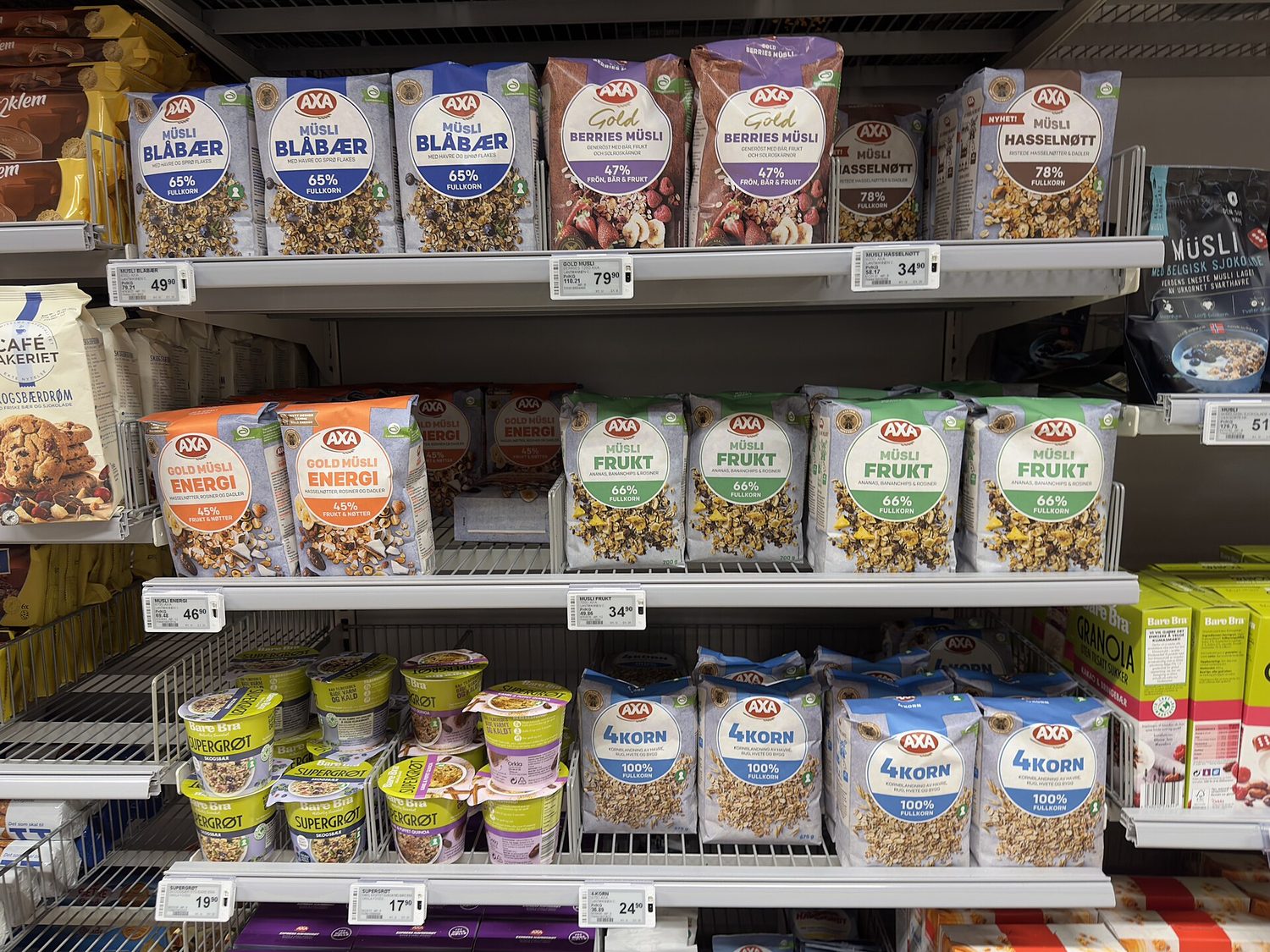
 aisle ยาวของซูเปอร์มาร์เก็ตที่จัดวางชั้นวางสินค้าบรรจุภัณฑ์สองฝั่ง
ในตลาดแข่งขัน บริษัทหลายแห่งขายสินค้าคล้ายกัน ดังนั้นแต่ละแห่งต้องรักษาระดับราคาให้ต่ำและคุณภาพให้สูงเพื่อชนะใจลูกค้า

การผูกขาด

การผูกขาด คือตลาดที่มี บริษัทเดียว หรือบริษัทเดียวที่ควบคุมส่วนใหญ่อีกด้วย บริษัทใหม่เข้ายากเนื่องจาก อุปสรรคในการเข้าสู่ตลาด — เช่น ต้นทุนเริ่มต้นสูงมาก หรือบริษัทเดียวควบคุมแหล่งวัตถุดิบสำคัญ

ในการผูกขาด:

  • บริษัทสามารถตั้งราคาสูงได้ เพราะลูกค้าไม่มีทางเลือกอื่น
  • มีความกดดันน้อยลงในการปรับปรุงคุณภาพหรือลดต้นทุน
  • แต่การผูกขาดขนาดใหญ่อาจได้รับประโยชน์จากเศรษฐกิจของขนาด และอาจใช้กำไรไปจ่ายสำหรับการวิจัยและพัฒนา

การแข่งขันกับการผูกขาด

ผู้บริโภค บริษัท
การแข่งขัน ราคาต่ำกว่า ทางเลือกมากขึ้น คุณภาพดีขึ้น กำไรลดลง; ต้องทำงานหนักเพื่อความอยู่รอด
การผูกขาด ราคาสูงขึ้น ทางเลือกน้อยลง กำไรสูงขึ้น และชีวิตสบายขึ้น แต่อาจกลายเป็นขี้เกียจ
Explore · ⁨สำรวจ⁩

Economics case lab · ⁨ห้องปฏิบัติการกรณีศึกษาเศรษฐศาสตร์⁩

Classify real examples by the economic idea they show. · ⁨จำแนกตัวอย่างจริงตามแนวคิดทางเศรษฐศาสตร์ที่แสดงออก⁩

Vocabulary · ⁨คำศัพท์⁩ Train · ⁨ฝึกฝน⁩
English ไทย
market/ˈmɑːkɪt/ ตลาด
merger/ˈmɜːdʒə/ การควบรวมกิจการ
horizontal merger/ˌhɒrɪˈzɒntl ˈmɜːdʒə/ การรวมกิจการแนวนอน
vertical merger/ˈvɜːtɪkl ˈmɜːdʒə/ การรวมกิจการแนวตั้ง
conglomerate merger/kənˈɡlɒməreɪt ˈmɜːdʒə/ การรวมกิจการข้ามอุตสาหกรรม
business failure/ˈbɪznəs ˈfeɪlɪə/ ความล้มเหลวของธุรกิจ
demand/dɪˈmænd/ ความต้องการ
labour-intensive/ˈleɪbə ɪnˈtensɪv/ ใช้แรงงานสูง
competition/ˌkɒmpəˈtɪʃn/ การแข่งขัน
monopoly/məˈnɒpəli/ มอนوپولی
barriers to entry/ˈbærɪəz tʊ ˈentri/ กำแพงเข้าสู่ตลาด
3.7

Exam tips · ⁨ข้อแนะนำสำหรับการสอบ⁩

English
  • Money's four functions: a medium of exchange, a store of value, a unit of account, and a means of deferred payment.
  • Key formulas: profit = total revenue − total cost; total revenue = price × quantity; average cost = total cost ÷ number of units.
  • Fixed costs do not change with output (rent, insurance); variable costs do (materials, power). Total cost = fixed + variable.
  • Economies of scale make average cost fall as a firm grows; growing too big brings diseconomies of scale (average cost rises).
  • Know the merger types: horizontal (same stage of the same industry), vertical (different stages of one industry), conglomerate (different industries).
ไทย
  • หน้าที่สี่ของเงิน: ตัวกลางในการแลกเปลี่ยน, เครื่องเก็บมูลค่า, หน่วยบัญชี, และ ** Means of deferred payment**
  • สูตรสำคัญ: กำไร = รายได้รวม - ต้นทุนรวม; รายได้รวม = ราคา x จำนวน; ต้นทุนเฉลี่ย = ต้นทุนรวม ÷ จำนวนหน่วย
  • ต้นทุนคงที่ ไม่เปลี่ยนตามผลผลิต (ค่าเช่า, ประกันภัย); ต้นทุนแปรผัน เปลี่ยน (วัสดุ, พลังงาน) ต้นทุนรวม = คงที่ + แปรผัน
  • เศรษฐกิจของขนาด ทำให้ต้นทุนเฉลี่ย ลดลง เมื่อบริษัทเติบโต; การเติบโต ใหญ่เกินไป นำไปสู่โรคเศรษฐกิจของขนาด (ต้นทุนเฉลี่ยเพิ่มขึ้น)
  • รู้จักประเภทการควบรวม: แนวนอน (ระดับเดียวกันของอุตสาหกรรมเดียวกัน), แนวตั้ง (ระดับต่างกันของอุตสาหกรรมเดียวกัน), คอนglomerate (อุตสาหกรรมต่างกัน)

Interactive lessons on this topic · ⁨บทเรียนเชิงโต้ตอบสำหรับหัวข้อนี้⁩

Work through it step by step, with instant-check exercises. · ⁨ทำทีละขั้นตอน พร้อมแบบฝึกหัดตรวจสอบผลทันที⁩

Past Papers · ⁨ข้อสอบย้อนหลัง⁩

More topics in IGCSE Economics · ⁨Economics IGCSE⁩ · ⁨หัวข้อเพิ่มเติมใน IGCSE Economics · ⁨Economics IGCSE⁩⁩

Log in or create account · ⁨เข้าสู่ระบบหรือสร้างบัญชี⁩

IGCSE, A-Level & AP