Firms
Introduced| English | Meaning |
|---|---|
| sole trader/səʊl ˈtreɪdə/ | A business owned and operated by one person, usually without a legal separation between the owner and the business. |
| partnership/ˈpɑːtnəʃɪp/ | A business owned by two or more people who share its management, profits and responsibilities under an agreement. |
| company/ˈkʌmpəni/ | A business that is a legal person separate from its owners, whose liability is usually limited. |
| shareholders/ˈʃeəhəʊldəz/ | People or organisations that own shares in a company. |
| limited liability/ˈlɪmɪtɪd ˌlaɪəˈbɪlɪti/ | A legal arrangement limiting owners' responsibility for business debts to their investment or another specified amount. |
| economies of scale/ɪˈkɒnəmiz ɒv skeɪl/ | Falls in average production cost as the scale of output increases. |
| market share/ˈmɑːkɪt ʃeə/ | A business's sales as a proportion of total sales in its market, measured by value or volume. |
| merging/ˈmɜːdʒɪŋ/ | merging |
| niche/niːʃ/ | niche |
From market stall to multinational
- Some businesses are one person with a van; others employ a hundred thousand people across the globe.
- Their legal form and their size shape what they can do.
Firm objective lab
Classify real firm decisions by the objective they reveal.
Limited liability means that, if a company fails, shareholders:
Difficulty 1/5 · 100 coins + a small bonus on first completion today
Their loss is limited to their investment.
A sole trader has limited liability for the business's debts.
Difficulty 1/5 · 100 coins + a small bonus on first completion today
False. A sole trader has unlimited liability and is personally responsible for the business's debts, unlike a company shareholder.
Types of business
- Sole trader 个体经营者: one owner, easy to set up, unlimited liability.
- Partnership 合伙企业: a few owners share capital and risk.
- Company 公司: owned by shareholders 股东, with limited liability 有限责任 (they can lose only what they invested).
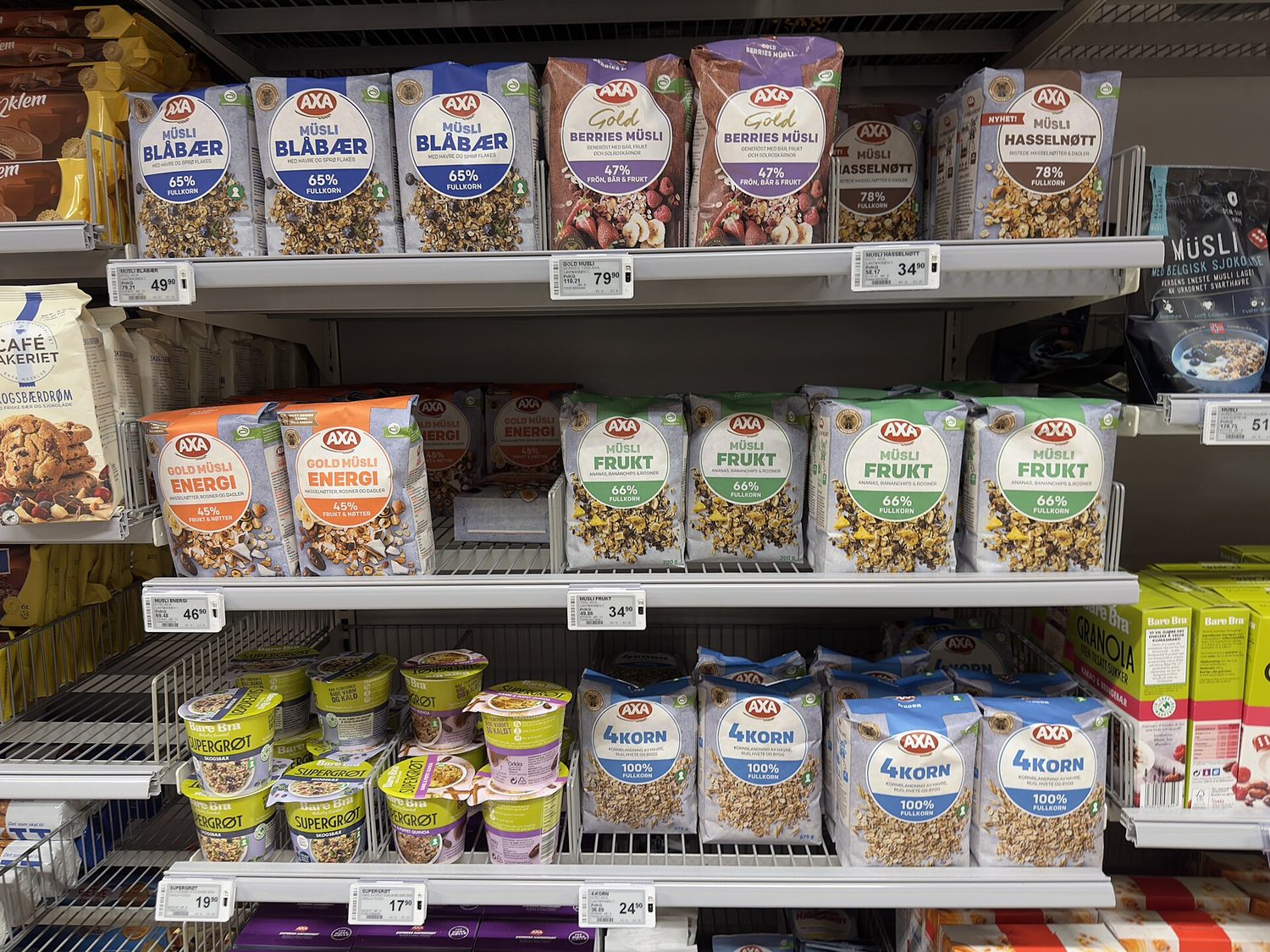
In a competitive market many firms sell similar goods, so each must keep prices low and quality high to win customers
A main reason firms grow larger is to gain:
Difficulty 1/5 · 100 coins + a small bonus on first completion today
Larger scale spreads costs and lowers average cost.
When two firms join to form one, this is called a ______.
Difficulty 1/5 · 100 coins + a small bonus on first completion today
A merger (or takeover) is external growth.
Why firms grow
- Bigger firms gain economies of scale 规模经济 — lower average cost — and a larger market share 市场份额.
- They grow internally (more output) or by merging 合并 with / taking over other firms.
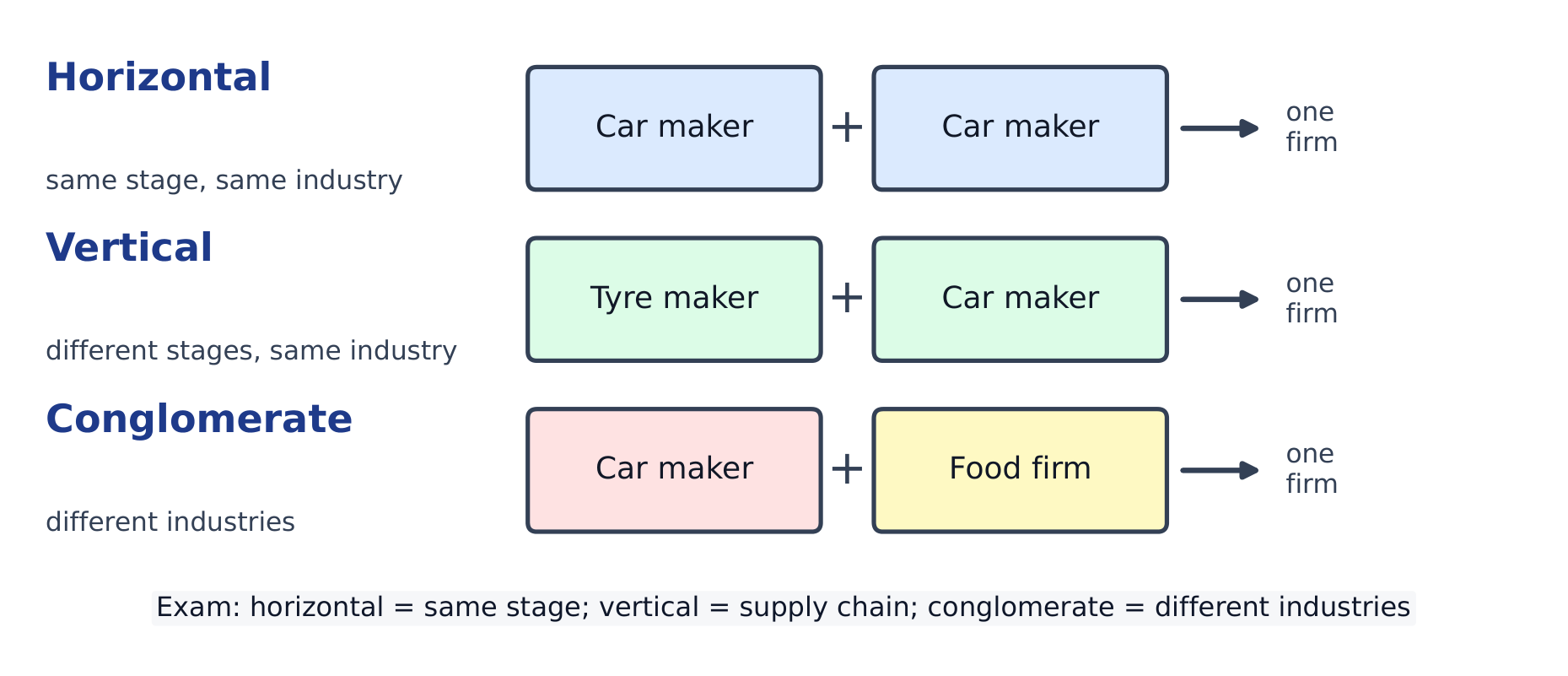
The three types of integration: horizontal (same stage), vertical (supplier or customer), conglomerate (unrelated)
Small firms are most likely to survive where:
Difficulty 1/5 · 100 coins + a small bonus on first completion today
Local, niche or personal-service markets favour small firms.
Why some stay small
- Small firms survive where markets are local, demand is niche 利基, or personal service matters.
- Some industries simply don't reward size.
Limited liability protects owners, not the firm. If a company fails, shareholders lose only their investment — their personal homes are safe. A sole trader has no such shield.
You've got it
- business forms: sole trader, partnership, company (with limited liability)
- firms grow for economies of scale and market share, internally or by merger
- small firms survive in local, niche or personal-service markets
Write from a loss limited to 5000
- A shareholder invested 5000 dollars.
- The company fails owing 20000 dollars.
A shareholder invested 5000 dollars. The company fails owing 20000 dollars. How much of that debt can the shareholder be forced to pay, and why?
The share investment is the most the owner of the shares can lose.
How much can this shareholder lose?
Difficulty 1/5 · 100 coins + a small bonus on first completion today
Limited liability caps the loss at the 5000 dollars invested. Other options — 20000 dollars (the company debt); 25000 dollars (the two amounts added).