English
This topic looks at how governments correct market failure 市场失灵, make incomes fairer, and act in the labour market.
ไทย
หัวข้อนี้พิจารณาถึงวิธีที่รัฐบาลแก้ไข ความล้มเหลวของตลาด, ทำให้รายได้เท่าเทียมกันมากขึ้น และดำเนินการในตลาดแรงงาน
A-Level Economics · Economics A-Level · Topic 8 · หัวข้อ 8
 8:20
8:20
การแทรกแซงด้านจุลเศรษฐศาสตร์ของรัฐบาล (ระดับ A Level)
ภาพธรรมดาสามภาพ Sigarettes ขายราคาถูกให้ทุกคน who wants them. ภูเขาหลังคาเหล็กมองลงมาบนเขตเมืองที่รวย. พื้นที่โรงงาน…
English narration · English + 中文 subtitles burned in · การบรรยายภาษาอังกฤษ · คำบรรยายภาษาอังกฤษ + 中文 ลอยตัวบนภาพ
This topic looks at how governments correct market failure 市场失灵, make incomes fairer, and act in the labour market.
หัวข้อนี้พิจารณาถึงวิธีที่รัฐบาลแก้ไข ความล้มเหลวของตลาด, ทำให้รายได้เท่าเทียมกันมากขึ้น และดำเนินการในตลาดแรงงาน

Source: Cambridge International syllabus · แหล่งที่มา: หลักสูตร Cambridge International
A government has many tools to push a market towards a better use of resources.
A firm with monopoly power 垄断势力 can raise prices and cut output. competition policy 竞争政策 is the set of laws used to protect competition — for example, blocking mergers that create too much power, banning price-fixing, and fining firms that abuse their position.
Intervention can backfire. government failure 政府失灵 is when the government's action leads to a worse use of resources than before — through poor information, high costs, long time lags, or unintended effects (such as a black market caused by a price control).
รัฐบาลมีเครื่องมือมากมายเพื่อผลักดันให้ตลาดใช้ทรัพยากรได้อย่างมีประสิทธิภาพยิ่งขึ้น
บริษัทที่มี อำนาจมอโนปอลี่ สามารถเพิ่มราคาและลดผลผลิตได้ นโยบายการแข่งขัน คือชุดกฎหมายที่ใช้ปกป้องการแข่งขัน — ตัวอย่างเช่น การ阻止การรวมที่สร้างอำนาจมากเกินไป, การ禁止การกำหนดราคา, และการลงโทษบริษัทที่滥用ตำแหน่งของตน
การแทรกแซงอาจเกิดผลกลับด้าน ความล้มเหลวของรัฐบาล เกิดขึ้นเมื่อการกระทำของรัฐบาลนำไปสู่การใช้ทรัพยากรที่แย่ลงกว่าก่อนหน้า — ผ่านข้อมูลที่ไม่ดี, ต้นทุนสูง, ช่วงเวลาที่ยาวนาน, หรือผลกระทบที่ไม่ตั้งใจ (เช่น ตลาดมืดที่เกิดจากการควบคุมราคา)
An externality (like pollution) means the market price ignores a real cost — output ends up above the efficient level. Add the external cost to see the gap. · 外部性 (เช่น มลพิษ) หมายถึง ราคาในตลาดละเลยต้นทุนที่แท้จริง — ผลผลิตจึงเกินระดับที่มีประสิทธิภาพ นำต้นทุนภายนอกมาบวกเพื่อดูช่องว่างนั้น
| English | ไทย |
|---|---|
| market failure/ˈmɑːkɪt ˈfeɪlɪə/ | ความล้มเหลวของตลาด |
| indirect tax/ɪndaɪˈrekt tæks/ | ภาษีทางอ้อม |
| subsidy/ˈsʌbsɪdi/ | เงินอุดหนุน |
| price control/praɪs kənˈtrəʊl/ | การควบคุมราคา |
| tradable permits/ˈtreɪdəbl ˈpɜːmɪts/ | ใบอนุญาตซื้อขายได้ |
| regulation/ˌreɡjʊˈleɪʃn/ | การกำกับดูแล |
| state provision/steɪt prəˈvɪʒn/ | การจัดจำหน่ายโดยรัฐ |
| nationalisation/ˌnæʃənəlaɪˈzeɪʃn/ | การnationalisation |
| privatisation/ˌpraɪvətaɪˈzeɪʃn/ | การแปรรูปเป็นเอกชน |
| monopoly power/məˈnɒpəli ˈpaʊə/ | อำนาจตลาด |
| competition policy/ˌkɒmpəˈtɪʃn ˈpɒlɪsi/ | นโยบายการแข่งขัน |
| government failure/ˈɡʌvənmənt ˈfeɪlɪə/ | ความล้มเหลวของรัฐบาล |
Source: Cambridge International syllabus · แหล่งที่มา: หลักสูตร Cambridge International
It is important to separate two words that sound alike:
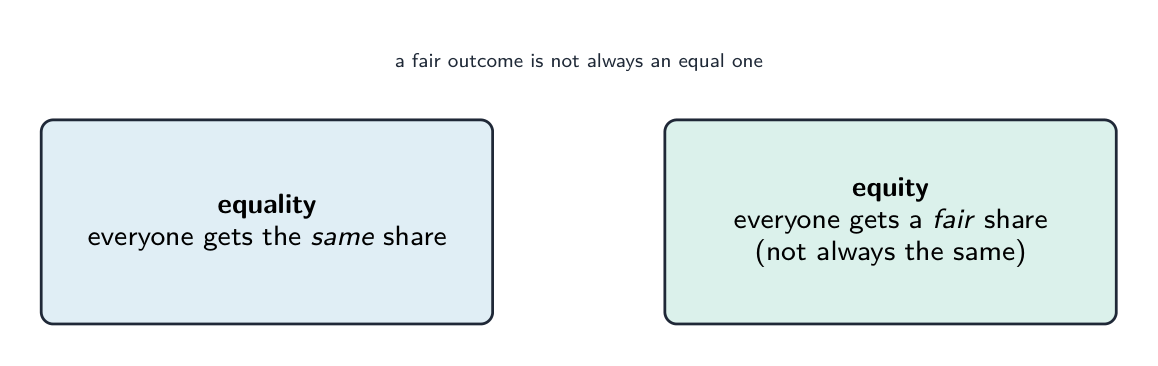
A fair (equitable) outcome is not always an equal one. Most governments worry about too much inequality 不平等.
Remember the difference between the two things being shared:
These bring about redistribution 再分配 — moving income from richer to poorer people. Wealth is harder to redistribute than income, because the rich can hide assets or move them abroad, and wealth taxes are hard to collect.
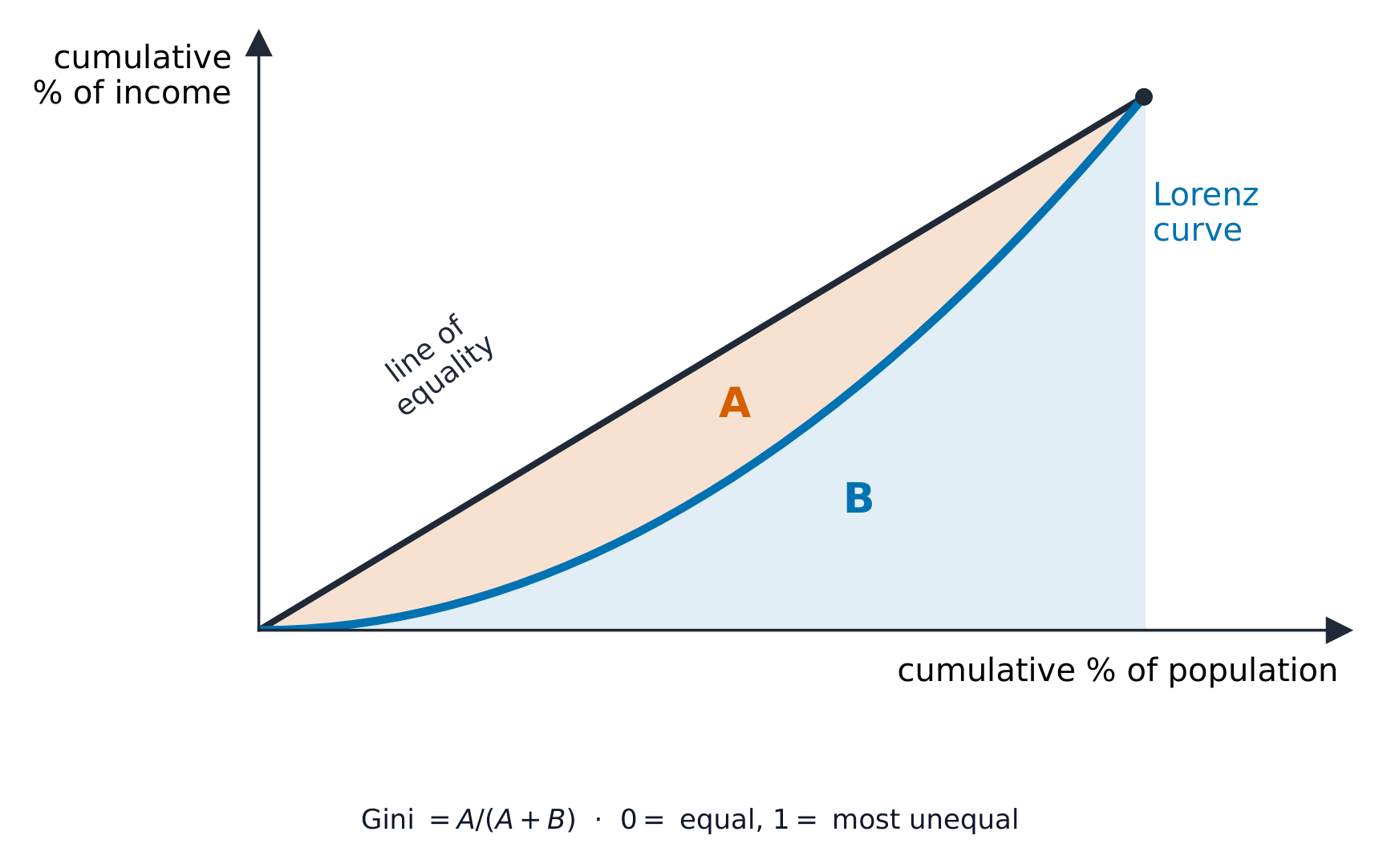
Worked example. Country X has a Gini coefficient of 0.25 and country Y one of 0.48. What does that mean, and what does each Lorenz curve look like? The Gini runs from 0 (perfect equality) to 1 (one person has everything), so a higher number means more unequal: country Y at 0.48 is markedly more unequal than X at 0.25. On the graph, Y's Lorenz curve sags further below the 45° line of equality, while X's hugs it more closely. The Gini is exactly the area between the line of equality and the Lorenz curve, as a fraction of the whole triangle beneath that line - which is why a bigger sag gives a bigger number. One caution is worth stating: the Gini measures relative inequality only. It says nothing about absolute living standards, so a poor country and a rich one can share the same Gini.
สิ่งสำคัญคือการแยกคำสองคำที่ฟังเหมือนกัน:

ผลลัพธ์ที่เป็นธรรม ( equitable ) ไม่จำเป็นต้องเท่าเทียมเสมอไป รัฐบาลส่วนใหญ่กังวลเรื่อง ความเหลื่อมล้ำ ที่มากเกินไป
จำความแตกต่างระหว่างสองสิ่งที่กำลังถูกแบ่งปัน:

สิ่งเหล่านี้ก่อให้เกิด การกระจายรายได้ใหม่ — โดยย้ายรายได้จากคนรวยไปหาคนจน ความมั่งคั่งมี更难 redistributed THAN รายได้ เพราะคนรวยสามารถซ่อนทรัพย์สินหรือย้ายไปต่างประเทศ และภาษีความมั่งคั่งมี更难 collect THAN
ตัวอย่างวิธีทำ. ประเทศ X มีสัมประสิทธิ์จินีที่ 0.25 และประเทศ Y ที่ 0.48 สิ่งนี้หมายความว่าอะไร และกราฟโลเรนซ์ของแต่ละประเทศดูอย่างไร? สัมประสิทธิ์จินีวิ่งจาก 0 (ความเสมอภาคสมบูรณ์) ถึง 1 (บุคคลหนึ่งมีทุกอย่าง), ดังนั้น ตัวเลขที่สูงขึ้น หมายถึง ความไม่เท่าเทียมมากขึ้น: ประเทศ Y ที่ 0.48 มีความไม่เท่าเทียมมากกว่ามากเมื่อเทียบกับ X ที่ 0.25 บนกราฟ, Lorenz curve ของ Y โค้งลงต่ำกว่าเส้นสมมาตร 45° มากขึ้น, ในขณะที่ของ X ห่อหุ้มเส้นนั้นใกล้เคียงกว่า สัมประสิทธิ์จินีคือพื้นที่ระหว่างเส้นสมมาตรกับกราฟโลเรนซ์ เป็นสัดส่วนของสามเหลี่ยมทั้งหมดใต้เส้นนั้น - นั่นคือเหตุผลที่การโค้งลงที่ใหญ่กว่าให้ตัวเลขที่ใหญ่กว่า ข้อควรระวังหนึ่งข้อควรกล่าวถึง: จินีวัด ความไม่เท่าเทียมเชิงสัมพัทธ์ เท่านั้น มันไม่ได้บอกอะไรเกี่ยวกับ มาตรฐานการครองชีพเชิง绝对的, ดังนั้นประเทศจนและประเทศรวยอาจมีจินีเท่ากัน
Follow how policy can change disposable income and opportunity. · ติดตามว่านโยบายสามารถเปลี่ยนรายได้สุทธิและโอกาสได้อย่างไร
Drag each economy's top-20% income share — the curve that hugs the line of equality has the lower Gini, and the quintile chips give the exam-table numbers. · ลากสัดส่วนรายได้สูงสุด 20% ของแต่ละเศรษฐกิจ — เส้นโค้งที่แนบชิดเส้นสมมาตรจะมีค่า Gini ต่ำกว่า และชิ้นส่วนควินไทล์จะให้ตัวเลขสำหรับตารางข้อสอบ
| English | ไทย |
|---|---|
| equity/ˈekwɪti/ | ความเสมอภาค (equity) |
| equality/iːˈkwɒlɪti/ | ความเท่าเทียมกัน |
| inequality/ɪniːˈkwɒlɪti/ | ความไม่เท่าเทียมกัน |
| income/ˈɪŋkʌm/ | รายได้ |
| wealth/welθ/ | ความมั่งคั่ง |
| Lorenz curve/ˈlɒrənts kɜːv/ | เส้นโค้งโลเรนซ์ |
| Gini coefficient/ˈdʒiːni ˌkəʊɪˈfɪʃənt/ | สัมประสิทธิ์ Gini |
| progressive tax/prəˈɡresɪv tæks/ | ภาษี progresive |
| benefits/ˈbenɪfɪts/ | ประโยชน์ |
| transfer payments/ˈtrænsfɜː ˈpeɪmənts/ | การโอนเงิน |
| redistribution/ˌriːˌdɪstrɪˈbjuːʃn/ | การกระจายทรัพยากรใหม่ |
Source: Cambridge International syllabus · แหล่งที่มา: หลักสูตร Cambridge International
A wage is just a price — the price of labour — so we use demand and supply to study the labour market 劳动力市场.
The demand for labour 劳动力需求 is a derived demand 派生需求: firms want workers not for their own sake, but to make goods that sell. So labour demand depends on the marginal revenue product 边际收益产品 (MRP) — the extra revenue one more worker brings in. A worker is worth hiring while the MRP is at least as big as the wage.
The supply of labour 劳动力供给 to a job rises when the wage 工资 rises, and also depends on training needed, working conditions, and how many people have the right skills.
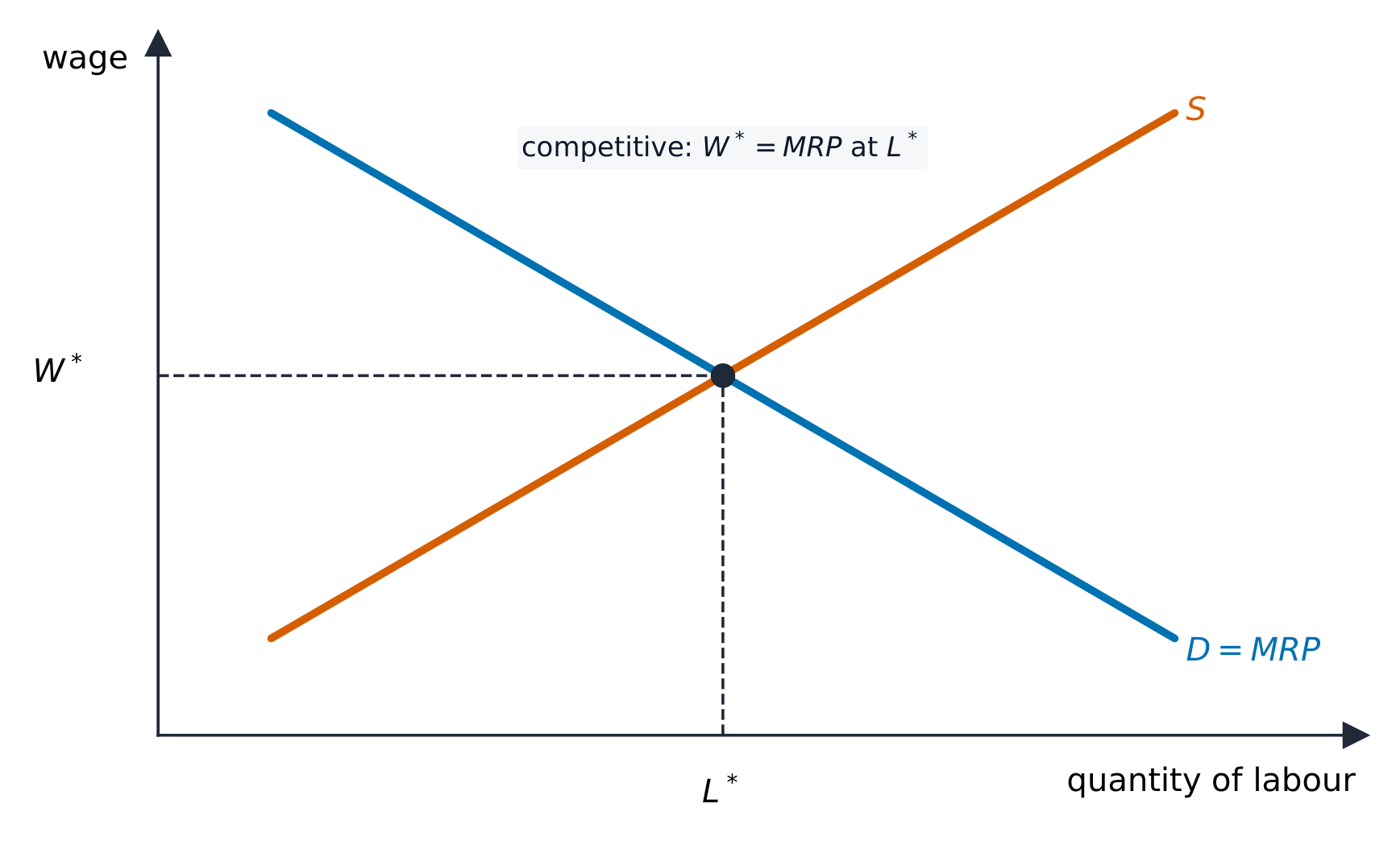
In a competitive labour market, the wage settles where the demand for labour equals the supply of labour.
Wages differ between jobs — this is a wage differential 工资差异. The main reasons are differences in MRP (skilled work is more productive), the training and qualifications needed, and the risk or unpleasantness of the work.
Some wage gaps come from discrimination 歧视 — paying people differently because of gender, race or age rather than their productivity. Governments use equal-pay laws and anti-discrimination laws to reduce this.
ค่าจ้างเป็นเพียงราคา — ราคาของแรงงาน — ดังนั้นเราจึงใช้แรง需求和และอุปทานเพื่อศึกษา ตลาดแรงงาน
ความต้องการแรงงาน เป็น ความต้องการที่ตามมา: บริษัทต้องการพนักงานไม่ใช่เพื่อตัวเขาเอง แต่เพื่อผลิตสินค้าที่ขายได้ ดังนั้นความต้องการแรงงานจึงขึ้นอยู่กับ ผลผลิตจากรายได้ส่วนเพิ่ม (MRP) — รายได้เพิ่มเติมที่พนักงานหนึ่งคนสร้างมา พนักงานคุ้มค่าที่จะจ้างเมื่อ MRP อย่างน้อยเท่ากับค่าจ้าง
อุปทานแรงงาน ต่อตำแหน่งงานจะเพิ่มขึ้นเมื่อ ค่าจ้าง เพิ่มขึ้น และยังขึ้นอยู่กับทักษะที่ต้องฝึกฝน สภาพการทำงาน และจำนวนคนที่มีความสามารถเหมาะสม
ในตลาดแรงงานที่มีแข่งขันกัน ค่าจ้างจะปรับอยู่ที่จุดที่ความต้องการแรงงานเท่ากับอุปทานแรงงาน
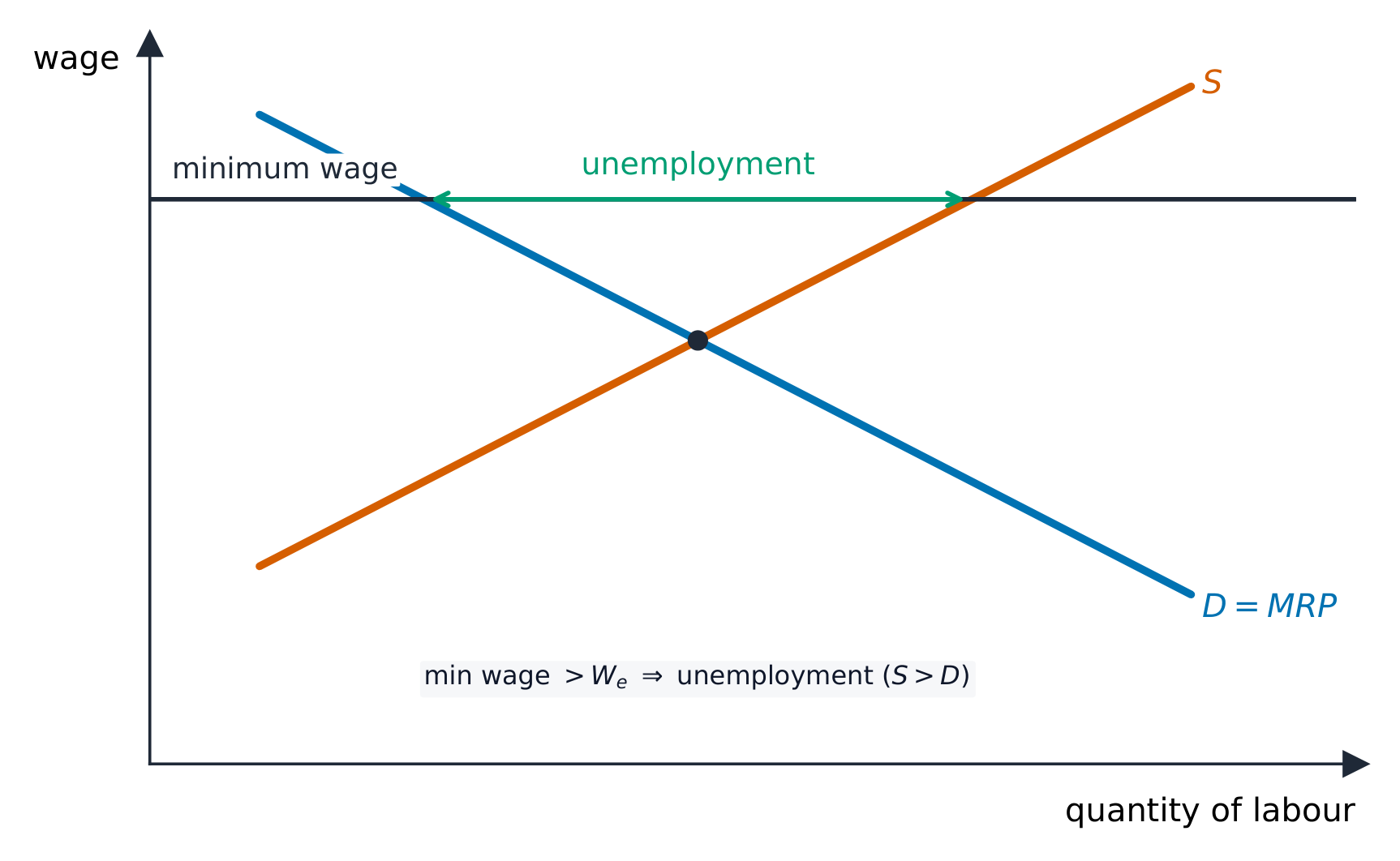
ค่าจ้างแตกต่างกันระหว่างตำแหน่งงาน — นี่คือ ความแตกต่างของค่าจ้าง สาเหตุหลักคือความแตกต่างของ MRP (งานฝีมือมีผลผลิตสูงกว่า), การฝึกอบรมและคุณวุฒิที่ต้องการ และความเสี่ยงหรือความไม่พึงประสงค์ของงาน
ช่องว่างค่าจ้างบางอย่างเกิดจาก การเลือกปฏิบัติ — การจ่ายค่าจ้างต่างกันเพราะเพศ เชื้อชาติ หรืออายุ แทนที่จะเป็นผลผลิต รัฐบาลใช้กฎหมายค่าจ้างเท่ากันและกฎหมายต่อต้านการเลือกปฏิบัติเพื่อลดปัญหานี้
Wages are a price. The demand for labour (from firms) and the supply of labour (from workers) set the equilibrium wage. · ค่าจ้างเป็นราคา ความต้องการแรงงาน (จากบริษัท) และอุปทานแรงงาน (จากแรงงาน) กำหนดค่าจ้างสมดุล
| English | ไทย |
|---|---|
| labour market/ˈleɪbə ˈmɑːkɪt/ | ตลาดแรงงาน |
| demand for labour/dɪˈmænd fɔː ˈleɪbə/ | ความต้องการแรงงาน |
| derived demand/dɪˈraɪvd dɪˈmænd/ | ความต้องการที่มาจาก |
| marginal revenue product/ˈmɑːdʒɪnl ˈrevənjuː ˈprɒdʌkt/ | รายได้ส่วนเพิ่มจากปัจจัย |
| supply of labour/səˈplaɪ ɒv ˈleɪbə/ | อุปทานแรงงาน |
| wage/weɪdʒ/ | ค่าจ้าง |
| monopsony/ˈmɒnəʊpsəni/ | โมโนปอสนี |
| trade union/treɪd ˈjuːnɪən/ | สหภาพแรงงาน |
| national minimum wage/ˈnæʃənl ˈmɪnɪməm weɪdʒ/ | ค่าแรงขั้นต่ำแห่งชาติ |
| wage differential/weɪdʒ ˌdɪfəˈrenʃl/ | ส่วนต่างค่าจ้าง |
| discrimination/dɪˌskrɪmɪˈneɪʃn/ | การเลือกปฏิบัติ |
Work through it step by step, with instant-check exercises. · ทำทีละขั้นตอน พร้อมแบบฝึกหัดตรวจสอบผลทันที
Past Papers · ข้อสอบย้อนหลัง
Loading subjects… · กำลังโหลดวิชา…