政府试图引导整个经济。这份讲义涵盖他们瞄准什么以及他们使用的三套工具。
政府宏观经济干预
A-Level 经济学 · 第 5 主题
 8:52
8:52
Government macroeconomic intervention
Prices are rising fast. Jobs are hard to find. Growth has stopped. Who fixes that? Two buildings decide. In one, the government chooses what to spend and what…
英文讲解 · 内嵌中英文字幕
5.1
政府宏观经济政策目标
大纲
- state the macroeconomic policy objectives: stable low inflation, full employment, economic growth, balance of payments stability, redistribution of income
- explain potential conflicts between objectives
来源:剑桥国际大纲
一个政府通常有五个主要目标:
- 物价稳定(price stability)——低而稳定的通货膨胀(inflation,常常是一个约每年 2% 的目标)。
- 充分就业(full employment)——为几乎每个想工作的人提供就业。
- 经济增长(economic growth)——随时间上升的实际产出。
- 国际收支(balance of payments)稳定——不连续多年进口远多于国家出口。
- 收入再分配(redistribution of income)——缩小贫富之间的差距。
Conflicts between objectives
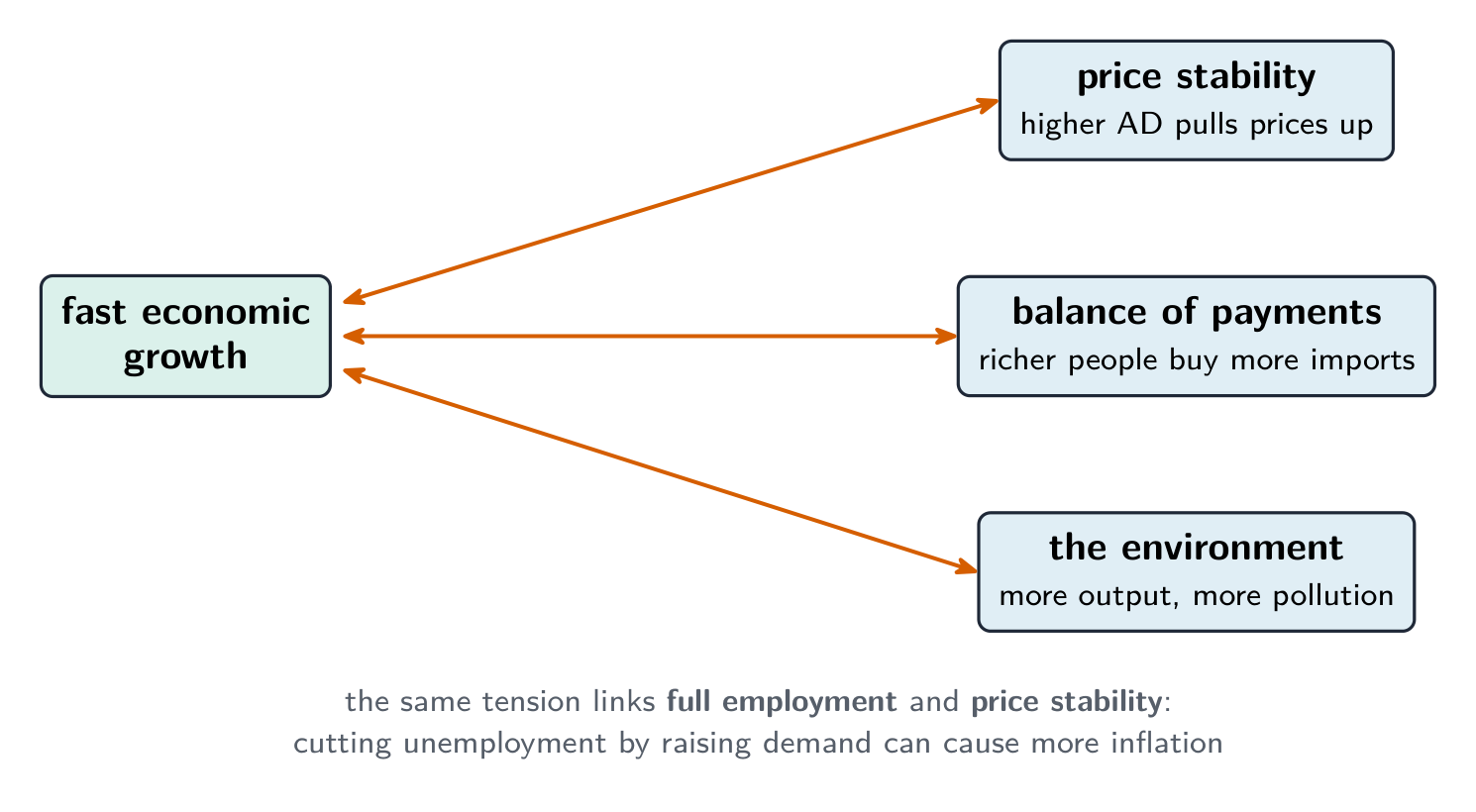
这些目标能冲突(conflict)——达到一个能伤害另一个:
- 增长对通货膨胀:快速增长提高总需求(aggregate demand),它能把价格拉高。
- 增长对国际收支:随着收入上升,人们买更多的进口,恶化贸易平衡。
- 失业对通货膨胀:通过提高需求削减失业能引起更多的通货膨胀。
- 增长对环境:更多的产出往往意味着更多的污染。
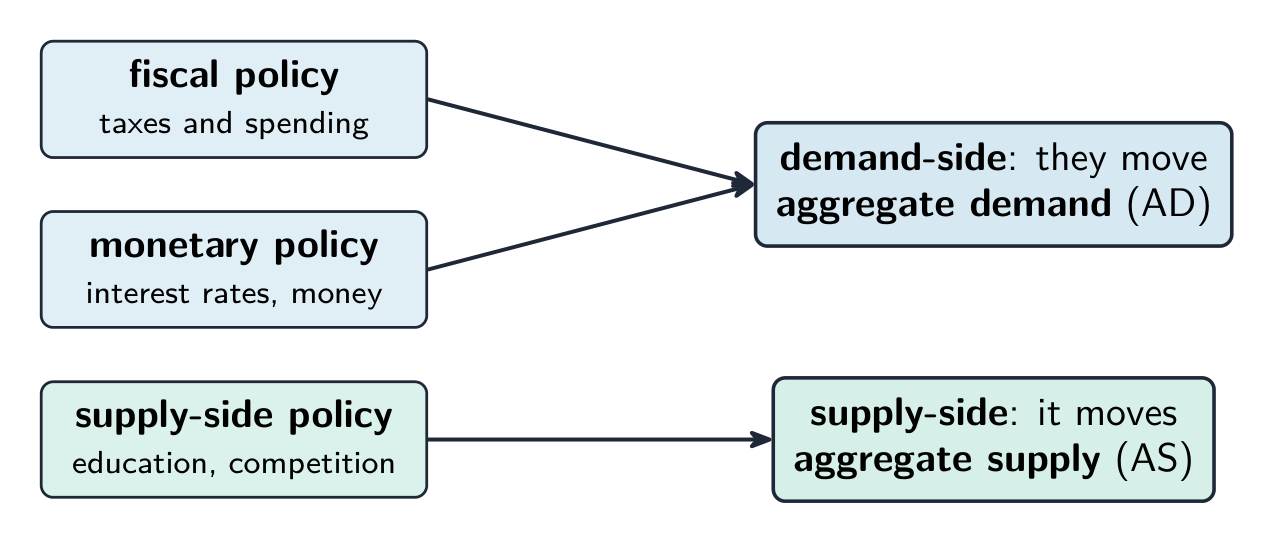
政府有三套工具。财政政策和货币政策是需求侧政策(demand-side policies,它们作用于 AD)。供给侧政策作用于总供给(aggregate supply)。
探索
Macro objective lab
Classify policy examples by the macroeconomic objective they target.
词汇表
训练
| 英文 | 中文 | 拼音 |
|---|---|---|
| price stability | 物价稳定 | wù jià wěn dìng |
| inflation | 通货膨胀 | tōng huò péng zhàng |
| full employment | 充分就业 | chōng fèn jiù yè |
| economic growth | 经济增长 | jīng jì zēng zhǎng |
| balance of payments | 国际收支 | guó jì shōu zhī |
| redistribution of income | 收入再分配 | shōu rù zài fēn pèi |
| conflict | 冲突 | chōng tū |
| aggregate demand | 总需求 | zǒng xū qiú |
| demand-side policies | 需求侧政策 | xū qiú cè zhèng cè |
| aggregate supply | 总供给 | zǒng gōng jǐ |
5.2
财政政策

大纲
- explain fiscal policy (government spending and taxation) and the budget balance
- distinguish direct and indirect taxes and progressive, proportional and regressive taxes
- explain the use and effectiveness of fiscal policy
来源:剑桥国际大纲
财政政策(fiscal policy)是使用政府支出和税收来影响经济。
预算(budget)比较两者:
- 一个预算赤字(budget deficit)是当支出大于税收时。政府必须借款,增加国债(national debt)。
- 一个预算盈余(budget surplus)是当税收大于支出时。
Types of tax
- 一个直接税(direct tax)在收入或利润上直接付给政府(所得税、公司税)。
- 一个间接税(indirect tax)是对支出的一个税(加到物品的价格上)。
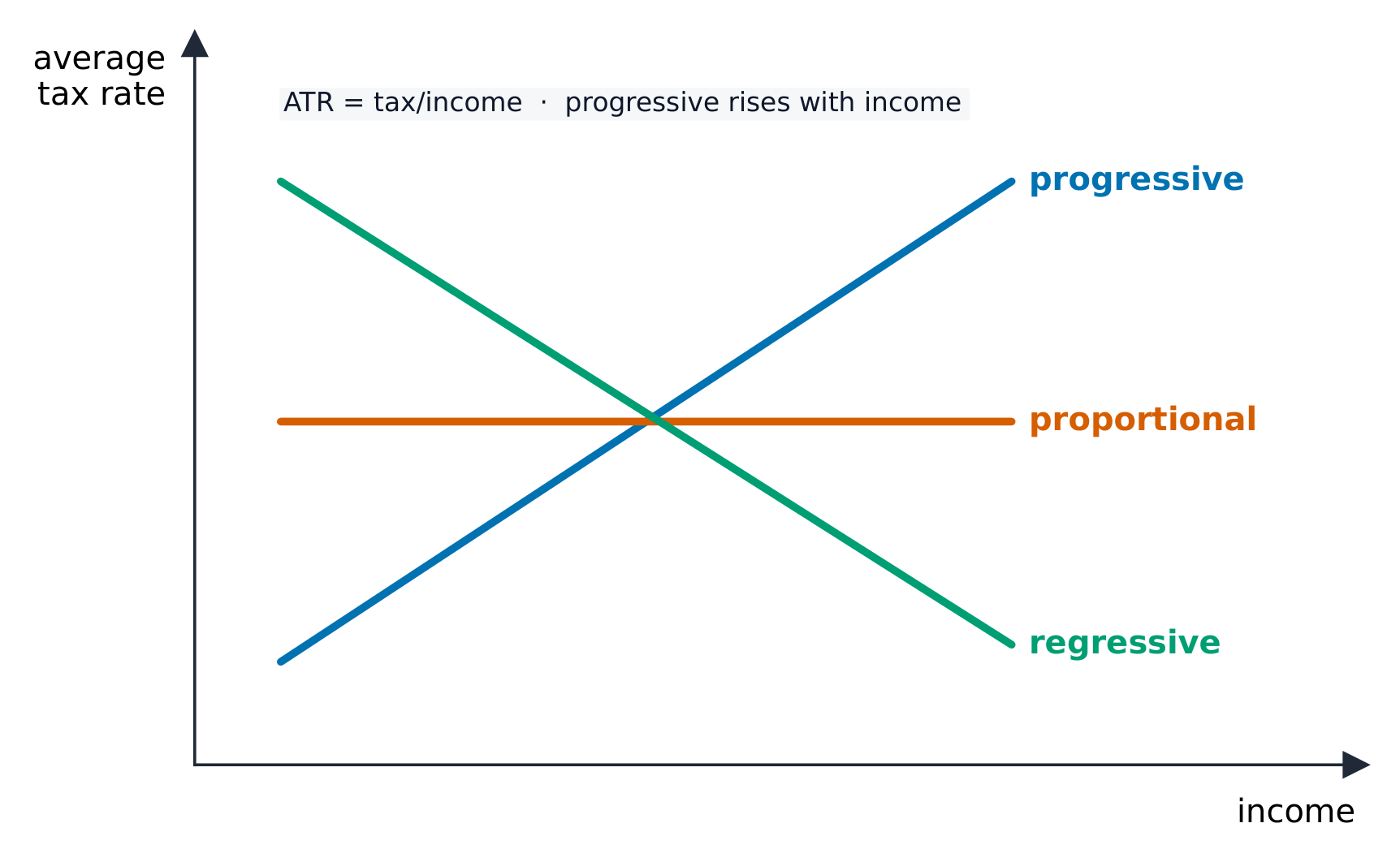
税也按税率如何随收入变化来分组:
| 类型 | 它如何工作 |
|---|---|
| 累进税(progressive tax) | 税率随收入上升而上升(富人付更大的份额) |
| 比例税(proportional tax) | 税率在每个收入保持不变 |
| 累退税(regressive tax) | 税率随收入上升而下降(穷人付更大的份额) |
Using fiscal policy
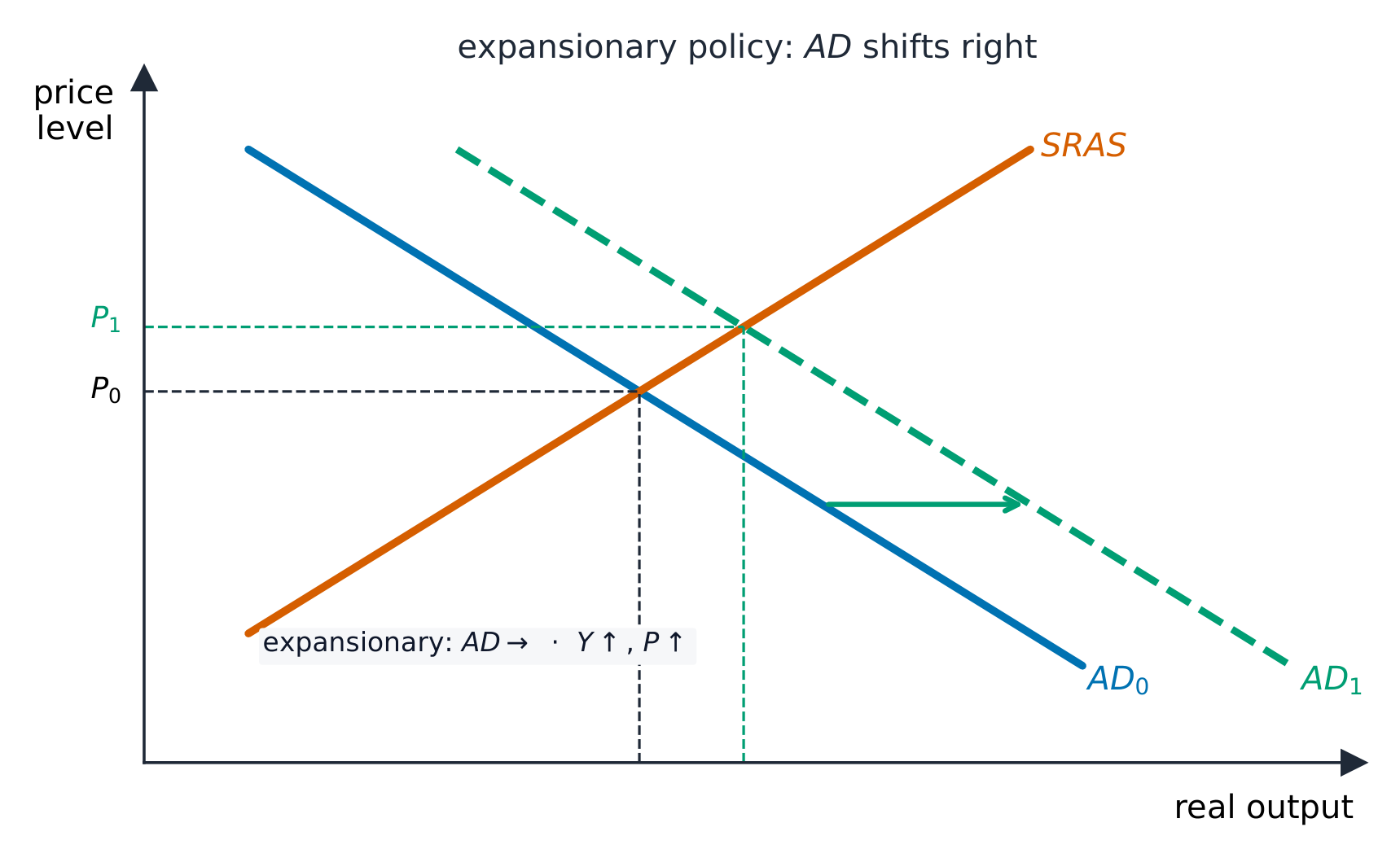
- 扩张性(expansionary)财政政策提高政府支出或削减税。这提高 AD,以对抗一个衰退和失业。
- 紧缩性(contractionary)财政政策削减支出或提高税。这降低 AD,以对抗通货膨胀。
有效性。 财政政策能快速作用于 AD,但它有问题:时间滞后(一个预算一年设定一次)、大的赤字和债务,以及挤出效应(crowding out)——当大量的政府借款推高利率并减少私人投资时。
探索
Fiscal policy shifts AD
Government spending and taxes move aggregate demand (AD). Drag AD to see real output and the price level change.
词汇表
训练
| 英文 | 中文 | 拼音 |
|---|---|---|
| fiscal policy | 财政政策 | cái zhèng zhèng cè |
| budget | 预算 | yù suàn |
| budget deficit | 预算赤字 | yù suàn chì zì |
| national debt | 国债 | guó zhài |
| budget surplus | 预算盈余 | yù suàn yíng yú |
| direct tax | 直接税 | zhí jiē shuì |
| indirect tax | 间接税 | jiàn jiē shuì |
| progressive tax | 累进税 | lèi jìn shuì |
| proportional tax | 比例税 | bǐ lì shuì |
| regressive tax | 累退税 | lèi tuì shuì |
| expansionary | 扩张性 | kuò zhāng xìng |
| contractionary | 紧缩性 | jǐn suō xìng |
| crowding out | 挤出效应 | jǐ chū xiào yìng |
5.3
货币政策

大纲
- explain monetary policy (interest rates, money supply, exchange rate) and the role of the central bank
- explain the transmission mechanism and the effectiveness of monetary policy
来源:剑桥国际大纲
货币政策(monetary policy)由中央银行(central bank)运行。它的主要工具是利率(interest rate),但它也能改变货币供给(money supply)或影响汇率(exchange rate)。
The transmission mechanism
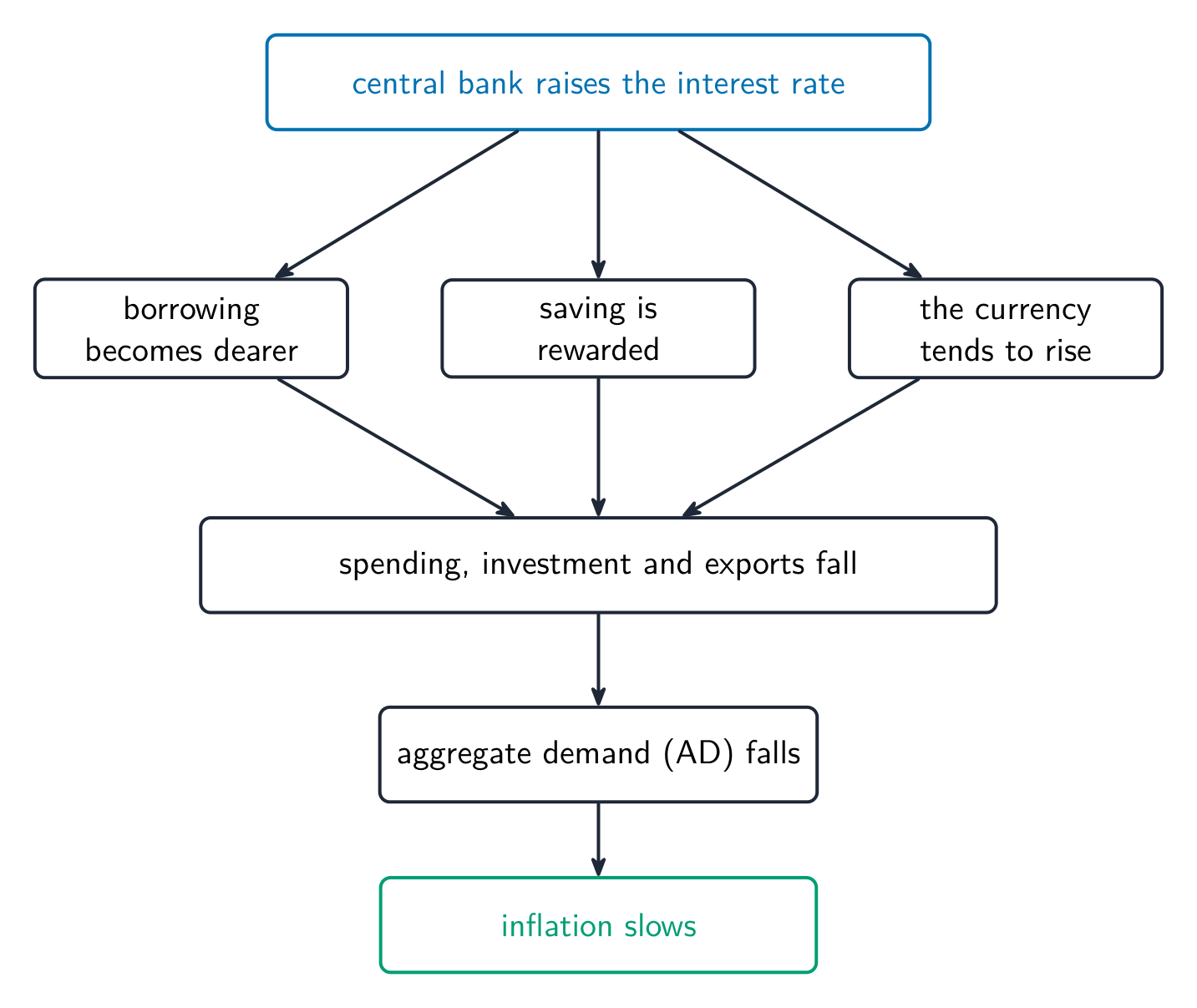
传导机制(transmission mechanism)是利率的一个改变如何到达更广的经济。若中央银行提高利率:
- 借款变得更贵,所以家庭和企业花费和投资得更少。
- 储蓄被奖励,所以人们花费得更少。
- 货币倾向于上升,所以出口下降。
所有这些都降低 AD,它减慢通货膨胀。利率的一个削减做相反的,提高 AD。
有效性。 货币政策灵活(利率能在任何时候改变),但它带着一年或更久的时间滞后工作。在一个深的萧条中,即使非常低的利率也可能不使担忧的企业和家庭借款。
探索
Monetary policy shifts AD
Changing interest rates moves aggregate demand. Lower rates → more borrowing and spending → AD shifts right.
词汇表
训练
| 英文 | 中文 | 拼音 |
|---|---|---|
| monetary policy | 货币政策 | huò bì zhèng cè |
| central bank | 中央银行 | zhōng yāng yín háng |
| interest rate | 利率 | lì lǜ |
| money supply | 货币供给 | huò bì gōng jǐ |
| exchange rate | 汇率 | huì lǜ |
| transmission mechanism | 传导机制 | chuán dǎo jī zhì |
5.4
供给侧政策
大纲
- explain supply-side policies (market-based and interventionist: education and training, incentives, privatisation, deregulation, infrastructure)
- explain the use and effectiveness of supply-side policy
来源:剑桥国际大纲
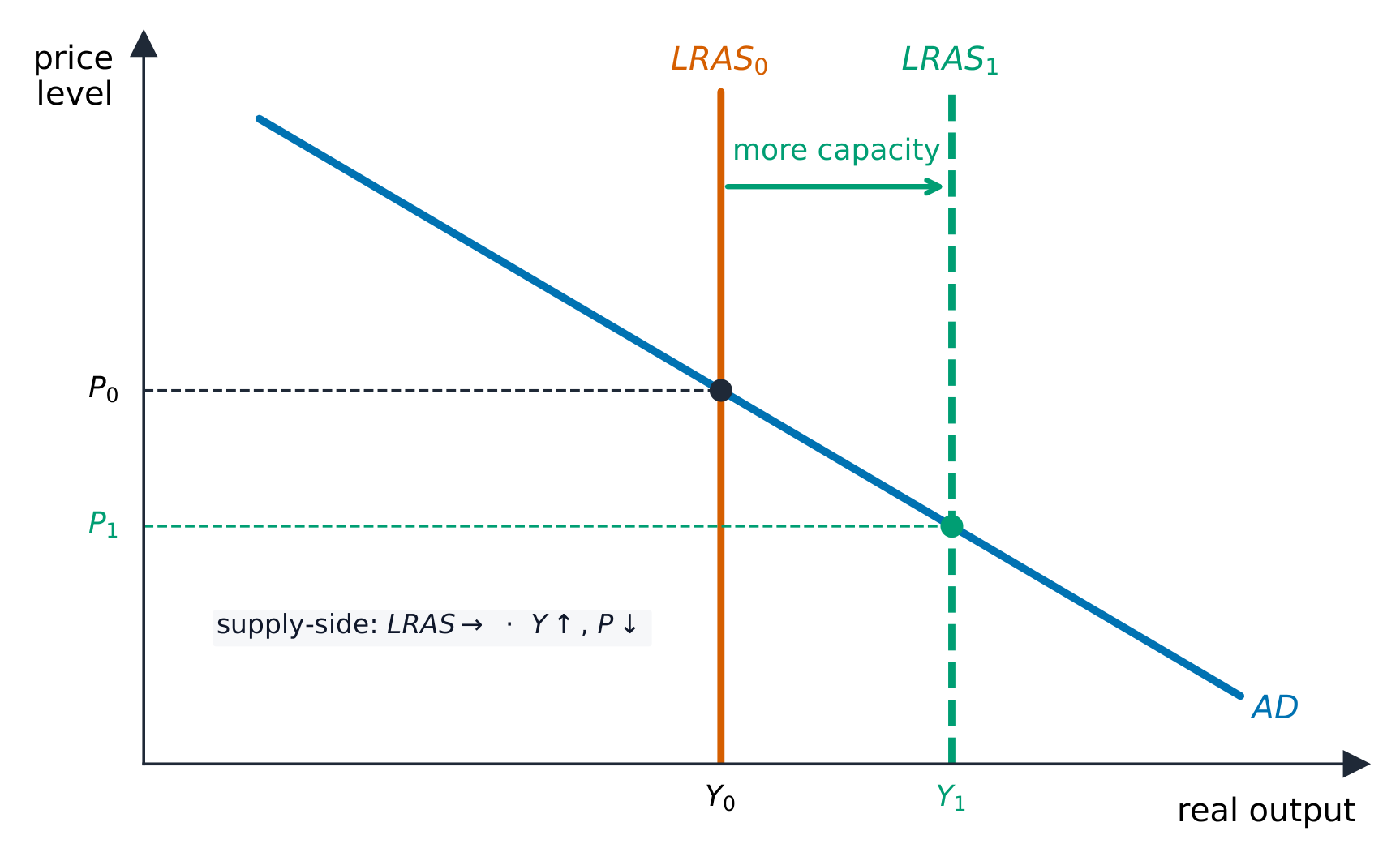
供给侧政策(supply-side policy)试图提高经济的生产能力(productive capacity)——把长期总供给向右移动。它旨在使市场工作得更好并提高生产率(productivity)。
有两种。
基于市场的政策让市场更自由地工作:
- 削减所得税和福利以加强工作的激励(incentive)。
- 私有化(privatisation)——把国有企业卖给私人所有者,他们为利润经营它们。
- 放松管制(deregulation)——移除阻碍竞争的规则。
干预主义政策直接使用政府:
- 在教育和培训(training)上支出以提高工人的技能。
- 在基础设施(infrastructure)上支出——道路、港口和宽带。
- 对研究和新技术的支持。
有效性。 供给侧政策强大,因为它能同时提高增长并降低通货膨胀,没有取舍。但它慢(教育要花几年才有回报)、昂贵,而且一些措施,像削减福利,能扩大不平等。
例题。 一个经济体正处于深度衰退,产出缺口很大,而利率已经接近零。政府该用哪种政策?为什么另一种在这里很弱?货币政策很弱:基准利率已接近零,几乎没有进一步下调的空间,而且当企业预期没有需求时,即便信贷便宜它们也不会投资。财政政策更有力:政府支出直接提高总需求,无需等待谁去主动借款,而且乘数效应意味着每花出一英镑,在被反复再支出的过程中会使国民收入增加一英镑以上。也要权衡它的代价 - 更大的财政赤字和不断上升的债务,以及大型项目的时滞。要让政策对准题目中点明的那个约束:这里是零利率下限,而这正是使财政政策成为答案的原因。
探索
Supply-side policy shifts AS
Supply-side policies raise the economy's productive capacity — aggregate supply (AS) shifts right, lowering the price level at higher output.
词汇表
训练
| 英文 | 中文 | 拼音 |
|---|---|---|
| supply-side policy | 供给侧政策 | gōng jǐ cè zhèng cè |
| productive capacity | 生产能力 | shēng chǎn néng lì |
| productivity | 生产率 | shēng chǎn lǜ |
| incentive | 激励 | jī lì |
| privatisation | 私有化 | sī yǒu huà |
| deregulation | 放松管制 | fàng sōng guǎn zhì |
| training | 培训 | péi xùn |
| infrastructure | 基础设施 | jī chǔ shè shī |
5.4
考试技巧
- 把一个政策匹配到一个目标:财政和货币政策作用于需求;供给侧政策提高长期能力。
- 解释利率的一个改变如何贯通 AD,以及财政政策通过 $G$ 和 $T$。
- 用时间滞后、副作用和目标之间的冲突评估政策。
- 供给侧措施(教育、税收激励)是长期的且工作缓慢。
本主题的互动课程
逐步学习,并即时检测练习。