Gametes, fertilisation and pregnancy · Gametas, fecundação e gravidez
| English | Português |
|---|---|
| embryo/ˈembrɪəʊ/ | embrião |
| implants/ˈɪmplænts/ | implantações |
| placenta/pləˈsentə/ | placenta |
From gametes to a baby
- A new human life begins when two tiny cells meet, and then grows protected inside the mother.
- The journey runs from gametes to fertilisation to pregnancy.
De gametas a um bebê
- Uma nova vida humana começa quando duas células minúsculas se encontram e, depois, cresce protegida dentro da mãe.
- A jornada vai dos gametas à fecundação e depois à gestação.
Fertilisation to pregnancy · De fecundação a gravidez
Follow the route from gametes to implantation. · Siga a rota dos gametas até a implantação.
Compared with the egg, the sperm cell is: · Comparado com o óvulo, a célula do espermatozoide é:
Sperm are small and motile; eggs are large with food. · Espermatozoides são pequenos e móveis; óvulos são grandes com alimento.
Sperm and egg
- The sperm is small, has a tail to swim, and carries little food.
- The egg is much larger and contains a food store for the early embryo 胚胎.
The uterus lining thickens, an egg is released at day 14, and a period follows if there is no pregnancy
Espermatozoide e óvulo
- O espermatozoide é pequeno, tem uma cauda para nadar e carrega pouco alimento.
- O óvulo é muito maior e contém um estoque de alimentos para o embrião inicial 胚胎.
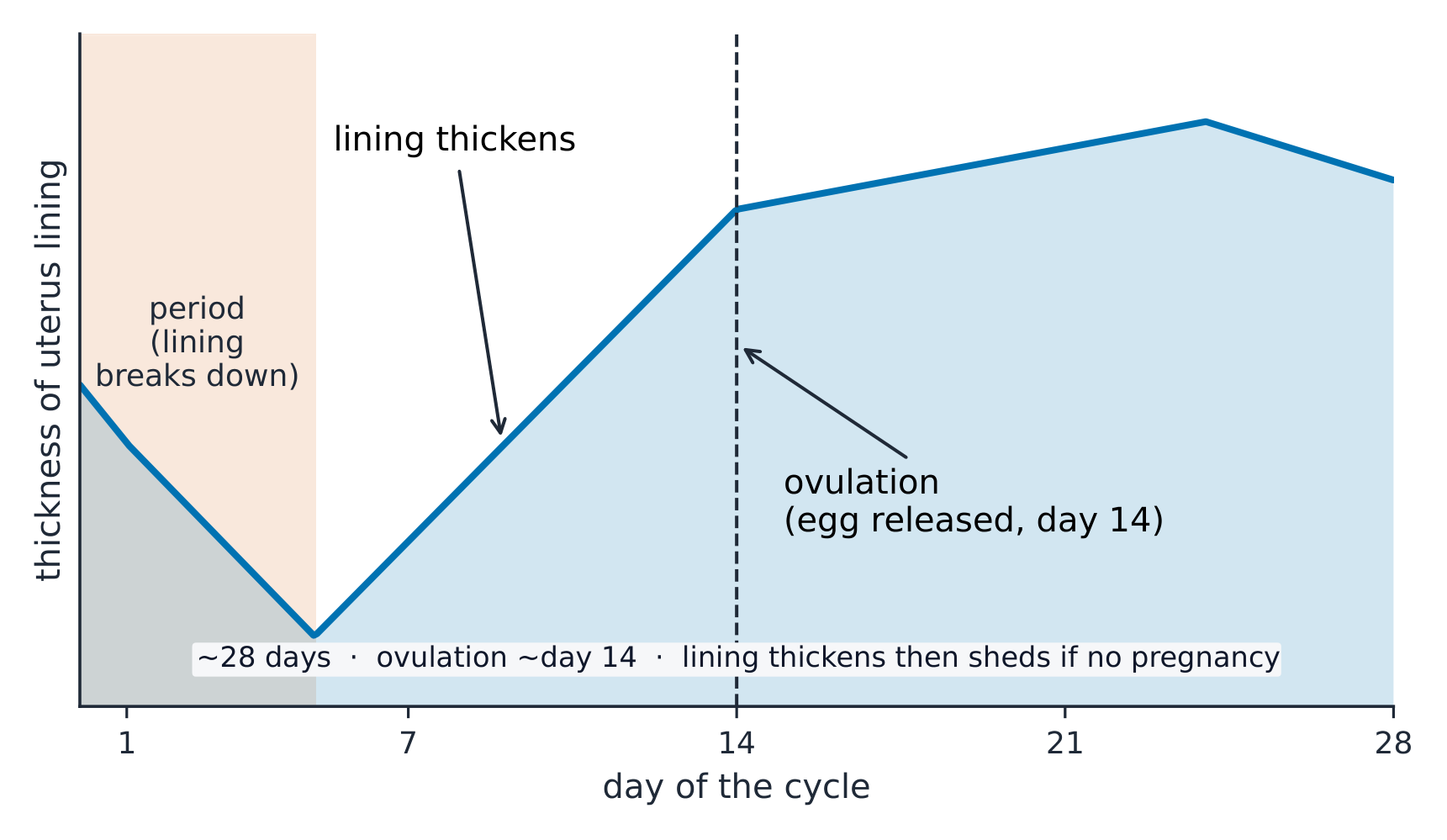
O revestimento do útero espessa-se, um óvulo é liberado no dia 14 e um menstruo segue se não houver gravidez
Put these stages of early development in order. · Coloque estas etapas do desenvolvimento inicial em ordem.
Gametes fuse → zygote → embryo → implantation. · Gametas fundem-se → zigoto → embrião → implantação.
The embryo settles into the lining of the uterus in a process called ______. · O embrião assenta na parede do útero em um processo chamado ______.
Implantation begins pregnancy. · A implantação inicia a gravidez.
Fertilisation and implantation
- A sperm fuses with the egg → a zygote, which divides to form an embryo.
- The embryo implants 植入 in the lining of the uterus and continues to grow.
Fecundação e implantação
- Um espermatozoide funde-se com o óvulo → um zigoto, que se divide para formar um embrião.
- O embrião implanta-se 植入 no revestimento do útero e continua a crescer.
The placenta allows the baby to receive: · A placenta permite que o bebê receba:
Oxygen and nutrients diffuse across; waste passes back. · Oxigênio e nutrientes difundem-se através; resíduos passam de volta.
In the placenta, the mother's and baby's blood flow close but do not mix. · Na placenta, o sangue da mãe e do bebê flui próximo, mas não se mistura.
Substances pass by diffusion across a barrier. · Substâncias passam por difusão através de uma barreira.
The placenta 胎盘
- The placenta exchanges substances between the mother's blood and the baby's.
- Oxygen and nutrients pass to the baby; carbon dioxide and waste pass back — by diffusion.
The fetus develops in the uterus, joined to the placenta by the umbilical cord
The mother's and baby's blood don't mix. They flow close together in the placenta, but substances pass by diffusion across a barrier. Mixing would be dangerous because their blood types may differ.
A placenta 胎盘
- A placenta troca substâncias entre o sangue da mãe e o do bebê.
- Oxigênio e nutrientes passam para o bebê; dióxido de carbono e resíduos retornam — por difusão.
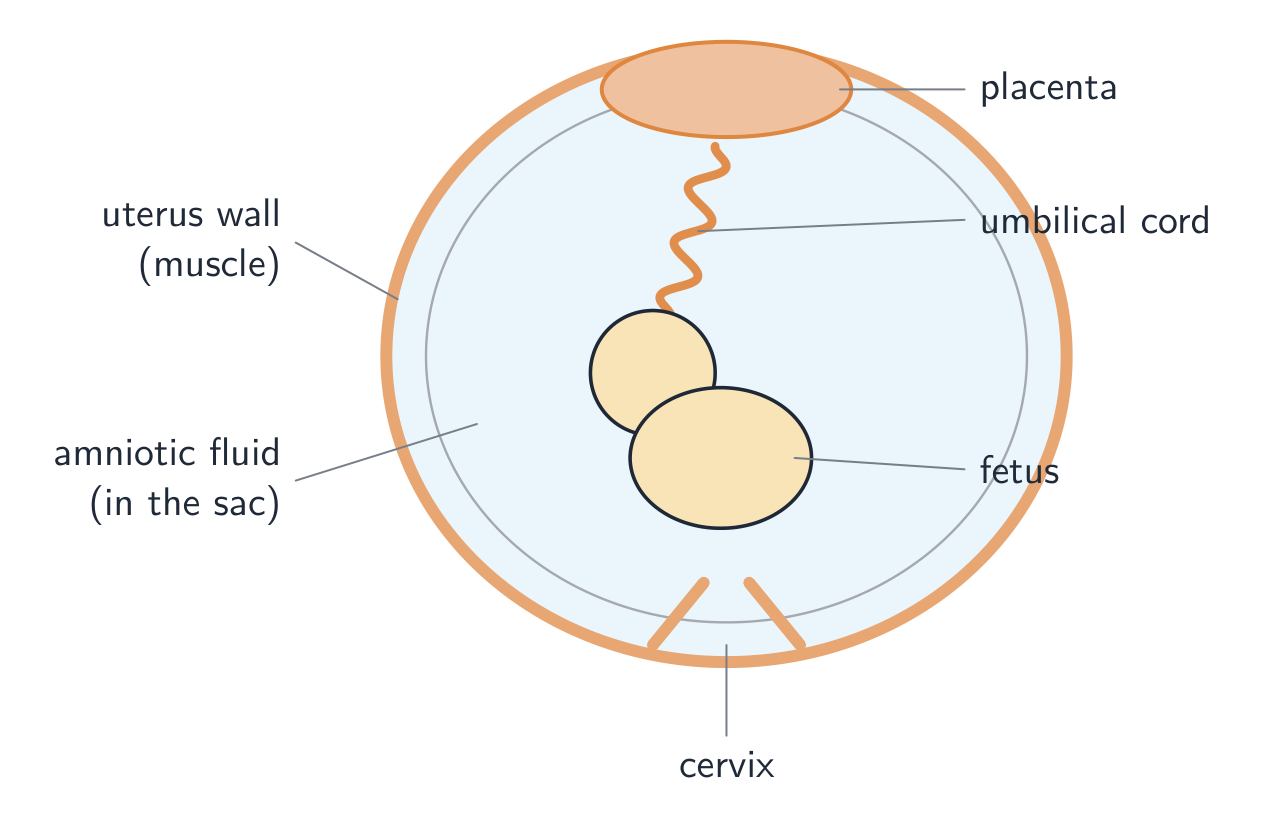
O feto se desenvolve no útero, conectado à placenta pelo cordão umbilical
O sangue da mãe e do bebê não se misturam. Eles fluem próximos uns dos outros na placenta, mas as substâncias passam por difusão através de uma barreira. A mistura seria perigosa porque seus tipos sanguíneos podem diferir.
You've got it
- the sperm is small with a tail; the egg is large with a food store
- fertilisation → zygote → embryo, which implants in the uterus
- the placenta exchanges oxygen/nutrients and waste by diffusion (blood doesn't mix)
Entendeu?
- o espermatozoide é pequeno com uma cauda; o óvulo é grande com um estoque de alimentos
- fecundação → zigoto → embrião, que implanta-se no útero
- a placenta troca oxigênio/nutrientes e resíduos por difusão (sangue não se mistura)