Flowers and pollination · Flores e polinização
| English | Português |
|---|---|
| pollination/ˌpɒlɪˈneɪʃn/ | polinização |
| stamen/ˈsteɪmen/ | estame |
| anther/ˈænθə/ | antéra |
| carpel/ˈkɑːpl/ | carpelo |
| stigma/ˈstɪɡmə/ | estigma |
| ovary/ˈəʊvəri/ | ovário |
| cross-pollination/krɒs ˌpɒlɪˈneɪʃn/ | polinização cruzada |
| self-pollination/self ˌpɒlɪˈneɪʃn/ | autopolinização |
How flowering plants reproduce
- A flower is a plant's reproductive organ, built to make seeds.
- It does this through pollination 传粉 and fertilisation.
Como as plantas com flores se reproduzem
- Uma flor é o órgão reprodutivo de uma planta, construída para produzir sementes.
- Ela faz isso através da polinização 传粉 e fecundação.
Pollen is produced by the: · O grão de pólen é produzido pelo:
The anther (part of the stamen) makes pollen. · A antera (parte do estame) produz grãos de pólen.
The female part of the flower, made of stigma, style and ovary, is the ______. · A parte feminina da flor, composta por estigma, estilo e ovário, é o ______.
The carpel is the female reproductive part. · O carpelo é a parte reprodutiva feminina.
Parts of a flower
- Male parts (stamen 雄蕊): the anther 花药 (makes pollen) on a filament.
- Female parts (carpel 雌蕊): the stigma 柱头, style and ovary 子房 (holds ovules).
A real lily: the long stamens make pollen and the central stigma receives it
An insect-pollinated flower: the male stamens and the female carpel
Partes de uma flor
- Partes masculinas (estame 雄蕊): a anter 花药 (produz pólen) sobre um filamento.
- Partes femininas (carpelo 雌蕊): o estigma 柱头, estilo e ovário 子房 (segura os óvulos).

Um lírio real: os longos estames produzem pólen e o estigma central o recebe
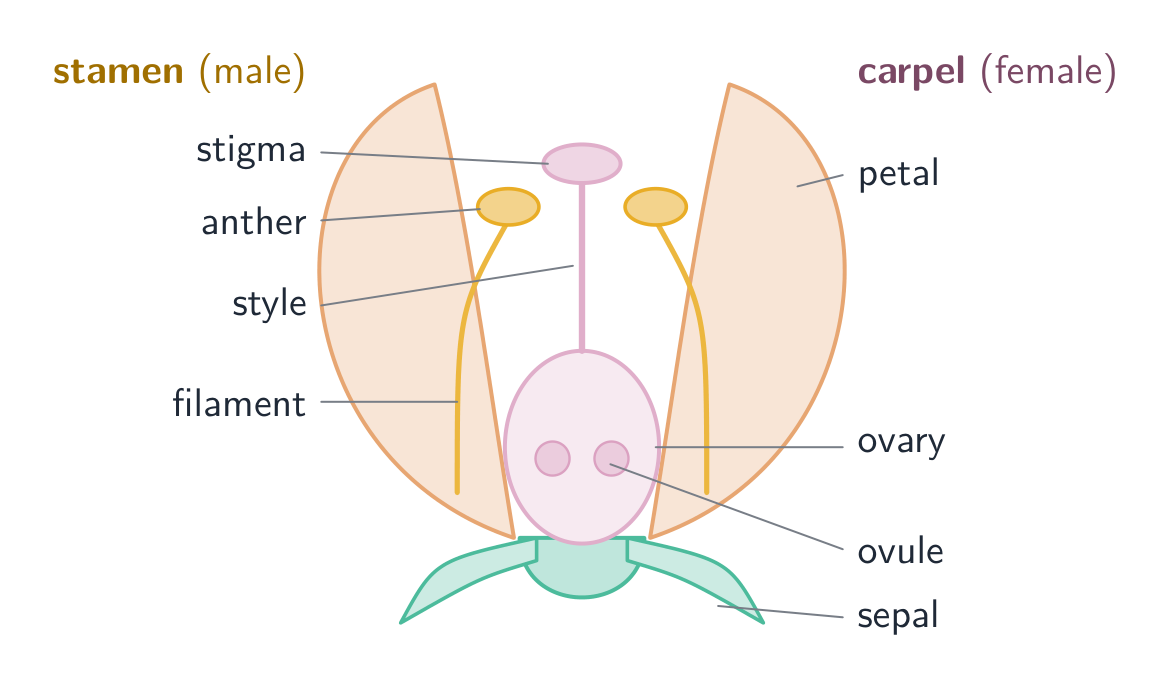
Uma flor polinizada por insetos: os estames masculinos e o carpelo feminino
Pollination and fertilisation · Polinização e fecundação
Pollination delivers pollen to the stigma; a pollen tube then carries the male nucleus to the egg. · A polinização leva o grão de pólen ao estigma; um tubo polínico então transporta o núcleo masculino até o óvulo.
Pollination is the transfer of pollen from an anther to a: · A polinização é a transferência de grãos de pólen de uma antera para um:
Pollen moves from anther to stigma. · O grão de pólen move-se da antera para o estigma.
Insect-pollinated flowers are usually: · As flores polinizadas por insetos geralmente são:
Bright, scented flowers attract insects. · Flores coloridas e perfumadas atraem insetos.
Pollination
- Pollination is the transfer of pollen from an anther to a stigma.
- Insect-pollinated flowers are bright and scented; wind-pollinated flowers have feathery stigmas and dangling anthers.
Pollen grains under an electron microscope: their spiky coats help them stick to insects
Polinização
- A polinização é a transferência de pólen de uma antera para um estigma.
- Flores polinizadas por insetos são brilhantes e perfumadas; flores polinizadas pelo vento têm estigmas plumosos e anteras penduradas.
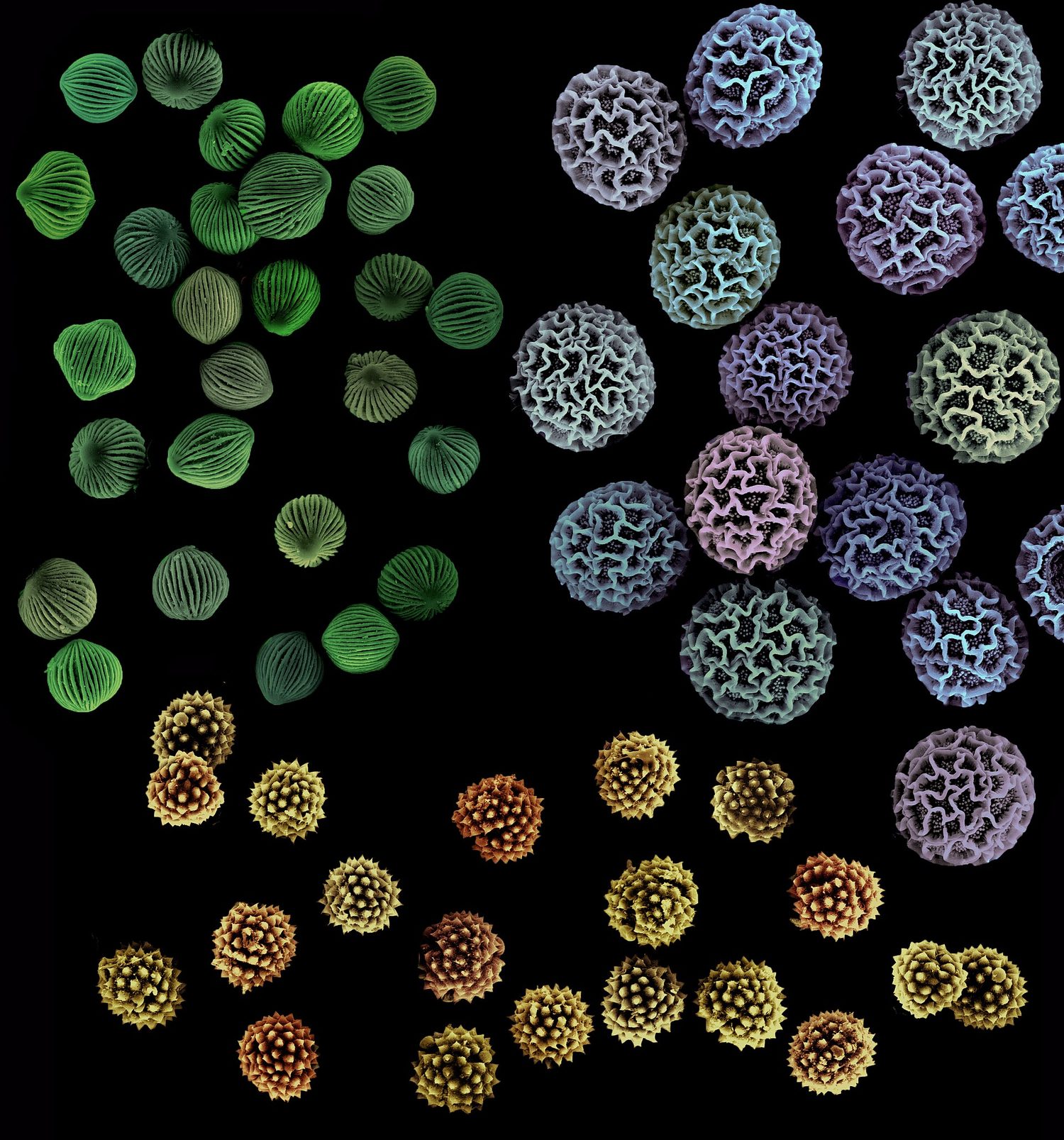
Grãos de pólen sob um microscópio eletrônico: seus revestimentos espinhosos ajudam a aderir aos insetos
Cross-pollination produces more variation than self-pollination. · A polinização cruzada produz mais variação do que a autofecundação.
Mixing genes between plants increases variation. · A mistura de genes entre plantas aumenta a variação.
Self vs cross pollination 异花传粉
- Self-pollination 自花传粉: pollen lands on the same plant — less variation.
- Cross-pollination: pollen reaches a different plant — more variation.
Worked example. A bee visits a bright, scented flower for nectar, brushing against the anther. It carries pollen to the next flower's stigma — insect cross-pollination, which mixes genes between plants.
Autopolinização vs polinização cruzada 异花传粉
- Autopolinização 自花传粉: o pólen cai na mesma planta — menos variação.
- Polinização cruzada: o pólen chega a uma planta diferente — mais variação.
Exemplo resolvido. Uma abelha visita uma flor brilhante e perfumada em busca de néctar, esfregando-se contra a antéra. Ela transporta pólen para o estigma da próxima flor — polinização cruzada por insetos, que mistura genes entre plantas.
You've got it
- stamen (anther + filament) is male; carpel (stigma, style, ovary) is female
- pollination = pollen moved from anther to stigma (by insects or wind)
- cross-pollination gives more variation than self-pollination
Entendeu?
- estame (antera + filamento) é masculino; carpelo (estigma, estilo, ovário) é feminino
- polinização = pólen movido da antera para o estigma (por insetos ou vento)
- polinização cruzada dá mais variação do que autopolinização