Income statements
Introduced| English | Meaning |
|---|---|
| income statement/ˈɪŋkʌm ˈsteɪtmənt/ | A financial statement reporting income, expenses and profit or loss over a period. |
| revenue/ˈrevənjuː/ | Income received by a business from selling goods or services before costs are deducted. |
| cost of sales/kɒst ɒv seɪlz/ | The cost attributable to goods or services sold during an accounting period. |
| gross profit/ɡrəʊs ˈprɒfɪt/ | Sales revenue minus the cost of goods sold. |
| expenses/ekˈspensɪz/ | Costs recognised in earning revenue or operating a business during an accounting period. |
| profit for the year/ˈprɒfɪt fəðə jɪə/ | profit for the year |
| retained profit/rɪˈteɪnd ˈprɒfɪt/ | Profit kept in a business after distributions to its owners. |
| dividend/ˈdɪvɪdend/ | A distribution made by a company to its shareholders, commonly from profits and paid in cash or shares. |
| lenders/ˈlendəz/ | lenders |
More sales, but less profit?
- A cycle shop sells more this year, yet its owner has less profit to keep. Sales alone cannot show whether performance improved: the costs matter too.
- An income statement 损益表 compares revenue 收入 and costs over a stated period, such as the year ended 31 December. It measures profit for that period, not the cash held on the final day.
Match the cost to the goods sold
- Revenue is the value of sales made in the period, including credit sales not yet paid for. Cost of sales 销售成本 is the cost of buying or making the goods that were sold. Unsold goods remain stock; they are not all charged as cost of sales now.
- A stationery shop buys 100 notebooks for £2 each and sells 60 for £5 each. Revenue is 60 × £5 = £300; cost of sales is 60 × £2 = £120. The other 40 notebooks remain stock costing £80.
Cost of sales is:
Difficulty 1/5 · 100 coins + a small bonus on first completion today
Cost of sales is the direct cost of producing the goods sold.
A shop buys 80 mugs for £3 each and sells 50 of them for £8 each. What is the cost of sales (£)?
Difficulty 2/5 · 140 coins + a small bonus on first completion today
Only the 50 mugs sold enter cost of sales: 50 × £3 = £150. The other 30 remain stock costing £90.
Follow the two profit steps
- Gross profit 毛利润 = revenue − cost of sales. Expenses 费用 are other running costs, such as shop rent, office salaries and advertising. Do not deduct the same cost twice: a production cost already in cost of sales is not another expense here.
- Profit for the year 年度利润 = gross profit − expenses. For the cycle shop, all figures are £000: revenue 150 − cost of sales 90 = gross profit 60; then 60 − expenses 35 = profit 25. If expenses exceed gross profit, the result is a loss.
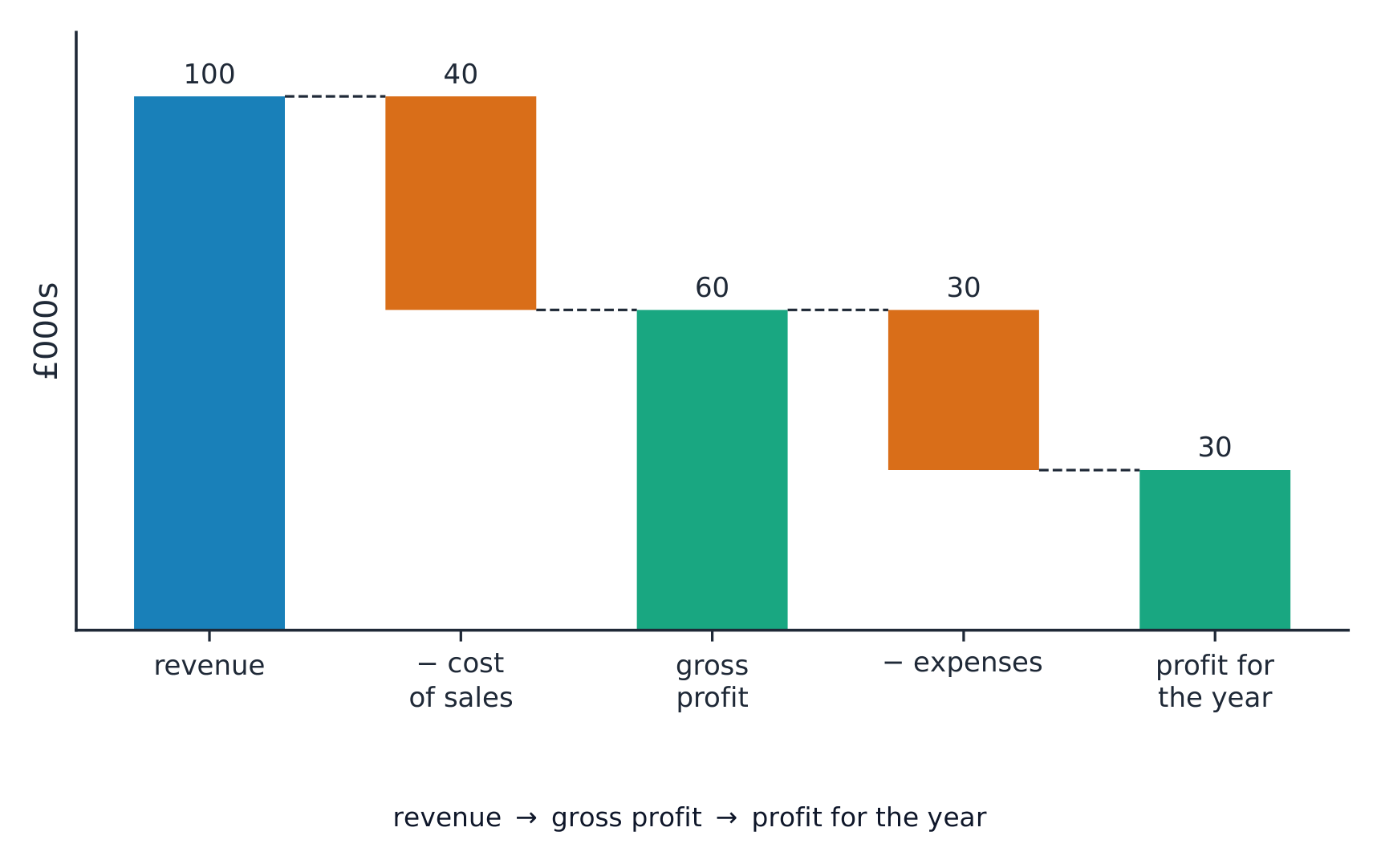
A separate example (£000): revenue 100 − cost of sales 40 = gross profit 60; subtract expenses 30 to leave profit 30.
Cycle shop: from sales to profit
Follow one year of the worked cycle shop; all amounts are £000.
Revenue is 200 and cost of sales is 130. What is the gross profit?
Difficulty 2/5 · 140 coins + a small bonus on first completion today
Gross profit = 200 − 130 = 70.
Gross profit is 70 and expenses are 45. What is the profit?
Difficulty 2/5 · 140 coins + a small bonus on first completion today
Profit = 70 − 45 = 25.
Gross profit is the final profit after all costs are deducted.
Difficulty 1/5 · 100 coins + a small bonus on first completion today
Gross profit still has to cover the other expenses. Profit for the year deducts those expenses once.
Revenue minus cost of sales gives ______ profit.
Difficulty 1/5 · 100 coins + a small bonus on first completion today
Gross profit, before expenses are deducted.
A business has revenue £42000, cost of sales £27000 and expenses £18000. Enter profit for the year (£), using a minus sign for a loss.
Difficulty 2/5 · 140 coins + a small bonus on first completion today
Gross profit = £42000 − £27000 = £15000. Profit = £15000 − £18000 = −£3000, a loss.
Why profit matters and what is retained
- Profit rewards owners for taking business risks. Retained profit 留存利润 is profit kept in the business after distributions to owners, such as dividends 股息. It is an internal source of finance for equipment, expansion or future needs.
- If a company makes £25,000 profit and pays £8,000 in dividends, it retains £17,000. Retaining more leaves less for owners now. Retained profit is not necessarily spare cash: it may already be tied up in stock, customer debts or equipment.
A company makes £36000 profit for the year and distributes £11000 in dividends. How much profit is retained (£)?
Difficulty 2/5 · 140 coins + a small bonus on first completion today
Retained profit = £36000 − £11000 = £25000. This does not prove the company holds £25000 of unused cash.
Separate profit from cash
- A credit sale of £100, with cost of sales £60, adds £40 to gross profit before other expenses. If the customer pays next month, this sale brings in no cash today. A profitable business can still struggle to pay a bill on time.
- A £5,000 bank loan increases cash when received, but is not sales revenue or profit. The principal must be repaid. Read a cash-flow forecast alongside the income statement before promising a dividend or buying equipment.
A bank lends a shop £9000, paid into its account today. With no other changes, which statement is correct?
Difficulty 1/5 · 100 coins + a small bonus on first completion today
Loan receipts increase cash and borrowing, not revenue or profit. Interest is a separate cost; the principal must be repaid.
Compare the same periods
- In the cycle shop's second year, revenue is £180,000, cost of sales £117,000 and expenses £43,000. Gross profit is £63,000 and profit is £20,000. Revenue rose £30,000, but profit fell £5,000.
- Cost of sales rose £27,000 and expenses rose £8,000: together, costs rose £35,000, more than revenue. Investigate buying costs and the extra expenses before choosing a response; these totals alone do not prove why costs changed.

All figures are £000. Revenue is 240, cost of sales is 156 and profit for the year is 29. What are expenses (£000)?
Difficulty 2/5 · 140 coins + a small bonus on first completion today
Gross profit = 240 − 156 = 84. Expenses = 84 − 29 = 55.
A florist reports the same twelve-month periods (£000): Year A revenue 90, cost of sales 48, expenses 24; Year B revenue 108, cost of sales 64, expenses 27. The owner says higher sales prove higher profit. Calculate both profits and assess the claim. Suggest one investigation.
Use the stated figures and link each conclusion to this business. Check the model after writing your own response.
Turn figures into a decision
- Owners judge rewards and how much to retain. Managers can compare costs and investigate a rent or advertising increase. Lenders 放贷方 use profit as one sign that repayments may be affordable, but also need cash-flow and debt information.
- Use a figure, explain its effect, then qualify the decision. For example, lower profit leaves less to finance a new repair area. Cutting advertising may save expense now, but could reduce later sales; check which spending supports revenue.
A company made £28000 profit. It proposes a £20000 dividend and needs £15000 for new equipment. Only £9000 cash is available, including customer payments that have not yet arrived. Explain why the profit figure alone cannot justify paying the dividend now. What should managers check?
Use the stated figures and link each conclusion to this business. Check the model after writing your own response.
Make a recommendation from fresh evidence
- Read the business, period and units first. Calculate gross profit, then deduct expenses once. If sales rise, compare the cost changes before claiming that profit must rise too.
- For a recommendation, link the numbers to the owner's aim and name the extra evidence needed. Past profit cannot guarantee future sales or cash; the two statements answer different questions.
Revenue is 360, cost of sales is 210 and expenses are 90. What are the gross profit and the profit, and why are they different?
Gross profit is revenue minus cost of sales. Profit then deducts the expenses.
Review the same example: revenue 360, cost of sales 210 and expenses 90. What is its gross profit?
Difficulty 1/5 · 100 coins + a small bonus on first completion today
360 minus 210 is 150. The profit of 60 is what remains after expenses. Other options — 70 (the lesson gross profit from revenue of 200); 60 (the profit after expenses).
A repair shop earned £12000 profit this year and asks to borrow £30000 for five years. Explain one useful conclusion a lender can draw from the income statement and two things it still needs to check.
Use the stated figures and link each conclusion to this business. Check the model after writing your own response.