Exchange Rates and Net Exports
Introduced| English | Meaning |
|---|---|
| aggregate demand/ˈæɡrɪɡeɪt dɪˈmænd/ | Total planned spending on an economy's goods and services at different general price levels. |
| net exports/net ˈekspɔːts/ | The value of exports minus the value of imports over a period. |
| exports/ˈekspɔːts/ | Goods and services sold to buyers in other countries. |
| imports/ɪmˈpɔːts/ | Goods and services bought from sellers in other countries. |
From the exchange rate back to the economy
- An exchange-rate move feeds straight back into a country's trade.
- And trade feeds into the whole economy through aggregate demand.
- The chain: exchange rate → net exports → aggregate demand → output.
- Let's follow a strong currency through that chain.
Net exports equal exports minus ______.
Difficulty 1/5 · 100 coins + a small bonus on first completion today
NX = exports − imports.
When a currency appreciates, a country's exports become:
Difficulty 1/5 · 100 coins + a small bonus on first completion today
A stronger currency raises the foreign-currency price of exports.
A stronger currency lowers net exports
- When a currency appreciates, that country's goods become dearer for foreigners.
- At the same time, foreign goods become cheaper at home.
- So exports 出口 fall and imports 进口 rise.
- That lowers net exports 净出口, where $NX = \text{exports} - \text{imports}$.
Stronger or weaker currency?
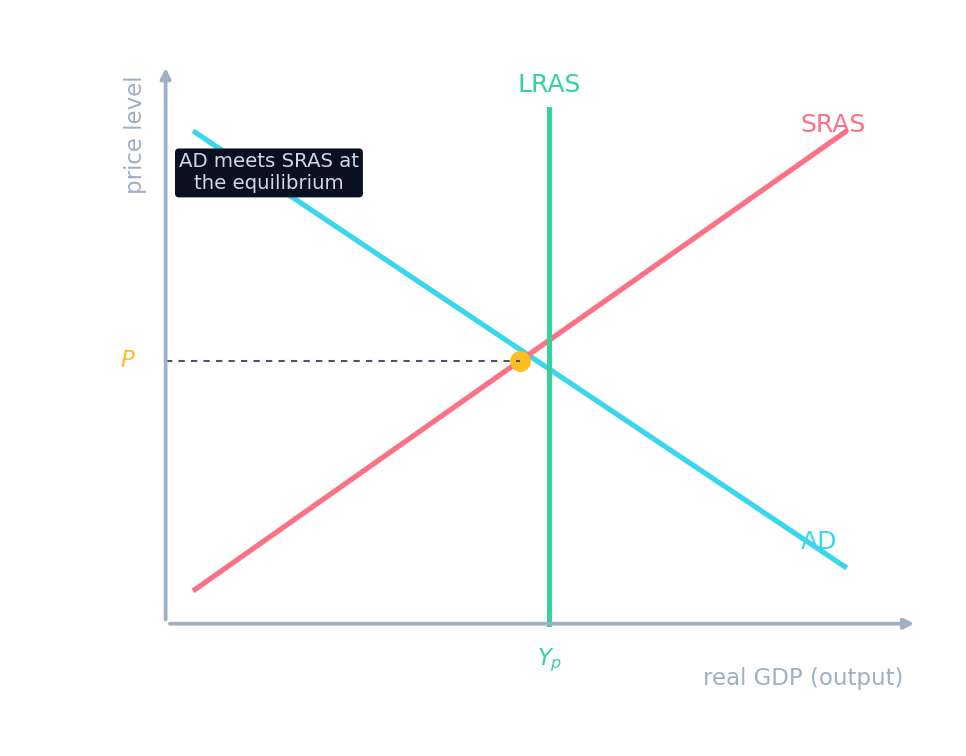
A stronger currency lowers net exports and shifts AD left; a weaker currency raises net exports and shifts AD right.
A stronger currency lowers net exports, so aggregate demand shifts:
Difficulty 1/5 · 100 coins + a small bonus on first completion today
Net exports are part of AD, so lower NX shifts AD left.
A weaker currency lowers net exports and shifts aggregate demand left.
Difficulty 1/5 · 100 coins + a small bonus on first completion today
False. A weaker currency makes exports cheaper and imports dearer, raising net exports and shifting AD right.
Net exports move aggregate demand
- Net exports are one component of aggregate demand 总需求.
- A stronger currency lowers net exports, shifting aggregate demand left (weaker output).
- A weaker currency raises net exports, shifting aggregate demand right (stronger output).
- So the exchange rate is a lever on the whole economy, not just trade.
A US machine rises from 900 to 1000 euros after the dollar appreciates. The likely result is:
Difficulty 1/5 · 100 coins + a small bonus on first completion today
A dearer machine loses foreign buyers — exports drop.
Order the chain from a stronger currency to weaker output.
Difficulty 3/5 · 200 coins + a small bonus on first completion today
Appreciation → trade worsens → NX falls → AD left.
Worked example
- Worked idea. The dollar appreciates sharply. A US machine that cost a European buyer 900 euros now costs 1000 euros — so Europe buys fewer. US exports fall.
- Meanwhile European goods look cheap to Americans, so US imports rise.
- Net exports drop, and US aggregate demand shifts left.
- This is why a very strong currency can slow an economy.
An exchange-rate change moves trade, then the economy. A stronger currency makes exports dearer and imports cheaper, so net exports ($NX = X - M$) fall. Because net exports are part of aggregate demand, a stronger currency shifts AD left (weaker output); a weaker currency shifts AD right.
Write from a machine priced at 500 euros
- After the dollar appreciates, a US machine rises from 400 euros to 500 euros.
- Say what happens to exports and aggregate demand.
After the dollar appreciates, a US machine that cost 400 euros now costs 500 euros. What is likely to happen to exports and to aggregate demand?
A higher foreign-currency price loses customers.
What does the rise to 500 euros do?
Difficulty 1/5 · 100 coins + a small bonus on first completion today
The dearer machine cuts exports, and net exports are part of aggregate demand. Other options — Exports rise (because 500 is a larger number); AD shifts right (because a strong currency always boosts spending).