Sustainable Forestry
Introduced| English | Meaning |
|---|---|
| Sustainable forestry/səˈsteɪnəbl ˈfɒrɪstri/ | Sustainable forestry |
| Selective cutting/sɪˈlektɪv ˈkʌtɪŋ/ | Selective cutting |
| reforestation/rɪˌfɒrɪˈsteɪʃn/ | Re-establishing tree cover on land that was previously forested. |
Harvesting without destroying
- We need wood for building, paper, and fuel.
- But clearcutting whole forests destroys habitat and erodes soil.
- There is a better way to take timber and keep the forest.
- These careful methods make up sustainable forestry.
What sustainable forestry is
- Sustainable forestry 可持续林业 harvests timber while keeping the forest healthy.
- It takes wood no faster than the forest can regrow it.
- This keeps the timber available indefinitely — a sustainable yield.
- And it protects the soil, water, and wildlife the forest supports.
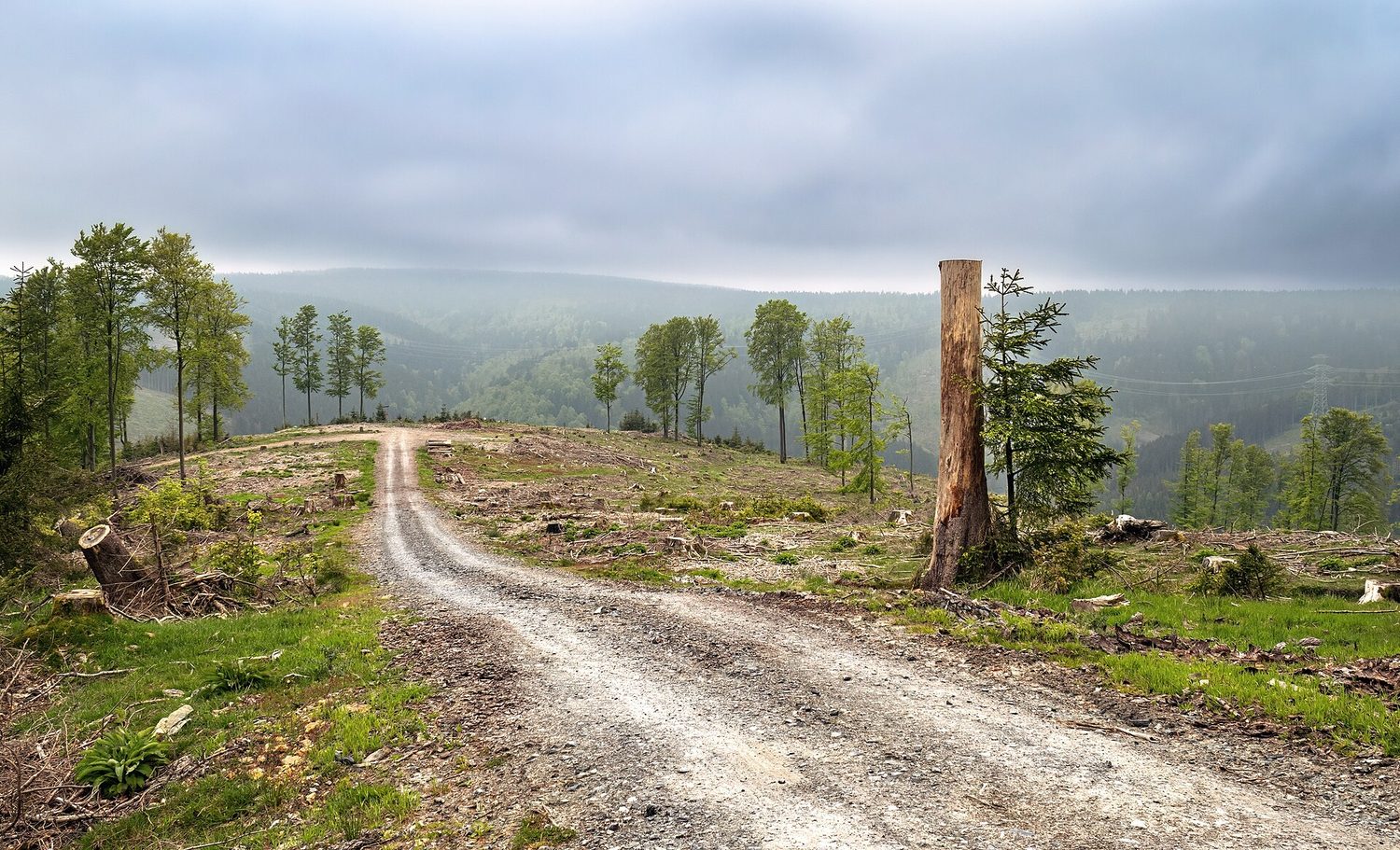
A clear-cut slope: removing every tree at once destroys habitat and exposes the soil
Sustainable forestry aims to…
Difficulty 1/5 · 100 coins + a small bonus on first completion today
Sustainable forestry takes timber in ways that keep the forest and its wildlife healthy for the future.
Selective cutting
- Selective cutting 择伐 removes only some chosen trees, not all.
- The rest of the forest stays standing.
- The remaining trees shade the soil, hold it in place, and provide habitat.
- The gaps let young trees grow, and the forest continues.
Selective cutting means…
Difficulty 1/5 · 100 coins + a small bonus on first completion today
Selective cutting removes only chosen trees, so the forest keeps its soil, habitat, and shade.
Replanting trees to renew a forest after harvest is called ____.
Difficulty 1/5 · 100 coins + a small bonus on first completion today
Reforestation replants trees so the forest and its benefits return over time.
Replanting the forest
- After harvesting, foresters replant trees — reforestation 重新造林.
- New trees grow to replace those that were taken.
- Over time the forest and all its benefits return.
- Cut, replant, and wait: the cycle can continue forever.
Sustainable or harmful forestry?
Sort each forestry practice by whether it keeps the forest healthy or destroys it.
Cutting trees faster than they regrow keeps a forest available forever.
Difficulty 1/5 · 100 coins + a small bonus on first completion today
False. Only harvesting at or below the regrowth rate (a sustainable yield) lets the forest renew itself; faster cutting shrinks it.
Select all sustainable forestry practices.
Difficulty 2/5 · 140 coins + a small bonus on first completion today
Clearcutting the whole forest is the opposite of sustainable. The other three protect it.
The key is the rate: cut no faster than the forest regrows. Take timber at a sustainable yield, use selective cutting instead of clearcutting, and replant, and a forest can supply wood forever. Exceed that rate, and even "managed" forestry becomes deforestation.
A forest that lasts:
- A forester marks and removes only the mature trees, leaving the young ones and the soil intact.
- Seedlings are planted to replace what was taken.
- Years later the forest is as full as before, still providing timber, habitat, and clean water — a renewable resource, managed to last.
Sustainable forestry harvests timber while keeping the forest healthy. It uses selective cutting (removing only some trees, not clearcutting), reforestation (replanting after harvest), and cutting no faster than the forest regrows. Done this way, a forest can supply wood indefinitely while protecting soil, water, and wildlife.