Renewable and Nonrenewable Resources
Introduced| English | Meaning |
|---|---|
| renewable/rɪˈnjuːəbl/ | Describing a resource that can be replenished naturally on a timescale relevant to its use. |
| fossil fuels/ˈfɒsl ˈfjuːəlz/ | Coal, oil and natural gas formed from ancient organic matter over millions of years. |
| nonrenewable/ˌnɒnrɪˈnjuːəbl/ | Not naturally replaced fast enough to keep pace with human use. |
Where energy comes from
- Everything we do uses energy — light, heat, transport, factories.
- That energy comes from natural resources.
- Some of those resources refill; some run out.
- This is the first big split in studying energy.
Renewable resources
- A renewable 可再生 resource is refilled by nature as fast as we use it.
- Sunlight arrives every day, wind keeps blowing, rivers keep flowing.
- We can use them forever without running out.
- Solar, wind, hydro, geothermal, and biomass are all renewable.
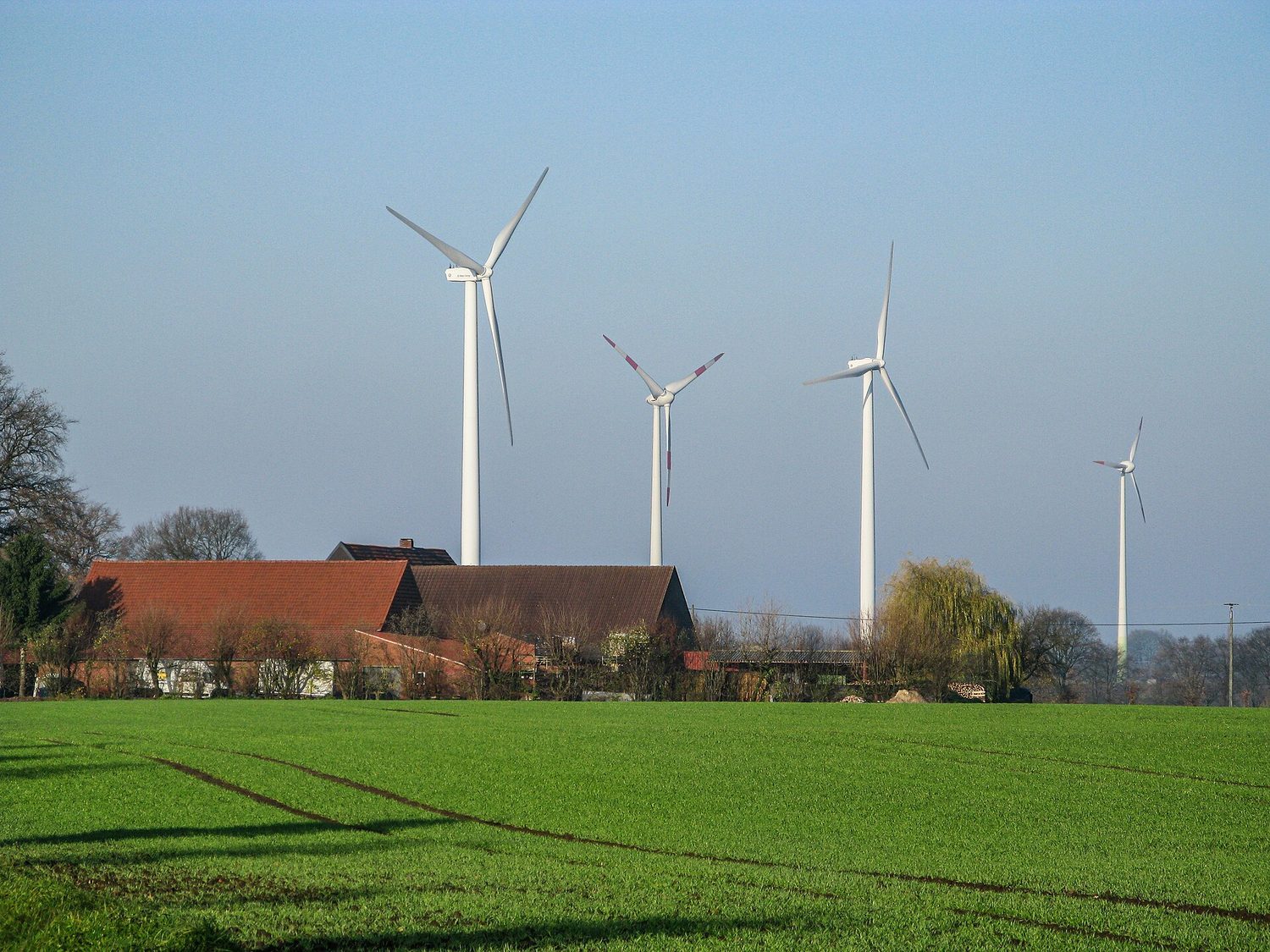
Wind turbines: renewable sources replenish on human timescales; fossil fuels 化石燃料 do not
A renewable resource is one that…
Difficulty 1/5 · 100 coins + a small bonus on first completion today
A renewable resource is refilled by nature on a human timescale — sunlight, wind, and flowing water keep coming.
Nonrenewable resources
- A nonrenewable 不可再生 resource exists in a fixed amount and runs out.
- Coal, oil, and natural gas are fossil fuels — buried ancient life.
- They took millions of years to form, so we cannot make more.
- Nuclear fuel (uranium) is also nonrenewable — the ore is limited.
Renewable or nonrenewable?
Sort each energy source by whether nature refills it or it runs out.
Which is a nonrenewable resource?
Difficulty 1/5 · 100 coins + a small bonus on first completion today
Coal took millions of years to form, so once burned it is gone. Wind, sun, and water are renewable.
Coal, oil, and natural gas are the three ____ fuels.
Difficulty 1/5 · 100 coins + a small bonus on first completion today
Fossil fuels formed from ancient buried life; they are nonrenewable.
Why the split matters
- Nonrenewable fuels supply most of the world's energy today.
- But they will run low, and burning them pollutes the air.
- Renewable sources are cleaner and never run out.
- The big challenge is shifting from nonrenewable to renewable energy.
Solar and wind energy will run out within a few years of heavy use.
Difficulty 1/5 · 100 coins + a small bonus on first completion today
Sunlight and wind keep arriving no matter how much we use — that is what makes them renewable.
Select all renewable energy sources.
Difficulty 2/5 · 140 coins + a small bonus on first completion today
Solar, wind, and hydropower are renewable. Coal is a nonrenewable fossil fuel.
"Renewable" is about the rate of refill, not about being clean. A renewable source can still cause harm (a dam floods land; biomass burning releases smoke). And "nonrenewable" does not mean instantly gone — there is coal left, but it is finite and will run out. Judge each source by both: does it refill, and what does it cost?
Two power stations:
- One burns coal dug from a mine. When the coal seam is empty, that energy is gone forever — and the smoke pollutes the air.
- The other spins turbines with wind. Tomorrow the wind blows again, and the day after. The fuel never runs out and makes no smoke.
- Same electricity; one source is renewable, the other is not.
A renewable resource is refilled by nature as fast as we use it (solar, wind, hydro, geothermal, biomass). A nonrenewable resource exists in a fixed amount and runs out — the fossil fuels (coal, oil, natural gas) and nuclear fuel. Fossil fuels supply most energy today but are finite and polluting; the shift to renewables is the central energy challenge.