Aquaculture
Introduced| English | Meaning |
|---|---|
| Aquaculture/ˈækwəkʌltʃə/ | Farming fish or shellfish in controlled water bodies. |
Farming the water
- Wild fish are being caught faster than they can breed.
- One answer is to raise fish on farms instead of catching them.
- This can supply seafood without emptying the oceans.
- Farming aquatic life is called aquaculture.
What aquaculture is
- Aquaculture 水产养殖 is raising fish, shellfish, or seaweed on purpose.
- It takes place in ponds, tanks, or netted pens in the sea.
- It is one of the fastest-growing ways to produce food.
- Much of the world's seafood now comes from farms, not wild catch.
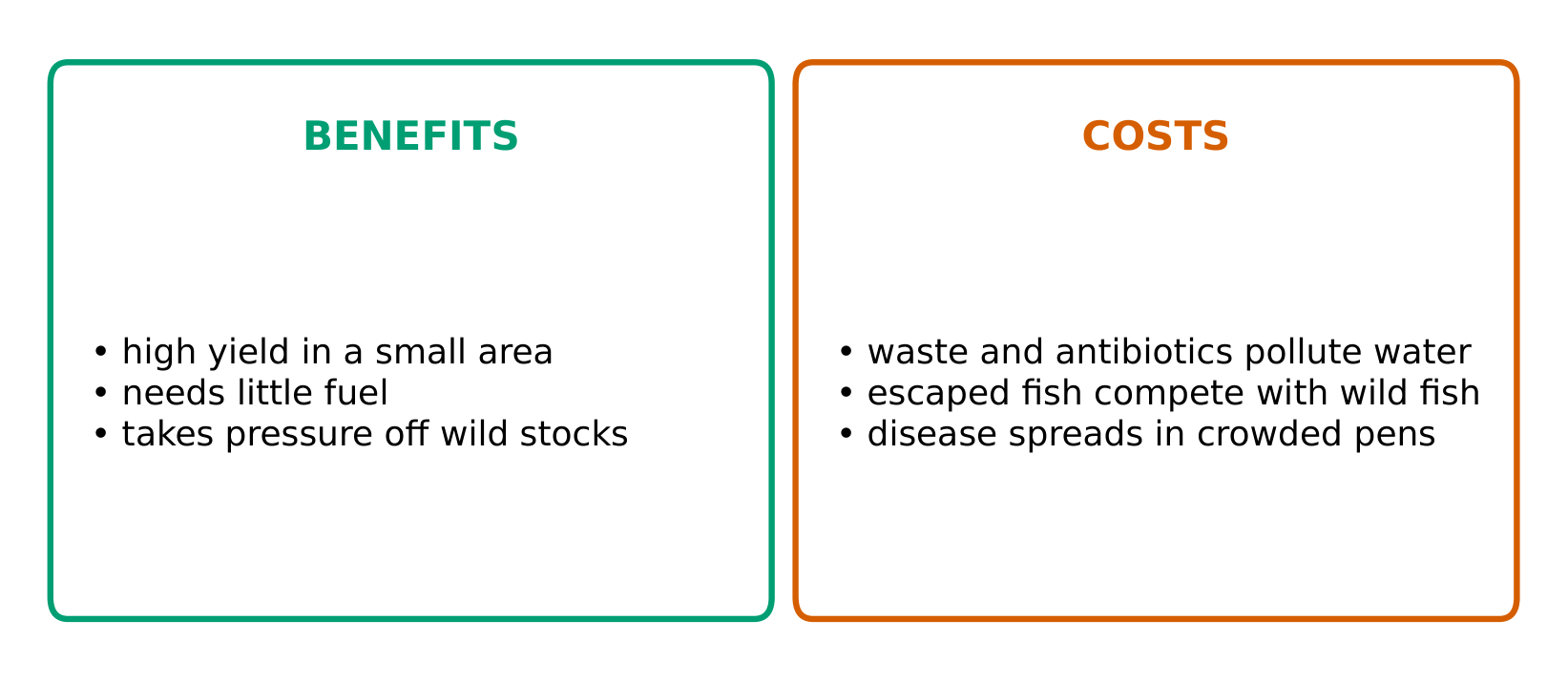
Benefits and costs of aquaculture
Aquaculture is…
Difficulty 1/5 · 100 coins + a small bonus on first completion today
Aquaculture is raising fish, shellfish, or seaweed in ponds, tanks, or ocean pens.
The benefits
- Farmed fish provide a steady, reliable food supply.
- Growing fish on farms eases the pressure on wild stocks.
- It can be done close to where people live, cutting transport.
- Done well, it is a more sustainable source of protein than wild fishing.
A major benefit of aquaculture is that it…
Difficulty 1/5 · 100 coins + a small bonus on first completion today
Farming fish can supply seafood without catching wild fish, easing overfishing.
Crowded fish farms can pollute nearby water with concentrated fish ____.
Difficulty 1/5 · 100 coins + a small bonus on first completion today
Concentrated fish waste and leftover feed pollute the water and can cause algal blooms.
The costs
- Crowded fish pens produce concentrated waste that pollutes nearby water.
- Leftover feed and waste can trigger algal blooms.
- Diseases spread easily in crowded pens.
- Farmed fish that escape can harm wild populations by competing or spreading disease.
Benefit or cost of aquaculture?
Sort each effect of fish farming into a benefit or a cost.
Farmed fish that escape or spread disease can harm wild fish populations.
Difficulty 1/5 · 100 coins + a small bonus on first completion today
Escaped farmed fish and diseases from crowded pens can damage wild populations nearby.
Select all true statements about aquaculture.
Difficulty 2/5 · 140 coins + a small bonus on first completion today
Aquaculture brings both benefits and real costs. The other three are correct.
Aquaculture is a trade-off, like most food production. It can take pressure off wild fisheries — a real benefit — but concentrated waste, disease, and escapes can damage the surrounding ecosystem. Whether it helps or harms depends on how carefully the farm is run.
A coastal fish farm:
- Netted pens in a bay raise thousands of salmon, easing demand for wild fish.
- But the fish waste piles up on the seabed below, and disease spreads in the crowded pens.
- Managed carefully — with lower densities and good siting — the farm can supply food with far less damage.
Aquaculture is farming fish and other aquatic life in ponds, tanks, or ocean pens. Its benefits include a steady food supply and easing pressure on wild fish. Its costs include water pollution from concentrated waste, disease, and escaped fish harming wild populations. It is a trade-off, best managed with care.