Sustainable Agriculture
Introduced| English | Meaning |
|---|---|
| Sustainable agriculture/səˈsteɪnəbl ˈæɡrɪkʌltʃə/ | Sustainable agriculture |
| Crop rotation/krɒp rəʊˈteɪʃn/ | Crop rotation |
| No-till/nəʊ tɪl/ | No-till |
| Contour ploughing/ˈkɒntʊə ˈplaʊɪŋ/ | Contour ploughing |
Farming that lasts
- We saw how careless farming erodes soil and pollutes water.
- But farming can be done in ways that protect the land.
- These methods keep the soil healthy for future harvests.
- Together they make up sustainable agriculture.
Crop rotation
- Sustainable agriculture 可持续农业 grows food while protecting the soil.
- Crop rotation 轮作 means growing different crops in a field each season.
- Different crops use and replace different nutrients, keeping the soil balanced.
- It also breaks the life cycles of pests, reducing the need for pesticides.
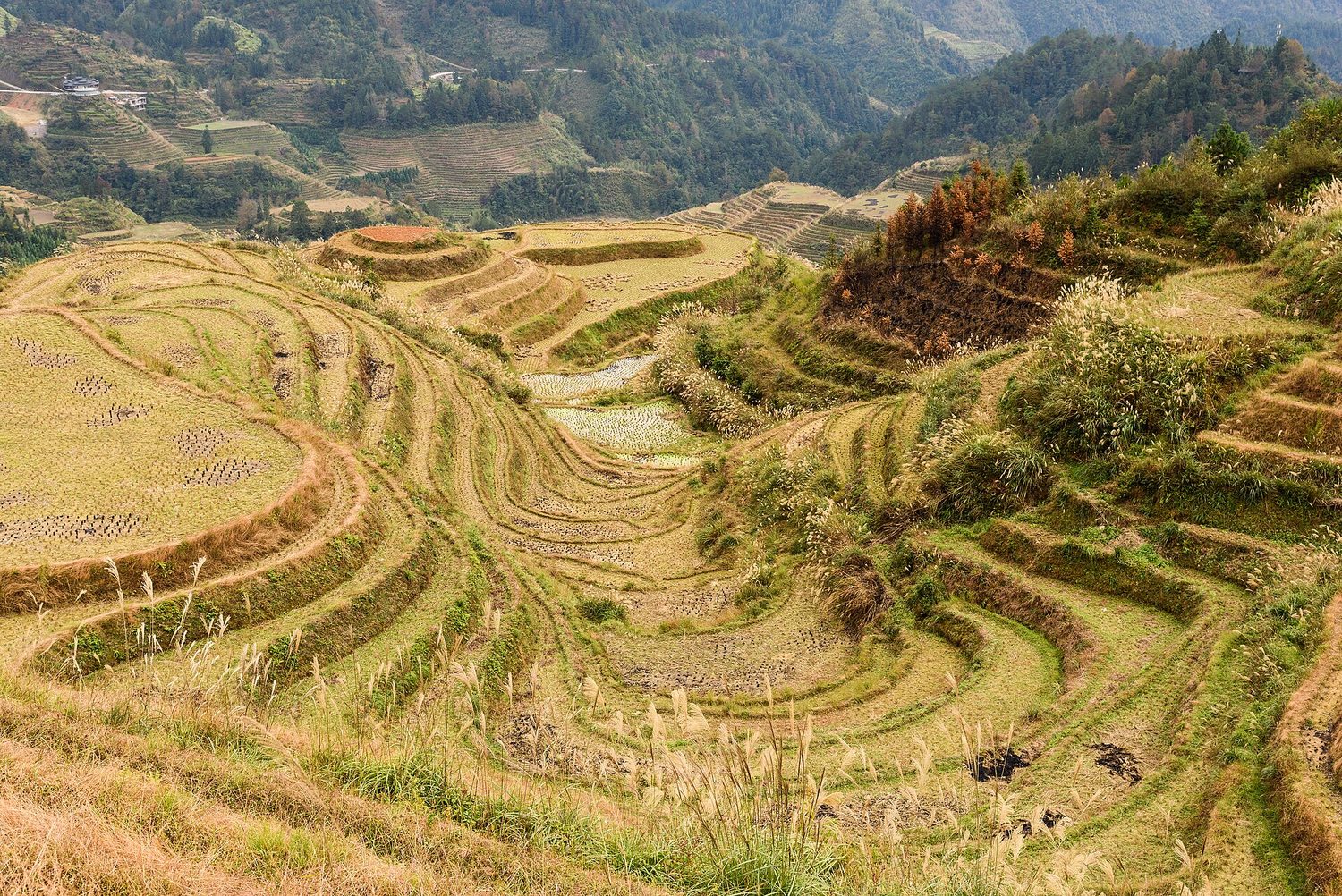
Rice terraces cut a steep slope into level steps, so water and soil stay in place instead of eroding downhill
Sustainable agriculture aims to grow food while…
Difficulty 1/5 · 100 coins + a small bonus on first completion today
Sustainable agriculture grows food in ways that keep the soil and environment healthy for the long term.
Protecting the soil surface
- No-till 免耕 farming plants seeds without ploughing.
- Leaving the soil and old plant cover undisturbed shields it from erosion.
- Contour ploughing 等高耕作 follows the curves of a slope, not straight up and down.
- This slows runoff so water soaks in instead of washing soil away.
How does crop rotation help the soil?
Difficulty 1/5 · 100 coins + a small bonus on first completion today
Rotating crops avoids draining the same nutrients and breaks pest cycles, keeping soil healthy.
Farming without ploughing, to protect the soil from erosion, is called ____-till.
Difficulty 1/5 · 100 coins + a small bonus on first completion today
No-till farming leaves the soil and plant cover undisturbed, greatly reducing erosion.
Working with nature
- Sustainable farms build healthy soil full of organic matter.
- They plant cover crops to protect and enrich bare fields.
- They use less chemical fertiliser and pesticide.
- The goal is a farm that stays productive year after year, indefinitely.
Sustainable or harmful practice?
Sort each farming practice by whether it protects the soil or damages it.
Ploughing straight up and down a slope is the best way to reduce erosion.
Difficulty 1/5 · 100 coins + a small bonus on first completion today
False. Up-and-down furrows channel water downhill. Contour ploughing follows the shape of the land across the slope, so water flows slowly and erosion falls.
Select all sustainable farming practices.
Difficulty 2/5 · 140 coins + a small bonus on first completion today
Bare-soil monoculture drains nutrients and erodes soil. The other three protect it.
Sustainable agriculture is not about producing less — it is about producing food without using up the soil. A farm that erodes its topsoil may harvest well for a few years, then fail. Sustainable methods trade a little short-term convenience for harvests that can continue forever.
Rotating a field:
- Year one, a farmer grows maize, which drains nitrogen from the soil.
- Year two, they plant beans, whose root bacteria add nitrogen back.
- The soil stays fertile, pests are disrupted, and less fertiliser is needed — all from simply rotating the crops.
Sustainable agriculture grows food while protecting the soil for the future. Key methods include crop rotation (varying crops to balance nutrients and disrupt pests), no-till farming (planting without ploughing to prevent erosion), and contour ploughing (following slopes to slow runoff). The aim is farming that can continue indefinitely.