Present: Communication and the AP Drawing Portfolio
You spend a year drawing. Then, in May, everything you made leaves the room. The reader who scores your work never meets you, and never sees your paper. They…
English narration · English + 中文 subtitles burned in
7.1
The AP Drawing Portfolio
Syllabus
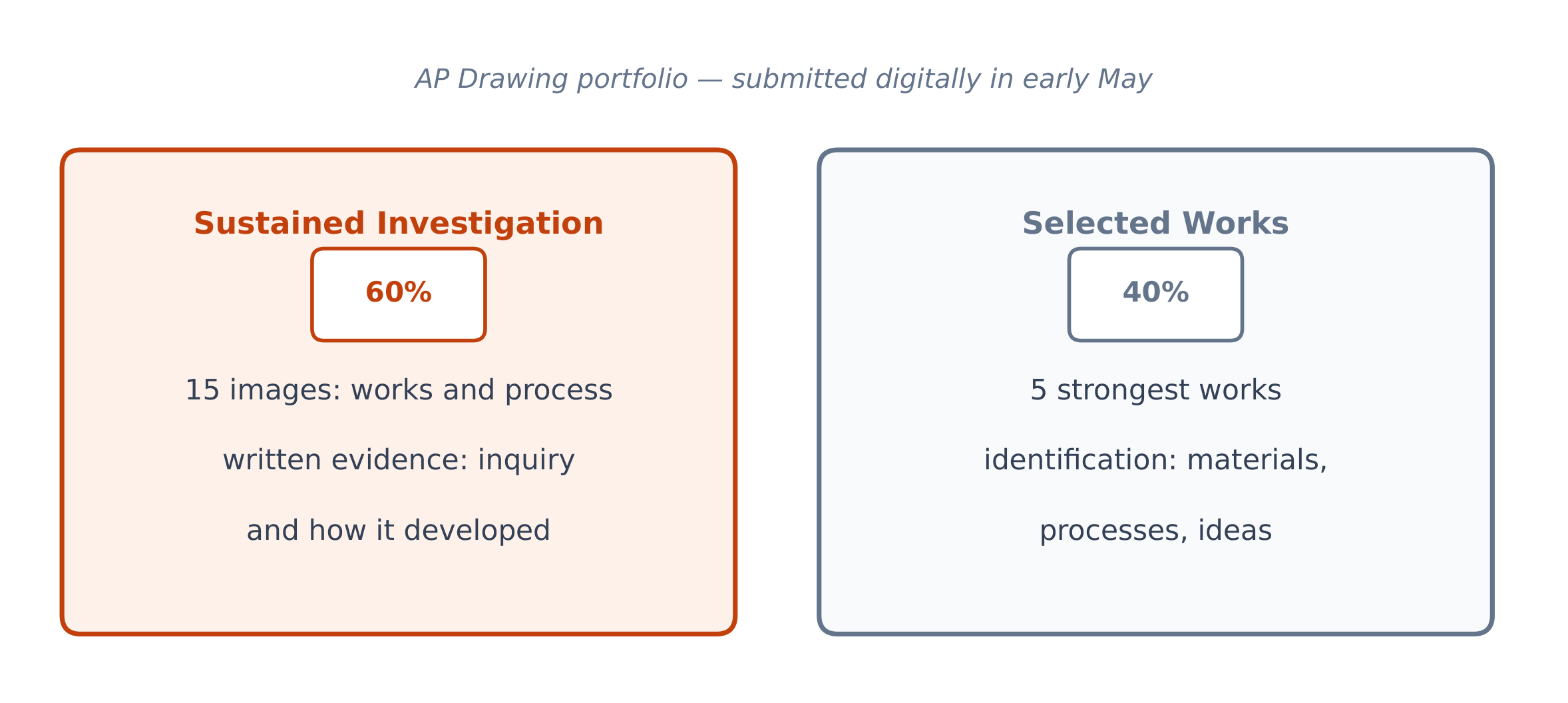
Focus: The AP exam is a portfolio, not a written test — two sections submitted digitally in early May. (CED Big Idea 3)
Sustained Investigation: 15 images of works and process, plus written evidence — 60% of the score.
Selected Works: 5 works demonstrating skillful synthesis of materials, processes, and ideas — 40%.
Selected Works may come from the investigation or outside it — choose your strongest five.
Everything uploads through the AP Digital Portfolio; teachers review before final submission.
Drawing, 2-D, and 3-D are separate portfolios; a student submits work made for the Drawing skill set.
Plan backwards from May: photography, writing, and selection all take real calendar time.
Source: College Board AP Course and Exam Description
The AP exam is a portfolio 作品集, not a written test — two sections submitted digitally in early May. (CED Big Idea 3)
Two sections: the Sustained Investigation carries 60% of the score, the Selected Works 40%
Sustained Investigation: 15 images of works and process, plus written evidence — 60% of the score.
Selected Works 精选作品: 5 works demonstrating skilful synthesis of materials, processes, and ideas — 40%.
Selected Works may come from inside or outside the investigation. Choose your strongest five, wherever they came from.
Everything uploads through the AP Digital Portfolio 数字作品集平台; your teacher reviews before final submission.
Drawing, 2-D, and 3-D Art and Design are separate portfolios — submit work made for the Drawing skill set.
Plan backwards from May: photography, writing, and selection all take real calendar time.
Explore
Where does it belong?
The Sustained Investigation holds 15 images with written evidence (60%); the Selected Works are your five strongest pieces (40%). Some things belong in neither.
Focus: The written evidence is short, factual, and load-bearing — it directs the scorer's attention. (CED 3.D/3.E)
State the inquiry as a question or clear statement in the first sentence.
Use concrete nouns and verbs: 'compressed charcoal on gessoed cardboard, lifted with erasers' beats 'mixed media'.
Connect writing to visible things: if you claim experimentation, the images must show it.
Completely unrelated writing caps the Selected Works score — relevance is a rubric rule.
Draft early, cut hard: character limits reward the specific and punish the vague.
Have someone read writing while viewing the images — wherever they ask 'where?', revise.
Source: College Board AP Course and Exam Description
The written evidence is short, factual, and load-bearing — it directs the scorer's attention. (CED 3.D/3.E)
State the inquiry as a question or a clear statement in the first sentence.
Use concrete nouns and verbs: "compressed charcoal on gessoed cardboard, lifted with erasers" beats "mixed media".
Connect writing to visible things: if you claim experimentation, the images must show it.
Writing completely unrelated to the works caps the Selected Works score — relevance is a rubric rule.
Draft early and cut hard: character limits reward the specific and punish the vague.
Have someone read the writing while viewing the images. Wherever they ask "where?", revise.
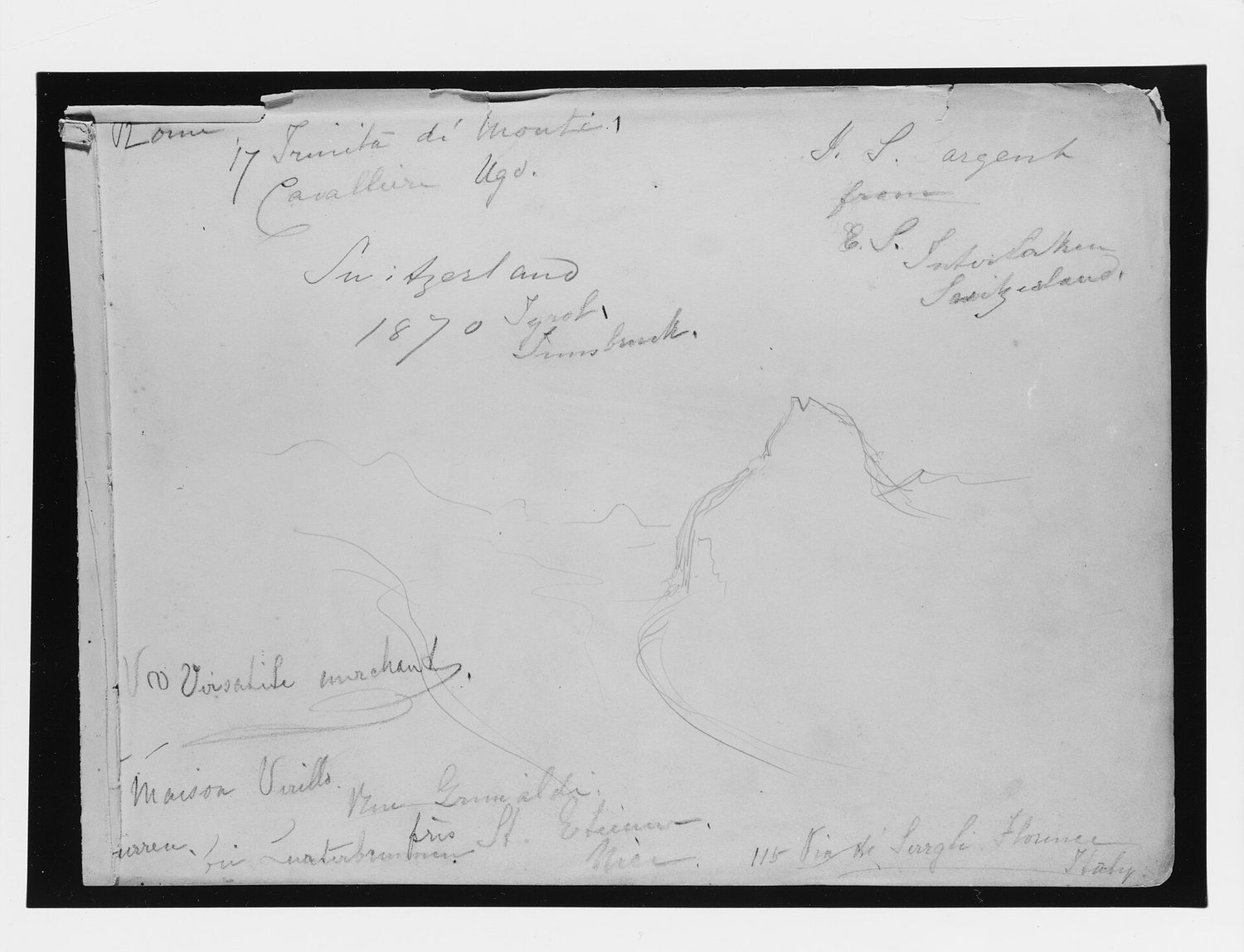
Written evidence starts in the journal: notes next to studies become portfolio text
Worked example (written evidence). A student's investigation follows one kitchen across a year of meals. Compare two answers to the first prompt, identify the inquiry:
Weak: "My work is about family and memory, and I explored many media to express my feelings." Nothing here points at an image, so a scorer cannot check it.
Strong: "How can the marks left after a meal — crumbs, stains, pushed-back chairs — show who was at the table without drawing the people?" It is a question, it names what the images will show, and it sets a limit the drawings can be judged against.
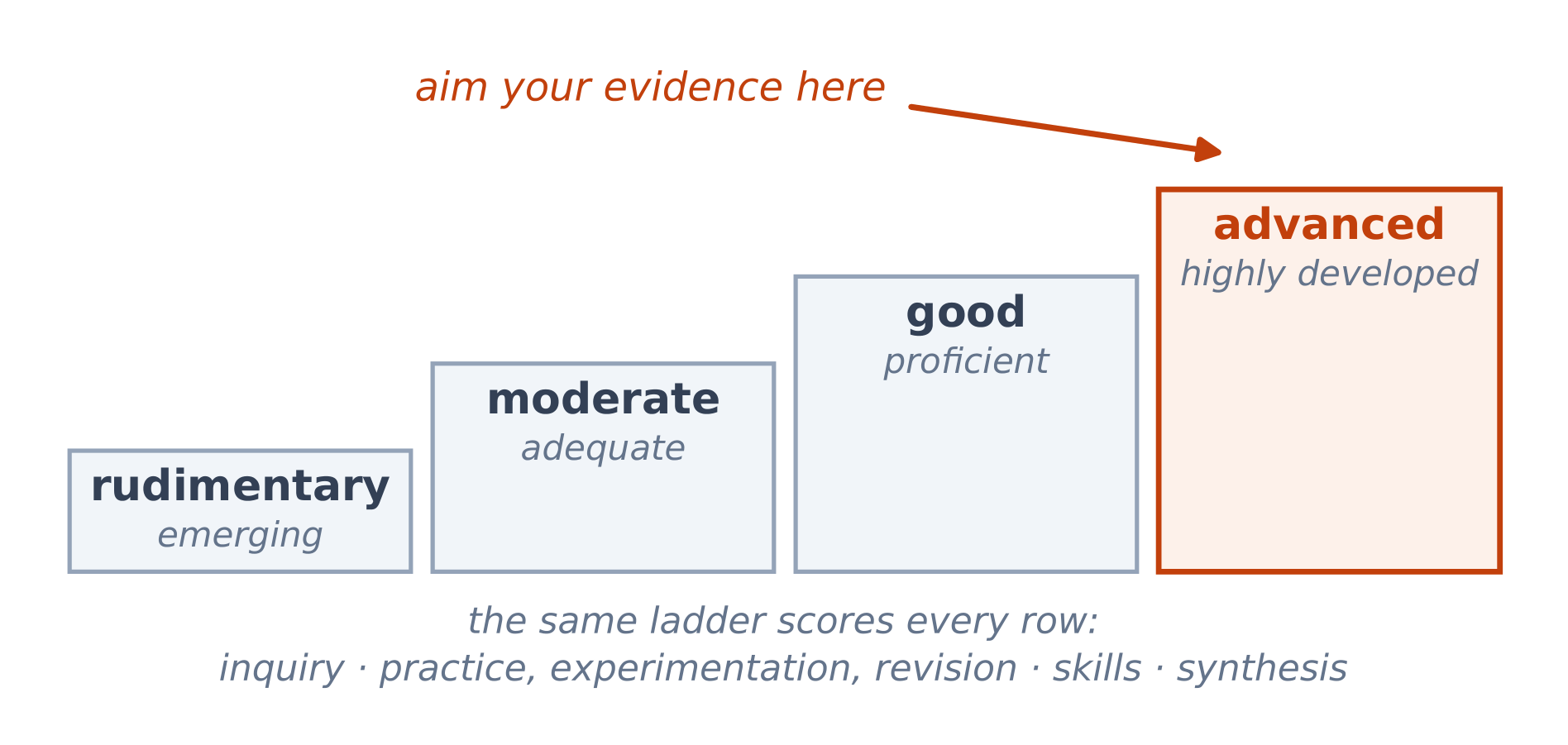
A strong answer to the second prompt, how the work developed through practice, experimentation and revision, then names each move and points at the image that shows it:
"I began with graphite studies of empty plates (images 1–3). The marks felt too neat, so I tested coffee washes and lifted charcoal on cardboard (4–6). The stains carried more time than line, so I kept them. In image 9 I tried adding figures and removed them: they answered the question instead of letting the viewer do it. The final drawings (12–15) combine a coffee ground with sharp charcoal for the objects left behind."
Every sentence does one job — practice, an experiment, a reason, a revision — and every claim has an image number a scorer can open. Under 600 characters, it leaves room for detail without filler.
7.5
Presentation and Image Quality
Syllabus
Focus: Scorers see photographs, not originals — photography quality is portfolio quality. (CED 3.F)
Shoot in even, indirect daylight or two-lamp setups; avoid glare, shadows across the work, and keystone distortion.
Fill the frame, crop to the work's edges, and keep verticals vertical.
Check values on screen: a washed-out photo erases the light-and-shade skill you spent weeks building.
Detail shots are allowed and powerful — a close-up of mark-making proves what a full view only suggests.
Consistent, neutral backgrounds make a sequence read professionally.
Photograph work as it is finished, not all in April — fixative first, then shoot, then store flat.
Source: College Board AP Course and Exam Description
Scorers see photographs 照片, not originals — photography quality is portfolio quality. (CED 3.F)
Shoot in even, indirect daylight or a two-lamp setup. Avoid glare, shadows across the work, and keystone distortion 梯形畸变.
Fill the frame, crop to the work's edges, and keep verticals vertical.
Check values on screen: a washed-out photo erases the light-and-shade skill you spent weeks building.
A detail shot 细节图 is allowed and powerful — a close-up of mark-making proves what a full view only suggests.
Consistent, neutral backgrounds make a sequence read professionally.
Photograph each work as it is finished, not all in April: fixative first, then shoot, then store flat.
A working studio: document process, process photos, and finished pieces carefully for the portfolio
Photograph like it matters, because it does — a 5-level drawing shot with glare and keystone reads as a 3. Reshoot anything you hesitate over.
Fill every caption field with specifics. "Willow charcoal, subtractive erasing, on toned Ingres paper" does scoring work; empty or vague fields waste free marks.
Check the relevance rule: if your written evidence could sit under someone else's portfolio unchanged, it is too generic — tie every sentence to your images.
Select the five with fresh eyes: thumbnail-size printouts on a table, three trusted viewers, overlap wins.
Cite every reference photo you did not take — one missing citation risks the whole portfolio; thirty seconds of typing removes the risk.
Interactive lessons on this topic
Work through it step by step, with instant-check exercises.