Skip to content · ⁨דלג לתוכן⁩

International trade and globalisation · ⁨סחר בינלאומי וגלובליזציה⁩

IGCSE Economics · ⁨כלכלה IGCSE⁩ · Topic 6 · ⁨נושא 6⁩

Video lesson for this topic · ⁨שיעור וידאו לנושא זה⁩ Open the video page · ⁨פתח את עמוד הוידאו⁩
9:00

סחר בינלאומי וגלובליזציה

סתכל סביבך בחדר. הטלפון בידך, הקפה בכוס שלך, הבגדים שעל גופך — כמעט כל זה לא הופק כאן. הוא הגיע בים, בפלדה…

English narration · English + 中文 subtitles burned in · ⁨קריאת קול באנגלית · תרגום אנגלי + סינית שרוף בתוך הסרטון⁩

6.1

Specialisation and free trade · ⁨התמחות ומסחר חופשי⁩

Syllabus · ⁨סיילבוס⁩
English
  1. explain specialisation at national level and the benefits and disadvantages of free international trade
  2. explain the role of free trade in raising living standards
עברית
  1. הסבר התמחות ברמה הלאומית והיתרונות והחיסרונות של סחר בינלאומי חופשי.
  2. הסבר תפקיד הסחר החופשי בהעלאת רמת החיים.

Source: Cambridge International syllabus · ⁨מקור: הסיילבוס הבינלאומי של קמבריד'ג'⁩

English

Countries trade 贸易 with each other: they sell some goods and buy others. Just as one worker can focus on one task, a whole country can focus on making the goods it is best at. This is specialisation 专业化 at a national level.

When a country specialises, it sells the goods it makes well (exports 出口) and buys the goods other countries make well (imports 进口).

Free trade

Free trade 自由贸易 means trade between countries with no barriers — no taxes or limits on imports. Its benefits:

  • countries can buy some goods more cheaply from abroad than by making them at home.
  • consumers get a wider choice of goods.
  • firms can sell to bigger markets, so they gain economies of scale.
  • more competition makes domestic 国内的 firms (firms in your own country) work harder and improve.

All of this can raise living standards 生活水平: lower prices and more goods for everyone.

Free trade also has disadvantages:

  • domestic firms may not be able to compete 竞争 with cheaper foreign goods, so they close. This causes job losses.
  • a country can become too dependent 依赖 on other countries for important goods.
  • new, small industries may never grow if they face strong foreign rivals from the start.
עברית

מדינות סוחרות זו עם זו: הן מוכרות סחורות מסוימות וקונות אחרות. בדיוק כמו שעובד אחד יכול להתמקד במשימה אחת, ככלל המדינה יכולה להתמקד בייצור הסחורות בהן היא הטובה ביותר. זהו התמחות ברמה לאומית.

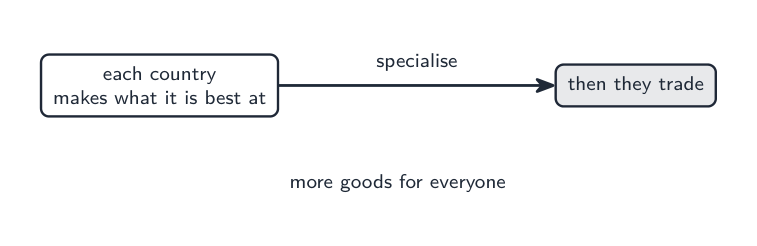
כל מדינה מייצרת את מה שהיא טובה ביותר בו, ולאחר מכן הן סוחרות
כל מדינה מייצרת את מה שהיא טובה ביותר בו, ולאחר מכן סוחרת
מדינה א' מייצאת למדינה ב'; סחורות של מדינה ב' הן יבוא עבור א'
יצוא מוכר בחו"ל; יבוא נקנה מחו"ל
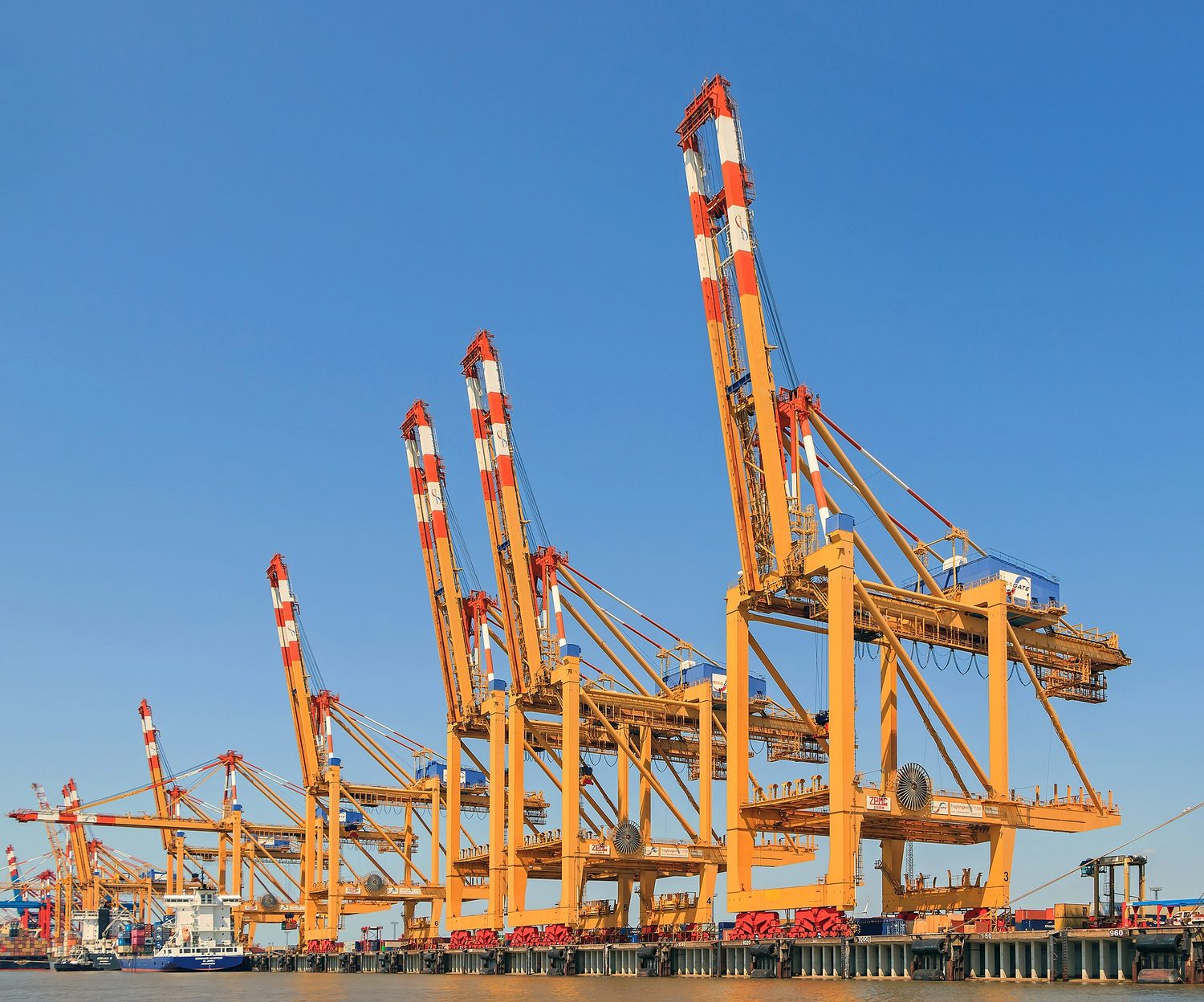
מנופי טעינה גדולים בצבע כתום-כתום ליד נמל תחת שמיים כחולים, עם אונייה וקונטנרים ערוכים
נמל תעבורה: מדינות מתמחות וסוחרות כמות ענקית של סחורות דרך הים

כשמדינה מתמחה, היא מוכרת את הסחורות שהיא מייצרת היטב (יבוא) וקונה את הסחורות שמדינות אחרות מייצרות היטב (יצוא).

מסחר חופשי

מסחר חופשי פירונו מסחר בין מדינות ללא מחסומים – ללא מיסים או מגבלות על יבוא. היתרונות שלו:

  • מדינות יכולות לקנות סחורות מסוימות זול יותר מחו
  • צרכנים מקבלים מגוון רחב יותר של מוצרים.
  • חברות יכולות למכור בשווקים גדולים יותר, ולכן נהנות ממחירי יחידה יורדים עם הגדלת הייצור.
  • תחרות גבוהה גורמת לחברות פנימיות (חברות במדינה שלך) לעבוד קשה יותר ולהשתפר.

כל זה יכול להעלות את רמות החיים: מחירים נמוכים ויותר מוצרים לכל אחד.

סחר חופשי יש לו גם יתרונות:

  • חברות פנימיות עשויות לא להצליח להתחרות עם מוצרים זרים זולים יותר, ולכן נסגרות. דבר זה גורם לאבדן מקומות עבודה.
  • מדינה יכולה להפוך לתלויה מדי במדינות אחרות לגבי מוצרים חשובים.
  • תעשיות חדשות וקטנות עשויות לעולם לא לצמוח אם הן נתונות להתחרות חזקה מהזר מראשית הדרכים.
Explore · ⁨חקור⁩

Specialisation and trade · ⁨התמחה ומסחר⁩

By specialising where its opportunity cost is lowest and trading, a country can consume beyond its own frontier. · ⁨על ידי התמחה בתחום שבו העלות האלטרנטיבית נמוכה ביותר והמסחר, מדינה יכולה לצרוך מעבר לגבול הייצור שלה.⁩

Vocabulary · ⁨מילון מונחים⁩ Train · ⁨אימון⁩
English עברית
trade/treɪd/ סחר
specialisation/ˌspeʃəlaɪˈzeɪʃn/ התמחות
exports/ˈekspɔːts/ יצוא
imports/ɪmˈpɔːts/ יבואים
free trade/friː treɪd/ סחר חופשי
domestic/dəˈmestɪk/ פנים-ארצי
living standards/ˈlɪvɪŋ ˈstændədz/ רמת חיים
compete/kəmˈpiːt/ מתחרים
dependent/dɪˈpendənt/ תלוי
globalisation/ˌɡləʊbəlaɪˈzeɪʃn/ גלובליזציה
multinational company/ˌmʌltɪˈnæʃənl ˈkʌmpəni/ חברה רב-לאומית
host country/həʊst ˈkʌntri/ מדינת הארח
trade protection/treɪd prəˈtekʃn/ הגנת סחר
6.2

Globalisation and trade protection · ⁨גלובליזציה והגנת סחר⁩

Syllabus · ⁨סיילבוס⁩
English
  1. define globalisation and explain the role and impact of multinational companies (benefits and drawbacks to host countries)
  2. describe methods of trade protection (tariffs, quotas, subsidies, embargoes) and the reasons for and consequences of protection
עברית
  1. הגדרת גלובליזציה והסבר התפקיד והשפעת חברות רב-לאומיות (יתרונות וחיסרונות עבור המדינות המרחיבות).
  2. תיאור שיטות הגנת סחר (מכסים, квотות, סבסודים, אמברגו) וסיבותיהן ותוצאותיהן.

Source: Cambridge International syllabus · ⁨מקור: הסיילבוס הבינלאומי של קמבריד'ג'⁩

English

Globalisation 全球化 is the way the world's economies are becoming more and more joined together — through trade, travel, the internet, and firms working across borders.

Multinational companies

A multinational company 跨国公司 (MNC) is a firm that produces in more than one country — for example, a car maker with factories in several countries. The country an MNC sets up in is the host country 东道国.

  • Benefits to the host country: new jobs, investment, new skills and technology, and more tax.
  • Drawbacks: profits may flow back to the MNC's home country; local firms may be pushed out; and some MNCs pay low wages or pollute (for example, by sending waste to poorer countries).

Trade protection

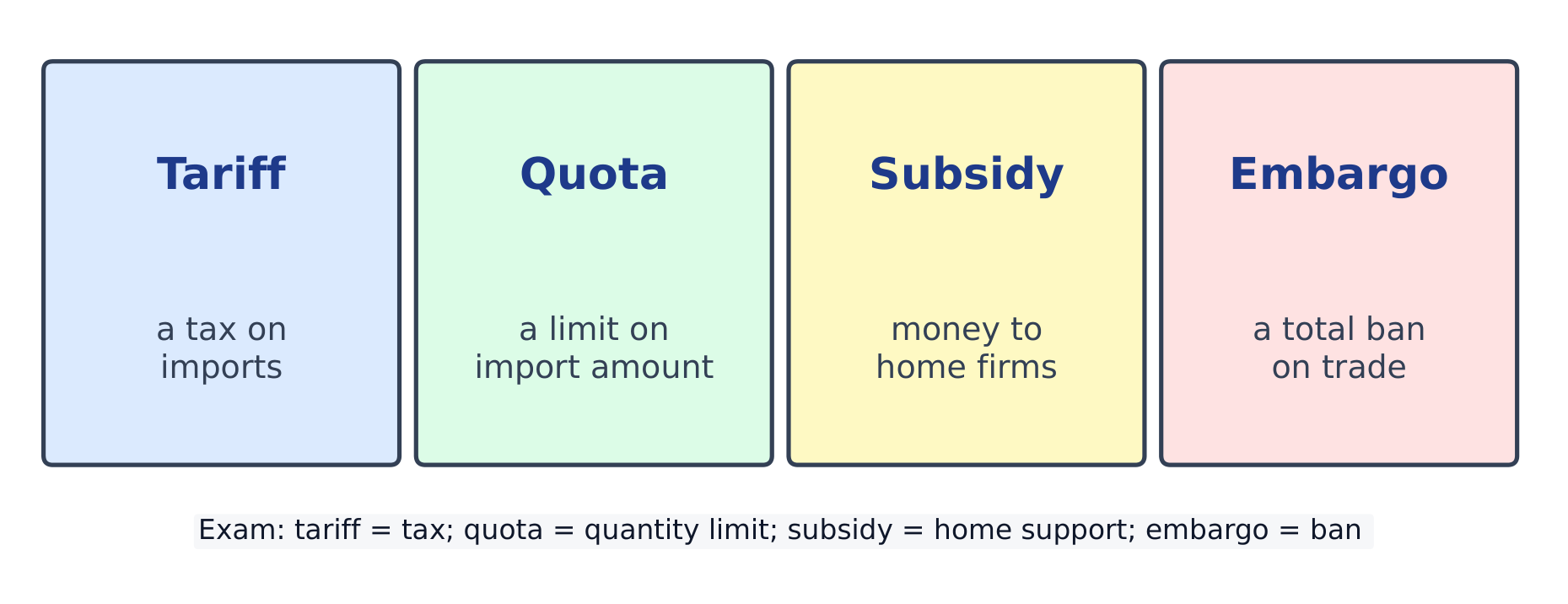
Trade protection 贸易保护 is a government putting up barriers to limit imports and protect its own firms. The main methods:

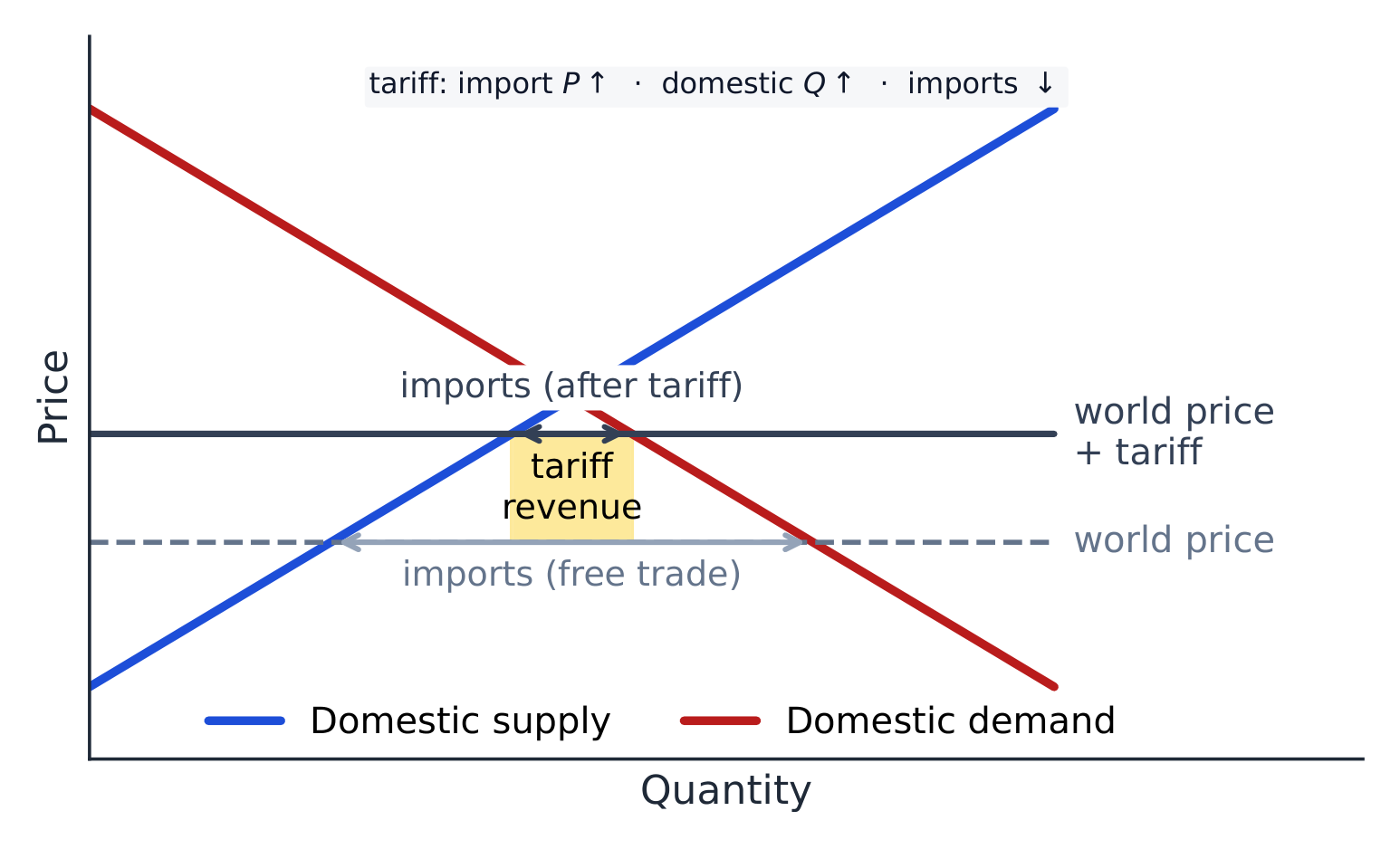
  • a tariff 关税 — a tax on imports, which makes them dearer.
  • a quota 配额 — a limit on the amount of a good that can be imported.
  • a subsidy 补贴 — money paid to domestic firms so they can sell more cheaply than foreign rivals.
  • an embargo 禁运 — a total ban on trade in a good, or with a country.

Reasons for protection: to protect jobs; to protect an infant industry 幼稚产业 (a new industry too small to compete yet); to stop dumping 倾销 (foreign firms selling below cost to destroy local rivals); and to raise government revenue from tariffs.

But protection has costs. Prices rise and choice falls for consumers; protected firms stay weak and lazy; and other countries may hit back with their own barriers — a trade war.

עברית

גלובליזציה היא האופן שבו כלכלות העולם הופכות越来越相连 — דרך סחר, נסיעות, האינטרנט וחברות הפועלות על פני גבולות.

חברות רב-לאומיות

חברה רב-לאומית (MNC) היא חברה המייצרת במדינה אחת ומעלה — לדוגמה, יצרן רכב עם מפעלים במדינות שונות. המדינה בה MNC מתיישבת היא המדינה המארחת.

  • יתרונות עבור המדינה המארחת: תעסוקה חדשה, השקעות, כישורים וטכנולוגיה חדשים, ומיסוי מוגבר.
  • חסרונות: הרווחים עשויים לחזור למדינת המקור של החברה הרב-לאומית; חברות מקומיות עלולות להידחק מהשוק; וחלק מהחברות הרב-לאומיות משלמת שכר נמוך או גורמות לזיהום (למשל, על ידי שילוח פסולת למדינות עניות יותר).

הגנה סחרית

הגנה סחרית היא מדיניות ממשלתית העומדת בפני יבוא מחסומים כדי לצמצם את היבוא ולהגן על חברותיה. השיטות העיקריות הן:

  • מכס — מס על מוצרי יבוא, שמעלה את מחירם.
  • מכסה — מגבלה על כמות המוצר שיכולה להיות מיובאת.
  • סבסוד — תשלום כסף לחברות מקומיות כדי שהן יוכלו למכור במחירים זולים יותר מאשר המתחרות הזרות.
  • אמברגו — איסור מוחלט על מסחר במכנה או עם מדינה.
ארבעה קופסאות — מכס, квота, סבסוד, אמברגו
ארבע השיטות המרכזיות להגנת מסחר

סיבות להגנה: שמירה על מקומות עבודה; הגנה על תעשייה תינוקית (תעשייה חדשה שאינה יכולה להתחרות עדיין); מניעת ביזוי (חברות זרות המוכרות מתחת לעלות כדי להשמיד יריבים מקומיים); והגדלת הכנסות הממשלה ממכסים.

אולם ההגנה כרוכה בעלויות. המחירים עולים והבחירה נפגעת לצרכנים; חברות מוגנות נשארות חלשות ומצטנעות; ומדינות אחרות עשויות לנקוט בתגובה באמצעות מחסומים משלהן — מלחמת סחר.

תרשים מכס: עקומות ה offers וביקוש מקומיות, קו המחיר העולמי וקו המחיר העולמי פלו המכס, ירידה בייבואים, ותיבה צלולה של הכנסות מהמכס
המכס מעלה את המחיר מהמחיר העולמי ל"מחיר עולמי פלו מכס": הה Offers המקומית עולה, הביקוש יורד, הייבואים מצטמצמים, והתיבה הצלולה היא הכנסות המכס לממשלה
Explore · ⁨חקור⁩

Trade restrictions in the market · ⁨מגבלות סחר בשוק⁩

A tariff raises the price of imports, shifting effective supply and protecting home producers at consumers' expense. · ⁨מכס מעלה את מחיר היבוא, משנה את הצמצוח היעיל ומגן על יצרנים מקומיים על חשבון הצרכנים.⁩

Vocabulary · ⁨מילון מונחים⁩ Train · ⁨אימון⁩
English עברית
tariff/ˈtærɪf/ מכס
quota/ˈkwəʊtə/ קוטה
subsidy/ˈsʌbsɪdi/ סובסידיה
embargo/emˈbɑːɡəʊ/ אמברגו
infant industry/ˈɪnfənt ˈɪndʌstri/ תעשיית תינוק
dumping/ˈdʌmpɪŋ/ ביזוי
6.3

Foreign exchange rates · ⁨שיעורי חילוף מטבע⁩

Syllabus · ⁨סיילבוס⁩
English
  1. define the exchange rate and explain how it is determined by demand and supply of currency (floating system)
  2. explain the causes and consequences of changes in the exchange rate (appreciation and depreciation) for the economy
עברית
  1. הגדרת שער החילוף והסבר כיצד הוא נקבע על ידי ביקוש והיצע מטבע (מערכת צפה).
  2. הסבק הסיבות והתוצאות של שינויים בשער החילוף (התייקרות והתערכות) לכלכלה.

Source: Cambridge International syllabus · ⁨מקור: הסיילבוס הבינלאומי של קמבריד'ג'⁩

English
Exchange rates: appreciation

The exchange rate 汇率 is the price of one currency 货币 in terms of another — for example, £1 = 1.30 US dollars.

How the rate is set

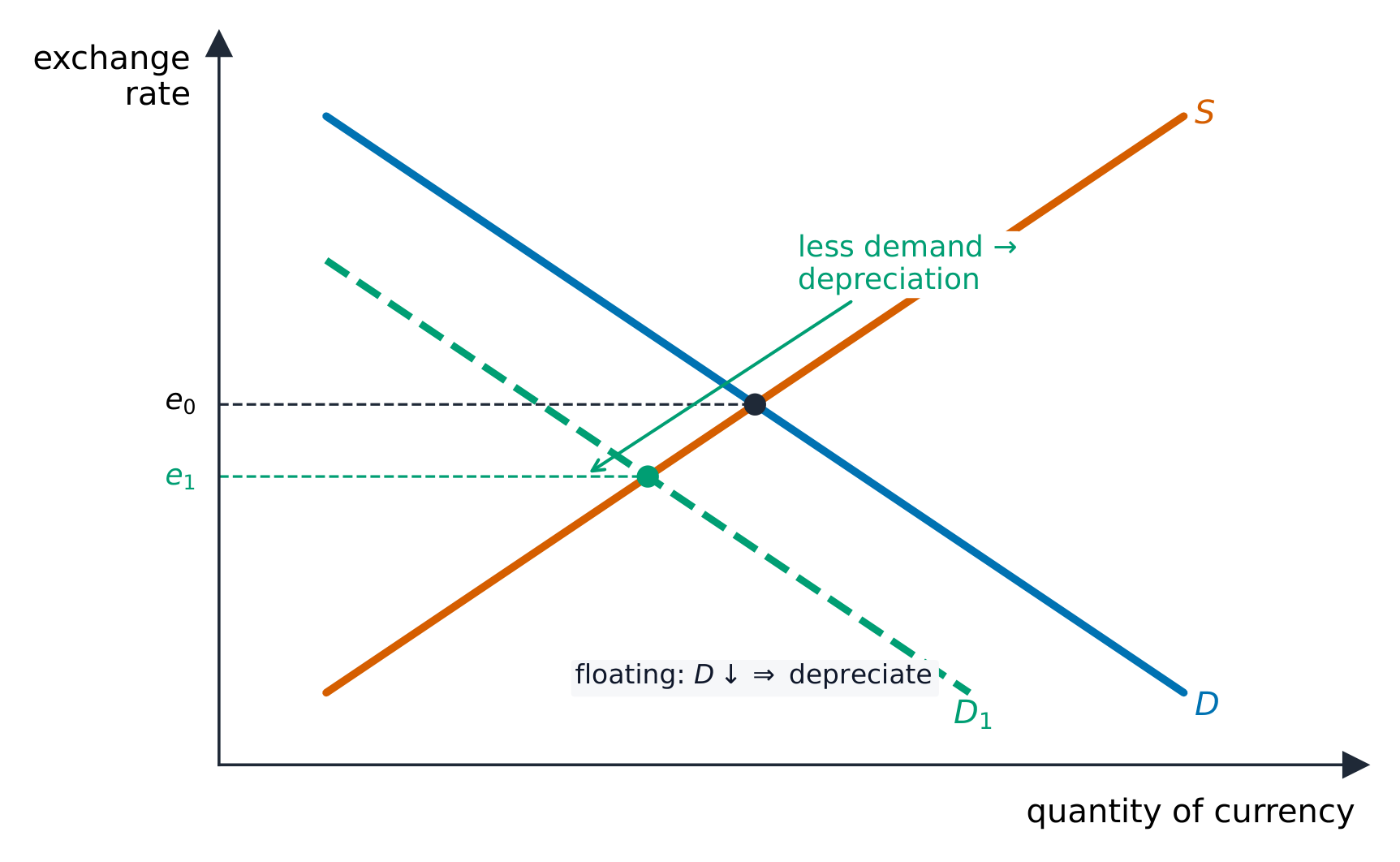
In a floating exchange rate 浮动汇率 system, the rate is set by the demand 需求 for and supply 供给 of the currency, just like any market.

  • if more people want a currency — to buy that country's exports, or to invest there — demand for it rises, so its price (the exchange rate) rises.
  • for example, if a country's interest rates rise, foreigners want to save money there, so demand for its currency rises and the rate goes up.

Appreciation and depreciation

  • appreciation 升值 — the currency rises in value (it buys more foreign money).
  • depreciation 贬值 — the currency falls in value.

A change in the rate changes the price of exports and imports:

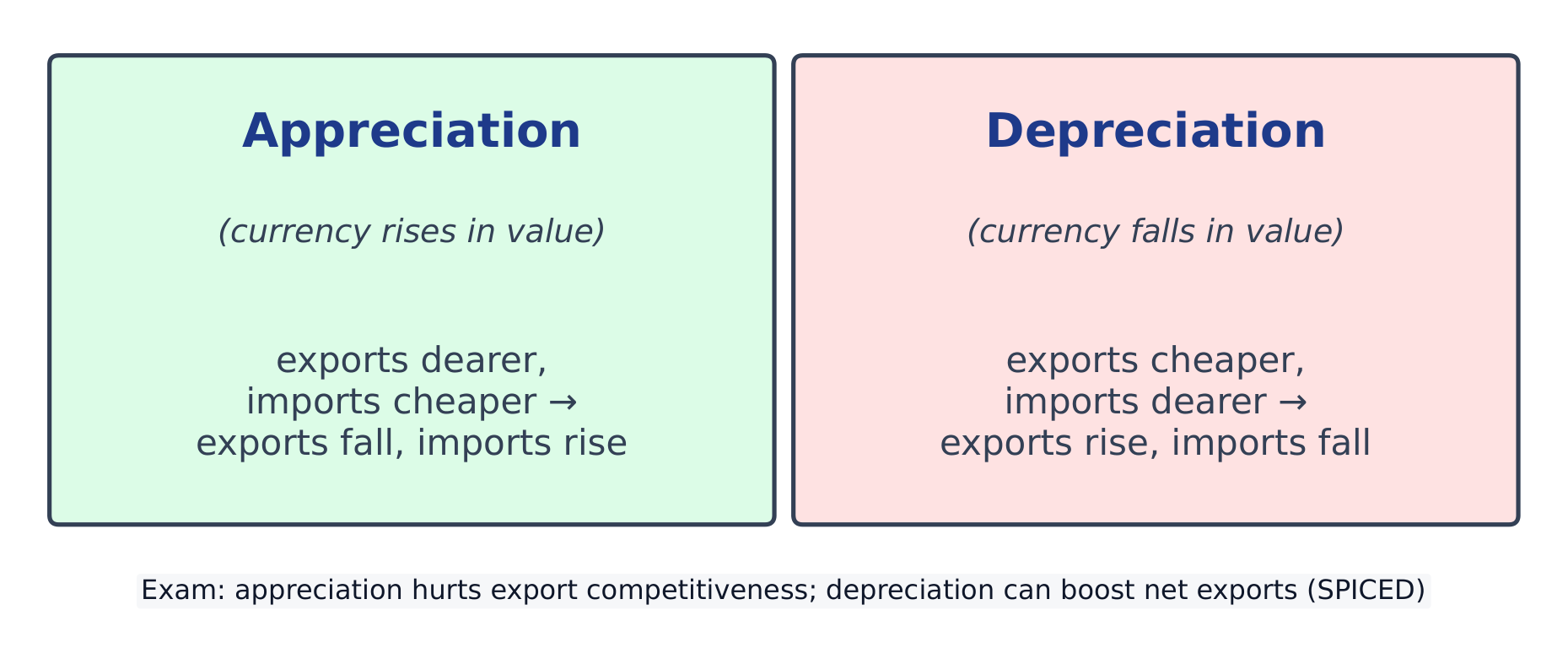
  • if a currency appreciates (rises), its exports become dearer for foreigners and its imports become cheaper. So exports fall and imports rise.
  • if a currency depreciates (falls), its exports become cheaper for foreigners and its imports become dearer. So exports rise and imports fall.

Worked example. The exchange rate is £1 = 1.30 US dollars. (a) A UK firm sells a machine for £2,000 — what is its price to a US buyer? (b) A US laptop costs 650 dollars — what does it cost a UK buyer?

  • (a) price in dollars = 2,000 × 1.30 = 2,600 dollars.
  • (b) price in pounds = 650 ÷ 1.30 = £500.

To change pounds into dollars you multiply by the rate; to change dollars into pounds you divide. Now suppose the pound appreciates to £1 = 1.50 dollars. The same £2,000 machine then costs a US buyer 2,000 × 1.50 = 3,000 dollars — dearer than before, which is why a stronger pound makes a country's exports harder to sell abroad.

עברית
שיעורי חילוף: הערכת ערך

שיעור החילוף הוא המחיר של מטבע אחד ביחס למטבע אחר — לדוגמה, £1 = 1.30 דולרים אמריקאיים.

קביעת שיעור החילוף

במערכת שיעור חילוף צף, השיעור נקבע על ידי הביקוש להOffers המטבע, בדיוק כמו בשוק כלשהו.

  • אם אנשים רבים יותר רוצים מטבע מסוים — לקנות את היצוא של אותה מדינה, או להשקיע בה — הביקוש לו עולה, ולכן מחירו (שיעור החילוף) עולה.
  • לדוגמה, אם שיעורי הריבית במדינה עולים, זרים רוצים לשמור כסף שם, ולכן הביקוש למטבע שלהם עולה והשיעור עולה.
ביקוש והיצע של מטבע הקובעים את שיער ההחלפה, כאשר ירידה בביקוש גורמת להידרשות
שיעור החילוף נקבע במקום בו הביקוש למטבע פוגש את הה Offers. אם הביקוש יורד ($D \to D_1$), השיעור יורד — הערךה.

עליית ערך וירידת ערך

  • הערךה — המטבע עולה בערכו (קונה יותר כסף זר).
  • הערךה — המטבע יורד בערכו.

שינוי בשיעור משנה את מחיר היצוא והייבוא:

  • אם המטבע נערך (עולה), היצוא שלו נהיה יקר יותר לזרים והייבוא שלו זול יותר. לכן היצוא יורד והייבוא עולה.
  • אם המטבע נערך (יורד), היצוא שלו נהיה זול יותר לזרים והייבוא שלו יקר יותר. לכן היצוא עולה והייבוא יורד.
הערכה מול השוואה והשפעתן על יצוא ויבוא
כיצד שינוי בקурс המטבע משפיע על יצוא ויבוא

דוגמה פתורה. קурс המטבע הוא £1 = 1.30 דולר אמריקאי. (א) חברת בריטית מוכרת מכונה בתמורה של £2,000 — מהו מחירה לקונה אמריקאי? (ב) מחשב נייד אמריקאי עולה 650 דולר — מהו עלותו לקונה בריטי?

  • (א) המחיר בדולרים = 2,000 × 1.30 = 2,600 דולר.
  • (ב) המחיר בפונטים = 650 ÷ 1.30 = £500.

כדי להמיר פונטים לדולרים יש להכפיל בקурс; כדי להמיר דולרים לפונטים יש לחלק. כעת נניח שהפונט העריך ל-£1 = 1.50 דולר. אותה מכונה בעלת £2,000 תעלה לקונה אמריקאי 2,000 × 1.50 = 3,000 דולר — יותר מאשר לפני כן, ולכן פונט חזק יותר מקשה על יצוא המוצרים של המדינה לשווקים בחו"ל.

Explore · ⁨חקור⁩

The foreign-exchange market · ⁨שוק המטבע החו⁩

A currency is bought and sold like any good. More demand for it raises its exchange rate — it appreciates. · ⁨מטבע נקנה ונמכר כמו כל סחורה. ביקוש מוגבר ממנה מעלה את שיער החליפין שלה — היא מתחזקת.⁩

Vocabulary · ⁨מילון מונחים⁩ Train · ⁨אימון⁩
English עברית
exchange rate/eksˈtʃeɪndʒ reɪt/ שיעור החלפה
currency/ˈkʌrənsi/ מטבע
floating exchange rate/ˈfləʊtɪŋ eksˈtʃeɪndʒ reɪt/ שיעור החלפה צף
demand/dɪˈmænd/ ביקוש
supply/səˈplaɪ/ היצע
appreciation/əˌpriːʃɪˈeɪʃn/ הערכה
depreciation/dɪˌpriːʃɪˈeɪʃn/ הכנסת שחיקה
Watch lesson · ⁨צפה בשיעור⁩
6.4

The current account of the balance of payments · ⁨החשבון הנוכחי במאזן התשלומים⁩

Syllabus · ⁨סיילבוס⁩
English
  1. describe the structure of the current account (trade in goods, trade in services, primary income, secondary income)
  2. explain the causes and consequences of, and policies to correct, a current account deficit or surplus
עברית
  1. תיאור מבנה החשבון הנוכחי (סחר בסחורות, סחר בשירותים, הכנסה ראשונית, הכנסה משנייה).
  2. הסבק הסיבות והתוצאות של, והמדיניות לתיקון, גירעון או עודף בחשבון הנוכחי.

Source: Cambridge International syllabus · ⁨מקור: הסיילבוס הבינלאומי של קמבריד'ג'⁩

English

The balance of payments 国际收支 is a record of all the money flowing into and out of a country. Its main part is the current account 经常账户, which has four sections:

  • trade in goods 货物贸易 — exports and imports of physical goods (cars, food, oil).
  • trade in services 服务贸易 — exports and imports of services (tourism, banking, shipping).
  • primary income 初次收入 — wages, interest, and profit earned from abroad.
  • secondary income 二次收入 — money sent with nothing given in return, such as aid and gifts.

Deficit and surplus

  • a current account deficit 逆差 — more money flows out than in (the country buys more from abroad than it sells).
  • a current account surplus 顺差 — more money flows in than out.

Correcting a deficit

A country with a large deficit must borrow money or sell assets to pay for it. To correct a deficit, a government can:

  • cut total demand, so people buy fewer imports.
  • let the currency depreciate, to make exports cheaper and imports dearer.
  • use trade protection (tariffs and quotas) to cut imports.
  • use supply-side policy to improve the competitiveness 竞争力 of its firms, so exports rise.
עברית

מאזן התשלומים הוא רישום כל הכסף הזורם לתוך מדינה וממנה. חלקו המרכזי הוא החשבון הנוכחי, המורכב מארבעה סעיפים:

יצוא גדול יותר מיבוא = עודף; יבוא גדול יותר ביצוא = גירעון
יצוא מעל יבוא מייצר עודף; מתחת לו חוסר מאזן
  • סחר בסחורות — יצוא ויבוא של סחורות פיזיות (רכבים, מזון, שמן).
  • סחר בשירותים — יצוא ויבוא של שירותים (תיירות, בנקאות, משלוחים).
  • הכנסה ראשונית — שכר, ריבית ורווח שנצברו מחו"ל.
  • הכנסה משניית — כסף הנשלח ללא קבלת תמורה, כגון סיוע וענודות.
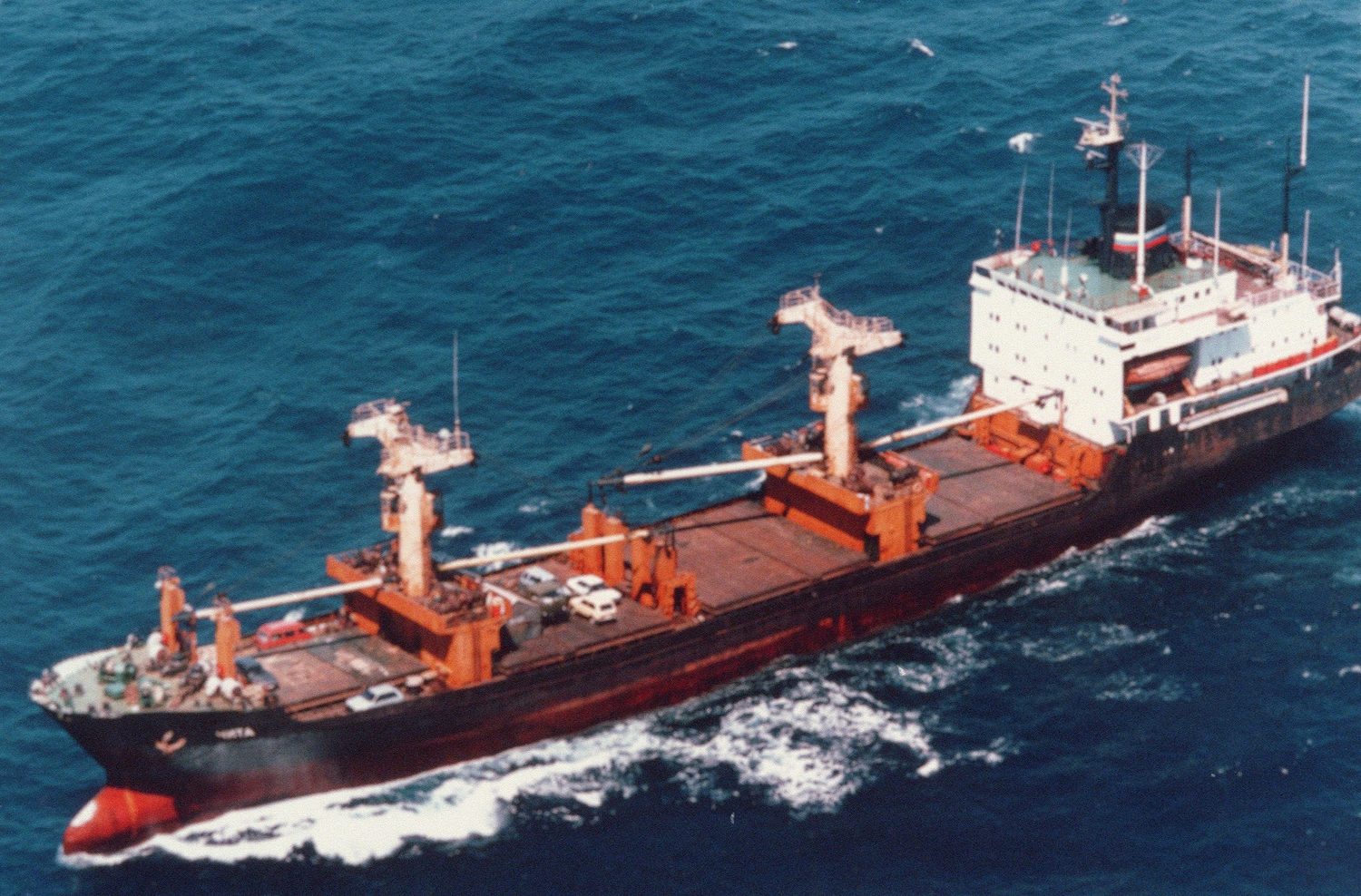
אוניית מכולות גדולה המובילה מטען בים
אוניות מטען מעבירות סחורות בין מדינות — הסעיף סחר בסחורות בחשבון הנוכחי

גירעון ועודף

  • גירעון בחשבון הנוכחי — זרימת כסף החוצה גדולה מזו הפנימה (המדינה קונה מחו"ל יותר ממה שהיא מוכרת).
  • עודף בחשבון הנוכחי — זרימת כסף הפנימה גדולה מזו החוצה.

תיקון גירעון

מדינה עם גירעון גדול חייבת להתחייב או למכור נכסים כדי לספק את ההפרש. כדי לתקן גירעון, ממשלה יכולה:

  • להפחית את ביקוש הכולל, כך שקונים ירכשו פחות מיובאים.
  • לאפשר לטבעת המטבע להתערער, כדי להפוך את היצוא בזול ואת המיובאים במהור.
  • להשתמש בהגנת סחר (מכסים ומגבלות כמותיות) כדי להפחית את המיובאים.
  • להשתמש במדיניות צד האספקה כדי לשפר את העליבות של חברותיה, כך שהיצוא יגדל.
Explore · ⁨חקור⁩

Current account flow · ⁨זרימת חשבון הזרמים הנוכחי⁩

Track exports, imports and income flows into the current account. · ⁨מעקב אחר זרימות יצוא, יבוא והכנסה אל תוך חשבון הזרמים הנוכחי.⁩

Vocabulary · ⁨מילון מונחים⁩ Train · ⁨אימון⁩
English עברית
balance of payments/ˈbæləns ɒv ˈpeɪmənts/ מאזן התשלומים
current account/ˈkʌrənt əˈkaʊnt/ חשבון נוכחי
trade in goods/treɪd ɪn ɡʊdz/ סחר במצעים
trade in services/treɪd ɪn ˈsɜːvɪsɪz/ סחר בשירותים
primary income/ˈpraɪməri ˈɪŋkʌm/ הכנסה ראשונית
secondary income/ˈsekəndəri ˈɪŋkʌm/ הכנסה משנייה
current account deficit/ˈkʌrənt əˈkaʊnt ˈdefɪsɪt/ גירעון בחשבון הזרם
current account surplus/ˈkʌrənt əˈkaʊnt ˈsɜːpləs/ עודף בחשבון הזרם
competitiveness/kəmˈpetɪtɪvnəs/ תחרותיות
6.4

Exam tips · ⁨טיפים לבחינות⁩

English
  • To convert currency: pounds → dollars, multiply by the rate; dollars → pounds, divide by the rate.
  • When a currency appreciates, its exports become dearer and its imports cheaper (so exports fall, imports rise); a depreciation does the opposite.
  • Trade protection (tariffs, quotas, subsidies, embargoes) can protect jobs and infant industries, but it raises prices, cuts choice, and can start a trade war.
  • A current account deficit means more money flows out than in. It can be reduced by cutting demand, letting the currency depreciate, or improving competitiveness.
עברית
  • להמרת מטבע: פאונדים → דולרים, הכפיל בקурс; דולרים → פאונדים, חלק בקурс.
  • כאשר מטבע מתעלה, היצוא שלו נהיה במהור והמיובאים זולים יותר (ולכן היצוא יורד, המיובאים עולים); התעררות עושה בדיוק ההפך.
  • הגנת סחר (מכסים, מגבלות כמותיות, סבסוסים ואיסורי מסחר) יכולה להגן על מקומות עבודה ותעשיית תינוקות, אך היא מרימה מחירים, מצמצמת בחירה ועלולה להפעיל מלחמת סחר.
  • גירעון בתשלומים משמעותו שיותר כסף יוצא מאשר נכנס. ניתן לצמצם אותו על ידי הפחתת ביקוש, השארת המטבע להתערער או שיפור העליבות.

Interactive lessons on this topic · ⁨שיעורים אינטראקטיביים בנושא זה⁩

Work through it step by step, with instant-check exercises. · ⁨לעבור על הדברים צעד אחר צעד, עם תרגילים לבדיקה מיידית.⁩

Past Papers · ⁨מבחני עבר⁩

More topics in IGCSE Economics · ⁨כלכלה IGCSE⁩ · ⁨נושאים נוספים בIGCSE Economics · ⁨כלכלה IGCSE⁩⁩

Log in or create account · ⁨היכנס או צור חשבון⁩

IGCSE, A-Level & AP