Foreign exchange rates
Introduced| English | Meaning |
|---|---|
| currency/ˈkʌrənsi/ | The money used in a particular economy, especially its notes, coins and unit of denomination. |
| exchange rate/eksˈtʃeɪndʒ reɪt/ | The price of one currency expressed in units of another currency. |
| exports/ˈekspɔːts/ | Goods and services sold to buyers in other countries. |
| appreciation/əˌpriːʃɪˈeɪʃn/ | An increase in the value of an asset or currency. |
| depreciation/dɪˌpriːʃɪˈeɪʃn/ | A fall in the value of an asset or currency over time. |
| imports/ɪmˈpɔːts/ | Goods and services bought from sellers in other countries. |
What's a currency 货币 worth?
- To buy goods from another country, you first need its money. The price of one currency in terms of another is the exchange rate 汇率.
- And like any price, it's set by supply and demand.
An exchange rate is:
Difficulty 1/5 · 100 coins + a small bonus on first completion today
It is the price of a currency, set by supply and demand.
How the rate is set
- A currency is demanded by foreigners who want to buy the country's exports 出口 or invest there.
- It is supplied when residents buy foreign goods or invest abroad.
- The rate settles where currency supply meets demand.
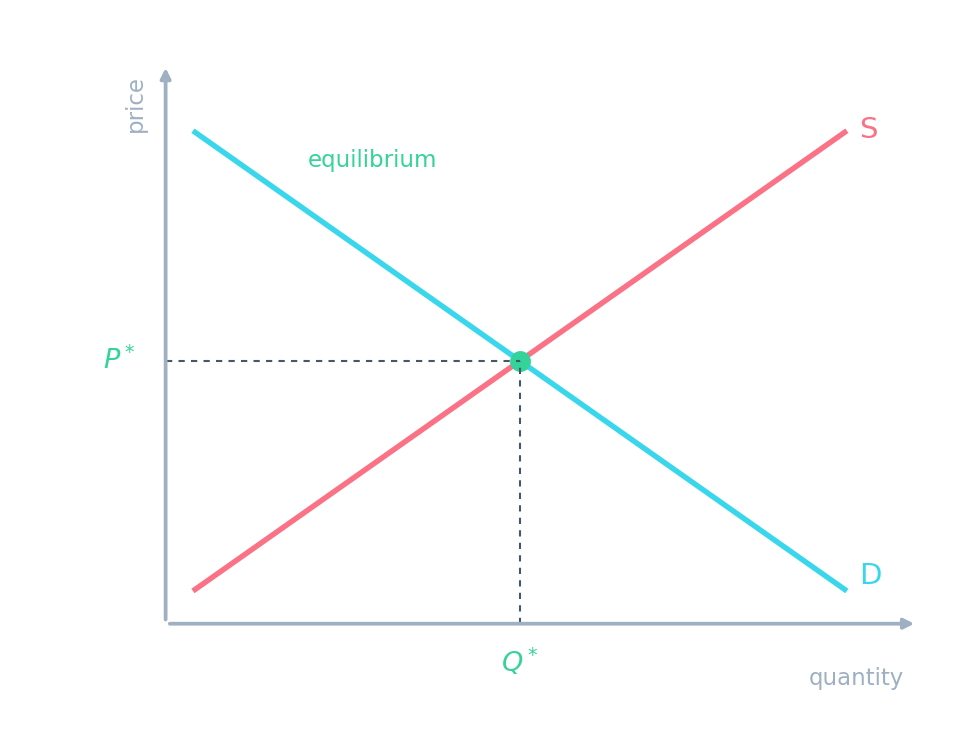
The exchange rate is the price of the currency, set where demand meets supply.
The foreign-exchange market
A currency is bought and sold like any good. More demand for it raises its exchange rate — it appreciates.
Currency depreciation means the currency has:
Difficulty 1/5 · 100 coins + a small bonus on first completion today
Depreciation is a fall; appreciation is a rise.
A rise in the value of a currency is called ______.
Difficulty 1/5 · 100 coins + a small bonus on first completion today
Appreciation is a rise; depreciation is a fall.
Appreciation 升值 and depreciation 贬值
- Appreciation: the currency rises in value (one unit buys more foreign currency).
- Depreciation: the currency falls in value (one unit buys less).
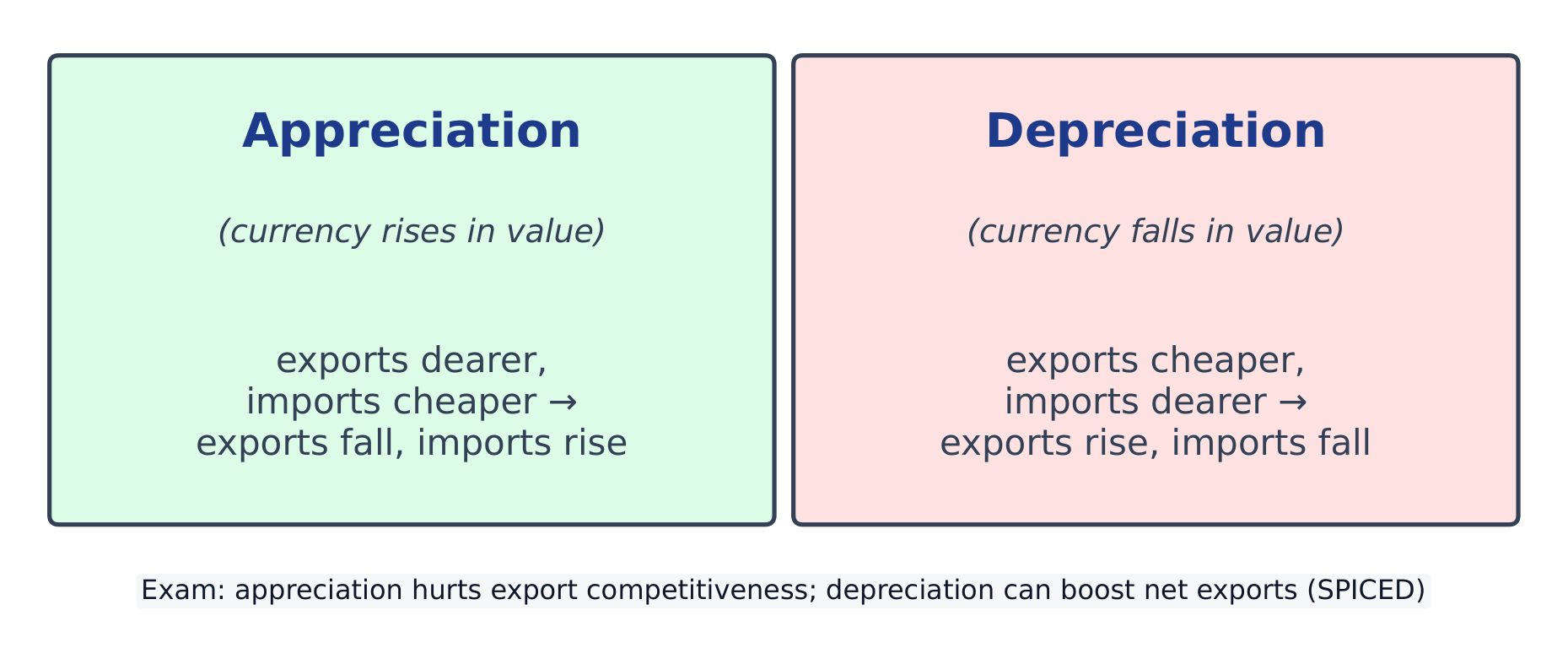
Appreciation makes exports dearer and imports 进口 cheaper; depreciation does the opposite
A weaker (depreciated) currency makes a country's exports:
Difficulty 1/5 · 100 coins + a small bonus on first completion today
A weaker currency lowers the foreign price of exports.
A stronger currency makes imports more expensive.
Difficulty 1/5 · 100 coins + a small bonus on first completion today
False. A stronger currency buys more foreign goods, so imports become cheaper and exports dearer.
Why it matters
- A stronger currency makes imports cheaper but exports dearer.
- A weaker currency makes exports cheaper (more competitive) but imports dearer.
Worked example. At a rate of £1 = 1.30 dollars, a £2,000 UK export costs a US buyer 2,000 × 1.30 = 2,600 dollars. Going the other way, divide: a 650-dollar import costs 650 ÷ 1.30 = £500. (Pounds → dollars: multiply; dollars → pounds: divide.)
"Strong" currency isn't always "good". A strong currency helps importers and travellers but hurts exporters. Whether a rise or fall is good depends on who you are in the economy.
You've got it
- the exchange rate is the price of a currency, set by supply and demand
- appreciation = the currency rises; depreciation = it falls
- a strong currency → cheaper imports, dearer exports (and vice versa)
Write from a fall to 6 local units
- One dollar used to buy 8 local currency units. It now buys 6.
- Name the change and the effect on exports.
One dollar used to buy 8 units of the local currency and now buys 6. Has the local currency depreciated or appreciated, and what happens to the country's exports?
Foreigners need fewer dollars to buy local goods when the local currency is weaker.
What has happened to the local currency?
Difficulty 1/5 · 100 coins + a small bonus on first completion today
A dollar buys fewer local units, 6 instead of 8, so the local currency is weaker.