אף אחד בעולם אינו אחראי לקבוע כמה פולי קפה יטועו. אין ועדה שנפגשת. לא נכתב תוכנית. עם זאת, ברוב הבוקרים יש קפה.…
English narration · English + 中文 subtitles burned in · קריאת קול באנגלית · תרגום אנגלי + סינית שרוף בתוך הסרטון
2.1
Markets and the price mechanism · שווקים ומנגנון המחיר
Syllabus · סיילבוס
English
define microeconomics and macroeconomics
explain how the market (price mechanism) allocates resources through the signalling, incentive and rationing functions of price
עברית
להגדיר מיקרוכלכליות ומקרוכלכליות
להסביר כיצד השוק (מנגנון המחיר) מקצה משאבים באמצעות פונקציות המסר, העודד והקצונה של המחיר
Source: Cambridge International syllabus · מקור: הסיילבוס הבינלאומי של קמבריד'ג'
English
Economics is split into two parts:
microeconomics 微观经济学 — the study of single parts of the economy, such as one industry or one product.
macroeconomics 宏观经济学 — the study of the whole economy, like total jobs, prices, and growth.
A market 市场 is any place or system where buyers and sellers meet to trade. It does not need a building — it can be online or over the phone.
When a market is free, no one is in charge of deciding what to make. Instead, the price mechanism 价格机制 (the free movement of prices) allocates 配置resources 资源 — it decides what is made, how, and for whom. Price does three jobs:
the signalling 信号 function — a price change tells buyers and sellers what is happening. A rising price signals "make more"; a falling price signals "make less".
the incentive 激励 function — a higher price gives firms 企业 a reason to produce more, because they can earn more.
the rationing 配给 function — when a product is scarce, its price rises. The high price shares out the limited amount to those willing to pay.
עברית
כלכלה מחולקת לשני חלקים:
מיקרוכלכלות — עיון בחלקים בודדים מהכלכלה, כגון תעשייה אחת או מוצר אחד.
מקרוכלכלות — עיון בכלכלה כולה, כמו תעסוקה כוללת, מחירים וצמיחה.
שוק הוא כל מקום או מערכת בהם קונים ומוכרים נפגשים למטרת מסחר. אינו דורש מבנה — יכול להיות מקוון או בטלפון.
בורסה היא שוק: כאשר קונים ומוכרים סוחרים, הצעותיהם קובעות את מחיר כל מניה
כאשר שוק הוא חופשי, אין מי שמחליט מה לייצר. במקום זאת, מנגנון המחיר (הזזה חופשית של מחירים) מקצהמשאבים — הוא קובע מה מיוצר, איך, ולמי. למחיר יש שלושה תפקידים:
התפקיד האותותי — שינוי במחיר מודיע לקונים ולמוכרים מה קורה. עלייה במחיר מעידה "להגדיל ייצור"; ירידה במחיר מעידה "להקטין ייצור".
התפקיד המניע — מחיר גבוה נותן לחברות סיבה לייצר יותר, משום שהן יכולות להרוויח יותר.
התפקיד הקצאתי — כאשר מוצר מוגבל, מחירו עולה. המחיר הגבוה מחלק את הכמות המוגבלת לאלו המוכנים לשלם.
Explore · חקור
How markets allocate resources · כיצד שווקים מקצים משאבים
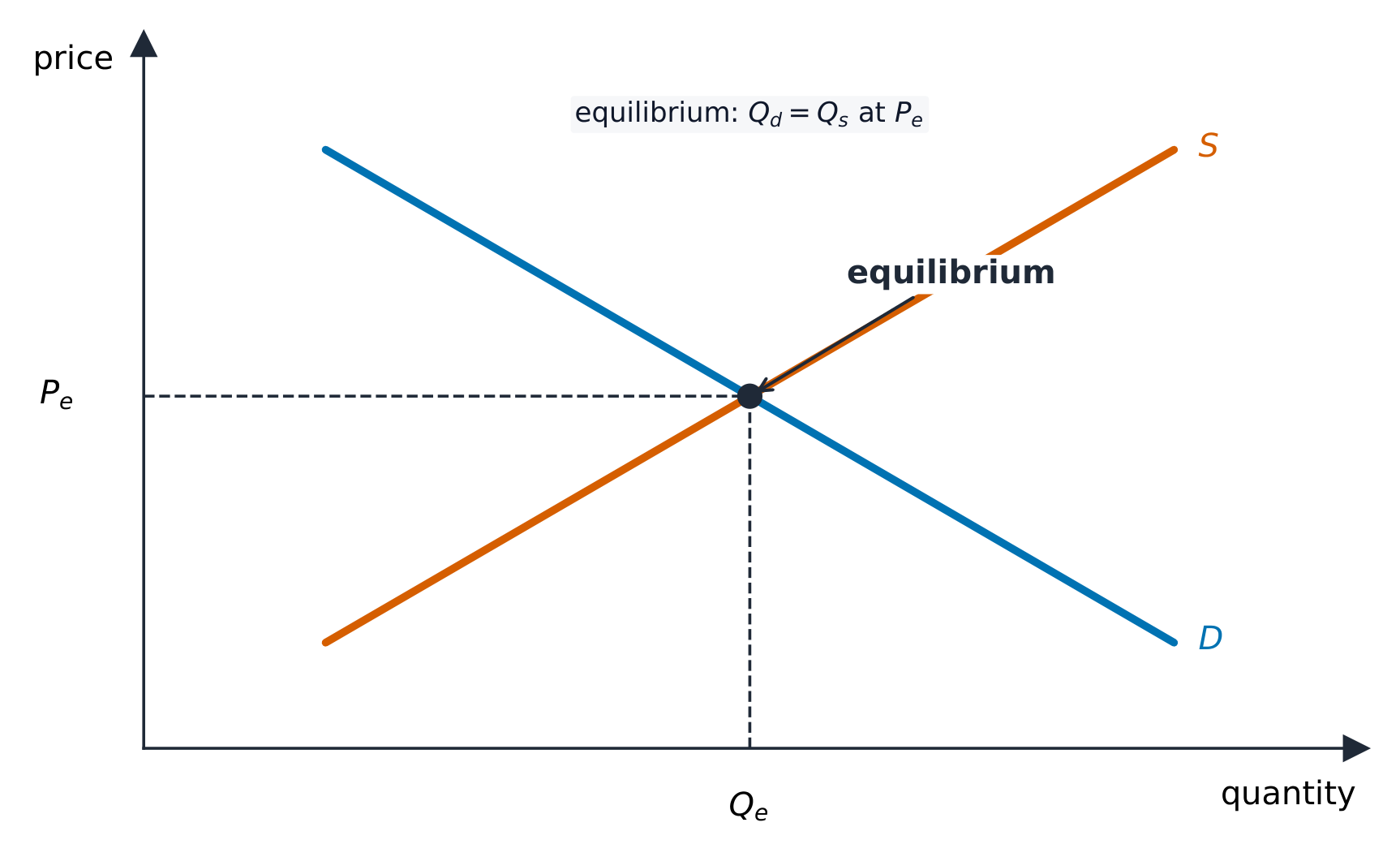
Price moves to where demand meets supply. That equilibrium price signals firms what to produce and rations goods to buyers. · המחיר זז למיקום בו הביקוש נפגש עם ההיצע. מחיר האיזון הזה מעיד על חברות מה לייצר ומחלק סחורות לקונים.
2.2
Demand · ביקוש
Syllabus · סיילבוס
English
define demand and explain the law of demand (inverse relationship with price), ceteris paribus
draw demand curves and distinguish a movement along (change in price) from a shift (change in conditions of demand)
list the conditions of demand (income, tastes, price of substitutes and complements, population, advertising)
עברית
הגדר ביקוש והסבר את חוק הביקוש (יחס הפוך עם המחיר), כל עוד דברים אחרים נשארים קבועים
צייר עקומות ביקוש והבחן בין תנועה לאורך (שינוי במחיר) לבין הזזה (שינוי בתנאי הביקוש)
רשום את תנאי הביקוש (הכנסה, טעמים, מחיר של מוצרים תחליפי ומשלים, אוכלוסייה, פרסום)
Source: Cambridge International syllabus · מקור: הסיילבוס הבינלאומי של קמבריד'ג'
English
Demand 需求 is the amount of a good 物品 that consumers 消费者 (buyers) are willing and able to buy at each price, in a period of time.
The law of demand 需求定律 says: when the price of a good rises, the quantity demanded falls; when the price falls, the quantity demanded rises. Price and quantity move in opposite directions — an inverse relationship 反向关系. This is true ceteris paribus 其他条件不变 (a Latin phrase meaning "all other things stay the same").
Movements and shifts
It helps to separate two ideas:
quantity demanded 需求量 — the amount bought at one price.
demand — the whole pattern of buying at every price.
On a demand diagram, price is on the up axis and quantity on the across axis. The demand curve 需求曲线 slopes downward from left to right: high price, low quantity; low price, high quantity.
A change in the good's own price causes a movement along the demand curve. You slide to a new point on the same line.
A change in any other condition causes a shift 移动 of the whole curve. A rightward shift means more is demanded at every price; a leftward shift means less.
Conditions of demand
These are the things (other than the good's own price) that shift the demand curve:
income 收入 — more income usually means more demand.
tastes 偏好 — if a good becomes popular, demand rises.
price of substitutes 替代品 — goods used instead of each other (tea and coffee). If coffee gets dearer, demand for tea rises.
price of complements 互补品 — goods used together (cars and fuel). If cars get dearer, demand for fuel falls.
population 人口 — more people means more demand.
advertising 广告 — good adverts raise demand.
עברית
ביקוש הוא הכמות של מוצר שצרכנים (קונים) מוכנים ויכולים לקנות בכל מחיר, בתקופת זמן נתונה.
חוק הביקוש קובע: כאשר מחיר מוצר עולה, הכמות הנבוקשת יורדת; כאשר המחיר יורד, הכמות הנבוקשת עולה. המחיר והכמות זזים בכיוונים הפוכים — יחס הפוך. הדבר נכון ceteris paribus (ביטוי לטיני שפירושו "כל שאר הדברים נשארים זהים").
תנועות והזזות
מועיל להפריד בין שני מושגים:
כמות נבוקשת — הכמות הנקנית במחיר אחד.
ביקוש — כלל הדפוסי הקנייה בכל מחיר.
בגרף ביקוש, המחיר נמצא בציר האנכי והכמות בציר האופקי. עקומת הביקוש יורדת משמאל לימין: מחיר גבוה, כמות נמוכה; מחיר נמוך, כמות גבוהה.
שינוי במחיר עצמי של המוצר גורם לתנועה לאורך עקומת הביקוש. אתה מחליק לנקודה חדשה באותו קו.
שינוי בכל תנאי אחר גורם להזזה של כל העקומה. הזזה ימינה פירושה שנקנית יותר בכל מחיר; הזזה שמאלה פירושה שנקנית פחות.
תנאי ביקוש
אלו הם הגורמים (בנוסף למחיר המוצר עצמו) המשנים את עקומת הביקוש:
הכנסה — הכנסה גבוהה יותר בדרך כלל מובילה לביקוש גבוה יותר.
טעמים — אם מוצר הופך לפופולרי, הביקוש בו עולה.
מחיר של תחליפים — מוצרים המשמשים במקום זה של זה (תה וקפה). אם הקפה יקר יותר, הביקוש לתה עולה.
מחיר של משלים — מוצרים המשמשים יחד (רכבים ואדומן). אם הרכבים יקרים יותר, הביקוש לאדומן יורד.
אוכלוסייה — אוכלוסייה גדולה יותר פירושה ביקוש גבוה יותר.
פרסום — פרסום טוב מעלה את הביקוש.
עקומת הביקוש נוטה לרדת. שינוי בהכנסה, בטעמים, באוכלוסייה או במחירים קשורים משנה את כל העקומה; שינוי במחיר המוצר עצמו הוא תנועה לאורך העקומה.
Explore · חקור
Demand & supply · ביקוש והיצע
Demand slopes down — cheaper means more wanted. · ביקוש נוטה מטה — זול יותר פירושו רצוי יותר.
define supply and explain the law of supply (direct relationship with price)
draw supply curves and distinguish a movement along from a shift
list the conditions of supply (costs of production, technology, taxes/subsidies, weather, number of firms)
עברית
הגדר הצפה והסבר את חוק ההצפה (יחס ישיר עם המחיר)
צייר עקומות הצפה והבחן בין תנועה לאורך לבין הזזה
רשום את תנאי ההצפה (עלויות ייצור, טכנולוגיה, מסים/סובסידיות, מזג אוויר, מספר חברות)
Source: Cambridge International syllabus · מקור: הסיילבוס הבינלאומי של קמבריד'ג'
English
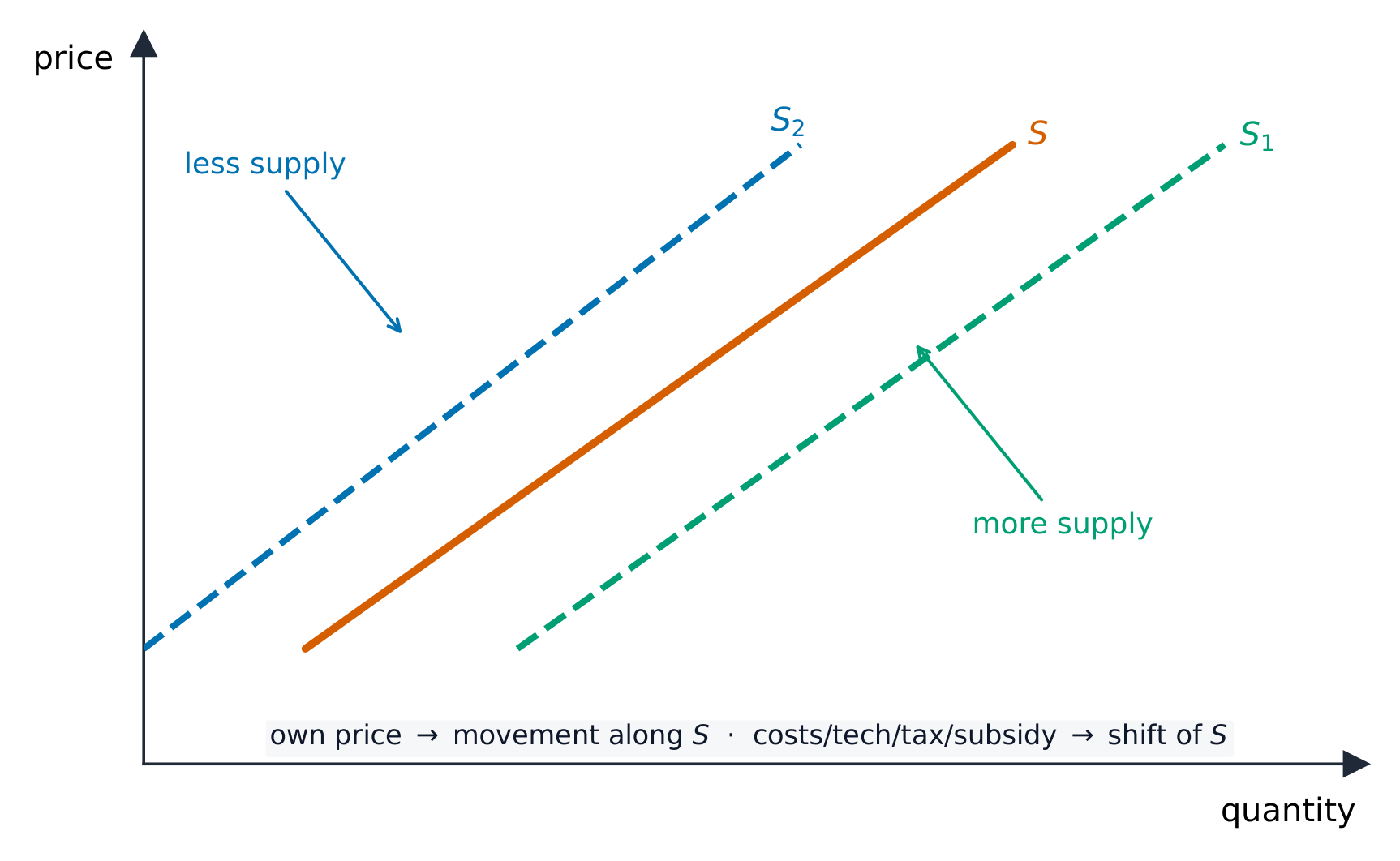
Supply shifts right: P falls, Q rises
Supply 供给 is the amount of a good that firms are willing and able to sell at each price, in a period of time.
The law of supply 供给定律 says: when the price rises, the quantity supplied rises too. Price and quantity move the same way — a direct relationship 正向关系. Firms supply more at a high price because they can earn more.
Movements and shifts
quantity supplied 供给量 — the amount offered at one price.
The supply curve 供给曲线 slopes upward from left to right.
A change in the good's own price → a movement along the curve.
A change in any other condition → a shift of the whole curve.
Conditions of supply
costs of production 生产成本 — if costs rise, firms supply less (curve shifts left).
technology 技术 — better technology lowers costs, so supply rises.
taxes and subsidies — a tax 税收 on a good raises firms' costs (supply falls); a subsidy 补贴 (money from the government) lowers costs (supply rises).
weather — important for farm goods.
number of firms — more firms means more supply.
עברית
העברת ה offers ימינה: P יורד, Q עולה
היצע הוא כמות המוצר שחברות מוכנות ויכולות למכור בכל מחיר, בתקופת זמן נתונה.
חוק ההיצע קובע: כאשר המחיר עולה, גם כמות ההיצע עולה. המחיר וכמות ההיצע נעים באותה כיוון — יחס ישיר. חברות מציעות יותר במחיר גבוה כי הן יכולות להרוויח יותר.
תנועות והזזות
כמות היצע — הכמות המוצעת במחיר אחד.
עקומת ההיצע נוטה לעלות משמאל לימין.
שינוי במחיר המוצר עצמו → תנועה לאורך העקומה.
שינוי בכל תנאי אחר → הזזה של כל העקומה.
תנאי היצע
עלויות ייצור — אם עלויות עולות, חברות מציעות פחות (העקומה זזה שמאלה).
טכנולוגיה — טכנולוגיה טובה יותר מפחיתה עלויות, ולכן ההיצע עולה.
מסים וסובsidy — מס על מוצר מעלה עלויות לחברות (ההיצע יורד); סובsidy (כסף מהממשלה) מפחית עלויות (ההיצע עולה).
מזג אוויר — חשוב למוצרי חקלאות.
מספר חברות — יותר חברות אומר יותר אספקה.
עקומת האספקה תלולה כלפי מעלה. עלויות נמוכות, טכנולוגיה משופרת או סבסוד מזיזות אותה ימינה; עלויות גבוהות או מיסוי מזיזות אותה שמאלה.
Explore · חקור
Demand & supply · ביקוש והיצע
Supply slopes up — dearer means more made. · האספקה עולה — מחיר גבוה יותר פירושו ייצור מוגבר.
explain how shifts in demand and supply cause changes in equilibrium price and quantity
explain the consequences of disequilibrium (excess demand/shortage, excess supply/surplus)
עברית
הסבר כיצד הזזות בביקוש בהצפה גורמות לשינויים במחיר ובכמות שיווי המשקל
הסבר התוצאות של אי-שיווי משקל (ביקוש עודף/מחסור, הצפה עודפת/עודף)
Source: Cambridge International syllabus · מקור: הסיילבוס הבינלאומי של קמבריד'ג'
English
When a curve shifts, the crossing point moves, so price and quantity change:
Demand rises (shifts right): price rises and quantity rises.
Demand falls (shifts left): price falls and quantity falls.
Supply rises (shifts right): price falls and quantity rises.
Supply falls (shifts left): price rises and quantity falls.
Disequilibrium
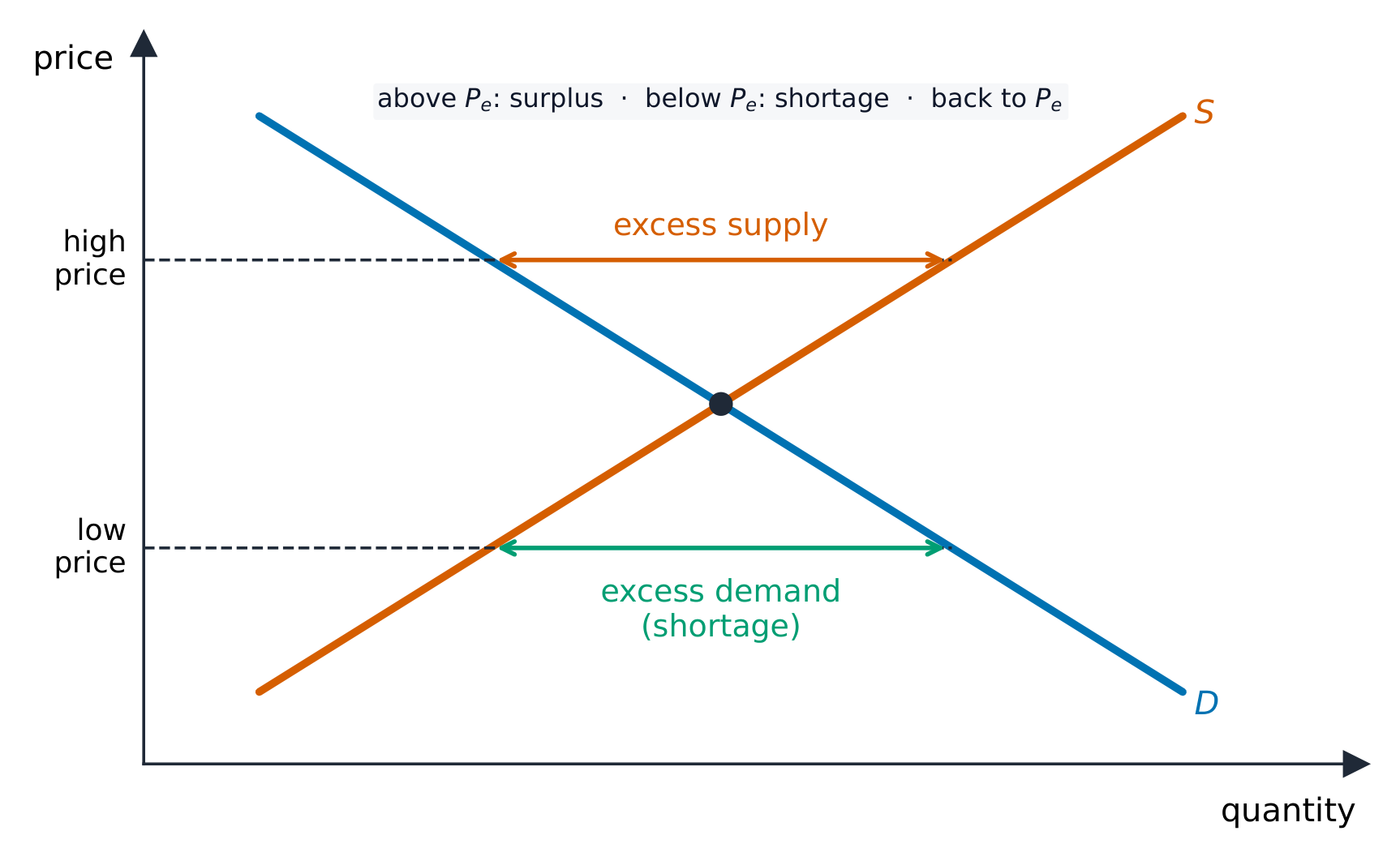
If the price is not at equilibrium, the market is in disequilibrium 非均衡:
If price is below equilibrium, buyers want more than firms supply. This is excess demand 超额需求, also called a shortage 短缺. Buyers compete, so the price is pushed up until equilibrium returns.
If price is above equilibrium, firms supply more than buyers want. This is excess supply 超额供给, also called a surplus 过剩. Sellers cut the price until equilibrium returns.
עברית
כשהעקומה זזה, נקודת החיתוך זזה, ולכן המחיר והכמות משתנים:
ביקוש עולה (זזה ימינה): המחיר עולה והכמות עולה.
ביקוש יורד (זזה שמאלה): המחיר יורד והכמות יורדת.
אספקה עולה (זזה ימינה): המחיר יורד והכמות עולה.
אספקה יורדת (זזה שמאלה): המחיר עולה והכמות יורדת.
אי-איזון
אם המחיר אינו בשיווי משקל, השוק נמצא ב-אי-שיווי משקל:
אם המחיר הוא מתחת לשיווי משקל, הקונים רוצים יותר מהשאספקה של החברות. זהו ביקוש עודף, הנקרא גם חסר. הקונים מתחרים, ולכן המחיר דוחף כלפי מעלה עד שהשיווי משקל חוזר.
אם המחיר הוא מעל שיווי המשקל, החברות מספקות יותר מהרצון של הקונים. זהו אספקה עודפת, הנקראת גם עודף. המוכרים מקטנים את המחיר עד שהשיווי משקל חוזר.
מעל מחיר האיזון יש היצע עודף; מתחת לו יש ביקוש עודף (חסר). בכל מקרה המחיר מופרך חזרה לאיזון.
Explore · חקור
Demand & supply · ביקוש והיצע
A shift in demand or supply moves the equilibrium. · זז בביקוש או בהיצג מזיז את נקודת האיזון.
Price elasticity of demand (PED) · אלסטיות מחיר של ביקוש (PED)
Syllabus · סיילבוס
English
define and calculate PED (% change in quantity demanded ÷ % change in price)
interpret values (elastic, inelastic, unit) and the determinants of PED
explain the relationship between PED and total revenue and the usefulness of PED to firms and government
עברית
הגדר וחשב את PED (% שינוי בכמות המבוקשת ÷ % שינוי במחיר)
פרשן ערכים (אלסטי, אי-אלסטי, יחידתי) וגורמי ה- PED
הסבר הקשר בין PED לבין הכנסה כוללת והשימושיות של PED לחברות ולממשלה
Source: Cambridge International syllabus · מקור: הסיילבוס הבינלאומי של קמבריד'ג'
English
Elastic vs inelastic demand
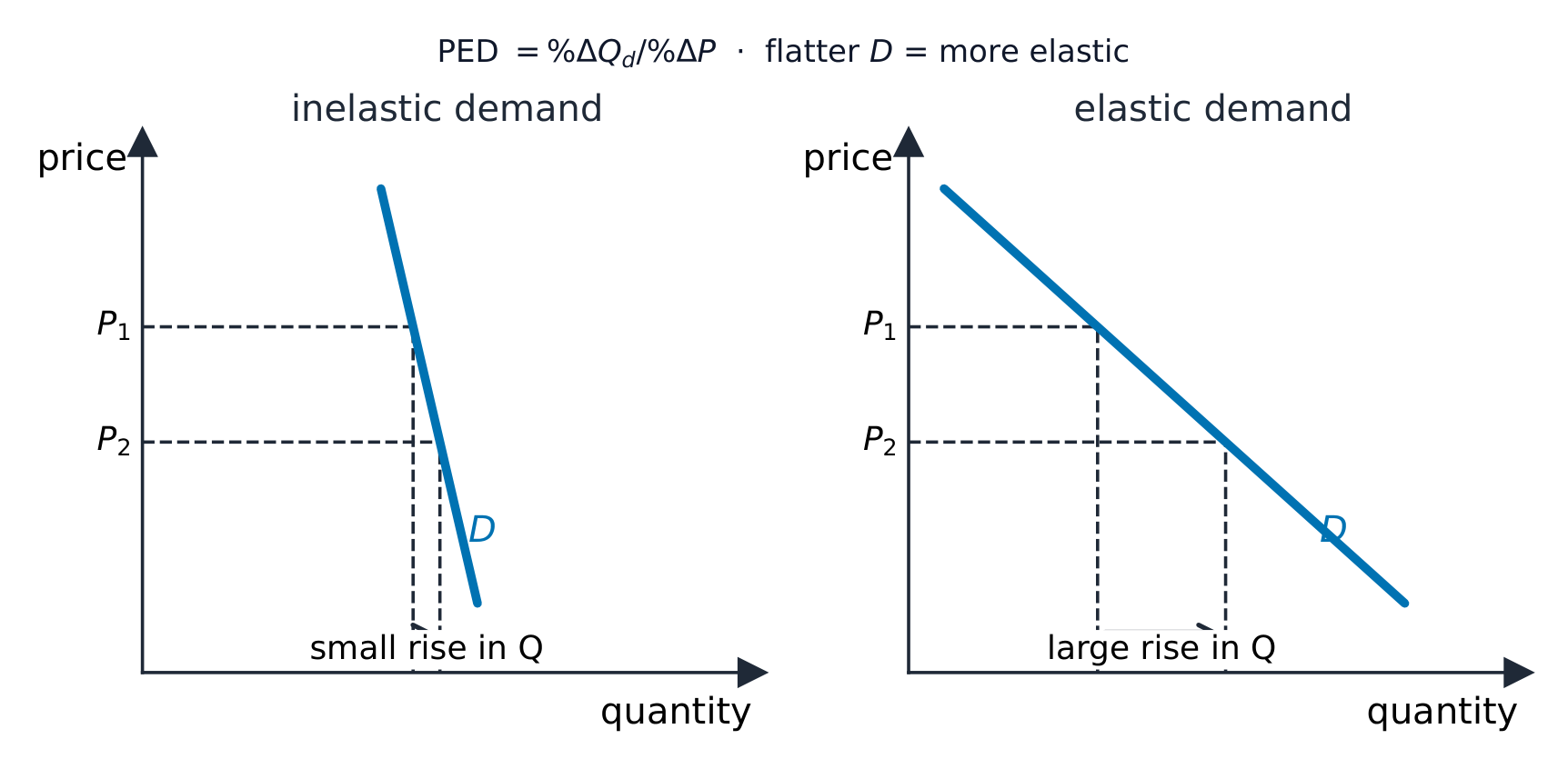
Price elasticity of demand 需求价格弹性 measures how much the quantity demanded changes when the price changes.
PED = (% change in quantity demanded) ÷ (% change in price)
(We usually ignore the minus sign and read the size of the number.) The determinants 决定因素 (the things that decide PED) include whether the good has close substitutes, whether it is a need or a luxury, and what share of income it takes.
Worked example. When the price of a good rises by 20%, the quantity demanded falls by 10%. Find the PED.
PED = (% change in quantity demanded) ÷ (% change in price) = 10 ÷ 20 = 0.5.
Because 0.5 is less than 1, demand is inelastic — the quantity changed by a smaller percentage than the price.
Reading the value
PED greater than 1: demand is elastic 富有弹性. Quantity changes by a large %. (Goods with many substitutes, like one brand of crisps.)
PED less than 1: demand is inelastic 缺乏弹性. Quantity changes by a small %. (Needs with few substitutes, like petrol or salt.)
PED equal to 1: unit elastic 单位弹性. Quantity changes by the same % as price.
PED and total revenue
Total revenue 总收益 is the money a firm gets from sales: price × quantity sold. (To the buyer, the same money is total expenditure 总支出.) PED tells a firm what happens to revenue if it changes its price:
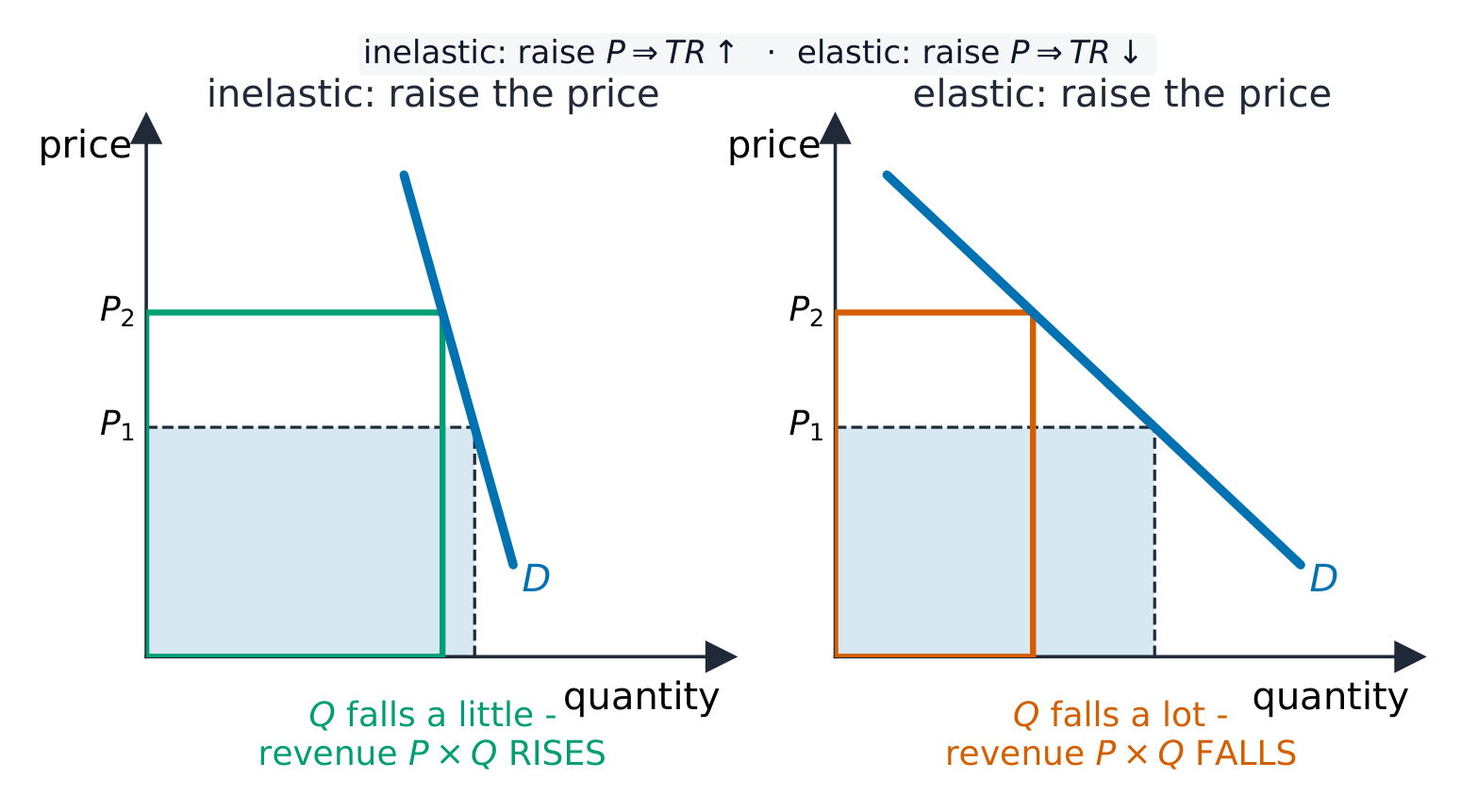
If demand is inelastic, raising the price raises total revenue (quantity falls only a little).
If demand is elastic, raising the price lowers total revenue (quantity falls a lot).
This is useful. A firm sets prices knowing how buyers will react. A government taxes inelastic goods (like cigarettes) because people keep buying them, so the tax raises a lot of money.
Worked example. A bus company sells 1,000 tickets a day at £2 each. It raises the price by 10% to £2.20, and daily sales fall by 5% to 950. Find the PED and what happens to total revenue.
PED = 5 ÷ 10 = 0.5, so demand is inelastic (less than 1).
old revenue = £2 × 1,000 = £2,000.
new revenue = £2.20 × 950 = £2,090.
Total revenue rose by £90. Because demand is inelastic, the price rose by a bigger percentage than the quantity fell, so raising the price raised revenue.
עברית
ביקוש אלסטי לעומת אי-אלסטי
גמישות מחיר בביקוש מודדת עד כמה כמות הביקוש משתנה כאשר המחיר משתנה.
PED = (% שינוי בכמות הביקוש) ÷ (% שינוי במחיר)
(אנו לרוב מתעלמים מהסימן השלילי וקוראים את גודל המספר.) ה-גורמים הקובעים (הדברים שמשפיעים על PED) כוללים האם למוצר יש תחליפים קרובים, האם מדובר בצורך או בפריט יוקרתי, ואיזה חלק מהכנסה הוא דורש.
דוגמה פתורה. כאשר מחיר מוצר עולה ב-20%, הכמות הנבזקת יורדת ב-10%. מצאו את ה-PED.
PED = (% שינוי בכמות הביקוש) ÷ (% שינוי במחיר) = 10 ÷ 20 = 0.5.
מכיוון ש-0.5 קטן מ-1, הביקוש אינאלסטי — הכמות השתנתה באחוזים קטנים יותר מאשר המחיר.
קריאת הערך
PED גדול מ-1: הביקוש אלסטי. הכמות משתנה באחוזים רבים. (מוצרים עם הרבה תחליפים, כמו מותג מסוים של צ'יפס.)
PED קטן מ-1: הביקוש אינאלסטי. הכמות משתנה באחוזים מעטים. (צרכים עם מעט תחליפים, כמו בנזין או מלח.)
PED שווה ל-1: אלסטיות יחידית. הכמות משתנה באותו אחוז כמו המחיר.
כאשר הביקוש אינאלסטי (שיפוע תלול), שינוי במחיר משפיע מעט על הכמות; כאשר הוא אלסטי (שיפוע נמוך), אותו שינוי גורם לשינוי רב בכמות.
אלסטיות מחיר והכנסה כוללת
הכנסה כוללת היא הסכום שהחברה מקבלת מהמכירות: מחיר × כמות שנמכרה. (לקונה, אותו סכום נקרא הוצאה כוללת). ה-PED אומר לחברה מה יקרה להכנסה אם היא תשנה את המחיר:
אם הביקוש אינאלסטי, העלאת המחיר מגבירה את ההכנסה הכוללת (הכמות יורדת רק מעט).
אם הביקוש אלסטי, העלאת המחיר מפחיתה את ההכנסה הכוללת (הכמות יורדת הרבה).
דבר זה שימושי. חברה קובעת מחירים תוך התחשבות בתגובת הקונים. ממשלה מטילה מכסים על מוצרים אינאלסטיים (כמו סיגריות) כי אנשים ממשיכים לקנות אותם, ולכן המכס מייצר הרבה כסף.
דוגמה פתורה. חברת אוטובוסים מוכרת 1,000 כרטיסים ביום במחיר £2 כל אחד. היא מעלה את המחיר ב-10% ל-£2.20, ומכירות היומיות יורדות ב-5% ל-950. מצאו את ה-PED ואת מה שקורה להכנסה הכוללת.
ההכנסה הכוללה עלתה ב-£90. מכיוון שהביקוש אינאלסטי, המחיר עלה באחוזים גדולים יותר מאשר הכמות ירדה, ולכן העלאת המחיר הגבירה את ההכנסה.
העלאה זהה במחיר מעלה את ההכנסה כאשר הביקוש אינאלסטי, אך מפחיתה אותה כאשר הביקוש אלסטי
Explore · חקור
Elasticity & total revenue · אלסטיות והכנסה כוללת
PED is the % change in quantity over the % change in price; whether it is above or below 1 decides how total revenue moves. · PED היא השינוי באחוזים בכמות חלקי השינוי באחוזים במחיר; כך שהוא מעל או מתחת ל-1 קובע כיצד ההכנסה הכוללת זזה.
Explore · חקור
Demand & supply · ביקוש והיצע
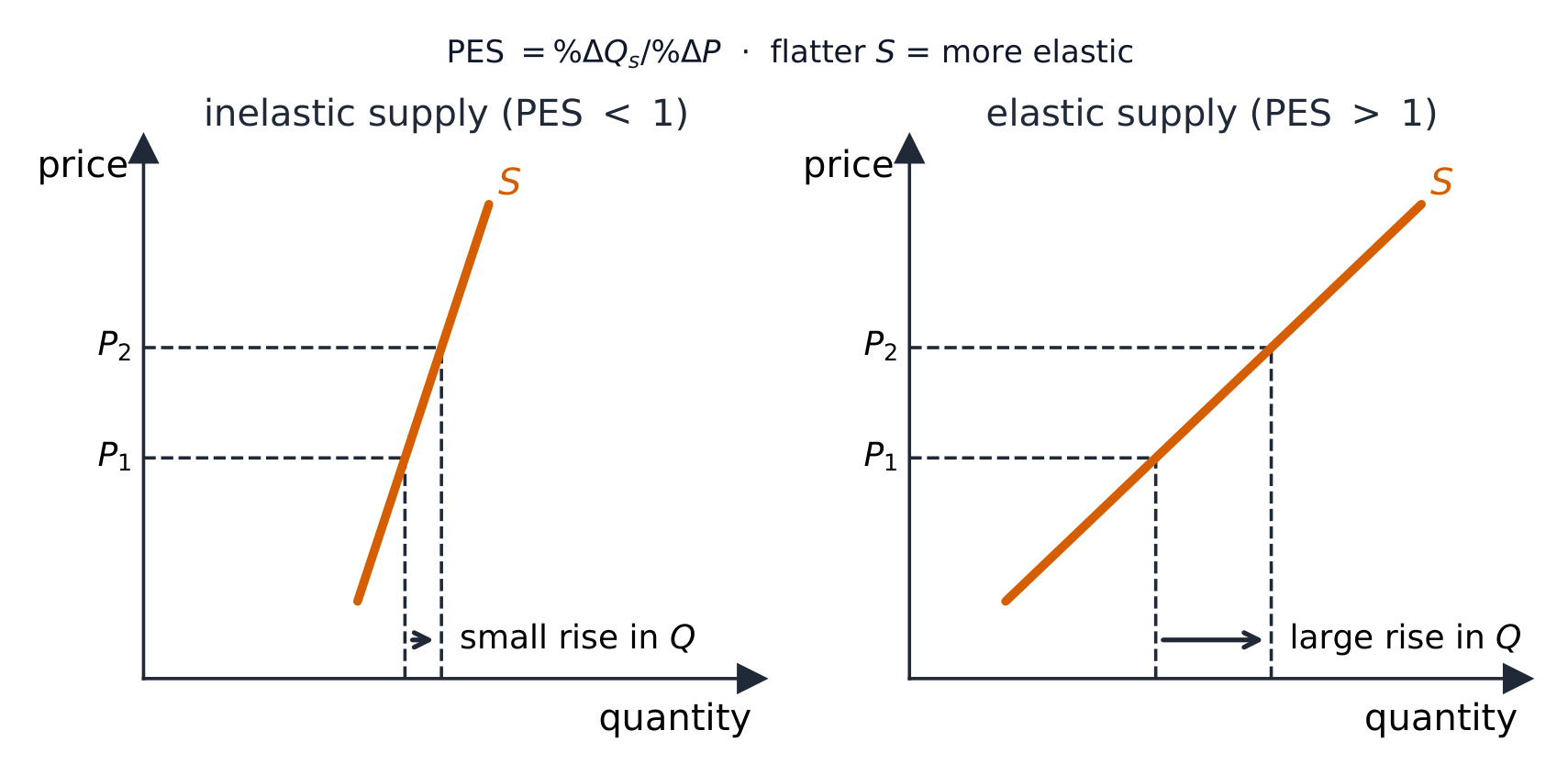
Elasticity of demand is the steepness of the curve. · אלסטיות בביקוש היא תלילות העקומה.
explain how a market economy allocates resources through the price mechanism
explain the advantages and disadvantages of the market economic system
עברית
הסבר כיצד משק כלכלי שוקי מקצה משאבים דרך מנגנון המחיר
הסבר על היתרונות והחסרונות של המשק הכלכלי השוקי
Source: Cambridge International syllabus · מקור: הסיילבוס הבינלאומי של קמבריד'ג'
English
In a market economy 市场经济, the price mechanism makes all the choices. There is no government planning. (The opposite is a planned economy 计划经济, where the government makes the choices.)
Advantages of the market system:
Prices guide resources to where they are wanted, without anyone planning.
Firms compete, so they cut costs and create new and better goods.
Consumers have wide choice.
Disadvantages:
Some useful goods are not made because they earn no profit.
The strong (rich firms and people) do well; the weak may be left with nothing.
Markets can fail (see below).
עברית
ב-כלכלת שוק, מנגנון המחיר קובע את כל ההחלטות. אין תכנון ממשלתי. (הניגוד הוא כלכלת תכנון, שבה הממשלה מקבלת את ההחלטות.)
יתרונות של מערכת השוק:
המחירים מכוונים משאבים למקומות שבהם הם נדרשים, ללא תכנון על ידי אף אחד.
חברות מתחרות זו בזו, ולכן הן מקצרות על עלויות ויוצרות מוצרים חדשים וטובים יותר.
לצרכנים יש מגוון רחב לבחירה.
חסרונות:
חלק מהמוצרים המועילים אינם מיוצרים מכיוון שהם אינם מייצרים רווח.
החזקים (חברות ואנשים עשירים) מצליחים; החלשים עשויים להישאר ללא כלום.
השוק עשוי לכשל (ראו להלן).
Explore · חקור
How a market allocates · איך שוק מקצה
In a market system, price moves to where demand meets supply — that price signal decides what gets made. Shift the curves and watch it settle. · במערכת שוק, המחיר זז למקום בו הביקוש נפגש עם ההיצע — אותה אות מחיר קובעת מה ייוצר. הזז את העקומות וצפה כיצד המערכת מתייצבת.
define market failure as the inefficient allocation of resources
explain the causes: external costs and external benefits (social vs private costs/benefits), merit and demerit goods, public goods and the abuse of monopoly power
עברית
הגדר כשל בשוק כהקצאה לא-יעילה של משאבים
הסבר על הסיבות: עלויות חיצוניות ותועלות חיצוניות (עלויות/תועלות חברתיות מול פרטיות), סחורות מועילות ובלתי-מועילות, סחורות ציבוריות ופגיעה בכוח מונופולי
Source: Cambridge International syllabus · מקור: הסיילבוס הבינלאומי של קמבריד'ג'
English
Market failure 市场失灵 happens when the price mechanism leads to an inefficient 低效率 use of resources — resources are not shared out in the best way for society. The main causes:
External costs and benefits
When you produce or consume something, the cost or benefit to you is not always the cost or benefit to everyone.
a private cost 私人成本 is the cost to the person doing the activity.
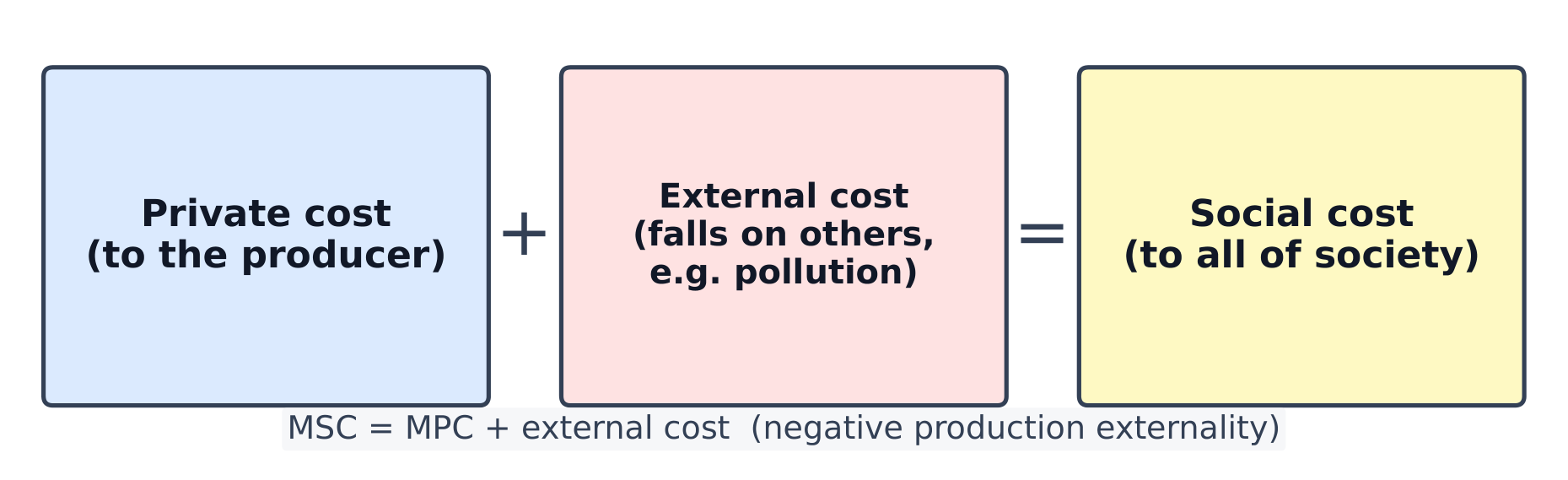
an external cost 外部成本 is a cost paid by other people — for example, smoke from a factory harms nearby families.
the social cost 社会成本 is the private cost plus the external cost (the cost to the whole of society).
In the same way:
a private benefit 私人效益 is the benefit to the person doing the activity.
an external benefit 外部效益 is a benefit that others get for free — for example, your neighbour's tidy garden is nice for you too.
the social benefit 社会效益 is the private benefit plus the external benefit.
Markets fail because firms and consumers only think about their private costs and benefits, not the external ones.
Merit, demerit and public goods
merit goods 有益物品 are better for you than you realise, so the market makes too few (education, healthcare).
demerit goods 有害物品 are worse for you than you realise, so the market makes too many (cigarettes, alcohol).
public goods 公共物品 are things everyone can use and no one can be stopped from using, like street lights or national defence. The market makes none, because firms cannot charge for them.
Abuse of monopoly power
A monopoly 垄断 is a single firm that controls a market. With no competition, it can charge high prices and make poor-quality goods. This is another market failure.
עברית
כשל בשוק מתרחש כאשר מנגנון המחיר מוביל לשימוש לא יעיל במשאבים — המשאבים אינם מחולקים בצורה הטובה ביותר עבור החברה. הסיבות העיקריות:
עלויות ותועלות חיצוניות
*זיהום מתחנת כוח הוא עלות חיצונית — הוא נופל על צדדים שלישיים, ולא רק על המייצר
כאשר אתה מייצר או צורך דבר מה, העלות או התועלת לך אינה תמיד העלות או התועלת לכולם.
עלות פרטית היא העלות לאדם שמבצע את הפעילות.
עלות חיצונית היא עלות שמשולמים אחרים — לדוגמה, עשן ממפעל פוגע בבעלי הבית הסמוכים.
עלות חברתית היא העלות הפרטית בתוספת העלות החיצונית (העלות לכלל החברה).
באותו אופן:
תועלת פרטית היא התועלת לאדם שמבצע את הפעילות.
תועלת חיצונית היא תועלת שאחרים מקבלים בחינם — לדוגמה, הגינה המסודרת של השכן שלך נעימה גם לך.
תועלת חברתית היא התועלת הפרטית בתוספת התועלת החיצונית.
שוקים נכשלים כי חברות וצרכנים מתחשבים רק בעלויות והתועלות הפרטיות שלהם, ולא בעלויות והתועלות החיצוניות.
עלות חיצונית (למשל זיהום) מוטלת על צדדים שלישיים, ולכן העלות החברתית גבוהה מעלות הפרטית של המייצר
סחורות תועלת, סחורות פגם וסחורות ציבור
סחורות תועלת טובות יותר עבורך מאשר אתה מבין, ולכן השוק מספק כמות קטנה מדי מהן (חינוך, בריאות).
סחורות פגם רעות יותר עבורך מאשר אתה מבין, ולכן השוק מספק כמות גדולה מדי מהן (סיגריות, אלכוהול).
סחורות ציבור הן דברים שכל אחד יכול להשתמש בהם ואף אחד לא יכול למנוע אחרים מלהשתמש בהם, כמו תאורת רחוב או ביטחון לאומי. השוק אינו מספק אותן כלל, מכיוון שמפעילים אינם יכולים לגבות תמורה על כך.
סחורה פרטית היא ירודה ותקופית (החברה מספקת אותה); סחורה ציבורית היא לא-ירודה ולא-תקופית (הממשלה חובה לספק אותה)סחורות תועלת ופגם נשפטות באופן שגוי בשל כשל מידע
פגיעה בכוח מונופולי
מונופול הוא חברה בודדת השולטת בשוק. ללא תחרות, היא יכולה להעלות מחירים ולהיצר מוצרים באיכות ירודה. זוהי משמעות נוספת לכשל בשוק.
Explore · חקור
Demand & supply · ביקוש והיצע
Market failure: the free-market crossing isn't always best for society. · כשל בשוק: החוצה החופשי אינו תמיד הטוב ביותר עבור החברה.
explain the features of a mixed economy (private sector and public sector)
explain methods of government intervention to address market failure: maximum and minimum prices, indirect taxes, subsidies, regulation and direct provision
evaluate the effects of intervention
עברית
להסביר את מאפייני כלכלית מעורבת (מגזר פרטי ומגזר ציבורי)
להסביר שיטות של התערבות ממשלתית כדי להתמודד עם כשל שוק: מחיר מקסימלי ומינימלי, מיסים עקיפים, סבסודים, ויסות וספקות ישירה
הערך את השפעות ההתערבות
Source: Cambridge International syllabus · מקור: הסיילבוס הבינלאומי של קמבריד'ג'
English
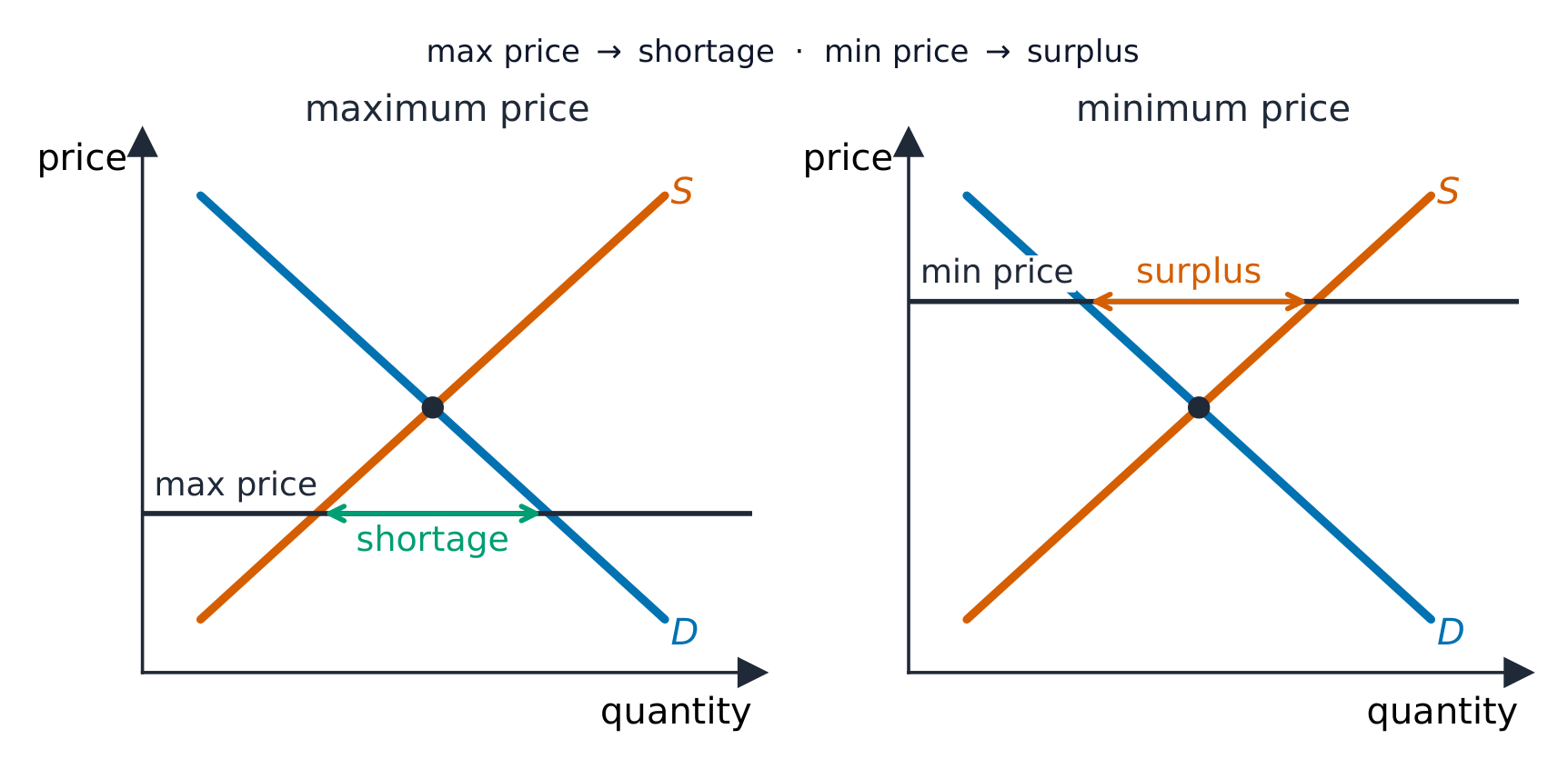
A maximum price creates a shortage
A mixed economy 混合经济 has both:
a private sector 私营部门 — firms owned by people, guided by the price mechanism.
a public sector 公共部门 — activity run by the government.
Most real economies are mixed; China's, for example, is a socialist market economy. The government steps in to correct market failure. This is government intervention 干预. The main methods:
Method
What it does
maximum price 最高价格
a price ceiling, set below equilibrium, to keep a good (like rent) cheap — but it causes a shortage
minimum price 最低价格
a price floor, set above equilibrium, to keep a price up (like a fair wage) — but it causes a surplus
indirect tax 间接税
a tax on a good (added to its price) to cut demand for demerit goods
subsidy
money paid to firms to cut the price and raise output of merit goods
regulation 监管
rules and laws, like banning smoking in public
direct provision 直接提供
the government makes and gives out goods itself, like state schools
Judging intervention
Intervention can fix market failure, but it has costs. Taxes and rules cost money to collect and check. Governments can get things wrong too (this is called government failure). So you should always weigh the good effects against the bad ones before deciding.
עברית
מחיר מקסימום יוצר מחסור
למשק מעורב יש גם:
מגזר פרטי — חברות בבעלות אנשים, המונחות על ידי מנגנון המחיר.
מגזר ציבורי — פעילות המנוהלת על ידי הממשלה.
רוב המשקאות האמיתיים הם מעורבים; לדוגמה, משק סין הוא משק סוציאליסטי. הממשלה נכנסת לפעול כדי לתקן כשל בשוק. זהו התערבות ממשלתית. השיטות העיקריות:
שיטה
מה היא עושה
מקסימום מחיר
תקרת מחיר, הנקבעת מתחת למחיר שיווי המשקל, כדי לשמור על מחיר זול עבור סחורה (כגון שכירות) — אך היא גורמת לחוסר אספקה
מחיר מינימום
רצפת מחיר, הנקבעת מעל שיווי המשקל, כדי לשמור על מחיר גבוה (כמו שכר הוגן) — אך הוא גורף לעודף אספקה
מס עקיף
מס המטיל על מוצר (נוסף למחירו) לצמצום ביקוש למוצרים מזיקים
סבסוד
תשלום כספי לחברות לצמצום המחיר ולהגדיל את היצע המוצרים החיוביים
וויסות
חוקים ותקנות, כמו איסור על עישון במקומות ציבוריים
אספקה ישירה
הממשלה מייצרת ומחלקת מוצרים בעצמה, כמו בתי ספר מדינתיים
מחיר מקסימום הנקבע מתחת לשיווי המשקל גורף למחסור; מחיר מינימום הנקבע מעל שיווי המשקל גורף לעודף אספקה.
הערכת התערבות
התערבות יכולה לתקן כשל שוק, אך היא כרוכה בעלויות. מסים וכללים דורשים כסף לאיסוף ולבדיקה. ממשלות גם הן עלולות לטעות (דבר זה מכונה כשל ממשלתי). לכן עליך תמיד לשקול את ההשפעות הטובות מול הרעות לפני קבלת החלטה.
Explore · חקור
Economics case lab · מעבדת מקרים בכלכלה
Classify real examples by the economic idea they show. · סווג דוגמאות אמיתיות לפי הרעיון הכלכלי שהן מדגישות.
A change in a good's own price is a movement along the curve; a change in anything else (income, tastes, related prices) shifts the whole curve.
Equilibrium is where demand meets supply. Below it there is excess demand (a shortage, so price rises); above it there is excess supply (a surplus, so price falls).
PED = %ΔQ ÷ %ΔP. Demand is inelastic if PED < 1 (raising price raises revenue) and elastic if PED > 1 (raising price lowers revenue).
Market failure (external costs, merit/demerit/public goods, monopoly) means resources are used badly; the government corrects it with taxes, subsidies, rules and direct provision.
עברית
שינוי ב-מחיר עצמי של מוצר הוא תנועה לאורך העקומה; שינוי בכל דבר אחר (הכנסה, טעמים, מחירים רלוונטיים) מזיז את כל העקומה.
שיווי משקל הוא המקום בו הביקוש פוגש את האספקה. מתחת אליו יש ביקוש עודף (מחסור, ולכן המחיר עולה); מעליו יש אספקה עודף (עודף אספקה, ולכן המחיר יורד).
PED = %ΔQ ÷ %ΔP. ביקוש הוא אלסטי אם PED < 1 (raising price raises revenue) and elastic if PED > 1 (הגבהת המחיר מורידה את ההכנסה).
כשל שוק (עלויות חיצוניות, מוצרים חיוביים/מזיקים/ציבוריים, מונופול) מצביע על שימוש לקוי במשאבים; הממשלה מתקנת זאת באמצעות מסים, סבסודים, וויסות ואספקה ישירה.
Interactive lessons on this topic · שיעורים אינטראקטיביים בנושא זה
Work through it step by step, with instant-check exercises. · לעבור על הדברים צעד אחר צעד, עם תרגילים לבדיקה מיידית.
Pick one and the site follows you — notes, papers, videos and practice all open on it. · בחרו נושא אחד והאתר יעקוב אחריו — הערות, מסמכים, וידאו ותרגולים פתוחים בו.
Type to search notes, lessons, code, vocabulary and past-paper questions across every subject. · הקלד כדי לחפש הערות, שיעורים, קוד, אוצר מילים ושאלות מבחנים בכל הנושאים.