יש לך עשר דולרים. מולך ספר שאתה רוצה ומשחק שאתה רוצה. אתה רוצה את השניים. תוכל לקבל רק אחד. אז אתה בוחר בספר — והרגע…
English narration · English + 中文 subtitles burned in · קריאת קול באנגלית · תרגום אנגלי + סינית שרוף בתוך הסרטון
1.1
The economic problem · הבעיה הכלכלית
Syllabus · סיילבוס
English
understand the economic problem: finite (scarce) resources and unlimited wants
distinguish economic goods (scarce, have an opportunity cost) and free goods
understand that the economic problem forces consumers, workers, producers and governments to make choices
עברית
הבנת הבעיה הכלכלית: משאבים מוגבלים (נדירים) ורצונות בלתי מוגבלים
להבדיל בין סחורות כלכליות (נדירות, יש להן עלות הזדמנות) לסחורות חופשיות
להבין כי הבעיה הכלכלית מחייבת צרכנים, עובדים, יצרנים וממשלות לבצע בחירות
Source: Cambridge International syllabus · מקור: הסיילבוס הבינלאומי של קמבריד'ג'
English
Economics is about how people use resources 资源 to meet their needs and wants. The main idea is simple. People want a lot, but there are not enough resources to make everything. This is the economic problem 经济问题.
Two facts cause the economic problem:
Resources are finite 有限的. There is only a limited amount of them.
People's wants 欲望 are unlimited. People always want more and better things.
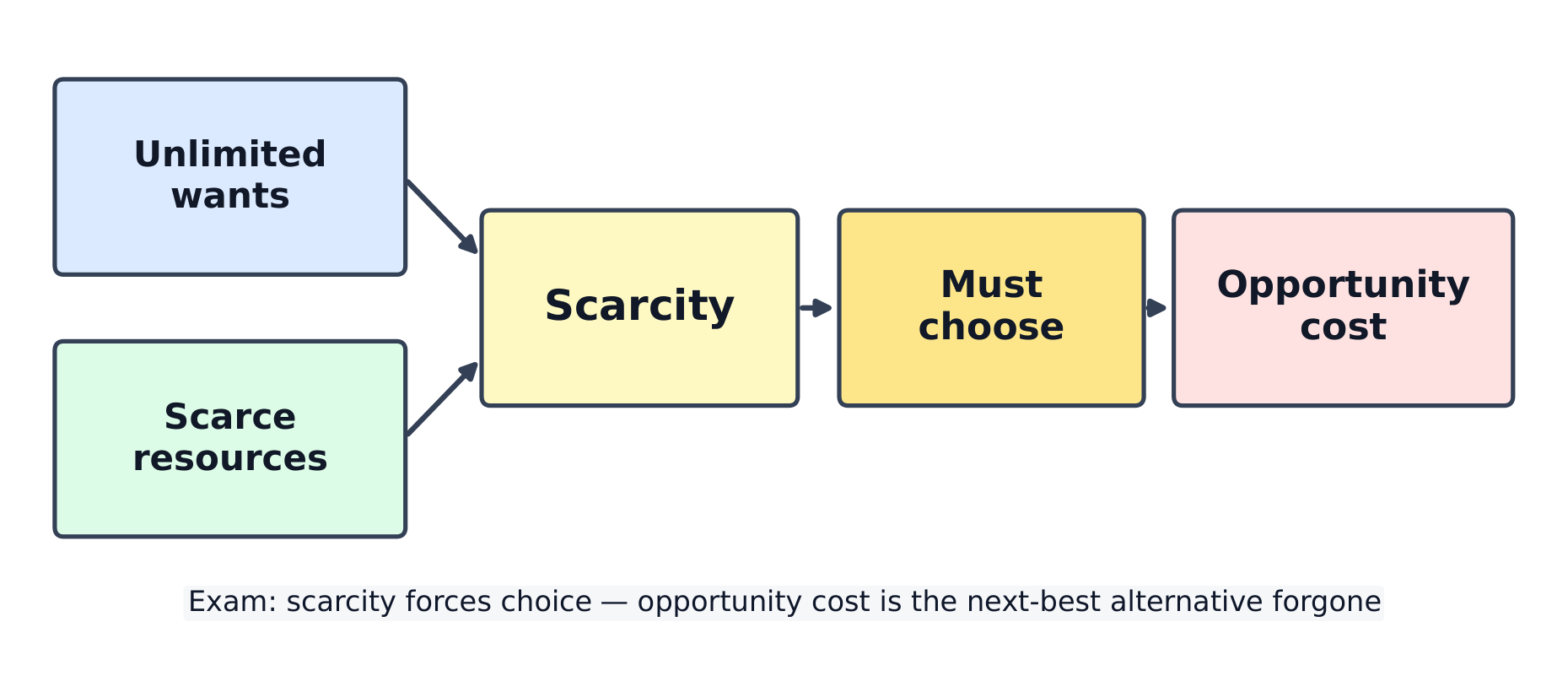
Because wants are unlimited but resources are limited, resources are scarce 稀缺. We call this problem scarcity 稀缺性. Scarcity is the root of all economics.
Goods, services, and choices
We use resources to make goods 物品 (things you can touch, like food and phones) and services 服务 (jobs done for you, like a haircut or a bus ride).
Because resources are scarce, we cannot have everything. So everyone must make choices. Scarcity forces four groups to choose:
consumers 消费者 — people who buy and use goods and services. They choose what to buy.
workers 工人 — they choose which job to do.
producers 生产者, also called firms 企业 — they make goods and services. They choose what to produce.
governments 政府 — they choose what to provide and how to spend public money.
Economic goods and free goods
Most things are economic goods 经济物品. They are scarce, so making or using one means giving something else up. Economic goods have an opportunity cost 机会成本 (explained below).
A few things are free goods 免费物品. They are not scarce — there is enough for everyone and they cost nothing to use. Examples are the air you breathe and sunlight. A free good has no opportunity cost.
Be careful: a "free" sample or a "free" gift is not a free good. Resources were used to make it, so it is still an economic good.
עברית
כלכל עוסק באופן שבו אנשים משמשים משאבים כדי לענות על צרכיהם ובקשותיהם. הרעיון המרכזי הוא פשוט: לאנשים יש ביקוש רב, אך אין מספיק משאבים ליצור הכל. זהו ה-בעיה הכלכלית.
שתי עובדות גורמות לבעיה הכלכלית:
המשאבים הם מוגבלים. קיים כמות מוגבלת שלהם.
הבקשות של האנשים אינסופיות. אנשים תמיד רוצים יותר ודברים טובים יותר.
מכיוון שבקשות אינסופיות אך משאבים מוגבלים, המשאבים הם נדירים. אנו מכנים בעיה זו מדירות. מדירות היא השורש לכלכל.
הבעיה הכלכלית: מדירות מחייבת בחירה, וכל בחירה כרוכה בעלות הזדמנות
סחורות, שירותים ובחירות
אנו משמשים משאבים ליצירת סחורות (דברים שניתן לגעת בהם, כמו מזון ומכשירי טלפון) ושירותים (עבודות שנעשות עבורנו, כמו גזירת שיער או נסיעה אוטובוס).
מכיוון שמשאבים נדירים, איננו יכולים לקבל הכל. לכן כל אחד חייב לבצע בחירות. מדירות מחייבת ארבעה קבוצות לבחור:
צרכנים — אנשים הקונים ומשתמשים בסחורות ושירותים. הם בוחרים מה לקנות.
עובדים — הם בוחרים איזה עבודה לעשות.
מייצרים, הנקראים גם חברות — הם מייצרים סחורות ושירותים. הם בוחרים מה לייצר.
ממשלות — הן בוחרות מה לספק וכיצד להוציא כסף ציבורי.
סחורות כלכליות וסחורות חינם
רוב הדברים הם סחורות כלכליות. הן נדירות, ולכן ייצור או שימוש באחת מהן דורש ויתור על דבר אחר. לסחורות כלכליות יש עלות הזדמנות (הסבר בהמשך).
כמה דברים הם סחורות חינם. הן אינן נדירות — יש מספיק עבור כולם והשימוש בהן אינו עולה כלום. דוגמאות הן האוויר שאנחנו נושמים והאור השמשי. לסחורה חינם אין עלות הזדמנות.
היזהרו: "דוגמית חינם" או "מתנה חינם" אינם סחורה חינם. משאבים שימשו ליצירתם, ולכן הם עדיין סחורות כלכליות.
Explore · חקור
Scarcity and choice · מדדים ובחירה
Limited resources mean producing more of one good costs some of the other — the opportunity cost, shown by the frontier. · משאבים מוגבלים אומרים שייצור יותר של מוצר אחד דורש ויתור על חלק ממשהו אחר — העלות ההזדמנות, המוצגת על ידי הגבול.
define the four factors of production: land, labour, capital and enterprise, with examples
state the reward to each factor (rent, wages, interest, profit)
explain the mobility of the factors of production and the causes of changes in their quantity and quality
עברית
להגדיר את ארבעת גורמי הייצור: אדמה, עבודה, הון וא enterprise, עם דוגמאות
לציין את התמורה לכל גורם (שכר ארץ, שכר עבודה, ריבית, רווח)
להסביר את תנועתיות גורמי הייצור ואת הגורמים לשינויים בכמות ובאיכות שלהם
Source: Cambridge International syllabus · מקור: הסיילבוס הבינלאומי של קמבריד'ג'
English
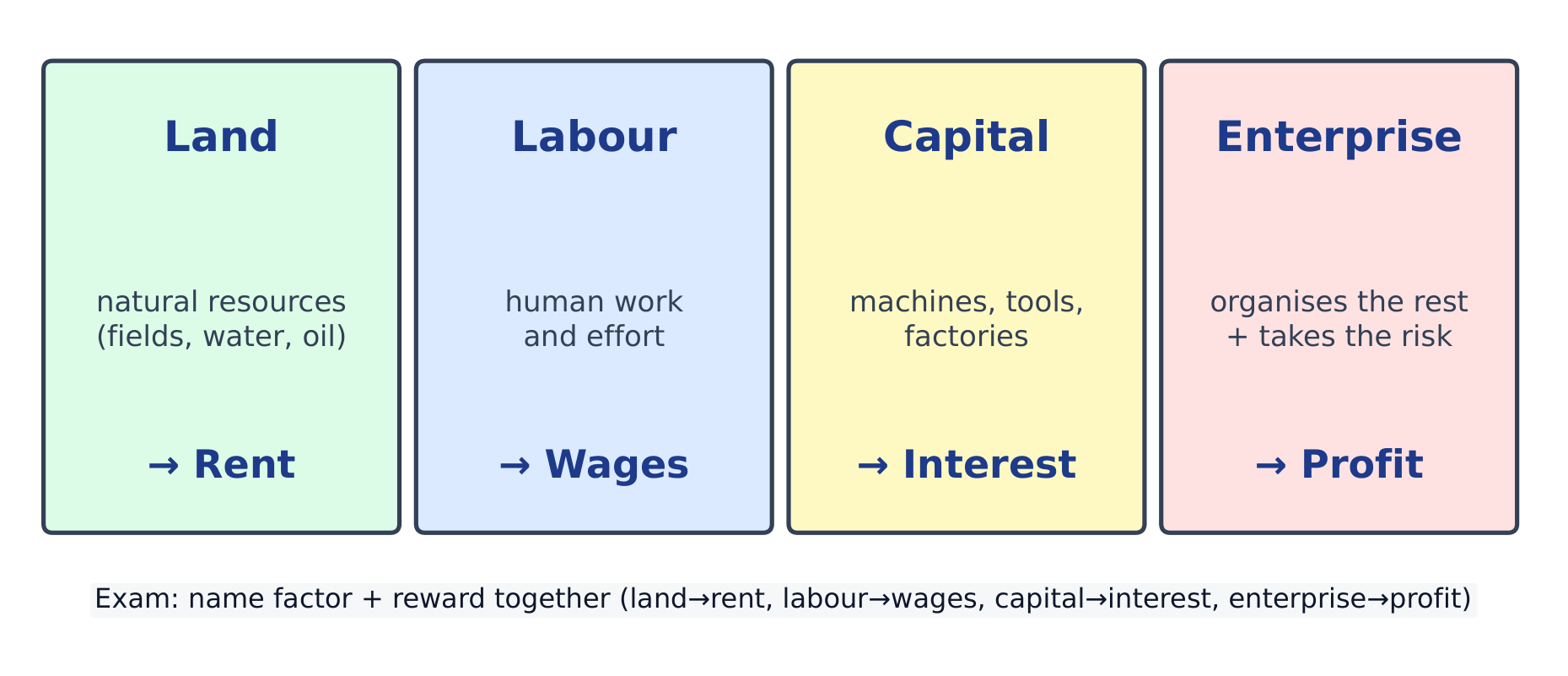
To make goods and services, firms use four types of resource. We call them the factors of production 生产要素.
The four factors
Factor
What it is
Example
land 土地
natural resources
fields, water, oil, forests
labour 劳动
human work
a teacher, a builder, a nurse
capital 资本
man-made things used to produce
machines, tools, factories
enterprise 企业家才能
organising the other three and taking risks
a person who starts a business
The person who provides enterprise is the entrepreneur 企业家. They bring the other factors together and risk their own money to start and run a business.
The reward to each factor
Each factor earns a reward 报酬 — the income it gets for being used:
Factor
Reward
land
rent 地租
labour
wages 工资
capital
interest 利息
enterprise
profit 利润
Mobility, quantity and quality
The mobility 流动性 of a factor means how easily it can move to a different use or place. A worker with many skills can change jobs easily, so labour is mobile. A worker with only one skill, or a factory that cannot be moved, is less mobile.
The quantity and quality of factors can change:
Quantity can rise or fall. The amount of labour grows if the birth rate rises or people move into the country to work. Land can be lost to the sea or gained by draining it.
Quality can rise. Training and education make labour better. New technology makes capital better. Higher quality means each factor can produce more.
עברית
כדי לייצר סחורות ושירותים, חברות משתמשות בארבעה סוגי משאבים. אנו מכנים אותם גורמי ייצור.
ארבעת גורמי הייצור והתמורה שקולט כל אחד מהם
הארבעה גורמים
גורם
מהו
דוגמה
קרקע
משאבים טבעיים
שדות, מים, נפט, יערות
עבודה
מאמץ אנושי
מורה, בונה, אחיות
הון
חפצים מעשה ידי אדם המשמשים לייצור
מכונות, כלי עבודה, מפעלים
עסקאות
ארגון השלושה גורמים האחרים וקיחת סיכונים
אדם שמייסד עסק
האדם המספק את הגורם של עסקאות הוא היזם. הוא מקבץ ביחד את גורמי הייצור האחרים ומסכן כסף משלו כדי להקים ולנהל עסק.
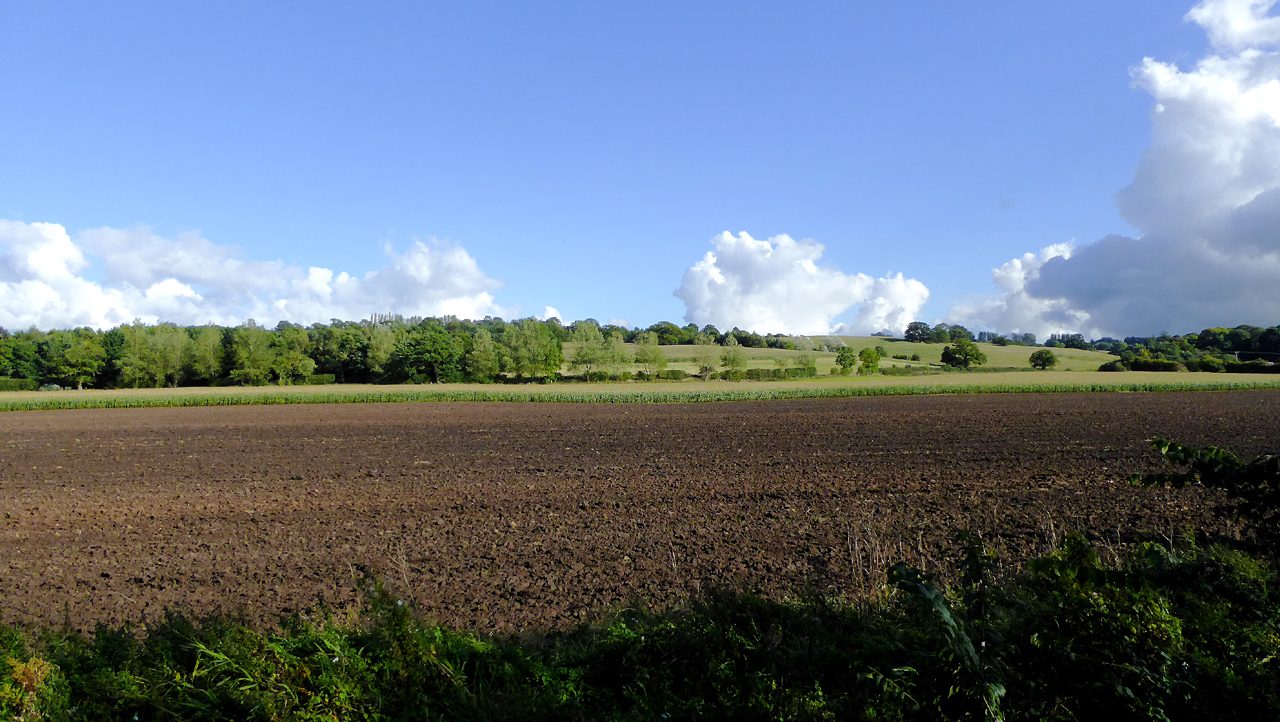
אדמה — משאבי טבע כמו אדמות חקלאיות — היא אחד מארבעת גורמי הייצור
התמורה לכל גורם
כל גורם מקבל תמורה – ההכנסה שהוא מקבל על כך ששימש:
גורם
תמורה
קרקע
שכירות
עבודה
שכר
הון
ריבית
עסקאות
רווח
תנועתיות, כמות ואיכות
תנועתיות של גורם היא עד כמה הוא יכול לעבור בקלות לשימוש או למיקום אחר. עובד עם הרבה כישורים יכול לשנות תפקיד בקלות, ולכן העבודה היא תנועתית. עובד בעל כישור אחד בלבד, או מפעל שלא ניתן להזיז, פחות תנועתי.
הכמות והאיכות של גורמים עשויים להשתנות:
כמות יכולה לעלות או לרדת. כמות העבודה גדלה אם שיעור הלידה עולה או אנשים נכנסים למדינה כדי לעבוד. אדמה עלולה לאבד לים או להיחצב.
איכות יכולה לעלות. הכשרה וחינוך משפרים את איכות העבודה. טכנולוגיה חדשה משפרת את איכות ההון. איכות גבוהה יותר פירושה שכל גורם מסוגל לייצר יותר.
Explore · חקור
Factors of production lab · מעבדת גורמי ייצור
Sort real resources by the factor of production they represent. · מיינו את המשאבים האמיתיים לפי גורם הייצור ש הם מייצגים.
define opportunity cost as the next best alternative given up when a choice is made
explain how opportunity cost influences decisions made by consumers, workers, producers and governments
עברית
להגדיר עלות הזדמנות כהחלופה הטובה ביותר שנעזבה בעת ביצוע בחירה
להסביר כיצד עלות הזדמנות משפיעה על החלטות של צרכנים, עובדים, יצרנים וממשלות
Source: Cambridge International syllabus · מקור: הסיילבוס הבינלאומי של קמבריד'ג'
English
The PPF and opportunity cost
When you choose one thing, you give up the next best choice. That is the real cost of your decision.
Opportunity cost is the next best alternative 替代选择 you give up when you make a choice.
It affects every decision-maker:
A consumer who buys a game gives up the book they could have bought instead.
A worker who takes one job gives up the pay of the next job they could have done.
A producer who makes more cars uses factors that could have made trucks.
A government that builds a hospital gives up the school it could have built with the same money.
Opportunity cost matters because resources are scarce. Every choice has a cost, even when no money changes hands.
עברית
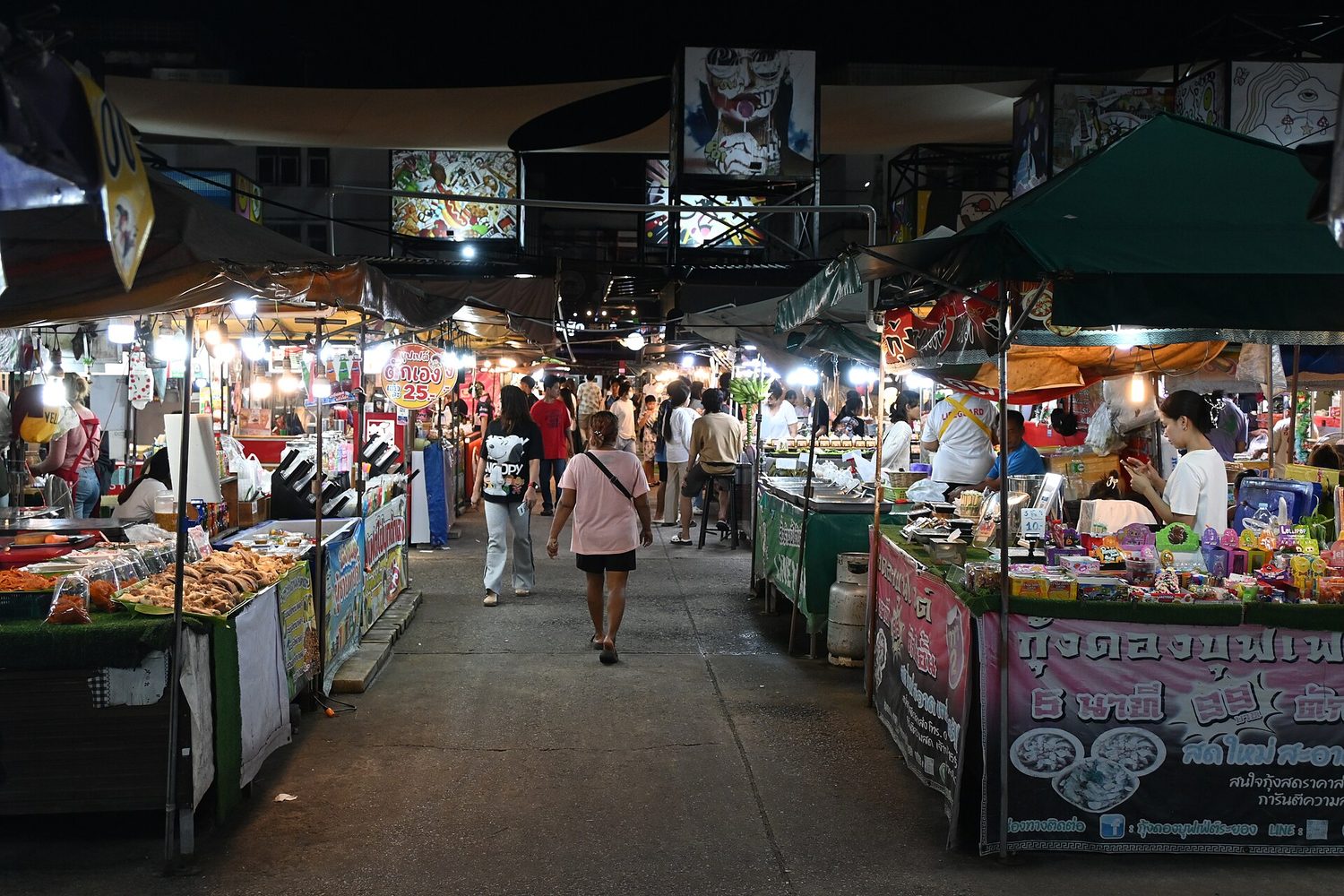
PPF והעלות ההקפניתצרכנים בוחרים מה לקנות בשוק עמוס — הצמצות מחייבת את כולם להכריעבחירה בדבר אחד פירוניה לוותר על האלטרנטיבה הטובה הבאה
כשאתה בוחר דבר אחד, אתה מוותר על האפשרות הטובה ביותר הבאה. זהו הערך האמיתי של החלטתך.
עלות הזדמנות היא האלטרנטיבה הטובה ביותר שמפסידים כאשר עושים בחירה.
זה משפיע על כל קבלן החלטות:
צרכן שקונה משחק מוותר על הספר שהיה יכול לקנות במקום.
עובד שמקבל משרה אחת מוותר על השכר של המשרה הבאה שהיה יכול לבצע.
מייצר שמייצר יותר רכבים משתמש בגורמים שהיו יכולים לייצר משאיות.
ממשלה בונה בית חולים ומפסידה את בית הספר שהייתה יכולה לבנות באותו כסף.
עלות הזדמנות חשובה כי משאבים הם מצומצמים. לכל בחירה יש עלות, גם כשאין מעבר כסף.
Explore · חקור
Opportunity cost on the frontier · עלות הזדמנות לאורך הפנייה
Moving along the frontier, gaining more of one good always means giving up some of the other — that sacrifice is the opportunity cost. · בהתקדמות לאורך הפנייה, השגחה גדולה יותר של טוב אחד תמיד דורשת ויתור על חלק מהטוב השני — ויתור זה הוא עלות ההזדמנות.
Production possibility curve (PPC) diagrams · דיאגרמות עקומת האפשרויות לייצור (PPC)
Syllabus · סיילבוס
English
draw and interpret a PPC showing the maximum combinations of two goods that can be produced
explain points on, inside and outside the curve and movements along the curve (opportunity cost)
explain causes of shifts in the PPC (changes in the quantity/quality of resources, economic growth or decline)
עברית
לשרטט ולפרש קשת PPC המראה את השילובים המקסימליים של שני סוגי סחורות שיכולות להיות מיוצרות
להסביר נקודות על הקשת, בתוכה ובחוצה לה, ותנועות לאורך הקשת (עלות הזדמנות)
להסביר גורמים להזזות בקשת PPC (שינויים בכמות/איכות המשאבים, צמיחה או ירידה כלכלית)
Source: Cambridge International syllabus · מקור: הסיילבוס הבינלאומי של קמבריד'ג'
English
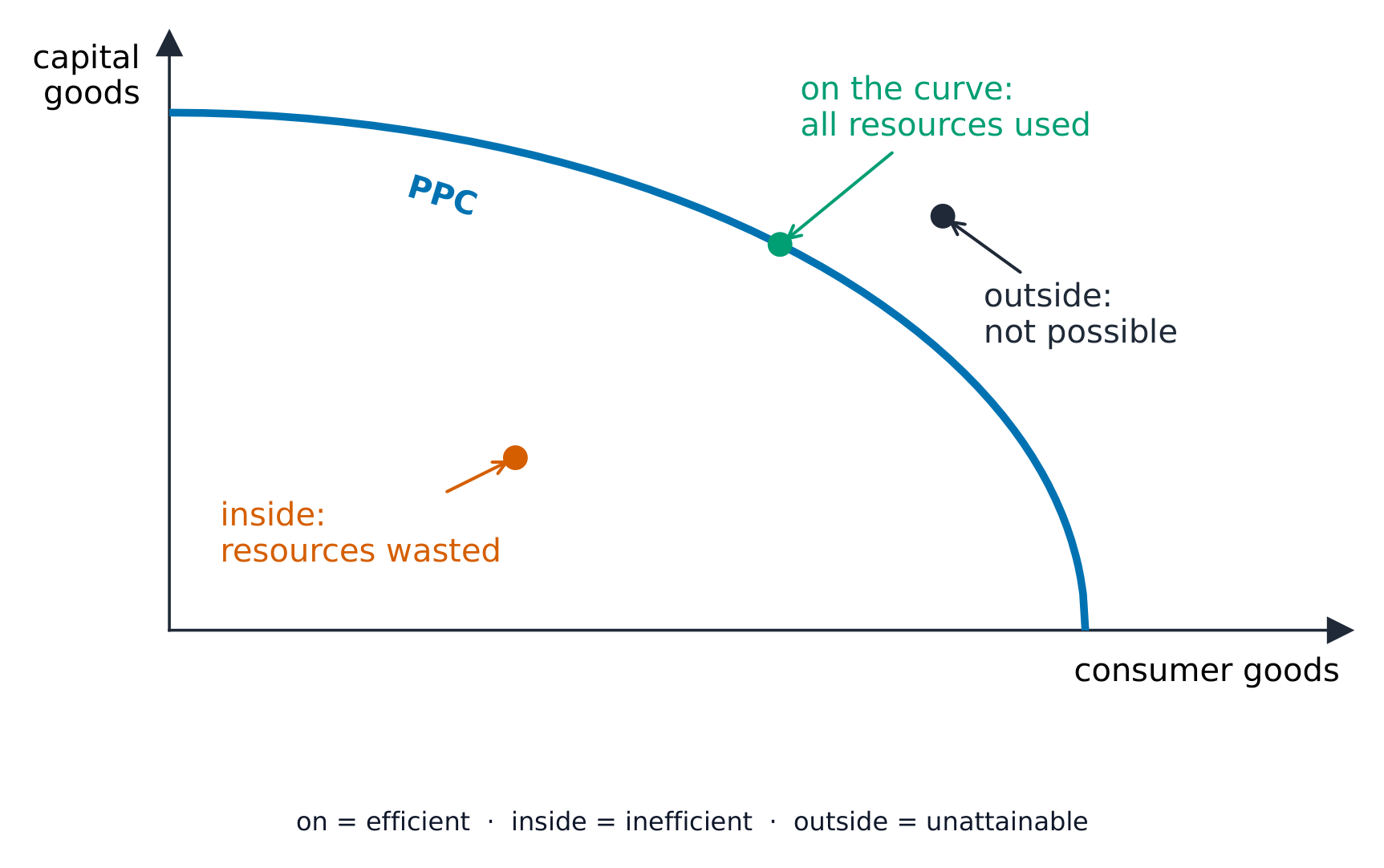
A production possibility curve 生产可能性曲线 (PPC) shows the largest amounts of two goods a country can make when it uses all its resources fully.
Imagine an economy that makes only two types of good, one on each axis:
capital goods — used to make other goods, like machines.
consumer goods — used up by people, like food and clothes.
The PPC is the line joining every point where the economy uses all its resources to make the most it can.
Reading the diagram
Picture the two goods on the two axes. The PPC is a curve that bends from one axis down to the other (it usually bows outward, away from the corner):
A point on the curve: all resources are used fully. The economy makes the most it can.
A point inside the curve: resources are wasted or not all used — for example, there is unemployment 失业. The economy could make more.
A point outside the curve: this is impossible now. There are not enough resources to reach it.
Movements along the curve
If the economy already uses all its resources (a point on the curve), making more of one good means making less of the other. You must move factors from one good to the other. This is a trade-off 取舍.
The amount of the second good you give up is the opportunity cost of the extra first good. This is why the PPC is a clear picture of opportunity cost.
Worked example. An economy on its PPC makes 40 machines and 60 tonnes of food. To make 50 machines it must cut food to 45 tonnes. Give the opportunity cost of the extra machines. Then say what a point of 30 machines and 40 tonnes of food would tell you. The economy is already on the curve, so more of one good must mean less of the other: the 10 extra machines cost 60 − 45 = 15 tonnes of food. That lost food is the opportunity cost, so quote it in tonnes of food - never in money. The second point lies inside the curve, which means resources are idle or wasted, most likely through unemployment; from there the economy could make more of both goods, so moving out to the curve costs nothing at all. Opportunity cost only bites once you are on the curve.
Shifts of the curve
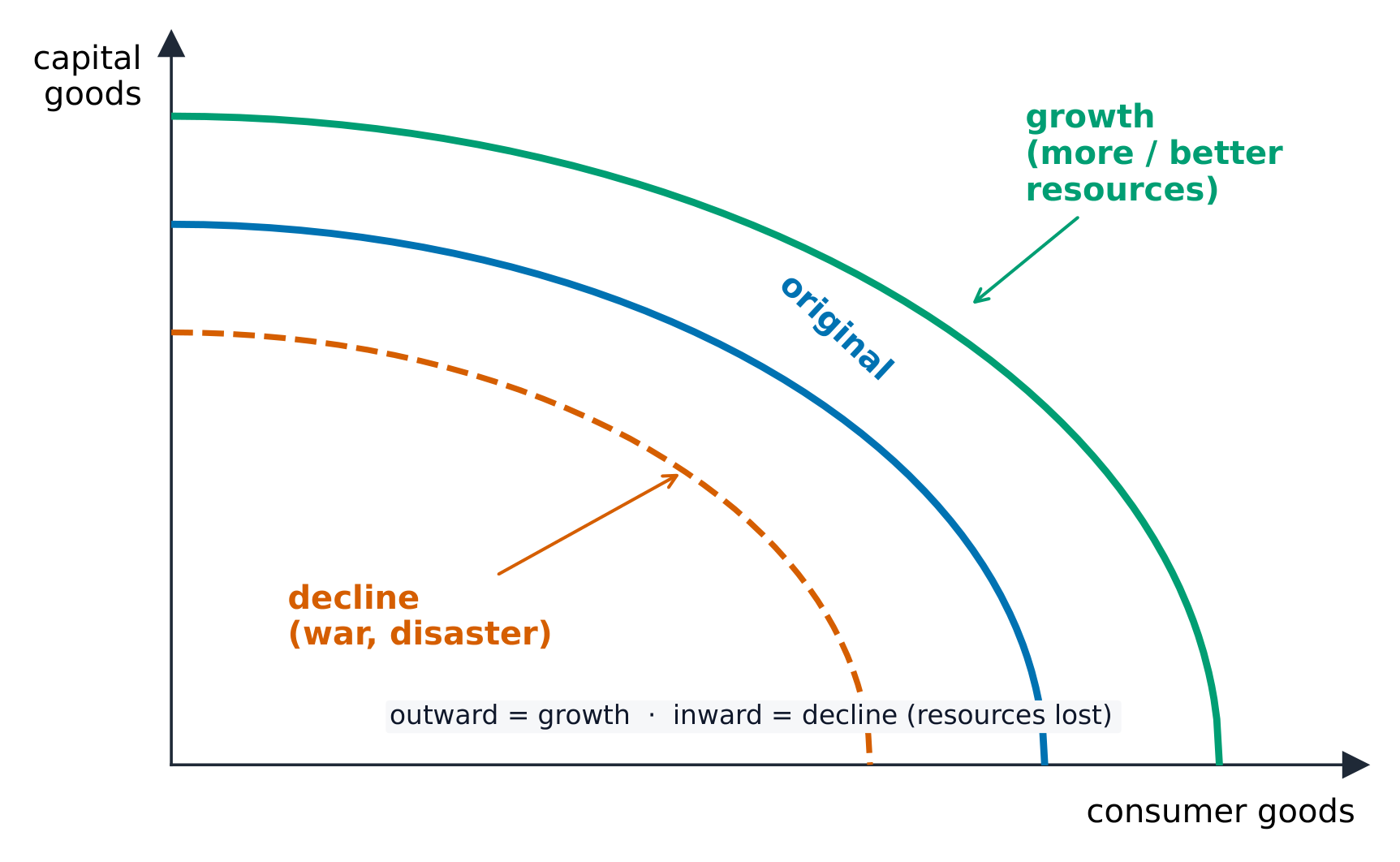
The whole curve can move:
It shifts outward (to the right) when the country can make more of both goods. This is economic growth 经济增长. Causes: more resources (a bigger workforce, more land discovered) or better-quality resources (training, new technology).
It shifts inward (to the left) when the country can make less. This is economic decline 经济衰退. Causes: fewer or worse resources — for example a war, a natural disaster, or using up non-renewable resources 不可再生资源 (resources like oil and coal that cannot be replaced once used).
Do not confuse the two. Moving from inside the curve to the curve (by using idle resources) is a short-term gain. Moving the whole curve outward is a long-term change.
עברית
עקומת האפשרויות לייצור (PPC) מראה את הכמויות הגדולות ביותר של שני סוגי סחורות שארץ יכולה לייצר כאשר היא משתמשת במלא בכל משאביה.
דמיין כלכלה שמייצרת רק שני סוגי סחורות, אחד על כל ציר:
סחורות הון — משמשות לייצור סחורות אחרות, כמו מכונות.
סחורות צריכה — נצילות על ידי אנשים, כמו מזון ובגדים.
עקומת ה-PPC היא הקו המחבר כל נקודה בה הכלכלה משתמשת בכל משאביה כדי לייצר את המקסימום האפשרי.
קריאת הגרף
דמיינו את שני הסוגים של סחורות על שני צירי הקואורדינטות. פקודת האפשרויות לייצור (PPC) היא עקומה הנמתחת מאחד הצירים אל השני (בדרך כלל בולטת החוצה, הרחוקה מהפינה):
נקודה על העקומה: כל המשאבים מושקעים במלואם. הכלכלה מייצרת כמיטב יכולתה.
נקודה בתוך העקומה: משאבים מבוזבזים או לא מושקעים במלואם — לדוגמה, קיים אובדן תעסוקה. הכלכלה יכלה לייצר יותר.
נקודה חוץ לעקומה: מצב זה בלתי אפשרי כעת. אין מספיק משאבים כדי להגיע אליו.
נקודה על העקומה משקיעה את כל המשאבים; בתוך העקומה חלקם מבוזבזים (כגון אובדן תעסוקה); מחוץ לה אינה אפשרית עם המשאבים הקיימים היום.
תנועה לאורך העקומה
אם הכלכלה משקיעה כבר את כל משאביה (נקודה על העקומה), ייצור רב יותר של סוג אחד דורש ייצור פחות של השני. יש להעביר גורמי ייצור מסוג אחד לשני. זוהי התנגשות (trade-off).
כמות הסוג השני שהותרת היא עלות ההזדמנות של הסוג הראשון הנוסף. מכאן שמשתמע ה-PPC הוא תמונה ברורה של עלות הזדמנות.
דוגמה מופתרת. כלכלה הממוקמת על ה-PPC שלה מייצרת 40 מכונות ו-60 טון מזון. כדי לייצר 50 מכונות עליה להוריד את ייצור המזון ל-45 טון. חשבו את עלות ההזדמנות של המכונות הנוספות. לאחר מכן, אמרו מה הנקודה של 30 מכונות ו-40 טון מזון אומרת לנו. הכלכלה נמצאת כבר על העקומה, ולכן ייצור רב יותר של סוג אחד חייב להיות伴随着 פחות של השני: ה-10 המכונות הנוספות עולות 60 − 45 = 15 טון מזון. המזון שאבד הוא עלות ההזדמנות, ולכן יש לתרגם אותו בטון מזון - לעולם לא בכסף. הנקודה השנייה נמצאת בתוך העקומה, מה שמעיד על כך שמשאבים מושקעים או מבוזבזים, ככל הנראה בשל אובדן תעסוקה; משם הכלכלה יכלה לייצר יותר משני הסוגים, ולכן מעבר החוצה לעקומה אינו כרוך באף עלות. עלות ההזדמנות מופיעה רק כאשר אתם על העקומה.
הזזות של העקומה
ניתן להזיז את כל העקומה:
היא זזה החוצה (ימינה) כאשר המדינה יכולה לייצר יותר משני הסוגים. זהו צמיחה כלכלית. גורמים: משאבים נוספים (כוח עבודה גדול יותר, גילוי אדמות חדשות) או משאבים בעלי איכות טובה יותר (הכשרה, טכנולוגיה חדשה).
היא זזה פנימה (שמאלה) כאשר המדינה יכולה לייצר פחות. זהו ירידה כלכלית. גורמים: משאבים פחותים או גרועים יותר — לדוגמה מלחמה, אסון טבע, או שימוש במשאבים לא מתחדשים (משאבים כמו נפט ופחם שאין לחלופין לאחר השימוש בהם).
משאבים נוספים או טובים יותר מזיזים את כל ה-PPC החוצה (צמיחה); מלחמה, אסון או שימוש במשאבים מזיזים אותה פנימה (ירידה).
אל תבלבלו בין שניהם. מעבר מתוך העקומה אל העקומה (ע ידי שימוש במשאבים מושקעים) הוא רווח לטווח קצר. הזזת כל העקומה החוצה היא שינוי לטווח ארוך.
Explore · חקור
The production possibility curve · עקום אפשרויות הייצור
Move along the curve: making more of one good means making less of the other — that's opportunity cost. · זוז לאורך העקומה: יצירת יותר של מוצר אחד דורשת פחות ממוצר אחר — זהו עלות הזדמנות.
Scarcity (unlimited wants, limited resources) forces choice, and every choice has an opportunity cost — the next best alternative you give up.
Learn the four factors of production and the reward each earns: land–rent, labour–wages, capital–interest, enterprise–profit.
On a PPC, a point on the curve uses all resources fully, inside wastes some (e.g. unemployment), and outside is impossible for now. Moving along the curve shows opportunity cost.
Moving to the curve (using idle resources) is a short-term gain; shifting the whole curve outward is long-term economic growth from more or better resources.
עברית
חסכנות (רצונות בלתי מוגבלים, משאבים מוגבלים) מחייבות בחירה, ולכל בחירה יש עלות הזדמנות — האלטרנטיבה הטובה ביותר שנתנסתה.
למדו את ארבעת גורמי הייצור והתמורה שכל אחד מהם מייצר: אדמה–שכירות, עבודה–שכר, הון–ריבית, יוזמה–רווח.
ב-PPC, נקודה על העקומה משקיעה את כל המשאבים במלואם, בתוך בוזבזת חלקם (כגון אובדן תעסוקה), וחוץ ממנו בלתי אפשרי כעת. תנועה לאורך העקומה מדגימה עלות הזדמנות.
תנועה על העקומה (שימוש במשאבים מובטלים) היא רווח לטווח קצר; הזזת כל העקומה כלפי חוץ היא צמיחה כלכלית לטווח ארוך הנובעת ממשאבים רבים או טובים יותר.
Interactive lessons on this topic · שיעורים אינטראקטיביים בנושא זה
Work through it step by step, with instant-check exercises. · לעבור על הדברים צעד אחר צעד, עם תרגילים לבדיקה מיידית.
Pick one and the site follows you — notes, papers, videos and practice all open on it. · בחרו נושא אחד והאתר יעקוב אחריו — הערות, מסמכים, וידאו ותרגולים פתוחים בו.
Type to search notes, lessons, code, vocabulary and past-paper questions across every subject. · הקלד כדי לחפש הערות, שיעורים, קוד, אוצר מילים ושאלות מבחנים בכל הנושאים.