Skip to content · ⁨דלג לתוכן⁩
Subjects · ⁨נושאים⁩

AP 2-D Art and Design · ⁨AP אמנות ועיצוב 2-D⁩

Tips · ⁨טיפים⁩

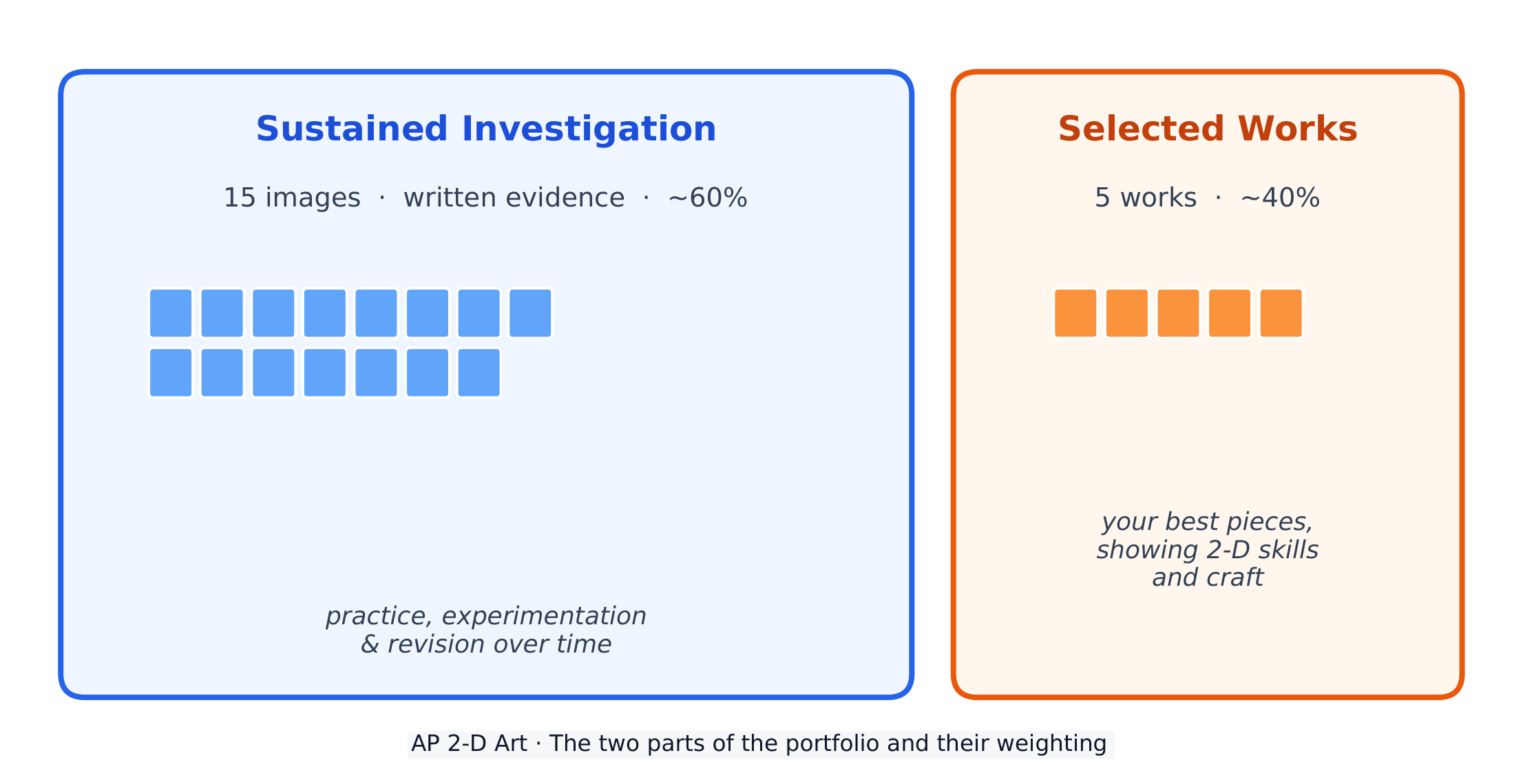
AP 2-D Art and Design is a portfolio course, not an exam course. You submit fifteen Selected Works demonstrating 2-D design skills, and a Sustained Investigation of fifteen images with written evidence showing how one inquiry question developed over time.

The Sustained Investigation is judged on the process, not on fifteen finished pieces. Work that experiments, revises and visibly changes scores higher than fifteen polished but unrelated images.

The writing is assessed too. A vague inquiry question — "I explored colour" — cannot be evidenced; a specific one can. Photograph and date every stage as you go, because the evidence of development cannot be reconstructed at the end.

This is a portfolio course, so the notes deal with what Selected Works and Sustained Investigation actually require, and with writing the accompanying text inside the character limits. There is no written exam to revise for; the library carries the published scoring guidelines instead.

Train all vocabulary · ⁨תרגול כל המילים⁩
  • 1

    Elements of Art

    Watch lesson · ⁨צפה בשיעור⁩
    1.1

    Line · ⁨קו⁩

    Syllabus · ⁨סיילבוס⁩
    English

    Focus: Line is the most basic element of art — a moving point that the eye follows across a surface.

    • A line is a mark with length and direction: straight, curved, angular, or freeform.
    • Lines vary in quality — thick or thin, smooth or rough, continuous or broken, dark or light.
    • Contour lines trace the edges of a form; gesture lines quickly capture movement and energy.
    • Implied lines are suggested, not drawn — by a row of objects, a pointing arm, or a gaze.
    • Direction carries feeling: horizontal reads as calm, vertical as strength, diagonal as action.
    • Artists use line to build shape, shade value (hatching, cross-hatching), imply texture, and lead the eye.
    עברית

    התמקדות: קו הוא האלמנט הבסיסי ביותר באמנות — נקודה נעה שאותה העין עוקבת אחריה על פני משטח.

    • קו הוא סימן בעל אורך וכיוון: ישר, מעוגל, זוויתי או חופשי.
    • קווים משתנים ב-איכות — עבים או דקים, חלקים או מחוספסים, רציפים או שבורים, כהים או בהירים.
    • קווי מתאר מעקרים את הקצוות של צורה; קווי הבעה תופסים במהירות תנועה ואנרגיה.
    • קווים סמויים מוצעים ולא מצוירים — על ידי שורה של חפצים, יד מכוונת או מבט.
    • הכיוון נושא תחושה: אופקי נתפס כשקט, אנכי כחוזקה, אלכסוני כפעולה.
    • אמנים משתמשים בקו לבניית צורה, גווני ערך (גליפת קווים, גליפת צולבות), הצעת מרקם והובלת העין.

    Source: College Board AP Course and Exam Description · ⁨מקור: תיאור הקורס והמבחן של College Board AP⁩

    English

    The elements of art 艺术元素 are the visual "building blocks" every artist uses. The first is line 线条 — a moving point that the eye follows.

    • A line has length and direction; it can be straight, curved, angular, or freeform.
    • Lines have quality: thick or thin, smooth or rough, continuous or broken, dark or light.
    • Contour 轮廓 lines trace the edges of a form; gesture 动态速写 lines capture movement quickly.
    • Implied lines 隐含线 are not drawn but suggested — by a row of objects or a person's gaze.

    Direction carries feeling: horizontal lines feel calm, vertical lines feel strong, and diagonal lines feel active. Artists use line to build shape, shade value (hatching), imply texture, and lead the viewer's eye.

    עברית

    האלמנטים של אמנות הם הבניינים הוויזואליים "הבסיסיים" שמשתמש בהם כל אמן. הראשון הוא קו — נקודה נעה שהעין עוקבת אחריה.

    • לקו יש אורך וכיוון; הוא יכול להיות ישר, מעוגל, זוויתי או חופשי.
    • לקווים יש איכות: עבה או דק, חלק או מחוספס, רציף או מקוטע, כהה או בהיר.
    • קווי קונטור מציירים את שפתו של צורה; קווי גסר תופסים תנועה במהירות.
    • קווים משוערים אינם מצוירים אלא מוצעים — על ידי שורת חפצים או מבטו של אדם.
    הדפס עץ של הוקוסאי המציג גל ענק מתעגל הנכנע להצטברות מעל סירות קטנות, בהרי פוג'י קטנים באופק
    הגל הגדול בקאנגאווה של הוקוסאי: קווי המתחם העקומים והבולטים מובילים את העין לאורך הגל, וקווים הדומים לטפרים בקצף יוצרים תחושת תנועה
    איכויות הקו וההבדל בין צורות גיאומטריות לאורגניות
    הקו משתנה בעוביו ובמאפיין שלו; הצורות הן או גיאומטריות (סדירות) או אורגניות (טבעיות)

    לכיוון יש תחושה: קווים אופקיים נראים רגועים, אנכיים נראים חזקים, אלכסוניים נראים פעילים. אמנים משתמשים בקו כדי לבנות צורה, ליצור ערכי צל (שטחי), להעיד על מרקם ולכיוון את עיניו של הצופה.

    סלפי של ואן גוך: מריחות מברשת אלכסוניות קצרות ומרוגשות ממלאות את הרקע, בעוד הכתפיים והצווארון נשארים רחבים ושקטים
    הסלפי של ואן גוך: מריחות אלכסוניות מרוגשות מאחורי כתפיים אופקיות שקטות — אותם שני כיוונים מבצעים משימות הפוכות בתמונה אחת
    Vocabulary · ⁨מילון מונחים⁩ Train · ⁨אימון⁩
    English עברית
    elements of art/ˈelɪmənts ɒv ɑːt/ אלמנטים של אמנות
    line/laɪn/ קו
    Contour/ˈkɒntʊə/ קו מתאר
    gesture/ˈdʒestʃə/ מחווה
    Implied lines/ɪmˈplaɪd laɪnz/ קווים משתנים
    shape/ʃeɪp/ צורה
    form/fɔːm/ תבנית
    Geometric/ˌdʒiːəʊˈmetrɪk/ גיאומטרי
    organic/ɔːˈɡænɪk/ אורגני
    Positive shape/ˈpɒzɪtɪv ʃeɪp/ צורה חיובית
    negative shape/ˈneɡətɪv ʃeɪp/ צורה שלילית
    1.2

    Shape and Form · ⁨צורה ותצורה⁩

    Syllabus · ⁨סיילבוס⁩
    English

    Focus: Shape is a flat, enclosed area; form is the illusion of a three-dimensional object on a 2-D surface.

    • A shape is a two-dimensional area with a boundary; form appears three-dimensional (height, width, depth).
    • Geometric shapes (circle, square, triangle) are regular and mechanical; organic shapes are free and natural.
    • Positive shapes are the objects; negative shapes are the empty spaces around and between them.
    • Form is created on a flat surface through value (shading), overlapping, and perspective.
    • Recognising negative space helps an artist see and compose more accurately.
    עברית

    מיקוד: צורה היא שטח שטוח וסגור; עיצוב הוא הטווח של אובייקט תלת-ממדי על פני משטח 2-D.

    • צורה היא אזור דו-ממדי עם גבול; מבנה נראה תלת-ממדי (גובה, רוחב, עומק).
    • צורות גיאומטריות (עיגול, ריבוע, משולש) הן סדירות ומכניות; צורות אורגניות הן חופשיות וטבעיות.
    • צורות חיוביות הן האובייקטים עצמם; צורות שליליות הן החללים הריקים סביבם ובין אותן.
    • מבנה נוצר על פני משטח שטוח באמצעות ערך (גווני צל), חפיפה ופרספקטיבה.
    • זיהוי מרחב שלילי עוזר לאמן לראות ולעצב בצורה מדויקת יותר.

    Source: College Board AP Course and Exam Description · ⁨מקור: תיאור הקורס והמבחן של College Board AP⁩

    English

    A shape 形状 is a flat, enclosed area; a form 形体 has the illusion of three dimensions (height, width, and depth).

    • Geometric 几何 shapes (circle, square, triangle) are regular and mechanical; organic 有机 shapes are free and natural.
    • Positive shape 正形 is the object; negative shape 负形 is the empty space around and between objects — learning to see it makes drawing far more accurate.
    • Form is created on a flat surface with value (shading), overlapping, and perspective.
    עברית

    צורה היא אזור שטוח וסגור; תצורה יוצרת את האילוזיה של שלושה מימדים (גובה, רוחב ועומק).

    • צורות גיאומטריות (עיגול, ריבוע, משולש) הן סדירות ומכניות; צורות אורגניות הן חופשיות וטבעיות.
    • צורת חיובית היא החפץ עצמו; צורת שלילית היא השטח הריק סביב ובין החפצים — היכולת לראות אותה הופכת את הציור למדויק יותר.
    • תצורה נוצרת על משטח שטוח באמצעות ערך (צלליות), חפיפה ופרספקטיבה.
    1.3

    Value · ⁨ערך⁩

    Syllabus · ⁨סיילבוס⁩
    English

    Focus: Value is the lightness or darkness of a colour or tone — the key to showing form and depth.

    • Value runs from white through greys to black; a value scale shows the gradual steps.
    • Highlight, midtone, core shadow, reflected light, and cast shadow describe light on a form.
    • Strong value contrast creates drama and a clear focal point; close values feel soft and calm.
    • Chiaroscuro is the bold use of light and dark to model three-dimensional form.
    • Squinting removes colour and helps an artist judge value relationships.
    עברית

    מיקוד: ערך הוא בהירות או כהות של צבע או גוון — המפתח להצגת תבנית ועומק.

    • ערך נע בין לבן דרך אפורים עד שחור; סולם ערכים מראה את השלבים ההדרגתיים.
    • הארה, טון ביניים, צל ליבה, אור מחזיר ו-צל נופל מתארים תאורה על תבנית.
    • ניגוד ערך חזק יוצר דרמה ונקודת התמקדות ברורה; ערכים קרובים נראים רכים ושקטים.
    • קיארוסקורו הוא השימוש הבולט באור ובחושך כדי לעצב תבנית תלת-ממדית.
    • סגירת העיניים מסירה צבע ועוזרת לאמן להעריך את היחסים בין ערכים.

    Source: College Board AP Course and Exam Description · ⁨מקור: תיאור הקורס והמבחן של College Board AP⁩

    English
    Light logic: how light describes form
    The value scale

    Value 明度 is the lightness or darkness of a tone — the single most powerful tool for showing three-dimensional form.

    • A value scale 明度阶 runs from white through greys to black.
    • Light on a form has a highlight 高光, midtones 中间调, a core shadow 明暗交界线, reflected light 反光, and a cast shadow 投影.
    • Chiaroscuro 明暗对照法 is the bold use of light and dark to model form. Squinting removes colour and helps you judge value.
    עברית
    לוגיקת האור: כיצד האור מתאר תצורה
    סולם הערכים

    ערך הוא בהירות או כהות של גוון — הכלי החזק ביותר להצגת תצורה תלת-ממדית.

    מדרגת ערכים נמתחת בצעדים שווים מלבן לשחור
    מדרגת ערכים צועדת באופן שווה מלבן לשחור; ניגוד ערכים חזק יוצר דרמה ונקודת מוקד
    • סקאלת ערכים נעה מלבן דרך אפורים עד שחור.
    • אור על פני גוף כולל הברקה, גוונים בינוניים, צל ליבה, אור מחזיר וצל מוטל.
    • שאר-או-קלו היא השימוש הבולט באור ובחושך לעיצוב פנים הגוף. ריסום העיניים מסיר צבע ועוזר להעריך ערך.
    ציור מהמאה ה-18 המואר בנרות, בו אנשים מתכנסים סביב דגם של מערכת השמש, פניהם זוהרים על רקע כהה
    "פילוסוף מלמד על אוררי" מאת יוזף רייט: אור אחד נסתר במרכז יוצר ניגוד ערכים חזק (שאר-או-קלו), ומעלה כל פנים מהחושך
    Vocabulary · ⁨מילון מונחים⁩ Train · ⁨אימון⁩
    English עברית
    Value/ˈvæljuː/ ערך
    value scale/ˈvæljuː skeɪl/ סולם ערכים
    highlight/ˈhaɪlaɪt/ אור דולק
    midtones/ˈmɪdtəʊnz/ גוונים בינוניים
    core shadow/kɔː ˈʃædəʊ/ צל ליבה
    reflected light/rɪˈflektɪd laɪt/ אור מחזיר
    cast shadow/kæst ˈʃædəʊ/ צל מוטל
    Chiaroscuro/ˌtʃaɪərəˈskjʊərəʊ/ צ'יארוסקורו
    Colour/ˈkʌlə/ צבע
    colour wheel/ˈkʌlə wiːl/ גלגל צבעים
    hue/hjuː/ גוון
    saturation/ˌsætʃəˈreɪʃn/ רווייה
    Primary/ˈpraɪməri/ ראשוני
    secondary/ˈsekəndəri/ שניוני
    Complementary/ˌkɒmplɪˈmentəri/ משלים
    neutralise/ˈnjuːtrəlaɪz/ נטרול
    Analogous/əˈnæləɡəs/ אנלוגי
    1.4

    Color · ⁨צבע⁩

    Syllabus · ⁨סיילבוס⁩
    English

    Focus: Colour is light reflected from a surface; it has three properties and follows the logic of the colour wheel.

    • Colour has three properties: hue (its name), value (light/dark), and saturation/intensity (dull to vivid).
    • Primary colours (red, yellow, blue) mix to make secondary (orange, green, violet) and tertiary colours.
    • Colour schemes: complementary, analogous, monochromatic, triadic, warm, and cool.
    • Warm colours (red, orange, yellow) advance and energise; cool colours (blue, green, violet) recede and calm.
    • Adding white makes a tint, black makes a shade, grey makes a tone.
    • Complementary colours placed side by side intensify each other; mixed together they dull (neutralise).
    עברית

    מיקוד: צבע הוא אור המוחזר מפני שטח; יש לו שלושה מאפיינים והוא עוקב אחרי הלוגיקה של גלגל הצבעים.

    • לצבע יש שלושה מאפיינים: גוון (שמו), ערך (בהיר/כהה), ו-רוויה/אינטנסיביות (עמום ועד זוהר).
    • צבעים בסיסיים (אדום, צהוב, כחול) מעורבים ליצירת צבעים משניים (כתום, ירוק, סגול) וצבעים משולבים.
    • תרשימי צבע: משלימים, אנלוגיים, מונוכרמטיים, טריאדיים, חמים וקרירים.
    • צבעים חמים (אדום, כתום, צהוב) נדחים קדימה ומעוררים; צבעים קרירים (כחול, ירוק, סגול) נסוגים ומרגיעים.
    • הוספת לבן יוצרת גוון בהיר, הוספת שחור יוצרת גוון כהה, ואפור יוצר טון. הערה: בפרטים מקוריים, 'tint' = tint, 'shade' = shade, 'tone' = tone.
    • צבעים משלימים הממוקמים ליד זה מחדדים זה את זה; בערבוב הם משתממים (מתneutralizents).

    Source: College Board AP Course and Exam Description · ⁨מקור: תיאור הקורס והמבחן של College Board AP⁩

    English
    The colour wheel and its schemes

    Colour 色彩 is light reflected from a surface. It has three properties and follows the logic of the colour wheel 色轮.

    • Colour's three properties: hue 色相 (its name), value (light/dark), and saturation 饱和度 (dull to vivid).
    • Primary 三原色 (red, yellow, blue) mix to make secondary 间色 and tertiary colours.
    • Complementary 互补色 colours sit opposite on the wheel: placed side by side they intensify each other, but mixed together they neutralise 中和 into a dull grey-brown. Analogous 邻近色 colours sit next to each other and harmonise.
    • Warm 暖色 colours (red, orange, yellow) advance; cool 冷色 colours (blue, green, violet) recede. A tint adds white, a shade adds black.
    עברית
    גלגל הצבע והתרומות שלו

    צבע הוא אור המוחזר מפני משטח. יש לו שלושה מאפיינים והוא פועל לפי לוגיקת גלגל הצבע.

    גלגל הצבע: גוונים ראשוניים, משניים וטרטריים, עם חצאים חמים וקרירים
    צבעים ראשוניים מתערבלים לגוונים משניים וטרטריים; צבעים משלימים יושבים זה מול זה
    • שלושת מאפייני הצבע: גוון (שמו), ערך (בהירות/חשיכה) ורוויה (מעונת לברק).
    • ראשוניים (אדום, צהוב, תכלת) מתערבלים ליצירת צבעים משניים וטרטריים.
    • צבעים משלימים יושבים זה מול זה בגלגל: כאשר הם מופרשים זה לצד זה הם מחזקים זה את זה, אך כאשר מתערבלים יחד הם מתנטרלים לגרז-אפור מעונת. צבעים אנלוגיים יושבים זה לצד זה וחוברים בין עצמם.
    • צבעים חמים (אדום, כתום, צהוב) נדחים קדימה; צבעים קרירים (תכלת, ירוק, סגול) נסוגים אחורה. תגובה מוסיפה לבן, גוון מוסיף שחור.
    ציור טבע דומם של ואן גוך של אגרטל מצלעות שמש, צבוע כמעט לחלוטין בגווני צהוב וזהב
    "מצלעות השמש" של ואן גוך בנויות כמעט לחלוטין מגוונים חמים של צהוב וכתום, תרומה אנלוגית שמרגישה בהירה ומאוחדת
    Explore · ⁨חקור⁩

    Warm or cool colour? · ⁨צבע חם או קר?⁩

    Warm colours (red, orange, yellow) feel energetic and seem to advance; cool colours (blue, green, violet) feel calm and seem to recede. · ⁨צבעים חמים (אדום, כתום, צהוב) נראים אנרגטיים ונראים כאילו הם מתקרבים; צבעים קרירים (כחול, ירוק, סגול) נראים רגועים ונראים כאילו הם מתרחקים.⁩

    Vocabulary · ⁨מילון מונחים⁩ Train · ⁨אימון⁩
    English עברית
    Warm/wɔːm/ חם
    cool/kuːl/ קריר
    1.5

    Texture · ⁨מרקם⁩

    Syllabus · ⁨סיילבוס⁩
    English

    Focus: Texture is the surface quality of a work — how it feels or how it appears to feel.

    • Actual (tactile) texture can be physically touched (thick paint, collage, rough paper).
    • Implied (visual) texture is the illusion of a surface, created with marks, value, and pattern.
    • Texture is built through mark-making: stippling, hatching, dry-brush, impasto, and frottage (rubbing).
    • Contrasting smooth and rough areas adds interest and can direct attention.
    • In photography and digital work, texture comes from light, focus, and surface detail.
    עברית

    מיקוד: מרקם הוא איכות הפני השטח של יצירה – איך היא מרגישה או איך נראית כמו שהיא מרגישה.

    • מרקם אמיתי (משיי) ניתן למגע פיזי (צבע עבה, קולאז', נייר מחוספס).
    • מרקם משוער (ויזואלי) הוא אשליית פני שטח, הנוצרת באמצעות סימנים, ערך ותבנית.
    • טקסטורה נוצרת דרך סימני ציור: נקודות, קווי שיחוק, מברשת יבשה, אימפסטו ופרוטאז' (שפשוף).
    • ניגוד בין אזורים חלקים וגסים מוסיף עניין ועלול לכוון את תשומת הלב.
    • בצילום ובעבודה דיגיטלית, הטקסטורה נובעת מאור, פוקוס ופרטי משטח.

    Source: College Board AP Course and Exam Description · ⁨מקור: תיאור הקורס והמבחן של College Board AP⁩

    English

    Texture 肌理 is the surface quality of a work — how it feels, or how it appears to feel.

    • Actual (tactile) texture 实际肌理 can be physically touched (thick paint, collage, rough paper).
    • Implied (visual) texture 视觉肌理 is the illusion of a surface, made with marks, value, and pattern.
    • Techniques include stippling, hatching, impasto 厚涂 (thick paint), and dry-brush. Contrasting smooth and rough areas adds interest and can direct the eye.
    עברית

    מרקם הוא איכות השטח של יצירה — איך היא מרגישה או איך נראה שהיא מרגישה.

    • מרקם אמיתי (מחוש) ניתן למגע פיזי (צבע עבה, קולאז', נייר מחוספס).
    • מרקם משוקע (ויזואלי) הוא אשליית פני שטח, הנוצרת באמצעות סימנים, ערכים ודפוס.
    • הטכניקות כוללות נקודותיות, צלעת, אימפסטו (צבע עבה) ומברשת יבשה. ניגוד בין אזורים חלקים לגס מוסיף עניין ועשוי להנחות את העין.
    תמונת סגנון בד ארוגה בקרוב: המרקם הוא איכות הפני שטח שניתן לראות או להרגיש — אמיתי או משוקע
    תמונת סגנון בד ארוגה בקרוב: המרקם הוא איכות הפני שטח שניתן לראות או להרגיש — אמיתי או משוקע
    Vocabulary · ⁨מילון מונחים⁩ Train · ⁨אימון⁩
    English עברית
    Texture/ˈtekstʃə/ מרקם
    Actual (tactile) texture/ˈæktʃuːəl ˈtekstʃə/ מרקם אמיתי (משיקי)
    Implied (visual) texture/ɪmˈplaɪd ˈtekstʃə/ מרקם משוער (ויזואלי)
    impasto/ɪmˈpæstəʊ/ אימפסטו
    Space/speɪs/ מרחב
    overlapping/ˌəʊvəˈlæpɪŋ/ חפיפה
    foreground/ˈfɔːɡraʊnd/ רקע קדמי
    middle ground/ˈmɪdl ɡraʊnd/ אמצע המרחב
    background/ˈbækɡraʊnd/ רקע אחורי
    Linear perspective/ˈlɪnɪə pəˈspektɪv/ פרספקטיבה ליניארית
    vanishing point/ˈvænɪʃɪŋ pɔɪnt/ נקודת היעלמות
    1.6

    Space · ⁨מרחב⁩

    Syllabus · ⁨סיילבוס⁩
    English

    Focus: Space is the area within, around, and between the parts of a work, including the illusion of depth.

    • Positive space is filled by the subject; negative space is the empty area around it.
    • Artists create the illusion of depth with overlapping, size, placement, and detail.
    • Linear perspective uses a horizon line and vanishing point(s) so parallel lines converge.
    • Atmospheric (aerial) perspective makes distant objects paler, bluer, and less detailed.
    • Foreground, middle ground, and background organise a scene from near to far.
    • The format and cropping of the picture plane shape how space is read.
    עברית

    הדגשה: מרחב הוא האזור בתוך, סביב ובין חלקיו של היצירה, כולל הילוזיה לעומק.

    • מרחב חיובי מלא על ידי הנושא; מרחב שלילי הוא השטח הפנוי סביבו.
    • אמנים יוצרים את הילוזיה של עומק באמצעות חפיפה, גודל, מיקום ופרטים.
    • פרספקטיבה ליניארית משתמשת בקו אופק ונקודת בלימה אחת או יותר כדי שהקווים המקבילים יתכנסו.
    • פרספקטיבה אטמוספרית (אווירית) גורמת לחפצים הרחוקים להיראות בהירים יותר, כחולים ומפורטים פחות.
    • רקע קדמי, רקע ביניים ורקע אחורי מסדרים סצנה מהקרוב למרחוק.
    • הפורמט והחיתוך של המישור התמונתי מעצבים כיצד המרחב נתפס.

    Source: College Board AP Course and Exam Description · ⁨מקור: תיאור הקורס והמבחן של College Board AP⁩

    English
    Atmospheric perspective
    One-point perspective

    Space 空间 is the area within, around, and between the parts of a work, including the illusion of depth on a flat surface.

    • Positive space is filled by the subject; negative space is the empty area around it.
    • Depth is created with overlapping 重叠, size, placement, and detail.
    • A scene organises into three depth planes: foreground 前景 (nearest), middle ground 中景, and background 背景 (farthest). The nearest plane usually carries the most detail and contrast, the farthest the least.
    • Linear perspective 线性透视 uses a horizon line and vanishing point 灭点 so parallel lines converge; atmospheric perspective 空气透视 makes distant things paler, bluer, and less detailed.
    • The format and cropping of the picture plane shape how the space is read.

    Worked example (applying the concept). Asked to describe how line creates meaning in a portrait, a strong answer names the element, its quality, and its effect: "The artist uses thick, jagged diagonal lines in the background, and their restless, active direction makes the calm horizontal lines of the sitter's shoulders feel even more still." Naming the element and linking it to a feeling is what portfolio written evidence and analysis questions both reward.

    עברית
    Perspectiva atmosférica
    Perspectiva de un punto de fuga

    Mרחב הוא האזור בתוך, סביב ובין החלקים של יצירה, כולל אשליית העומק על פני שטח שטוח.

    • מרחב חיובי מלא על ידי הנושא; מרחב שלילי הוא האזור הריק סביבו.
    • עומק נוצר באמצעות חפיפה, גודל, מיקום ומפורטות.
    • סצנה מאורגנת לשלושה רמות עומק: רקע קדמי (הקרוב ביותר), רקע ביניים, ורקע אחורי (הרחוק ביותר). הרמה הקרובה ביותר בדרך כלל מכילה את הפרטים והניגודים הרבים ביותר, והרחוקה ביותר את המעט ביותר.
    • פרספקטיבה ליניארית משתמשת בקו אופק ונקודת היעלמות כך שקווים מקבילים יתכנסו; פרספקטיבה אטמוספרית גורמת לדברים הרחוקים להיראות בהירים יותר, כחולים יותר ופחות מפורטים.
    • הפורמט והחיתוך של מישור התמונה מעצבים כיצד המרחב נתפס.

    דוגמה מפורטת (יישום המושג). כשנשאלים לתאר כיצד קו יוצר משמעות בדיוקן, תשובה חזקה מצינה את האלמנט, את איכותו והשפעתו: «האמן משתמש בקווים אלכסוניים עבים ומשונייים ברקע, וכיוונם המרגש והפעיל גורם לקווים האופקיים השקטים של כתפיו של הדמות להיראות עוד יותר רגועים.» ציון האלמנט וגם קישורו לתחושה הם מה שהתמסורות הכתיבה בפורטפוליו ושאלות הניתוח מעריכים.

    Vocabulary · ⁨מילון מונחים⁩ Train · ⁨אימון⁩
    English עברית
    atmospheric perspective/ˌætməsˈferɪk pəˈspektɪv/ פרספקטיבה אטמוספרית
    1.6

    Exam tips · ⁨טיפים לבחינות⁩

    English
    • Name the element precisely — line, shape or form, value, colour, texture, space — in any analysis.
    • Justify how form is modelled with a value scale and a single light source.
    • Read the colour wheel: identify complementary versus analogous schemes and warm or cool temperature.
    • Separate shape (2-D) from form (3-D) and actual from implied texture.
    • Explain depth with overlap, size, linear perspective, and atmospheric perspective.
    עברית
    • ציינו את ה-אלמנט במדויק — קו, צורה או פורמה, ערך, צבע, מרקם, מרחב — בכל ניתוח.
    • הצדיקו כיצד פורמה מדומה באמצעות סקאלת ערכים ומקור אור אחד.
    • קראו אתגלגל הצבע: זיהו תוכניות משלימות לעומת תוכניות אנלוגיות וטמפרטורה חמה או קרה.
    • הפרידו בין צורה (2-D) לבין פורמה (3-D) ובין מרקם אמיתי לבין מרקם משוקע.
    • הסבר עומק באמצעות חפיפה, גודל, פרספקטיבה ליניארית ופרספקטיבה אטמוספרית.
  • 2

    Principles of Design

    Watch lesson · ⁨צפה בשיעור⁩
    2.1

    Balance · ⁨איזון⁩

    Syllabus · ⁨סיילבוס⁩
    English

    Focus: Balance is the visual distribution of weight in a composition so it feels stable.

    • Symmetrical (formal) balance mirrors both sides of a central axis — calm and orderly.
    • Asymmetrical (informal) balance uses different elements of equal visual weight — dynamic and lively.
    • Radial balance arranges elements around a central point.
    • Visual weight is affected by size, colour, value, texture, and position.
    • A large, dull shape can balance a small, bright one on the other side.
    עברית

    הדגשה: איזון הוא החלוקה הוויזואלית של משקל ברקע הציור כך שזה מרגיע יציב.

    • איזון סימטרי (רשמי) מחקה את שני צדי ציר מרכזי – רגוע ומסודר.
    • איזון לא-סימטרי (בלתי רשמי) משתמש באלמנטים שונים בעל משקל ויזואלי שווה – דינמי וחיוני.
    • איזון רדיאלי סדר אלמנטים סביב נקודה מרכזית.
    • המשקל הוויזואלי מושפע מגודל, צבע, ערך, טקסטורה ומיקום.
    • צורה גדולה וכבדה יכולה לאזן צורה קטנה ובהירה מצדו.

    Source: College Board AP Course and Exam Description · ⁨מקור: תיאור הקורס והמבחן של College Board AP⁩

    English
    Balance: symmetrical, asymmetrical, radial

    The principles of design 设计原则 are the "rules" for arranging the elements of art. The first is balance 平衡 — the visual distribution of weight so a work feels stable.

    • Symmetrical (formal) balance 对称平衡 mirrors both sides of a central axis — calm and orderly.
    • Asymmetrical (informal) balance 非对称平衡 uses different elements of equal visual weight 视觉重量 — dynamic and lively.
    • Radial balance 辐射平衡 arranges elements around a central point.

    Visual weight is affected by size, colour, value, and position: a small bright shape can balance a large dull one.

    עברית
    איזון: סימטרי, לא-סימטרי, רדיאלי

    עקרונות העיצוב הם ה"חוקים" לסידור אלמנטים של אמנות. הראשון הוא איזון — החלוקה הוויזואלית של משקל כדי שהיצירה תרגיש יציבה.

    שלושה סוגי איזון: סימטרי, לא-סימטרי ורדיאלי
    איזון סימטרי משקף ציר מרכזי; איזון לא-סימטרי מאזן אלמנטים שונים; איזון רדיאלי קורן ממרכז
    • איזון סימטרי (רשמי) משקף את שני צדיו של ציר מרכזי — שקט ומסודר.
    • איזון לא-סימטרי (לא רשמי) משתמש באלמנטים שונים בעלי משקל ויזואלי שווה — דינמי וחיוני.
    • איזון רדיאלי מסדר אלמנטים סביב נקודה מרכזית.

    משקל ויזואלי מושפע מגודל, צבע, ערך והיקום: צורה קטנה בהירה יכולה לאזן צורה גדולה כהה.

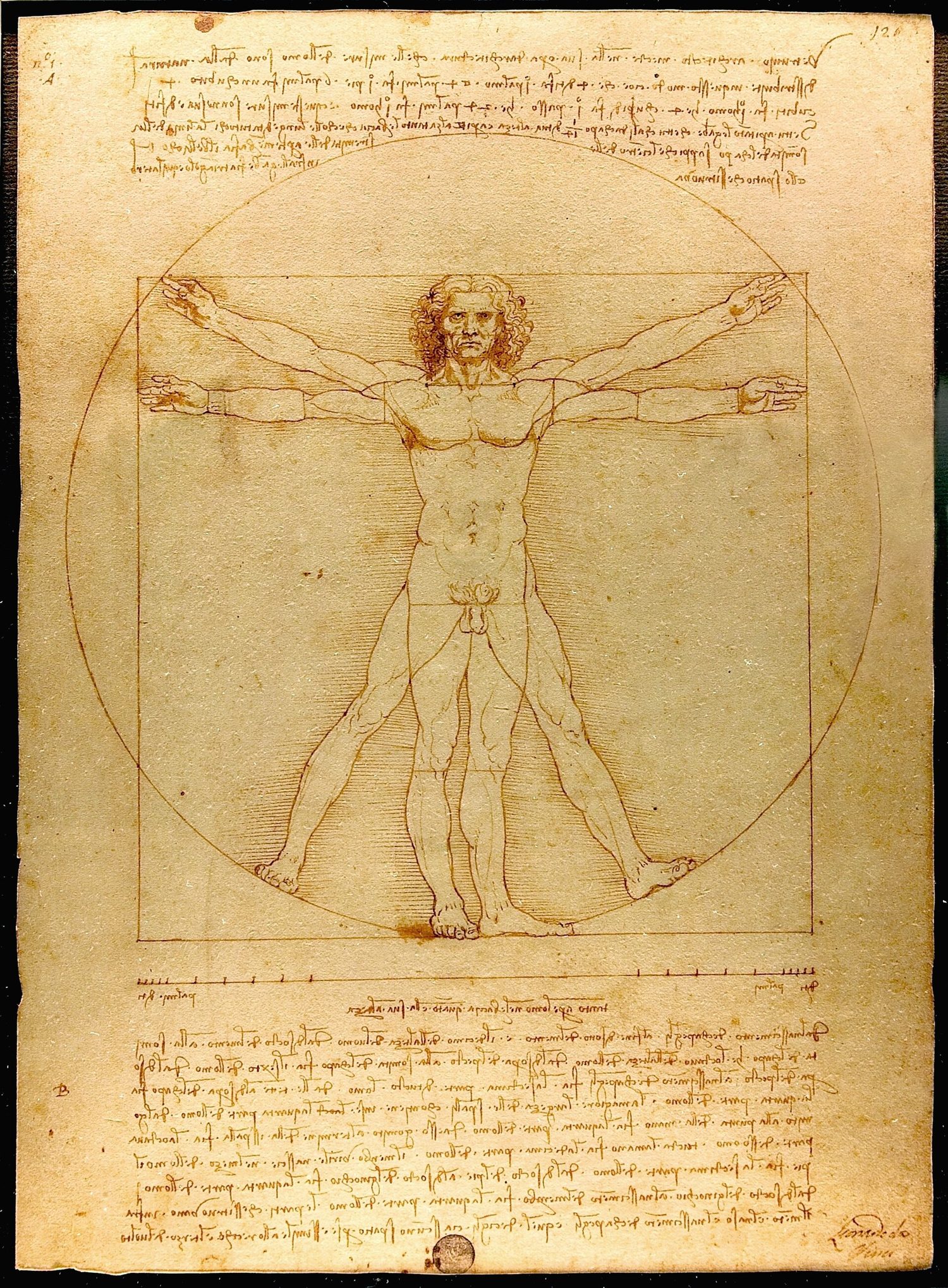
    ציור דיו של להונרדו די וינקו של אדם עם זרועות ורגליים פרושות, מותאם גם לעיגול וגם לריבוע
    האדם הוויטרובי של לאוורדו: הדמות מצוירת עם סימטרי כמעט מושלם סביב ציר אנכי מרכזי, והמעגל המקיף מעניק לה גם איזון רדיאלי

    ההרכב מאזן בין אור, מסה ועניין בכל רחבי משטח התמונה *ההרכב מאזן אור, מסה ועניין על פני המישור התמונה

    Explore · ⁨חקור⁩

    Which kind of balance? · ⁨איזה סוג של איזון?⁩

    Symmetrical balance mirrors a central axis; asymmetrical balance weighs different elements of equal visual weight; radial balance radiates from a centre. · ⁨איזון סימטרי משקף ציר מרכזי; איזון א-סימטרי מאזן אלמנטים שונים בעלי משקל ויזואלי שווה; איזון רדיאלי נפץ ממרכז.⁩

    Vocabulary · ⁨מילון מונחים⁩ Train · ⁨אימון⁩
    English עברית
    principles of design/ˈprɪnsɪplz ɒv dɪˈzaɪn/ עקרונות עיצוב
    balance/ˈbæləns/ יתרה
    Symmetrical (formal) balance/sɪˈmetrɪkl ˈbæləns/ איזון סימטרי (פורמלי)
    Asymmetrical (informal) balance/ˌeɪsɪˈmetrɪkl ˈbæləns/ איזון לא-סימטרי (לא פורמלי)
    visual weight/ˈvɪʒuːəl weɪt/ משקל ויזואלי
    Radial balance/ˈreɪdɪəl ˈbæləns/ איזון רדיאלי
    Emphasis/ˈemfəsɪs/ הדגשה
    focal point/ˈfəʊkl pɔɪnt/ נקודת מיקוד
    Subordination/ˌsʌbɔːdɪˈneɪʃn/ היפוקלזה
    Contrast/ˈkɒntræst/ ניגוד
    visual hierarchy/ˈvɪʒuːəl ˈhaɪərɑːki/ היררכיה ויזואלית
    2.2

    Emphasis and Focal Point · ⁨דגש ונקודת מוקד⁩

    Syllabus · ⁨סיילבוס⁩
    English

    Focus: Emphasis makes one part of a work stand out as the centre of interest (the focal point).

    • A focal point is where the eye is drawn first; emphasis creates it.
    • Emphasis is built through contrast — of size, colour, value, isolation, or placement.
    • Convergence (lines that point) and the rule of thirds help locate a strong focal point.
    • Subordination keeps other areas quieter so the focal point leads.
    • A work may have one dominant focal point and smaller secondary accents.
    עברית

    הדגשה: הדגשה גורמת לחלק אחד מהיצירה לבלוט כמרכז העניין (נקודת המיקוד).

    • נקודת מיקוד היא המקום שאליו העין נמשכת תחילה; הדגשה יוצרת אותה.
    • הדגשה נבנית דרך ניגוד — של גודל, צבע, ערך, בידוד או מיקום.
    • התכנסות (קווים המצביעים) ו-חוק השלישיות עוזרים למקם נקודת מיקוד חזקה.
    • התיכפות שומרת שאר האזורים שקטים כדי שהנקודה המרכזית תוביל.
    • יצירה עשויה להיות בעלת נקודת מיקוד דומיננטית אחת ותוספות משניות קטנות יותר.

    Source: College Board AP Course and Exam Description · ⁨מקור: תיאור הקורס והמבחן של College Board AP⁩

    English

    Emphasis 强调 makes one part of a work stand out as the centre of interest — the focal point 视觉焦点, where the eye is drawn first.

    • Emphasis is created through contrast — of size, colour, value, isolation, or placement.
    • Leading lines and the rule of thirds help place a strong focal point.
    • Subordination 从属 keeps other areas quieter so the focal point leads.
    עברית

    דגש גורם לחלק אחד מהיצירה הבולט כמרכז העניין — נקודת המוקד, שם העין נמשכת תחילה.

    • דגש נוצר באמצעות ניגוד — בגודל, צבע, ערך, בידוד או מיקום.
    • קווים מנחים וכלל השלישיות עוזרים למקם נקודת מוקד חזקה.
    • התיכפות שומרת שאר האזורים שקטים כדי שהנקודה המרכזית תוביל.
    2.3

    Contrast · ⁨ניגוד⁩

    Syllabus · ⁨סיילבוס⁩
    English

    Focus: Contrast is the difference between elements — it creates energy, variety, and readability.

    • Contrast can be of value (light/dark), colour (complementary), shape, texture, or size.
    • Strong contrast attracts attention and defines a focal point.
    • Low contrast unifies a work and can feel calm, subtle, or moody.
    • Contrast in direction (horizontal vs diagonal) adds movement.
    • In graphic design, value and size contrast create clear visual hierarchy.
    עברית

    מיקוד: ניגוד הוא ההבדל בין אלמנטים — הוא יוצר אנרגיה, מגוון וקריאות.

    • ניגוד יכול להיות של ערך (בהיר/כהה), צבע (משלים), צורה, מרקם או גודל.
    • ניגוד חזק מושך תשומת לב ומגדיר נקודת מוקד.
    • ניגוד נמוך מאחד את היצירה ועלול להירגע רגוע, עדין או ססגוני.
    • ניגוד ב-כיוון (אופקי מול אלכסוני) מוסיף תנועה.
    • בעיצוב גרפי, ניגוד ערך וגודל יוצרים היררכיה ויזואלית ברורה.

    Source: College Board AP Course and Exam Description · ⁨מקור: תיאור הקורס והמבחן של College Board AP⁩

    English

    Contrast 对比 is the difference between elements — it creates energy, variety, and readability.

    • Contrast can be of value (light/dark), colour (complementary), shape, texture, or size.
    • Strong contrast attracts attention and defines a focal point; low contrast unifies and calms.
    • In design, value and size contrast create clear visual hierarchy 视觉层次.
    עברית

    ניגוד הוא ההבדל בין אלמנטים — הוא יוצר אנרגיה, מגוון וקריאות.

    • ניגוד יכול להיות בעל ערך (בהיר/כהה), צבעוני (משלים), צורה, מרקם או גודל.
    • ניגוד חזק מושך תשומת לב ומגדיר נקודת מיקוד; ניגוד נמוך מאחד ורגוע.
    • בעיצוב, ניגוד ערך וגודל יוצרים היררכיה ויזואלית ברורה.
    2.4

    Movement and Rhythm · ⁨תנועה וקצב⁩

    Syllabus · ⁨סיילבוס⁩
    English

    Focus: Movement leads the viewer's eye through a work; rhythm is the repetition that creates a visual beat.

    • Movement is the path the eye takes, guided by line, edges, colour, and placement.
    • Rhythm is created by repeating elements with regular or varied spacing.
    • Types of rhythm: regular (even), flowing (curving), progressive (gradual change), and random.
    • Directional forces (leading lines, gazes, gestures) create implied motion.
    • Repetition with variation keeps rhythm interesting rather than monotonous.
    עברית

    מיקוד: תנועה מובילה את עיני הצופה דרך היצירה; קצב הוא החזרה היוצרת פעימה ויזואלית.

    • תנועה היא הדרך שהעין עוברת, המונחת על ידי קו, קצוות, צבע ומיקום.
    • קצב נוצר על ידי חזרת אלמנטים עם מרווחים קבועים או משתנים.
    • סוגי קצב: קבוע (שווה), זורם (מעוגל), הדרגתי (שינוי מדורג) ואקראי.
    • כוחות כיווניים (קווים מנחים, מבטים, מחוות) יוצרים תנועה משוער.
    • חזרה עם משנה תוכן שומרת על הקצב מעניין ולא מכמם.

    Source: College Board AP Course and Exam Description · ⁨מקור: תיאור הקורס והמבחן של College Board AP⁩

    English

    Movement 动感 leads the viewer's eye through a work; rhythm 节奏 is the repetition that creates a visual "beat".

    • Movement is the path the eye takes, guided by line, edges, colour, and placement.
    • Rhythm types: regular (even), flowing (curving), progressive 渐进 (gradual change), and random.
    • Repetition with variation keeps rhythm interesting rather than monotonous.
    עברית

    תנועה מנחה את עיניו של הצופה דרך היצירה; קצב הוא החזרה היוצרת "טאקט" ויזואלי.

    • תנועה היא הדרך שהעין עוברת, המונחית על ידי קו, קצוות, צבע ומיקום.
    • סוגי קצב: סדיר (שווה), זורם (מתעקם), הדרגתי (שינוי הדרגתי) ואקראי.
    • חזרה עם משנה תוכן שומרת על הקצב מעניין ולא מכמם.
    ציור של ואן גוג' של שמי לילה מלאים בספירלות אור גדולות ומסתובבות מעל כפר שקט
    "הלילה הכוכבי" של ואן גוג': מחוטים מסתובבים מנחים את העין בשמי הלילה (תנועה), והתלתולים החוזרים מעניקים לה קצב גלי
    Vocabulary · ⁨מילון מונחים⁩ Train · ⁨אימון⁩
    English עברית
    Movement/ˈmuːvmənt/ תנועה
    rhythm/ˈrɪðəm/ קצב
    progressive/prəˈɡresɪv/ הדרגתי
    2.5

    Pattern and Repetition · ⁨תבנית וחזרה⁩

    Syllabus · ⁨סיילבוס⁩
    English

    Focus: Repetition reuses an element; pattern is the repeated element arranged in a predictable way.

    • Repetition of shape, colour, or line builds unity and rhythm.
    • A pattern is a repeated motif — regular (grid, tessellation) or irregular.
    • Patterns can fill a shape, define a texture, or become the subject itself.
    • Motif is the single unit that repeats; changing scale or colour varies the pattern.
    • Too much repetition can feel monotonous; variation keeps it engaging.
    עברית

    מיקוד: חזרה משתמשת שוב באלמנט; תבנית היא האלמנט החוזר המסודר בצורה נגישה.

    • חזרה של צורה, צבע או קו בונה איחוד וקצב.
    • תבנית היא מוטיב חוזר — קבוע (רשת, טסלהציה) או לא קבוע.
    • דפוסים יכולים למלא צורה, להגדיר מרקם או להיות הנושא עצמו.
    • מוטיב הוא היחידה הבודדת החוזרת; שינוי בקנה מידה או בצבע משנה את הדפוס.
    • חזרה יתר עשויה לגרום לשיעמום; השוואות שומרות על העניין.

    Source: College Board AP Course and Exam Description · ⁨מקור: תיאור הקורס והמבחן של College Board AP⁩

    English

    Repetition 重复 reuses an element; a pattern 图案 is the repeated element arranged in a predictable way.

    • Repetition of shape, colour, or line builds unity and rhythm.
    • A pattern is a repeated motif 母题 — regular (a grid or tessellation) or irregular.
    • Too much repetition feels monotonous; changing scale or colour adds variety.
    עברית

    חזרה משתמשת שוב באלמנט; תבנית היא האלמנט החוזר המסודר בצורה מתוחזקת.

    • חזרה של צורה, צבע או קו בונה אחידות וקצב.
    • תבנית היא מוטיב חוזר — סדיר (רשת או טסלציה) או לא סדיר.
    • חזרה מוגזמת מרגישה מכממת; שינוי בקנה מידה או צבע מוסיף מגוון.
    בד בעל דפוס של ציפורים כחולות בתוך תותים אדומים ועלים ירוקים, אותו מוטיב חוזר על עצמו לאורכו
    "הדיילן על התותים" של ויליאם מוריς: מוטיב אחד של ציפורים בתוך תותים חוזר בתבנית סדירה לאורך כל הבד
    Vocabulary · ⁨מילון מונחים⁩ Train · ⁨אימון⁩
    English עברית
    Repetition/ˌrepəˈtɪʃn/ חזרה
    pattern/ˈpætn/ תבנית
    motif/məʊˈtiːf/ מוטיב
    Proportion/prəˈpɔːʃn/ יחס
    scale/skeɪl/ קנה מידה
    Hierarchical scale/haɪəˈrɑːkɪkl skeɪl/ סולם היררכי
    golden ratio/ˈɡəʊldn ˈreɪʃɪəʊ/ יחס הזהב
    Unity/ˈjuːnɪti/ איחוד
    variety/vəˈraɪəti/ מגוון
    proximity/prɒkˈsɪmɪti/ קרבה / קרובות
    continuity/kɒntɪˈnjuːɪti/ רצף
    Harmony/ˈhɑːməni/ הarmony
    2.6

    Proportion and Scale · ⁨פרופורציה וקנה מידה⁩

    Syllabus · ⁨סיילבוס⁩
    English

    Focus: Proportion is the size relationship between parts; scale is the size of the work or an element relative to something else.

    • Proportion compares the sizes of parts within a work (e.g. head to body).
    • Scale compares an element to the whole, to the human body, or to the real world.
    • Hierarchical scale makes the most important element largest.
    • Exaggerated or distorted proportion can express emotion or draw attention.
    • The golden ratio and canon of proportions are historic guides to pleasing relationships.
    עברית

    מיקוד: פרופורציה היא הקשר הגודל בין חלקים; קנה מידה הוא גודלו של העבודה או של אלמנט ביחס לדבר אחר.

    • פרופורציה משווה גדלים של חלקים בתוך יצירה (למשל, ראש לעולם).
    • קנה מידה משווה אלמנט לכלל, לעולם האנושי או לעולם האמיתי.
    • קנה מידה היררכי הופך את האלמנט החשוב ביותר לגדול ביותר.
    • פרופורציה מצויה או מעוותת יכולה לבטא רגש או למשוך תשומת לב.
    • היחס הזהב והקאנון של הפרופורציות הם מדריכים היסטוריים ליצירת קשרים נעימים.

    Source: College Board AP Course and Exam Description · ⁨מקור: תיאור הקורס והמבחן של College Board AP⁩

    English

    Proportion 比例 is the size relationship between parts; scale 尺度 is the size of an element relative to something else.

    • Proportion compares the sizes of parts within a work (head to body).
    • Hierarchical scale 等级比例 makes the most important element the largest.
    • Exaggerated or distorted proportion can express emotion or draw attention. The golden ratio 黄金比例 is a historic guide to pleasing proportions.
    עברית

    פרופורציה היא יחס הגודל בין חלקים; קנה מידה הוא גודלו של אלמנט ביחס למשהו אחר.

    כלי עיצוב: חוק השלישיות ומדד היררכי
    חוק השלישיות ממוקם אלמנטים מרכזיים על קווי השלישית; סולם היררכי הופך את האלמנט החשוב לגדול ביותר
    • פרופורציה משווה בין גדלים של חלקים בתוך יצירה (ראש לגוף).
    • קנה מידה היררכי הופך את האלמנט החשוב ביותר לגדול ביותר.
    • פרופורציה מוגזמת או מעוותת יכולה לבטא רגש או למשוך תשומת לב. היחס הזהב הוא מדריך היסטורי לפרופורציות נעימות.
    Vocabulary · ⁨מילון מונחים⁩ Train · ⁨אימון⁩
    English עברית
    Composition/ˌkɒmpəˈzɪʃn/ הרכבה
    picture plane/ˈpɪktʃə pleɪn/ מישור התמונה
    format/ˈfɔːmæt/ פורמט
    rule of thirds/ruːl ɒv θɜːdz/ חוק השלישים
    Cropping/ˈkrɒpɪŋ/ גזירה
    2.7

    Unity and Variety · ⁨אחידות ומגוון⁩

    Syllabus · ⁨סיילבוס⁩
    English

    Focus: Unity holds a work together as a whole; variety adds interest so it is not dull. Good design balances the two.

    • Unity is a sense that all parts belong together (through repetition, proximity, and a limited palette).
    • Variety is difference that adds interest and prevents monotony.
    • Harmony comes from elements that are similar; tension from those that differ.
    • Proximity (grouping) and continuity (alignment) strengthen unity.
    • The best works achieve unity with variety — order that still surprises.
    עברית

    מיקוד: איחוד מחזיק את היצירה ככלל מאוחד; מגוון מוסיף עניין כדי שהיצירה לא תהיה משעממת. עיצוב טוב מאזן בין שניהם.

    • איחוד הוא תחושה שכל החלקים שייכים יחד (באמצעות חזרה, קרבה ופלטת צבעים מוגבלת).
    • מגוון הוא הבדל המוסיף עניין ומונע שעמום.
    • הרמוניה נובעת מאלמנטים דומים; מתח נובע מאלמנטים הנבדלים זה מזה.
    • קרבה (קבוצתית) ורציפות (יישור) מחזקים את האיחוד.
    • היצירות הטובות ביותר מגיעות לאחידות עם מגוון — סדר שמפתיע.

    Source: College Board AP Course and Exam Description · ⁨מקור: תיאור הקורס והמבחן של College Board AP⁩

    English

    Unity 统一 holds a work together as a whole; variety 变化 adds interest so it is not dull. Good design balances the two.

    • Unity comes from repetition, proximity 邻近 (grouping), continuity 连续性 (aligning elements along a line or edge so they read as one group), and a limited palette.
    • Variety is difference that prevents monotony. Harmony 和谐 comes from similar elements.
    • The best works achieve unity with variety — order that still surprises.
    עברית

    אחידות מחברת יצירה ככלל; מגוון מוסיף עניין כדי שלא תהיה שעמומה. עיצוב טוב מאזן בין שניהם.

    • אחידות נובעת מהכפלה, קרבה (קבוצות), רציפות (יישור אלמנטים לאורך קו או קצה כך שייוקרו כקבוצה אחת), ופלטת צבעים מוגבלת.
    • מגוון הוא הבדל המונע שעמום. הרמוניה נובעת מאלמנטים דומים.
    • היצירות הטובות ביותר מגיעות לאחידות עם מגוון — סדר שמפתיע.
    2.8

    Composition · ⁨הרכבה⁩

    Syllabus · ⁨סיילבוס⁩
    English

    Focus: Composition is how all the elements and principles are arranged within the picture plane.

    • The picture plane is the flat surface; its format (portrait, landscape, square) shapes the design.
    • The rule of thirds places key elements along thirds lines and their intersections.
    • Cropping decides what is included and what is cut, changing emphasis and tension.
    • Leading lines, framing, and balance guide the eye and hold the composition together.
    • A strong composition unifies the elements while creating a clear focal point.
    עברית

    מיקוד: הרכבה היא האופן שבו כל האלמנטים והעקרונות מסודרים בתוך משטח התמונה.

    • משטח התמונה הוא המשטח השטוח; הפורמט שלו (אנכי, אופקי, ריבועי) מעצב את העיצוב.
    • חוק השלישים ממוקם אלמנטים מפתחים לאורך קווי השלישים ובנקודות החיתוך שלהם.
    • גזירה קובעת מה נכלל ומה נחתך, ומשנה את הדגש והמתח.
    • קווים מנחים, פריימינג ואיזון מכוונים את העין ומחזיקים את ההרכבה יחד.
    • הרכבה חזקה מאחדת את האלמנטים תוך יצירת נקודת מיקוד ברורה.

    Source: College Board AP Course and Exam Description · ⁨מקור: תיאור הקורס והמבחן של College Board AP⁩

    English

    Composition 构图 is how all the elements and principles are arranged within the picture plane 画面.

    • The format 画幅 (portrait, landscape, square) shapes the design.
    • The rule of thirds 三分法 places key elements along third-lines and their intersections.
    • Cropping 裁剪 decides what is included and what is cut, changing emphasis and tension.
    • A strong composition unifies the elements while creating a clear focal point — this is what the AP portfolio's 2-D skills are judged on.

    Worked example (applying the concept). To explain balance in a composition: "The large dark shape on the left is balanced by three small bright shapes on the right — this is asymmetrical balance, which gives the piece visual weight on both sides while keeping it dynamic rather than static." A full answer names the principle, points to specific evidence in the work, and states the effect on the viewer.

    עברית

    הרכבה היא אופן סידור כל האלמנטים והעקרונות בתוך משטח התמונה.

    • הפורמט (תמונה אנכית, אופקית, מרובע) מעצב את העיצוב.
    • חוק השלישיות ממוקם אלמנטים מרכזיים לאורך קווי השלישית וחיתוכיהם.
    • גזירה קובעת מה נכלל ומה נחתך, ומשנה את הדגש והמתח.
    • הרכבה חזקה מאחדת אלמנטים תוך יצירת נקודת מיקוד ברורה — זהו הקריטריון שבו מוערכות מיומנויות 2-D בתיק הפורטפוליו AP.

    דוגמה פתורה (החלת הקונספט). להסבר איזון בהרכבה: "הצורה הכהה הגדולה בצד שמאל מאוזנת על ידי שלושה צורות קטנות בהירות בצד ימין — זהו איזון א-סימטרי, שמעניק ליצירה משקל ויזואלי בשני הצדדים תוך שמירה על דינמיות ולא על סטטיות." תשובה מלאה מפרטת את העקרון, מצביעה על עדות ספציפית ביצירה, וגם מפרשת את ההשפעה על הצופה.

    2.8

    Exam tips · ⁨טיפים לבחינות⁩

    English
    • For every work, state which principle organises it — balance, emphasis, contrast, movement, or unity.
    • Justify balance through visual weight, not just symmetry.
    • Ensure one clear focal point, and name the emphasis technique that creates it.
    • Aim for unity with variety — name the unifying device and the source of interest.
    • Plan composition with the rule of thirds and thumbnails before committing.
    עברית
    • לכל יצירה, ציין איזה עקרון מארגן אותה — איזון, דגש, ניגוד, תנועה או אחידות.
    • הנמד איזון באמצעות משקל ויזואלי, לא רק סימטריה.
    • ודא נקודת מיקוד אחת ברורה, וציין את טכניקת הדגש היוצרת אותה.
    • שאוף לאחידות עם מגוון — ציין את מכשיר האיחוד ואת מקור העניין.
    • תכנן הרכבה עם חוק השלישיות ותמונות מיניאטוריות לפני הביצוע.
  • 3

    2-D Media, Materials, and Techniques

    Watch lesson · ⁨צפה בשיעור⁩
    3.1

    Drawing Media · ⁨חומרי ציור⁩

    Syllabus · ⁨סיילבוס⁩
    English

    Focus: Drawing media make marks directly on a surface — the foundation of most 2-D work.

    • Dry media: graphite (pencil), charcoal, conte, chalk and oil pastel, coloured pencil.
    • Wet media: pen and ink, brush and ink, markers.
    • Mark-making techniques: hatching, cross-hatching, stippling, blending, and scribbling.
    • Choice of media and paper (tooth/texture) changes the line and value possible.
    • Drawing is used both to investigate ideas (studies, sketches) and to make finished works.
    עברית

    מיקוד: חומרי ציור מסמנים ישירות על פני משטח — הבסיס של רוב העבודה ב-2-D.

    • חומרים יבשים: גרפיט (עיפרון), פחם, קונטה, אבן גיר ופסטל שמנוני, עפרון צבעוני.
    • חומרים נוזליים: עט ודיו, מברשת ודיו, פיידרים.
    • טכניקות ליצירת סימנים: שדרוג, שדרוג כפול, נקודות, התמזגות ושרטוט.
    • בחירת החומר והנייר (שיניים/מרקם) משנה את הקו והערך האפשריים.
    • ציור משמש גם לחקור רעיונות (מחקרים, סקיצות) וגם ליצור עבודות מוגמרות.

    Source: College Board AP Course and Exam Description · ⁨מקור: תיאור הקורס והמבחן של College Board AP⁩

    English

    Media 媒介 are the materials an artist works with. Drawing media make marks directly on a surface and are the foundation of most 2-D work.

    • Dry media 干性媒介: graphite (pencil), charcoal, conté, chalk and oil pastel, coloured pencil.
    • Wet media 湿性媒介: pen and ink, brush and ink, markers.
    • Mark-making techniques: hatching 排线, cross-hatching 交叉排线, stippling 点画, blending, and scribbling.
    • The tooth 纸纹 (texture) of the paper changes the line and value possible.

    Drawing is used both to investigate ideas (studies and sketches) and to make finished works.

    עברית

    חומרים הם החומרים בהם אמן עובד. חומרי ציור משאירים סימנים ישירות על פני השטח והם הבסיס של רוב העבודות ב-2D.

    • חומרים יבשים: גרפיט (עיפרון), פחם, קונטה, סיד ואייל פסטל, עיפרון צבעוני.
    • חומרים לחים: עט ודיו, מברשת ודיו, סימנים.
    • טכניקות יצירת סימנים: השחלה, השחלה מוצלבת, נקודתיות, מיזוג ושרוטות.
    • ה-שיניים (מרקם) של הנייר משפיעות על הקו וערך האפור האפשריים.

    ציור משמש גם לחקירת רעיונות (מחקרים וסקיצות) וגם ליצירת עבודות גמורות.

    3.2

    Painting Media · ⁨חומרי צביעה⁩

    Syllabus · ⁨סיילבוס⁩
    English

    Focus: Painting applies pigment suspended in a binder to a surface, building colour, value, and texture.

    • Common media: watercolour (transparent), gouache (opaque water-based), acrylic (fast-drying), oil (slow, blendable).
    • Support and ground (paper, canvas, board; primer/gesso) affect how paint behaves.
    • Techniques: washes, glazing, wet-on-wet, dry-brush, impasto, and layering.
    • Water-based paints dry quickly and clean with water; oils dry slowly and blend richly.
    • Brush choice, dilution, and paint thickness control mark, edge, and texture.
    עברית

    הדגשה: צביעה מיישמת פיגמנט המושעה במדביק על פני שטח, בונה צבע, ערך ומרקם.

    • חומרים נפוצים: מיצרי (שקוף), גואש (בלתי שקוף על בסיס מים), אקריליק (מתייבש מהר), שמן (איטי, ניתן להתמזגות).
    • תמיכה ובסיס (נייר, בד, לוח; פרימרי/ג'יסו) משפיעים על התנהגות הצבע.
    • טכניקות: רחיצה, זיגוג, רטוב על רטוב, מברשת יבשה, אימפסטו ושכבות.
    • צבעים על בסיס מים מתייבשים מהר וניתנים לניקוי במים; שמן מתייבש לאט ומתמזג בעושר.
    • בחירת מברשת, דילול ועובי הצבע שולטים בסימן, בקצה ובמרקם.

    Source: College Board AP Course and Exam Description · ⁨מקור: תיאור הקורס והמבחן של College Board AP⁩

    English

    Painting 绘画 applies pigment held in a binder 粘合剂 to a surface, building colour, value, and texture.

    • Watercolour 水彩 is transparent; gouache 水粉 is opaque and water-based; acrylic 丙烯 dries fast; oil 油画 dries slowly and blends richly.
    • The support 底材 and ground (paper, canvas, board; primer or gesso 石膏底料) affect how paint behaves.
    • Techniques include washes, glazing 罩染, wet-on-wet, dry-brush, and impasto.
    עברית

    צביעה מיישמת פיגמנט הנשמר ב-קושר על פני שטח, ובונה צבע, ערך ואופי.

    • צבע מים שקוף; גואש אי-שקוף ומבוסס מים; אקריליק מתייבש מהר; שמן מתייבש לאט ומתמזג בצורה עשירה.
    • ה-תמיכה וה-בסיס (נייר, בד, לוח; פריمر או ג'יסו) משפיעים על התנהגות הצבע.
    • הטכניקות כוללות צביעה בשטיפות, ציפוי (glazing), רטוב על רטוב, מברשת יבשה ואימפסטו.
    ציור בשמן בונה צבע בשכבות: בחירת החומרים מעצבת את הפני שטח, הערך והמרחב
    ציור בשמן בונה צבע בשכבות: בחירת החומרים מעצבת את הפני שטח, הערך והמרחב
    Vocabulary · ⁨מילון מונחים⁩ Train · ⁨אימון⁩
    English עברית
    Media/ˈmiːdiːə/ חומרים
    Dry media/draɪ ˈmiːdiːə/ חומרים יבשים
    Wet media/wet ˈmiːdiːə/ חומרים נוזליים
    hatching/ˈhætʃɪŋ/ צריחה
    cross-hatching/krɒs ˈhætʃɪŋ/ צריחת רשת
    stippling/ˈstɪplɪŋ/ נקודותיות
    tooth/tuːθ/ שין
    Painting/ˈpeɪntɪŋ/ ציור
    binder/ˈbaɪndə/ מחבר
    Watercolour/ˈwɔːtəkʌlə/ צבע מים
    gouache/ɡwɑːtʃ/ גואש
    acrylic/əˈkrɪlɪk/ אקריליק
    oil/ɔɪl/ שמן
    support/səˈpɔːt/ תמיכה
    gesso/ˈdʒesəʊ/ ג'סו
    glazing/ˈɡleɪzɪŋ/ זיגוג
    3.3

    Printmaking · ⁨הדפסה⁩

    Syllabus · ⁨סיילבוס⁩
    English

    Focus: Printmaking transfers an image from a prepared surface (matrix) to paper, allowing multiple copies (an edition).

    • Relief (linocut, woodcut): ink the raised surface; the cut-away areas stay blank.
    • Intaglio (etching, engraving): ink sits in incised lines below the surface.
    • Planographic (lithography): image and non-image areas are on the same level, using grease and water.
    • Stencil (screen printing): ink is pushed through open areas of a mesh.
    • Prints are usually made in a numbered edition; the reversed matrix flips the image.
    עברית

    הדגשה: הדפסה מעבירה תמונה מפני שטח מוכן (מטריצה) לנייר, מאפשרת עיבודים מרובים (מהדורה).

    • בליטה (לינוקאט, חיתוך עץ): מצופים את הפנים הבולטות בדיו; האזורים שנחתכו נשארים לבנים.
    • גרידה (חריטה, חריט): הדיו יושבת בשורות חרוטות מתחת לפני השטח.
    • פלאנוגרפי (ליטוגרפיה): אזורי התמונה והאזורים שאינם תמונה נמצאים באותו גובה, בהשתמש בשומן ומים.
    • סטנסיל (הדפסת מסך): הצבע נדחף דרך הפתחים ברשת.
    • ההדפסות בדרך כלל מיוצרות במהדורה מסומנת; המטריצה ההפוכה הופכת את התמונה.

    Source: College Board AP Course and Exam Description · ⁨מקור: תיאור הקורס והמבחן של College Board AP⁩

    English

    Printmaking 版画 transfers an image from a prepared surface (the matrix 版) to paper, so many copies (an edition 版数) can be made.

    • Relief 凸版 (linocut, woodcut) — ink sits on the raised surface; cut-away areas stay blank.
    • Intaglio 凹版 (etching, engraving) — ink sits in lines cut below the surface.
    • Planographic 平版 (lithography) — image and non-image areas are on the same level, using grease and water.
    • Stencil 孔版 (screen printing) — ink is pushed through open areas of a mesh.

    The matrix is reversed, so the printed image is a mirror of the plate.

    עברית

    הדפסה מעבירה תמונה מפני שטח מוכן (מטריצה) לנייר, כך שאפשר להפיק הרבה עותקים (מהדורה).

    ארבע משפחות הדפסה: בליטתית, אינטרגלו, פלאנוגרפית וסטנסיל
    הדפסות בליטתיות נוצרות מפני השטח המובלט; אינטרגלו מפסגות חרוטות; פלאנוגרפית מתמונה שומנית שטוחה; סטנסיל דוחף דיו דרך רשת פתוחה
    • בליטתיות (לינוקאט, הדפסת עץ) — הדיו יושב על פני השטח המובלט; האזורים שנחתכו נשארים לבנים.
    • אינטרגלו (חריטה, חריטת חום) — הדיו יושב בפסגות שנחרטו מתחת לפני השטח.
    • פלאנוגרפיה (ליטוגרפיה) — האזור עם התמונה ולא-האזור עם התמונה נמצאים באותו רמה, תוך שימוש בשומן ומים.
    • סטנסיל (הדפסת מסך) — הדיו דוחף דרכו דרך האזורים הפתוחים ברשת.

    המטריצה הפוכה, ולכן התמונה המודפסת היא מראה של הלוח.

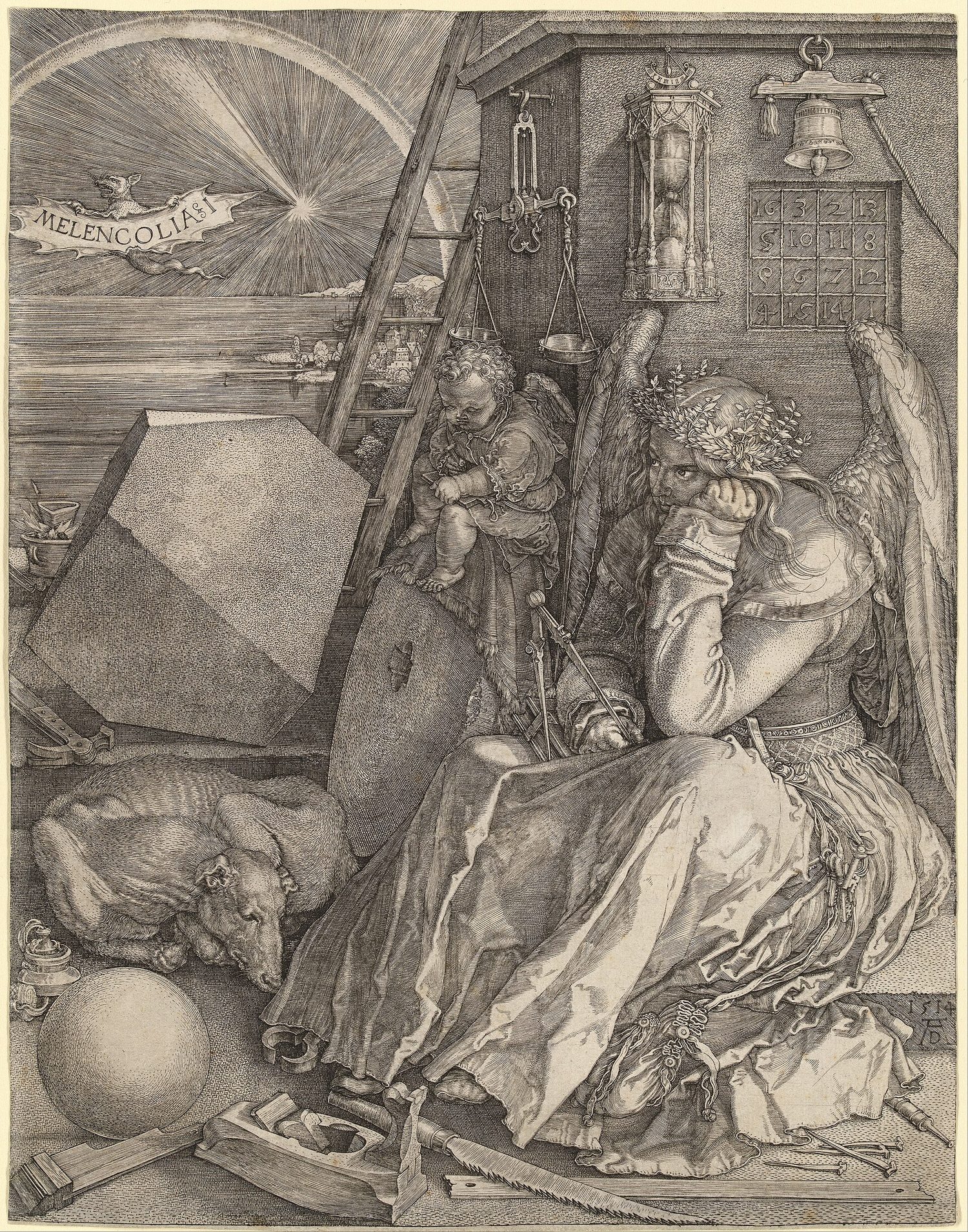
    דפוס ישן צפוף ובעל פרטים רבים של דמות מושבת עם כנפיים, מוקפת בכלים וסמלים, כל אלו בנויים מקווים חרוטים עדינים
    החריטת Melencolia I של דורר: באינטגליזו הקווים חרוטים לתוך לוח מתכת, והקווים העדינים והצפופים האפשריים בחריטות יוצרים צל עמוק ועושר בפרטים
    Explore · ⁨חקור⁩

    Which printmaking process? · ⁨אילו תהליך הדפסה?⁩

    Relief prints from the raised surface; intaglio from lines cut below the surface; planographic from a flat greasy image; stencil pushes ink through a mesh. · ⁨הדפסות בליטה מהמשטח הבולט; אינטרגלו מקווים חרוטים מתחת למשטח; פלנוגרפי מתמונה שומנית שטוחה; סטנסיל דוחס דיו דרך רשת.⁩

    Vocabulary · ⁨מילון מונחים⁩ Train · ⁨אימון⁩
    English עברית
    Printmaking/ˈprɪntmeɪkɪŋ/ הדפסה
    matrix/ˈmeɪtrɪks/ מטריצה
    edition/ɪˈdɪʃn/ מהדורה
    Relief/rɪˈliːf/ בליטה
    Intaglio/ɪnˈtæɡlɪəʊ/ שקע
    Planographic/ˌplænəˈɡræfɪk/ ליטוגרפיה
    Stencil/ˈstensl/ סטנסיל
    Collage/kɒˈlɑːʒ/ קולאז'
    mixed media/mɪkst ˈmiːdiːə/ מדיה מעורבת
    3.4

    Collage and Mixed Media · ⁨קולאז' ומדיה מעורבת⁩

    Syllabus · ⁨סיילבוס⁩
    English

    Focus: Collage assembles found materials onto a surface; mixed media combines two or more materials or processes.

    • Collage glues papers, photos, fabric, or found objects into a composition.
    • Mixed media layers, for example, drawing over paint, or print with stitching.
    • These processes add actual texture and unexpected juxtapositions of image and meaning.
    • Materials can carry meaning (a ticket, a map) beyond their visual role.
    • Good mixed-media work still uses the elements and principles to stay unified.
    עברית

    מיקוד: קולאז' משלב חומרים נמצאים על פני משטח; מדיה מעורבת מאחדת שני חומרים או תהליכים או יותר.

    • קולאז' מדביק נייר, תמונות, בד או חפצים נמצאים לתוך רכיב ויזואלי.
    • מדיה מעורבת יוצרת שכבות, לדוגמה, ציור מעל צבע, או הדפסה עם תפירה.
    • תהליכים אלו מוסיפים מרקם אמיתי והצבה בלתי צפונית של תמונה ומשמעות.
    • חומרים יכולים לשאת משמעות (כגון כרטיס, מפה) מעבר לתפקיד הויזואלי שלהם.
    • יצירה מעורבת טובה ממשיכה להשתמש באלמנטים ובעקרונות כדי להישאר מאוחדת.

    Source: College Board AP Course and Exam Description · ⁨מקור: תיאור הקורס והמבחן של College Board AP⁩

    English

    Collage 拼贴 assembles found materials onto a surface; mixed media 综合媒介 combines two or more materials or processes.

    • Collage glues papers, photos, fabric, or found objects into a composition.
    • Mixed media layers processes — for example, drawing over paint, or print with stitching.
    • These add actual texture and unexpected meaning; a found material (a ticket, a map) can carry meaning beyond its look.
    עברית

    קולאז' מארגן חומרים שנמצאו על פני משטח; מדיה מעורבת משלב שתי חומרים או תהליכים ומעלה.

    • קולאז' מדביק ניירות, תמונות, בד או חפצים שנמצאו לתוך הרכבה.
    • מדיה מעורבת שכבתית את תהליכים — למשל, ציור מעל צבע, או הדפסה עם תפירה.
    • אלו מוסיפים מרקם אמיתי ומשמעות בלתי צפויה; חומר שנמצא (כרטיס כניסה, מפה) יכול לשאת משמעות מעבר למראה שלו.
    3.5

    Photography and Lens-Based Media · ⁨צילום ומדיה מבוססת עדשה⁩

    Syllabus · ⁨סיילבוס⁩
    English

    Focus: Photography makes images with light and a lens; the same elements and principles apply to the frame.

    • Key controls: framing/composition, focus, exposure (light), depth of field, and viewpoint.
    • The rule of thirds, leading lines, and negative space compose a photograph.
    • Light direction and quality (hard/soft) shape value, form, and mood.
    • Editing (cropping, contrast, colour) is part of the creative process, not just correction.
    • Digital and darkroom processes both count as lens-based 2-D art and design.
    עברית

    מיקוד: צילום יוצר תמונות באמצעות אור ועדשה; אותם אלמנטים ועקרונות חלים גם על המסגרת.

    • בקרות עיקריות: מסגור/הרכבה, פוקוס, חשיפה (אור), עומק שדה ונקודת מבט.
    • חוק השלישיות, קווים מנחים ומרחב שלילי יוצרים את התמונה הצילומית.
    • כיוון ואיכות האור (קשה/רך) מעצבים גוון, צורה ואווירה.
    • עריכה (חתוך, ניגוד, צבע) היא חלק מהתהליך היצירתי, ולא רק תיקון.
    • תהליכים דיגיטליים וחדרים חשוכים נחשבים גם כם לאמנות ועיצוב מבוסס עדשה ב-2-D.

    Source: College Board AP Course and Exam Description · ⁨מקור: תיאור הקורס והמבחן של College Board AP⁩

    English

    Photography 摄影 makes images with light and a lens; the elements and principles apply to the frame just as in any 2-D work.

    • Key controls: framing, focus 对焦, exposure 曝光 (light), depth of field 景深, and viewpoint.
    • The rule of thirds, leading lines, and negative space compose a photograph.
    • Editing 后期 (cropping, contrast, colour) is part of the creative process, not just correction.
    עברית

    צילום יוצר תמונות באמצעות אור ועדשה; האלמנטים והעקרונות חלים על המסגרת כמו בעבודת 2-D כלשהי.

    צילום בשחור-לב של נוסעים בספינה עמוסה, מחולק על ידי מעבר לצדדים לשתי שכבות, היוצרים צורות גיאומטריות חזקות
    The Steerage של אלפרד סטייגליץ, תמונת אמנות מוקדמת מפורסמת: הגשר, הפחת והדמויות יוצרים הרכבה גיאומטרית חזקה, ולכן האלמנטים והעקרונות חלים גם על צילום
    • בקרות מרכזיות: פריים, פוקוס, חשיפה (אור), עומק שדה ומבט.
    • כלל השלישיות, קווים מנחים ושטח שלילי מרכיבים את הצילום.
    • עריכה (חתוך, ניגוד, צבע) היא חלק מהתהליך היצירתי, ולא רק תיקון.
    Vocabulary · ⁨מילון מונחים⁩ Train · ⁨אימון⁩
    English עברית
    Photography/fəˈtɒɡrəfi/ צילום
    focus/ˈfəʊkəs/ פוקוס
    exposure/ekˈspəʊʒə/ חשיפה
    depth of field/depθ ɒv fiːld/ עומק שדה
    Editing/ˈedɪtɪŋ/ עריכה
    Digital media/ˈdɪdʒɪtl ˈmiːdiːə/ מדיה דיגיטלית
    Raster/ˈræstə/ ראסטר
    vector/ˈvektə/ מסיר מחלות
    Layers/ˈleɪəz/ שכבות
    resolution/ˌrezəˈluːʃn/ רזולוציה
    Graphic design/ˈɡræfɪk dɪˈzaɪn/ עיצוב גרפי
    illustration/ˌɪləˈstreɪʃn/ איור
    type/taɪp/ סוג
    Typography/taɪˈpɒɡrəfi/ טיפוגרפיה
    3.6

    Digital Art and Design · ⁨אמנות דיגיטלית ועיצוב⁩

    Syllabus · ⁨סיילבוס⁩
    English

    Focus: Digital tools create and edit images on a computer or tablet, working in layers and pixels or vectors.

    • Raster images are made of pixels (photo editing, painting apps); vector images use math paths (scalable).
    • Layers let an artist build, mask, and revise non-destructively.
    • Digital colour uses RGB (screen, additive) or CMYK (print, subtractive).
    • Resolution (DPI/PPI) affects print quality; keep files high-resolution for the portfolio.
    • The same elements and principles guide digital work as any other 2-D medium.
    עברית

    מיקוד: כלים דיגיטליים יוצרים ועורכים תמונות במחשב או בטאבלט, תוך עבודה בשכבות ובפיקסלים או וקטורים.

    • תמונות ראסטר עשויות מפיקסלים (עריכת תמונות, אפליקציות ציור); תמונות וקטור משתמשות בקווים מתמטיים (ניתנות לשינוי גודל).
    • שכבות מאפשרות לאמן לבנות, להסתיר ולערוך ללא הרס המידע.
    • צבע דיגיטלי משתמש ב-RGB (מסך, תוספי) או ב-CMYK (הדפסה, חסרי).
    • רזולוציה (DPI/PPI) משפיעה על איכות ההדפסה; יש לשמור על קבצים ברזולוציה גבוהה עבור תיק העבודות.
    • אותם אלמנטים ועקרונות מנחים עבודות דיגיטליות כמו כל חומר אחר ב-2-D.

    Source: College Board AP Course and Exam Description · ⁨מקור: תיאור הקורס והמבחן של College Board AP⁩

    English

    Digital media 数字媒介 create and edit images on a computer or tablet, working in layers.

    • Raster 位图 images are made of pixels (photo editing, digital painting); vector 矢量 images use maths paths and scale without losing quality.
    • Layers 图层 let an artist build, mask, and revise without damaging earlier work.
    • Digital colour uses RGB (screen, additive) or CMYK (print, subtractive); keep files high-resolution 分辨率 for the portfolio.
    עברית

    מדיה דיגיטלית יוצרת ועוררת תמונות במחשב או בטאבלט, עובדת בשכבות.

    • תמונות ראסטר עשויות מפיקסלים (עריכת צילום, ציור דיגיטלי); תמונות וקטור משמשות מסלולי מתמטיקה וניתן להגדיל אותן ללא איבוד איכות.
    • שכבות מאפשרות לאמן לבנות, לחסום ולעדכן ללא פגיעה בעבודה קודמת.
    • צבע דיגיטלי משתמש ב-RGB (מסך, תוספי) או ב-CMYK (הדפסה, חסרני); שמור על קבצים ברזולוציה גבוהה עבור תיק העבודות.
    צבע חיבורי מול צבע חיסורי
    ערבוב אור (RGB) מבהיר לכיוון לבן; ערבוב פיגמנט (CMY) מכהה לכיוון שחור
    3.7

    Graphic Design and Illustration · ⁨עיצוב גרפי ואיור⁩

    Syllabus · ⁨סיילבוס⁩
    English

    Focus: Graphic design communicates a message visually; illustration makes images that support or tell a story.

    • Design combines type, image, colour, and layout to communicate to a viewer or client.
    • Visual hierarchy (size, weight, contrast, placement) guides the eye to what matters first.
    • Typography — typeface, size, spacing, alignment — is a core design element.
    • Illustration serves a purpose: editorial, book, product, poster, or narrative.
    • Design and illustration are problem-solving: audience and message shape every choice.
    עברית

    מיקוד: עיצוב גרפי מקשר מסר ויזואלית; איLLUSTRATION יוצר תמונות התומכות או מספרות סיפור.

    • עיצוב משלב גופן, תמונה, צבע ומסגרת כדי להעביר מסר לצופה או ללקוח.
    • היררכיה ויזואלית (גודל, משקל, ניגודיות, מיקום) מדריכה את העין למה שחשוב קודם.
    • טיופוגרפיה — סוג גופן, גודל, רווחים, יישור — הם אלמנט עיצובי בסיסי.
    • איור משמש למטרה: עריכתי, ספרותי, מוצר, פוסטר או נרטיבי.
    • עיצוב ואיור הם פעילות פתרון בעיות: הקהל והמסר מעצבים כל בחירה.

    Source: College Board AP Course and Exam Description · ⁨מקור: תיאור הקורס והמבחן של College Board AP⁩

    English

    Graphic design 平面设计 communicates a message visually; illustration 插画 makes images that support or tell a story.

    • Design combines type 字体, image, colour, and layout to reach a viewer or client.
    • Visual hierarchy guides the eye to what matters first, through size, weight, and placement.
    • Typography 字体排印 — typeface, size, spacing, alignment — is a core design tool.
    • Design and illustration are problem-solving: the audience and message shape every choice.

    Worked example (writing about process). When your written evidence must explain a material and process: "I used charcoal on toned paper because its soft, smudgeable line let me build deep shadow quickly, and I lifted highlights with an eraser to suggest form." Notice the shape — name the medium, say why you chose it, and connect it to the idea you were exploring. Listing a material with no reason earns little.

    עברית

    עיצוב גרפי מקשר מסר ויזואלית; איור יוצר תמונות התומכות או מספרות סיפור.

    • עיצוב משלב טקסט, תמונה, צבע ומיקום כדי להגיע לצופה או ללקוח.
    • היררכיה ויזואלית מנחה את העין למה שחשוב קודם, באמצעות גודל, משקל ומיקום.
    • טיפוגרפיה — גופן, גודל, רווחים, יישור — היא כלי עיצוב מרכזי.
    • עיצוב ואיור הם פתרון בעיות: הקהל והמסר מעצבים כל בחירה.

    דוגמה מולחנת (כתיבה על תהליך). כאשר המסמך הכתוב שלך חייב להסביר חומר ותהליך: "השתמשתי בפחם על נייר בצבע בסיס כי הקו הרך והניתן למריחה שלו אפשר לי לבנות צל עמוק במהירות, והרמתתי את האורות עם מחק כדי לשקף צורה." שים לב למבנה — נסה את החומר, הסבר למה בחרת בו, וחבר אותו ל-רעיון שחקרת. רשימת חומרים ללא סיבה מרוויחה ערך מועט.

    3.7

    Exam tips · ⁨טיפים לבחינות⁩

    English
    • Match the medium to the intended effect, and justify the choice.
    • For printmaking, state relief versus intaglio, and remember the printed image reverses.
    • Explain transparent versus opaque paint, and layers and vector versus raster in digital work.
    • Treat collage and mixed media materials as meaning, not just texture.
    • In graphic design, show a clear visual hierarchy serving the message.
    עברית
    • התאם את ה-חומר לאפקט הרצוי, והסבר את הבחירה.
    • עבור הדפסת אמנות, הצג בלט לעומת השקה, וזכור שהתמונה המודפסת מתהפכת.
    • הסבר צבע שקוף מול אטום, ושכבות ו-ווקטורי מול ראסטר בעבודה דיגיטלית.
    • טפל בחומרי קולאז' ומעורבים כמשמעותיים ולא רק כמרקם.
    • בעיצוב גרפי, הצג היררכיה ויזואלית ברורה המשרתת את המסר.
  • 4

    Investigate: Inquiry and the Artistic Process

    Watch lesson · ⁨צפה בשיעור⁩
    4.1

    Inquiry and Asking Questions · ⁨חקירה ושאלות⁩

    Syllabus · ⁨סיילבוס⁩
    English

    Focus: In AP Art and Design, making begins with inquiry — asking questions that guide a sustained investigation. (CED Big Idea 1)

    • Inquiry is asking questions to find information and drive investigation.
    • A sustained investigation is an in-depth, question-driven study of materials, processes, and ideas over time.
    • Questions can be simple — who, what, when, where, why, how, what if, and why not.
    • Investigation includes perception, curiosity, examination, discovery, imagination, and conversation.
    • Questions evolve: early questions lead to new questions as the work develops.
    עברית

    מיקוד: באומנות ובעיצוב AP, היצירה מתחילה ב-חקירה – השאילת שאלות המנחות מחקר מתמשך. (רעיון מרכזי CED 1)

    • חקירה היא השאילת שאלות כדי למצוא מידע ולדחוף את החקירה קדימה.
    • מחקר מתמשך הוא לימוד מעמיק וממוקד בשאלות של חומרים, תהליכים ורעיונות לאורך זמן.
    • שאלות יכולות להיות פשוטות — מי, מה, מתי, איפה, למה, איך, מה אם, ולמה לא.
    • החקירה כוללת תפיסה, סקרנות, בדיקה, גילוי, דמיון ושיחה.
    • שאלות מתפתחות: שאלות ראשוניות מובילות לשאלות חדשות כאשר העבודה מתקדמת.

    Source: College Board AP Course and Exam Description · ⁨מקור: תיאור הקורס והמבחן של College Board AP⁩

    English

    In AP Art and Design, making begins with inquiry 探究 — asking questions that guide a sustained investigation 持续探究 over time. This is Big Idea 1.

    • Inquiry is asking questions to find information and drive investigation.
    • A sustained investigation is an in-depth, question-driven study of materials, processes, and ideas.
    • Good questions can be simple — who, what, when, where, why, how, what if, and why not.
    • Questions evolve: early questions lead to new questions as the work develops.
    עברית

    ב-Art and Design AP, היצירה מתחילה ב-חקירה — השאלות שמנחות חקירה מתמשכת לאורך זמן. זהו הרעיון הגדול 1.

    תהליך אומנותי הוא מחזור של שאלה, חקירה, יצירה והתבוננות
    החקירה מניעה מחזור: שאל, חקור, צור, התבונן — ותן לכל תשובה להעלות שאלה חדשה
    • חקירה היא השאלות למציאת מידע ולהניע חקירה.
    • חקירה מתמשכת היא מחקר מעמיק הממוקד בשאלות, חומרים, תהליכים ורעיונות.
    • שאלות טובות יכולות להיות פשוטות — מי, מה, מתי, איפה, למה, איך, מה אם, ולמה לא.
    • שאלות מתפתחות: שאלות ראשוניות מובילות לשאלות חדשות כאשר העבודה מתקדמת.
    4.2

    Sources of Ideas and Experiences · ⁨מקורות רעיונות וחוויות⁩

    Syllabus · ⁨סיילבוס⁩
    English

    Focus: Artists' and designers' experiences inform why, how, and what they make. (CED 1.A)

    • An experience is an event or occurrence — real surroundings, imagined concepts, communication, or research.
    • Reflecting on experiences sparks questions and inspires investigation.
    • Experiences can be documented with drawings, photos, diagrams, notes, or sound.
    • Ideas come from observation, memory, other disciplines, and other artists' work.
    • Recording experiences becomes a resource for the sustained investigation.
    עברית

    מיקוד: חוויות של אמנים ועיצוביים מנחות את מה, איך ולמה הם יוצרים. (CED 1.A)

    • חוויה היא אירוע או התרחשות – סביבות אמיתיות, רעיונות בדיוניים, תקשורת או מחקר.
    • בחינה של חוויות מעוררת שאלות והשראת מחקרים.
    • חוויות יכולות להיות מועדפות באמצעות שרטוטים, תמונות, דיאגרמות, הערות או קול.
    • רעיונות מגיעים מניסיון, זיכרון, תחומי לימוד אחרים ויצירות של אמנים אחרים.
    • תיעוד חוויות הופך למאגר מידע עבור המחקר המתמשך.

    Source: College Board AP Course and Exam Description · ⁨מקור: תיאור הקורס והמבחן של College Board AP⁩

    English

    Artists' and designers' experiences 经历 inform why, how, and what they make.

    • An experience is any event — real surroundings, imagined ideas, communication, or research.
    • Reflecting on experiences sparks questions and inspires investigation.
    • Ideas come from observation 观察, memory, other disciplines, and other artists' work.
    • Experiences can be documented with drawings, photos, notes, or sound, becoming a resource.
    עברית

    חוויות של אמנים ועיצובים מעצמות את ה-why, the how ואת ה-what שלהם.

    • חוויה היא כל אירוע — סביבות אמיתיות, רעיונות בדיוניים, תקשורת או מחקר.
    • בחינה של חוויות מעוררת שאלות והשראת מחקרים.
    • רעיונות נובעים מתצפית, זיכרון, תחומים אחרים ועבודות של אמנים אחרים.
    • ניתן לתעד חוויות באמצעות ציורים, תמונות, הערות או קול, מה שהופך אותן למקור מידע.
    מאין יכול להגיע הרעיון לחקירה מתמשכת
    שאלות חקירה חזקות נובעות מחוויה, תצפית, אמנות אחרת, תרבות, נושאים וחומרים
    4.3

    Materials, Processes, and Ideas · ⁨חומרים, תהליכים ורעיונות⁩

    Syllabus · ⁨סיילבוס⁩
    English

    Focus: Every work is built from three interacting components — materials, processes, and ideas. (CED 1.C)

    • Materials are what a work is made of; processes are how it is made; ideas are what it is about.
    • These components interact: a material suggests a process; a process shapes an idea.
    • Investigating materials, processes, and ideas expands the possibilities for making.
    • The components an artist chooses influence how viewers interpret the work.
    • Documenting these choices shows the thinking behind the making.
    עברית

    מיקוד: כל יצירה בנויה משלושה רכיבים הפועלים יחד – חומרים, תהליכים ורעיונות. (CED 1.C)

    • חומרים הם מה שעליו עשויה היצירה; תהליכים הם כיצד היא נוצרה; רעיונות הם על מה היא מדברת.
    • רכיבים אלו פועלים זה על זה: חומר מציע תהליך; תהליך מעצב רעיון.
    • חקירת חומרים, תהליכים ורעיונות מרחיבה את האפשרויות ליצירה.
    • הרכיבים שאמן בוחר משפיעים על כך כיצד הצופים יפרשו את היצירה.
    • תיעוד בחירות אלו מראה את התהליך החשיבתי העומד מאחורי היצירה.

    Source: College Board AP Course and Exam Description · ⁨מקור: תיאור הקורס והמבחן של College Board AP⁩

    English

    Every work is built from three interacting components — materials, processes, and ideas 材料、过程与想法.

    • Materials are what a work is made of; processes are how it is made; ideas are what it is about.
    • The components interact: a material suggests a process; a process shapes an idea.
    • Investigating all three expands the possibilities for making, and influences how viewers interpret the work.
    עברית

    כל יצירה בנויה משלושה רכיבים המופעים ביחד — חומרים, תהליכים ורעיונות. .

    • חומרים הם מה שעליו עשויה היצירה; תהליכים הם כיצד היא נוצרה; רעיונות הם על מה היא מדברת.
    • הרכיבים מתאימים זה לזה: חומר מציע תהליך; תהליך מעצב רעיון.
    • בדיקה של שלושת הרכיבים מרחיבה את האפשרויות ליצירה ומשפיעה על כך כיצד הצופים מפרשים את היצירה.
    חזרו לגלגל הצבעים בבחירת התאמות לסדרת יצירות
    חזרו לגלגל הצבעים בבחירת התאמות לסדרת יצירות
    Explore · ⁨חקור⁩

    Material, process, or idea? · ⁨חומר, תהליך או רעיון?⁩

    Every work combines materials (what it is made of), processes (how it is made), and ideas (what it is about). · ⁨כל יצירה משלבת חומרים (מה היא עשויה), תהליכים (איך היא נוצרה) ו-רעיונות (על מה היא עוסקת).⁩

    4.4

    Art and Design in Context · ⁨אמנות ועיצוב בהקשר⁩

    Syllabus · ⁨סיילבוס⁩
    English

    Focus: Works are made and understood within contexts — traditions, cultures, and other disciplines. (CED 1.D)

    • Context is when, where, how, why, and by whom a work was made and viewed.
    • Artists work within (or challenge) art and design traditions from cultures around the world.
    • Comparing works reveals similarities and differences in materials, processes, and ideas.
    • Acknowledging references and influences shows integrity.
    • Understanding context helps both makers and viewers interpret a work.
    עברית

    מיקוד: יצירות נוצרות ומובנות בתוך הקשרים — מסורות, תרבויות ותחומי עיון אחרים. (CED 1.D)

    • הקשר הוא המועד, המקום, האופן, הסיבה והמי שיוצר וצפה ביצירה.
    • אמנים עובדים בתוך (או מאתגרים) מסורות של אמנות ועיצוב מתרבויות שונות בעולם.
    • השוואת יצירות חושפת דמיונות והבדלים בחומרים, בתהליכים וברעיונות.
    • הזכרת מקורות והשפעות מדגישה אותנטיות.
    • הבנת ההקשר עוזרת גם ליצירים וגם לצופים לפרש יצירה.

    Source: College Board AP Course and Exam Description · ⁨מקור: תיאור הקורס והמבחן של College Board AP⁩

    English

    Works are made and understood within a context 语境 — traditions, cultures, and other disciplines.

    • Context is when, where, how, why, and by whom a work was made and viewed.
    • Artists work within, or challenge, art and design traditions 传统 from cultures around the world.
    • Comparing works reveals similarities and differences in materials, processes, and ideas.
    • Acknowledging references and influences shows integrity 诚信 — never copying without credit.
    עברית

    יצירות נוצרות ומובנות בתוך הקשר — מסורות, תרבויות ותחומי עיון אחרים.

    • הקשר הוא המועד, המקום, הדרך, הסיבה והמי שבו יצירה נוצרה ונצפתה.
    • אמנים פועלים בתוך או מאתגרים מסורות של אמנות ועיצוב מתרבויות בכל העולם.
    • השוואת יצירות חושפת דמיונות והבדלים בחומרים, בתהליכים וברעיונות.
    • זיהוי הפניות והשפעות מראה אינטגריות — לעולם לא להעתיק ללא ייחוס.
    הוקוסאי בהקשר: יצירות היסטוריות מלמדות הרכב לחקירה
    הוקוסאי בהקשר: יצירות היסטוריות מלמדות הרכב לחקירה
    Vocabulary · ⁨מילון מונחים⁩ Train · ⁨אימון⁩
    English עברית
    inquiry/ɪnˈkwaɪəri/ חקירה
    sustained investigation/səˈsteɪnd ɪnˌvestɪˈɡeɪʃn/ חקירה מתמשכת
    experiences/ekˈspɪərɪənsɪz/ חוויות
    observation/ɒbzəˈveɪʃn/ צפייה
    materials, processes, and ideas/məˈtɪərɪəlz ˈprəʊsesɪz ænd aɪˈdɪəz/ חומרים, תהליכים ורעיונות
    context/ˈkɒntekst/ הקשר
    traditions/trəˈdɪʃnz/ מסורות
    integrity/ɪnˈteɡrɪti/ אינטגריות
    evaluated/ɪˈvæljuːeɪtɪd/ מוערכו
    criteria/kraɪˈtɪərɪə/ קריטריונים
    synthesis/ˈsɪnθəsɪs/ סינתזה
    4.5

    Evaluating Art and Design · ⁨הערכת אמנות ועיצוב⁩

    Syllabus · ⁨סיילבוס⁩
    English

    Focus: Works can be evaluated by using evidence to compare them with specific criteria. (CED 1.E)

    • Evaluation uses visual evidence to judge a work against criteria (as the AP scoring guidelines do).
    • Observe carefully: identify materials, processes, and ideas, and how they connect.
    • Consider whether the components show synthesis — parts working together for one effect.
    • Evaluation can be informal (as you work) or formal (peer critique, feedback).
    • Reflecting on evaluation improves later thinking and making.
    עברית

    מיקוד: ניתן להעריך יצירות על ידי שימוש בעדכנים להשוואתן לקריטריונים ספציפיים. (CED 1.E)

    • הערכה משתמשת בעדכנים ויזואליים כדי לשפוט יצירה לפי קריטריונים (כפי שמנהלים מדריכי הציון ב-AP).
    • צפו בקפידה: זיהוי חומרים, תהליכים ורעיונות, ואופן הקישור ביניהם.
    • יש לשקול האם הרכיבים מראים סינתזה — חלקים העובדים יחד ליצירת אפקט אחד.
    • הערכה יכולה להיות לא רשמית (בעת העבודה) או רשמית (ביקורת מצד כlan, משוב).
    • השתקפות בהערכה משפרת חשיבה ויצירה בעתיד.

    Source: College Board AP Course and Exam Description · ⁨מקור: תיאור הקורס והמבחן של College Board AP⁩

    English

    Works can be evaluated 评价 by using visual evidence to compare them with specific criteria 标准 (as the AP scoring guidelines do).

    • Observe carefully: identify the materials, processes, and ideas, and how they connect.
    • Consider whether the components show synthesis 综合 — parts working together for one effect.
    • Evaluation can be informal (as you work) or formal (a critique 评图 with peers or a teacher).
    • Reflecting on evaluation improves your later thinking and making.
    עברית

    ניתן להעריך יצירות על ידי שימוש בעדויות ויזואליות כדי להשוות אותן לקריטריונים ספציפיים (כפי שמבצע AP).

    • צפייה קפדנית: זיהוי החומרים, התהליכים והרעיונות, וכיצד הם קשורים זה לזה.
    • יש לשקול האם הרכיבים מראים סינתזה — חלקים העובדים יחד ליצירת אפקט אחד.
    • הערכה יכולה להיות לא-רשמית (בעת עבודה) או רשמית (ביקורת עם עמיתים או מורה).
    • החשיבה בהערכה משפרת את חשיבתך והייצור שלך בעתיד.
    ביקורת מזוהה הוכחות ויזואליות: קו, גוון והרכבה בציור של אמן
    ביקורת מזוהה הוכחות ויזואליות: קו, גוון והרכבה בציור של אמן
    Vocabulary · ⁨מילון מונחים⁩ Train · ⁨אימון⁩
    English עברית
    critique/krɪˈtiːk/ ביקורת
    Documentation/ˌdɒkjuːmənˈteɪʃn/ תיעוד
    process journal/ˈprəʊses ˈdʒɜːnl/ יומן תהליך
    lines of inquiry/laɪnz ɒv ɪnˈkwaɪəri/ קווי מחקר
    4.6

    Documentation and the Process Journal · ⁨מסמכים ויומן התהליך⁩

    Syllabus · ⁨סיילבוס⁩
    English

    Focus: Documentation records information and becomes a resource for the sustained investigation. (CED 1.A/1.B)

    • Documentation takes many forms: images, notes, diagrams, samples, and written reflection.
    • A process journal (sketchbook) records questions, experiments, and revisions over time.
    • Documenting your lines of inquiry shows how the investigation developed.
    • Good documentation can be shared with viewers and included as part of the work.
    • Consistent documentation makes writing the portfolio's written evidence far easier.
    עברית

    מיקוד: תיעוד מקלט מידע והופך למשאב לחקירה מתמשכת. (CED 1.A/1.B)

    • תיעוד לוקח צורות שונות: תמונות, הערות, דיאגרמות, דגימות והשתקפות כתובה.
    • יומן תהליך (ספר טריז) מקלט שאלות, ניסויים ושינויים לאורך זמן.
    • תיעוד קווי החקירה שלך מראה כיצד ההחקירה התפתחה.
    • תיעוד טוב יכול להיות משותף עם צופים ונכלל כחלק מהיצירה.
    • מסמכאות עקבית הופכת את כתיבת ההוכחה הכתובה בתיק לעניין קל הרבה יותר.

    Source: College Board AP Course and Exam Description · ⁨מקור: תיאור הקורס והמבחן של College Board AP⁩

    English

    Documentation 记录 records information and becomes a resource for the sustained investigation.

    • It takes many forms: images, notes, diagrams, material samples, and written reflection.
    • A process journal 创作日志 (sketchbook) records questions, experiments, and revisions over time.
    • Documenting your lines of inquiry 探究路径 shows how the investigation developed.
    • Consistent documentation makes writing the portfolio's written evidence far easier.

    Worked example (framing an inquiry). A weak sustained-investigation question is really just a topic: "My investigation is about the ocean." A strong one is a real question that can drive many artworks: "How can I use colour and texture to show the ocean shifting from calm to dangerous?" The question names an idea and points to the visual choices you will test — exactly what raises a portfolio's score.

    עברית

    מסמכים מקודמים מידע והופכים למשאב לחקירה מתמשכת.

    • הם לוקחים צורות רבות: תמונות, הערות, דיאגרמות, דגימות חומר והתבוננות כתובה.
    • יומן תהליך (ספר טריז) מקלט שאלות, ניסויים ושינויים לאורך זמן.
    • תיעוד קווי החקירה שלך מראה כיצד ההחקירה התפתחה.
    • מסמכאות עקבית הופכת את כתיבת ההוכחה הכתובה בתיק לעניין קל הרבה יותר.

    דוגמה מפורטת (ניסוח חקירה). שאלת חקירה מתמשכת חלשה היא למעשה רק נושא: "החקירה שלי עוסקת באוקיינוס." חזקה היא שאלה אמיתית שיכולה להניע יצירות אמנות רבות: "איך אוכל להשתמש בצבע ובמרקם כדי להראות את האוקיינוס משתנה מרגוע לסכנת?" השאלה מפרטת רעיון וגם מצביעה על הבחירות הויזואליות שתבדוק — בדיוק מה שמגביע את הציון בתיק.

    עמוד ביומן תהליך: הערות חקירה ניסויים קטנים מקדמים כיצד רעיונות מתפתחים
    עמוד ביומן תהליך: הערות חקירה ניסויים קטנים מקדמים כיצד רעיונות מתפתחים
    4.6

    Exam tips · ⁨טיפים לבחינות⁩

    English
    • Frame the work with an open guiding question, not a closed yes/no one.
    • Draw on varied sources — observation, experience, research — and cite your influences.
    • Aim for synthesis: materials and processes chosen because they carry the idea.
    • Evaluate through critique using the elements and principles, then plan a revision.
    • Keep a process journal: record experiments and failures as evidence of inquiry.
    עברית
    • נסח את העבודה עם שאלה מדריכה פתוחה, ולא שאלת כן/לא סגורה.
    • עשה שימוש במגוון מקורות - תצפית, ניסיון, מחקר - ותצוין את ההשפעות שלך.
    • שאוף ל-סינתזה: חומרים ותהליכים שנבחרו מכיוון שהם נושאים את הרעיון.
    • הערך דרך ביקורת באמצעות האלמנטים והעקרונות, ואז תכנן שינוי.
    • שמור על יומן תהליך: הקלט ניסויים וכישלונות כהוכחת חקירה.
  • 5

    Make: Practice, Experimentation, and Revision

    Watch lesson · ⁨צפה בשיעור⁩
    5.1

    The Sustained Investigation · ⁨החקירה המתמשכת⁩

    Syllabus · ⁨סיילבוס⁩
    English

    Focus: The Sustained Investigation is a body of work exploring one question or idea in depth over time. (CED Big Idea 2)

    • A sustained investigation is guided by questions or inquiry and develops as you make.
    • It shows practice, experimentation, and revision — not a set of unrelated pieces.
    • The 2-D portfolio's Sustained Investigation section is 15 images plus written evidence.
    • A clear, focused inquiry gives the whole body of work direction and coherence.
    • The investigation can change direction as new questions emerge — and that evolution is valued.
    עברית

    מיקוד: ה-חקירה המתמשכת היא גוף עבודה החוקר שאלה אחת או רעיון לעומק לאורך זמן. ( CED Big Idea 2)

    • חקירה מתמשכת מונעת על ידי שאלות או חקירה ומתפתחת בזמן היצירה שלך.
    • היא מראה תרגול, ניסוי ושינוי - ולא סדרה של יצירות בלתי קשורות.
    • חלק החקירה המתמשכת בתיק העבודות ב-2D כולל 15 תמונות ולעומת זאת עדות כתובה.
    • חקירה ברורה וממוקדת מעניקה לגוף העבודה כולו כיוון וקohesion.
    • החקירה יכולה לשנות כיוון כאשר עולים שאלות חדשות — והתפתחות זו מוערכת.

    Source: College Board AP Course and Exam Description · ⁨מקור: תיאור הקורס והמבחן של College Board AP⁩

    English

    Big Idea 2 is about making. Its heart is the Sustained Investigation 持续探究 — a body of work that explores one question or idea in depth over time.

    • A sustained investigation is guided by questions or inquiry and develops as you make.
    • It shows practice, experimentation, and revision — not a set of unrelated pieces.
    • The 2-D portfolio's Sustained Investigation section is 15 images plus written evidence.
    • A clear, focused inquiry gives the whole body of work direction and coherence 连贯性.
    עברית

    רעיון גדול 2 עוסק ביצירה. ליבה שלה היא החקירה המתמשכת - גוף עבודה החוקר שאלה או רעיון אחד לעומק לאורך זמן.

    • חקירה מתמשכת מונעת על ידי שאלות או חקירה ומתפתחת בזמן היצירה שלך.
    • היא מראה תרגול, ניסוי ושינוי - ולא סדרה של יצירות בלתי קשורות.
    • חלק החקירה המתמשכת בתיק העבודות ב-2D כולל 15 תמונות ולעומת זאת עדות כתובה.
    • חקירה ברורה וממוקדת מעניקה לגוף העבודה כולו כיוון והיגיון.
    5.2

    Practice, Experimentation, and Revision · ⁨תרגול, ניסוי ושינוי⁩

    Syllabus · ⁨סיילבוס⁩
    English

    Focus: Making advances through three linked actions — practice, experimentation, and revision. (CED 2.B)

    • Practice is repeated work to build skill and understanding.
    • Experimentation tries new materials, processes, and ideas to discover possibilities.
    • Revision changes a work based on reflection, feedback, or new questions.
    • These actions are shown across the body of work, not just in one final piece.
    • Evidence of experimentation and revision is exactly what the AP readers look for.
    עברית

    התמקדות: ביצוע התקדמות באמצעות שלושה פעולות קשורות — אימון, ניסוי ושינוי. (CED 2.B)

    • תרגול הוא עבודה חוזרת לבניית מיומנות והבנה.
    • ניסוי מנסה חומרים, תהליכים ורעיונות חדשים כדי לגלות אפשרויות.
    • שינויים משנים יצירה בהתבסס על מחשבה מעמיקה, משוב או שאלות חדשות.
    • פעולות אלו מוצגות לאורך כל היצירות, ולא רק במעטפה אחת סופית.
    • הוכחות לניסוי ולשינוי הן בדיוק מה שהקוראים ב-AP מחפשים.

    Source: College Board AP Course and Exam Description · ⁨מקור: תיאור הקורס והמבחן של College Board AP⁩

    English

    Making advances through three linked actions.

    • Practice 练习 is repeated work to build skill and understanding.
    • Experimentation 实验 tries new materials, processes, and ideas to discover possibilities.
    • Revision 修改 changes a work based on reflection, feedback, or new questions.
    • These are shown across the body of work, not just in one final piece. Evidence of experimentation and revision is exactly what the AP readers look for.
    עברית

    התקדמות באמצעות שלושה פעולות קשורות.

    התקדמות דרך תרגול, ניסוי ושינוי לאורך זמן תרגול בונה מיומנות, ניסוי מחפש אפשרויות חדשות, ושינוי משפר את העבודה — כל אלו חוזרים על עצמם בכל עבודות התיק,

    • תרגול הוא עבודה חוזרת לבניית מיומנות והבנה.
    • ניסוי מנסה חומרים, תהליכים ורעיונות חדשים כדי לגלות אפשרויות.
    • שינויים משנים יצירה בהתבסס על מחשבה מעמיקה, משוב או שאלות חדשות.
    • אלו מוצגים בכלל עבודות התיק, ולא רק בחתיכה סופית אחת. הראיה לניסוי ולשינוי היא בדיוק מה שחוקרי האפ

    מחקר של אמן מומחה: אימון, ניסוי ושינוי הם הדרך שבה מיומנות ב-2D מצטברת לאורך זמן *מחקר של אמן מומחה: אימון, ניסוי ושינוי הם הדרך שבה מיומנות ב-2D מצטברת לאורך זמן

    Explore · ⁨חקור⁩

    Practice, experiment, or revise? · ⁨אימון, ניסוי או שינוי?⁩

    Practice is repeated work to build skill; experimentation tries new materials or ideas; revision changes a work after reflection or feedback. · ⁨פרקטיקה היא עבודה חוזרת לבניית מיומנות; ניסוי מנסה חומרים או רעיונות חדשים; תיקון משנה את העבודה לאחר בחינה או משוב.⁩

    Vocabulary · ⁨מילון מונחים⁩ Train · ⁨אימון⁩
    English עברית
    Sustained Investigation/səˈsteɪnd ɪnˌvestɪˈɡeɪʃn/ חקירה מתמשכת
    coherence/kəʊˈhɪərəns/ רצף
    Practice/ˈpræktɪs/ אימונים
    Experimentation/ekˌsperɪmənˈteɪʃn/ ניסוי וחקירה
    Revision/rɪˈvɪʒn/ תיקון
    synthesis/ˈsɪnθəsɪs/ סינתזה
    2-D skills/tuː diː skɪlz/ מיומנויות 2-D
    5.3

    Synthesis of Materials, Processes, and Ideas · ⁨סינתזה של חומרים, תהליכים ורעיונות⁩

    Syllabus · ⁨סיילבוס⁩
    English

    Focus: Strong works show synthesis — materials, processes, and ideas integrated so the whole is more than its parts. (CED 2.C)

    • Synthesis means the components combine (coalesce) to create a unified effect.
    • The choice of material should support the idea; the process should serve both.
    • When components are integrated, viewers read one clear message rather than separate parts.
    • Synthesis develops through investigation — trying combinations and keeping what works.
    • The relationships among components are what evaluation and scoring examine.
    עברית

    התמקדות: יצירות חזקות מראות סינתזה — חומרים, תהליכים ורעיונות משולבים כך שהכלל גדול יותר מסכום החלקים. (CED 2.C)

    • סינתזה פירושה שחלקים משולבים (מתאחדים) ליצירת אפקט מאוחד.
    • בחירת החומר צריכה לתמוך ברעיון; התהליך צריך לשרת את שניהם.
    • כאשר רכיבים משולבים, הצופים קוראים מסר ברור אחד ולא חלקים נפרדים.
    • סינתזה מתפתחת דרך חקירה — ניסוי שילובים ושמירה על מה שעובד.
    • הקשרים בין החלקים הם מה שהשופטים והציונים בוחנים.

    Source: College Board AP Course and Exam Description · ⁨מקור: תיאור הקורס והמבחן של College Board AP⁩

    English

    Strong works show synthesis 综合 — materials, processes, and ideas integrated so the whole is more than its parts.

    • Synthesis means the components combine to create a unified effect.
    • The chosen material should support the idea; the process should serve both.
    • When components are integrated, viewers read one clear message rather than separate parts.
    • Synthesis develops through investigation — trying combinations and keeping what works.
    עברית

    עבודות חזקות מציגות סינתזה — חומרים, תהליכים ורעיונות משולבים כך שהכלל גדול יותר מסכום חלקיו.

    • סינתזה פירושה שהרכיבים מתאחדים ליצירת אפקט מאוחד.
    • החומר הנבחר צריך לתמוך ברעיון, והתהליך צריך לשמש את שניהם.
    • כאשר רכיבים משולבים, הצופים קוראים מסר ברור אחד ולא חלקים נפרדים.
    • סינתזה מתפתחת דרך חקירה — ניסוי שילובים ושמירה על מה שעובד.
    5.4

    Demonstrating 2-D Skills · ⁨הדגמת מיומנויות ב-2D⁩

    Syllabus · ⁨סיילבוס⁩
    English

    Focus: The portfolio must show 2-D skills — the elements and principles used to organise a two-dimensional surface. (CED 2.D)

    • 2-D skills are the use of the elements of art and principles of design on a flat surface.
    • Skilful work shows control of value, colour, composition, and mark-making.
    • Skills are demonstrated across many works, in a range of materials and processes.
    • The Selected Works section (5 works) is where 2-D skills are judged most directly.
    • Skill is shown by decisions that are clear, purposeful, and support the idea.
    עברית

    מיקוד: התיק צריך להציג מיומנויות 2-D — האלמנטים והעקרונות המשמשים לארגון משטח דו-ממדי. (CED 2.D)

    • מיומנויות 2-D הן השימוש באלמנטים של אמנות ועקרונות עיצוב על משטח שטוח.
    • עבודה מומחה מראה שליטה בערך, צבע, הרכבה ובניגוש.
    • המיומנויות מוצגות לאורך יצירות רבות, מגוון חומרים ותהליכים.
    • חלק העבודות הנבחרות (5 עבודות) הוא המקום בו מיומנויות 2-D נבדקות באופן ישיר ביותר.
    • מיומנות מוצגת באמצעות החלטות ברורות, מטוסיות ותומכות ברעיון.

    Source: College Board AP Course and Exam Description · ⁨מקור: תיאור הקורס והמבחן של College Board AP⁩

    English

    The portfolio must show 2-D skills 二维技能 — the elements and principles used to organise a flat surface.

    • 2-D skills are the skilful use of line, shape, value, colour, texture, space, and the principles of design.
    • Skilful work shows control of value, colour, composition, and mark-making.
    • Skills are demonstrated across many works, in a range of materials and processes.
    • The Selected Works 精选作品 section is where 2-D skills are judged most directly.
    עברית

    התיק חייב להציג מיומנויות 2-D — האלמנטים והעקרונות המשמשים לארגון משטח שטוח.

    • מיומנויות 2-D הן השימוש המלאכותי בקו, צורה, ערך, צבע, מרקם, מרחב ובעקרונות העיצוב.
    • עבודה מומחה מראה שליטה בערך, צבע, הרכבה ובניגוש.
    • המיומנויות מודגשות בכלל עבודות רבות, במגוון חומרים ותהליכים.
    • החלק Selected Works הוא המקום שבו מיומנויות 2-D נשפטים באופן ישיר ביותר.
    לילה כוכבי של ואן גוג': קו ביטוי, צבע וקצב כמיומנויות 2-D
    לילה כוכבי של ואן גוג': קו ביטוי, צבע וקצב כמיומנויות 2-D
    Vocabulary · ⁨מילון מונחים⁩ Train · ⁨אימון⁩
    English עברית
    Selected Works/sɪˈlektɪd wɜːks/ יצירות נבחרות
    Craft/kræft/ מלאכה
    Craftsmanship/ˈkræftsmənʃɪp/ מלאכת יד
    developing/dɪˈveləpɪŋ/ פיתוח
    5.5

    Composition and Craft in Making · ⁨הרכבה וידנייה ביצירה⁩

    Syllabus · ⁨סיילבוס⁩
    English

    Focus: Craft is the quality of making; composition is the arrangement of the work — both communicate care and intent.

    • Craftsmanship is the skilful, controlled handling of materials and processes.
    • Composition applies the principles of design to organise the picture plane.
    • Purposeful decisions about surface, edges, and finish strengthen a work.
    • Craft should serve the idea — sometimes rough or raw handling is the right choice.
    • Consistent quality across the body of work signals a developed artist.
    עברית

    התמקדות: מלאכה היא איכות העשייה; הרכבה היא סידור היצירה — שניהם מעידים על טיפול וכוונה.

    • מלאכה היא ידני מיומן ושליטתי במחלקות ובתהליכים.
    • הרכבה מיישמת את עקרונות העיצוב כדי לארגן את משטח התמונה.
    • החלטות מטוסיות בנוגע למשטח, לקצוות ולגימור מחזקות יצירה.
    • האומנות צריכה לשרת את הרעיון — לעיתים טיפול מחוספס או גס הוא הבחירה הנכונה.
    • איכות עקבית בכל עריפת העבודות מעידה על אמנית מתפתחת.

    Source: College Board AP Course and Exam Description · ⁨מקור: תיאור הקורס והמבחן של College Board AP⁩

    English

    Craft 工艺 is the quality of making; composition is the arrangement of the work — both communicate care and intent.

    • Craftsmanship 匠艺 is the skilful, controlled handling of materials and processes.
    • Composition applies the principles of design to organise the picture plane.
    • Craft should serve the idea — sometimes a rough or raw handling is the right choice.
    • Consistent quality across the body of work signals a developed artist.
    עברית

    העשייה היא איכות היצירה; ההרכבה היא סידור העבודה — שניהם מעבירים תשומת לב ומטרה.

    • מלאכה היא ידני מיומן ושליטתי במחלקות ובתהליכים.
    • קומפוזיציה מיישמת את עקרונות העיצוב כדי לארגן את מישור התמונה.
    • העשייה צריכה לשמש את הרעיון — לעיתים ידני גס או חופשי הוא הבחירה הנכונה.
    • איכות עקבית בכל עריפת העבודות מעידה על אמנית מתפתחת.
    גל הגדול של הוקוסאי: ההרכבה והעשייה מנחים את העין על פני משטח התמונה
    גל הגדול של הוקוסאי: ההרכבה והעשייה מנחים את העין על פני משטח התמונה
    5.6

    Developing Ideas Over Time · ⁨פיתוח רעיונות לאורך זמן⁩

    Syllabus · ⁨סיילבוס⁩
    English

    Focus: A sustained investigation shows ideas developing — growing and changing across the body of work. (CED 2.B)

    • Development is visible when later works build on discoveries in earlier ones.
    • New questions, materials, or processes push the investigation forward.
    • Not every experiment succeeds — evidence of what did not work is still valuable.
    • Documenting the sequence shows the readers a genuine journey of inquiry.
    • A body of work with clear development scores higher than a set of finished-but-static pieces.
    עברית

    התמקדות: חקירה מתמשכת מראה רעיונות נפתחים — גדלים ומשתנים לאורך כל היצירות. (CED 2.B)

    • התפתחות נראית לעין כאשר עבודות מאוחרות בונות על גבי תגליות משמעות קודמות.
    • שאלות, חומרים או תהליכים חדשים דוחפים את החקירה קדימה.
    • לא כל ניסוי מצליח — הוכחה לכך שלא עבד עדיין בעלת ערך.
    • תיעוד הרצף מראה לקוראים מסע אמת של חקירה.
    • קבוצת עבודות עם פיתוח ברור מקבלת נקודות גבוהות יותר מאשר סדרה של יצירות מוגמרות אך סטטיות.

    Source: College Board AP Course and Exam Description · ⁨מקור: תיאור הקורס והמבחן של College Board AP⁩

    English

    A sustained investigation shows ideas developing 发展 — growing and changing across the body of work.

    • Development is visible when later works build on discoveries in earlier ones.
    • New questions, materials, or processes push the investigation forward.
    • Not every experiment succeeds — evidence of what did not work is still valuable.
    • A body of work with clear development scores higher than a set of finished-but-static pieces.

    Worked example (showing development). The Sustained Investigation is scored on evidence of thinking, not just finished pieces: "My first three works used flat colour; after seeing they felt lifeless, I experimented with layered glazes in works 4–6, then in works 7–9 I combined the best of both." Describing a change and the reason for it is how you demonstrate practice, experimentation, and revision.

    עברית

    חקירה מתמשכת מראה רעיונות מתפתחים — גדלים ומשתנים לאורך המכללה.

    • התפתחות נראית לעין כאשר עבודות מאוחרות בונות על גבי תגליות משמעות קודמות.
    • שאלות, חומרים או תהליכים חדשים דוחפים את החקירה קדימה.
    • לא כל ניסוי מצליח — הוכחה לכך שלא הצליח עדיין בעלת ערך.
    • קבוצת עבודות עם פיתוח ברור מקבלת נקודות גבוהות יותר מאשר סדרה של יצירות מוגמרות אך סטטיות.
    חקירה מתמשכת עמוקה ככל שהיצירות מתפתחות
    חיפוש ראשוני פוחת מקום לניסויים ולתיקונים, ולאחר מכן סינתזה — החשיבה עמוקה באופן ניכר לאורך היצירות

    דוגמה פעולה (המראת פיתוח). החקירה המתמשכת דורגת לפי עדות לחשיבה, ולא רק לפי יצירות מוגמרות: "השלוש יצירות הראשונות שלי השתמשו בצבע שטוח; לאחר שראיתי שהן נראות חסרות חיים, ניסיתי בגליזות שכבתיות ביצירות 4–6, ולאחר מכן ביצירות 7–9 שילבתי את הטוב משניהן." תיאור שינוי וגם הסיבה לכך הוא הדרך להראות תרגול, ניסוי ותיקון.

    5.6

    Exam tips · ⁨טיפים לבחינות⁩

    English
    • Build the sustained investigation as a connected body of work, not one-offs.
    • Show practice, experimentation, and revision — a documented failure still earns credit.
    • Push synthesis and clear 2-D skills, and keep craft clean to the edges.
    • Let each work develop from the last, raising the next question.
    • Choose materials and processes that embody the guiding question.
    עברית
    • בנה את החקירה המתמשכת כקבוצת עבודות מחוברת, ולא כיצירות בודדות.
    • הצג תרגול, ניסויים ותיקונים — כישלון מוכתב עדיין מייצר נקודות.
    • דחף את הסינתזה ואת הכישורים ה-2-D הברורים, ושמר את העשייה נקייה עד הקצה.
    • תן לכל יצירה להתפתח מהקודמת, ולהציג את השאלה הבאה.
    • בחר מחלקות ותהליכים המייצגים את השאלה המנחה.
  • 6

    Present: Communication and the AP Portfolio

    Watch lesson · ⁨צפה בשיעור⁩
    6.1

    The AP 2-D Art and Design Portfolio · ⁨תיק האמנות והעיצוב AP 2-D⁩

    Syllabus · ⁨סיילבוס⁩
    English

    Focus: The AP exam is a portfolio, not a written test. It has two sections that are submitted digitally. (CED Big Idea 3)

    • The Sustained Investigation section: 15 images showing inquiry, practice, experimentation, and revision, plus written evidence.
    • The Selected Works section: 5 works that best show your 2-D skills and synthesis, with written information.
    • Works may be physical or digital, but all are submitted as digital images (and short video where relevant).
    • There is no written exam and no timed section — the portfolio is built across the whole course.
    • Both sections are scored against the College Board scoring guidelines.
    עברית

    התמקדות: המבחן ב-AP הוא תיק, ולא מבחן כתבי. ישנן שתי יחידות שמסופקות דיגיטלית. (רעיון מרכזי CED 3)

    • סעיף החקירה המתמשכת: 15 תמונות המציגות חקירה, עבודה מעשית, ניסויים ושינויים, לצד מסמכות כתובה.
    • חלק העבודות הנבחרות: 5 עבודות המציגות את הכישורים והסינתזה שלך בתחום ה-2D הטובים ביותר, עם מידע כתוב.
    • העבודות יכולות להיות פיזיות או דיגיטליות, אך כולן מסופקות כ-תמונות דיגיטליות (והסרטונים קצרים כאשר רלוונטי).
    • אין מבחן כתבי ואין חלק זמן מוגבל — התיק נבנה לאורך כל הקורס.
    • שתי היחידות מוערכות לפי המדריכים להערכה של College Board.

    Source: College Board AP Course and Exam Description · ⁨מקור: תיאור הקורס והמבחן של College Board AP⁩

    English

    Big Idea 3 is about presenting your work. The AP exam is a portfolio 作品集 — not a written test. It has two sections, both submitted digitally.

    • The Sustained Investigation 持续探究 section: 15 images showing inquiry, practice, experimentation, and revision, plus written evidence.
    • The Selected Works 精选作品 section: 5 works that best show your 2-D skills, with written information.
    • Works may be physical or digital, but all are submitted as digital images. There is no timed exam — the portfolio is built across the whole course.
    עברית

    רעיון מרכזי 3 עוסק בהצגת העבודה. מבחן ה-AP הוא תיק — לא מבחן כתוב. יש בו שני חלקים, שניהם מוגשים דיגיטלית.

    התיק 2-D כולל שני חלקים: חקירה מתמשכת של 15 תמונות ו-5 יצירות שנבחרו
    התיק הוא חקירה מתמשכת של 15 תמונות ועוד 5 יצירות שנבחרו, המוגשות בתמונות דיגיטליות
    • סעיף החקירה המתמשכת: 15 תמונות המציגות חקירה, עבודה מעשית, ניסויים ושינויים, לצד מסמכות כתובה.
    • סעיף העבודות הנבחרות: 5 עבודות המדגימות את מיומנויות ה-2-D הטובות ביותר שלך, עם מידע כתוב.
    • העבודות יכולות להיות פיזיות או דיגיטליות, אך כולן מוגשות כ-תמונות דיגיטליות. אין מבחן זמן מוגבל — התיק נבנה לאורך כל הקורס.
    שני חלקי תיק האמנות והעיצוב AP 2-D
    החקירה המתמשכת (15 תמונות, לצד מסמכות כתובה) משקלת יותר מאשר העבודות הנבחרות (5 יצירות)
    Vocabulary · ⁨מילון מונחים⁩ Train · ⁨אימון⁩
    English עברית
    portfolio/pɔːtˈfəʊlɪəʊ/ תיק
    Sustained Investigation/səˈsteɪnd ɪnˌvestɪˈɡeɪʃn/ חקירה מתמשכת
    6.2

    Sustained Investigation: Images and Written Evidence · ⁨חקירה מתמשכת: תמונות ומסמכות כתובה⁩

    Syllabus · ⁨סיילבוס⁩
    English

    Focus: The Sustained Investigation is judged on the inquiry and the practice, experimentation, and revision it shows. (CED 3.A/3.B)

    • Submit 15 images — works and process documentation that show the investigation over time.
    • Provide written evidence: identify the questions that guided the investigation, and describe how the work shows practice, experimentation, and revision.
    • Images should tell the story of the inquiry, not just show finished pieces.
    • Detail images and in-progress shots are allowed and often helpful.
    • Clear writing (within the character limit) makes the investigation easy to follow.
    עברית

    התמקדות: החקירה המתמשכת מוערכת על בסיס ה-חקירה וה-מעשה, ניסוי ושינוי שהיא מציגה. (CED 3.A/3.B)

    • הגש 15 תמונות — עבודות ותיעוד תהליך המראים את החקירה לאורך הזמן.
    • ספקו עדויות כתובות: זהו את השאלות שהנחות את החקירה, ותיארו כיצד העבודה מציגה מעשה, ניסוי ושינוי.
    • התמונות צריכות לספר את סיפור החקירה, ולא רק להציג פיסות גמורות.
    • תמונות פרט ותמונות בתהליך עבודה מותרות ולעיתים קרובות מועילות.
    • כתיבה ברורה (בתוך הגבול המאופיינים) מקלה על מעקב אחרי החקירה.

    Source: College Board AP Course and Exam Description · ⁨מקור: תיאור הקורס והמבחן של College Board AP⁩

    English

    The Sustained Investigation is judged on the inquiry and the practice, experimentation, and revision it shows.

    • Submit 15 images — works and process documentation that show the investigation over time.
    • Provide written evidence 书面材料: identify the guiding questions 引导性问题, and describe how the work shows practice, experimentation, and revision.
    • Images should tell the story of the inquiry, not just show finished pieces. Detail and in-progress shots are allowed.
    עברית

    החקירה המתמשכת מוערכת על בסיס ה-חקירה וה-עבודה, הניסויים והשינויים שהיא מציגה.

    • הגש 15 תמונות — עבודות ותיעוד תהליך המראים את החקירה לאורך הזמן.
    • ספק מסמכות כתובה: זיהוי ה-שאלות המנחות, ותיאור כיצד העבודה מראה עבודה מעשית, ניסויים ושינויים.
    • התמונות צריכות לספר את סיפור החקירה, ולא רק להציג עבודות גמורות. מותרים צילומי פרטים ועבודה במהלך ביצועה.
    6.3

    Selected Works: Demonstrating Skills · ⁨עבודות נבחרות: הדגמת מיומנויות⁩

    Syllabus · ⁨סיילבוס⁩
    English

    Focus: The Selected Works section shows your best evidence of 2-D skills and synthesis of materials, processes, and ideas. (CED 3.D/3.E)

    • Submit 5 works (physical or digital) as high-quality images.
    • For each, give the materials, processes, and ideas used, plus the size.
    • These works are judged mainly on the skilful use of the elements and principles.
    • They do not have to belong to the sustained investigation.
    • Choose works that most clearly show control, decision-making, and synthesis.
    עברית

    התמקדות: חלק העבודות הנבחרות מציג את העדויה הטובה ביותר שלך ל-כישורי 2D ולסינתזה של חומרים, תהליכים ורעיונות. (CED 3.D/3.E)

    • מסר 5 עבודות (פיזיות או דיגיטליות) בתוך תמונות באיכות גבוהה.
    • עבור כל עבודה, ציין את ה-חומרים, התהליכים והרעיונות ששימשו, לצד הגודל.
    • עבודות אלו מוערכות בעיקר על בסיס השימוש המיומן באלמנטים ועקרונות.
    • אינן חייבות לשתייך לחקירה המתמשכת.
    • בחר עבודות שמראות בבירור שליטה, קבלת החלטות וסינתזה.

    Source: College Board AP Course and Exam Description · ⁨מקור: תיאור הקורס והמבחן של College Board AP⁩

    English

    The Selected Works section shows your best evidence of 2-D skills 二维技能 and synthesis of materials, processes, and ideas.

    • Submit 5 works (physical or digital) as high-quality images.
    • For each, give the materials, processes, and ideas used, plus the size.
    • These works are judged mainly on the skilful use of the elements and principles; they need not belong to the sustained investigation.
    עברית

    סעיף העבודות הנבחרות מציג את המוכחת הטובה ביותר שלך ל-מיומנויות 2-D ולשילוב של חומרים, תהליכים ורעיונות.

    • מסר 5 עבודות (פיזיות או דיגיטליות) בתוך תמונות באיכות גבוהה.
    • עבור כל עבודה, ציין את ה-חומרים, התהליכים והרעיונות ששימשו, לצד הגודל.
    • עבודות אלו מוערכות בעיקר על בסיס השימוש המיומן באלמנטים ועקרונות; אינן חייבות להיות חלק מהחקירה המתמשכת.
    עבודה נבחרה גמורה: מלאכה, קומפוזיציה ומיומנות חייבות להתברר בבירור בתמונה המוגשת
    עבודה נבחרה גמורה: מלאכה, קומפוזיציה ומיומנות חייבות להתברר בבירור בתמונה המוגשת
    שקיות מים של מונה: לעבודות נבחרות דרושה מלאכה וקטינה ברורים בתמונה
    שקיות מים של מונה: לעבודות נבחרות דרושה מלאכה וקטינה ברורים בתמונה
    Vocabulary · ⁨מילון מונחים⁩ Train · ⁨אימון⁩
    English עברית
    Selected Works/sɪˈlektɪd wɜːks/ יצירות נבחרות
    written evidence/ˈrɪtn ˈevɪdəns/ מסמכי כתב
    guiding questions/ˈɡaɪdɪŋ ˈkwestʃnz/ שאלות מדריכות
    2-D skills/tuː diː skɪlz/ מיומנויות 2-D
    character limits/ˈkærɪktə ˈlɪmɪts/ מגבלת אורך טקסט
    6.4

    Writing About Your Work · ⁨כתיבה על העבודה שלך⁩

    Syllabus · ⁨סיילבוס⁩
    English

    Focus: Writing communicates your inquiry, processes, and ideas to viewers who cannot ask you questions. (CED 3.A/3.B/3.C)

    • Written evidence must fit within the College Board character limits — be concise and specific.
    • State the question(s) that guided the sustained investigation clearly.
    • Describe how the work shows practice, experimentation, and revision — use evidence.
    • For Selected Works, name the materials, processes, and ideas.
    • Write plainly; the reader should understand your intent from the words plus the images.
    עברית

    התמקדות: הכתיבה משדרת את ה-חקירה, התהליכים והרעיונות שלך לצופים שאינם יכולים לשאול אותך שאלות. (CED 3.A/3.B/3.C)

    • ההוכחה הכתובה חייבת להיות בתוך גבולות המאפסים של College Board — תהיה קצרה וממוקדת.
    • ציינו את ה-שאלה(ות) שהנחתה(ו) את החקירה המתמשכת בבירור.
    • תארו כיצד העבודה מציגה מעשה, ניסוי ושינוי — השתמשו בעדויות.
    • עבור יצירות נבחרות, ציין את החומרים, התהליכים והרעיונות.
    • כתוב בבירור; הקורא צריך להבין את כוונתך מהמילים ומהתמונות יחד.

    Source: College Board AP Course and Exam Description · ⁨מקור: תיאור הקורס והמבחן של College Board AP⁩

    English

    Writing communicates your inquiry, processes, and ideas to viewers who cannot ask you questions.

    • Written evidence must fit within the College Board character limits 字数限制 — be concise and specific.
    • State the guiding question(s) of the sustained investigation clearly.
    • Describe how the work shows practice, experimentation, and revision — use evidence, not vague claims.
    עברית

    כתיבה מקשרת את ה-חקירה, התהליכים והרעיונות שלך לקוראים שאינם יכולים לשאול אותך שאלות.

    • ההוכחה הכתובה חייבת להיות בתוך גבולות המאפסים של College Board — תהיה קצרה וממוקדת.
    • ציין/י את השאלה(ות) המנחות את החקירה המתמשכת באופן ברור.
    • תאר/י כיצד העבודה מראה תרגול, ניסוי ושינוי — השתמש בהוכחות, לא בטענות מעומטות.

    הוכחה כתובה מתחילה בהערות חקירה: תארו חומרים, תהליך ורעיונות עם לשון ויזואלית ספציפית *ההוכחה הכתובה מתחילה מהעריכים: תאר/י חומרים, תהליך ורעיונות עם שפה ויזואלית ספציפית

    6.5

    Presentation and Image Quality · ⁨מצגת ואיכות התמונה⁩

    Syllabus · ⁨סיילבוס⁩
    English

    Focus: How work is presented affects how viewers interpret it — image quality is part of the grade. (CED 3.F)

    • Photograph work with even lighting, sharp focus, true colour, and no distracting background.
    • Crop images to the work; avoid glare, shadows, and keystoning (tilted edges).
    • Follow the required file formats and sizes; keep resolution high.
    • Consistent, clean presentation lets the readers see the work, not the photograph.
    • Poor images can hide real skill — good documentation protects your score.
    עברית

    דגש: אופן ההצגה של העבודה משפיע על האופן שבו הצופים מפרשים אותה — איכות התמונה היא חלק מהציון. (CED 3.F)

    • צלם את העבודה בתאורה אחידה, פוקוס חד, צבע אמיתי ואינו רעשי רקע.
    • חתוך תמונות לקצה העבודה; הימנע ממברקים, צללים ועיוות קווים (קצוות אלכסוניים).
    • עקוב אחר פורמטים וגדלים הנדרשים; שמור על רזולוציה גבוהה.
    • הצגה אחידה ומסודרת מאפשרת לקוראים לראות את העבודה ולא את התמונה עצמה.
    • תמונות גרועות יכולות להסתיר כישורים אמיתיים — מסמוכיות טובה מגנה על הציון שלך.

    Source: College Board AP Course and Exam Description · ⁨מקור: תיאור הקורס והמבחן של College Board AP⁩

    English

    How work is presented affects how viewers interpret it — image quality is part of the grade.

    • Photograph work with even lighting, sharp focus, true colour, and no distracting background.
    • Crop to the work; avoid glare, shadows, and tilted edges (keystoning 梯形失真).
    • Follow the required file formats and sizes; keep resolution 分辨率 high. Poor images can hide real skill.
    עברית

    כיצד העבודה מוצגת משפיעה על האופן שבו הצופים מפרשים אותה — איכות התמונה היא חלק מהציון.

    • צלם/י את העבודה עם תאורה אחידה, מיקוד חד, צבע אמיתי וללא רקעה מפריעה.
    • חתוך את התמונה לעובדה; הימנע/י מהברקות, צללים וקצוות משופעים (keystoning).
    • עקוב/י אחר פורמטים וגדלים הנדרשים; שמור/י על רזולוציה גבוהה. תמונות גרועות יכולות להסתיר כישורים אמיתיים.
    Explore · ⁨חקור⁩

    Helps or hurts your portfolio image? · ⁨עוזר או פוגע בתדמית התיק שלך?⁩

    Good documentation lets the readers see your work clearly; poor images can hide real skill. · ⁨תיעוד טוב מאפשר לקוראים לראות את העבודה שלך בבירור; תמונות גרועות יכולות להסתיר מיומנות אמיתית.⁩

    Vocabulary · ⁨מילון מונחים⁩ Train · ⁨אימון⁩
    English עברית
    keystoning/ˈkiːstənɪŋ/ הקשטת קווים
    resolution/ˌrezəˈluːʃn/ רזולוציה
    scoring guidelines/ˈskɔːrɪŋ ˈɡaɪdlaɪnz/ הנחיות ציון
    published or photographic sources/ˈpʌblɪʃt ɔː ˌfəʊtəˈɡræfɪk ˈsɔːsɪz/ מקורות מפורסמים או תמונות
    cite/saɪt/ ציטוט
    integrity/ɪnˈteɡrɪti/ אינטגריות
    6.6

    Understanding the Scoring Guidelines · ⁨הבנת מדדי ההערכה⁩

    Syllabus · ⁨סיילבוס⁩
    English

    Focus: Both portfolio sections are scored against published guidelines — knowing them helps you build the portfolio.

    • The Sustained Investigation is scored on inquiry and on evidence of practice, experimentation, and revision (and their visual relationships).
    • Selected Works are scored on 2-D skills and the synthesis of materials, processes, and ideas.
    • Readers use visual evidence in the work plus your writing to apply the criteria.
    • Scores use a rubric with described levels; the top levels show clear, sustained, well-integrated evidence.
    • Designing your work with the criteria in mind (not to a formula) leads to a stronger portfolio.
    עברית

    דגש: שני חלקי התיק מוערכים לפי מדדים פרסומיים — הכרה בהם עוזרת לבנות תיק חזק.

    • ה-חקירה המתמשכת מוערכת לפי חקירה ולפי עדות למעשה, ניסויים ושינויים (וגם לקשרים הוויזואליים ביניהם).
    • העבודות הנבחרות מקבלות ניקוד על בסיס מיומנויות 2-D וסינתזה של חומרים, תהליכים ורעיונות.
    • הקוראים משתמשים בעדויות ויזואליות בעבודה ובטקסט שלך כדי להחיל את הקריטריונים.
    • הציונים מבוססים על טבלת ציונים עם רמות מתוארות; הרמות הגבוהות מציגות עדות ברורה, מתמשכת ומשולבת היטב.
    • עיצוב העבודה במחשבת הקריטריונים (ולא לפי נוסחה) מוביל לתיק חזק יותר.

    Source: College Board AP Course and Exam Description · ⁨מקור: תיאור הקורס והמבחן של College Board AP⁩

    English

    Both sections are scored against published scoring guidelines 评分标准 — knowing them helps you build the portfolio.

    • The Sustained Investigation is scored on inquiry and on evidence of practice, experimentation, and revision.
    • Selected Works are scored on 2-D skills and the synthesis of materials, processes, and ideas.
    • Readers use visual evidence in the work plus your writing to apply the criteria. Design your work with the criteria in mind — not to a formula.
    עברית

    שני החלקים מוערכים לפי מדדי ההערכה המפורסמים — ידע עליהם עוזר לך לבנות את התיק.

    • ה-חקירה המתמשכת מוערכת על בסיס החקירה ועל בסיס הוכחה לתרגול, ניסוי ושינוי.
    • העבודות הנבחרות מקבלות ניקוד על בסיס מיומנויות 2-D וסינתזה של חומרים, תהליכים ורעיונות.
    • הקוראים משתמשים בהוכחה ויזואלית בעבודה ובכתיבה שלך כדי ליישם את הקריטריונים. עצב/י את העבודה במחשבת הקריטריונים — ולא לפי נוסחה.
    6.7

    Academic Integrity and Citing Sources · ⁨אמינות אקדמית והעתקת מקורות⁩

    Syllabus · ⁨סיילבוס⁩
    English

    Focus: Portfolios must be your own work; using others' work without permission or citation is a serious violation.

    • Work based on published or photographic sources you did not take must move far beyond duplication and cite the source.
    • Never present another artist's work — or an AI-generated image — as your own.
    • Cite influences and references; acknowledging them shows integrity, not weakness.
    • The College Board can withhold scores for portfolios that violate integrity policies.
    • When in doubt, work from your own photos, observation, and imagination.
    עברית

    דגש: התיק חייב להיות העבודה האישית שלך; שימוש בעבודה של אחרים ללא רשות או הצגת מקור הוא הפרה חמורה.

    • עבודה המבוססת על מקורות פרסומיים או צילום שלא צילמת אינה יכולה להתבסס רק על שכפול וצריכה להצביע על המקור.
    • לעולם אל תציגי עבודה של אמנית אחרת — או תמונה שנוצרה על ידי בינה מלאכותית — כעבודה אישית.
    • הציג השפעות ומקורות; הודעה עליהם מראה יושר, לא חולשה.
    • ה-College Board עשויה לסרב לפרסם ציונים עבור תיקים הפוגעים ביושר.
    • כאשר יש ספק, הסתמך על התמונות שלך האישי, התצפית והדמיון.

    Source: College Board AP Course and Exam Description · ⁨מקור: תיאור הקורס והמבחן של College Board AP⁩

    English

    Portfolios must be your own work; using others' work without permission or citation is a serious violation.

    • Work based on published or photographic sources 参考来源 you did not create must move far beyond duplication and cite 注明出处 the source.
    • Never present another artist's work — or an AI-generated image — as your own.
    • Citing influences shows integrity 诚信, not weakness. When in doubt, work from your own photos, observation, and imagination.

    Worked example (portfolio written evidence). For the Sustained Investigation you write a short statement about your inquiry and how the work developed. A strong statement links idea, materials, and change: "My inquiry asked how repetition can show the passing of time. I began with pencil grids, then moved to printmaking so I could repeat one image with small changes, revising the spacing in later prints to slow the visual rhythm." One or two sentences that connect idea → process → revision score far better than a description of the finished pictures alone.

    עברית

    התיקים חייבים להיות העבודה האישית שלך; שימוש בעבודת אחרים ללא רשות או התייחסות הוא הפרה חמורה.

    • עבודה המבוססת על מקורות פרסומים או צילומיים שלא יצרת/י חייבת לעבור הרבה מעבר להעתקה ולהתייחס/י למקור.
    • לעולם אל תציגי עבודה של אמנית אחרת — או תמונה שנוצרה על ידי בינה מלאכותית — כעבודה אישית.
    • התייחסות להשפעות מראה אמינות, לא חולשה. במקרה של ספק, עשה/י עבודה מתצלומים אישיים, תצפית ודמיון.

    דוגמה מוצגת (הוכחה כתובה בתיק). עבור החקירה המתמשכת כותב/ת הצהרה קצרה על החקירה שלך ועל התפתחות העבודה. הצהרה חזקה מקשרת בין רעיון, חומרים ושינוי: "החקירה שלי עסקה בכך כיצד חזרה יכולה להראות את מעבר הזמן. התחלתי עם רשתות עפר, ואז עברתי לדפוס כדי לחזור על תמונה אחת עם שינויים קטנים, ושיניתי את הרווחים בדפוסים מאוחרים כדי להאט את הקצב הוויזואלי." שתי-שלוש phrases המקשרות בין רעיון → תהליך → שינוי מושגות ציון טוב יותר מאשר תיאור של התמונות הגמורות לבדן.

    6.7

    Exam tips · ⁨טיפים לבחינות⁩

    English
    • Know the two sections: the sustained investigation (15 images) and selected works (5 works).
    • Use images for process, not only finished pieces, and name the guiding question in the writing.
    • Write specifically and within the character limits — point to visible evidence.
    • Photograph well: even light, true colour, avoid keystoning, and keep resolution high.
    • Keep it your own work: transform any sources far beyond copying and cite them.
    עברית
    • הכר/י את שני החלקים: את החקירה המתמשכת (15 תמונות) ואת העבודות הנבחרות (5 עבודות).
    • השתמש בתמונות עבור תהליך, ולא רק לתוצרים מוגמרים, וצין את ה-שאלה המנחה בכתב.
    • כתוב באופן ספציפי ובתוך גבולות האופי — ציין לעדות גלויה.
    • מצלם היטב: תאורה אחידה, צבע אמיתי, הימנע מ-קייסטונינג, ושמור על רזולוציה גבוהה.
    • שמור על זה כעבודתך个人的: שנה כל מקורות מעבר להעתקה והתייחס אליהם בהערת שוליים.

Log in or create account · ⁨היכנס או צור חשבון⁩

IGCSE, A-Level & AP