נניח שיש לכם דוגמת מזון לא ידועה. איך תגדו מה היא מכילה? הביולוגיה מציעה טריק מדהים: הוסיפו את הכימיקל המתאים, והצבע יסביר לכם…
English narration · English + 中文 subtitles burned in · קריאת קול באנגלית · תרגום אנגלי + סינית שרוף בתוך הסרטון
2.1
Testing for biological molecules · בדיקה לחומרים ביולוגיים
Syllabus · סיילבוס
English
describe and carry out the Benedict’s test for reducing sugars, the iodine test for starch, the emulsion test for lipids and the biuret test for proteins
describe and carry out a semi-quantitative Benedict’s test on a reducing sugar solution by standardising the test and using the results (time to first colour change or comparison to colour standards) to estimate the concentration
describe and carry out a test to identify the presence of non-reducing sugars, using acid hydrolysis and Benedict’s solution
עברית
תאר ובצע את בדיקת בנדיקט לסוכרים מחלצים, את בדיקת יוד לעמילן, את בדיקת האמולסיה לליפידים ואת בדיקת ביורט לחלבונים
תאר ובצע בדיקת בנדיקט סמי-כמותית על תמיסת סוכר מחלץ על ידי סטנדרטיזציה של הבדיקה ושימוש בתוצאות (זמן לעריכת שינוי צבע ראשונה או השוואה לסטנדרטים) כדי להעריך את הריכוז
Source: Cambridge International syllabus · מקור: הסיילבוס הבינלאומי של קמבריד'ג'
English
Living things are built from four main kinds of large molecule 分子: carbohydrates 碳水化合物, lipids 脂质, proteins 蛋白质 and nucleic acids 核酸. You can use simple chemical tests to find out which kinds are present in a sample.
Test
What it finds
Method
Positive result
Benedict's test
reducing sugar 还原糖
add Benedict's solution and heat in a water bath
blue changes to green, yellow, orange, then brick-red precipitate 沉淀
iodine test
starch 淀粉
add orange-brown iodine 碘 solution
colour changes to blue-black
emulsion test
lipid
mix sample with ethanol, then pour into water
a white, cloudy emulsion 乳浊液 forms
biuret 双缩脲 test
protein
add biuret solution at room temperature
blue changes to purple
Semi-quantitative Benedict's test
The normal Benedict's test only tells you "yes or no". A semi-quantitative 半定量 test gives a rough amount. First you standardise 标准化 the test: you run it on solutions of known concentration 浓度 and record the result for each. Then you can estimate an unknown by either:
the time to the first colour change (more sugar changes colour faster), or
comparing the final colour to your set of colour standards.
Testing for non-reducing sugars
Some sugars, such as sucrose, are non-reducing sugar 非还原糖: they give a negative Benedict's test. To detect them:
Do a normal Benedict's test first. It stays blue (no reducing sugar).
Take a fresh sample and add dilute hydrochloric acid 盐酸, then heat. This acid hydrolysis breaks the sugar into smaller reducing sugars.
Cool, then neutralise 中和 the acid with sodium hydrogencarbonate.
Now do the Benedict's test again. A brick-red colour shows a non-reducing sugar was present.
Worked example. A solution gives a negative Benedict's test. It is then boiled with dilute hydrochloric acid, neutralised with sodium hydrogencarbonate, and re-tested with Benedict's - now it turns brick-red. What was present, and why is each step needed? The first negative result rules out a reducing sugar. Boiling with acid hydrolyses the glycosidic bond, splitting a non-reducing sugar such as sucrose into its reducing monosaccharides. The neutralising step is essential because Benedict's only works in alkaline conditions - skip it and the test fails even when sugar is present. The positive re-test therefore shows a non-reducing sugar was there all along. Quote the first, negative test as part of the answer: without it, the final red colour cannot tell a non-reducing sugar from a reducing one.
עברית
בעלי חיים בנויים מארבעה סוגים עיקריים של מולקולות גדולות: פחמימות, ליפידים, חלבונים וחומרים גנטיים. ניתן להשתמש בבדיקות כימיות פשוטות כדי לקבוע אילו סוגים נמצאים בדגימה.
בדיקת בנדיקט: הכחול הופך לירוק, לאחר מכן כתום, ולאחר מכן אדום לבנים כאשר כמות הסוכר המפחית גדולה יותר.
מבחן
מה הוא מזהה
שיטה
תוצאה חיובית
מבחן בנדיקט
סוכר מחלץ
הוספת תמיסת בנדיקט וחימום במי אמבט
השינוי מצבע כחול לירוק, צהוב, כתום, ולאחר מכן משקע אדום-אדמדם
מבחן יוד
עמילן
הוספת תמיסת יוד כתומה-חומה
שינוי צבע לכחול-שחור
מבחן אמולסיה
ליפידים
ערבוב הדוגמה עם אתנול, ולאז ריקון לתוך מים
נוצרת אמולסיה לבנה ועכורה
מבחן ביורט
חלבונים
הוספת תמיסת ביורט בטמפרטורת החדר
שינוי צבע מכחול לסגול
מבחן בנדיקט סמי-כמותי
המבחן הרגיל של בנדיקט מספק רק תשובה "כן או לא". מבחן סמי-כמותי מעניק הערכה לגודל המופיע. קודם יש לתקן את המבחן: לבצע אותו על פתרונות בעלי ריכוז ידוע ולרשום את התוצאה עבור כל אחד. לאחר מכן ניתן להעריך דוגמה לא ידועה באמצעות אחת משתי הדרכים הבאות:
הזמן עד לשינוי הצבע הראשון (כמות סוכר גבוהה יותר משנה צבע מהר יותר), או
השוואת הצבע הסופי לערכת תקני הצבע שלך.
בדיקת נוכחות סוכרים לא-מחלצים
חלק מהסוכרים, כמו סוכרוז, הם סוכר לא-מחלץ: הם נותנים תוצאה שלילית במבחן בנדיקט. כדי לזהות אותם:
בצע מבחן בנדיקט רגיל תחילה. הצבע נותר כחול (אין סוכר מחלץ).
קח דוגמה טריות והוסף חומצה הידרוכלורית מעודנת, ולאחר מכן חמם. ההידרוליזה החומצית זו שוברת את הסוכר לסוכרים מחלצים קטנים יותר.
קרר, ולאחר מכן נטרל את החומצה עם נתרן הידרוגנפוספט.
כעת בצע את מבחן בנדיקט שוב. צבע אדום-אדמדם מצביע על כך שהיו נוכחים סוכרים לא-מחלצים.
בדיקת נוכחות סוכר לא-מחלץ: להידרוליז אותו עם חומצה תחילה, ולאחר מכן מבחן בנדיקט השני הופך לאדום
דוגמה מופת. פתרון נותן תוצאה שלילית במבחן בנדיקט. הוא מוזר עם חומצה הידרוכלורית מעודנת, מוטראל עם נתרן הידרוגנפוספט, ומובדק שוב עם בנדיקט - הפעם הוא הופך לאדום-אדמדם. מה היה נוכח, ולמה נדרשת כל שלב? התוצאה השלילית הראשונה שוללת סוכר מחלץ. הזרחה עם חומצה מבצעת הידרוליזה לקשר הגליקוזידי, ומפרדת סוכר לא-מחלץ כמו סוכרוז למonosaccharides מחלצים שלו. שלב הניטרול הכרחי כי בנדיקט עובד רק בתנאים בסיסיים - אם מתעברים עליו, המבחן נכשל גם כאשר סוכר נוכח. לכן, תוצאת המבחן החיובית מאשרת שסוכר לא-מחלץ היה נוכח לאורך כל הדרך. ציין את המבחן הראשון, השלילי, כחלק מתשובה: ללא זאת, צבע האדום הסופי אינו יכול להבדיל בין סוכר לא-מחלץ לסוכר מחלץ.
Explore · חקור
Testing for a non-reducing sugar · מבחן לסוכר לא-מחזיר
Step through the trick: a non-reducing sugar stays blue, so you hydrolyse it with acid, neutralise, then re-test. · צעד אחר צעד בשיטה: סוכר לא-מחזיר נשאר כחול, לכן מתפרקים אותו בחומצה, ממליחים, ואז בודקים שוב.
2.2
Carbohydrates · פחמימות
Syllabus · סיילבוס
English
describe and draw the ring forms of α-glucose and β-glucose
define the terms monomer, polymer, macromolecule, monosaccharide, disaccharide and polysaccharide
state the role of covalent bonds in joining smaller molecules together to form polymers
state that glucose, fructose and maltose are reducing sugars and that sucrose is a non-reducing sugar
describe the formation of a glycosidic bond by condensation, with reference to disaccharides, including sucrose, and polysaccharides
describe the breakage of a glycosidic bond in polysaccharides and disaccharides by hydrolysis, with reference to the non-reducing sugar test
describe the molecular structure of the polysaccharides starch (amylose and amylopectin) and glycogen and relate their structures to their functions in living organisms
describe the molecular structure of the polysaccharide cellulose and outline how the arrangement of cellulose molecules contributes to the function of plant cell walls
state that triglycerides are non-polar hydrophobic molecules and describe the molecular structure of triglycerides with reference to fatty acids (saturated and unsaturated), glycerol and the formation of ester bonds
relate the molecular structure of triglycerides to their functions in living organisms
describe the molecular structure of phospholipids with reference to their hydrophilic (polar) phosphate heads and hydrophobic (non-polar) fatty acid tails
עברית
תאר ושרטט את צורות הטבעת של אלפא-גלוקוז וביטא-גלוקוז
הגדר את המונחים מונומר, פולימר, מקרומולקולה, מונוסכריד, דיסכריד ופוליסכריד
ציין את תפקודם של קשרים קוולנטיים בחיבור מולקולות קטנות יחד ליצירת פולימרים
ציין כי גלוקוז, פרוקטוז ומלטוז הם סוכרים מחלצים וכי סוכרוז הוא סוכר לא-מחלץ
תאר את יצירת קשר גליקוזידי באמצעות התכנסות, בהתייחס לדיסכרידים, כולל סוכרוז, ולפוליסכרידים
תאר שבירת קשר גליקוזידי בפוליסכרידים ובדיסכרידים באמצעות הידרוליזה, בהתייחס לבדיקת הסוכר הלא-מחלץ
תאר את המבנה המולקולרי של הפוליסכרידים עמילן (אמילוז ואמילופקטין) וגליקוגן וקשר בין המבנים שלהם לתפקידם באורגניזמים חיים
תאר את המבנה המולקולרי של הפוליסכריד צלולוז וסקור כיצד סידור מולקולות הצלולוז תורם לתפקיד קירות התא בצמחים
ציין כי טריגליצרידים הם מולקולות הידרופוביות לא-קוטביות ותאר את המבנה המולקולרי שלהן בהתייחס לחומצות שומן (רווי ובלתי-רווי), גליצרול ויצירת קשרי אסטר
קשר בין המבנה המולקולרי של טריגליצרידים לתפקידם באורגניזמים חיים
תאר את המבנה המולקולרי של פוספוליפידים בהתייחס לראשי פוספטהידרופיליים (קוטביים) וזנבות חומצות שומןהידרופוביים (לא-קוטביים)
Source: Cambridge International syllabus · מקור: הסיילבוס הבינלאומי של קמבריד'ג'
English
Monomers, polymers and macromolecules
a monomer 单体 is a small molecule that is a single unit.
a polymer 聚合物 is a long molecule made of many monomers joined together.
a macromolecule 大分子 is any very large molecule.
Sugars come in three sizes:
a monosaccharide 单糖 is a single sugar unit, such as glucose 葡萄糖 and fructose.
a disaccharide 二糖 is two units joined, such as maltose and sucrose.
a polysaccharide 多糖 is many units joined into a polymer.
Glucose, fructose 果糖 and maltose 麦芽糖 are reducing sugars. Sucrose 蔗糖 is a non-reducing sugar.
Two ring forms of glucose
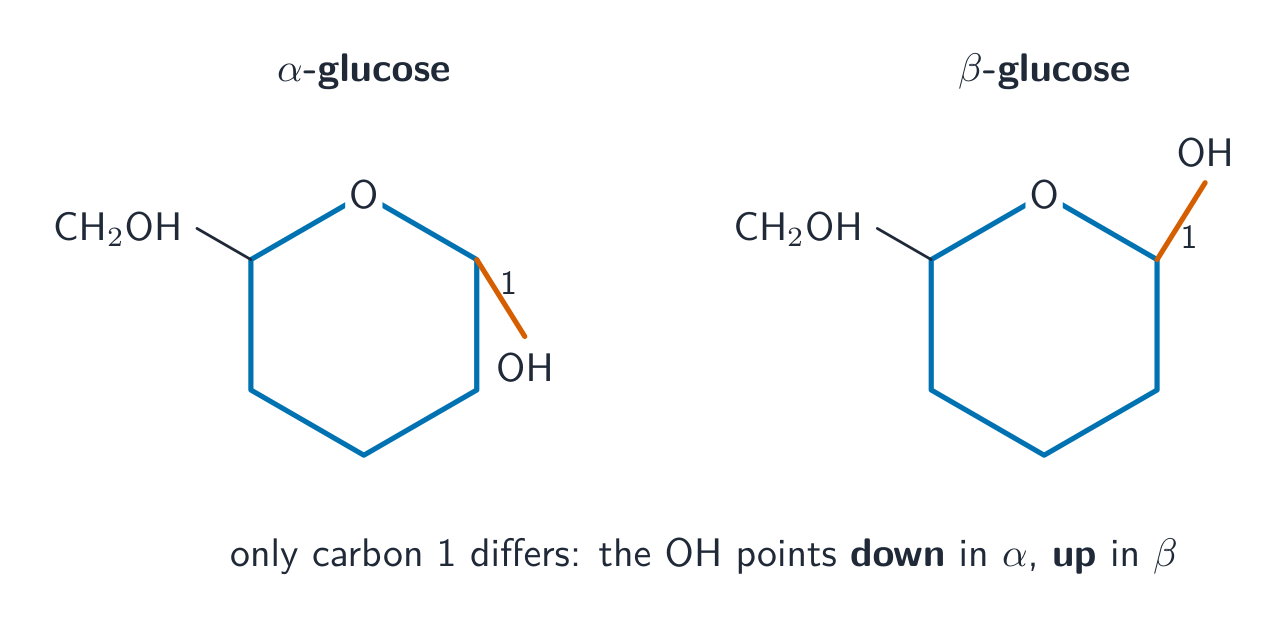
Glucose has six carbon atoms and forms a ring. There are two ring forms. They differ only at carbon 1:
in α-glucose, the –OH group on carbon 1 points down, below the ring.
in β-glucose, the –OH group on carbon 1 points up, above the ring.
This small difference decides which polysaccharide the glucose can build.
Joining and breaking sugars
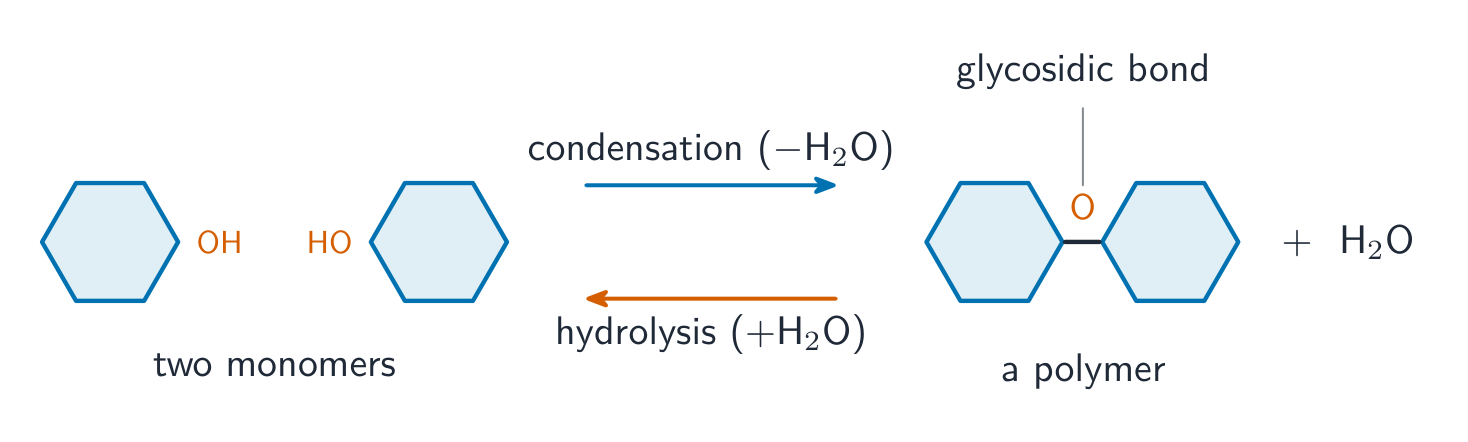
Monomers are joined by strong covalent bonds 共价键. When two sugars join, a glycosidic bond 糖苷键 forms between them. This happens by condensation 缩合: a molecule of water is removed each time a bond forms.
The reverse is hydrolysis 水解: a water molecule is added to break a glycosidic bond. This is why the non-reducing sugar test needs acid and heat — they hydrolyse sucrose into glucose and fructose.
Storage polysaccharides: starch and glycogen
Starch is the energy 能量 store in plants. It is made of two polymers of α-glucose:
amylose 直链淀粉 — a long, unbranched chain that coils into a spiral.
amylopectin 支链淀粉 — a chain with many side branches.
Glycogen 糖原 is the energy store in animals. It is like amylopectin but has even more branches, so it can be broken down quickly when energy is needed.
These stores suit their job well: they are compact, they are insoluble 不溶 (so they do not leave the cell), and they do not change the water potential 水势 of the cell (so they do not pull water in by osmosis 渗透). The many branches give many ends, so glucose can be added or removed fast.
Cellulose
Cellulose 纤维素 is made of β-glucose. Because of the β form, every other glucose is flipped over, so the chains are long and straight. Many straight chains lie side by side and are held together by hydrogen bonds 氢键 into strong bundles called microfibrils 微纤丝. These give the plant cell wall 细胞壁 its strength and stop the cell bursting.
עברית
מונומרים, פולימרים ומקרומולקולות
מונומר הוא מולקולה קטנה המהווה יחידה בודדת.
פולימר הוא מולקולה ארוכה הנוצרת מכמה מונומרים המחוברים זה לזה.
מקרומולקולה היא כל מולקולה גדולה מאוד.
סוכרים מגיעים בשלושה גדלים:
מונו-סכריד הוא יחידת סוכר בודדת, כמו גלוקוז ופרוקטוז.
די-סכריד שתי יחידות המחוברות זו לזו, כמו maltose (מלטוז) וsucrose (סוכרוז).
פולי-סכריד הוא הרבה יחידות המחוברות לפולימר.
גלוקוז, פרוקטוז ו-מלטוז הם סוכרים מיישרים. סוכרוז הוא סוכר לא-מייצר.
שתי צורות טבעת של גלוקוז
לגלוקוז יש שישה אטומי פחמן והוא יוצר טבעת. ישנן שתי צורות טבעת. הן נבדקות רק באטום הפחמן 1:
ב-α-גלוקוז, קבוצת ה–OH על הפחמן 1 מצביעה למטה, מתחת לטבעת.
ב-β-גלוקוז, קבוצת ה–OH על הפחמן 1 מצביעה למעלה, מעל הטבעת.
ההבדל הקטן הזה קובע איזה פולי-סכריד הגלוקוז יכול לבנות.
שתי צורות הטבעת נבדקות רק באטום הפחמן 1: ה–OH מצביע למטה ב-α, למעלה ב-β
חיבור ושבירת סוכרים
מונומרים מחוברים על ידי קשרים קוולנטיים חזקים. כאשר שני סוכרים נמצאים ביחד, נוצר ביניהם קשר גליקוזידי. תהליך זה מתרחש באמצעות התכווצות: כל פעם שנוצר קשר, מולקולת מים נשלפת.
התהליך ההפוך הוא הידרוליזה: מולקולת מים מוסיפה כדי לשבור קשר גליקוזידי. סיבה זו היא מדוע מבחן הסוכר הלא-מייצר דורש חומצה וחום — הם מבצעים הידרוליזה של סוכרוז לגלוקוז ולפרוקטוז.
התכווצות משלפת מים לחיבור מונומרים; הידרוליזה מוסיפה מים לשבירתם
פוליסכרידים לאגירה: עמילן וגליקוגן
עמילן הוא מאגר האנרגיה בצמחים. הוא מורכב משני פולימרים של α-גלוקוז:
אמילוז — שרשרת ארוכה וללא ветвление (בלתי מעורעת) המתגלגלת לספירלה.
אמילופקטין — שרשרת עם הרבה ענפים צדדיים.
גליקוגן הוא מאגר האנרגיה בבעלי חיים. הוא דומה לאמילופקטין אך בעל עוד יותר ענפים, כך שהוא ניתן לפירוק מהיר כאשר נדרש אנרגיה.
מאגרים אלו מתאימים היטב למשימתם: הם קומפקטיים, הם בלתי מסיסים (וכך אינם עוברים החוצה מהתא), והם אינם משנים את ה-פוטנציאל המים בתא (וכך אינם גורמים לכניסת מים על ידי אוסמוזה). הענפים הרבים מספקים סוף רב, כך שגלוקוז יכול להיוסף או להיפטר ממנו במהירות.
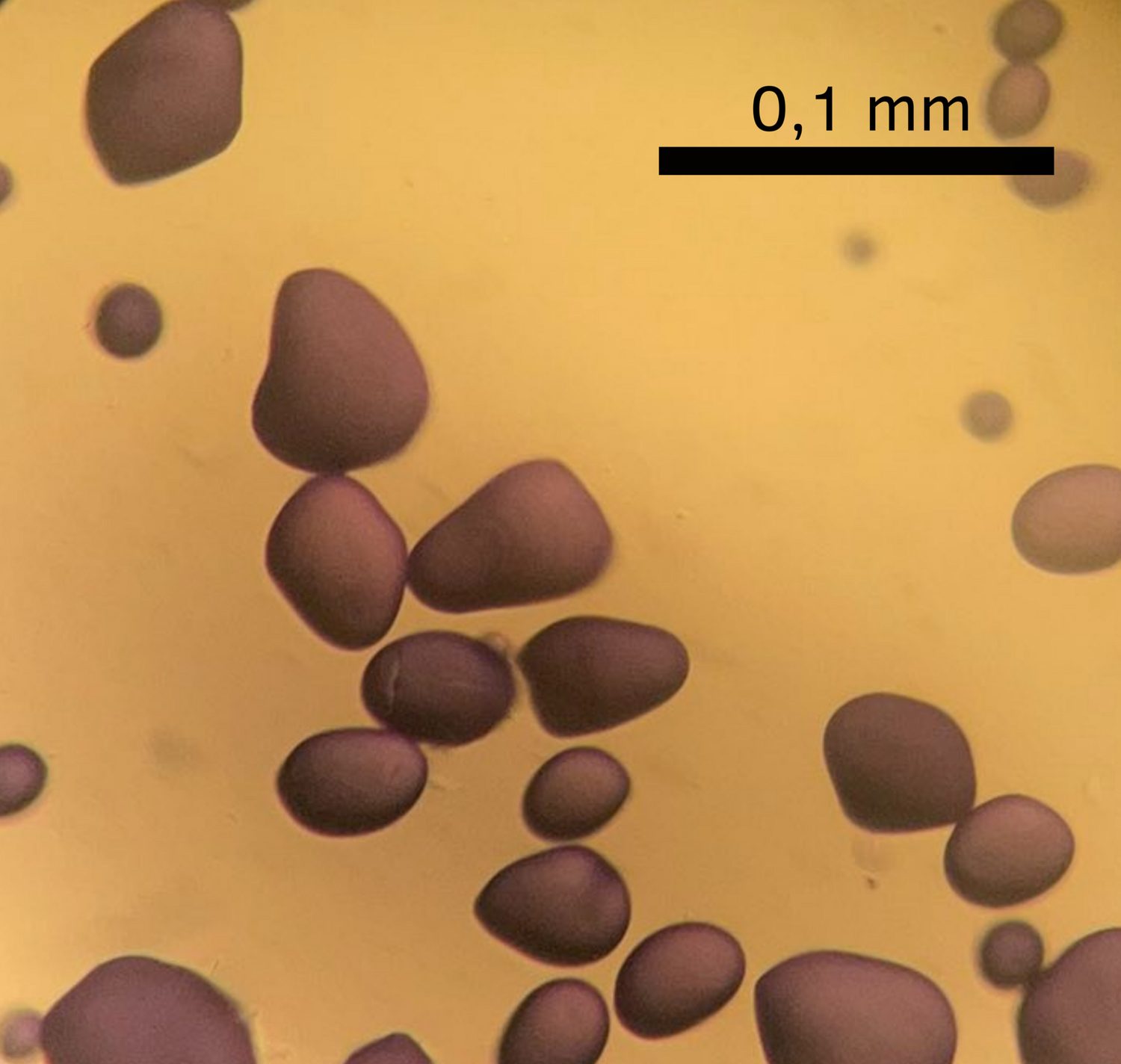
גרגרי עמילן אמיתיים בתוך תפוח אדמה, מצופים על ידי יוד. כל גרעין הוא אריזת צפופה ובלתי מסיסה של אמילוז ואמילופקטין — שימו לב לקנה מידה: הגדולים ביותר הם בקוטר של כ-0.1 מ"מ בלבד
תאית
תאית מורכבת מ-β-גלוקוז. בשל הצורה ה-β, כל גלוקוז שני מתהפך, כך שהשרשראות הן ארוכות וישרות. שרשראות ישרות רבות נמצאות ליד אחת את השנייה ומחוברות על ידי קשרי מימן לחבילות חזקות הנקראות מיקרופיבריליות. אלו מעניקות לקיר התא צמחי את חוזקו ומונעות מהתא להתפוצץ.
Condensation and hydrolysis · התכנסות והידרוליזה
Step through how two sugars join. Condensation removes one water to make the bond; hydrolysis is the reverse — adding water splits it again. · צעד אחר צעד איך שני סוכרים מתחברים. התכנסות מסירה מולקולת מים אחת ליצירת הקשר; הידרוליזה היא ההפך — הוספת מים מפצלת אותו שוב.
A triglyceride 甘油三酯 is the main fat or oil. It is non-polar 非极性 and hydrophobic 疏水 (it does not mix with water). It is made from one glycerol 甘油 molecule joined to three fatty acids 脂肪酸 by ester bonds 酯键. Each ester bond forms by condensation, so three water molecules are removed.
Fatty acids are of two kinds:
saturated 饱和 — no carbon–carbon double bonds 双键; these fats are usually solid.
unsaturated 不饱和 — one or more double bonds; these oils are usually liquid.
Triglycerides make a good long-term energy store: they release about twice as much energy per gram as carbohydrates, they are insoluble, and they store little extra mass because they hold no water. Under the skin they also give insulation 隔热 and protect the organs.
Phospholipids
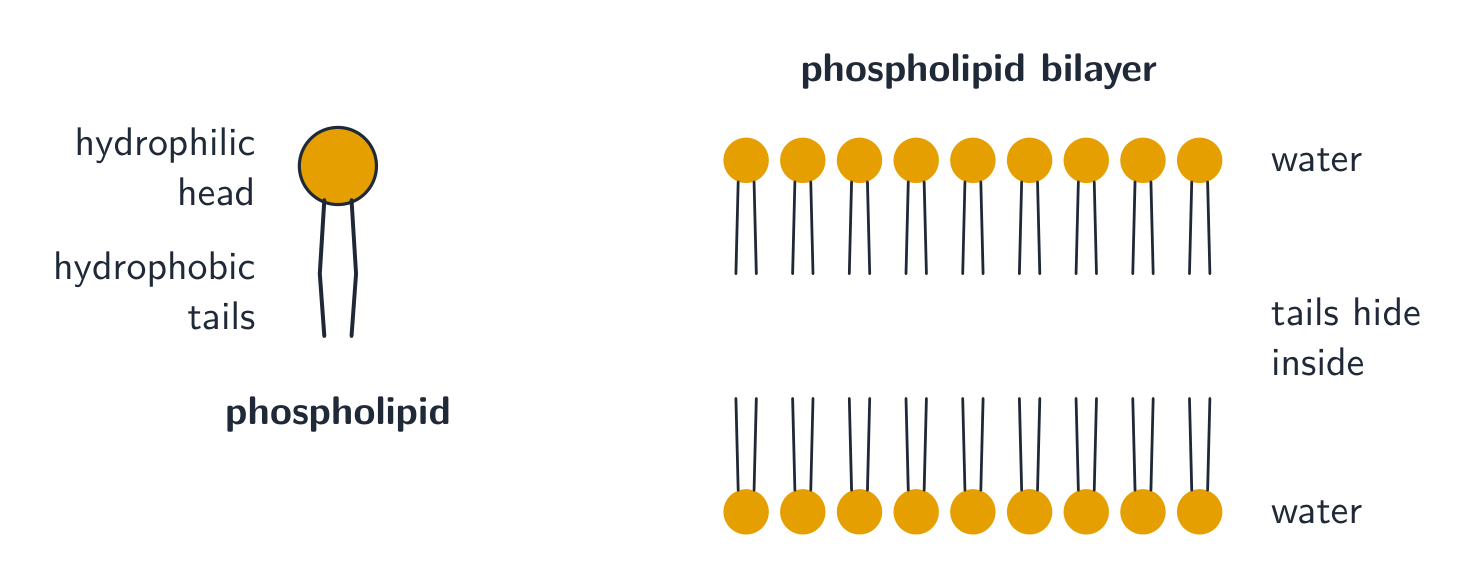
A phospholipid 磷脂 is like a triglyceride, but one fatty acid is replaced by a phosphate 磷酸 group. This gives the molecule two ends with different behaviour:
a hydrophilic 亲水 ("water-loving") polar 极性 phosphate head.
two hydrophobic ("water-fearing") fatty acid tails.
This split personality is why phospholipids form the membranes around cells.
עברית
טריגליצרידים
טריגליצריד הוא השמן או השומן העיקרי. הוא לא מקוטב והידרופובי (אינו מתערבב עם מים). הוא מורכב ממולקולה אחת של גליצרול מחוברת לשלושה חומצות שומן באמצעות קשרי אסטר. כל קשר אסטר נוצר באמצעות תגובת התייבשות, כך שנשלפים שלושה מולקולות מים.
גליצרול אחד ועם שלוש זנבי חומצות שומן; זנב ישר הוא רווי, זנב מכופף הוא לא רווי
חומצות שומן הן משני סוגים:
רוויות — אין להן קשרים כפולים פחמן-פחמן; שומנים אלו הם בדרך כלל מוצקים.
לא רוויות — יש להן קשר כפול אחד או יותר; שמנים אלו הם בדרך כלל נוזליים.
טריגליצרידים מהווים מאגר אנרגיה ארוך טווח טוב: הם משחררים פי שתי אנרגיה לערך בכל גרם בהשוואה לפחמימות, הם בלתי מסיסים במים, ואינם מעמיסים מסה נוספת רבה משום שהם אינם מכילים מים. מתחת לעור הם גם מספקים בידוד תרמי ומגנים על האיברים.
פוספוליפידים
פוספוליפיד דומה לטריגליצריד, אך חומצה שומנית אחת מחולפת על ידי קבוצת פוספט. הדבר נותן למולקולה שני קצוות עם התנהגות שונה:
ראש קוטבי (פולארי) של פוספטהידרופילי ("אהוב מים").
שני זנבות חומצות שומן הידרופוביים ("חושדי מים").
המאפיין הכפול הזה הוא הסיבה לכך שפוספוליפידים יוצרים את הממברנות סביב התאים.
Watch one glycerol join three fatty acids. Each ester bond forms by condensation, removing one water — three bonds, three waters. · צפו איך גליצרול אחד מצטרף לשלושה חומצות שומן. כל קשר אסטרי מתעשה על ידי תגובת התייבשות, הנפרדת ממנו מולקולת מים אחת – שלושה קשרים, שלושה מולקולות מים.
describe and draw the general structure of an amino acid and the formation and breakage of a peptide bond
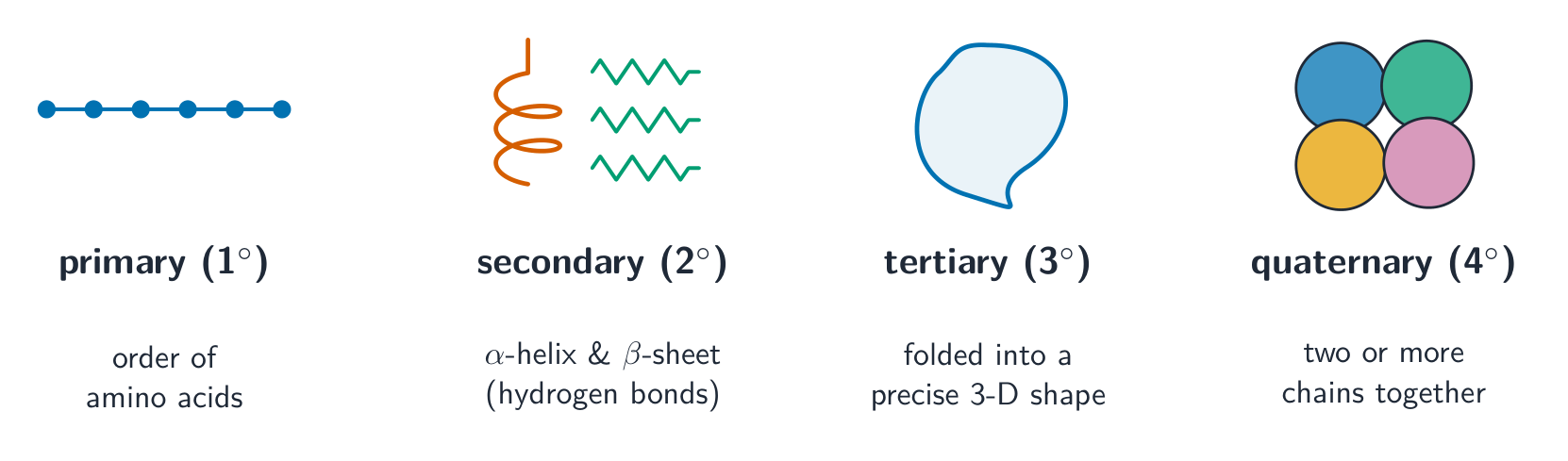
explain the meaning of the terms primary structure, secondary structure, tertiary structure and quaternary structure of proteins
describe the types of interaction that hold protein molecules in shape: • hydrophobic interactions • hydrogen bonding • ionic bonding • covalent bonding, including disulfide bonds
state that globular proteins are generally soluble and have physiological roles and fibrous proteins are generally insoluble and have structural roles
describe the structure of a molecule of haemoglobin as an example of a globular protein, including the formation of its quaternary structure from two alpha (α) chains (α–globin), two beta (β) chains (β–globin) and a haem group
relate the structure of haemoglobin to its function, including the importance of iron in the haem group
describe the structure of a molecule of collagen as an example of a fibrous protein, and the arrangement of collagen molecules to form collagen fibres
relate the structures of collagen molecules and collagen fibres to their function
עברית
תאר ושרטט את המבנה הכללי של חומצה אמינו ואת יצירת ושבירת קשר פפטידי
הסבר את המשמעות של המונחים מבנה ראשוני, מבנה משני, מבנה טרטי ומבנה רביעי של חלבונים
תאר את סוגי האינטראקציה המחזיקים את מולקולות החלבון בצורתן: • אינטראקציות הידrofוביות • קישור מימן • קישור יוני • קישור קוולנטי, כולל קשרי דיסולפיד
ציין שחלבונים גלובולריים הם לרוב מסיסים ומשמש תפקידים פזיולוגיים, ואילו חלבונים סיביים הם לרוב לא מסיסים ומשמש תפקידים מבניים
תאר את מבנה מולקולת המוגלובין כדוגמה לחלבון גלובולרי, כולל היווצרות המבנה הרביעי שלו משתי שרשראות אלפא (α) (אלפא-גלובין), שתי שרשראות בטה (β) (בטה-גלובין) וקבוצת האם
הקשר בין המבנה של המוגלובין לבין הפונקציה שלו, כולל החשיבות של ברזל בקבוצת האם
תאר את מבנה מולקולת קולגן כדוגמה לחלבון סיבי, והסדר המולקולות של קולגן ליצירת סיבי קולגן
הקשר בין מבני מולקולות הקולגן וסיבי הקולגן לפונקציה שלהם
Source: Cambridge International syllabus · מקור: הסיילבוס הבינלאומי של קמבריד'ג'
English
Amino acids and the peptide bond
Proteins are polymers of amino acids 氨基酸. Every amino acid has the same general structure around a central carbon atom: an amino group 氨基 (–NH₂), a carboxyl group 羧基 (–COOH), a hydrogen atom, and a variable side chain 侧链 (the R group). The R group is different in each amino acid.
Two amino acids join by condensation. The bond formed between the amino group of one and the carboxyl group of the next is a peptide bond 肽键, and a water molecule is removed. Many amino acids joined this way make a polypeptide 多肽. Adding water (hydrolysis) breaks a peptide bond.
Four levels of protein structure
Level
What it means
primary structure 一级结构
the order of amino acids in the chain
secondary structure 二级结构
local shapes — the α-helix 螺旋 and the β-pleated sheet 折叠片 — held by hydrogen bonds
tertiary structure 三级结构
the whole chain folded into a precise 3-D shape
quaternary structure 四级结构
two or more polypeptide chains joined into one protein
The folded shape is held together by four kinds of interaction between R groups:
hydrophobic interactions 疏水作用 (non-polar R groups cluster away from water).
hydrogen bonding.
ionic bonds 离子键 (between charged R groups).
covalent bonding, including strong disulfide bonds 二硫键.
Globular and fibrous proteins
globular proteins 球状蛋白质 fold into a rounded shape, are usually soluble 可溶, and do jobs in the body (for example enzymes and haemoglobin).
fibrous proteins 纤维状蛋白质 form long strands, are usually insoluble, and give structure and support (for example collagen).
Haemoglobin — a globular protein
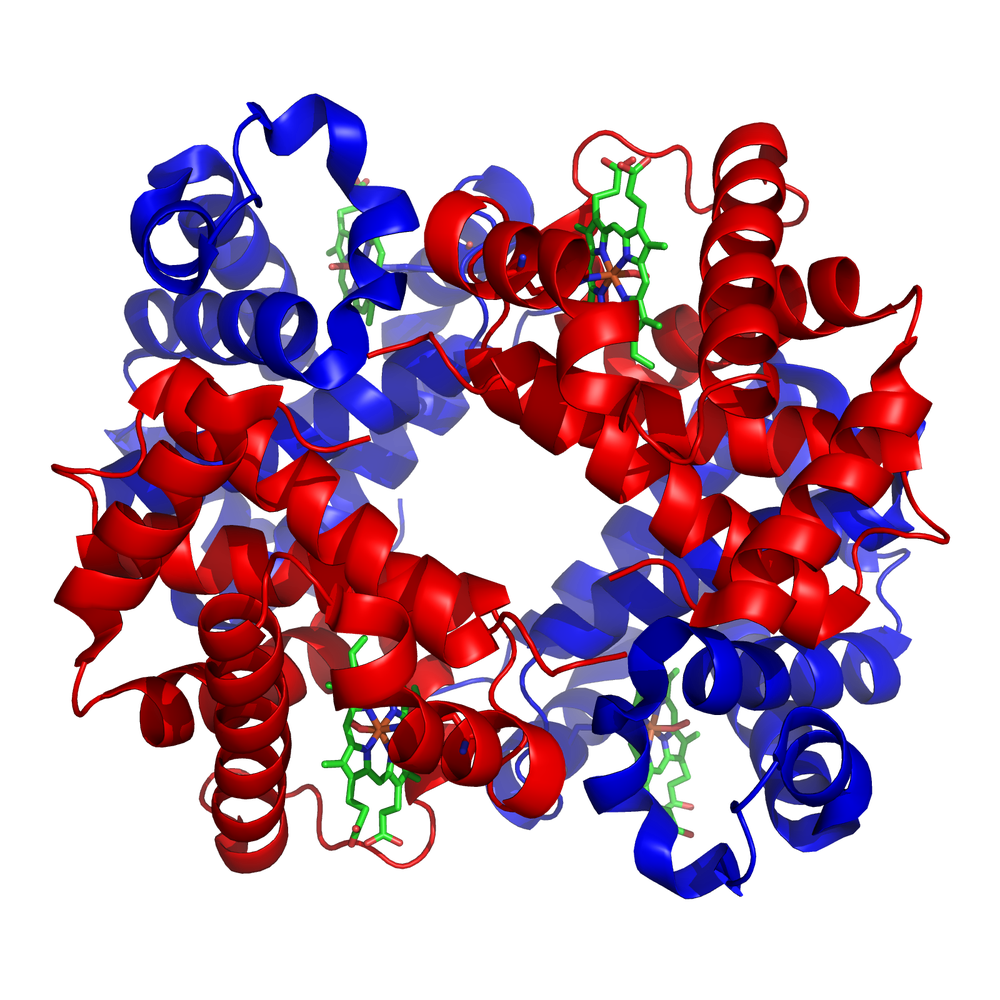
Haemoglobin 血红蛋白 carries oxygen 氧气 in red blood cells. It has a quaternary structure made of four polypeptide chains: two alpha (α-globin) chains and two beta (β-globin) chains. Each chain holds a haem group 血红素. At the centre of each haem group is an iron 铁 atom, and this is where one oxygen molecule binds. Four chains mean one haemoglobin molecule can carry four oxygen molecules.
Collagen — a fibrous protein
Collagen 胶原蛋白 gives strength to skin, tendons 肌腱, bone and blood vessel walls. One collagen molecule is three polypeptide chains wound tightly around each other in a triple strand, held by hydrogen bonds. Many of these molecules lie side by side, slightly staggered, and are cross-linked into thick fibres 纤维. The staggered, cross-linked arrangement makes collagen very strong when pulled.
עברית
חומצות אמינו וקשר הפפטידי
חלבונים הם פולימרים של חומצות אמינו. לכל חומצה אמינו אותה מבנה כללי סביב אטום פחמן מרכזי: קבוצת אמינו (–NH₂), קבוצת קרבוקסיל (–COOH), אטום מימן, ושרשרת צד משתנה (להקראת R). ה-R שונה בכל חומצה אמינו.
שתי חומצות אמינו מתחברות באמצעות תגובת עיבוי. הקשר שנוצר בין קבוצת האמינו של אחת לקבוצת הקרבוקסיל של הבאה הוא קשר פפטידי, ומולקולת מים משתחררת. חיבור של הרבה חומצות אמינו בצורה זו יוצר פוליפפטיד. הוספת מים (הידרוליזה) שוברת קשר פפטידי.
לכל חומצה אמינו יש קבוצת אמינו, קבוצת קרבוקסיל וקבוצת R; שתי חומצות אמינו מתחברות בקשר פפטידי
ארבע רמות של מבנה החלבון
רמה
משמעות
מבנה ראשוני
הסדר של חומצות האמינו בשרשרת
מבנה משני
צורות מקומיות — ה-אלפא-הליקס וה-גיליון המקופל בטא — הנשמרות על ידי קשרי מימן
מבנה משולש
כל השרשרת מתקפלת לצורה מדויקת בת 3-מימדית
מבנה רביעי
שתי או יותר שרשראות פוליפפטיד המתחברות לחלבון אחד
הארבע רמות: מבנה ראשוני → משני → תרצי → רביעי
הצורה המתקפלת מושתמרת על ידי ארבעה סוגי אינטראקציות בין קבוצות R:
אינטראקציות הידרופוביות (קבוצות R לא-קוטביות מצטברות הרחק מהמים).
קישור מימן.
קשרים יוניים (בין קבוצות R טעונות).
קישור קוולנטי, כולל קשרי דיסולפידי חזקים.
חלבונים גלובולריים וסיביים
חלבונים גלובולריים מתקפלים לצורה עגולה, הם בדרך כלל מתמוסים, ומבצעים פונקציות בגוף (למשל אנזימים והמוגלובין).
חלבונים סיביים יוצרים סיבים ארוכים, הם בדרך כלל לא מתמוסים, ומספקים מבנה ותמיכה (למשל קולגן).
המוגלובין — חלבון גלובולי
המוגלובין מעביר חמצן בתוך תאי הדם האדומים. יש לו מבנה רביעי המורכב מארבע שרשראות פוליפפטידיות: שתי שרשראות אלפא (אלפא-גלובין) ושתי שרשראות בטא (בטא-גלובין). כל שרשרת מכילה קבוצת הלם. במרכז כל קבוצת הלם נמצא אטום ברזל, ובמקום זה נקשרת מולקולת חמצן אחת. ארבע שרשראות פירושו שמולקולת המוגלובין אחת יכולה לשאת ארבע מולקולות חמצן.
מולקולת המוגלובין האמיתית, שנוקבה מתוך נתוני קרינת ایکס. ספרו אותם: שתי שרשראות אלפא (אדומות), שתי שרשראות בטא (כחולות), ואחת קבוצת הלם ירוקה בשליטה בכל אחת — כלומר ארבע מולקולות חמצן בסך הכל
קולגן — חלבון סיבי
קולגן מעניק חוזק לעור, ** guest tendons**, עצם ולחליפת כלי הדם. מולקולת קולגן אחת היא שלושה שרשראות פוליפפטידיות הנעטפות בחוזקה זו על זו בשרשרת משולשת, המושתמרות על ידי קשרים מימניים. מספר רב של מולקולות אלו מונחות זה לצד זה, מעט זזות, ומקושרות בצורה צולבת לסיבים עבים. הסידור הזז והמקושר בצורה צולבת גורם לקולגן להיות חזק מאוד כאשר נמשך.
Explore · חקור
The four levels of protein structure · ארבע רמות המבנה של חלבון
Build a protein up one level at a time: sequence → local shapes → a folded 3-D shape → several chains joined. · בנה חלבון שלב אחר שלב: רצף → צורות מקומיות → צורה מתקפלת ⟨3⟩-D → מספר שרשראות מחוברות.
explain how hydrogen bonding occurs between water molecules and relate the properties of water to its roles in living organisms, limited to solvent action, high specific heat capacity and latent heat of vaporisation
עברית
הסבר כיצד מתרחש קישור מימן בין מולקולות מים והקשר בין תכונות המים לתפקידיהם באורגניזמים חיים, בהגבלה של פעולת ממס, קיבוע חום ספציפי גבוה וחום אידוי נסתר
Source: Cambridge International syllabus · מקור: הסיילבוס הבינלאומי של קמבריד'ג'
English
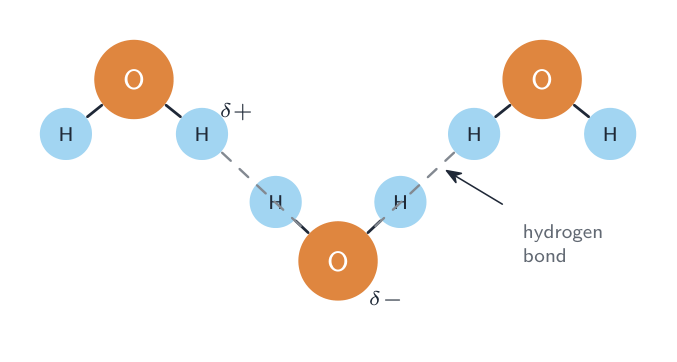
Water is a small molecule, but its two O–H bonds are polar: the oxygen end is slightly negative and the hydrogen ends are slightly positive. So one water molecule attracts its neighbours, forming weak hydrogen bonds between them. These hydrogen bonds explain water's useful properties:
solvent action — water is a good solvent 溶剂, so many substances dissolve in it. This lets reactions happen and lets substances be carried around the body.
high specific heat capacity 比热容 — water needs a lot of energy to warm up, so its temperature stays steady. This protects living things from quick temperature changes.
latent heat of vaporisation 汽化潜热 — water needs a lot of energy to evaporate 蒸发. So when water evaporates (for example as sweat dries), it carries away a lot of heat and cools the body.
עברית
מים הם מולקולה קטנה, אך שני הקשרים O–H שלה הם קוטביים: הצד של החמצן הוא מעט שלילי וצדדי ההידרוגן הם מעט חיוביים. כך שמולקולת מים אחת מושכת את שכנותיה, ויוצרת ביניהן קשרים מימניים חלשים. קשרים מימניים אלו מסבירים את התכונות המועילות של המים:
פעולת ממס — מים הם ממס טוב, ולכן חומses רבות מתמוסים בהם. זאת מאפשרת תגובות להתרחש ומאפשרת לחומses להעברת בגוף.
קיבולת חום ספציפית גבוהה — מים דורשים הרבה אנרגיה להתחמם, ולכן הטמפרטורה שלהם נשארת יציבה. זה מגן על בעלי חיים מפני שינויי טמפרטורה מהירים.
חום אידוי — למים נדרשת כמות רבה של אנרגיה כדי להתאדות. לכן, כאשר מים מתאדים (למשל כשזיעה מתייבשת), הם נושאים עמם כמות גדולה של חום ומקררים את הגוף.
*מים הם קוטביים (חמצן δ−, הידרוגנים δ+), ולכן המולקולות שלהן נמשכות זו לזו באמצעות קשרי מימן — זהו הסיבה לכל התכונות הנ"ל
Explore · חקור
Why water is polar · למה המים מקוטבים
Tap each part. Oxygen pulls the shared electrons closer, so it is slightly negative and the hydrogens slightly positive — and these opposite charges form hydrogen bonds. · לחץ על כל חלק. החמצן מושך את האלקטרונים המשותפים קרוב יותר, ולכן הוא מעט שלילי והמימן מעט חיובי — ומטענים מנוגדים אלו יוצרים קשרי מימן.
Pick one and the site follows you — notes, papers, videos and practice all open on it. · בחרו נושא אחד והאתר יעקוב אחריו — הערות, מסמכים, וידאו ותרגולים פתוחים בו.
Type to search notes, lessons, code, vocabulary and past-paper questions across every subject. · הקלד כדי לחפש הערות, שיעורים, קוד, אוצר מילים ושאלות מבחנים בכל הנושאים.


 *הצורה מתאימה למשימה: אמילוז מתגלגל ואמילופקטין/גליקוגן מעורעים (למערכות אגירה קומפקטיות), בעוד ששרשראות תאית ישרות נעטפות סיבים חזקים