English
| Core | Supplement |
|---|---|
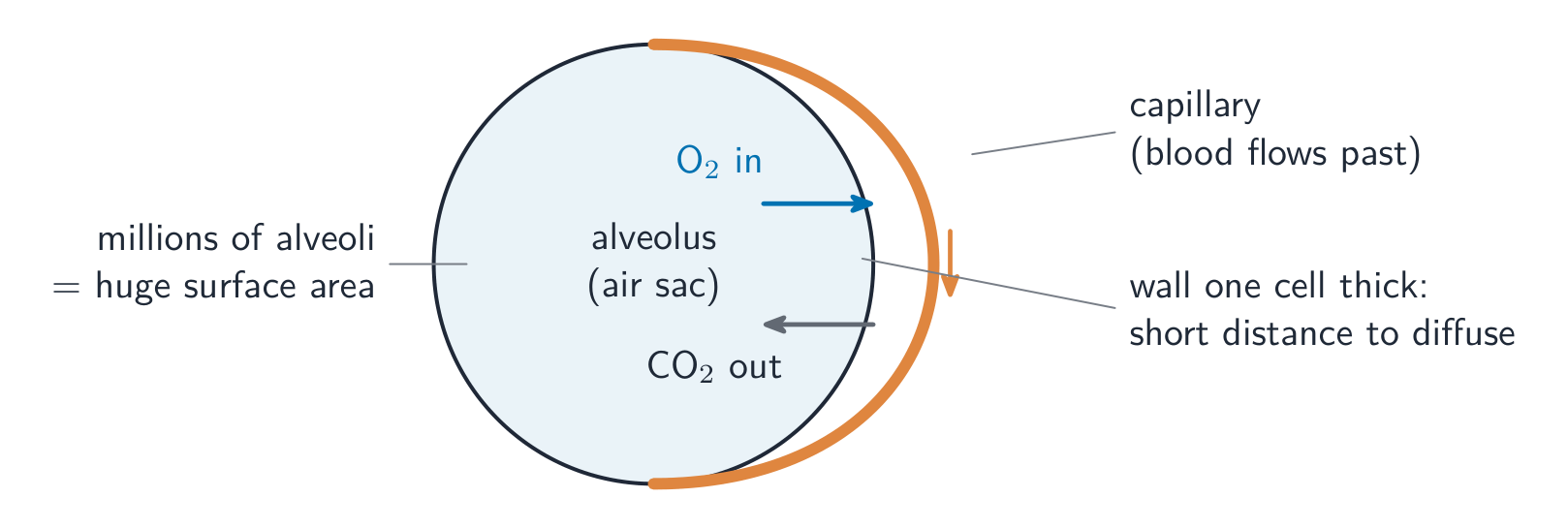
| 1 Describe the features of gas exchange surfaces in humans, limited to: large surface area, thin surface, good blood supply and good ventilation with air | |
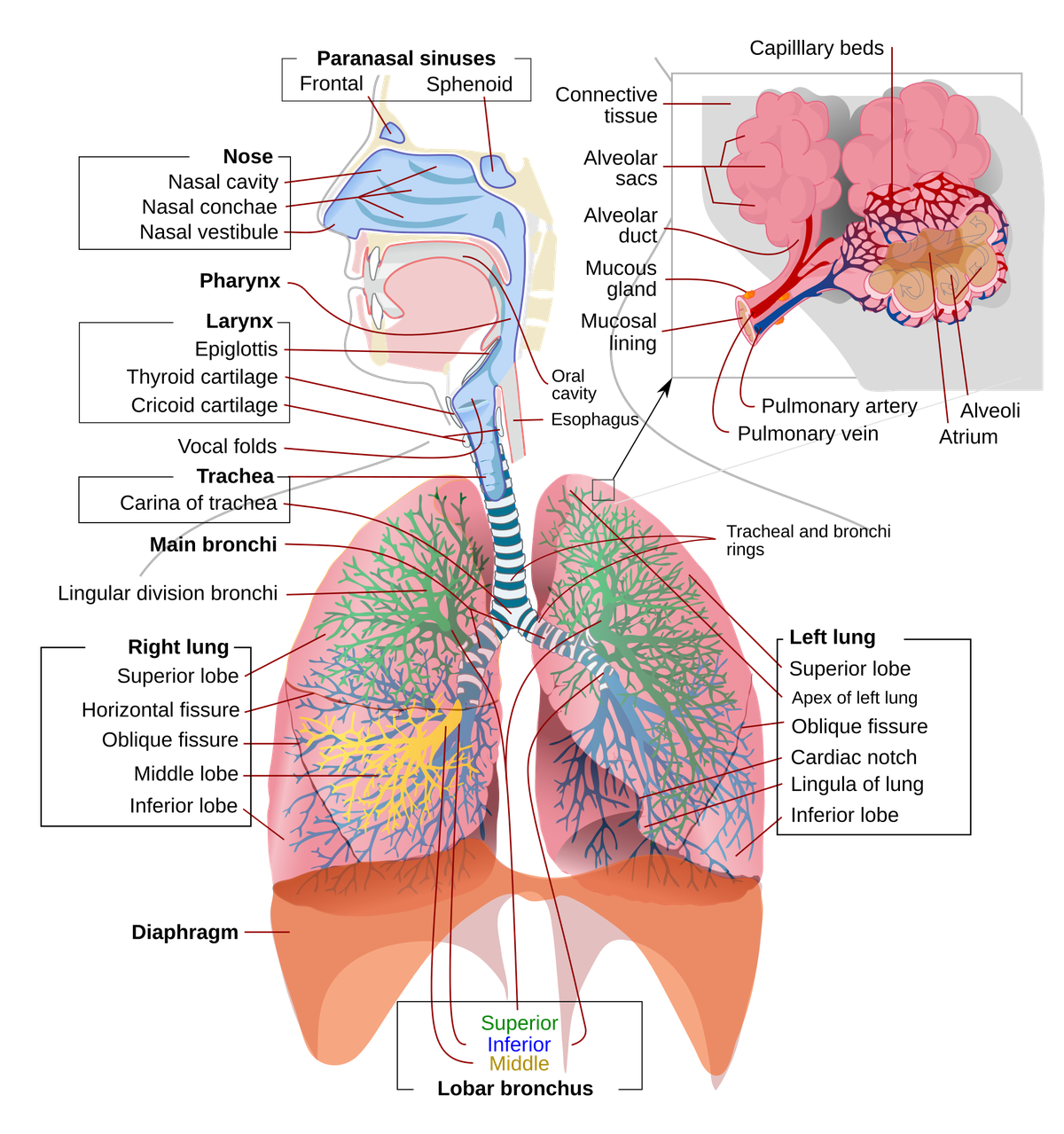
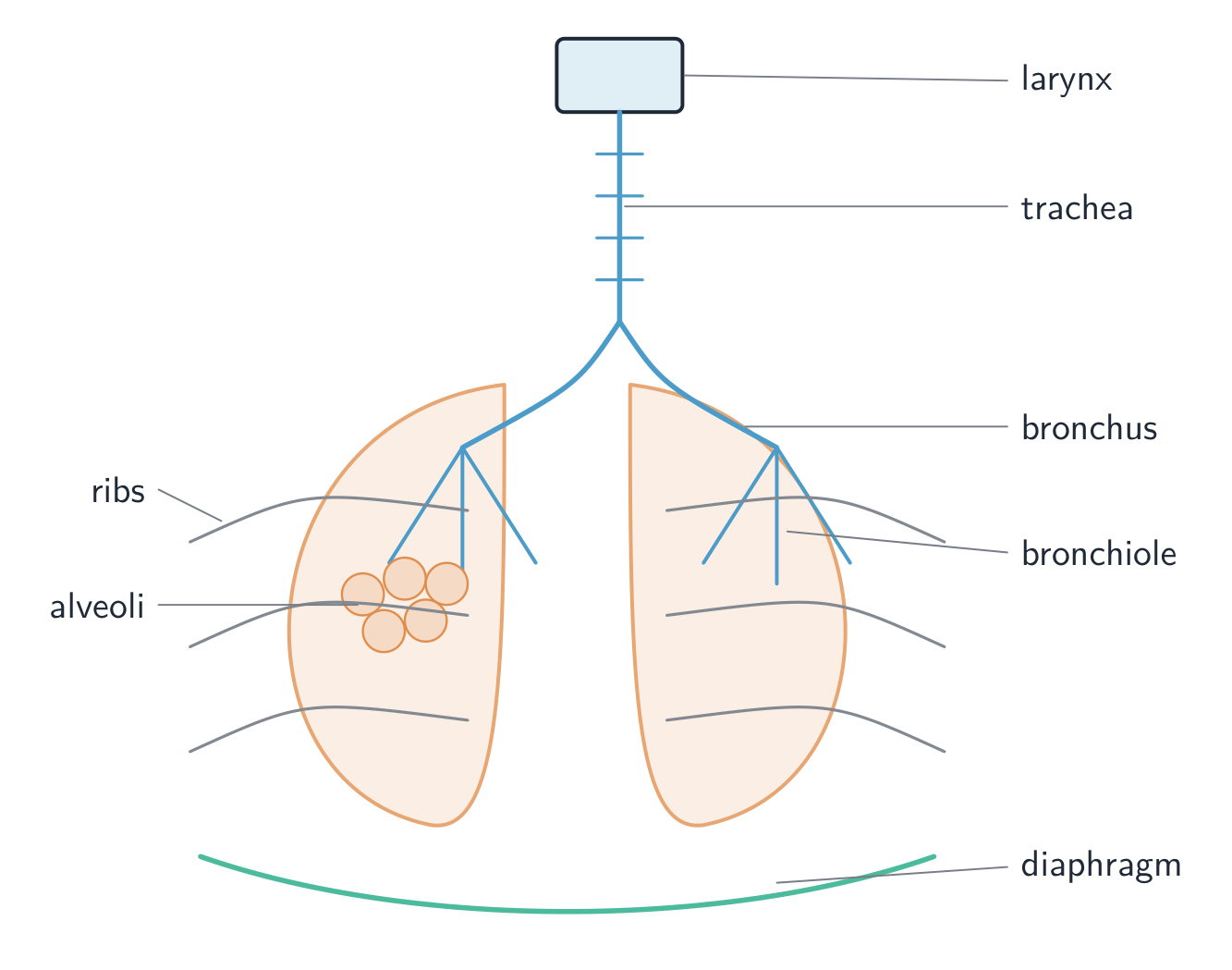
| 2 Identify in diagrams and images the following parts of the breathing system: lungs, diaphragm, ribs, intercostal muscles, larynx, trachea, bronchi, bronchioles, alveoli and associated capillaries | 6 Identify in diagrams and images the internal and external intercostal muscles |
| 7 State the function of cartilage in the trachea | |
| 8 Explain the role of the ribs, the internal and external intercostal muscles and the diaphragm in producing volume and pressure changes in the thorax leading to the ventilation of the lungs | |
| 3 Investigate the differences in composition between inspired and expired air using limewater as a test for carbon dioxide | 9 Explain the differences in composition between inspired and expired air |
| 4 Describe the differences in composition between inspired and expired air, limited to: oxygen, carbon dioxide and water vapour | |
| 5 Investigate and describe the effects of physical activity on the rate and depth of breathing | 10 Explain the link between physical activity and the rate and depth of breathing in terms of: an increased carbon dioxide concentration in the blood, which is detected by the brain, leading to an increased rate and greater depth of breathing |
| 11 Explain the role of goblet cells, mucus and ciliated cells in protecting the breathing system from pathogens and particles |
Français
| Fondamental | Supplémentaire |
|---|---|
| 1 Décrire les caractéristiques des surfaces d'échange gazeux chez l'humain, limité à : grande surface, surface fine, bon apport sanguin et bonne ventilation par l'air | |
| 2 Identifier dans les schémas et images les parties suivantes du système respiratoire : poumons, diaphragme, côtes, muscles intercostaux, larynx, trachée, bronches, bronchioles, alvéoles et capillaires associés | 6 Identifier dans les schémas et images les muscles intercostaux internes et externes |
| 7 Indiquer la fonction du cartilage dans la trachée | |
| 8 Expliquer le rôle des côtes, des muscles intercostaux internes et externes et du diaphragme dans la production de changements de volume et de pression dans le thorax conduisant à la ventilation des poumons | |
| 3 Examiner les différences de composition entre l'air inspiré et l'air expiré en utilisant l'eau de chaux comme test du dioxyde de carbone | 9 Expliquer les différences de composition entre l'air inspiré et l'air expiré |
| 4 Décrire les différences de composition entre l'air inspiré et l'air expiré, limité à : oxygène, dioxyde de carbone et vapeur d'eau | |
| 5 Examiner et décrire les effets de l'activité physique sur le rythme et la profondeur de la respiration | 10 Expliquer le lien entre l'activité physique et le rythme ainsi que la profondeur de la respiration en termes de : augmentation de la concentration de dioxyde de carbone dans le sang, détectée par le cerveau, entraînant une augmentation du rythme et une plus grande profondeur de la respiration |
| 11 Expliquer le rôle des cellules caliciformes, du mucus et des cellules ciliées dans la protection du système respiratoire contre les pathogènes et les particules |