Skip to content · ⁨Saltar al contenido⁩

Grupo 2

A-Level Química · Topic 27 · ⁨Tema 27⁩

Train · ⁨Entrenar⁩
Video lesson for this topic · ⁨Lección de video para este tema⁩ Open the video page · ⁨Abrir la página de video⁩
8:06

Grupo 2 (A2)

Aquí hay un acertijo. Bajar por el Grupo 2, desde magnesio hasta bario, los hidróxidos se vuelven más solubles. Bajar por el mismo grupo, los sulfatos se vuelven menos solubles.…

English narration · English + 中文 subtitles burned in · ⁨Narración en inglés · Subtítulos en inglés + 中文 quemados en pantalla⁩

27.1

Thermal stability of the nitrates and carbonates · ⁨Estabilidad térmica de los nitratos y carbonatos⁩

Syllabus
English
  1. describe and explain qualitatively the trend in the thermal stability of the nitrates and carbonates including the effect of ionic radius on the polarisation of the large anion
  2. describe and explain qualitatively the variation in solubility and of enthalpy change of solution, $\Delta H^{\ominus}_{\text{sol}}$, of the hydroxides and sulfates in terms of relative magnitudes of the enthalpy change of hydration and the lattice energy
Español
  1. Describir y explicar cualitativamente la tendencia en la estabilidad térmica de los nitratos y carbonatos, incluyendo el efecto del radio iónico sobre la polarización del anión grande
  2. Describir y explicar cualitativamente la variación en la solubilidad y del cambio de entalpía de disolución, $\Delta H^{\ominus}_{\text{sol}}$, de los hidróxidos y sulfatos en términos de las magnitudes relativas de la entalpía de hidratación y la energía reticular
Source: Cambridge International syllabus · ⁨Fuente: Plan de estudios Cambridge International⁩

English

The thermal stability 热稳定性 of the Group 2 nitrates 硝酸盐 and carbonates 碳酸盐 increases down the group. Here is the reason, in terms of how the ions affect each other.

A small cation 阳离子 with a small ionic radius 离子半径 has a high charge density. It pulls on the electrons of the nearby anion and distorts its shape — this is polarisation 极化. Distorting the large anion 阴离子 (the carbonate or nitrate ion) weakens a bond inside it, so the compound breaks down more easily.

Going down the group, the cation gets larger. Its charge density drops, so it polarises the anion less. The anion is less distorted, so the compound is harder to break down — it is more thermally stable and needs a higher temperature to decompose.

Worked example. Down Group 2 the hydroxides become more soluble while the sulfates become less soluble. Explain why the two trends run in opposite directions. Solubility is a contest between the lattice energy holding the solid together and the hydration energy rewarding the ions for dissolving. Both get less exothermic as the cation grows, so whichever falls faster decides the trend. With the small hydroxide ion, the lattice energy depends strongly on the cation's size, so it falls faster than the hydration energy: the lattice gets relatively easier to break and solubility rises. With the large sulfate ion, the lattice energy is already dominated by that big anion and barely changes down the group, while the cation's hydration energy still falls - so solubility falls. Name both energies and say which one falls faster; simply restating the trends earns no explanation marks.

Español

La estabilidad térmica 热稳定性 de los nitratos 硝酸盐 y carbonatos 碳酸tos del Grupo 2 aumenta al descender por el grupo. Esta es la razón, en términos de cómo los iones se afectan entre sí.

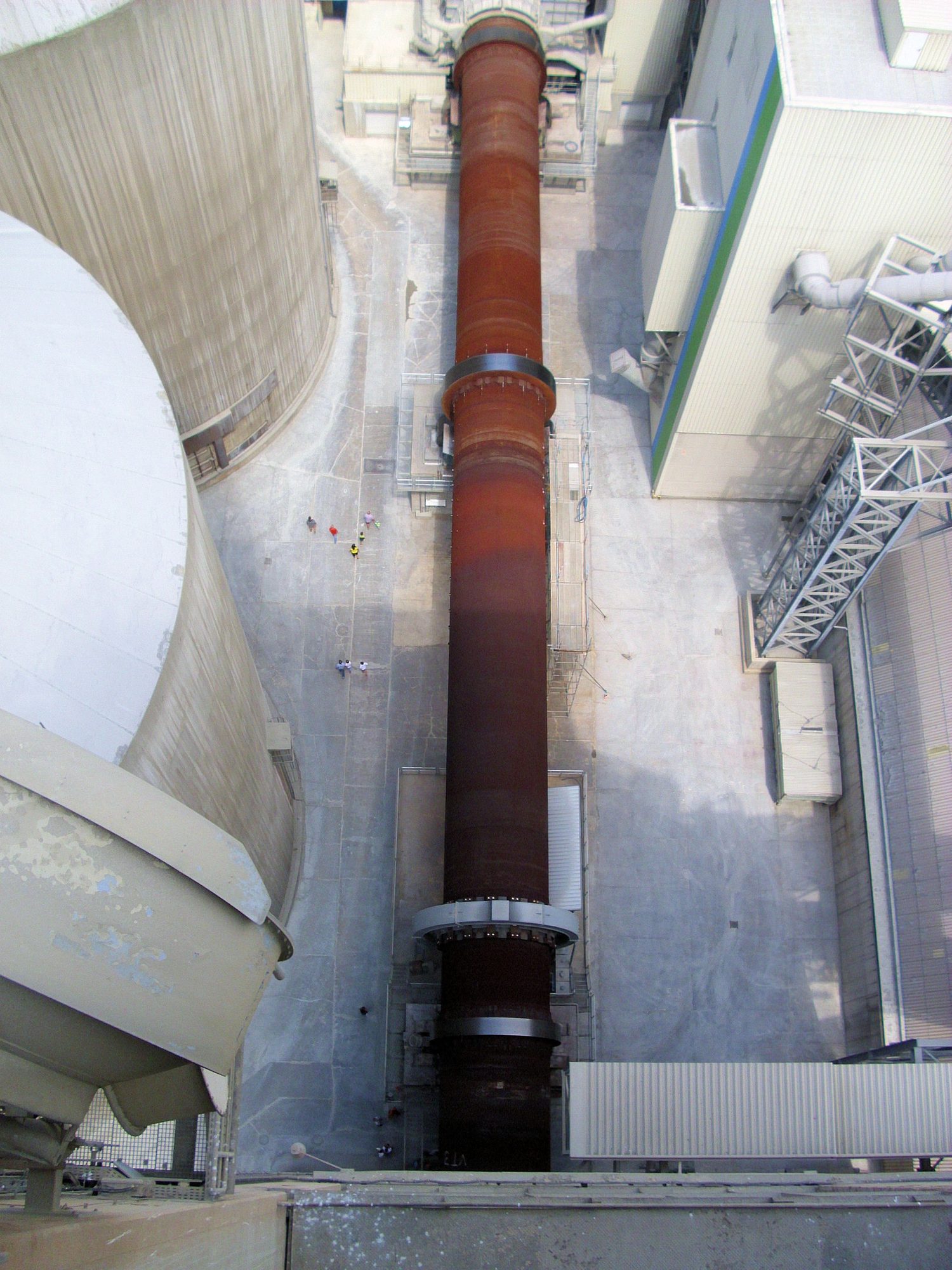
A rotary kiln at a lime works
Calentar piedra caliza (carbonato de calcio) en un horno lo descompone en óxido de calcio — una descomposición térmica

Un catión 阳离子 pequeño con un radio iónico pequeño tiene una alta densidad de carga. Atrae los electrones del anión cercano y distorsiona su forma; esto es polarización 极化. Distorsionar el gran anión 阴离子 (el ion carbonato o nitrato) debilita un enlace dentro de él, por lo que el compuesto se descompone con mayor facilidad.

Al descender por el grupo, el catión se hace más grande. Su densidad de carga disminuye, por lo que polariza al anión menos. El anión se distorsiona menos, por lo que el compuesto es más difícil de descomponer: es más estable térmicamente y necesita una temperatura más alta para descomponerse.

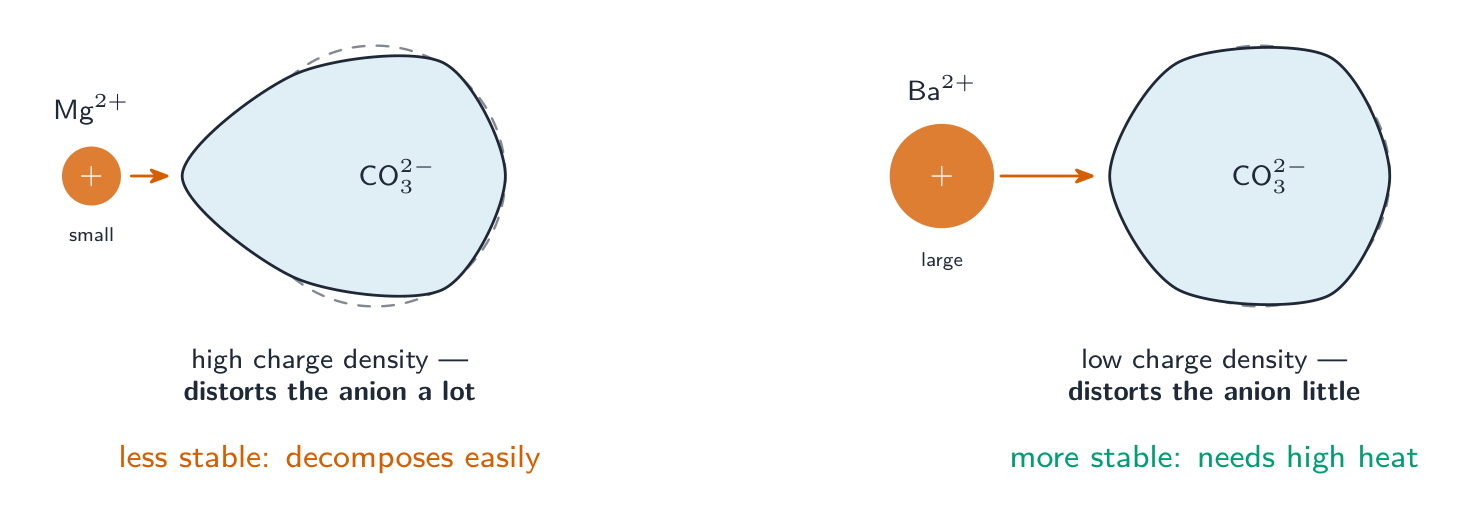
Dos escenarios: un catión de magnesio pequeño distorsiona fuertemente la nube electrónica del anión carbonato dándole forma de lágrima, mientras que un catión de bario grande apenas lo distorsiona
Un catión pequeño tiene una alta densidad de carga, por lo que distorsiona (polariza) más al anión grande — debilitándolo, por lo que el compuesto es menos estable

Ejemplo resuelto. Al descender por el Grupo 2, las hidróxidos se vuelven más solubles mientras que los sulfatos se vuelven menos solubles. Explique por qué estas dos tendencias van en direcciones opuestas. La solubilidad es una competencia entre la energía reticular que mantiene unido al sólido y la energía de hidratación que recompensa a los iones al disolverse. Ambas se vuelven menos exotérmicas a medida que crece el catión, por lo que cualquiera que caiga más rápido determina la tendencia. Con el ion pequeño de hidróxido, la energía reticular depende fuertemente del tamaño del catión, por lo que cae más rápido que la energía de hidratación: la red se vuelve relativamente más fácil de romper y la solubilidad aumenta. Con el ion grande de sulfato, la energía reticular ya está dominada por ese anión grande y apenas cambia al descender por el grupo, mientras que la energía de hidratación del catión sigue descendiendo: por lo tanto, la solubilidad disminuye. Nombre ambas energías y diga cuál cae más rápido; simplemente repetir las tendencias no otorga puntos de explicación.

Explore · ⁨Explorar⁩

Escala de estabilidad térmica del Grupo 2

Descender por el Grupo 2 y ver por qué las carbonatos se vuelven más difíciles de descomponer.

Explore · ⁨Explorar⁩

Laboratorio de solubilidad del Grupo 2

Clasificar los compuestos del Grupo 2 según la tendencia de solubilidad.

Vocabulary · ⁨Vocabulario⁩ Train · ⁨Entrenar⁩
English · ⁨Inglés⁩ Chinese · ⁨Chino⁩ Pinyin
polarisation/ˌpəʊləraɪˈzeɪʃn/ 极化 jí huà
anion/ˈænaɪən/ 阴离子 yīn lí zi
enthalpy change of solution/enˈθælpi tʃeɪndʒ ɒv səˈluːʃn/ 溶解焓变 róng jiě hán biàn
27.1

Solubility of the hydroxides and sulfates · ⁨Solubilidad de los hidróxidos y sulfatos⁩

English

When an ionic solid dissolves, two energy changes compete. The enthalpy change of solution 溶解焓变 is the sum of them:

$$\Delta H^{\ominus}_{\text{sol}} = -\Delta H_{\text{latt}} + \Delta H_{\text{hyd}}$$
  • you must first pull the lattice apart (this needs the lattice energy 晶格能).
  • then water surrounds the ions (this releases the enthalpy change of hydration 水合焓变).

If the energy released on hydration roughly matches (or beats) the energy needed to break the lattice, the solid dissolves easily.

Going down the group, both the lattice energy and the hydration enthalpy get smaller (less negative), because the cation is larger. But they shrink at different rates, and this explains the opposite trends:

Compound Trend in solubility 溶解度 down the group Why
hydroxides 氢氧化物 increases the $\text{OH}^-$ ion is small, so the lattice energy falls a lot down the group; this change outweighs the fall in hydration energy
sulfates 硫酸盐 decreases the $\text{SO}_4^{2-}$ ion is large, so the lattice energy stays almost the same; the fall in hydration energy then dominates, so dissolving becomes less favourable
Español

Cuando un sólido iónico se disuelve, compiten dos cambios de energía. El cambio de entalpía de solución 溶解焓变 es la suma de ellos:

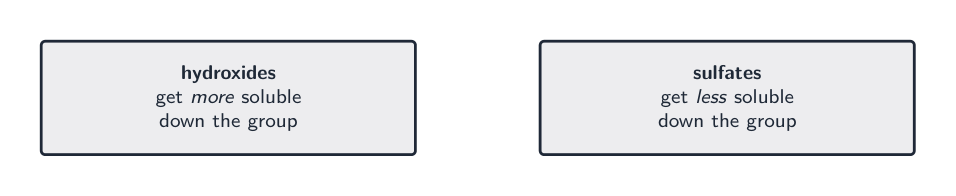
Bajando por el Grupo 2 los hidróxidos se vuelven más solubles pero los sulfatos se vuelven menos solubles
En el Grupo 2, los hidróxidos son más solubles pero los sulfatos menos
$$\Delta H^{\ominus}_{\text{sol}} = -\Delta H_{\text{latt}} + \Delta H_{\text{hyd}}$$
  • primero debe separar la red (esto requiere la energía reticular 晶格能).
  • luego el agua rodea a los iones (esto libera el cambio de entalpía de hidratación 水合焓变).

Si la energía liberada en la hidratación coincide aproximadamente (o supera) a la energía necesaria para romper la red, el sólido se disuelve fácilmente.

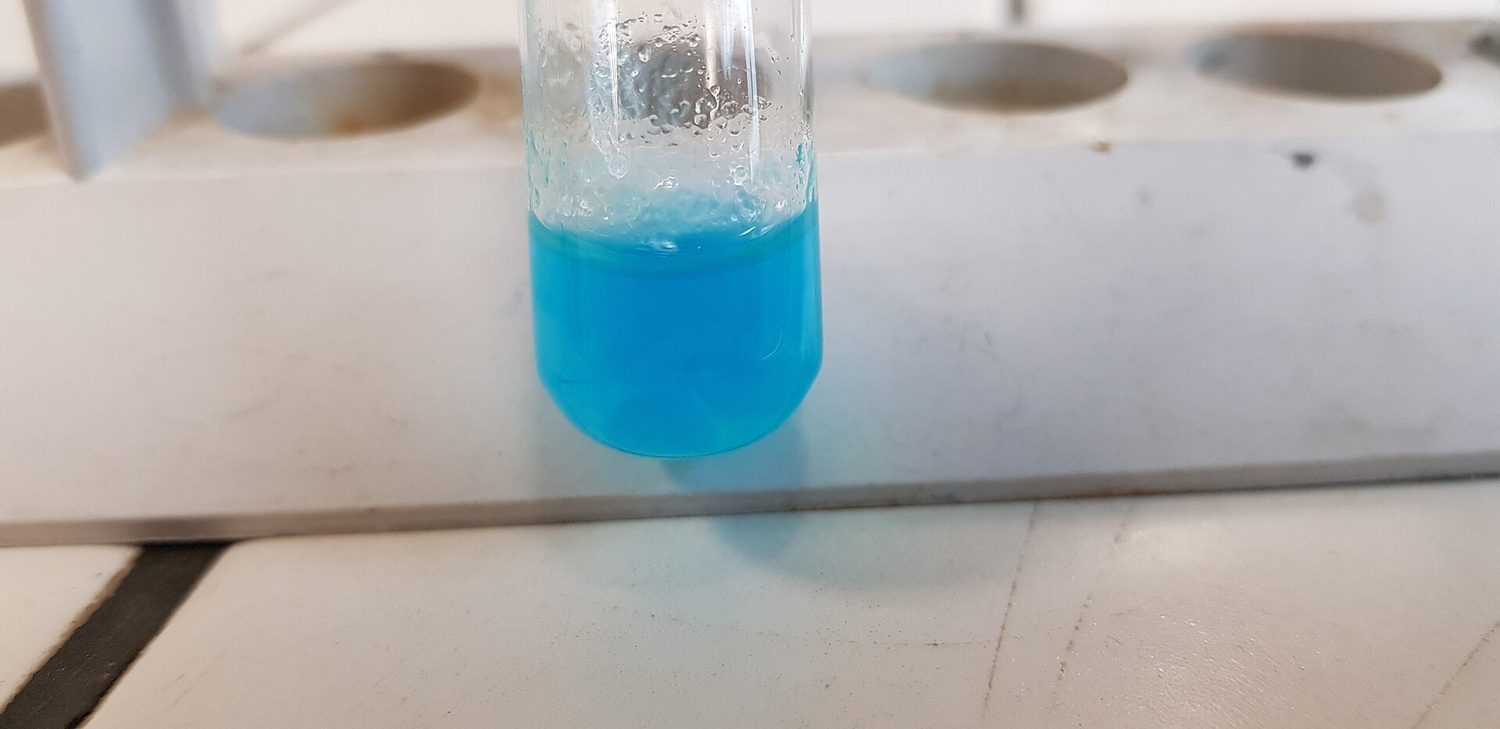
A pale blue gelatinous copper(II) hydroxide precipitate
Un hidróxido metálico insoluble se forma como un precipitado gelatinoso cuando su energía reticular es demasiado grande para ser compensada por la hidratación

Al descender por el grupo, tanto la energía reticular como la entalpía de hidratación se hacen menores (menos negativas), porque el catión es más grande. Pero disminuyen a tasas diferentes, y esto explica las tendencias opuestas:

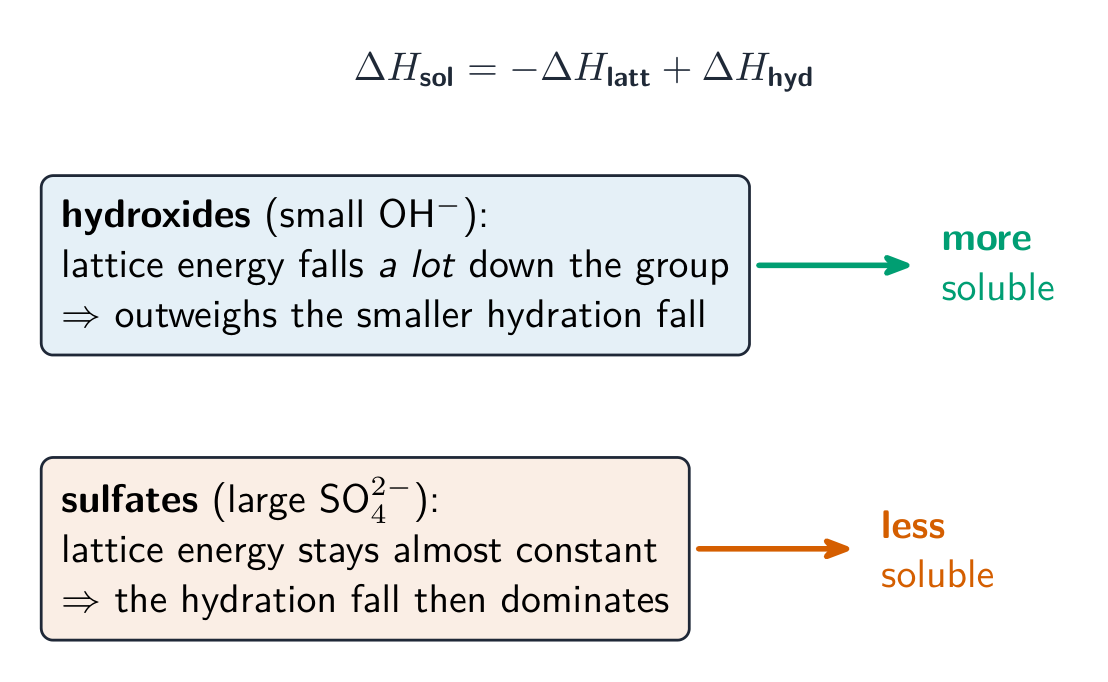
Dos cajas contrastando hidróxidos y sulfatos: para hidróxidos la energía reticular cae mucho, para sulfatos se mantiene constante, dando tendencias de solubilidad opuestas
Por qué las tendencias son opuestas: la energía reticular del OH$^-$ lattice energy falls a lot down the group (hydroxides dissolve more), but the large SO$_4^{2-}$ grande apenas cambia (los sulfatos se disuelven menos)
Compuesto Tendencia en solubilidad 溶解度 al descender por el grupo Por qué
hidróxidos 氢氧化物 aumenta el ion $\text{OH}^-$ es pequeño, por lo que la energía reticular disminuye mucho al descender por el grupo; este cambio supera la disminución de la energía de hidratación
sulfatos 硫酸盐 disminuye el ion $\text{SO}_4^{2-}$ es grande, por lo que la energía reticular permanece casi igual; entonces la disminución de la energía de hidratación domina, haciendo que la disolución sea menos favorable
Vocabulary · ⁨Vocabulario⁩ Train · ⁨Entrenar⁩
English · ⁨Inglés⁩ Chinese · ⁨Chino⁩ Pinyin
lattice energy/ˈlætɪs ˈenədʒi/ 晶格能 jīng gé néng
enthalpy change of hydration/enˈθælpi tʃeɪndʒ ɒv haɪˈdreɪʃn/ 水合焓变 shuǐ hé hán biàn
solubility/ˌsɒljuːˈbɪlɪti/ 溶解度 róng jiě dù
hydroxide/haɪˈdrɒksaɪd/ 氢氧化物 qīng yǎng huà wù
sulfate/ˈsʌlfeɪt/ 硫酸盐 liú suān yán
27.1

Exam tips · ⁨Consejos para el examen⁩

English
  • Thermal stability of carbonates and nitrates increases down the group — larger cations polarise the anion less.
  • Give the decomposition products: carbonates → oxide + $\text{CO}_2$; nitrates → oxide + $\text{NO}_2$ + $\text{O}_2$ (brown gas).
  • Hydroxides get more soluble and sulfates less soluble down the group.
  • Explain trends with cation charge density (polarising power), not just size.
Español
  • La estabilidad térmica de los carbonatos y nitratos aumenta al descender por el grupo: los cationes más grandes polarizan al anión menos.
  • Indique los productos de descomposición: carbonatos → óxido + $\text{CO}_2$; nitratos → óxido + $\text{NO}_2$ + $\text{O}_2$ (gas marrón).
  • Los hidróxidos se vuelven más solubles y los sulfatos menos solubles al descender por el grupo.
  • Explique las tendencias mediante la densidad de carga del catión (poder polarizante), no solo por el tamaño.
Vocabulary · ⁨Vocabulario⁩ Train · ⁨Entrenar⁩
English · ⁨Inglés⁩ Chinese · ⁨Chino⁩ Pinyin
thermal stability/ˈθɜːml stəˈbɪlɪti/ 热稳定性 rè wěn dìng xìng
nitrate/ˈnaɪtreɪt/ 硝酸盐 xiāo suān yán
carbonate/ˈkɑːbəneɪt/ 碳酸盐 tàn suān yán
cation/ˈkætaɪən/ 阳离子 yáng lí zi
ionic radius/aɪˈɒnɪk ˈreɪdɪəs/ 离子半径 lí zi bàn jìng

Interactive lessons on this topic · ⁨Lecciones interactivas sobre este tema⁩

Work through it step by step, with instant-check exercises. · ⁨Trátalo paso a paso, con ejercicios de verificación instantánea.⁩

Past Papers · ⁨Exámenes Anteriores⁩

More topics in A-Level Química · ⁨Más temas en A-Level Química⁩

Log in or create account · ⁨Iniciar sesión o crear cuenta⁩

IGCSE, A-Level & AP