Skip to content · ⁨الانتقال إلى المحتوى⁩

People in business · ⁨الأشخاص في مجال الأعمال⁩

IGCSE Business Studies · ⁨IGCSE دراسات الأعمال⁩ · Topic 2 · ⁨الموضوع 2⁩

Video lesson for this topic · ⁨درس فيديو لهذا الموضوع⁩ Open the video page · ⁨افتح صفحة الفيديو⁩
13:12

الأشخاص في مجال الأعمال

انظر إلى أرض المصنع. مئات الأشخاص، جنباً إلى جنب، كل منهم يقوم بجزء صغير من عمل واحد. كان يجب إيجاد كل واحد منهم، وتدريبه، ودفع أجره — ومنحه…

English narration · English + 中文 subtitles burned in · ⁨سرد باللغة الإنجليزية · ترجمة مدمجة بالإنجليزية + الصينية⁩

2.1

Why motivation matters · ⁨لماذا الدافعية مهمة⁩

Syllabus · ⁨المنهج⁩
English
  1. explain why a well-motivated workforce is important (productivity, low absenteeism, low labour turnover)
  2. outline motivation theories: Taylor (money), Maslow (hierarchy of needs), Herzberg (hygiene factors and motivators)
  3. describe financial methods of motivation: wage (time/piece rate), salary, commission, bonus, profit sharing, fringe benefits
  4. describe non-financial methods: job rotation, job enrichment, job enlargement, autonomy, teamworking, training, opportunities for promotion
العربية
  1. اشرح لماذا يعتبر القوى العاملة المحفزة جيدًا أمرًا مهمًا (الإنتاجية، انخفاض الغياب، انخفاض معدل دوران العمالة)
  2. استعرض نظريات التحفيز: تايلور (النقد)، ماسلو (هرم الاحتياجات)، هيرزبرغ (عوامل النظافة والمحفزات)
  3. صف الأساليب المالية للتحفيز: الأجر (سعر الوقت/القطعة)، الراتب، العمولة، المكافأة، مشاركة الأرباح، الامتيازات
  4. صف الأساليب غير المالية: تدوير الوظائف، إثراء الوظيفة، توسيع الوظيفة، الاستقلالية، العمل الجماعي، التدريب، فرص الترقية

Source: Cambridge International syllabus · ⁨المصدر: منهج كامبريدج الدولي⁩

English

Motivation 激励 is the drive that makes people want to work hard. A well-motivated workforce 员工队伍 — all the employees 员工 in a business — brings real benefits:

  • higher productivity 生产率 — each worker produces more,
  • lower absenteeism 缺勤 — fewer workers stay away from work,
  • lower labour turnover 员工流动率 — fewer workers leave, so the business spends less time and money hiring and training new staff.

Motivation theories

Three thinkers explain what makes workers work hard.

Thinker Main idea
Taylor Workers are mainly motivated by pay. Pay them more for more work (piece rate) and they work harder.
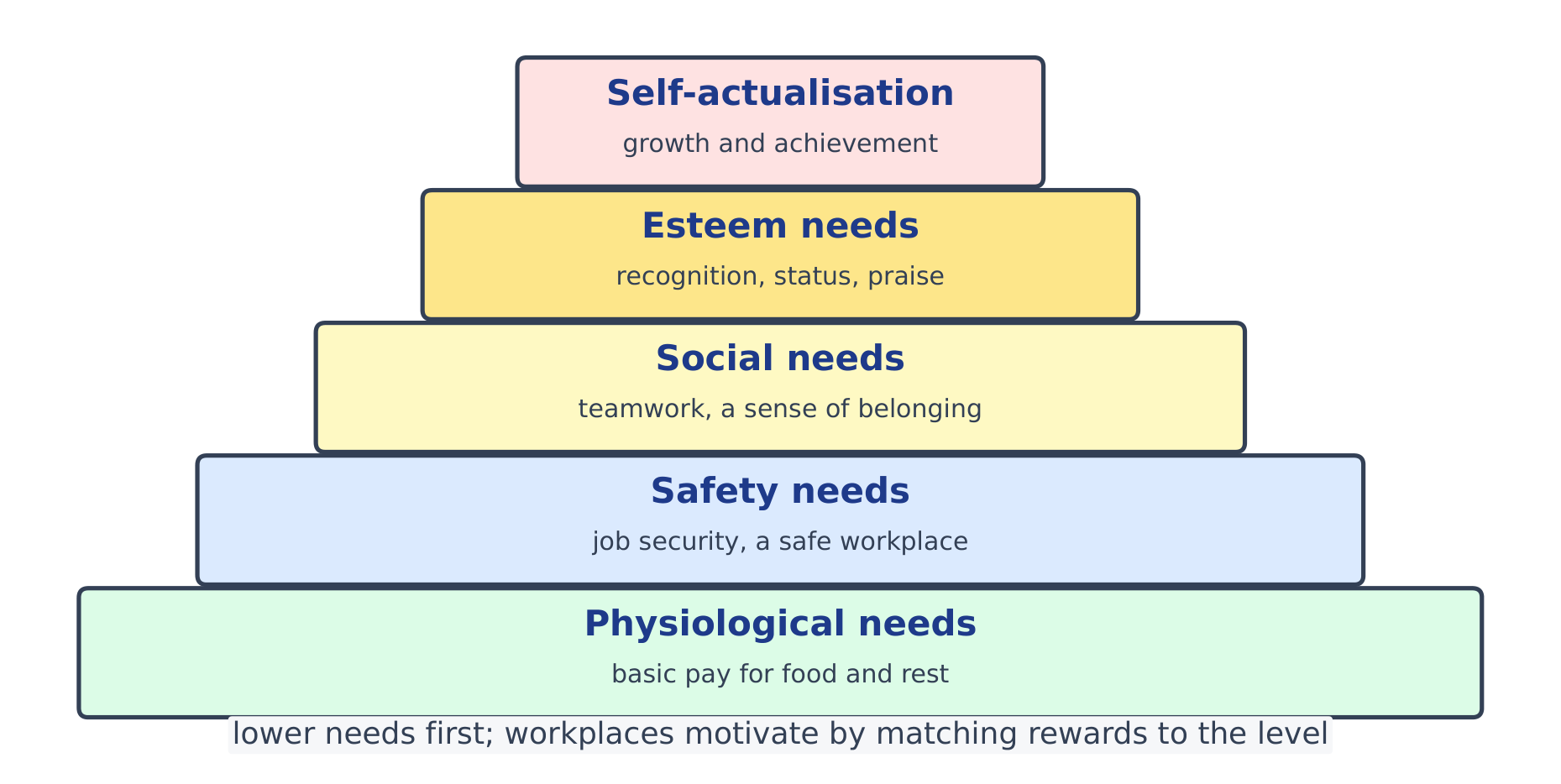
Maslow People have a hierarchy of needs 需求层次: five levels, from basic pay and safety up to respect and reaching your full potential. You must meet the lower needs before the higher ones can motivate.
Herzberg Two groups of factors. Hygiene factors 保健因素 (pay, conditions, rules) do not motivate, but poor ones cause unhappiness. Motivators 激励因素 (achievement and responsibility) truly drive people to work harder.

Financial methods of motivation

These reward workers with money.

Method What it means
wage 工资 regular pay, often by the hour or week
time rate 计时工资 pay for each hour worked
piece rate 计件工资 pay for each item made
salary 薪金 a fixed yearly amount, paid monthly
commission 佣金 pay based on how much you sell
bonus 奖金 an extra payment for good work
profit sharing 利润分享 workers get a share of the company's profit
fringe benefits 额外福利 extras like a company car, free meals or health care

Worked example. A factory pays a piece rate of £3 per item. Anya makes 210 items in a week. Ben is on a time rate of £12 per hour for a 40-hour week. Who earns more, and what risk does the piece rate carry? Anya earns 210 × £3 = £630. Ben earns 40 × £12 = £480, so Anya earns £150 more. But paying for each item made tempts workers to rush, so quality may fall and more items are rejected - which is why a piece rate usually has to be paired with quality checks. Show the calculation, then judge it: a question that asks who earns more and for an evaluation gives marks for the number and for the drawback.

Non-financial methods of motivation

These motivate without extra money.

  • job rotation 工作轮换 — workers switch between different tasks, so work is less boring.
  • job enlargement 工作扩大化 — adding more tasks at the same level.
  • job enrichment 工作丰富化 — giving more challenging tasks and more responsibility.
  • autonomy 自主权 — letting workers make some of their own decisions.
  • teamworking 团队合作 — working in small groups.
  • training 培训 and chances for promotion 晋升 — helping workers improve and move up.
العربية
هرم ماسلو للاحتياجات مرسوم على شكل هرم خماسي المستويات
هرم ماسلو للاحتياجات، مع أمثلة من مكان العمل على كل مستوى.
عمال متحفزون يعملون بجدية أكبر، مما يعطي إنتاجًا أعلى
العاملون المحفزون يعملون بجد أكبر، مما يرفع الإنتاج

الدافع هو الزخم الذي يجعل الناس يرغبون في العمل بجدية. قوة عاملة ذات دافع عالي — جميع الموظفين في المؤسسة — توفر فوائد حقيقية:

  • إنتاجية أعلى — كل عامل ينتج المزيد،
  • غياب أقل — عدد أقل من العمال يبقى بعيدًا عن العمل،
  • دوران عمالة أقل — مغادرة fewer workers means less time and money spent hiring and training new staff.

نظريات الدافع

ثلاثة مفكرين يشرحون ما الذي يحفز العمال للعمل بجدية.

المفكر الفكرة الرئيسية
تايلور العمال يتحفزون بشكل رئيسي بالأجر. ادفع لهم أكثر عن العمل الإضافي (نظام القطعة) ويعملون بجدية أكبر.
ماسلو للناس هرمية للحاجات: خمسة مستويات، من الأجر الأساسي والأمان حتى الاحترام وتحقيق إمكاناتهم الكاملة. يجب تلبية الحاجات الأدنى قبل أن تحفز الحاجات الأعلى.
هيرزبرغ مجموعتان من العوامل. عوامل النظافة (الأجر، الظروف، القواعد) لا تحفز، لكن ضعفها يسبب عدم الرضا. العوامل المحفزة (إنجاز المسؤولية) تدفع حقًا الناس للعمل بجدية أكبر.
هرم的五 levels of Maslow's needs, widest at the bottom (physiological) up to the apex (self-actualisation)
هرماسلو للاحتياجات: يلبي الناس الاحتياجات الأدنى قبل الأعلى

الطرق المالية للدافع

هذه الطرق تكافئ العمال بالمال.

الطريقة معناها
الأجر دفع منتظم، غالبًا بالساعة أو الأسبوع
معدل الوقت الدفع مقابل كل ساعة عمل
معدل القطعة الدفع مقابل كل عنصر مصنوع
الراتب مبلغ سنوي ثابت، يُدفع شهريًا
العمولة دفع بناءً على مقدار المبيعات
المكافأة دفع إضافي عن العمل الجيد
تشارك الأرباح يحصل العمال على جزء من أرباح الشركة
المزايا العينية مميزات إضافية مثل سيارة الشركة، أو وجبات مجانية، أو رعاية صحية

مثال محلول. تدفع مصنع معدل قطع قدره 3 جنيهات لكل قطعة. أنتي صنعت 210 قطع في الأسبوع. بن على معدل زمني قدره 12 جنيهاً في الساعة لأسبوع عمل مدته 40 ساعة. من يكسب أكثر، وما هو الخطر المرتبط بمعدل القطع؟ تكسب أنتي 210 × 3 جنيهات = 630 جنيهاً. يكسب بن 40 × 12 = 480 جنيهاً، لذا تكسب أنتي 150 جنيهاً أكثر. لكن دفع الأجر مقابل كل قطعة مصنوعة يحفز العمال على التسرع، مما قد يؤدي إلى انخفاض الجودة ورفض المزيد من القطع - ولهذا السبب يجب عادةً ربط معدل القطع بفحوصات الجودة. اعرض الحساب، ثم قيّمه: سؤال يطلب من يربح أكثر و لتقييم يعطي درجات للرقم وللعيب.

طرق التحفيز غير المالية

هذه الطرق تحفز دون دفع أموال إضافية.

  • تدوير الوظائف — تبديل العمال بين مهام مختلفة، مما يجعل العمل أقل مللاً.
  • توسيع الوظيفة — إضافة مهام أكثر على نفس المستوى.
  • إثراء الوظيفة — تقديم مهام أكثر تحدياً ومسؤوليات أكبر.
  • الاستقلالية — السماح للعمال باتخاذ بعض قراراتهم الخاصة.
  • العمل الجماعي — العمل في مجموعات صغيرة.
  • التدريب وفرص الترقية — مساعدة العمال على تحسين مهاراتهم والتقدم.
Explore · ⁨استكشف⁩

Maslow's hierarchy of needs · ⁨هرم الحاجات لماكلوف⁩

People are motivated by a ladder of needs — a business motivates staff by helping them up it. · ⁨الأشخاص محفزون بواسطة سلم الاحتياجات — تحفز الشركة الموظفين من خلال مساعدتهم على الصعود فيه.⁩

Vocabulary · ⁨مفردات⁩ Train · ⁨تدريب⁩
English العربية
motivation/ˌməʊtɪˈveɪʃn/ الدافع
productivity/ˌprɒdəkˈtɪvɪti/ الإنتاجية
absenteeism/ˌæbsənˈtiːɪzəm/ الحضور غير المنتظم
labour turnover/ˈleɪbə ˈtɜːnəʊvə/ معدل دوران العمالة
hierarchy of needs/ˈhaɪərɑːki ɒv niːdz/ هرم الاحتياجات
hygiene factors/ˈhaɪdʒiːn ˈfæktəz/ عوامل النظافة
motivators/ˈməʊtɪveɪtəz/ عوامل التحفيز
wage/weɪdʒ/ الأجر
time rate/taɪm reɪt/ أجر زمني
piece rate/piːs reɪt/ رأس القطعة
salary/ˈsæləri/ راتب
commission/kəˈmɪʃn/ عمولة
bonus/ˈbəʊnəs/ مكافأة
profit sharing/ˈprɒfɪt ˈʃeərɪŋ/ مشاركة الأرباح
fringe benefits/frɪndʒ ˈbenɪfɪts/ مزايا إضافية
job rotation/dʒɒb rəʊˈteɪʃn/ تدوير الوظائف
job enlargement/dʒɒb enˈlɑːdʒmənt/ توسيع الوظيفة
job enrichment/dʒɒb enˈrɪtʃmənt/ إثراء الوظيفة
autonomy/ɔːˈtɒnəmi/ الاستقلالية
teamworking/ˈtiːmwɜːkɪŋ/ العمل الجماعي
training/ˈtreɪnɪŋ/ التدريب
promotion/prəˈməʊʃn/ الترويج
organisational chart/ˌɔːɡənaɪˈzeɪʃənl tʃɑːt/ المخطط التنظيمي
hierarchy/ˈhaɪərɑːki/ التسلسل البصري
chain of command/tʃeɪn ɒv kəˈmænd/ سلسلة الأوامر
span of control/spæn ɒv kənˈtrəʊl/ نطاق الإشراف
subordinates/sʌˈbɔːdɪnəts/ الموظفون الخاضعون للإشراف
delayering/dɪˈleɪərɪŋ/ إزالة المستويات
Watch lesson · ⁨شاهد الدرس⁩
2.2

Organisation and management · ⁨التنظيم والإدارة⁩

Syllabus · ⁨المنهج⁩
English
  1. draw and interpret simple organisational charts; explain hierarchy, chain of command, span of control and delayering
  2. explain the role and functions of management (planning, organising, coordinating, commanding, controlling)
  3. describe leadership styles: autocratic, democratic and laissez-faire, and when each is appropriate
  4. explain the role of trade unions in business
العربية
  1. ارسم وفسر مخططات تنظيمية بسيطة؛ اشرح التسلسل الهرمي، سلسلة القيادة، نطاق الإشراف والتخفيف من الطبقات الإدارية
  2. اشرح دور ووظائف الإدارة (التخطيط، التنظيم، التنسيق، القيادة، الرقابة)
  3. صف أساليب القيادة: الاستبدادية، الديمقراطية، والحرية، ومتى يكون كل منها مناسبًا
  4. اشرح دور النقابات العمالية في الأعمال التجارية

Source: Cambridge International syllabus · ⁨المصدر: منهج كامبريدج الدولي⁩

English

Organisational charts

An organisational chart 组织结构图 is a diagram that shows how a business is organised — who reports to whom. It shows several ideas:

  • hierarchy 层级 — the levels of staff, from the top down.
  • chain of command 指挥链 — the line along which orders pass down from managers to workers.
  • span of control 管理幅度 — the number of subordinates 下属 (people directly below) that one manager controls.
  • delayering 扁平化 — removing one or more levels to cut costs and speed up messages.

A long chain of command (a "tall" structure) slows messages down. A wide span of control gives one manager many people to watch.

Functions of management

The five main jobs (functions) of management 管理 are:

  • planning 计划 — setting aims and deciding how to reach them,
  • organising 组织 — arranging people and resources,
  • coordinating 协调 — making different parts work together,
  • commanding 指挥 — giving instructions and guiding staff,
  • controlling 控制 — checking that targets are met.

Leadership styles

A leadership style 领导风格 is the way a manager leads people.

Style How it works Best when
autocratic 专制型 the leader decides alone and gives orders a crisis, or with new and untrained staff
democratic 民主型 the leader asks staff for ideas before deciding staff are skilled and want a say
laissez-faire 放任型 the leader sets goals, then lets staff work freely creative, expert teams

Trade unions

A trade union 工会 is a group of workers who join together to protect their shared interests. A union can bargain for better pay and conditions, support a worker in a dispute, and push for safer work.

العربية
مدربون في اجتماع عمل
ينظم المدربون ويقودون القوى العاملة حتى يحقق المشروع أهدافه.

المخططات التنظيمية

المخطط التنظيمي هو رسم بياني يوضح كيفية تنظيم المشروع — من يُبلّغ لمن. يعرض عدة مفاهيم:

  • الهرمية — مستويات الموظفين، من الأعلى إلى الأسفل.
  • سلطة القيادة — الخط الذي تنتقل عبره الأوامر من المدربين إلى العمال.
  • نطاق الإشراف — عدد الموظفين التابعين (الأشخاص الذين يعملون مباشرة أسفله) الذين يديرهم مدرب واحد.
  • تقليص المستويات — إزالة مستوى أو أكثر لتقليل التكاليف وتسريع نقل الرسائل.

طويلة سلسلة القيادة (هيكل "مرتفع") تبطئ نقل الرسائل. نطاق إشراف واسع يمنح مدرباً واحداً عدداً كبيراً من الأشخاص لمراقبتهم.

مخطط تنظيمي مع مدير تحت إدارة مديرين، كل منهما مسؤول عن ثلاثة عمال، مما يشير إلى سلطة القيادة ونطاق إشراف المدرب
يعرض المخطط التنظيمي سلسلة الأوامر ونطاق الإشراف لكل مدير

وظائف الإدارة

الوظائف الخمس الرئيسية (الوظائف) للإدارة هي:

  • التخطيط — وضع الأهداف والقرار حول كيفية تحقيقها،
  • التنظيم — ترتيب الأفراد والموارد،
  • التنسيق — جعل الأجزاء المختلفة تعمل معاً،
  • التوجيه — إصدار التعليمات وتوجيه الموظفين،
  • الرقابة — التحقق من تحقيق الأهداف.

أنماط القيادة

نمط القيادة هو الطريقة التي يقود بها المدرب الناس.

النمط كيف يعمل الأفضل عند
استبدادي يتخذ القائد القرارات وحده ويصدر الأوامر في حالة الطوارئ، أو مع موظفين جدد وغير مدربين
ديمقراطي يستمع القائد لأفكار الموظفين قبل اتخاذ القرار عندما يكون الموظفون ماهرين ويريدون المشاركة في القرار
التحرر (laissez-faire) يضع القائد الأهداف، ثم يسمح للموظفين بالعمل بحرية الفرق المبدعة والخبيرة

النقابات العمالية

النقابة العمالية هي مجموعة من العمال ينضمون معاً لحماية مصالحهم المشتركة. يمكن للنقبة التفاوض على أجور وظروف عمل أفضل، ودعم عامل في نزاع، والدعوة لبيئة عمل آمنة.

Explore · ⁨استكشف⁩

Choose the ownership form · ⁨اختر شكل الملكية⁩

Compare ownership, control and liability in real business types. · ⁨قارن الملكية والسيطرة والمسؤولية في أنواع الشركات الحقيقية.⁩

Vocabulary · ⁨مفردات⁩ Train · ⁨تدريب⁩
English العربية
management/ˈmænɪdʒmənt/ الإدارة
planning/ˈplænɪŋ/ تخطيط
organising/ˈɔːɡənaɪzɪŋ/ تنظيم
coordinating/kəʊˈɔːdɪneɪtɪŋ/ التنسيق
commanding/kəˈmændɪŋ/ قيادة / أمر
controlling/kənˈtrəʊlɪŋ/ مراقبة
leadership style/ˈliːdəʃɪp staɪl/ أسلوب القيادة
autocratic/ˌɔːtəʊˈkrætɪk/ سلطوي
democratic/ˌdeməˈkrætɪk/ ديمقراطي
laissez-faire/ˈleɪsez feə/ laissez-faire
trade union/treɪd ˈjuːnɪən/ النقابة العمالية
Watch lesson · ⁨شاهد الدرس⁩
2.3

Recruitment, selection and training · ⁨التوظيف، الاختيار والتدريب⁩

Syllabus · ⁨المنهج⁩
English
  1. describe the recruitment process: job analysis, job description and person specification
  2. compare internal and external recruitment and selection methods (application forms, CVs, interviews, tests)
  3. describe types of training: induction, on-the-job and off-the-job, and their benefits/limitations
  4. explain why a business may need to reduce its workforce (redundancy and dismissal) and the legal controls over employment
العربية
  1. صف عملية التوظيف: تحليل الوظيفة، وصف الوظيفة، ومواصفات الشخص المطلوب
  2. قارن بين طرق التوظيف والاختيار الداخلية والخارجية (استمارات الطلب، السيرة الذاتية، المقابلات، الاختبارات)
  3. صف أنواع التدريب: التوجيه، داخل مكان العمل وخارج مكان العمل، وفوائدها/قيودها
  4. اشرح لماذا قد تحتاج الشركة إلى تقليل عدد موظفيها (إلغاء الوظيفة والفصل) والضوابط القانونية على التوظيف

Source: Cambridge International syllabus · ⁨المصدر: منهج كامبريدج الدولي⁩

English

The recruitment process

Recruitment 招聘 is finding and attracting people to apply for a job. Selection 选拔 is choosing the best person from those who apply. The process starts with three documents:

  • job analysis 工作分析 — studying what the job involves,
  • job description 工作描述 — a list of the duties and tasks of the job,
  • person specification 人员规格 — the skills, qualities and qualifications the right person needs.

Internal and external recruitment

  • Internal recruitment 内部招聘 fills the job with someone already in the business. It is cheaper and quicker, and the person is already known, but it brings in no new ideas.
  • External recruitment 外部招聘 fills the job from outside. It brings new ideas and skills, but it costs more and takes longer.

Common selection methods include the application form 申请表, the CV 简历 (a short summary of a person's education and work history), the interview 面试, and skills tests 测试.

Training

Training improves workers' skills. There are three main types.

  • induction training 入职培训 — given to new workers, to learn about the business and their role.
  • on-the-job training 在职培训 — learning while doing the job, beside an experienced worker.
  • off-the-job training 脱产培训 — learning away from the workplace, for example at a college.
Type Benefits Limitations
on-the-job cheap; uses real tasks the trainer stops their own work; bad habits can pass on
off-the-job expert teaching; no work distractions costs more; the skills may not fit the exact job

Reducing the workforce

Sometimes a business must cut staff numbers.

  • Redundancy 裁员 — the job is no longer needed, for example because a machine now does it. It is not the worker's fault.
  • Dismissal 解雇 — the worker is removed for a good reason, such as breaking rules or poor work.

Most countries have employment laws 劳动法 that protect workers. They cover a fair contract of employment 雇佣合同, safe conditions, fair pay, and protection from being sacked unfairly.

العربية
مكان عمل مليء بالموظفين في محطات العمل
يجب على المشروع توظيف وتدريب وتحفيز عدد كافٍ من الأشخاص ذوي المهارات المناسبة.

عملية التوظيف

التوظيف هو إيجاد الجذب وإثارة اهتمام الناس للتقديم على وظيفة. الاختيار هو اختيار الشخص الأنسب من بين المتقدمين. تبدأ العملية بثلاثة وثائق:

  • تحليل الوظيفة — دراسة ما تتضمنه الوظيفة،
  • وصف الوظيفة — قائمة بالمهام والمسؤوليات المتعلقة بالوظيفة،
  • مواصفات الشخص — المهارات والسمات المؤهلات التي يحتاجها الشخص المناسب.
مسار التوظيف: تحليل الوظيفة، ثم وصف الوظيفة، ثم مواصفات الشخص، ثم الإعلان عن الوظيفة، ثم اختيار الشخص الأنسب
خطوات التوظيف والاختيار، بدءاً من تحليل الوظيفة وصولاً إلى اختيار الشخص الأنسب

التوظيف الداخلي والخارجي

  • التوظيف الداخلي يملأ الوظيفة بشخص موجود بالفعل داخل المشروع. إنه أرخص وأسرع، والشخص معروف مسبقاً، لكنه لا يجلب أفكاراً جديدة.
  • التوظيف الخارجي يملأ الوظيفة من الخارج. يجلب أفكاراً ومهارات جديدة، لكنه مكلف ويستغرق وقتاً أطول.

تشمل طرق الاختيار الشائعة استمارة الطلب، والسيرة الذاتية (ملخص قصير عن تعليم وسجل عمل الشخص)، والمقابلة الشخصية، واختبارات المهارات.

التدريب

التدريب يحسن مهارات العمال. هناك ثلاثة أنواع رئيسية.

  • تدريب التوجيه — يُقدم للعمال الجدد، للتعرف على المشروع ودورهم فيه.
  • التدريب أثناء العمل — التعلم أثناء أداء المهمة، بجانب عامل ذي خبرة.
  • التدريب خارج مكان العمل — التعلم بعيداً عن بيئة العمل، على سبيل المثال في كلية.
النوع الفوائد القيود
أثناء العمل رخيص؛ يستخدم مهام حقيقية يتوقف المدرب عن عمله الخاص؛ قد تنتقل العادات السيئة
خارج مكان العمل تعليم خبير؛ عدم وجود مشتتات العمل تكلفة أعلى؛ قد لا تتناسب المهارات تماماً مع الوظيفة المحددة

تقليص القوى العاملة

أحياناً يجب على المشروع تقليل عدد الموظفين.

  • الإعفاء من الخدمة — لم تعد الوظيفة ضرورية، على سبيل المثال لأن آلة تقوم بها الآن.这不是工人的错。
  • الفصل — يتم إزالة العامل لسبب وجوه، مثل انتهاك القواعد أو الأداء الضعيف.

تتمتع معظم الدول بـ قوانين العمل التي تحمي العمال. وهي تغطي عقد عمل عادل، وظروف آمنة، وأجراً عادلاً، والحماية من الفصل التعسفي.

Explore · ⁨استكشف⁩

Human resources decision lab · ⁨معمل قرار الموارد البشرية⁩

Classify HR actions by the job they do inside the workforce. · ⁨صنف إجراءات الموارد البشرية حسب الوظيفة التي تقوم بها داخل القوى العاملة.⁩

Vocabulary · ⁨مفردات⁩ Train · ⁨تدريب⁩
English العربية
workforce/ˈwɜːkfɔːs/ القوة العاملة
employees/emˈplɔɪiːz/ موظفون
recruitment/rɪˈkruːtmənt/ التوظيف
selection/sɪˈlekʃn/ اختيار
job analysis/dʒɒb əˈnæləsɪs/ تحليل الوظيفة
job description/dʒɒb dɪˈskrɪpʃn/ وصف الوظيفة
person specification/ˈpɜːsn ˌspesɪfɪˈkeɪʃn/ مواصفات الشخص
internal recruitment/ɪnˈtɜːnl rɪˈkruːtmənt/ توظيف داخلي
external recruitment/ekˈstɜːnl rɪˈkruːtmənt/ توظيف خارجي
application form/ˌæplɪˈkeɪʃn fɔːm/ استمارة الطلب
CV/ˌsiː ˈviː/ السيرة الذاتية
interview/ˈɪntəvjuː/ مقابلة
tests/tests/ الاختبارات
induction training/ɪnˈdʌkʃn ˈtreɪnɪŋ/ توجيه وظيفي
on-the-job training/ɒnðə dʒɒb ˈtreɪnɪŋ/ تدريب داخل مكان العمل
off-the-job training/ɒf ðə dʒɒb ˈtreɪnɪŋ/ تدريب خارج مكان العمل
redundancy/rɪˈdʌndənsi/ الإعفاء من الخدمة
dismissal/dɪˈsmɪsl/ فصل / طرد
employment laws/emˈplɔɪmənt lɔːz/ قوانين العمل
contract of employment/ˈkɒntrækt ɒv emˈplɔɪmənt/ عقد العمل
2.4

Communication · ⁨التواصل⁩

Syllabus · ⁨المنهج⁩
English
  1. explain the importance of effective communication and the features of good communication
  2. compare one-way and two-way communication and internal and external communication
  3. describe communication methods and barriers to effective communication and how to reduce them
العربية
  1. اشرح أهمية الاتصال الفعال ومميزات الاتصال الجيد
  2. قارن بين الاتصال أحادي الاتجاه والاتصال ثنائي الاتجاه والاتصال الداخلي والخارجي
  3. صف وسائل الاتصال وعوائق الاتصال الفعال وكيفية الحد منها

Source: Cambridge International syllabus · ⁨المصدر: منهج كامبريدج الدولي⁩

English

Why communication matters

Good communication 沟通 means information is sent, received and understood correctly. It helps workers know what to do, cuts mistakes, and makes people feel valued.

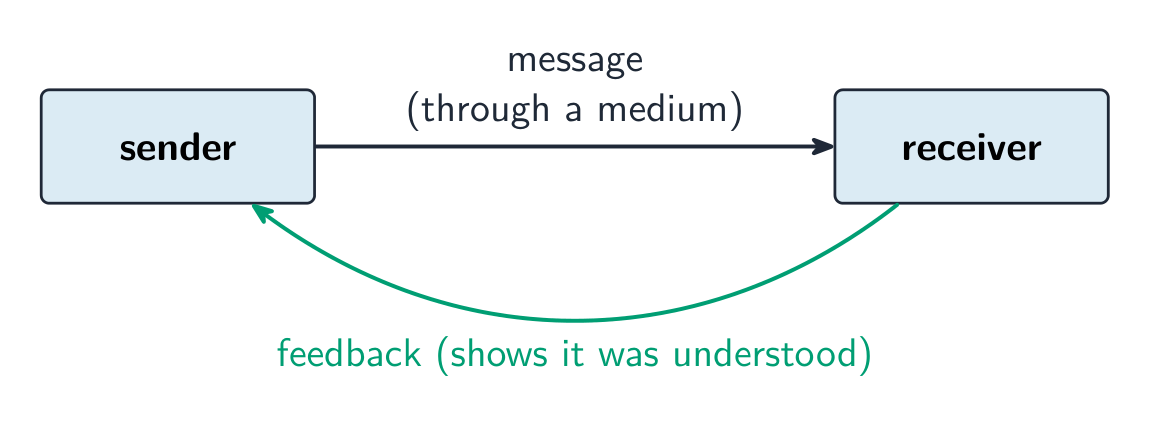
The communication process has five parts: a sender 发送者, a message 信息, a medium 媒介 (the way it is sent), a receiver 接收者, and feedback 反馈 (the receiver's reply, which shows the message was understood).

Types of communication

  • One-way communication 单向沟通 — information flows in one direction only, with no reply (for example, a public notice).
  • Two-way communication 双向沟通 — the receiver can reply and give feedback. It is usually better, because it checks understanding.
  • Internal communication 内部沟通 — between people inside the business.
  • External communication 外部沟通 — between the business and outside people, like customers 顾客 or suppliers 供应商.

Barriers to communication

A communication barrier 沟通障碍 is anything that stops a message getting through clearly. Common barriers include:

  • a message that is too long or unclear,
  • a poor medium, such as a weak phone line,
  • language differences between sender and receiver,
  • a receiver who is not paying attention.

To reduce barriers: keep messages short and clear, choose the right medium, and ask for feedback to check the message was understood.

العربية

أهمية التواصل

يعني الـ تواصل الجيد إرسال المعلومات واستقبالها وفهمها بشكل صحيح. فهو يساعد العمال على معرفة ما يجب عليهم فعله، ويقلل الأخطاء، ويجعل الناس يشعرون بالتقدير.

يتكون عملية التواصل من خمسة أجزاء: مرسل، ورسالة، ووسيلة (طريقة الإرسال)، ومستقبل، وردود الفعل (رد المستقبل الذي يدل على فهم الرسالة).

عملية التواصل: يرسل المرسل رسالة عبر وسيط إلى المستقبل، وتتغذى الراجعة من المستقبل إلى المرسل
تتدفق الرسالة من المرسل إلى المستقبل، والتغذية الراجعة تؤكد فهمها

أنواع التواصل

  • التواصل أحادي الاتجاه — تتدفق المعلومات في اتجاه واحد فقط، دون رد (على سبيل المثال، إعلان عام).
  • التواصل ثنائي الاتجاه — يمكن للمستقبل الرد وتقديم ردود الفعل. وهو عادة أفضل لأنه يتحقق من الفهم.
  • التواصل الداخلي — بين الأشخاص داخل الشركة.
  • التواصل الخارجي — بين الشركة والأشخاص الخارجيين، مثل العملاء أو الموردين.

عوائق التواصل

حاجز التواصل هو أي شيء يمنع وصول الرسالة بوضوح. تشمل العوائق الشائعة:

  • رسالة طويلة جداً أو غير واضحة،
  • وسيلة سيئة، مثل خط هاتف ضعيف،
  • اختلافات لغوية بين المرسل والمستقبل،
  • مستقبل لا ينتبه.

لتقليل الحواجز: حافظ على الرسائل قصيرة وواضحة، واختر الوسيلة المناسبة، واطلب ردود الفعل للتأكد من فهم الرسالة.

Explore · ⁨استكشف⁩

Communication route lab · ⁨مختبر مسار التواصل⁩

Watch a message move from sender to feedback and see where noise can enter. · ⁨شاهد رسالة تنتقل من المرسل إلى التغذية الراجعة ورأى أين يمكن أن يتداخل الضوضاء.⁩

Vocabulary · ⁨مفردات⁩ Train · ⁨تدريب⁩
English العربية
communication/kəˌmjuːnɪˈkeɪʃn/ الاتصالات
sender/ˈsendə/ مرسل
message/ˈmesɪdʒ/ رسالة
medium/ˈmiːdɪəm/ الوسط
receiver/rɪˈsiːvə/ مستقبل
feedback/ˈfiːdbæk/ تغذية راجعة
one-way communication/wʌn weɪ kəˌmjuːnɪˈkeɪʃn/ اتصال أحادي الاتجاه
two-way communication/tuː weɪ kəˌmjuːnɪˈkeɪʃn/ اتصال ثنائي الاتجاه
internal communication/ɪnˈtɜːnl kəˌmjuːnɪˈkeɪʃn/ الاتصال الداخلي
external communication/ekˈstɜːnl kəˌmjuːnɪˈkeɪʃn/ الاتصال الخارجي
customers/ˈkʌstəməz/ عملاء
suppliers/səˈplaɪəz/ مورّدون
communication barrier/kəˌmjuːnɪˈkeɪʃn ˈbærɪə/ عائق الاتصال
2.4

Exam tips · ⁨نصائح للامتحان⁩

English
  • Link motivation to its benefits: higher productivity, lower absenteeism, and lower labour turnover.
  • Match each theory: Taylor (pay / piece rate), Maslow (a hierarchy of needs — lower needs before higher), Herzberg (hygiene factors stop unhappiness; motivators drive real effort).
  • Separate financial methods (wage, piece rate, salary, commission, bonus) from non-financial ones (job rotation, job enlargement, job enrichment, autonomy).
  • On an organisation chart, know the chain of command (the line orders travel down) and the span of control (how many people report to one manager).
  • Distinguish redundancy (the job is no longer needed — not the worker's fault) from dismissal (the worker is removed for a reason such as breaking rules).
العربية
  • ربط الدافع بفوائده: زيادة الإنتاجية، وانخفاض غياب العمال، وانخفاض معدل دوران العمالة.
  • مطابقة كل نظرية: تايلور (الأجر / نظام القطعة)، ماسلو (هرامح الاحتياجات — الاحتياجات الدنيا قبل العليا)، هيرزبرغ (عوامل النظافة تمنع عدم الرضا؛ المحفزات تدفع للجهود الحقيقية).
  • فصل الطرق المالية (الأجر، نظام القطعة، الراتب، العمولة، المكافأة) عن الطرق غير المالية (دوران العمل، توسيع الوظيفة، إثراء الوظيفة، الاستقلالية).
  • في المخطط التنظيمي، تعرف على سلسلة الأوامر (خط الأوامر الذي ينزل للأسفل) ونطاق الإشراف (عدد الأشخاص الذين يقرؤون لمدير واحد).
  • التمييز بين إلغاء الوظيفة (لم تعد الوظيفة مطلوبة — وليست خطأ العامل) والفصل (يتم إزالة العامل لسبب مثل مخالفة القواعد).

Interactive lessons on this topic · ⁨دروس تفاعلية حول هذا الموضوع⁩

Work through it step by step, with instant-check exercises. · ⁨ا-working عليه خطوة بخطوة، مع تمارين تحقق فوري.⁩

Past Papers · ⁨أوراق الامتحانات السابقة⁩

More topics in IGCSE Business Studies · ⁨IGCSE دراسات الأعمال⁩ · ⁨المزيد من المواضيع في IGCSE Business Studies · ⁨IGCSE دراسات الأعمال⁩⁩

Log in or create account · ⁨تسجيل الدخول أو إنشاء حساب⁩

IGCSE, A-Level & AP