Learning Objective 8.1.A: Describe the electric force that results from the interactions between charged objects or systems.
- 8.1.A.1 Charge is a fundamental property of all matter.
- 8.1.A.1.i Charge is a scalar quantity and is described as positive or negative.
- 8.1.A.1.ii The magnitude of the charge of a single electron or proton, the elementary charge $e$, can be considered to be the smallest indivisible amount of charge.
- 8.1.A.1.iii The charge of an electron is $-e$ and the charge of a proton is $+e$, and a neutron has no electric charge.
- 8.1.A.1.iv A point charge is a model in which the physical size of a charged object or system is negligible in the context of the situation being analyzed.
- 8.1.A.2 Coulomb's law describes the electrostatic force between two charged objects as directly proportional to the magnitude of each of the charges and inversely proportional to the square of the distance between the objects.
- Relevant equation: $\left| \vec{F}_E \right| = \dfrac{1}{4\pi\varepsilon_0} \dfrac{|q_1 q_2|}{r^2} = k \dfrac{|q_1 q_2|}{r^2}$
- 8.1.A.3 The direction of the electrostatic force depends on the signs of the charges of the interacting objects and is along the line of separation between the objects.
- 8.1.A.3.i Two objects with charges of the same sign exert repulsive forces on each other.
- 8.1.A.3.ii Two objects with charges of opposite signs exert attractive forces on each other.
- 8.1.A.4 Electric forces are responsible for some of the macroscopic properties of objects in everyday experiences. However, the large number of particle interactions that occur make it more convenient to treat everyday forces in terms of nonfundamental forces called contact forces, such as normal force, friction, and tension.
Learning Objective 8.1.B: Describe the electric and gravitational forces that result from interactions between charged objects with mass.
- 8.1.B.1 Electrostatic forces can be attractive or repulsive, while gravitational forces are always attractive.
- 8.1.B.2 For any two objects that have mass and electric charge, the magnitude of the gravitational force is usually much smaller than the magnitude of the electrostatic force.
- 8.1.B.3 Gravitational forces dominate at larger scales even though they are weaker than electrostatic forces, because systems at large scales tend to be electrically neutral.
Learning Objective 8.1.C: Describe the electric permittivity of a material or medium.
- 8.1.C.1 Electric permittivity is a measurement of the degree to which a material or medium is polarized in the presence of an electric field.
- 8.1.C.2 Electric polarization can be modeled as the induced rearrangement of electrons by an external electric field, resulting in a separation of positive and negative charges within a material or medium.
- 8.1.C.3 Free space has a constant value of electric permittivity, $\varepsilon_0$, that appears in physical relationships.
- 8.1.C.4 The permittivity of matter has a value different from that of free space that arises from the matter's composition and arrangement.
- 8.1.C.4.i In a given material, electric permittivity is determined by the ease with which electrons can change configurations within the material.
- 8.1.C.4.ii Conductors are made from electrically conducting materials in which charge carriers move easily; insulators are made from electrically nonconducting materials in which charge carriers cannot move easily.
Boundary statement: AP Physics C: Electricity & Magnetism only expects students to make calculations of the electric force between four or fewer interacting charged objects or systems. The analysis of the resulting electric force from more charges is allowed in situations of high symmetry. Note that students are expected to calculate the electric fields of charge distributions, as described in Topics 8.4 and 8.6.
هدف التعلم 8.1.A: وصف القوة الكهربائية الناتجة عن التفاعلات بين الأجسام أو الأنظمة المشحونة.
- 8.1.A.1 الشحنة خاصية أساسية لجميع المواد.
- 8.1.A.1.i الشحنة كمية قياسية وتُوصف بأنها موجبة أو سالبة.
- 8.1.A.1.ii مقدار شحنة الإلكترون الواحد أو البروتون، وهو الشحنة الابتدائية $e$، يمكن اعتباره أصغر كمية غير قابلة للتقسيم من الشحنة.
- 8.1.A.1.iii شحنة الإلكترون هي $-e$ وشحنة البروتون هي $+e$، ولا تمتلك النيوترون أي شحنة كهربائية.
- 8.1.A.1.iv شحنة النقطة هي نموذج يكون فيه الحجم الفيزيائي للجسم أو النظام المشحون مهملاً في سياق الموقف قيد التحليل.
- 8.1.A.2 تنص قانون كولوم على أن القوة الكهروستاتية بين جسمين مشحونين تتناسب طردياً مع مقدار كل منهما من الشحنات وعكسياً مع مربع المسافة بينهما.
- المعادلة ذات الصلة: $\left| \vec{F}_E \right| = \dfrac{1}{4\pi\varepsilon_0} \dfrac{|q_1 q_2|}{r^2} = k \dfrac{|q_1 q_2|}{r^2}$
- 8.1.A.3 يعتمد اتجاه القوة الكهروستاتية على إشارات شحنات الأجسام المتفاعلة ويكون على طول خط الفصل بينهما.
- 8.1.A.3.i جسمان لهما شحنات من نفس النوع يمارسان قوى تنافر على بعضهما البعض.
- 8.1.A.3.ii جسمان لهما شحنات من أنواع مختلفة يمارسان قوى تجاذب على بعضهما البعض.
- 8.1.A.4 القوى الكهربائية مسؤولة عن بعض الخصائص المجهرية للأجسام في التجارب اليومية. ومع ذلك، فإن العدد الكبير من تفاعلات الجسيمات التي تحدث يجعل من الملائم التعامل مع القوى اليومية بدلالة قوى غير أساسية تُعرف بالقوى التلامسية، مثل القوة العمودية والاحتكاك والتوتر.
هدف التعلم 8.1.B: وصف القوى الكهربائية والجاذبية الناتجة عن التفاعلات بين الأجسام المشحونة ذات الكتلة.
- 8.1.B.1 القوى الكهروستاتية قد تكون تجاذبية أو تنافرية، بينما القوى الجاذبية دائماً تجاذبية.
- 8.1.B.2 لأي جسمين لهما كتلة وشحنة كهربائية، يكون مقدار القوة الجاذبية عادة أصغر بكثير من مقدار القوة الكهروستاتية.
- 8.1.B.3 القوى الجاذبية تهيمن على النطاقات الكبيرة على الرغم من أنها أضعف من القوى الكهروستاتية، لأن الأنظمة على النطاقات الكبيرة تميل إلى أن تكون متعادلة كهربائياً.
هدف التعلم 8.1.C: وصف السماحية الكهربائية لمادة أو وسط.
- 8.1.C.1 السماحية الكهربائية هي مقياس لدرجة استقطاب مادة أو وسط في وجود مجال كهربائي.
- 8.1.C.2 يمكن نمذجة الاستقطاب الكهربائي على أنه إعادة ترتيب مستحثة للإلكترونات بواسطة مجال كهربائي خارجي، مما يؤدي إلى فصل الشحنات الموجبة والسالبة داخل المادة أو الوسط.
- 8.1.C.3 الفراغ له قيمة ثابتة للسماحية الكهربائية، $\varepsilon_0$، تظهر في العلاقات الفيزيائية.
- 8.1.C.4 سماحية المادة لها قيمة مختلفة عن قيمة الفراغ وتنشأ من تركيب المادة وترتيبها.
- 8.1.C.4.i في مادة معينة، يتم تحديد السماحية الكهربائية بسهولة قدرة الإلكترونات على تغيير التكوينات داخل المادة.
- 8.1.C.4.ii الموصلات مصنوعة من مواد موصلة للكهرباء حيث تتحرك حاملات الشحنة بسهولة؛ والعوازل مصنوعة من مواد غير موصلة للكهرباء حيث لا يمكن لحاملات الشحنة التحرك بسهولة.
عبارة الحدود: يتوقع امتحان AP Physics C: الكهرباء والمغناطيسية من الطلاب فقط إجراء حسابات لقوة الكهربائية بين أربعة أجسام أو أنظمة مشحونة متفاعلة أو أقل. يُسمح بتحليل قوة الكهرباء الناتجة عن شحنات أكثر في حالات التماثل العالي. لاحظ أن الطلاب متوقعين حساب مجالات الكهرباء لتوزيعات الشحنات، كما هو موضح في الموضوعين 8.4 و 8.6.
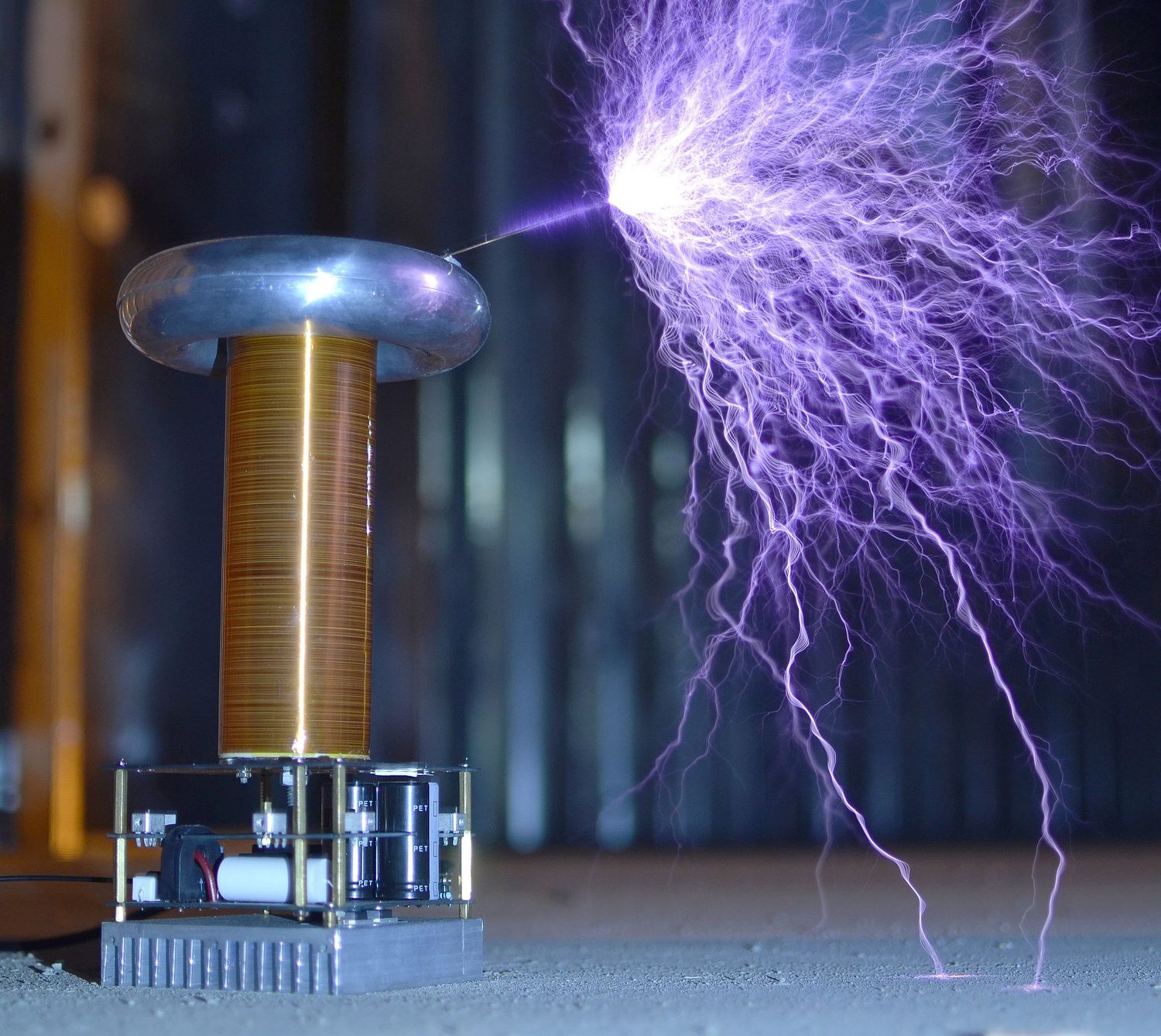
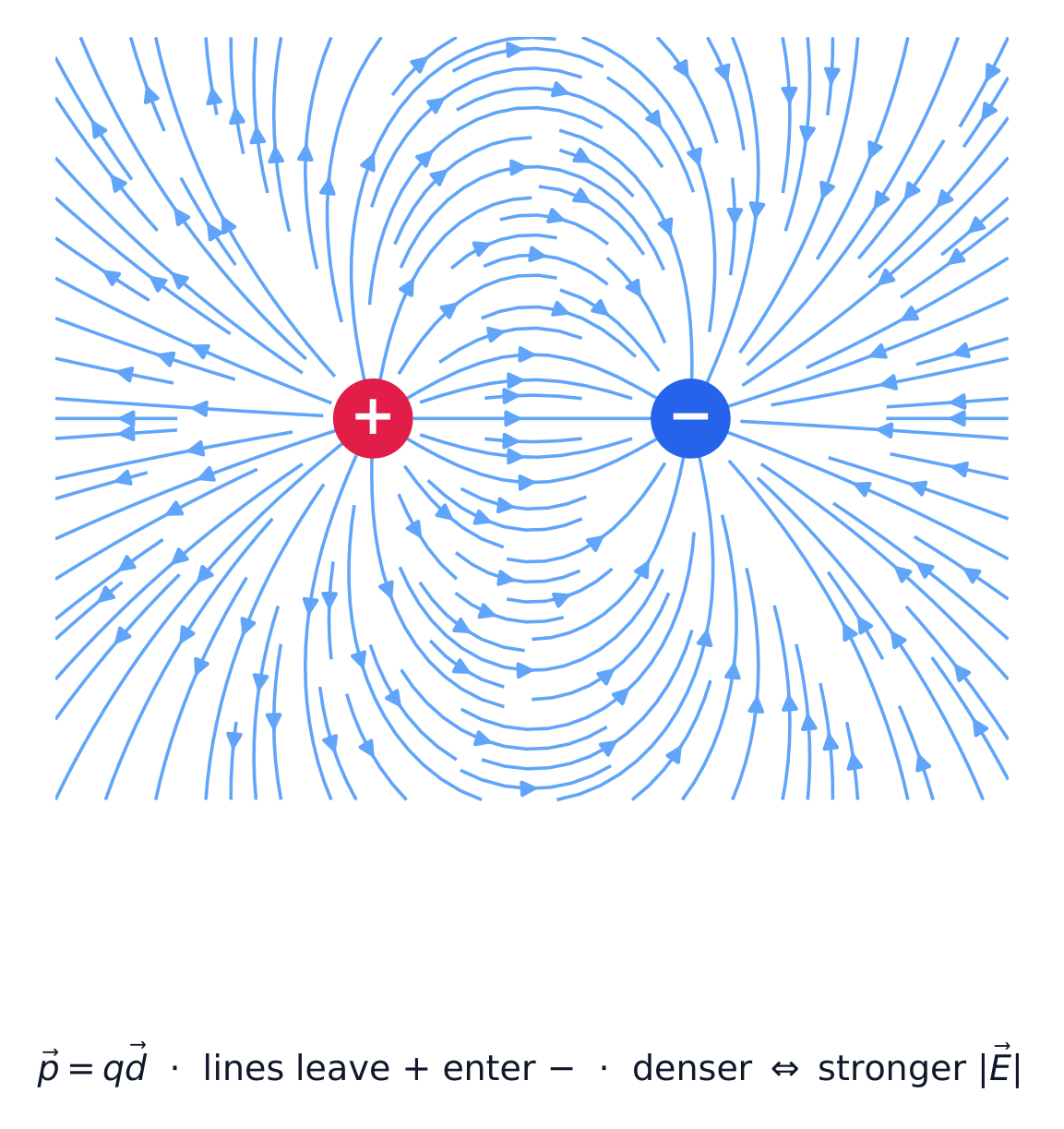
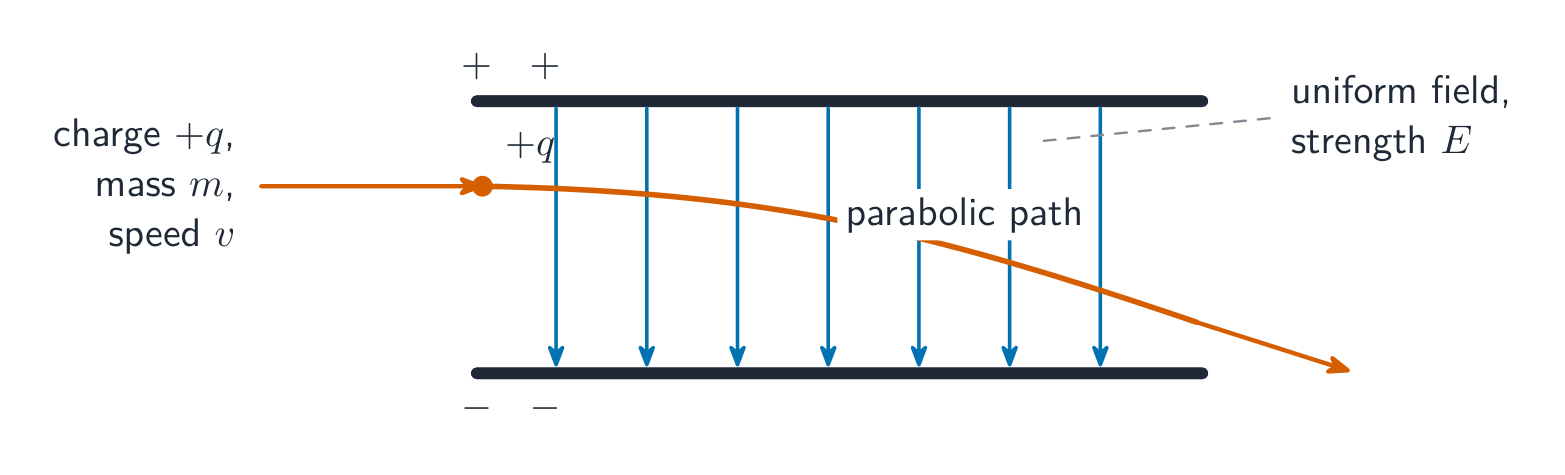
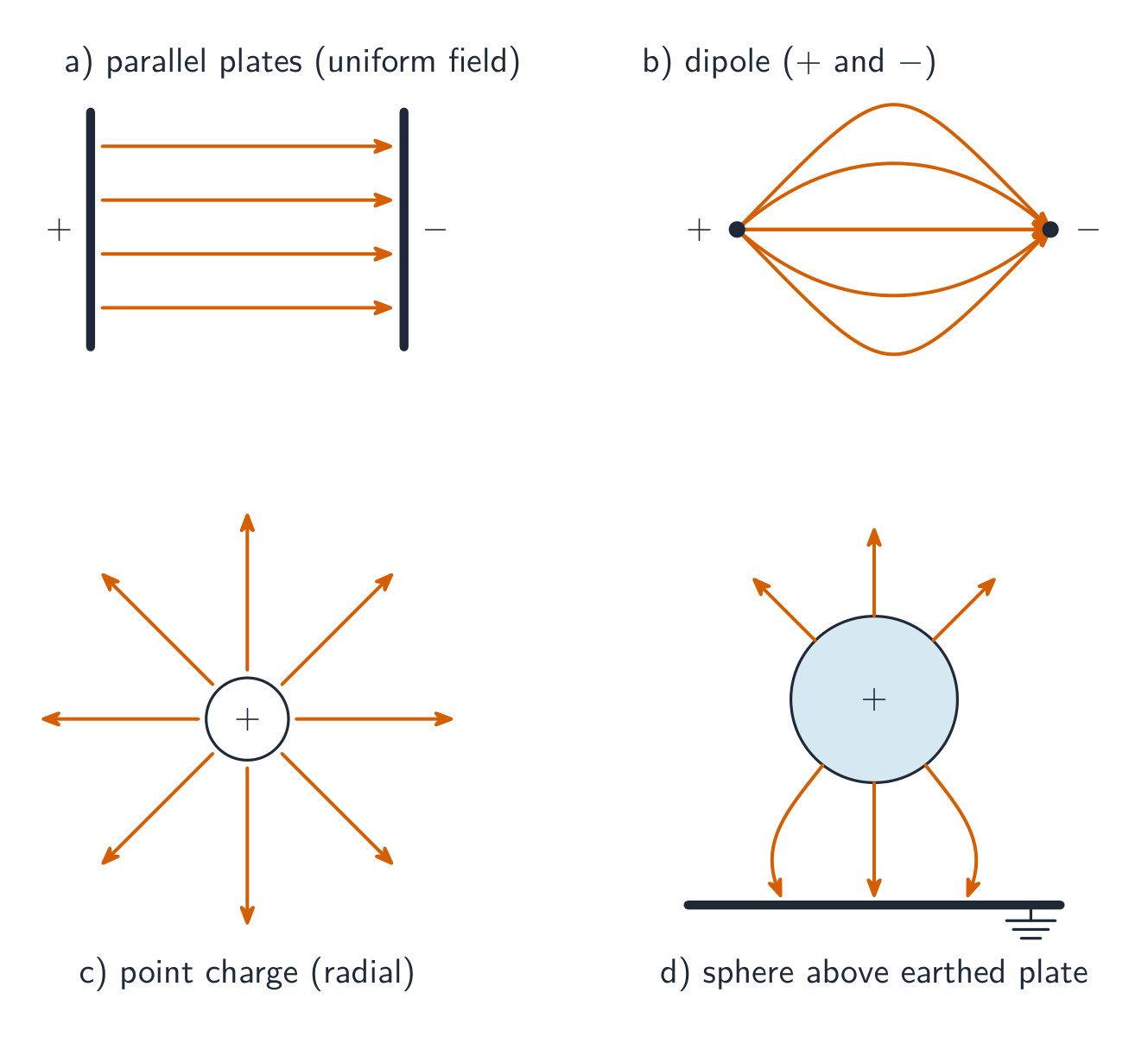 *أنماط خطوط المجال الكهربائي للألواح المتوازية، والثنائي، والشحنة النقطية